
Hello Bill,
I have been a long time listener and your discussions over the years of the SSB traditions and myths have intrigued me. I have collected most of the editions of the ARRL SSB handbook along with a few others including the 1962 CQ “New Sideband Handbook”. Both the 1962 ARRL edition and the CQ book are at the front of when SSB was just starting to be an interesting “latest new thing” for ham radio. Both have great detail of the technical advantages and show many systems that do both USB and SSB capability on each band. They both have blurbs about how to tune in SSB and also how to know whether you are receiving LSB or USB. What both are totally absent about is the “normal” operation of LSB on 40m and down and USB at 20m and above. Nothing. Not a word of that. That was SSB in 1962.
Now consider the technology and the time. Separate receivers and transmitters were how things were done. But SSB operation requires a LOT of stability of both the receiver and transmitter frequency control to work well. The answer to make SSB work easily for general amateur use was the transceiver and the only real one at that time was the KWM by Collins. Great equipment but outside the budget for many. So the time was right for a disrupter. And your recent mention of Swan is exactly that. It was started in Herb Johnson’s garage in 1962 and the first rigs were single band SSB transceivers (100 series) and well suited for mobile. These rigs also ONLY had LSB for the 80 and 40 versions and USB for 20. When you think about it, there is no technical advantage of LSB vs. USB and in fact, if both are being used, it is a distraction. Imagine doing mobile or a contest and also having to figure out which side band to be on. The military found the answer in the late 50’s by adopting the Collins equipment for the new B52 and only ever using USB. So Swan’s use of this was both a convenience and probably economic. This was the age of “Muntzing”.
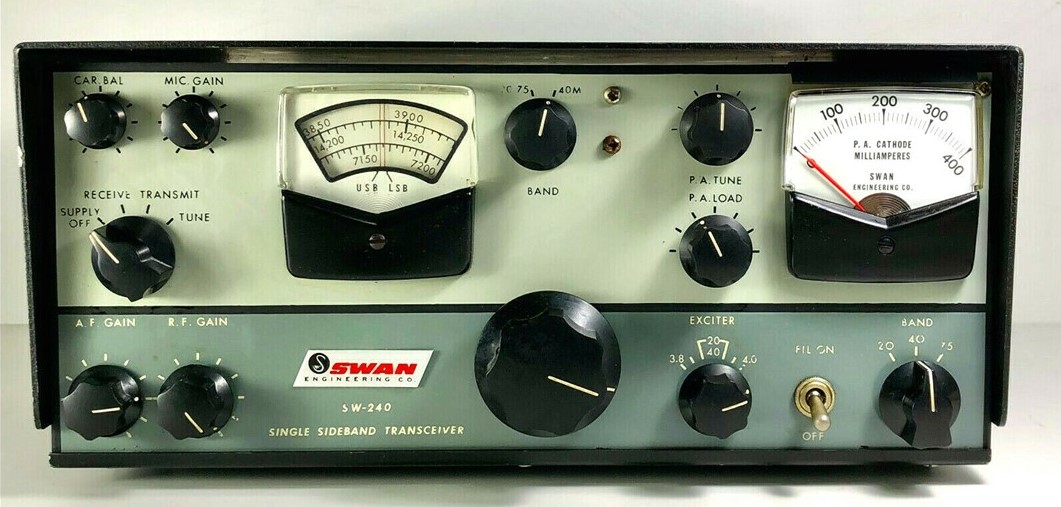
Once Swan started to take off, they added the 240 which covered 80, 40 and 20. I have attached the first page of the manual and also a clip from the schematic. The new “normal” was the sidebands as we use now and reverse was an “option”. Bill, you probably had one of the few that actually had this option installed. Later Swan radios actually included the reverse option, but regular was now titled on the front panel of many rigs by then as “normal”. So it is my belief that it was probably Swan that really is responsible for the “standard” operation as we now know. There were others of the time, but Swan was definitely an early leader in economical transceivers and produced over 80,000 during it’s existence.
Now I found in the 1970 edition of the ARRL SSB Manual on page 8 this important final clue. They note that because of some manufacturers only having a single sideband a “species of standardization on the particular sideband used in various amateur bands” had developed. BINGO, you can blame it on the appliance operators!
So our “standard” was well set by the end of the 60’s and was probably wrapped up in operating ease and product economy, and not so much for technical reasons. That is my 2 cents on this.
Enjoy and 73
Dave Wendt
VE3EAC / N9GQ