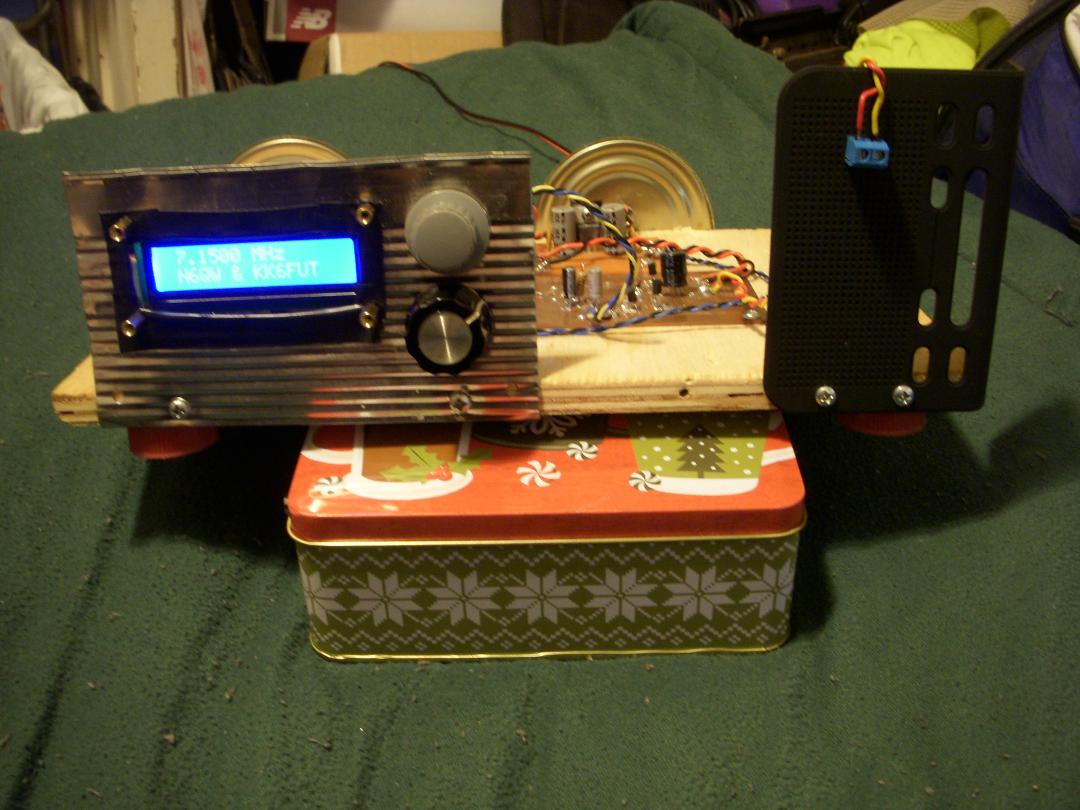
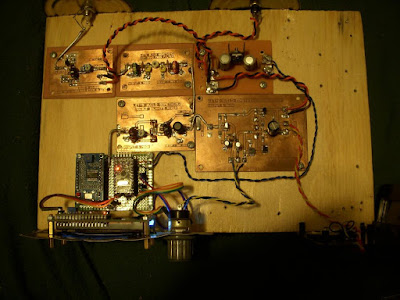
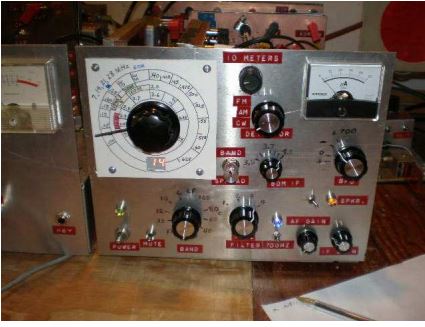
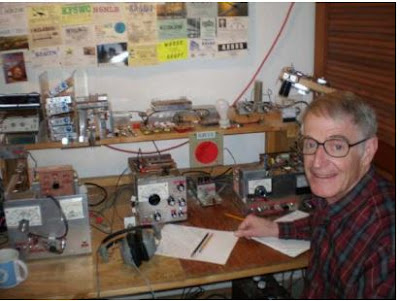
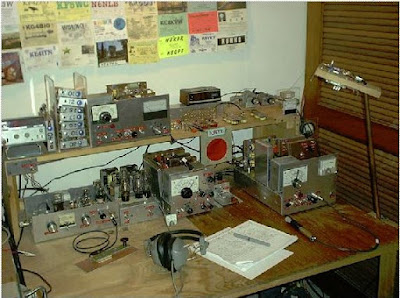
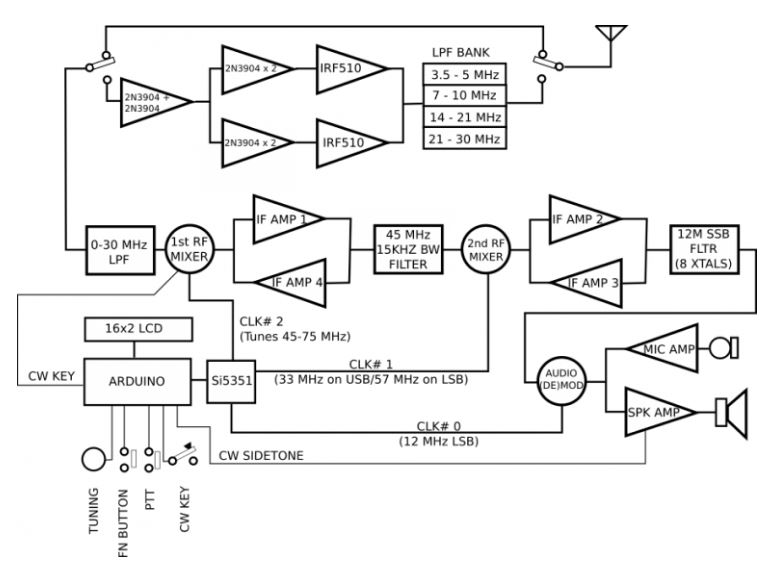
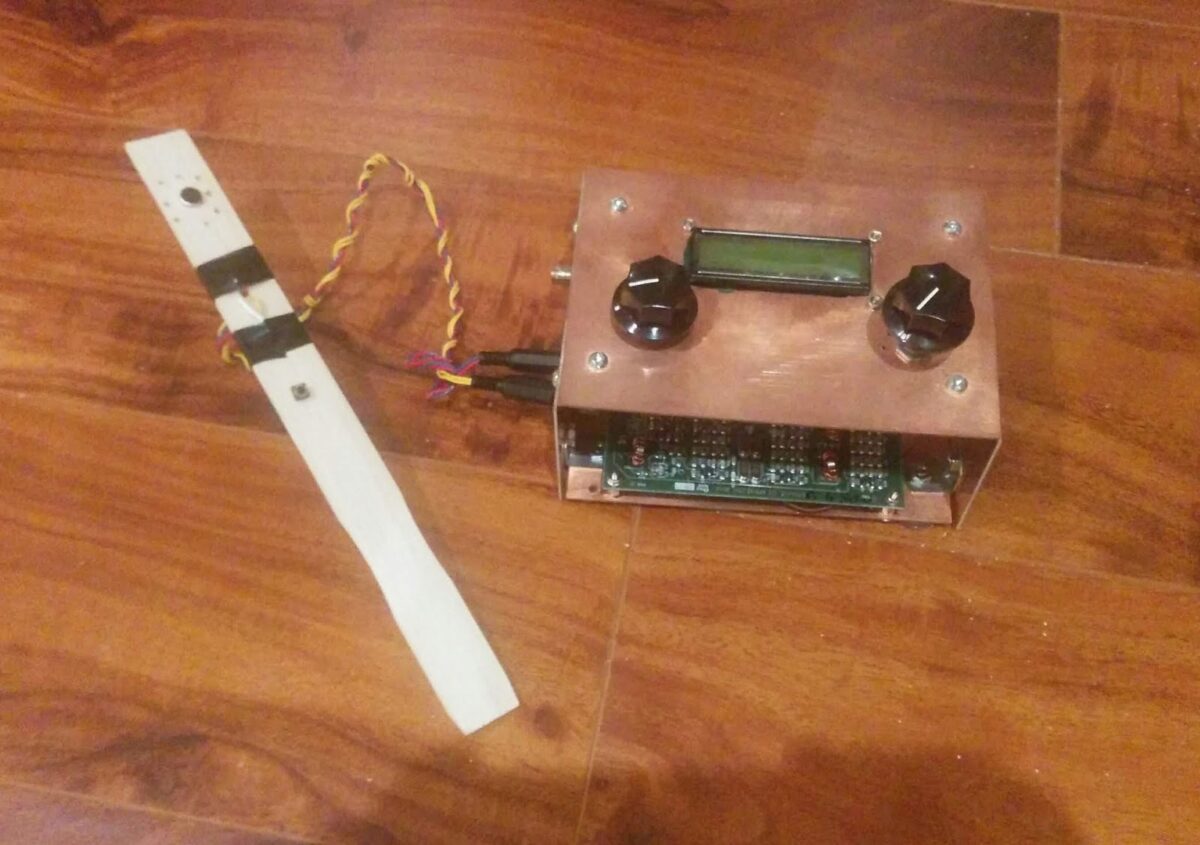
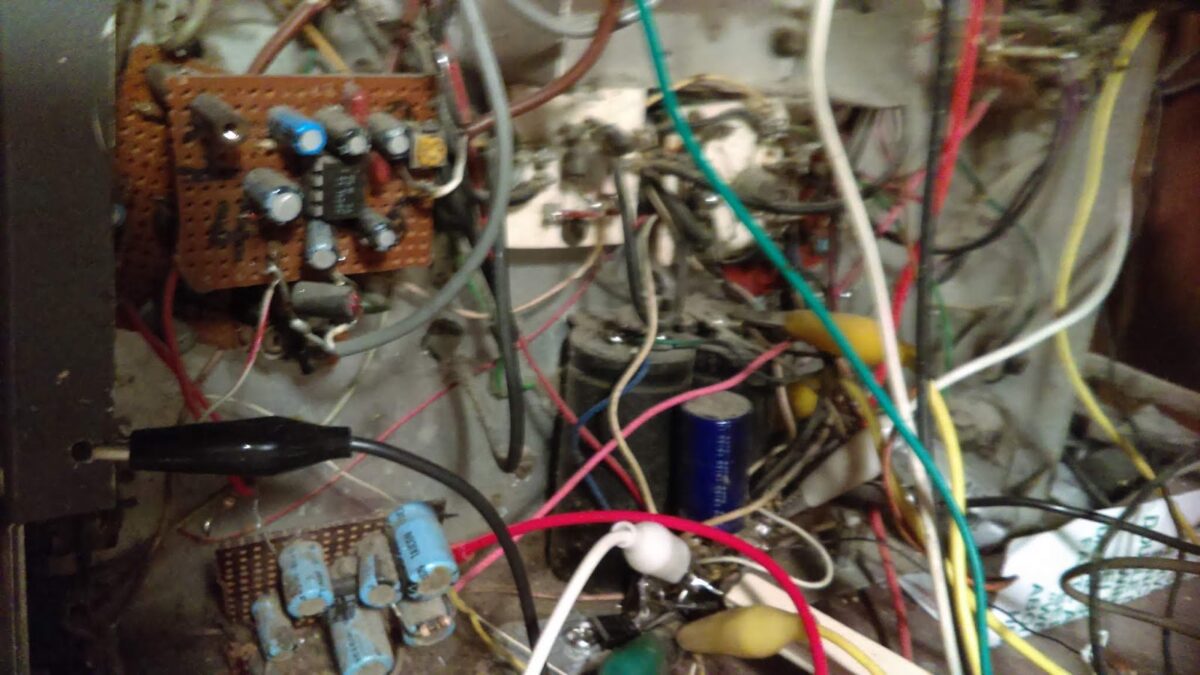
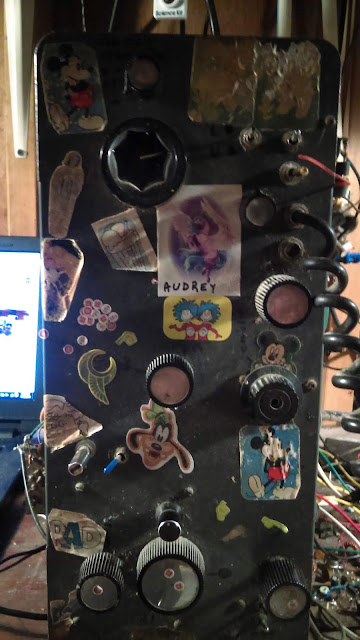
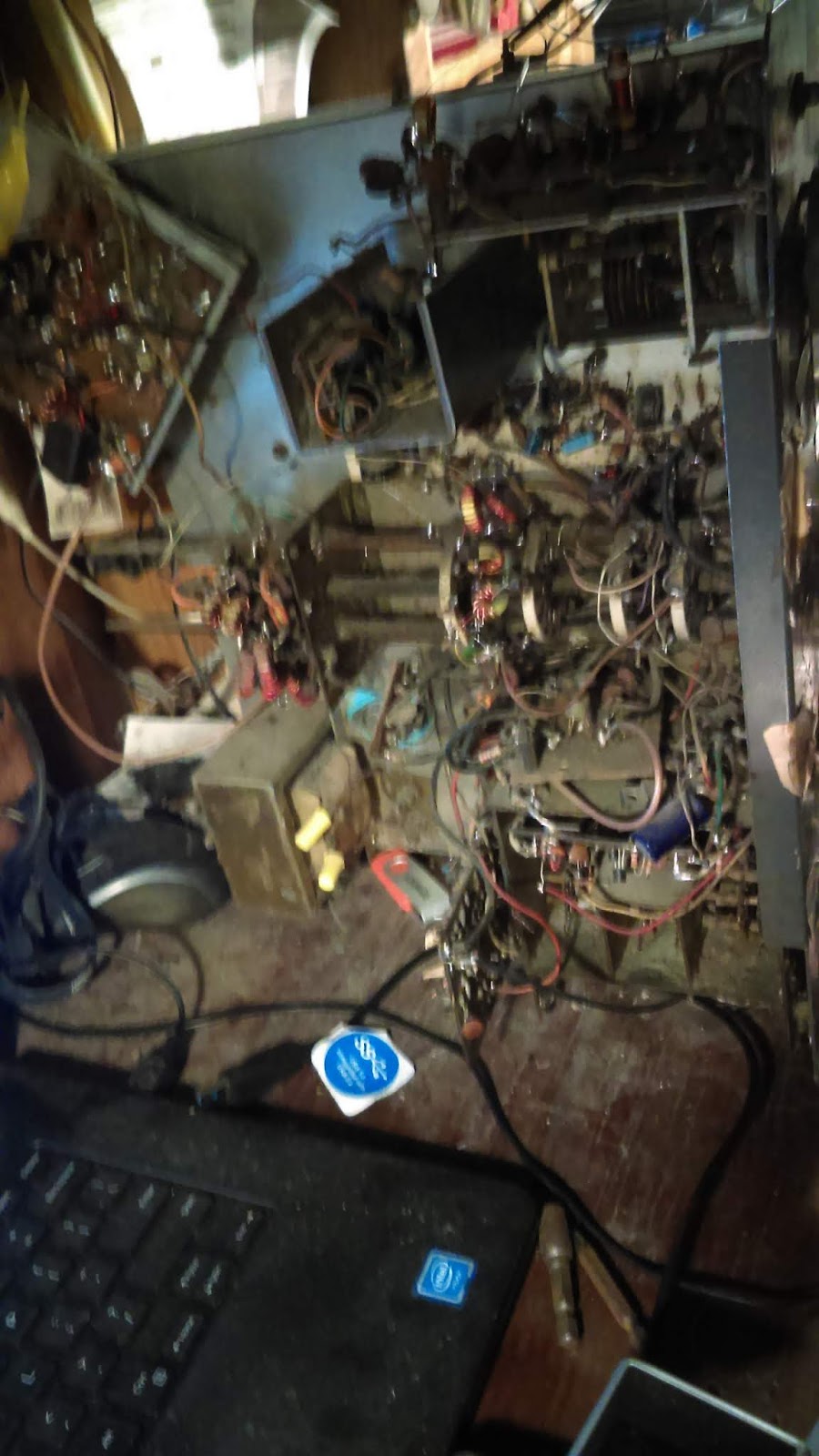
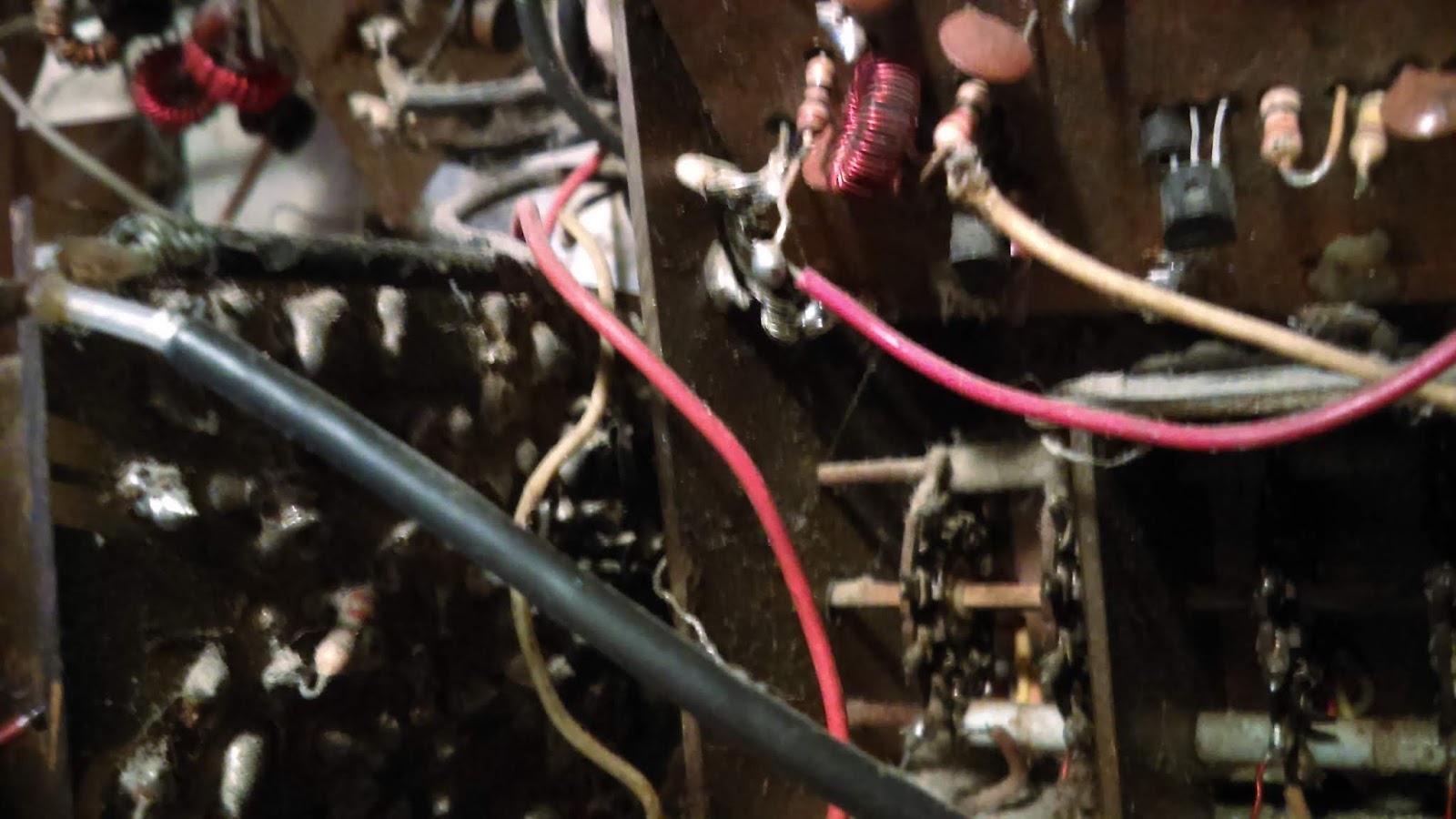
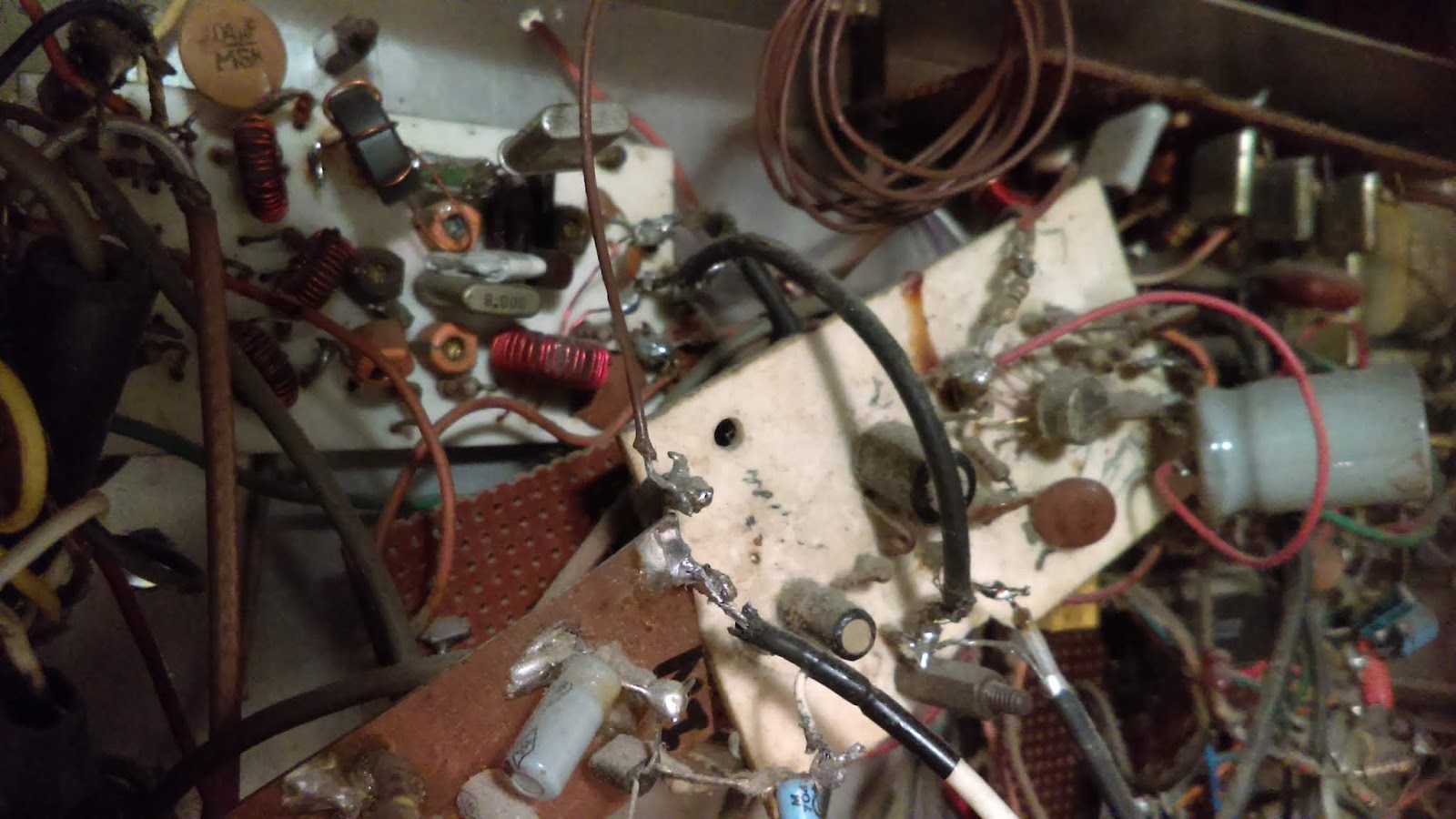
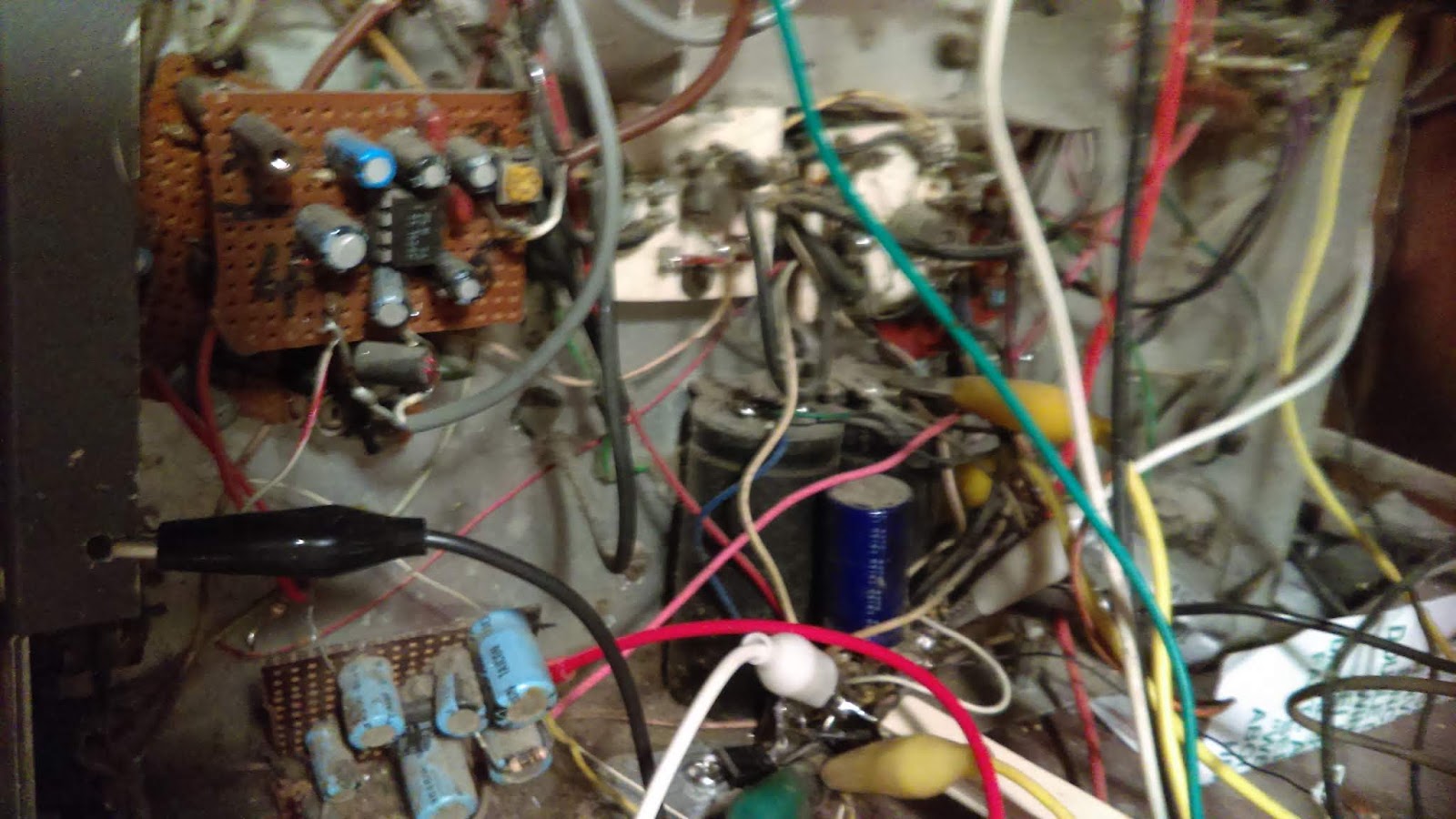
This past weekend I dusted off my old scratch-built, all-analog, no-chips BITX20. (THREE CHEERS FOR FARHAN AND HIS BITX DESIGN!) I hooked it up to my trusty CCI .1KW (note decimal point) amplifier and my new 135 foot store-bought doublet. This all happened just as the Worked All Europe DX contest was kicking off, with lots of activity on 20. TRGHS. I was in. My contest operating style was in the category of “relaxed-casual-noncompetitive.” I took a lot of breaks. In fact there were more breaks than non-breaks. You have to pace yourself in the contest world.
My results:
8 SEPT: DF0HQ, SN7D, GM6X, DP6A, S51A, DL0HN, DB0HX, OZ5E, DJ5MW, HG7T, IK4UPB, VY2ZM, G6XX, EF1A, LZ5R, 9A5W, YP0C, F6HQP, DL7ON, HB9DQL, ON6NL, DA0WRTC, 9 SEPT: EI7M, P3X, RU1A, DP7D, SP2KPD, DL0WW.
P3X might not count because, you see, Cyprus is considered to be in ASIA. Really?
Anyway, I ‘m assuming that I am the winner in the homebrew, discrete component , all-analog transceiver category. Woo Hoo!
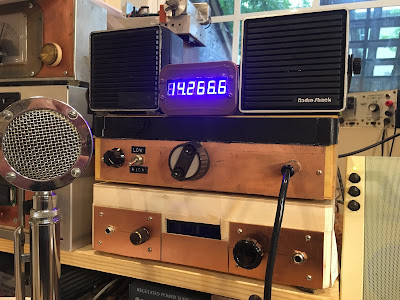
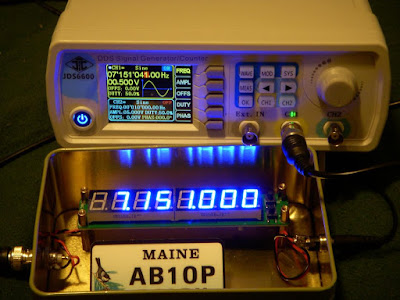
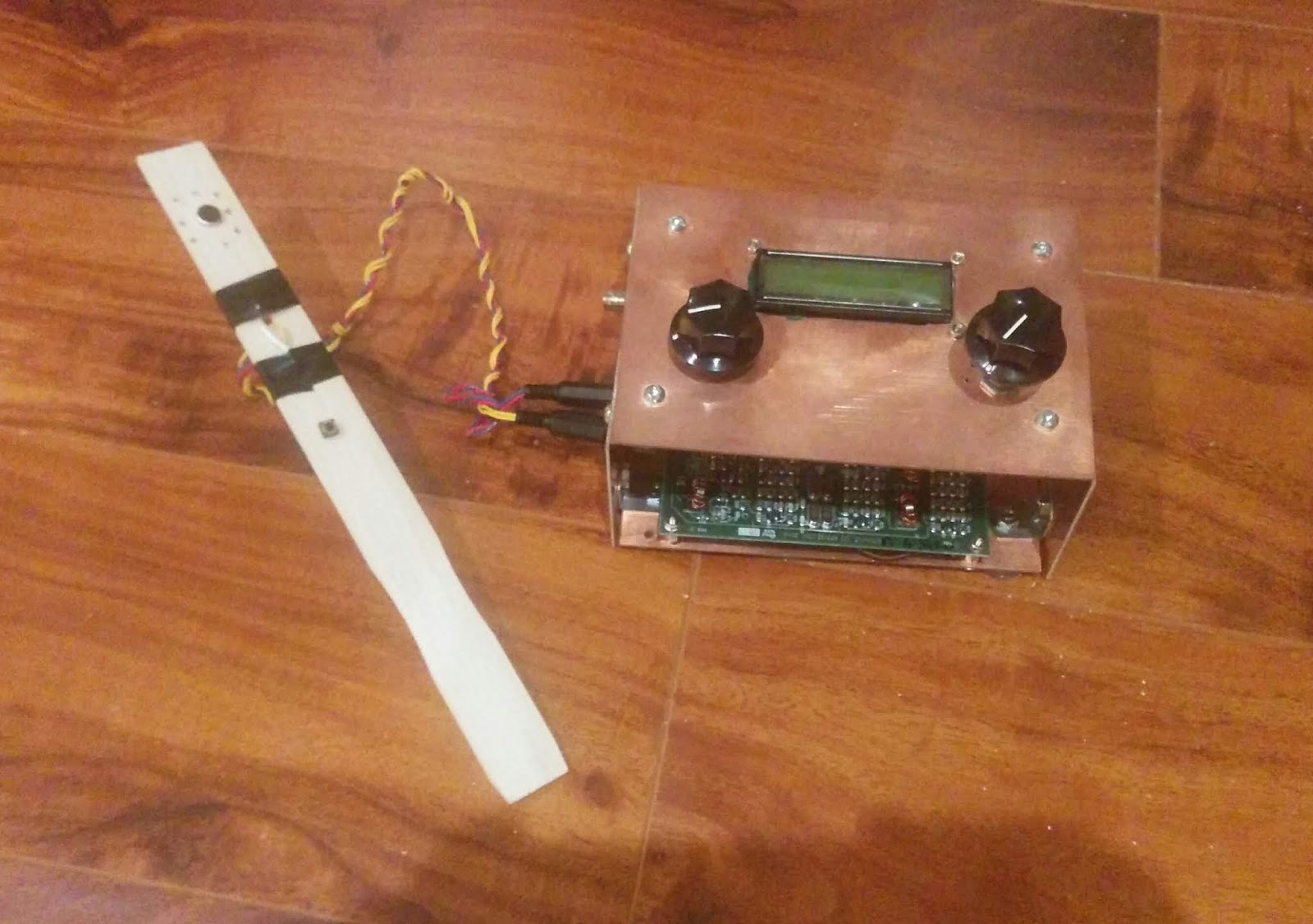
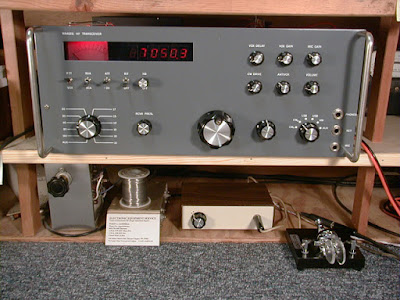
The contest rig is pictured above. Before you point to the glowing numerals and cry foul, realize that the little Altoids box between the two speakers holds a San Jian frequency counter that was deliberately kept OUTSIDE the BITX box. So it is more of an outboard accessory. I can run the BITX 20 without the digital assist — I have an old fashioned non-digital dial pointer to indicate frequency. The “Low – High” switch you see switches the VFO from the low portion of the 20 meter phone band to the higher part of the band. The box below the BITX 20 holds the uBITX.
Seriously though, I was quite pleased with the performance of the doublet.
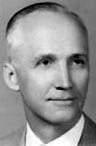
EF Johnson’s 50th Anniversary Speech. Very nice radio history
Thanks to W0VLZ for this wonderful 13 minute recording of Edgar F Johnson’s 50th Anniversary speech. There is a lot of great radio history in this speech. Highly recommended.
Just click here to listen:
https://www.prismnet.com/~nielw/EFJohnson/EFJ50thTalk.wav
EF Johnson’s hometown bio:
http://www.wasecaalums.com/public/389.cfm
Ralph AB1OP — A New Receiver (with Mojo) and A New Acronym (with Attitude)
Bill and Pete,
SolderSmoke Podcast #206 — GQRP CONVENTION SPECIAL EDITION
SolderSmoke Podcast #206 is now available:
http://soldersmoke.com/soldersmoke206.mp3
— SolderSmoke resumes after a busy summer.
— We did a portion of #206 via Skype at the GQRP Convention. Thanks to Steve G0FUW for setting this up. A portion of our participation appears at the end of the podcast.
— Pete’s SDR Rig and his new involvement with WSPR and FT-8
— The allure of SDR and the pitfalls of complexity.
— Bill’s 135 foot Doublet, 75 AM, 60 USB and 30 Meter CW.
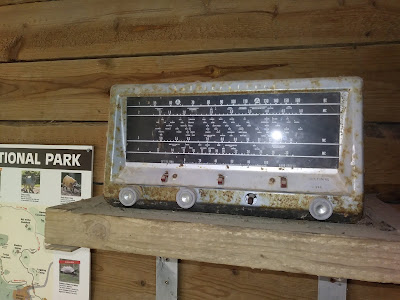
— Plans to change the IF of Bill’s HRO dial receiver.
— Thinking (again) about sold stateing the HW-101.
— Hans Summers, QCX and QSX rigs.
MAILBAG:
Ralph builds Pete’s LBS receiver. FB!
Lasers. Big Scary Lasers. And a guy with THE KNACK
Here is another young fellow who shows all the signs of having “The Knack.” I think his findings would be very useful for those involved in light beam communication.
Arduino Gets Command Line Interface
Will this make it easier to put programs into the the Arduino? Will this resolve the problems we’ve had when using an updated Arduino IDE with code developed in an earlier version of the IDE?
https://hackaday.com/2018/08/26/arduino-gets-command-line-interface-tools-that-let-you-skip-the-ide/
More Homebrew Wisdom from Frank Harris, K0IYE
In Chapter 13A, Frank Harris writes:
The Vanishing Art
The 1986 ARRL Amateur Radio Handbook reported that hardly anyone was building homebrew ham receivers…. Out of hundreds of contacts, so far Iâve worked four guys, George, K7DU, Mike, NĂMF, Biz, WDĂHCO and Jack, W7QQQ who were using homebrew receivers for the QSO. Three of these receivers were made from vacuum tubes. George’s receiver is a beautifully crafted instrument that looks like a commercial design from 50 years ago. All of these receivers had no trouble hearing me on 40 meter CW. I talked to one other fellow, Gil, N1FED who told me he had just finished a vacuum tube receiver. Unfortunately, it was performing so poorly he was still using his modern transceiver on the air. Gil told me he didnât like transistors. I guess he found printed circuit boards and those pesky oscillations too much trouble. In spite of this pessimism, you CAN build transistorized receivers that work reasonably well. I built mine because I was intrigued by mysterious circuits like âbalanced mixers,â âproduct detectors,â âcascode amplifiersâ and âcrystal ladder filters.â Before this project, I could recite the purposes of these circuits, but I had no âfeelâ for how they worked and why receivers are designed the way they are. What better way to learn than to build one?
Aside from the need to shield circuit blocks from one another, a homebrew receiver with a single big board full of discrete components has another problem. If you build the whole thing at once without buying a kit and pre-cut board, I guarantee it wonât work. To make homebrew stuff that works, you have to develop your own technology based on parts you can get and circuits you understand. Learning to think this way was difficult for me. Rather than âbuilding a receiver,â I had to lower my sights and build one circuit at a time, e.g., âan oscillator,â âa mixer,â âan audio amplifier,â etc. Then I put the blocks together to complete my project. Some of these circuit blocks didnât work the first time so I had to build a new block. There were various reasons the modules didnât work. Usually, I wasnât able to buy the exact parts used in the circuits I was copying. Or my craftsmanship or shielding wasnât adequate. Sometimes I never did learn why one version of a circuit block was superior to another. By building my receiver using separate little shielded modules for each circuit block, I could replace a circuit block whenever I managed to build an improved version. Otherwise, I would have ruined the entire big board.
On rare occasions my circuits didnât work because there were errors in circuit diagrams in QST magazine or in the handbooks. I found some serious errors in my 1979 ARRL Handbook and a minor one in my 1998 edition. Perfect editing is not possible, so we shouldnât expect it.
GET THE WHOLE BOOK HERE (FREE!)
http://www.qsl.net/k0iye/
Big New Telescopes
W2NBC’s AM Boatanchor Video
W2NBC was booming in on 3885 kHz AM this evening. I took a look at his QRZ.com page and found this video. Very nice.
I’ve been on 75 meter AM with the K2ZA DX-100 and my new 135 foot doublet antenna.
“From Crystal Sets to Sideband” — Homebrew Wisdom from Frank, K0IYE (Free Book)
Get Frank’s book here (FREE!) http://www.qsl.net/k0iye/
I’ve had Frank’s book on the blog many times over the years, but it is a book that merits repeated mention. It is filled with great advice and homebrew wisdom. I found myself looking at it again recently, and at Frank’s QRZ.com page. I came across lots of wisdom that I may have missed in earlier visits. For example:
From the QRZ page:
Foreword:
We homebrewers are nearly extinct, but there are still hundreds of us scattered around the world, some are even in the USA. Yes, there ARE American homebuilders! Weâre rare, but thanks to the QRP hobby, the number is growing. Even if we homebrewers don’t change the world, I guarantee you will enjoy learning radio technology and building your own equipment.
Get Frank’s book here (FREE!) http://www.qsl.net/k0iye/
THANKS FRANK! Send Frank a thank you note: Frwharris@live.com
QSX! Hans Summer’s New SSB Rig Revealed in South Africa
I liked this video. I liked Hans’ description of his mechanical skills, and the way he has at times become a “human CNC machine.”
This seems like a much more sophisticated rig than the QCX. I may be wrong, but QCX seemed to be essentially an analog phasing rig with a narrow CW audio filter. I kind of expected the SSB version to be a QCX with broader filter, but QSX is a different, more sophisticated, SDR rig.
Once again, three cheers for Hans Summers. We should all pay him to go to those summer conventions — every time he does, something new and important for ham radio comes out of the trip.
Three Cheers for the uBITX! Keeping problems in perspective…
This morning I was looking at Farhan’s uBITX page. He got philosophical at the end of the circuit description:
Patience is a virtue
Possess it if you can
It is never held by techies
And seldom held by hams
Where it belongs: S38E in a Zoo
KE5ETX
VA3IAW’s BITX 40 Box. Ugly? I don’t think so.
The CHIME Radio Telescope and Fast Radio Bursts
The new Canadian radio telescope is very interesting. It has a great name for a radio telescope: CHIME
And it it always nice to come across a reference to the Parkes Radio Telescope.
More info here:
https://www.theregister.co.uk/2018/08/03/fast_radio_burst/
And here:
https://en.wikipedia.org/wiki/Fast_radio_burst
Good luck on getting a QSL from the FRB station.
WA4GEG’s Beautiful HB Transceiver
http://www.hamradiobug.com/homebrew.html
Pete spotted this. Beautiful work. I noted that Byron hasn’t used the Manhattan style of construction. This makes his work look a lot neater, but it makes it harder to modify and debug the circuitry. On the other hand, OM Byron is obviously so good at this that his circuitry probably doesn’t require any debugging or mods.
The red S-meter and freq counter give it a slightly menacing appearance. Very cool.
Wow. Mr. Carlson’s New Old-Time Radio and Test Gear Lab. VE7ZWZ — Homebrew Hero
It has been a while since we last visited Mr. Carlson’s lab. As always, we found it amazing. The awesomeness just keeps increasing. Previous visits: https://soldersmoke.blogspot.com/search?q=Carlson
As was the case before, this is really almost too much. THREE DX-100s in the shelves. A massive collection of tubes, some sorted, some un-sorted. But don’t worry — Paul has a good memory and remembers where everything is. I believe him.
For his amazing shack and workshop(s) and for his willingness to repair old-time test gear, Paul VE7ZWZ clearly deserves homebrew hero status.
Thanks Paul.
On-Board your Arduino Board with an HCC Board
Nice, but the toaster oven is kind of scary.
A Rig with Maximum Soul: The 5 Band Transceiver of Glenn KU4NO
Homebrew Juju — HB2HB
Oh man, last night the Radio Gods were on my side. I only had about a half hour on 40 SSB, but I had some really nice QSOs. WB2HJK George in NYC was very interested in the BITX revolution. W3BT in Philadelphia is a kind-hearted OT who ran an ENORMOUS Yagi atop a row-house in the city — the antenna extended over the street and TWO of his neighbors houses. Never had a TVI problems. FB. SS listener WA3O Mike called in — Mike is the fellow who gave me my HW-7. Mike has been running his uBITX into a homebrew 500 watt LDMOS amp. FB Mike.
Then the real miracle happened. Just as I was about to throw the switch, Glenn KU4NO called. I decided to give him a report. But then he said something I rarely hear: “My rig is homebrew too!” I checked the log — I had spoken to Glenn before, but our last QSO was in December 2001. I was in the Azores. Glenn was on the same homebrew rig. We had a nice talk about his rig. FB.
Glenn told me that in all his years on the air, he has only had a few contacts with other homebrew stations. He had a list of them: 1) W4ZCB, 2) N6ORS (FB! SS Listener!), N2CQR (“No wait — I just heard you but we didn’t talk.”) and W2JUQ. I will tell Glenn that he needs to add CU2JL to the list — that was me in 2001 and I was indeed homebrew DSB.)
To top it all off, Dino KL0S was listening and recorded the final part of the QSO. See below. (The video might take a few minutes to load.)
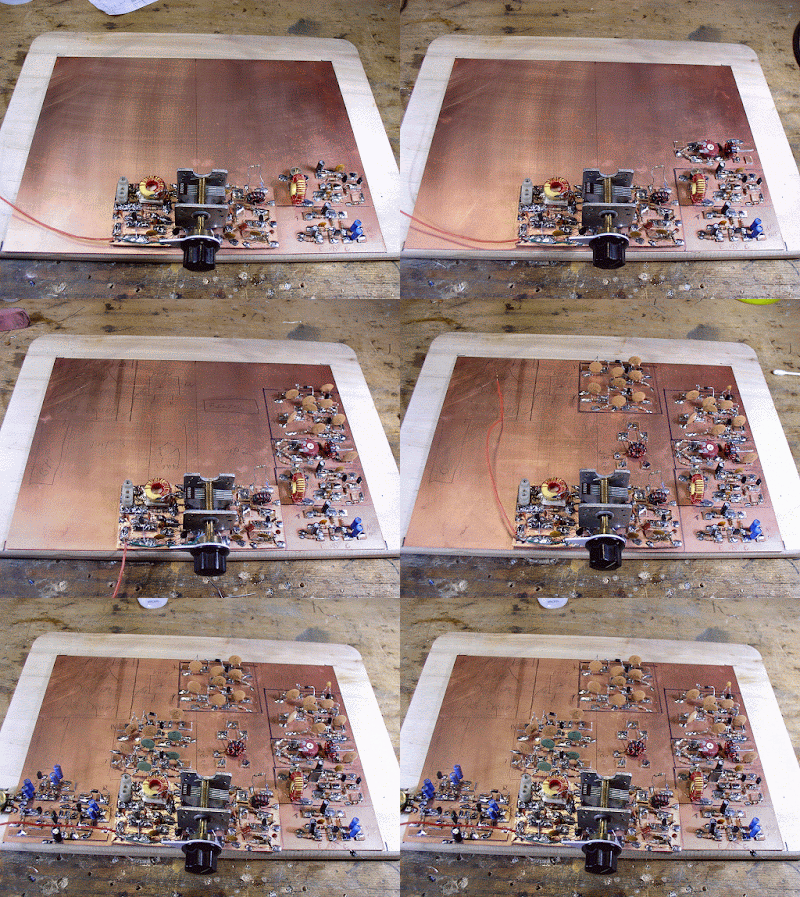
In honor of that FB night on 40 I am re-posting the animated GIF of my BITX-17 build. I hope it doesn’t make you seasick!
Also, I think we need to add a term to the SolderSmoke lexicon: Juju. As in Homebrew Juju. See: https://en.wikipedia.org/wiki/Juju Right? What do you think Steve Silverman?