Hallicrafters S38-E Saved! it is not a “Pig with Lipstick.” It Sounds Good! (Video) (And Radio Moscow recordings)
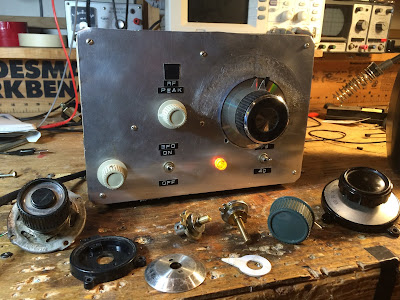
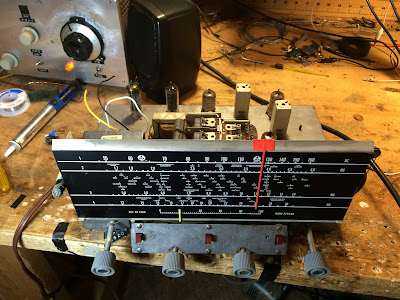
That’s what happened to me this weekend with the Hallicrafters S38-E. I hooked up the isolation transformer and put a fuse in the primary. I checked the wiring of my rewound antenna coil primary and found that I had connected it wrong. Duh. I then found that the antenna tuned circuit tracks fairly well with the tuned circuits in the local oscillator.
I hooked it up to my 40 meter dipole and fired it up. As evening rolled around the shortwave bands started to perk up. The Chinese Broadcast stations were there, as was that fire and brimstone preacher Brother so-and-so. But then I tuned into Radio Havana Cuba and the guy was talking about homebrew shortwave antennas. Could it be? Yes indeed. It was Arnie Coro CO2KK. The Radio Gods had spoken! They clearly had wanted me to get this old rig going.
I still have a few things to do: I need to fix the front panel light. I want to put in a three-wire (with ground) AC cord. Perhaps a real BFO (the original circuit seems to run out of steam with strong SSB signals). And I need to spruce up the alignment on the 1.7-5 Mc and 13-30 Mc bands.
1625 Tubes and Si5351 Chips: JH8SST’s FB Rig
KC9KEP’s Superhet Receiver with HOMEBREW 455 kc IF Transformers
Reduction Redux: Searching for Some Smooth Spin
Always Listen to Pete! Second Thoughts on the S38-E
After working a bit on the Hallicrafters S38-E receiver, I am forced to admit that Pete was probably right about this receiver when he warned me that I’d be putting lipstick on a pig. For those of you who have a sentimental attachment to this receiver, please don’t take offense — I understand. But while I had one of these as a kid, I never really BONDED with it. That Drake 2B was stiff competition for my radio affection. So I can be more objective about this thing. And I now think Pete was right.
Problems:
— It is mechanically rickety. It jiggles around mechanically and, as a result, electrically.
— The front end is no match for Northern Virginia RFI. All it has between the antenna and the converter tube is one puny LC circuit. Not enough.
— The LO mixer and the LO are stuffed into one 12BE6 tube. The IF amp and the BFO cohabitate in another tube. In each case there just seems to be too much going on between one plate and one cathode.
— The whole AC/DC transformer-less thing is kind of nuts. You have to get used to TWO ground symbols on the schematic: one symbolizes B- (and is not attached to the chassis). The other is to chassis ground. Turns out that my E model is not really a “widow maker” — they have a 470K resistor and a cap between B- and chassis ground, so the damage you could do to yourself was quite limited. Still, it is all kind of goofy. I have an isolation transformer on the chassis, ready to move this receiver into the 1960s if the spirit ever moves me. KB2WIG commented: “At closing time, I don’t care if the S38 has lipstick.”
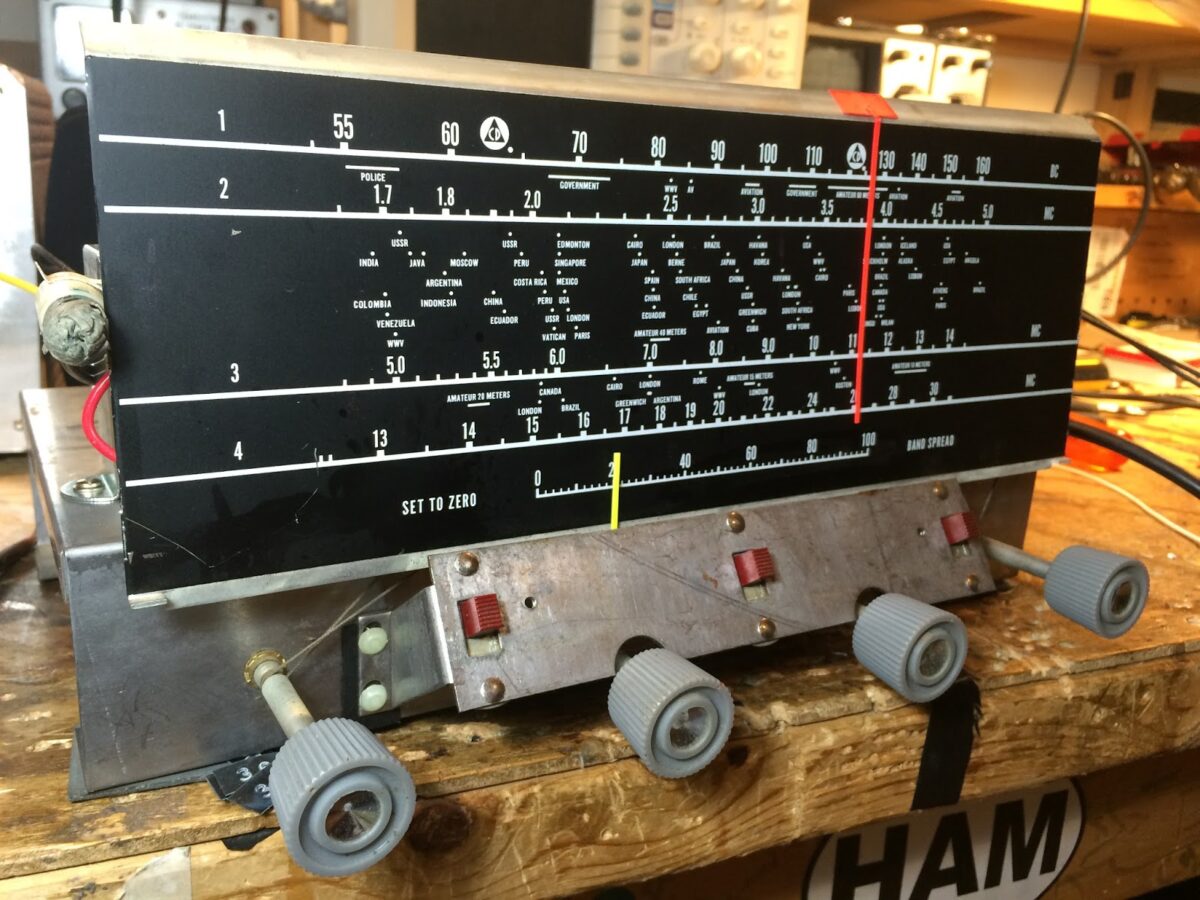
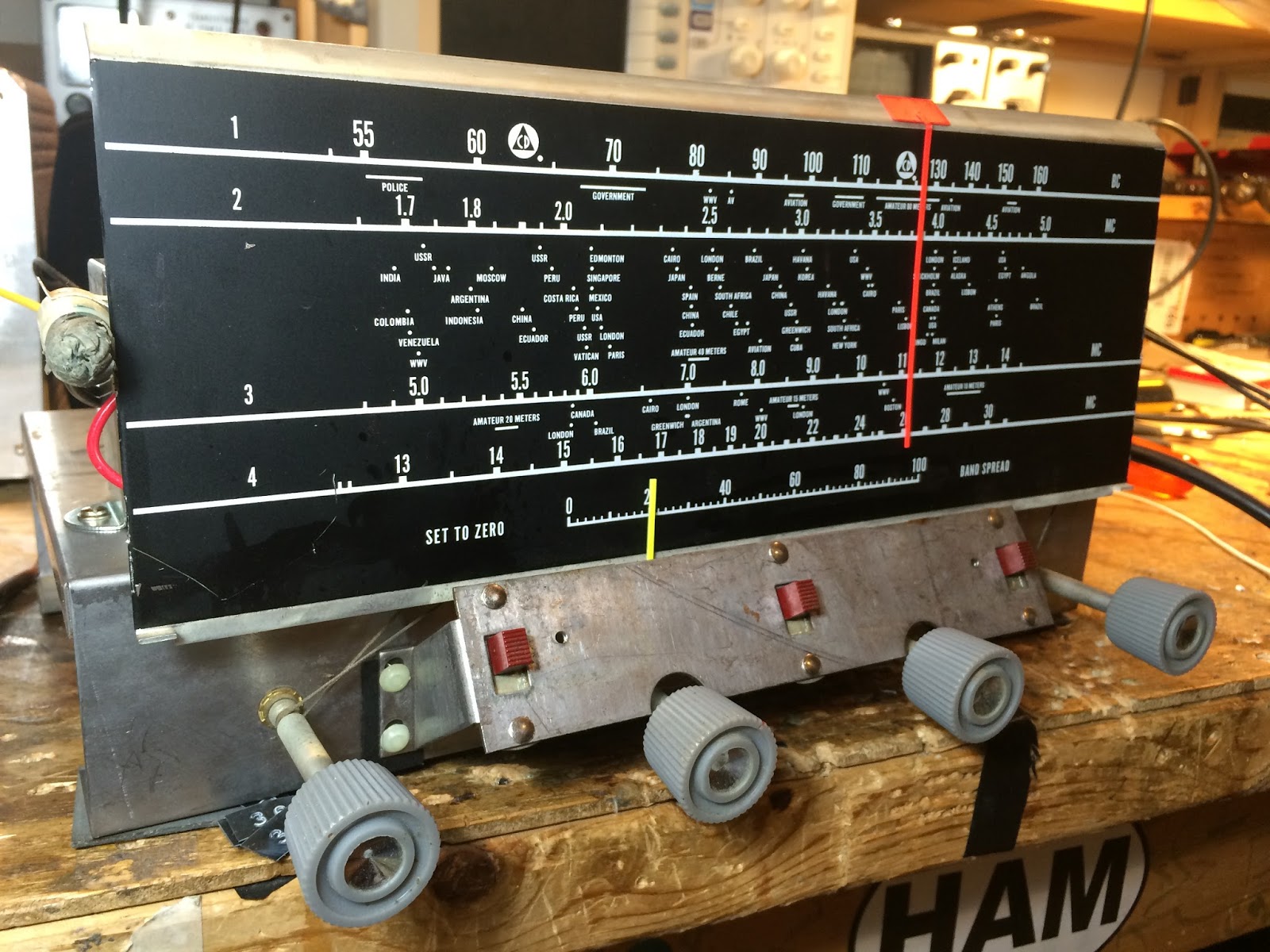
As I worked on this thing, I began to realize that the little homebrew 6U8 receiver I have next to it on the bench is a much better receiver. So I began to lose enthusiasm for putting lipstick on the S38-E. At least for the moment. I do like the cool 1950s place names on the S38-E’s front panel:
Java
USSR
Vatican
Singapore
Edmonton (!)
Congo
Milan
Iceland
Angola
And of course, the CD (Civil Defense) frequencies. (For when you wanted to do some shortwave listening while ducking and covering. )
But for now, me and the S38 are on a break.
A Reduction Drive for the Mighty Midget’s Mate Receiver
Meeting up with ARRL CEO Tom Gallagher, NY2RF
On April 12, Tom Gallagher NY2RF was in DC and was kind enough to make some time in his schedule for us to get together and talk about radio. As we mentioned on a recent podcast, Tom, who has recently taken over as Chief Executive Officer of the American Radio Relay League, is a true FB ham. He has a restored Drake station that he keeps on the air, and was recently talking up the Michigan Mighty Mite during his interview with Eric 4Z1UG in the “QSO Today” podcast. And he is a SolderSmoke listener. It was great to finally meet Tom. We are all lucky to have him at the ARRL.
Pigs, Lipstick, and my old Hallicrafters S38 “Widow Maker”
I blame Grayson for this. After getting my old 6U8 superhet running nicely on 80 and 40, my attention turned to an old Hallicrafters S38-E that had been relegated to the car port (Armand saw it out there, looking abandoned.) I didn’t like it because of its “transformer-less” “widow-maker” power supply. I was afraid to even GIVE it away for fear that someone would electrocute themselves. But Antique Electronics Supply had an isolation transformer, so the order went in.
Ciao! & 73, Armand
S38 is nice to work on, plenty of room, no magnifying glass required. But I have to admit I am not a big fan of working on low cost AC line powered “raft-anchors” (too little for a boat). Definitely give it a isolation xformer and replace the filter cap(s). If it doesn’t weight 50+lbs, a bit lightweight for me.

Wooden Boats, VFOs and PTOs — Recovering Lost Arts
![]() |
| Photo from radiomuseum,org |
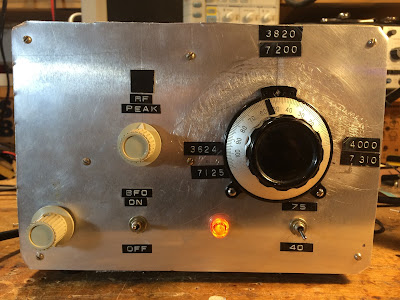
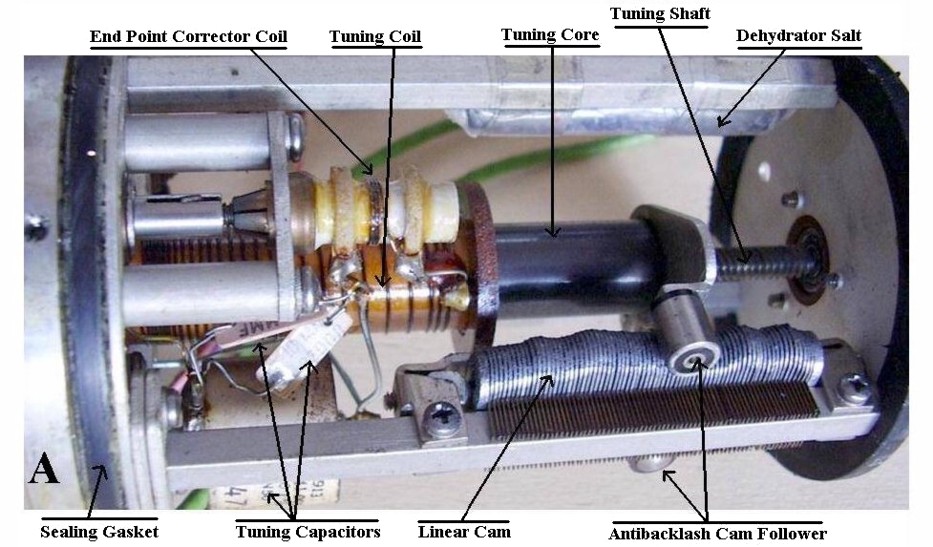
Great stuff here on different approaches to designing-building-experimenting with stable VFOs. Some of it is a mature art, and some really is a lost art–but that’s good. There’s nothing quite so gratifying as recovering a lost art while taking advantage of modern tools and techniques, and perhaps exchanging ideas on some new-fangled communications medium.
Rick
K.P.S. Kang’s Pixer Superhet
K.P.S. Kang (VU2KR and VU2OWF) has been contributing ideas and circuits for many years from his QTH in Punjab India. He is the source of what became known as the VU Transmitter circuit:
http://www.zerobeat.net/g3ycc/week1.htm
Today I spotted a recent blog post by OM K.P.S. on a simple superhet receiver he is working on. He has a knack for describing the design considerations (needed gain, IF selection, etc.)
Check it out:
http://smallwonderqrp.blogspot.com/2016/04/pixer-empirical-hf-superhet-receiver-i.html
and
WSPR Party Balloons Make it Across the Pond
|
||||
|
||||
My Kind of Math! The Wooden Fourier Transform Machine
fourier analiser from Gymnasiumnovum on Vimeo.
Mixer math with plywood and gears.
http://www.instructables.com/id/Plywood-Math-Machine/
http://hackaday.com/2016/04/11/fourier-machine-mimics-michelson-original-in-plywood/#more-199177
http://hackaday.com/2014/11/18/harmonic-analyzer-mechanical-fourier-computer/
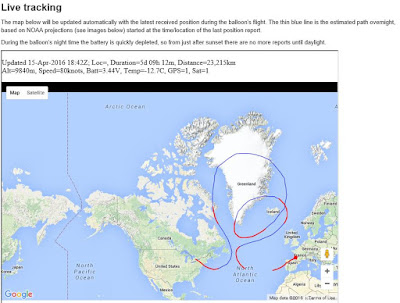
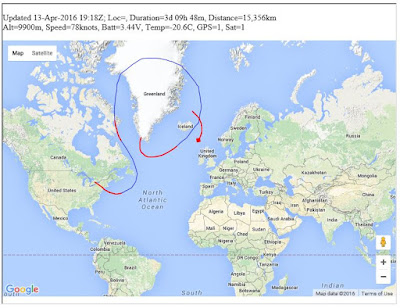
VE3KCL Balloon makes “several loops around Greenland”
Oh, I really want to do this. We had a bunch of balloons for my daughter’s birthday and I found myself trying to guestimate how much they could lift. There is a balloon store that sells the metalized party balloons used here. They have a helium tank. I hate to be a party pooper (!) but wouldn’t the antenna represent a bit of a hazard? If it came down in power lines, that wouldn’t be good right?
In any case, three cheers for Dave VE3KCL and for Hans, G0UPL, the wizard who makes the QRSS/WSPR transmitter that is currently flying over Iceland.
Hi all
Some Thoughts on Noise and Receiver RF amplifiers from Scotland (and listening to sun noise on 2 meters!)
Bill,
Just listened to the latest SolderSmoke podcast where you asked why is it that an RF amplifier may be required on the higher bands but not on 40m and 80m for example.
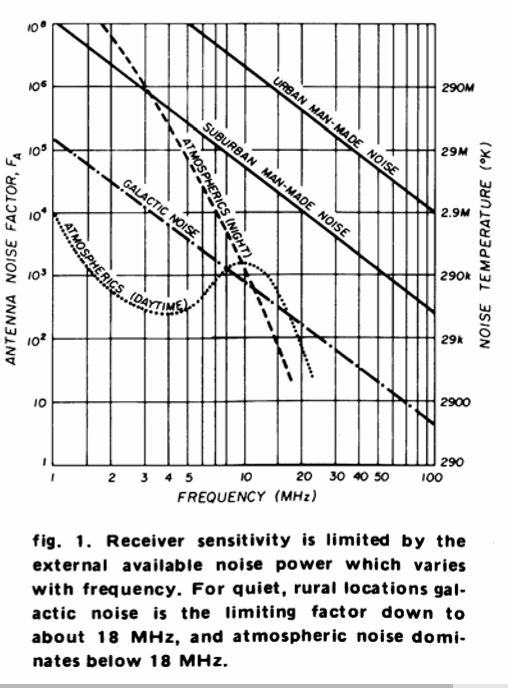
At high frequencies the atmospheric and ionospheric noise levels are lower, so if noise figure of the receiver is reduced it will improve the signal to noise ratio you get from the receiver. Adding gain -after- the mixer will not improve the noise figure of the receiver as it will be limited by the noise figure of the mixer. You need an RF amplifier which will itself have a lower noise figure than a mixer (certainly a passive mixer), to lower the total noise figure of the receiver to take advantage of the lower effective antenna noise temperature at higher frequencies.
This becomes very important at VHF and above, where antenna noise levels are much lower than at HF.
So, it isn’t so much the overall gain of the receiver that is important with weak signal work, but the overall receiver noise figure which is determined to the largest degree by the first stage of the receiver.
There are spreadsheets available that will easily calculate the noise figure of cascaded receiver stages knowing the individual stage gains and noise figures.
One also has to be careful with the gain distribution throughout a receiver, if you have too much gain early on in an effort to improve the noise figure overall, you may overload the subsequent stages producing IMD with multiple strong signals. So there is a compromise to be met between noise figure and strong signal performance.
Going back to VHF and above if you have an antenna fed by coax with some appreciable loss then improving the receiver RF stage noise figure is not the best way to go because you are amplifying the signal after the loss the of the coax. What you need to do in those circumstances is to use a low noise masthead RF preamplifier which will give you gain and establish the noise figure of the receiver before the loss of the coax. Again there are spreadsheets to help with these calculations.
At VHF where an antenna is pointed at the horizon, the antenna sees the noise from the ground on the noise from the sky. As we elevate an antenna for EME or satellite working, then the effect of the ground noise should reduce (there will always be some due to side lobes) and then the receiver can benefit from even lower noise figure as the effective antenna noise temperature is now mostly determined by sky noise which at UHF is much lower than ground noise.
These last two days I have been able to see and hear the sun noise on my 2m receiver as the sun set on my single 10 element yagi pointed at the horizon. Using WSJT’s noise level scale I could see it measure 12dB noise level and then once the sun set it dropped back to about 3dB noise indicated, most of that being local QRN from an antenna sidelobe from my neighbour’s house and his electronic devices which put out quite a bit of wideband noise on the band. (about 8dB above the lowest background level I can normally detect).
To summarise, at LF where noise is high you don’t gain anything by having a low noise figure receiver, and you actually lose out if you have too much gain early on as it will degrade strong signal handling.
At HF as manmade, atmospheric and galactic noise levels are lower, you can benefit from lower receiver noise figure and the way to lower your noise figure is to use lower noise amplifiers in the early stages of the receiver. Adding gain in later stages does not reduce the noise figure overall as the noise figure is largely determined by the first stage or stages.
At VHF using even lower noise figure devices in the RF stage will improve signal to noise.
Here is a practical test you can carry out. Switch between a dummy load and your antenna. If the background noise level increases when you switch to the antenna, then your receiver is sensitive enough, lower noise figure in the receiver isn’t going to help. If it doesn’t increase then you have scope for improving the sensitivity of the receiver by reducing the noise figure of the receiver as you are no longer limited by antenna noise.
Incidentally it is good to have a preamplifier that can be switched in an out of circuit so that you can reduce the noise figure when conditions allow ( low noise atmospheric noise levels for example), but switch it out if noise levels are high and signals are strong so that receiver overload and IMD don’t occur. You can do something similar with an input attenuator to reduce strong signals where necessary.
I don’t have a link here to the graph of manmade, atmospheric and cosmic noise levels versus frequency, but once you see one it becomes obvious why low noise figure receivers are not required at LF and MF generally.
73 from David GM4JJJ
I don’t have a link here to the graph of manmade, atmospheric and cosmic noise levels versus frequency, but once you see one it becomes obvious why low noise figure receivers are not required at LF and MF generally.
73 from David GM4JJJ
Soldersmoke Podcast #186 Is Available — April 1 Rap Up, Pi Talk from Pete, Collins and Raspberries, Bill’s Analog RX, Visits and Hamfests, MAILBAG
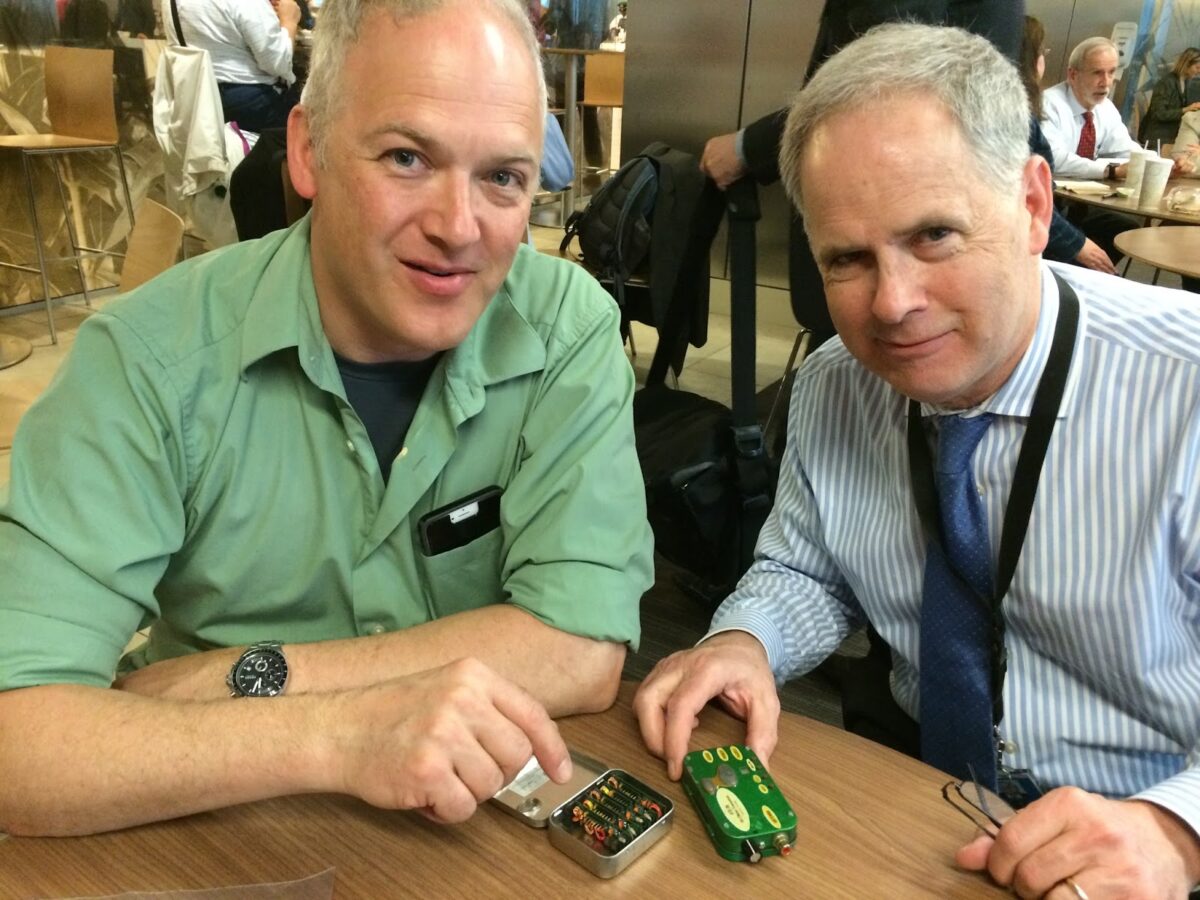
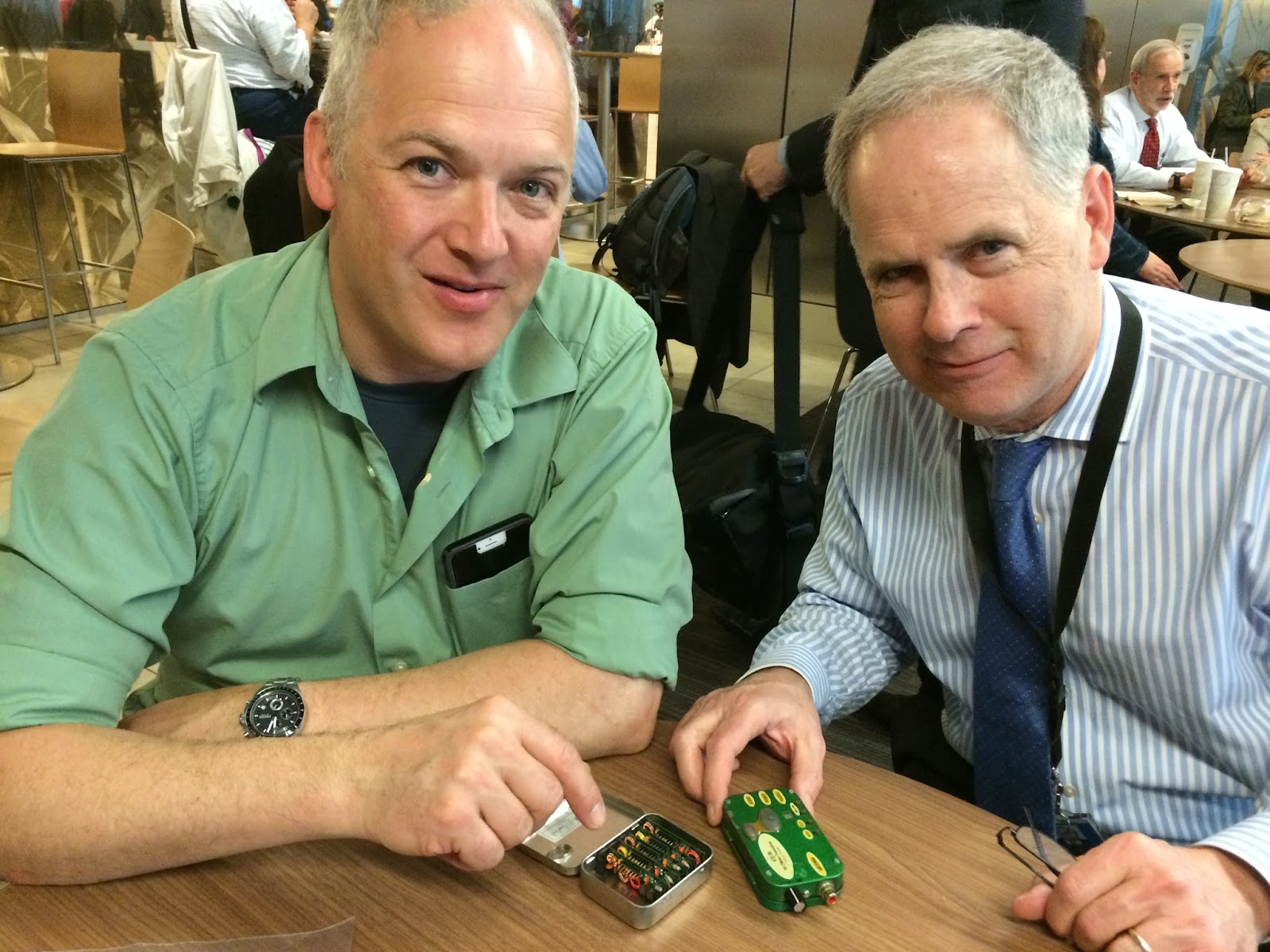
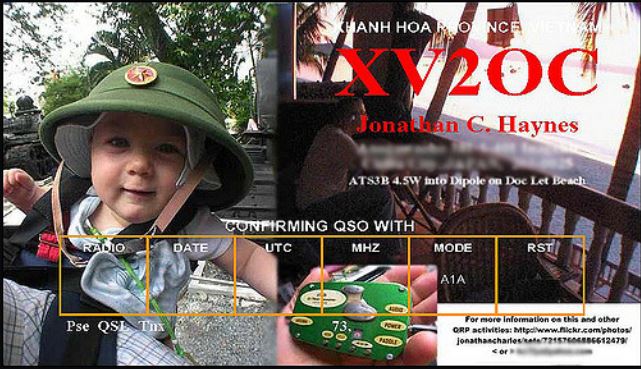
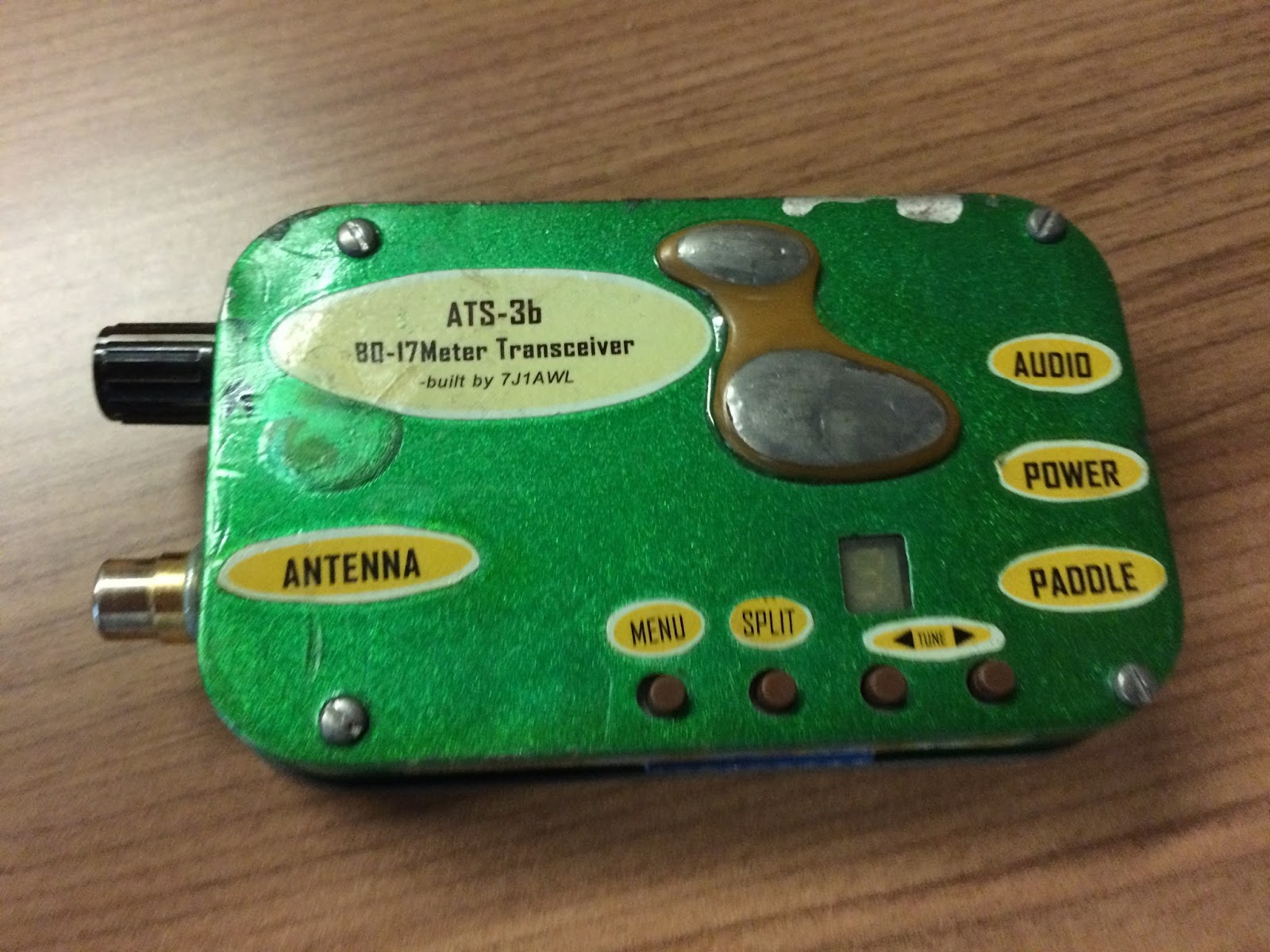
From Vietnam to Washington DC — Jonathan-san KC7FYS W0XO 7J1AWL XV2OC Stops By With His AT3b
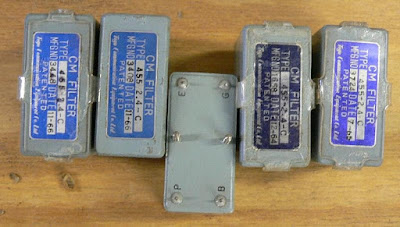
The meaning of “CM” in the Toyo CM-455 Filter
![]() |
| Photo by ZS1KE |
A while back I picked up (from e-bay?) a 455 kc crystal filter for use in my Lew McCoy “Mate for the Mighty Midget” receiver. I did a quick and dirty installation. It kind of worked, but I had it in the back of my mind that I had to work on the impedance matching to ensure minimum passband ripple. But when I learned what the P, B, E, and G pinout designations meant (plate, B+, earth and grid), I realized that this device had been designed with tube impedances in mind, so I probably didn’t have to mess around with input and output networks (as I’ve done with the BITX rigs). Last week I installed it as the manufacturer intended — it sounds great.
Today I started wondering about the passband characteristics of the device. What do the skirts look like? So I started Googling. There is not much out there, but I did come across a really interesting Epson site that describes the origins of this filter, and what the CM means. CM is for “Crystal Mechanical.” Wow, this little box combines the characteristics of a crystal filter AND a Collins Mechanical filter:
Does anyone have the specs on these filters, and perhaps a passband graph?
The Wizard of Wimbledon writes of Emperor Hadrian’s QTH, HMS Belfast, JFK and QRP
Dear Bill
I write this to you from my shack in Wimbledon, south west London, with the crackle of the bands slowly waking up across Europe, having just devoured the final few pages of your excellent Soldersmoke book; an intriguing and entertaining tale to which many of us can relate, a highly-accessible technical primer which certainly helped me to clarify a few niggling “Yes, but why?” questions, and a compendium of handy tricks to try during future projects – thank you for sharing your story.
I was amused to read that GB2RN, on HMS Belfast in London, where I am now one of the “new boy” volunteers, was an inaugural contact for your Azorean 17m DSB rig. As it turns out, 12000 tonnes of British warship seems to play an crucial role in testing QRP radios:
In mid-December 2015 we once again flew out to Rome for our pre-Christmas break. Our first day was spent exploring the stunning Villa D’Este (stunning to behold, an ideal high radio QTH but far too beautiful for my wires to pollute the scenery without getting into trouble…) and Villa Adriana, near Tivoli. It was only right at the end of the afternoon, and annoyingly lower down towards the plains, when I stopped for a few minutes for an attempted sked with GB2RN.
Lesson 1: trees with lots of branches and twigs are a real pain for throwing wires through! I had guessed this already, but it truly is an exponential problem.
After conquering a geometric puzzle, I had my EFHW strung so that the point of maximum radiation was about 4m in the air – not exactly ideal for DX but theoretically reasonable for a nice high angle of radiation, like I needed. The feed point (fortunately a current null) was at roughly half this… time to get on the air!
Lesson 2: when operating outdoors – beware of the locals!
Rather than a comfortable bench I resorted to operating whilst sitting cross-legged on the grass, balancing my ex-German military miniature key on my thigh as I tapped it with my finger and attempted to steady it with my left hand.
The ambient sound of the 40m band seemed very different in I-land – that was the busiest I’d heard it outside of contests, riddled with deafening Eastern-bloc calls but not a single station from any of the British nations, which I presume must have largely been in the shade of the skip; apart from booming GB2RN beaconing to me high on the band 🙂
The Villa closes at 1700 and from past experience the wardens come around at 1630 to chase stragglers out from the far corners. Annoyingly one such woman decided that my guy wire and its supporting tent peg looked highly out of place and must be interfered with. My Italian is woefully incompetent at the best of times, so I resorted to gesticulating at her wildly with my left hand as my right attempted to stay faithful to sending clear CW.
Perhaps it was for the best; had she understood that I was “Making a scheduled contact with a British warship via Morse code using home-built equipment which I had smuggled into the country by air last night”, the tale might have taken an entirely different twist…
Cold hands, fading light and a dead leg from sitting in an awkward cross-legged position which is frankly impractical for anybody beyond the age of 8, but I was utterly thrilled to have enjoyed my first QSO from overseas, and particularly so since it was with my Elmer on the ship using a station which I had diligently put together myself over a number of months.
The first wisps of solder smoke have already left my iron this morning as I embark on the next stage of my QRP apprenticeship – to make the jump from a kit operator to a scratch-built home brew. All my life I have yearned to understand from first principles, and our remarkable hobby offers us a unique privilege to do so whilst sharing experience along the way.
72/3
Jonathan
M0JGH
PS Should you or any of the Soldersmoke brotherhood ever be in London and wish to operate from GB2RN, please don’t hesitate to contact me.
My Mate for the Mighty Midget Thermatron Receiver