ZL2CTM’s New Zealand Double Sideband Success

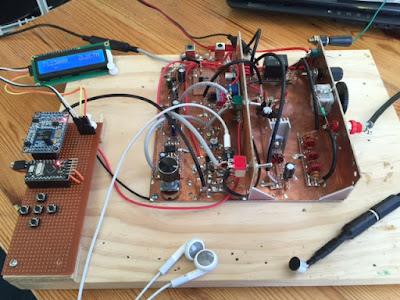
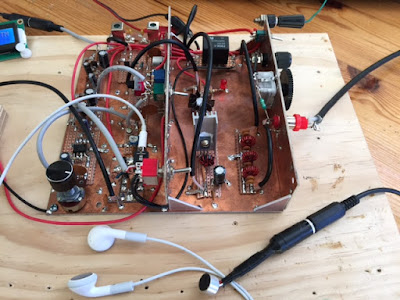
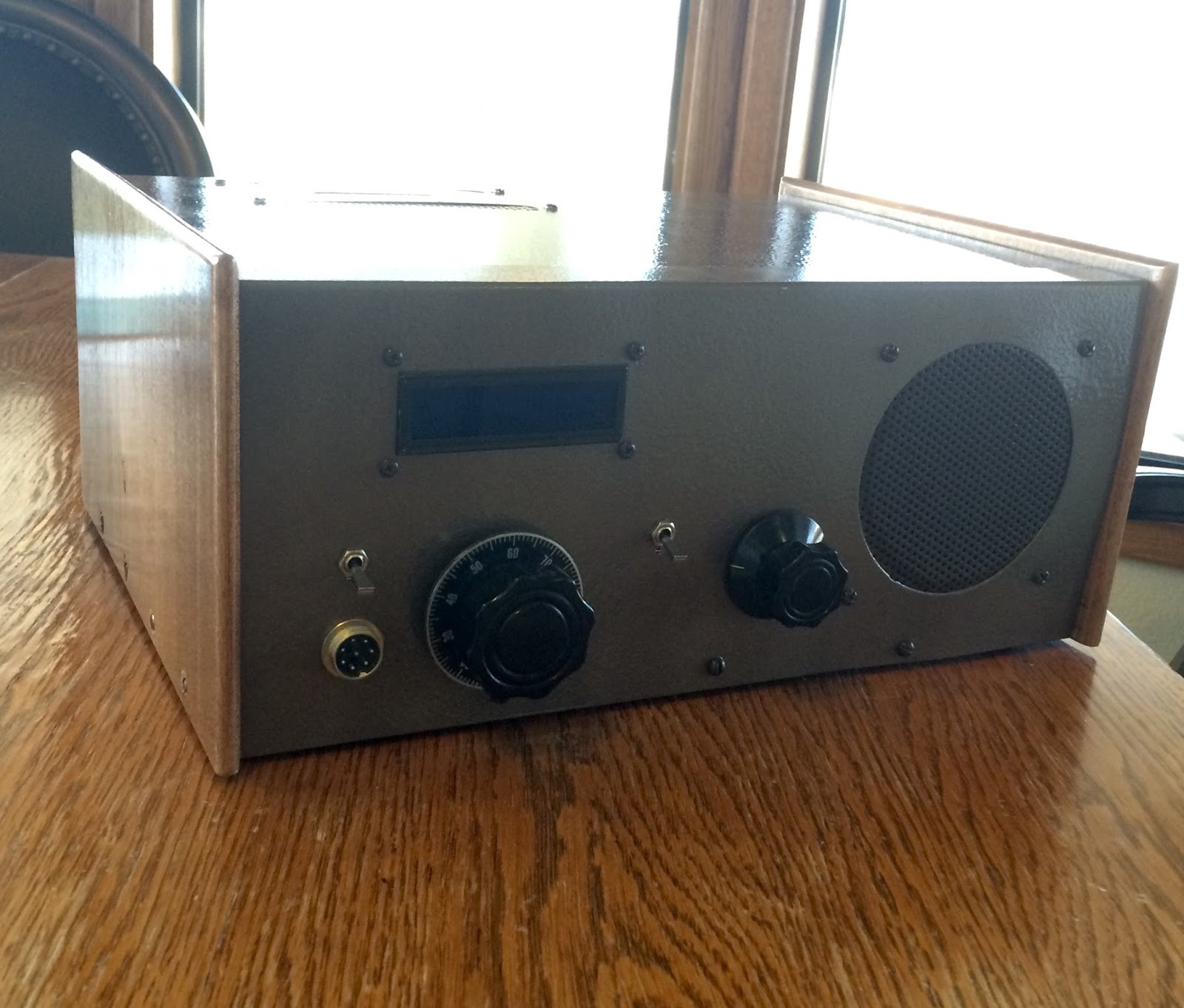
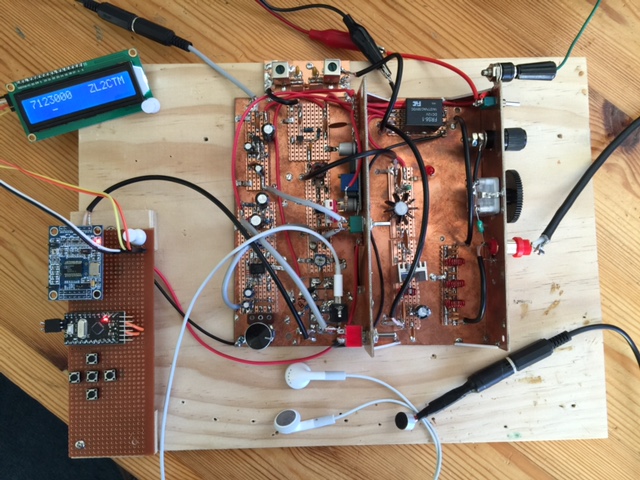
New Zealand and Australia seem to produce an amazingly high percentage of the world’s double sideband transceivers. Charlie ZL2CTM adds to the count. He took inspiration and circuitry from DSB hams in both countries and produced this beautiful DSB transceiver. It is obviously — as Charlie notes — chock full of soul. I definitely identify with his comment about “taming some kind of electro-mechanical machine” and also, of course, with his remark about the feelings that come with putting a homebrew rig on the air. So follow the advice of Charlie! Build a DSB rig and put it on the air! Make this your ham radio resolution for 2016! Give it a go!


Hi Bill:
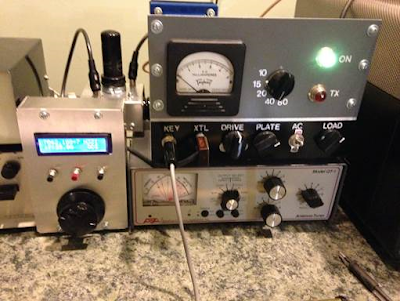
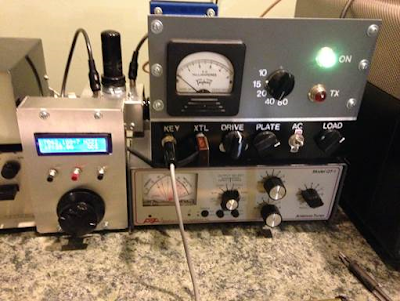
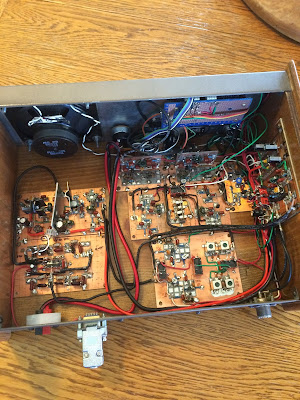
I have been following you and Pete Juliano for many years now, and thought I would send you a photo of my 40m homebrew rig that I finished yesterday. Hopefully, it will help encourage others to melt some solder and make their own rigs. The rig is based on ideas and designs from Eric Sears ZL2BMI, Peter Parker Vk3YE and of course Pete N6QW. The aim is to make the final version relatively compact so I can take it tramping/hiking here in New Zealand.
The VFO is an AD9850 being controlled by an Arduino Pro Mini. The output is amplified to provide sufficient drive for the balanced modulator. I was using a nice 1” OLED screen to show the frequency, but that generated a huge amount of noise, so I changed to a LCD. Changing frequency is simply a matter of moving the curser left and right then using the up and down buttons to change the number. Very quick and easy. I was contemplating a rotary encoder, but I find those always seem to skip and jump every now and then. Must be the way I use them…
The balanced modulator is a 4148 diode ring. I do have some SBL-1s lying around, but I thought I’d go with the discrete diode ring for something different. I’m using a standard electret mic and a simple single stage amp. The switch above that switches between phone and CW.
The PA is two stages; the first a 2N3053 and the second a BD139. At this stage it puts out just over 1W into a 50ohm load. I might look to add another stage and get that up to 3-5W.
The audio amp is a simple LM386. I am not running it hard out as per the datasheet as it generates quite a bit of high frequency hiss in that configuration.
Unlike Pete, I don’t have access to a milling machine to make squares to mount the components on. Instead, I use vero/strip board upside down and solder directly to the strips. This works really well for me on HF. I cut tracks with the twist of a small drill bit.
Last night I made two contacts with the rig. The farthest was 527km according to some well known mapping software. Both reports said the audio was ‘very nice’, which was great to hear. The receiver worked surprisingly well too, and I managed to hear stations in Europe.
As for user controls, you will notice that the pots, switches and plugs are all over the place. I did that to keep leads short. I like it as i feel like I am taming some kind of electro-mechanical machine to generate and receive RF.
Anyway, this little rig has a ton of soul in it and is really fun to use. There is something different about making a contact with a rig you built. I really encourage everyone to give it a go!
The next iteration will be a SDR using a Teensy. Rheslip over at Open Emitter has done some great work with that.
73s
Charlie
ZL2CTM
TIA-Tube Hybrids from Steve N8NM (Part 1)


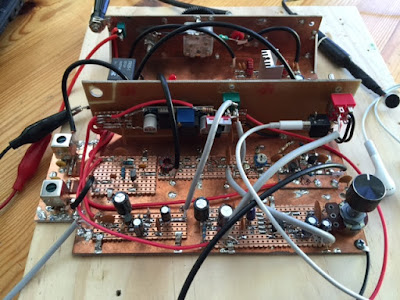
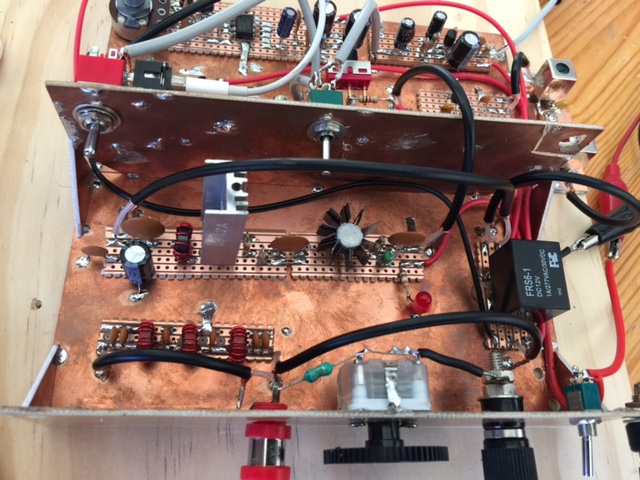
Last week Steve sent us a picture of his Straight Key Night rig which consisted of a homebrew thermatron transmitter and a TIA BITX as the receiver. I asked Steve for more info on the TIA BITX.

Bill:

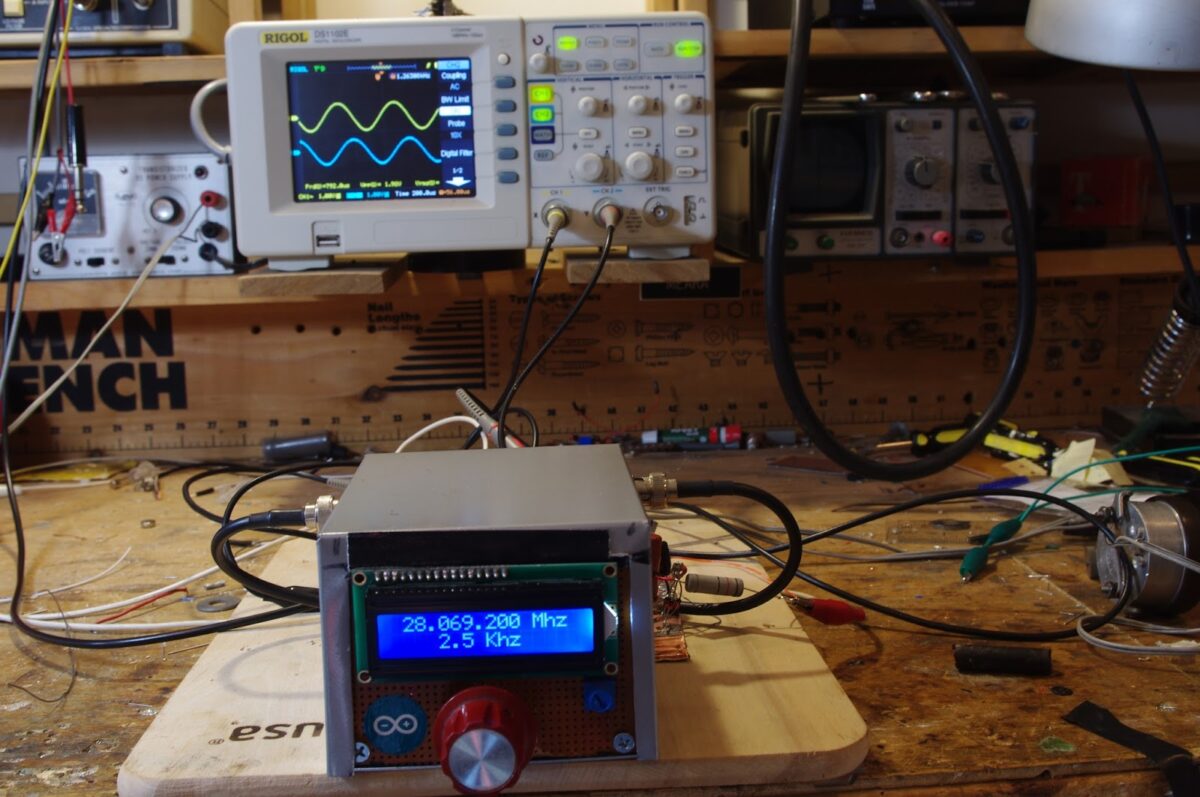
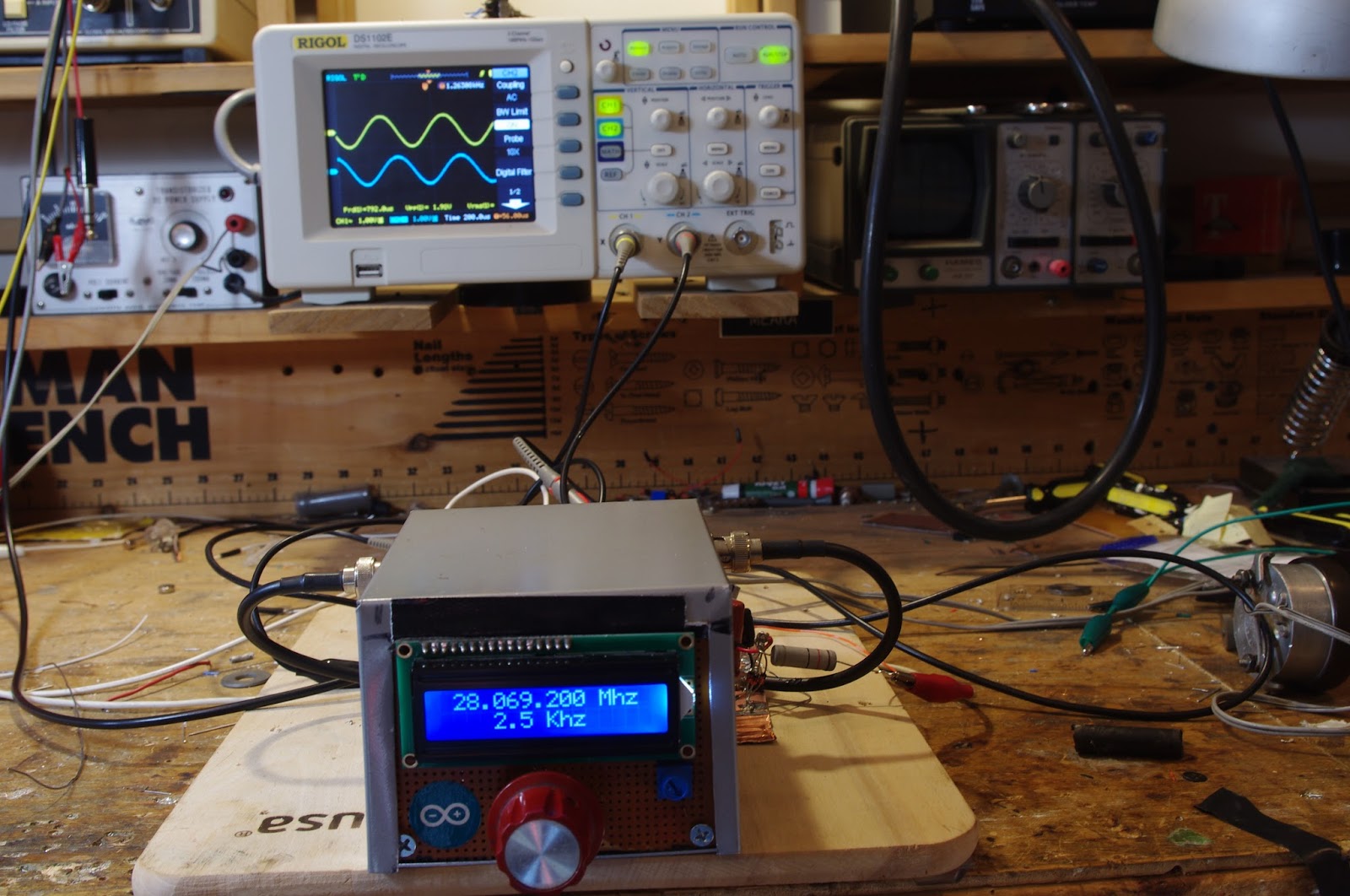
Shot these right after making the first QSO using the TIA rig as the receiver. The Arduino and ‘5351 are still on a breadboard, otherwise, all of the PCB modules except the filters and PA are installed on the chassis.

The QSO was uneventful, which is a good thing!
73!
Steve

A SolderSmoke Holiday Charity Appeal — Help Elisa help little Gonzalo!

We are going “off topic” for a moment, for a good cause. Listeners to the podcast will have heard about my wife Elisa’s strong connections to her home country, the Dominican Republic. The new year finds Elisa trying to help a Dominican cousin who has a very sick little boy. Details below. All contributions large or small from the SolderSmoke community would be gratefully received. Just click on the link to make a contribution. And please consider forwarding this appeal to friends or relatives who might also be willing to help.


My name is Elisa Meara, and I am raising money for my dear cousin Eliana and her 18 month old baby boy Gonzalo.

The week before Christmas Eliana and her husband Pedro were happily preparing to celebrate the festivities with their only child Gonzalo. This was Gonzalo’s second Christmas and the first one he would be aware of. Gonzalo wasn’t feeling well and his pediatrician recommended that he be admitted to the hospital for a few days. “Just another childhood virus” I am sure Eliana and Pedro thought.

But the morning of the day before Christmas they learned Gonzalo was very ill. The diagnosis was leukemia. While the world around them celebrated, they were living every parent’s worst nightmare. Baby Gonzalo needed emergency medical attention to save his life.

On Christmas Eve, trying to give their son the best chance possible, they left their home and families behind in The Dominican Republic to take him to Jackson Memorial Hospital in Miami for treatment. The morning of Christmas Day he received his first round of chemotherapy. The treatments will continue for the next six to eight months.

Needless to say, this young and hard-working couple is devastated. They are trying to do everything they can to help their baby boy.

While they have health insurance, the costs and expenses -especially those associated with living in a foreign city- are growing very quickly. We are hoping to help ease this tremendous heart-ache and suffering with prayers and financial support.

No contribution is too small and every little bit will help. You can contribute here:

And please consider forwarding this appeal to friends or relatives who might also be willing to help.

Happy New Year! Straight Key Night on 160 Meters

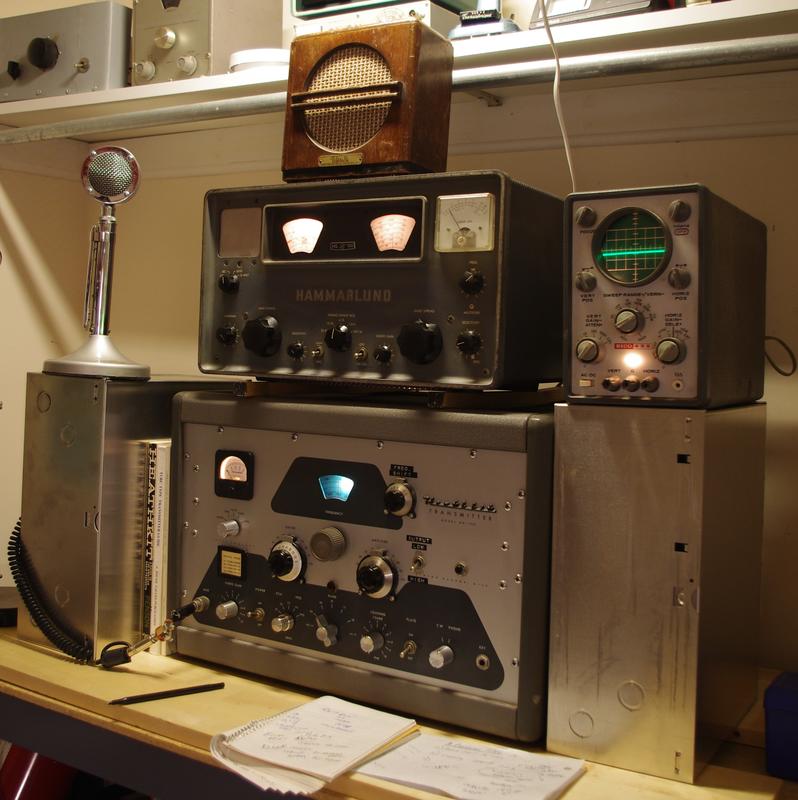
A while back, when I first mentioned getting on 160 meters by year’s end, Pete suggested I shoot for Straight Key Night. As many of you know, suggestions from Pete somehow seem to have a way of becoming ham radio MORAL IMPERATIVES. He seems to be a prophet of sorts, a prophet of THE RADIO GODS. So following the guidance of the oracle of Newbury Park, I found myself in front of my DX-100/HQ-100 on New Year’s Eve, on 160 meter CW for the first time in my 42 years as a radio amateur.
It was great. A couple hours prior to the official 0000Z start of Straight Key Night I had my first 160CW QSO. It was with John WA2MUA up in Summit, NY. John’s QRZ page includes this: Years ago–as a teenager– in an attempt to get enough wire for 160 I wrapped a quarter wave of wire around a pvc pipe, strapped it to a wooden gutter—-burned a large notch in the gutter and could have burned my parents’ house down!” That, my friends, is 160 meter KNACK!

Then, just minutes after SKN kick-off, I worked John W3LR in Eastern Pennsylvania. It was also John’s first SKN contact.

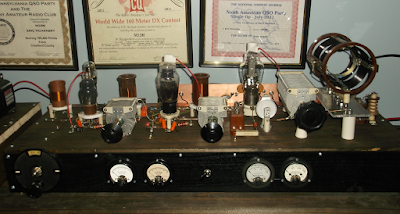
Next up was Eric NO3M. Wow, this one was amazing. Eric was running the homebrew rig pictured above. On his blog Eric describes the rig: “The transmitter is running a 89 Clapp oscillator, 802 buffer, 811 final… Output power is approximately 75W. “
Eric’s antenna is even more amazing: it is a 160 meter four square featuring FOUR aluminum tubing vertical elements with capacity hats and –GET THIS — a radial field consisting of 22,000 feet of bare copper wire. TWENTY TWO THOUSAND FEET OF BARE COPPER WIRE. Wow, you just don’t run into stations like that on 20 meter sideband. Eric’s blog: http://no3m.net/ But Eric — a Vibroplex Champion? On SKN?
I then worked KC2LSD and K1EEE. FB!

My last contact of the evening (and the year) was K1WHS, Dave in Maine. On his QRZ.com page, Dave reports:
On 160 meters, I have a small setup right at my house. I use a K3 with a homebrew 3-1000 amplifier that runs at 1300 watts. The antenna is an 80 ft Rohn 25 in my backyard with some top loading and shunt feeding. I laid out a bunch of radials in an effort to get the efficiency up. At last count I had about 107 1/4 wave radials strung out. 160 is the only band where my feedline is not big fat hardline. I use a run of RG-213. For receive, I have several beverages running in the woods. I use this setup often in the winter as many times, the hilltop shack is not accessible due to heavy snow. I have nothing up for any of the bands between 160 and 10 meters”.
Thanks to all of my SKN contacts! And Happy New Year to all SolderSmoke readers and listeners!

N8NM’s Straight Key Night Rig

Hi Bill,
Just wanted to drop you a line to let you know that I’ve recently discovered your SolderSmoke podcasts and am enjoying the heck out of them! In fact, you and Pete have inspired me to break away from the thermatrons and delve into the wonderful world of the TIA transceiver, and after several weeks of sniffing rosin, my new rig is now receiving signals without the aid of any external life support! It’s still a bit haywired, but I’m looking forward to pairing it with my little 6AG76L6 transmitter for a few SKN QSOs tomorrow.
I haven’t taken any pics of the new rig yet, mainly because, at this point, there’s not much to see, but here’s it’s little octal-based friend with its AD9850/6AG7 hybrid VFO (works a bit better than the VF-1 that it replaced J):
Anyway, thanks for putting forth the time and effort to do the podcast! All the best to you, Pete and your families in the new year.
73,
Steve Murphy, N8NM

N8NM’s Straight Key Night Rig

Hi Bill,
Just wanted to drop you a line to let you know that I’ve recently discovered your SolderSmoke podcasts and am enjoying the heck out of them! In fact, you and Pete have inspired me to break away from the thermatrons and delve into the wonderful world of the TIA transceiver, and after several weeks of sniffing rosin, my new rig is now receiving signals without the aid of any external life support! It’s still a bit haywired, but I’m looking forward to pairing it with my little 6AG76L6 transmitter for a few SKN QSOs tomorrow.
I haven’t taken any pics of the new rig yet, mainly because, at this point, there’s not much to see, but here’s it’s little octal-based friend with its AD9850/6AG7 hybrid VFO (works a bit better than the VF-1 that it replaced J):
Anyway, thanks for putting forth the time and effort to do the podcast! All the best to you, Pete and your families in the new year.
73,
Steve Murphy, N8NM

The K7DYY Solid State Class D Legal Limit AM Transmitter

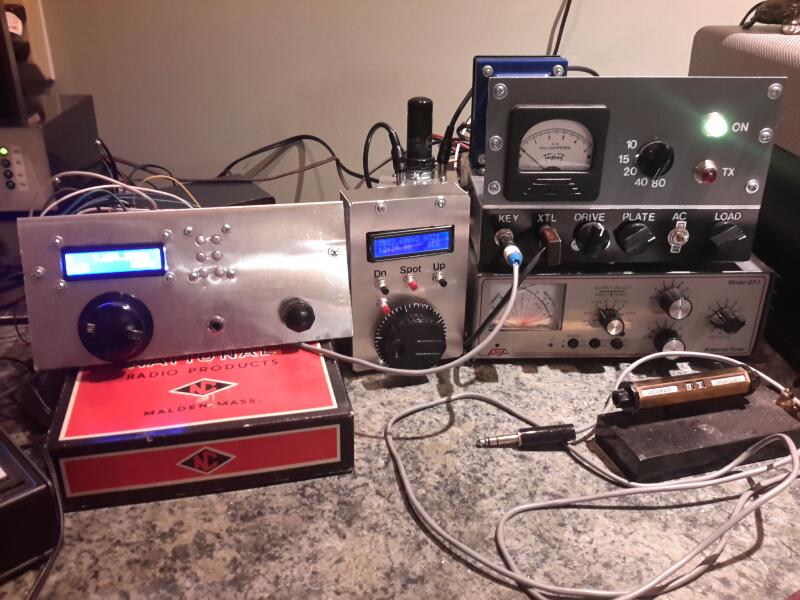
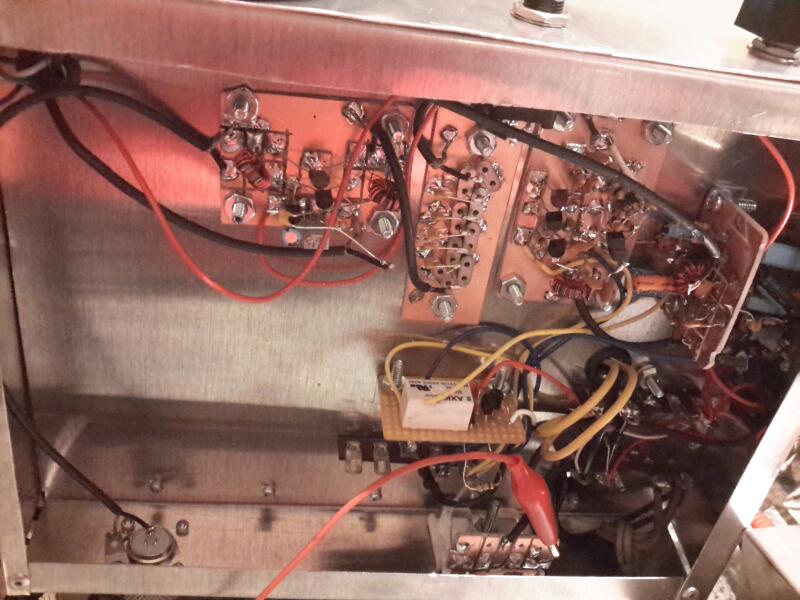
I was on 160 Meter AM this morning, talking to Chet WB2AHK in New York City. Chet had a very strong signal here. He was running a rig that I hadn’t heard about before, a K7DYY transmitter. See above. Very interesting. Here are the details:


Chet’s receiver was at the opposite end of the technology spectrum — like me he was listening on a Hammarlund HQ-100. He told me that he had replaced the old mechanical clock with a digital “glowing numerals” device. This got me thinking that that space on the front panel might be suitable for a small frequency counter…


Alan Wolke W2AEW Interviewed on QSO Today! And it is GREAT!

Picture
A very cool interview indeed. But how could it be otherwise? With Eric on one end of the Skype connection and Alan on the other, coolness was inevitable.

In this interview we are reminded of the FACT that Alan has a major case of THE KNACK. Proof is found in the way he obtained the wire for his first SW antenna: he unwound the magnet wire in the yoke transformer of a discarded TV set. THAT, my friends, is the stuff that KNACK is made of!

Check it out:
I share Alan’s affection for the TEC 465 ‘scope, but I twitched a bit when he said it is “easy to work on.” It scared the hell out of me! It features both plug-in transistors and lethally high voltage — so high that Alan had to lend me a special high voltage probe just to do the measurements.

Alan’s mention of Project Diana and the history of moonbounce reminded me of Ross Bateman, W4AO, the wizard who, in 1952 bounced the first amateur radio signals off the moon. He did it from the town I live in now, Falls Church, Virginia. Alan provided me with the address from which the signals were launched.

Thanks Alan! Thanks Eric!

First Contact on 160 Meters

Hooray! After 42 years on the ham bands I have finally made a contact on 160 meters. And it was on AM, using John Zaruba’s DX-100. My antenna is the 185 foot wire that I mentioned in yesterday’s post. I built an L network using a roller inductor and a bread-slicer cap — the network is at the base of the antenna. Before dawn this morning I threw my call into a round-table on 1885 kc. Pete WA1SOV up in Connecticut heard me and we had a short contact. Hooray!

I hope this puts some pressure on Steve Silverman and Pete Juliano — they have sworn A SOLEMN OATH to get on top band. I’m especially worried about Pete’s adherence to this pledge — he seems to be going a bit wobbly on us, playing with Raspberry Pi’s and things like that. C’mon guys! Top Band awaits!

My antenna needs improvement. More radials might help.

“Receiver Here is My SWR meter OM…”

Santa managed to include in his delivery some of the materials that I needed to build my 160 meter inverted L antenna. You see, Steve Silverman, Pete Juliano and I have collectively more than 150 years in ham radio, but none of us have ever operated on Top Band. The three of us have taken A SOLEMN OATH to correct this horrendous deficiency. I am in the vanguard, partly due to a weather pattern that is perfect for antenna building.

Armed with a new elastic band for my Wrist-Rocket sling shot and some perfectly shaped lead sinkers, yesterday — with the obvious cooperation of The Radio Gods — I managed to get two ropes over some 70 foot trees. Soon — with minimal gnashing of teeth — I had 185 feet of wire in the air.

This morning I was messing around with L networks at the base of the antenna. I took a coffee break, leaving the 185 foot wire and the ground system connected to the coax. I had the transmitter off, so I was surprised to see the SWR meter jumping around a bit, up significantly from zero. What could that be? It wasn’t coming from my station, so it had to be coming from some other transmitter. And the slight bit of jumping that I saw on the SWR meter had the familiar pattern of the human voice. Some radio sleuthing ensued.

I flipped the station antenna switch to the “bench” position, and connected my scope to the coax. Wow! I immediately saw a big strong AM signal with modulation, at about 5 or 6 volts peak to peak. The Rigol ‘scope gave the frequency: 1220 kHz.

I tuned the HQ-100 to that frequency. As I listened to Gospel broadcast, I could follow the voice peaks on the ‘scope.

Some Googling ID’s the station: WFAX 1220 AM. 5 kilowatts in the daytime. 1.5 miles from my house. The vertical portion of the inverted L is obviously picking up a LOT of energy from the WFAX tower. And the horizontal portion of my antenna is broadside to the WFAX tower.

Of course this all made me think about throwing together a crystal radio, but then I realized I’d already listened to WFAX with simple diode — the one in my SWR meter. That little SWR meter was acting like a crystal radio with a visual output!

The Secret Life of Machines — The Radio (Video)

Thanks to Rick N3FJZ for sending this to us. In 25 minutes these fellows manage to capture and explain much of the “magic” of radio. Great shots of Marconi, and of Hertz’s first rig. Amazing how they built their own spark transmitter and coherer receiver, launched a kite antenna and sent a signal across the harbor. Great stuff. Lots of history. We’ve met Mr. Wells before — he was “jailed for having the Knack!”

SolderSmoke Podcast #183 Pete’s B’day, Simple-Ceivers, Binaural Bliss, 160 or Bust, GOOD BEHAVIOR, MAILBAG

Bill’s Frankenstein R2 receives 7 MHz signal and generates I and Q outputs


SolderSmoke Podcast #183 is available. And it is GOOD!

http://soldersmoke.com/soldersmoke183.mp3

20 December 2015

— Foxes in the Backyard
— Pete completes another orbit
— Simple-ceiver Success!
— Frankenstein Receiver: IT IS ALIVE! AND BINAURAL!!!
— 160 Meter AM OR BUST!
— Fun on 40 AM — Lots of Multi Elmac AF-67s! Who knew!
— The Amateur’s Code, and violations thereof.
— Negative Frequencies? I don’t think so.
— Capacitor Offer from our Secret Benefactor: EXPANDED ELIGIBILITY
— Projects for 2016: Pete goes Raspberry Pi, Bill goes DX-100
Mailbag:
— Croation Creation
— Salvadoran 2B
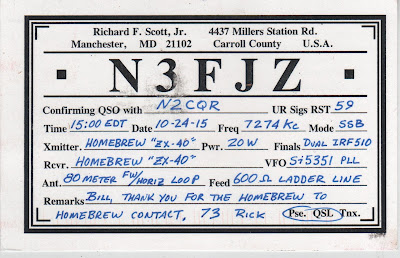
— N3FJZ’s Homebrew QSL
— WA7HRG’s LBS-ZIA-Simple-Ceiver Mashup Rig
— KC0IZR turning VCRs into Mighty Mites in NOVA
— AB1YK Starting with DC RX, going BITX
— G8GNR puts Mighty Mite on AM!
— G3ZPF Modulates THE SUN (Amazing)
— VK3YE’s Simple Superhet
— Grayson in Turkey drools over KG7TR’s Octalmania
— N7REP reaches for the Zantac because of Arduinos and Surface Mount

Mama Mia! Mikele’s Croation Simple-ceiver Video

You can just feel the homebrew enthusiasm in this video. You can almost smell the solder smoke.

We love it when people do videos showing their new rigs spread out on the workbench with individual boards held together by bits of solder. It is even better when, as in this video, the boards are atop hand-drawn schematic and parts-placement diagrams with much NOODLING in evidence.

FB Mikele! And I agree with you about the stations who call “CQ DX-only.” I used to hear that a lot when I was in Europe, and I hear it hear quite a bit too. I always think it is a contradiction in terms. There were times when I was sitting there with a new rig, anxious to get a signal report from a strong station, and he wouldn’t come back to me because of the Continent that I was sitting in! Pity. His loss. He might have been interested to hear about the contraption I was testing. It could have been fun, but no, he preferred to work VK3 or Puerto Rico for the 1000th time.

Indeed, three cheers for the legendary Pete Juliano!

Modulated Michigan Mighty Mite?


This suggestion from across the pond is a bit “out there.” In fact, for me it brought to mind the famous line from the Noel Coward song about who goes out in the mid-day sun… This does seem like an endeavor for our stoic British cousins. You’ll need a very stiff upper lip to AM modulate a Michigan Mighty Mite! Peter’s observation about the “SSB kilowatt nerds” resonated with me and reminded me of the reaction I got when I tried to put a DSB rig on the air in London. But hey, go for it Peter! Please let us know the results. For those who are rock-bound in the CW portion of the band (like 3579) this might be something fun to try using a dummy load — just to see if you can send an AM Mighty Mite signal across the shack.

Hi Bill,

Your recent Soldersmoke thoughts re. MMMites have been niggling my imagination; I think radio should be fun, educational, simple and cheap, to encourage young folks to get a license and “appliance users” to melt some solder.

Mike Rainey (AA1TJ) and Jim Kearman (KR1S) have done superb work in reducing RF circuits to a functional minimum… so egged on by a certain Mr. Bill Meara, I’m looking at modulating a MMMite Tx on 80m and building the simple Rx to go with it. I chose 3615kHz as it’s a frequency UK VMARS (Vintage Military Amat Rad Soc) use for A.M. – the SSB kilowatt nerds who think the sky will fall down if A.M. corrupts the ionosphere have accepted a few enthusiasts firing a watt or ten of A.M. skywards. I blame you want to say thanks for setting my mind in this direction.

See how this sounds: modulate a MMM by inserting an electret mic capsule (2 terminal type) between the transistor base and ground, not forgetting the RF choke from the electret capsule output to the base bias 10k resistor, to avoid the xtal feedback signal being absorbed in the electret…

Yep, that’s it: job done, the MMM now produces A.M. as the base current, fed by 10k from the +ve rail in the original MMM, is now partially shunted to ground by the electret capsule. I’ll adjust the base bias resistor to get 50% “no speech” carrier and good mod. depth. I’m trying to avoid a mic amp stage; keeps it simple & sweet. If I can get 500mW in total, that’s ~ 100mW in each sideband – on a good day with a following wind, on 80m that should go a mile or twenty.

Which leaves a drop dead simple Rx to design – somebody has done similar, HERE, You got it: an LM386 audio amp as a regen Rx. I had considered the ZN414 TRF Rx, or it’s modern equivalents, but they are nowhere near as common as an LM386, or as cheap. IF it works on 80m…! Or, I could try an xtal controlled regen Rx, as per Mike / Jim’s designs. Either which way, I’m sure I can find a cheap, simple and effective Rx – but if you know of any…..?

Cheers Bill, TTFN!

Peter Thornton G6NGR

WA7HRG’s LBS-ZIA-Simple-Ceiver Project

Wow Pete!

Thanks for the GREAT info. Can’t wait to try things out. One day soon (Christmas is coming) I will have a new computer and can start learning LTSpice.

Great tribal knowledge on the over all gain adjustments as well. And I won’t tell the illuminati😄.
As for your articles, blogs, tribal knowledge and pot casts with Bill. Love them. Listen and read everyone. Print and file for later. Mostly because I can’t keep up with you on all the great projects.

But in the sprit of home brew and not just stuffing boards or following explicit directions I have built the LBS with my own mods.

1. It’s dual band. Almost. 40&20 LPF and BPF already in. 5watt tx works great but plan on putting in about 40 watts them getting around to making the dual band changes to the sketch and finishing things. I used my own audio amp design. Well not all mine. Manufacture spec sheet and Internet info and LBS. Your preamp, a NTE1288 10 watt audio IC.
Attached are pix of the LBS so far.

The current rig will be 20 meters only for digital modes. It will have a built in audio interface and thinking about including raspberry pi and TFT screen. But that’s got to be down the road.
It’s a hybrid again. Parts of LBS and ZIA and parts of Simpleceiver. I already had the ZIA IFs built so will have to try the dual FET on the next rig. Modified the audio again. Put in an FET AGC between the preamp and the final IC. About 40 dB dynamic range so should cut down on the vol control twisting when listening to a QSO with one strong and one weak station. So far this build consists of a box of tested modules that have not been hooked together yet. Your FET RF amp will the next board.

Also working on an Arduino Lightning detector with 5115 display. Almost got that one…. Have built couple prices of test equipment. A xtal osc with onboard freq counter and an LCR Transistor tester.

Oh and lets not forget the MMM on 3.58!

I personally know one other ham building a LBS. So don’t think your talking into outer space. We are out here listening! And learning! And having a great time.

And yes, when I catch up on projects, I’m going to build the actual Simpleceiver.

Thanks again for the fast response. I’ll let you know how it turns out.

Jim
WA7HRG


N3FJZ’s New Blog and Impressive Rigs (and a Bandscan!)

Rick N3FJZ and his Lakeside direct conversion receiver bolstered my spirits when I was getting some harshly critical reviews of my signal on 40 meters a while back. Rick happened to pick me up with his homebrew receiver. The Radio Gods seemed to be trying to balance things out. There is a LOT of radio mojo in Rick’s Lakeside receiver. Not only does it eschew digital synthesis of the VFO signal, it goes a step further and uses a permeability tuned oscillator — very cool. The component and material sourcing adds more luster to the rig. Rick writes: “A lot of the components used to construct the LS-40 were harvested from discarded consumer electronics I collected back in the 1980’s. The base substrate material for the Manhattan style construction, as well as the RF tight enclosure for the PTO, is made from a flattened out tin plated food can. All components are discrete; i.e. no IC’s or CPU’s.”


Rick has launched a blog. He has some amazing stuff on it. Be sure to check out his ZX-SSB rig. Amazingly detailed documentation Rick! Thanks.

Find Rick’s Blog here:
http://www.remmepark.com/circuit6040/

YAMMM! Yet Another Michigan Mighty Mite! From KC0ZIR in Northern Virginia

Bill,

Thank you for the podcast and the loads of tribal knowledge from you and Pete! I recently started going through the SolderSmoke backlog, and I am just getting to the Colorburst Liberation Army episodes. I had some crystals for 40m laying around, so I started reading up and winding on a film canister.
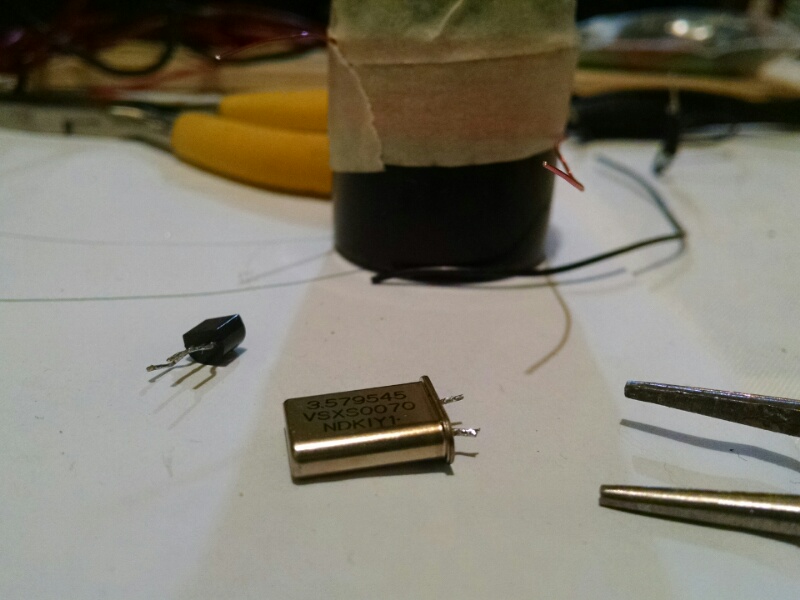
Later, I thought I’d hop up the current episode of the podcast while I work, and I heard you guys talk about another push for the Michigan Mighty Mite. I happened to be salvaging bits from an recycling-pile VCR at the time, and I came across this crystal with a familiar label: 3.579545. The radio gods have spoken, so I will be winding a new coil for 80m.
I heard you mention the anonymous benefactor, but I have some aluminum foil, and I plan to brew the cap as well, there are a few options here: http://www.instructables.com/howto/variable+capacitor/
I thought I’d tell you a quick story anyway, because I just want to be a part of the fun. When I was little, our radios all had retractable antennas, and the TVs all had rabbit ears or loops. I would spend nights trying different materials and orientations to try and get better signal. At one point, I ran as much wire as I could in my brother’s room (he had a big garage-sale cabinet tv), and we were getting channels from all over the place. We knew when each channel would be showing reruns of Star Trek, so we could catch an episode or two almost every day of the week. We even got some channels that I thought were only available on satellite. I had read in my box of Popular Mechanics magazines that some dish setups re-broadcast their signal on VHF/UHF frequencies with low power, I always suspected that’s what we were picking up.
I didn’t know much (or really anything) about the theory behind antennas at the time. I’m still a bit hazy, like with the 75 ohm / 50 ohm cable thing. I thought resistance was a function of length, how can different lengths of coax be the same ohm rating?
Anyway, I just wanted to let you know I’m new to homebrewing, and you guys are a big part of that!
73,
Dan, KC0ZIR
Northern Virginia (a little to the left of you, it sounds like)
…………………………

Excellent Dan!

Getting the 3.579545 MHz rock out of a dead VCR definitely adds mojo to the rig. Indeed, TRGHS! Thanks for sharing your Knack Story. I hope to meet up to you, perhaps at the hamfests of Northern Virginia. In my capacity as Grand Poohbah and Arbiter of Capacitor Eligibility, I hereby deem you ELIGIBLE for a variable capacitor. Our secret benefactor will be contacting you.

73 Bill