QST de AA1TJ…
I’ve a 150uW transmitter built from a single unijunction transistor currently running as a beacon on 3552kHz. If my New England amateur radio pals would be so kind as take a listen for it I’d be most appreciative!
Author: Peter Marks
Alan Wolke W2AEW Builds a Michigan Mighty Mite (Video)
We are honored to induct Alan Wolke W2AEW into the Colorburst Liberation Army. And for his valiant effort to build and explain a MMM Low-Pass filter, he is immediately promoted to the rank of CBLA Two Star General. Congratulations General Wolke.
As is the case with all of his videos, this one has already had an impact far and wide. Ian writes from far-off Western Australia:
Jan 27 at 6:19 PM
G’day Bill,Just in case none of your other correspondents have brought it to your attention, here is a great video W2AEW has put up showing really clearly the positive effect of a low pass filter on the output of the Michigan Mighty-Mite.
It made me appreciate the benefits of an LPF more fully. It’s always been clear to me that the harmonics would get rolled off, but in my head I hadn’t made the connection between that and the improvement to the beautiful smooth sine wave that we are working towards.
Anyway, I thought you, and your mate Steve “Snort Rosin” Smith may be interested.
Thanks to you and Pete for Soldersmoke, I’m sure you’re responsible for keeping the flame alight in many a ham.
73,
Ian VK6MIB And Steve “Snort Rosin” Smith, the guru of low pass filters, observes:
Of course, to work properly in the land down under, the inductors must be wound in the opposite direction as those in the Northern Hemisphere 😛 .
Seriously, there is a lot to be learned from the lowly Mighty Mite especially regarding impedance matching; not to mention LC circuits, link coupling, amplifiers, oscillators, etc. . What fun!
73…….SR
Humidity Data and the Zapping of my LCD Display
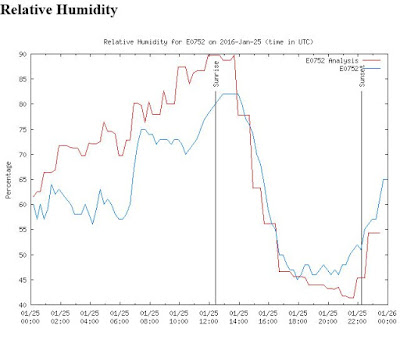
Sometimes the Radio Gods conspire against you. Check out the chart above. It shows relative humidity at my location. I zapped my LCD display right around 2000 UTC on January 25, 2016. That poor little LCD didn’t stand a chance 🙁
Right now relative humidity here is 79%. No sparks now!
I like the solution (!) proposed by Brendan, EI6IZ:
You can get an anti-static spray designed to treat carpet, upholstered furniture etc. This is a sensible thing to do if one tinkers with electronics and for the average hamshack a bottle will last for many years as it only needs to be applied lightly and infrequently.
For example http://ie.rs-online.com/web/p/esd-safe-clean-room-treatments-lotions-dispensers/0182893/ For cheapskates however, diluted fabric softener sprayed on the carpet and chair will work well for at least a few months but will require much more frequent application than the ‘proper stuff’.
I give my car seat an occasional squirt in dry summers to stop the ‘zap’ when getting out on a dry day.
73
Brendan EI6IZ

An Electro-Static Bandaid to Protect Sensitive LCD Displays
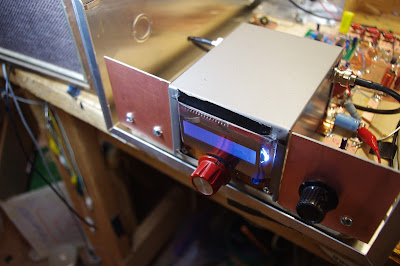
After the big East Coast blizzard, the atmosphere in my ham shack became very dry. I sit in one of those desk chairs with little plastic wheels. The shack is carpeted. So when I roll from operating bench to workbench, the chair, the carpet, the dry air and I all become a kind of Van de Graaff generator. Yesterday, my hand brushed against the 16X2 LCD display on my new R2 phasing receiver. The pretty glowing numerals in that display disappeared in a small spark, never to return.
I swapped out another display I had, so all is well. But the repair was a pain in the neck, involving the soldering of some 16 LCD pins, so I don’t want to do it again. I consulted with Pete Juliano N6QW who told me that this kind of LCD carnage is quite common in dry environments. He said he had cured the problem by placing a small piece of Plexiglas in front of his displays.
This got me thinking about those static protective bags that Digikey uses when shipping many of its components. Might the material from these bags prevent the loss of another display?
I retrieved a couple of these bags from the garbage and did a little test:
First, I rolled across the shack in the chair with a small screw-driver in hand. At the other end of the shack lies my well-grounded DX-100 transmitter. I moved the screwdriver close to the metal on-off switch. SPARK! It was visible, and quite audible in the AM broadcast receiver nearby.
Next I taped a small piece of this material over the switch and repeated the ride in the chair. No spark. Nada. I repeated this several times and always got the same result.
It appears that the material in the bag helps dissipated the static discharge over a wider area, preventing the spark. I quickly taped a piece of this material over the two LCD screens in my shack. It’s not pretty, but it is temporary, and cheaper than a humidifier.
I’m not going to try this on the actual screens, but I do think these small pieces of material will help prevent another accidental frying of an LCD display.
Here is the Wiki on anti-static bags: https://en.wikipedia.org/wiki/Antistatic_bag
And here is the data sheet on the bags that I am using:
http://documents.staticcontrol.com/PDF/Static_Shielding_Bag_1000_Series.pdf
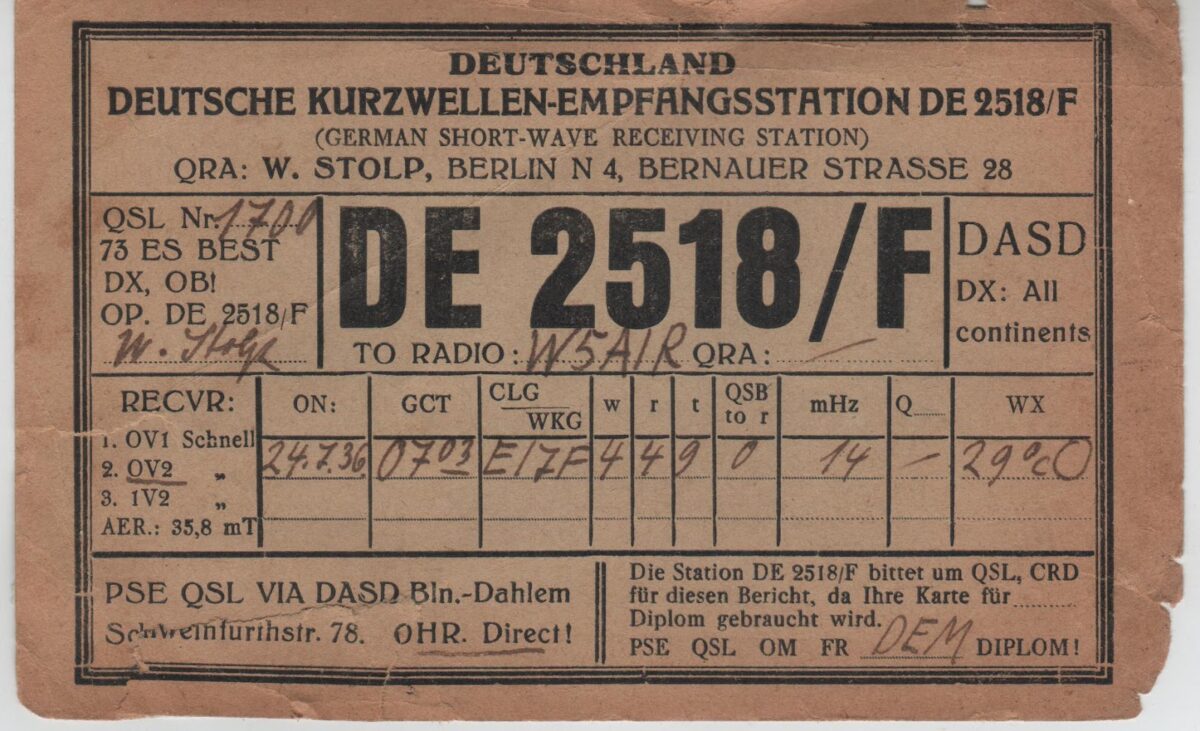
1936 Shortwave Listener QSL card
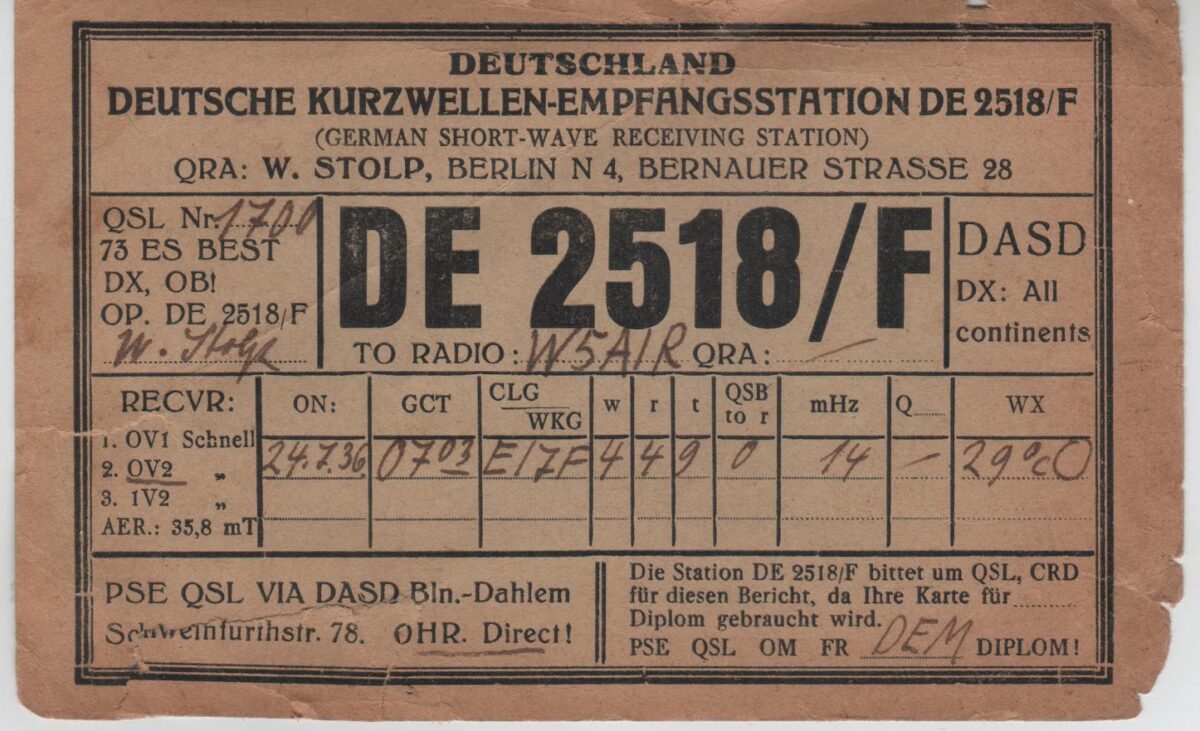
I found this today while rummaging around in the shack. It is starting to fall apart so I figured I better digitize it before it turns into dust.
July 24, 1936. 7 am in Central Germany. 29.0 degrees Centigrade. Clear skies? German Shortwave Receiving Station DE 2518/F monitored W5AIR’s contact with Irish station EI7F on 20 meter CW. The receiver was an OV2 Schnell tube (almost certainly a regen) fed by a 38.5 meter long antenna.
Conditions must have been pretty good — they were approaching the peak of sunspot cycle 17.
In 1954 W5AIR was assigned to Garold D. Sears. He was probably the operator.
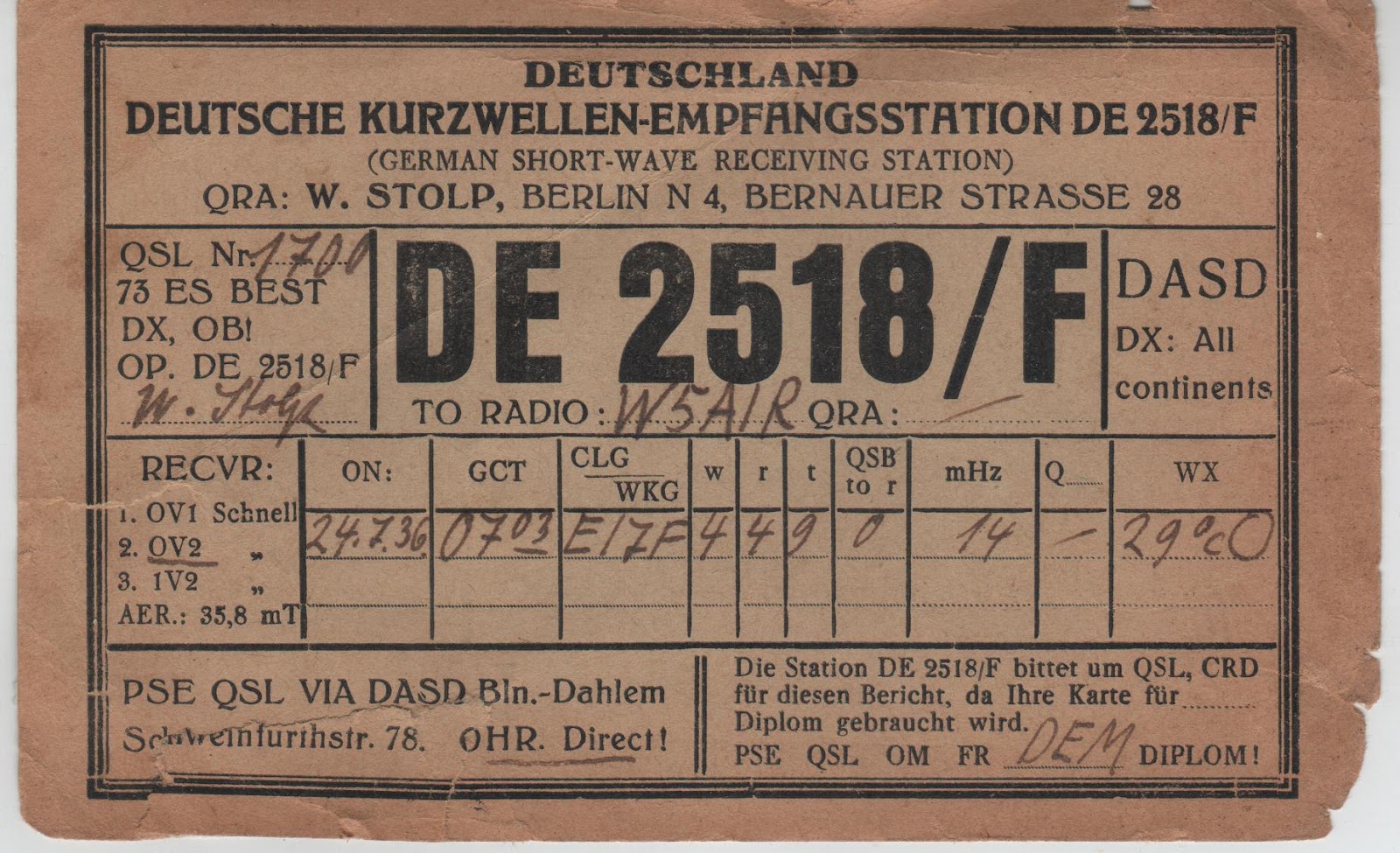
1936 Shortwave Listener QSL card
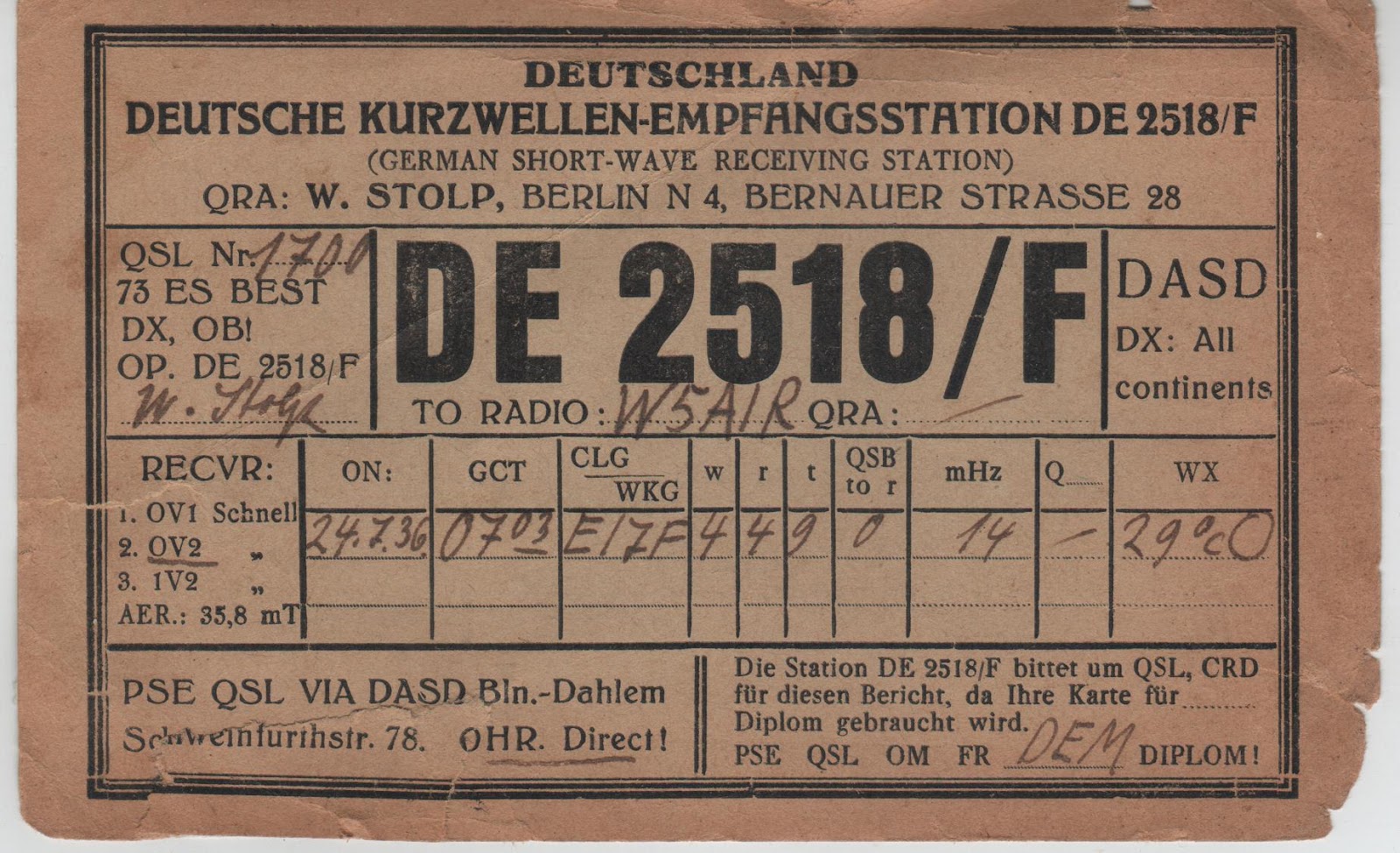
I found this today while rummaging around in the shack. It is starting to fall apart so I figured I better digitize it before it turns into dust.
July 24, 1936. 7 am in Central Germany. 29.0 degrees Centigrade. Clear skies? German Shortwave Receiving Station DE 2518/F monitored W5AIR’s contact with Irish station EI7F on 20 meter CW. The receiver was an OV2 Schnell tube (almost certainly a regen) fed by a 38.5 meter long antenna.
Conditions must have been pretty good — they were approaching the peak of sunspot cycle 17.
In 1954 W5AIR was assigned to Garold D. Sears. He was probably the operator.
Listen to My R2 Phasing Receiver (formerly known as “The Frankenstein” )
I really like this receiver. Thanks to all who helped.
Blizzard Prep Priorities: Protecting the 160 meter L network!
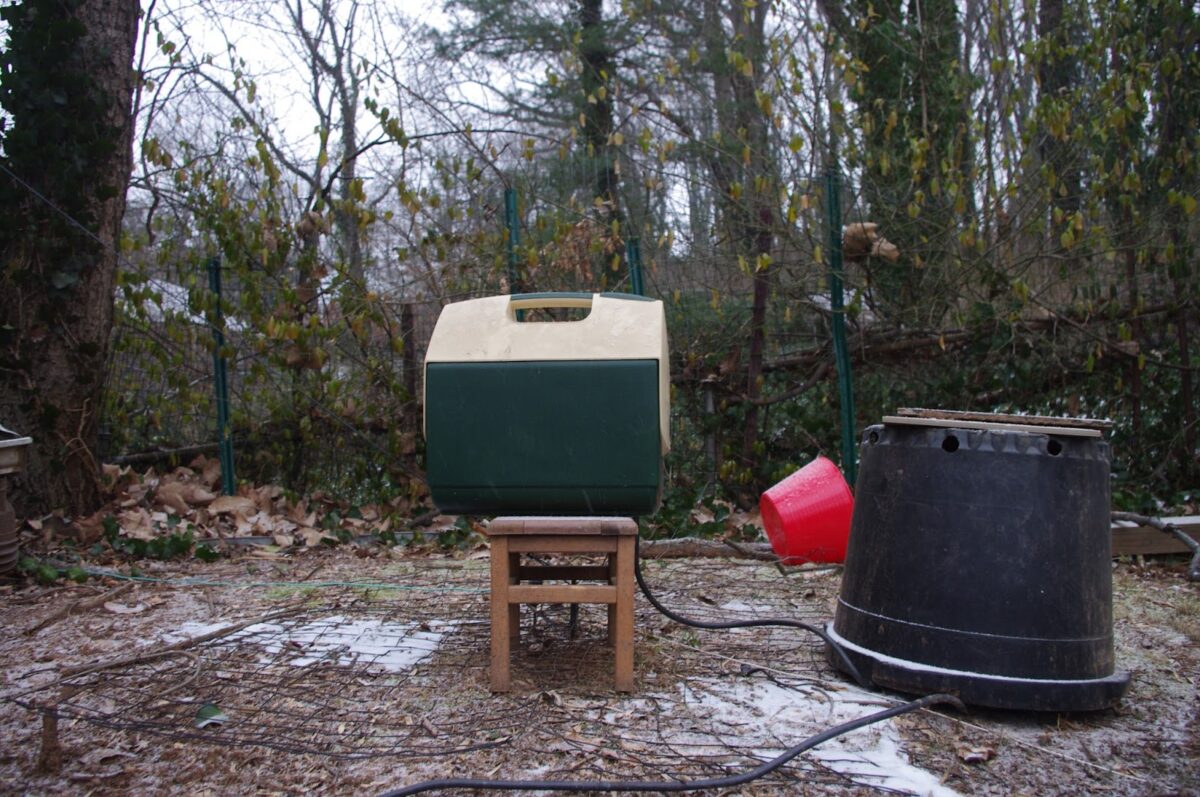
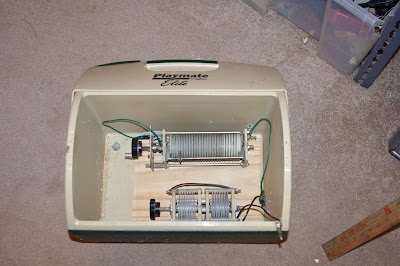
I’d been meaning to build a proper cover for my improvised 160 meter L network. The approach of Winter Storm Jonas pushed me into action yesterday afternoon.
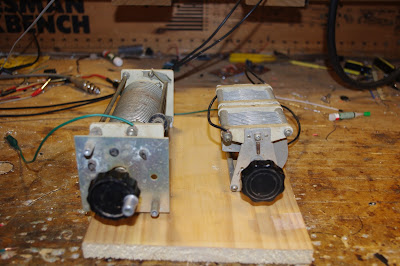
First I mounted the variable cap (from an old Johnson rig) and the roller inductor on a suitably sized piece of wood:
Then I put the tuner inside an old cooler. I drilled holes in the bottom for the coax and the antenna wire and the ground.
Here it is at the feed point. Pretty cool, don’t you think?
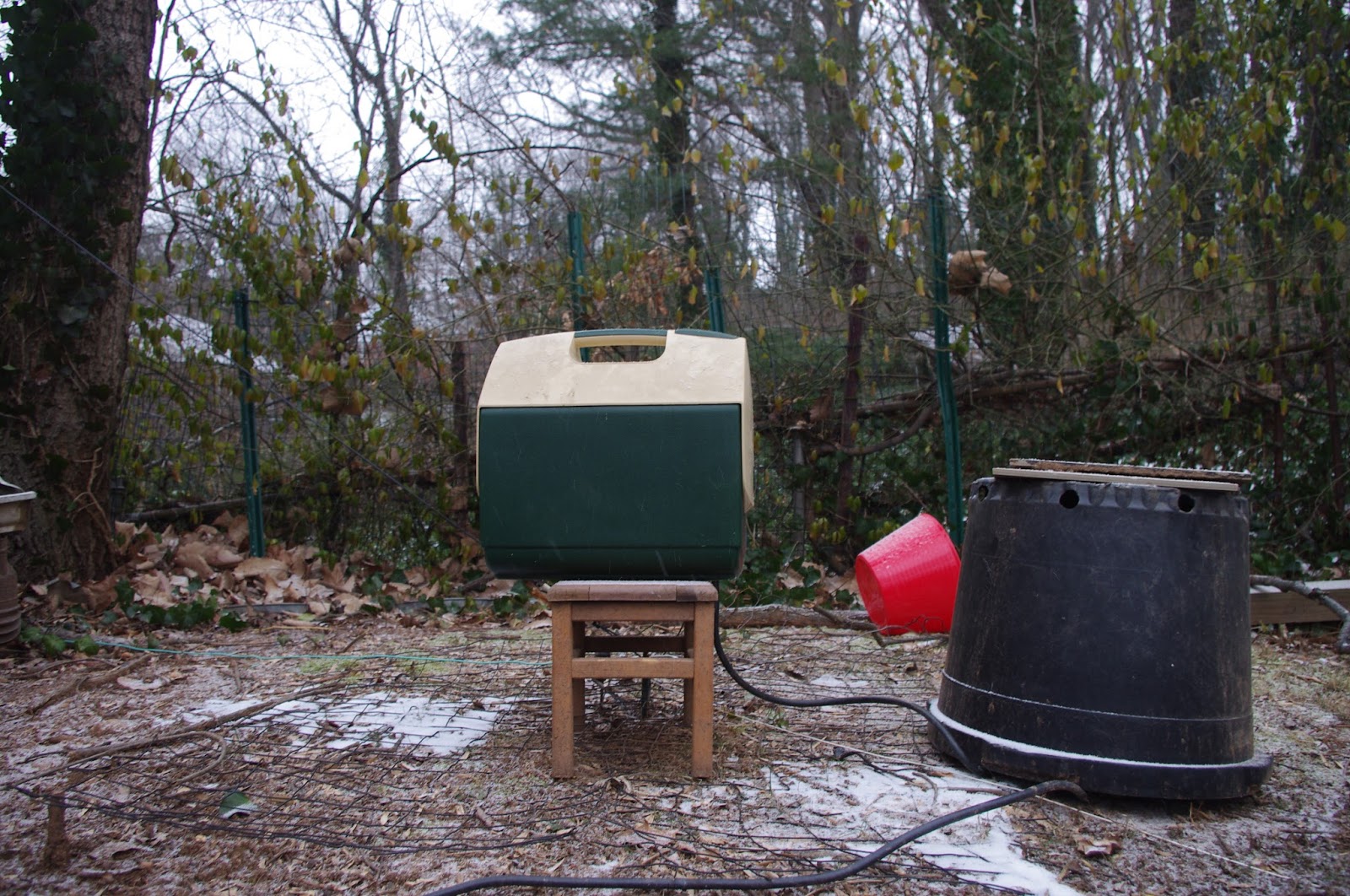
And here it is 24 hours later:
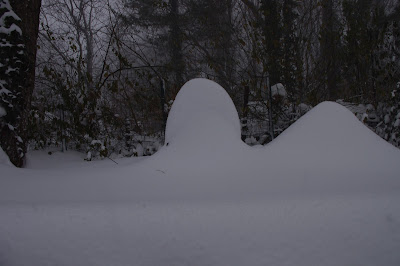
The blizzard has been quite impressive. Early this morning it featured lightning and thunder!
Some Inspiring Phasing Philosophy from KK7B

KK7B holding his original Mini-R2
Rick Campbell KK7B concludes Chapter 9 of “Experimental Methods in RF Design” with these inspiring words:
“An amateur who has built up a phasing receiver, looked at the I and Q channels on a dual trace oscilloscope, and tweaked the phase and amplitude adjustments while listening to an opposite sideband signal drop into the noise acquires a depth of understanding far beyond that of most wireless graduate students and many of their professors. The best part is that understanding of phasing systems comes from experimenting with simple circuits and thinking — the tinkering comes first — then the understanding. In this area the amateur with his simple workbench; primitive test equipment; and time to contemplate, has a profound advantage over the engineering student with a computerized bench and exam next week, and the professional engineer with a million-dollar lab and a technician to run it.”
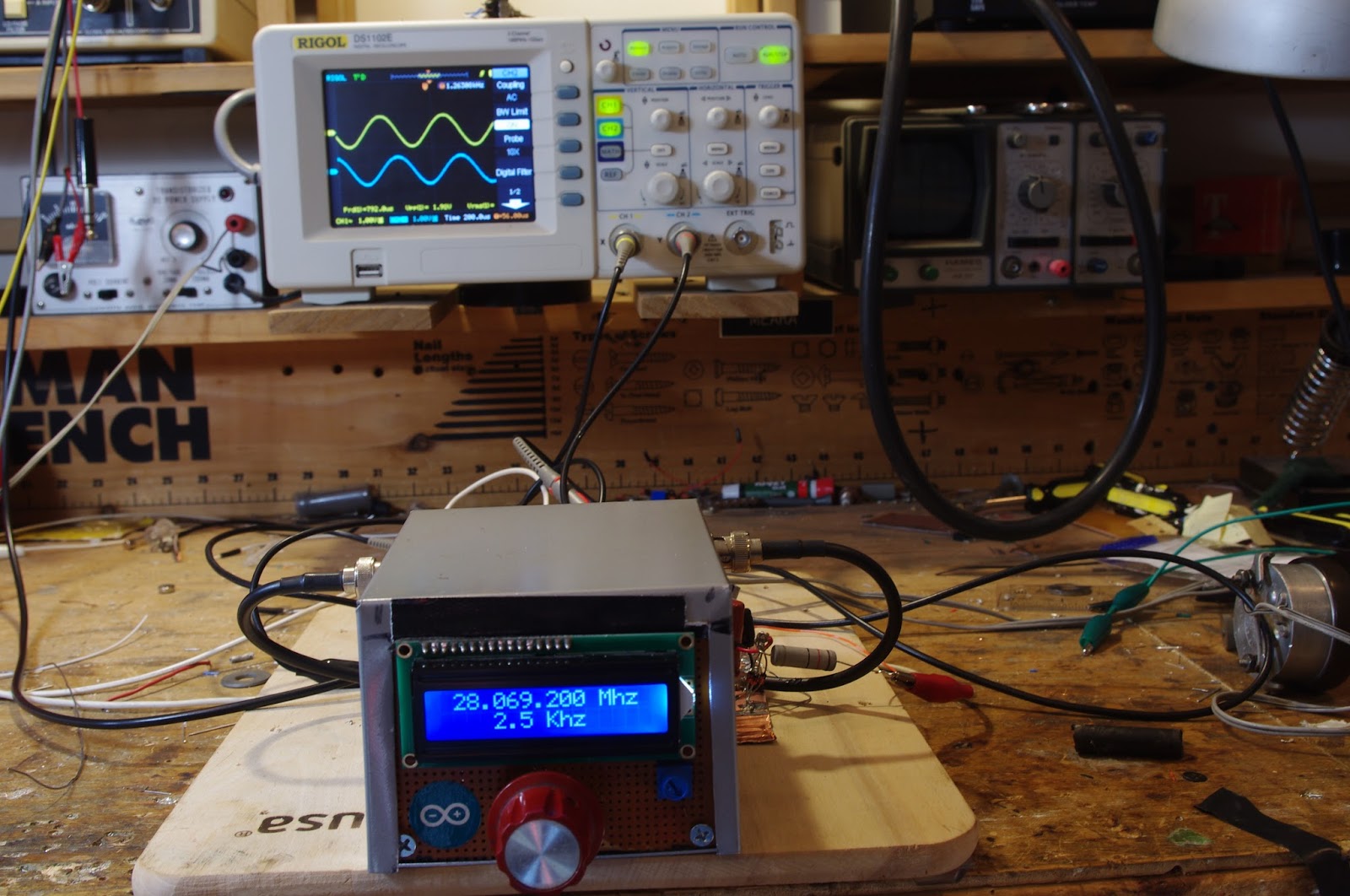
N2CQR Frankenstein R2 showing I and Q audio outputs
(No exam next week for me!)
Lee Snook W1DN’s Amazing New Rig
Wow, I feel myself being pulled into the digital vortex. What a cool combination of digital and analog construction! I love that small spectrum ‘scope.
Lee’s rigs and his workshop have been discussed on this blog before:
http://soldersmoke.blogspot.com/2014/11/the-amazing-rigs-of-lee-snook-w1dn.html
http://soldersmoke.blogspot.com/2014/11/the-amazing-rigs-of-lee-snook-w1dn.html
High-Pass Filter Knocks Down AM Broadcast Interference
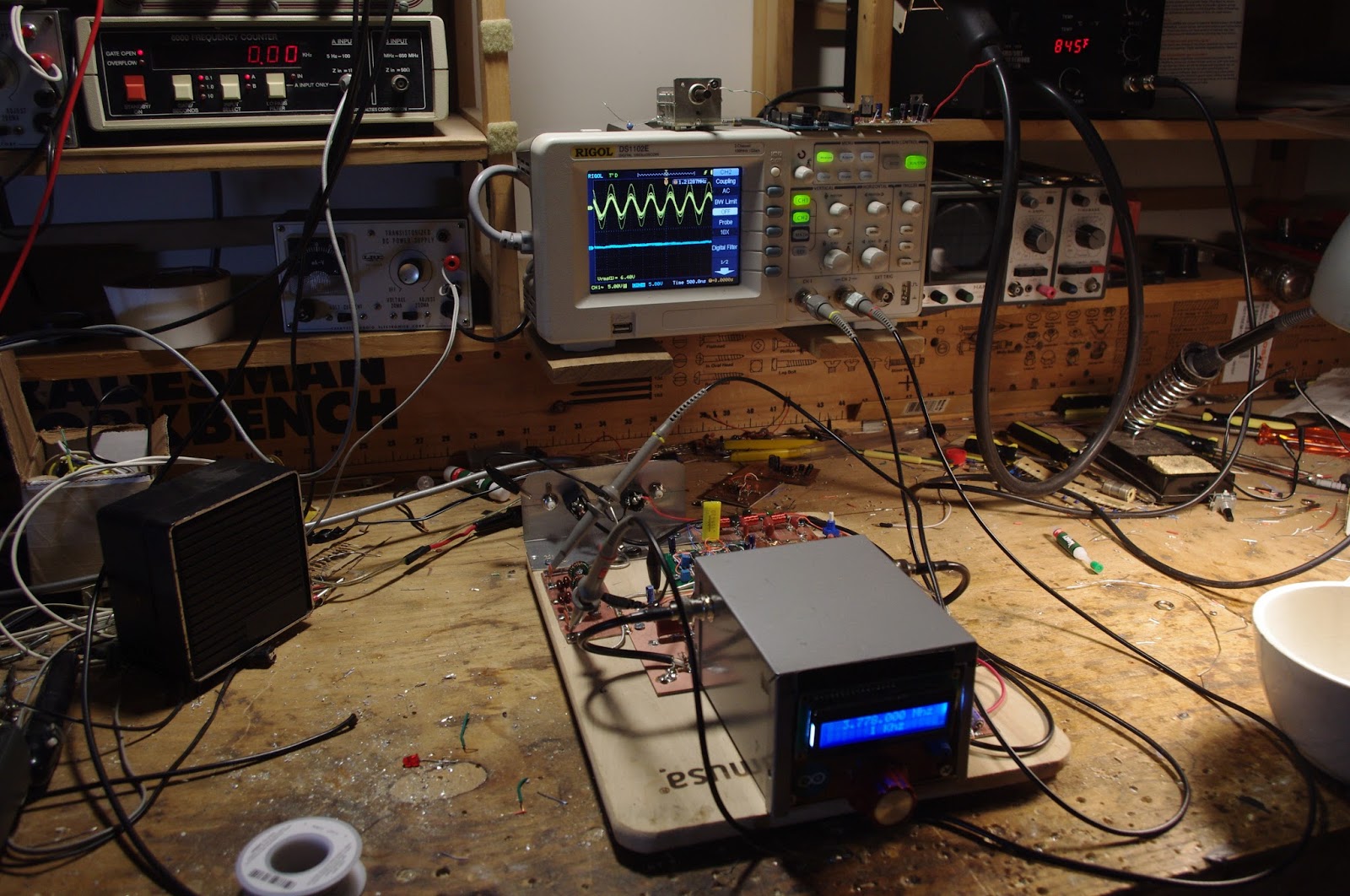
WFAX 1220 AM was starting to bother me. Each morning, I’d be drinking my coffee, listening to nice roundtables on 160 meters, when, right at 6 AM, WFAX would fire up its 5 kW AM transmitter, 1.5 miles from my location. And they would crush the “front end” of my R2 phasing receiver. It doesn’t take much to do that, since the only thing between the SBL-1 mixers in the R2 and the antenna is a signal splitter. Obviously I needed some filtering.
I turned to the free program called Elsie (L-C, get it?) and quickly whipped up a design for a seven element, capacitive input high-pass filter that promised to take about 45 db out of WFAX’s sails, without attenuating even the lowest end of Top Band.
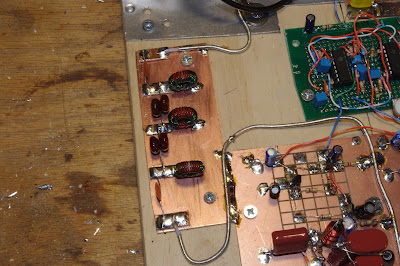
Last night I scrounged through the junk boxes and found suitable capacitors. A visit to an on-line toroid calculator showed that around 35 turns on a T-50-2 (red) iron powder core would yield the needed 6 uH coils. I built the filter this morning — picture below.
It works very well. You can see the results in the picture above. The yellow trace on the ‘scope shows the signal at the antenna terminal. Yikes, it shows around 4 volts rms at 1.220 MHz (the scale is 5 volts/div). The blue trace below is on the same scale — this is the signal coming out of the filter. Not enough to really measure on the 5 volts/division scale.
This was a very satisfying “quick and easy” build. I really like the sound of the R2, so much so that I’m not firing up the DX-100 as much as I had been. Instead I find myself just listening to the R2.
Another AM Broadcast Interference Story
Bill,Pete
Another great solder smoke podcast today. I especially liked the detail
of you using the S-meter to check on the local broadcast station, and
the better reception you had on 160 with a resonant antenna. Before I
retired I had spent over 25 years as a field service tech working on
neurological instrumentation. One of the test our instruments performed
was called an Electro-Myography. Part of this test involved a needle
electrode being inserted into a muscle. This was fed to an
instrumentation amplifier connected to a computer that processed the
output of the amplifier. The signal from the amplifier was also fed to
a speaker so you could also hear the response of the muscle fibers
activating as you flexed the muscle. One of my customers called and
said that quite often when he inserted the needle electrode, he heard
music instead.
I made a trip to his office and using a field strength meter, I could
see the modulation peaks on the FSM. But only in one location against
the wall in the exam room. I at first thought it might be from a
speaker cable for their intercom / background music system in the wall.
But there was no wires near that location , and it was an outside
wall. I went outside with the FSM and found that the signal was coming
from the down-spout for the rain gutter. Apparently the gutter was
resonant at the frequency of the local AM station and the received
signal was being radiated through the wall and picked up by the amplifier.
I quickly got the set of jumper cables out of my van and connected the
down-spout to a near by water faucet, the signal went away. After a
quick trip to the local Home-Despot and picking up some heavy copper
wire and a ground clamp for the water pipe I was able to fix this
problem. It is amazing how broadcast interference can show up in so
many places.
DuWayne
Arduino Problems — Back from the Ledge
As I was struggling through this, someone — who will remain nameless — told me that because of all the technical problems resulting from the many Arduino IDE “upgrades,” suicide prevention hotlines now answer all calls with an automated question: “If you are calling about an Arduino problem, press 1 for assistance.”
It got pretty ugly but with the help of Tom up in NYC I managed to get through it. First he convinced me that it is indeed POSSIBLE to upload the latest version of the IDE — the dreaded 1.6.7. I just had to REALLY get rid of earlier versions. This got me past the horrible Bundled Java Runtime Environment problem (who thinks up these names?).
We then worked with the libraries needed to upload the AD9850 code of Richard AD7C. You see, I work on Arduino stuff. Then I stop. 18 months pass. I forget all I learned. Then I start over. The pain begins again. In an effort to break this cycle, I am now taking notes (in the inside cover of Mario Banzi’s book).
I am using the AD9850 with a Kanga Arduino shield designed by Paul M0XPD. It takes the AD9850 output, divides by 4 and puts it out as 2 square waves in quadrature. I use this with my R2 phasing receiver. The problem was that the display on the Arduino showed a freq 4 times the actual tuning freq. Believe me, this gets old fast. I considered just getting a San Jian freq counter and supergluing it on the top of the DDS box. I was going to connect this to the square wave output. That would have given me one readout with the actual receive freq, and another (on the Arduino) showing the (4X) freq coming out of the AD9850. But that would have been too much of a Kludge. Tom talked me out of it and modified the code so that the Arduino display shows the actual receive freq. Thanks Tom.
Armed with the new IDE and with my knowledge of Arduino basics refreshed, I was able to reload the LA3PNA Si5351 code into my 40 meter DIGI-TIA. But not before having to swap out the Arduino that drives the Si5351. One Arduino happily accepted the code, another did not. Why? Who knows? It is a digital mystery. Those little 1s and 0s are fickle you know.
The Radio Gods rewarded me for all this. At about 5:45 AM today I was listening to a very friendly SSB roundtable on 160. The guys were getting ready to sign off. The last one ended the conversation by asking the others to “Be kind. Smile at your neighbors.” Nice.
Then WFAX AM started the broadcast day at 6 am, wiping out my 160 meter reception. Next project: High-Pass filter at 1.7 MHz.
ArduinWoes
Sometimes I really hate those little boards. Well, not so much the board as the IDE. But now that I’ve built at least two rigs with the little beasts in them (Of course, I blame Pete), I have the need to occasionally update or re-load software.
I tried to do just that today. Downloaded the 1.6.7 version of the IDE. All kinds of weird difficulties. The real show stopper is a message that pops up an announced that the IDE comes bundled with Java Runtime, but the bundle is missing or corrupted. No suggestion re what to do…
A visit to the Arduino blog brings no relief. There ARE lots of messages from others suffering from this problem. And acknowledgements from Arduino people that the problem exists. But no solutions. Any suggestions? Or should I just retro-fit LC VFOs or VXOs?
I seem to go through some version of this every time I try to use an Arduino.
73 Bill
SolderSmoke Podcast #184 160 AM and CW, R2 Phasing Receiver, Mailbag
SolderSmoke Podcast #184 is available
http://soldersmoke.com/soldersmoke184.mp3
16 January 2016
— The Radio Amateur is BALANCED
— Pete exhibits CLEAR symptoms of Dilbert’s disease!
— Santa brought me a 160 meter antenna
— Ground Radial systems large and small
— Clip lead L network
— ON THE AIR ON 160!
— AM contacts
— SKN 160 CW with sidetone from the DX-100 transformer
— Stations with character and personality on 160 AM
— Pending projects for the AM station
— R2 phasing receiver Trials and Tribulations
— Bill’s Astatic D-104 goes into rebellion
— Ramsey Kits closing down
— SPRAT 165, Sidetone, M0XPD’s VXO
— “The Martian” movie
— Little Gustavo is doing well. Thanks to all.
— MAILBAG (an especially good one)
Alan Wolke W2AEW Moonbounce with Project Diana
Alan mentioned this in his interview with Eric on the QSO Today podcast. I really liked Alan’s video of the Project Diana moonbounce commemoration. That HUGE display showing outgoing signals and then the echoes off the moon was really cool. EME is on my to-do (someday) list.
N7SUR’s Phasing Receiver on an Oregon Pine Board
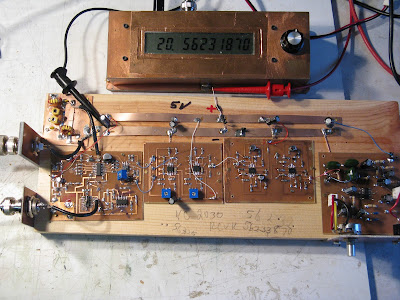
And here I thought I was the only one. Apparently not. Bob LeDoux has also built a phasing receiver using a piece of wood as a base. I note also that phasing guru Rick Campbell KK7B built his Classic 40 DC receiver into a solid oak wrap-around case. Bob’s receiver is very interesting. That Tayloe Detector is very nice. Phasing is fun! As I type I am listening to Lou, EA3JE on 40 SSB with my phasing receiver.
Bill,
I thought I’d share my breadboard system for receiver experiments. In this example I have a phasing, single sideband Tayloe receiver. The entire receiver, less VFO, pulls 54 milliamps at 5 volts.
The chassis is a prime piece of Oregon pine. Be forwarned; my Tayloe receiver doesn’t employ a single discrete transistor.
The DDS VFO at the top is the K5BCQ Si570 based RF generator kit. It reads 56.231 Mhz because the VFO operates at four times the receive frequency on a Tayloe detector.
The receiver consists of five boards. From left to right they are, RF front end filter; Tayloe detector and post detector amps; sideband eliminating phasing filter; eight pole low pass filter; high pass filter and audio amps.
Flexibility is key. Each stage, or set of stages is laid out on one circuit board which is tacked to the breadboard. Controls and jacks are mounted in scrap circuit board and screwed to the side of the breadboard.
Two parallel lengths of thin circuit board are used for the power and ground strips. Electrolytic caps are placed at each board power point. A bit of copper desoldering braid makes the connection between board ground plane and ground strip.
The circuit board is often double sided with the back side used as a ground plane. Holes are only drilled when a ground connection is needed.
Connections between boards are made using .025 diameter header pins soldered to pads. Wire wrap wire is used for connections between the header pins. These pins also make good test points. With SMT construction my intra-board signal lines rarely exceed half an inch. This eliminates coax cable for many connections.
I like to use eight pin op amps for my designs. These provide two stages and four poles in each package. I have a standard board layout. Using this single board, component selection allows low pass, high pass, band pass, gain, or no gain configurations. Multiple linked boards can be etched at one time and cut apart to meet individual circuit requirements.
Let me give credit to Dan Tayloe who developed the original receiver design in the NORCAL NC2030 CW transceiver. I also thank Pete Juliano, N6QW and Nick Kennedy, WA5BDU, for help with current design issues.
Bob–N7SUR–
A Good Radio Morning at N2CQR
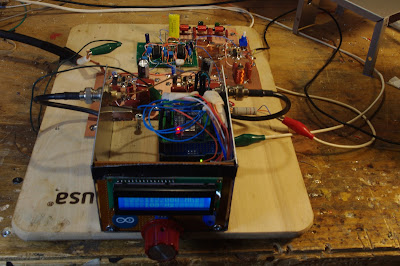
The Radio Gods were smiling upon me this morning. I started out on 17 meters and had three nice contacts with European stations: OH5CZ, a young fellow near Helsinki; HB8DQL; then RM2D in Moscow. FB.
Then Pete showed up on the Skype. As he has said on his blog, he is still struggling with a family medical emergency, but I am happy to report that he is coping well, making good use of his can-do project manager background and his good sense of humor. It was great to see him.
Inspired by my talk with Pete, with 40 meter AM playing in the background, I turned to my R2 FRANKENSTEIN phasing receiver. Last night I completed the 90 degree phase shift network. This is built around two quad op-amp chips and is designed to take the audio output from the two DC receivers and create a 90 degree phase difference between them. I tested this stage by sending the same audio into each set of op amps. I then put one scope probe in the output of one chain of op amps, and the other probe on the output on the other chain. Wow. Bingo. 90 degrees of phase shift across the 300 — 3000 Hz audio spectrum.
Emboldened by this positive result, I put the completed stages together this morning. They passed the smoke test. Then I tuned to 40 meters. Wow again! As promised, opposite sideband rejection without resort to crystal filters. But as luck would have it, I ended up with a configuration that suppressed the Lower Sideband. For 40 meters, obviously I needed to suppress the other side of zero beat. But all I had to do to remedy this was to reach into the DDS box and switch the I and Q jumpers on the M0XPD/Kanga UK Arduino AD9850 shield. This switch put me on LSB. Very cool.
Here is a view from above:
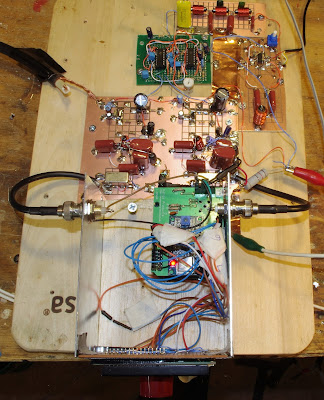
The AD9850/Arduino DDS box is in the bottom center. Above that, near the center of the picture, is the board (from N6QW) with the two SBL-1 mixers and the initial AF amp stages. The small green board above that is the IC phase shift network. At the top of the picture you see the 3000 Hz low pass filter. Below that, the board with the little blue pot has an IC AF amplifier and a 300 HZ high pass filter.
I still have to build the audio amplifiers prescribed by the designer, Rick Campbell KK7B. But obviously I am already having a lot of fun with phasing. Here is the QST article on Rick Campbell’s R2 receiver:
https://www.arrl.org/files/file/Technology/tis/info/pdf/9301032.pdf
N8NM: Thermatron Meets Silicon (Part II or III)
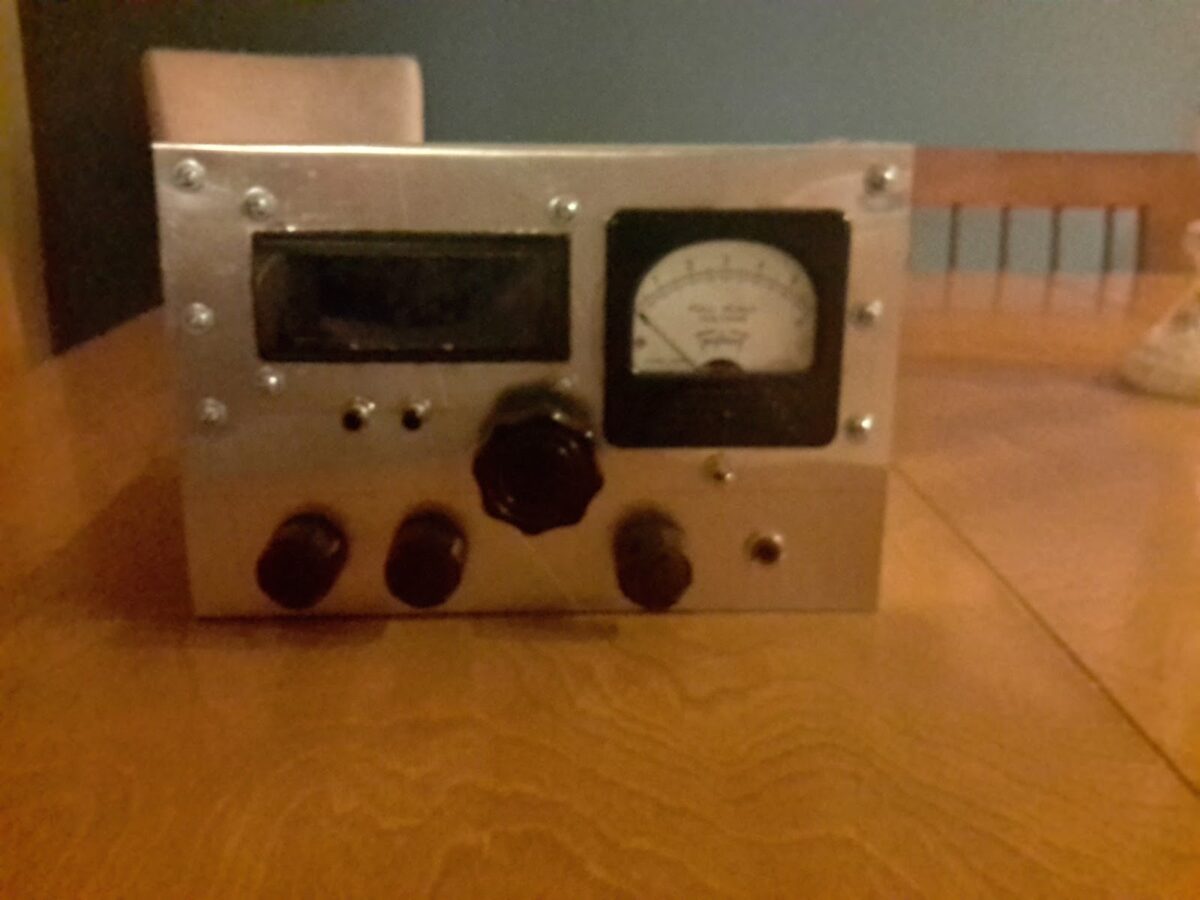
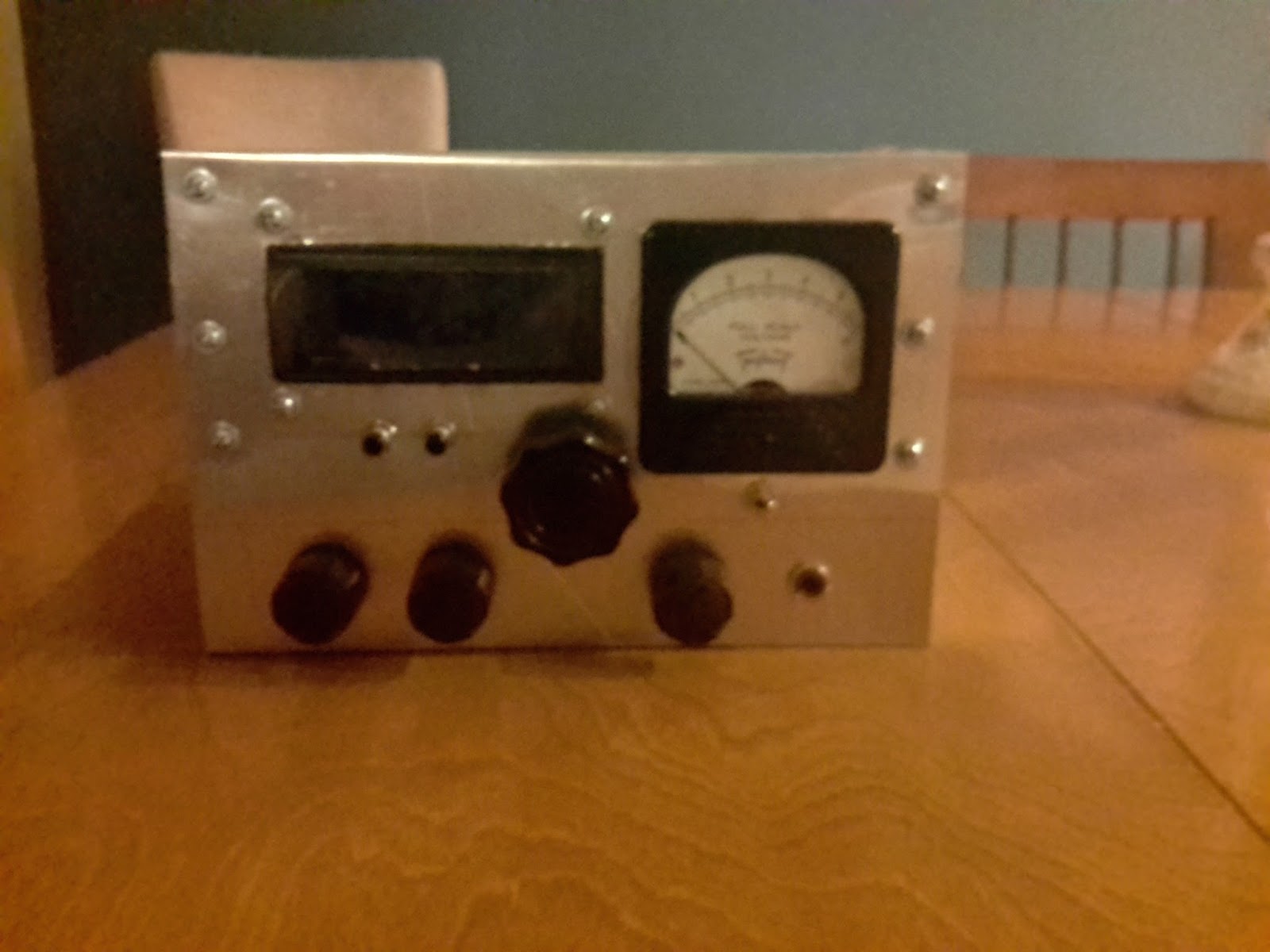
Steve N8NM has been pushing the limits of radio hybridization. In this receiver he has 12AX7 thermatrons running alongside an Arduino and a Si5351. Somehow I find this both very appealing and deeply disturbing. Many of you will know what I mean. But FB Steve — keep them coming. Put these unique rigs on the air and strike a blow against the Yaesu-Icom-Kenwood monotony!
Bill:
Here’s a pic of a Thermatron-Meets-Silicon receiver that I’ve been working on. Tubes are 12AT7 mixer, 2x6BA6 IF amps, 2x12AX7 (product detector, AGC amp and 1st AF) and 6AQ5 audio out. An Arduino controlled Si5351 provides the LO and BFO as well as handling all of the switching, and the mixer and product detector use variations on Dr. Pullen’s dual-triode circuit. I’ve had this one on the air, but the hardware and software still need some, um, refinement. And painting the panel has to wait until spring as my XYL doesn’t share my affinity for paint fumes.
73 – Steve
N6ORS’s Min-X Crosses the Pond on First Contact
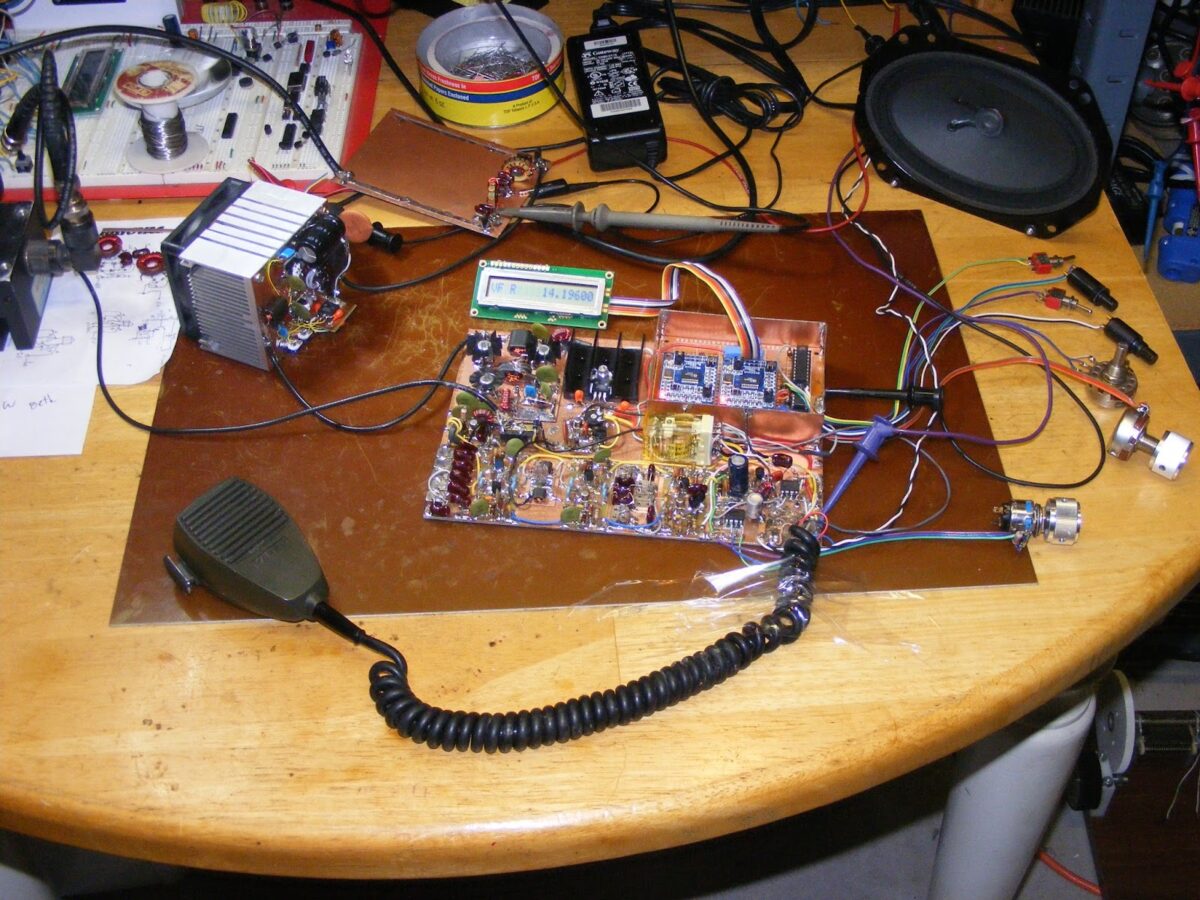
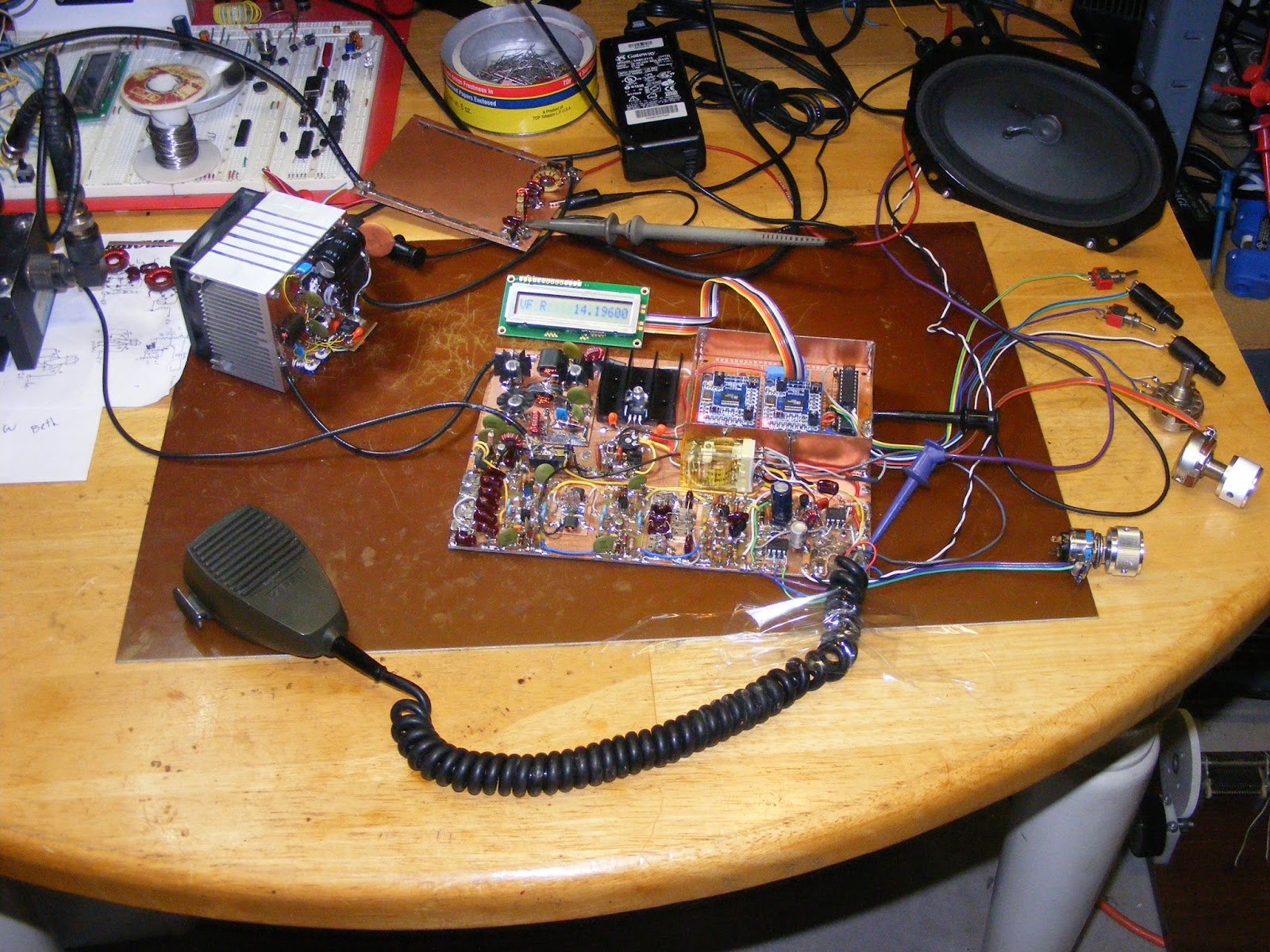
Very cool! Reports on new phone rigs keep coming in. It is great to see them in their “still out on the bench” condition. And reports of the first contacts are always exciting. I like the MIN-X name. This is indeed another testament to the contributions made to the radio art by our friend Farhan.
Hello Bill,
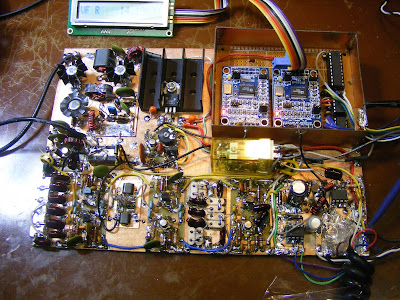
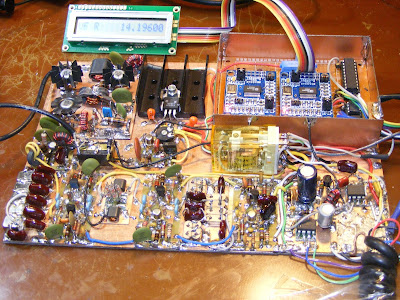
Well I just finished tweaking my new rig, I named it Min-X because I outright stole bits and piecesof the BITX and the Minima, thanks Ashhar. I made my first contact today and what a contact!
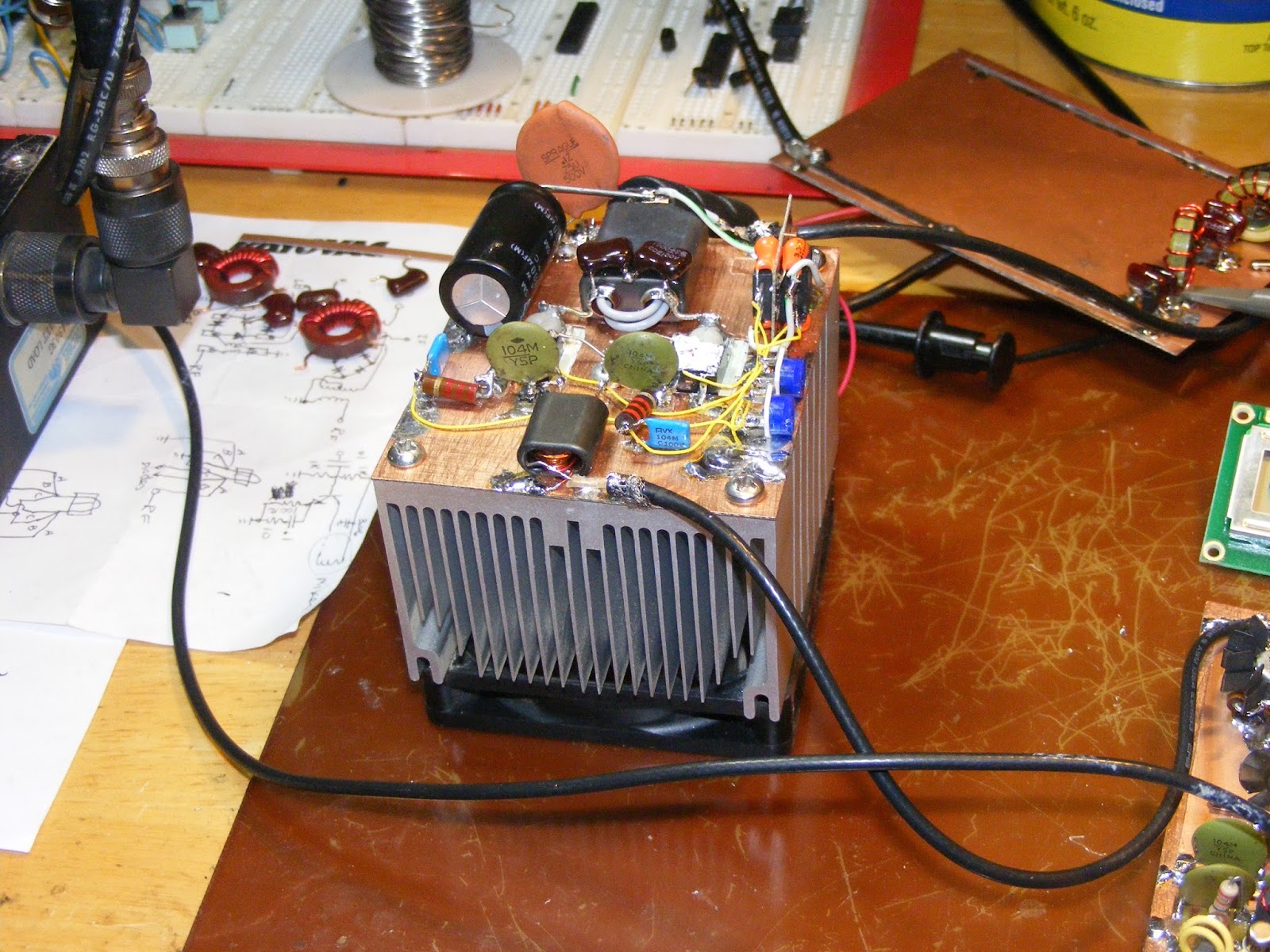
The contact was made with the rig as shown. The amp is a home brew FET push-pull.
I had a chat with Beth MW0VOW in South Wales! From Wisconsin to Wales on 15w PEP.
Oh, most of the rig was ‘noodled’ and constructed while enjoying you and Pete on the
Oh, most of the rig was ‘noodled’ and constructed while enjoying you and Pete on the
SolderSmoke podcast.
Best 73,
Keith N6ORS
Best 73,
Keith N6ORS