Beautiful video. Strongly recommended.
https://www.youtube.com/watch?time_continue=350&v=bI7sasQsQWI
Ham Radio, Dilbert, Dating, and the Baofeng Breakup
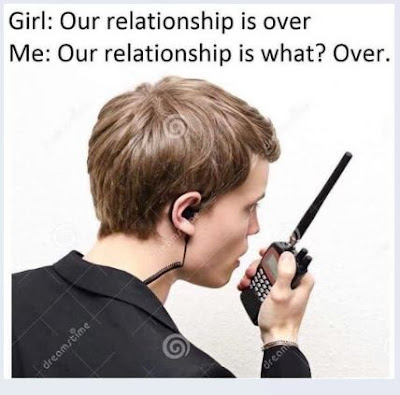
Was the young lady turned off by his obvious “appliance op” status? Was it the Baofeng? Would he have fared better with a homebrew rig?
Dilbert addressed the relationship between ham radio and success in the dating game:
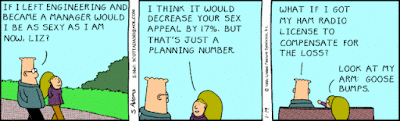
I blame Peter VK2EMU for this digression.
SolderSmoke Podcast #200! 17, Knack Nobel, QCX, 630, UHF, Fessenden, TROUBLESHOOTING
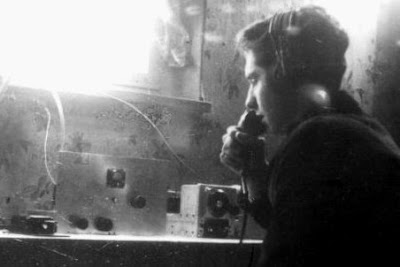 |
| DL3AO 1950 |
SolderSmoke Podcast #200 — TWO HUNDRED!!!!– Is available
http://soldersmoke.com/soldersmoke200.mp3
— Old friends on 17 meters.
— Another Knack Nobel in Physics.
— Hans Summers’ QCX transceiver: $50 IS THE NEW 10 GRAND!
— New Bands! 630 and 2200 Meters. BIG ANTENNAS!
— Nuke Powered QRP. No joke!
— The Challenge of UHF. Not for the faint of heart.
— Reginald Fessenden, Father of Phone.
PETE’S BENCH REPORT: The New Simple-ceiver. Soon to be a Transceiver.
BILL’s BENCH REPORT: Discrete, Direct Conversion, Ceramic Receiver in iPhone Box.
THE EDUCATIONAL PORTION OF TODAY’s PROGRAM:
HOW TO TROUBLESHOOT A HOMEBREW RECEIVER.
MAILBAG.
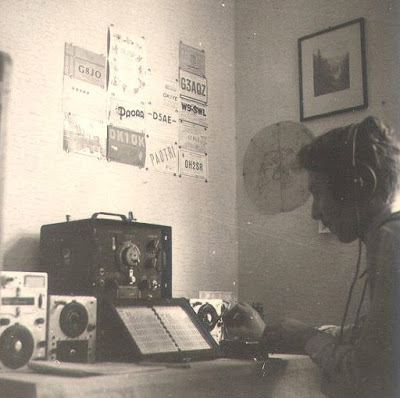 |
| DL3AO 1950 |
SolderSmoke Podcast #200! 17, Knack Nobel, QCX, 630, UHF, Fessenden, TROUBLESHOOTING
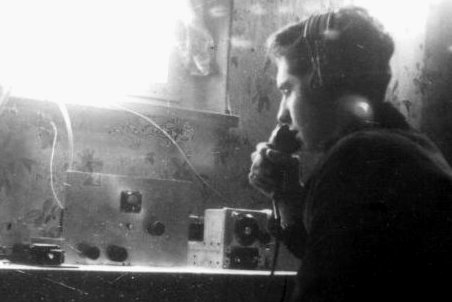 |
| DL3AO 1950 |
SolderSmoke Podcast #200 — TWO HUNDRED!!!!– Is available
http://soldersmoke.com/soldersmoke200.mp3
— Old friends on 17 meters.
— Another Knack Nobel in Physics.
— Hans Summers’ QCX transceiver: $50 IS THE NEW 10 GRAND!
— New Bands! 630 and 2200 Meters. BIG ANTENNAS!
— Nuke Powered QRP. No joke!
— The Challenge of UHF. Not for the faint of heart.
— Reginald Fessenden, Father of Phone.
PETE’S BENCH REPORT: The New Simple-ceiver. Soon to be a Transceiver.
BILL’s BENCH REPORT: Discrete, Direct Conversion, Ceramic Receiver in iPhone Box.
THE EDUCATIONAL PORTION OF TODAY’s PROGRAM:
HOW TO TROUBLESHOOT A HOMEBREW RECEIVER.
MAILBAG.
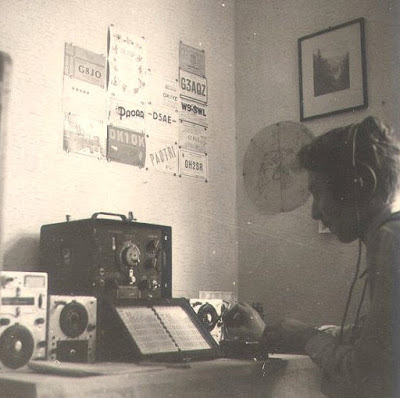 |
| DL3AO 1950 |
SPRAT — The 007 Connection
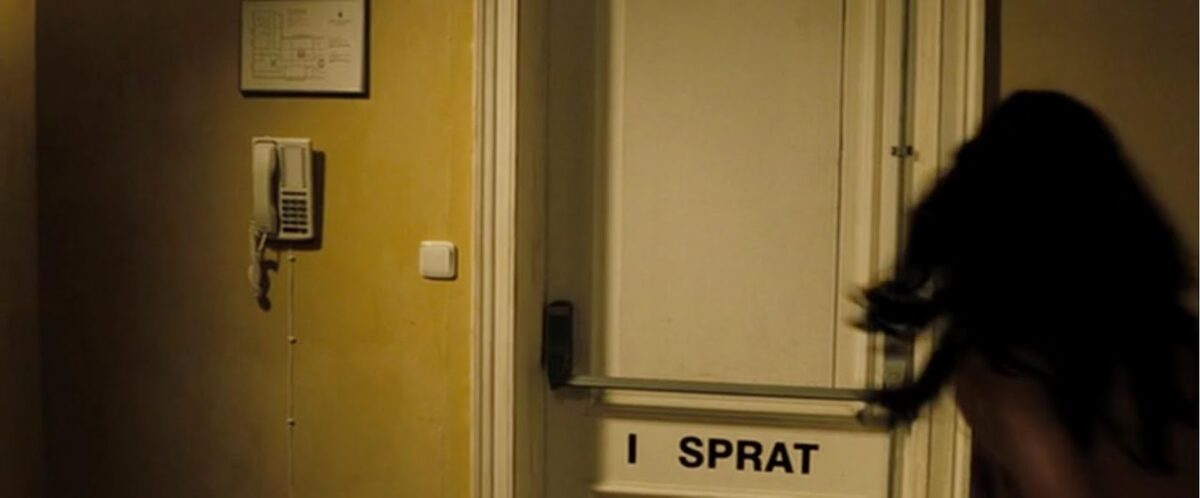
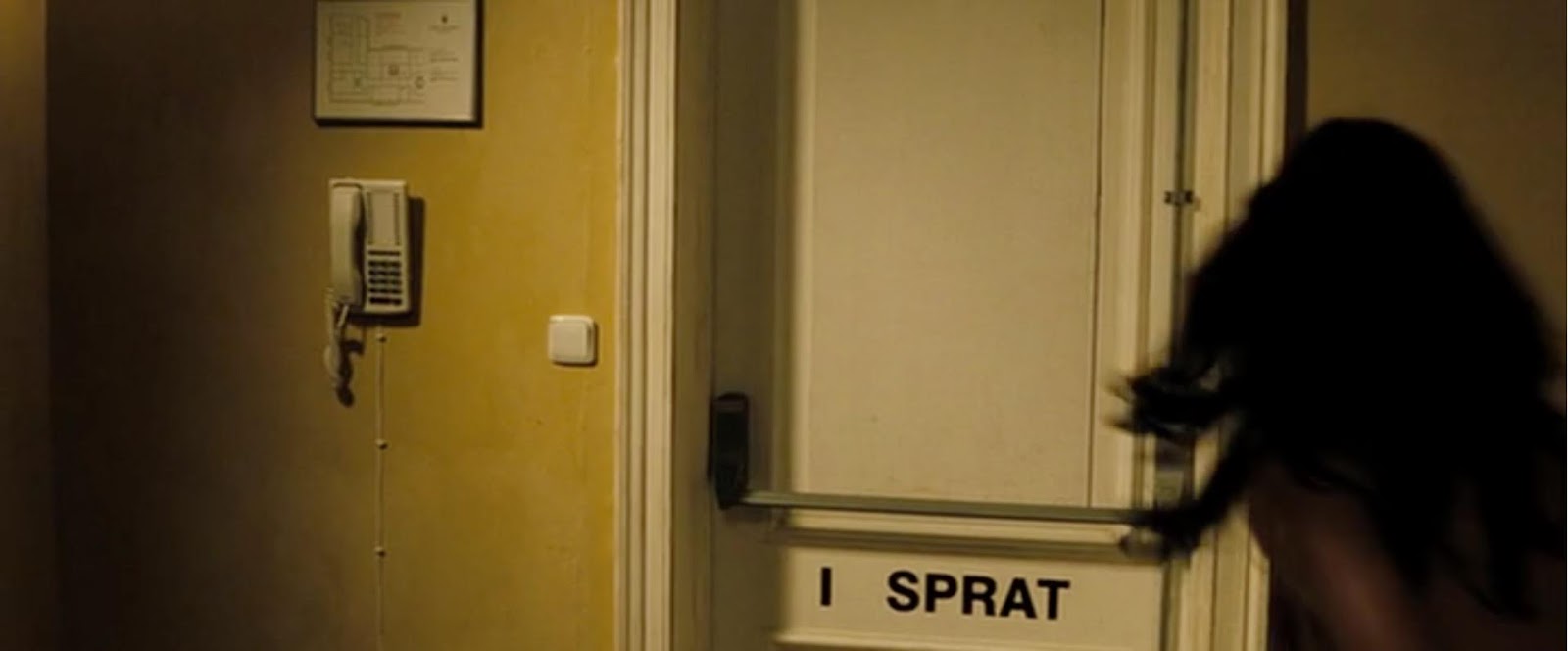
The eagle eye of Brent KD0GLS spotted this frame in the 007 movie “Casino Royale.”
Wow — I just knew those GQRP guys had to be much cooler than they seemed. I guess there were some indications: They do seem to talk quite a bit about “Q”. There is that weird fondness for Parasets. I understand that several of the senior GQRPers drive Aston Martins. And that Dobbs guy — a kindly retired Anglican minister you say? Really? I can just hear him saying it: “Dobbs, George Dobbs.”
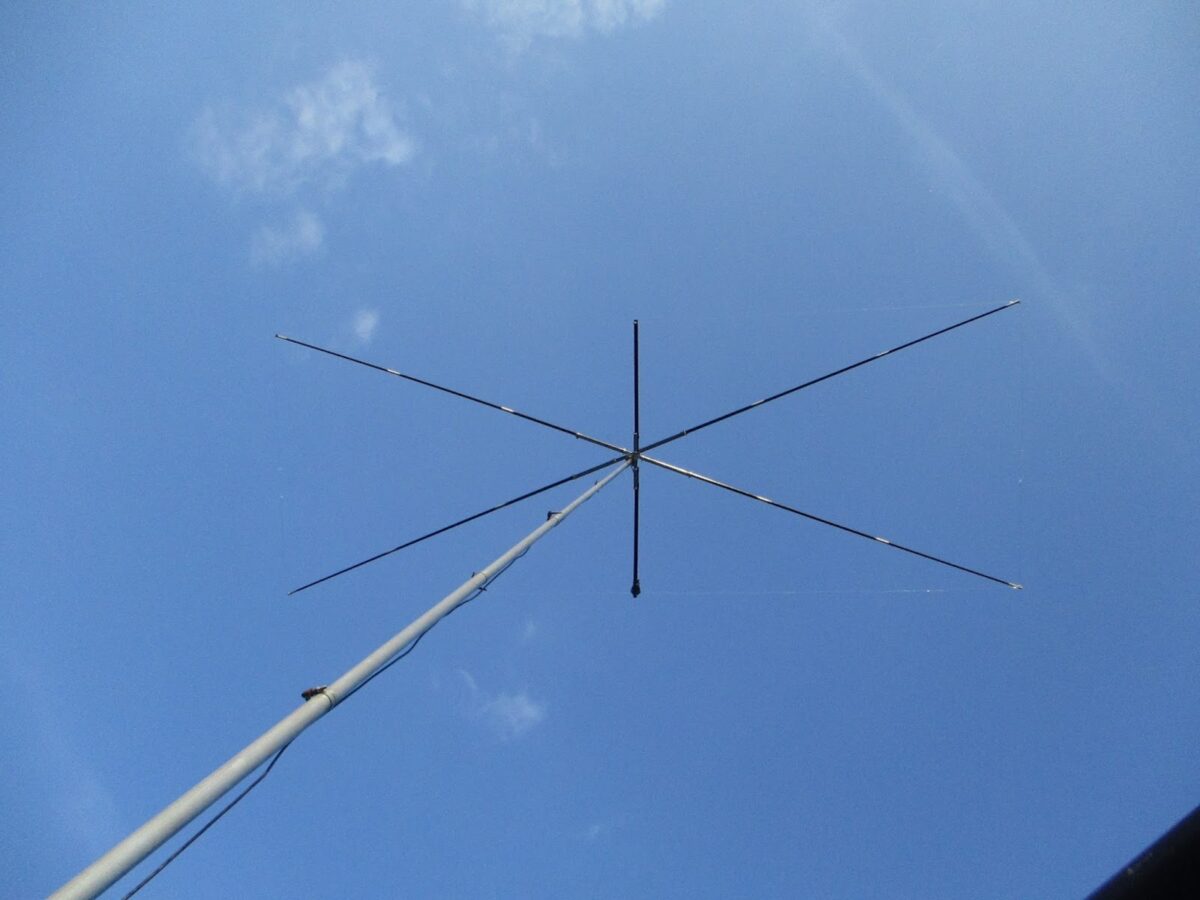
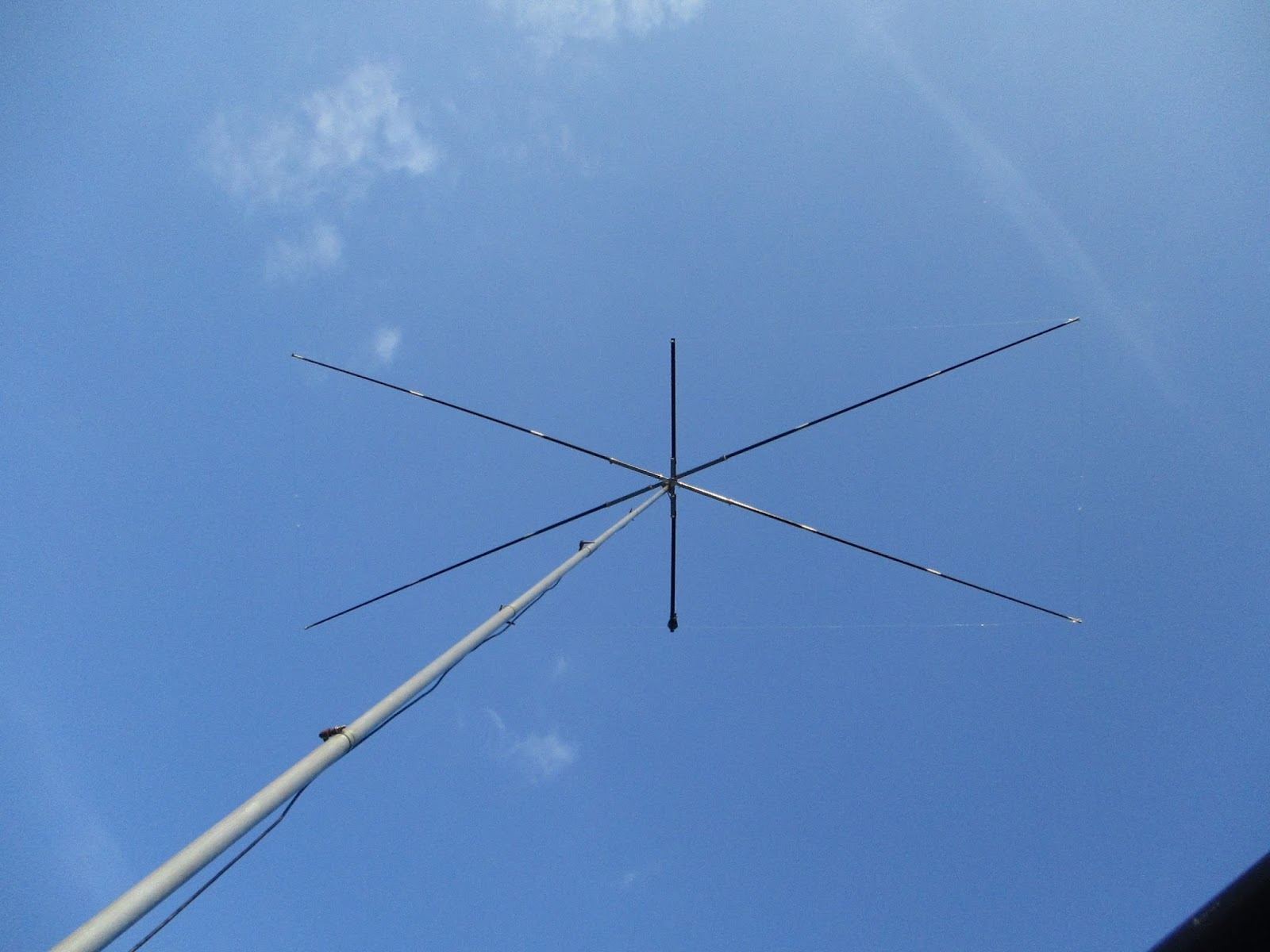
DL1YC’s Flat Moxon with Armstrong Rotation
 |
| DL1YC Moxon |
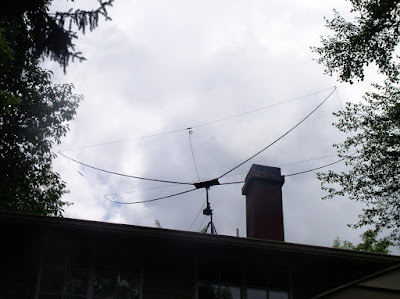
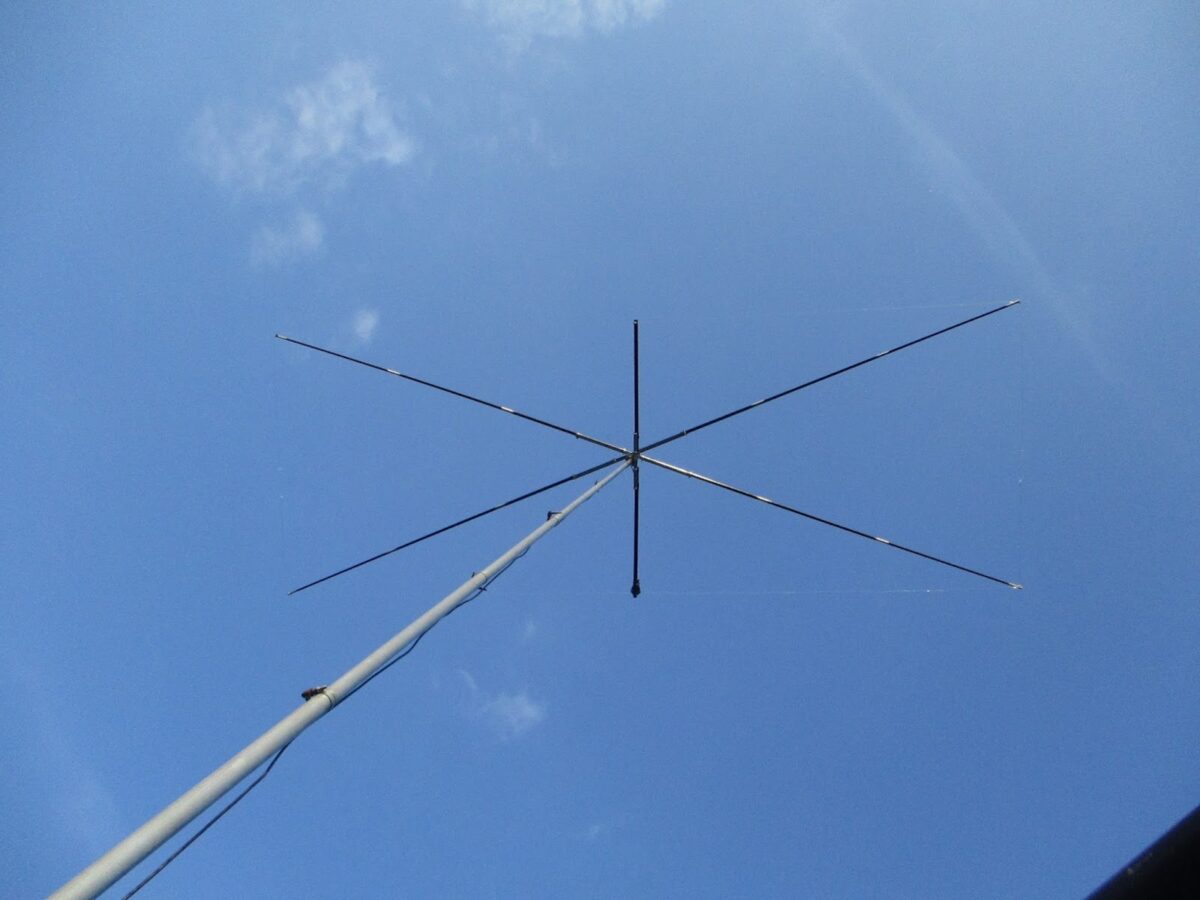
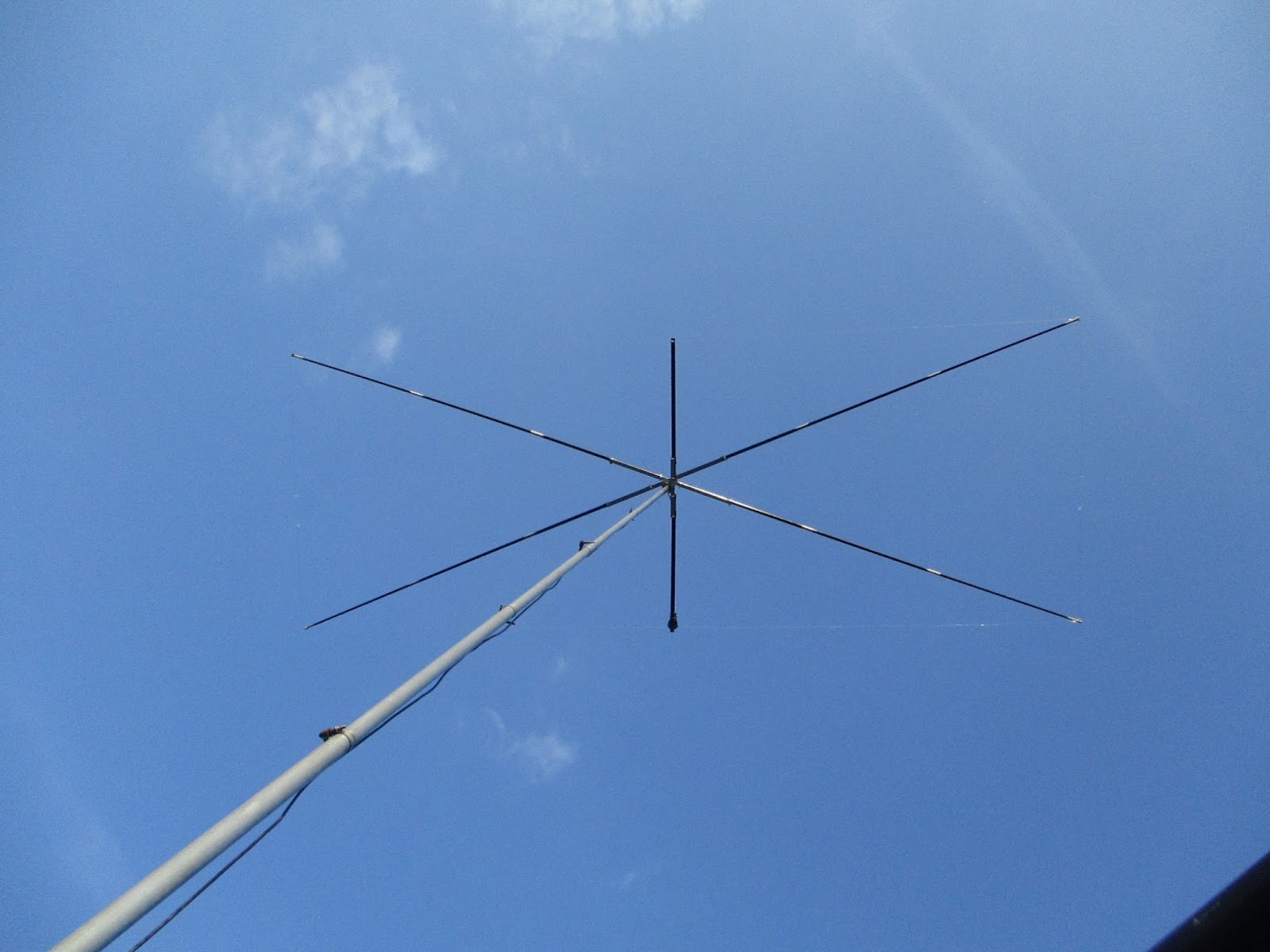
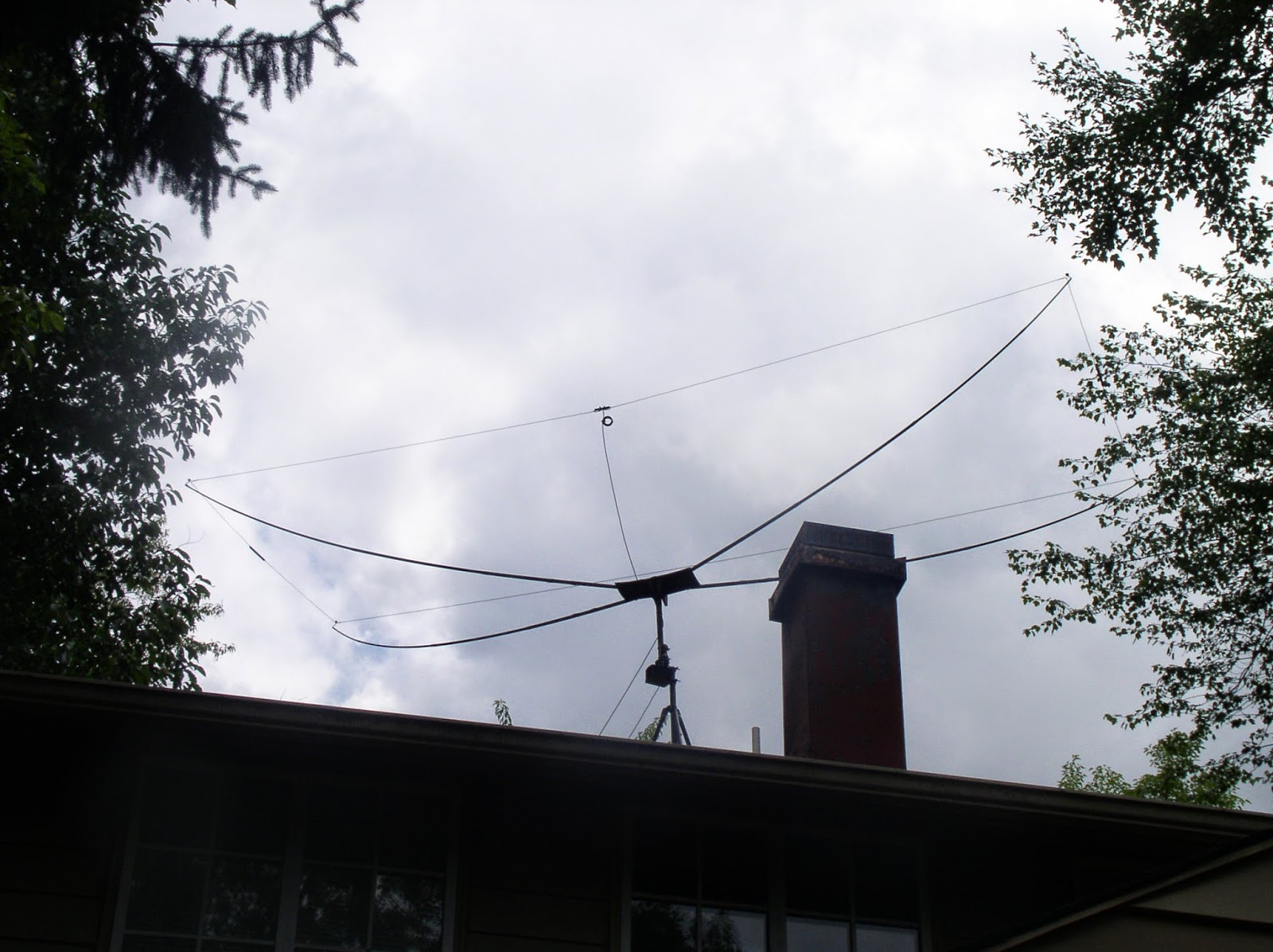
I had a very nice contact on 17 meters yesterday with Jan DL1YC. It was a rare Moxon-to-Moxon contact, with homebrew 17 meter Moxons on either end. Jan’s is a bit cooler than mine: His is flat, without the “blownout umbrella” support that we see in mine (below) and in the Hex Beams. Jans told me that he achieved this flatness by starting out with very long telescoping fishing poles — he discarded the the thin portions of the pole and used only the more rigid pieces. (I used 16 foot, 5 piece Shakespeare Wonderpoles from Amazon.) I think he also used thin wire for the elements. The crossbar that you see in the picture above is there to support a balun at the feed point — without the cross bar the balun and the feedline would cause the balun to droop.
I couldn’t resist a little front to back testing. Jan’s antenna does not have a rotator — he used the “Armstrong” method of antenna pointing. I didn’t want to make him go outside to spin the thing around by hand, so I just turned mine and asked him to take note of the difference front to back. He saw 3 S units. 18 db. Not bad.
Jan said his antenna weighs about 8 pounds — mine is very similar at 9 pounds. Jan expressed some concern about UV deterioration of the fishing pole fiberglass. Mine has been up there three years without any problems.
Like me, Jan had considered “nesting” an element for another ban (perhaps 20 or 12) but — like me– had concluded that this would be too difficult.
 |
| N2CQR Moxon |
DL1YC’s Flat Moxon with Armstrong Rotation
 |
| DL1YC Moxon |
I had a very nice contact on 17 meters yesterday with Jan DL1YC. It was a rare Moxon-to-Moxon contact, with homebrew 17 meter Moxons on either end. Jan’s is a bit cooler than mine: His is flat, without the “blownout umbrella” support that we see in mine (below) and in the Hex Beams. Jans told me that he achieved this flatness by starting out with very long telescoping fishing poles — he discarded the the thin portions of the pole and used only the more rigid pieces. (I used 16 foot, 5 piece Shakespeare Wonderpoles from Amazon.) I think he also used thin wire for the elements. The crossbar that you see in the picture above is there to support a balun at the feed point — without the cross bar the balun and the feedline would cause the balun to droop.
I couldn’t resist a little front to back testing. Jan’s antenna does not have a rotator — he used the “Armstrong” method of antenna pointing. I didn’t want to make him go outside to spin the thing around by hand, so I just turned mine and asked him to take note of the difference front to back. He saw 3 S units. 18 db. Not bad.
Jan said his antenna weighs about 8 pounds — mine is very similar at 9 pounds. Jan expressed some concern about UV deterioration of the fishing pole fiberglass. Mine has been up there three years without any problems.
Like me, Jan had considered “nesting” an element for another ban (perhaps 20 or 12) but — like me– had concluded that this would be too difficult.
 |
| N2CQR Moxon |
A Direct Conversion iPhone!
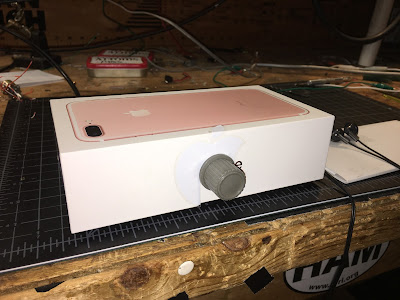
Well, really a DC receiver in an iPhone box.
I think the Apple iPhone boxes have great potential as project enclosures. They are cardboard, but they are very rigid and solid. I decided to use them for a Direct Conversion receiver project I’ve had in mind.
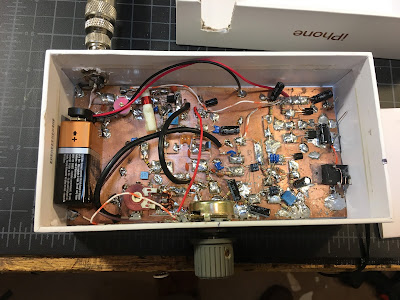
This is a 40 meter DC receiver. No chips. Ceramic resonator VXO tuned by a varactor diode. 9V battery as the power source. Ear buds as the transducer. Passive, two diode, singly balanced detector. It sounds great — so great that I may have to add a gain control.
The nice fit is no coincidence — I cut the board so it would fit in the iPhone box.
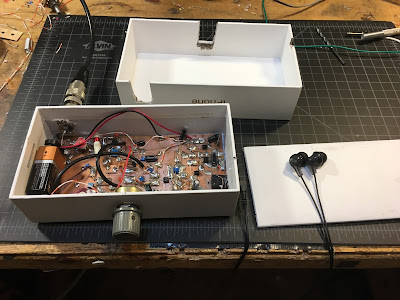
Take a look at that top cover. It is all, well, empty. I could put another board in there, right? Maybe a balanced modulator, a mic amp and an RF amplifier. Then this thing would be a Double Sideband transceiver. We could even make use of the little microphone that comes with most of the ear buds.
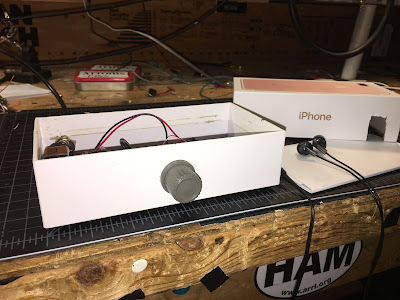
I’m thinking that this might be the kind of project that people would like to take on this winter. Build the VXO first. Then the AF amp. Then the product detector and front end. At that point you’ve built a receiver. For extra credit you could go on to the transmitter. No need to use Apple boxes (but they are cool…) I will try to get the schematic done soon. My nephew John Henry will test the prototype.
IZ7VHF’s Video on on Hans Summers’ QCX Rig, and a Video from Hans
Thanks to W8SX for alerting me to this.
There is a lot of good stuff on Roberto’s site. He obviously has THE KNACK.
http://radio-signals.com/
Hans himself has a less detailed video on the rig:
VE3BOF’s Regens and DC Receivers
 |
| VE3BOF BENCH |
Hi Bill:
This is Clark, VE3BOF, in Hensall, Ontario, Canada.
Hensall is located in southwestern Ontario, north of London and a 2
hour drive west of Toronto.
Last Sunday night, 2017-10-01, I tuned in to 7277 kHz to listen to
the BitX40 net. I heard you and 2 or 3 others.
Your signal was 5-7, perfectly readable.
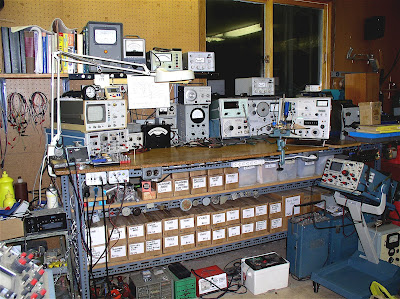
The receiver I was using is a modified version of the WBR receiver.
It is still on the piece of chipboard that I mounted all the modules
onto. It’s an excellent little regenerative receiver.
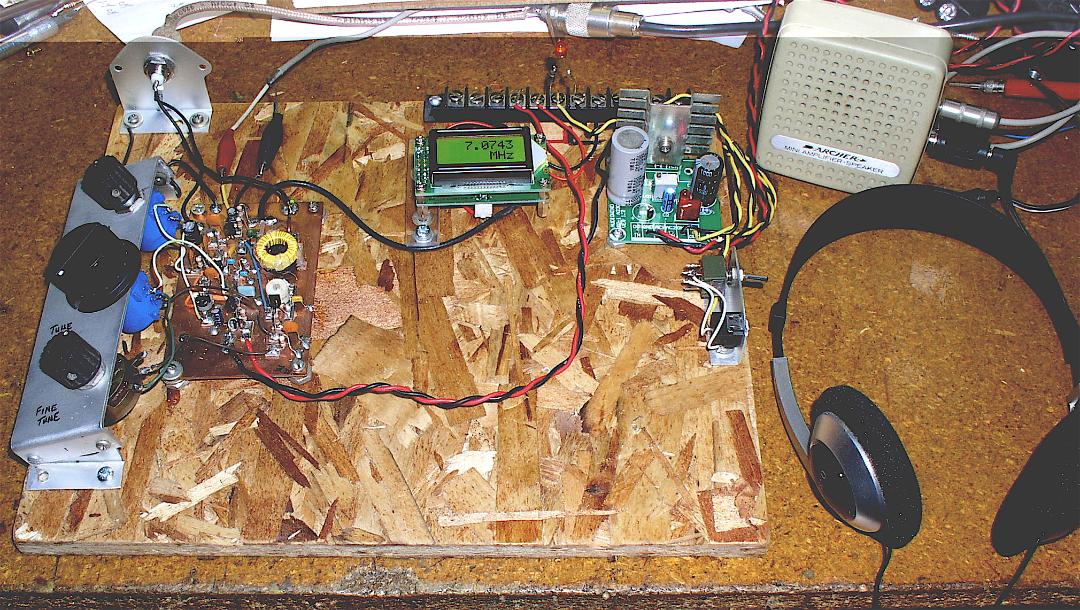
In the same state of incompleteness, is a modified version of the
Easy Receiver (QRP Kits) direct-conversion receiver,
I use this receiver for the CW end of the 40M band.
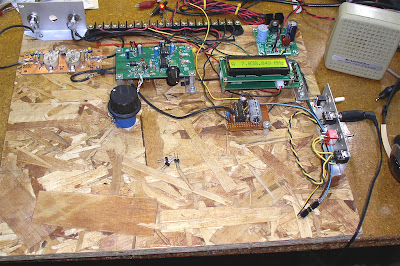
Both receivers have been fitted with 10-turn pots for easy tuning,
and also lcd frequency counters for displays.
I’m a former Motorola Communications tech, and used to maintain the
radio systems of District 6 of the Ontario Provincial Police and our Ministry
of Health emergency services radio system.
Being retired now, I have more time to check Soldersmoke every day
and listen to your
conversations with Pete, N6QW.
Thank you for very interesting and worthwhile QRP information and
programming.
Clark Forrest, VE3BOF
ANOTHER Nobel Prize Winner with THE KNACK
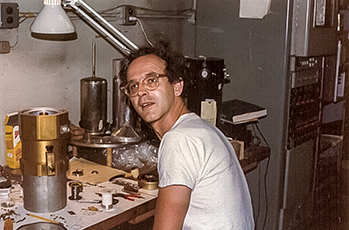
When I heard that the guys who ran the LIGO gravitation wave experiment won this year’s Nobel Prize for physics, something told me that at least one of those involved in this historic detection of weak distant signals would have THE KNACK. It did not take me long to confirm this. Rainer Weiss (above) definitely has had the THE KNACK all his life. And what an interesting life it is. Check it out:
http://www.sciencemag.org/news/2016/08/meet-college-dropout-who-invented-gravitational-wave-detector
Knackish excerpts:
The family soon had to flee again, when U.K. Prime Minister Neville Chamberlain signed an accord ceding parts of Czechoslovakia to Germany. They heard the news on the night of 30 September 1938, while on vacation in the Tatra Mountains in Slovakia. As Chamberlain’s address blared from the hotel’s massive radio, 6-year-old Rainer stared in fascination at the glowing array of vacuum tubes inside the cabinet. The hotel emptied overnight as people fled to Prague.
As a teenager, Weiss developed two passions: classical music and electronics. Snapping up army surplus parts, he repaired radios out of his bedroom. He even made a deal with the local toughs: If they left him alone as he lugged radios to and from the subway, he’d fix theirs for free. “They would steal things and I would have to fix them,” he says. “It wasn’t a good deal.”
Weiss was drawn to tinkering partly as a reaction to his family’s cerebral atmosphere. “This is a German-refugee kid with very self-consciously cultured parents, and he’s rebelling against them by doing things with his hands,” Benjamin says. “But he’s surely not rejecting doing things with his head.”
He applied to MIT to study electrical engineering so that he could solve a problem in hi-fi—how to suppress the hiss made by the shellac records of the day. But electrical engineering courses disappointed him, as they focused more on power plants than on hi-fi. So Weiss switched to physics—the major that had, he says, the fewest requirements.
The Homebrew Receivers of F5LVG
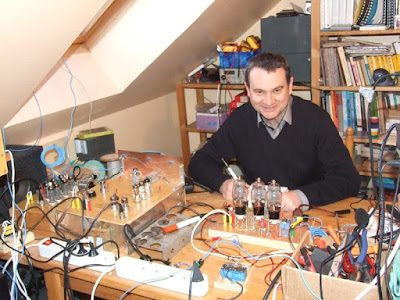
I came across OM F5LVG’s work in SPRAT. He has a wonderful website — it is in French, but Google Chrome translates is quite nicely.
http://oernst.f5lvg.free.fr/index.html
From the site’s introduction:
This site is dedicated to the construction and understanding of radio receivers. If you have dreamed of hearing a radio station with a receiver that you have built yourself, this site is for you. These are essentially direct conversion receivers and modern feedback detectors using only semiconductors, except for retrofitting. The described stations will accommodate amplitude modulation, single sideband (SSB) and telegraphy.
Besides these receivers several articles are devoted to LC oscillators. In particular, an extremely simple original stabilizing device is described.
Similarly, a simple frequency meter is described.
The joy of reception using a homebrew receiver is intense. May this site help you find this joy. Do not hesitate to join the amateur community.
TRGHS: I Can Hear the Roosters of Boa Vista
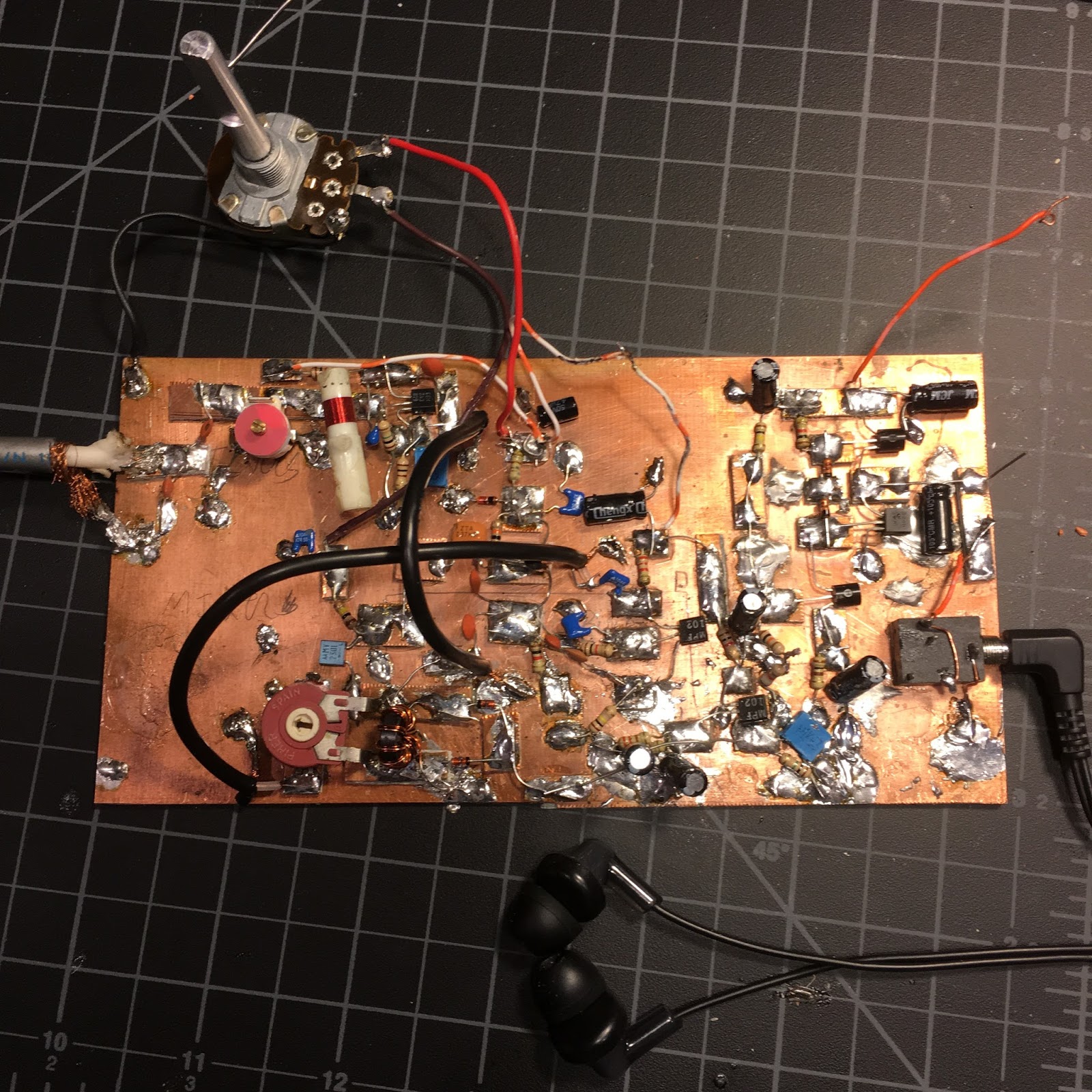
At the instigation of Bob N7SUR I’ve been working on a simple, easy-to-reproduce Direct Conversion receiver for 40 meters. I’m building this for my nephew John Henry, and I’m hoping this will be a circuit that others can use to break into the ELITE corp of successful ham receiver builders. Coincidentally Joh in Freiburg Germany is working on a very similar project — we have been comparing notes.
At first I used an FET detector described by Miguel PY2OHH. It worked, but at night the AM detection of powerful shortwave broadcast stations drowned out the amateur signals. So Joh and I started to explore detectors that would eliminate this problem. I went with a version of one described in SPRAT by F5LVG ( “The RX-20 Receiver”- see below). Very simple: A transformer to two back-to-back diodes with a 1K pot to balance the signal from the VFO. OM Olivier used a very, very cool transformer: he took two small, molded chokes and simply glued them together! 22uH choke as the primary, 100uH choke as the secondary. I went with one of the toroidal transformers that Farhan left me when he visited in May.
I’m using a varactor-controlled ceramic resonator VXO (no Si5351 in this one!) and a non-IC AF amp designed for use with ear buds (the world is awash in ear buds). It is a “singly balanced” design with the incoming RF signal being the one “balanced out” in the detector.
Last night the receiver passed the AM breakthrough test. The SW broadcast monsters were balanced out and kept at bay.
This morning the receiver passed The Boa Vista Rooster Detection Test. I fired up the receiver and heard an operator speaking Spanish with a Brazilian accent. When I heard the rooster crowing in the background I knew it was Helio PV8AL from Boa Vista Brazil. TRGHS — this little receiver is a winner.
I’ll try to post a schematic soon.
And hey — look at what wonderful IBEW (International Brotherhood of Electronic Wizards) project this is: Instigation and inspiration from Oregon. Some design ideas from Brazil. A French detector circuit described in a British QRP magazine. A transformer from India. A collaborator in Germany. And finally, the rooster of Boa Vista.
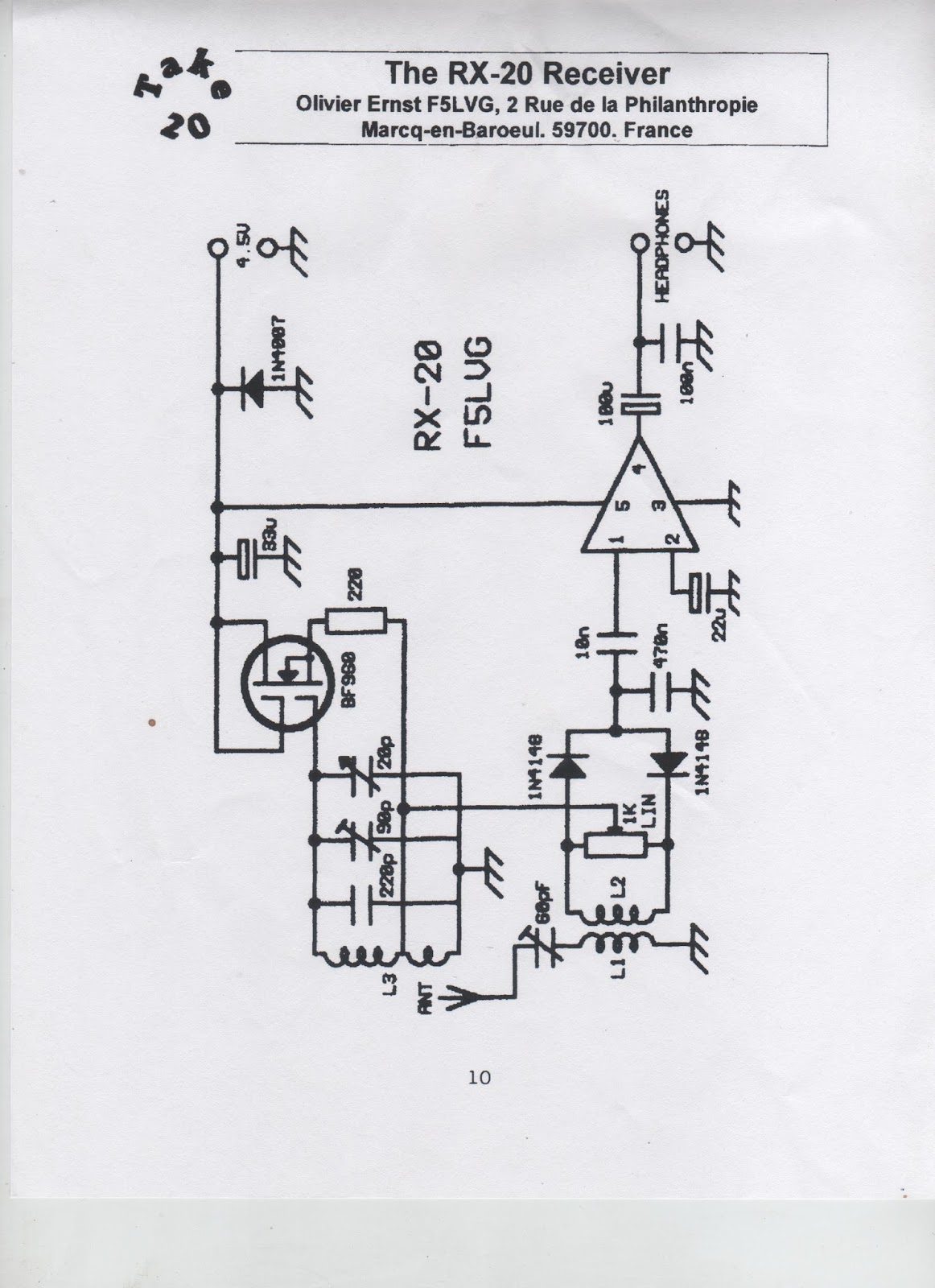
Let’s not forget Wes Hayward W7ZOI for bringing back (in 1968!) the neglected Direct Conversion idea.
Two new bands for US Amateurs
 |
| 630 meters 1 October 2017 |
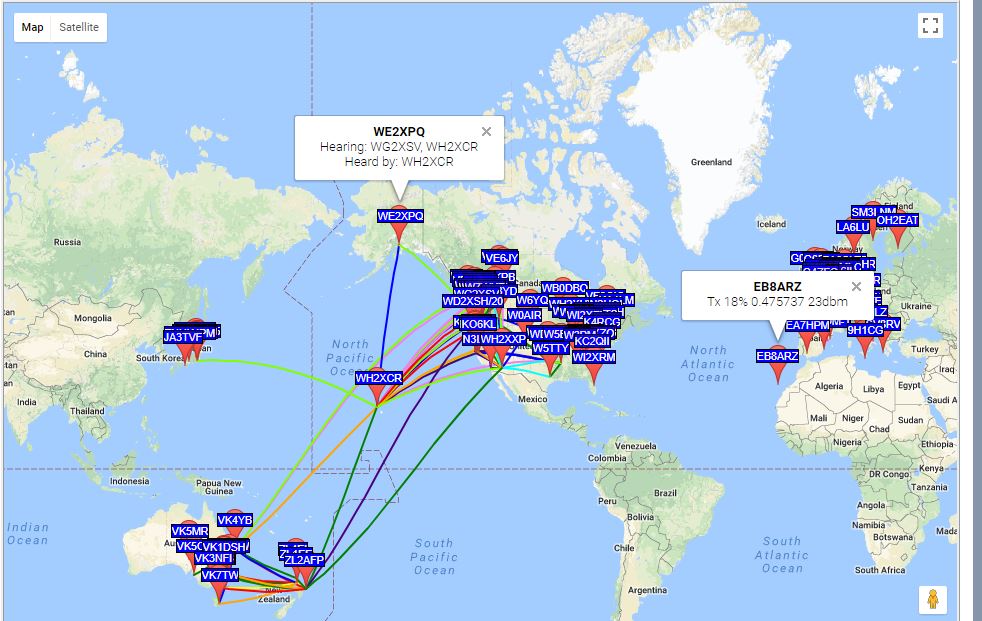
Steve VE7SL reminded us via his blog that US radio amateurs now have the use of two new radio frequency bands: the 2200 meter band and the 630 meter band. As always, Pete N6QW was way ahead of the game and is already working on a full-size 6 element quad for 2200. Good going Pete! Please send pictures (we may need a satellite photo to get the whole antenna in the shot).
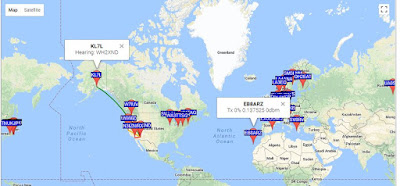
As Steve points out there is already a lot of activity on the new bands — the attached pictures are snaps of just ten minutes of WSPR activity this morning.
I’m especially intrigued by 630 meters — it is so close to our beloved 455 kc IF frequency. Will some intrepid ham take advantage of this fact? Seems like some peaking and tweaking could do the trick…
Check our Steve’s blog post: http://ve7sl.blogspot.com/2017/09/getting-started-on-new-lf-and-mf-bands.html
 |
| 2200 meters 1 October 2017 |
NPR: Hams Help in Puerto Rico

I got into my car to drive home yesterday. As soon as I turned the radio on, I heard this. TRGHS. FB OM. Listen. 4 minutes.
http://www.npr.org/2017/09/29/554600989/amateur-radio-operators-stepped-in-to-help-communications-with-puerto-rico
More on GM3OXX
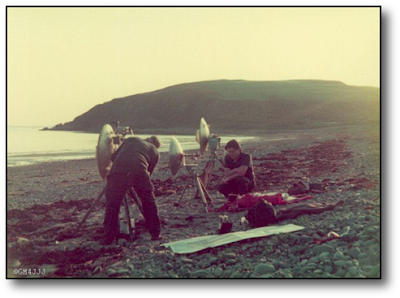 |
|
Sunset at Luce Bay Scotland, 3cm GM3DXJ, GM3OXX and GM8HEY dishes being set up. Photo GM8HEY (GM4JJJ). 322 km QSO to Wales. 10mW GUNNS WBFM.
|
Bill,
Thanks again.
I recall when George met up with the team from Wales in a car park in the Scottish highlands , they had also built 3cm gear and he found by direct comparison that their 3cm gear was more sensitive than his. He went straight home and redesigned and rebuilt his receiver. That gear then went on to break the World distance record on 3cm on a superrefraction path from Portpatrick to Cornwall with 10 mW WBFM. Smashing a record that the USA had held for 16 years from mountop to mountain top.
George was ambitious, he wanted that UK, EU and World distance record, he wanted to show the RSGB that Scottish hams could get the 3 countries and 20 counties award on 3cm. We (G8BKE, GM3DXJ, myself and George) did it by travelling round Scotland in my Mini Clubman Estate with dishes and tripods and 3 hams packed in to one car, at the same time fitting in the EU distance record from Luce Bay in Wigtownshire to St David’s Head in SW Wales at 322 km just to show them how.
No VHF Talkback, only a phone call from a telephone box earlier in the day to our Welsh counterparts to say we would be there about 6pm and to tune the 3cm band for us. Frequency uncertainty was in the 10’s of MHz. We arrived at the beach, set up 3 dishes, put on our transmitter test tones and then went back to receive, George asked us to make sure we had our test tones -off- as his receiver was overloaded, it was the Barry Radio Guys he was hearing, they were so strong. Didn’t matter where we pointed the dishes, we were in the sea level duct. Open waveguide still full quieting.
George’s words audible on the remote tape recording made in Wales, ” You can pack up your gear now lads, that’s the European Record!”
Happy Days!
— David GM4JJJ
GM3OXX SK
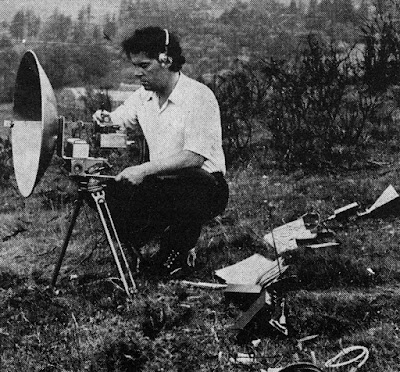
Bill,
I expect you will have heard via the grapevine, George Burt GM3OXX is silent key. Bad news travels faster than light.
I knew George GM3OXX before I was even licensed in the 70’s, as I heard his broad Scottish accent on 2m AM when he was portable on a local hill and was using 2m to set up 3cm contacts with QRPp WBFM. I climbed the hill and introduced myself and he graciously answered my questions.
George didn’t drive but despite that was able to climb all of the Munros (summits over 3000 feet) in Scotland and operated on 2m from all of them. He used hitch hiking and buses or bicycle to get to foot of the mountains.
Fast forward a few years, I had my first ticket GM8HEY…
I spent a night in my grandfather’s ridge tent on top of Snaefell (the highest mountain in the Isle of Man) (GD) with George. We had planned to take my car to the island by ferry, but had not realized that the TT motorcycle races were on and the Ferry was fully booked. We had to go as foot passengers and reduce the amount of gear. George carried his tripod and dish, 3cm and 2m gear and antennas plus rations etc, I carried this huge ancient canvas tent with wooden poles and pegs. We got to a campsite and we were told it was full, when we asked where the next site was the owner asked us where our motorbikes were, we explained we had come by foot, so he let us pitch our tent after all as we weren’t bikers.
George originally had planned to climb the mountain by foot, but with this huge tent even though I was fifteen years younger than George I would never have made it, so reluctantly we took the mountain railway which goes nearly to the summit of Snaefell.
The previous night it had snowed on the mountain, fortunately it was just freezing cold and windy when we camped right on the top. We had to use rocks to try and hold the old ridge tent down, it had no built in ground sheet. George’s “rations” seemed to be a bar of chocolate and some tea that he boiled on a tiny stove powered by some little pebble sized block of flammable material. I have never been so cold and hungry after a night in a sleeping bag. We idled some of the time calling stations on
2m with George’s homebrew 2m battery powered transistorised transceiver.
Next morning it was too windy to set up the dish and tripod, so we assembled it -inside- the ridge tent and successfully operated from there on 3cm WBFM across to G, GW and GM. on 10mW QRP of course.
George went on to break UK and EU distance records on 3cm before packing microwaves in and going back to QRP on HF.
George was as fit as a mountain goat in his youth, tragically he was struck down with a terrible condition in early middle age that robbed him of his strength and ability to even walk, let alone climb mountains, but you wouldn’t have known it, he never complained, just the same old George “building wee boxes” as he put it to me on one of the last times I spoke to him.
If you visited George’s shack, you wouldn’t find any commercial gear at all, everything he built himself, it was so beautifully made too, I marvelled at how compact and neat it was.
There won’t be another George Mary Three O Ocean X X-Ray X X-Ray on the bands.
Thanks for all the great times George, I am sure you won’t be resting, you are probably designing that next “wee box”.
— David GM4JJJ
Herring Aid Error: C14
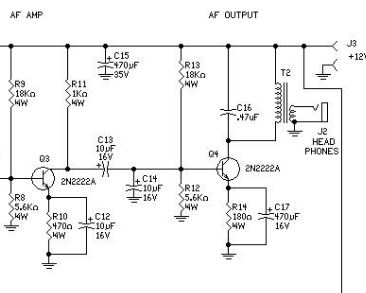
Yea, take a look at C14 in the AF amp. At 1000 Hz 10uF is about 16 ohms. That would put a serious dent in the AF gain. And indeed, when I went back to my Herring Aid 5 (38 years from start to finish) and pulled C14 out, there was a dramatic increase in AF gain.
Mistakes happen, but I wonder if anyone else spotted and reported this one. Could someone with access to the QST archives check to see if an Erratum was ever published? The project also appears in the 1977 ARRL book “Understanding Amateur Radio” with the problematic C14. My guess is that it was just an error in the value of the cap.
Can You See an Error in the Herring Aid Five Schematics?
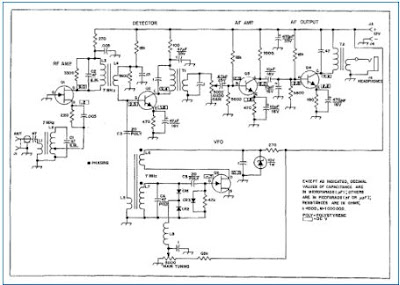
Something caught my eye this morning. Please take a look at the audio amplifier stages (Q3 and Q4) on the Herring Aid Five. Can you see an error? Above is the original schematic from the 1976 QST. Below is a 1998 update by VK1GB and KI6DS. I see the same problem in both schematics. Please let me know if you see an error.

Six Stations Worked on BITX Night
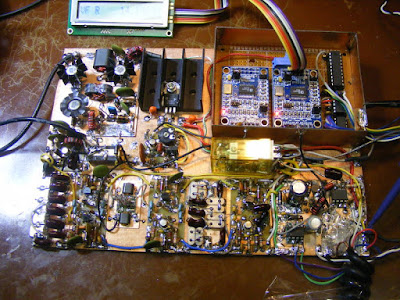
I had a a good session with the BITX gang on 7277 kHz starting at 7pm local last night. Keith N6ORS was on with his MIN-X rig (picture above). Michael KN4EAR’s signal is much improved (Michael had worked Barcelona with his BITX40 Module earlier in the day). Randy WB5YYM’s rig (featured last week on this blog) was booming in from Arkanas.
LOG: WI1B Ken on BITX, AA4PG Pat, KN4EAR Mike in Falls Church, N6ORS Keith on MIN-X, W1LY Willy, WB5YYM Randy in Arkansas