Bill and Pete,
Serving the worldwide community of radio-electronic homebrewers. Providing blog support to the SolderSmoke podcast: http://soldersmoke.com
Bill and Pete,
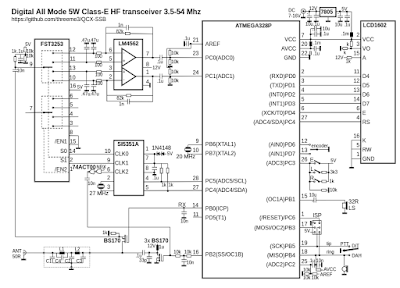
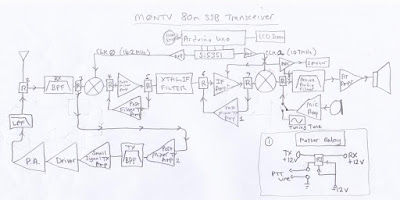
Hack-A-Day carried a very nice video describing recent efforts to turn Hans Summers’ amazing QCX CW monoband transceiver into a multi-mode, multi-mode (including SSB) rig (see above). This is project will greatly interest QCX and SDR fans.
But I wondered how much of the old QCX is still there after the modification. Not much, it turns out.
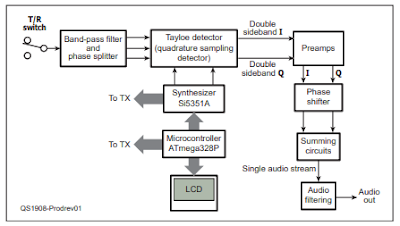
Here is the bloc diagram of the QCX. It is essentially a phasing rig, using the same principles as my venerable HT-37 transmitter and my version of KK7B’s R2 receiver:
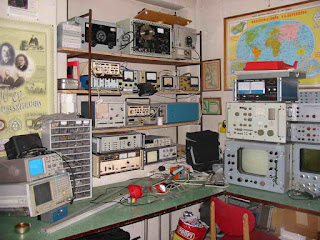
HA5KHC is a club station in Budapest, Hungary. The photo above shows a portion of their worshop. The link below is for their really amazing collection of links to ham radio circuits.
http://konstruktor.ha5khc.hu/linkgyujtemeny/linkgyujtemeny.htm

JF1OZL’s site was for many years a real treasure trove and source of inspiration for homebrewers around the world. It recently disappeared from the internet. And I find no listing for JF1OZL on QRZ.com. I hope Kazuhiro is OK.
Emilio in Mexico has put up a mirror site. Thanks Emilio. We need to protect and preserve JF1OZL’s work.
https://www.emilio.com.mx/jf10zl/
Here is a SolderSmoke blog post on Kazuhiro from 2011:
https://soldersmoke.blogspot.com/2011/12/homebrew-hero-kazuhiro-sunamura-jf1ozl.html
![]() |
| After 46 years, finally a dial skirt |
Peter VK2EMU notes no animals were harmed in the making of my videos. But many electrons were agitated.
![]() |
| N6QW Phase Shift Success — It aint over ’till the fat lady sings |
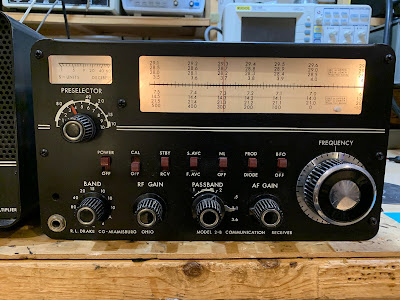
Every dark cloud has a silver lining. Here is a very small silver lining for this terrible COVID-19 situation: I had time to do a proper replacement of the electrolytic capacitors in my Drake 2-B.
Three cheers for Hayseed Hamfest LLC for providing the replacement capacitor.
Go to their website to find capacitors for many other old rigs:
http://hayseedhamfest.com
https://nightskyinfocus.com/2020/05/18/diy-satellite-tracker/
DU1AU is way ahead of where I was when I was working with Low Earth Orbit satellites. I just aimed the antenna about 45 degrees up from the horizon, and spun it around with a TV rotator with me –not the computer — as the controllers of the rotator. In essence I did the AZ manually and completely ignored the EL. This design moves the antenna in Azimuth and Elevation, and has the computer control the movements via an Arduino. FB.
DU1AU points to the work of VK3FOWL and VK3YSP. Their site has very detailed info on how to build several versions of this kind of Az-El rotator:
https://www.sarcnet.org/rotator-mk1.html
This Az-El project represents a great opportunity to move beyond hand-held satellite antennas, and beyond my Az-only manual approach. It also give us a way to bring some real homebrewing into a part of ham radio that has come to be dominated by commercial equipment. There are some Arduinos and some lines of code, some motors and some metal work. Great stuff!
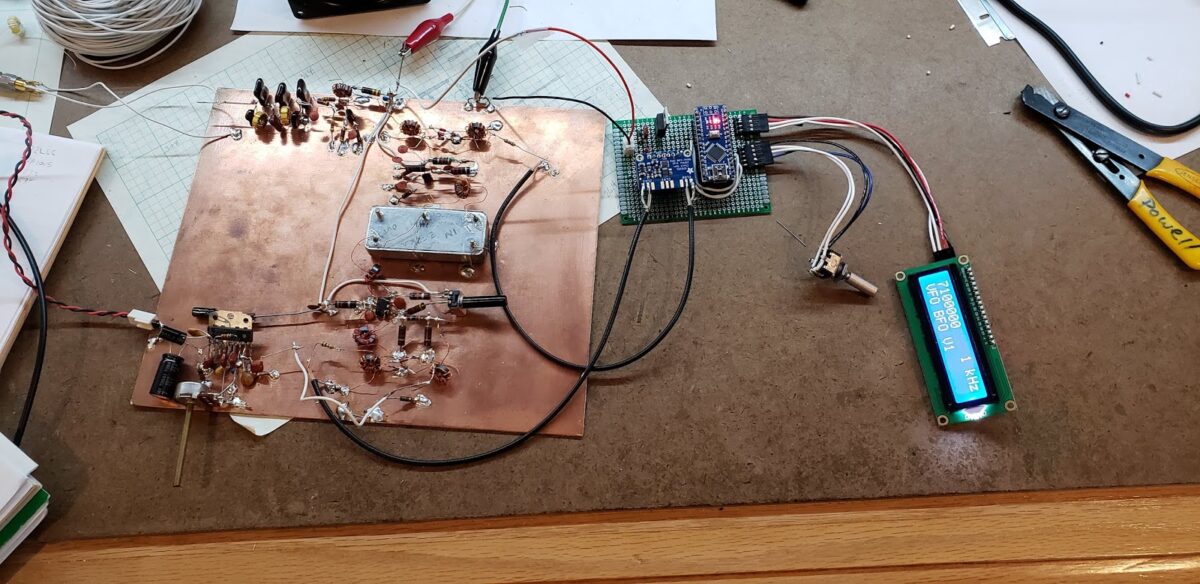
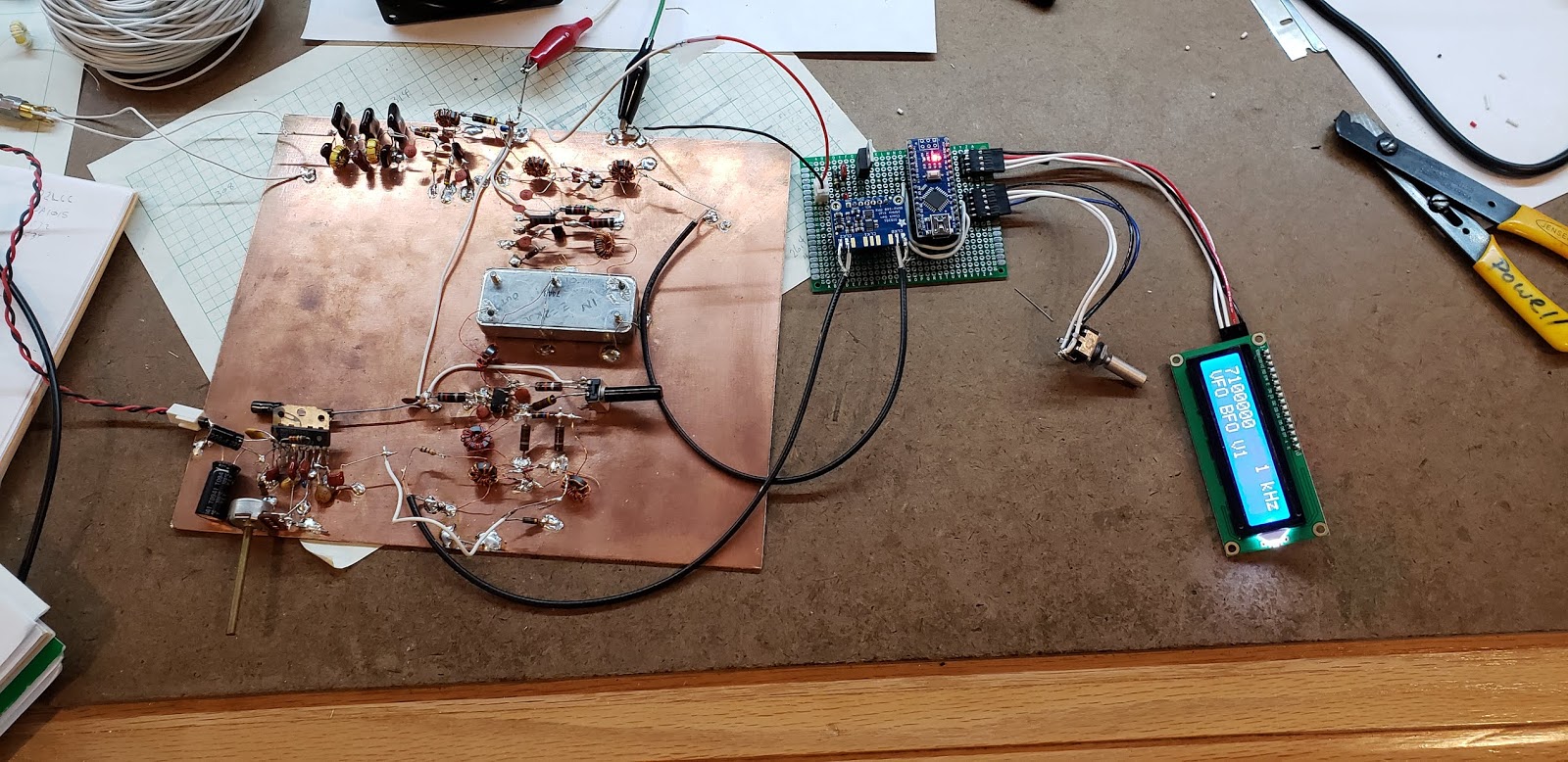
Check out that fancy frequency readout. No glowing numerals here. But it does the job.
Hi Bill,
This is the second version of this video. I had some technical difficulties getting it to upload in High Definition, but I was able to work it out in this version.
In this video I describe the VFO project, talk about how I made use of the e-bay Galaxy V parts, talk about the circuit (series-tuned Colpitts), conduct some stability tests, and discuss many of the ways a VFO like this one can be useful to the radio amateur.
Thanks to Pete Juliano for inspiring this effort.
So, I don’t use voltage regulator chips — I use Zener diodes. I prefer analog LC oscillators to AD9850s or Si5351s. And I have repeatedly built discrete component audio amplifiers when most normal people just put an IC AF amplifier in the circuit.
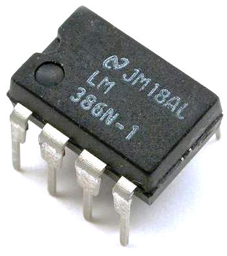
When I built the Q-31 Shortwave AM receiver, I kind of ran out of gas at the end. I wanted to get the receiver going and I didn’t want to build yet another discrete AF amp. So I used an LM386.
I rationalized this deviation from cherished values by noting that the discrete AF amplifier circuitry that I was using was remarkably similar to what exists inside the LM386. So that little chip is just as understandable as my discrete component creations. It wasn’t REALLY a mysterious black box…
Around this time I found a web site that made me feel mush better about all this. It explains very nicely how the little LM386 does such a great job. It really packs a lot of amplification into a very small package. Here is the web site:
https://www.electrosmash.com/lm386-analysis
Shortly after my transgression, Jenny List over at Hack-A-Day posted a nice piece looking at the inner workings of Op-Amps. Who knows, I may seen be using 741 chips too!
Here is the Hack-A-Day piece:
https://hackaday.com/2020/05/09/an-op-amp-from-the-ground-up/
![]() |
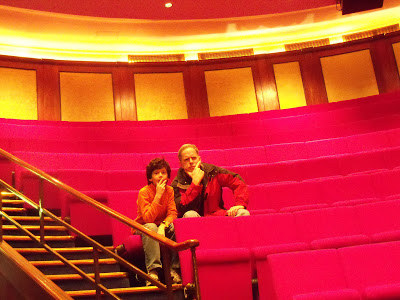
| Deep thoughts where Faraday lectured |
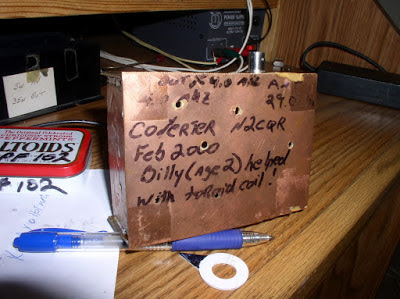
This video demonstrates Billy’s early interest in biotechnology:
![]() |
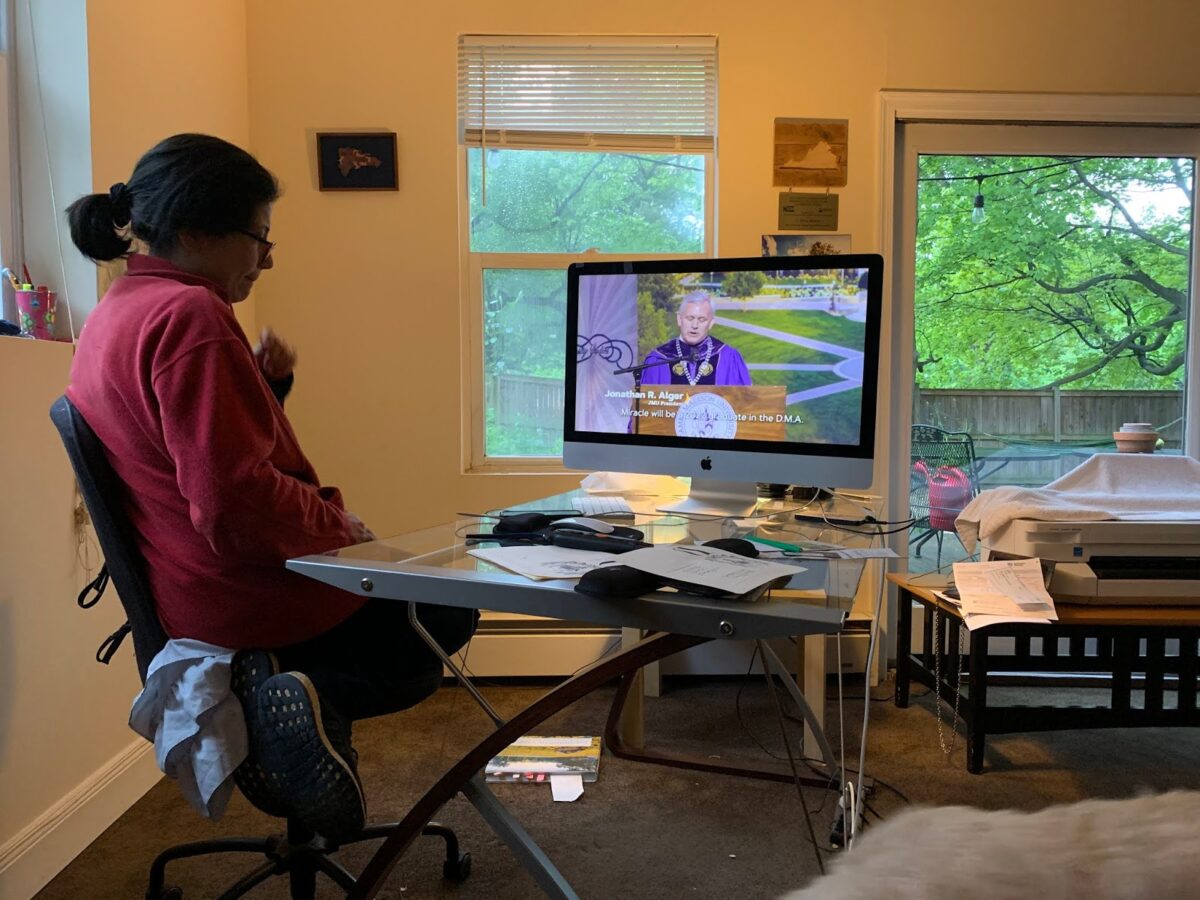
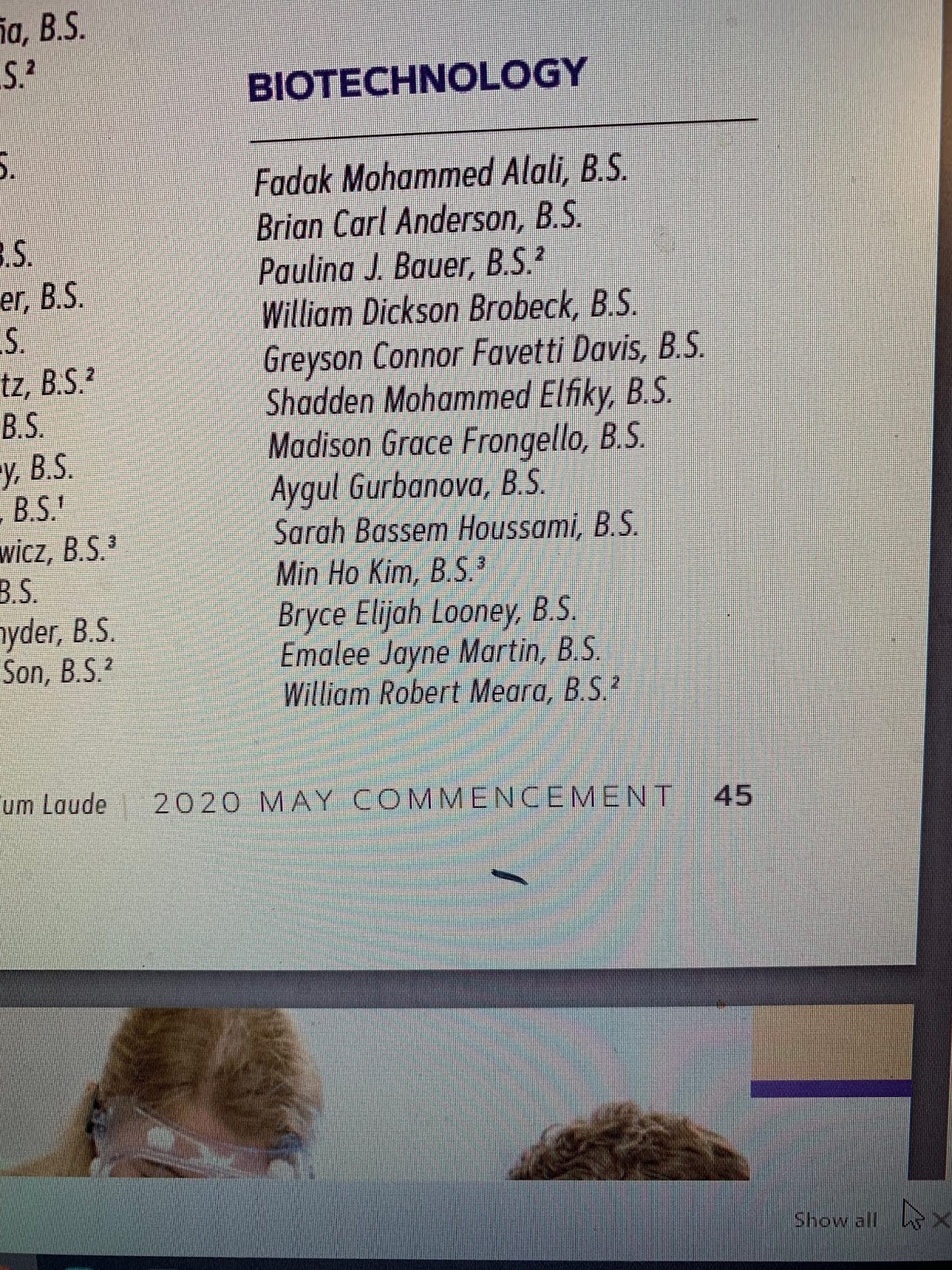
| 2020 Virtual Graduation |
![]() |
| Billy’s mom, sister and dad watching the graduation |