Help India’s Makers Build Oxygen Concentrators for COVID Victims– The M-19 Oxikit Initiative

Why building oxygen concentrators is NOT rocket science.

To make a donation:
Understanding the Gilbert Cell

I’ve been using the Gilbert Cell (in its NE-602 form) for many years. It was in the G-QRP Sudden Receiver. It was in the Neophyte receiver, it was in that little 20 meter DSB rig that I used in Rome and the Dominican Republic. But truth-be-told, every time I used one I heard Jean Shepherd’s voice in my head, razzing me about the fact that I didn’t really understand how the Gilbert Cell works.

My ignorance was kind of understandable, the Gilbert Cell was built around a circuit rarely used in ham radio: the differential pair. And Gilbert used three of them.

My most recent use of the G Cell came after I watched Mike WU2D’s videos on upconverters for the RTL-SDR Dongle. I had an NE-602 all boarded, boxed and socketed, so I used it in my version of the upconverter. But as I did so, I pledged — this time — to really learn how it works.

So I started cracking the books (and the internet) on the Gilbert Cell. It is a very interesting circuit. Gilbert was working to come up with a double balanced mixer that could be built on a chip without the use of the big toroids that we have in our diode ring mixers.

From my study of other mixers I knew what was needed to get two signals to really mix: You needed a non-linearity. You needed the gain or loss experienced through this non-linearity by one of the signals to be determined by the level of the other signal. If you had this, you’d have at the output a complex repeating wave form. Fourier told us that this kind of waveform has within it a number of sine waves and that among them will be one at the sum frequency of the two waves and one at the difference frequency. That’s mixing in a very small nutshell.

Descriptions of the Gilbert Cell usually begin with single differential pair with a current source controlled by another amplifier connected to the emitters in the two transistors in the differential pair:
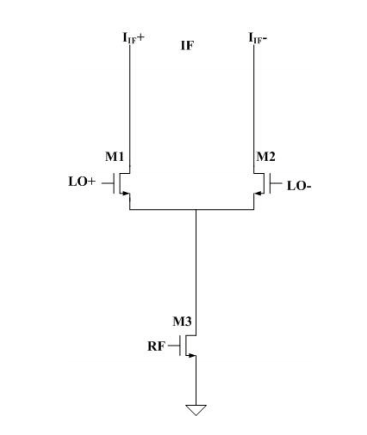
The gain of the M1 M2 differential pair will be determined by how much current current is flowing into their emitters. The signal coming into the RF port will control this current. So, assuming there is some nonlinearity in these circuits, RF will mix with LO and at the IF you will have sum and difference frequencies.

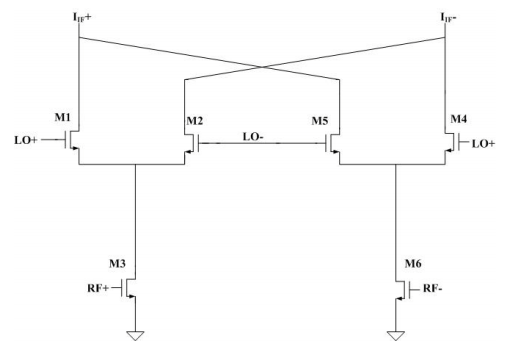
The problem is that you will also have the LO signal there. A singly balanced mixer balances out one of the inputs. A doubly balanced mixer balances out both. Gilbert came up with a way of eliminating both input signals without having to use the big inductors that are used in diode mixers.
Chuck Penson WA7ZZE, Heathkits, and the Titan Missile Museum

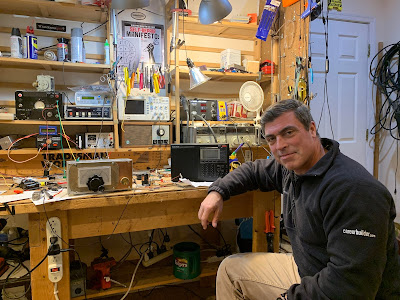
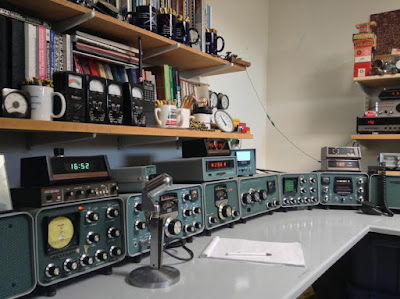
WA7ZZE Shack

The video above popped up in my Facebook feed today and reminded me of Chuck Penson WA7ZZE. Chuck is the author of a wonderful book on Heathkits (and several other books).

The Titan missile explosion (not of the warhead) in Arkansas is described in an excellent but horrifying book entitled “Command and Control” by Eric Schlosser.

PBS made a video out of the book. You can watch it here:

Here’s an interesting article on nuclear weapons tourism. It has a great title.
https://www.nytimes.com/2007/01/05/travel/escapes/05atomic.html


It is easy to see how an interest in ln old technology would lead someone to both Heathkits and Titans. I get that. But on the other hand the Heathkits and the Titans are at completely opposite ends of the humanity spectrum: Heath made friendly technology that ultimately brought people together on the ham bands. We know that the Titans were supposed to do.

In any case it was great to be reminded of Chuck WA7ZZE. We last posted about Chuck more than 10 years ago:
In a comment to that post, Steve “Snort Rosin” Smith WB6TNL noted that Chuck had spoken at the 2009 CactusCon hamfest, and that the club pledged to put his presentation on-line. But Google and I can’t seem to find it. Do any of the Scorpions or anyone else out there know where Chuck’s hamfest talk is?

Bob KD4EBM has been out there. He reports that hams can bring their rigs and make use of the Titan site’s large Discone antenna:

“Adventures in Electromagnetism” Video by Julius Sumner Miller

This guy is quite a character, with a real knack for describing physics. At the start of this video he says that these kinds of adventures are “good for the spirit and the soul.” Right you are Professor Miller. I am currently recovering from a minor back injury. It is nothing serious, but it has delayed the production of the SolderSmoke Podcast #230. These videos are, for me, just what the doctor should have ordered.

I liked Miller’s references to Michael Faraday.

There are many videos on the Julius Sumner Miller YouTube Channel. They are indeed “good for the spirit and the soul.” Thanks to Hack-A-Day for alerting us to this treasure trove.

Ciprian’s Romanian Ten Minute Transmitter with Roots in SPRAT, KA4KXX, and the Florida Sunrise Net

It sounds great Ciprian! It was really cool to see your video and hear you reference not only the SolderSmoke blog, but also SPRAT, the Michigan Mighty Mite, and Walter KA4KXX. Your little rig has a very fine lineage!

I found Ciprian’s video just after seeing the wonderful Herndon Mighty Mite of Jack NG2E. TRGHS! The Color Burst Liberation Army is on the march! For more info on NG2E’s Mighty Mite, check out his blog: https://jackhaefner.blogspot.com/2021/05/mounting-to-perfboard-and-scope-test.html

Jack has in his possession one of the 7.123 MHz crystals that Walter KA4KXX sent me back in 2019 (during my ET-2 craze). It seems obvious that Jack should build a Ten Minute Transmitter and use it to check into the Sunrise Net https://qsl.net/srn/.

A New Michigan Mighty Mite Oscillates in Northern Virginia

We are pleased to report that OM Jack, NG2E, has successfully built a Michigan Mighty Mite transmitter, and has experienced JOO (the joy of oscillation). You can see Jack’s prototype in the video below:

Jack has his eye on more ambitious homebrew projects, but is wisely taking a step-by-step approach. He described his plans this way:
  1. Capture this MMM into a semi-permanent design: ie, perf board.
  2. Measure performance. What does the carrier wave look like on a scope?
  3. Build a low-pass filter.
  4. Can I amplify the signal? Maybe add an amplifier stage or two. Transistor?
  5. Next, let’s look at receivers. Pete & Bill recommend that I build a Direct Conversion receiver. I know Peter Parker (VK3YE) has a simplified version.

Trying to Repair Some Old Gear, He Got Hit with a Dose of LSD!

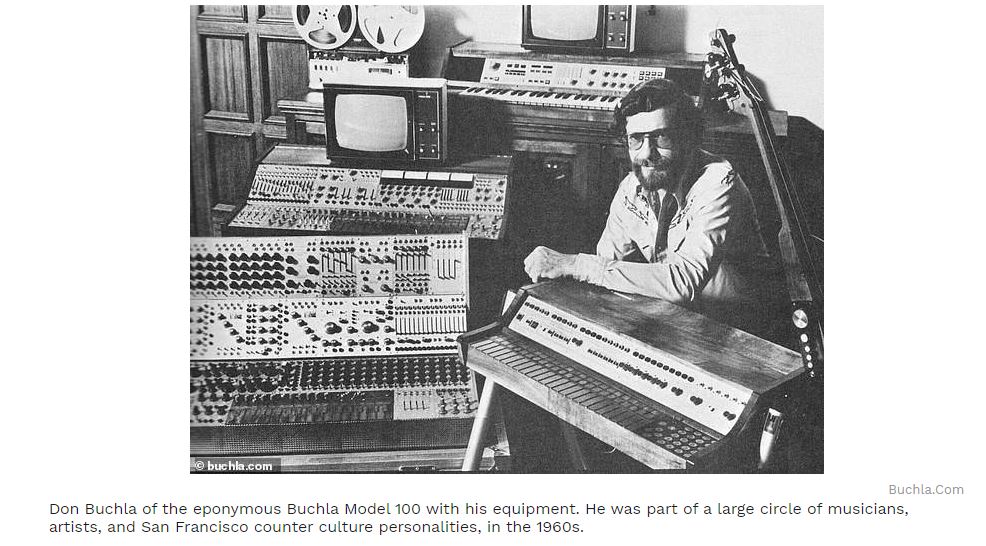
Oh no, here’s something else for us to worry about when working on old gear. As if the treat of electrocution or radioactive poisoning were not enough, now we have to worry about being hit with a dose of the 1960’s drug culture. That could be one bad trip indeed. Imagine if you were having a hard time troubleshooting the Buchla Model 100. All of a sudden things start getting weird and your test gear starts dancing on the bench.

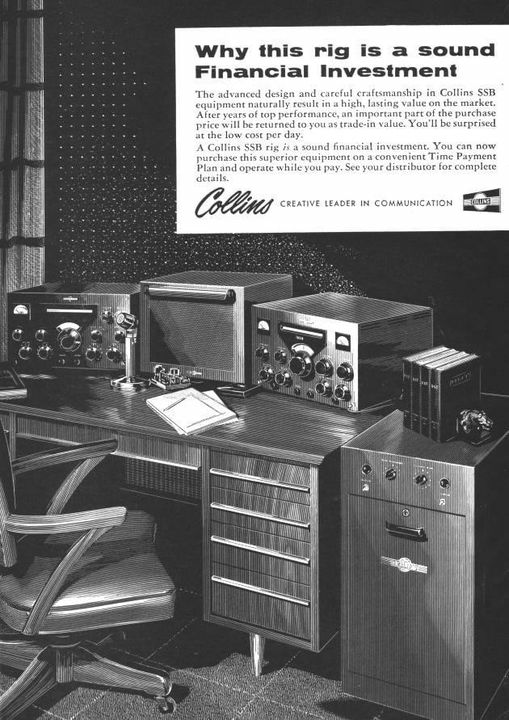
Fortunately, this is not likely to happen with a rig like the DX-100. With rigs like that the only similar danger is nicotine poisoning.

https://allthatsinteresting.com/engineer-accidentally-takes-lsd?fbclid=IwAR2KzZl3qoL6oqq5SqWYquKpHR2mGxk2GN2Kk0O-ytUb9MNXmVNX9XnyeaU

Thanks to Stephen Walters for finding this groovy story.
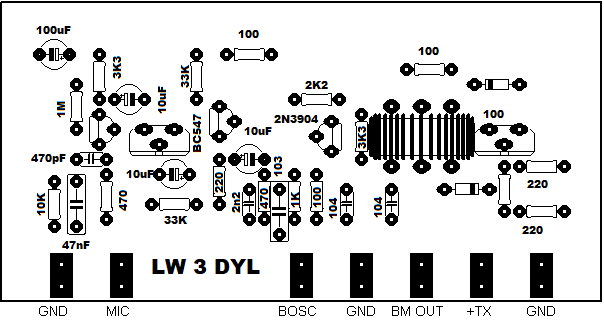
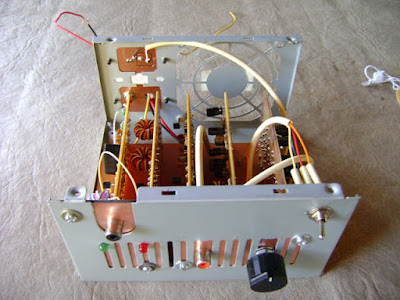
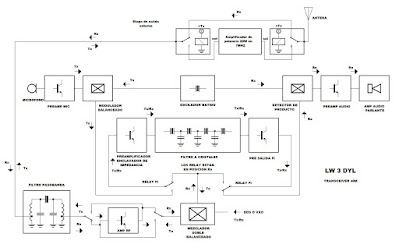
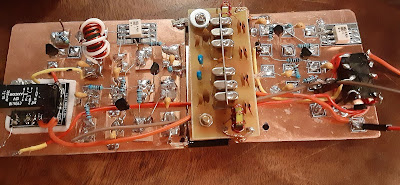
Argentine SSB (BLU) Homebrew from Guillermo LW3DYL

Really nice work. BLU is Spanish for SSB. (Juliano BLU?)

But I think Guillermo needs to build ONE MORE BOARD! A VFO or a VXO. Analog. To finish the job. Guillermo tells me this is in the works — he selected an IF of 11.0592 MHz specifically so that he can use a variable oscillator built around a 4 MHz ceramic resonator.

Complete schematic and PC board patterns on his site:
https://qrplw3dyl.blogspot.com/2021/04/transceptor-blu-para-40-metros.html?fbclid=IwAR0BLMVfVTxMlVy1WyUovVJ0FVrrkMulFxeuu24lkjdkW8j-6QX5g_yV05o

Click on the Bloc Diagram for a Better View:

Homebrew Lives! TWENTY N6QW Simple SSB Transceivers Under Construction in Northern Virginia

IF strip by Don KM4UDX
This has to be one of the most successful of SSB group-build projects. Dean KK4DAS has been leading 20 members of the Vienna Wireless Society in the construction of N6QW’s Simple SSB Transceiver, with Dean’s “Furlough 40” additions. This is very FB, and very encouraging. Dean clearly has The Knack. Just two winters ago I was smuggling a 3.579 MHz crystal to Dean for use in a Michigan Mighty Mite. He has clearly made a lot of progress.
————————-
Dean writes:
It has been just over a year since I completed my initial build of the Furlough 40 with much coaching and assistance from Pete. Mike and Don are two out of 20 members of the Vienna Wireless Society Makers group that is working on a group build the SimpleSSB project as enhanced by me to include features like CAT control for digital modes. Beginning about six weeks ago the group is progressing module by module per SolderSmoke best practice advice. We started with the audio amplifier, followed that with the Arduino/SI-5351 based controller module and the builders are just completing the IF module. This week at our weekly meeting, Mike proudly showed off his success.

————————-

Read all about it, and see some really great videos here:

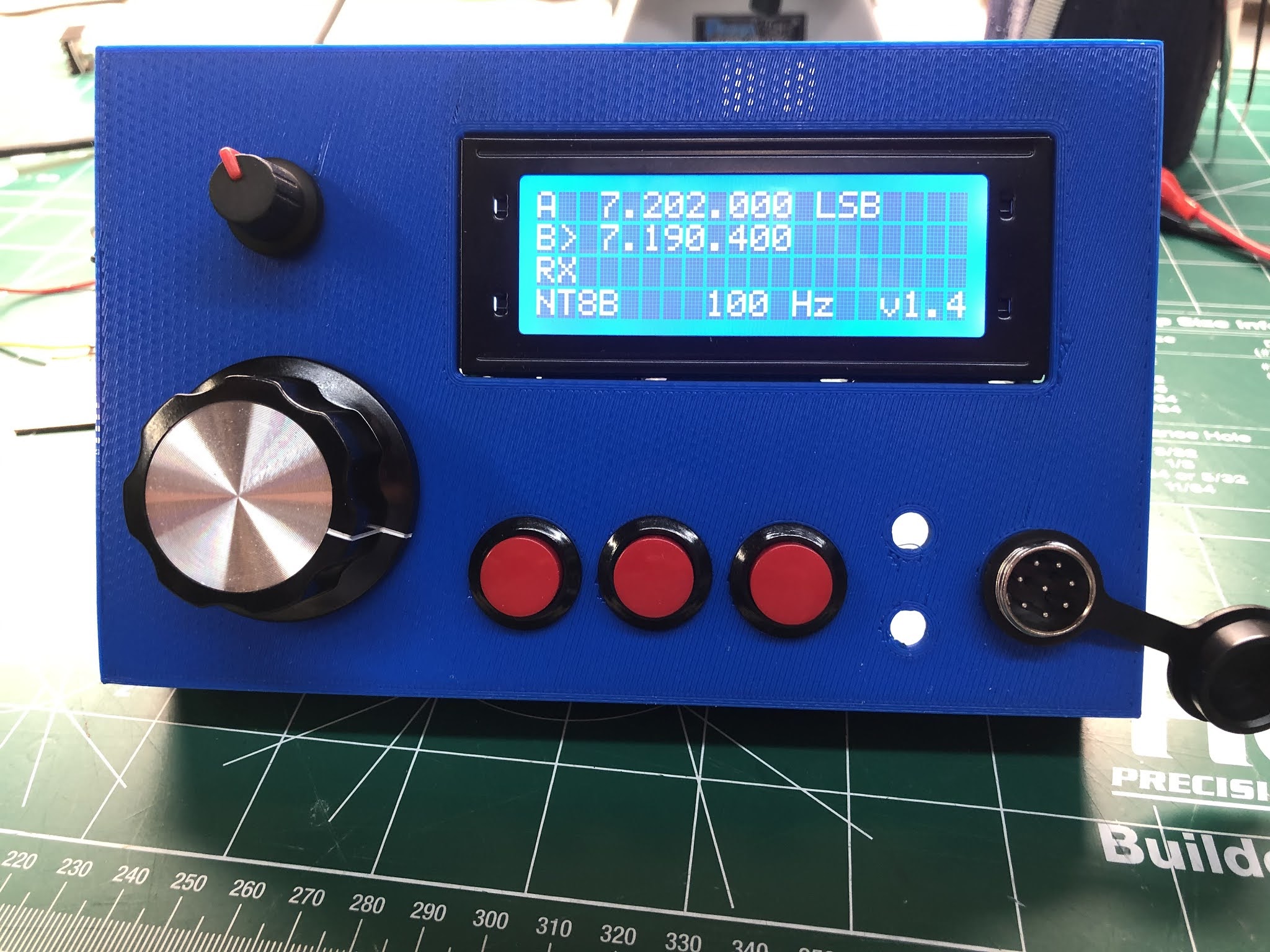
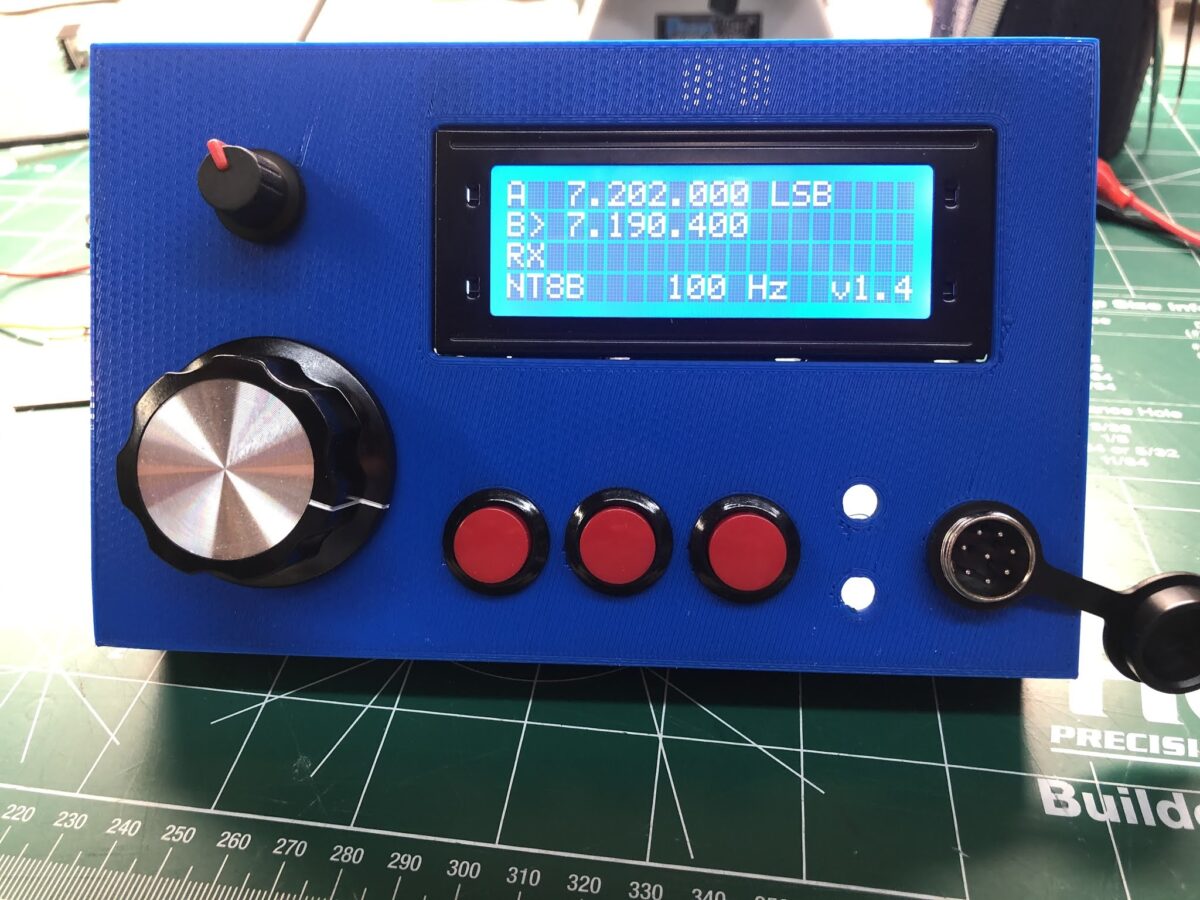
Leon NT8D’s Front Panel

For Your Vacuum Tubes: Isotopic Ionization Sources from U.S. Radium

One or two podcasts ago I mentioned radium in regulator tubes. As I predicted, this provoked a number of comments about how silly it is to even mention such things. Nonetheless, I find it interesting. It seems that real radios really do glow in the dark!

More info on the company:

RIP Isamu Akasaki — Shared Nobel Prize for LED — Analog Guy

From the obituary in the Washington Post:

In addition to the Nobel Prize, Dr. Akasaki’s honors included a 2009 Kyoto Prize — Japan’s highest honor — recognizing developments in advanced technology. He found that some technology, however, needed no advancing at all. He took great pleasure, for example, in long-playing classical music records.

On that point, he joked, “I am analog.”
“The Perfect Trap for the Engineering Mind” — Leo Fernekes’ Stirling Engine

I did a post about Leo back in August:

Although it is not about radio, homebrewers will find much to resonate with in Leo’s Stirling engine project.

Warning: There is a Part II. And there may be more. Proceed at your own risk.

A Satellite Ground Station (Receiver) Made from Junk

Very cool. This guy (who brew up on an island in Alaska) really knows how to use aluminum tape and the junk that fills most workshops. I like his use of the security camera mount as an az-el antenna rotator.

I foolishly discarded a Direct TV dish. I could have been receiving GOES images by now!

Just last week I got the same RTL-SDR.com V3 dongle that he is using. Very FB. It does HF direct sampling with no hardware mods and no upconverter.

More from the builder, Gabe Emerson (KL1FI):


A VERY Successful April Fools’ Day

I was worried. It was early on the morning of April 1, 2021, and I had NOTHING. Maybe this was because so much unbelievable stuff has recently happened in the world. Or maybe it is because technology has been moving so fast that today’s April Fools’ joke is tomorrow’s new device. Whatever the reason, for the first time in about 15 years, I had noting. April Fools’ Day has long been part of ham radio’s culture and I was worried that I would not be making a contribution this year.

Then something caught my eye. Did you know that on Thursday they decided to change the rules of chess! Yes indeed! NO MORE DRAWS! Fantastic! This provided the inspiration for our announcement of the brutal FCC rule-making action regarding the banning of “legacy equipment.”

I knew that that headline would attract a lot of attention. And let me inform you that, according to the official rules of April Fools’ Day, if that headline did pull you in, well that constitutes a “gotcha.” So far 1,758 people are in this category. I thank you all.

The comments attached to the announcement were really heart warming, even those that included profanity directed at my persona. People recalled earlier April 1 events, like the time Pete was defenestrated from the QRP Hall of Fame. Good times, my friends, good times!

This was an especially happy April 1 for me, because I also launched two other highly successful operations:

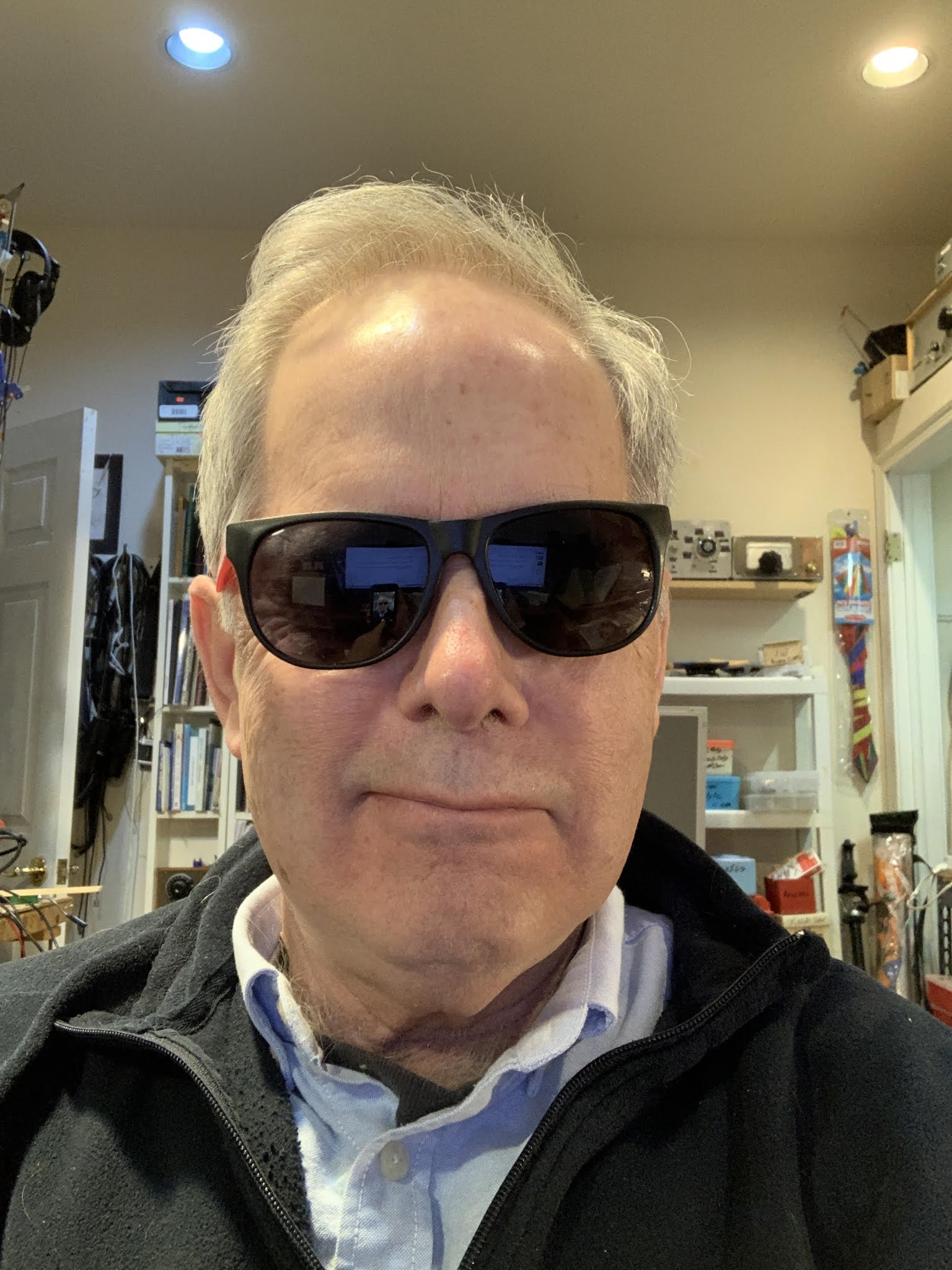
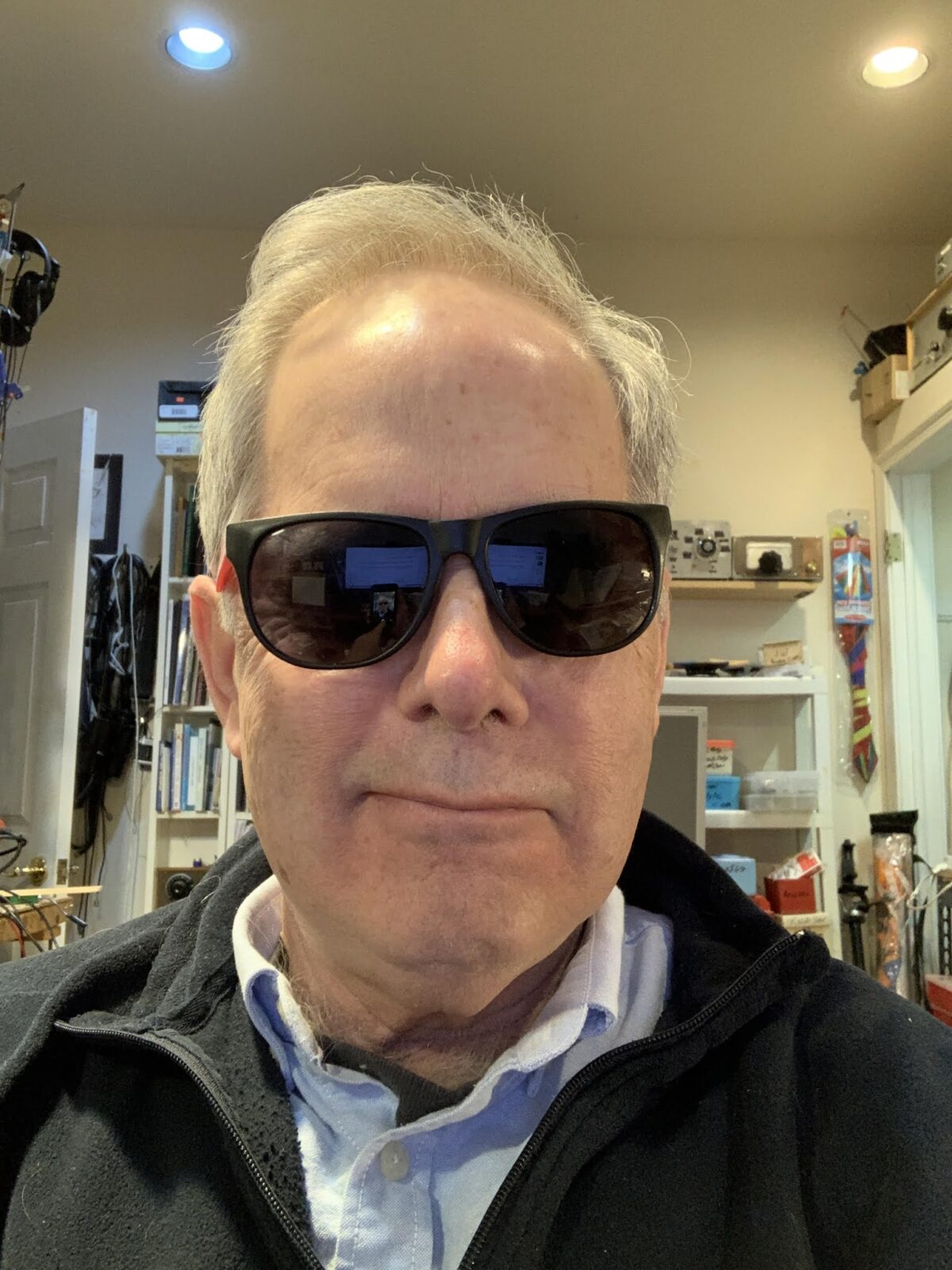
— I teach a Zoom class. On Thursday morning I told the students about new concerns regarding the light hitting their eyes from the computer screens. We were all being issued dark glasses and would henceforth have to Zoom with shades on (see above). The students — bless their hearts — all agreed to do this.

— We are closely associated with a small company that has the word “native” in the corporate name. As in “Native Vegetation.” Shockingly, last Thursday we got an e-mail from the Virginia Small Business Commission DEMANDING that we change the name of the company. It seems that ANY use of the word “native” was now deemed unacceptable. The people in this company (ALL OF THEM!) were really outraged by this. I had to pull the plug before any legal actions were initiated!

So, to all of you, Happy April Fools’ Day!