Our book: “SolderSmoke — Global Adventures in Wireless Electronics” http://soldersmoke.com/book.htm Our coffee mugs, T-Shirts, bumper stickers: http://www.cafepress.com/SolderSmoke Our Book Store: http://astore.amazon.com/contracross-20
Serving the worldwide community of radio-electronic homebrewers. Providing blog support to the SolderSmoke podcast: http://soldersmoke.com
Our book: “SolderSmoke — Global Adventures in Wireless Electronics” http://soldersmoke.com/book.htm Our coffee mugs, T-Shirts, bumper stickers: http://www.cafepress.com/SolderSmoke Our Book Store: http://astore.amazon.com/contracross-20

3 October from AA1TJ:
Here’s an admittedly late reminder that the Sputnik Party begins
tomorrow (4 October). I’ve been preoccupied with non-hobby concerns in
recent months but I did manage to throw something together for the
event.
My transmitter follows the lines of the 10mW, battery-powered, RF
beacon that was carried into orbit in 1958 by “Vanguard 1.” You may
recall this is the one Premier Nikita Khrushchev characterized as “the
grapefruit satellite.”
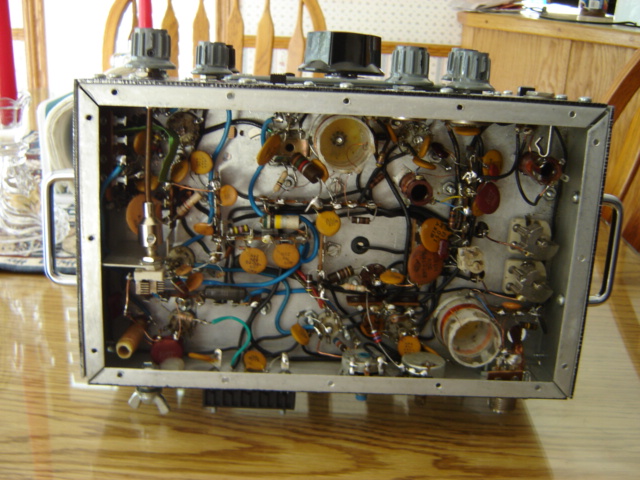
My present build uses essentially the same circuitry and componentry
as did an earlier, 20m version; details of which can be found at
http://aa1tj.blogspot.com/2012/06/vanguard-1-satellite-transmitter.html
The 15m version drives a 44m end-fed wire with 30milliWatts.
The receiver that I built for the event is essentially a “Q-multiplier
-> detector” type regenerative job. However, the Q-multiplication is
accomplished by a parametric amplification using a quartz-crystal
controlled pump. I thought it would be historically appropriate given
that parametric amplifiers were all the rage in the late 1950’s.
I put together the keying and R/T changeover circuitry this morning.
When it appeared that “all systems were go” I began sending CQs on
21.060MHz. The band, or at least that portion of the band (the
receiver only tunes from 21.060 to 21.064MHz), seemed rather quiet,
but my 6th call netted a “dit dit dah dah dit dit.” Resending my call,
I was very pleased to hear HB9DCL come back to me from just outside of
Zurich. The reports were 579/339. Frank was running 5W to a log
periodic antenna. I sure hope this is a sign of things to come!
I hope to be at the key by 1300Z tomorrow. Although my little
“grapefruit” only puts out 30mW, folks running “Sputniks” made from
ex-Soviet subminiature “rod tubes” should be at least two S-units
stronger. A number of European stations will be operating this year
and at least one station that I know of will be QRV from Japan. Just
listen for the beeps and give them a call!
Thank you,
Mike, AA1TJ
…………………..
Our book: “SolderSmoke — Global Adventures in Wireless Electronics” http://soldersmoke.com/book.htm Our coffee mugs, T-Shirts, bumper stickers: http://www.cafepress.com/SolderSmoke Our Book Store: http://astore.amazon.com/contracross-20

OK gang, it is time for us to do what we can to help a worthy Short Wave Listener transition into the world of amateur radio. Chris will be facing the Irish radio examiners on October 4. So please try to send some positive vibes in the direction of Ireland. Cross your fingers (especially the ones with the soldering iron scars!) Maybe melt some sacrificial solder. C.F. Rockey might suggest sacrificing a chicken to Papa Legba. Say a prayer if you are so inclined. Good luck Chris!
Our book: “SolderSmoke — Global Adventures in Wireless Electronics” http://soldersmoke.com/book.htm Our coffee mugs, T-Shirts, bumper stickers: http://www.cafepress.com/SolderSmoke Our Book Store: http://astore.amazon.com/contracross-20

OK gang, it is time for us to do what we can to help a worthy Short Wave Listener transition into the world of amateur radio. Chris will be facing the Irish radio examiners on October 4. So please try to send some positive vibes in the direction of Ireland. Cross your fingers (especially the ones with the soldering iron scars!) Maybe melt some sacrificial solder. C.F. Rockey might suggest sacrificing a chicken to Papa Legba. Say a prayer if you are so inclined. Good luck Chris!
Our book: “SolderSmoke — Global Adventures in Wireless Electronics” http://soldersmoke.com/book.htm Our coffee mugs, T-Shirts, bumper stickers: http://www.cafepress.com/SolderSmoke Our Book Store: http://astore.amazon.com/contracross-20
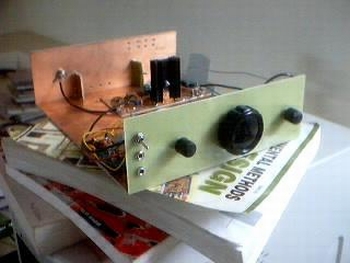
Continuing with our workshop inspiration theme, I spotted this in the BITX-20 mailing list this morning. The response is from Farhan:
blake,
i would suggest a different route. a long and winding one, that will
finally lead to a bitx.
the idea is to learn. you do this by understanding what you build and
building what you understand. by ‘understand’, i specifically mean, being
able to measure. here is what i suggest, buy yourself a bunch of 2N3904s
from the local radio shack and some resistors and caps. then build this :
http://www.phonestack.com/farhan/testosc.gif
this is an oscillator. if you plug a coil between the open ends, it will
become a vfo, if u plug a crystal, it becomes a crystal oscillator. you can
use your frequency oscillator to check the frequency it is oscillating at,
etc.
with this, you would have mastered the first of the three blocks that make
up almost every radio circuit. but next, you must make another test
instrument. a power meter. most of us ham start out with a simple RF probe.
while that was fine and dandy for its day, now we can do much much better.
we can make a very accurate power meter that enable you to measure things
as finely as anybody in this business. W7ZOI has designed a super simple
power meter. it is available as a kit.
read about the power meter here :
http://www.kangaus.com/Documentation%20files/Power%20Meter%20Documentation%20May%202011.pdf
you can purchase the kit at www.kangaus.com
(I have no business interest with kanga or any other kit manufacturer)
with the power meter in place, you can now measure the power levels coming
out of any circuit with great accuracy.
now, you can build a single stage feedback amplifer (there are six of them
used in the bitx) on a copper clad board. using the test oscillator as an
input, you can measure how much gain the amplifer has (measure the
oscillator output, then connect the oscillator to the amp and ,measure the
amp output. the, amp output – oscillator output = amp gain).
of course, while building both these blocks, you will discover what
voltages to expect at which junction of components in both these blocks.
next, you can build a step attenuator. which is a really simple thing and
of immense value in the home lab. here is a design
http://www.arrl.org/files/file/Technology/tis/info/pdf/9506033.pdf
or you can now buy it in a kit form from
http://www.qrpkits.com/attenuator.html
finally, you can build a simple signal generator like this :
http://www.phonestack.com/farhan/siggen.html . this will allow you change
frequencies and measure what a circuit does at different frequencies. you
can use this to test how the filters are doing and get them to ‘spot’ where
you want them to.
so, there it is, a signal generator, a power meter, step attenuator, test
oscillator. four, very simple test instruments that you can build
yourself. they will give you one helluva education in radio. and within
weeks, you will understand and start building on your own!!
– farhan
> Quoting bfabman :
>
> Hello Everyone, I have been watching the group for a few months now
> with interest. I have no electronic experience to speak of, but I have
> a burning desire to make one of these, and I am wondering what all of
> you think of someone like myself building one as my first real radio
> project, to be used for qrp mountain topping. I don’t have any
> electronic test equipment for the final alignment, other than a
> standard DIG vom meter. (I am willing to buy some equipment if
> necessary) I think that this would be an awesome winter project just
> don’t know if it would be over my head. If I got it all built, could I
> actually get it aligned and working properly. I did make a Norcal
> frequency counter project last year and it turned out very well. Thanks
> for your opinions before I spend the money. Blake
>
> Paul Daulton K5WMS
> beacon WMS 185.302 khz qrss30/slow 24/7
> Jacksonville,Ar 72076
> em34wu
Our book: “SolderSmoke — Global Adventures in Wireless Electronics” http://soldersmoke.com/book.htm Our coffee mugs, T-Shirts, bumper stickers: http://www.cafepress.com/SolderSmoke Our Book Store: http://astore.amazon.com/contracross-20
“In time, you may recognize your electronics workbench as your greatest teacher. Bench experiments involve us thinking about and measuring our circuits so we know what’s happening instead of relying too much on folklore, guessing and copying others. Designing and/or simulating circuits with software can enhance your learning but does not obviate the need to spend time in the trenches with meters, wires and solder.” Todd, VE7BPO
Like most of you, I am a frequent visitor to Todd’s site. It seems like every time I go there, I learn something new and come away inspired. Yesterday I was looking at the page that describes his philosophy of homebrewing. Check it out. Good stuff: http://www.qrp.pops.net/info.asp
He also has a very nice collection of Java Script Applets for Homebrewers:
http://www.qrp.pops.net/qrp-java-calculator.htm
Thanks Todd!
Our book: “SolderSmoke — Global Adventures in Wireless Electronics” http://soldersmoke.com/book.htm Our coffee mugs, T-Shirts, bumper stickers: http://www.cafepress.com/SolderSmoke Our Book Store: http://astore.amazon.com/contracross-20
Our book: “SolderSmoke — Global Adventures in Wireless Electronics” http://soldersmoke.com/book.htm Our coffee mugs, T-Shirts, bumper stickers: http://www.cafepress.com/SolderSmoke Our Book Store: http://astore.amazon.com/contracross-20

Our plan is to strap a key-chain video camera to the center of gravity on this mean green machine. Using Duct Tape (of course). Kind of like this guy did:
http://www.teamten.com/lawrence/projects/video-camera-on-model-rocket/
Our book: “SolderSmoke — Global Adventures in Wireless Electronics” http://soldersmoke.com/book.htm Our coffee mugs, T-Shirts, bumper stickers: http://www.cafepress.com/SolderSmoke Our Book Store: http://astore.amazon.com/contracross-20
John N. Shive rocks the universe with his 1959 wave machine. We saw this device some time ago in a video in which Dr. Shive explained standing waves. Thanks to Armand WA1UQO for alerting us to this gem.
Our book: “SolderSmoke — Global Adventures in Wireless Electronics” http://soldersmoke.com/book.htm Our coffee mugs, T-Shirts, bumper stickers: http://www.cafepress.com/SolderSmoke Our Book Store: http://astore.amazon.com/contracross-20
Our book: “SolderSmoke — Global Adventures in Wireless Electronics” http://soldersmoke.com/book.htm Our coffee mugs, T-Shirts, bumper stickers: http://www.cafepress.com/SolderSmoke Our Book Store: http://astore.amazon.com/contracross-20
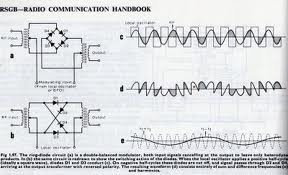
I liked this thread on the EMRFD mailing list. The question of how best to generate SSB is very interesting, and I also liked the global scope of the Q&A: Peter in Hungary asks the question, Farhan in India and Allison in the U.S. respond.
On 9/25/12, ha5rxz
When generating an SSB signal from audio and a 9 MHz carrier which would be
the best mixer to use?
a) A high-level ring bridge mixer such as the SRA-1H
b) An H-Mode mixer using an FST3125 chip
c) An H-Mode mixer using a 74HC4016
d) Something else
Note that this mixer will not be used to demodulate.
Peter HA5RXZ
……………………………..
Ashhar Farhan
In my experience, if you keep the audio level low enough, it is
difficult to beat a simple two diode mixer.with a 10 db attenuator in
the output. Having just two diodes makes balancing of reactive as well
as resistive differences of the two diodes quite trivial. Schottky
diodes are best.
One thing, I did discover though is that the balance should be to
minimize the harmonic distortion, rather than just the carrier
suppression.
What we are shooting for is to keep the In-band IMD down. Carrier
suppression is just hygiene. So, you will want to tune in to the
signal, modulating it with two tones and see it on a audio spectrum
analyzer (freely downloadable from the net) and try getting the third
spike down.
Though the ‘packaged’ mixers don’t give you the needed control for
hi-fidelity, for trivial usage, NE602 is pretty good. Just drop it
into the rig and live with what you get (which is not bad at all).
The best resource is the chapter on phasing receivers and transmitters
in emrfd. Rick is the guru. I hope he joins this thread.
– Farhan
……………………………………..
FROM KB1GMX:
I’ll weigh in..
Yes, they all work. You need a provision for adjusting carrier balance on some but anything over 40db will be good.
I’ve used 602/612s, SBL-1, SBL-1H, diode rings, and even varicap
diodes (there is a design using them in capacitively balanced
a modulator from many years ago. They all work if the levels are correct.
These days I use the sa612 for simple designs, SBL-1 with a 50ohm
pot added for balance for better radios and the 4 diode ring I’ve
used many times as its uncritical, needs only one untapped
transformer and easy to make. Most of those are listed in the
older 1975 through current handbooks and EMDRFD.
If needed I can post to the files section a few designs but
they are all textbook and all are capable of good results.
In just about all the diode modulator cases a fairly strong
carrier (5mW or more) is needed and the audio will be about
10db lower for very good result. The active devices like the
ca3028(and friends), SA612, MC1496 the levels for the carrier
and audio must be matched accordingly for the device. You can
look at the output with a scope and get a first order eyeball
call on quality (no carrier and no clipping or limiting) and a
receiver (any your ears) will tell you if its right.
Allison
Our book: “SolderSmoke — Global Adventures in Wireless Electronics” http://soldersmoke.com/book.htm Our coffee mugs, T-Shirts, bumper stickers: http://www.cafepress.com/SolderSmoke Our Book Store: http://astore.amazon.com/contracross-20

September 23, 2012
Trip to the Dominican Republic: Puerto Plata and Samana
Evading Hurricane Isaac
Honda Accord as an emergency generator
On the air on 75 and 40 AM
17 Meter Azores rig works…THE AZORES!
Working (STILL!) on 20 meter DSB rig. Soon to be JBOTed
Building model rocket with Billy
Book review: “Martian Summer”
Einstein on staying young
Primo Levi on QRP
HOT IRON: G3ROO’s Regen wins West Country prize
Commodity Investment Opportunity: SILVER MICA!
MAILBAG:
SolderSmoke is on 478 THz in Salt Lake City
WA3EIB’s HT-37
Radio-Erotica in Hallicrafters Ad
Our book: “SolderSmoke — Global Adventures in Wireless Electronics” http://soldersmoke.com/book.htm Our coffee mugs, T-Shirts, bumper stickers: http://www.cafepress.com/SolderSmoke Our Book Store: http://astore.amazon.com/contracross-20
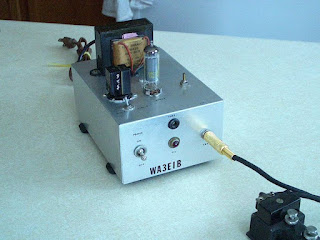
Our book: “SolderSmoke — Global Adventures in Wireless Electronics” http://soldersmoke.com/book.htm Our coffee mugs, T-Shirts, bumper stickers: http://www.cafepress.com/SolderSmoke Our Book Store: http://astore.amazon.com/contracross-20
Hi Bill,
I’ve been a listener to Soldersmoke for several years, now and look forward to the podcasts and postings.
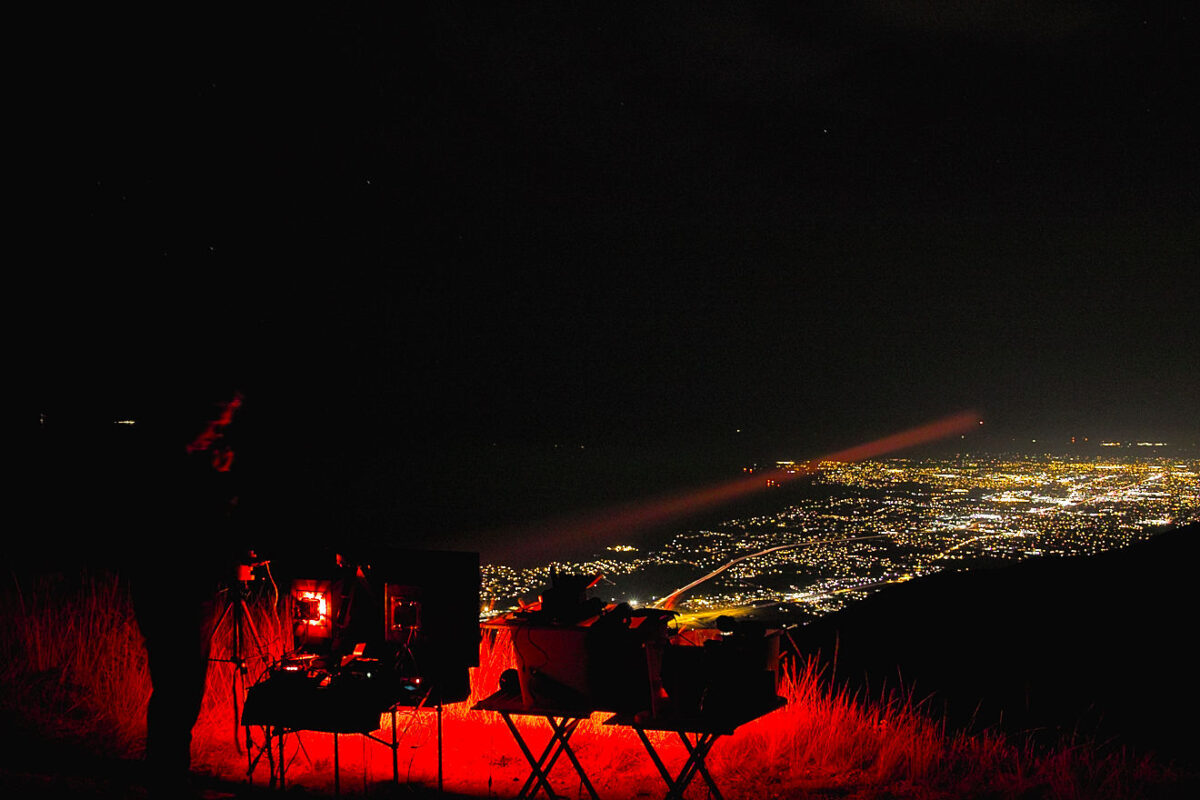
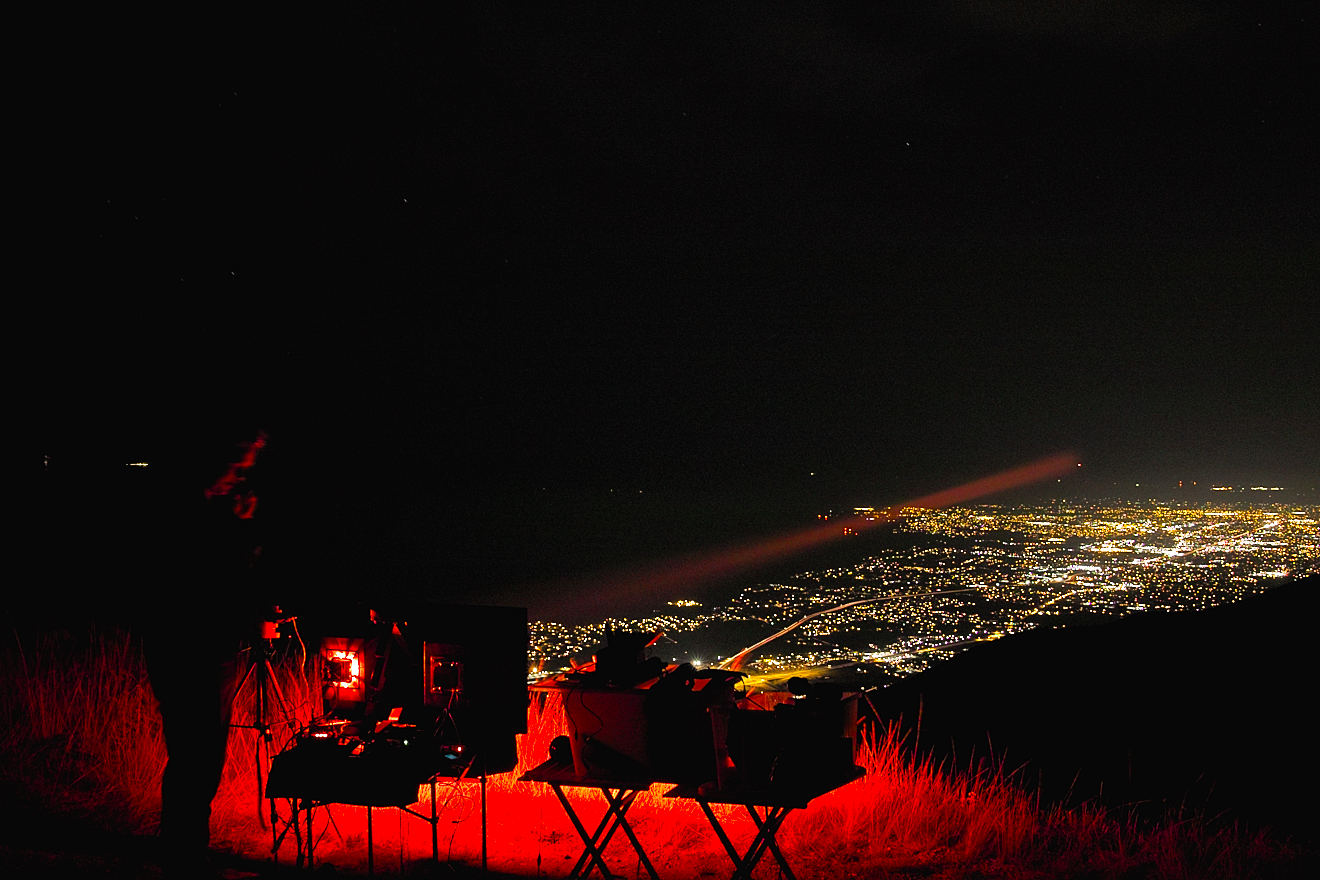
This past weekend our group of microwavers in the Salt Lake City area participated in the 2nd half of the ARRL “10 GHz and up” contest and, for the fun of it, we decided to get on the highest amateur band, the one marked in the rules as being “275 GHz and up.” In our case, it was around 478 THz – also known as “Red” – being emanated from high-power (20+ watt) LEDs.
Attached is a picture taken from my location at about 9300 feet elevation (grid DN40cx) taken from a location near a minor bump known as “Bountiful Peak” 10 miles or so north of Salt Lake City where I was accompanied by Gordon, K7HFV and Gary, AB1IP. At the other end of the path (the red dot at the far end of the red shaft of light) was in DN31it was Ron, K7RJ and his wife Elaine, N7BDZ located at about 5700 feet elevation near the remote northwestern Utah community of Park Valley, over 95 miles distant. While this isn’t our farthest DX (that would be a bit over 173 miles) it was still fairly substantial and gave us the ability/excuse to test some new, updated gear that hadn’t seen much light in the field.
In doing our testing, we needed an audio source other than our voices so I’d brought along an MP3 player so that I could step away from the gear and still provide a constant source of audio. Among that which was played across the link – the quality of which was extremely good, by the way at about 50dB S/N at full LED power – was your voice from a Soldersmoke podcast.
FWIW, we also established 2-way communications using cheap, low-power laser pointers and while they did work, the link was very inferior owing to severe scintillation (fading.) For a bit more info on what we did you can read here:
http://ka7oei.blogspot.com/2012/09/throwing-ones-voice-95-miles-on.html
and if you want more, you can follow the link at the bottom of the page.
Anyway, I thought you might find that interesting, if nothing else…
73,
Clint
KA7OEI
Our book: “SolderSmoke — Global Adventures in Wireless Electronics” http://soldersmoke.com/book.htm Our coffee mugs, T-Shirts, bumper stickers: http://www.cafepress.com/SolderSmoke Our Book Store: http://astore.amazon.com/contracross-20
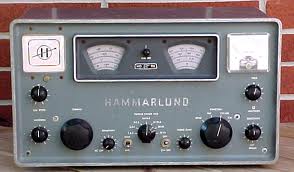
Bill,
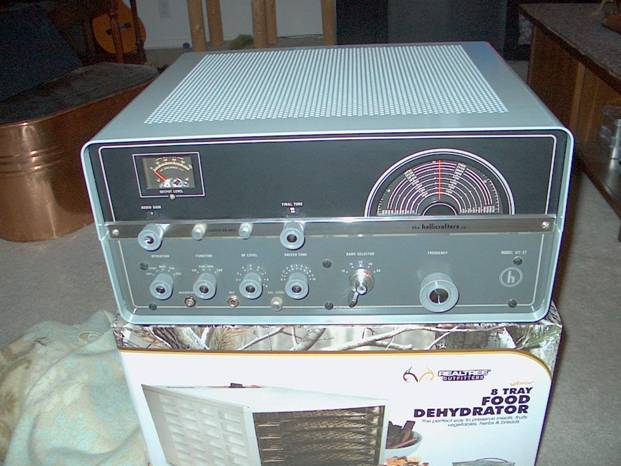
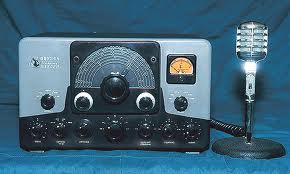
I know you would appreciate this. Got an email this morning from a local ham who was getting rid of some “junk” radios, wondered if I or someone else could use them. Once I heard I got over there to pick them up. Among the usual, real junk was a Hammarlund HQ-110C receiver, in the original box and a Johnson Viking Ranger, also in the box. With all the manuals as well. The boxes are showing their age, the Ranger’s being not much to look at. I am told neither works and haven’t been looked at / turned for at least 20 years. What a find! They are very clean and complete, as far as I can tell.
The plan is to restore them to pristine condition and, hopefully, use them in one of the local museum as a working station.
Mike Herr
WA6ARA
DM-15dp
Our book: “SolderSmoke — Global Adventures in Wireless Electronics” http://soldersmoke.com/book.htm Our coffee mugs, T-Shirts, bumper stickers: http://www.cafepress.com/SolderSmoke Our Book Store: http://astore.amazon.com/contracross-20
I took this book with me to the Dominican Republic this summer, and I really enjoyed it. Kessler has an unusual, very funny, self-deprecating writing style. He is not a scientist nor an engineer, but he is given access to the inner sanctums of the Mars Phoenix mission, and spends an entire summer watching and documenting the work of the people running this mission.
Our book: “SolderSmoke — Global Adventures in Wireless Electronics” http://soldersmoke.com/book.htm Our coffee mugs, T-Shirts, bumper stickers: http://www.cafepress.com/SolderSmoke Our Book Store: http://astore.amazon.com/contracross-20
Ah, those were the days! The bands were in good shape and hams built their own gear.
Don’t let the language barrier deter you — this German language video is really a lot of fun and worth watching. It provides a nice look at the hobby as it was 60 years ago. Thanks to Stephen and Michael for alerting me to this.
Our book: “SolderSmoke — Global Adventures in Wireless Electronics” http://soldersmoke.com/book.htm Our coffee mugs, T-Shirts, bumper stickers: http://www.cafepress.com/SolderSmoke Our Book Store: http://astore.amazon.com/contracross-20
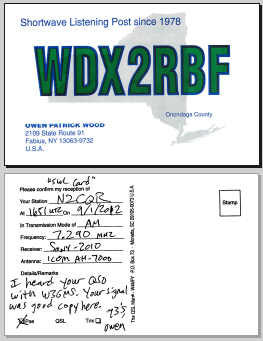
I always like to get QSL cards from shortwave listeners. I suppose this has to do with my broadcaster tendencies. I blame Jean Shepherd for this. Owen heard my K2ZA DX-100 on 40 meter AM.
Our book: “SolderSmoke — Global Adventures in Wireless Electronics” http://soldersmoke.com/book.htm Our coffee mugs, T-Shirts, bumper stickers: http://www.cafepress.com/SolderSmoke Our Book Store: http://astore.amazon.com/contracross-20

Wow, back in the day the marketing suits from Hallicrafters apparently really knew how to attract the attention of 15 year-old guys interested in short-wave listening. Could that ad have ever possibly run in stuffy old QST? It certainly would have attracted my attention. I suspect many a young amateur would have been looking to sign up for a DX-pedition. Thanks to Bob, KD4EBM, for alerting us to this unusual bit of 1950s radio-erotica.
Our book: “SolderSmoke — Global Adventures in Wireless Electronics” http://soldersmoke.com/book.htm Our coffee mugs, T-Shirts, bumper stickers: http://www.cafepress.com/SolderSmoke Our Book Store: http://astore.amazon.com/contracross-20
Our book: “SolderSmoke — Global Adventures in Wireless Electronics” http://soldersmoke.com/book.htm Our coffee mugs, T-Shirts, bumper stickers: http://www.cafepress.com/SolderSmoke Our Book Store: http://astore.amazon.com/contracross-20