Our book: “SolderSmoke — Global Adventures in Wireless Electronics” http://soldersmoke.com/book.htm Our coffee mugs, T-Shirts, bumper stickers: http://www.cafepress.com/SolderSmoke Our Book Store: http://astore.amazon.com/contracross-20
Broadening the Barebones Barbados Receiver
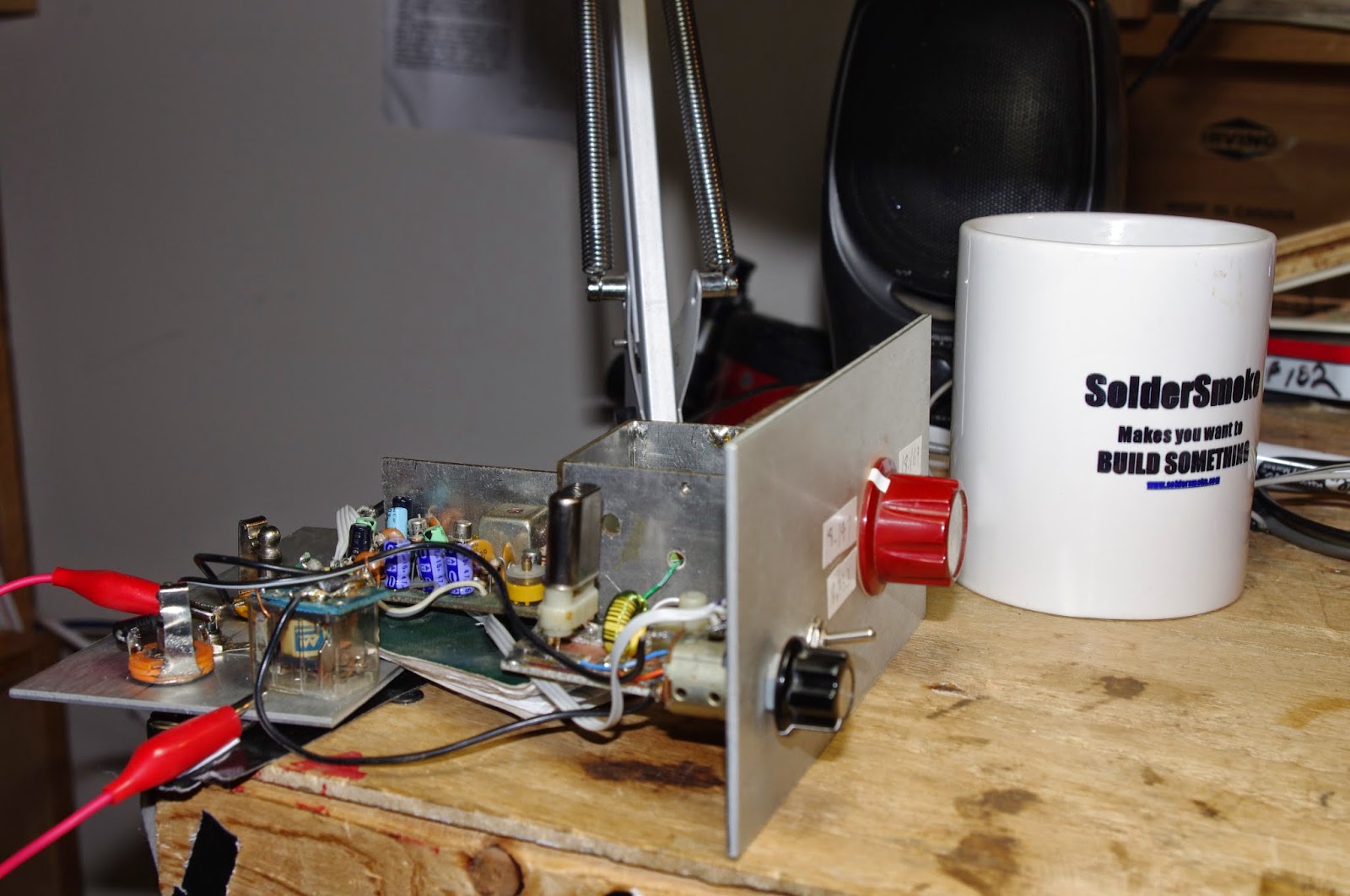
I‘ve been working on the crystal filter of the Barbados Barebones Superhet receiver. This was designed by Doug DeMaw in 1982. This one was built by Dale Parfitt W4OP and then repeatedly modified by me. It is now on 17 meters with a crystal-switchable VXO. Earlier I had made a very crude attempt to broaden the filter from its original very narrow CW configuration. This week I did this again, but this time I actually characterized the crystals and used Wes’s LDA and GPLA software (from EMRFD) to design the filter.
I played with the capacitor values and finally got the 3 kc bandwidth I wanted, but I’m having trouble getting rid of the ripple. I know this is dependent on the impedances at the two ends. The programs say I need 2000 ohms.
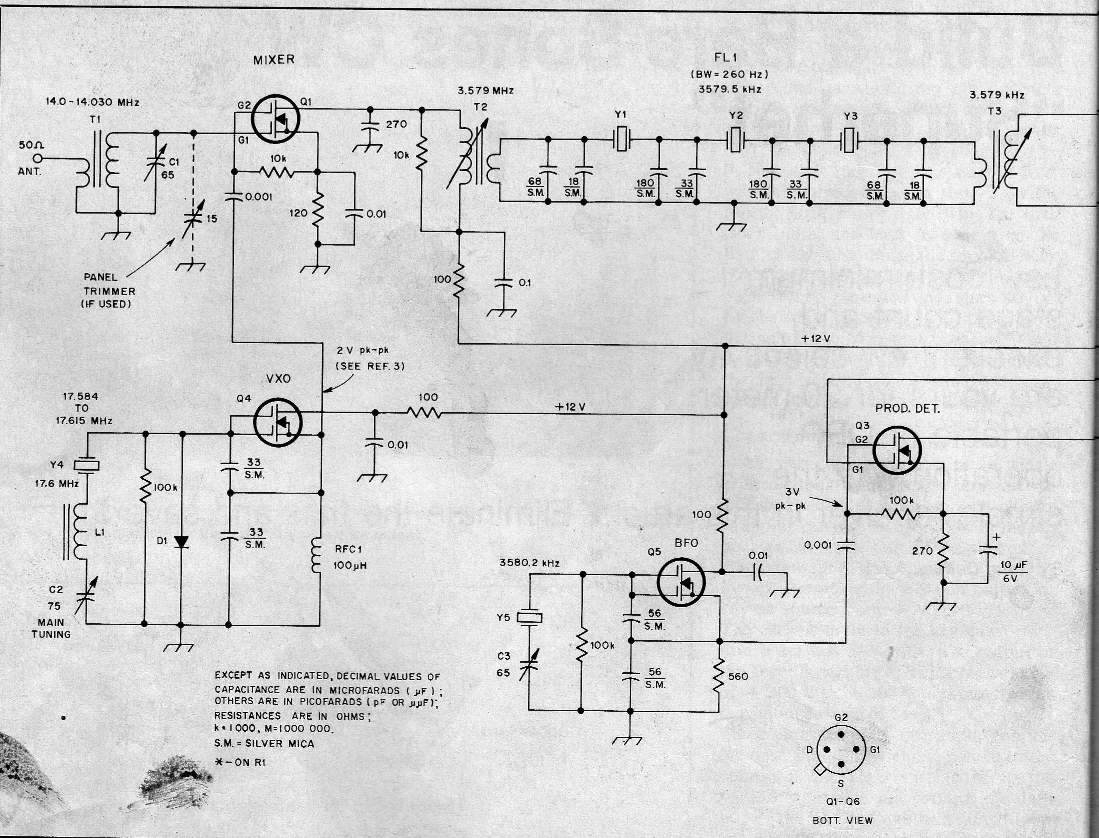
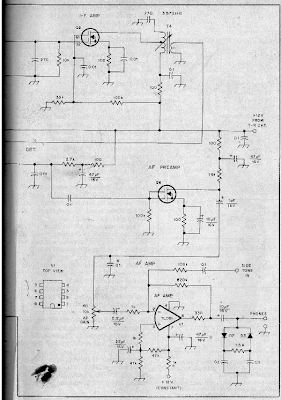
I’m kind of puzzled about how Doug DeMaw did this with his original design. For his crystals and his 250 Hz (!) bandwidth he said he needed 450 ohms. He used 4.7:1 turns ratio transformers at either end and said that by putting 10k resistors across these transformers he got the needed impedance. I can see how this would work looking into the gate of the 40673 IF amp, but looking back at the drain of the 40673 mixer, I’m not so sure that that would yield 10k. (See schematic below.)
But who am I to doubt Doug? So I assumed he was correct about the 10K and I re-wound the transformers with a 2:1 turns ratio, thinking that would get me closer to the needed 2k. But the ripple is still there. I guess I could use a return loss bridge at this point…
I don’t know whether this is worth messing with anymore. The receiver sounds nice. The 3kHz bandwidth gives it a nice sound, and the ripple doesn’t seem to be noticeable That FAR circuits board is tightly packed and difficult to work with. So, should I leave good enough alone, or should I proceed with fanatical ripple eradication. Any advice?
BTW: Why is it that receivers always seem to sound better when opened up (as above) on the workbench?
Our book: “SolderSmoke — Global Adventures in Wireless Electronics” http://soldersmoke.com/book.htm Our coffee mugs, T-Shirts, bumper stickers: http://www.cafepress.com/SolderSmoke Our Book Store: http://astore.amazon.com/contracross-20
Kai’s Redwood Mighty Mite with Poker-Chip Hacksaw Key
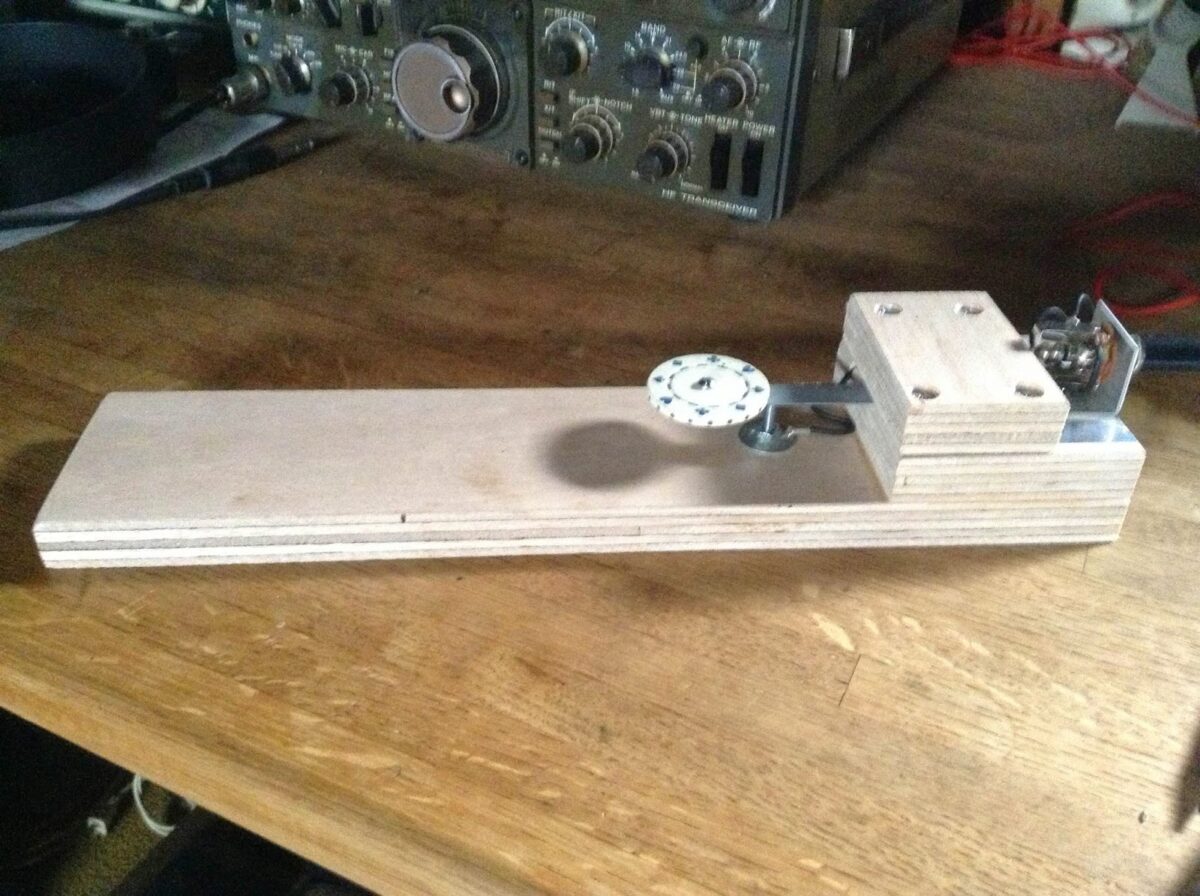
And Check out Kai’s homebrew key:

Hi Pete,
Thanks for your kind words. I really enjoyed the MMM project, first analog oscillation  . Your right about the homebrew key being a hacksaw blade and a few pieces of plywood. The knob is an old poker chip. You can adjust the spring tention by moving the blade in and out of the plywood. Travel can be adjusted by raising and lowering the bolt under the blade. I needed something for CW and wanted to stick to the ham maker thing. As for me sending lefty, I do that so I can switch when the right gets tired or I need to hold ipod for video. Thanks for what you add to soldersmoke. 73.
. Your right about the homebrew key being a hacksaw blade and a few pieces of plywood. The knob is an old poker chip. You can adjust the spring tention by moving the blade in and out of the plywood. Travel can be adjusted by raising and lowering the bolt under the blade. I needed something for CW and wanted to stick to the ham maker thing. As for me sending lefty, I do that so I can switch when the right gets tired or I need to hold ipod for video. Thanks for what you add to soldersmoke. 73. Kai
Ps I will send picture of key.
On Monday, January 12, 2015, Pete Juliano <jessystems@verizon.net> wrote:
Hi Bill,Wow –so cool! I was impressed with not only his M^3 but the homebrew key and sending with his left hand.It would be nice for Kai to send us his details for the key. It looked like a hacksaw blade sandwiched between some plywood blocks of wood and some sort of plastic tuning knob from a defunct transistor radio as the key knob. Now that is what I call homebrew –elegant and it works well!73’sPete N6QW
Our book: “SolderSmoke — Global Adventures in Wireless Electronics” http://soldersmoke.com/book.htm Our coffee mugs, T-Shirts, bumper stickers: http://www.cafepress.com/SolderSmoke Our Book Store: http://astore.amazon.com/contracross-20
SolderSmoke Podcast #170 Double A DX-pedition, SI5351, Mighty Mites, Phasing Dreams
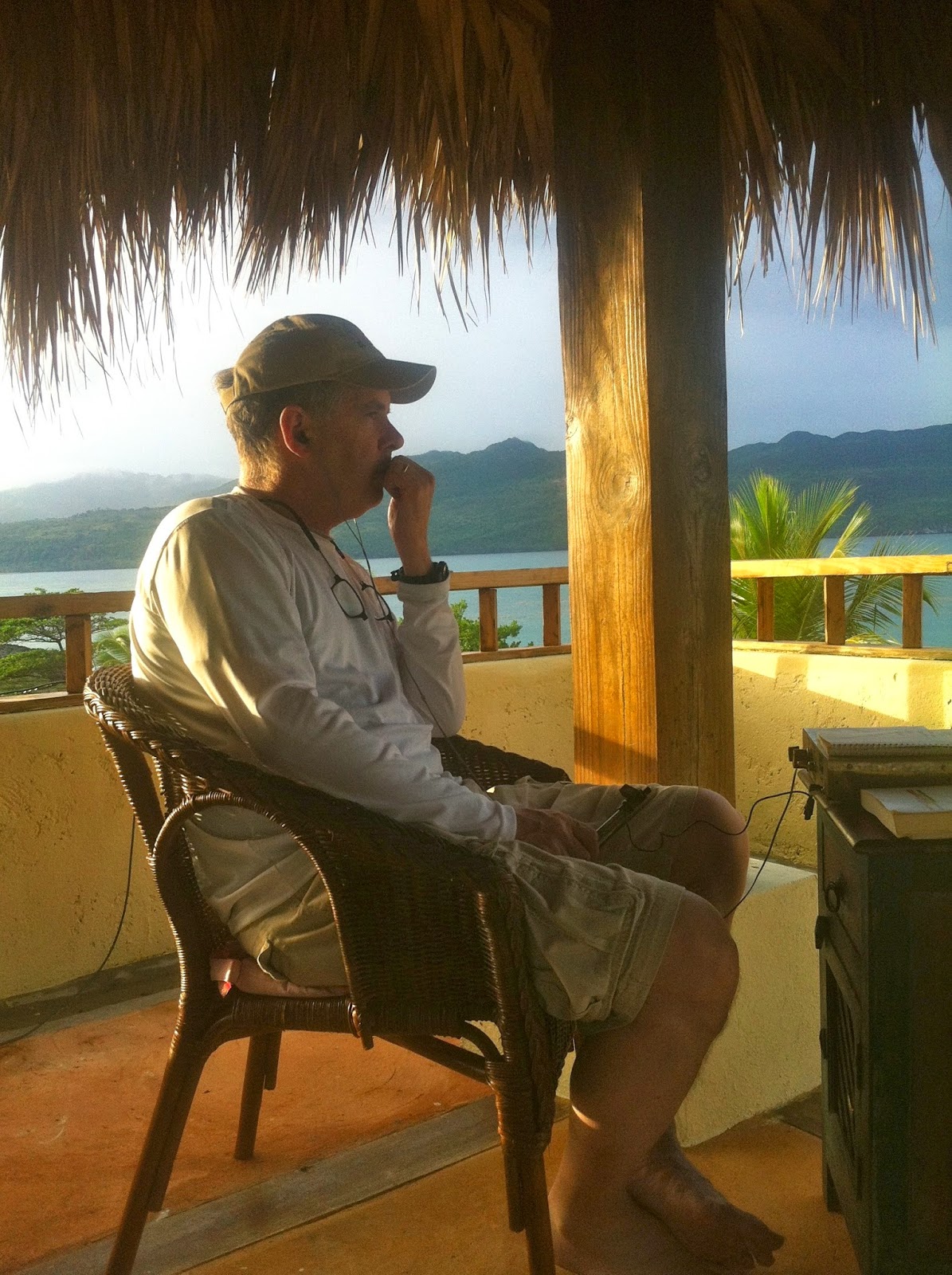
SolderSmoke Podcast #170 is available:
http://soldersmoke.com/soldersmoke170.mp3
Bill’s Double A, DSB, Dipole, Dominican DX-pedition.
Living the “How’s DX?” Dream
Seeing the Southern Cross with Soviet Binoculars
Pete goes remote
SI5351 a chip with a lot of potential
Pete’s experiments with Nokia LCD displays
Michigan Mighty Mites around the world
The Postal Stream Roller
Steve Silverman’s very kind variable cap offer
MOXON modeling with EZNEC
Aspirations for 2015
Our book: “SolderSmoke — Global Adventures in Wireless Electronics” http://soldersmoke.com/book.htm Our coffee mugs, T-Shirts, bumper stickers: http://www.cafepress.com/SolderSmoke Our Book Store: http://astore.amazon.com/contracross-20
“Gentlemen, We have Oscillation!” Jacob’s California Mighty Mite
Bill and Pete,
I bring news of the California Mighty Mite as Bill dubbed it.
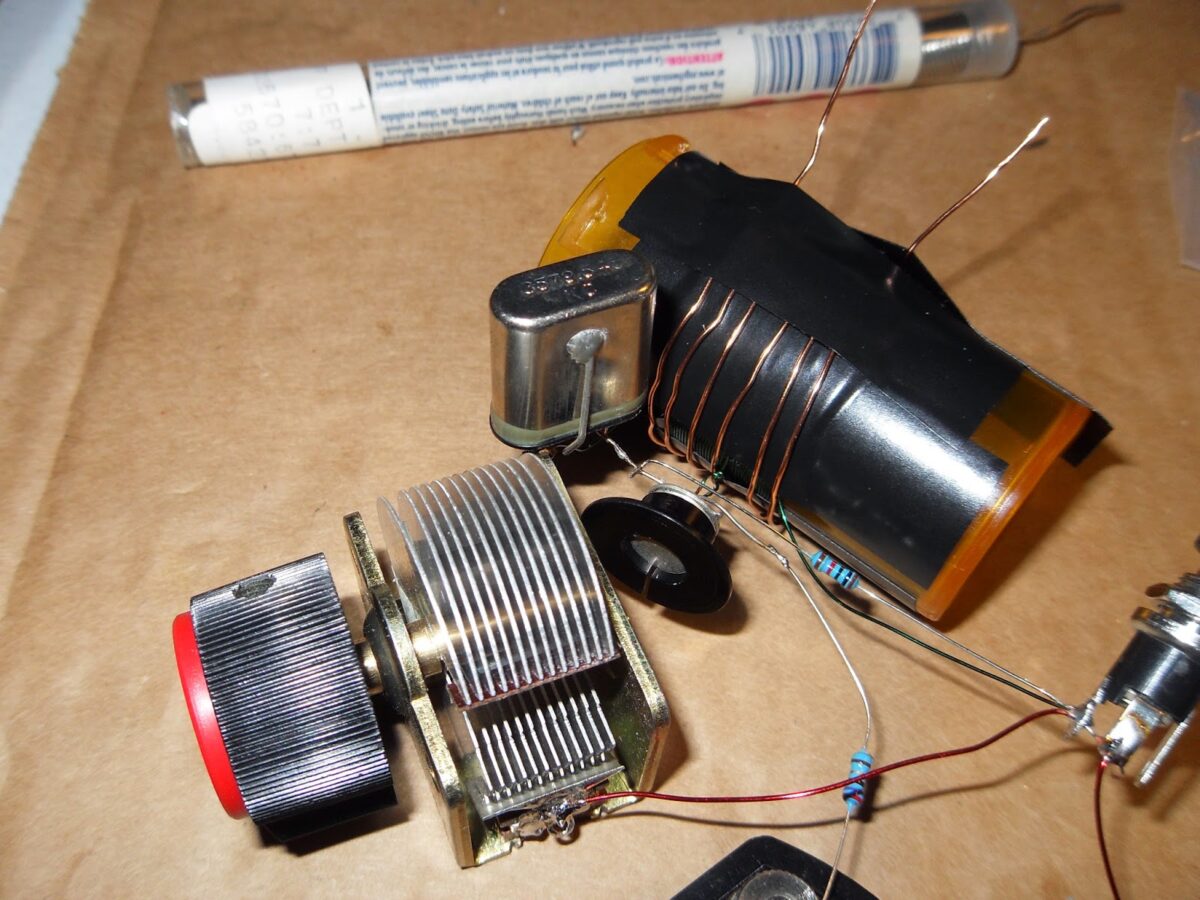
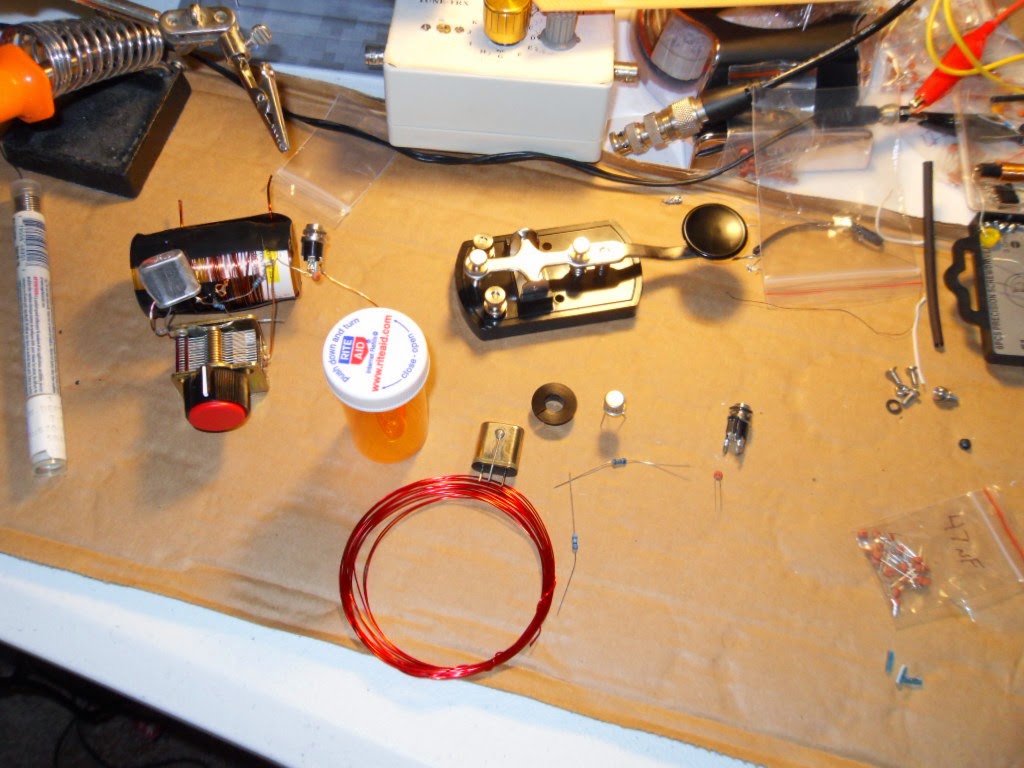
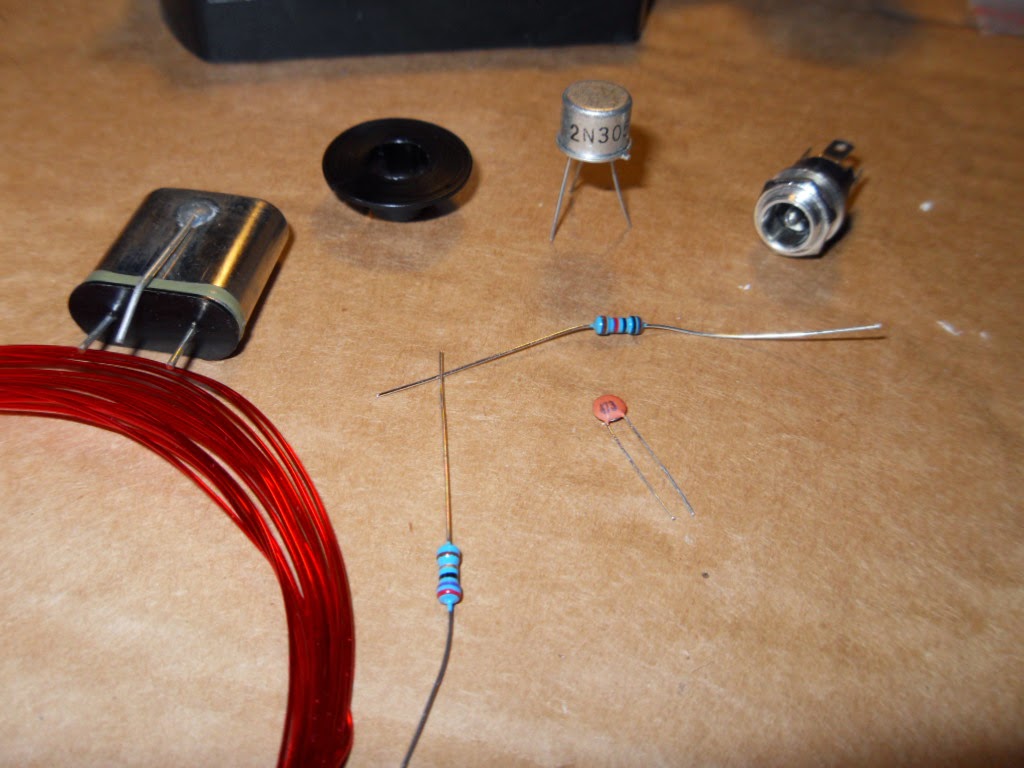
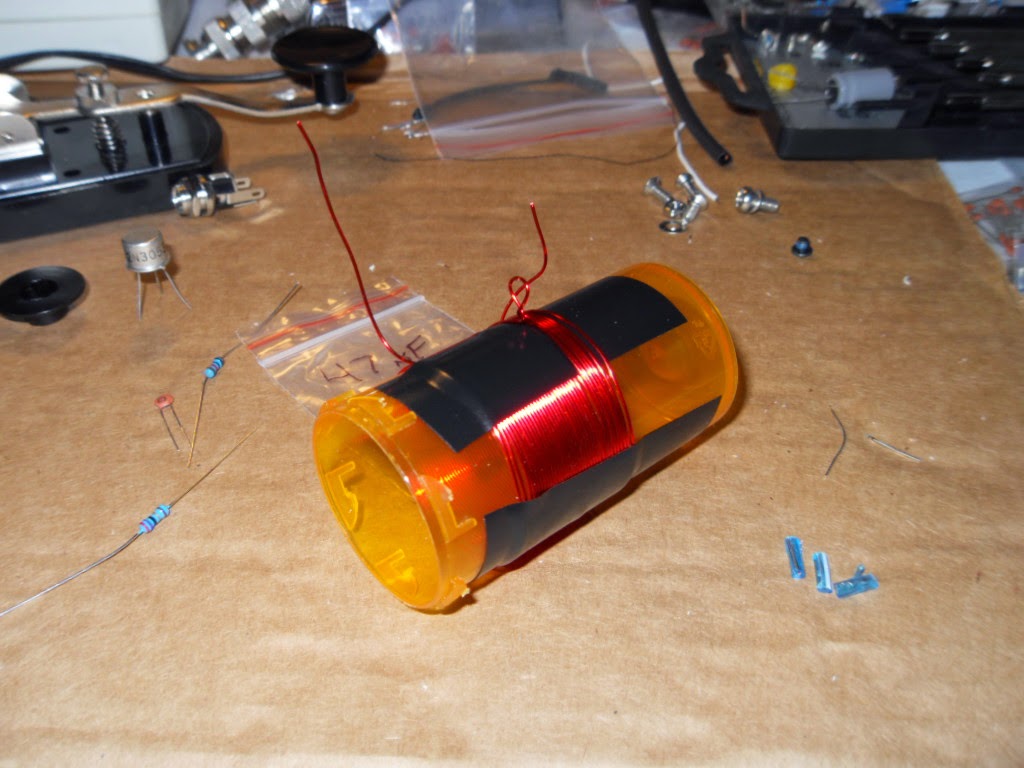
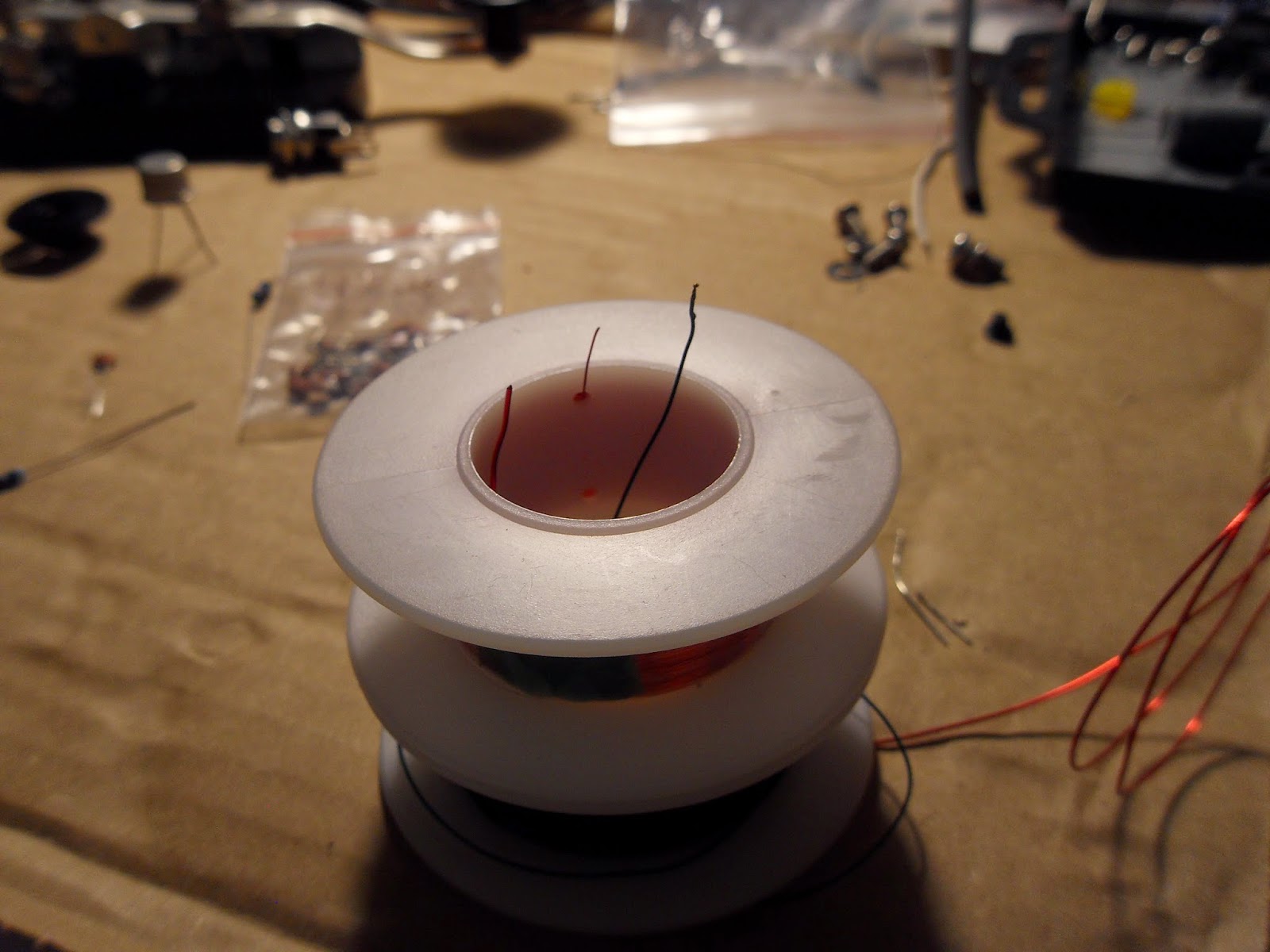
I repeated the steps as documented in version two with Pete’s parts. I had one hiccup. I was winding L1 with Pete’s red wire when, on turn 42, I ran out. Luckily a search of the workroom revealed the last two coils of radio shack magnet wire that I bought with the Gold wire. I checked the thickness of the Green-coated wire and found it to be one gauge smaller than Pete’s wire. To be ready in time for the podcast, the green wire would have to do. It was fussier that the larger gauge wires, but with my trusty electrical tape, the L1 coil stayed on the coil-form quite neatly. Using a scrap of gold wire, I wound L2 making sure to tape it evenly spaced.
Next I remeasured each of the parts to be soldered and arranged them in according to the Schematic. With the Soldering iron hot from warming while I would the coil, I detached the 365pf varicap from the MMv2. I strapped on the heatsink to the 2N3058 transistor and soldered the 27Ohm resistor to the Emitter. I attached one pole of the Colorburst crystal to the solder tab on the varicap along with the stripped end of L1 coil. I soldered the Collector to the Tap-2 of the L1 coil, then the Base to the other pole of the crystal. I then attached the 10k resistor to the base and attached another red-magnet wire to the side of the varicap. Almost done I looped a 47nF ceramic capacitor to the 2 power posts of a DC connector, then wrapped the Tap-1, 10k, and the lead from the varicap into the pin (positive) solder tab of the DC connector. I took a second red scrap and stripped the ends, stuck it in the sleeve (negative) solder tab.
Two applications of solder later, the multimeter was back out for a final continuity check. After checking across every joint, I plugged in my power supply to the Mighty Mite. Reaching over to the shortwave I leaned in the power button and tapped in the Colorburst frequency, 3-5-7-9. Static filled the room as I made sure the radio was how I left it earlier that week. SSB mode, attenuator off, and volume up. My finger tingled as caressed the straight key, now wired to the resistor and negative line. I was scared something would melt or flame up when I keyed down. Well no way to find out, except to do.
The key spring resisted, but I felt metal below as the key bottomed out. The radio let out a sound like rubber going down a slide and faded as I held down the key.
Gentlemen, we have Oscillation.
Revision 3 was a success. Version 1 being breadboard and Version 2 being Bill’s crystal and what I had on hand.
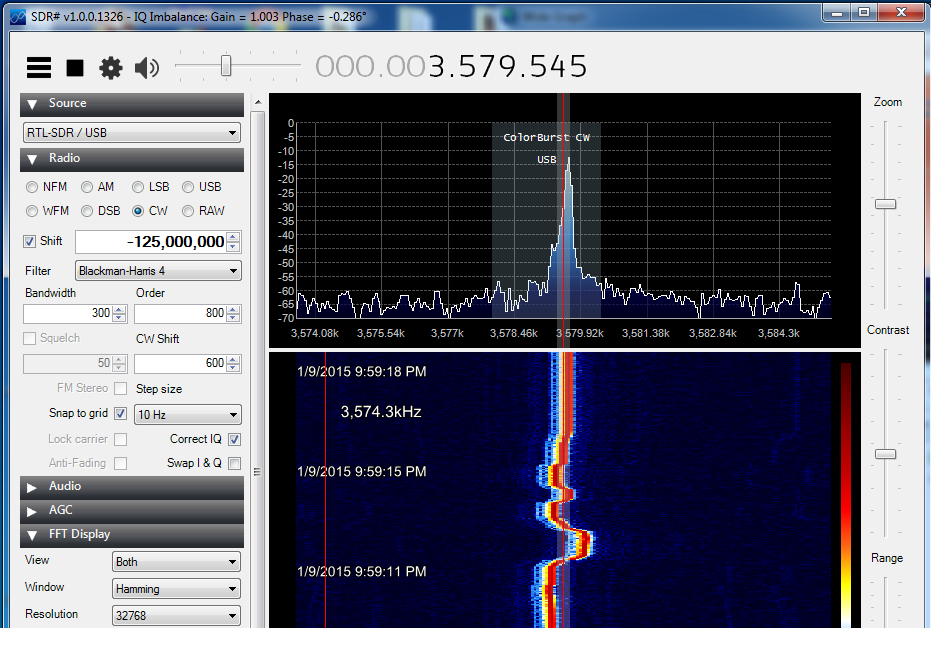
I tried tapping out CQ, but was faced with the chirping fact that I haven’t practiced in a year. I don’t even know TEST let alone CQ CQ KK6JTL TEST. I turned the varicap to see if the sick squeal got any better with adjustment. It did and the pitch out of the radio changed after a bit. I must be changing frequencies! I spun around and fired up the computer. The RTL-SDR would show me what I was doing and who may respond, along with who I might be interfering with.
With the waterfall display zoomed in, showing about 5kHz around 3579kHz, I went back to the Mighty Mite. I saw one CW QSO going on in 3575kHz and two other spikes at 3576-3578kHz. Any guess at what those are? I knew since Sunday night I had been listening to JT65-HF. I reached over and held the key down. A big red spike went up at 3576.5kHz
I waited for quiet and keyed down. I turned the varicap to lower the capacitance. The spike moved to a higher frequency. When the varicap was half out, the squeal began to sound like a tone again. Problem was I was still at 3578kHz and still stepping on the JT65 signals. I called my wife in in excitement to show her and asked her to help me tune the circuit to the official frequency. I’m going to leave the varicap there for now. So I start it at 3577 and have to dial it back to 3579 to operate. I can almost go to 3580 with this little Mighty Mite.
Finally I was curious. I had forgotten to check the output of the transistor Pete sent me on my LC meter. So I got the datasheet from the Internet. The BC547A I had used in Versions 1 & 2 were rated for 325mW. The 2N3058 is rated for 5W. Pete, how much power does this put into an antenna when fed with 12V? Apparently not enough to wake my Radioshack SWR/Power meter. But that thing is hungry. It needs more than 2 Watts for it to function correctly.
Pictures attached. The transistor heatsink looks like it it touching the varicap in the pictures but I made sure there is plenty of gap. Too bad none of the pictures of that gap turned out. The wiggle in the waterfall picture is due to me turning the varicap to show range. Pete left a grounding wire on the case of the crystal. I chose not to remove it, but did not attach it to anything.
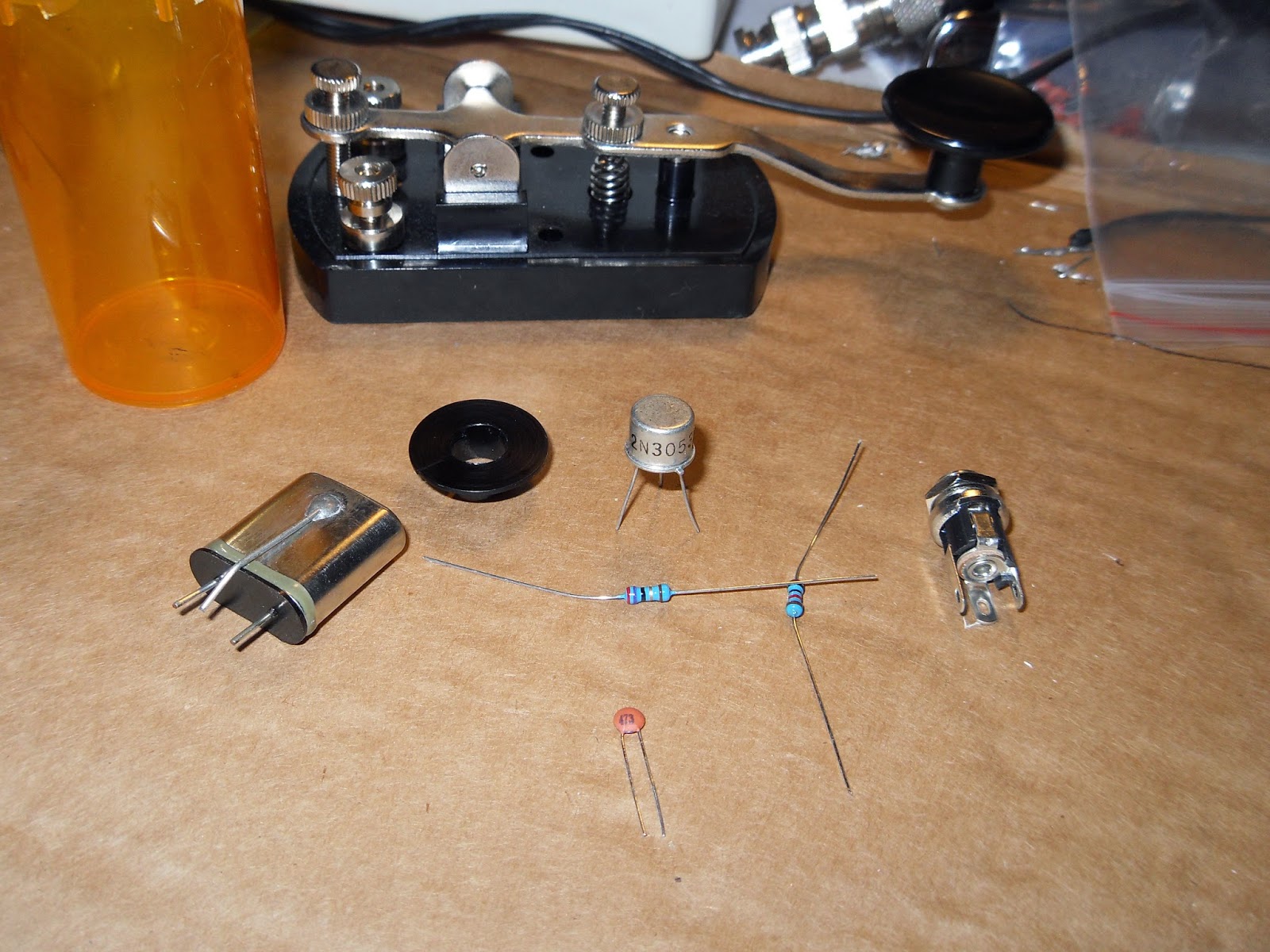
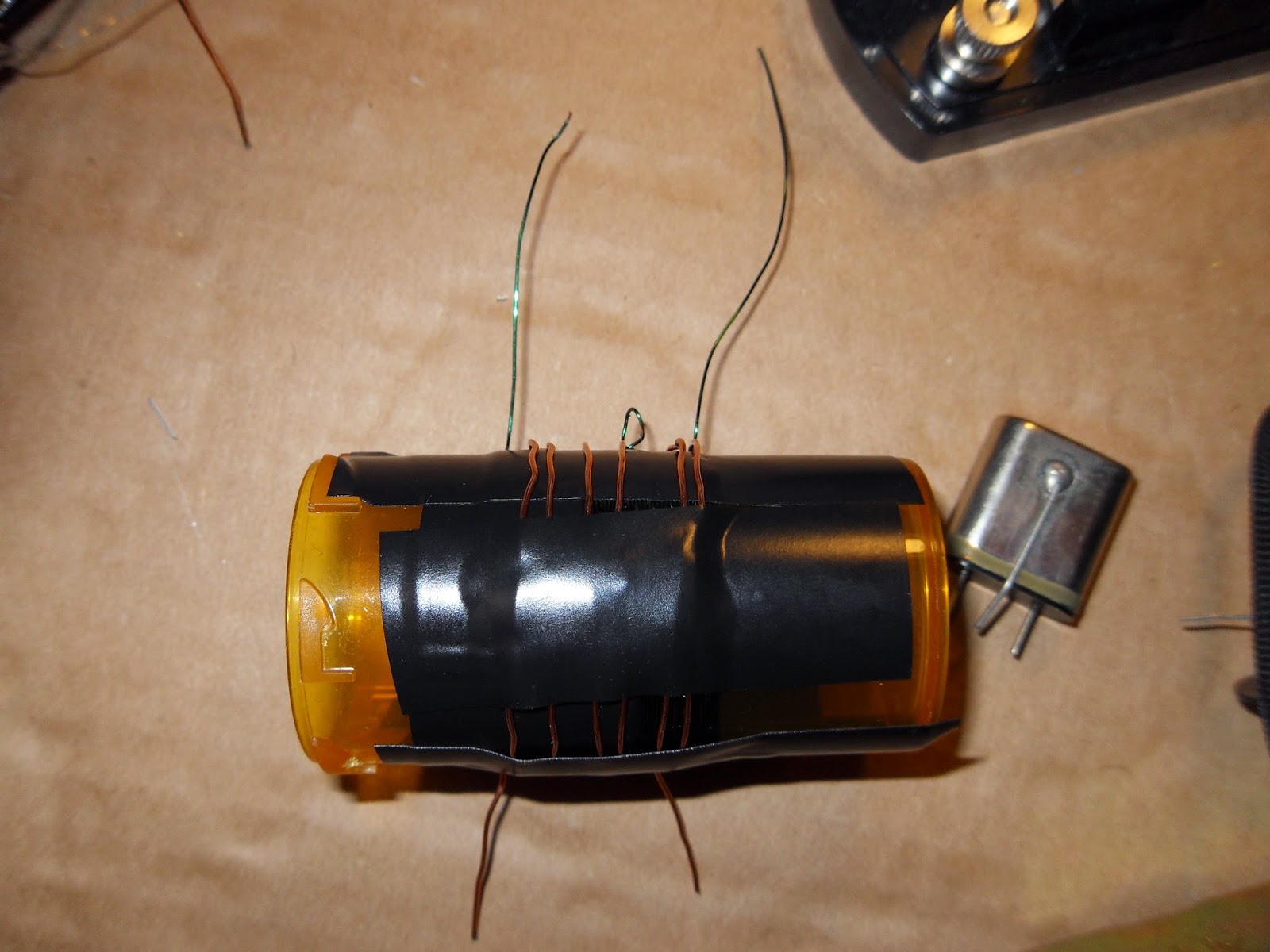
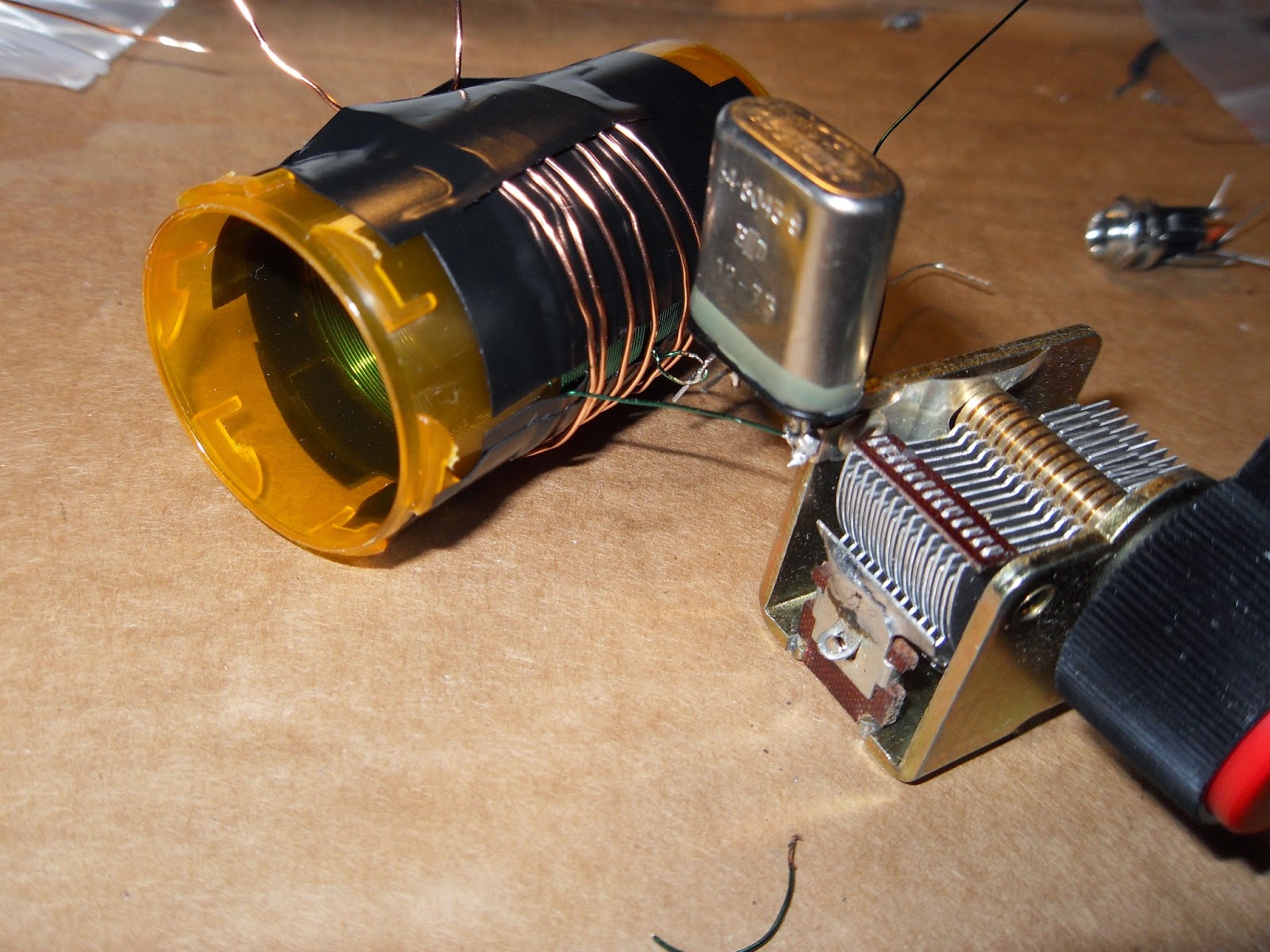
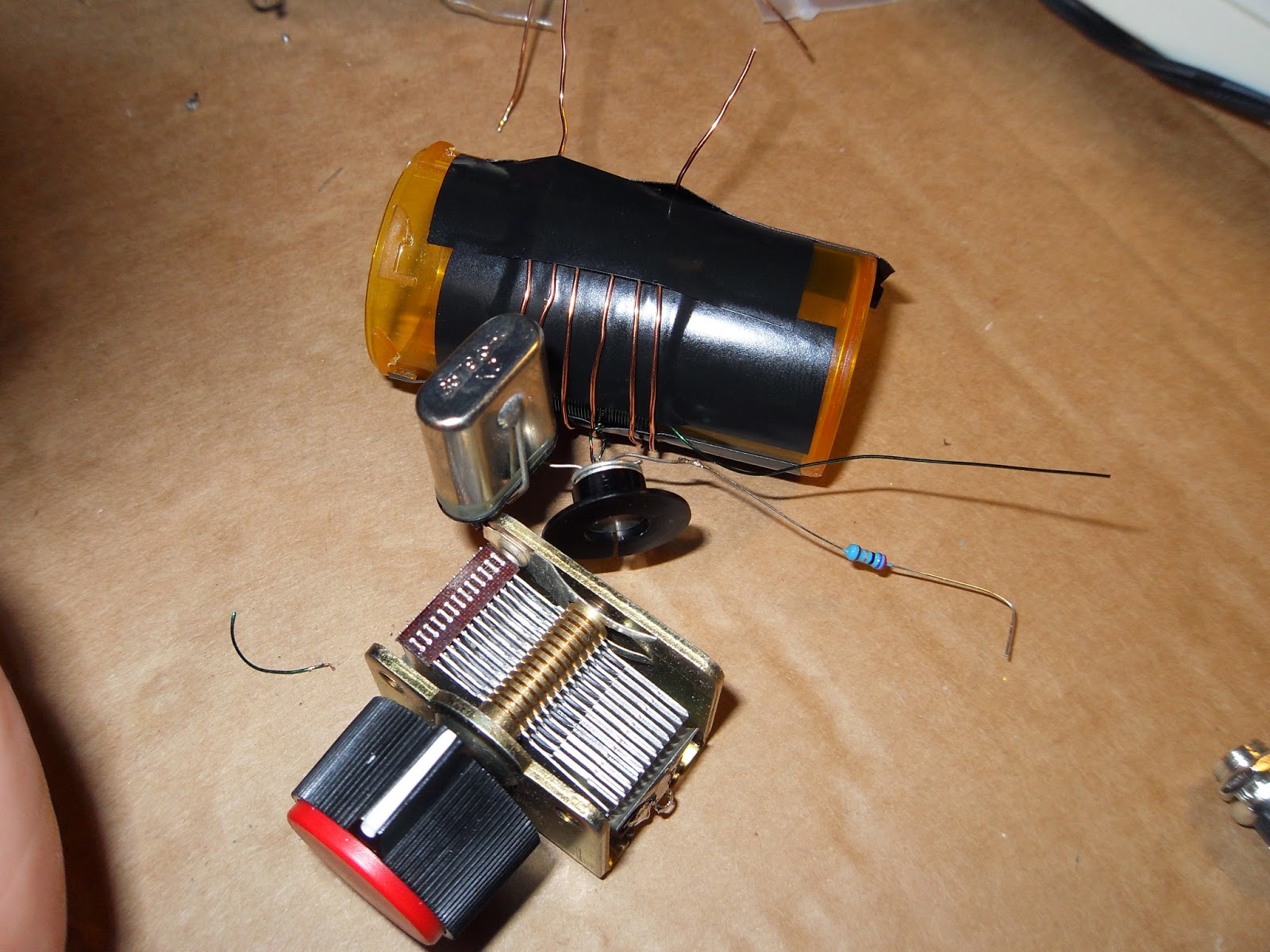
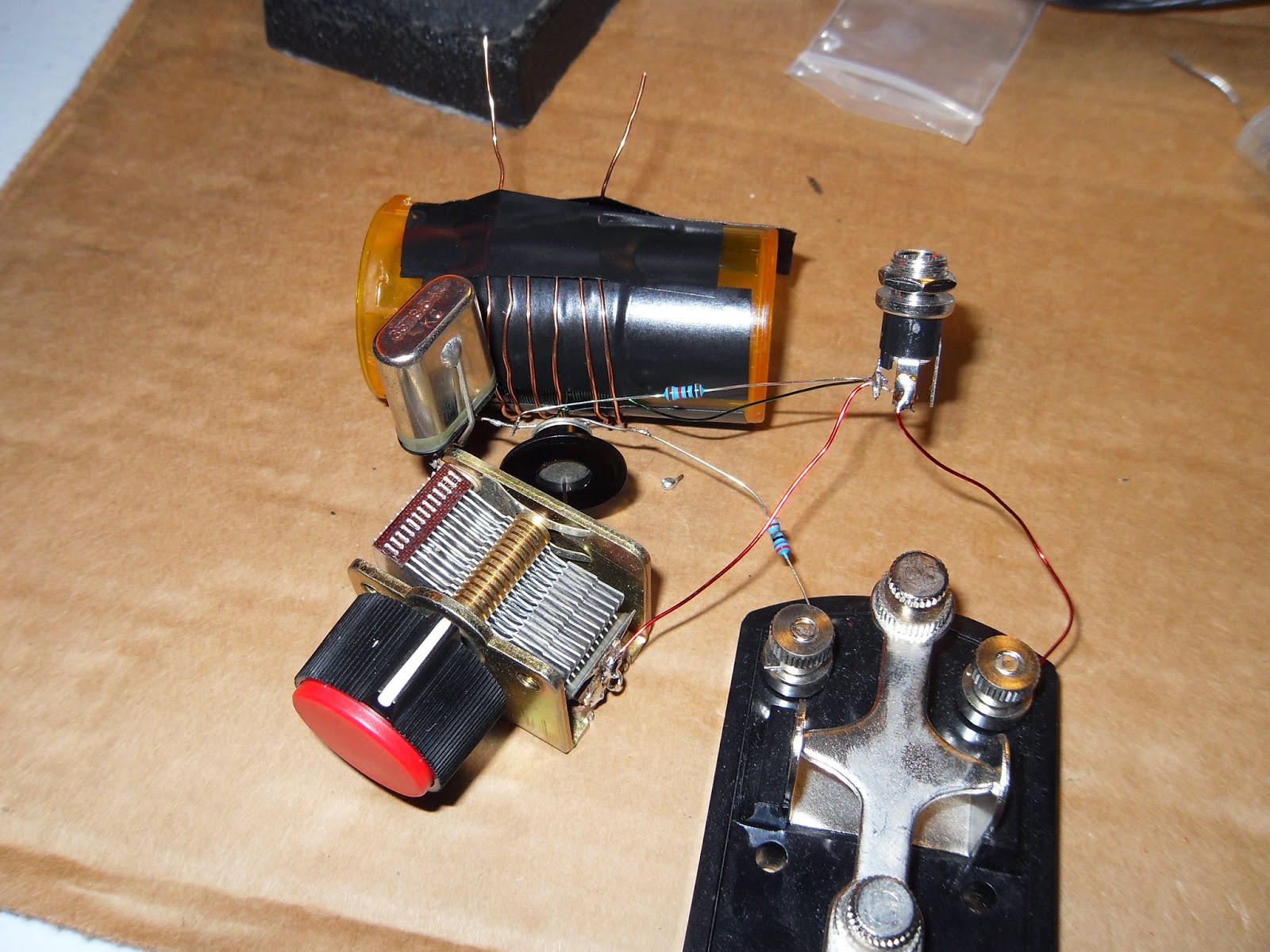
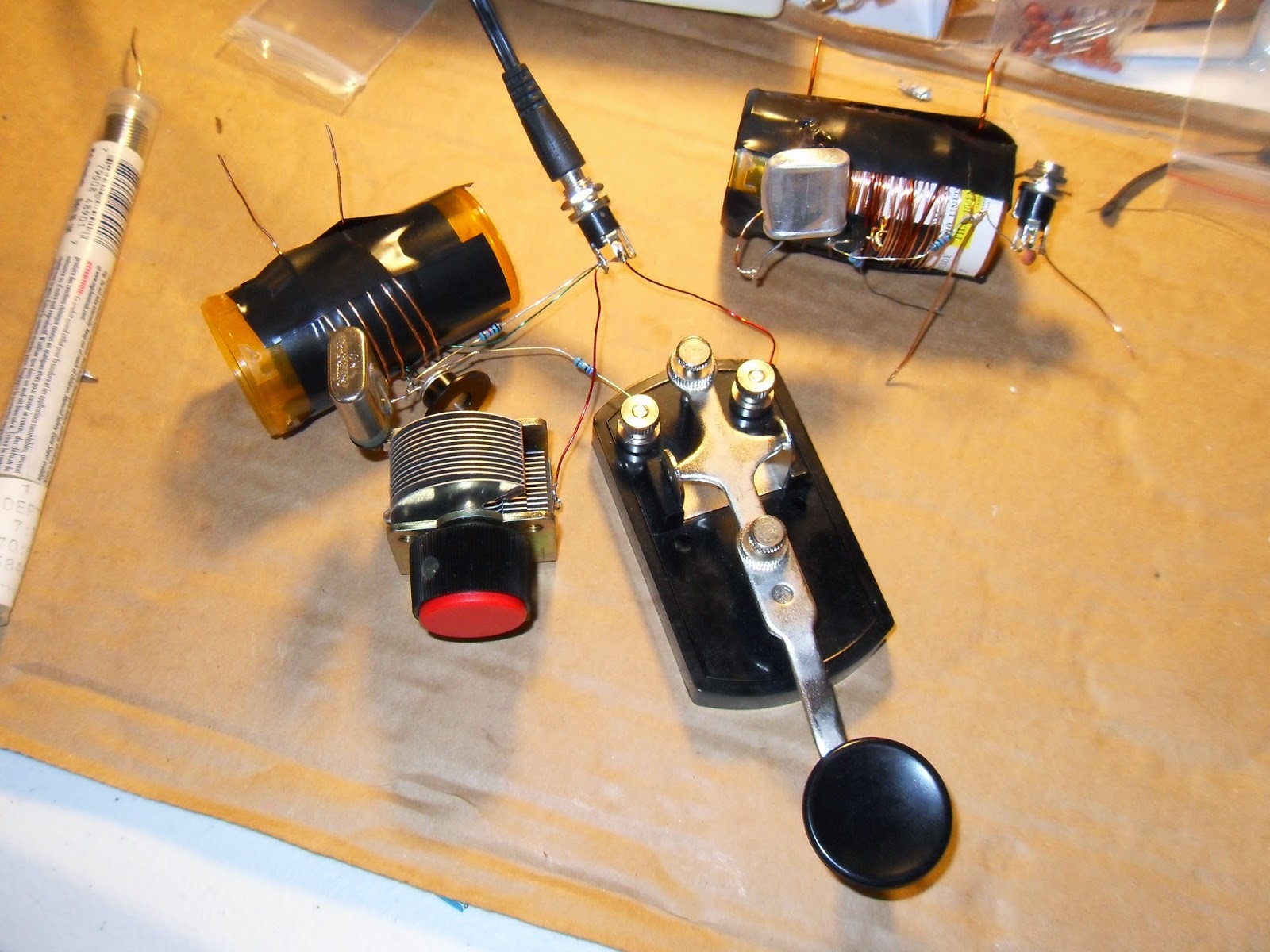
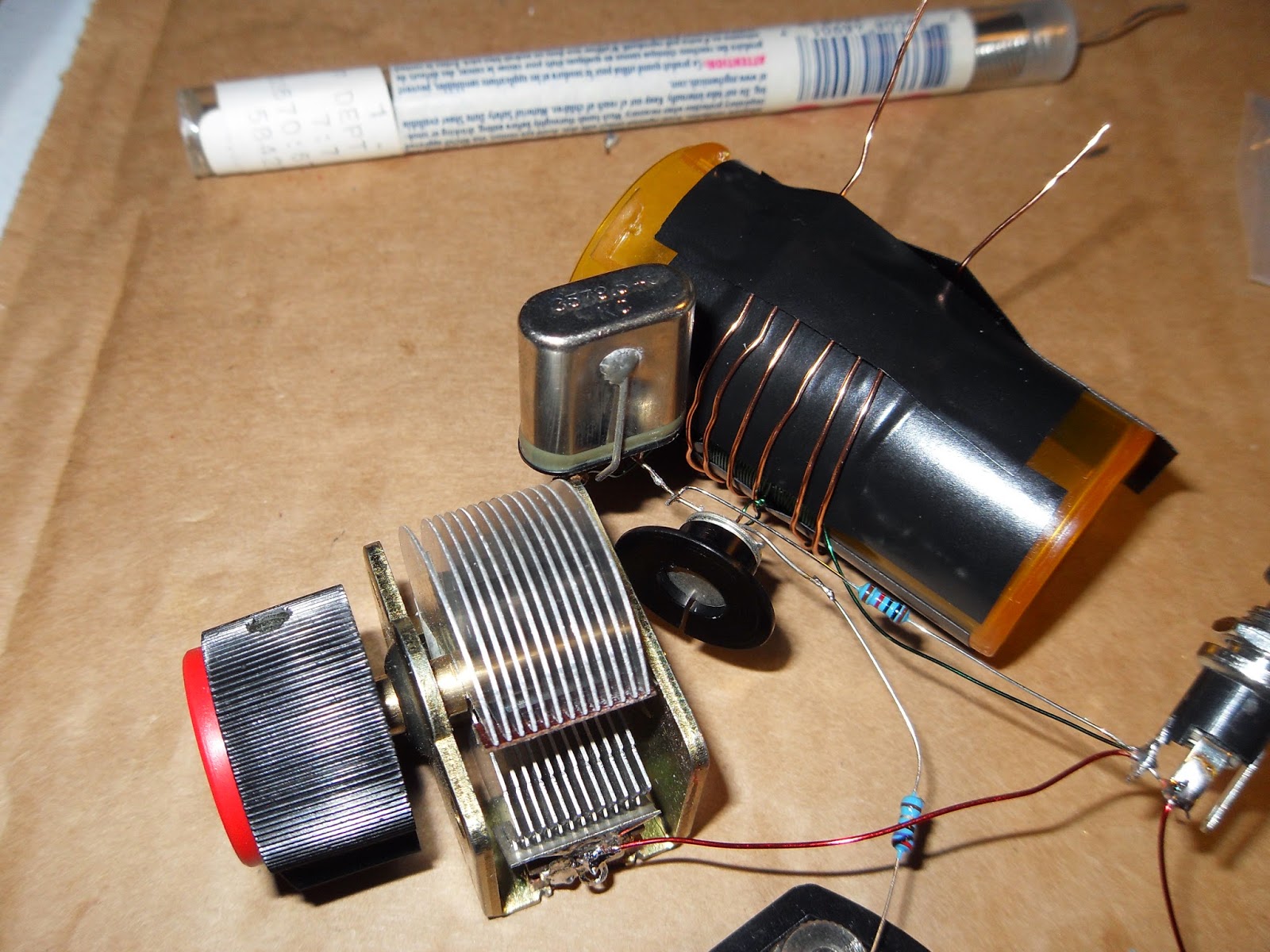
Congratulations Jacob! You really hung in there, overcoming obstacles including the US Postal Service’s Crystal-Crushing Steam Roller. The rig looks great!
Our book: “SolderSmoke — Global Adventures in Wireless Electronics” http://soldersmoke.com/book.htm Our coffee mugs, T-Shirts, bumper stickers: http://www.cafepress.com/SolderSmoke Our Book Store: http://astore.amazon.com/contracross-20
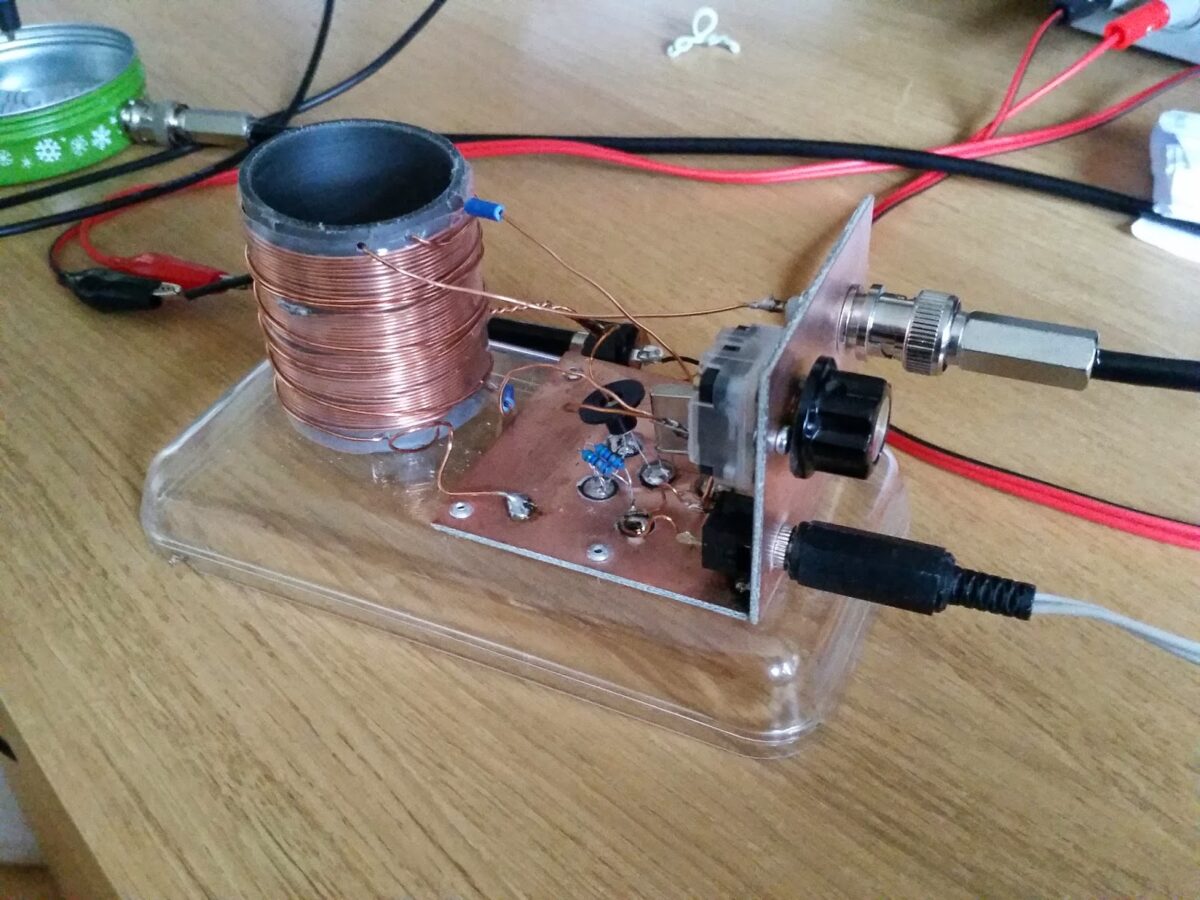
Irish Mighty Mite
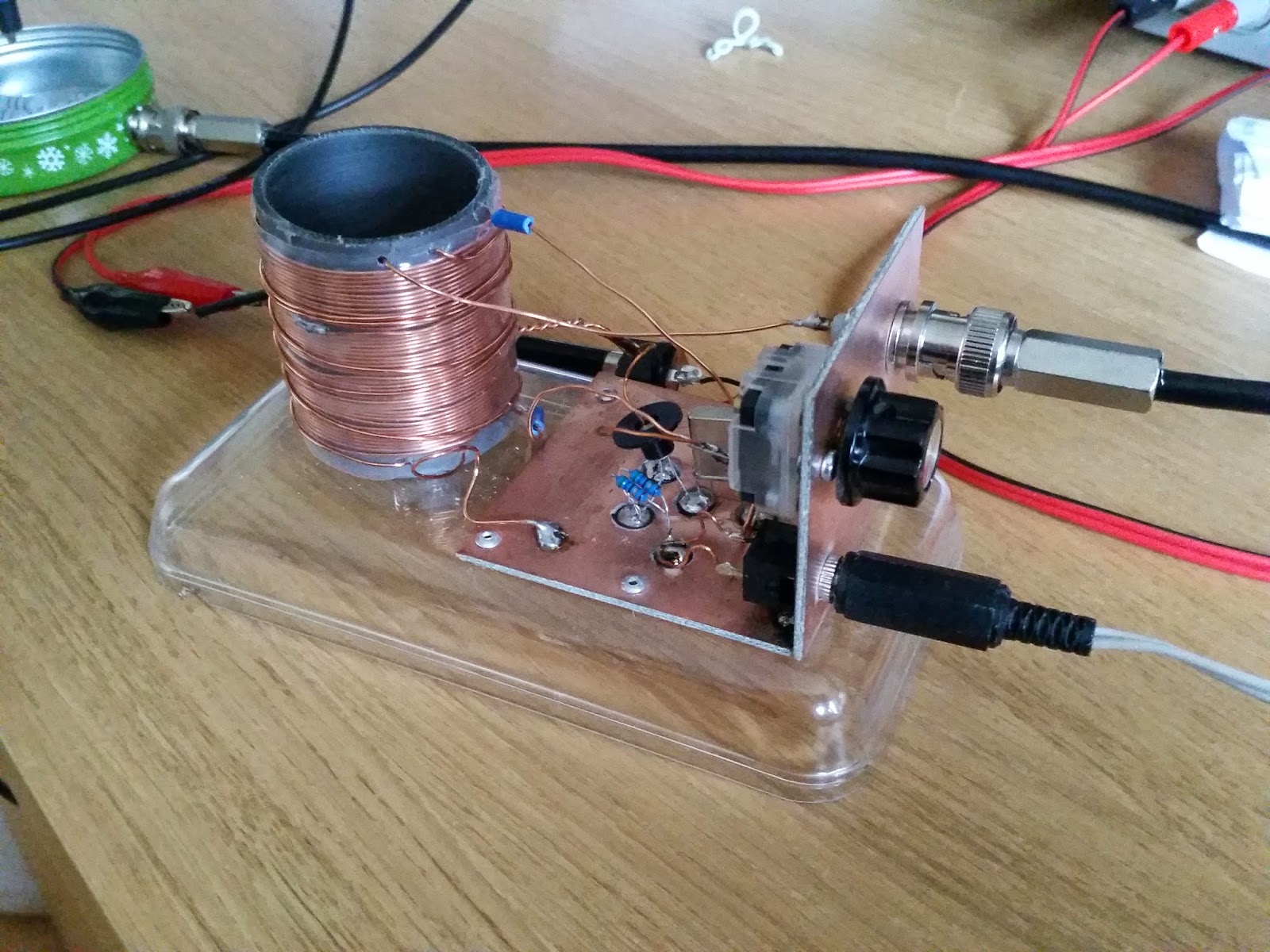
Hi Bill and Pete,
I couldn’t stand it any longer, listening to you guys on the podcast and seeing all the Mighty Mites being built I had to have a go myself. Concerned that I might plunge Soldersmoke into receivership if I asked for a free crystal to be posted to Ireland I used a 3.560MHz one, recently purchased from the GQRP club store.
2 amazing things happened when I was building it.
1) for the first time ever I had all the parts I needed in my junk box. Since getting my licence in 2012 I’ve been gradually collecting and buying components. It’s so much easier when you find everything you need.
2) for the first time ever it worked straight away. When I finished the last component I heard this voice from over my shoulder, it was Pete saying “Now go and noodle through the circuit and check your work” Sure enough I’d missed one of the connections and everything else checked out ok.
So I plugged it in, hid behind the shack chair and turned it on. Success!!!
Keep up the good work both of you!
73 de Chris EI6KH
Licensed since November 2012
Fists UK Member #15966
G-QRP Member #13730
Phoenix Radio Club Member
IRTS Member
MLS: IO63jk
Our book: “SolderSmoke — Global Adventures in Wireless Electronics” http://soldersmoke.com/book.htm Our coffee mugs, T-Shirts, bumper stickers: http://www.cafepress.com/SolderSmoke Our Book Store: http://astore.amazon.com/contracross-20
W5RST’s Mighty Mite + CQ article on Super Mite
I think Mike’s MMM looks fine! The CQ article he refers to has some very interesting ideas. Here it is: http://soldersmoke.com/SuperMite.pdf
Hi Bill (and Pete),
Well, mine is not as pretty as Chuck’s, but I put one together last weekend, too. Before I added the lowpass filter, the output looked pretty ugly on the scope, but afterwards it was OK. Mine puts out about 200 mW on 80 M. I’m thinking of trying the power modification from CQ to boost the power a bit (attached): when you’re competing with W1AW on 3.5815, it can’t hurt! Sorry for the iPhone quality pictures…
73,
Mike
Michael McShan W5RST
Oklahoma City, OK
Our book: “SolderSmoke — Global Adventures in Wireless Electronics” http://soldersmoke.com/book.htm Our coffee mugs, T-Shirts, bumper stickers: http://www.cafepress.com/SolderSmoke Our Book Store: http://astore.amazon.com/contracross-20
W5USJ’s AMAZINGLY BEAUTIFUL Mighty Mite
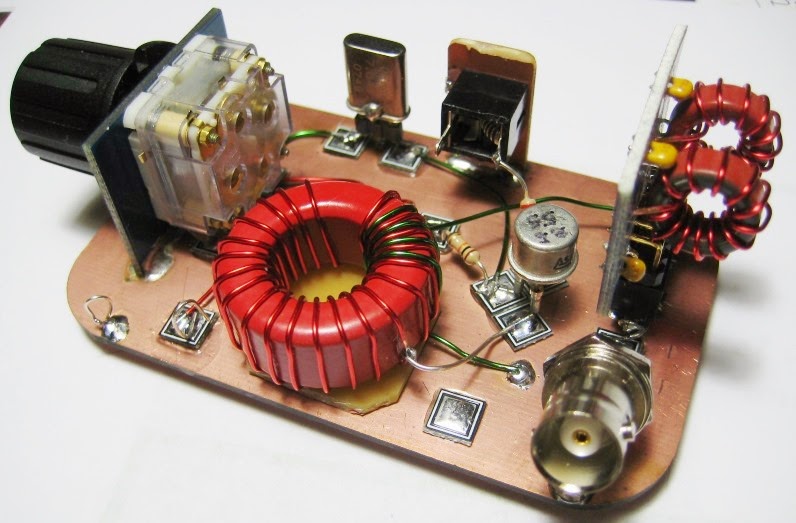
More beauty and technical details at his site:
http://www.w5usj.com/mmmassytest.html
Our book: “SolderSmoke — Global Adventures in Wireless Electronics” http://soldersmoke.com/book.htm Our coffee mugs, T-Shirts, bumper stickers: http://www.cafepress.com/SolderSmoke Our Book Store: http://astore.amazon.com/contracross-20
Goats, a Paraset, and a QSO with a Mighty Mite! (Video)
This is a really wonderful video, made even more wonderful near the end by the appearance of a Michigan Mighty Mite! Thanks Steve! Thanks Nick!
Our book: “SolderSmoke — Global Adventures in Wireless Electronics” http://soldersmoke.com/book.htm Our coffee mugs, T-Shirts, bumper stickers: http://www.cafepress.com/SolderSmoke Our Book Store: http://astore.amazon.com/contracross-20
25% off On SolderSmoke Book (and on “Us and Them”) through Jan 8

You can find all the books on this Lulu site: http://www.lulu.com/spotlight/soldersmoke
Just plug in the code FLASHY15 when checking out.
Our book: “SolderSmoke — Global Adventures in Wireless Electronics” http://soldersmoke.com/book.htm Our coffee mugs, T-Shirts, bumper stickers: http://www.cafepress.com/SolderSmoke Our Book Store: http://astore.amazon.com/contracross-20
Who is this earnest young radio amateur?
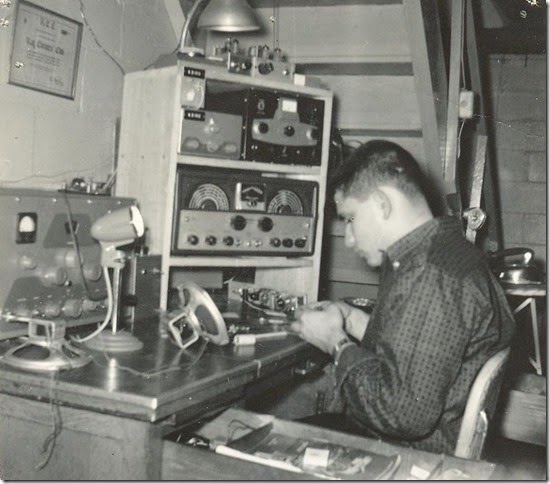
Name that ham! Here are his comments:
This is vintage early 1960’s and my call sign at that time was K3???. One of my favorite rigs was the Johnson Adventurer which I built and had a 6AG7 driving an 807 –50 watts input. On the top shelf near the lamp is the screen grid modulator for the Adventurer. I was in tall clover.
On the bottom opening is a 40M CW transceiver I built – it had a 6CX8 MOPA—about 5 watts. The RX was a two tube regen.
Our book: “SolderSmoke — Global Adventures in Wireless Electronics” http://soldersmoke.com/book.htm Our coffee mugs, T-Shirts, bumper stickers: http://www.cafepress.com/SolderSmoke Our Book Store: http://astore.amazon.com/contracross-20
A Thatched Roof, Some Palm Trees, A Dipole, and a Homebrew Rig

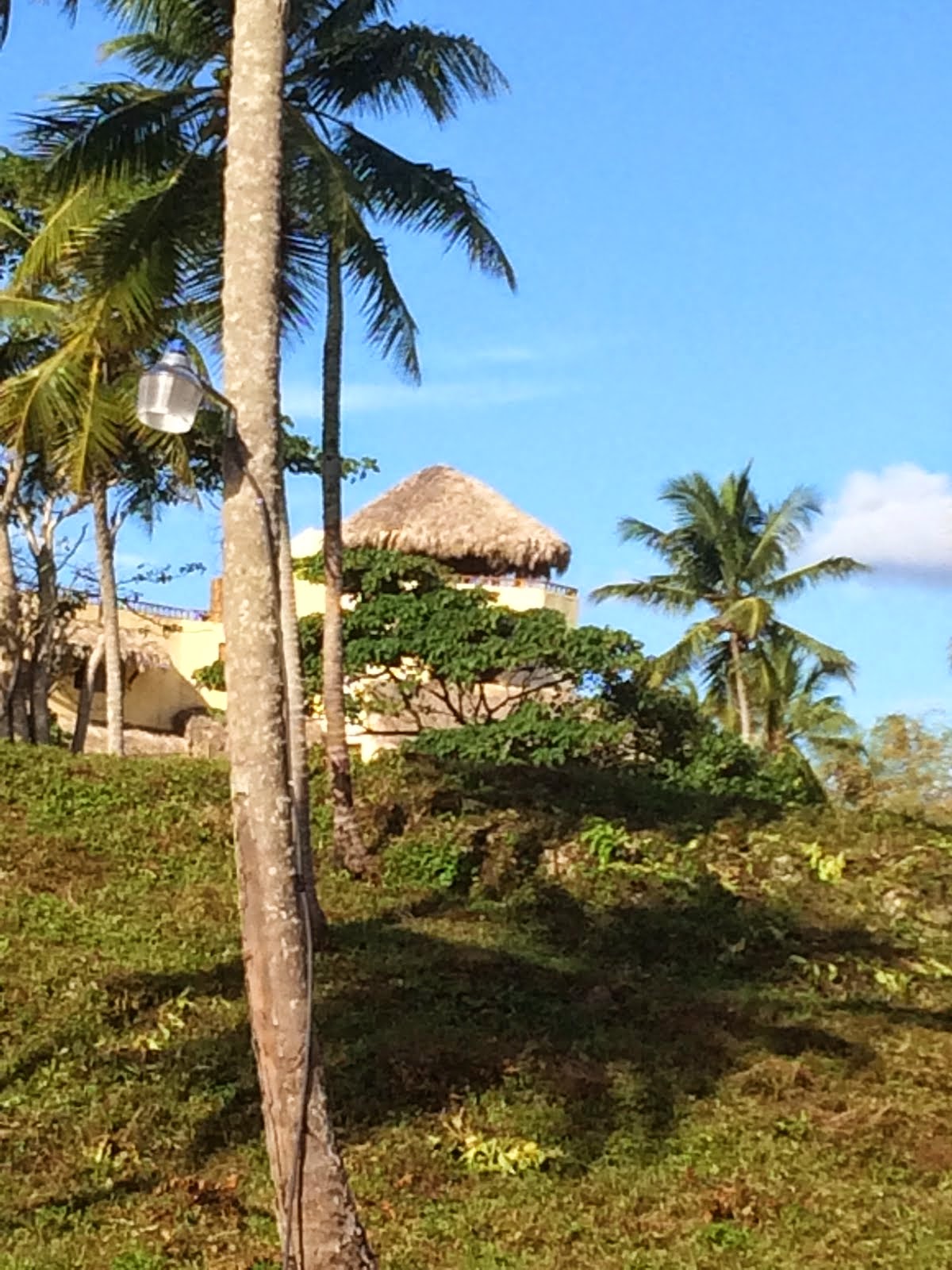
Look at the drawing above. That is the banner logo of Rod Newkirk’s column in QST magazine. For many years Rod regaled us with exciting reports on the activities of intrepid foreign radio amateurs, transmitting from exotic locations using ingeniously devised homebrew radio equipment. Look at the picture on the left side. See the palm trees? See the thatched roof shack with the dipole antenna? Well, that’s pretty close to what it was like for me out on the Samana Peninsula in the Dominican Republic last month.
I set up the station under the thatched roof in this picture:
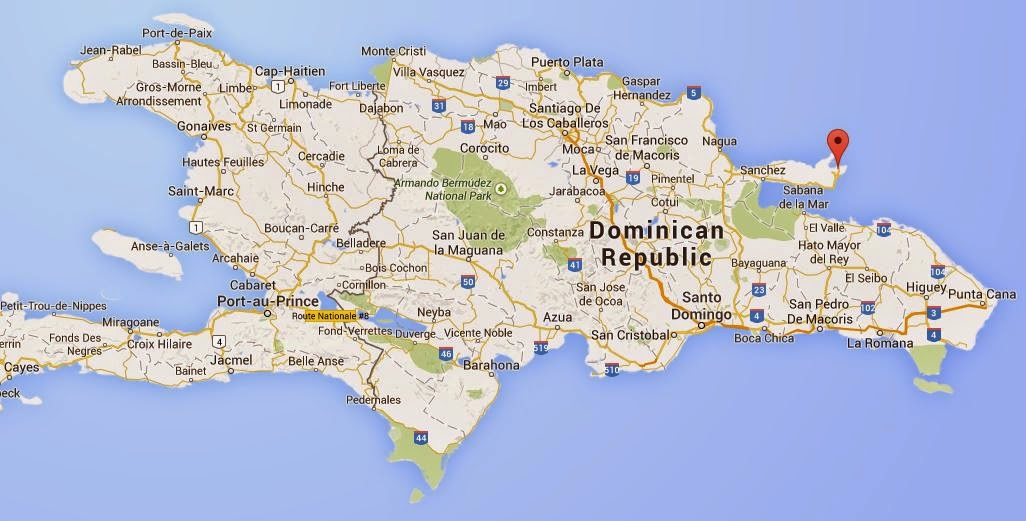
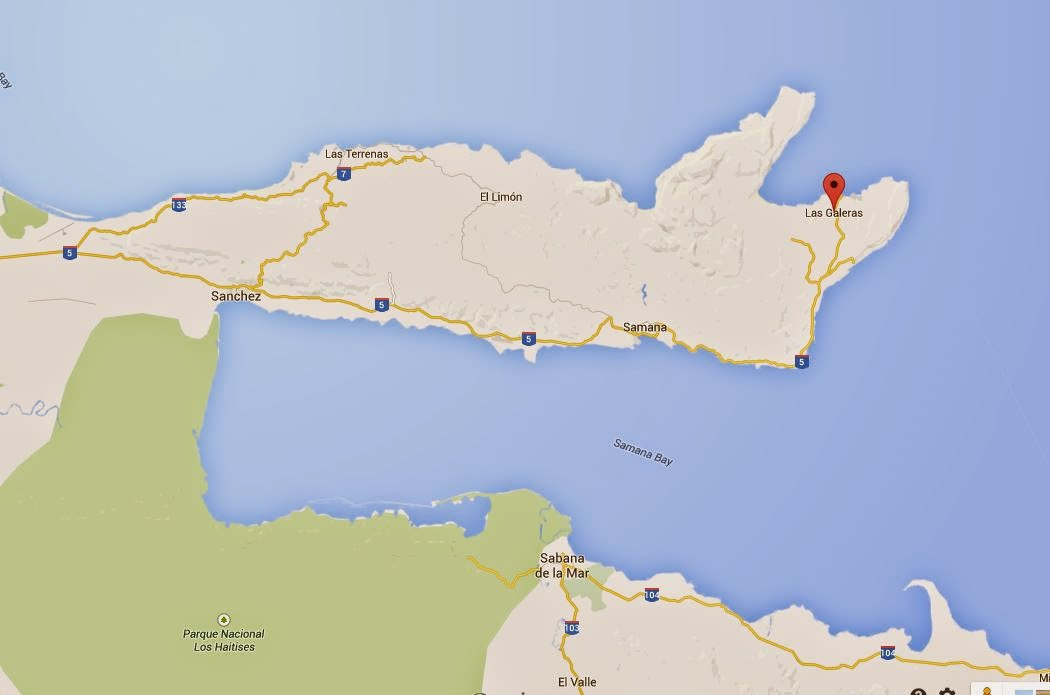
The red pins mark the spot:
Here I am, tuning the rig while looking across Bahia Rincon:

The rig was my Azores-built, oft-modified, NE602-based, ceramic resonator DSB transceiver with a recently added India-designed BITX IRF510 RF amplifier chain. A little article I wrote about the ceramic resonator VXO was featured in SPRAT 127. My antenna was a half wave dipole strung up in the thatched roof. Power came from 10 AA Batteries. So this was the Double A, Double Sideband, Dipole DX-pedition.
I had given some thought to building an SSB rig for this trip, but because of the efforts of Peter Parker, VK3YE, I felt compelled to take a DOUBLE Sideband rig with me to the beach.
Here is an old (2006) video on the rig. The power amplifier has been significantly modified:
Here is some more information on the rig, including a schematic for the receiver and the SPRAT article on the Variable Ceramic Oscillator:
http://www.gadgeteer.us/PORTABLE.html
Here is the log book for my contacts.
17 DECEMBER 2014
W1JPR PAUL MT. DESERT ISLAND MAINE
8P6AE (BARBADOS) COULD BARELY HEAR ME, BUT GOOD QSO
18 DECEMBER 2014
N4USA DAVE IN FLOYD, VA. FAIRS NET. (KK4WW.COM)
KE4UGF DON ALSO FAIRS, NICE GUYS. FUN CONTACTS!
KA4ROG ROGER NORTH OF ORLANDO
19 DECEMBER 2014
WB2HPV GUIDO TALKING TO ITALIANS EVERY MORNING FROM WAYNE NJ. HE HAD TROUBLE HEARING ME.
CONDITIONS SEEMED POOR, BUT I WAS HEARING AUSTRALIAN STATIONS
W8GEO GEORGE IN THE INTERCON NET. HEARD ME. ALSO ON INTERCON: KA4AOQ AND 6Y5MP (JAMAICA) ALSO HEARD ME.
N4PD PAUL
W3JXY/4 NAT IN KEY WEST
N1FM TOM, NORTH OF MIAMI SOLID QSO.
KM4MA PAUL IN ORLANDO WITH MARITIME MOBILE NET.
20 DECEMBER 2014
NA2LF LLOYD IN NY
WB8YWR JIM IN DALLAS
KM4MA.
W1AW/3 IN MARYLAND (TOOK ME A WHILE TO GET HIM)
21 DECEMBER 2014 NICE 4 WAY SPANISH LANGUAGE QSO:
KI4PZE MIGUEL
CO8OT JUAN IN SANTIAGO DE CUBA
WA4RME RAFA IN CHARLESTON S.C.
C08KB MARCO IN CUBA
Here is a short video showing the station and the location. Note the little birds (Golondrinas or Swallows) flying by. They nest in the thatched roof. They often got confused and flew inside the house. Billy and Maria rescued many of them. Whales breed in this bay in January and February. There are also manatees. It is really a beautiful place.
There were obviously other attractions (!) so I didn’t spend a lot of time on the radio — just a half hour or so every now and then. But it was really very satisfying to carry this little homebrew device with me, set it up in this amazing place, and use it to send my voice across mountains and hundreds of miles of ocean. I built this rig in the Azores and have used it in the UK, France, Italy and the Dominican Republic. It contains circuits devised by members of the British QRP club and by my friend Farhan in India. The ceramic resonator circuit is something I cooked up on my own. The microphone is from my old Sony Walkman and the pen that serves as its support is from that wonderful magazine “Electric Radio.” In short, there is a lot of soul in this little machine. And it was a lot of fun to take it to the beach.
Thanks to Elisa for finding us this wonderful place. And to Rod Newkirk and QST for the DX inspiration.
Thanks to Elisa for finding us this wonderful place. And to Rod Newkirk and QST for the DX inspiration.
Our book: “SolderSmoke — Global Adventures in Wireless Electronics” http://soldersmoke.com/book.htm Our coffee mugs, T-Shirts, bumper stickers: http://www.cafepress.com/SolderSmoke Our Book Store: http://astore.amazon.com/contracross-20
N2HTT’s MMM Makes Contacts (the little rubber feet are important)
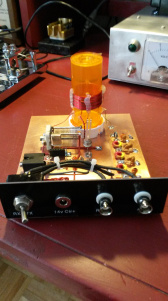
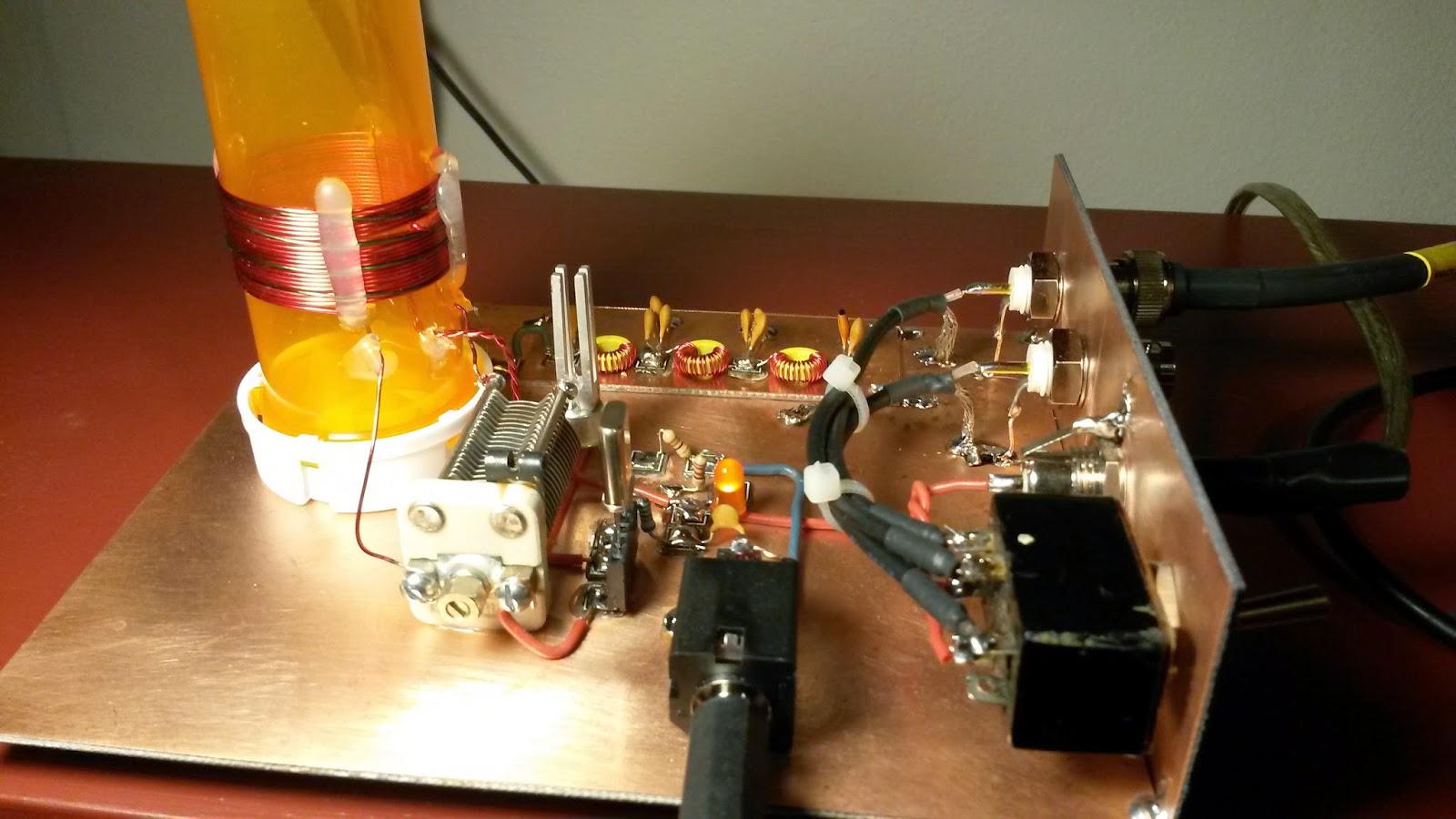
Hi Bill and Pete,
Some further adventures of the Michigan Mighty Mite – I have added several amenities since first oscillation:
– a low pass filter on the output
– bnc connections for antenna and a rcvr, and a tx/rx switch
– coaxial connector for power
– stereo jack for the key
– LED tx power indicator, and
– little rubber feet
Of all of these, I cannot sufficiently emphasize the importance of little rubber feet. A project just cannot be considered complete without them.
More pictures and details of the low pass filter are on my blog at http://n2htt.net
I’ve been heard on RBN on 40m several times, but haven’t gotten any replies to calling CQ. This weekend was the December SKCC Sprintathon, and I pretty conclusively proved that if there are any other signals on the band the MMM is not likely to be heard.
After the contest ended, I posted on the SKCC sked page, and two stations, KC9W and KT4TN agreed to listen for me. We made successful contacts on 7059 kHz. Both stations are in Tennessee, and coincidentally both ops are named Randy.
As Bruce KK0S observed in his report, the rig seems to operate about 1 kHz above the nominal crystal frequency, as confirmed by both Randys.
I’ve had a lot of fun with this little rig, it’s a keeper.
Keep up the great work with the podcasts, and Happy Holidays
73
Mike N2HTT

Our book: “SolderSmoke — Global Adventures in Wireless Electronics” http://soldersmoke.com/book.htm Our coffee mugs, T-Shirts, bumper stickers: http://www.cafepress.com/SolderSmoke Our Book Store: http://astore.amazon.com/contracross-20
Larry’s Mighty Mite
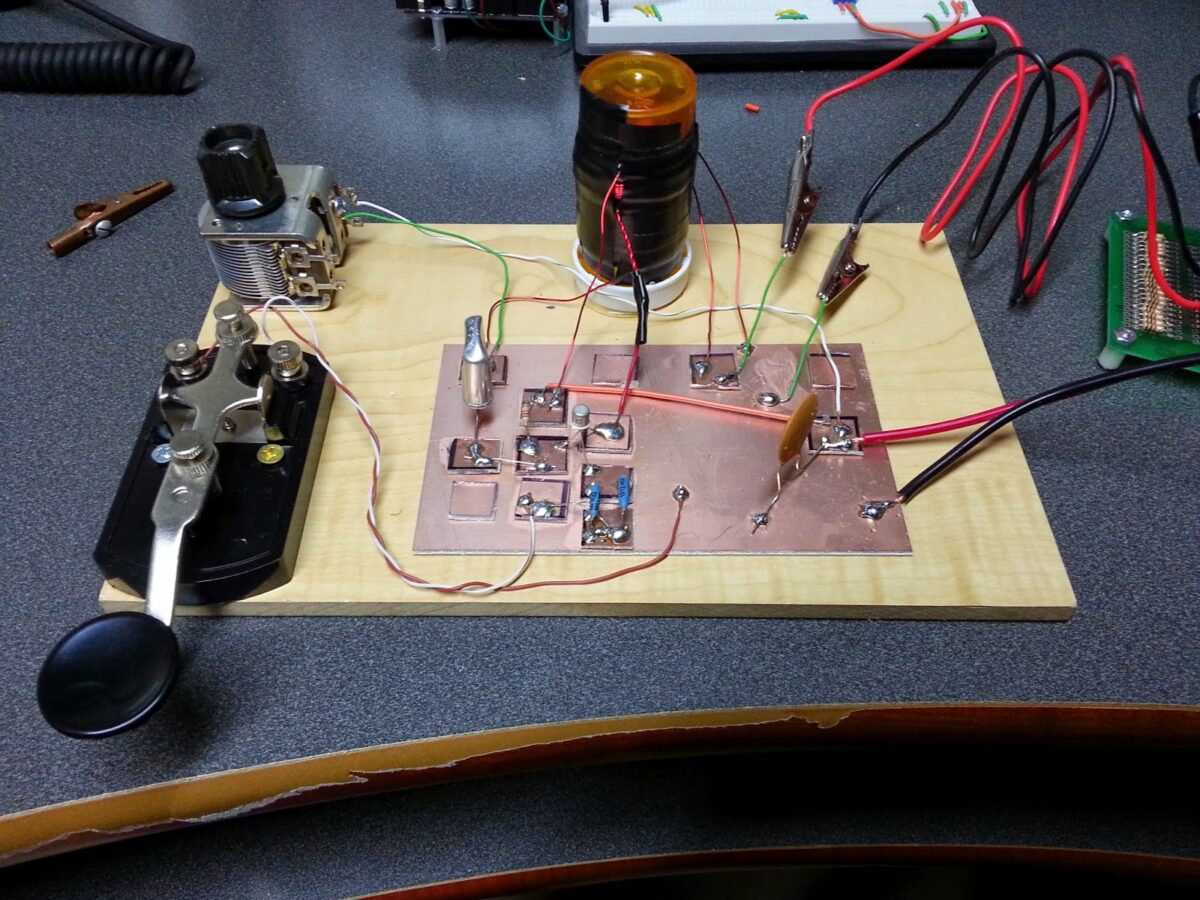

Larry’s rig looks like it is almost ready to go for Straight Key Night! FB. I was glad to heat that the crystal survived the rough treatment dished out by the US Postal Service these days. Apparently all envelopes are sent through a steam roller! Who knew?
Hi Bill and Pete,
As usual life has intervened in my plans, but after a delay for professional and personal reasons I can now report success in yet another additional the the CLA. I was able to successfully transmit into a dummy load yesterday with my new transmitter. It is not the prettiest device I have ever built but it is functional. I tried the home made mepad construction and it works fairly well. I did discover a few things while building and testing this unit. First, I need a new soldering iron with a little better temperature control. Second, before using this transmitter on the air (currently on a dummy load), it needs a low pass filter. I can see several harmonics imposed on the generated signal.
The first picture show how everything is mounted to piece of scrap wood for stability. I even screwed down the old key for stability during testing. The alligator clips are for the dummy load connection (the dummy load is also home built from 20, 1K ohm resistors which is located just on the right edge of the picture).
Even without an antenna I was able to receive the transmitted signal on my IC-7200 in the shack.
The signal on the scope is messy but the tome received on the IC-7200 sounds good.
Next steps are the additional of a Low Pass Filter and better matching to the dummy load (currently I’m only at about 49 Ohms).
Thanks again for the encouragement. I plan to do a little more tweaking on this unit and will keep you updated on any progress.
Have a great holiday and a Happy New Year,
73
Larry
AE7TM
Our book: “SolderSmoke — Global Adventures in Wireless Electronics” http://soldersmoke.com/book.htm Our coffee mugs, T-Shirts, bumper stickers: http://www.cafepress.com/SolderSmoke Our Book Store: http://astore.amazon.com/contracross-20
Mac’s Mighty Mite
Our book: “SolderSmoke — Global Adventures in Wireless Electronics” http://soldersmoke.com/book.htm Our coffee mugs, T-Shirts, bumper stickers: http://www.cafepress.com/SolderSmoke Our Book Store: http://astore.amazon.com/contracross-20
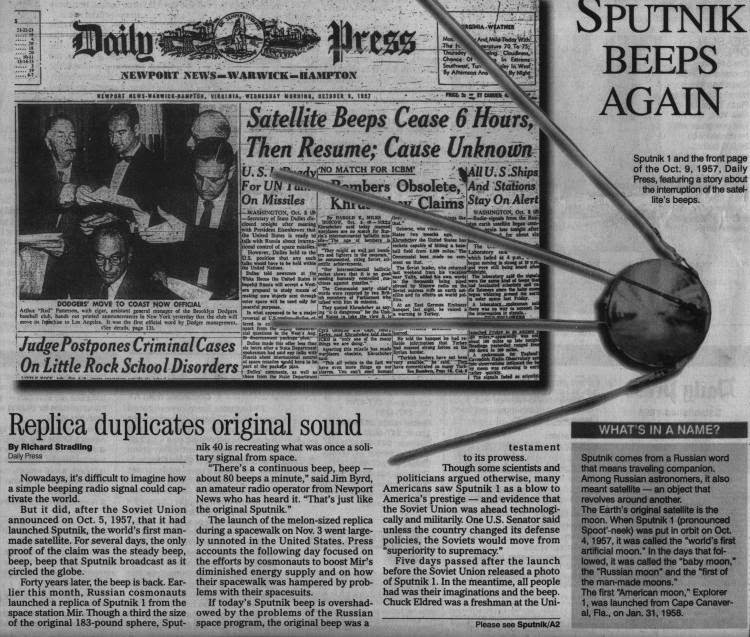
Sputnik 40 Launched from MIR in 1997
Our book: “SolderSmoke — Global Adventures in Wireless Electronics” http://soldersmoke.com/book.htm Our coffee mugs, T-Shirts, bumper stickers: http://www.cafepress.com/SolderSmoke Our Book Store: http://astore.amazon.com/contracross-20
Jean Shepherd Meets Lee DeForest (video)
Our book: “SolderSmoke — Global Adventures in Wireless Electronics” http://soldersmoke.com/book.htm Our coffee mugs, T-Shirts, bumper stickers: http://www.cafepress.com/SolderSmoke Our Book Store: http://astore.amazon.com/contracross-20
Colin Gets His BITX Receiver Going

Pete and I congratulated Colin on the First Sigs heard by his BITX (sort of like First Light for a telescope.) He is clearly following the advice offered by Farhan in the original BITX20 article: Take a break when the receiver is done; sit back to enjoy the sounds of success. I told Colin that having a small error in the build, then finding it and fixing it, well, that’s icing on the cake OM. This also shows the benefit of having an oscilloscope. Here is Colin’s report:
Hi Pete and Bill,
I really enjoyed the latest SolderSmoke! I think you two have got a winning formula, humour interspersed with valuable technical knowledge. Some podcasts are just too serious, there’s nothing wrong with having fun in your hobby!
Progress is slow here, as always, but each week I have managed to move a little bit further forward. This week I aligned my BITX band pass filter and made a rough measurement of my crystal filter using the DDS signal generator that I built last week.
My oscilloscope is a Tektronix 465, older than me I believe! Of course there is no fancy signal level readout like the modern digital scopes, so I had to just peak the injected signal through the crystal filter and measure the frequency using a frequency counter connected to the IF amp. I followed the BITX ver 3 build instructions and my results seemed to match very closely to the Indian kit. I’m going to set my BFO at the -20dB from peak level as suggested in the ver3 instructions, I guess I can fine tune the setting later.
At first I had no signal making it out of the last RX IF amp, I traced the signal right through to the base of the first transistor but then the signal was lost. I had thought that band conditions were poor when I tried my BITX in RX last week when in fact it turns out that I’d made a small mistake building the IF amplifier that follows the crystal filter! I had wired the 4k7 resistor in the wrong place! I made the circuit good and hey presto, lots of signal coming out of the amp!
I was eager to give the receiver another try. On Fridays work finishes at 1pm, so a great chance to try out my rig during daylight hours. I hooked up the rig to a random piece of wire and I was amazed by the great noises coming from the speaker! I hadn’t even set the BFO but voices were just leaping out. Man that rig has a lot of AF gain! I obtained a switched 10k log pot which I intend to use for power on and AF gain so hopefully the volume control will be OK. As a side note, it was nice to hear HF0YOTA down in the CW portion, I’m guessing that it is youngsters on the air station, I must do a search on the call later.
73, Colin M1BUU
So the little signal generator has already earned it’s keep. I guess I can would have been scratching my head for a while without it!
Our book: “SolderSmoke — Global Adventures in Wireless Electronics” http://soldersmoke.com/book.htm Our coffee mugs, T-Shirts, bumper stickers: http://www.cafepress.com/SolderSmoke Our Book Store: http://astore.amazon.com/contracross-20
Some Colorburst QRP Encouragement from ND6T
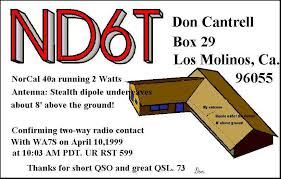
Don ND6T has been helping us come up with a good simple low pass filter for the MMM (Steve Smith and the FCC insist). At the end of one of his e-mails, he shared this QRP Colorburst gem:
Be prepared to be occasionally amazed. Back in the late 70’s I worked all over the western U.S. with under 1/2 watt. Regularly. Even a QSO with a UA0 (Siberia) with under 1 milliwatt, he having answered my CQ! I was seeing if I could “get out” using a single “D” cell flashlight battery that was too weak for the flashlight. All using a colorburst crystal. Oh, and a dipole 100′ high stretched over a creek.
73/72,
Don ND6T
Our book: “SolderSmoke — Global Adventures in Wireless Electronics” http://soldersmoke.com/book.htm Our coffee mugs, T-Shirts, bumper stickers: http://www.cafepress.com/SolderSmoke Our Book Store: http://astore.amazon.com/contracross-20
Fwd: CBLA is on the air
Hi Bill,
No contacts yet but it sounds good into a dummy load. HA!
My plan is to put the whole thing up at the antenna and run the keying leads into the shack. Not shown on the pill bottle cap is a 9V battery connection. At 9V I get about 100mW out. With out the LPF and using 12V I can get about 1/2 watt. Total cost of the project? $0.00Thanks again for the inspiration to heat up the soldering iron once more.
73’s
Jim.. WA7HRG
No cost! That’s the HB spirit! I like the LPF and that pill bottle modular construction is very cool.
This is the perfect time of year for CBLA operation on the QRG.
73 and 3579…….Steve Smith WB6TNL
“Snort Rosin”
CBLA # 1