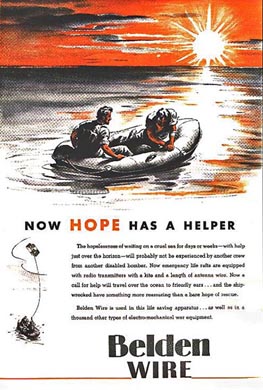
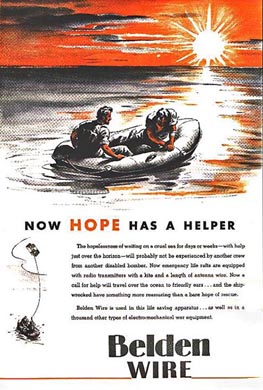
The Amazing History of the Gibson Girl Rescue Radio
Saskatchewan Mighty Mite (Video)
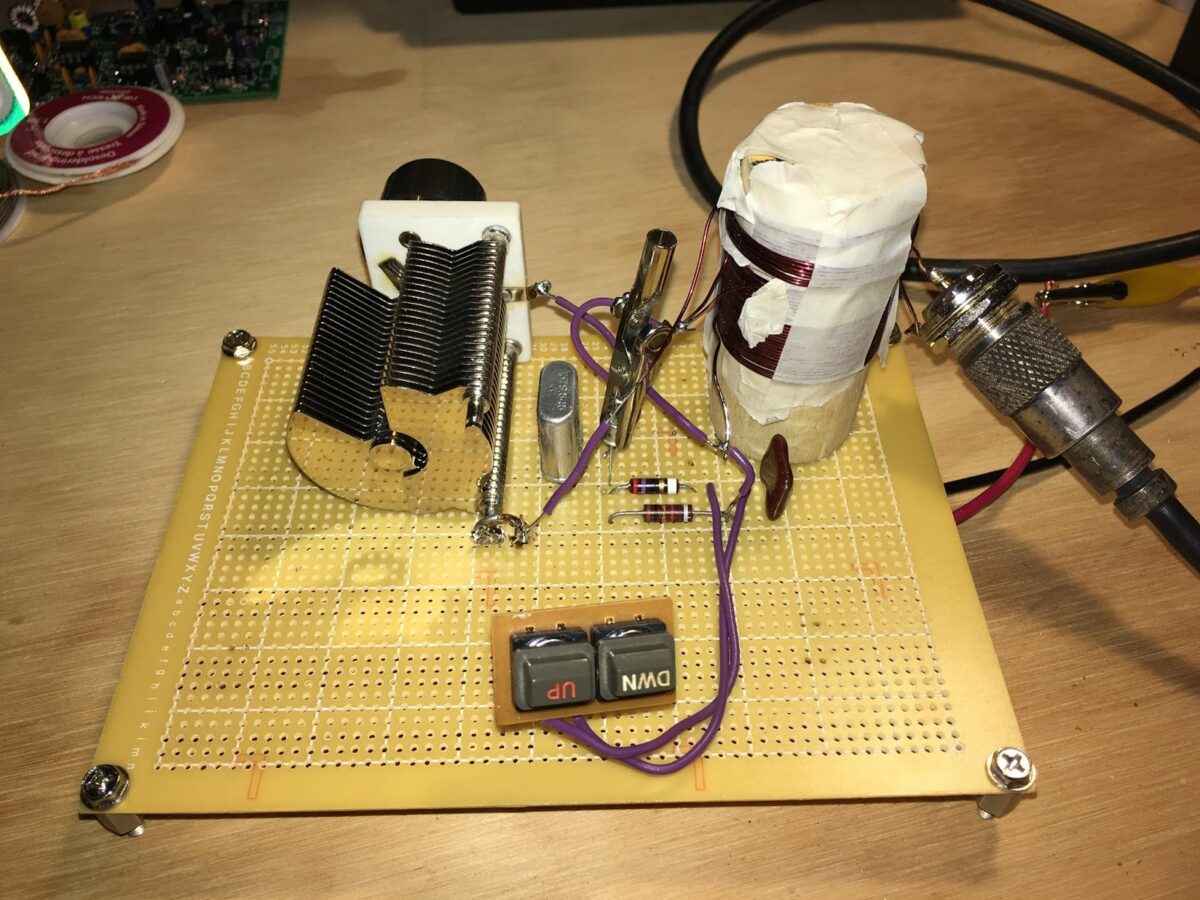
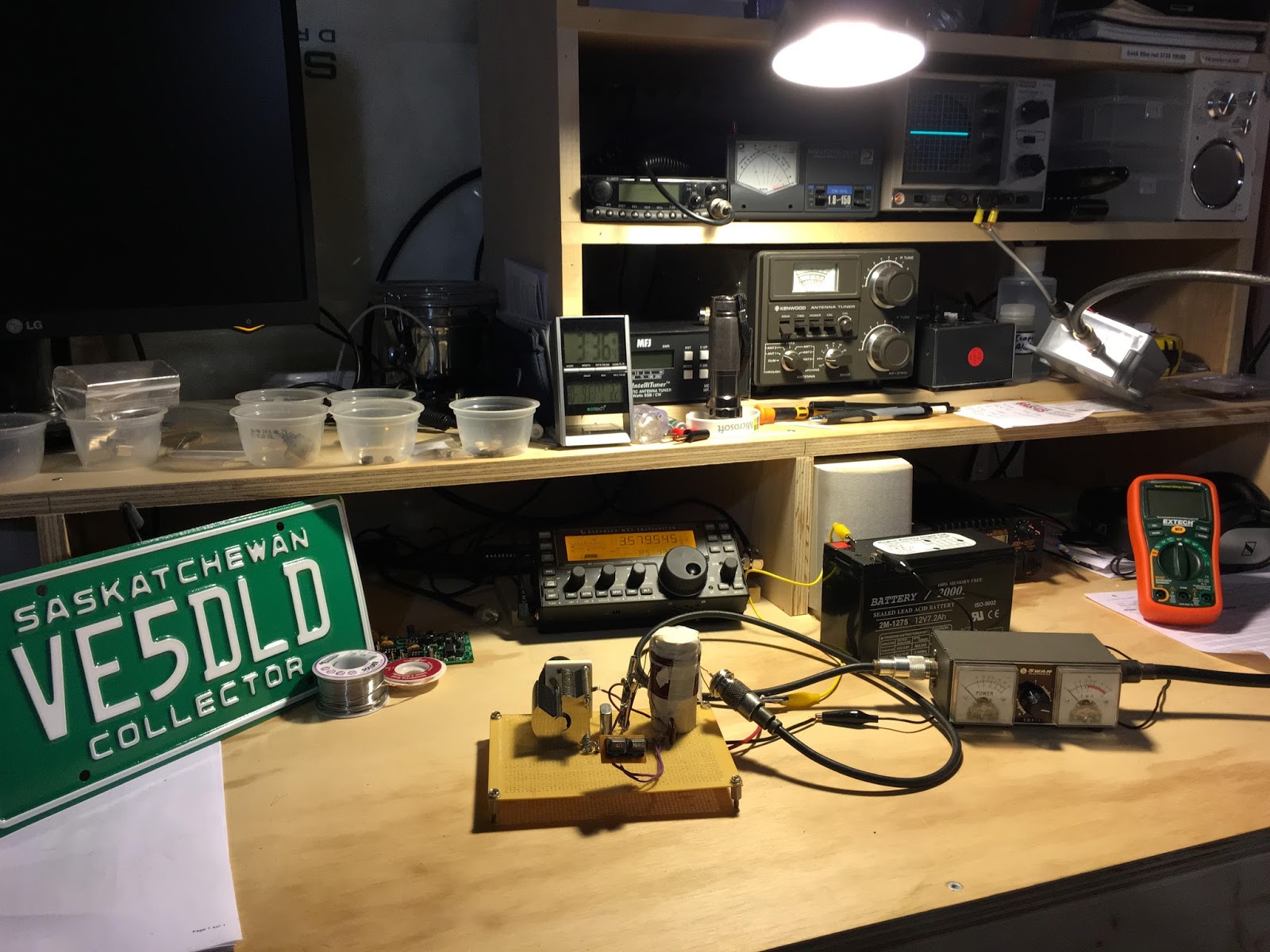
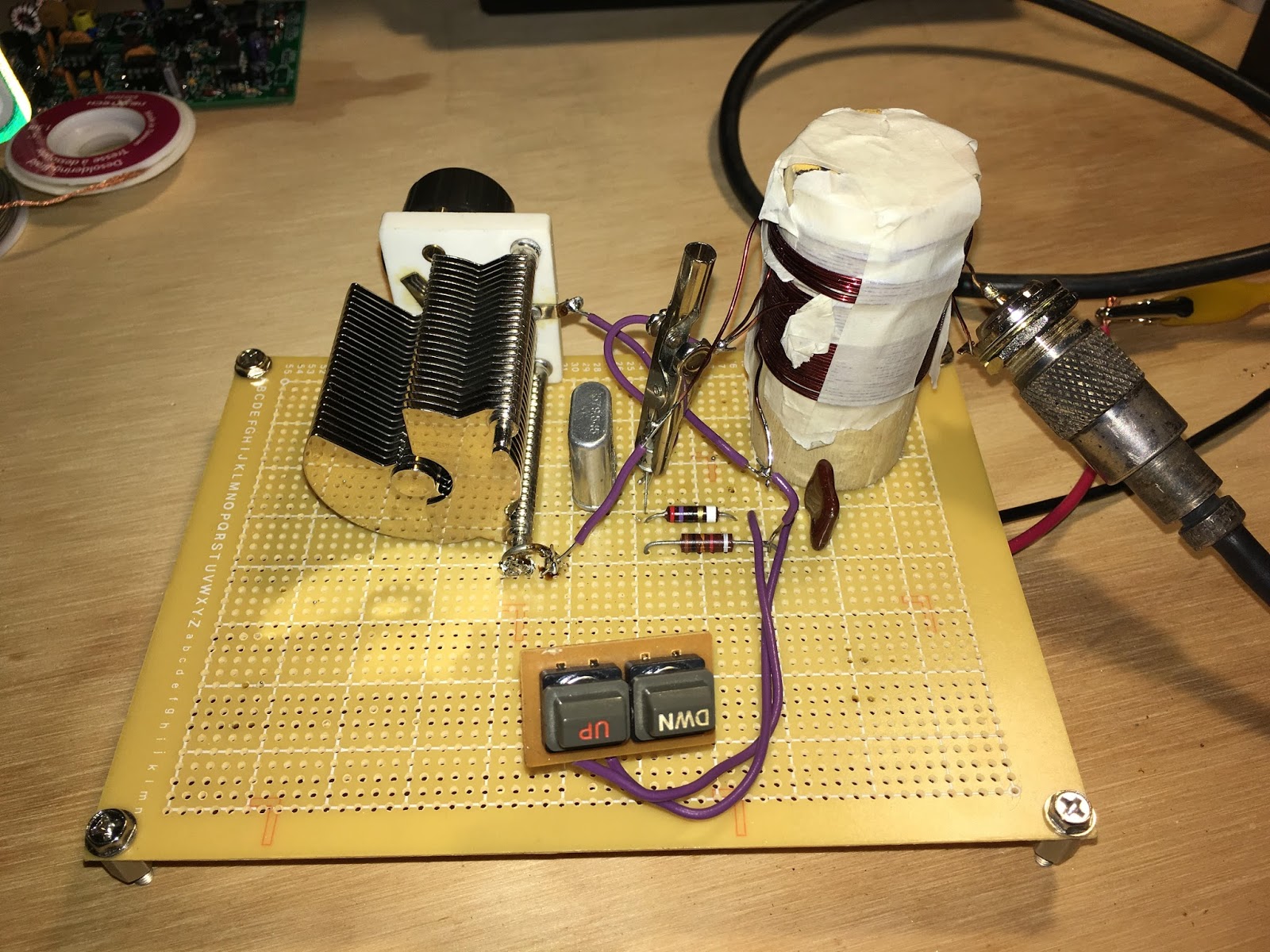
Tonight I have had my first experience with the joy of oscillation! I’m so happy to have my M3 oscillating! This was a great first project and look forward to seeing if I can’t build a lowpass filter to go with it. As you recommended Bill, I reconfigured my initial board to make things much more compact thus keeping the lead length short. For the coil, i used a 1.25in wooden dowel and it worked great! Here are a few photos. Thanks a lot for the crystal! Video will be coming soon.
Daniel
Dean’s Double First: First Ham Contact Is Also His First Homebrew Contact
You are off to such an amazing start as a true homebrew ham. Stay on the homebrew path. Build a completely homebrew station! Congrats!
Sparks from Ron Sparks: The Grand Pooh Bah and Gilbert and Sullivan; SDR, Ned Ludd and Blaise Pascal
- Grand Pooh-Bah is, as you say, a Flintstones character, but it is not the the origin of the term. It actually goes back bit more than a century. The original character was named Pooh-Bah and was Lord High of nearly everything. He appeared in The Mikado by Gilbert and Sullivan in 1885.
- There really are a fair number of non-software experiments that can be done with SDR. My first SDR was a set of boards assembled by Gerald when he was first starting Flexradio in 2002. His plans were very much homebrew and were published in QEX July/Aug 2002. My second SDR was a homebrew kit put together by Tony Parks, KB9YIG in 2005. He still sells SDR kits as fivedash.com. All this is very much home brew and does not rely on obscure hardware blobs. Have a look at the schematic for the current softrock at Ensemble II Schematic.pdf. It only uses “jellybean ICs”.
- According to the Smithsonian magazine, “Despite their modern reputation, the original Luddites were neither opposed to technology nor inept at using it…A seemingly endless war against Napoleon’s France had brought ‘the hard pinch of poverty,’ wrote Yorkshire historian Frank Peel, to homes ‘where it had hitherto been a stranger.’ Food was scarce and rapidly becoming more costly. Then, on March 11, 1811, in Nottingham, a textile manufacturing center, British troops broke up a crowd of protesters demanding more work and better wages.” It was only later that they became associated with resenting the machinery.
I am also enjoying your discussion of the changes to our technology and how it affects hams and other technical people. I came into electronics as a young boy and at that time transistors were just beginning to displace tubes as a dominant force. I definitely remember the older techs saying, “These new transistor things are just sand-in-a-can; how can anyone know how a circuit operates with them.”
About 12 years later when I was in college I heard exactly the same comment as “jellybean” Integrated Circuits (7400 and 4000) began to displace discrete transistors. There was much musing about how the future would be one of just plugging ICs together and no design talent would be needed or developed.
Fast forward another 20 years and the microprocessor moved from Primary CPU, to cheap CPU, to PICs and Atmels. Here came the same comment lamenting the loss of ICs that “we could understand” and “no more electronics is needed, just hook the blocks and write the software.”
Now about 10 years from then we are seeing complete transmitter and receiver modules, zigbee, wifi, and many other Adafruit style drop-in modules. I figure it is about time to hear that old saying once again. You and Pete need to be careful as you dance about it, don’t fall into the trap
So in the immortal words of Blaise Pascal in 1657, “I have only made this letter longer because I have not had the time to make it shorter.”
Keep up the good work and great podcast!
73 de AG5RS, Ron
The Coolest Guy on 17 Meters
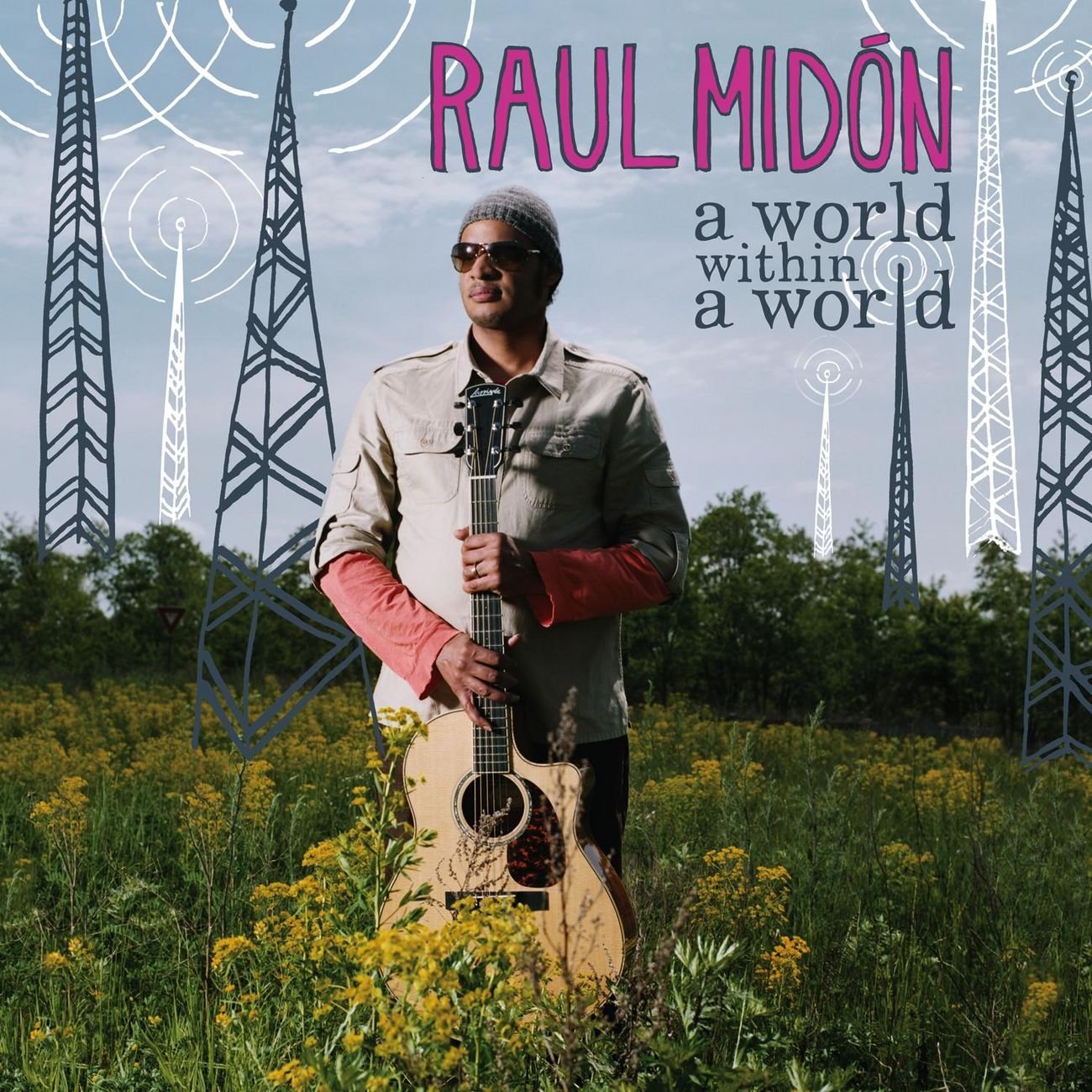
In our last podcast I mentioned that I had a very interesting contact on 17 meters with Raul Midon AE3RM. This morning Raul’s song “Tembererana” popped up on my Pandora feed. The song is great, but is was the album cover that attracted my attention.
Raul has an amazing personal history. Born in Argentina, he and his twin brother have been blind since birth. They have both obviously triumphed — his brother is a NASA engineer.
You can watch OM Raul sing about technology in his TED Talk:
https://www.ted.com/talks/raul_midon_plays_all_the_answers_and_tembererana?language=en
Here is his Wikipedia page. Check out the info about his home studio and his technology company:
https://en.wikipedia.org/wiki/Raul_Mid%C3%B3n
From the Wiki:
Midón’s album State of Mind was released on May 10, 2005. The album features a guest performance with Stevie Wonder, one of his idols, another one with Jason Mraz, and a song written in tribute to Donny Hathaway entitled “Sittin’ In The Middle.” Midón is an avid amateur radio enthusiast,[2] and in this song he also incorporates his call sign (KB5ZOT) by using Morse code.
Here is his QRZ page: http://www.qrz.com/db/KB5ZOT
In it he writes: “He has been an amateur radio enthusiast since Mrs. Redmond introduced he and his brother to the hobby back when they both attended the New Mexico School for the Visually Handicapped.” Good work Mrs. Redmond!
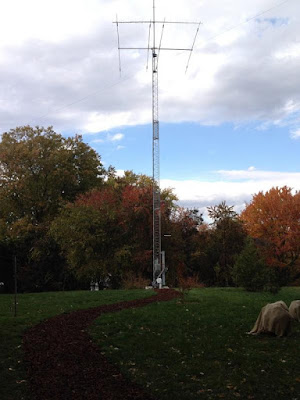
Here is Raul’s antenna in Maryland. Maybe he was thinking of this when he designed the album cover!
The Advancement Of The Radio Art and The Enhancement of International Goodwill
The rules and regulations in this part are designed to provide an amateur radio service having a fundamental purpose as expressed in the following principles:
(a) Recognition and enhancement of the value of the amateur service to the public as a voluntary noncommercial communication service, particularly with respect to providing emergency communications.
(b) Continuation and extension of the amateur’s proven ability to contribute to the advancement of the radio art.
(c) Encouragement and improvement of the amateur service through rules which provide for advancing skills in both the communication and technical phases of the art.
(d) Expansion of the existing reservoir within the amateur radio service of trained operators, technicians, and electronics experts.
(e) Continuation and extension of the amateur’s unique ability to enhance international goodwill.
On a recent podcast I mentioned that I like the phrase “the radio art.” I also mentioned that I heard some objections to this term. A couple of guys wrote in on this –see below.
I found out that the phrase features prominently in Part 97 of the U.S. Code of Federal Regulations. This is the document that establishes ham radio in the U.S. (see above)
I really like the last line of the first section of Part 97: e) Continuation and extension of the amateur’s unique ability to enhance international goodwill. Yea! That’s us! The International Brotherhood of Electronic Wizards!
AK2B’s Beautiful Si5351 Receiver — Just Listen and Watch!
Tom Hall does amazing things with solder and electrons in the heart of New York City. I give him extra credit for doing this on the island of Manhattan because 1) that’s where I’m from and 2) EVERYTHING is more difficult there.
I may have presented this video before. If I didn’t, I should have. And if I did, well, here it is again (I guess my NYC attitude is showing here).
Look at the ease with which Tom switches bands. Fantastic! But even more important, LISTEN to the quality of the reception. Listen as Tom tunes in on strong CW and SSB signals. Do you hear any signs of the dreaded phase noise that is supposed to plague the Si5351 chip? I do not. I think this receiver sounds great.
I don’t know why the Si5351 got such a bad rep for noise. Could it be that some people were testing it with boards other than the Adafruit or NT7S products that we have been using? Could it have been that in the tests the boards weren’t completely installed? (It is important to have the VFO and BFO signal lines properly shielded.) Could it be that in the tests they were using physically adjacent clock outputs from the board? (We use CLK0 and CLK2, skipping CLK1 to avoid the “bleedover” problem that was noted by early users.)
SatNOGS: 3D Printed Az-El Rotators! Ray-Gun PVC Helical Antennas! Arduinos! Dongle Receivers!
Wow, this project is very appealing. Finally, a 3D printer project that seems truly useful. They are using one of the Dongle receivers we’ve been playing with, and, of course, Arduinos. You could really geek-out with this stuff. Check out the hardware side of this effort here:
https://satnogs.org/documentation/hardware/
Another Free Kindle Book
As a result of Elisa’s suggestion, more than 1300 people downloaded the free Kindle version of “SolderSmoke – Global Adventures in Wireless Electronics.” I hope they liked it. If you did enjoy the book, please spread the word about it (you can use the e-mail button below to forward this post to friends and relatives), and please put a review on the Amazon Kindle page.
In the course of following up on Elisa’s idea, I discovered that Amazon Kindle has a program that will allow me to make my more recent book available for free (for a limited period).
So the Kindle version of “Us and Them — An American Family spends Ten Years WITH FOREIGNERS” will be available for free from October 3 through October 7. Please send me feedback, please let your friends and relatives know about the book (again the e-mail button below is good for that), and please post reviews on the Amazon page.
You can find the Kindle book here. It will be free from October 3 through October 7, 2015
http://www.amazon.com/gp/product/B00L8DR4RK?*Version*=1&*entries*=0
Old Spark (But Thankfully Not Forever)
For the last couple of weeks I have been plagued by noise on the HF bands. In spite of being in a very built-up area of Northern Virginia, I usually have low noise levels. But for the last couple of weeks I’ve had intermittent but frequent arcing noise. It sounded like classic power line arcing.
My 17 meter Moxon antenna provided a clue as to where it was coming from: As I spun the antenna around, the noise was always a lot stronger to the North-North West.
On Wednesday morning on the way to work I noticed that the fire department and the power utility were working frantically on a pole about a mile from our house. It had obviously been on fire — it was still smoking when we went past.
When I got home I was pleasantly surprised to find the arcing noise gone. It took me a few minutes to make the connection — yes, the smoking power pole was to my North-North West.
OBVIOUSLY THE RADIO GODS CAME TO MY ASSISTANCE!
This was a good demonstration of the fine front-to-back characteristic of the Moxon antenna. And a reminder of what radio signals sounded like in the days of spark.
Bryan KV4ZS’s “Let’s Build Something” Direct Conversion Receiver

Alan Wolke in the Dinosaur Den (Video)
Very cool. But it makes me sad that my Tek 465 broke (and I can’t fix it!).
Jac’s Homebrew Receiver (video)
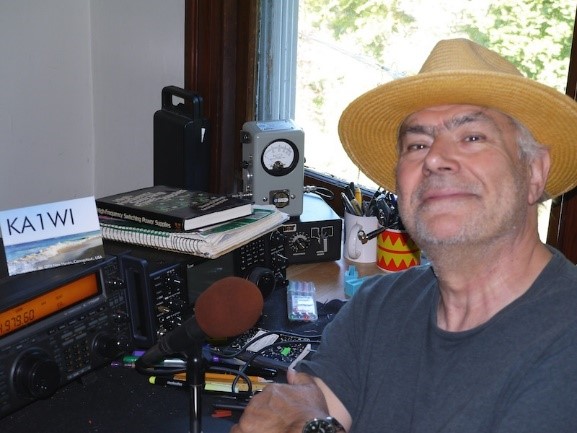
Jac (KA1WI) and I spoke on 40 meters on June 29th. I told him about the BITX — he said he liked the idea of building something and pledged to start melting solder. This week I got this message and video from him. Good going Jac! That was fast! I think we all know who designed the IF amp: Wes W7ZOI. As for the DS/PLL, I recommend you take a look at the Si5351 with an Arduino microcontroller.
Hi Bill,
First Ever SSB Homebrew to Homebrew Contact by N2CQR. With…
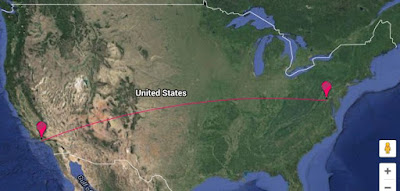
Pete Juliano and I were talking on Skype yesterday evening. He was regaling me with tales of the wonders of his new beam antenna. He mentioned that he was working a lot of East Coast stations… Wait a minute, I thought, I’m an East Coast station. And I have a 20 meter rig sitting right in front of me. “Meet me on 14.190 Pete!” It took me a minute or so to get the rig connected to the CCI amplifier and the 20 meter dipole. By the time I got everything fired up, there was a station on the frequency. I thought we’d lost the spot. But no! I realized it was Pete calling me.
This was extremely cool. Pete was using his ZIA rig with the brand new beam. I was on my VFO BITX20. And I was using the CCI amp that Pete had coached me on (he taught me how to tap the holes for the heat sink).
This was the first time I had ever contacted another homebrew SSB station — and the first time Pete and I had spoken on the air. THE RADIO GODS WANTED THIS ONE TO HAPPEN!
I recorded the QSO:
http://soldersmoke.com/n6qwn2cqr.mp3
I will ask Pete to provide more detail regarding the California end of this QSO in the comment section below. Did you have your amplifier on Pete?
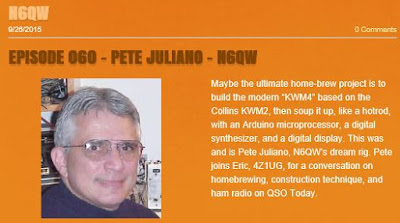
Listen to Pete Juliano’s Interview on “QSO Today”
Pete Experiences the Joy of Rotation
Civility, Ham Radio, King Hussein, and the International Brotherhood
Hi Bill,
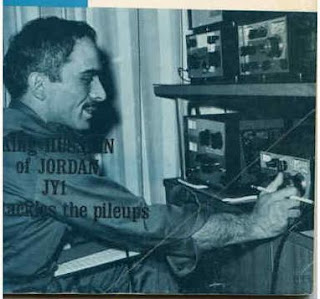
Interested to hear you talking about civility … My introduction to amateur radio was via a Heathkit GR 64 and Roy, G3PMX. When I finally took my ticket – 1970, and passed, I called him on the phone to tell him – he told me to come on up to his QTH, I did, via an old bike taking about 30 minutes to get up the hill. When I got there, he put me on the mike, the guy the other end was really great, talked about being a part of an international brotherhood and a movement for world peace – just a magical first contact …
Roy asked me if his call seemed a little odd, it did, it was short, JY1, but I was really slow to cotton on to who I’d just spoken to… What really blows me away to this day was that the King of Jordan sat in his shack and waited for a 16 year old kid to pedal up the hill just to give him a fantastic first contact … My only regret is that I never got to speak to him again to say “thank you” – when you talk about legacy radios, it isn’t the tech that we need to hold on to, though we do, it was what that man did to reach out to a fellow amateur.
By all accounts, he was a fantastic guy, he used to sit at Roy’s kitchen table drinking coffee and just being one of the guys … Sadly I was at sea by then hence not meeting him.
Roy knew him because he worked for Marconi & put the antennas on the palace, Hussein just appeared having that Roy was an amateur and they had a long conversation about radio – when he turned to leave, Roy asked his name so that he could stay in touch – Hussein told him to just ask for Hussein the radio guy – never let on that he was King …
Roy said that on several occasions, JY1 travelled to the UK more or less incognito and hired fairly innocuous cars to get about the country simply because he was here as an amateur, not a head of state …
Great example of the spirit of amateur radio transcending all else 🙂
73s, Nick, G8INE
Mighty Mite with Homebrew Capacitor Made from Two Cans (video)
Paul Hodges, KA5WPL, didn’t have the variable capacitor called for by the Michigan Mighty Mite schematic. So in the true spirit of the International Brotherhood of Electronic Wizards, he rolled his own! He used two empty aluminum cans and some electrical tape. Wow, that’s really cool Paul.
You have truly earned you membership in the Color Burst Liberation Army, and for the capacitor I award you the prestigious Brass Figlagee with Bronze Oak Leaf Palm.
Listening to Chinese Satellites with my Drake 2-B
On September 22, 2015 at around 1120 UTC I was able to hear the CW beacons from the fleet of new amateur radio satellites put into orbit by China. Here is a recording:
http://soldersmoke.com/Chinese Satellite XW2.mp3
Very cool. This reminded me a lot my early experiences with the Russian RS satellites in the 1990s.