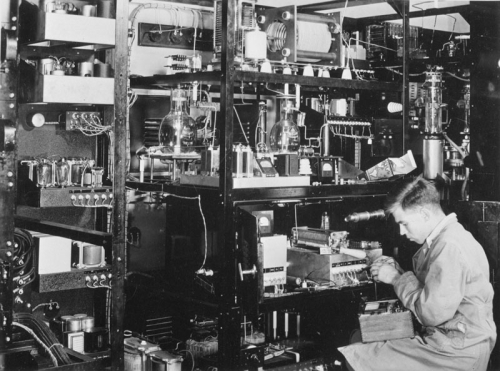
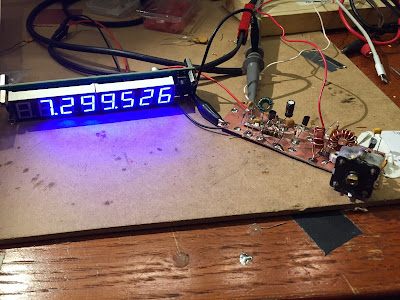
George KJ6VU is a long-time supporter of the SolderSmoke podcast. He has recently teamed up with another ham and launched a podcast called “The Workbench.” This morning I listened to Part I of their interview with the legendary Alan Wolke W2AEW. It was great. As I was listening to Alan I was soldering together a crystal filter for my new receiver, and using my RIGOL ‘scope to check the results. I liked Alan’s description of how they made images of ‘scope patterns in the days before the advent of Digital Storage Scopes (Polaroid!). I also liked Alan’s scorn for those who use the “Auto” switch on the ‘scopes. The host’s reaction to Alan’s description of a $300,000 Tektronix ‘scope was also fun: “For that price I want to be able to drive a car into it and put a swing set behind it!” Indeed. Recommended listening: http://hamradio360.com/index.php/2016/08/30/ham-radio-workbench-5-oscilloscopes-part-1/
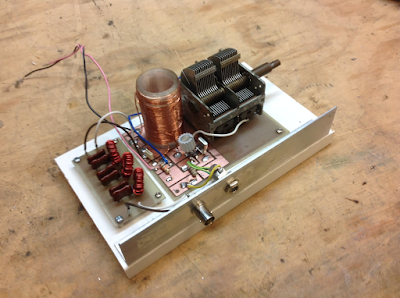
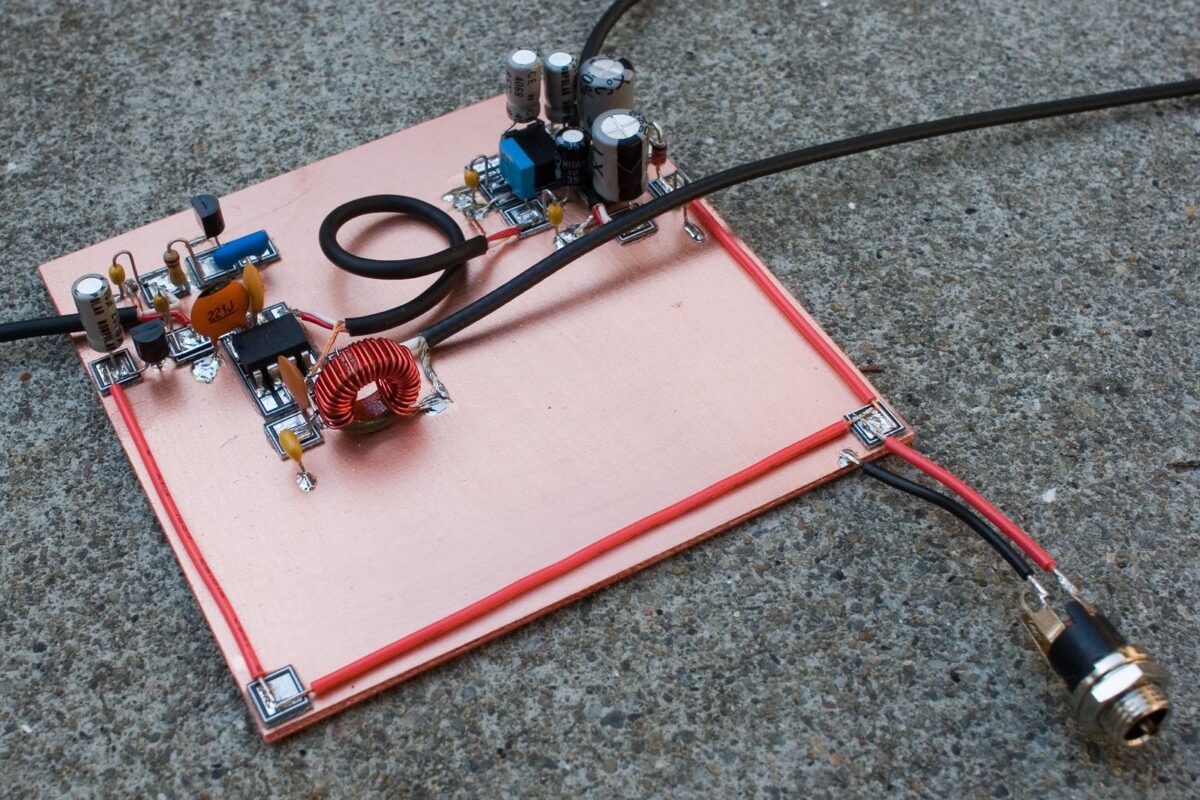
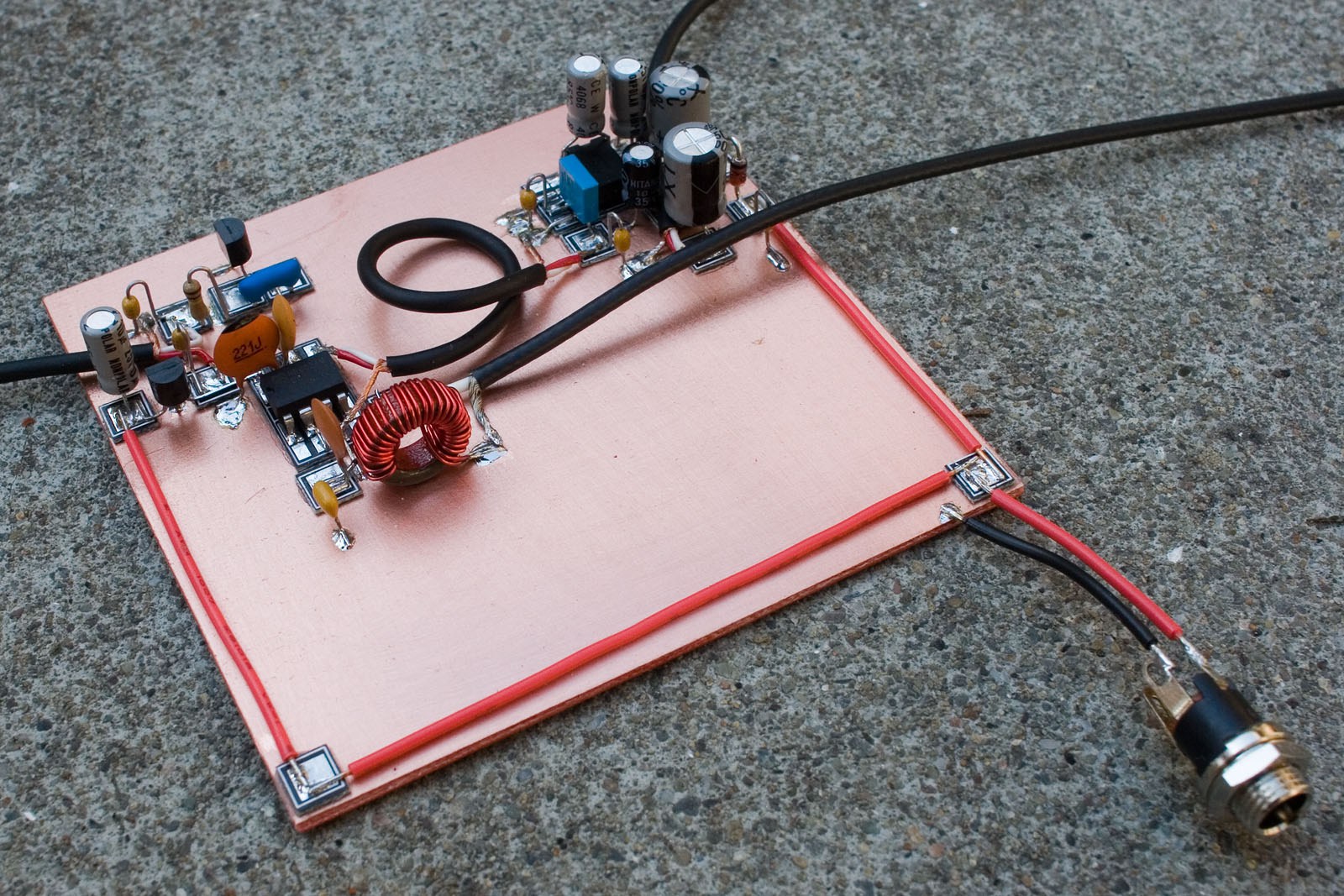
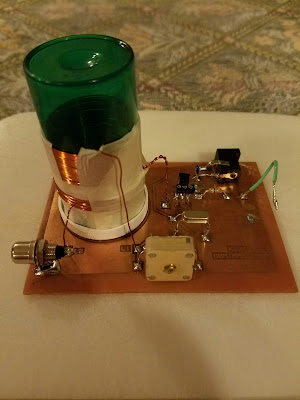
I have the JOO – joy of oscillation! The transistor is a 2N3053 with a clip on heat sink, but I don’t think that I really need it. Output power +22dBm or 160mW. When I tested it on a Comms test set at work, I found that the harmonics were about 12dB to 15dB down and I stopped looking at the 10th harmonic. Not good.
Fitting the 80m low pass filter (salvaged from another project) brought the harmonics more than 50dB down.
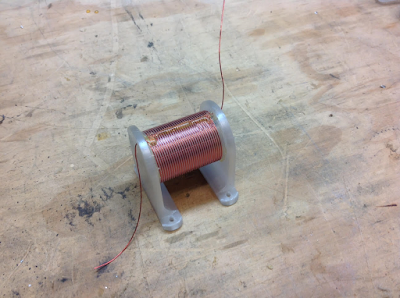
The coil former is a 31mm diameter and 3D printed by one of the guys at work. The material is PET – the material they make soft drink bottles from. After we printed it, I put it in a microwave oven with a glass of water. 30 seconds and the water got warm and the coil former stayed cool.
I haven’t had a contact yet, but maybe in the next few weeks.
The next project is an 80m CW transmitter based upon the Goodfeller transmitter from QST 1946. It requires a inductor in the pi coupler, 1.5 inch diameter, 32 turns at 20 tip; but where to get one of those these days – wind your own.
I got the guy at work to also 3D print me a coil former with a spiral thread around the outside with a 20tpi pitch for the wire to lay in. Some hot glue and the coil is ready.
Now that I have finished all 189 episodes and two specials, my days are empty. Please make some more.
73 de Peter VK2EMU
Hi Peter (great name BTW),
Congratulations –really liked your build – top drawer! 3D printer access WOW – now if I could only get my 3rd son (Mechanical Engineer) to build me one of those machines.
The 3D made coil form is perfect for a VFO and follows the principles set down by Doug DeMaw W1FB (SK) about keeping the coil supported at both ends and away from metal. Bill needs a coil like that to mate with his HRO dial mechanism –and follows something old (dial) something new (coil).
Dave AA7EE has a very cool blog post on his version of the famed ZL2BMI DSB transceiver (seen above). As usual, Dave puts most of us to shame with his excellent non-ugly construction and enviable in-focus macrophotography.
I especially liked Dave’s discussion of how and why .1 uF caps are used in the coupling and bypass network between the two chips.
Of course, the only thing I don’t like about this rig is the, well, the chips. Can we persuade Dave to build the earlier discrete component version of this rig?
Be sure to read the many comments on Dave’s post. Our friend Rogier comments on the beauty of it all. Edgardo LU1AR (the Argentine wizard with the gyrocopter) chimes in. And we see feedback from Eric Sears ZL2BMI himself. FB.
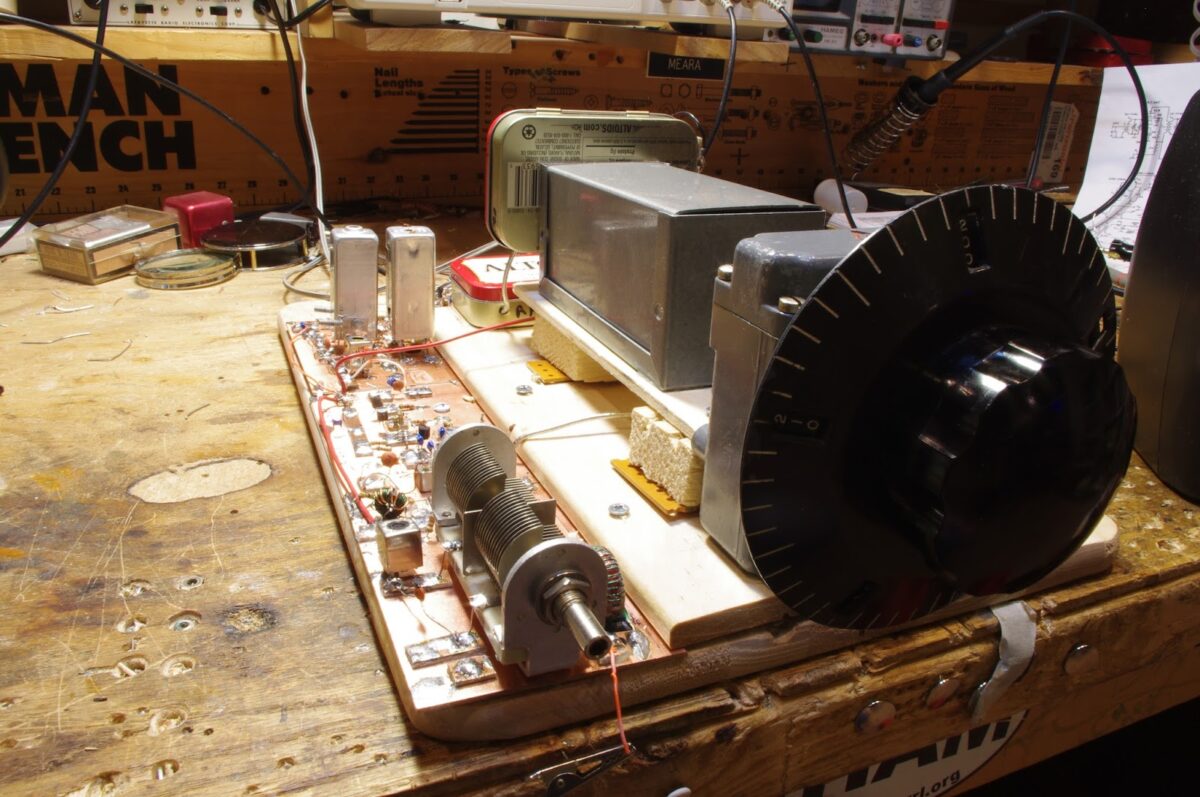
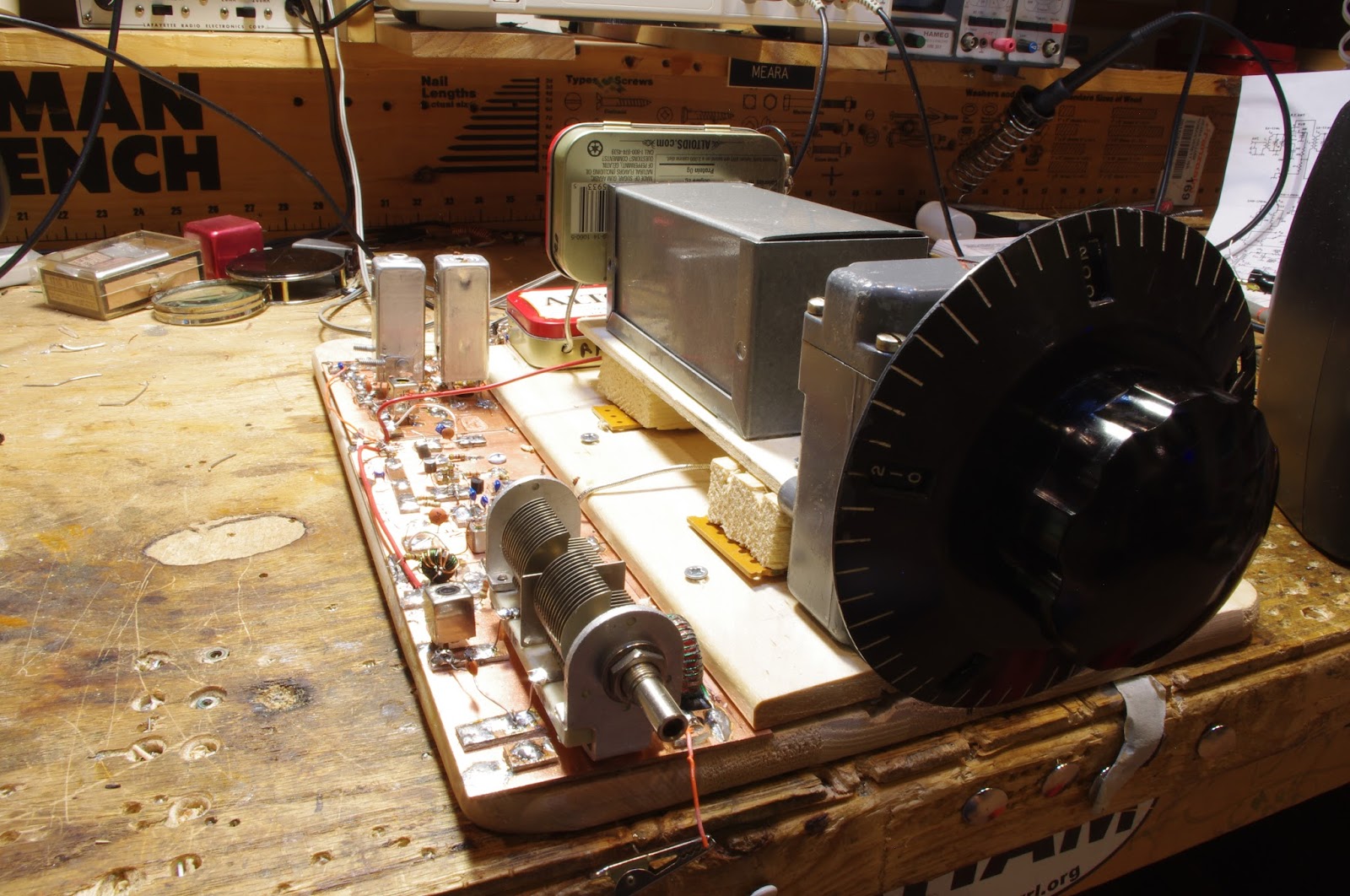
I’ve been kind of busy lately with other things, but I have managed to squeeze in a few minutes most days to work on my latest receiver project. I call it the Armand HROish receiver. Armand WA1UQO sent me the big National HRO-style dial and gear box, and he was there at the Manassas hamfest when I bought the dual variable cap that now serves in the front end pre-selector.
I went with a 455 kHz IF. The idea is to have a receiver that tunes from around 6.5 MHz to around 8 MHz so I can do some shortwave listening AND listen to 40 meters.
So far the filter consists of three IF cans (one small transistor can and two larger tube-type cans). The small transistor can was given to me by Michael Rainey AA1TJ – thanks Mike. Doug DeMaw suggested this use of IF transformers in his “Design Notebook.”
At the front end I have a tunable dual tuned circuit filter followed by a 40673 amp.
The mixer is an SBL-1.
1st and 2nd IF amps are a 23 db 50 ohm termination insensitive amplifiers.
I have a second SBL-1 that will be the product detector, but I haven’t built the BFO yet. So today I hooked up two 1N34A diodes in voltage double config and — with a bit of AF amplification, got the receiver inhaling with a diode detector. I could pick up Radio Canada. Then I heard SSB sigs on 40. With no BFO, I decided to put my sig gen on 455 kHz and just wrap the lead around the IF cans. It worked — I could listen to SSB and CW sigs. Very satisfying.
Still to do:
— BFO and product detector.
— Work on AF amp.
— Get my CM-455 crystal mechanical amp in there with some relays around it so I can switch from narrow to broad via the front panel.
Lots of soul in this receiver: All parts either 1) came out of the junkbox, 2) were gifts from friends, or 3) were recent hamfest purchases. The HRO dial from Armand and the IF can from AA1TJ. The 455 kHz filter idea came from Doug DeMaw, the VFO circuit from SSDRA. The VFO base is from Whole Foods and the whole thing is built on a kitchen cutting board. It includes a 40673 and germanium diodes. The VFO amps are in Altoid tins. It will, when finished, go into a big metal box given to me by Tim KI6BGE and shipped east by Pete Juliano. And when I was working on the 1st mixer, I accidentally pricked my finger and a drop of N2CQR blood went onto the breadboard. Of course, I left it there. SOUL!
The Radio Gods are apparently pleased: In the first hour or so of listening, I was rewarded for my efforts when I managed to hear Tim WA1HLR on 40 AM describe his troubleshooting of an old piece of gear.TRGHS.
That’s the Russian radio-telescope that picked up what was thought to be a possible signal from an extraterrestrial civilization. This article from the SETI Institute has some interesting tech info on antennas and power levels. Definitely not QRP!
Note the establishment of a new acronym (M4MMRX) for Lew McCoy’s Mate for the Mighty Midget receiver. We have needed this acronym for a long time, and SolderSmoke HQ is proud to have come up with it. We do our part my friends. Jan has made more progress on his amazing Dutch M4MMRX and has produced a short video showing the receiver in action with SSB and CW signals. Here is a bit of intriguing homebrew mystery: Jan has gone to a LOT of trouble to create that semi-circular opening in the center of the front panel. He even cut a corresponding semi-circular hole in the sewer pipe cap that serves as the large wheel in his amazing homebrew reduction drive. But he won’t tell us what he plans to do with that space. So I ask you, dear SolderSmoke readers: What is that space for? Why the see-through panel and sewer-pipe cap? What is Jan’s plan?
From Jan:
Hi Bill,
The rattle is gone, so I made a little video of the MMMRX in ssb and cw mode.
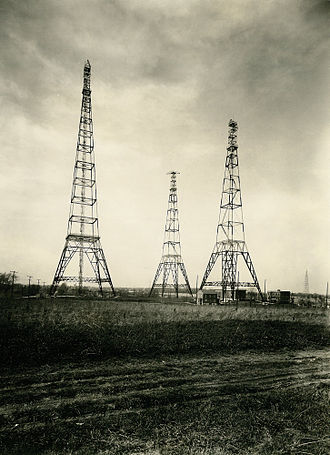
Brad WA8WDQ wrote to us about a VLF (24 kHz) his receiver project (see below). This led to some Googling about the VLF station NAA. Wow, there is some important radio history associated with that call sign. The station’s original location was just a few miles from I where I live now. From Wikipedia (https://en.wikipedia.org/wiki/VLF_Transmitter_Cutler):
The station began operations in 1913 as a radio telegraphy station call sign NAA in Arlington, Virginia, at a facility next to Fort Myer. Although its broadcasts occasionally included band concerts and speeches, it was most famous for its nightly time signals. The three towers known then as “The Three Sisters” stood 600 feet, 450 feet and 200 feet (183, 137, and 61 m) above the ground. The site was referred to as “Radio”, Virginia. The towers were the second largest man-made structure in the world behind only the Eiffel Tower. The word “Radio” was first used instead of “Wireless,” in the name of this Naval Communications facility. The First Trans-Atlantic voice communication was made between this station and the Eiffel Tower in 1915. The Nation set its clocks by the signal and listened for its broadcast weather reports. The Towers were dismantled in 1941 as a menace to aircraft approaching the new Washington National Airport. The towers stand today at United States Naval Academy in Maryland, on the edge of the Chesapeake Bay.
Be sure to read about the de-icing system for the antenna. It uses more power than the actual transmitter!
From Brad:
Bill, Pete,
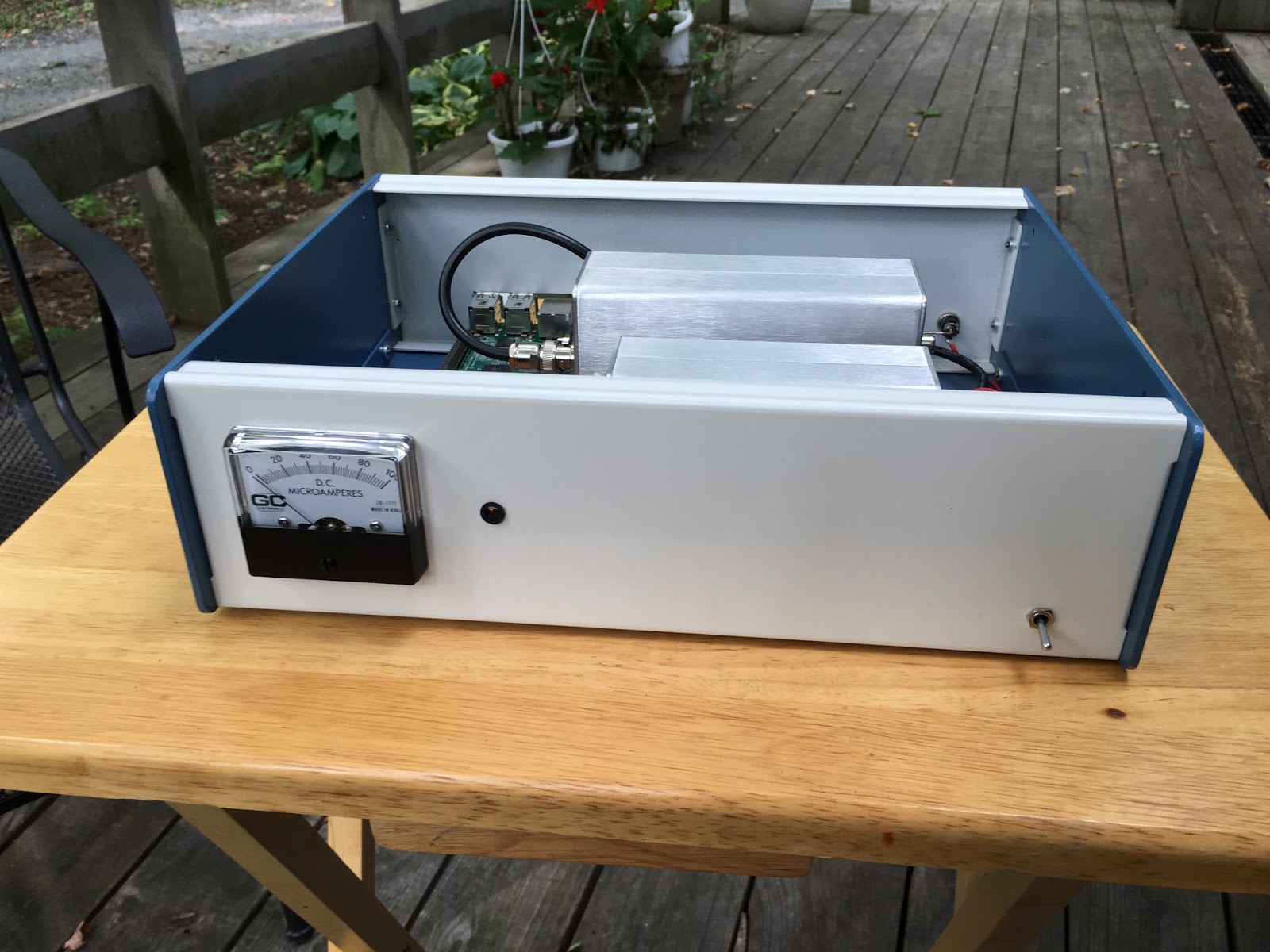
Here’s the current status of the 24 KHz NAA SID receiver. All the major sub-assemblies are mounted in the chassis and power is hooked up. For convenience, I’ve been using the PowerWerx USBbuddy switching DC-DC converter to supply +5V power to the Raspberry Pi from the +12V input. I’ve found them extremely RF quiet, clean and stable; capable of supplying 3A though this project will only need about 1.5A @ +5V. At this point, I’m just waiting for Adafruit to send the A/D chip I’ll wire up to the Pi on that empty protoboard just under the meter. Speaking of the meter, it’s not really needed as the Pi records and broadcasts over Wi-Fi the received signal level. However, I like my projects to have some sort of physical human interface so I added the signal level meter and an LED for SID event alarms :).
As previously mentioned, my bench test of the receiver using my signal generator was successful. Once everything is wired, I’ll do an actual on-air signal test receiving NAA.
The day is off to a good start here at SolderSmoke HQ, with Radio New Zealand booming in on my homebrew Mate for the Mighty Midget receiver. I was listening from around 0900 to 1030 UTC on 7245 kHz. Once again we see that The Radio Gods favor homebrew receivers. Gray line propagation also played a role.
Obviously the Radio Gods (Spirits in the Sky) approve of Jan’s work. How could they not? I can now see why he took the trouble to cut that hole in the sewer pipe cap that forms the large wheel on his homebrew reduction drive. But what are we going to see through that center hole Jan? What will the frequency readout be like? ———————- Hi Bill,
Just finished the last stage of the Mighty Midget MK2.
There are first signals!
The first one I heard was a broadcast station, believe it or not, the song that was on was “Spirit in the Sky” ..
All stages were built, tested and as far as possible, adjusted separately.
It was built from back to front, so the RF amplifier was last.
I added an ECL82 for more audio, the first thought of only using an EL84 didn’t bring enough.
The triode of the ECL82 as a pre-amp, the pentode as final.
Furthermore ECF82’s were used instead of the 6U8, they’re more widely available over here.
The Miller coils are hard to come by, so the 300 uH coils are homebrew.
Also used a grid detector instead of the two germanium diodes.
The triode of V1 originally intended for audio was used for this.
Made the BFO adjustable as well, still remember the screwdriver sticking out of the coil on your side…
Happily there was not much troubleshooting needed.
The 80m coil was only 5 kHz off, the 40m coil 300 kHz (to low in frequency), still have to fix that.
Initially the receiver worked reasonably well without adjusting, but C1 quit at some point.
After some investigation, the problem was a dirty wiper contact on the rotor.
An ultrasonic bath fixed the problem, so no looking out for a replacement there. (hope it stays that way)
After adjusting, sensitivity is around -114dBm (0,4 uV) / 10 dB S/N! (with the FT241 crystals in place, and careful tuning of the controls)
Really not bad for this small receiver, Lew McCoy was right, it really is a Mighty Midget.
I wanted to make some video’s, but over here there’s a terrible S9 rattle from 160 to 15 meters.
Every now and then it appears out of nowhere, and disappears the same way.
As soon as it is gone, I’ll make some video’s.
I made one video though, just after completing the receiver.
Bob Crane, our intrepid correspondent at the Dayton Hamvention talked to Guy N7UN (pictured above) about taking ham radio up to the mountaintops. It was nice to hear Guy mention Wayne Burdick and Wes Hayward and WG0AT. Thanks Bob! Thanks Guy! Listen here: http://soldersmoke.com/N7UN.mp3 More on N7UN here: http://www.n7un.com/
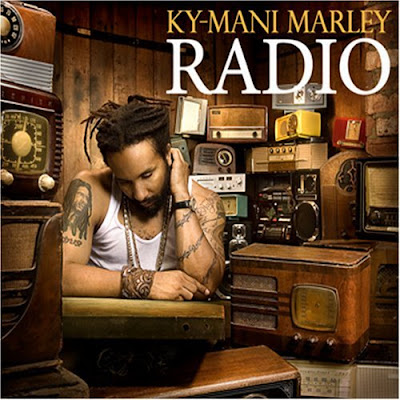
Could it be that Bob Marley’s son Ky-Mani has The Knack? Probably not (no mention of it in Wikipedia) but he certainly has some nice old receivers on his 2007 album cover.
I’m a younger ham, just 26, and I’ve just experienced what I think you call Joy Of Oscillation as I completed my first L-C VFO. What fun!
I’m working on Peter Parker VK3YE’s Beach 40 Double-Sideband transceiver, and while my natural proclivity is toward the SI5351 and it’s brethren, I figured it would be character-building to actually put together an analog VFO for once.
After much tweaking of the feedback capacitor in the oscillator, and massaging the tank inductors, and conking out an additional buffer stage to drive the diode-ring mixer at the appropriate level, and gluing Manhattan pads on top of Island pads…. I say, without reservation, that this was great radio fun! And isn’t that what it’s all about?
(Now it only it didn’t drift so much… so I guess it’s not quite complete yet)
Just wanted to share, love the podcast and the blog, I learn something new each episode.
All the Best,
Jeff, KK9JEF
—————————
Great stuff Jeff. Character building indeed! As for the drift, try this:
— Replace the toroid in the oscillator circuit with a coil wound on a non-metallic core. I use a cardboard tube from a coat hanger.
— Make sure the capacitors in the oscillator and even in the buffer are NP0 caps (they don’t change in value as they heat).
— Try to run the oscillator stage at reduced voltage. Six volts is better than nine.
— After you solder, always let the device cool down for several hours (or even overnight) before you evaluate it. Heat from the soldering iron will be dissipating and changing the freq for a LONG time.
Above all, IGNORE the inevitable recommendation from Pete Juliano that you forget about all this nonsense and just go with an Si5351.
I think Tryg should get that Ladybird receiver working again.
————-
Hi Bill,
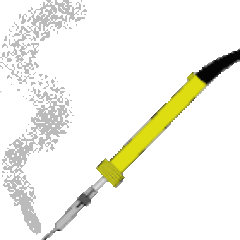
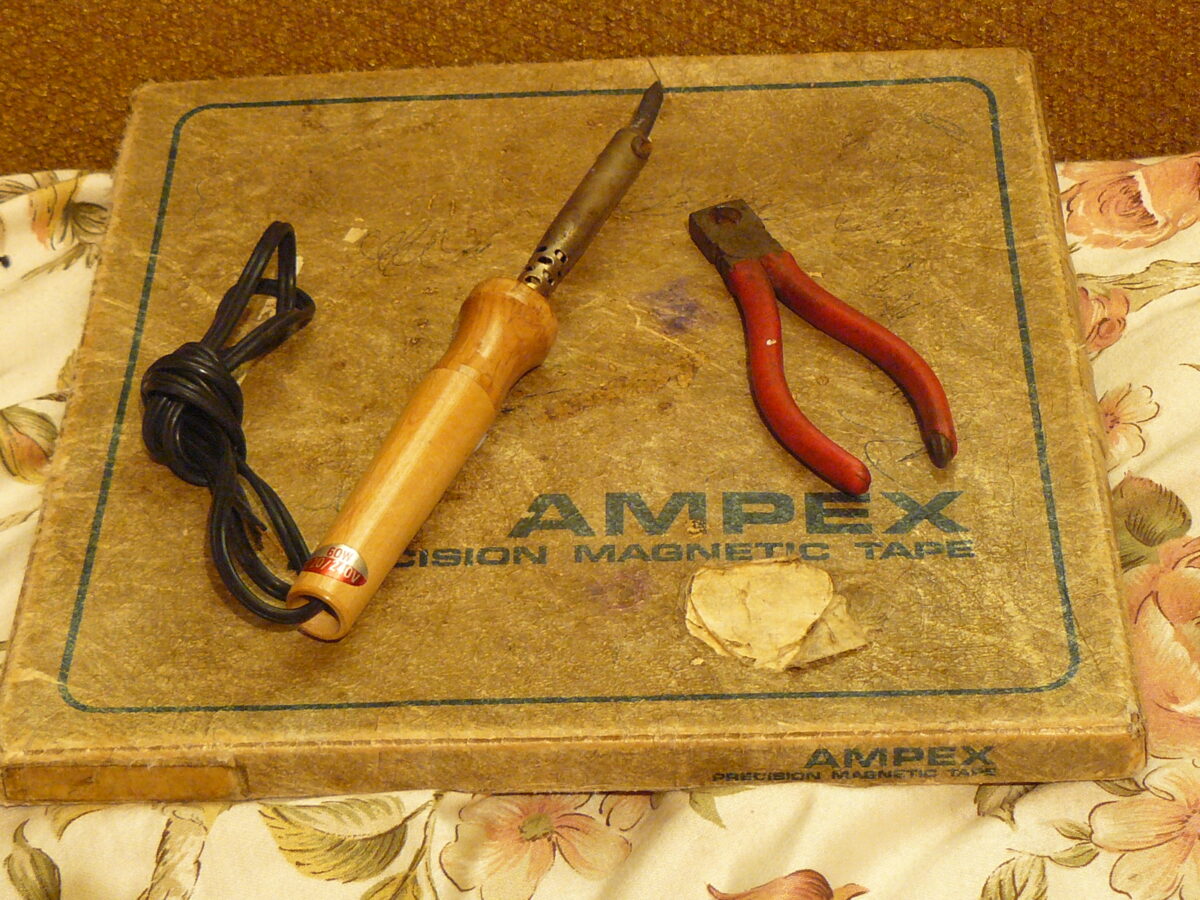
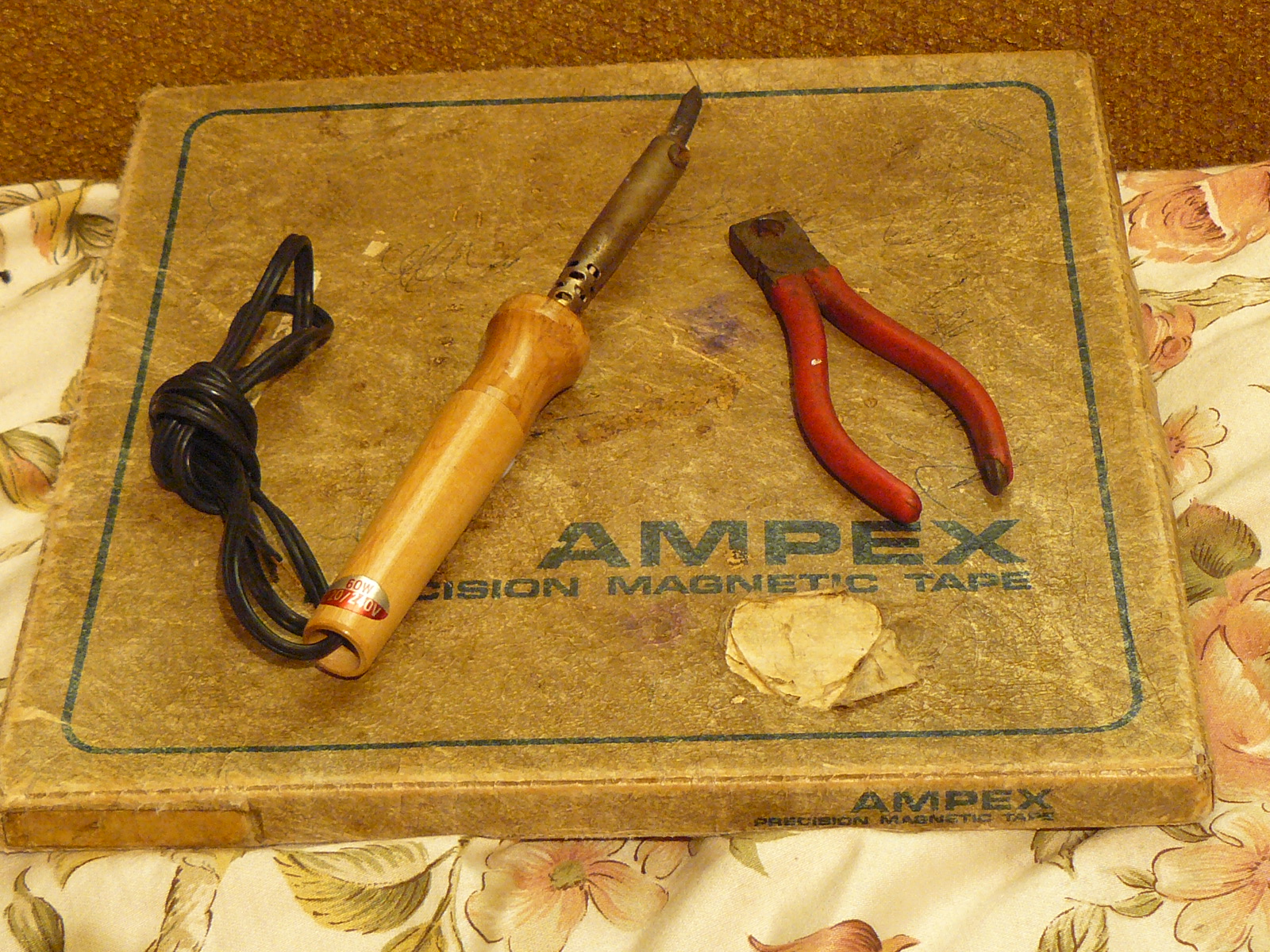
Thanks for the great podcasts and also to Pete for his unique contributions. I have been interested in radio since I was a kid but only really got back into the hobby in 2009. Back when I started playing with electronics in the 1970’s I hankered after a soldering iron of my own. I bought the one in the picture in 1977. A “modest” 60 watt job, it was the cheapest one in the shop but I used it to harvest parts from all manner of abandoned old iron. I was really surprised to find it clearing up recently. The snips in the picture was a tool that my late Uncle had surplus and passed on to me, it too played a role in my scavenging for parts. In Ireland in the 1970’s it was hard to get parts. I remember my Grandmother taking me from Galway to Dublin – 3 hours each way!!!) to buy parts for my first project, Rev. G.C. Dobbs venerable transistor radio from the “Making a Transistor Radio” book by Ladybird. I still have the book and the dusty remnants of the radio, long since plundered for parts. When I returned to the world of radio it wasn’t long before I discovered QRP and the GQRP club. It was a real surprise to find the good Reverend was at the helm there. I just thought that the picture and story might raise a smile amongst followers of the blog. Thanks to yourself and Pete for the podcast. Keep up the great work! QRP Forever!
Doug KB8M did a beautiful job with his Michigan Mighty Mite. But, as often happens, it still didn’t work. He turned to us for advice. I gave him a long list of things to check, but Pete brought the power of superior tribal knowledge to the problem and spotted the defect immediately: The transistor was in backwards. It is a P2N2222. That means the pin out it C-B-E not the usual E-B-C. I had fallen into this trap with one of my BITX rigs and had to pull out and reverse many of those transistors. Fortunately for Doug he had used a socket for the transistor. TRGHS!!!!!!!!!!!!! JOO!!!!!!!!!!!
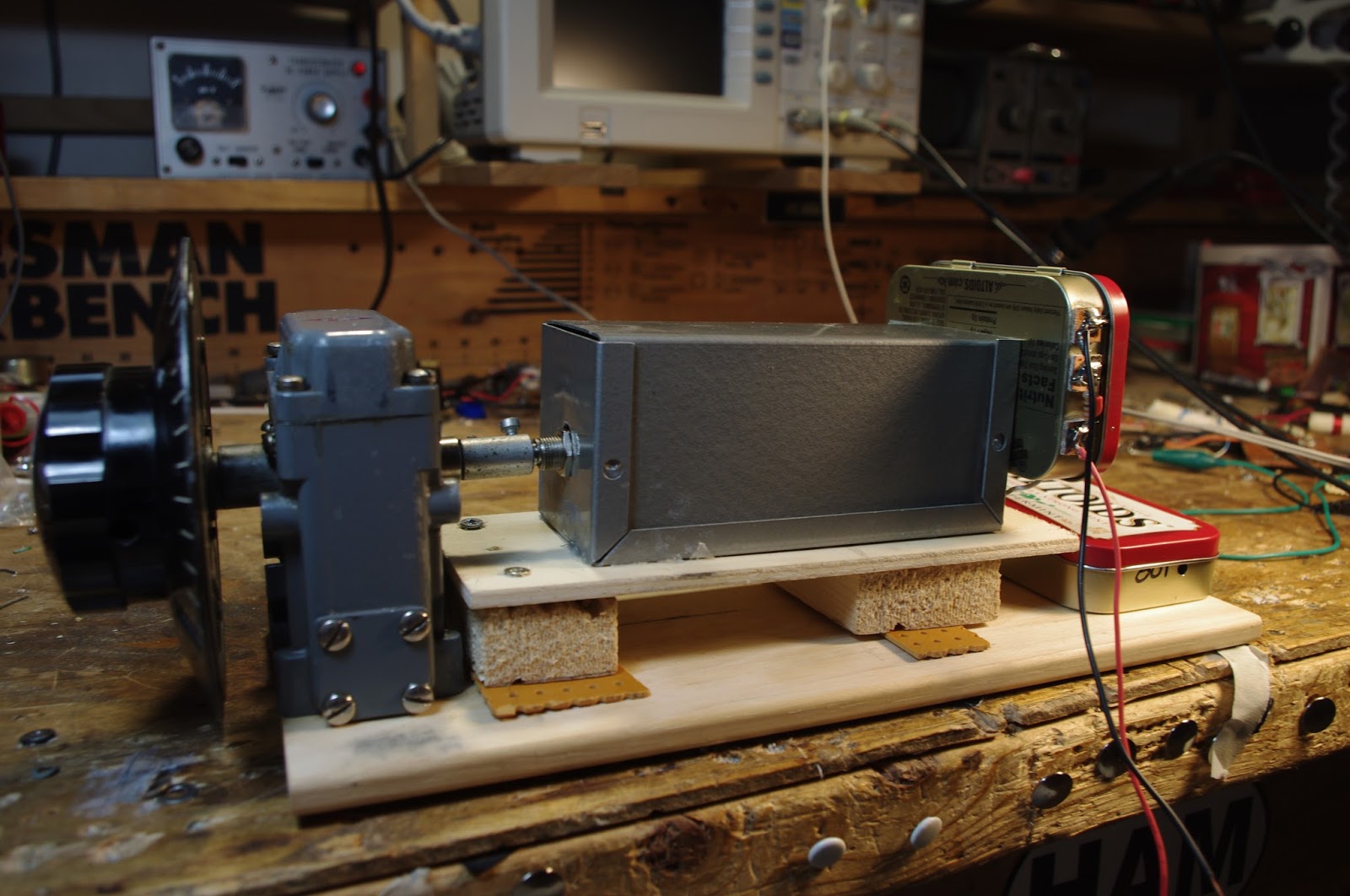
As I’ve mentioned, I am building a superhet receiver around the beautiful National Radio gearbox/dial that Armand WA1UQO gave me. First step was to build the VFO. Before I started, I went back to Doug DeMaw’s books and read his words of wisdom on how to build stable VFOs. I followed his advice:
— Air core coils. — Tuning capacitors with bearings at both ends. — NPO fixed capacitors. — All frequency determining parts in a separate box — Run the oscillator stage at lower voltage (6 volts) — Stable solid physical construction. — One-sided PC boards.
I went a bit further. I wound the main coil on a cardboard tube from a coat hanger. I coated it with several layers of clear nail polish. I glued it down with a generous dose of gorilla glue.
There are some fixed caps in the circuit. I didn’t want them physically hanging off other parts, so I used bits of balsa wood to support them.
I put the actual oscillator stage in its own Altoids tin and attached this tin to the bot that held the main coil and capacitor. I put the 6 volt Zener diode and its dropping resistor on the outside of the box to minimize heating. The buffer and amplifier went into another Altoids tin. I used a wooden grilling plank from Whole Foods as my base.
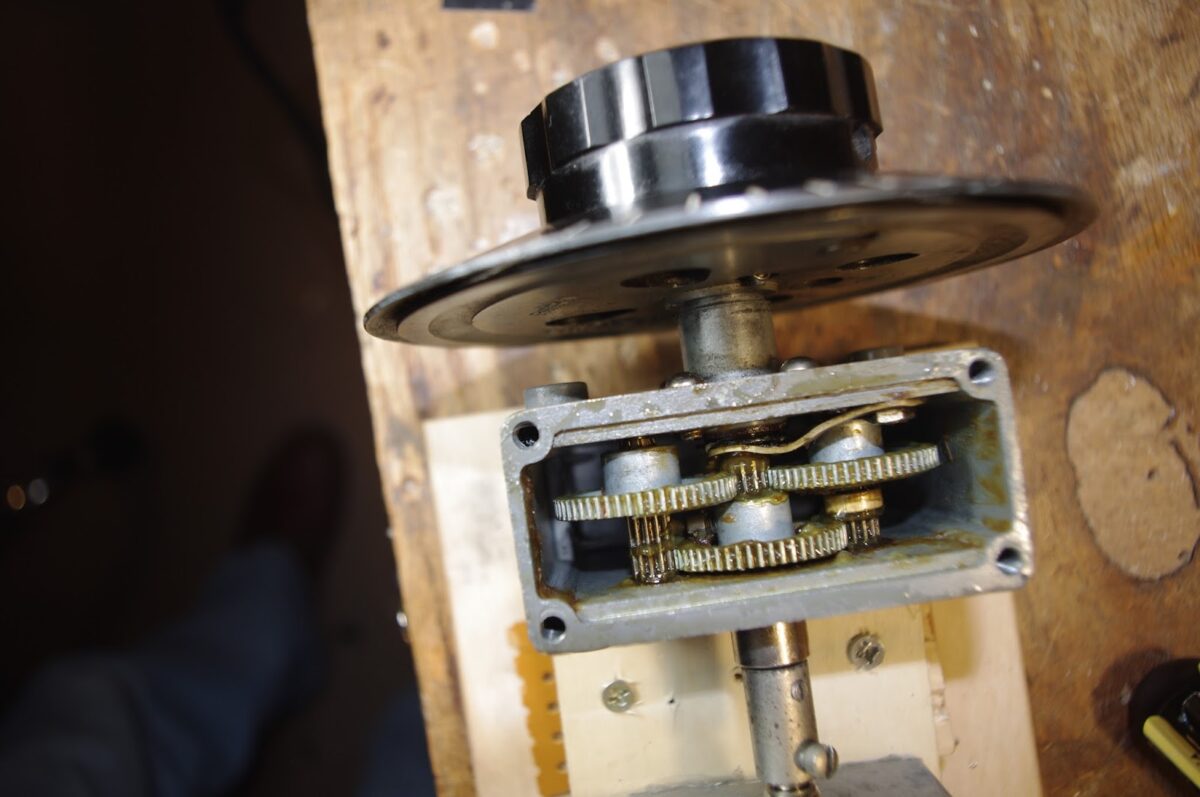
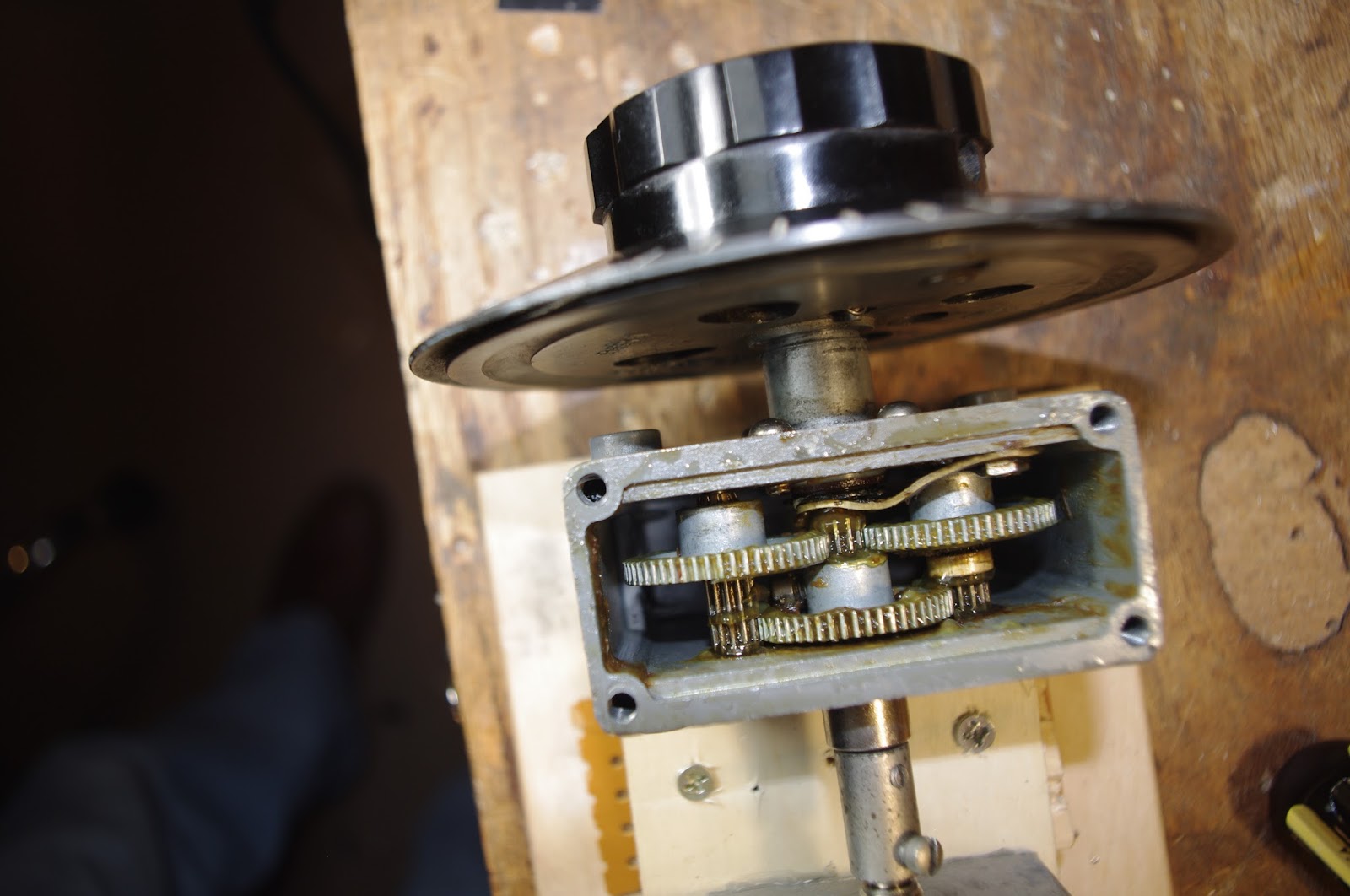
At first, Armand’s gear box and reduction drive didn’t seem wo work very well. There seemed to be a lot of “play” in the mechanism. Some words of wisdom from Pete N6QW and the blog Dave AA7EE provided the solution. There is a spring in the gearbox that hold the teeth of the gears together and prevents the kind of play that I encountered. With guidance from Dave, I was able to put some adiditonal tension on the spring and the gears. This resolved the play problem.
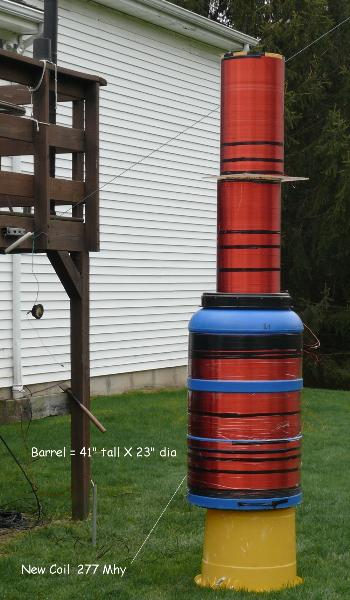
I met W1VLF on 40 meters last week. “VLF” was a hint. And indeed, Paul has been experimenting in the 10 kHz range. His antenna loading coil is seen above. More info here: http://rescueelectronics.com/9-Kilohertz.html Very cool that Mike was working with Jay Rusgrove, W1VD, on this project. Jay designed the 6 watt VXO rig that was my first homebrew transmitter.
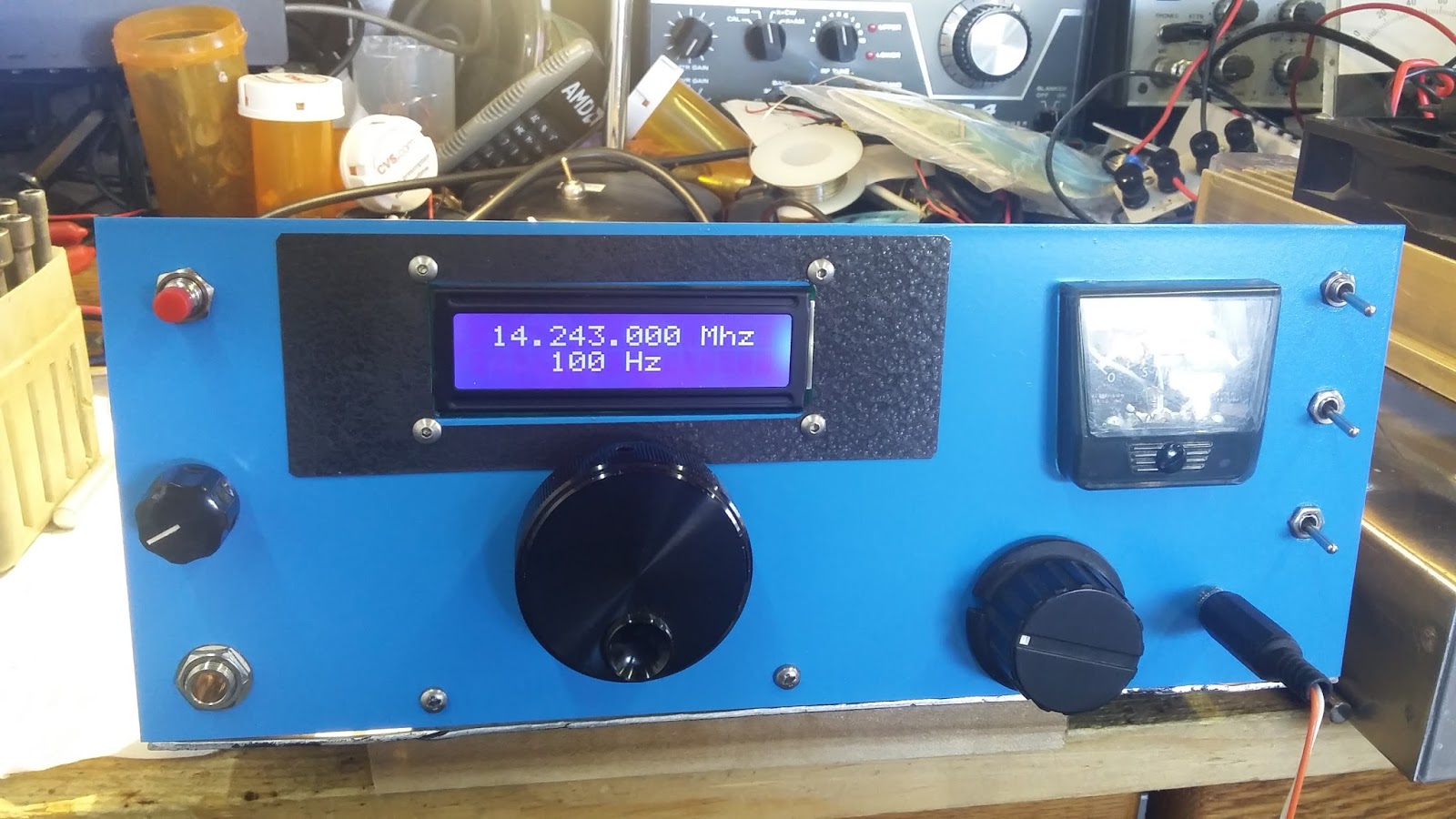
SolderSmoke Podcast #189 is available: http://soldersmoke.com/soldersmoke189.mp3 Billy in Europe. Bill in Virtual Reality. Great News: Little Gonzalo is “all clear.” Thanks for the help. BENCH REPORTS: Pete paints the rigs blue. Pete’s FET amplifier project with FET switching and key pad Using an Si5351 for CW offset and QSK. Bill working on VFO for a rig built around HRO dial and gear box. HRO gears seem a bit loose. What should I do? The search for an Imperial Whitworth. For variable caps, brass is better, but two bearings beats brass. QSO REPORTS Pete having fun with homebrew rigs. Bill works K3MRK, WA3O, W4OP, W1VLF and N6ORS MAILBAG: Dallas CBLA Conventional Current Flow Controversy “I regret ever listening to your podcast!” LCR recommendations