Other Workshops: A Twin Cylinder Solenoid Electric Motor and some Very Cool Craftsmanship

This project caught my eye for a couple of reasons:

First, it is the product of a very cool metal shop and a very skilled craftsman. It is fun and inspiring just to watch Maceij build this motor. We see great precision in the metal cuts, speedy tap and die work, and some great PC board technique. The use of an open flame on the heat shrink material was, well a bit courageous.

Second, this is a far more sophisticated version of the trivial electric motor that my son Billy and I built 17 years ago (I still have it!), following up on inspiration from Alan Yates VK2ZAY (see below). With Alan’s device we turned on power to the commutator by just sanding away the insulation on one side of the enameled wiring. Maceij takes a much more sophisticated approach, with carefully milled switches and opto controllers turning on and off power at the right time to each of the solenoids.

Maceij’s YouTube channel has many other projects, many like this one: https://www.youtube.com/@maciejnowakprojects

Thanks to HackaDay for the heads up.
Marb Builds a Replica of Michael Faraday’s Motor

Really cool, at a couple of levels. First, well, Faraday’s motor. Cool enough right there. But also very cool is the workmanship. Marb (in Germany) clearly knows how to work the metal. Lots of tapping and dieing. I also liked the way (with a flame!) that he stripped the enamel off the wire. The fancy feet on the board and the varnishing were really nice touches.

Thanks to HackADay for alerting me to this. And thanks Marb!

Building Nixie Tubes for a Hiroshima Project

Thanks to Bob Scott KD4EBM for alerting me to this wonderful video. It seems especially timely, given the recent release of the Oppenheimer movie.

I posted back in 2000 about Dalibor Farny and the Nixie tubes he makes in a castle in the Czech Republic:

In this more recent video (above) Dalibor describes a very cool and very challenging Nixie tube project: A museum in Hiroshima Japan was presenting an art project designed by a Chilean artist. The display needed a lot of large, custom-made Nixie tubes, some of which would display Japanese language characters. So: Museum in Japan, Chilean artist, Nixe maker in the Czech Republic. There are big geographic challenges before you even get to the technical challenges.

Dalibor does a great job in describing all of the challenges that they faced. The technical stuff will be especially interesting to SolderSmoke listeners. His description of the evolution of his Czech workshop fits very well with our “other kinds of workshops” theme.

The video is really worth watching. Check it out (above). The ending is quite moving.

Thanks again to Bob Scott. Congratulations to Dalibor, his crew, and to all those involved in this Hiroshima museum project.

Homebrew Transistors

Hang your heads in shame, my friends. This dude is getting ready to homebrew his own transistors. None of that store-bought stuff for him. He is a few steps away from breaking free of the GLOBAL TRANSISTOR CARTEL that has been abusing us so-called “homebrewers” for so many years. This guy really puts the home in homebrew.

Plus he has a seriously cool shop enabling him to do some excellent metal and chemical work.

Thanks to Hackaday for alerting us to this.

Boom! Small Electrolytics Blow-up in a Big Way. MAGIC SMOKE RELEASED!

It doesn’t take much. Like if you put 12 volts across a little electrolytic rated at 10 volts, WATCH OUT! The tranquility of your workshop could soon be very suddenly disturbed. Even with the proper polarity, they will BLOW-UP. The MAGIC SMOKE will be EXPLOSIVELY RELEASED. BOOM!

And speaking of capacitors, Rogier PA1ZZ sends this:
But don’t blow these ones up. Some of them are 75 dollars a pop!

Tim Hunkin on Drilling Holes (Secret Life of Components Video)

I guess that aside from being a great video, this is something of a test of technical nerdy-ism. If you find this hour long video really interesting, well, you know…

Really cool stuff from Tim Hunkin:

— I liked the angle driller. Need one.

— The placement of the magnets near the hole to catch the shavings was really cool.

— Tim’s reluctant admission that it is just better to buy new drill bits (as opposed to sharpening old ones) is good advice.

— WD-40! Yea!

— Note: No white “Boffin” coat for Tim. Just “overalls.” But as I watched I found myself thinking that he could probably have used an armor plate or at least a Kevlar vest amidst all that flying metal. Perhaps a bit more eye protection too…

— Fiddley. A useful tech term.

–Swarf: Another useful tech term: the metallic remnants (shavings) of drilling.

— The digi readout on the milling machine looked really useful.

Finally, I loved the sign that Tim has posted in his workshop:

SMALL HADRON COLLIDER

Inside “Open Circuits”

Here is a cool video about a very cool book. I wasn’t going to buy it, but when I saw it in a book store, I opened it up to a random page and found myself looking at the 2N3904. TRGHS. So I bought it.


Inside “Open Circuits”

Here is a cool video about a very cool book. I wasn’t going to buy it, but when I saw it in a book store, I opened it up to a random page and found myself looking at the 2N3904. TRGHS. So I bought it.


Curious Marc’s Lab and Workshop

This is the guy who has done all the amazing videos on the Apollo communications systems. And a lot more. This look at his lab is inspirational.

There is so much to see here. But a couple of things really caught my attention:

All of the RF electronics in the Apollo spacecraft was made with discrete components — the only chips in the spacecraft were in the computer. And in the Apollo systems, they welded the discrete components in. No soldering. Welding. That’s hardcore. That is how they got to the Moon.

Curious Marc’s YouTube channel: https://www.youtube.com/@CuriousMarc

Other Workshops: Building a Flying 21:1 Scale Airbus A-380

This is simply awesome. At almost every minute of this video, I found myself thinking, “Yea, I’d screw that up.” Even the simple stuff, like cutting out the cockpit windows: “Yea, I’d screw that up too.”

More info on the builder:

How to Tap an Aluminum Heat Sink: Pete Juliano Shares Tribal Knowledge

This is a SolderSmoke Classic: Pete Juliano N6QW coached me on how to tap (put screw threads)
a piece of aluminum. This is an important homebrew skill that — as I demonstrate — is
easy to screw up (no pun intended). Thanks to Pete for sharing this tribal knowledge.

This video has been quite popular. It has been viewed more than 33,000 times since 2014, and there are 35 comments attached to it.

Thanks Pete!

The Workshop and Bench of the QRP Home Builder, Todd VE7BPO

What a treat! We have been learning so much, for so long from Todd VE7BPO. I was really pleased to have this look at the workshop where all the magic happens.

While my technical abilities are far inferior to his, I was pleased to see some scenes and some shelves that are similar to those that can be found here.

Thanks Todd!

Workbench and Workshop Tips — Please Put Suggestions in the Comments

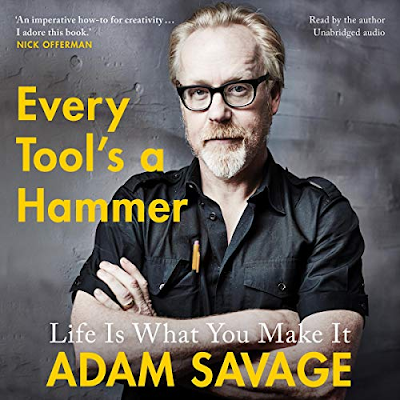
During a recent visit to Barnes and Noble I picked up Adam Savage’s book (please use the Amazon link in the righthand column) about Making and workshops. Adam’s book reminded me of the importance of giving thought to the organization and set-up of your workbench or workshop. I found more tips on YouTube:

Wow, watch the KatVoltage video (above). Unlike the person in a recent unfortunate advertisement, Kat clearly knows which end of the soldering iron to grab. She is setting up a good workshop — you can tell from how she is organizing the bench. I wish her a lot of luck. htt(s://www.youtube.com/watch?v=1NcVzTu7TbE&t=54s

Andreas (the guy with the white glove and the Swiss accent) has some good ideas:https://www.youtube.com/watch?v=inW57njiq1A

The EEVblog guy has a good guide to the basic stuff that you need to build an electronics workshop. It is a bit dated (2011) but the guidance is still very good (I wouldn’t go with the homebrew or kit-built power supplies): https://www.youtube.com/watch?v=R_PbjbRaO2E

Van Neistat has a very good Top Ten List of things NOT TO DO in a workshop. NO FLATHEAD SCREWS. I’m with you Van. NO HOARDING. etc. https://www.youtube.com/watch?v=3bAZQ9nWybM&ab_channel=VanNeistat Paul VK3HN suggests we develop a similar list for ham radio homebrewers. Please put your suggestions in the comment section below.