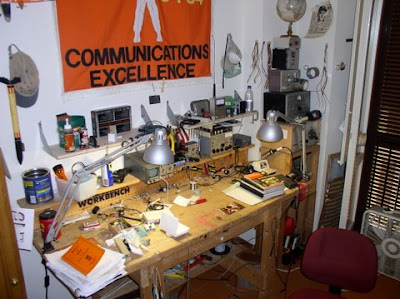
DIY at the V&A (Victoria and Albert Museum)

http://blog.makezine.com/2012/01/17/the-power-of-making-at-the-va/

Power of Making from Juriaan Booij on Vimeo.

One of the many perks that I enjoyed during my four years in London was living near that city’s amazing museums. I was more of a Science Museum or Natural History Museum guy, but the we also loved the V&A. Each day on my way to work, the 414 bus took me past the V&A’s magnificent facade. I always tried to get a seat that would allow me to get a good look.
The Maker Blog reports that the Victoria and Albert recently had an exposition on people who make things in their own private workshops. We are not alone! The video imbeded above is some sights and sounds from the world of DIY. The link below takes you to another video that includes some nice interviews with folks who are making things.

http://blog.makezine.com/2012/01/17/the-power-of-making-at-the-va/

Our book: “SolderSmoke — Global Adventures in Wireless Electronics”http://soldersmoke.com/book.htmOur coffee mugs, T-Shirts, bumper stickers: http://www.cafepress.com/SolderSmokeOur Book Store: http://astore.amazon.com/contracross-20

Homebrew Hero: Ashhar Farhan, VU2ESE


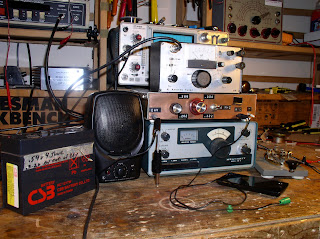
I wanted to start off 2012 with something inspirational, and here it is: Ashhar Farhan’s work bench. I was visiting his site yesterday and found lots of good info, good humor and, indeed, inspiration. Be sure to check out his RF generator project. And the page that gives his thought on tools and test gear. All of it is wonderful — you’ll find lots of evidence of Farhan’s long-term case of The Knack, his efforts to put “soul into his new machines” (his kids are mentioned frequently in his descriptions of his projects), and his obvious qualification for membership in the International Brotherhood of Electronic Wizards. I really like Farhan’s efforts to design rigs that can be built with parts available all around the world — a JBOT amp of his design is percolating nicely in my 17 meter DSB rig, and has been crossing the Atlantic almost every day.

As we were throwing a football around yesterday, I told Billy about Farhan. I mentioned that he lives in Hyderabad — Billy thinks that’s one of coolest city names on the planet and plans to work it into the plot of a novel he is working on.

Here is the site: http://www.phonestack.com/farhan/

Three cheers for Farhan! Happy New Year to all!

Our book: “SolderSmoke — Global Adventures in Wireless Electronics”http://soldersmoke.com/book.htmOur coffee mugs, T-Shirts, bumper stickers: http://www.cafepress.com/SolderSmokeOur Book Store: http://astore.amazon.com/contracross-20

The “Snort Rosin” Test Gear Philosophy

Steve Smith, WB6TNL, and I often find ourselves on the same frequency:

Hi Bill,

After reading your latest blog post, I realized that you and I are somewhat kindred spirits. You successfully build and test relatively complex amateur radio equipment using the most basic and inexpensive test equipment.

As part of my business (land mobile radio) I own expensive and complex test equipment, however when I build and test homebrewed amateur radio gear I prefer to use inexpensive home-built or kit-built test equipment because that is what is generally available to most hams. My philosophy is that it is very important to impress upon beginning homebrewers the fact that fancy, complex test gear is not absolutely necessary to be successful in homebrewing.

Perfectly functional test gear can be built using only basic electronic tools. Certainly, homebrewed equipment might not have all the ‘bells and whistles’ of commercial gear and won’t do everything ‘automagically’ but with careful calibration and learning how interpret the results, homebrewed test equipment can provide very accurate measurements.

One good example is your Palomar R-X Noise Bridge. Most every ham wants a MFJ 259B or Autek VA-1 antenna analyser but an inexpensive bridge like the Palomar or a homebrewed equivalent can provide many of the same measurements. Sure, a ham-band or general-coverage receiver is required to use a noise bridge but, by using -very- simple circuits, a very competent test receiver can be built using the most basic test gear. Even with only a good SWR meter and a little math thrown in, +/- Xj (reactance) measurements can be made (See http://www.qsl.net/n8xpv/ for information regarding “the 3 meter method” ).

One of my favorite resources for simple test equipment is Monty Northrup’s (N5ESE} site: 73…….

Steve Smith WB6TNL “Snort Rosin”

From:

To:
“Steve Smith”


Great message Steve. Yea, I think the best troubleshooting tool is a real understanding of what is happening (or supposed to be happening) in the circuit and an ability to think logically about what could be causing the problem. Technical detective work.
And indeed, that SWR bridge can tell you a lot.
73 Bill

Our book: “SolderSmoke — Global Adventures in Wireless Electronics”http://soldersmoke.com/book.htmOur coffee mugs, T-Shirts, bumper stickers: http://www.cafepress.com/SolderSmokeOur Book Store: http://astore.amazon.com/contracross-20

Test Gear/Workbench Maintenance

I mentioned in the last podcast that I was going to take a break from construction projects and spend a little time fixing up tools, test gear, and the work bench. First up was my old soldering gun. I bought this thing almost 40 years ago! It is pretty beat up, but I managed to patch it up and it now works fine. Even the original light bulb works.

I use this little AADE L/C meter a lot, but was having trouble getting parts across the test terminals. So I soldered alligator clips onto one of the parts connectors that came with the device. Makes testing easier.

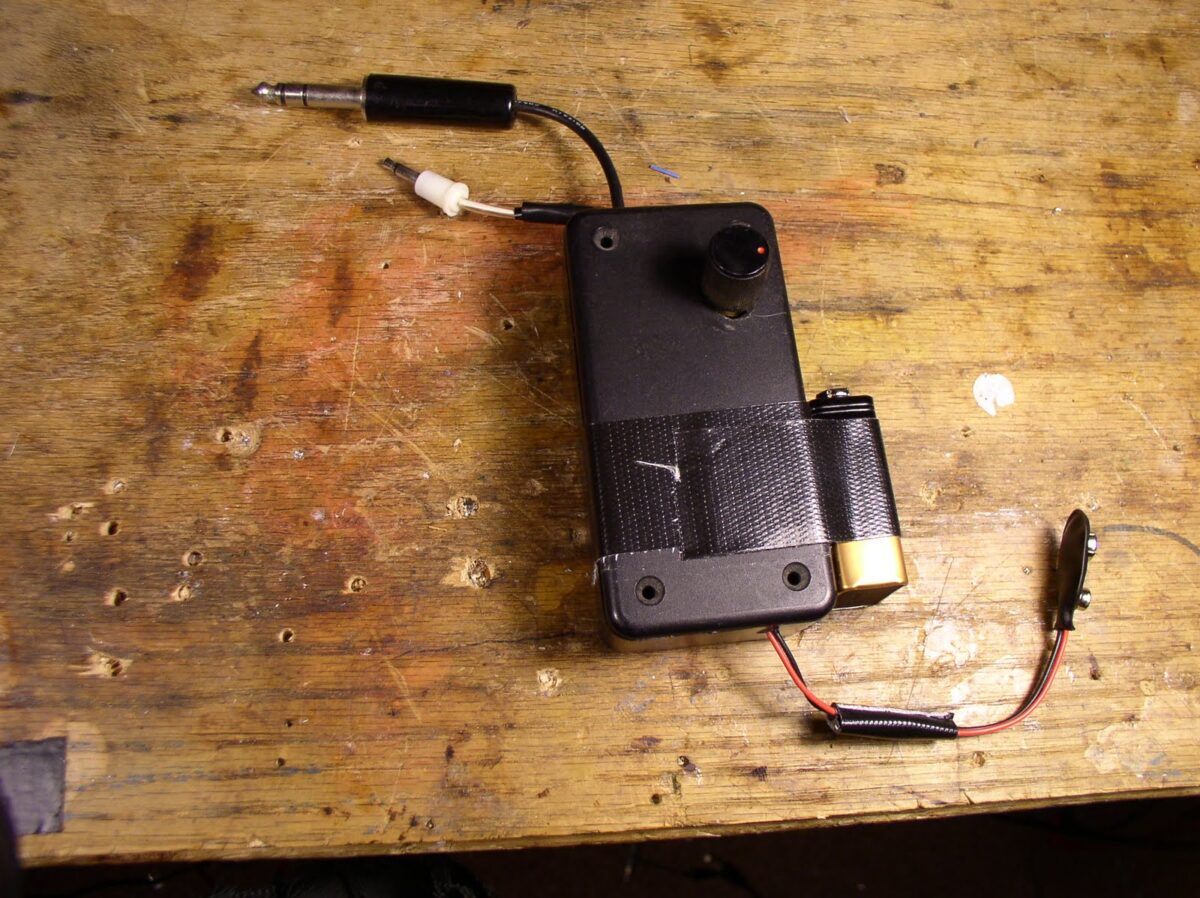
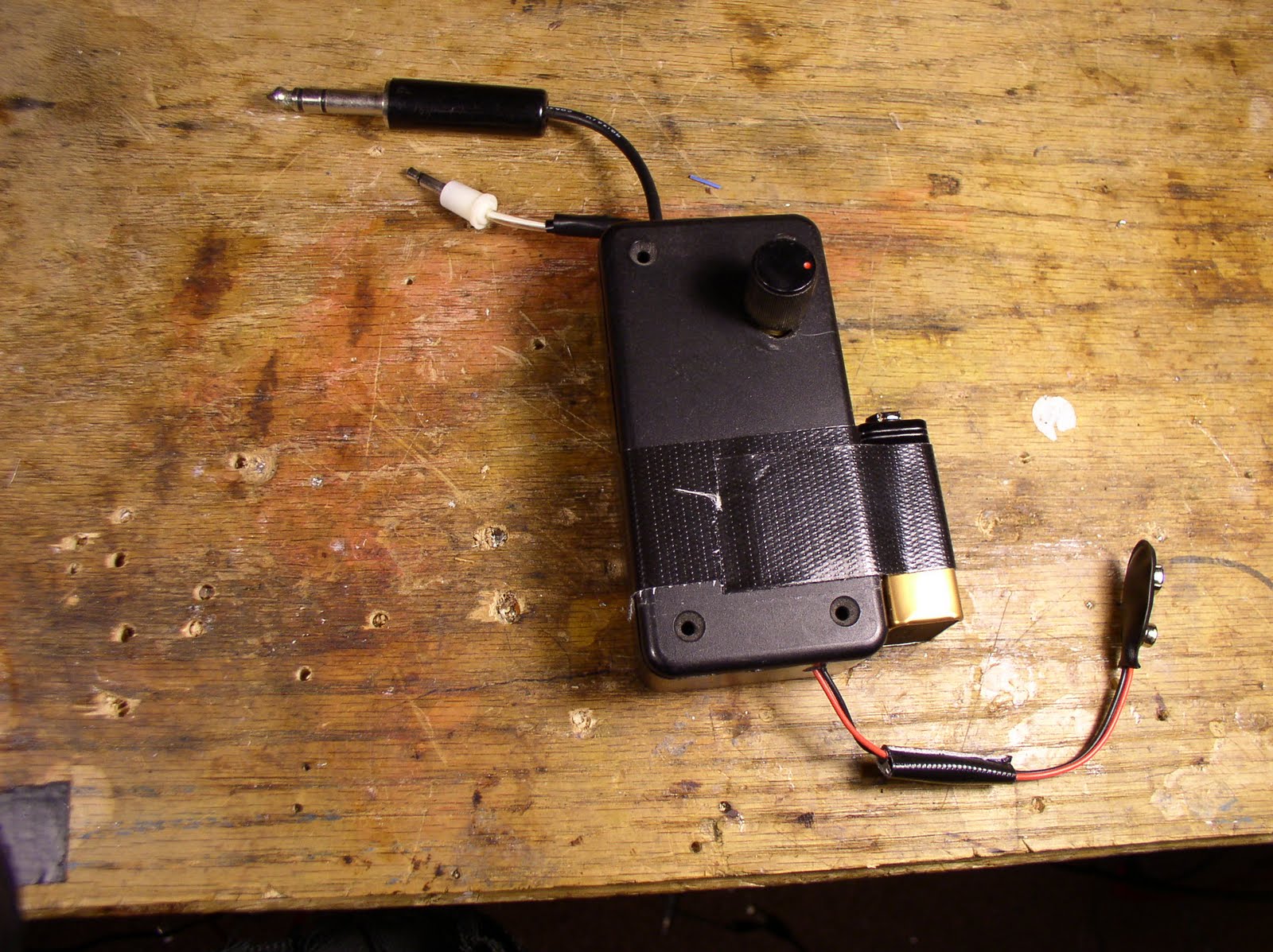
Just a little audio oscillator. Puts out .2 volts at 713 Hz. Useful for testing the phone rigs.

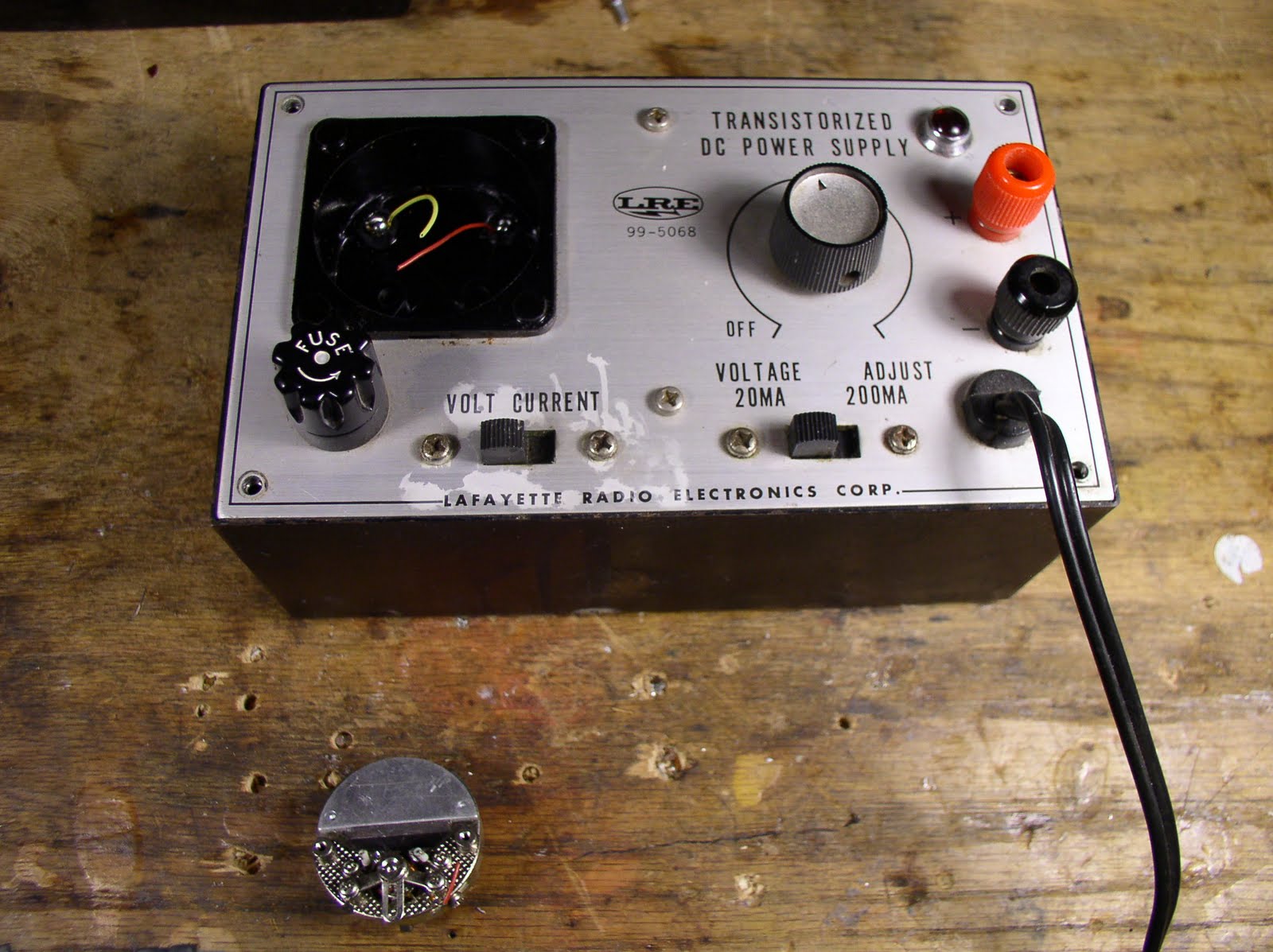
I picked up this little Lafayette power supply at a hamfest and found it quite useful. But then I managed to knock the needle off the meter while fooling around with trivial electric motor. Any ideas on where I could get a replacement meter movement, or on what value I should use?

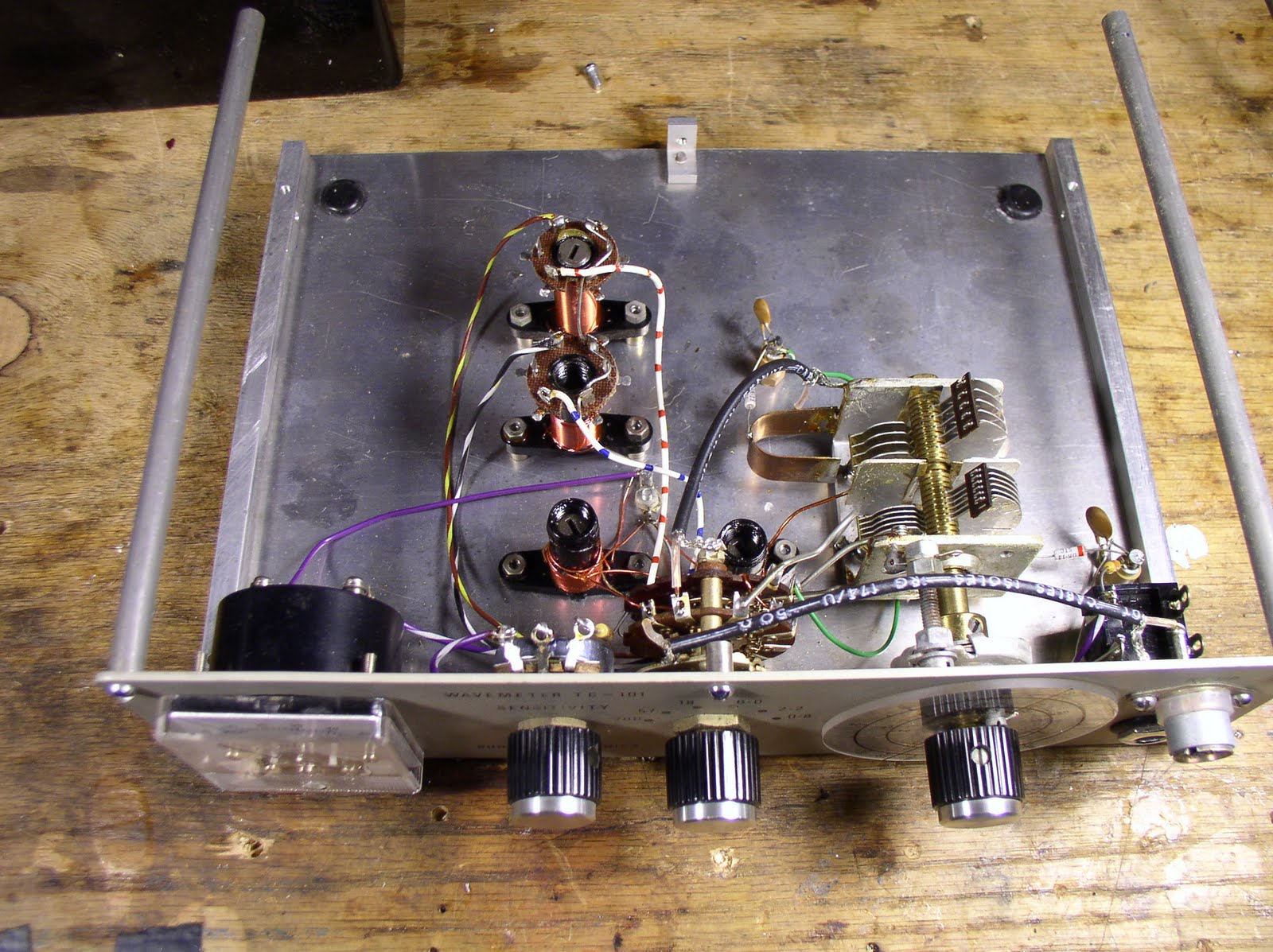
Here is a wave meter that I picked up at the Kemptom Park rally in London. Apparently at one point all UK radio amateurs were required to have one of these devices. I’m tempted to chop it up for parts. That variable cap with the reduction drive looks promising. And could that meter solve my problem with the power supply (above). If anyone can think of a reason to keep this as a wavemeter, please let me know.

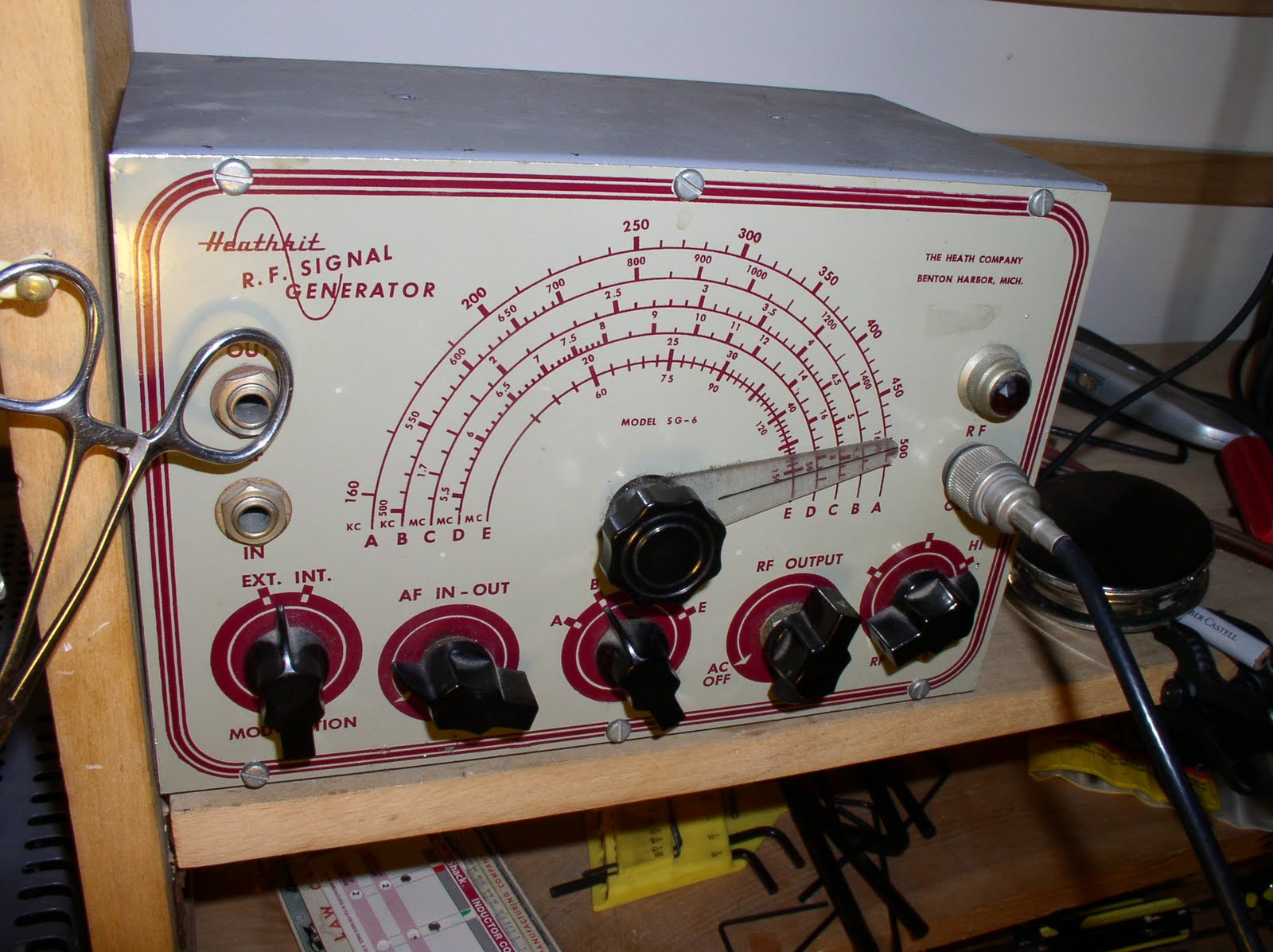
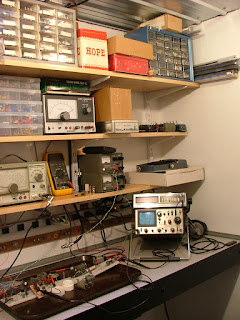
Further proof of my extreme retro-ness. This is what I use as a signal generator. A Heathkit SG-6. Older than me!

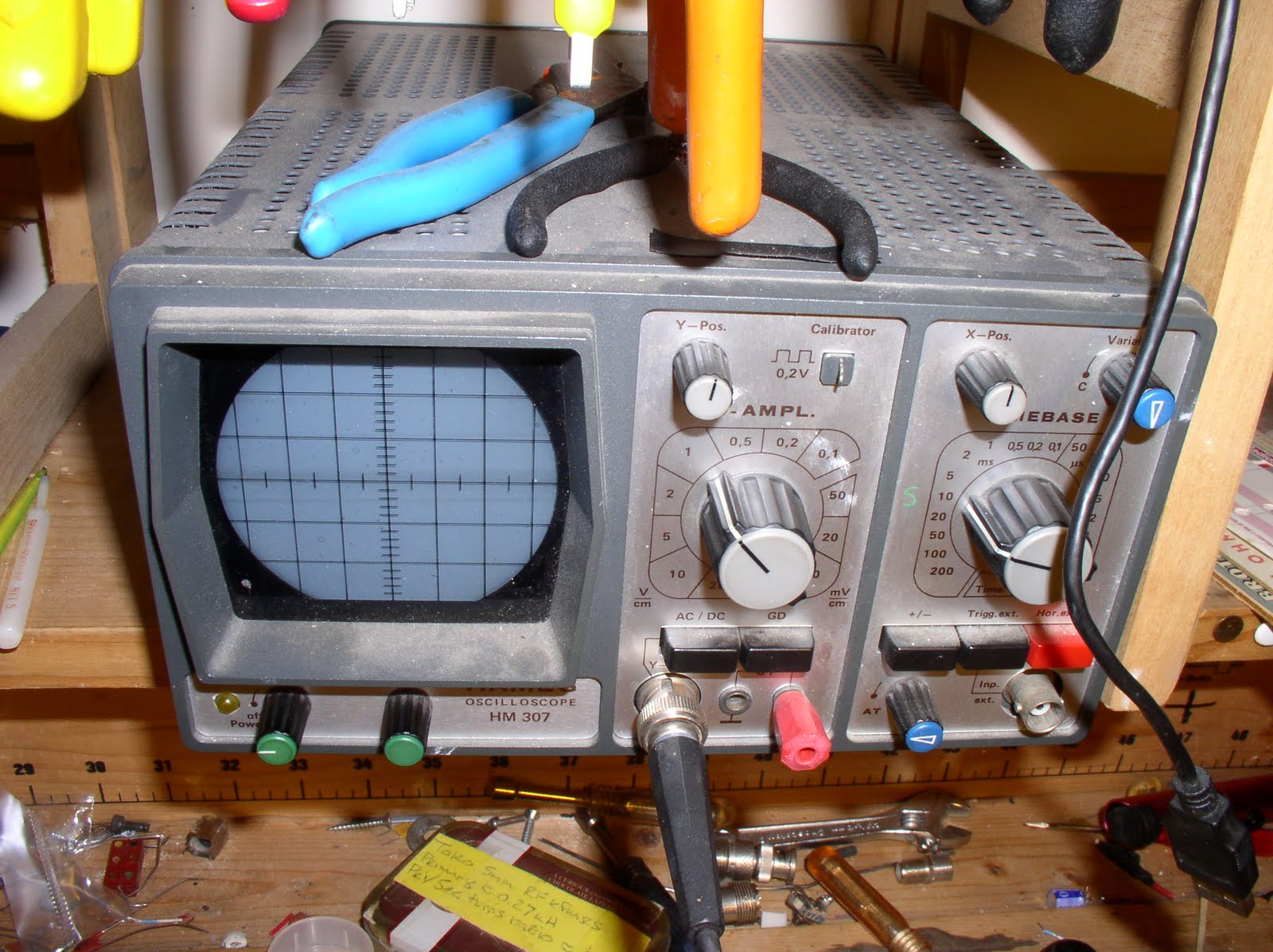
This is my scope. HAMEG. Supposed to be good to 10 MHz but of course I can use it at higher freqs (which I do). I need to upgrade. Any suggestions?

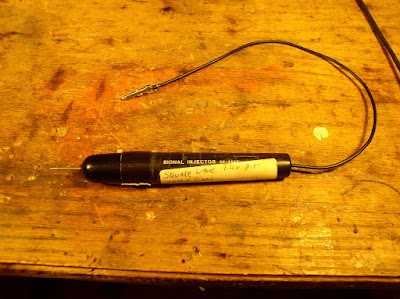
A very useful little square wave generator.

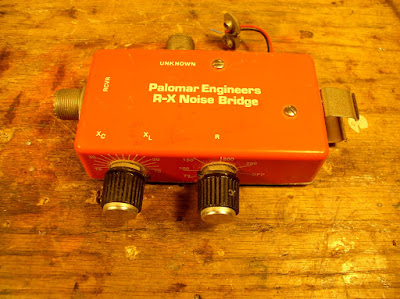
I need to make more use of this noise bridge. Lots of potential here.

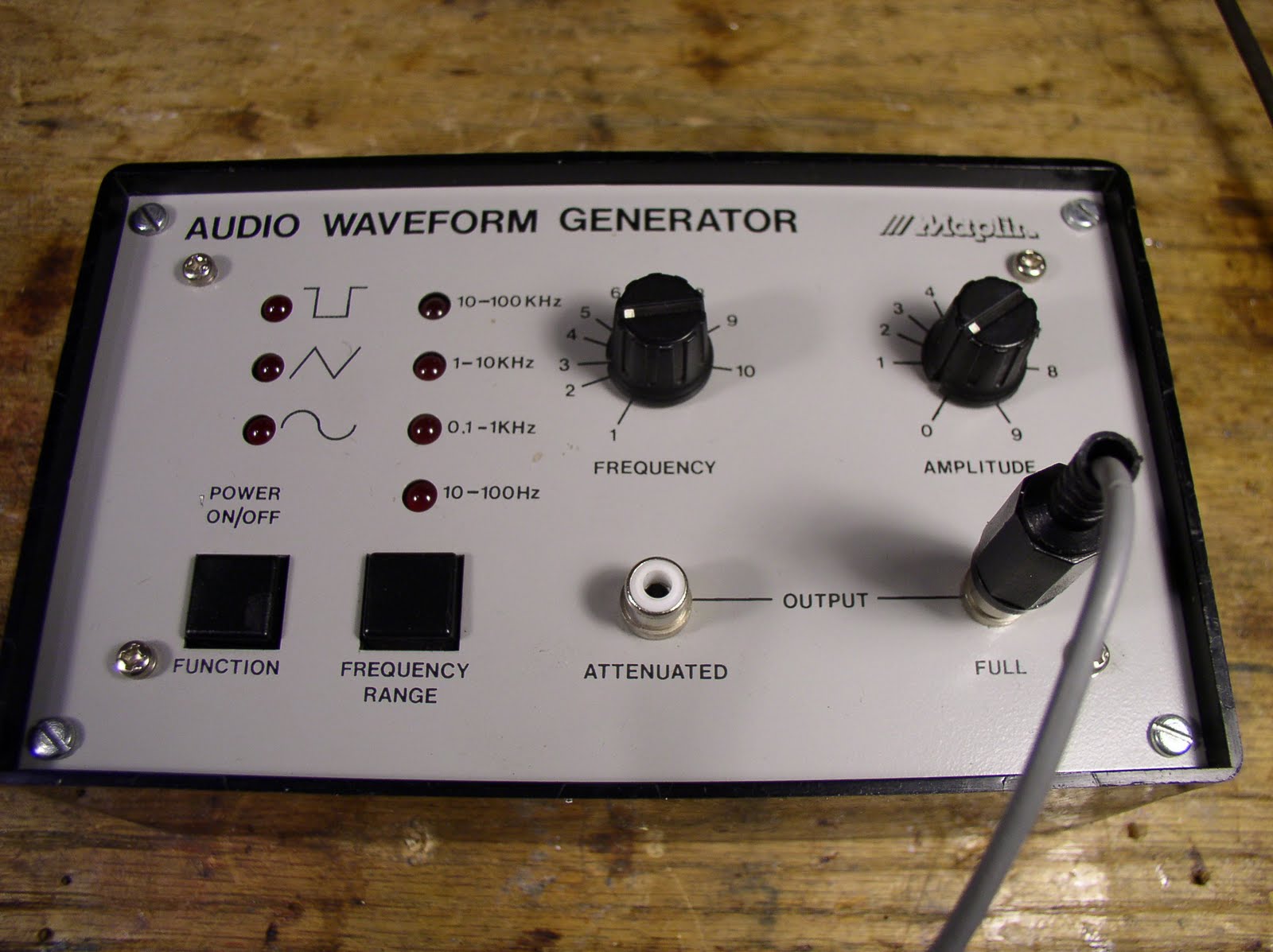
Obviously a London purchase. Very useful little AF sig generator from the UK’s equivalent of Radio Shack. My only complaint: No auto-off. I forget to turn it off and run down the two 9 V batteries.

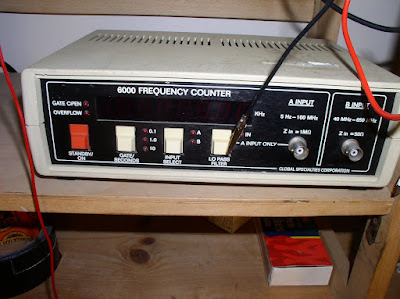
Long time listeners will remember this device. This is the one in which I soldered in the chip upside down. It works fine on th 5 Hz to 100 MHz range. Dead on the 4 – 600 MHz position.

I bought this power supply at the Kempton Rally, then converted it into a current limited supply using a chip and a circuit provided by Tony, G4WIF. My daughter Maria helped paint the cabinet. Lots of soul in this little machine.

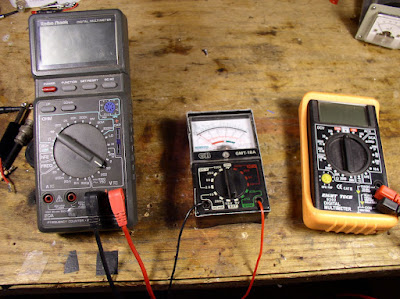
Just three meters. The middle (analog one) is still very useful, and has considerable sentimental value for me — my wife got if for me when we were back in the Dominican Republic.
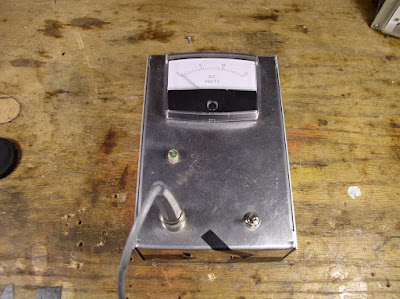
My version of the W7ZOI power meter. Mike, KL7R, and I built versions of this device back in 2004 or so.
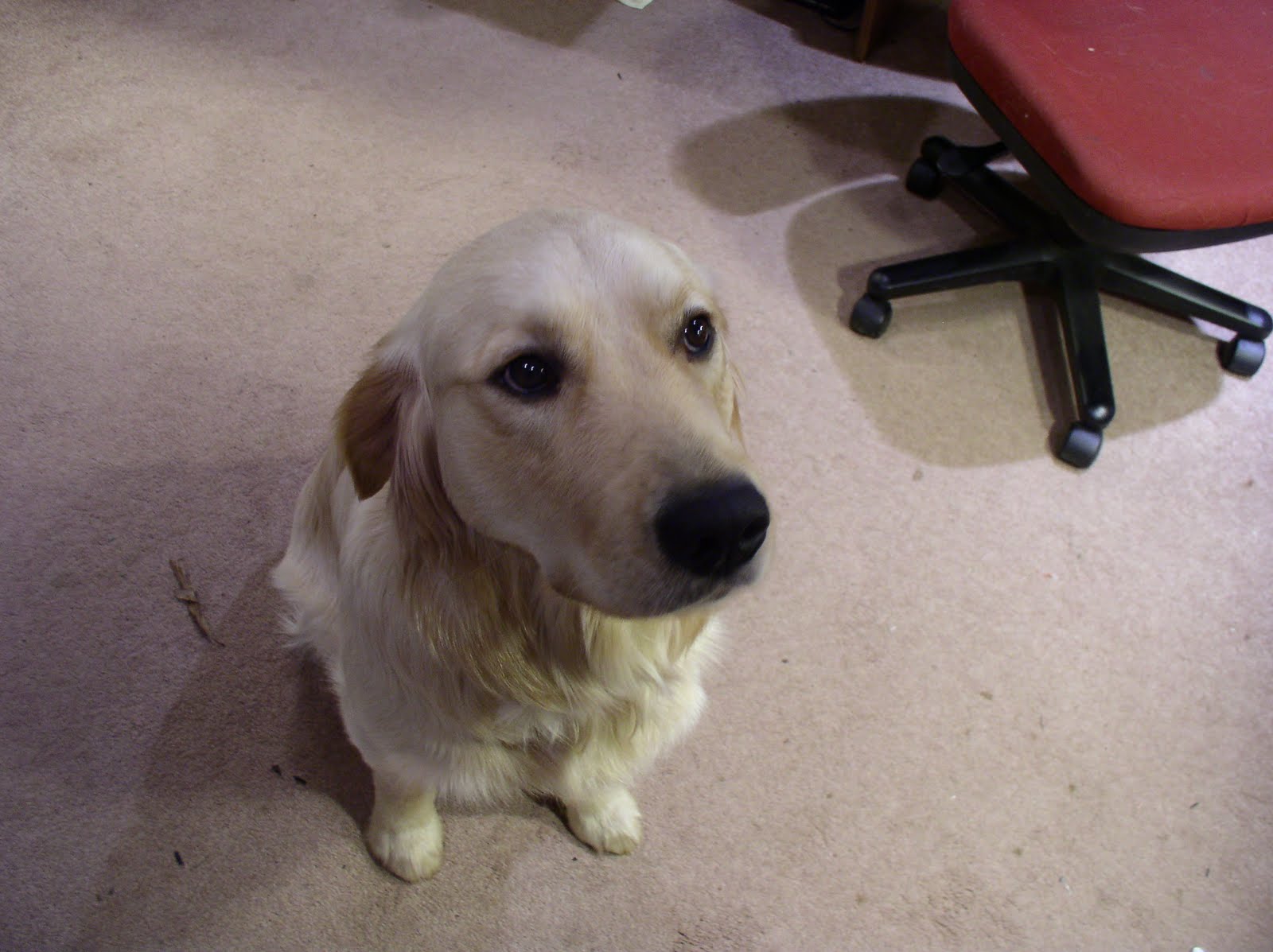
This is Cappuccio. He joins me in the shack most mornings. I’m not really a dog person, but I’m growing fond of him, even though he occasionally eats resistors and capacitors.

Our book: “SolderSmoke — Global Adventures in Wireless Electronics”http://soldersmoke.com/book.htmOur coffee mugs, T-Shirts, bumper stickers: http://www.cafepress.com/SolderSmokeOur Book Store: http://astore.amazon.com/contracross-20

The Hobbit Hole

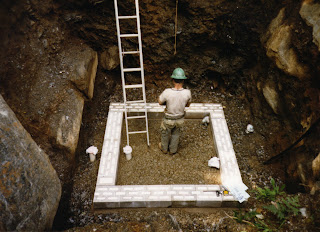
In the interest of preserving what I suspect will become an important piece of amateur radio history, I’m posting some pictures of the underground radio shack and workshop of Michael, AA1TJ.

Michael describes the facility this way: The shack is under two feet of snow at the moment, but from the surface it looks for the most part like any New England spring-box cover that you come across while walking in the woods. Only, when you lift this cover you discover Dr. Evil’s secret underground radio laboratory, a re-creation of Hogan’s Heros radio station, or what I affectionately refer to as the “Hobbit Hole.”

The two of us burrowed down 13 feet, breaking up boulders the size of a VW Bug as we went. Aside from the pick and shovel work, I used both one and two-handed sledges along with an assortment of rock chisels and pry bars. Everything came up in 5 gallons buckets.

The lower-level slab used hand mixed concrete. The walls are 12″ thick insulated masonry blocks; a Canadian-made product called, Sparfill, that’s unfortunately no longer available here. We called in Ready-Mix for the concrete roof. The interior dimensions are a luxurious 2m square.

As luck would have it, I had just taken some photos of the interior for my pal, DL3PB. Please find them attached. Actually, in one bench corner you’ll see the 2,400RPM AC induction motor and 400 pole stepper motor that I plan to use in the “Full Monty” version of the present project.

Mike has a wonderful posting on his blog today: http://aa1tj.blogspot.com

Workbench/P! Taking Solder on the Road!

Sure, lots of guys carry rigs with them to the field, on vacations, etc. But how about taking your WORKBENCH with you on trips? Perhaps only truly hardcore homebrewers reach this extreme.

It may be that with summer approaching, guys are getting nervous about being away from their beloved workbenches… This week I got three e-mails related to portable workbench operations:

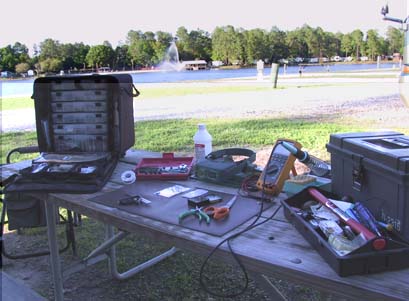
Jim, AL7RV, sent in a nice shot (above) of his most recent workbench location. Jim says while he does not have racks and racks of sophisticated test gear, he does have lots of fresh air (and a nice view) while working on his projects.

Nicholas, M1HOG, sent me a web page describing the portable bench he put together for use at his country cottage. While out there, he said he had “started to miss the delights of melting solder.” We hear you Nicholas! Nice solution:
http://www.m1hog.com/projects/elecraft-kx1-building/elecraft-kx1.html

Finally, Rogier, PA1ZZ & KJ6ETL, reports on some very nice cabinets that seem ideally suited to this kind of work: http://www.gerstnerusa.com/

This is all great, but I think we have to draw the line somewhere. How about this: No soldering while driving!
No soldering while in flight on an airliner!

Soldering Irons to the Field! EXCELSIOR!

Dino’s Awesome Workbench

People send me these images, and they are so good that I feel compelled to put them on the blog. From Dino:
——-
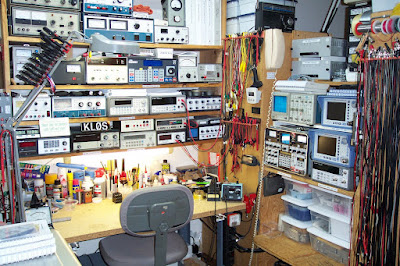
Ok, can’t stand it anymore….had to show off my workbench as well. BTW, will be making a presentation at Dayton Hamvention in May on “Building Your Ham Radio Workbench.” So if guys have any great ideas to pass along would love to hear them and include as possible. Am gearing this toward the beginner and focusing on basics, soldering equipment, tools, safety, the bench, parts accumulation, etc. Over the past two years have made pitches at Hamvention on Test Equipment and Station Engineering Manuals….always lots of fun.
73 — Dino KL0S

Black Holes in Workshops?

Nigel (M0NDE), Ian (G3ROO), Tony (G4WIF) at Dover CC HQ

When I was out in Dover (UK) last week the fellows in the Dover Construction Club alerted me to a problem that has been affecting their workshop, and that may be causing trouble in yours: black holes. Apparently through some strange quirk of quantum physics, small black holes are sometimes generated in electronics workshops. They cause parts and tools to disappear. The quantum element of all this is readily apparent: only those parts and tools that you REALLY need disappear. If you don’t need a particular part or tool, it will not be affected. The guys out in Dover recently lost a variometer this way, and while I was there a telegraph key briefly disappeared into the quantum mist. In a variation of this phenomenon, very small black holes sometimes pop out of the quantum vacuum when small parts are dropped to the floor — that’s why you often can’t find them! SMT parts are especially susceptible to this (obviously because some of the damn things are getting down to quantum scale) . I don’t really know what can be done to counteract this problem — if you have any suggestions, please post a comment.

On a related subject, Jim Miller sent us this:

Tools Explained
DRILL PRESS : A tall upright machine useful for suddenly snatching flat metal bar stock out of your hands so that it smacks you in the chest and flings your beer across the room, denting the freshly-painted project which you had carefully set in the corner where nothing could get to it.
WIRE WHEEL : Cleans paint off bolts and then throws them somewhere under the workbench with the speed of light. Also removes fingerprints and hard-earned calluses from fingers in about the time it takes you to say, “Oh, shit!”
SKILL SAW : A portable cutting tool used to make studs too short.
PLIERS : Used to round off bolt heads. Sometimes used in the creation of blood-blisters.
BELT SANDER : An electric sanding tool commonly used to convert minor touch-up jobs into major refinishing jobs.
HACKSAW : One of a family of cutting tools built on the Ouija board principle. It transforms human energy into a crooked, unpredictable motion, and the more you attempt to influence its course, the more dismal your future becomes.
VISE-GRIPS : Generally used after pliers to completely round off bolt heads. If nothing else is available, they can also be used to transfer intense welding heat to the palm of your hand.
OXYACETYLENE TORCH : Used almost entirely for lighting various flammable objects in your shop on fire. Also handy for igniting the grease inside the wheel hub out of which you want to remove a bearing race.
TABLE SAW : A large stationary power tool commonly used to launch wood projectiles for testing wall integrity.
HYDRAULIC FLOOR JACK : Used for lowering an automobile to the ground after you have installed your new brake shoes, trapping the jack handle firmly under the bumper.
BAND SAW : A large stationary power saw primarily used by most shops to cut good aluminum sheet into smaller pieces that more easily fit into the trash can after you cut on the inside of the line instead of the outside edge.
TWO-TON ENGINE HOIST : A tool for testing the maximum tensile strength of everything you forgot to disconnect.
PHILLIPS SCREWDRIVER : Normally used to stab the vacuum seals under lids or for opening old-style paper-and-tin oil cans and splashing oil on your shirt; but can also be used, as the name implies, to strip out Phillips screw heads.
STRAIGHT SCREWDRIVER : A tool for opening paint cans. Sometimes used to convert common slotted screws into non-removable screws and butchering your palms.
PRY BAR : A tool used to crumple the metal surrounding that clip or bracket you needed to remove in order to replace a 50 cent part.
HOSE CUTTER : A tool used to make hoses too short.
HAMMER : Originally employed as a weapon of war, the hammer nowadays is used as a kind of divining rod to locate the most expensive parts adjacent to the object we are trying to hit.
UTILITY KNIFE : Used to open and slice through the contents of cardboard cartons delivered to your front door; works particularly well on contents such as seats, vinyl records, liquids in plastic bottles, collector magazines, refund checks, and rubber or plastic parts. Especially useful for slicing work clothes, but only while in use.
Son of a bitch TOOL : Any handy tool that you grab and throw across the garage while yelling, “Son of a bitch” at the top of your lungs. It is also, most often, the next tool that you will need.
No trees were killed in the sending of this message.
However, a large number of electrons were terribly inconvenienced
More Workbench Eye Candy

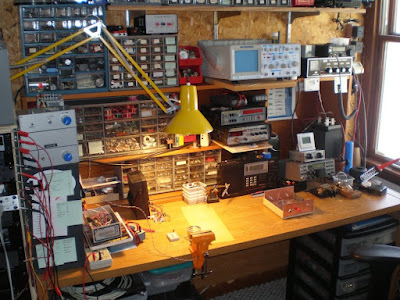
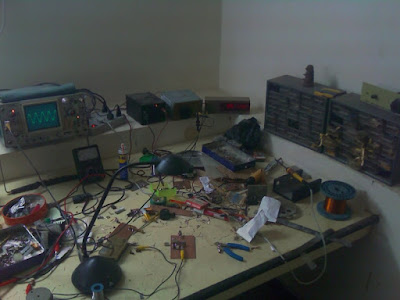
I blame Rogier for the title of this post. He saw yesterday’s workshop pictures and declared them to be porn-like. We all know what he means. Gil sent me this link with more workshop shots: http://www.crystalradio.net/bench/index.shtml
I really like the one above. It is from Catalonia in Spain. It belongs to Josep Busquets Vinas.
One question about yesterday’s slide show: Where’s the WD-40?

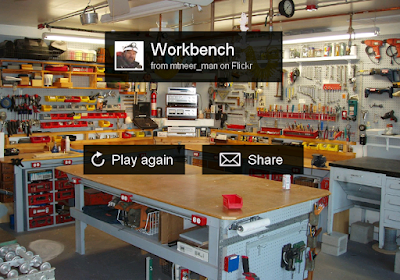
An AMAZING Workshop

You guys have to take a look at this slide show:
http://www.flickr.com/photos/mtneer_man/sets/72157594474602738/show/

About the owner:

I’m a geo-physicist by degree, a design development engineer by trade and a mountaineer by choice…
I live in very, very rural Oklahoma and worked for a Norwegian company. And a Chicago company… and a Salt Lake company… And now… well, I just do work for whowever I feel like dealing with.
and I climb mountains, mainly in the western hemisphere. Occasionally, I go to Patagonia in South America to climb.
I like my ATV rides out in the country to photograph things… all over western Oklahoma roads. Dirt roads only., thanks…
I do “projects”; around our place, building things and creating mechanical devices. So a lot of my photos revolve around my workshops (I have 4) and the things I build… + our cats.
Whatever….. I’m having fun.

http://www.flickr.com/photos/mtneer_man/sets/72157594474602738/show/