NanoVNA, Millen Dip Meter, Kilo-Megacycles, and Measuring the Speed of Light (Video)

Yesterday my NanoVNA arrived. This morning I was looking for info on how to use it and I found this really wonderful video from Joe Smith.

Wow. Joe gives a really useful intro to the capabilities of this amazing little device. He even reaches back in time and compares NanoVNA results with those obtained by a Millen Grid Dip Meter. He pulls out of his junk box an attenuator that is so old that it is marked in “Kilo-Megacycles.” (Shouldn’t we revive terms like that?)

Joe also gives us a taste of what it is like to live and work in the GHz range. He warns us never to touch the SMA connectors on our NanoVNAs (too late Joe). And — get this — he uses a torque wrench to connect the little SMA coax connectors to the NanoVNA. I’m not kidding. A torque wrench. Joe connects surface mount capacitors and inductors that have their values specified not only in picofarads and microhenries, but also at the specific frequency at which they were measured.

My understanding of the Smith Chart was greatly improved by watching Joe’s video.

Icing on the cake: Joe wraps up the video by using the NanoVNA to MEASURE THE SPEED OF LIGHT. Great stuff. Thanks Joe.

Here is Joe Smith’s YouTube channel:
https://www.youtube.com/channel/UCsK99WXk9VhcghnAauTBsbg

Now I have to get the software to use the NanoVNA with my computer.

A Toroid Winder from the Wizard of Wasilla — Paul KL7FLR

Paul KL7FLR has been sharing tribal knowledge with us for several years now. He recently provided insights on how to tap threads into metal. In 2017 he told us about his Alaskan road-kill microphone. And in the midst of the current quarantine he built this really neat toroid winding tool. Winding coils is often a show-stopper for would-be homebrewers; Paul’s device should help then get past this perceived impediment. Thanks Paul!

Paul writes:

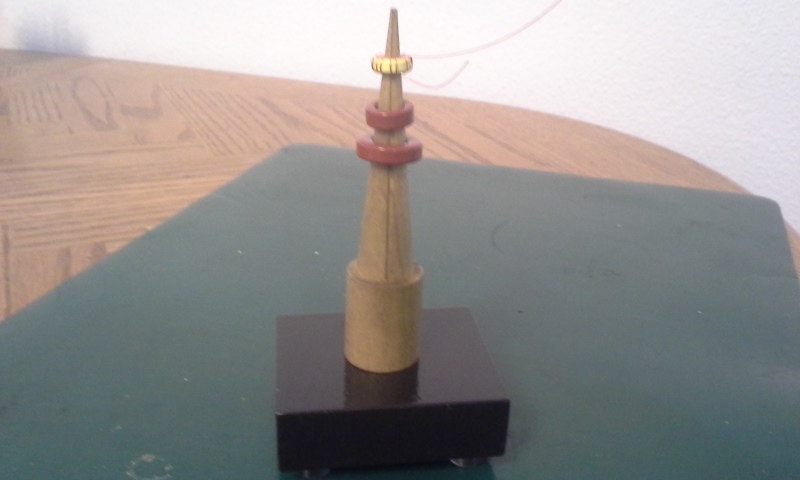
A few weeks ago I needed a way of holding a T37-6 toroid to wind an LP filter coil. Being of the fumble fingered crowd I slapped together a quick and dirty holder using a crudely tapered ¼” wooded dowel. As fate would be, I soon needed to wind some other coils of a larger diameter and my wham bam holder wouldn’t do the job. Time to make a holder for more than just one size with the materials I had on hand.
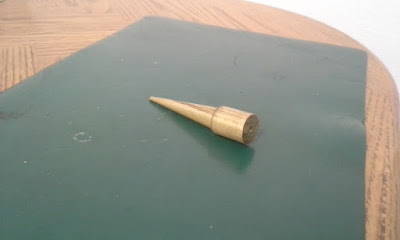
I measured the id of the smallest toroid and the largest toroid I had and plugged them into an online taper calculator. https://www.easycalculation.com/shapes/taper-degree-calculator.php. Calculated taper was 6.65 degrees so I settled on an even 6 degrees with a length of 1 1/2”. The final of the taper was extended to 3”. Using my small 6” metal lathe I set the compound to 6 degrees and chucked up a 4” piece of a ¾” wooden dowel. I would have liked to have an ash, maple or other hardwood dowel but I used what I had on hand. Then I turned the 6 degree taper for 3” until the smallest end was 1/8” making the large end almost ¾”. Some sanding with 320 grit sandpaper followed by some ultra-fine 400 grit made it ready for a coat of clear sealer and a quick stain.
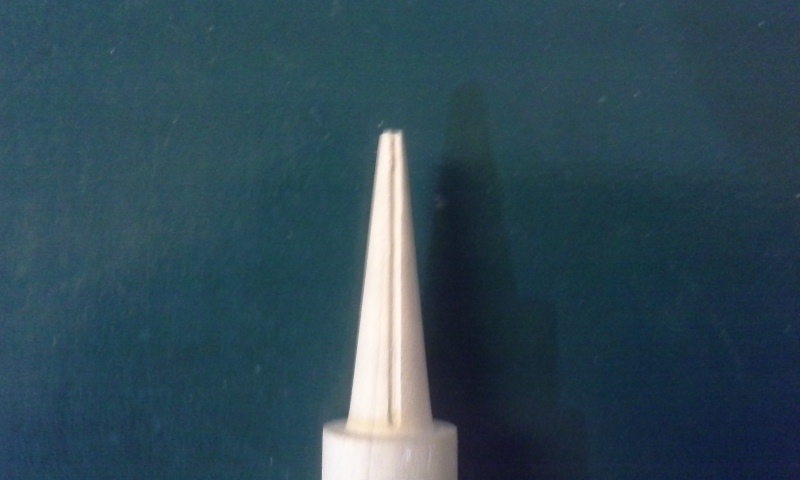
Moving over to the milling machine, I set the 6 degree angle with a 6 degree parallel in the vise. Positioning the mill spindle to the center of the dowel I used a #0 center drill to mill a slot the entire length of the taper to about .015” deep as I didn’t have a 1/32 end mill. This slot also can be accomplished with a rotary tool or a hobby knife and a steady hand.
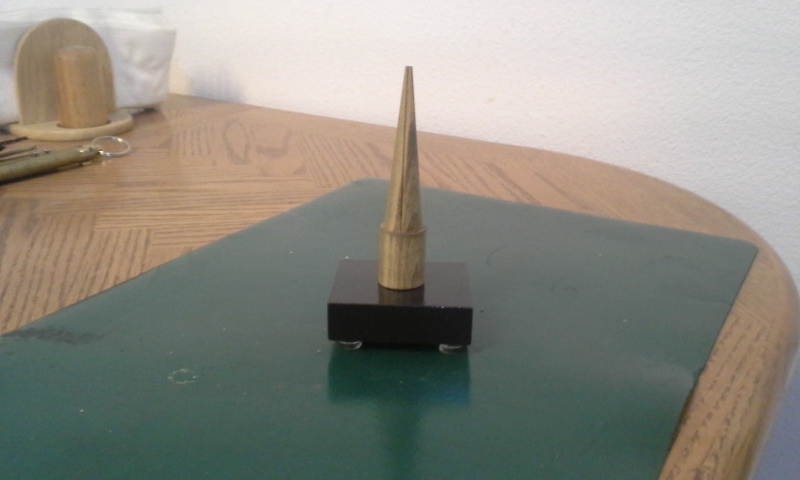
I had a couple of 6-32 wood brass insert nuts in the hardware bins. Believe I bought these at Lowes and the Hillman part #880546 is what I used. Drilling a 3/16” diameter hole ½” deep I screwed the insert in until it was flush with the bottom of the dowel. My previous toroid holder had a wooden base but it proved to be too light and easily moved around on my bench. I dug out a scrap hunk of ¾” steel about 2.5 inches square. I then drilled a hole through the base using a #27 drill. Now the toroid holder can be mounted on the steel base using a 6-32 machine screw about 1 ¼” long and removed for a different size spindle when necessary. A wood base can also be used with appropriate length wood screw. Be sure to drill a pilot hole large enough in the spindle to prevent from the wood screw from splitting the spindle. A #6 wood screw long enough to pass through the base and into the spindle about ½” would be adequate.

Winding consists of passing the wire up (or down) the slot, lifting the toroid up and rotating slightly and back down on the spindle for the next winding. This has proved to be a very useful fixture when needing to wind some toroid coils.

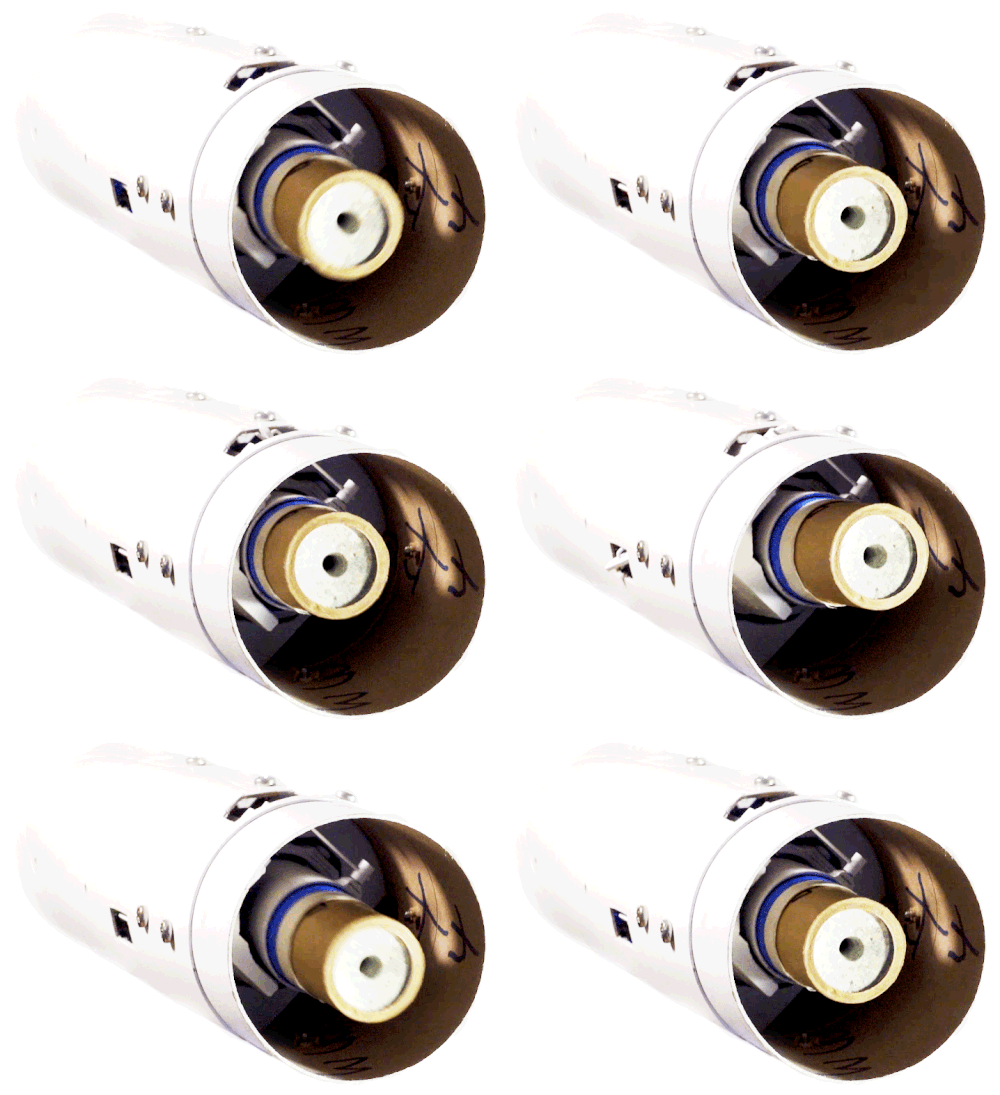
The picture at the top shows a T-37-6, T50-2 and a T68-2 top to bottom. Will also fit a up to a T-106. Any larger toroids would require a larger spindle to be made.
Enjoyed your YouTube “Quarantined Receiver” and all the doings from Pete.
Paul
KL7FLR
Jonathan-san (Our Man in Japan) Now Melting Solder in Seattle

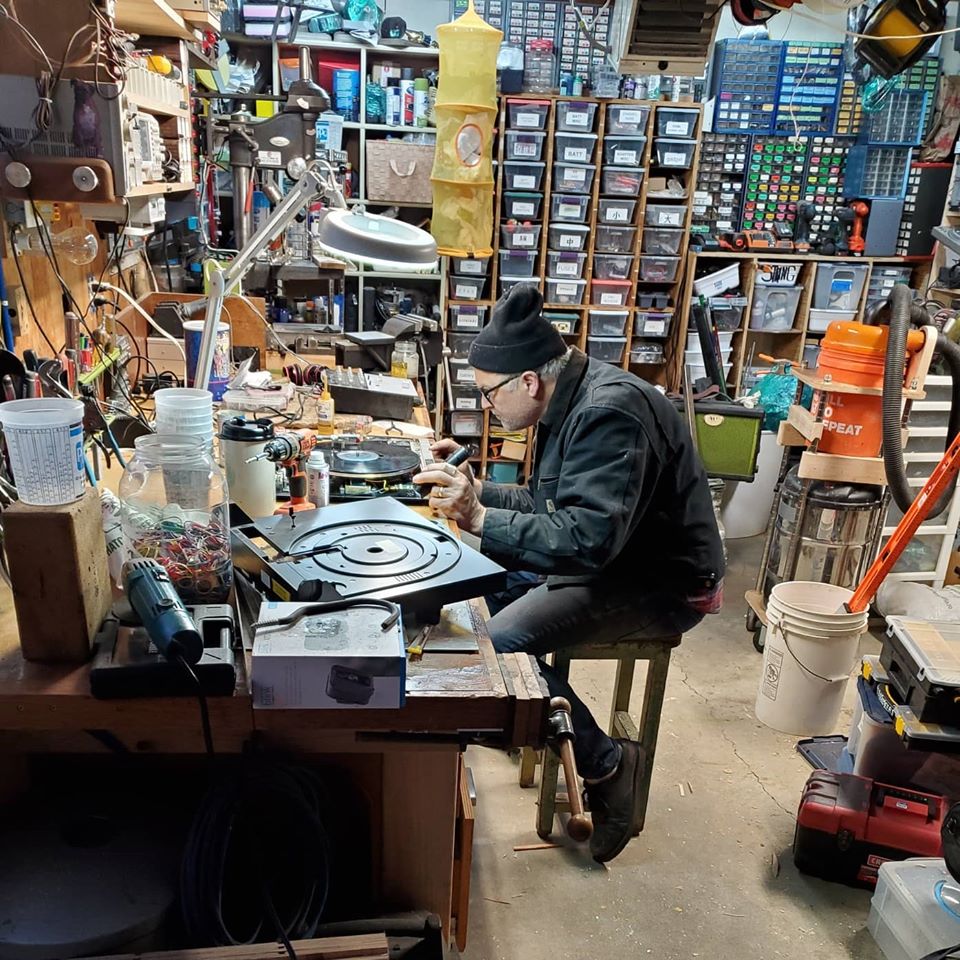
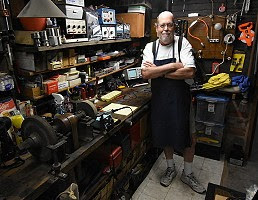
Got a nice note from Jonathan W0XO. He and the family have relocated to the Seattle area. Here we see Jonathan at work in his new shed/shack. It looks great.

Long-time SolderSmoke fans will remember Jonathan from his previous life in Asia. See:

Very Useful: Copper Tape with Conductive Adhesive

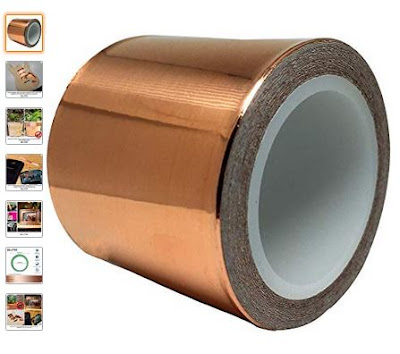
This copper tape is really useful, especially when doing “free style” homebrew. At first I didn’t even realize the adhesive is conductive. This tape is great for creating a common ground among several printed circuit boards, especially when you are using a wood board as the base. You can solder to it very easily. You could even use it (with a wood or plastic base) in lieu of a copper clad board. Lots of possible applications for homebrewers. This stuff deserves a place on the workbench shelf right next to the Gorilla Tape and the Crazy Glue. I’m using it in my Single Transistor Rig project.

You can get it from Amazon — there are many varieties and vendors. This one is similar to the one I am using.

https://www.amazon.com/dp/B01I1XNY1E?aaxitk=I9X2Na8Gu23M3nrhlpSzYw&pd_rd_i=B01I1XNY1E&pf_rd_p=44fc3e0f-4b9e-4ed8-b33b-363a7257163d&hsa_cr_id=3252618550401&sb-ci-n=asinImage&sb-ci-v=https%3A%2F%2Fm.media-amazon.com%2Fimages%2FI%2F71sJrx27%2B-L.jpg&sb-ci-a=B01I1XNY1E

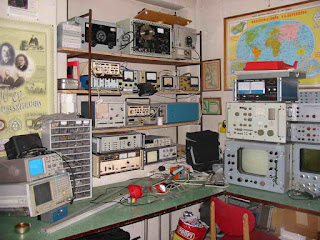
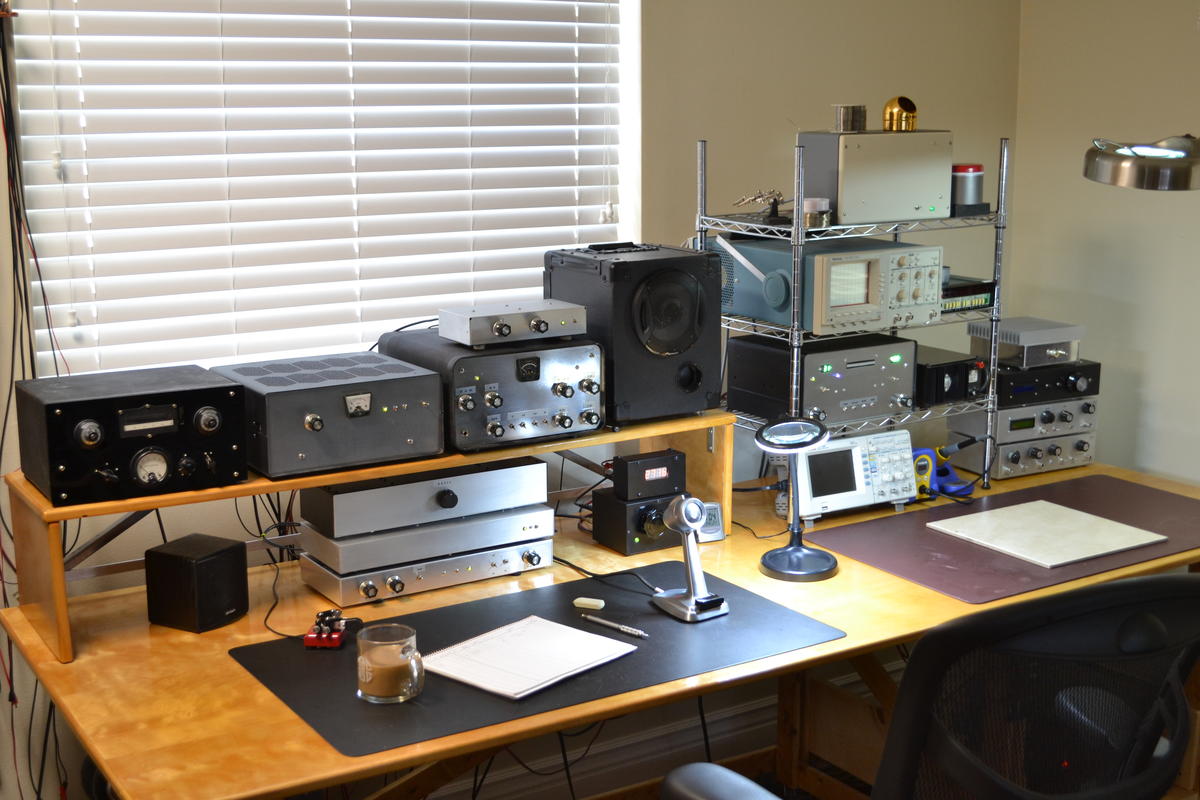
Wow. Mr. Carlson’s New Old-Time Radio and Test Gear Lab. VE7ZWZ — Homebrew Hero

It has been a while since we last visited Mr. Carlson’s lab. As always, we found it amazing. The awesomeness just keeps increasing. Previous visits: https://soldersmoke.blogspot.com/search?q=Carlson

As was the case before, this is really almost too much. THREE DX-100s in the shelves. A massive collection of tubes, some sorted, some un-sorted. But don’t worry — Paul has a good memory and remembers where everything is. I believe him.

For his amazing shack and workshop(s) and for his willingness to repair old-time test gear, Paul VE7ZWZ clearly deserves homebrew hero status.

Thanks Paul.

Two Videos from Other Kinds of Workshops — Dobson Makes a Telescope, Peter Builds an Airplane


Above you can watch a video showing the legendary John Dobson making a big telescope. Born in Beijing, Dobson is the former Hindu monk who left the monastery to show people how to make big telescopes out of shipping tubes and port-hole glass. Think of it as the BITX of amateur astronomy. Dobson is the founder of the “sidewalk astronomy” movement — that’s when you set up your ‘scope on an urban sidewalk and show the wonders of the universe (or at least the solar system) to passers-by. We did this in London with Saturn. (Some of the cynical Londoners couldn’t believe it was real — they thought I had a transparency in the scope tube.) Dobson developed a very simple and popular method of mounting telescope tubes — the “Dobsonian” method.

More on Dobson here: https://en.wikipedia.org/wiki/John_Dobson_(amateur_astronomer)

Below you can see a short update on Peter’s homebrew airplane.

Woz with Soldering Iron; Wooden Enclosures for Electronics (Video)

The Woz scared me for a second — I tought he was going to leave a hot iron on the desk amidst paper and other flamable items. But no — he put the soldering iron in its holder.

Later we hear Woz talking about the need to update schematic diagrams. And I was esepcially taken by the use of wooden enclosures for electronic projects. My BITX rigs have followed the Apple example.

Building an Airplane in the Basement with Insulation Foam, Tape, Glue, Poplar…

But this one is not a model RC plane. This kid intends to pilot this plane while actually sitting in it.

As a parent, I must say this is really nuts. Stick to the models Peter! Or maybe put some goggles on the big dog and let him fly it!

Nevertheless, this is an inspriational look at what can be built in a basement using stuff from Home Depot or Lowes.

For more info see:
http://hackaday.com/2017/08/14/building-an-ultralight-out-of-foam-in-a-basement/#more-268614

Here’s Peter’s earlier Cargo Plane project:

Ralph Baer — Video Game Inventor

Thanks to Stephen G7VFY for alerting us to this very nice video. Ralph Baer did pioneering work in video games. It is fun to see him in his workshop. He obviously has a variant of The Knack. Stephen hinted at a reference to “noodling” but I didn’t hear it — perhaps Stephen meant that the whole thing was about what we’d call noodling. I found the box on his bench labeled “Wire Wrap Materials” kind of ominous — remember our April 1 announcement about the launch of the new “Wire Wrap Rap” podcast?

I liked Ralph’s summary comment about how these days he just has fun building things.

The Workshop at AA8V

Field Day was a big success for me this year. I was in category “1E” which meant that I was home in the air conditioning, but doing my bit for emergency service by using a gel cell as my power source. A SOLAR CHARGED gel cell. So don’t anyone call me a slacker, OK?

I was on my HW-8 and made a total of two contacts. The second was with AH6AX. I wasn’t fooled — I knew they weren’t in Hawaii. But the op gave me his home call: WB8YYY. Curt is a SolderSmoke listener. In a follow-up e-mail he alerted me to the web site of AA8V. Great stuff. Thanks Curt.

Here is the AA8V workshop:

http://faculty.frostburg.edu/phys/latta/ee/workshop/workshop.html#electronics1

AA8V was on the QSO Today podcast not long ago.

TRGHS! HB2HB! Homebrew Extravaganza on 40 Meters!

AC7M HB Amp and HB Power Supply
I was flying solo last night. Everyone else in the house was out. So I turned to ham radio for some company. And I was rewarded.


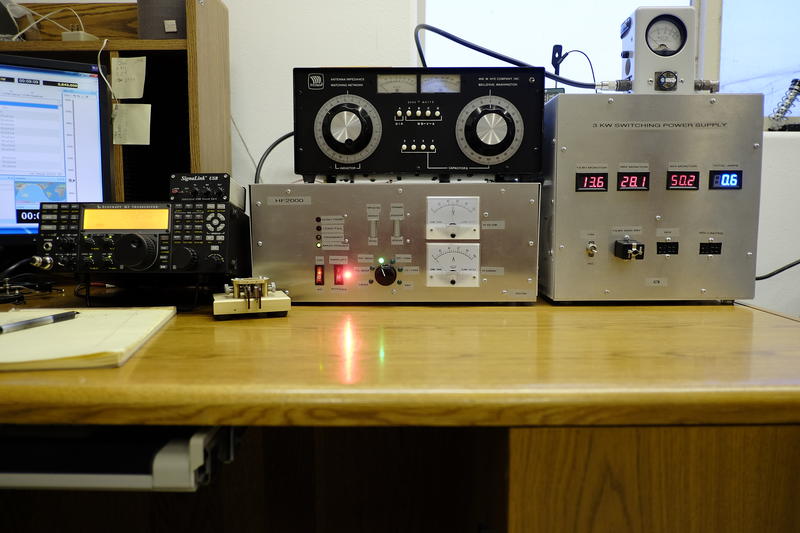
I called CQ with my BITX DIGI-TIA rig and was immediately answered by Doc AC7M in far-off Twin Peaks, Idaho. Doc was running a K3 to a homebrew solid state full gallon amp. And get this — Doc had also homebrewed the 3 kw switching power supply. I looked at my store-bought supply and felt like an appliance operator. I hang my head in shame.

As we discussed solid state amplifiers, we were joined by another builder of silicon after-burners: Don K9AQ, who called in from a beautiful cabin in rural Wisconsin. Don’s amp is based on the venerable EB-104 design.

Both Don and Doc talked about the work of W6PQL. He has a really amazing site devoted to homebrew solid stat amps, and he is selling lots of great boards and parts for this kind of project:
http://www.w6pql.com/

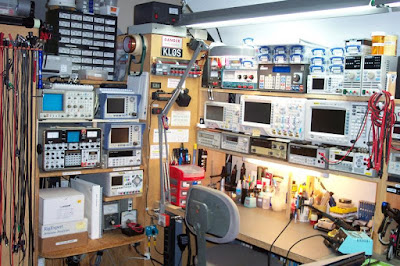
As I finishing up with Don and Doc, I got a very welcome call from an old friend from the SolderSmoke community: Dino KL0S. He as booming in from Williamsburg, Va. Dino has an amazing workshop. He is building a serious vertical antenna for 160 meters. Dino is going for the DX.

Dino’s Bench


At this point Mike WA3O in Pittsburgh called in. And get this: Mike heard me on his new BITX 40 Module. The Radio Gods Have Spoken! (TRGHS!). We switched up to 7.285 MHz where I fired up my BITX 40 Module for a BITX40-BITX40 QSO (albeit not at QRP levels).
We should definitely make more use of 7.285 for BITX40 and other HB QRP SSB QSOs. 1930 EST (0030 Z) seems like a good time.

Finally, just when I was thinking that things couldn’t get any better, they did: Armand WA1UQO called in from Richmond. Armand and I collaborate on parts acquisition at Virginia hamfests. We specialize in the contents of the musty cardboard boxes found under the tables. We discussed the DISRUPTIVE influence of Farhan’s BITX 40: All around the world, other homebrew projects are being literally pushed aside on workbenches to make room for that fantastic little module from Hyderabad.

I was very pleased to hear that Armand is building an analog VFO for his module, using a coil in the 4 uH range, wound on a piece of cardboard tube from a coathanger. The inspiration for this kind of coil (which I now have in THREE rigs) came from Farhan, who used sipping straws from fast-food restaurants as coil forms in a sig generator that he built years ago. This week, seeing a Facebook picture of my daughter and me in a restaurant with drinking glasses in front of us, Farhan asked if I had brought home the straws.

Possibly the Best Ham Radio Interview Ever: Farhan on “QSO Today”


Stop what you are doing. Run — don’t walk — to the “QSO Today” website of Eric Guth 4Z1UG. There you will find his interview with Ashhar Farhan VU2ESE.

There is so much great information, inspiration and wisdom in this interview. I was so captivated by it that — even with the availability of the pause button — I was unable stop listening even for the time it would take to walk to the kitchen to refill my coffee cup. But at the same time, listening to Farhan describe the joy of bringing a new receiver into operation compelled me to go over to the bench — in mid-podcast — to tweak a receiver that I am working on.

In this podcast you will hear about how Farhan got started in ham radio, about his Elmers about the origins of the BITX, about the Minima and the new HF-1 rig, about Farhan’s spectrum analyzer project and about a new goodwill effort to send BITX circuitry to aspiring hams around the world, especially in developing countries.

Throughout you will hear Farhan speak of the importance of the book, Experimental Methods in RF Design.
I really do think this is the best ham radio interview I have ever heard. Congratulations and thanks to Eric and Farhan.
Here is the link: