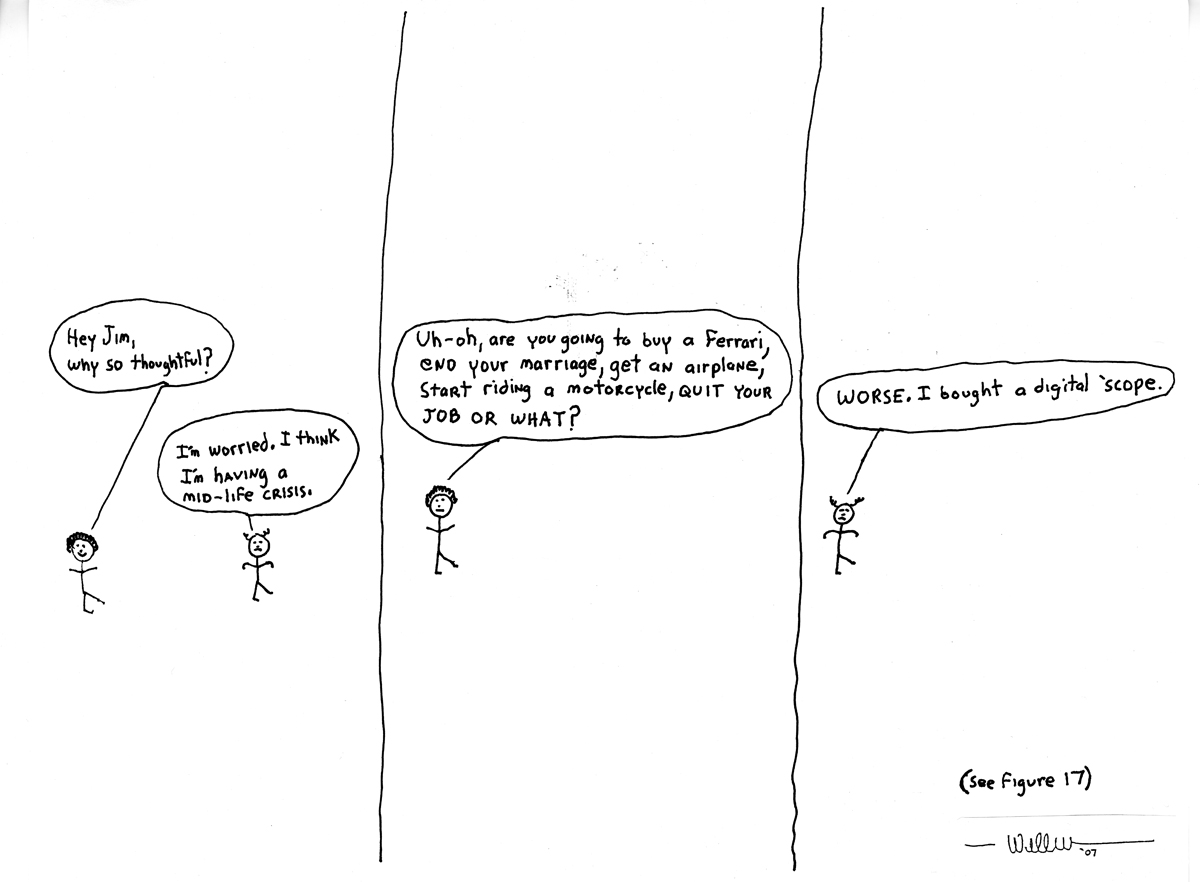
Thanks to Steve WA0PWK for sending us this Jim Williams cartoon.
Been there, done that. It doesn’t mean you are a bad person.
SolderSmoke Daily News — Ham Radio Blog
Serving the worldwide community of radio-electronic homebrewers. Providing blog support to the SolderSmoke podcast: http://soldersmoke.com
I’m having TeKnical difficulties. My beloved Tek 465 ‘scope quit on me. I’d been running it continuously for a day or so, watching the output on my BITX VFO. Then, suddenly, it blew the 1.5 amp fuse. I replaced the fuse, but afterwards the trace was gone and the “Low Line” light was acting weird — on when it should have been off, then flickering. I consulted with Alan Wolke. He happened to be out at TEX HQ in Beaverton, Ore. He provided some good suggestions, but before I had a chance to try them, the trace came back. I attributed this good luck to the Radio Gods being pleased with Alan’s presence in Beaverton… but my reprieve was short-lived. Trace went out again today.
I found this video of the legendary Jim Williams (RIP) fixing a Tek 465. (Check out Jim’s junk box!)
I’ll start by checking the Tantalums. I may get lucky.
If anyone has any other suggestions, send them this way. The Tek scope may be old, but it is a COMPLICATED piece of gear…
Our book: “SolderSmoke — Global Adventures in Wireless Electronics” http://soldersmoke.com/book.htm Our coffee mugs, T-Shirts, bumper stickers: http://www.cafepress.com/SolderSmoke Our Book Store: http://astore.amazon.com/contracross-20
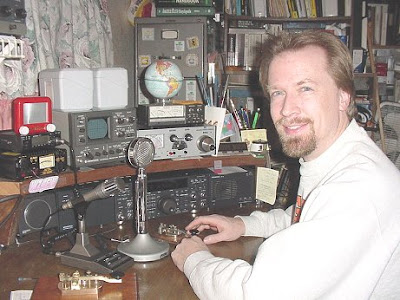 Alan, W2AEW, roams the Northeast USA as a Field Application Engineer for Tektronix. This week he sent me an e-mail with some words of wisdom about simulations and troubleshooting. Thanks Alan!
Alan has a lot of great stuff on his web site. Check it out:
http://www.qsl.net/w2aew/