Another Free Kindle Book

Bill's New Book!


As a result of Elisa’s suggestion, more than 1300 people downloaded the free Kindle version of “SolderSmoke – Global Adventures in Wireless Electronics.” I hope they liked it. If you did enjoy the book, please spread the word about it (you can use the e-mail button below to forward this post to friends and relatives), and please put a review on the Amazon Kindle page.

In the course of following up on Elisa’s idea, I discovered that Amazon Kindle has a program that will allow me to make my more recent book available for free (for a limited period).

So the Kindle version of “Us and Them — An American Family spends Ten Years WITH FOREIGNERS” will be available for free from October 3 through October 7. Please send me feedback, please let your friends and relatives know about the book (again the e-mail button below is good for that), and please post reviews on the Amazon page.

You can find the Kindle book here. It will be free from October 3 through October 7, 2015

http://www.amazon.com/gp/product/B00L8DR4RK?*Version*=1&*entries*=0

Jac’s Homebrew Receiver (video)

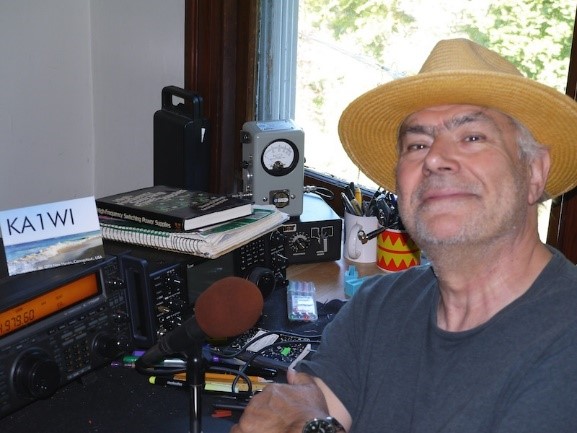
Jac (KA1WI) and I spoke on 40 meters on June 29th. I told him about the BITX — he said he liked the idea of building something and pledged to start melting solder. This week I got this message and video from him. Good going Jac! That was fast! I think we all know who designed the IF amp: Wes W7ZOI. As for the DS/PLL, I recommend you take a look at the Si5351 with an Arduino microcontroller.

Hi Bill,

I started in July building a receiver with the available parts I had collected over many years. Finally today the receiver is working more or less to my satisfaction. Here is a brief description.
I am using a set of crystall filters from an old Atlas 350XL, 5.595 is the IF frequency and the filters have independent USB and LSB plus CW 500 Hz filter. The radio set is a single conversion type. A DBM at the front end and as product detector. Keeping the BFO signal from leaking is a challenge but I managed by carefully matching the three ports of the DBM used as product detector. Matching the IF filters impedance was another challenge. Following the DBM there is a LNA amplifier using a 2N3866 and I am trying another LNA with a discontinued Siemens BFT66 transistor with a very low noise figure. I have some experience with those and they can be amazingly quite.
The IF amp is a hybrid cascode with three stages and AGC that I found in the internet designed by a well known OM, the design works very well it is easy to make and is very stable despite its nearly 70 dB of wide band gain. The AGC range is close to 100dB . . .
The front end has 6 BPF covering from 1.5 to 30 Mhz all switched by relays. This unit I got from an old German receiver.
The VFO or 1st LO is a DDS unit I had played with years ago. From N3ZI is far from perfection but it does the job when the bands are alive and well. The alternative to the simple DDS are complicated. I wish there were more DDS PLL kits available. It can take a long time to get a full synthesizer satisfactorally working.
The set is made of mechanical parts from a Tektronix main frame instrument, there are many parts of different shapes that can be attached together in a crazy way but certainly very functionally. There is the IF amplifier and the Product Detector BFO enclosed in two brass silver plated boxes, both also recovered from some surplus ages ago. The DDS is one of the sides on the chassis without any shielding.

The IF filters and the front end are going to be attached to the rear of the chassis by just adding brackets etc., you get the idea. I am glad the video is acceptable.

I thought it will interest you know that at age 70 is also possible to roll your own, despite having to check every solder joint since my eye sight is the biggest problem
I have other projects, another receiver with an IF of 9 mHz with SSB and AM filters using another type of high gain IF amp.
Best 73’s de
Jac

Crystal Radio Reminiscing Russia, Japan, Chennai, New England

Our book: “SolderSmoke — Global Adventures in Wireless Electronics” http://soldersmoke.com/book.htm Our coffee mugs, T-Shirts, bumper stickers: http://www.cafepress.com/SolderSmoke Our Book Store: http://astore.amazon.com/contracross-20

Speaking of Breadboards…

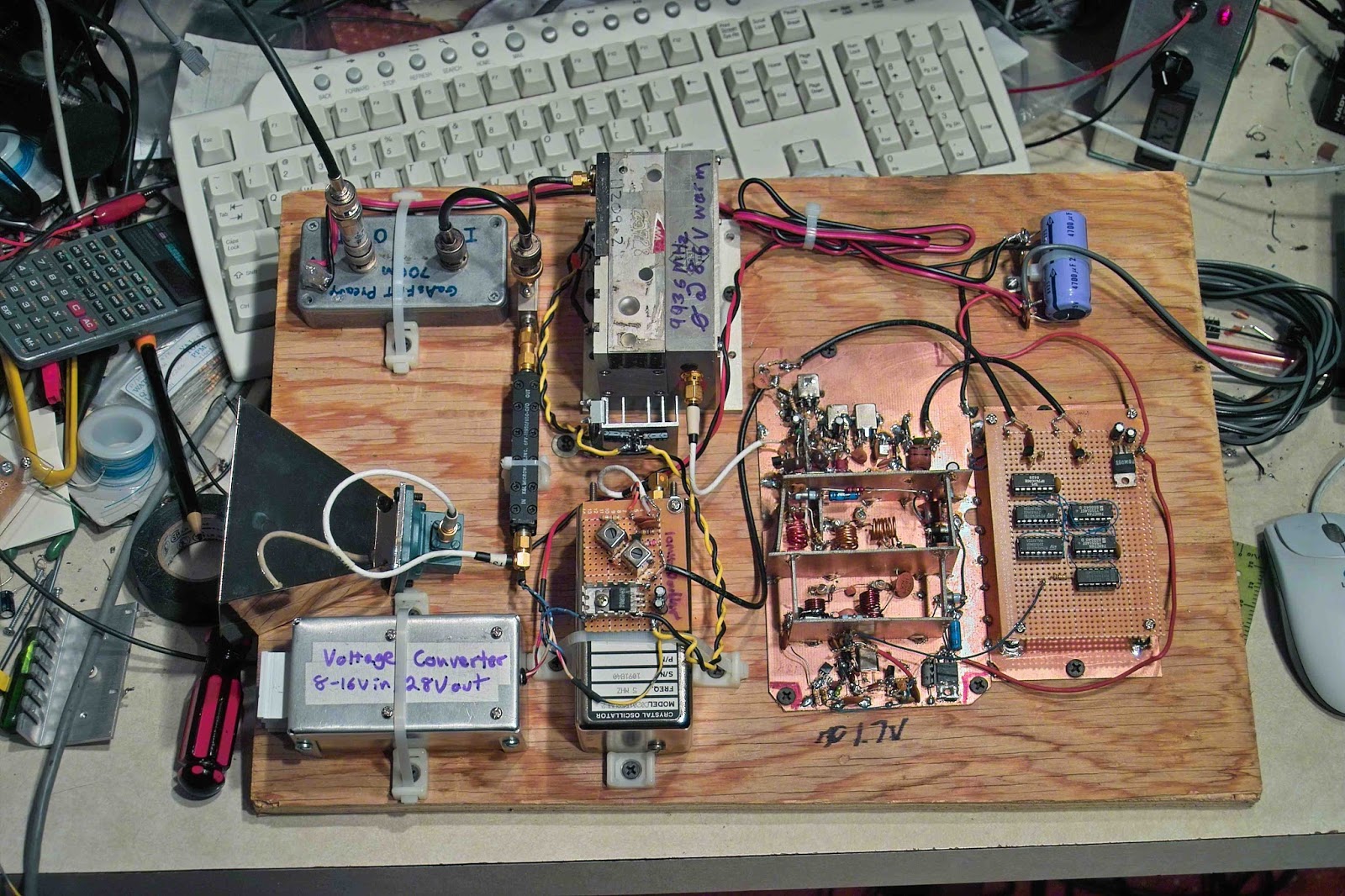
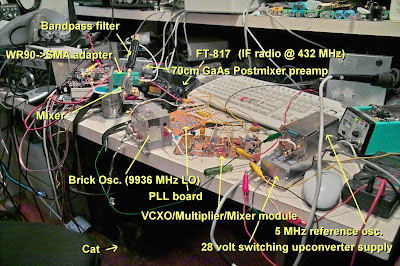
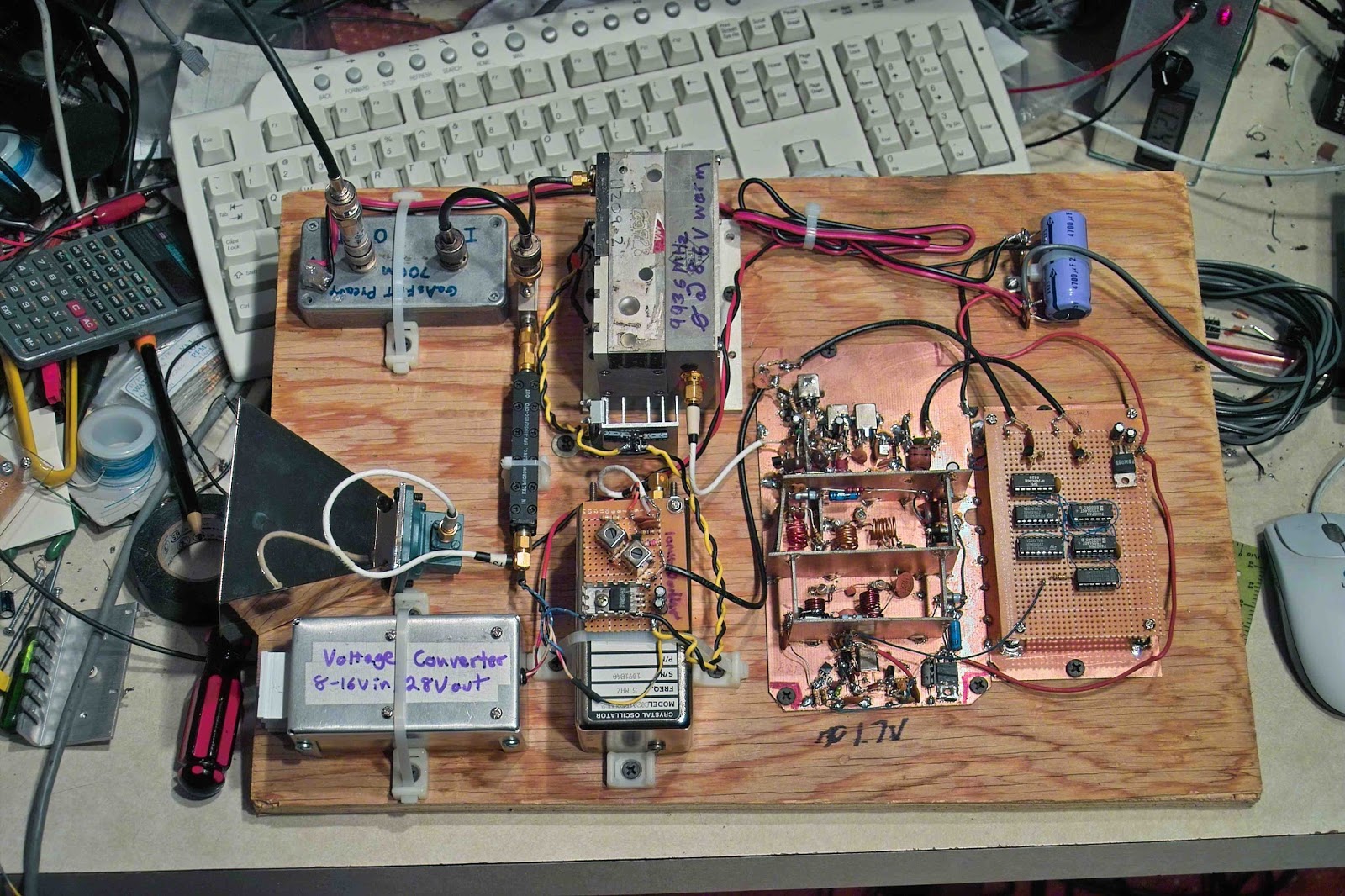
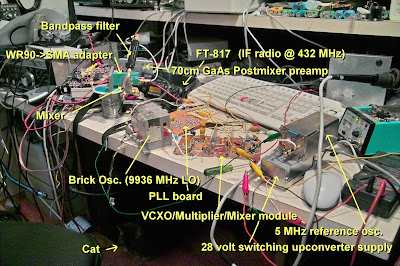
Clint KA7OEI sent us these inspiring photos of his 10 GHz transverters. FB Clint! The one on the top was built in 2005 and STILL looks like this. Note “CAT” component in the version pictured in the second photo.

Our book: “SolderSmoke — Global Adventures in Wireless Electronics” http://soldersmoke.com/book.htm Our coffee mugs, T-Shirts, bumper stickers: http://www.cafepress.com/SolderSmoke Our Book Store: http://astore.amazon.com/contracross-20
Speaking of Breadboards…

Clint KA7OEI sent us these inspiring photos of his 10 GHz transverters. FB Clint! The one on the top was built in 2005 and STILL looks like this. Note “CAT” component in the version pictured in the second photo.

Our book: “SolderSmoke — Global Adventures in Wireless Electronics” http://soldersmoke.com/book.htm Our coffee mugs, T-Shirts, bumper stickers: http://www.cafepress.com/SolderSmoke Our Book Store: http://astore.amazon.com/contracross-20

Noodling on Phase Noise — Si570 vs. Si5351

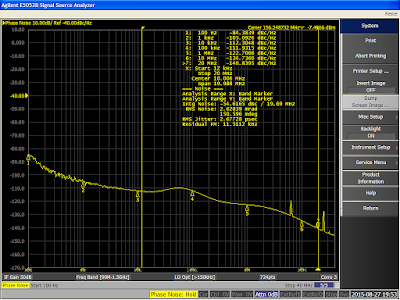
Pete and I were very recently talking about phase noise in the Si5351 as compared to the Si570. Pete e-mailed Si labs and got their phase noise data on the Si5351. See above.


I did some googling and found a similar graph for the Si570. Here it is:


Sure, the Si570 has a bit less phase noise. But with both devices, this noise is so low that it doesn’t cause trouble in our rigs. No trouble on receive and no trouble on transmit.

At 10 kHz from the carrier, the Si570 phase noise is -132dbc/Hz. At 10kHz the Si5351 is -112 dbc/Hz at 1kHz from the desired freq, the 570 is at -122 dbc/Hz and the Si5351 is at -105 dbc/Hz

I have the Si5351 in my BITX 40 DIGI-TIA and I have tried very hard to hear the “noise around a strong signal” that people warn about. I can’t hear it. If a tree falls in the woods and no one hears it…. I’m sure my neighbor is making some noise in his basement right now. But I can’t hear it, so, should I complain?

As for the transmit signal, I get no complaints, even from the most cranky and gleefully critical SDR-equipped appliance ops on 40 meters (believe me, they don’t hold back!). EMRFD notes that on transmit, in the output from the final, the phase noise output will have the same relationship to the desired signal as it has to the desired oscillator signal. If we are talking about noise that is 100 db down, with a 100 watt rig, the phase noise would be at .00000001 watt/Hz. I realize that is noise PER HERTZ. But even if we assume a 2500 Hz bandwidth, how much TOTAL noise power is that? Multiply by 2500: .000025 watts right? (Check my math — I majored in International Studies!) 25 microwatts! Even my critics on 40 can’t hear that. And the phase noise figures for both the Si570 and the Si5351 are a lot better than -100 db.

The Si5351 offers us a BIG advantage: That second oscillator for the BFO. This is huge. And the thing is so cheap. Cheap is good!

How about some side by side comparisons? Maybe someone in the BITX or Minima community could try a rig with an SI570, then substitute an Si5351. See if they notice a difference on transmit or receive. I don’t think they will.

What do you think of my logic and math?

Our book: “SolderSmoke — Global Adventures in Wireless Electronics” http://soldersmoke.com/book.htm Our coffee mugs, T-Shirts, bumper stickers: http://www.cafepress.com/SolderSmoke Our Book Store: http://astore.amazon.com/contracross-20

SolderSmoke Book Now Free on Amazon Kindle

http://www.amazon.com/SolderSmoke-Global-Adventures-Wireless-Electronics-ebook/dp/B004V9FIVW/ref=la_B001JOYVM4_1_1_title_1_kin?s=books&ie=UTF8&qid=1441406675&sr=1-1

Our book: “SolderSmoke — Global Adventures in Wireless Electronics” http://soldersmoke.com/book.htm Our coffee mugs, T-Shirts, bumper stickers: http://www.cafepress.com/SolderSmoke Our Book Store: http://astore.amazon.com/contracross-20

SPECIAL 10th ANNIVERSARY OFFER ON SolderSmoke BOOK FREE DOWNLOAD

On the occasion of the tenth anniversary of the SolderSmoke podcast, I have reduced the price of the book “SolderSmoke — Global Adventures in Wireless Electronics.” I’ve taken the price as low as Amazon and Lulu will allow.
Here are the new prices. (These prices are temporary.)

FREE E-BOOK DOWNLOAD FROM LULU: http://www.lulu.com/shop/bill-meara/soldersmoke-global-adventures-in-wireless-electronics/ebook/product-20740433.html

Amazon Print version: $5.54: https://www.createspace.com/5109055

LULU Print versions: $4.45 http://www.lulu.com/spotlight/soldersmoke

Our book: “SolderSmoke — Global Adventures in Wireless Electronics” http://soldersmoke.com/book.htm Our coffee mugs, T-Shirts, bumper stickers: http://www.cafepress.com/SolderSmoke Our Book Store: http://astore.amazon.com/contracross-20

Pete is Having Antenna Project Problems — Can you Help?

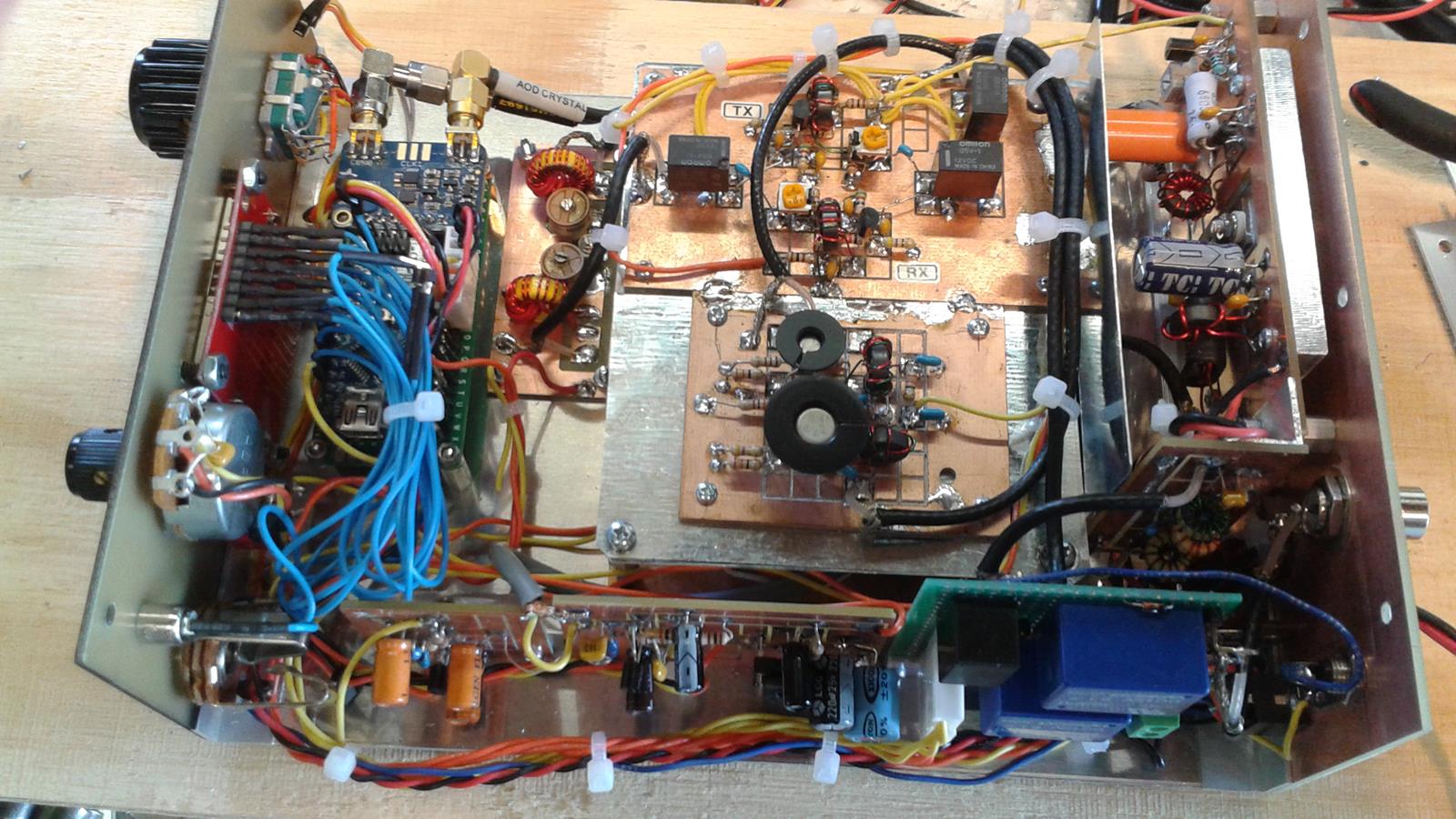
Our friend Pete, N6QW, has run into some difficulties in his antenna project. The push-up/tilt-over mast he is working with doesn’t seem to be up to the task. Just look at what this is doing to him!
Does anyone out there have suggestions on how Pete might easily get his 2 element beam up to about 30 feet without spending kilo-bucks?
The project is described on Pete’s blog:
You could leave suggestions or ideas on Pete’s blog, or in the comments section here, or e-mail them to soldersmoke@yahoo.com
Thanks.

Our book: “SolderSmoke — Global Adventures in Wireless Electronics” http://soldersmoke.com/book.htm Our coffee mugs, T-Shirts, bumper stickers: http://www.cafepress.com/SolderSmoke Our Book Store: http://astore.amazon.com/contracross-20
An Earlier Use of “Basta!” (MUCH earlier)

It turns out that Pete and I may not be the first homebrewers to make use of the word “basta!” At lunch time, while sitting near the Einstein memorial in Washington, I found a short article in SPRAT 83 (Summer 1995). In it, Robert PA3BHK presented some ideas for reverse polarity protection, and noted that his friend Peter PE1MHO had discovered an interesting phrase from antiquity:
“SPIRITUS TRANSISTOR BASTA”

According to Peter this was the diagnosis of a classical Roman engineer when checking a transistorized PA that went dead after an accidental reversal of the polarity of its supply. Above we see that same engineer, obviously setting up a 2 meter Moxon.

Our book: “SolderSmoke — Global Adventures in Wireless Electronics” http://soldersmoke.com/book.htm Our coffee mugs, T-Shirts, bumper stickers: http://www.cafepress.com/SolderSmoke Our Book Store: http://astore.amazon.com/contracross-20
25% off On SolderSmoke Book (and on “Us and Them”) through Jan 8

You can find all the books on this Lulu site: http://www.lulu.com/spotlight/soldersmoke
Just plug in the code FLASHY15 when checking out.

Our book: “SolderSmoke — Global Adventures in Wireless Electronics” http://soldersmoke.com/book.htm Our coffee mugs, T-Shirts, bumper stickers: http://www.cafepress.com/SolderSmoke Our Book Store: http://astore.amazon.com/contracross-20
Fwd: CBLA is on the air

Hi Bill,
No contacts yet but it sounds good into a dummy load. HA!
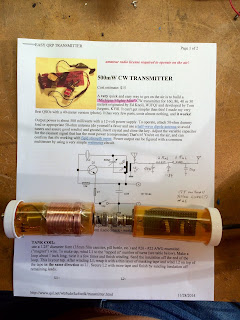
My plan is to put the whole thing up at the antenna and run the keying leads into the shack. Not shown on the pill bottle cap is a 9V battery connection. At 9V I get about 100mW out. With out the LPF and using 12V I can get about 1/2 watt. Total cost of the project? $0.00

Thanks again for the inspiration to heat up the soldering iron once more.

73’s
Jim.. WA7HRG

No cost! That’s the HB spirit! I like the LPF and that pill bottle modular construction is very cool.

This is the perfect time of year for CBLA operation on the QRG.

73 and 3579…….Steve Smith WB6TNL
“Snort Rosin”
CBLA # 1

From New Zealand – Roadkill Routers

Hi Andrew,
Now that is what I call “cost effective”. It works so why not!
Good show.
73’s
Pete
Sent: Tuesday, December 23, 2014 7:15 PM
Subject: Re: Thanks for the heads up on the Si5351
Thanks for the heads up regarding the SMA connectors and cables. I will definitely do that. Will probably use my first Si5351 as a network connected signal generator and get another Si5351 module to put “on the air”.

FYI – rather than using Arduino (or some other microcontroller) I have been using recycled ADSL routers for my Si5351 and MEPT beacons. DLink DSL-502T specifically. These were the standard broadband router down here in ZL about 5 years ago but are now essentially free on the local auction site because everyone wants WIFI. They can be flashed with OpenWRT (a Linux derivative). They have enough GPIO pins that with a bit of configuration can easily control the Si5351 and other I2C devices.
Bill talks about “road kill computers”…. these are “road kill routers” but at $1 each you can’t really go wrong.
73
Andrew ZL1WJQ