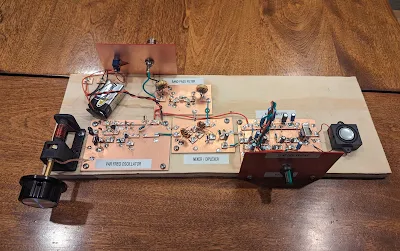
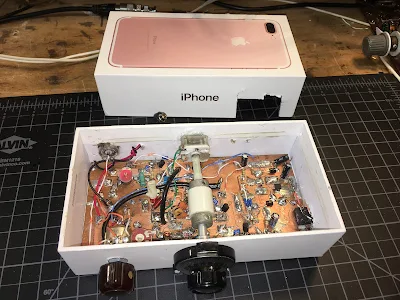
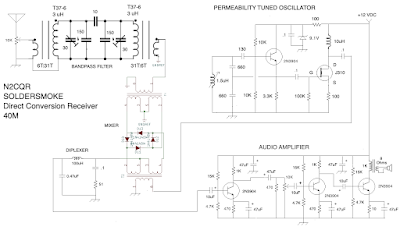
One (of several) SolderSmoke Blog Backups: This one in .pdf form

The SolderSmoke Daily News blog now has more than 4,000 posts, and some 10,000 comments.  This is both good news and bad news.  The good news is that there is on this blog site a vast repository of useful information.  The bad news is that I sometimes fear that all this info might be lost if Google someday decides that its blog service should disappear.  It could happen, and that is kind of scary, so I have been looking for backups, for ways to safeguard this information. 

Several members of the SolderSmoke community have been helping me create WordPress sites that backup the blog. More info will be coming soon.  The Internet Archive and the WayBack machine have also been of great help. 

While here in the Dominican Republic, I have been working on a kind-of compilation of blog articles, with a bit of an intro.  I think readers of the blog and listeners of the podcast might find this entertaining. 

So here it is.  Please download it to your computer.  That will increase the survivability of the blog.  I will probably do a few updates to the .pdf file: 

http://soldersmoke.com/SolderSmoke Blog Book Compilation.pdf

Menus are for restaurants (not for rigs).

Libraries are for books (not for computer programs).

Halucinations are for psychiatrists (not for AI).

Hotplates are for cooking (not for PC boards).

Stencils are for drawings (not for surface mount parts).

Pi’s are for Thanksgiving (even if they are Raspberry).

Microscopes are for biologists (even if the parts are so small you can’t even see them).

Homebrew means rigs built from scratch (not for computer game consoles)

Training and weights are for the gym (not for AI)

261

Bill’s 10 meter AM QSO with modified GE CB was in RADCOM.

G3SUY’s amazing HB gear. Also in RADCOM. VOGAD circuit.

Midway memories.

Old Military Radio Net Vintage Sdeband net

Another definition of homebrew:Historically, efforts to create original games and tools, port over open source emulators, and explore a game console’s hardware and software have been generally lumped together under the banner of ‘homebrew.'” Yuck.

VE7SL: The George Batterson 1935 CW QSO Party. Lots of homebrew gear.


Completed Receivers

So far 54 completed receivers, with 4 honorable mentions:


NE3U (KY4EOD) Matt
KQ4AOP First ham signals ever heard!
N9TD Derek
AC3NG Ryan
VK3TPM Peter Marks
W4KAC Ken
W4KAC Ken built a second one!
N2EPE Erik
VA3NCA Wayde
KI5SRY Mark — Gears on PTO screw
KA1MUQ Frying pan receiver
AA1N Adam
ZL1AUN Aaron — Using SSB transmitter
W8UC Never before homebrewed.
VK4PG Phil — Nice case, “really pleased”
G7LQX Working well, video of CW and SSB.
KE2AMP John Spring on PTO screw — great
N9SZ Steve nice receiver
KD9NHZ Piotr Nice one
KE8ICE Calvin, Very cool receiver.
WV3V Jayson! Got it done!
GM5JDG Martin.
KF8BOG Jim: A long struggle, but success.
Chris Wales Fantastic video.
YD9BAX Wayan! Homebrew transformer!
N0NQD Jeff
WN3F Roy — Made new stickers!

AB5XQ Bill
KB7ZUT Andy
AA1OF Jer

VictorKees Holland
KC9OJV John — Manhattan-style convert
WZ5M 1, 2 or maybe even 3 receivers!
K1KJW Jim in Vermont
KC5DI Dallas — friend of WZ5M
Gary Australian — Wooden PTO form
LU2VJM Juan in Argentina
K1OA Scott “Most fun in 50 years”
KC9DLM Ben — Had EFHW problems
PH2LB Lex Yellow, Glue Stick
AI6WR David
G6GEV Dave (It was a blast!)
KC1ONM Wayne MakerLabs NH
KB1OIQ Andy MakerLabs NH
KA1PQK Jay MakerLabs NH
W1TKO Mike MakerLabs NH
K5KHK Karl
SM0TPW Mikael
KI7LKB Brian (coat hanger tube)
M6CRD Chris
W2DAB Dave in NYC
W4JYK Wes of VWS
KA4CDN Mike of VWS
M7EFO Adrian
————————-
Honorable Mentions:


*AA7U Steve No PTO
*VK7IAN Ian — No Manhattan boards
*KC1FSZ Bruce’s build on a PC board
*CT7AXD Graham — different AF amp
—————————————–

Possible Candidates for the Hall of Fame:
SA5RJS Rasmus
KA9TII James
W2AEW Alan
AA7FO Chuck
K7WXW Bill
W1PJE Phil MIT
VA3ZOT Tony Surface Mount — Honorable Mention?
KM5Z Mike Yancey
AB2XT John (Done, but we just need the video)
M7EFO Bingo
KO7M Jeff (Piper Cub)
K7WXW Bill

A Kit for the High-School Receiver? No, the Challenge is to Homebrew it!

Dean KK4DAS’s TJ DC RX

The SolderSmoke challenge was to HOMEBREW the TJ DC RX. Not to just assemble a a kit. Homebrewing something really puts you in contact with the electronics. Kit building often just has you stuffing the boards. R16 into the R16 slot on the board. A distinguished G-QRP member likened kit building to “”painting by numbers.” Board stuffing is now done by pick and place machines. These machines don’t have to know ANYTHING about the circuitry. And, sadly, neither do many of the kit builders. (I say this as someone who has built a lot of kits.)

Parts acquisition is an important part of homebrewing. You learn a lot when you have to acquire the parts. You learn where and how to subsitute pats. Some of the parts may come from the junk boxes of friends — this adds soul to the new machine. In any case, through parts acquisition you build up a junk box that will help with future projects and with any necessary repair. If you need two, buy four!
Finally, I’m a bit mystified by the assertion (recently heard) that copper clad boards are somehow really, really dangerous. Jeez, this is the first time in 50 years that I have heard this. I am used to hearing that leaded solder is dangerous, and that super glue is dangerous, and that the fumes from the solder and the glue can kill you. We hear that voltage of almost any kind is dangerous — even 12 V DC! RF can burn you. Putting antenna wire in trees? Forget it! Way too dangerous. But I must admit that hearing about the dangers of copper clad board and Manhattan construction is a new one for the list.
All I can say is that homebrewing is not for the faint of heart. There is no guarantee of success. This is not plug-and-play radio.
Bottom line: Building a kit will NOT meet the SolderSmoke challenge. Homebrew it.
Sure, there are many ways to make this easier:
— Winding toroids? Too hard! A kit would take care of this.
— Making a diode ring? Too hard! Get an SBL-1 in the kit.
— PTO? Yuck! Put an Si5351 and an Arduino and the needed code in the kit.
— BP filter? Get one of those BP filter kits.
— AF amplifier? One LM386 in the kit bag should take care of this!
But we didn’t want to make this easy. We wanted builders to actually homebrew something.
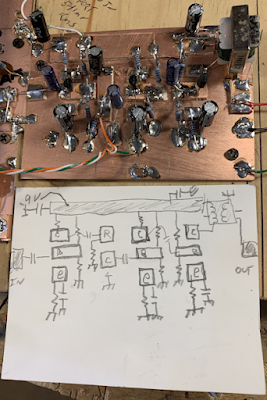
A DC receiver I built for my nephew
Walter KA4KXX’s Schematic
The AF amplifier

How Starlink Survived May’s G5 Solar Storm

I know there are some readers who dislike Starlink, but I think the technology is interesting. This morning I saw an article about how the Starlink constellation survived the May 2024 G5 solar storm. Note the references to “collision avoidance” and “ion thrusters.” Give the devil is due! This is all pretty cool.

https://www.pcmag.com/news/spacex-heres-how-starlink-satellites-weathered-mays-major-solar-storm

The Road to Perdition — High Voltage Thermatron Perdition

Yuck — Not mine

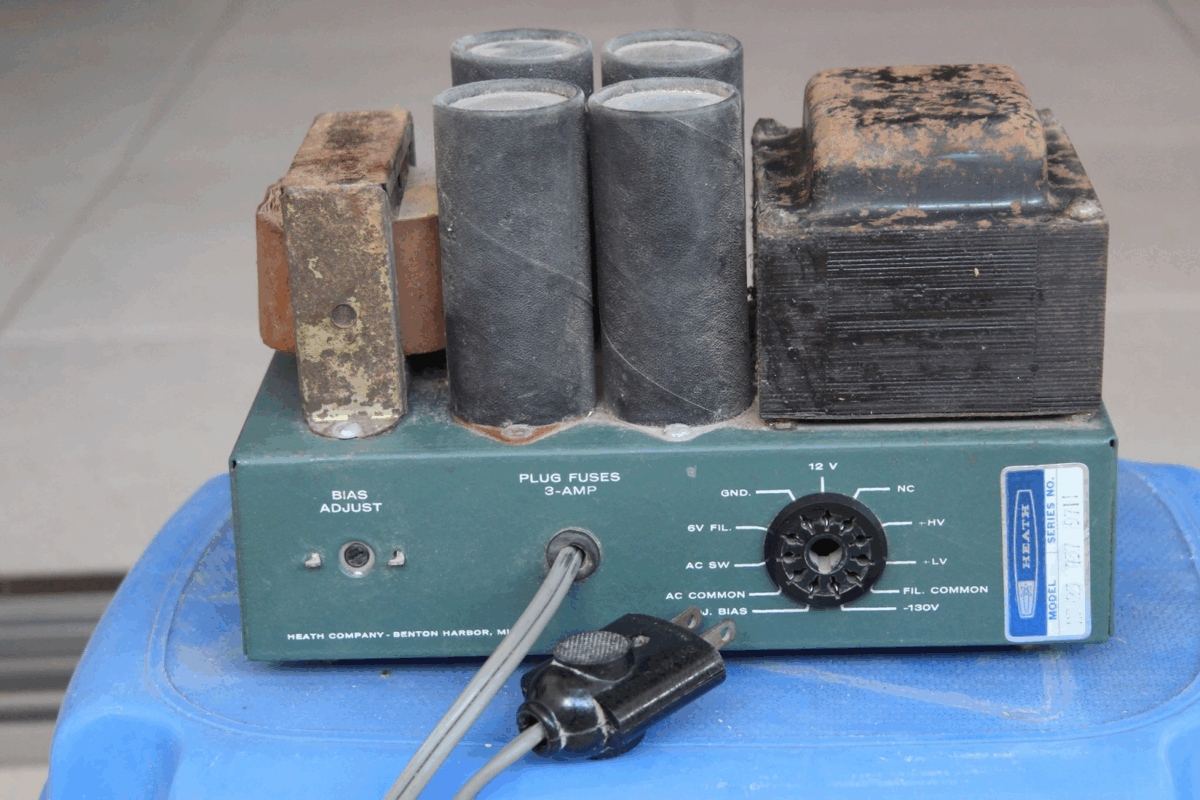
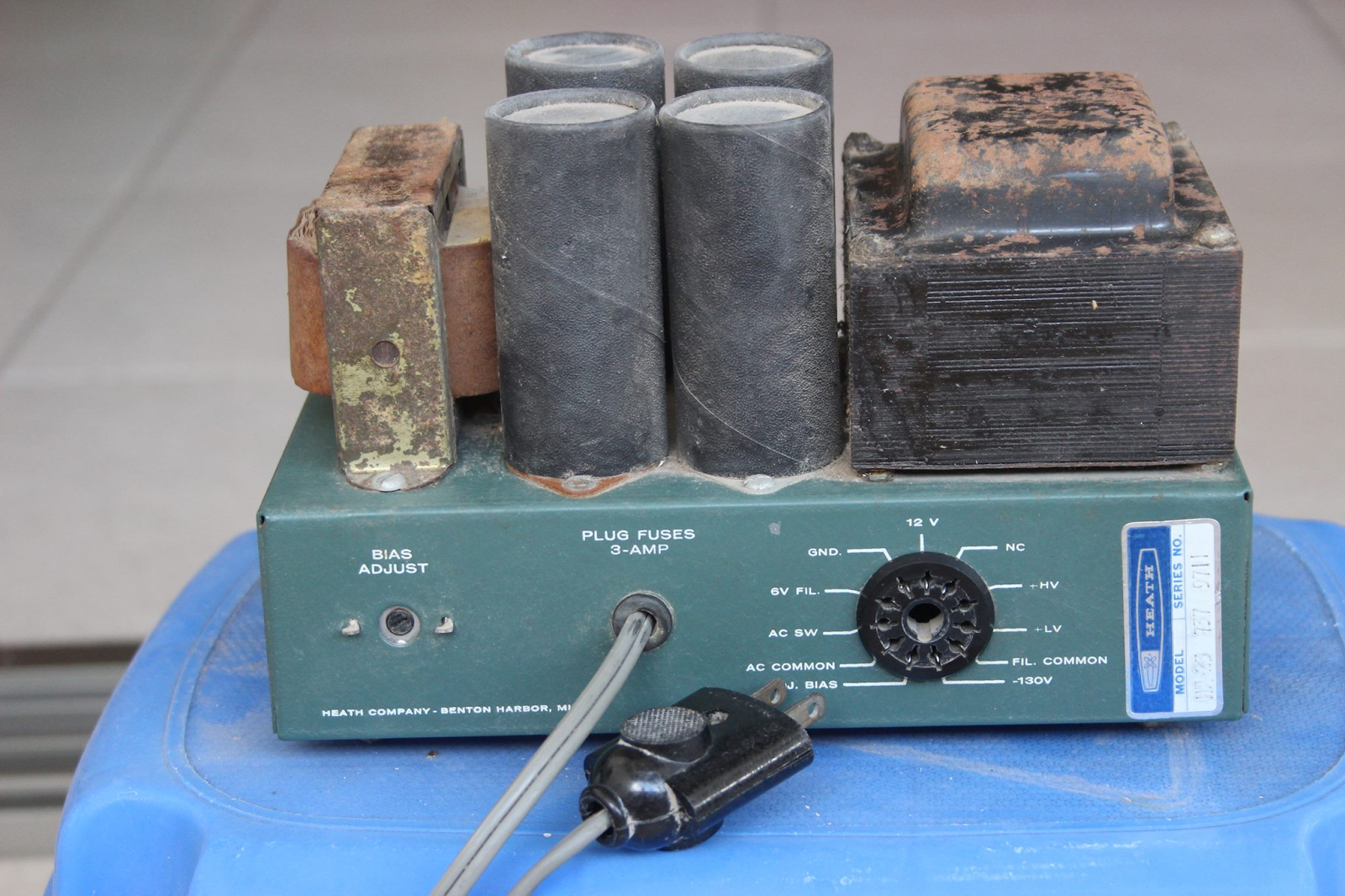
In the AWA Bulletins that Armand gave me at Winterfest, I saw mention of an AWA PC Board intended to allow for the upgrade of the venerable Heathkit HP-23 power supply.

I have an HP-23B. It came with my HW-101. I replaced the capacitors in the supply many years ago, but they were of marginal voltage specs back then (I think I was in the Dominican Republic) and they have likely dried out considerably since then. I am nervous about firing this thing up. I fear for the big transformer…

So I’m going to order the AWA’s upgrade PCB.

Of course, the danger (!) is that this could lead me back into the world of high voltage thermatrons. That HW-101 has been taunting me for years. It NEEDS restoration. The first step would be to fix up the Power Supply.


73. And one hand behind your back OM.

Help! Bill Needs Computer/Website/DNS Help!

Some SolderSmoke fans have noticed that many links to earlier podcasts (and other things) have disappeared from the SolderSmoke Daily News blog. This is my fault. I am trying to correct it, but have been having a tough time. This is definitely a problem that is outside my analog, discrete component comfort zone.

The host is Bluehost. They also are the DNS host. This morning I wrote to them explaining the problem:

— For many years I have had a website on Bluehost called soldersmoke.com. On this website I stored many (around 250) .mp3 files, a .rss. and other important files.

— On November 20, I created a WordPress site on bluehost: https://dqu…….

— On November 29, I attempted to have my Bluehost soldersmoke.com site point to the new WordPress site. I may have renamed the WordPress site.
— After carrying out this action on November 29, I was dismayed to find that all of the many .mp3 and .rss files I had on the soldersmoke.com site are no longer accessible.
— I have carried out backups of the soldersmoke.com site going back to November 15. While these backups appear successful, the files remain inaccessible.
— I think there is a pointing/naming/DNS problem that remains to be resolved.

— Please go back to the pointing/naming action I took on November 29 and undo or reverse this action so that the files that I have on the soldersmoke.com site are again accessible.

— I am not concerned about the new WordPress blog — can recreate this later.

With help from Dean KK4DAS we will today again attempt to fix this problem. But if anyone out there has any good ideas on how to fix this, please let me know.
Thanks, 73 Bill

The Herring Aid 5 Body Count

1) Bill Meara WB2QHL tries in summer 1976. Fails.

2) Rick WD5L tries in 1977. Can’t get the needed parts.

3) Kirk Kleinschmidt NT0Z tries and fails during the late 1970s.

4) Mike Bryce tries and fails.

5) Tony Mula K6QIC succeeds builds one (with Codzilla) 1977.

6) Builder unknown. I bought a HA5 at a hamfest in 2023. It works. barely. Had the C-14 cap.

7) WB5PRR built one. Featured in Feb 1980 QST

.

Jim Giammanco N5IB succeeds. Shows RX in Atlanticon 1999.

Bill Meara N2CQR build one in 2014 that works.

Doug Hendricks built a version of one in 1998 and got it working.

Glen Torr VK1FB built a version of this receiver and got it working around 1998.

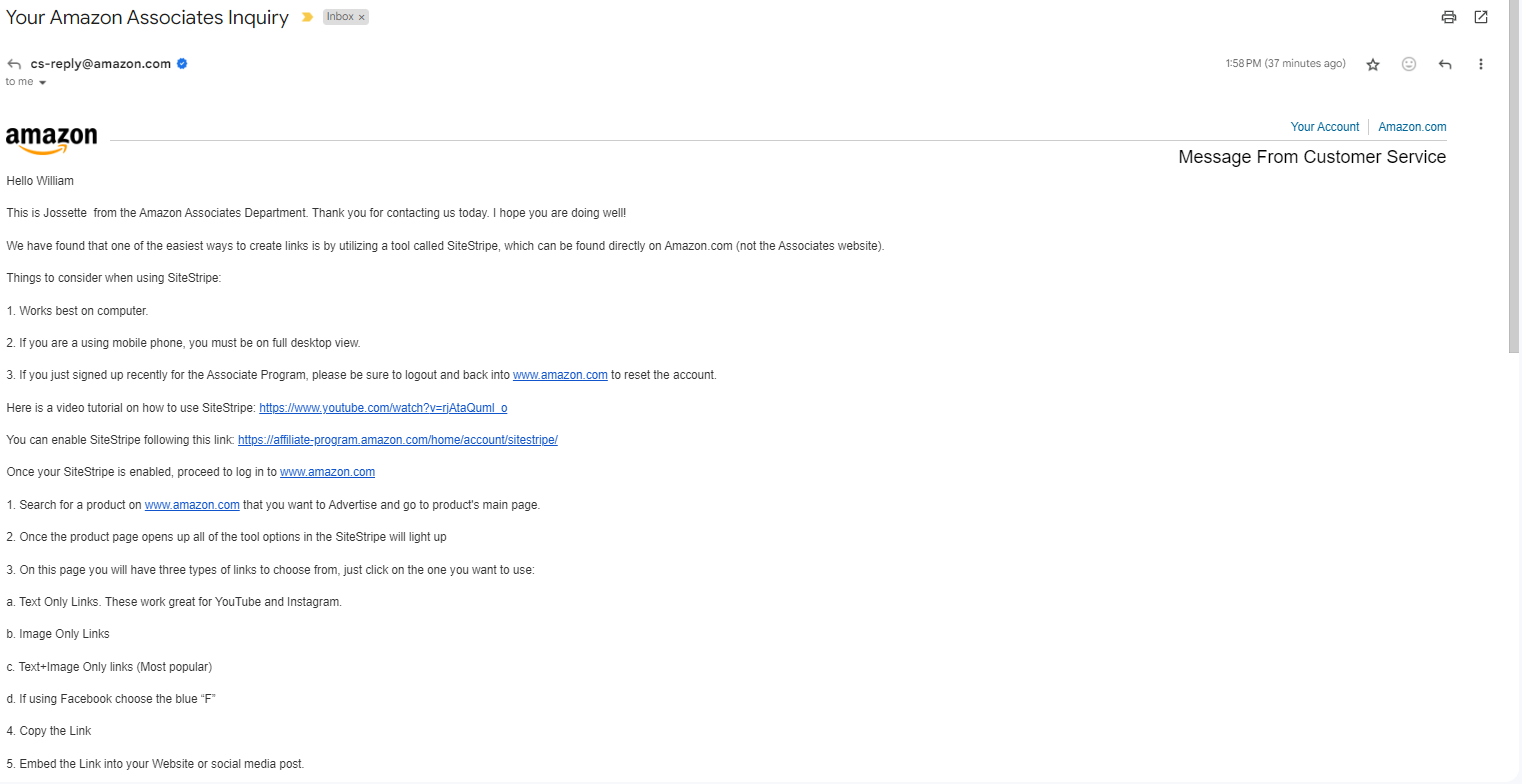
Bezos Bucks! New Amazon Link Working Well! Please use it!

Click on image for a better view

In the graph above you can see the Amazon Associates stats for SolderSmoke. While obviously I’m not going to get rich on this, it is nice to see that the new Amazon Associates link is working well. Note the difference between early September and late September.

The link is over here >>>>>>>>>>>>>>>>>>>>>>>>>>>>>

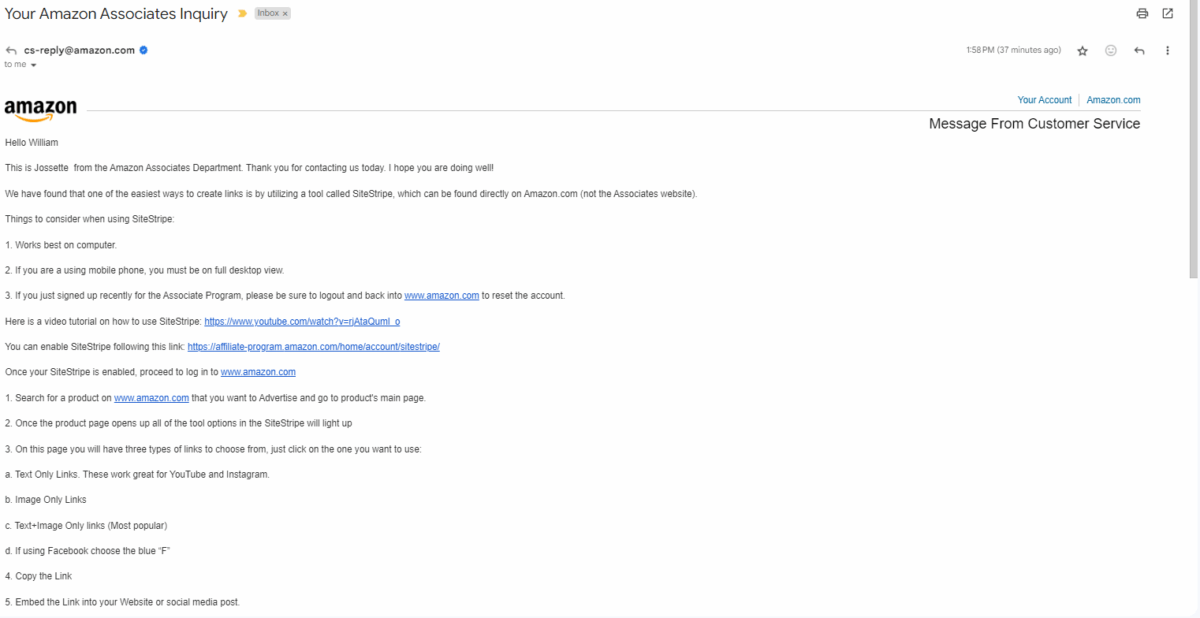
You can use it to buy anything on Amazon (not just the item that is advertised). Just start your search from the Amazon link on the right hand column of this blog, and buy the item within 24 hours of entry into the Amazon system and — CHA CHING for SolderSmoke! Thanks.

SolderSmoke Podcast #130 Feb 5, 2011 Trivia Questions! Recorded on a D-104! Heroic efforts to Suppresssss Ssssibilant SSSSs

February 5, 2011

For many reasons, this is a pretty amazing SolderSmoke episode. We presented some radio-electronic trivia questions. This is the one where I used an Astatic D-104 microphone to record the show. I even describe putting Starburst candies, Chicklet gum, and even Duct Tape on my teeth in an effort to get rid of the sibilant S problem. This was truly heroic podcasting my friends! There is lots of other great stuff in this one. Maria arrives in the shack with both Tyson the cat and Cappuccio the dog! Lots of space talk. The story of Grote Reber’s name. Much more: Some important trivia questions (answers will be given in the podcast): What is the connection between radio amateur (and pioneer radio astronomer) Grote Reber and world famous astronomer Edwin Hubble? In the world of radio-controlled helicopters, what is “TBE”? In Britain they have radio “rallies,” but at one time they had hamfests.” When did this happen? Only one terrain feature on Venus is named for a man. He is man of radio. Who is he? What music did Neil Armstrong listen to on his way to the moon? Plus: — The Air and Space Museums — Our music — The SolderSmoke D-104 — NASA asks for our help — Telescope repairs — A BFO for the Trans-O — Back on Echolink MAILBAG! Please send reports on the D-104 audio!

Talking about “Electronics Archaeology” and Early TV with Joh DL6ID

Joh: I agree. Radio archaeology is interesting and useful.


Yes, while he was reading the IRE Journal, Anderson probably needed more practical literature. The Scozzari articles would have been very useful, but the timing is a bit off for them to have been one of Anderson’s main sources of info: Scozzari’s articles appeared in October and November of 1939. But the experimental station that Shep described went on the air in February 1939. Also, Anderson was born in July 1918, Shep in July 1921. The earliest that Anderson’s TV demonstration could have taken place was February 1939 when Anderson was 20 years old and Shep was 17. Anderson probably started building this receiver sometime in 1938. There were in that year a lot of TV articles in QST and other ham magazines. For example, from December 1937 to May 1938, QST ran a series of articles on TV construction by Marshall Wilder. In October 1938 we see another article in QST by Sherman on “Building Television Receivers with Standard Cathode Ray Tubes.” My guess is that Anderson got useful info not only from the more theoretical articles in the IRE Journal, but also from the QST articles of 1937 and 1938. The 1939 articles by Scozzari may have been too late to have been useful to Anderson.

One of the hazards and problems with this kind of project was that you’d be building a receiver for which there was still no transmitter! But Anderson would have known that an on-the-air TV signal was on its way to the Chicago area. In March 1938 there was a press report that Zenith was preparing to transmit 400 line TV from an experimental station in the Chicago area. That may have been enough to push Anderson to melt solder. The first transmissions took place in early February 1939.

73 Bill

On Saturday, April 16, 2022, 02:14:13 PM EDT, Johannes wrote:


Hi Bill,
sometimes even radio-archeology is good fun 🙂
Initially I was hoping for something practical (ie “how-to”) from the pages of IRE in the time period in question: late 38/early 39. But nitty-gritty just didn´t show there – Instead it´s all quite particular, special or highly theoretical. Plus – there seems to be quite a gap in terms of reference in this particular journal for the five years between.
I don´t think IRE was Andersons sole source – You are probably on the right path searching the more “popular” journals for a clue:
Even Anderson would have been thankfull for proven layouts and circuits – Something a complex, high voltage multi-tube circuit might oppose, is being built “al fresco”.
Without any illustration (journal, book or actual existing rig to lay hands or eyes on…) I don´t quite understand, how such a project is even triggered: One was obviously strictly banned to just receiving/not transmitting, as such confined to an unforgiving reception mode unlikely to solve the complex frequency/modulation scheme just by trial and error. There was no abundance or variety in stations/programs, and obviously not much help from your peers. –> There isn´t just enough benefit or resource – but Anderson must have been a curious, enduring and devoted character. For that, too, Shep remebered him!
73 Joh
Gesendet: Samstag, 16. April 2022 um 17:25 Uhr
Von: “solder smoke”
An: “Johannes
Betreff: Re: Aw: Re: experimental TV in 1938
Joh: I listened to Shep’s description of Anderson’s receiver again. It is very clear to me that Anderson built this receiver himself from scratch.
For me, an number of things that Shep mentions seem to confirm this:
— Shep’s description Anderson’s search in the surplus electronics shops for strange esoteric parts. Sounded real.
— The fact that Anderson spent 3-6 months secretly working on something. It would take a skilled builder about that long.
— It fact that Anderson had already built “a basement full of electronic gear.” He had a lot of experience.
— Shep’s mention of how they all had to be careful with money, and that some parts were expensive.
— The fact that Anderson was reading the IRE Journal (my guess is that he got it from the library – he would not have spent the money on a subscription).
— Shep’s physical description of the receiver chassis. Sounds to me that he built it his way, with the power supply on the chassis.
Thanks for the IRE publication. The 1933 issue you sent would have been useful to Anderson, but I think the later articles by Scozzari in Radio and Television would have been even more useful. The IRE articles from 1933 seemed more theoretical. Have you found any other TV articles in IRE Journal close to 1938-1939 that might have been more practical?
Listening to Shep’s description again was very enlightening and inspirational.
73 Bill
On Saturday, April 16, 2022, 10:41:15 AM EDT, Johannes Aucktor wrote:
Hi Bill
I´m fond to believe the essentials of Shep´s story are correct 🙂
What I love probably most about it, it´s not alone the description of Anderson´s technical achievement, but the melange of his proud decency and secrecy he´s dealing with his fellow hams.
This way Shep´s impression and amazement is most comprehensible to his listeners – then and now!
Based on these early articles in QST or Radio&Television, its perfectly clear amateur TV reception was on-going and would be esp. interesting to the experiment-oriented ham – with probably not many stations were around to watch and listen to back then.
Professional/commercial TV sets would be out of question, pride- and penny-wise 😉
(Just the other day I was reading about an “unobtainable” TV IF-strip, used in early British Radar:
www.dos4ever.com/EF50/EF50.html – EG Bowen´s first hand account on it, “Radar Days” is in my mail by now!)
I was stumbling over the QST-advertisment in the backpages casually, looking for a reference list to Sherman´s publication. We are talking just five years of particular design after some seminal publications in the IRE Journal mentioned by Shep:
I´ve glanced through the 1936-39 volumes of Proc. IRE, hoping to find corroborate on Anderson´s membership status, but -alas- to no result so far.
Anyhow – it is a great story by Shep for sure! Along with these of the ill-modulated Heising transformer, the Indiana blizzard, or the Kentucky diner hold-up; to name a few I thoroughly enjoyed lately!
Thank you, Bill – and 73 de Joh
Gesendet: Samstag, 16. April 2022 um 12:23 Uhr
Von: “solder smoke”
An: “Johannes
Betreff: Re: experimental TV in 1938
Thanks Joh. That is really interesting. I had not seen that ad.
While there is the possibility that Anderson did not in fact homebrew his receiver, and instead used a kit or something built commercially, I think he did homebrew his receiver. Here’s why:
— Shep said Anderson built it. Shep would have spotted a commercial piece of gear or a kit. He was quite scornful of even Heathkits!
— Anderson was an accomplished homebrewer. He was using a nine tube superhet on the ham bands.
— Shep and his friends regularly scrounged for parts on Chicago’s radio row. Anderson could probably gotten what he needed there.
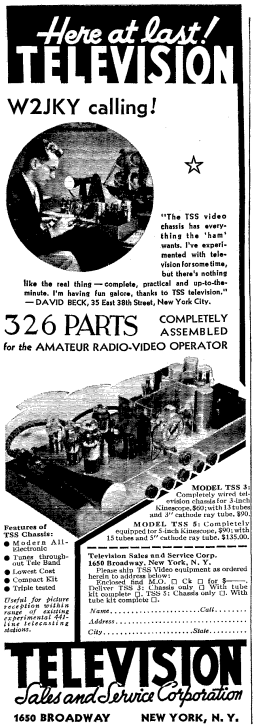
— Those TSS kits were EXPENSIVE. In today’s dollars $1,223 to $2,752. Teenagers in the Great Depression could never have afforded this.
— The ad you mention talks about a larger CRT — Shep said it was a 1 inch tube.
— Shep described a very large chassis: 25 inches by 28 inches. The TSS kit chassis looks smaller and more rectagular.
— Shep described the power transformer as being on a back corner — The TSS chassis has it on a front corner.
— Shep desctibes a lot of wires coming off the chassis — the Scorzzi receiver has those kids of wires, including dangerous plate connectors. The TSS does not.
As for the WBKB callsign, I think it is likely that the presenter just went ahead and used the callsign that he was familiar with and not the experimental call that the BKB station had been issued. or maybe Shep just knew that they were watching the WBKB station and remembered it that way.
One other possibility occurred to me. One of the newspaper clips from the period indicates that WBKB built several receivers for us in their initial tests and distributed them to scientists and others for the purpose of evaluating the system. Shep said Anderson was calling in with reports. But Shep also said that the station was soliciting reports from anyone capable of receiving the signal. Anderson could possibly have been given one of the sets built by WBKB. But I don’t think they would have used a cheap 1 inch oscilloscope tube. And I don’ think they would have loaned a receiver to a kid working in his parents’ basement. So again, I think Anderson did in fact — as Shep said — build it.
What do you think? Any ideas on how to get more info?
73 Bill
On Friday, April 15, 2022, 10:18:47 PM EDT, Johannes wrote:
Hi Bill,
I just enjoyed Shep´s great story on early TV and your research and findings.
Did you spot the ad, printed on page 94 in QST Oct 1938 ?
The TV set pictured there features the triangular bracket for the CRT as Shep described for Anderson´s rig.
Both commercial types work the 441-line picture format, which in 1939 was used in the Chicago area by W9XZV; W9XBK –> WBKB (Shep´s QSL) came some time later: cf. “KeithE4” post on
All the best & 73 de Joh DL6ID

Video of SolderSmoke Podcast #236

SolderSmoke Podcast #236 is available!

Podcast Posted on 1 April 2022:

http://soldersmoke.com/soldersmoke236.mp3

Winterfest! Many Boatanchors. Lots of old good analog test gear. Talk with Dean KK4DAS. Met up with Armand WA1UQO and Charles AI4OT.

Pete’s Bench:

— Looking for help in software development for MAX2870 board.
— Tapped Capacitance Impedance Matching
— The Pea Shooter (See N2USD’s version in videos
below).
— Tribal Knowledge on Making Enclosures

Bill’s Bench:

— 17-12 Band Imaging SSB Transceiver. It works on both bands.
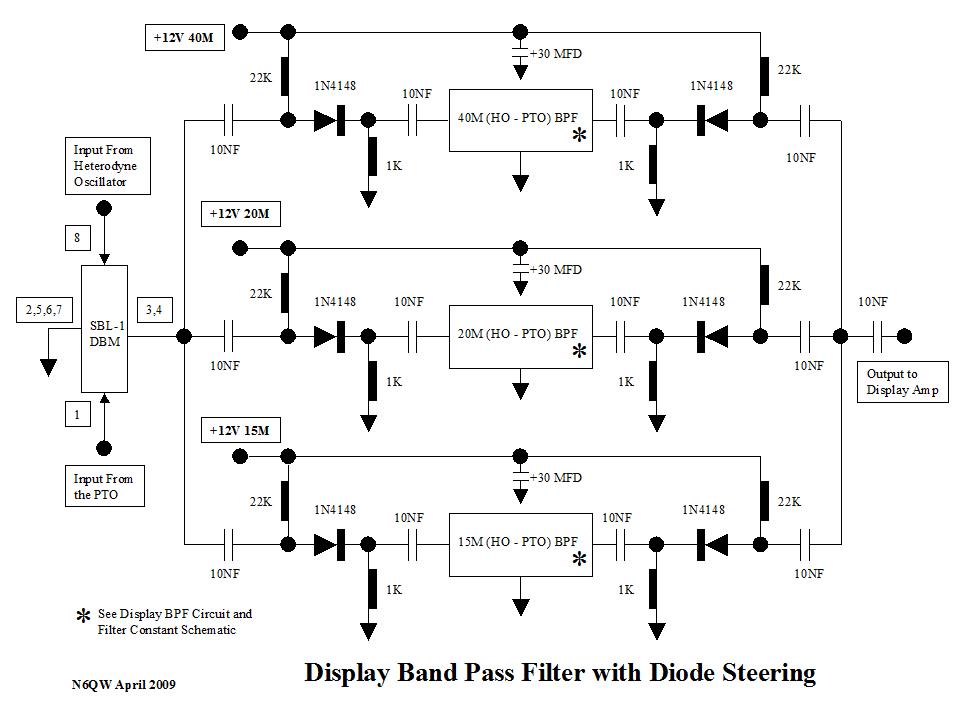
— Plan for Glowing Numerals (N6QW has been there and done that!)
— WU2D’s videos on VFOs.
— Temperature Compensation: HT-37 capacitor. FT-101 VFO, even in the ARC-5 receiver!
— Trying to get more rigorous about receiver design. Gain distribution, IMD, Dynamic Range, etc.
— Do I need a true RMS audio voltmeter? Or can I get the same info from freeware audio spectrum analyzer and soundcard?
— 6EA8s replace 6U8s in MMRX

SHAMELESS COMMERCE DIVISION: We have a sponsor!

PARTS CANDY out of Chicago produces quality test leads for your bench. The guy who runs the company is Carlos, and he is one of us. He is an electronic tinkerer. See the ad on the left hand column of the SolderSmoke blog. Just click on the picture of the test leads and you will be taken to Carlos’s ebay store. Go for it.

Mailbag

Walter KA4KXX in Orlando — Diodes in BITX Bilats — Why? Farhan says To prevent reverse junction of off transistor from conducting and clipping waveform.
Tony G4WIF — Audio test gear and G3ROO paraset
Todd K7TFC Pine boards, TIAs and 12 meters
Dean KK4DAS Ceramic Variable Oscillators on 40. Juliano Criteria?
Mike WU2D VFOs and Temp compensation. ARC-5s
Chris KD4PBJ A really nice parts care package — Thanks Chris!
Steve M0ECS. Inspired by SS, moved something off the Shelf or Box of Shame.
Jason KD2RKN Building a DC receiver. It is all our fault.
Chris Mannon in Indiana joining the CBLA
KC4GMH is listening!
Ed N2XDD has been armed with a 3.579 MHz crystal.
Harvey Wa3EIB working on his museum
Tim AG4RZ is BACK IN THE SOLDERSMOKE!
Fred KC5RT — an old friend — recommends Bangood RF sig gen for 88 bucks.
Shlomo 4X4LF listening and homebrewing from a Kibbutz in Israel.
Chuck KF8TI was a Peace Corps Volunteer in the Philippines.

Zigbee Radios on the Ingenuity Mars Helicopter

In his recent interview with Eric Guth, Courtney Duncan N5BF told us that the communication between the Ingenuity helicopter on Mars and the Perseverance rover is being handled by off-the-shelf Zigbee 900 MHz transceivers.

I did some Googling and found some more details on this:

—————————-

Once separated from the host spacecraft (lander or rover), the Mars Helicopter can only communicate to or becommanded from Earth via radio link. This link is implemented using a COTS 802:15:4 (Zig-Bee) standard 900 MHz chipset, SiFlex 02, originally manufactured by LS Research. Two identical SiFlex parts are used, one of which is an integral part of a base station mounted on the host spacecraft, the other being included in the helicopter electronics.


These radios are mounted on identical, custom PC boards which provide mechanical support, power, heat distribution,and other necessary infrastructure. The boards on each side of the link are connected to their respective custom antennas.


The helicopter antenna is a loaded quarter wave monopole positioned near the center of the solar panel (which also serves as ground plane) at the top of the entire helicopter assembly and is fed through a miniature coaxial cable routed through the mast to the electronics below. The radio is configured and exchanges data with the helicopter and base station system computers via UART.


One challenge in using off-the-shelf assemblies for electronics systems to be used on Mars is the low temperatures expected on the surface. At night, the antenna and cable assemblies will see temperatures as low as -140 C. Electronics assemblies on both base station and helicopter will be kept “warm” (not below -15 C) by heaters as required. Another challenge is antenna placement and accommodation on the larger host spacecraft. Each radio emits approximately 0.75 W power at 900 MHz with the board consuming up to 3 W supply power when transmitting and approximately 0.15 W while receiving. The link is designed to relay data at over-the-air rates of 20 kbps or 250 kbps over distances of
up to 1000 m.

A one-way data transmission mode is used to recover data from the helicopter in real time during its brief sorties.When landed, a secure two-way mode is used. Due to protocol overhead and channel management, a maximum return throughput in flight of 200 kbps is expected while two-way throughputs as low as 10 kbps are supported if required by marginal, landed circumstances.”


A citation for the above quoted text: https://trs.jpl.nasa.gov/bitstream/handle/2…L%2317-6243.pdf I believe.

A more detailed reference for the telecom system with some good detail about the helicopter in general is https://trs.jpl.nasa.gov/bitstream/handle/2…L%2318-3381.pdf

—————————-
Data Sheet from Mouser: