Skip to content
SolderSmoke Daily News — Ham Radio Blog

SolderSmoke Daily News — Ham Radio Blog

Serving the worldwide community of radio-electronic homebrewers. Providing blog support to the SolderSmoke podcast: http://soldersmoke.com

Category: UK

Colin Finishes His BITX

Colin Finishes His BITX

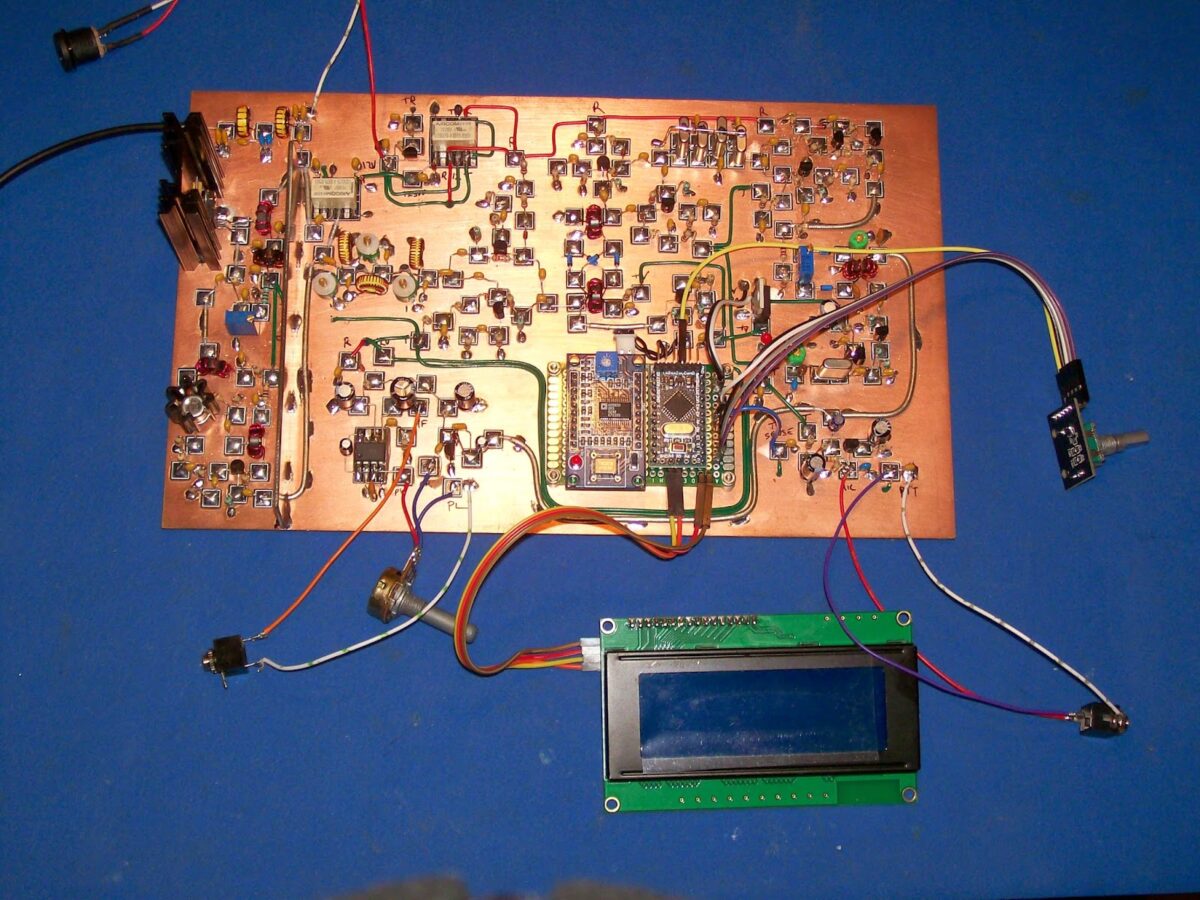
Wow, that is one beautiful BITX. Nicely done Colin. But I must say that you are exhibiting an almost inhuman degree of patience! Who needs a case? Fire that thing up and make the traditional “still-on-the-workbench” initial contact.
Hi Guys,

I loved the last SolderSmoke, it was another great episode. It really does amaze me, that a few years ago, hams were saying that it was too difficult to build your own gear that would be anywhere near to the commercial stuff, but here we are with Arduinos etc bringing powerful functionality to the masses. I couldn’t have imagined building an SSB rig with a pretty and functional LCD screen when I started in ham radio.

Bill, first regens, now SDRs? Amazing! I exchanged a few words with George Dobbs about your change of heart towards regenerative receivers, he seemed genuinely pleased. 🙂

Pete, your Si5351 work with the pretty displays is cool, I can see me getting pretty hooked! I have the Si5351 board, Paul M0XPD advised me to buy it. I’d love to build another SSB rig in a smaller box for regular SOTA activating. I must look into the pretty little displays and have a play with the Si5351. I notice that Hans Summers has now put out a cheap Si5351 based kit, handy for us guys in Eu. http://www.hanssummers.com/synth.html

I finished building my BITX board yesterday but wanted to have a sleep before applying power! Today I carefully checked the circuit for errors and found none, phew! I fired the rig up gently, watching the current carefully. I wound up the TX bias to 50mA as stated in the MKARS80 instructions, all went well. I plugged in the mic and spoke – BANG! – Everything went off. Oops – I had used a 500mA fuse for initial safety and forgot to swap it for the bigger one! I fitted a 1.6A fuse and hey presto, all was fine. I was absolutely amazed and to be honest, rather proud of myself. I think the TX is a little bit too hot, my meter is showing about 6W on voice peaks- eek! The rig seems to be perfectly behaved though, no wierd effects seem to be happening. I can just turn the bias down a bit, right?

Anyway, I was happy with my progress so I finished for the day. I still need to investigate and probably tweak the carrier suppression.

I spent a short while talking into a dummy load, using my FT817 to monitor the transmission. My 2yr old son was interested in my voice coming out of the 817’sspeaker!

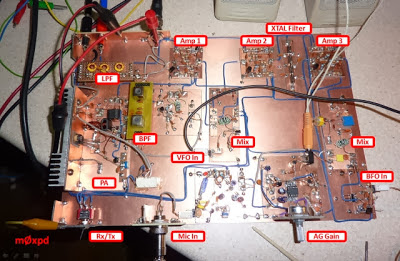
Thanks for all the guidance and help along the way, I’m elated that I’ve built a voice rig that works! I’ve attached a pic of my finished board, I only just squeezed the circuit on, but isn’t she pretty? 🙂

Can’t wait to get the rig built into it’s case and score that first QSO.
73, Colin, M1BUU

Our book: “SolderSmoke — Global Adventures in Wireless Electronics” http://soldersmoke.com/book.htm Our coffee mugs, T-Shirts, bumper stickers: http://www.cafepress.com/SolderSmoke Our Book Store: http://astore.amazon.com/contracross-20

Author Peter MarksPosted on 17 January 201521 July 2025Categories Arduino, BITX20, Dobbs-George, Juliano -- Pete, UK3 Comments on Colin Finishes His BITX

Colin Gets His BITX Receiver Going

Colin Gets His BITX Receiver Going
Pete and I congratulated Colin on the First Sigs heard by his BITX (sort of like First Light for a telescope.) He is clearly following the advice offered by Farhan in the original BITX20 article: Take a break when the receiver is done; sit back to enjoy the sounds of success. I told Colin that having a small error in the build, then finding it and fixing it, well, that’s icing on the cake OM. This also shows the benefit of having an oscilloscope. Here is Colin’s report:
Hi Pete and Bill,
I really enjoyed the latest SolderSmoke! I think you two have got a winning formula, humour interspersed with valuable technical knowledge. Some podcasts are just too serious, there’s nothing wrong with having fun in your hobby!
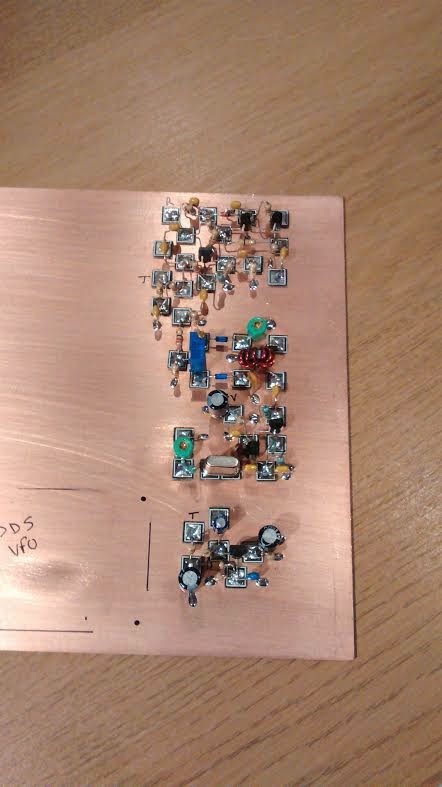
Progress is slow here, as always, but each week I have managed to move a little bit further forward. This week I aligned my BITX band pass filter and made a rough measurement of my crystal filter using the DDS signal generator that I built last week.
My oscilloscope is a Tektronix 465, older than me I believe! Of course there is no fancy signal level readout like the modern digital scopes, so I had to just peak the injected signal through the crystal filter and measure the frequency using a frequency counter connected to the IF amp. I followed the BITX ver 3 build instructions and my results seemed to match very closely to the Indian kit. I’m going to set my BFO at the -20dB from peak level as suggested in the ver3 instructions, I guess I can fine tune the setting later.
At first I had no signal making it out of the last RX IF amp, I traced the signal right through to the base of the first transistor but then the signal was lost. I had thought that band conditions were poor when I tried my BITX in RX last week when in fact it turns out that I’d made a small mistake building the IF amplifier that follows the crystal filter! I had wired the 4k7 resistor in the wrong place! I made the circuit good and hey presto, lots of signal coming out of the amp!
I was eager to give the receiver another try. On Fridays work finishes at 1pm, so a great chance to try out my rig during daylight hours. I hooked up the rig to a random piece of wire and I was amazed by the great noises coming from the speaker! I hadn’t even set the BFO but voices were just leaping out. Man that rig has a lot of AF gain! I obtained a switched 10k log pot which I intend to use for power on and AF gain so hopefully the volume control will be OK. As a side note, it was nice to hear HF0YOTA down in the CW portion, I’m guessing that it is youngsters on the air station, I must do a search on the call later.
73, Colin M1BUU
So the little signal generator has already earned it’s keep. I guess I can would have been scratching my head for a while without it!

Our book: “SolderSmoke — Global Adventures in Wireless Electronics” http://soldersmoke.com/book.htm Our coffee mugs, T-Shirts, bumper stickers: http://www.cafepress.com/SolderSmoke Our Book Store: http://astore.amazon.com/contracross-20
Author Peter MarksPosted on 27 December 201421 July 2025Categories BITX20, Juliano -- Pete, test gear, troubleshooting, UKLeave a comment on Colin Gets His BITX Receiver Going

Graham G4UEK has THE KNACK

Thanks to Stephen for alerting me to the homebrew page of Graham G4UEK:

http://www.sandrock.org.uk/radiostuff/Rigs.htm

I really liked the description of his progress as a homebrewer, and the way he was helped by G-QRP, SPRAT and Ian G3ROO. FB.

Graham has a nice personal ham radio story:

http://www.sandrock.org.uk/radiostuff/Radio.htm

Thanks Stephen! Thanks Graham!

Our book: “SolderSmoke — Global Adventures in Wireless Electronics” http://soldersmoke.com/book.htm Our coffee mugs, T-Shirts, bumper stickers: http://www.cafepress.com/SolderSmoke Our Book Store: http://astore.amazon.com/contracross-20

Author Peter MarksPosted on 30 November 2014Categories Knack Stories, SPRAT, UKLeave a comment on Graham G4UEK has THE KNACK

Colin’s BITX is Receiving!

Colin’s BITX is Receiving!
Wow, quite a bit of progress at M1BUU since our last look (see below). I must admit, that Arduino DDS board looks quite nice sitting there in the VFO territory. In his original BITX20 article Farhan recommends a pause before the construction of the final portions of the transmitter — the builder is advised to sit back and enjoy the receiver that has just been created. Colin is at that point! Congratulations Colin. He has noted that his board is a bit(x) smaller than mine. Maybe he should stick with Farhan’s recommendation and build the PA and driver on a separate board. This will also help prevent the dreaded oscillations — no need to tempt fate or anger the radio gods!
Hi Pete,

Another great SolderSmoke episode this weekend, I really like the humour between you and Bill! I listened to SS whilst melting solder on my BITX project.

I had really wanted to get my BITX working as a receiver before the end of the weekend, but Lewis Hamilton and his (successful) bid to become Formula 1 World Champion, put an end to that idea! I also decided that I wanted to buy some better quality capacitors for the band pass filter, so I’ve ordered them today.

I fired up the receiver chain for the first time this evening from where the BPF should be, right through to the AF amp, I’m pleased to report that I seem to have created a working superhet receiver! I heard some BC breakthrough at certain points of the tuning range and the rig receives the second harmonic of my Rishworth Buildathon 40m transmitter beautifully (on right part of dial too!). I hadn’t tested the RX IF amps or AF amp before, but they seem to be doing just fine.

I’m so pleased to have got so far, and I’m very pleased with the build. That big copper clad board doesn’t look so big now, but I think I have room for the TX/RX switch, BPF, RF driver, RF PA and LPF which I still need to add.
Thanks for the encouragement and advice so far, I doubt I’d be feeling so elated at this point without it!
This is going to be a really cool rig!
73, Colin M1BUU

Hi Colin,
Two words come to mind: Absolutely Superb! Wow that is such a work of art. I may never show another one of my projects as you have set the standard and benchmark.
You also have demonstrated building from the back end which we discussed in SS168. Now what you have built is a part of the test system.
Really outstanding. Be sure and video your 1st qso and share on You Tube.
Bravo!
73’s
Pete

Our book: “SolderSmoke — Global Adventures in Wireless Electronics” http://soldersmoke.com/book.htm Our coffee mugs, T-Shirts, bumper stickers: http://www.cafepress.com/SolderSmoke Our Book Store: http://astore.amazon.com/contracross-20

Author Peter MarksPosted on 26 November 201421 July 2025Categories Arduino, BITX20, Farhan, Juliano -- Pete, UKLeave a comment on Colin’s BITX is Receiving!

Colin’s BITX

Colin’s BITX

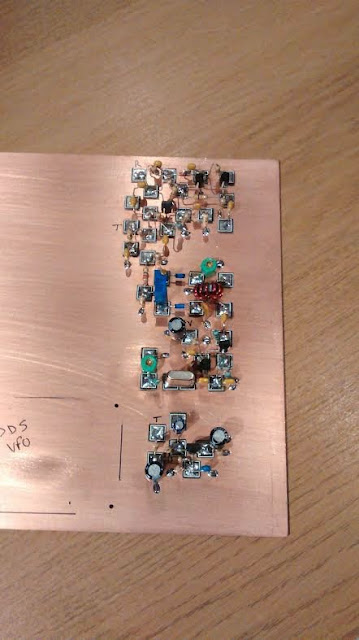
With advice and tribal knowledge from N6QW and MeSquares from W1REX, Colin M1BUU, is making excellent progress on his BITX. I see that he has some territory on the board reserved for a DDS VFO. That’s fine, but here’s and idea for Colin and other builders: Why not build it with the standard VFO first and then add the DDS or Si570 VFO later, perhaps as an external accessory? That way you get the experience of building an LC VFO — the full BITX experience.

Yea, it is hard to imagine Paul M0XPD as a newcomer to the hobby such a short time ago — he is definitely now in the ranks of the esteemed digital Elmers.

And yes Colin, we do hope you avoid unwanted oscillations. Because of Farhan’s great design you have a good shot at avoiding this plague. But be prepared OM. It happens to the best of us. A lot. Stiff upper lip! Never give in!
*************
Hi Bill,
I enjoyed your video about your Arduino experiment. You bet me to it! I’m really looking forward to getting my version of an Arduino powered BITX up and running.
Steady progress is being made, yesterday I added my first bidirectional amplifier to the build. I now have the mic amp, BFO, balanced modulator and first amp completed. I tested the BFO on it’s own and got a respectable looking signal out of it and with a good swing below 10MHz.
Next I need to add the crystal filter, second IF amp and mixer. Pete’s video will help for the mixer! BTW, I’m using the ver3 schematic but I intend to use the ver1 band pass filter.
I set out building the circuit following the N2CQR layout diagram but I’ve already run short on space! I do have a good excuse though, my board is smaller than yours (10″x6″).
Despite my best intentions, I’m falling back towards old habits of making my circuits physically small. I’m using MeSquares in order to try and force myself to space things out a bit. I do hope that I don’t end up with any unwanted coupling!
I must try hard to leave lots of space between the next bits of circuit.
I was listening to SolderSmoke 104 today and Paul M0XPD was introduced as a new ham. Little did we know that Paul would become such a big player!
73, Colin M1BUU

Our book: “SolderSmoke — Global Adventures in Wireless Electronics” http://soldersmoke.com/book.htm Our coffee mugs, T-Shirts, bumper stickers: http://www.cafepress.com/SolderSmoke Our Book Store: http://astore.amazon.com/contracross-20
Author Peter MarksPosted on 13 November 201421 July 2025Categories Arduino, BITX20, Farhan, Harper -- Rex, Juliano -- Pete, UKLeave a comment on Colin’s BITX

SW Echo Theory Confirmed By a BBC Engineer

SW Echo Theory Confirmed By a BBC Engineer


BBC Relay Station Singapore


Hi Bill,
I heard your description of the echo on your podcast and before listening I knew the cause – but I think you know that now!

Yes, it’s from two separate transmitters, and quite common, though not usually noticed.
It has nothing to do with path length differences – the longest round-the-world echo via the ionosphere is only about 0.15 seconds – so anything more has a different cause.
It’s from the audio feed to the transmitter. Your regen receiver picked up two transmitters on different frequencies. It was very noticeable before transmitters used digital land-line feeds, just analogue and satellite.

On a BBC SW frequency (forget the which one now) one tx was in UK and the other in Singapore, on the same frequency with the same programme to completely different service areas. When propagation was right and listening in Europe, the UK signal fed by analogue audio from Bush House came first and the Singapore tx came with two geostationary satellite delays later, plus the tiny bit of UK-Singapore ionospheric path difference.

Now it’s worse because there are all sorts of digital delays via land-line and satellite, although using the same frequency for the same service in not common.

In the UK Absolute Radio on AM medium-wave has multiple transmitters (mostly 1215 kHz and 1197 kHz) on the same frequency which are audible at night. If you listen carefully you can often hear multiple (up to FOUR!) echoes from different transmitters all being fed by different internet feeds/satellite links with varying delays.

As an ex-BBC engineer, I can tell you that in the old days not only were these AM medium-wave group stations all synched to within 0.05Hz, but the phase of the modulation was adjusted so all tramsitters were modulating in phase! Now the commercial boys have taken over most of these syched groups, not only are the frequencies all over the place, but the modulation isn’t even time delayed to match, let alone synchronized! Some even put diferent commercials in the breaks so if you’re geographically between stations you get a complete, unlistenable-to mess. Apparently these days that’s ok.

Why did we bother…?

Anyway, I hope this adds to and confirms your findings.
73,
Ian Liston-Smith, G4JQT

(A grumpy old retired BBC Engineer)


Our book: “SolderSmoke — Global Adventures in Wireless Electronics” http://soldersmoke.com/book.htm Our coffee mugs, T-Shirts, bumper stickers: http://www.cafepress.com/SolderSmoke Our Book Store: http://astore.amazon.com/contracross-20

Author Peter MarksPosted on 15 October 201421 July 2025Categories Short Wave Listening, Singapore, UK1 Comment on SW Echo Theory Confirmed By a BBC Engineer

SolderSmoke Interview on ICQ Podcast

SolderSmoke Interview on ICQ Podcast

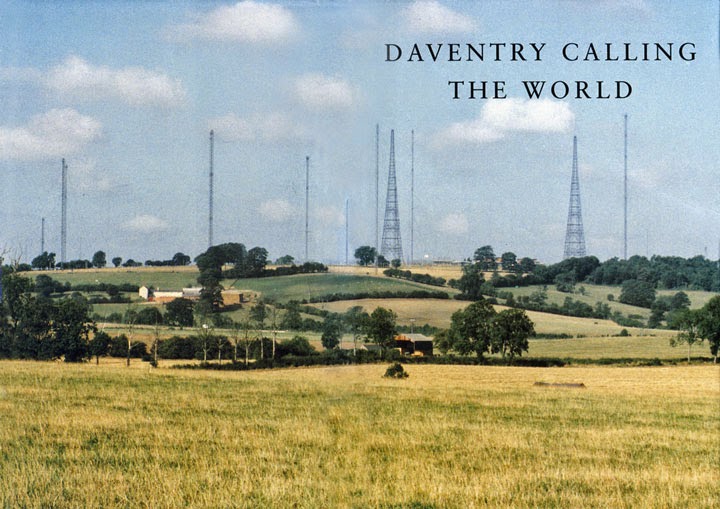
Colin and Martin of the ICQ Podcast were kind enough to invite me in for an interview. I really enjoyed our talk. We covered a lot of ground, everything from podcast history, to regens and BITXs and Arduinos. I think SolderSmoke podcast listeners will enjoy this. Thanks Martin! Thanks Colin! Here it is:

http://icqpodcast.com/download-the-show/2014/9/7/series-seven-episode-eighteen-bill-meara-n2cqr-07-september-2014

Our book: “SolderSmoke — Global Adventures in Wireless Electronics” http://soldersmoke.com/book.htm Our coffee mugs, T-Shirts, bumper stickers: http://www.cafepress.com/SolderSmoke Our Book Store: http://astore.amazon.com/contracross-20
Author Peter MarksPosted on 7 September 201421 July 2025Categories SolderSmoke Podcast, UKLeave a comment on SolderSmoke Interview on ICQ Podcast

Regen Madness

Regen Madness

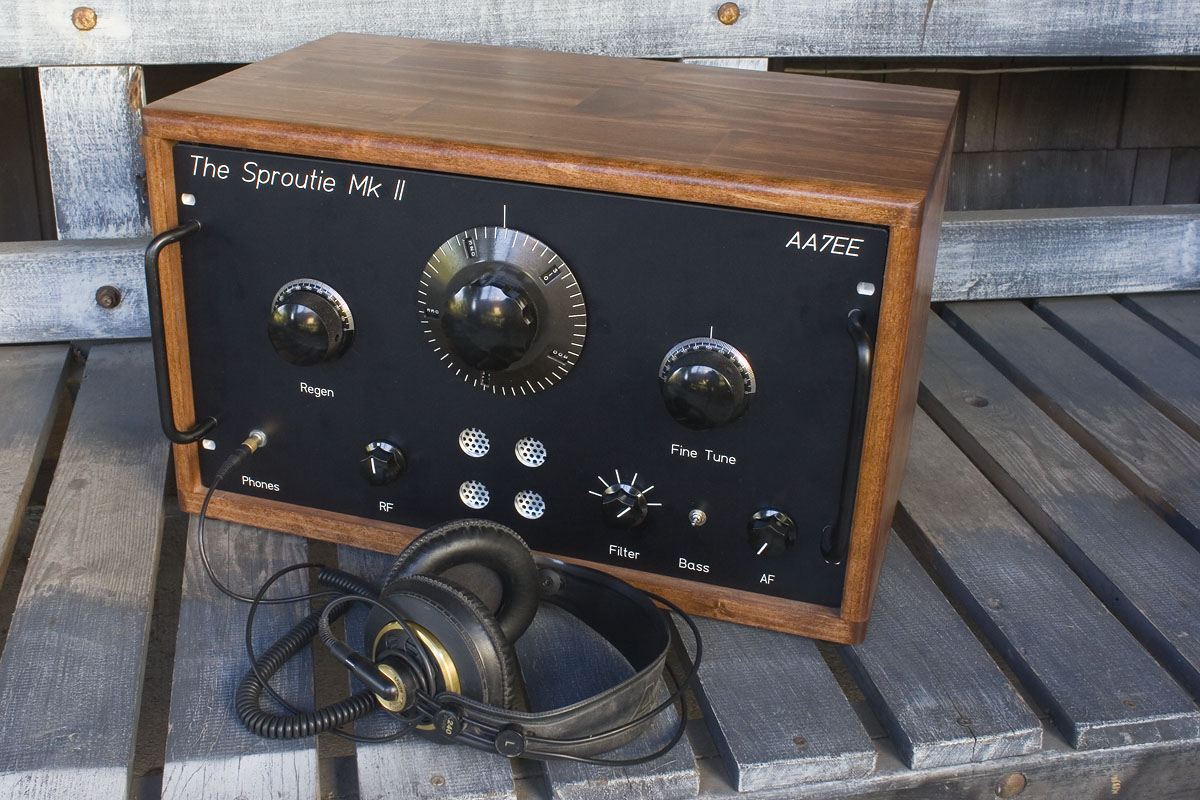
Dave, AA7EE, has a really nice blog article about his experiences with regen receivers. He writes about a regen kit he built as a kid (pictured above) and goes on to describe in beautiful detail a regen he built recently using a combination of old tech and new tech:
http://aa7ee.wordpress.com/2014/08/21/the-sproutie-a-general-coverage-regen-receiver-with-plug-in-coils/

I agree with Dave when he notes that regens are unfairly thought of as mere novelties. My old “King’s Speech” regen (below) is a very useful shortwave listening receiver and could easily be used for 40 meter CW contacts. It is even stable enough for SSB.

Our book: “SolderSmoke — Global Adventures in Wireless Electronics” http://soldersmoke.com/book.htm Our coffee mugs, T-Shirts, bumper stickers: http://www.cafepress.com/SolderSmoke Our Book Store: http://astore.amazon.com/contracross-20

Author Peter MarksPosted on 26 August 201421 July 2025Categories Regens, Short Wave Listening, UK1 Comment on Regen Madness

Seized up Variable Capacitor — Any ideas?

Seized up Variable Capacitor — Any ideas?

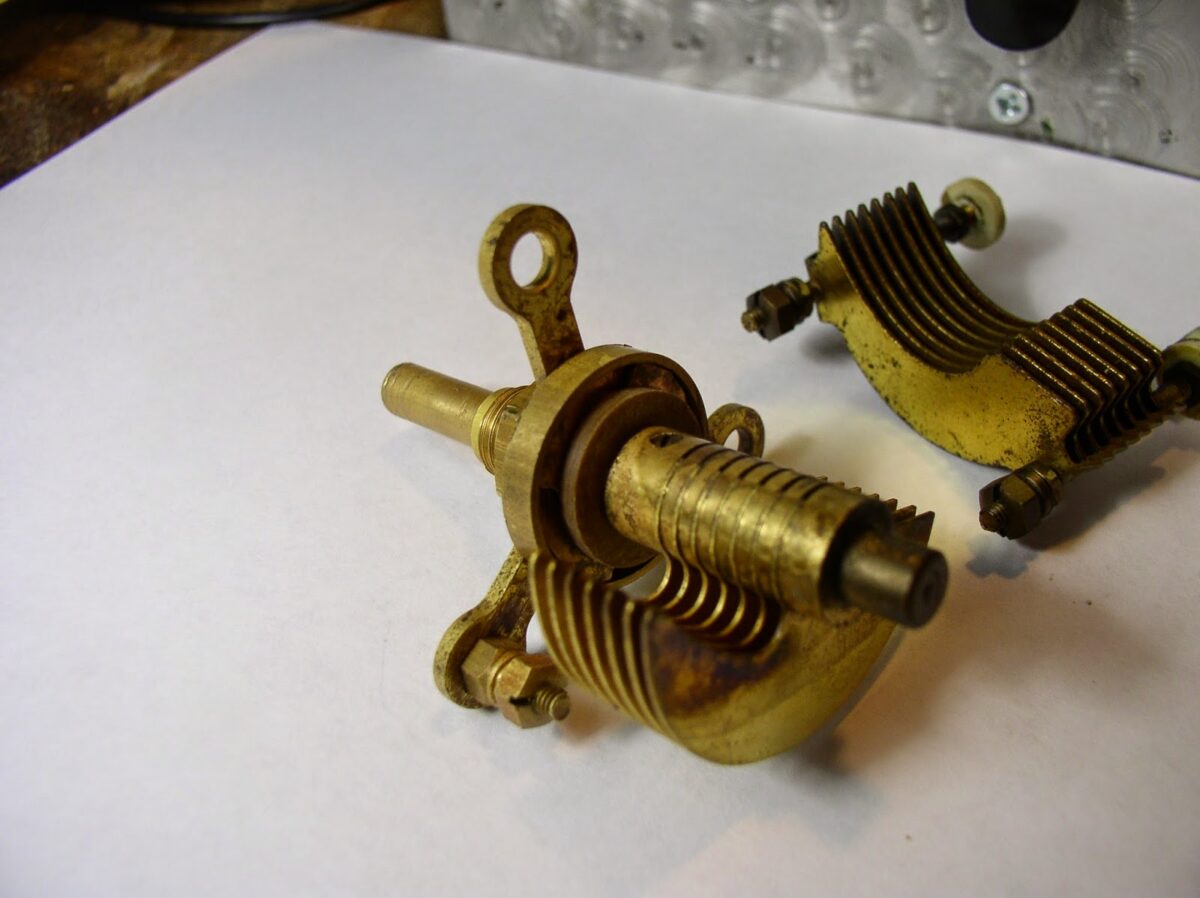
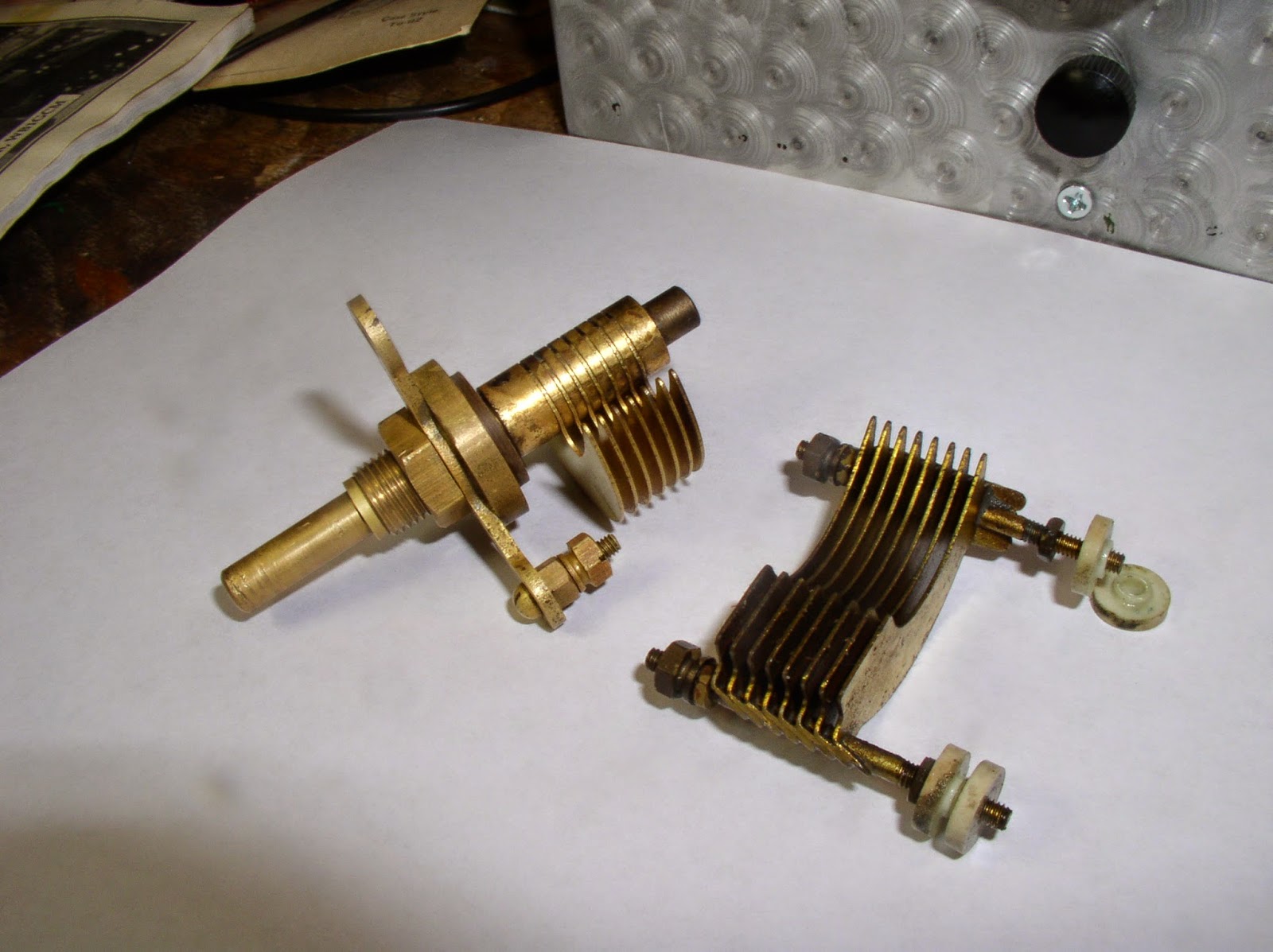
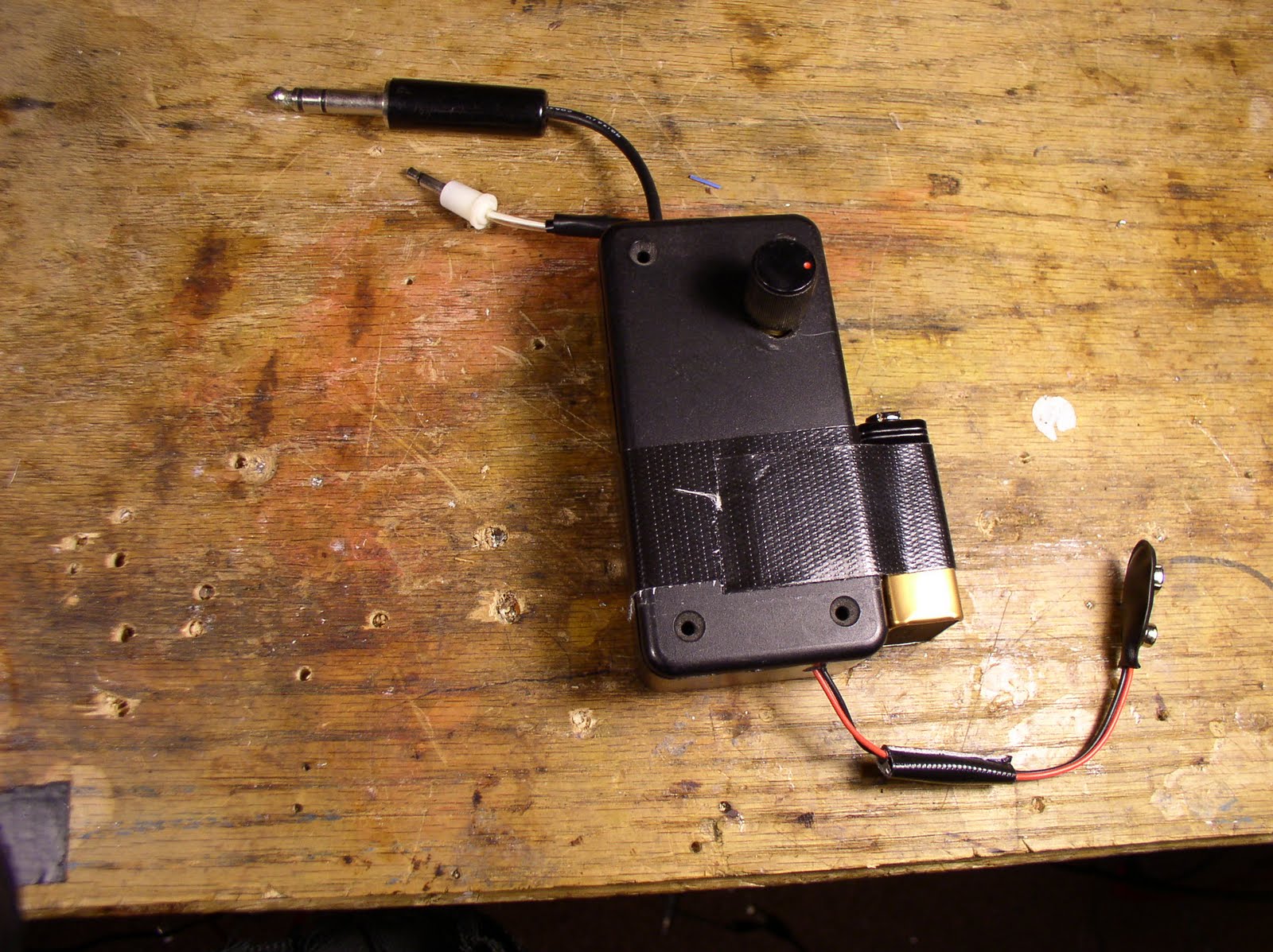
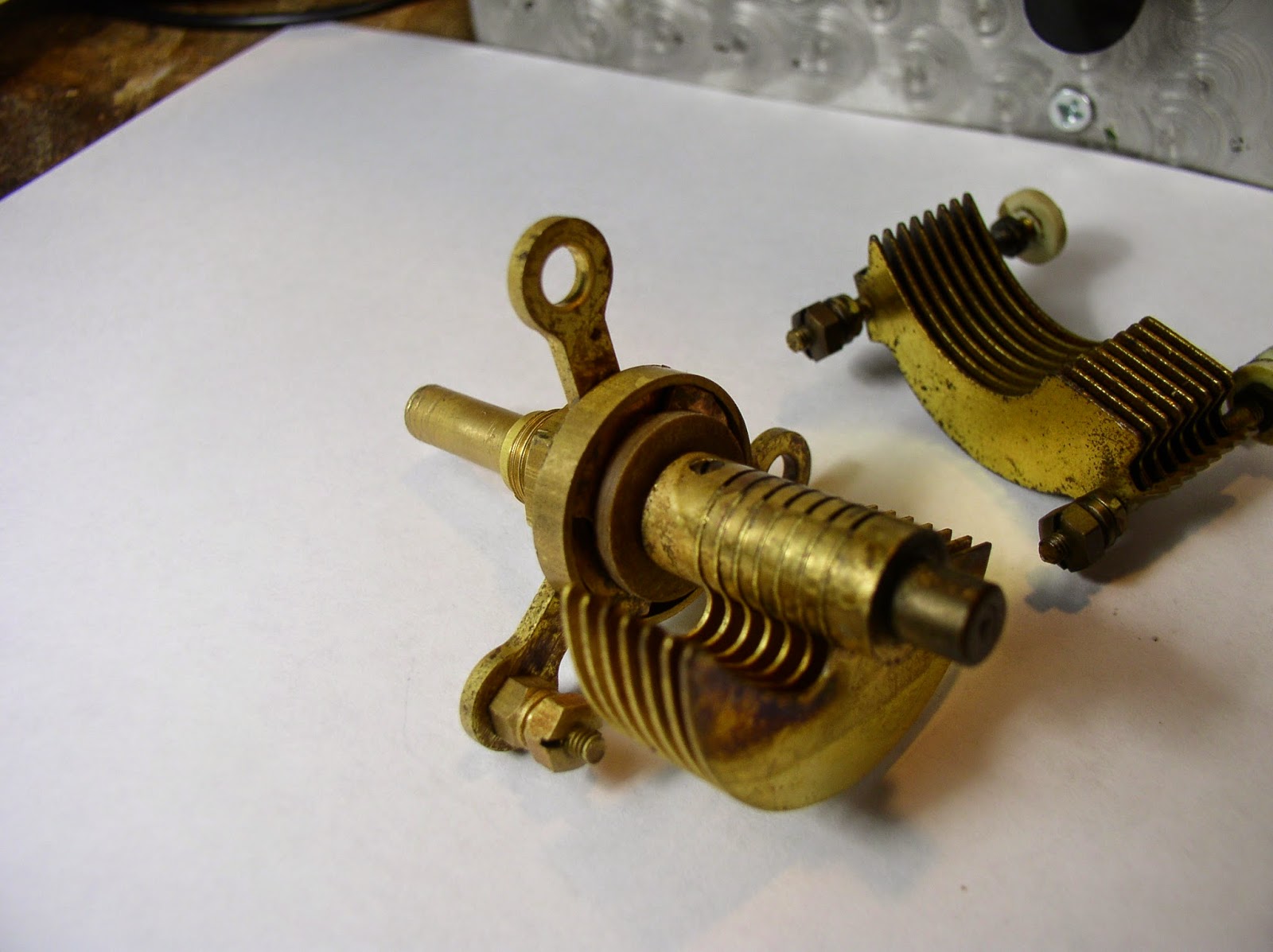
Perhaps in retaliation for all the bad things I’ve said about regens over the years, the main tuning cap in the old regen I’ve been working on suddenly went from completely loose to totally stiff. I can turn it, but it is too tight for the old vernier drive in the regen. I have replaced it with another cap, but this part was kind of the star of the show, situated as it was several inches above the chassis, connected to the tuning control by a long shaft. I’ve tried squirting WD-40 in there — no joy. I can’t even figure out how to open up the part of the cap where the ball bearings should be. It is an OLD Eddystone from England. Any ideas?

Our book: “SolderSmoke — Global Adventures in Wireless Electronics” http://soldersmoke.com/book.htm Our coffee mugs, T-Shirts, bumper stickers: http://www.cafepress.com/SolderSmoke Our Book Store: http://astore.amazon.com/contracross-20

Author Peter MarksPosted on 22 August 201422 July 2025Categories Old radio, Regens, repair, UK7 Comments on Seized up Variable Capacitor — Any ideas?

Video: Regenerative Receiver Project!!!

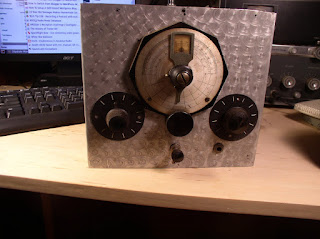
Pete Juliano and Grayson Evans are luring me back into the world of tubes and (gasp!) regen receivers.

Our book: “SolderSmoke — Global Adventures in Wireless Electronics” http://soldersmoke.com/book.htm Our coffee mugs, T-Shirts, bumper stickers: http://www.cafepress.com/SolderSmoke Our Book Store: http://astore.amazon.com/contracross-20
Author Peter MarksPosted on 2 August 2014Categories Juliano -- Pete, Regens, Tubes, UK, video4 Comments on Video: Regenerative Receiver Project!!!

M0XPD Goes 3D with Boxed BITX with Digi-Hinge!

M0XPD Goes 3D with Boxed BITX with Digi-Hinge!

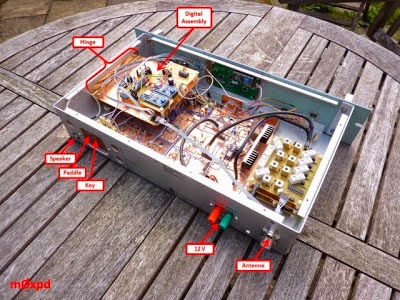
Paul, MOXPD, has put his BITX-based rig in a proper box. In spite of his recent collaboration with famed miniturizer Pete Juliano, Paul used a BIG box. It is not quite milk carton size, but it is getting there. Well done Paul. I really like the way Paul kept the digital and analog elements in different dimensions. The digi bit is sort of floating above the main analog board (almost in a “cloud”!). In SolderSmoke 163 Pete Juliano mentioned a downside of this kind of stacking: it makes it hard to get to the main board. Paul ingeniously solved this problem by putting the digital board on a hinge. Excellent. This will prevent you from becoming “unhinged” when the time comes to fix or modify the main board.

Here are all the details on Paul’s project:
http://m0xpd.blogspot.co.uk/2014/07/boxing-clever.html

Our book: “SolderSmoke — Global Adventures in Wireless Electronics” http://soldersmoke.com/book.htm Our coffee mugs, T-Shirts, bumper stickers: http://www.cafepress.com/SolderSmoke Our Book Store: http://astore.amazon.com/contracross-20
Author Peter MarksPosted on 30 July 201421 July 2025Categories Arduino, BITX20, Juliano -- Pete, UKLeave a comment on M0XPD Goes 3D with Boxed BITX with Digi-Hinge!

I Wrote Another Book

I Wrote Another Book

This one is not about radio or electronics, but over the years many SolderSmoke listeners have written in saying that they liked the opening “travelogue” portion of the podcast. This book may appeal to them. It might also be of interest to spouses who’ve been hearing about these “soldersmoke people.” This would be, I think, a good “beach book.”

The title is: “Us and Them — An American Family Spends Ten Years with Foreigners”

Here’s the description:

What happens if you take an American family and send them to Europe for ten years? In the summer of 2000, Bill and Elisa Meara, accompanied by 2 year-old Billy and 4 month-old Maria, left their home in the suburbs of Washington, D.C. and moved to the Azores. There they experienced the highs and lows of diplomatic life on a small distant island. After three years in the Azores, they spent four years London and three years in Rome. Overseas they lived in two houses and two apartments, went to five schools, used four different health care systems, experienced one earthquake, 9-11, the terrorist attack on London, tea with the Queen, the election of Barack Obama… and all the ordinary things that families go through. They lived mostly with the locals, learned Portuguese, Italian, and a bit of Cockney, and made many friends (foreign friends!) They returned to the United States in 2010 with a changed view of the world. This is their story.

In print form is available from Amazon and from Lulu:

AMAZON: http://www.amazon.com/Us-Them-American-Family-Foreigners/dp/1499286287/ref=sr_1_2?s=books&ie=UTF8&qid=1403693380&sr=1-2&keywords=meara+us+and+them

LULU: http://www.lulu.com/shop/bill-meara/us-and-them-an-american-family/paperback/product-21687240.html

And it is available in e-book form from
AMAZON KINDLE:
http://www.amazon.com/Us-Them-American-Family-FOREIGNERS-ebook/dp/B00L8DR4RK/ref=sr_1_2?s=digital-text&ie=UTF8&qid=1403653620&sr=1-2&keywords=us+and+them

If you know anyone who might like this book, please use the little MAIL icon (below) to forward this post to them. Thanks.

Our book: “SolderSmoke — Global Adventures in Wireless Electronics” http://soldersmoke.com/book.htm Our coffee mugs, T-Shirts, bumper stickers: http://www.cafepress.com/SolderSmoke Our Book Store: http://astore.amazon.com/contracross-20
Author Peter MarksPosted on 25 June 201422 July 2025Categories Azores, book, Italy, UK1 Comment on I Wrote Another Book

The Ladybird TRF (Regen!) Receiver

The Ladybird TRF (Regen!) Receiver

http://www.mds975.co.uk/Content/trfradios02.html

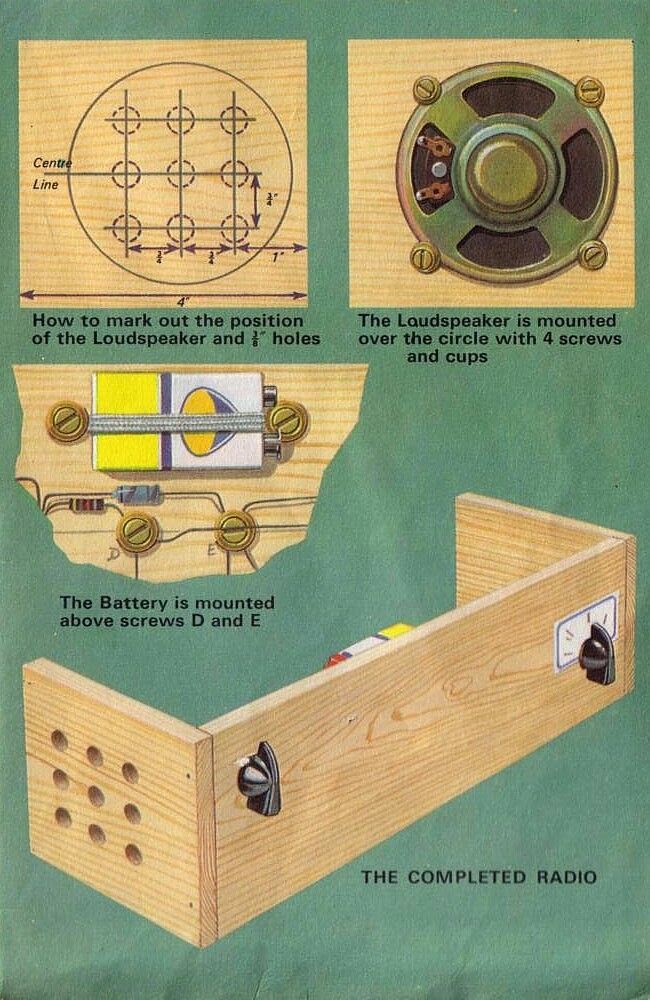
My feelings about regenerative receivers and their possible connections to the nether-world are well known. But the receiver described on this beautiful British web site is almost enough to make me change my mind. Thanks to Stephen, G7VFY, for alerting me to this (and to so many other great sites!) I also find myself forced to give regens another chance because George Dobbs, G3RJV, was the original source of this design. It comes from a book he wrote in 1972. I love the wooden bread-board construction. Thanks Stephen! Thanks George!

Our book: “SolderSmoke — Global Adventures in Wireless Electronics” http://soldersmoke.com/book.htm Our coffee mugs, T-Shirts, bumper stickers: http://www.cafepress.com/SolderSmoke Our Book Store: http://astore.amazon.com/contracross-20
Author Peter MarksPosted on 17 March 201421 July 2025Categories Dobbs-George, minimalist radio, Regens, UK2 Comments on The Ladybird TRF (Regen!) Receiver

Brilliant! New “TX Factor” Ham Radio TV Show from the UK

I really enjoyed this. It is the first episode of what I hope will be a long-running series.
These guys did a great job. Excellent quality video production and very interesting subject matter. A LOT of work went into this. I liked the PSK from a smart phone on a foggy hillside (with Moroccan soup!). The Marconi stuff was wonderful. Beer barrels as 2 meter cavity resonators! Excellent Knackish-ness! And a two meter repeater in an astronomical observatory. Well done!

Thanks to Nigel and Dino for alerting me to the TX Factor.

Our book: “SolderSmoke — Global Adventures in Wireless Electronics” http://soldersmoke.com/book.htm Our coffee mugs, T-Shirts, bumper stickers: http://www.cafepress.com/SolderSmoke Our Book Store: http://astore.amazon.com/contracross-20
Author Peter MarksPosted on 22 February 2014Categories astronomy, Marconi-Guglielmo, radio history, UK, video1 Comment on Brilliant! New “TX Factor” Ham Radio TV Show from the UK

Mars Star Party from La Palma (video)

Our book: “SolderSmoke — Global Adventures in Wireless Electronics” http://soldersmoke.com/book.htm Our coffee mugs, T-Shirts, bumper stickers: http://www.cafepress.com/SolderSmoke Our Book Store: http://astore.amazon.com/contracross-20
Author Peter MarksPosted on 11 February 2014Categories astronomy, Mars, Spain, telescopes, UKLeave a comment on Mars Star Party from La Palma (video)

G0MGX’s Minima

Wow, Mark didn’t waste any time in building his Minima. FB OM. His web site has a lot of good info on this project: http://g0mgx.blogspot.co.uk/

Our book: “SolderSmoke — Global Adventures in Wireless Electronics” http://soldersmoke.com/book.htm Our coffee mugs, T-Shirts, bumper stickers: http://www.cafepress.com/SolderSmoke Our Book Store: http://astore.amazon.com/contracross-20
Author Peter MarksPosted on 31 January 2014Categories Arduino, Farhan, Minima, UK1 Comment on G0MGX’s Minima

Digi ‘scope, Analog ‘scope

Digi ‘scope, Analog ‘scope

Carl (M0ICR ex 2E0TEC) saved the day with my Tek 465 — he sent the replacement HV multiplier that put the ‘scope back in action. (Ace Tek repairman Tad WA1FQO made the repair. Tad sells Tek scopes on E-bay — check out his products: Search for fqo63 on ebay.)

Carl notes a number of similarities between our workbenches and recent projects. All he needs now is a Drake 2-B!

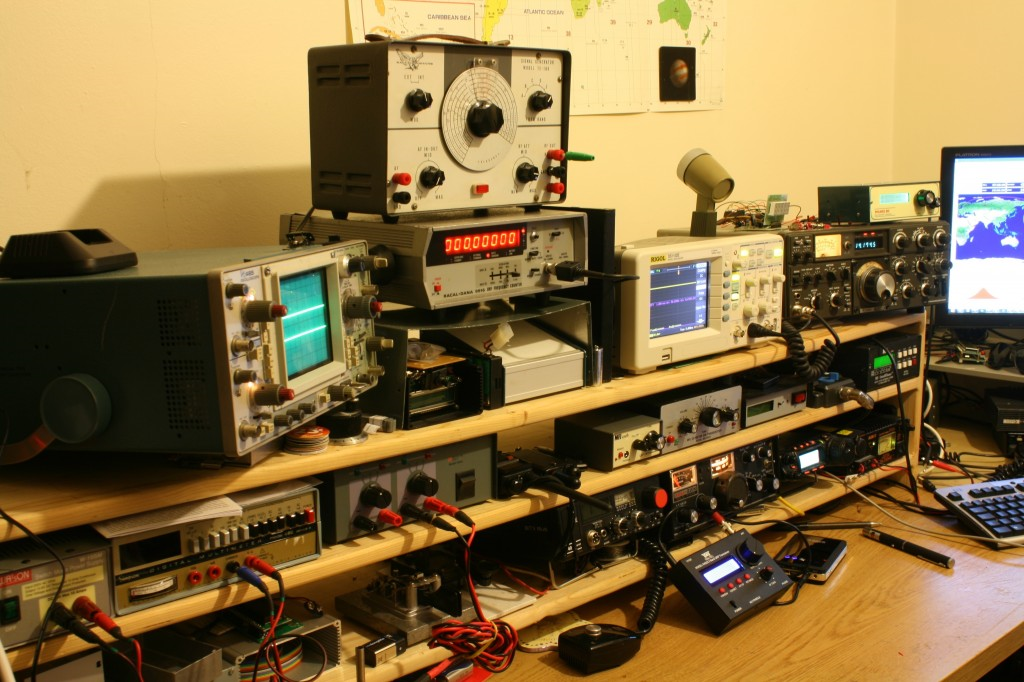
Alan Wolke said he’d be interested in my reactions to having both a digi scope and an analog scope on the bench. I can already see areas where one might be a bit better than the other. The Tek is better at watching a fast moving audio or SSB waveform. But the Rigol doea all kinds of math tricks. Check out the FFT function shown on Carl’s page: http://iqrp.net/

Bill,

I am very pleased that you finally got it working with the help of brothers from the fraternity. Having listened to your latest Podcast I think that must be your alter ego! I have A Tek 465, Rigol 100MHz DS1102E and have built 2 Bitx, one for 20m and the other for right bands- using a DDS VFO (3 if you include the 80m version by Steve Drury G6ALU – look up MKARS80) …I also have 2 copies of SSD!

My website is here: www.iqrp.net where you can see both scopes in my shack and images of my Bitx and my Hans Summers WSPR beacon!

I have just returned from my local radio club social meeting (the Radio Society of Harrow) and took great pleasure in listening to Soldersmoke 158 whilst driving there … half on the way there and the other half on the way back.

Very best wishes from London (where it is cold, wet and miserable !)

72/73 de Carl M0ICR (ex 2E0TEC from Nov 13)
Our book: “SolderSmoke — Global Adventures in Wireless Electronics” http://soldersmoke.com/book.htm Our coffee mugs, T-Shirts, bumper stickers: http://www.cafepress.com/SolderSmoke Our Book Store: http://astore.amazon.com/contracross-20

Author Peter MarksPosted on 22 January 201422 July 2025Categories oscilloscope, UK, workbench1 Comment on Digi ‘scope, Analog ‘scope

On the Wavelength of Santa’s Sled (with a nod to FA Wilson)

About a year ago, David, M0VTG, was reading “From Atoms to Amperes” by FA Wilson. His thoughts turned to a seasonal application of Wilson’s lessons…. Thanks David!

WAVELENGTH OF SANTA AND HIS SLEIGH

We’re going to need to know the following:

Total mass of the sleigh, reindeer, Santa and his presents, and the speed at which the sleigh travels. Assuming that the sleigh travels relatively close to the surface of the earth, the mass can be regarded as the same as the weight. Now assume each reindeer weighs 100 kg. Traditionally there are nine of them so total mass of the reindeer is 900kg. Say the sleigh also weighs 500kg and Santa and his presents weigh 400kg; then the total mass is 1800kg. To get round all the children who believe in him in one night would mean him travelling at a speed of say 1000kph (277.8 m/s). (Note that scientific notation for numbers used is that used on some calculators)

So mass (m) is 1800kg
velocity (v) is 1000kph (notice the not so subtle change from a scalar quantity to a vector quantity).

Max Plank came up with a formula: E = hf relates Energy to frequency using h (Plank’s constant = 6.626 E-34 Joule seconds).

Albert Einstien (as everyone knows) says that E = mc2 (where c is the velocity of light).

So it follows that hf = mc2 and therefore, m = hf/c2.

The momentum of a photon (p) is defined as mass x velocity or p = mv and as every radio amateur knows, wavelength (λ) is the velocity of light divided by frequency or λ = c/f (or f/c = 1/ λ).

So mv = hf/c2 x c (velocity of a photon is c don’t forget); so p = hf/c

Since f/c =1/ λ, then p = h/λ i.e. λ =h/p

Also since p = mv then λ = h/mv (This expression is known as the de Broglie wavelength – Louis Victor de Broglie)

Notice that the velocity of light does not directly feature is the expression. We can, therefore use it the calculate the wavelength of anything!

So the wavelength of Santa’s sleigh is Plank’s constant divided by the mass times the velocity or

λ = 6.626 E-34 J s / (1800 kg x 277.8 m/s) which equals 1.325 E-39 m – an unbelievably small number! Make up you own mass and velocity for the sleigh if like.

I defy NORAD to track such a short wavelength.

Our book: “SolderSmoke — Global Adventures in Wireless Electronics” http://soldersmoke.com/book.htm Our coffee mugs, T-Shirts, bumper stickers: http://www.cafepress.com/SolderSmoke Our Book Store: http://astore.amazon.com/contracross-20
Author Peter MarksPosted on 8 December 2013Categories books, UKLeave a comment on On the Wavelength of Santa’s Sled (with a nod to FA Wilson)

A British Bicycle (and Workshops)


Experiments in Speed from SpindleProductions on Vimeo.

Our book: “SolderSmoke — Global Adventures in Wireless Electronics” http://soldersmoke.com/book.htm Our coffee mugs, T-Shirts, bumper stickers: http://www.cafepress.com/SolderSmoke Our Book Store: http://astore.amazon.com/contracross-20
Author Peter MarksPosted on 26 November 2013Categories bicycle, UK, video, workbenchLeave a comment on A British Bicycle (and Workshops)

M0XPD’s Digital Analog BITX — Best of Both Worlds

M0XPD’s Digital Analog BITX — Best of Both Worlds

Paul, M0XPD, has built a very interesting version of the BITX rig. His is on 40 meters. It features plug in bandpass and IF filters (great idea!) and uses DDS technology for both the BFO and VFO stages. Good going Paul! More details here:
http://m0xpd.blogspot.co.uk/2013/11/rising-to-challenge.html

Our book: “SolderSmoke — Global Adventures in Wireless Electronics” http://soldersmoke.com/book.htm Our coffee mugs, T-Shirts, bumper stickers: http://www.cafepress.com/SolderSmoke Our Book Store: http://astore.amazon.com/contracross-20
Author Peter MarksPosted on 17 November 201322 July 2025Categories BITX20, UK3 Comments on M0XPD’s Digital Analog BITX — Best of Both Worlds

Posts pagination

Previous page Page 1 … Page 8 Page 9 Page 10 … Page 13 Next page

Recent Posts

  • One (of several) SolderSmoke Blog Backups: This one in .pdf form
  • Britain’s EF-50 Valve (Tube, Thermatron) in WWII
  • A USB-powered Homebrew X-ray machine. And who is Project 326?
  • How many of you guys have changed the clutch on a Heathkit HW-101 (or similar rig)?
  • Oscillation! Negative Resistance! Barkhausen Explained Very Well!

Recent Comments

  1. Peter Marks on Britain’s EF-50 Valve (Tube, Thermatron) in WWII
  2. WN2A on Oscillation! Negative Resistance! Barkhausen Explained Very Well!
  3. Anonymous on Oscillation! Negative Resistance! Barkhausen Explained Very Well!
  4. WN2A on Oscillation! Negative Resistance! Barkhausen Explained Very Well!
  5. Anonymous on Homebrew Hero: Sir Douglas Hall
  • "The Art of Electronics"
  • 10 meters
  • 12 meters
  • 15 Meters
  • 15-10 Transceiver
  • 160 meters
  • 17 meters
  • 1712 Rig
  • 2 meters
  • 20 meters
  • 20meters
  • 2200 and 630 meters
  • 30 meters
  • 40 meters
  • 6 meters
  • 60 meters
  • 75 meters
  • AA1TJ
  • AA7EE
  • Adams — Chuck
  • aeronautical mobile
  • Africa
  • AGC
  • AI
  • aircraft
  • Alaska
  • All American Five
  • AM
  • Amateur Television
  • amplifier theory
  • analog
  • Anguilla
  • Antarctica
  • antennas
  • Antuino
  • April 1
  • Arduino
  • arduinos
  • Argentina
  • Armstrong — Neil
  • Armstrong -E. Howard
  • ARRL
  • astronomy
  • audio amplifiers
  • Aurora
  • Australia
  • Austria
  • Azores
  • balloon
  • Bamford –Dave
  • Bangladesh
  • Barbados
  • beacon
  • Belgium
  • Beverage–Harold
  • bicycle
  • Billy
  • biology
  • bitx
  • BITX DIGI-TIA
  • BITX20
  • BITX40Module
  • BITX60
  • boatanchors
  • boats
  • book
  • books
  • Bose-JC
  • Botswana
  • Brazil
  • Brazil. Australia
  • Brazil. Belgium
  • broadcast radio
  • Budlong — Merrill
  • Burdick — Wayne
  • California
  • Campbell-Rick
  • Canada
  • Canary Islands
  • Carlson — Mr.
  • Carney-Todd
  • Carr — Joseph
  • cartoons
  • CB
  • CBLA
  • Cebik-L.B.
  • Central America
  • ceramic resonators
  • Chile
  • China
  • Cicadas
  • climate change
  • clocks
  • Cloud Chamber
  • Clubs
  • Collins — A. Frederick
  • Collins — Art
  • Colombia
  • computer history
  • construction techniques
  • Costa Rica
  • COVID
  • Crane-Bob
  • Croatia
  • crystal radio
  • Cuba
  • CW
  • CW.
  • Cyprus
  • Czech Republic
  • Darlington–Paul
  • DC Receiver Build
  • DC RX Hall of Fame
  • DDS
  • DeMaw–Doug
  • Denmark
  • DiFX
  • digital
  • digital logic
  • digital modes
  • Dilbert
  • direct conversion
  • Direct Conversion Challenge
  • Disaster Relief
  • Dobbs-George
  • Dominican Republic
  • Drake 2B
  • Drake TR-3
  • Drones
  • DSB
  • Dubai
  • DX-100
  • DX-390
  • DX-40
  • earthquake
  • Echolink
  • Ecuador
  • Edison — Thomas
  • Einstein — Albert
  • El Salvador
  • Elecraft
  • election
  • Electric Radio magazine
  • electrolytic capacitors
  • Ellsworth — Jeri
  • Elser-Mathes Cup
  • EM Waves
  • EME
  • Emergency Power
  • EMRFD
  • enclosures
  • ET-2
  • Europa
  • Evans– Grayson
  • Faraday — Michael
  • Farhan
  • Farnsworth–Philo
  • Faroe islands
  • FCC
  • FDIM
  • feedback
  • Fessenden — Reginald
  • Feynman — Richard
  • Field Day
  • Filters
  • Finland
  • Finnland
  • Fish Soup 10
  • Fishpool — Tony
  • Florida
  • FM
  • France
  • Franklin Oscillator
  • frequency counter
  • Fried–Limor
  • Friedrichs — HP
  • FT-8
  • Fusion
  • Gale — Todd
  • Germany
  • Gilbert Cell
  • Glue Sticks
  • Google
  • GQRP
  • greece
  • Green — Wayne
  • Guapo
  • Guatemala
  • Guth — Eric
  • h
  • Haiti
  • Hall-Douglas
  • Hallicrafters
  • Ham Radio Workbench
  • Hamel–Armand
  • hamfest
  • Hamfests and Flea Markets
  • Hammarlund
  • Harden-Paul
  • Harper — Rex
  • Harris — Frank
  • Hawaii
  • Hayward–Wes
  • HB2HB
  • Heathkit
  • heathkits
  • heatsinks
  • Heaviside — Oliver
  • Heil — Bob
  • Herring Aid 5
  • Hex Beam
  • Hodgepodge rig
  • homebrew
  • homebrew hero
  • homebrew transistors
  • Honduras
  • Hong Kong
  • HP8640B
  • HQ-100
  • Hungary
  • Hunkin — Tim
  • HW-101
  • HW-7
  • HW-8
  • IBEW
  • Iceland
  • ICs
  • Idaho
  • IGY
  • impedance matching
  • India
  • Indonesia
  • integrated circuits
  • Interference
  • Iraq
  • Ireland
  • IRF510
  • Israel
  • Italy
  • Jaguey
  • Jamaica
  • Japan
  • JBOT
  • Jean Shepherd
  • Jim Williams
  • Job Opportunities
  • John Edwards
  • Jones — Frank
  • Jordan
  • JT65
  • Judica Cordiglia
  • Juliano — Pete
  • Jupiter
  • K1JT
  • K5WDW
  • Kang- KPS
  • Karl and Jerry
  • keyers
  • Keyser — Ian
  • Kits
  • KL7R
  • kludge
  • Knack Stories
  • Kraus — John
  • Lady Ada
  • Lafayette HA-600A
  • Large Hadron Collider
  • Laser
  • Lebanon
  • LED
  • LEDs
  • Lewallan — Roy
  • Lewallen — Rick
  • lexicon
  • Light Beam Telephony
  • Light Bulbs
  • Lightning
  • Linux
  • Lithuania
  • LM373
  • Long Delayed Echo
  • LtSpice
  • M0NTV
  • Macdonald — Copthorne
  • Madagascar
  • Mafalda
  • magazines
  • MAKE
  • Malaysia
  • Marconi
  • Marconi-Guglielmo
  • Mars
  • Mate for the Mighty Midget
  • math
  • mathematics
  • Maxwell — James Clerk
  • McCoy — Lew
  • Mercury
  • metal work
  • meteors
  • Mexico
  • MFJ Cub
  • Michigan Mighty Mite
  • microcontrollers
  • Microphone
  • military radios
  • Mims — Forrest
  • Minima
  • minimalist computing
  • minimalist radio
  • mixer theory
  • Mixers
  • mongolia
  • Montana
  • Montenegro
  • moonbounce
  • Morris — Charlie
  • movie review
  • Moxon
  • Muppet Boards
  • Murphy — Mike WU2D
  • Murphy — Steve
  • museum
  • music
  • Mythbuster
  • Namibia
  • nano UK. New Zealand
  • NanoVNA
  • NE602
  • Nepal
  • Netherlands
  • Netherlands.
  • New York City
  • New Zealand
  • noise
  • Norway
  • Novice Station
  • nuclear power
  • Numbers stations
  • Old radio
  • Old Smoke
  • OLED
  • oscilloscope
  • Other homebrews
  • Pakistan
  • Panama
  • parachute
  • Paraguay
  • Parasets
  • Parent — Allison
  • Parfitt– Dale
  • Parker–Peter
  • Parts suppliers
  • Penson-Chuck
  • Pete
  • Phase Locked Loop
  • Phase Noise
  • phasing
  • Phasing Rigs
  • Philippines
  • photography
  • Physics
  • poetry
  • Poland
  • Polyakov–Vladimir
  • Portugal
  • Project Gutenberg
  • propagation
  • PTO
  • Puerto Rico
  • PY2OHH
  • Qatar
  • QCX
  • QRP
  • QRP. Germany
  • QRSS
  • QST
  • Quarantine
  • R-390
  • R/C plane
  • radio astronomy
  • radio history
  • Rainey — Michael
  • Raspberry Pi
  • Reber–Grote
  • regen
  • Regens
  • reggie
  • repair
  • resonance calculations
  • Reunion Island
  • Reverse Beacon Network
  • Rider — John
  • ro
  • Roberts–Steven
  • robot
  • rockets
  • Rockey — C.F.
  • Romania
  • RTTY
  • Rudy Severns
  • Russia
  • S-38E
  • San Francisco
  • Sardinia
  • satellites
  • Saturn
  • sBITX
  • Schwartz-Eric
  • science fiction
  • Scotland
  • Scott– Richard N3FJZ
  • SDR
  • SETI
  • Shannon — Claude
  • Shenandoah
  • Short Wave Listening
  • Si5351
  • Sicily
  • sideband inversion
  • Sierra Leone
  • Silver — McMurdo
  • Silverman — Steve
  • simulators
  • Singapore
  • Slovakia
  • Smith–Steve
  • software
  • solar cycle
  • Solar power
  • solder
  • SolderSmoke Podcast
  • SolderSmoke Shack South
  • SolderSmoke store
  • SolderSmoke Videos
  • SOTA
  • Souleles — Dean
  • South Africa
  • South Korea
  • Soviet Union
  • space program
  • Spain
  • Sparks — Ron
  • sponsor
  • SPRAT
  • SSB
  • SSDRA
  • SST
  • SSTV
  • static electricity
  • stickers
  • Stoll — Cliff
  • Sub-Harmonic mixer
  • Summers-Hans
  • Sun
  • Superhet receivers
  • surface mount
  • Swan 240
  • Sweden
  • Switzerland
  • SWL
  • Tape recorder
  • Tasmania
  • Taylor — Joe
  • Taylor — Paul
  • telescope
  • telescopes
  • teletype
  • Television
  • Temperature Compensation
  • Terman — Frederick
  • Tesla — Nikola
  • test gear
  • Thailand
  • The Knack
  • Tibet
  • Time
  • TinySA
  • TJ DC RX
  • tools
  • Toroids
  • Trastevere
  • TRGHS
  • Trivial Electric Motor
  • troubleshooting
  • tube
  • Tubes
  • Tubes. tube
  • Tuna Tin 2
  • Turkey
  • Twain — Mark
  • UAE
  • uBITX
  • UHF
  • UK
  • Ukraine
  • Uncategorised
  • uSDX
  • Van Vark — Tatjana
  • Vatican Radio
  • Venezuela
  • venus
  • VFO
  • VHF
  • vide
  • video
  • Vienna Wireless Society
  • Vietnam
  • Virginia
  • VK4KA
  • W1PID
  • W7ZOI
  • WA6ARA
  • WA7MLH
  • Walford Electronics
  • Washington D.C.
  • WD-40
  • weather
  • web sites
  • Weber-Steve
  • Weiss–Ade
  • Williams — Jim
  • wind power
  • WN2A
  • wolke — Alan
  • Woodpecker
  • woodworking
  • workbench
  • workshop
  • Wozniak — Steve
  • WSPR
  • Yates–Alan
SolderSmoke Daily News — Ham Radio Blog Proudly powered by WordPress