Si5351 — G4GXO says “Give it a go!”

Hi All,
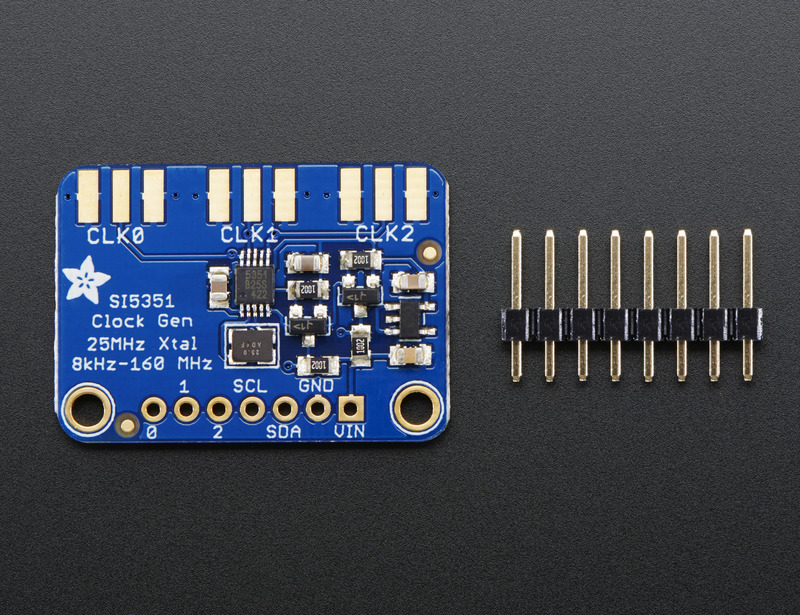
Many of you will know of the low cost Si5351A programmable clock generator which can serve as a VFO with a remarkable range of 2.5kHz to 200MHz. This device is available from the larger industrial component suppliers such as RS for as little as £0.68 +VAT and is offered as a small PCB module with regulator and level converters from many amateur component suppliers for around £7.00. I bought a couple of the Adafruit modules to evaluate as the second conversion oscillator in a DSP IF system I’m developing and once I’d overcome the hurdle of writing the dsPIC33 software to drive the device I decided to test the unit as an HF VFO. My reason for doing this was to assess the phase noise of the si5351A; a quick Google will turn up many blogs and forum listings on this subject with mixed opinions of the suitability of this device for VFO service. With no direct method of measuring phase noise I decided to examine instead the impact of phase noise on receiver performance, after all it is this effect that will determine the suitability of the Si5351A as a VFO. My strategy was simple, I used the receiver section of my 60m SSB transceiver which is based upon the Eden IF (SPRAT 144) and uses one of the club 9MHz SSB filters. The front end mixer is a discrete diode ring made from two trifilar wound FT37-43 toroids and four 1N4148 silicon diodes. Unlike a schottky diode mixer this silicon switching diode version requires more drive to keep conversion loss down. The VFO is a low phase noise 7ppm Si570 running on the high side of the IF at 14MHz, a MMIC output stage delivers +10dBm of drive to the mixer. The Si5351A was compared directly to the Si570 – which is a known “very good” performer.
The test strategy was to measure the receiver Minimum Discernable Signal (MDS) at 5MHz with the Si570 and the Si5351A as the VFO. With no buffer stage to raise the 5dBm output of the Si5351A to match the +10dBm output of the Si570 VFO module, I accepted that this compromise would have some bearing on the results through increased mixer loss.
Results (14MHz oscillator drive, 2.2kHz IF bandwidth)
Si570 +10dBm output, MDS –122dBm (Well below noise from the antenna, perfectly acceptable for 60m!)
Si5351A +5dBm output, MDS –118dBm (Note, mixer drive 5dBm down!)
Some if not most of the 4dB difference in MDS is without doubt attributable to the lower drive power of the Si5351A in my test configuration, this is borne out by the AGC threshold which moved up by 4dB suggesting increased mixer loss. I’m confident that had I been able to match the +10dBm output of the Si570 then it would have been a close match. My conclusion is that for HF at least the Si5351A is a very useful oscillator which is easily applied and can deliver good performance. If you had doubts about using this device at HF I hope that these results encourage you to give it a go!
73 Ron G4GXO

HB2HB — Homebrew Rigs on Both Sides of the Contact


As I’ve been saying on the podcast, contacts in which both operators are using homebrew gear are increasingly rare, especially on SSB, and especially, it seems, in the USA. So let’s chronicle these rare events. I’ve started a Label here on the blog called HB2HB. Send me reports of good HB2HB contacts — recent or past — and I’ll try to get them onto the blog.

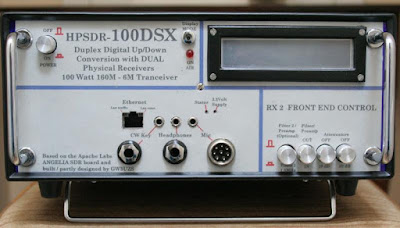
I’ve already described my recent QSO with Pete, N6QW. My second HB2HB from this location took place on 12 October 2015. I talked to Jeff GW3UZS in Cardiff, Wales on 17 meters. I was using my trusty BITX17. Jeff was running a much more sophisticated homebrew rig — see above. More details on Jeff’s beautiful rigs are on his QRZ.com page”

https://www.qrz.com/db/GW3UZS

So send in HB2HB reports. These contacts are almost in “endangered species” category — they deserve to be preserved!

The Amazing History of the Gibson Girl Rescue Radio

A video about the Kon-Tiki expedition got us wondering about how you could generate hydrogen gas for an antenna balloon while on a raft at sea. (That’s the kind of question that keeps Knack victims up at night.) This led us to the Gibson Girl rescue radio. This morning I found a fascinating web site that gives the long, multi-country history of the curvaceous rescue rig:

The Amazing History of the Gibson Girl Rescue Radio

A video about the Kon-Tiki expedition got us wondering about how you could generate hydrogen gas for an antenna balloon while on a raft at sea. (That’s the kind of question that keeps Knack victims up at night.) This led us to the Gibson Girl rescue radio. This morning I found a fascinating web site that gives the long, multi-country history of the curvaceous rescue rig:

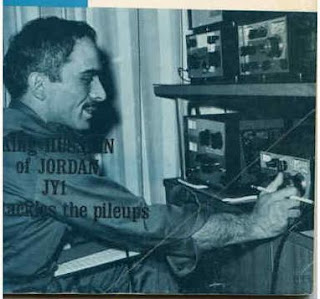
Civility, Ham Radio, King Hussein, and the International Brotherhood

Hi Bill,

Interested to hear you talking about civility … My introduction to amateur radio was via a Heathkit GR 64 and Roy, G3PMX. When I finally took my ticket – 1970, and passed, I called him on the phone to tell him – he told me to come on up to his QTH, I did, via an old bike taking about 30 minutes to get up the hill. When I got there, he put me on the mike, the guy the other end was really great, talked about being a part of an international brotherhood and a movement for world peace – just a magical first contact …

Roy asked me if his call seemed a little odd, it did, it was short, JY1, but I was really slow to cotton on to who I’d just spoken to… What really blows me away to this day was that the King of Jordan sat in his shack and waited for a 16 year old kid to pedal up the hill just to give him a fantastic first contact … My only regret is that I never got to speak to him again to say “thank you” – when you talk about legacy radios, it isn’t the tech that we need to hold on to, though we do, it was what that man did to reach out to a fellow amateur.

By all accounts, he was a fantastic guy, he used to sit at Roy’s kitchen table drinking coffee and just being one of the guys … Sadly I was at sea by then hence not meeting him.

Roy knew him because he worked for Marconi & put the antennas on the palace, Hussein just appeared having that Roy was an amateur and they had a long conversation about radio – when he turned to leave, Roy asked his name so that he could stay in touch – Hussein told him to just ask for Hussein the radio guy – never let on that he was King …

Roy said that on several occasions, JY1 travelled to the UK more or less incognito and hired fairly innocuous cars to get about the country simply because he was here as an amateur, not a head of state …

I really do regret that I never got the chance to say “thank you” to him – it was the sort of gesture that I have always thought typifies what you have tried to support and continue, and is indeed carried on by the likes of Joe Taylor who once took the time to respond to an email from me explaining how to set a WSPR system up despite being Nobel Prize winner !!
Great example of the spirit of amateur radio transcending all else 🙂

73s, Nick, G8INE

Knack Story: Rupert Goodwins — SolderSmoke in the Old Smoke (London)

Rupert with some sort of SDR rig

In addition to having a very cool name, Rupert Goodwins, G6HVY, is a for-real tech guru:

I was delighted when Rupert posted some sage advice about how to deal with my recalcitrant amplifier. He managed to include a reference to Mr. Spock in his message, helpfully noting that some of these amp problems would challenge the Vulcan’s logical powers. That made me feel better. I sent a few words of thanks to Rupert and got back this really great “Knack Story”:
Hi Bill,
Well, all I have on HF amp instability is anecdote and half-remembered theory. But I do like the sort of challenges that building RF on the bench brings up – a problem worthy of one’s attention proves its worth by fighting back!
I’ve enjoyed Soldersmoke (or should I say Soddersmoke) for years now, and even if I haven’t bought the T-shirt, have bought your book. I first inhaled the demon fumes when I was barely into double digits, and the addiction kicked in hard – I fixed my first radio, a valve (tube!) FM 1950s broadcast receiver using a soldering iron that was actually one of my father’s wooden-handled screwdrivers heated on the gas ring of the cooker in the kitchen. My parents were mystified but supportive…
London is indeed a hard place to play radio. But that makes it doubly pleasurable when it works: it rather feels like you’re operating under cover, a special forces op sneaking the signal out under the noses of the regime. I once had a birthday picnic on Hampstead Heath where I brought my SOTA beam and fishing-pole mast: the local constabulary turned up and were also mystified but not quite so supportive… “What if everyone did it?” they asked. “Oh, if only…” I thought but did not say.
I do hope you can pacify your errant amp. Sometimes these things can be fixed by brainpower, sometimes by just mucking around until they get bored before you do. But normally I find that I’ve learned a lot when the problem’s solved. RF isn’t black magic, it’s a gateway into another world that’s marvellous and enthralling, but ours to know. I read a really good paper by Freeman Dyson, where he said that Maxwell invented modern physics, because his equations were the first to show that the real world of how things work is both beyond our natural experience, but accessible through thought and logic. The real entrancing thing about radio is that it proves this – we can talk across the world by translating our knowledge into a tiny handful of otherwise inert bits and pieces that tap into something utterly beyond our senses. And it’s open to anyone who cares enough to try.
How cool is that? (I had to go and find that Dyson paper again – here it is, if you’re interested: http://www.damtp.cam.ac.uk/user/tong/em/dyson.pdf )
(I also have an unshakeable and unhelpful addiction for obscure but interesting radios, as my QRZ page confesses. And things I helped design and build when I was an engineer are now in the NSA and Bletchley Park cryptologic museum collections. That, as they say, is quite another story…)
Anyway, thanks again for emailing – I’m thrilled to hear from you, and perhaps, who knows, one day we may make contact the way God and Maxwell intended – via QRP on a lively band while dodging the noise and bouncing our photons off the Heaviside Layers.

Best 73s,
Rupert, G6HVY
————————
Rupert’s QRZ.com page contains additional evidence of his Knack affliction and International Brotherhood of Electronic Wizards membership:
Other equipment here includes a Wireless Sets No 19 Mk III, an R1155, a Barlow Wadley XCR-30, an ICR-73, some PMR stuff on 4 metres, some old CB kit (shhhh!) and other obscurities. I like kit that has something different about it the 19 set, for example, is of course famous for its wartime role, but it was also the very first transceiver. The XCR-30 is really interesting, not only for being a high tech product of 60s apartheid South Africa (so a morally complex thing to own), but for having a very esoteric design that provides 0-31MHz coverage without bandswitching, very high stability and accuracy (you can generally pre-tune an AM broadcast station anywhere on the bands from the dial and be within 1KHz on switch-on, and all from a handful of transistors. There are stories to tell about all of my radios.
Started in radio when I was too young to get my ticket, so was forced – forced, I tell you – onto CB radio, in the days when it was very popular and very illegal. Had a couple of crystal-TX, super-regen RX walkie-talkies (QRPp and RX so wide I could pick up Radio South Africa on the BC 11m band) to start with, thence bought a ‘for conversion to 10m’ populated CB PCB from a batch at Plymouth ARC Rally and just bunged a set of toggle switches on the PLL-02 divider inputs. This was the mid-late70s, when skip was high… Did the RAE ASAP after my 16th birthday, first legal amateur rig (I may have built things with 6V6s that may have made odd noises on the local Top Band AM Sunday morning net) was an Icom IC-2E. My richer friend, who was a G6E, had an FT-290R, which was obv. nicer but obv. deafer. “FT-290. IC-2E. I can hear him. He can’t hear me.” Used 19 sets at school, so have that addiction too. Since then, the hobby has been in and out of my life (like QTHs, wives, jobs and money), but the love of radio never has.
—————————
I also understand that he once worked at a dodgy TV repair shop in the back streets of Plymouth and can still swap out a gassy PL509 with the best of ’em.

Our book: “SolderSmoke — Global Adventures in Wireless Electronics” http://soldersmoke.com/book.htm Our coffee mugs, T-Shirts, bumper stickers: http://www.cafepress.com/SolderSmoke Our Book Store: http://astore.amazon.com/contracross-20

Mikele’s Croatian Belthorn Transceiver

Mikele’s rig is a real “International Brotherhood of Electronic Wizards” kind of project. The Belthorn design is out of England. N6QW has added a lot of California influence. The Nokia screen adds a bit of Finland. And of course Mikele’s excellent construction makes this a profoundly Croatian rig.

We love seeing rigs in their “out in the open ” phase. Thanks Mikele!

Our book: “SolderSmoke — Global Adventures in Wireless Electronics” http://soldersmoke.com/book.htm Our coffee mugs, T-Shirts, bumper stickers: http://www.cafepress.com/SolderSmoke Our Book Store: http://astore.amazon.com/contracross-20

Dongle Update — Dongles, FUNcubes, Meteors, QRP, and SPRAT

Hi Bill, Pete,

Ken Marshall G4IIB here the guy that wrote the SDR Primer in Sprat 162. I have been listening to your excellent podcasts. You guys cover a lot of ground in the May issue and touched on to the SDR dongle, its potential for future developments etc. I noted that you where going to buy another to cover VHF. Well if it ain’t too late consider this New version by Newsky they are already getting difficult to get a hold of and are only available in the USA. It uses an R820T2 tuner (better LNA) an upgraded and stable crystal oscillator, a reinforced antenna coax and socket. The one I managed to get hold of also had a modified PCB with solder pads for the the Q channel (pins 4&5) to connect the toroid. Incredable at 22 of your Bucks. See the pictures and read all about it on amazon.com.

http://www.amazon.com/gp/product/B00QFCNNV0/ref=as_li_tl?ie=UTF8&camp=1789&creative=390957&creativeASIN=B00QFCNNV0&linkCode=as2&tag=rsv0f-20&linkId=VNHED72IVHA5O2KT

All we need is for them to slot a 12 or 16 bit ADC in and we could have a truly great SDR receiver.

I noticed in your podcast you mentioned radio astronomy and satellite reception. Ironicaly back in 2013 this is how I started with SDR dongles. I read an aticle on the web on meteor scatter and started experementing with a dongle. Meteor scatter hunting is a bit like watching paint dry unless there is a known storm. So this led me on to the Funcube satellites. The signals from which although QRP 200mW are very stong and you can receive them on almost any antenna. The funcube dashboard software is available for free from AMSAT and alows you to download telemetry. You can also listen to amateur SSB an CW transmissions. There are lots of satellite tracking software available too. This then led onto weather satelite picture reception I built a 4 ele turnstile antenna for this but I found that I needed an LNA for reception at my location. I then started to listen to the amateur bands. Like you Bill I became interested in radio at the age of 11 and got licensed in the early 70’s but work commitments meant I had a 30 year absence from Ham Radio until I stumbled on these SDR Dongles. They got me back into the hobby and I joined the GQRP Club. I noticed that almost no one in the QRP fraternity was talking about RTL SDR hence I started writing the Primer and submitted it to George in late 2014 for publication in Sprat. As you know it appeared in the Spring Sprat and seems to have generated lots and lots of interest in the QRP community. I am delighted by this response and look forward to lots more interesting articles and podcasts. Have fun with your dongle.

Ken G4IIB

PS I wrote another article on getting these dongles to work under Linux. Linux uses completely different architecture so that the software used is completely different to windows. I notice that the software I use for Linux is also available on Mac OS which uses similar architecture (UNIX) so in theory it should also work on a Mac. Quite a few people have expressed an interest in getting a dongle to work on a Mac. As I do not poses a Mac I have not tried this out.

Funcube Dashboard

Our book: “SolderSmoke — Global Adventures in Wireless Electronics” http://soldersmoke.com/book.htm Our coffee mugs, T-Shirts, bumper stickers: http://www.cafepress.com/SolderSmoke Our Book Store: http://astore.amazon.com/contracross-20

Some HB SSB History -The Belthorn Story

The Eden Valley, Cumbria, England

Hello Bill,
As per your discussion with Pete in #177 I can indeed confirm that the correct pronunciation of Belthorn is “Bell-Thorn,” like Bell and Thorn concatenated. I named the design the “Belthorn SSB IF Module” in honour of the village I was living in at the time I developed it. I wanted to put the village on the map and in doing so leave my mark.
The design was published as a two part article in RadCom May/June 2000 intended to offer an alternative to the Plessey SL600/1600 IF strips of the late 70s early 80s. These integrated designs opened up simple SSB construction to many but by the mid 80’s sources of SL600/1600 ICs had all but dried up. I thought that a new design using readily available parts would be worth developing to offer a simple and repeatable basis for building an SSB transceiver.
From the emails I’ve received over the years it was and still is a popular project with many hundreds if not thousands having been built around the world. When the MC1350 IF amplifier became an endangered species I returned to the drawing board to produce a new version using a home brew diode DBM front end, a simple cascode IF stage and NE/SA612 product detector/modulator. An interesting feature of this was an AGC system based around an 8 pin 12F683 PIC. This new design offered considerable simplification and retained excellent performance. It was christened the “Eden SSB IF Module” after the Eden Valley where I now live in the north of England. It formed part of a transceiver project published on Yahoo Groups (Search for Eden 9). The gentleman who created the Yahoo Groups site mistook my schematic revision number (9) to be part of the name, and so it unwittingly became Eden9!!! Fortunately the NE/SA612 remains in production although should it become obsolete I would probably make things right by bringing out a yet another version of the IF strip, perhaps with a switching mixer. Here are a couple of links from the “old world” to give you a flavour of Belthorn the village and Belthorn the design;
The village website –http://www.belthornvillage.co.uk/ (Note that they’ve just bought a pub!)
The origin of the name “Belthorn” is quite interesting – although of little relevance to radio! Before the industrial revolution the village used to be on a pack horse route. to this day there is a house at the top of the village called “Bell in the Thorn” many years ago this used to be an inn. It’s thought that it takes its name from when a Bell hung in a thorn bush or tree nearby was used to signal when a horse change over was required to carry loads up and down the hill, probably from the mines or quarries on the nearby moors.
The link for the “Eden9” which you may find interesting is; https://groups.yahoo.com/neo/groups/eden9/info There is a power point presentation in the files section which describes the project and which features a section on receiver design. It may be a useful primer for those interested in the design process.
You can still find my original website on the internet archive complete with an introduction to Belthorn the village and a few of my earlier projects here; http://web.archive.org/web/20090316093248/http://g4gxo.cwc.net/
73 Ron G4GXO

Our book: “SolderSmoke — Global Adventures in Wireless Electronics” http://soldersmoke.com/book.htm Our coffee mugs, T-Shirts, bumper stickers: http://www.cafepress.com/SolderSmoke Our Book Store: http://astore.amazon.com/contracross-20

Colin’s Tuna Tin Mighty Mite (Video)

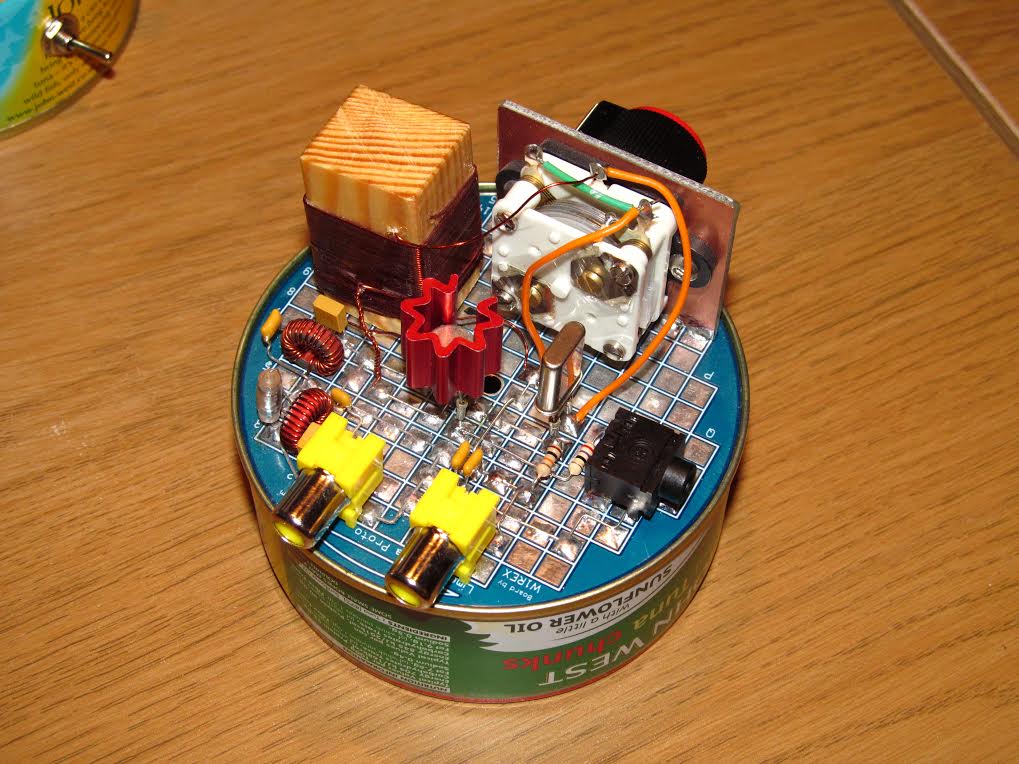
You will remember Colin as the builder of that beautiful BITX20 that he first used from his backyard and later used with great success from a hilltop in Northern England. In this video we see Colin demonstrating his Michigan Mighty Mite. Lots of soul in that little machine! Colin notes that this rig worked well from the start. The Radio Gods were obviously pleased by his use of a tuna tin as the chassis. I think they also liked the MePads from W1REX and the Tek 465 ‘scope. And of course the T-shirt was obviously a key element in Colin’s success.

Here is that beautiful BITX, now equipped with an internal speaker:

Our book: “SolderSmoke — Global Adventures in Wireless Electronics” http://soldersmoke.com/book.htm Our coffee mugs, T-Shirts, bumper stickers: http://www.cafepress.com/SolderSmoke Our Book Store: http://astore.amazon.com/contracross-20

Two Party Balloons, an Arduino and an Si5351 FLY! ALOFT! UP IN THE AIR!

http://www.qrp-labs.com/ultimate3/balloon.html

Farhan alerted me to this. This is clearly the coolest use so far of the Dynamic Duo (Arduino+Si5351).

It took me a moment to get my head around this. It is so fantastic. Let me break it down for you:

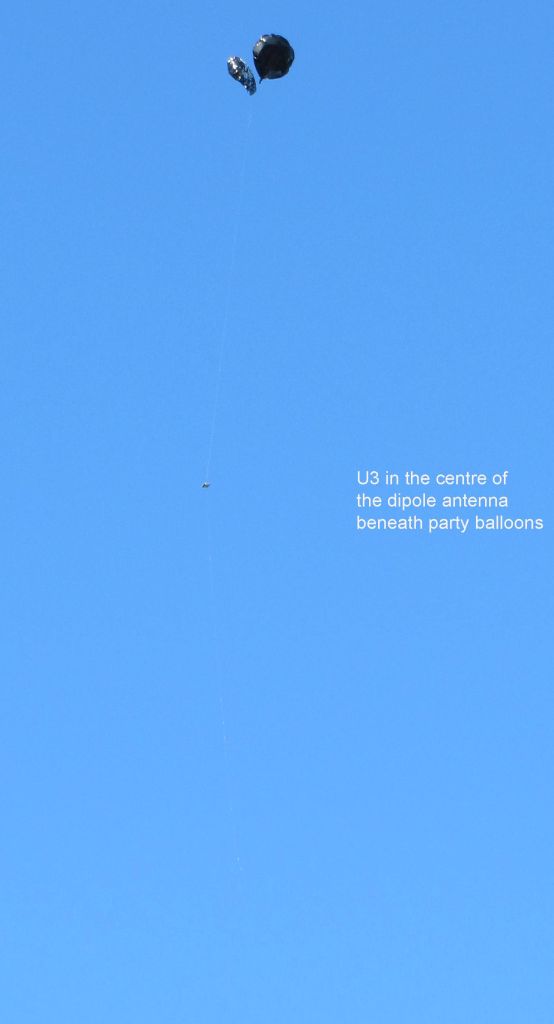
You take two party balloons. You build a little payload consisting of an Arduino Nano, an Si5351 board, a GPS module and a battery. You load the Nano with firmware that will take the GPS info and transmit it via WSPR and JT9. Then you release the whole thing and sit back to receive the telemetry packets that tell you where the thing is. Very cool. Very cool indeed.

THE Si5351 SERVES AS THE WHOLE TRANSMITTER. It connects to the antenna. (Steve Smith will, I’m sure, insists on a low pass filter, even here!)

Here is a similar project:

http://picospace.net/

And be sure to stop by the QRP Labs online store. Lots of good stuff there:

https://shop.qrp-labs.com/

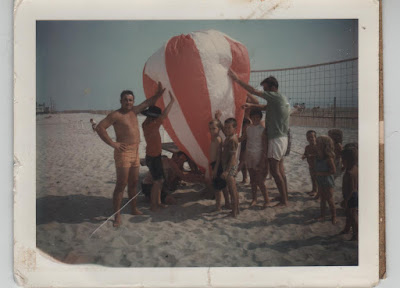
I’ve been interested in balloons for a long time. A few years ago Billy, Maria and I released a party balloon over Northern Virginia with a note requesting that the finder send us an e-mail (It landed about 10 miles away, across the Potomac river, in Washington D.C.). Here is a picture of a paper-mache hot-air balloon that we built and flew near Lavallette, New Jersey (Ocean Beach Unit III) sometime around 1969. Many of the kids in the picture are my cousins:

Our book: “SolderSmoke — Global Adventures in Wireless Electronics” http://soldersmoke.com/book.htm Our coffee mugs, T-Shirts, bumper stickers: http://www.cafepress.com/SolderSmoke Our Book Store: http://astore.amazon.com/contracross-20

SDR Dongle Modified for HF. Watch it work on 40 meters (VIDEO)

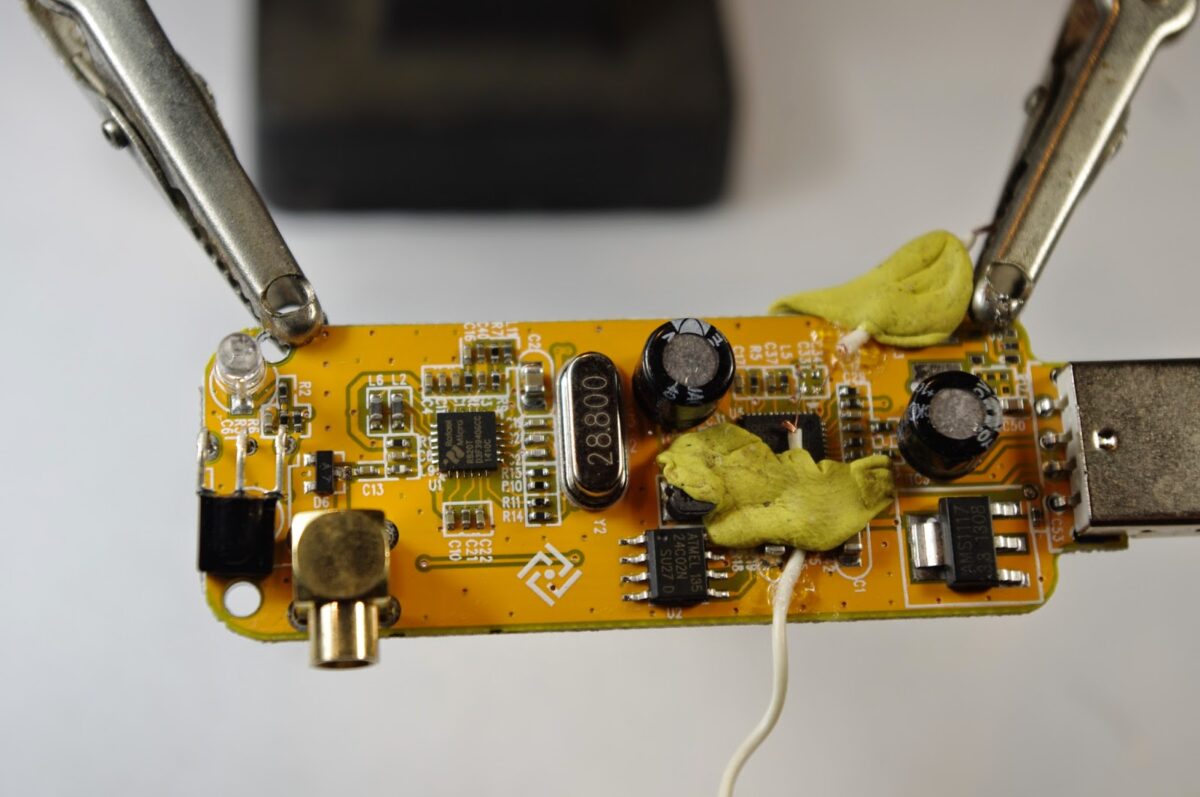
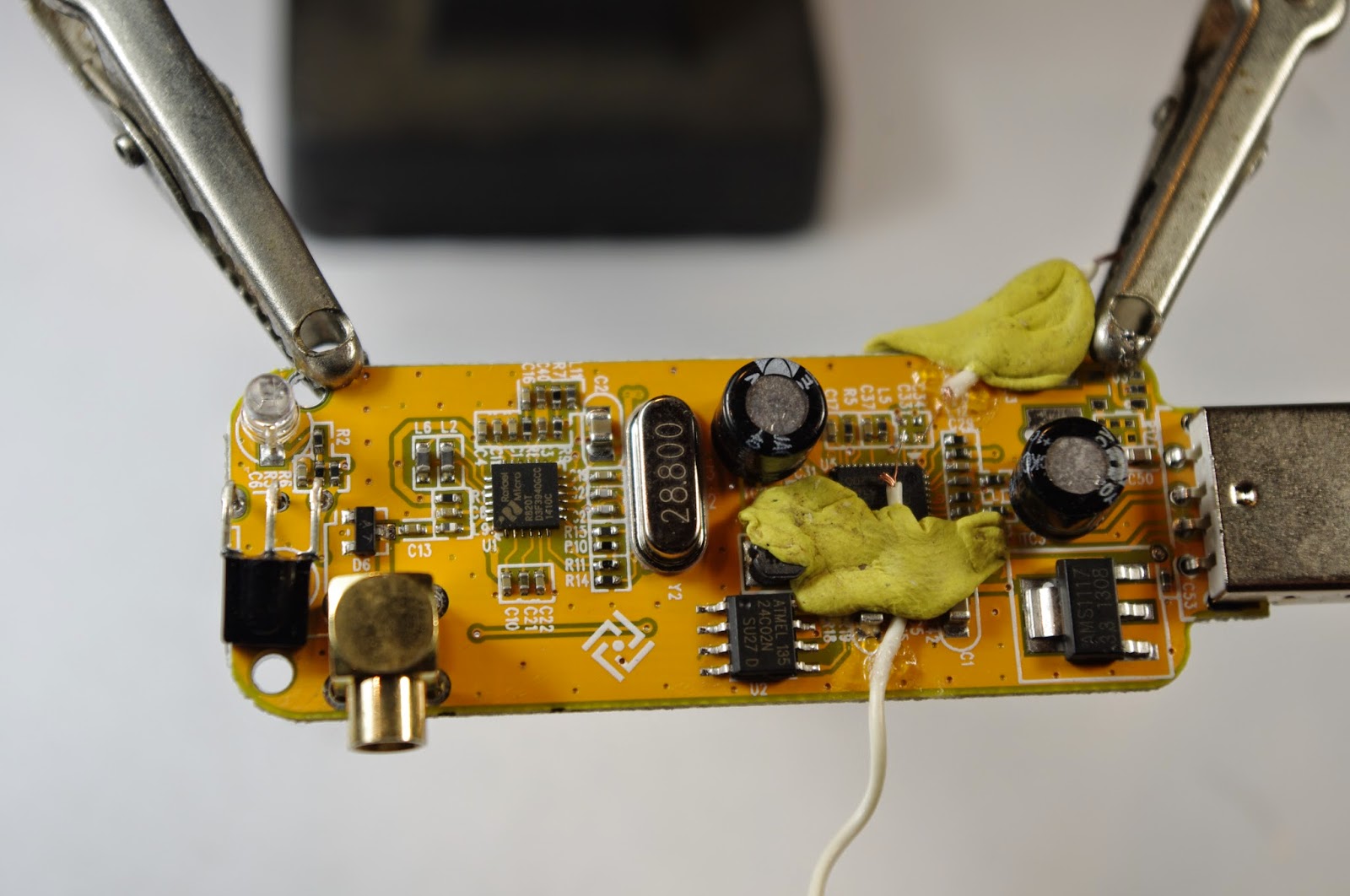
With SPRAT 162 by my side, armed with an FT37-43 trifilar wound transformer, I popped open the RTL-SDR dongle. I had hopes of being able to solder two tiny wires to the unused input pins (3 and 4) but I quickly realized that I was NOT going to be able to do that — they are far too small for me to work on. So I did what Ken Marshall G4IIB did: I took out the SMT caps going to pins 1 and 2 and soldered two small wires there. This will limit this dongle to HF only — if I want VHF/UHF I’ll just spend another $13 dollars! You can see the results in the video above.

I used the yellow stuff to hold the wires in place. It was later removed.

Tony Fishpool did a neater job. See his work here:
https://dl.dropboxusercontent.com/u/1987387/Even_more_on_using_the_RTL2832U_Dongle.pdf

Our book: “SolderSmoke — Global Adventures in Wireless Electronics” http://soldersmoke.com/book.htm Our coffee mugs, T-Shirts, bumper stickers: http://www.cafepress.com/SolderSmoke Our Book Store: http://astore.amazon.com/contracross-20

“Dongle” USB SDR Receiver $13 (VIDEO)


I was recently commenting to Pete that I could use some gear that would give me a better means of checking the bandwidth of my transmissions. Pete. pointed to the latest issue of our much-loved SPAT magazine. Indeed on SPRAT 165 (Spring 2015) there is an article by Ken Marshall G4IIB on how use the RTL2832u R820T DVB-T “dongle” (USB stick) as an SDR receiver. I sent 13 dollars to Amazon. The device arrived yesterday. I followed Ken’s instructions and soon I had the little device inhaling on 12 meters. It is really amazing. Lots of technology in a little box the size of your thumb! I use it with the free HDSDR software and have been listening to 12 and 10 CW and SSB. See the video above. Tomorrow I will attempt Ken’s mod that will open up the other HF bands. Then I will be able to put to use a second SPRAT article about this device : Also in SPRAT 165 Tony Fishpool G4WIF describes how to use this device as a rudimentary indicating instrument for bandwidth measurements.

Great stuff. Get yourself one of these devices. You will in effect be getting an all-band all-mode computer controlled receiver for $13 !!!!!!!!!!!!!!

I got this one:

http://www.amazon.com/gp/product/B00D3GRU24/ref=oh_aui_detailpage_o00_s00?ie=UTF8&psc=1

Thanks Ken, thanks Tony.


Our book: “SolderSmoke — Global Adventures in Wireless Electronics” http://soldersmoke.com/book.htm Our coffee mugs, T-Shirts, bumper stickers: http://www.cafepress.com/SolderSmoke Our Book Store: http://astore.amazon.com/contracross-20

Happy Pi Day! Scottish Moonbounce in 1965, Eddystone Dials

Somehow this seems appropriate for Pi Day (3-14). I guess it is because the antenna is circular.
Thanks to David GM4JJJ for sending this to us. There is no audio. Kind of fun to watch the lads struggle with the big antenna while wearing coats and ties!

David writes:

Hi Bill,
Just watched the video of the progressive receiver and immediately noticed the old Eddystone drive and dial.
My first general coverage receiver was an Eddystone 840C in about 1969 I guess, so it brought back fond memories.
I also had (much later) an Eddystone 770R VHF receiver, which I used to listen to transatlantic 50MHz on during the sunspot peak a couple of cycles ago now. That was before we were allowed to transmit on 6m over here.
Incidentally if you saw the recent film “The Imitation Game” about Alan Turing, you might have spotted the 770R in it, which was actually a mistake as the receiver was not produced until after the war.
Now something to break your heart, and mine actually:

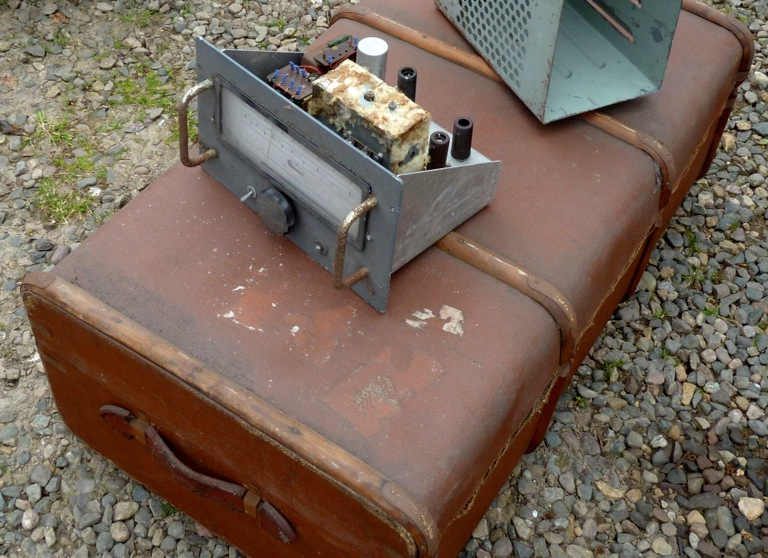
This old rig which was given to me sometime in the 70’s by another ham, was stored the attic of my previous house now used by my brother, and a couple of years ago I had to clear the attic of the “junk” that I had left when I moved out. I didn’t have any more room to store quite a lot of things and I made the decision to take a few things that I never thought I, or anyone else, would need. They went to landfill. 🙁
As you can probably see there is an Eddystone drive and dial driving a VFO which originally had insulation material around it for thermal stability. I think it may have been mixed or multiplied up to 144MHz judging by the scale on the dial. Looking back now I should have tried to save it, but I just felt at the time it would just probably lie in my new attic until I departed and then someone else would have to throw it out.
I don’t know exactly who made it, I was given it by Andy GM3IQL(SK), but I vaguely recall him telling me that it was made by Fraser Shepherd GM3EGW(SK) who I did not know as he died tragically young, but was a brilliant constructor. It could equally possibly have been made by Jimmy Priddy GM3CIG, and I could contact him as he is still around in his 80’s now. At least I had the sense to take some photos.
Now a couple of semi related video material that I put up on YouTube.

This is a (silent 8mm) film made in the 1965s about the first moonbounce attempts from Scotland and Jimmy CIG made the film. My Elmer Harry GM3FYB(SK) is in it.
Another one this time 1965 field day!

Bill, I really enjoy SolderSmoke podcasts etc, I am returning to ham radio after about a decade, got the bug again….

The KX3 is in the shack, and I have the parts here now to build a QRP WSPR beacon by Hans Summers also.
I like QRP, having previously worked with George GM3OXX back in the 70’s when we went out portable with wideband FM QRP 10GHz (3cm) gear using Gunn diode oscillators. Just a few mW and we could work several hundred miles with small 2 foot dish antennas in the right conditions over water by super refraction. The receivers were just mixers, no active RF amplifiers in those days.
I think the best I did was 322km with my 10mW from Scotland to Wales on 10GHz. A couple of decades I built up a real SSB transverter with surplus MOSFETs for 10GHz and with greater power (250mW) and SSB bandwidths I could work non line of sight paths on that band from home.
I also like QRO for such things as 2m EME (moonbounce) and am in the course of replacing my old 8877 W6PO design 1500W amp for 144MHz with an Italian manufactured LDMOS 1kW amp that is a fraction of the size and weight, who would have imagined a single solid state device would be able to do that at a price amateurs could afford?
Anyway enough of my ramblings.
Hope you don’t mind me taking up so much of your time, I will let you get back to whatever you have on your workbench!
73
David Anderson GM4JJJ

Our book: “SolderSmoke — Global Adventures in Wireless Electronics” http://soldersmoke.com/book.htm Our coffee mugs, T-Shirts, bumper stickers: http://www.cafepress.com/SolderSmoke Our Book Store: http://astore.amazon.com/contracross-20

Video of The Moment Colin Made his First Homebrew Contact With Australia

Our British cousins are not a wildly emotional people. The word “phlegmatic” is sometimes used when describing them. Stiff upper lip and all that. But as you can see at the 51 second mark in this short video, contacting Australia whilst using a new scratch-built homebrew BITX20 on battery power from a windy English hilltop WILL get those English fists pumping and those thumbs up. The wind drowns out Colin’s voice, but his gestures say it all. Well done Colin! Brilliant!

Our book: “SolderSmoke — Global Adventures in Wireless Electronics” http://soldersmoke.com/book.htm Our coffee mugs, T-Shirts, bumper stickers: http://www.cafepress.com/SolderSmoke Our Book Store: http://astore.amazon.com/contracross-20

Colin’s BITX DX From the Field

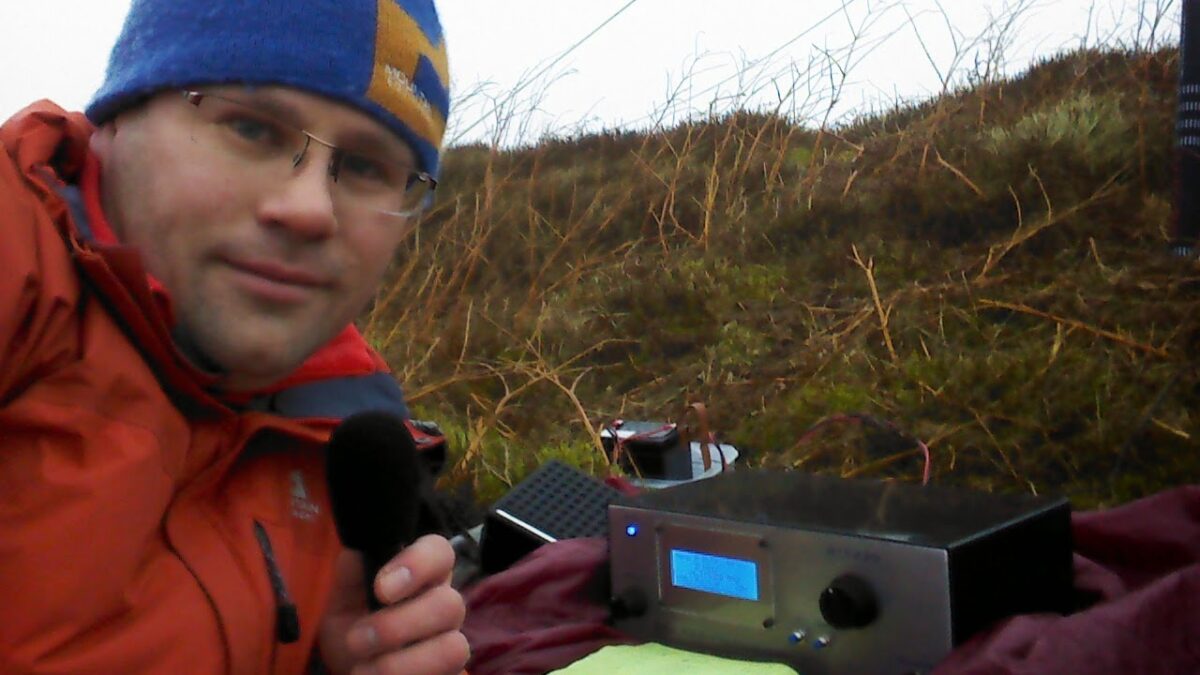
That has to be one of the best-looking scratch-built homebrew BITX20s. Pete and I agreed that it looks almost too good to take out into the field. But that is where Colin took it. His BITX was designed for Summits on the Air, and the radio gods rewarded him for his efforts with VK DX. Well done Colin!
Hi Bill and Pete.
Well it just worked out that weather was going to be bearable this morning but getting worse through the weekend. I’m really want to ramp up my SOTA score so I’m trying to get out as much as I can. I switched my plans to an early morning activation on one of the local hills. The hill, called Sharp Haw, is a little lump on the edge of the Yorkshire Dales, it’s not very high at all, but it is worth 1pt for SOTA.
The early morning time window brought the possibility of VK QSOs via long path on 20m. I looked at the VOACAP prediction for propagation and it suggested a peak at 0800utc.
I was actually late getting up, my alarm clock batteries have decided they’ve had enough. Despite the late start, I still managed to get on the air by 0725, hearing a strong Australian accent on the power up frequency of the BITX, 14.200, was a good sign.
At 0737, I was called by VK1DI. I had to turn the AF gain up, but sure enough, the signal was workable and we exchanged reports, 55 for him, 33 for me. Within the space of less than 20 minutes, I had 4 VKs logged, the strongest being VK3DET, giving me a 56. The other two stations were VK3CAT and VK2IO. I also worked an Asiatic Russian station amongst others.
I’m over the moon, I might even apply for my SSB thousand miles per watt wallpaper!
I still find it magical that 25 volts into a bit of 7/0.2 wire can transport your voice across 15,000 miles! Amazing!
73, Colin, M1BUU

Our book: “SolderSmoke — Global Adventures in Wireless Electronics” http://soldersmoke.com/book.htm Our coffee mugs, T-Shirts, bumper stickers: http://www.cafepress.com/SolderSmoke Our Book Store: http://astore.amazon.com/contracross-20

Video of Colin’s First Contact with his Homebrew Scratch-built BITX20

I love this video. Colin finished his BITX a week or so ago and has been waiting for an opportunity to test it. Over the weekend he braved the winter of Northern England and, with his son, set up his new rig out in his snow-covered garden. Appropriately for a first contact with scratch-built rig, the circuitry was unencumbered by any kind of case or box. That’s the way it should be done! Well done Colin! You are well and truly a member of the International Brotherhood of Electronic Wizards, and the diagnosis of “The Knack” has been confirmed (a severe case, it appears).

Hi Pete and Bill,

It’s been a lovely fine day here in West Yorkshire, so I took a table out into the garden and set up my BITX circuit on it. I set up my SOTA dipole on a 9m fishing pole.

I heard a strong German station calling CQ, so I gave him a call and hoped for the best!

How amazing to contact someone in another country using a rig and mic you’ve made yourself! Do I qualify as a REAL radio ham now? Do I have a confirmed case of the knack? 🙂

Although I may appear underwhelmed in the video, (besides the air punches!), I did really get a kick out of the QSO.
73 and huge thanks to both of you for the encouragement and support.

Colin, M1BUU

Our book: “SolderSmoke — Global Adventures in Wireless Electronics” http://soldersmoke.com/book.htm Our coffee mugs, T-Shirts, bumper stickers: http://www.cafepress.com/SolderSmoke Our Book Store: http://astore.amazon.com/contracross-20

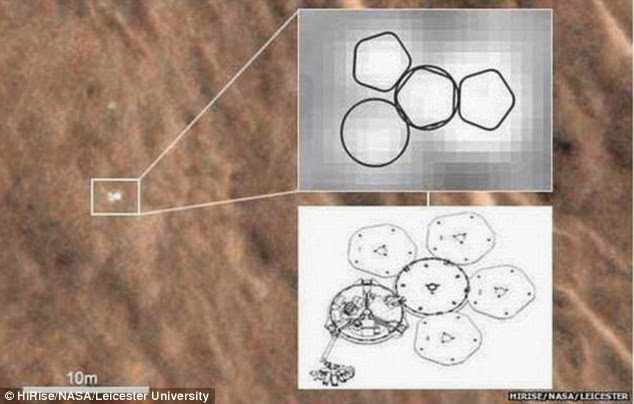
Beagle 2 Found On Mars

I was one of the millions of people who woke up that Christmas morning in 2003 thinking not of Santa Claus but of Colin Pillinger’s Mars Lander, the Beagle 2. We were in London by then, and later on I got to meet Colin Pillinger. I still have the books about Beagle 2 that he gave to me. Wow, it looks like they came very close. Too bad Colin did not live to see these pictures.

The Planetary Society has a very good article on all this:

http://www.planetary.org/blogs/emily-lakdawalla/2015/01160800-beagle-2-found.html

Our book: “SolderSmoke — Global Adventures in Wireless Electronics” http://soldersmoke.com/book.htm Our coffee mugs, T-Shirts, bumper stickers: http://www.cafepress.com/SolderSmoke Our Book Store: http://astore.amazon.com/contracross-20

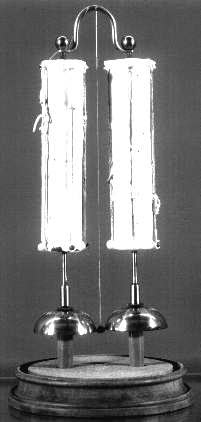
The Battery That’s Been Working for 175 Years


In case you missed this. Makes you think, doesn’t it? I’m thinking of a QRPp QRSS transmitter that would just keep on going. Battery designed by Giuseppe Zamboni.

http://motherboard.vice.com/read/this-battery-has-lasted-175-years-and-no-one-knows-how

Our book: “SolderSmoke — Global Adventures in Wireless Electronics” http://soldersmoke.com/book.htm Our coffee mugs, T-Shirts, bumper stickers: http://www.cafepress.com/SolderSmoke Our Book Store: http://astore.amazon.com/contracross-20

Jailed for The Knack: Gerry Wells, Homebrew Hero

Thanks to Thomas of the “SWLing Post” for alerting us to the story of UK radio legend Gerry Wells. As Thomas said in his post, you really need to drop what you are doing and listen to this great BBC program about Gerry:

http://swling.com/blog/2011/02/radio-documentary-the-wireless-world-of-gerry-wells/

The poor fellow was actually JAILED for his “radio obsession.” Wow. That was kind of harsh. But Gerry overcame adversity and had a very happy life in radio.

Thomas has more on Gerry here:

http://swling.com/blog/2014/12/jonathans-interviews-with-gerry-wells/

Thanks Thomas! And thanks to the BBC.

Our book: “SolderSmoke — Global Adventures in Wireless Electronics” http://soldersmoke.com/book.htm Our coffee mugs, T-Shirts, bumper stickers: http://www.cafepress.com/SolderSmoke Our Book Store: http://astore.amazon.com/contracross-20