“That 70s Show”: Steve “Snort Rosin” Smith Restores a 70’s era Tuna Tin 2


Hi Bill,

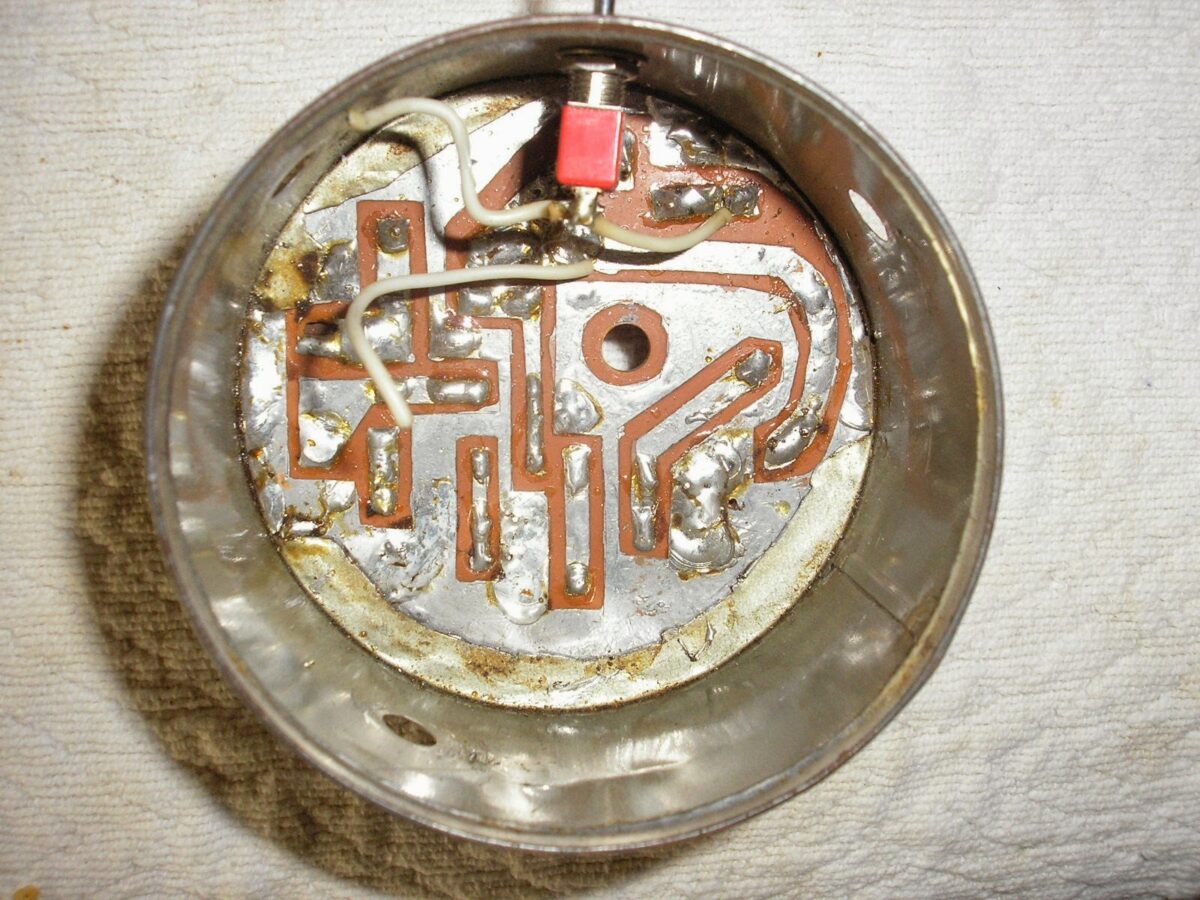
Your recent stories about your TT-2 and original TT-2 “mojo transfer” prompted me to resurrect my TT-2 ‘resto’ project.

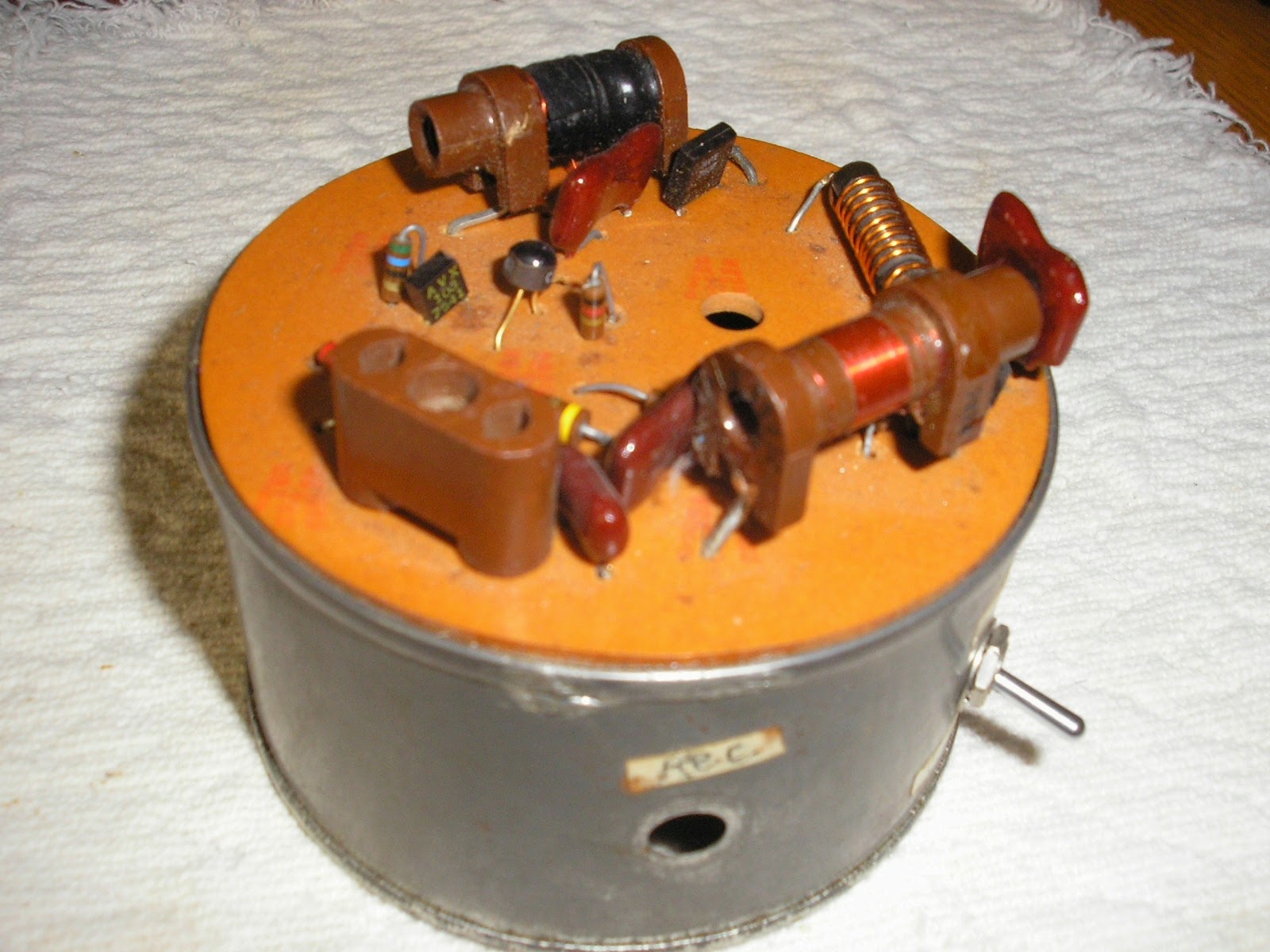
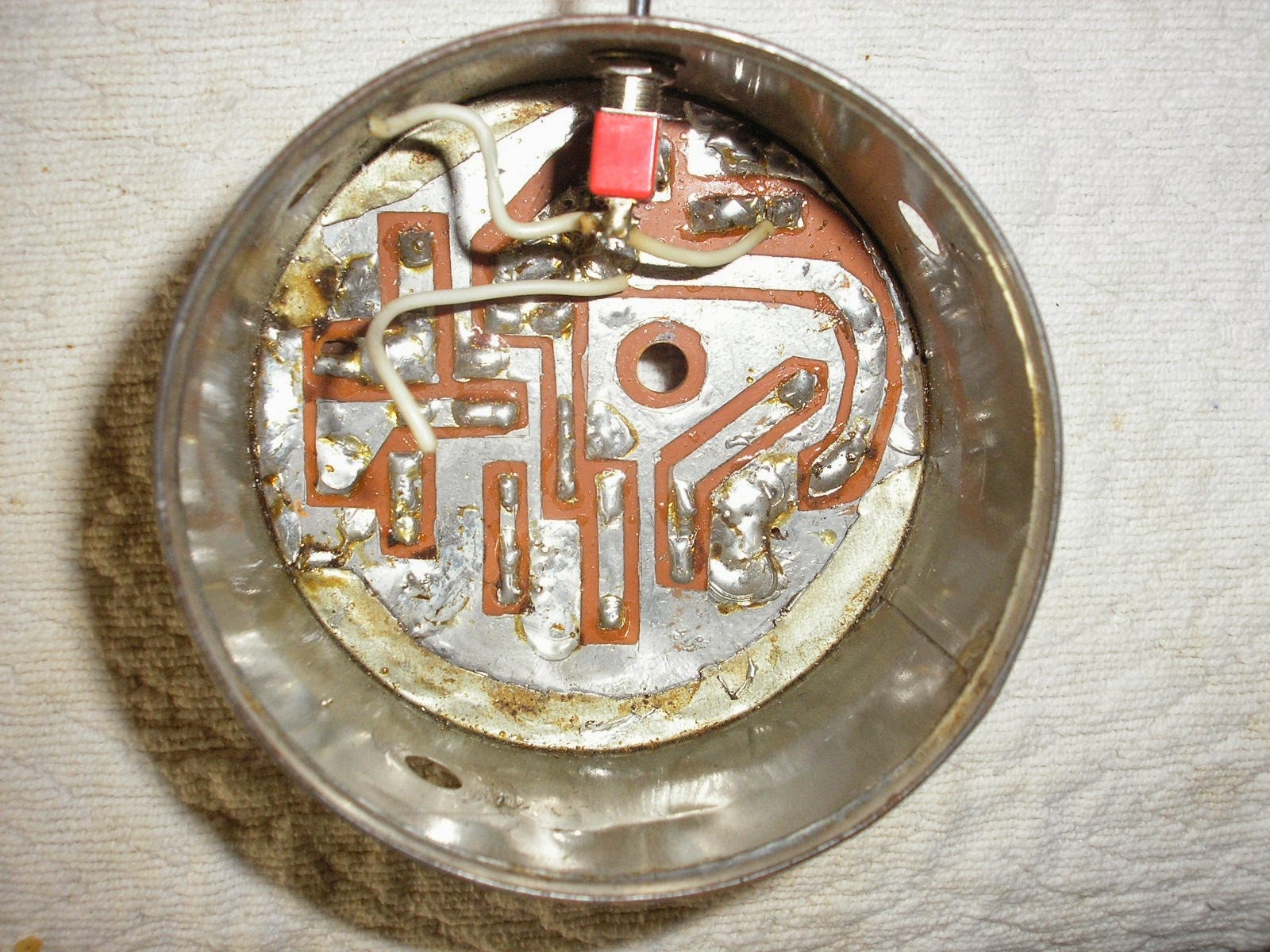
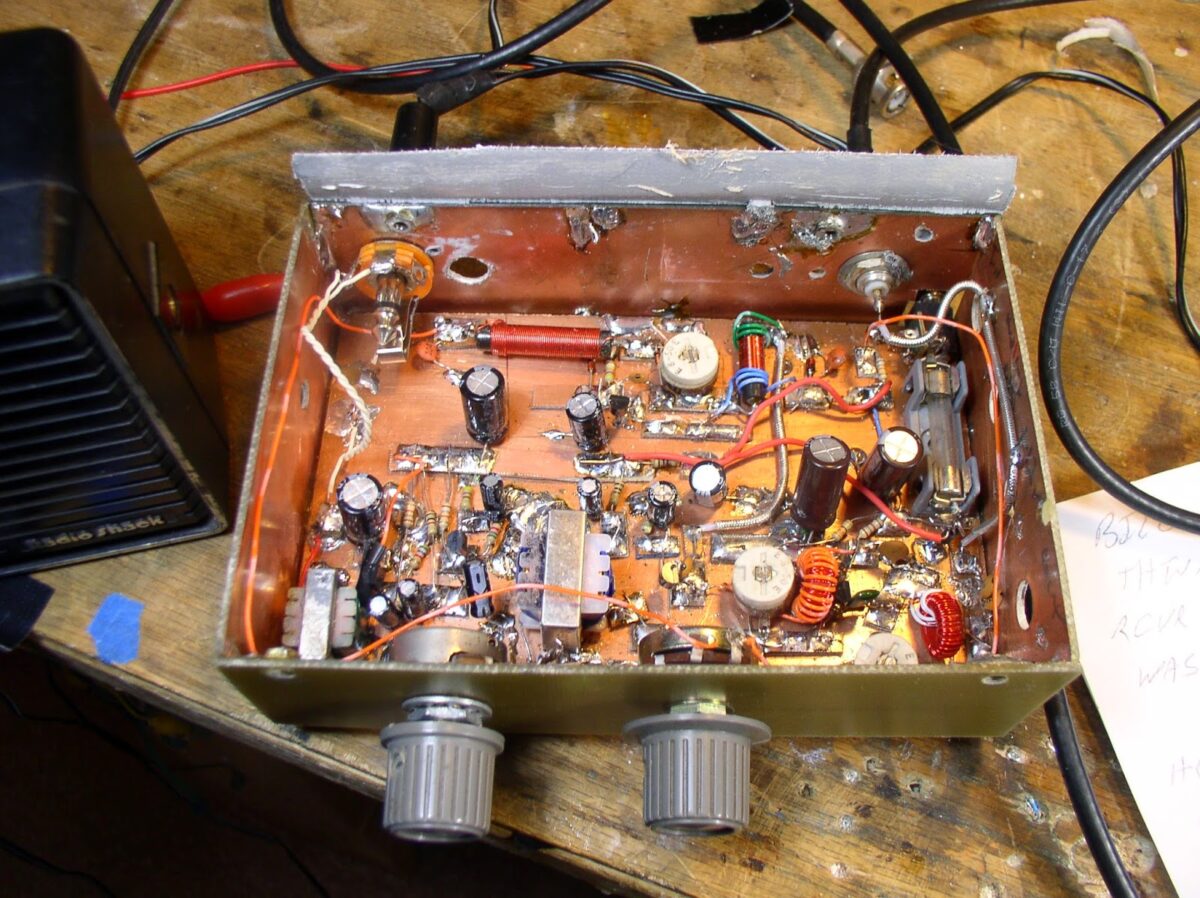
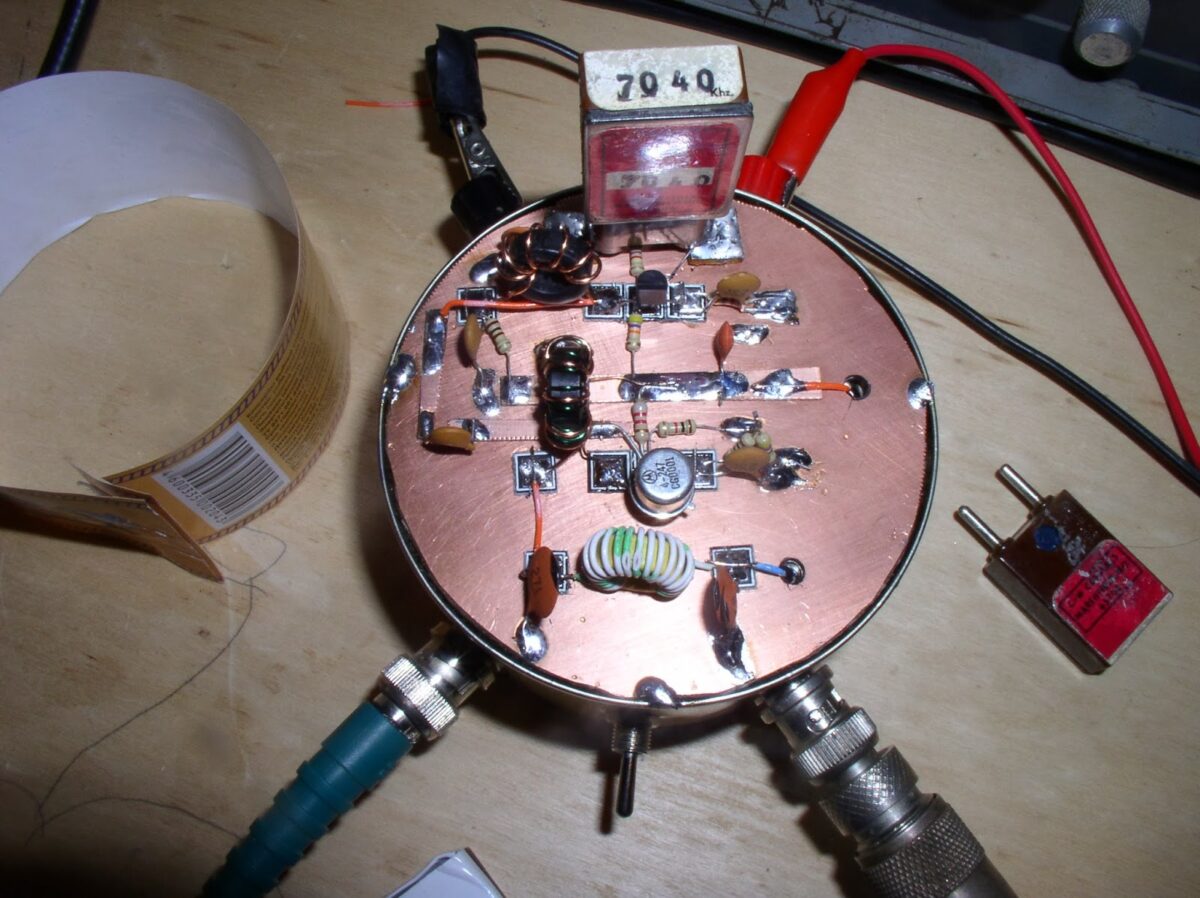
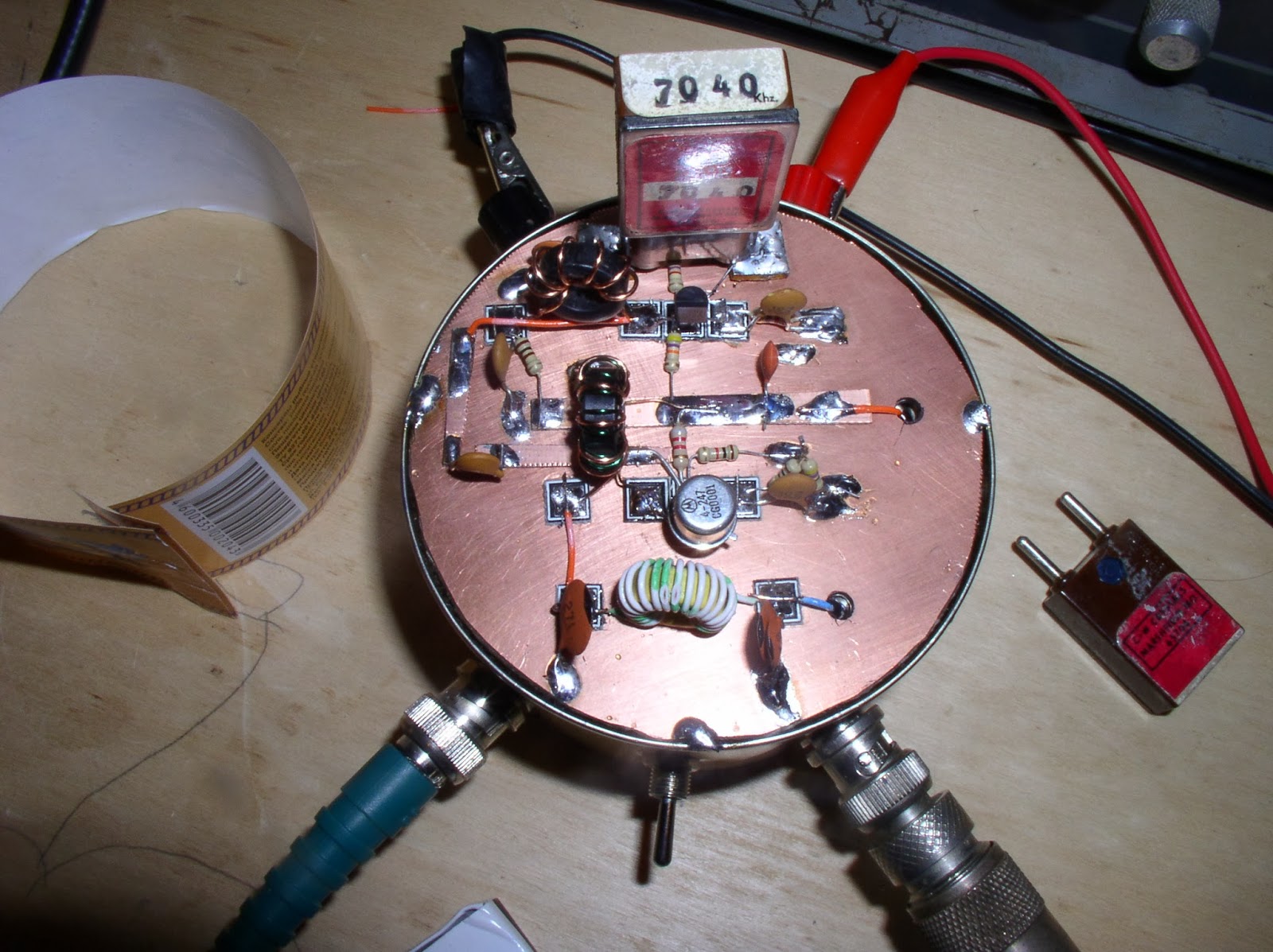
The attached photos show my 70s era TT-2 obtained for $5 from a QRP-L member. This is how I received it and you can see that it’s almost a duplicate copy of the original, complete with ‘phenolic’ substrate PC board material and hand-scrawled traces.

I have collected most of the components necessary to convert it to a look-alike of Doug Demaw’s 1976 item. I already have 1 or 2 of the proper Radio Shack RF chokes but lack one more to have the complete set and I’m about to grab some original Radio Shack 276-1617 transistors. The rest of the missing/incorrect parts I can drag out of the ever expansive Snort Rosin junque box.

By hand selecting the two transistors for max. power gain I hope to eek 300 mW out of the thing.

Anyway, hope you enjoy the shots and I’ll send more when it’s finished.

73…….Steve Smith WB6TNL
“Snort Rosin”

Our book: “SolderSmoke — Global Adventures in Wireless Electronics” http://soldersmoke.com/book.htm Our coffee mugs, T-Shirts, bumper stickers: http://www.cafepress.com/SolderSmoke Our Book Store: http://astore.amazon.com/contracross-20

SolderSmoke Podcast #159: Hamfests, Herring Aids, and Tuna Tins

SolderSmoke Podcast #159 is available.


http://soldersmoke.com/soldersmoke159.mp3

April 1, 2014
Vienna Wireless Hamfest
BITX Talk
W1REX speaks
Tuna Tin 2 Mojo Transfer Ceremony
After 38 years — finishing my Herring Aid 5 receiver
Feedback, Phasing Dots, Rotational Sense, and Oscillation (or not)
Motorboating (when you don’t want to)
Building my Tuna Tin 2 with parts from W1REX
On the air with Tuna Tin and Herring Aid
More Minimalist Meanderings:
An (Almost) All Altoid Crystal Radio!
Tek 465 dies (again) 🙁
MAILBAG

Our book: “SolderSmoke — Global Adventures in Wireless Electronics” http://soldersmoke.com/book.htm Our coffee mugs, T-Shirts, bumper stickers: http://www.cafepress.com/SolderSmoke Our Book Store: http://astore.amazon.com/contracross-20

First Contact with Herring Aid 5 AND Tuna Tin 2

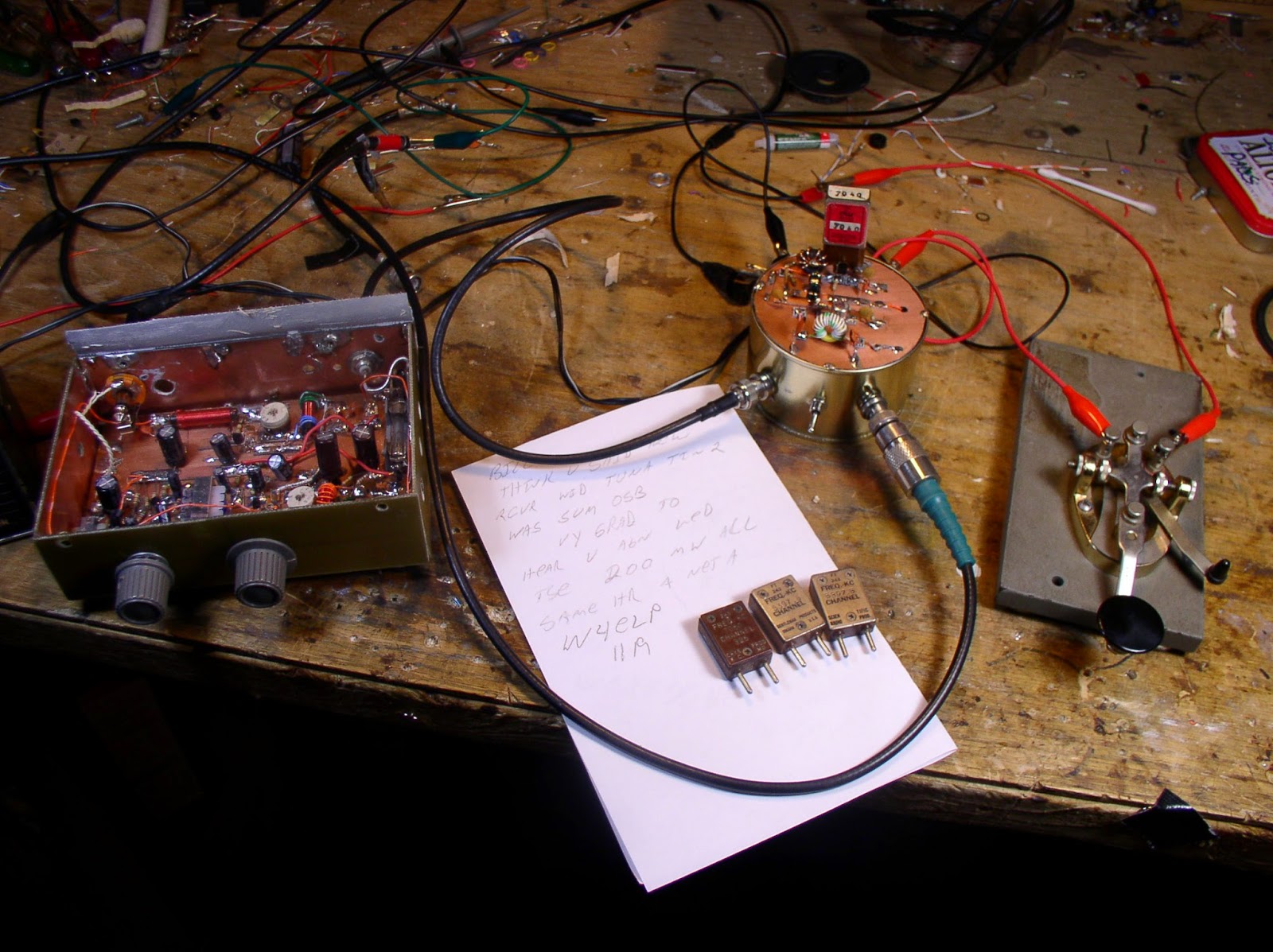
Ah, it was a good morning in the N2CQR shack! Last week I ran into fellow ham David Cowhig at work. I was regaling him with tales of Herring Aid and Tuna Tin derring-do. Oh the stations I had heard with the receiver! And the stations that I’d worked with the transmitter! Then David asked the question: “Yea, but have you worked anybody with the receiver paired up with the transmitter?” Uh, no. Not yet.
Well this morning I took care of that. 7040 kc. 1115 UTC. W4ELP was calling CQ. He wasn’t too strong, and I wasn’t sure if we were on the same side of zero beat (that’s what happens with direct conversion — you get all the sigs in two places on the dial) but I took a shot at it. And he heard me!
Here’s the icing on the cake: This was his SECOND QSO with my Tuna Tin 2! Ed had been contact #4 when I was running the TT2 with the Drake 2B. After exchanging reports he asked “Bill ARE YOU STILL ON THE TUNA TIN?”
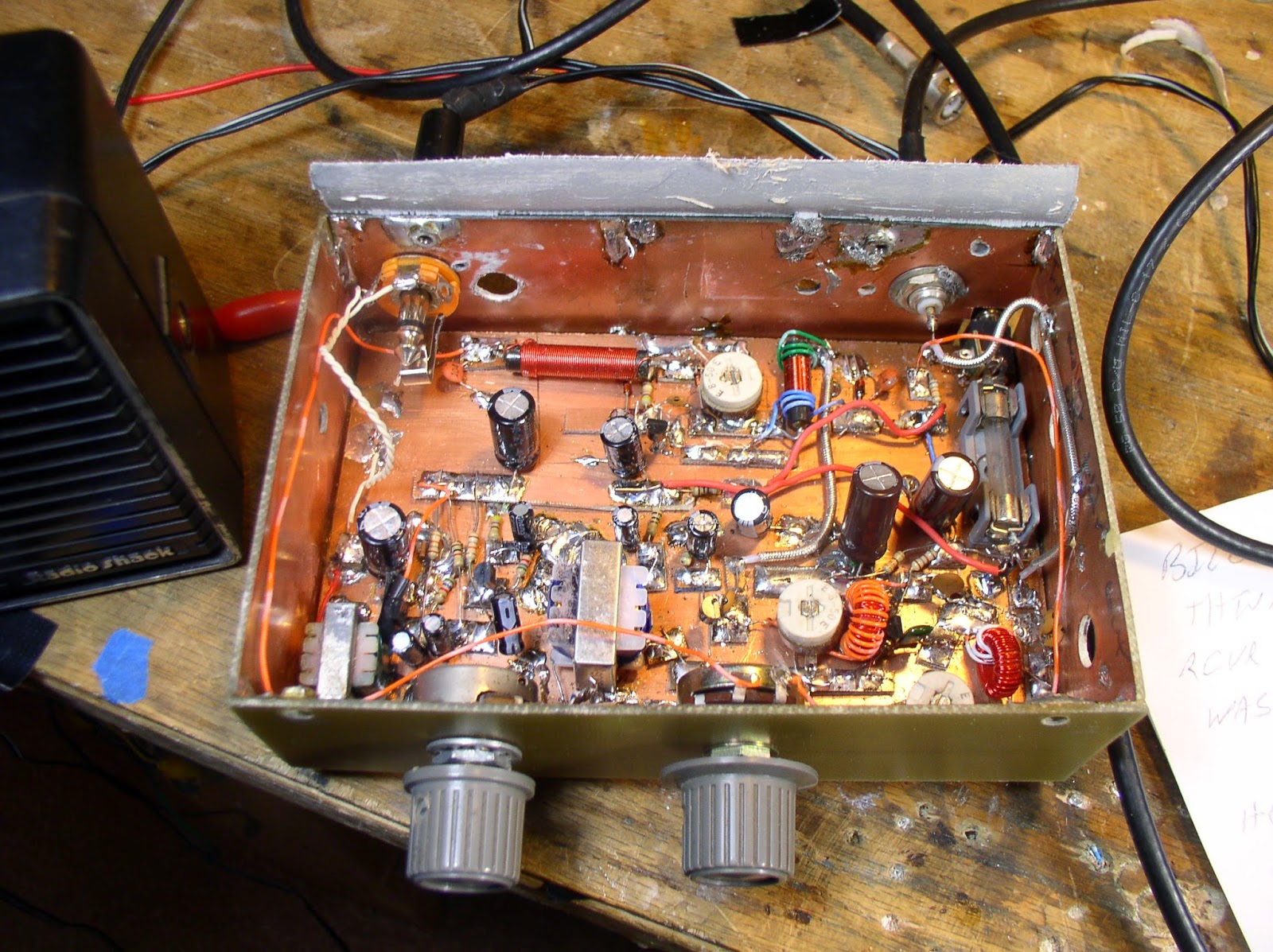
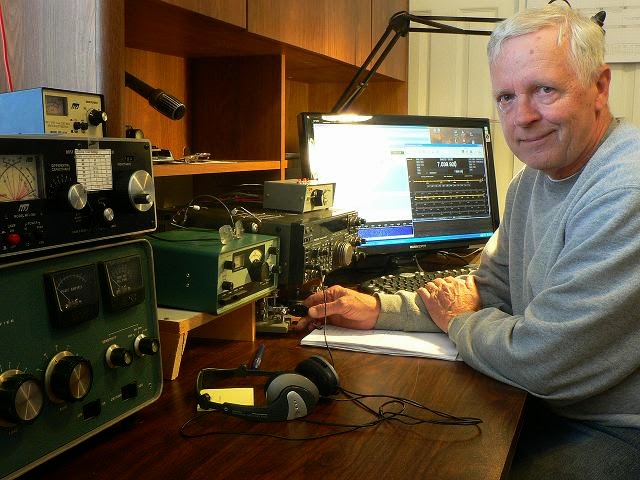
The rig (TX AND RX) is pictured above. Close-up of the receiver appears below. And below that is a picture of Ed, W4ELP, in his Georgia shack. Note the HW-8.
Thanks Ed! Thanks David!


Our book: “SolderSmoke — Global Adventures in Wireless Electronics” http://soldersmoke.com/book.htm Our coffee mugs, T-Shirts, bumper stickers: http://www.cafepress.com/SolderSmoke Our Book Store: http://astore.amazon.com/contracross-20

Remotely Controlled Stations on the Internet

Now for something completely different!

I find myself talking fairly often to hams who are using remote transceivers. The operator will be in say, Michigan, with the rig in Florida. Some of them are using the online system:

http://www.remotehams.com/

I signed up and downloaded the software. It works very well. Many of the stations are closed to outsiders, and some of them don’t let you transmit, but it is fun to listen from remote locations.

This morning I hooked up the Tuna Tin 2 and was able to hear my 200 mW signal through AI4W’s receiver in Kentucky.

Our book: “SolderSmoke — Global Adventures in Wireless Electronics” http://soldersmoke.com/book.htm Our coffee mugs, T-Shirts, bumper stickers: http://www.cafepress.com/SolderSmoke Our Book Store: http://astore.amazon.com/contracross-20

I Too Built a Tuna Tin 2

I didn’t plan on doing this. I didn’t even really want to do this. I’ve become a phone guy — I’m not into CW anymore. I figured I’d just finish the Herring Aid 5 receiver and settle the score from 1976 and that would be it. But everything I read about the Herring Aid 5 included references to the iconic Tuna Tin 2. Obviously I was also under the strong influence of my late February encounter with the original TT2 at the Vienna Wireless Winterfest. That Mojo is powerful stuff! Then my wife brought home this can of Russian tuna. The dimensions were perfect. Then I looked in my junkbox and found 40 meter CW crystals. That was it. I had to do it.

I built mine Manhattan style, using several of W1REX’s fantastic Me-pads. I also used as the final a transistor that Rex gave me at Winterfest. Thanks Rex. Soul in the New Machine.

I’m getting about 200 mW out. I;m on 7030 kHz and 7040 kHz and 7110 kHz. I have the TT2 up with my Drake 2-B (Herring Aid 5 integration will come later). I can feel the Mojo.

I just had my first contact with the TT2: I called CQ on 7110 and AB2RA came back. Jan was running 20 watts from an old 807 rig, listening with an old Hammarlund. So it was HB transmitter and vintage receivers on both ends! FB!

Our book: “SolderSmoke — Global Adventures in Wireless Electronics” http://soldersmoke.com/book.htm Our coffee mugs, T-Shirts, bumper stickers: http://www.cafepress.com/SolderSmoke Our Book Store: http://astore.amazon.com/contracross-20

38 Year HB Mystery Solved? Was it the phasing dots?

During the summer of 1976, at the age of 18, I made an audacious attempt to join the ranks of the true homebrewers. I tried to build a receiver. It was the Herring Aid 5 from the July 1976 issue of QST, a 40 meter Direct Conversion receiver intended for use with the famed Tuna Tin 2. As I have recounted (perhaps ad nauseum), I never got it to work. My recent encounter with the ORIGINAL Tuna Tin 2 (Mojo was transferred to my BITX17, and it definitely works better now) got me thinking about this painful experience. I decided to try again.

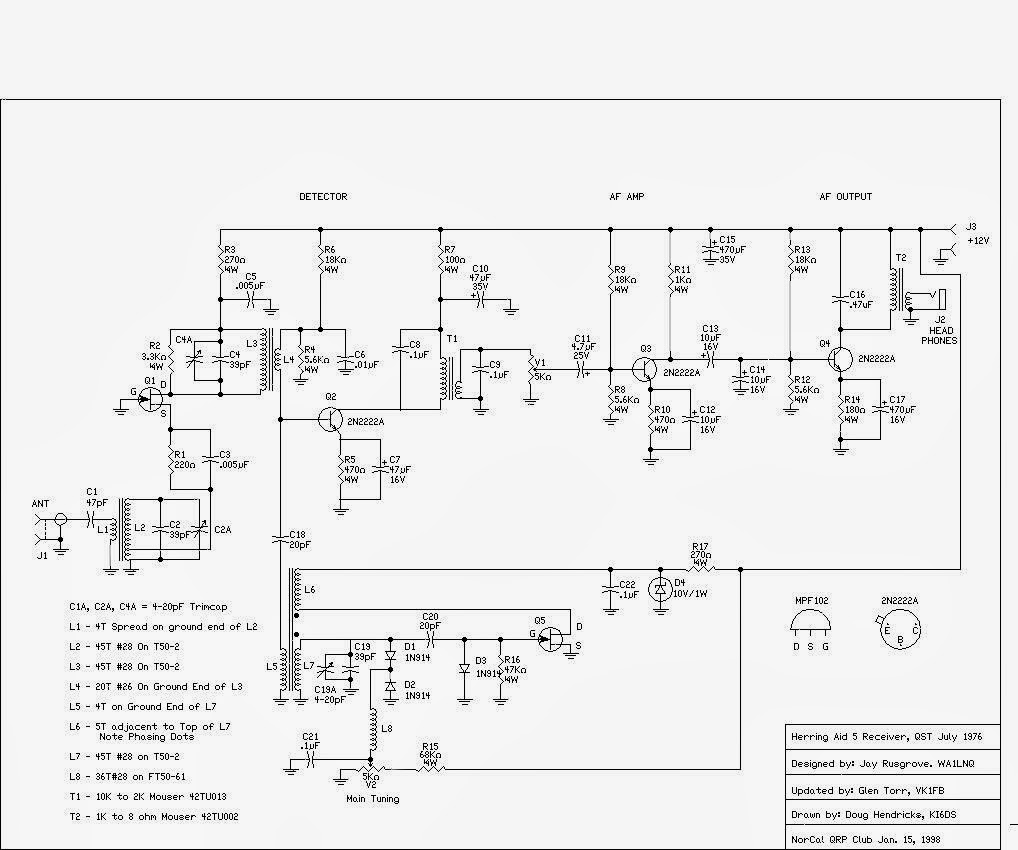
There is an updated NORCAL schematic for this rig. I found it (and some good articles) on the NJQRP club page. In the original, designer Jay Rusgrove, WA1LNQ, used only parts that could be found at Radio Shack stores. In the days before the internet and Mouser, this was a good idea. Instead of toroidal ferrite and iron powder coils, Jay built his coils around Radio Shack solonoidal 10 uH chokes.

The NORCAL version dispensed with the Radio Shack chokes, and used toroids. But I wanted to try to find out what went wrong 38 years ago. So I dug up some 10uH chokes.

I know that my problem was that I never got the oscillator working. I remember being able to hear signals with my “almost” receiver when I put my HT-37 in “CAL” mode and tuned through 40. I was so close! The Herring Aid was picking up RF from the HT-37 and using that in lieu of the LO energy that obviously wasn’t coming from my Herring Aid VFO. But WHY didn’t that oscillator work?

Today I started with the VFO. Again, it didn’t work! But now I have decades of troubleshooting experience under my belt. So I poked around a bit. Then I decided to look closely at the phasing.

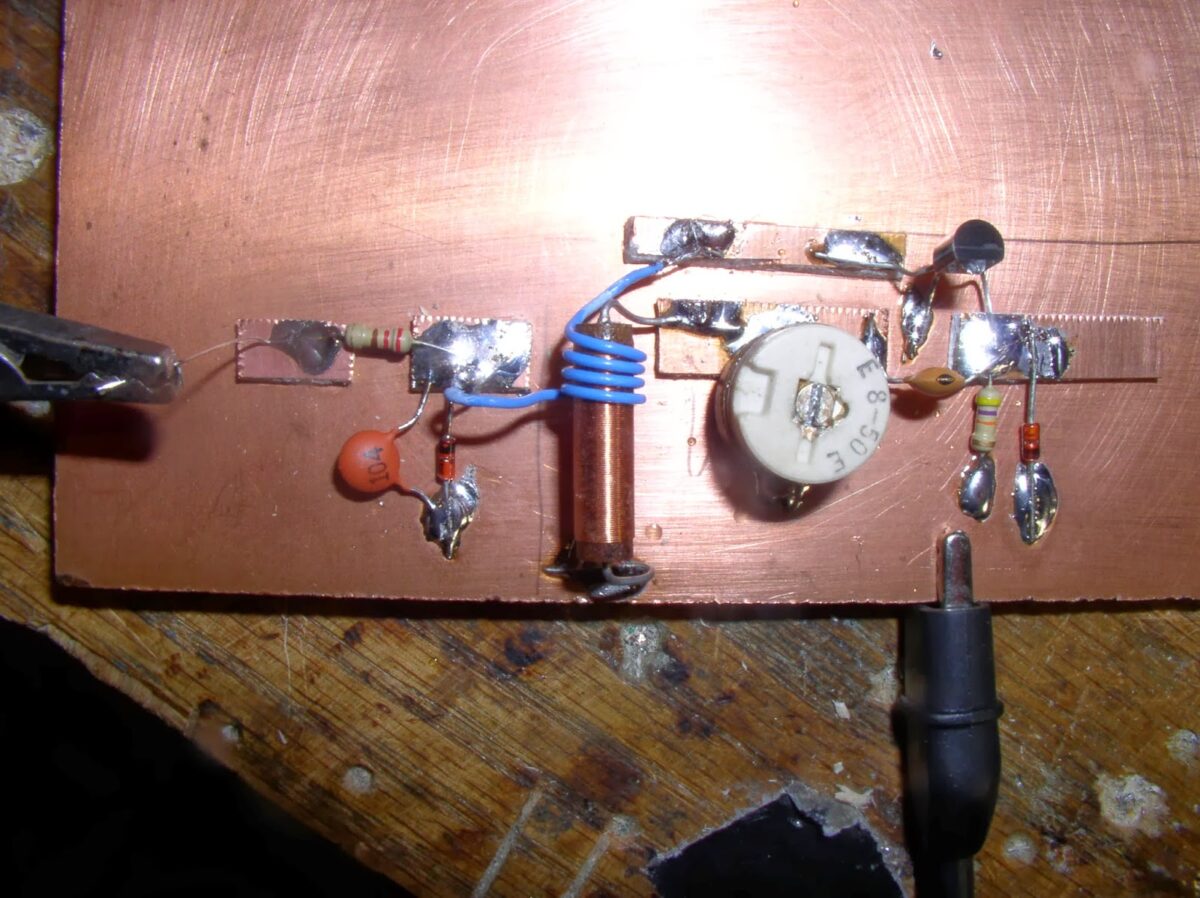
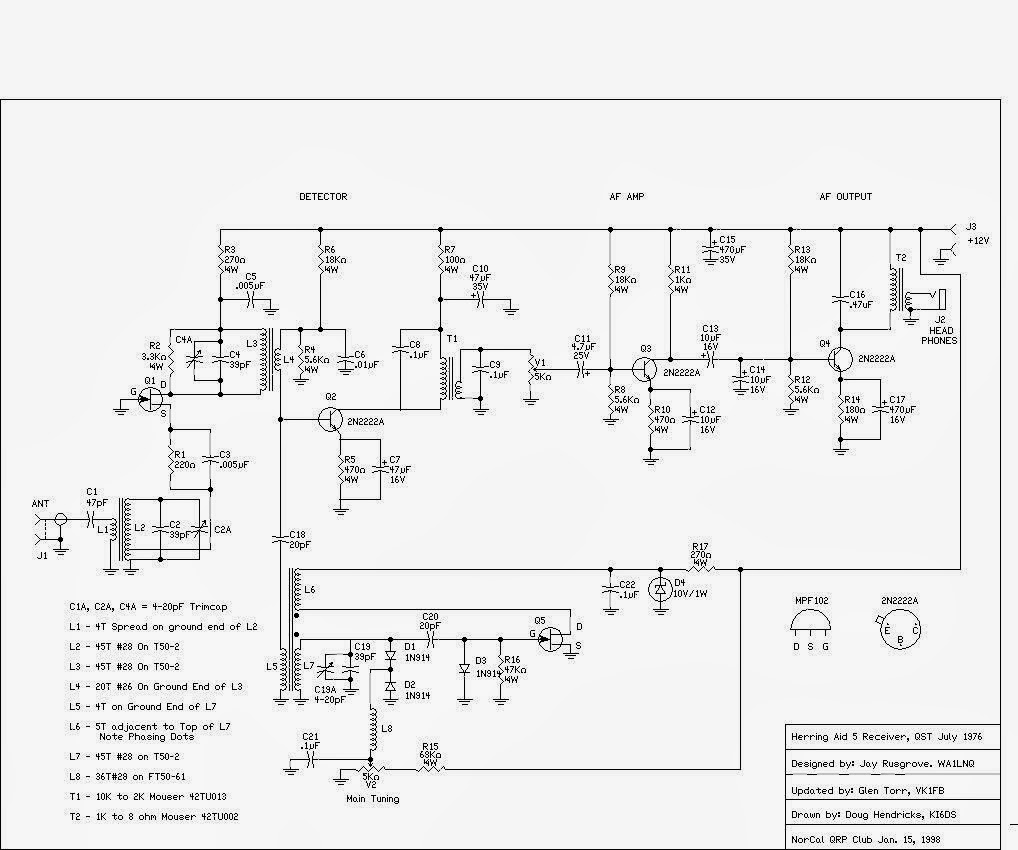
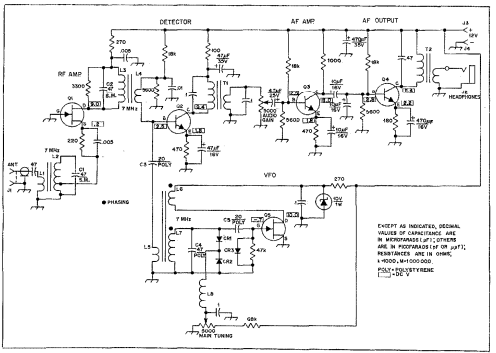
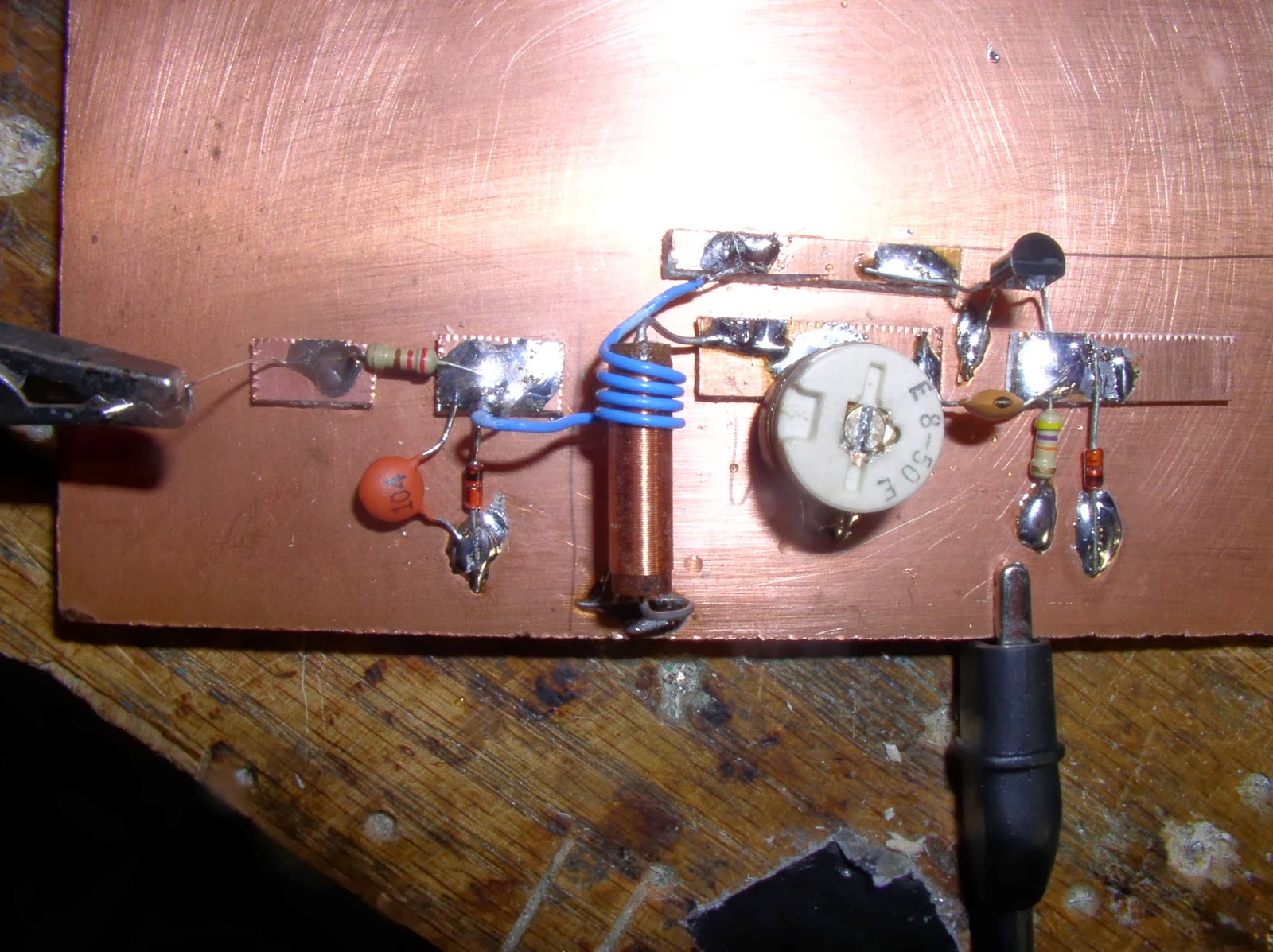
Take a look at the schematic(above) and the picture (below). L7 is the 10uH choke. L6 is 4 turns wound over it (or adjacent to it). Now, here is the key question: Look at the phasing dots. How would you guys connect those coils? For me, the schematic indicates that the TOP of L6 should go to the Zener and the BOTTOM of L6 should go to the drain of the JFET. The TOP of the choke should go over to C5, and BOTTOM of L6 should go to ground. Right? Or am I reading the phasing dots wrong?

Well, the oscillator was not oscillating in this configuration. Then I did something that I might not have known to try back in 1976: I reversed the phase of L6: I put the top of the coil to the Drain of the JFET and the bottom of the coil to the Zener. Bingo. The joy of oscillation. Now it works. (The picture below shows it as it is when the oscillator is working well.)

So, is there an error in that diagram? Was this not all my fault?
Aha! I just looked at the schematic of the NORCAL version. Check out the dots! I think that was the problem!

Our book: “SolderSmoke — Global Adventures in Wireless Electronics” http://soldersmoke.com/book.htm Our coffee mugs, T-Shirts, bumper stickers: http://www.cafepress.com/SolderSmoke Our Book Store: http://astore.amazon.com/contracross-20
Tuna Tin Mojo Transferred to BITX17!!!!!!

It happened at the Vienna Wireless Society’s Winterfest Hamfest today in Northern Virginia.
That is Doug DeMaw’s original Tuna Tin.
This may be the first time TT Mojo has been given to a phone rig.
Doug DeMaw would, I’m sure, approve.

Thanks Rex!

Our book: “SolderSmoke — Global Adventures in Wireless Electronics” http://soldersmoke.com/book.htm Our coffee mugs, T-Shirts, bumper stickers: http://www.cafepress.com/SolderSmoke Our Book Store: http://astore.amazon.com/contracross-20