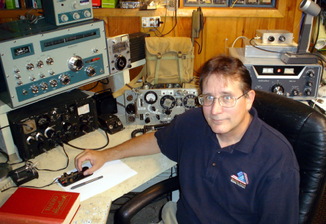
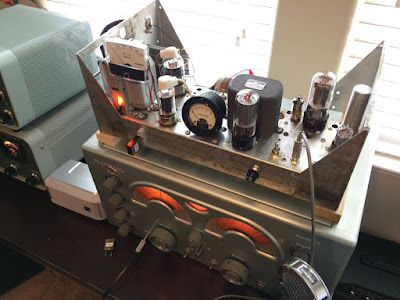
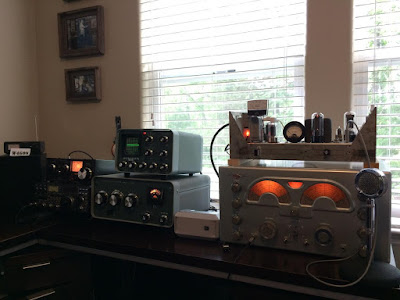
Mike WU2D on QSO Today with Eric Guth 4Z1UG

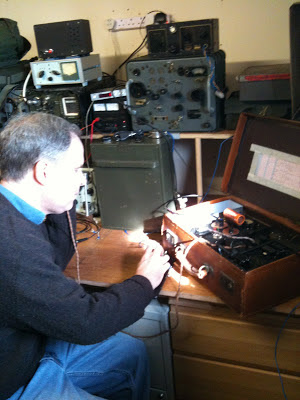
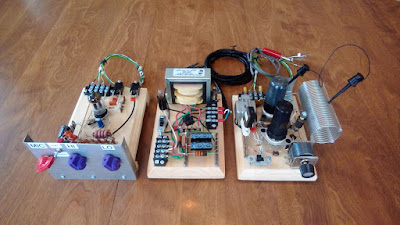
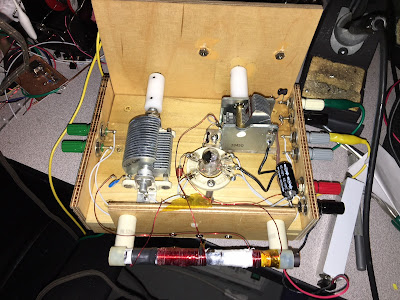
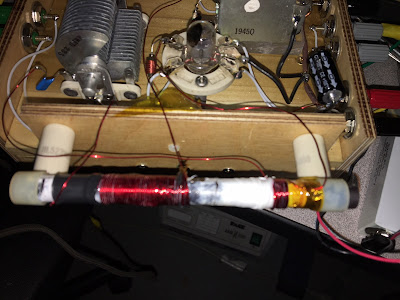
Eric Guth has a great interview with homebrew and boatanchor guru Mike WU2D.

Listen here:

https://www.qsotoday.com/podcasts/WU2D

Wow: “My receiver was from a Sherman tank.”

His story about getting in trouble after “borrowing” his friend’s callsign was really great.

I also liked his wise comment about how anyone who homebrews simple gear will collect some “wallpaper” from official observers and the FCC. Mike is right: we shouldn’t get too concerned about minor transgressions. If we do, we run the risk of becoming so careful, cautious, and fearful that we never BUILD anything.

There is a wonderful discussion of the Paraset.

Mike coins a term that we might want to add to the SolderSmoke lexicon: RetroQRP. (Over to you Steve Silverman. Your call OM.)

Mike WU2D on QSO Today with Eric Guth 4Z1UG

Eric Guth has a great interview with homebrew and boatanchor guru Mike WU2D.

Listen here:

https://www.qsotoday.com/podcasts/WU2D

Wow: “My receiver was from a Sherman tank.”

His story about getting in trouble after “borrowing” his friend’s callsign was really great.

I also liked his wise comment about how anyone who homebrews simple gear will collect some “wallpaper” from official observers and the FCC. Mike is right: we shouldn’t get too concerned about minor transgressions. If we do, we run the risk of becoming so careful, cautious, and fearful that we never BUILD anything.

There is a wonderful discussion of the Paraset.

Mike coins a term that we might want to add to the SolderSmoke lexicon: RetroQRP. (Over to you Steve Silverman. Your call OM.)

ET-2 Contact #18 W4FOA — RANDOM, UNSCHEDULED, AND NOT SPOTTED (Video)

On December 1, 2019, my 100 milliwatt signal flew more than 500 miles to reach Tony W4FOA in Chickamauga, Georgia. And — icing on the cake — this was a random contact. Tony just heard my CQ on 7038 kHz — he had not been alerted to my CQ by any spotting site or by the SKCC Sked page. I made a quick video of my side of the contact (above).

In a follow-up e-mail Tony explained how my CQ sounded to him:

“I was just listening on the 40 meter band and having been a QRP’er for 50+ years, I tend to notice the weaker stations, thus explains my calling you. Also, your signal had that little “sound” of “yesteryear” when signals were not all pure, hi. Had it not been for the QSB and QRN we could have had a long chat despite the weak signal from your QRPp. Over the years I have QRP DXCC, 2 way QRPARCI WAS, and my best DX was two QSO’s with 2 different VK7 stations on 40 when I was running 1 watt. I’ve had a lot of different QRP rigs and still have some home brew stuff plus a couple of HW8s, HW9, Elecraft K2, etc…”


From Tony’s QRZ.com page, we learn more about his ham radio activities (note his homebrew rigs and his obvious affection for the Drake 2B and 2BQ)

First licensed as WN4FOA in April 1954. Other calls held include EL2AD, 7Q7AA, PY1ZBA. Prefer to work CW but I do work some SSB, primarily DX-related. Enjoy chasing DX on all HF bands. Have 9BDXCC and I now have worked and confirmed all of the current DXCC countries . I enjoy QRP operation and currently use an Elecraft K2 (#2213),Ameco AC-1, Kenwood TS-130V SW-40, DC-40, HW-8 (2), Heathkit HW-9 Deluxe (WARC) PSA-9 HFT-9B SP-99 HM-9 HD-420 VLF, MFJ 40T and MFJ 40V VFO, and a homebrew 6AG7/6L6 or a 6C4/5763 etc. I also enjoy operating boatanchor gear which includes a Johnson Viking Adventurer, Viking Challenger, an Eico 720 and an Eico 723 with a HG-10B VFO and a Heath AT-1 and a Drake 2NT. Recently added a neat Lysco 600 transmitter and a Knight Kit T-60, Johnson Viking II, and a Ten Tec 544. Boatanchor receivers include a Hallicrafters SX-100, SX-110, SX-71, Drake R4C and the incredible Drake 2B/2BQ combo. Recently added a Kenwood TS-830S, VFO-240, AT-230 and SP-230.

Tony W4FOA

Thanks a lot Tony. 73

ET-2 Contact #16 — Pete, KD2OMV, Builder of a 6T9er (with video)

Yesterday I had my first contact using the ET-2’s improved receiver. I had watched the video of N0WVA’s receiver and I realized that more sensitivity was possible. So I tried to replicate his LC ratio. I think that helped a lot. Today I posted a plea for help on the SKCC Sked page and then called CQ on 40. I was answered by Pete, KD2OMV who was so loud that I had to take the headphones off my ears! He was booming in, all the way from upstate New York. The receiver was running off a somewhat depleted 9 volt battery. I made a quick video (above). I’m just holding the I-phone up to the headphone, while also trying to copy the incoming CW.

This was a really great contact. Pete has a wonderful knack story. He was licensed as a kid but never made a contact. As an adult he found his old box of parts for a 6T9er in his parents house. So he builds it and uses the homebrew rig to make his first ham radio contact. FB Pete. Thanks for the contact OM. I wrote your call on the ET-2.

Pete KD2OMV

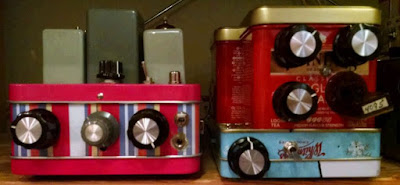
The BGCD: A Regenerodyne Receiver built on Pencil, Candy, and Tea Tins. Circuit from 1937 QST

David Newkirk recently put up a nice website on ham radio. The page below provides details on the amazing creation pictured above: The BGCD: “The Byron Goodman — Clinton DeSoto Regenerodyne.” It is a beautiful piece of work, made more beautiful by the metal containers used in construction: pencil, candy and tea tins. The circuit is based on a 1937 QST article.

David’s site reminded me of the wonderful writing of his father, Rod Newkirk of “How’s DX” fame. More on him in due course.

More on the BGCD here:

http://dpnwritings.nfshost.com/ej/pictures/pictures1.htm?fbclid=IwAR2-lmJ8E1kEBT_jsB3Q8UnPaN0vc472dP783ifABK7eSxgpe5M1Pl0N77g

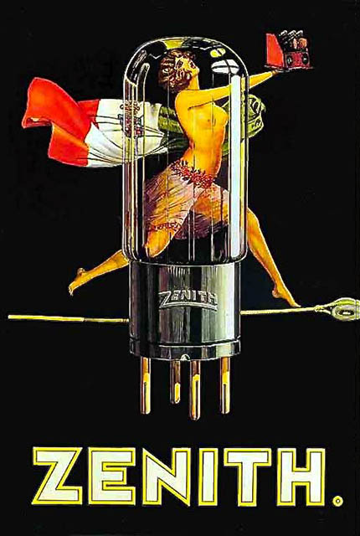
Radio Art — Zenith Tube Ad

This ad was recently shown on the K9YA Telegraph. I was wondering about its origins. I asked noted thermatron guru Grayson Evans — he referred the question to fellow tube guru and author Ludwell Sibley. OM Ludwell gives us the origins:


She’s in a promo for Zenith, an Italian prewar brand that sold European triodes of types originated by Philips, and a few equivalents of American types. She’s based on classical Italian art. Doing a high-wire act while holding a small early-‘20s European radio! I have an 11 x 17 glossy color print framed on the wail in the display room. I ran her as the cover art in a long-ago issue of “Tube Collector.” “Three cheers for the red, white, and green!”

Ludwell Sibley is the editor of “The Tube Collector.” Great stuff. Their web site is here:

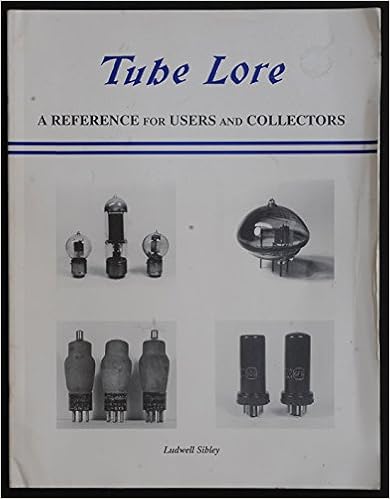
Sibley’s book “Tube Lore” can be purchased here:

https://www.amazon.com/Tube-lore-reference-users-collectors/dp/0965468305/ref=sr_1_1?keywords=Tube+Lore&qid=1569660647&sr=8-1

Thanks Grayson, Ludwell, and to the K9YA Telegraph.

The AL7RV (W8NSA) Paraset, Regens, Test Gear, and Schematics Varnished into Enclosures

Jim W8NSA ex AL7RV is an old friend and a really talented radio builder. Over the years he has sent me many boxes of very FB radio parts. I’m sure that almost all of my homebrew rigs have parts from Jim somewhere in the circuitry. Jim recently sent in an update on his radio building efforts.

Bill,


I managed to cobble up some regen’s over the summer. Most fun was my version of Dave Richards, AA7EE Sproutie, it turned out so nice I have it on my bedside table. Yes, the Sproutie has displaced the trusty old Transoceanic, brings back memories of late night SWL’ing with my Space Spanner as a teen.
The Sproutie worked well enough I’m considering a build of the Dave’s Sproutie MK II, maybe not in such a grand cabinet or with such fine metal work as Dave’s but a functional copy.

I also built the regen receiver from the SOE Paraset design, other then a coil winding mistake the receiver worked well at power up.

I built the Paraset receiver to test a number of mods others have suggested to improve the receiver’s performance. Using the mods involves modern solid-state components and additional band-spread functionally. Many consider the mods be in poor taste but they go well making a much better receiver.
I am ready to build my copy/version of the Paraset, now that I’ve missed SKN I have almost a year to get it built.
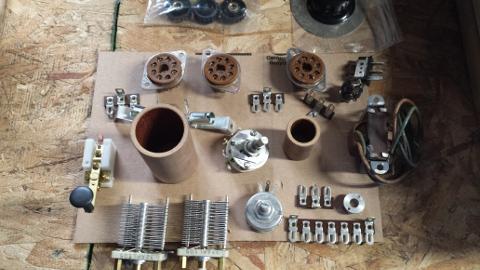
I’ve been gathering Paraset parts for years, was lucky to get in on the group purchase for a set of 3 Paraset knobs made from the same molds by the same company SOE used when building the transceivers in the 1940’s, having a real part of that history is exciting, to me at least.
Paraset Parts (see picture above) (some parts shown may not be in the proper location)

At last I have all the major components. I am at the point of gathering up the various resistors and small fixed capacitors needed. Some builders have gone to the efforts of embedding newer, smaller, parts in the carcass of vintage 1930s & 40s parts hollowed out and repainted. Too much effort for me, I want a functional radio, not a museum grade replica, but I really do want to keep the look of the SOE issued set.

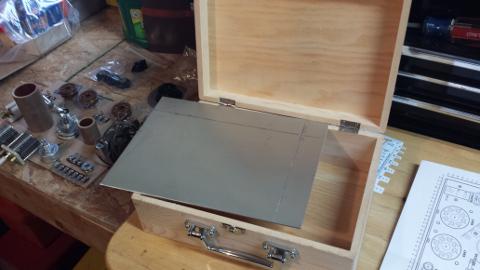
Case and front panel…

Many of the U.S. Paraset builders are using a wooden craft box from Hobby Lobby, It is just about the correct size and shape. You can see at the right side of the photo a detailed panel layout. Building the Paraset is not quite Heath Kit but with so many talented builders having made so much information available I feel so lucky to follow the effort.

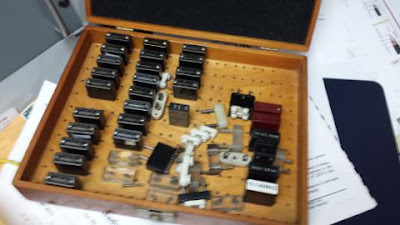
Years ago, during our RV travel days, I picked up a box of Bliley AX2 40 meter crystals. Good price and just about every one of the crystals were found to be working. Have a total of eighteen 40m crystals from 7.0024Mhz to 7.0986Mhz, have two 80m crystals in the CW portion but none of the AX2 crystals are for the traditional QRP frequencies, close but… AF4K and others are selling HC49 crystals for the QRP frequencies, problem is the 6L6/6V6’s used in the Paraset are known to be real crystal crackers.. (as was my 1964 novice rig!).

I’m considering the use of a transistor oscillator and driver stage to feed the 6L6 as a PA in effort to save the crystals and maybe allow the use of an outboard DDS VFO, yes I can hear the moans of dismay from other Paraset replica builders

The box included a number of sockets and crystal adapters too. Was great find. Having so may 40m crystals I’m starting to have thoughts of optimizing the Paraset build for just 40 meters. I can improve the sets performance but of course lose 80m and possibly 60m.

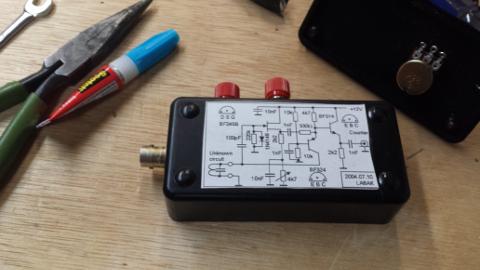
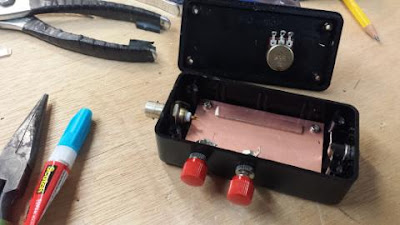
Today’s project while catching up on SolderSmoke Podcasts is a test device to aid in checking the resonant frequency of L/C networks. It’s always nice to prove your math is correct!
Building it Manhattan style into an old rat shack plastic box.


I have always loved the way WW II equipment had the schematics varnished into the covers or cases. I try to do the same with most of the things I build.

Schematic reduced to fit, ink-jet printed. Using an old credit card I spread a very thin layer of E6000 clear adhesive on the case, apply the paper image, then using a clean credit card or the edge of piece of circuit board feather the schematic into the adhesive.

Let dry for about 10 mins, wipe off the excess glue around the edges. Let dry for 24 to 48 hours and cover with a few thin coats of Testors Clear Lacquer Overcoat.. several thin coats, follow the recommendations for re-coat time on the spay your using.

Please read the cautions for using E6000. Pete may not be able to purchase it in his state!
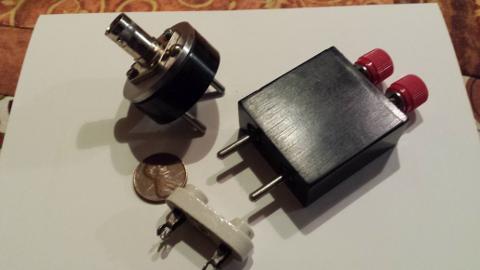
The Paraset antenna output connections use a porcelain crystal socket, the AX2 crystal purchase included a few dead or empty crystal cases, I modified two of them to use as adapters.


OH! and yes, I’ll be using outboard low pass filters with the Paraset!


Thanks again to you and Pete for the blog and smoke efforts!

73, Jim W8NSA aka AL7RV
Ian Keyser G3ROO on UK TV with his Spy Set Rigs (video)

Me at the keyof one of Ian’s spy sets — ten years ago?

Check out this nice UK TV report on Ian G3ROO and his spy set radios:

https://www.itv.com/news/meridian/2018-10-19/daring-spies-who-broadcast-from-behind-enemy-lines/

And here is Tony Fishpool’s report on their excellent adventure at Friedricshaffen Hamfest 2018.

http://www.fishpool.org.uk/friedrichshafen.htm

Here are some of the SolderSmoke blog posts on the activities of Ian and the Dover Constructors Club.

https://soldersmoke.blogspot.com/search?q=G3ROO

Wow. Mr. Carlson’s New Old-Time Radio and Test Gear Lab. VE7ZWZ — Homebrew Hero

It has been a while since we last visited Mr. Carlson’s lab. As always, we found it amazing. The awesomeness just keeps increasing. Previous visits: https://soldersmoke.blogspot.com/search?q=Carlson

As was the case before, this is really almost too much. THREE DX-100s in the shelves. A massive collection of tubes, some sorted, some un-sorted. But don’t worry — Paul has a good memory and remembers where everything is. I believe him.

For his amazing shack and workshop(s) and for his willingness to repair old-time test gear, Paul VE7ZWZ clearly deserves homebrew hero status.

Thanks Paul.

NN2K’s Beautiful Pine-Board Al-Fresco Thermatron AM Transmitter

On Saturday mornings (around dawn) I often listen to the Old Military Radio Net on 3885 kHz. I find it inspirational. This morning the inspiration was provided by Rick NN2K. His signal from Binghamton New York was makeing the trip to Northern Virginia. When I heard him mention that he was using a “Pine Board Transmitter” I felt the urge to look for a picture. QRZ.com provided the photo.

Rich says he built this rig in January 2018 based on a QST article by Bob Heil. FB Rich!
And thanks to Ted W3PWW for running the Old Military Radio Net for so many years.

Dragnet Goes After TV Repairmen in 1951

Detective Friday goes after a vicious new kind of crime: Crooked TV repairmen who overcharge their customers. These monsters unnecessarily replace (or say they do!) transformers, when all that is needed is a new 5U4 tube. Oh, the humanity!

And the reporter they were working with pretended to be a salesman for a new company dealing in rosin-core solder!

No kidding. I really thought this was a joke. They were serious. Just click on the video above to listen.


Or scroll forward to the 1:32:59 point on this link. Lots of tube talk. This one’s for you Grayson! https://wamu.org/story/18/02/20/big-broadcast-feb-25-2018/

KD4PBJ’s Acorn AM Broadcast Band Regen

From Chris, KD4PBJ:

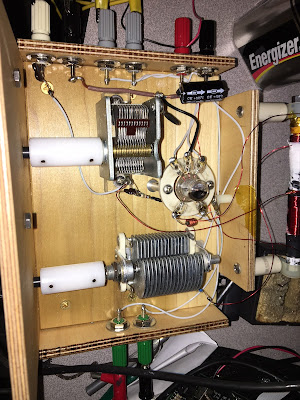
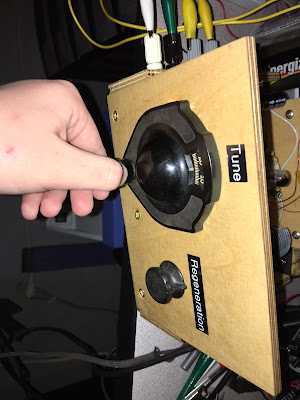
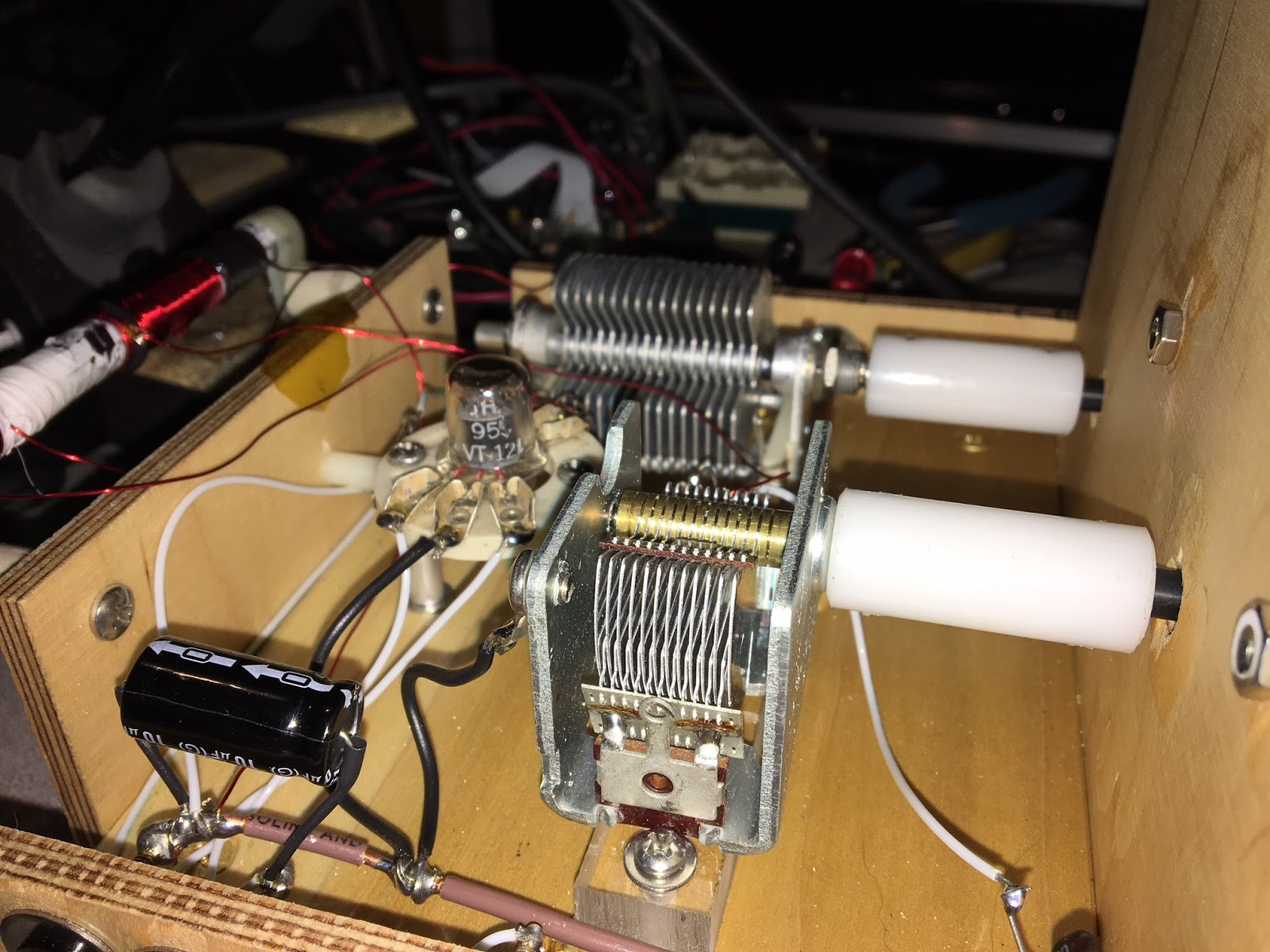
This is my AM band regen I built during December and early January.

It uses a 955 acorn tube and is a really hot performer! I can pick up dozens of stations with only a 20 ft piece of wire thrown out my shop window and tied to a nearby tree limb 5 ft off the ground. This is from rural Tennessee where we have no local AM’s.

It uses a velvet vernier I bought off eBay back around 1999 or 2000 and had saved for a special project like this.

I’m running filaments off a 6V lantern battery and plates off a type 415 45V battery.

A nice ham/machinist I met on the Time Nuts list who lives in San Francisco made my insulated shaft couplings. I got the Delrin rod cheap off eBay. He cut them to length, center drilled for 1/4 inch and drilled each end for 2 setscrews.


The Ham-Radio Thermatron Roots of Silicon Valley

Hack-A-Day had an excellent piece on tubes and Silicon Valley this week. Makes me want to get the book “Secret History of Silicon Valley.”

https://hackaday.com/2017/11/02/silicon-valley-was-built-on-tubes-of-glass/

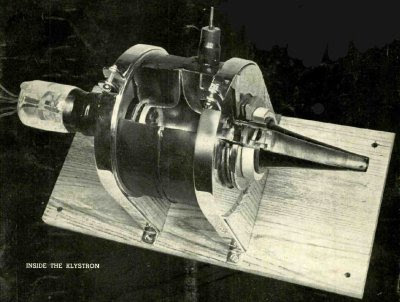
Note above the Klystron prototype mounted on a wooden board. These guys clearly had THE KNACK.

Cliff Stoll — K7TA — Has THE KNACK. And a GREAT NOVA Video

Hack-A-Day had a piece on Cliff Stoll of “The Cuckoo’s Egg” and “Silicon Snake Oil” fame. I read these books years ago. I included a quote from Cliff on page 45 of the SolderSmoke book (the quote seemed to foreshadow my aversion to SDR).

I didn’t know that NOVA produced an hour-long program on Stoll’s Cuckoo’s Egg adventures. It is really good. Many of those involved play themselves in the video. Very cool. See above.

I checked Cliff’s QRZ.com page. We wrote several years ago that Cliff has THE KNACK. Note below his preference for thermatrons and the affection for Heathkits. Diagnosis confirmed.

From QRZ.com:

Hi gang! This is Cliff Stoll, K7TA
Way back in the Jurassic, I was licensed as WN2PSX, in Buffalo NY. Got my general ticket around 1967 as WB2PSX, and helped build ham radio stations at Hutch-Tech high school, University/Buffalo, and University of Arizona. When I went to Tucson for grad school, I passed my extra ticket and snagged the call K7TA (back when this meant 20wpm cw). I held a first-class commercial ticket, which let me engineer at WBFO radio, but I don’t know if commercial licenses even exist anymore.
I now live in Oakland California, and occasionally get on the cw lowbands with old heathkit gear … just rebuilt my novice NC-270 receiver with filaments that glow in the dark. Gotta restring my 40 meter dipole that came down in a windstorm.
You can guess that I’m pretty much retired. Along the way, I’ve worked in FM radio, planetary physics, computing, writing, speaking, teaching, and math. Best way to reach me is through my website www.kleinbottle.com
Warm wishes to all — 73’s,
-Cliff

Info on Cliff’s latest gig:

Thermatrons Al Fresco: W4GON’s FB HB AM Rig

I was listening to 7290 kHz with my BITX this morning and I heard W4GON say his AM rig is homebrew. So of course I fired up the DX-100 and the HQ-100 and gave Joel a call. Conditions were terrible but we had some support from the radio gods.

From Joel’s QRZ.com page: “It uses a pair of 6L6s in Push-Pull Class AB1 high level plate and screen modulating a 6146. I still have a lot of work to do on this rig, like building an enclosure, but it works and I just couldn’t help but getting on the air with it!”


I think it is a thing of beauty.

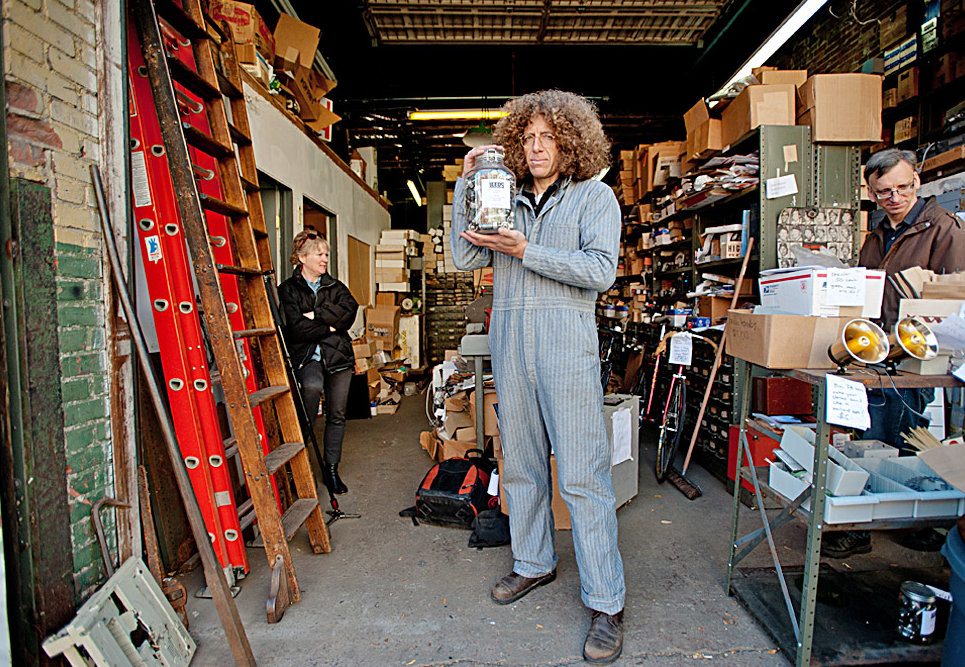
NYC’s Radio Row Survives (sort of) in the Bronx

Thanks to our friend (and official lexicographer) Steve Silverman KB3SII for alerting us to this important bit of radio news from the Big Apple. It seems that a part of old Radio Row was saved and moved — first to Brooklyn and now to the Bronx. I got a kick out of some of the comments in the New York Times article about the store: The insurance company determined that the contents of the store were “non-pilferable.” And one young audio enthusiast was quoted as saying that old American tubes “sound better” than Chinese tubes. I guess they have more presence. Or brightness. And less feathering. Or something.

Here is the 2011 NYT article:
http://www.nytimes.com/2011/11/20/nyregion/leeds-radio-is-a-haven-for-lovers-of-all-things-analog.html


To N2CQR

Another Thermatron Receiver (video)

Thanks to Steve N8NM for sending this along. He said it seems to be crying out for a synthesized VFO — I disagree,of course.

I like the filter arrangement — one crystal at 455 kHz, two tune-able IF cans and a phasing control. This seems like a good way to get both AM selectivity (broad) while still having the ability to narrow the bandpass for SSB.

The builder did a great job. Does anyone know who he is?

The Soul of the Old Machine

I continue to peruse the stack of Electric Radio magazines that Armand WA1UQO gave me last month. Great stuff. I’m really struck by how much of our ham radio history is captured in the pages of ER… and nowhere else. This is a resource that should be protected.

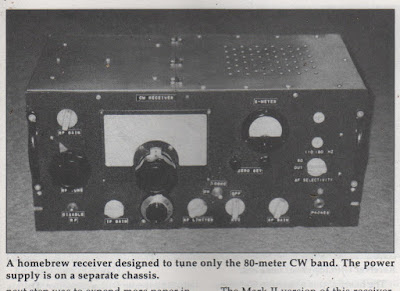
In the last podcast I shared a few lines from the “Amateur Radio SSB — The First Fifty Years” series or articles. Today at lunch time I was reading the March 1994 issue, there was an article by Don Meadows N6DM entitled “A Homebrew CW Receiver.” From the last paragraph:

“This homebrew receiver as the main station receiver until 1975… In 1989 the homebrew receiver was finally mothballed… In its place I acquired an imported box that does everything. This box is friendly and cooperative, but I have no rapport with its soul. When it ultimately falters, it will need to be cured in the manufacturers sanitarium for sick gear instead of on my own workbench.

I’ve always been proud of this homebrew receiver. It did its job exceedingly well. Retrieving recently this old friend from storage for photographs, cleaning out the dust and dead insects, inspecting its wiring up close — all this evoked fond memories.”