Category: Tubes
A Thermatron (and Asperger’s) Knack Story
6EA8s in the Mate for the Mighty Midget, and WA9WFA Re-Builds a Heath HW-12
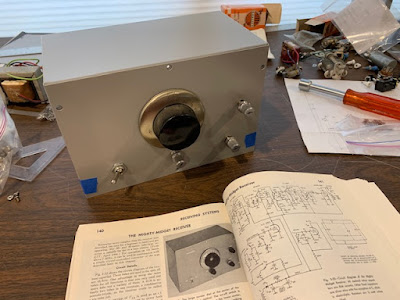
I reported to Scott and Grayson that I had finally gotten around to changing the three aging 6U8 tubes in my Mate for the Mighty Midget receiver. I replaced them with three more youthful 6EA8s. This switch really seemed to perk up the old receiver. I’m listening to 75 meters on it right now.
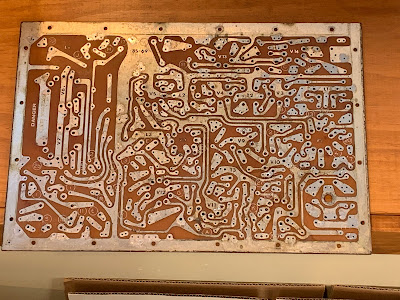
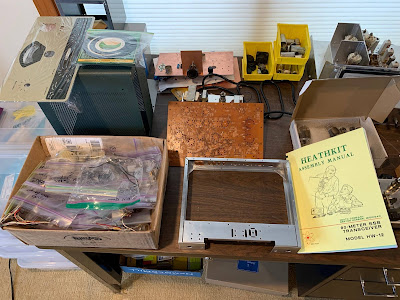
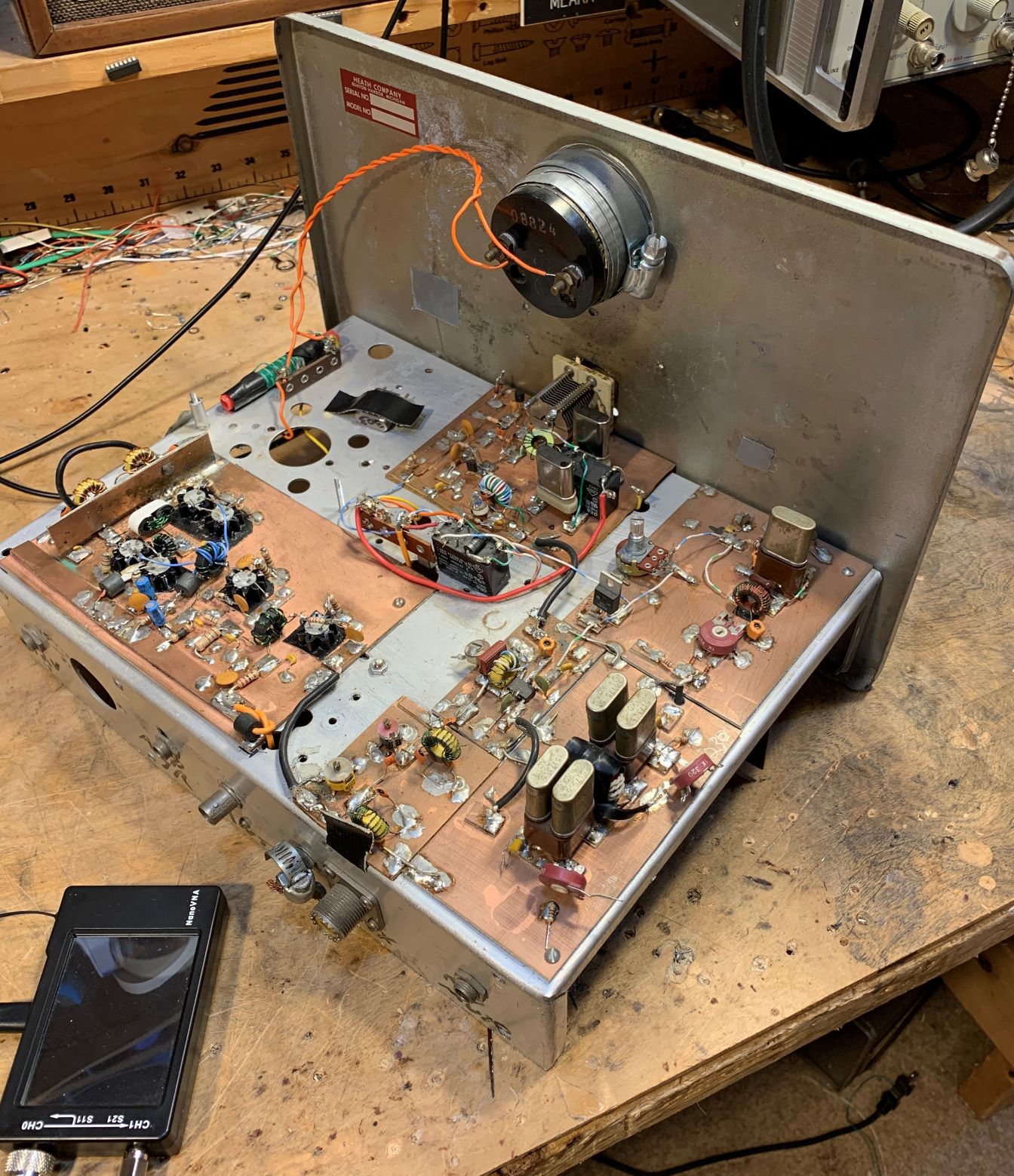
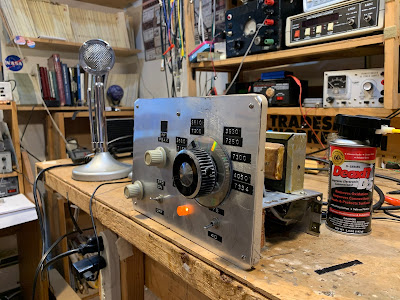
Speaking of 75 meters, Scott sent me this picture of his latest effort: re-building a Heathkit HW-12. FB. This is a way of experiencing (or re-experiencing) the construction of a Heathkit. I did something similar, but much less complicated) with a Heathkit VF-1. Scott did a wonderful job taking this old rig apart. That PC board looks great (see photo below).
Scott’s e-mail:
Hi Bill and Grayson, I’m glad to hear of your good results with the 6EA8’s in your MMMrx! I had similar results when I finally got rid of the 6U8’s with their iffy performance and went with the 6EA8’s. I did put a set of 6GH8A’s and tried it out, it worked, but I don’t have any data on performance improvements. After completing the outboard power supply and audio amplifier, I’ve taken a break from my MMMRx and it’s sitting there on the bench. I’ll get back to it in a while.
In the meantime I’ve started a new project where I’m re-kitting a Heathkit HW-12 eighty meter transceiver. I have completed the disassembly process including the pcb. I bought a Hakko vacuum desoldering iron for taking all (ALL) parts off of the pcb, and it’s bare now. I’m planning to start rebuilding this coming week. 73 Scott WA9WFA
1BCG — The 100th Anniversary of the Trans-Atlantic Test
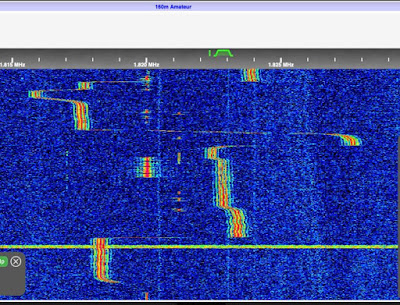
Phil W1PJE managed to hear and record some of the 2021 transmission (Thanks Phil). Listen here:
https://drive.google.com/file/
Phil also sent this spectrogram of the signal.
Gloria — A Netflix Series about a Shortwave Broadcast Station in Portugal
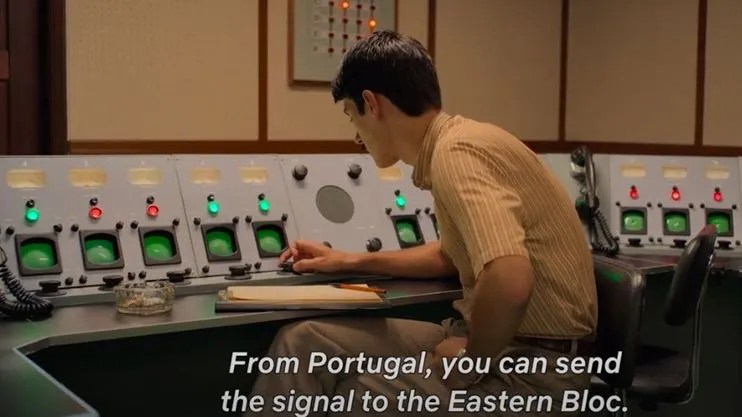
Rarely if ever will we come across a high quality NETFLIX series built around a shortwave broadcast transmitter. But that is what we have in Gloria. It is really good. We were especially interested in it because we lived in Portugal for three years. In addition to all the intrigue and drama you will catch glimpses of broadcast antennas, big transmitting tubes, and one out-of-focus shot of what appears to be a Hallicrafters receiver (SX-42?)
More info here:
Here’s the NETFLIX link:
https://www.netflix.com/title/81073977
Thanks to Thomas K4SWL of SWLing Post for the heads up.
KG7TR’s Magnificent 75S-2B Receiver — Tubes, an Si5351, an Arduino, a Bit of Collins, and a Bit of a Drake 2-B
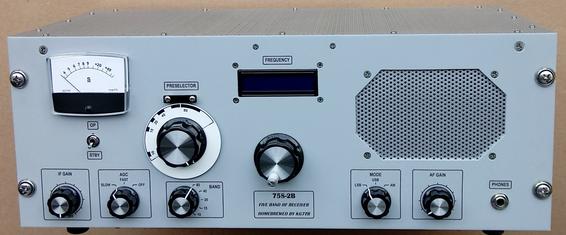
Oh man, I share this with much trepidation because the last time I posted something about the work of Mike KG7TR, Pete N6QW said he felt like putting all of his own work in the dumpster, so much better was the artistry of KG7TR. This receiver is so cool and so well-done that we now might have to post a guard outside the N6QW shack — heck Mike even has an Arduino Uno and an Si5351 in there! Don’t do it Pete!
I was led to this magnificent receiver by the very humble 6U8 tube. Scott WA9WFA and I have been learning (mostly from Grayson KJ7UM) that the much used and sometimes loved 6U8s (three of them in our “Mates for the Mighty Midget”) might be a bit long in the tooth, old even by Thermatron standards. I was worried when I remembered that my Drake 2-B has a 6U8 in it — V2, the first mixer. So I Googled for more info and was led to this amazing receiver, a 2018 creation by KG7TR. How did we NOT see this for almost four years?
Here is more info and pictures:
http://www.kg7tr.com/75s-2b-receiver.html
Here is Mike’s write-up of the project:
Mike KG7TR’s web site:
As for the 6U8s, well Grayson says the tube has been getting something of a bum rap. And KG7TR has two of them in this receiver, so I will obviously have to give the 6U8 another chance.
——————–
I didn’t know that Lew McCoy had his own crystal and crystal filter company:
SolderSmoke Podcast #234: PSSST, KWM-1, VHF Woes, Mighty Midget, TinySA, 17-12 Dual-Bander Advice Needed. MAILBAG
Roots of SolderSmoke: The “Click and Clack” of ham radio?
PSSST Super Simple SSB — 7 Transistors. Switching IF Module:
DC RX.
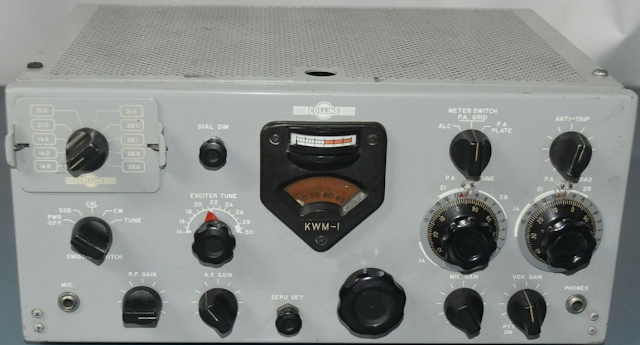
KWM-1 Resurrection “Shame Shelf”.
How to make things work:
Diode Switching or Relays?
National Receiver.
Bill’s Bench
Farhan’s Talk to RSGB got me thinking of VHF 2 meter AM.
2 meter Benton Harbor lunchbox madness. SuperRegens Super Strange.
I broke my Maplin AF Sig Gen in the process. Fixed it.
Playing with MMMRX again. Put in 6 kHz ceramic filter. Sounds great SSB and AM.
Swept IF with noise, TinySA, and NanoVNA. Need better noise gen.
Mod to listen with TinySA (on blog).
Thinking of 17 meter /12 meter Dual-Bander IF around 21.4, VFO around 3.41 Mhz. Thoughts?
Sweeping double half lattice filter from Swan 240. UGLY.
MAILBAG:
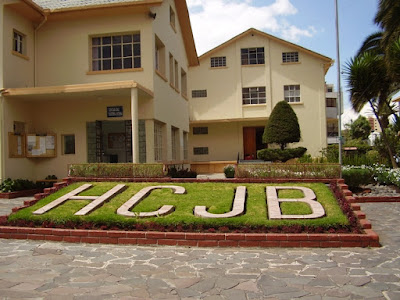
— ROOTS OF MAILBAG: Radio Moscow, Havana Cuba, HCJB, others.
— Thomas K4SWL of the SWL Post: Could have been worse! Stairbag?
— Drew N7DA worked Wes W7ZOI in Sweepstakes. FB.
— Peter VK2EMU The movie Frequency and the Magic of Heathkits. Good, but not that good!
— Thomas KK6AHT! Our old friend. Minima! Now has a young son! FB
— Chuck WA7ZZE Saw QST profile. Sympathizes with Two-er trouble.
— Tim M0CZP. Spell corrector. Vatican Diodes. Infallible!
— Ramakrishnan VU3RDD Working on a NORCAL and a noise cancellation arrangement.
— Skip NC9O said I was 40 Hz off on 17. But he had a reason to KNOW!
— Steve K9NVD Glad he’s a listener.
— Bob KY3R Novice Nostalgia. Should he use 75 watt bulb for dummy load? Yes!
— Todd K7TFC Video about why solder smoke goes into the face.
— Anthony VU3JVX Homebrew Antuino. I ask for help in moving freq to 450 kHz.
— Jack NG2E Building Pete’s DC RX.
— Scott WA9WFA HBR-13 and MMMRX.
— Stephen 2E0FXZ also got a FT-101 VFO.
— Bob K7ZB on the air with 56 mW and a big antenna.
— Dean AC9JQ Retired.
— Allan WA9IRS Right to Repair update.
— Farhan Invited us to Lamakaan ARC, Dec 11 or 12. Will be on QO100 Satellite Live!
Happy Thanksgiving to all who celebrate this holiday!
Scott WA9WFA’s Beautiful HBR-13 Receiver (3 videos)
This is Scott WA9WFA’s first homebrew construction project. He did an amazing job on a very complex project: a 13 tube superhet receiver. It features plug-in coils for multi-band coverage, dual conversion with IFs at 1600 kHz and 100 kHz, and several regenerative stages. Scott’s construction is top notch. He tells us that he had been working on this receiver for several years, so long in fact that some of his friends began to wonder if it really existed. Well wonder no more. Retirement has provided Scott with the time to finish this project.
WA9WFA’s Mate for the Mighty Midget 1966 QST Receiver
No Longer On the “Shame Shelf” — Pete Fixes His KWM-1
SolderSmoke Podcast #233: PIMP, Boatanchors, Novices, MMM, Heathkits, DC Receivers, Mailbag
SolderSmoke Podcast #233 is available.
http://soldersmoke.com/soldersmoke233.mp3
Travelogue: Cape Cod. SST. Marconi Site.
The WFSRA: The World Friendship Society of Radio Amateurs.
Pete’s Bench:
The Pimp.
The NCX rig.
The Collins.
The many DC receivers built worldwide.
The parts shortages are real! Several key radios on hold. Si5351 sub.
Talk to G-QRP convention
Bill’s Bench:
FT-8. Not for me. I tried it.
Novice Station Rebuild.
Globe V-10 VFO Deluxe.
Selenium rectifier removal CONTROVERSY?
Not crazy about my Novice station. Not crazy about CW.
Mate for the Mighty Midget. Again.
Mike W6MAB — Detector problems LTSPICE Check
One more mod for MMM RX. Ceramic filter at 455.
Dropped screw inside tubular cap on Millen 61455 transformer.
Talk to the Vienna Wireless Society
Thinking of a Moxon or a Hex beam.
BOOK REVIEW Chuck Penson WA7ZZE New Heathkit Book. http://wa7zze.com
Mailbag
— New SPRAT is out! Hooray!
— Todd K7TFC sent me copy of Shopcraft as Soulcraft. FB.
— Dean KK4DAS building an EI9GQ 16 W amp. FB.
— Jack NG2E Getting close on Pete’s DC receiver.
— JF1OZL’s website is BACK!
— Tony K3DY sent link to cool books.
— Sheldon VK2XZS thinking of building a phasing receiver.
— Peter VK2EMU has joined the WFSRA. FB!
— Ned KH7JJ from Honolulu spotted the Sideband Myth in the AWA video.
— Chris M0LGX looking at the ET-2, asks about the variometer.
— Pete Eaton Nov 64 anti HB rant in november 1964 QST. Wow.
— Josh Lambert Hurley spreading FMLA stickers in the UK. FB
— Stephen VE6STA getting ready to melt solder.
— Got a great picture of Rogier PA1ZZ back on Bonaire.
— Farhan reading the manual of Hans’s new digital rig.
— Paul G0OER wonders if FMLA getting ready to move on 5 meters.
Scott WA9WFA’s Mate for the Mighty Midget Receiver is WORKING! (Video)
Selenium RECTIFIED
Selenium rectifiers. The name kind of sounds like Dilithium crystals, possibly related to flux capacitors.
Anyway, there were two of them in the Globe Electronics V-10 VFO Deluxe that I recently bought. Obviously they had to go, so I took them out yesterday, replacing them with a 1N5408 silicon rectifier.
The new diode had a significantly lower voltage drop than the selenium rectifiers — this pushed the output voltage from the power supply up to around 200V. It is supposed to be around 185 V. So I put a 470 ohm, 5 watt resistor (found in the junkbox) in series. This brought the output voltage to 167 V. Close enough. VFO seems to be working fine.
I’m glad I did the extraction before these aging components released their nasty toxic smoke.
W3HWJ has a good article on replacing these nasty old parts, with some interesting info on their history: http://www.w3hwj.com/index_files/RBSelenium2.pdf
Backgound on the element Selenium: https://en.wikipedia.org/wiki/Selenium
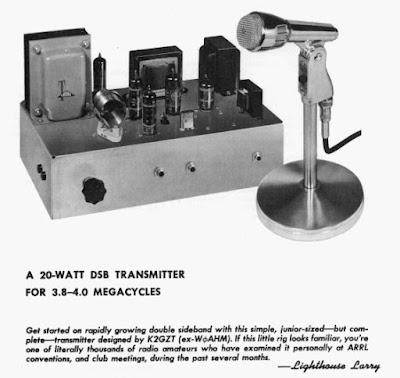
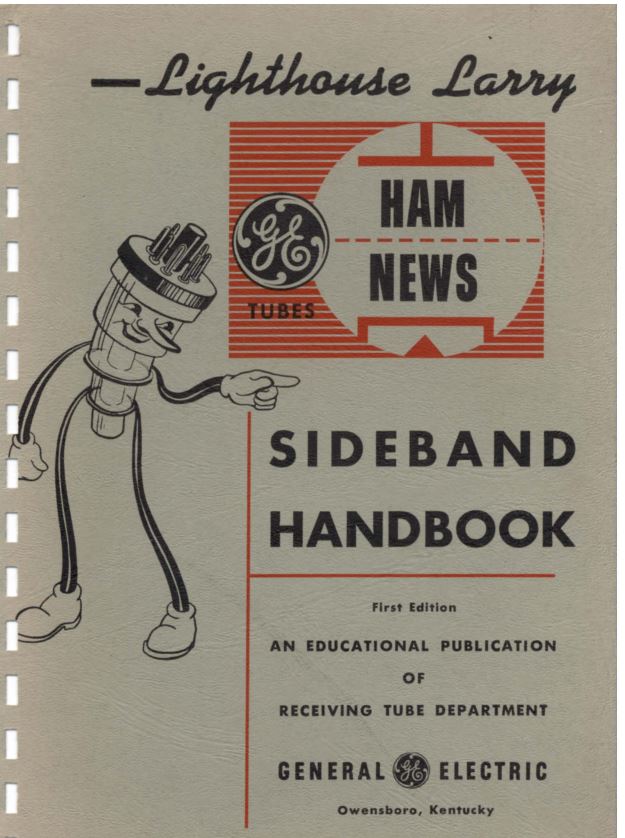
Lighthouse Larry’s GE Sideband Handbook
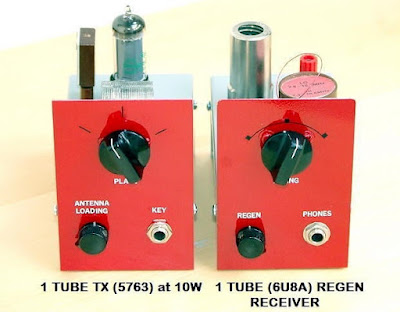
VE7SL’s Beautiful Single Tube Transmitter and Single Tube Regen Receiver
Just stunning, in their simplicity and beauty. Really amazing work. Kind of reminiscent of my ET-2, but with tubes, and much nicer construction. More details here:
RECEIVER: https://qsl.net/ve7sl/neophyte.html
TRANSMITTER: https://qsl.net/ve7sl/neotx.html?fbclid=IwAR3cM6tSRjyTsNouHWVz_buuzz4C9O-IwQbdZM5dekkle69ZW7-JBQcHTVI
Three cheers for Steve VE7SL! I’ve been linking to his blog for several years, but somehow I missed this magnificent red rig.
Steve’s online notebook: https://www.qsl.net/ve7sl/
Steve’s blog: http://ve7sl.blogspot.com/
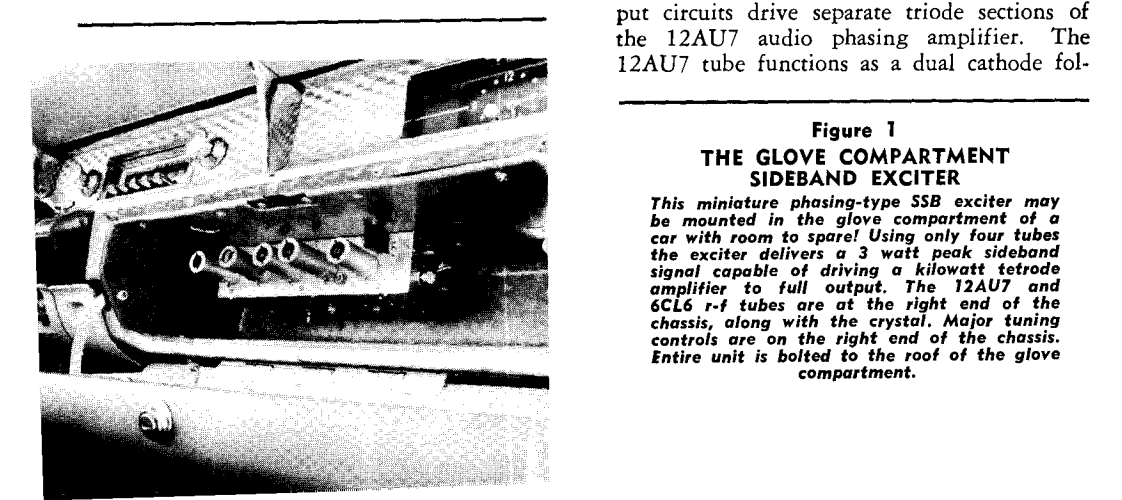
Much SSB Tribal Knowledge in Bill Orr’s 1959 Handbook
Here is the link to the Orr book:
Thanks to Tony K3DY for sending us the link that led us to this book. There are many other great books there: http://www.rsp-italy.it/Electronics/Books/indexhtm
The HBR-13C Receiver and the Poetic License of Homebrewers
I’ve been hanging out on 17 meters with my homebrew VXO-controlled BITX transceiver. The antenna is my 75 meter doublet fed with window line through a homebrew tuner made from dead ( I swear) DX-40s and DX-60s. I can tune it up just fine on 17 meters, but I realize I probably have lots of nulls and lobes in the radiation pattern. Apparently one of the lobes is over my old stomping grounds in Panama. Almost everyday I talk to either HP9SAM or HP3SS.
Robby, HP3SS, is using SDR gear now, but he was a real homebrewer back in the day. Years ago he built an HBR-13C receiver. That’s quite an achievement.
Robby — formerly VY2SS — told me that he sold his HBR-13C to none other than Joe Walsh, the rockstar from The Eagles. FB.
As I was talking to Robby yesterday, I came across this wonderful web page about the receiver:
https://sparcradio.ca/wp-content/uploads/2015/12/Restoring-a-HBR-13-Amateur-Receiver.pdf
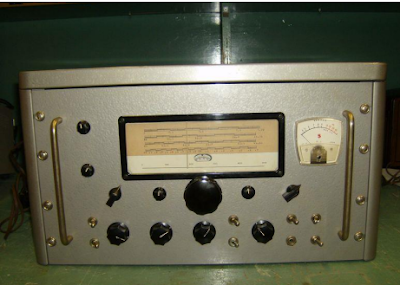
Robby told me that his receiver looked almost exactly like the one on the SPARC site, but he didn’t recognize the small box with what looked like a speaker on the chassis. I told him that my guess was that this was a crystal calibrator in an oven.
I also told Robby that I feel an affinity with the HBR project, not just because I like homebrew superhets, but also because my call in the UK was M0HBR.
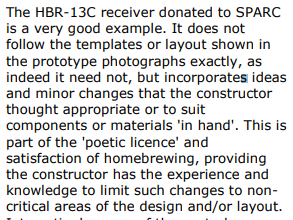
There are some great quotes in the SPARC pdf:
The SPARC page led me to the amazing website of Kees K5BCQ:
https://www.qsl.net/k5bcq/HBR/hbr.html
Here is Kees’s QRZ page:
SolderSmoke Podcast #232 — Mythbuster, Pete’s Tube CW Rig, Pete’s DC RX and Simple SSB Rig, NanoVNA and TinySA, Very FB Mailbag
Frank Jones and the FMLA — Possible Victory?
IBEW Stickers: NASA, Johns Hopkins APL….
Cycle 25 Lookin Better Today: SFI 93 SN 47
Toobular! A Tube Transmitter
SR-160
Simple SSB rigs around the world!
KI7NSS’s Pacific 40
The Mythbuster and the Struggle Against the Urban Legend
W2EWL’s Cheap and Easy SSB
W4IMP’s IMP. Articles in ER by Jim Musgrove K5BZH and Jim Hanlon W8KGI
The Spirit of Homebrew SSB. From Electric Radio K5BZH December 1991
Reduced Front End Gain on the DIGITIA
Back on 17! HP3SS sells HBR receiver to Joe Walsh
Maybe another Moxon?
NanoVNA — Alan W2AEW helped solve mystery of why NanoVNA not providing accurate readout of circuit impedance. Over driving. Need attenuator.
TinySA — Limited Resolution Bandwidth. But you can listen with it! See video on blog.
— Google Feedburner to end e-mails from the blog 🙁
— Paul VK3HN — TIA AGC? Farhan and Paul looking into options
— Ciprian’s Romanian Mighty Mite
— Dino KL0S SolderSmoke GIF and graphical presentation on sideband inversion
— Allison KB1GMX helped me on 24 volts to IRF 510 issue.
— Dave K8WPE Wabi Sabi and Martha Stewart. And thanks for parts! 40673s!
— Steve N8NM building a 17 meter rig with 22.1184 crystals in a SuperVXO and a 4 MHz filter.
— Dean KK4DAS restoring an old Zenith. One hand behind your back OM.
— Pete Eaton debating SSB or DSB for 17. Go DSB Pete!
— Richard KN7FSZ a FB HBer. Asked about my solid-stating of Galaxy V VFO.
— Walter KA4KXX on benefits of no-tune BP filters like Farhan’s FB.
— Jack 5B4APL on Time Crystals and Homebrewing in the 4th dimension. FB OM!
— Moses K8TIY listens to the podcast with his young son Robert. Crank it in Robert!
— Farhan and the SBitx on Hack-A-Day
— Also Tom’s receiver from junked satellite rig on Hack-A-Day
— Todd K7TFC sent in beautiful message about the spirit of homebrewing. On the blog.
— Grayson KJ7UM was on Ham Radio Workbench with George Zaf
— AAron K5ATG running a uBitx with a homebrew tuner and antenna. Hope I can work him
— Heard Mike WA3O last night on 40 DIGITIA. Water cooled amplifier
W2EWL’s “Cheap and Easy SSB” Rig — And The LSB/USB Convention Myth
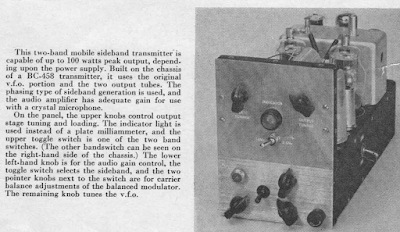
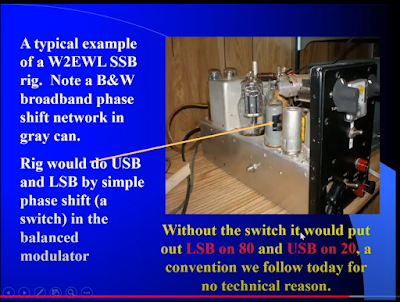
In March 1956 Tony Vitale published in QST an article about a “Cheap and Easy” SSB transmitter that he had built around the VFO in an ARC-5 Command Set transmitter. Vitale added a 9 MHz crystal-controlled oscillator, and around this built a simple phasing generator that produced SSB at 9 MHz. He then made excellent use of the ARC-5’s stable 5 – 5.5 MHz VFO. His rig covered both 75 meters and 20 meters. Here is the article:
Because it used the 9 and 5 frequency scheme, over the years many, many hams have come to think that Vitale’s rig is the source of the current “LSB below 10 MHz, USB above 10 MHz.” This is wrong. An example of this error popped up on YouTube just this week (the video is otherwise excellent):
Time Crystals, and Breadboarding in Cyprus in the 4th Dimension
We are always impressed by the way in which SolderSmoke listeners stay on the cutting edge (sometimes OVER the edge!) of modern technology. I recently got this fascinating note from our friend Jack AI4SV, who is now operating under the hot sun of the Mediterranean island of Cyprus.
Hi Bill,
It is brutally hot here in Cyprus during the summer, so we’re spending a week at a rental on the beach — no complaints in that regard. With all construction material back at the main house, I am free to daydream with no threat of actually building anything that I think of. The result: a new technique — fourth dimensional design.
This probably popped into my head because I went to sleep right after reading an article about “time crystals” (https://www.quantamagazine.org/first-time-crystal-built-using-googles-quantum-computer-20210730/#:~:text=A%20time%20crystal%20is%20both,of%20what%20a%20phase%20is.), which are similar to physical crystals, but their pattern have symmetry in the time axis. I have to imagine that these things have some application in radio since oscillation is intrinsic to their state of existence. I don’t want to think too much about them because it makes my head hurt.
Now, consider breadboarding. There isn’t much to say about one dimensional circuits since current has to flow in a circle, but I suppose Franklin’s kite was kind of one-dimensional: cloud, Franklin, earth. At least it had a key, so kind of relevant to radio, at least if you are a CW operator.
Two-dimensional circuit design would be a breadboard, particularly with surface mount components. Arguably three-dimensional if it’s mulitlayer. Manhattan Island or Deadbug is more in the realm of three-dimensional, with components sticking up from the board, and true three-dimensional is probably best reflected in tube rigs with spider webs of wiring. I don’t know who can think in terms of three dimensional layout like that, but it’s certainly an art (kind of a blend of Escher, Dali and Bosch).
Now comes fourth dimensional design – not just a theoretical abstraction, but a realizable method that would result in lower part count and simplify the operator interface to a single knob. The basic idea is that you have a design laid out in three dimensional space and that design is made time-variant in space. The simplest implementation would be a breadboard mounted in a track so it slides back and forth, like a desk drawer. Pulling it towards you puts it in transmit, pushing it away in receive. The secret sauce is that the rails have contacts and that the layout is designed such that the traces or pads on the board line up with contacts on the rails such that no relays are needed on the board. Some thought would need to be put in to assure that contacts are made in an appropriate order to avoid frying components.
That’s already fourth dimensional because the same board exists in two states and it can be one or the other, but not both at the same time. Superimposing transmit on receive would be bad, maybe world-ending.
There is no reason to stop there. This whole slide drawer sort of layout could be mounted on a rotational axis with contacts distributed around a tube surrounding the railings. Now you have band switching. Pull the knob to receive, twist it to go to 20 meters, push back in to transmit. That’s only roll and translation in one axis — four more to go, the practical implementation of which I will leave to the reader. Perhaps put mode (CW, SSB, etc.) on yaw, tuning on pitch (which seems natural), volume on y-translation, and RF gain on x-translation, and you would have a formidable 4D transmitter.
Clearly, this is too big to keep to myself, so I am sending it onward to you to share with the world for the benefit of mankind.
Hope all is well in the shack somewhere in the wilds of Northern Virginia.
Cheers,
5B4APL / AI4SV