Solid-Stating an HT-37 VFO — Advice Needed

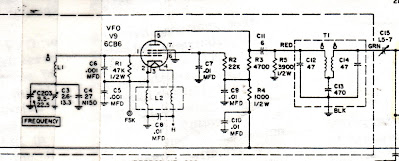
Original HT-37 VFO Circuit
A couple of things before I start:

First, this is not my fault. The Radio Gods are to blame. I innocently tried to by an HT-37 tuning capacitor on e-bay, but the seller sent me the entire VFO unit. The only thing missing was THE TUBE. Clearly, that was a sign, right?

Second, this is a work in progress. That is why my diagram (below) is a bit ugly. I am looking for your input and advice on how I might do this better. I will understand if religious principles prevent some of you from participating in this endeavor.

I am trying to solid-state this device WITHOUT major surgery, and without adding any reactive components that would change the resonance or tuning range of the original. The original circuit tunes from 5 to 5.5 MHz and that is fine with me.

I started out by just sticking a J-310 FET into pins 1, 2, and 5 of the tube socket. I put 12 V on the drain and the thing oscillated right where it is supposed to. That was a good sign.

Here is what I have done so far:
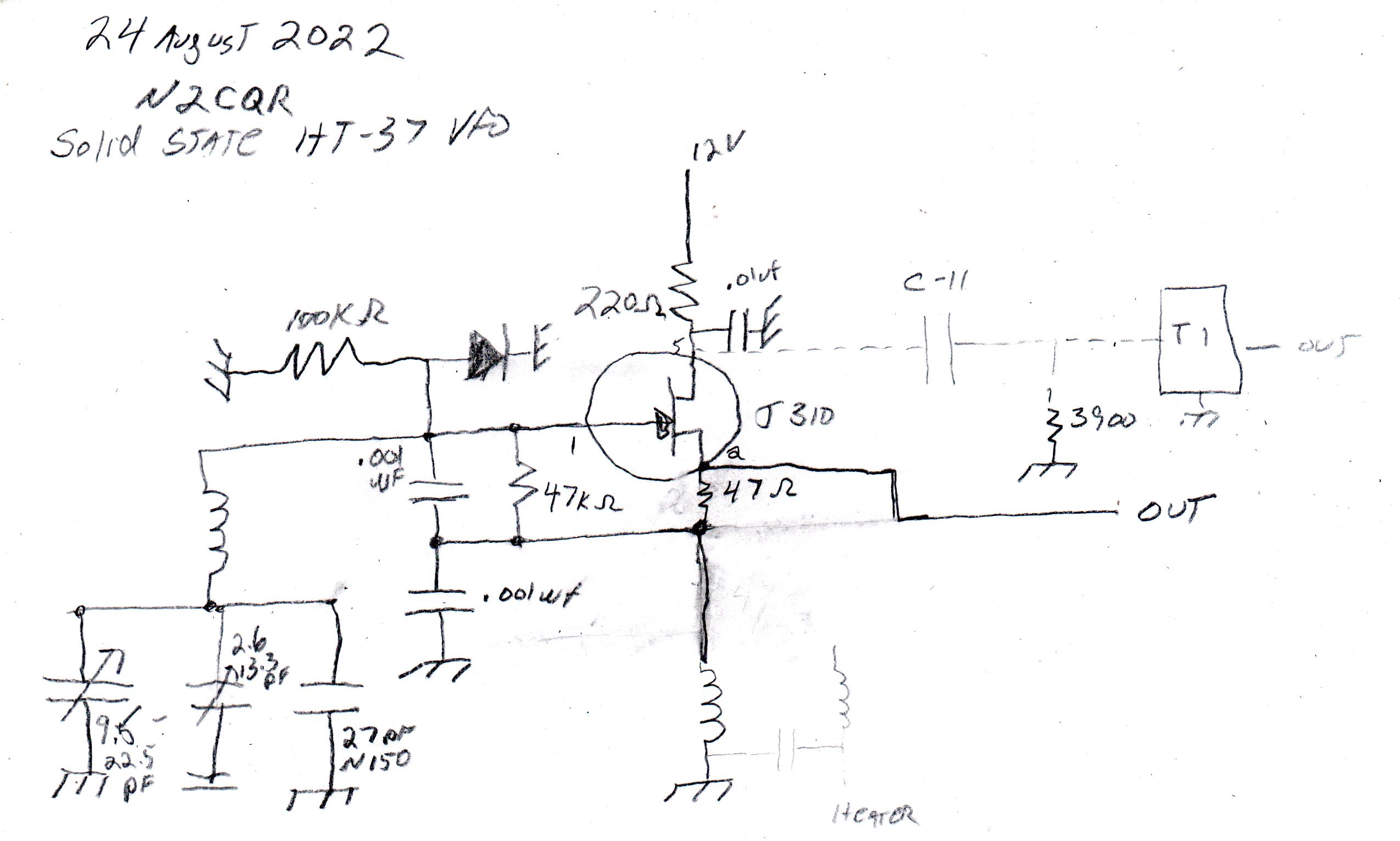
Bill’s initial solid state conversion of HT-37 VFO
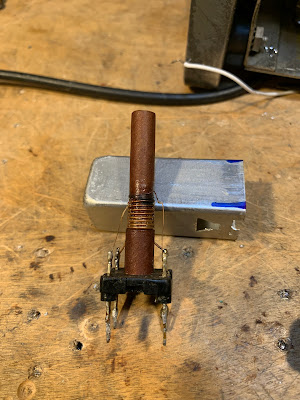
Mechanically, my effort has been very simple. At first I tried to fashion a more serious male socket for the FET using two broken 7 pin tubes. This didn’t work well.

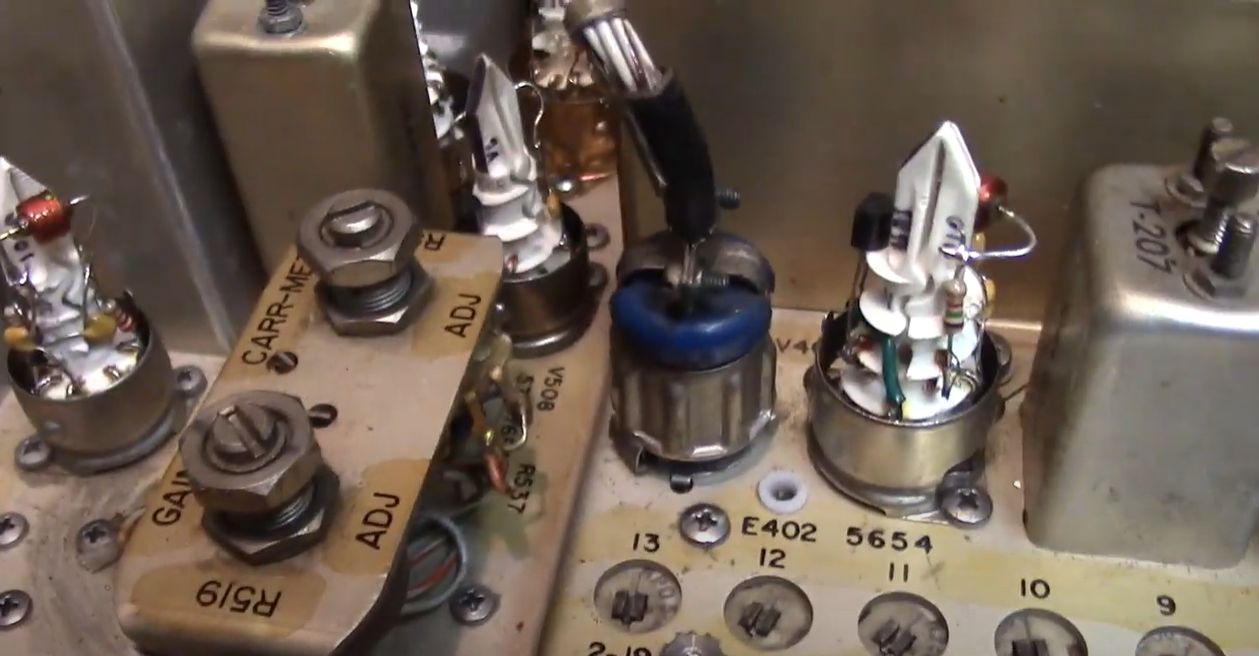
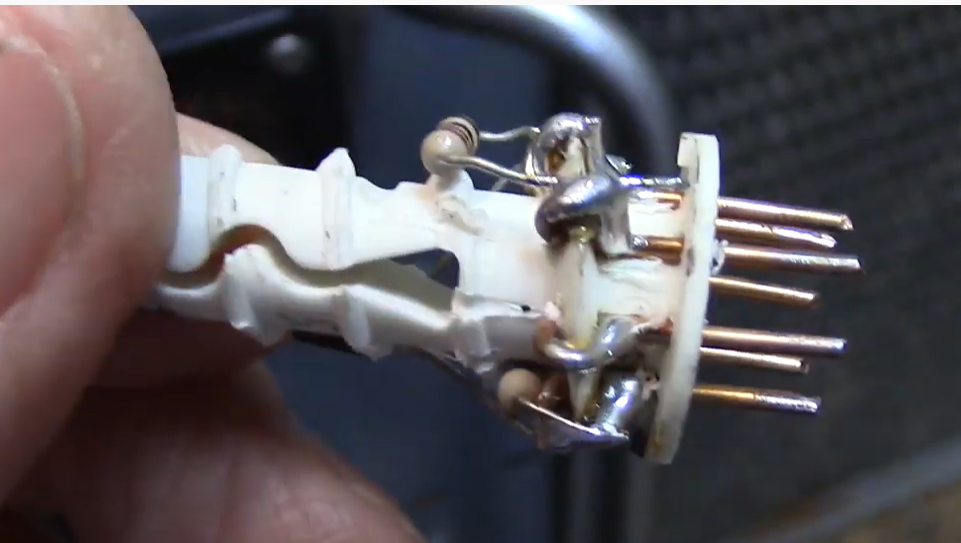
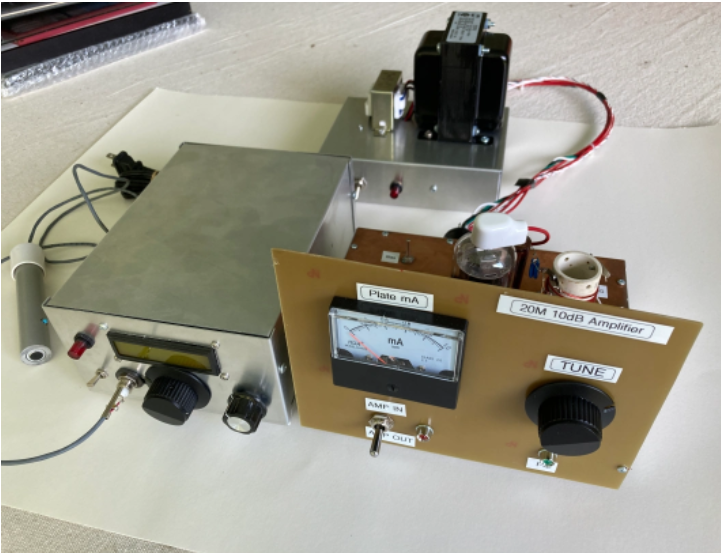
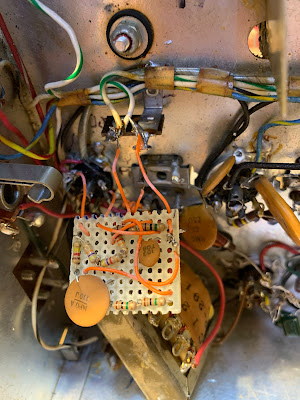
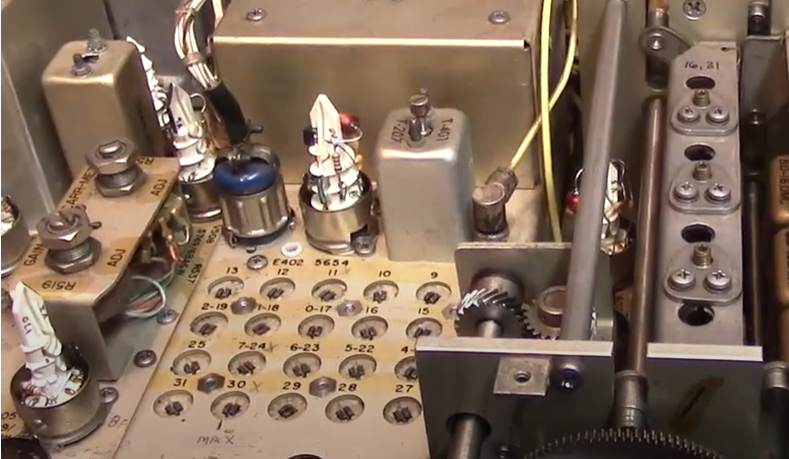
So then I just ran three short wires up through the center hold of the tube socket to the connections for pins 1,2, and 5. I superglued the J-301 to the chassis and made some non-reactive connections: I put a 47 ohm resistor on the source, and a 220 ohm resistor on the drain. I grounded the drain for RF with a .01 uF cap to ground. I added a 100k resistor and a diode on the gate. Oh yea, I put a couple of ferrite bead on the FET gate lead. (See pictures below.)

Three lead up through the center hole
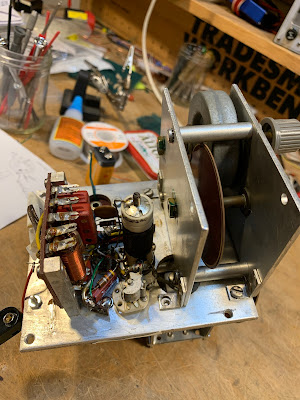
A rare look inside an HT-37 VFO

The original thermatron circuit has an output bandpass transformer, a 3900 ohm resistor and a coupling cap. I left them in the circuit, but they are not doing anything.

The output from the source of the FET looks pretty good. I can see some VHF on the trace, but I suspect this is from my FM broadcast nemesis at 100.3 FM (one mile away). On a receiver, I can hear some AF noise on the signal, but this may be the result of the RFI from THE BIG 100 — WASHINGTON’S CLASSIC ROCK.

So what do you folks think? What else could I do, or should I do?
TRIGGER WARNING: Solid-Stating Old Tube (Thermatron) Gear (Including — GASP — R-390As)

Look at that. Well, maybe some of you shouldn’t. (I’m thinking of you Grayson.) I found the Charles Smith YouTube channel while innocently looking for ideas on how to solid-state the HT-37 VFO assembly I recently bought on e-bay. Charles Smith has some really great ideas in this area. He solid-stated a Heath VF-1. But he took it all to an extreme when he solid stated an R-390A. Take a look at how he built the replacements for the thermatrons: He used those plastic wall sockets that you screw into sheet-rock when you need to hang a picture. This is real genius. He used the tube filament lines to carry DC to these new sockets.

R390A Solid State Conversion Video #1: https://www.youtube.com/watch?v=xhWzX874wYo

Charles Smith’s YouTube Channel

He has videos on the HQ-170 (DEAN: Just say NO!) and the SP-600. He also covers the HQ-110, which is uncomfortably close to my HQ-100.

Who is Charles Smith? What is his callsign? Charles Smith is KV4JT. Here is his QRZ page:
He has some great humor and wisdom in his videos: Procedures that are difficult or more trouble than they are worth are called “bugger-bears.” He advises that if your IF cans are stuck, you should “find a way to unstick them!” Indeed you should! He builds a cool jig to hold the IF section of the R-390A while you are working on it. He provides similar protection (with two long screws) to the VF-1.

Even though some of you will have to go to therapy after seeing all this, I say THREE CHEERS FOR CHARLES SMITH!

SolderSmoke Podcast #239: Hex DX, VFO Temp Comp, DC RX, Polyakov!, DX-100, Wireless Set, Farhan’s “Daylight Again” HDR rig, MAILBAG

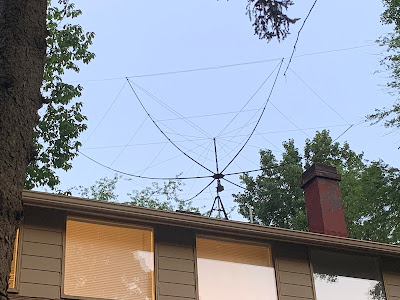
N2CQR Hex Beam Aimed at Europe


SolderSmoke #239 is available for download:

http://soldersmoke.com/soldersmoke239.mp3

TRAVELOGUE:

James Webb Space Telescope. Mars returning to opposition in early December.

BILL’S BENCH

Hex Beam K4KIO – on roof – TV Rotor – 20-17-12 Lots of fun. Working Japan regularly, Australia, South Africa on long path 17,000 miles. 52 countries SSB since July 11.

VFOs and Temp stabilization. Dean KK4DAS found my ceramic resonator VFO for DC receiver drifty. He was right. So I built a real LC Colpitts VFO. Got me into temp stabilization. A new hobby! An obsession. HT-37 and Ht-32 parts. Ovens? WU2D’s second VFO video. Understanding thermal drift and how to address it. Split stator caps. Cut and try.

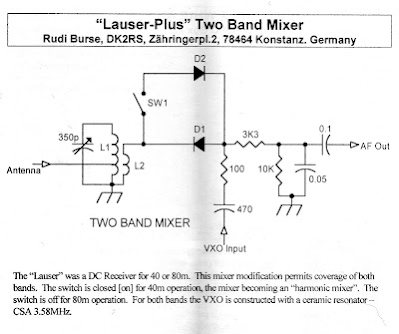
Built a Polyakov DC Receiver. https://soldersmoke.blogspot.com/2010/03/polyakov-plus-dual-band-receiver-with.html Lauser Plus. Lauser = Imp or Young Rascal! DK2RS. He used a ceramic Resonator VXO at 3.58 MHz. Mine works great on 40 with VFO running 3.5 — 3.65 MHz. See schematic below.

On 40 AM with DX-100 and MMMRX. DX-100 died. 12BY7 VFO buffer went bad. How common is failure in this tube type? Nice QSO with Tim WA1HLR about the DX-100.

Got my Dominican license: HI7/N2CQR! SSSS on the way. Thanks to Radio Club Dominicano and INDOTEL.

Getting more active in the Vienna Wireless Society.

BOOK REVIEW:

“The History of the Universe in 21 Stars” by Giles Sparrow. Written during the pandemic. Published by Welbeck, in London. https://www.amazon.com/History-Universe-21-Stars-imposters/dp/1787394654 Also: From “Atoms to Amperes” by F.A. Wilson available for download. See blog.

SHAMELESS COMMERCE DIVISION:

Todd K7TFC getting ready to launch “Mostly DIY RF.” I used his TIA boards in my 1712 rig. He will have boards like this and much more. Stay tuned.

I need more viewers on YouTube. They want 4,000 hours IN A CALENDAR YEAR! Please watch!

FARHAN’S NEW “DAYLIGHT AGAIN” RIG. Analog. VFO. Comments, observations. We need to get him on the podcast. Maybe two shows: SDR and HDR.

PETE’S BENCH

Time very limited. But still sharing lots of tribal wisdom.

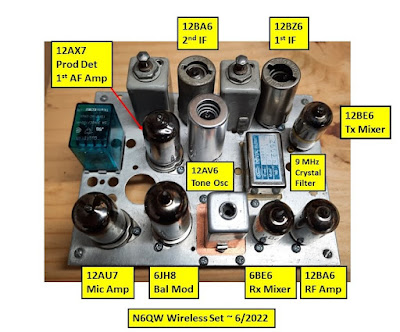
Wireless set with tubes!

Tool recommendation – Air compressor

MAILBAG:

Farhan VU2ESE – Speaking of big antennas “Whenever I look at the huge construction cranes in Hyderabad, I always think how one could make 160m, 4 element yagi using it as a boom..

Todd K7TFC in Spain, spotting Log Periodics in Madrid.

Andreas DL1AJG: Can Biologists fix Radios?

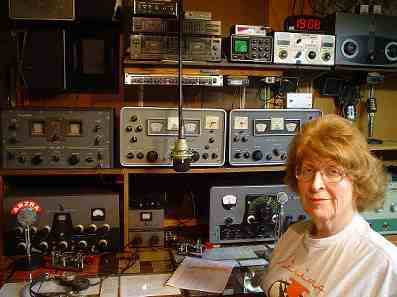
Janis AB2RA Wireless Girl. Expert on Hammarlunds. And was my first contact with the Tuna Tin 2. She too was HB!

Peter Parker VK3YE on Owen Duffy VK1OD

Lex PH2LB on homebrew radio

Would this really be homebrew? Mail from H-A-D article on FM receiver

F4IET a DSB rig from France

Ciprian got his ticket YO6DXE

Josh G3MOT sent us a good video about the Vanguard satellite and IGY.

Dave Wilcox K8WPE bought Chuck Penson’s Heathkit book.

Rogier — So many great articles and links from PA1ZZ

Bill AH6FC Aloha. Retiring. Wants to build. Mahalo!

Grayson KJ7UM Working on an Si5351. Gasp.

Mike KE0TPE viewing YouTube while monitoring 6 meters. He will have a lot of time to watch!

Chris KD4PBJ spotted Don KM4UDX from VWS FB

Mark WB8YMV building a superhet. Having trouble with 455 kc IF can filter.

Walter KA4KXX Great comment on the Daylight Again rig.

Ramakrishnan Now VU2JXN was VU3RDD. Found lost Kindle with SolderSmoke book on it. Building SDR rig from junk box. Trouble with the LM386.

Pete, Farhan and Tony: Shelves of Shame

Daylight Again by Farhan
The Polyakov receiver I built yesterday (from SPRAT 110, 2002!)

A Surprisingly Good Movie from the Late 1960s: “The Ham’s Wide World” (Video)

I found this movie to be surprisingly good. Narrated by Arthur Godfrey, it features Barry Goldwater, and a lot of other hams. There is a homebrewer too! Lots of old rigs we know and love: a Drake 2-B, a couple of Galaxy Vs, a Benton Harbor lunchbox, Heathkit SB-series rigs, many Swans, and was that an HQ-170 that I saw in there? There are also many cool antennas, including a 15 meter quad set up by a bunch of Southern California teenagers.

Near the end, when they visit ARRL Headquarters, we briefly see none-other-than Doug DeMaw, W1FB! FB!

Please take a look at this video and post comments about the rigs, antennas, and radio amateurs that you see in the film.

Pete N6QW’s Hybrid Wireless Set — A Thing of Beauty, with Thermatrons

Pete Juliano is amazing. He is admirably carrying a very heavy load of family responsibilities. But he still can build some really unique and innovative rigs. He tells us that getting up at 3 am and only sleeping 5 hours per night allows him to do this.

Pete also blames Grayson Evans KJ7UM for this rig, what with the thrematrons and all. Pete has a 7360 mixer in this rig, something that Grayson had in the 3rd edition of his Hollow-State Design book (get yours here: https://www.ermag.com/product/hollow-state-design-2nd-edition/). Pete reports that he first built the chassis for the tube (I mean thermatron) portion of the rig in the 1970s — it has been in his junkbox ever since. Grayson admires Pete’s compact construction and point-to-point wiring.

I too noticed very poor conditions on Field Day this year.

Three cheers for Pete Juliano!

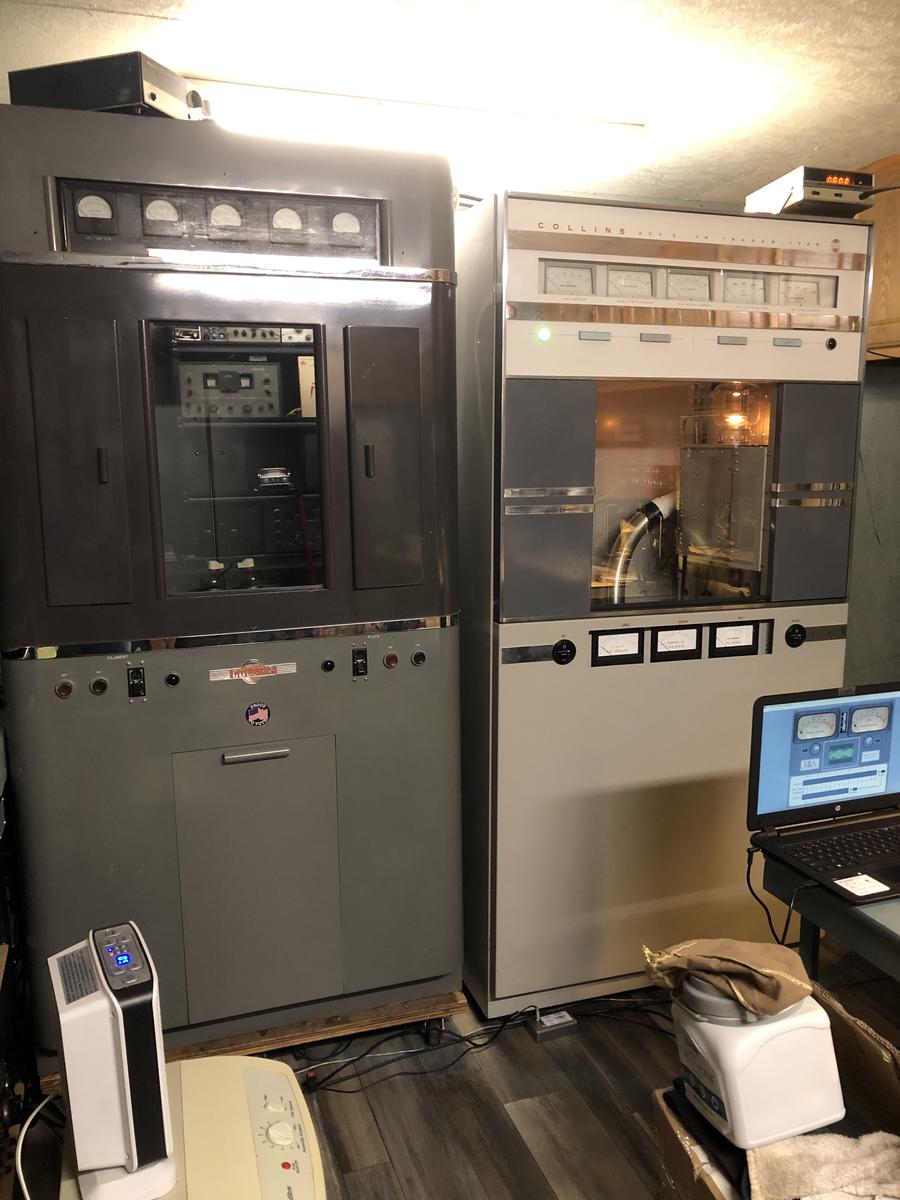
W8ZAP on 40 AM with a Collins 20V3 Broadcast Transmitter

I was on 40 AM yesterday morning and I talked to Jerry W8ZAP (great callsign) out in Michigan. Jerry was running his Collins 20V3 (above on the right), which was originally an AM broadcast band transmitter. FB.

Here is Jerry’s QRZ.com page: https://www.qrz.com/db/W8ZAP

Hammarlund and Homebrew Heroine: Janis AB2RA, HQ-100 Filter Cap Question

I was searching for Hammarlund HQ-100 wisdom when Google pointed me to the Electric Radio articles of Janis AB2RA. They were in ER #380 and #381 (February and March 2021). Lots of good stuff in there.

This morning I happened upon a 2014 SolderSmoke blog post (as you do) about my Tuna Tin 2. Turns out that Janis was my first contact with this rig. And she too was running a homebrew rig. TRGHS.

I continue to work on my HQ-100. The AC hum is getting worse so I have ordered a replacement capacitor can from Hayseed Hamfest. But I was a bit confused about which cap to order. Hayseed has two caps listed for the HQ-100 — one (it seems) for the early model of this receiver and one for later models. Is that right? Did Hammarlund update the power supply to add filter capacitors? Take a look:


Dean KK4DAS is getting ready to work on his dad’s HQ-170A. He too will find lots of wisdom and tribal knowledge on Janis’s wonderful web site.

Her main page: http://www.wireless-girl.com/ (with a vast amount of technical info available through the links on the upper left side of this page)

About Janis: http://www.wireless-girl.com/AboutMe.html

Thanks Janis!

The Original Wireless Girl

A Great Book on Oscillators (Analog LC Oscillators) by John F. Rider (Free!)

Thanks to Peter Parker VK3YE for alerting us to this wonderful 1940 book. John F. Rider — a real hero of electronic literature — does a great job in discussing the practical aspects of oscillator circuits.

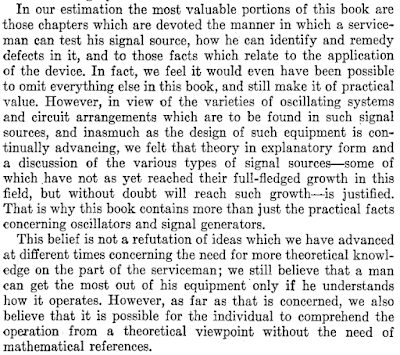
This excerpt from Rider’s foreword gives a sense of the approach taken in this book:

The book covers a lot of material. In addition to the standard oscillator circuits, he discussed multivibrators, relaxation oscillators and much more. There is a chapter on magnetostriction in which he shows that this property is the basis for crystal oscillators AND the mechanical filters that we are familiar with. In fact he seems to take what we would consider a mechanical filter and put it in the grid circuit of a tube to make an oscillator.

He discussed the modulation of oscillators. He describes the Heising modulator that caused young Jean Shepherd so much teenage heartache.

Download the book here:

SolderSmoke FDIM Interviews: A BRAVE HAM! Grayson Evans KJ7UM Presents a 50 Watt Amplifier to THE QRP GROUP!

Wow, talk about walking into the lions’ den! Grayson Evans, author of “Hollow State Design” and guru of all things thermatronic, went to FDIM and made a presentation TO THE QRP GROUP on how to build a 50 watt amplifier with a 6146 thermatron. In New York that would have been called chutzpah. The QRP ARCI guys seem to have tolerated this QRO-heresy; I’m not so sure the zealots over in G-QRP would have been quite so tolerant.

Grayson gave a nice shout out to SolderSmoke’s Pete Juliano.

And he offered some sage advice to those who live in fear of high voltage: “Don’t touch anything with high voltage on it.” Words to live by my friends. He even managed to call those who shy away from high voltage “wimps.” This was all very reminiscent of the unforgettable safety advice he offered in his August 2021 interview on Ham Radio Workbench: “Try not to swallow anything, and don’t sit on the thermatrons.” I mean, who can argue with that?

You can listen to Bob Crane’s interview with Grayson here (about 6 minutes total):

http://soldersmoke.com/2022 KJ7UM.mp3

Check out Grayson’s Hollow-State Design Book 3rd Edition: tinyurl.com/hollowstatedesign3

Check out Grayson’s technical blog:kj7um.wordpress.com

Thanks Bob and thanks Grayson.

Frank Jones’s Homebrew Rig — as described by Michael Hopkins AB5L (SK)

“Frank is all homebrew. His receiver is unshielded outside, but built around a central square of aluminum that houses a Velvet Vernier dial thru the front panel and some tubes I did not recognize jutting horizontally on both sides of the box where coils also plug in. The transmitter is a multi-stage affair on a piece of particle board. The tubes are vertical here, and the bench was littered with brown Hammarlund coils labeled 5, 10, 20, and 80.”

https://soldersmoke.blogspot.com/2021/07/summer-reading-for-homebrewers-frank.html

https://qsl.net/ve7sl/jones%20oscillator.html

W1VD’s Boatanchor Receiver Tests

I’ve been trying to get more rigorous in my evaluation of receiver performance. My HQ-100 is tuned to Radio Marti, and it sounds great. But how great is it really? And what about all the receivers and transceivers I have built? How good are they?


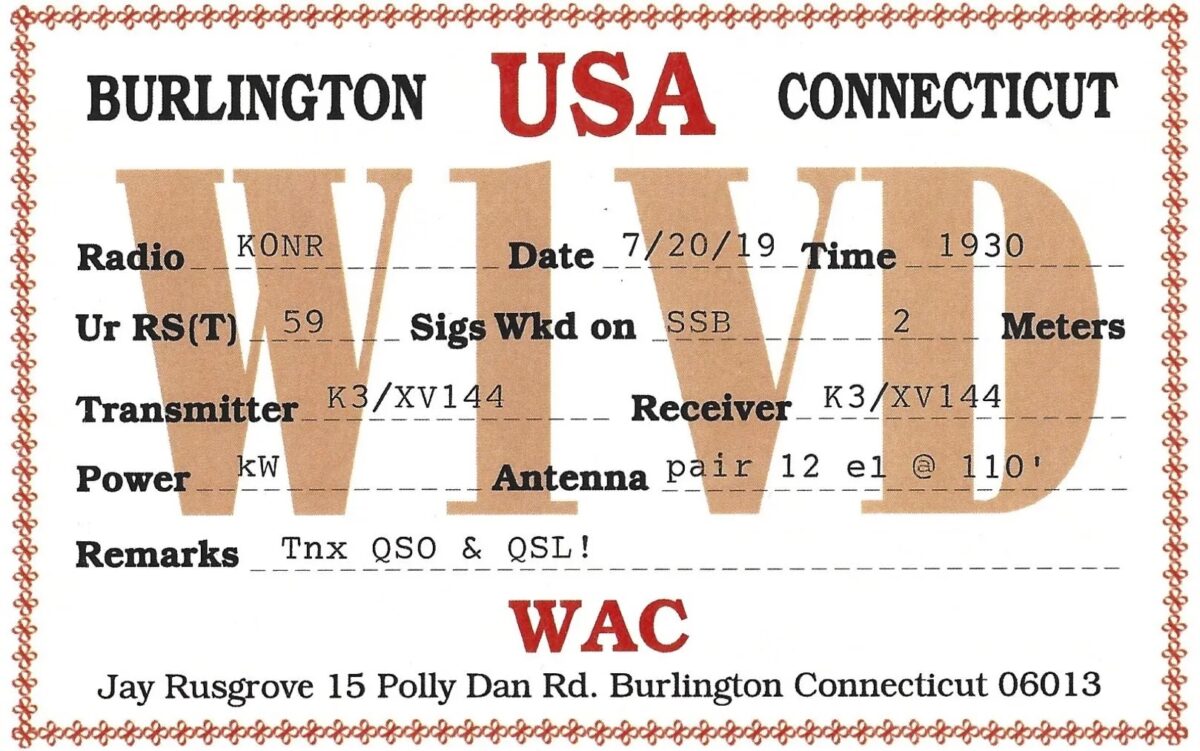
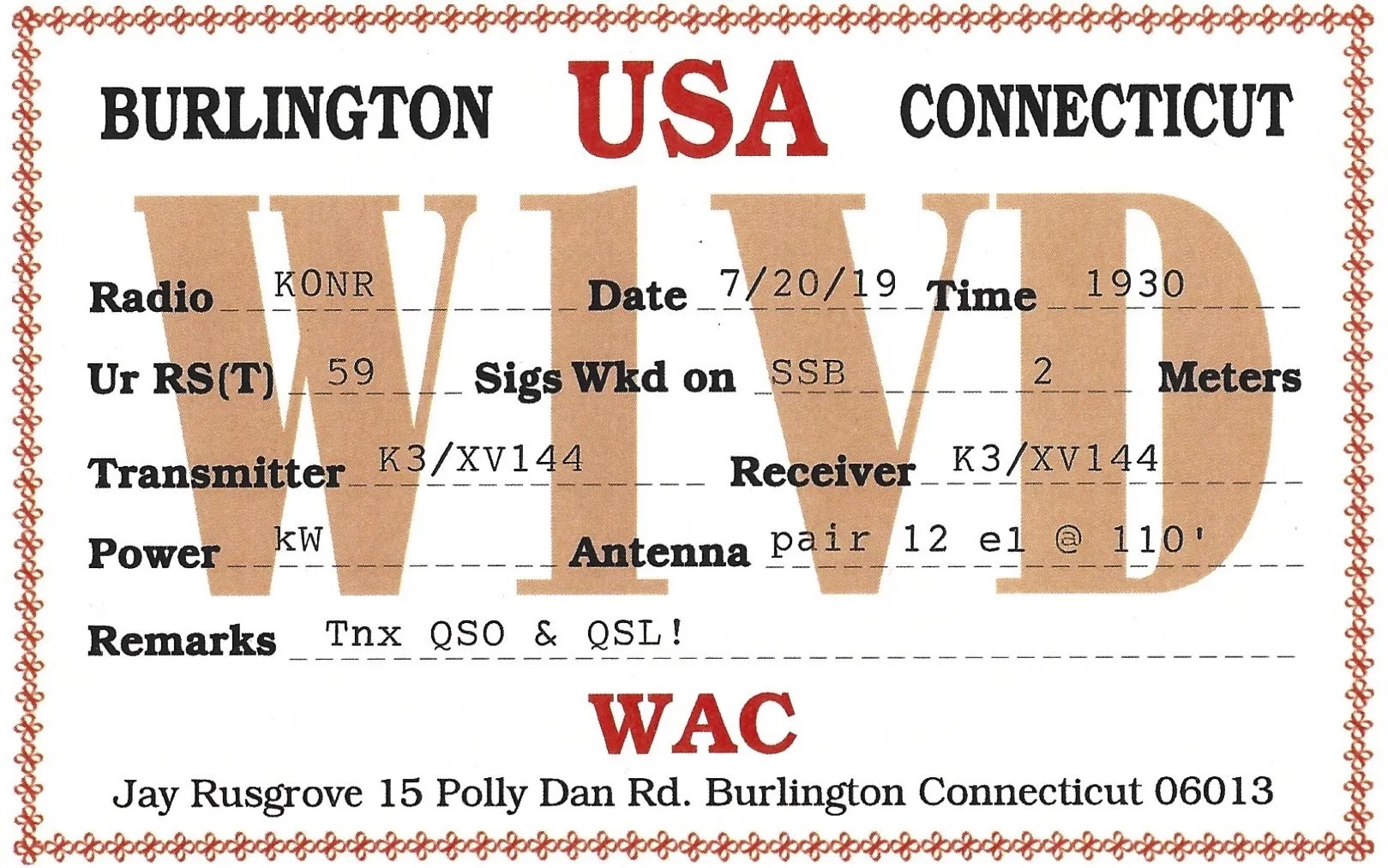
Our friend Dean KK4DAS is about to start the rehabilitation of his dad’s old HQ-170A. A search for that receiver led me to Jay Rusgrove’s very interesting measurement and analysis of old tube type radios. Jay’s results appear in the links below. More important is his very clear description of how the tests were done and what the results mean (link below). Also included is one link showing a discussion of Jay’s work.


Jay notes:

The decision of which boat anchor receiver(s) to own is seldom based on performance alone. A combination of favored manufacturer, period of manufacture, features, collectability or even just ‘looks’ often rank higher on the priority list than receiver performance. Even if one were interested in performance specs much of the available information is subjective as few receivers manufactured prior to the mid 70s have undergone standardized testing. Hard data on minimum discernable signal (MDS), blocking and two-tone IMD dynamic range is interesting to some operators and important in an historical context as it shows the progression of receiver development.

Jay designed the very first real transmitter that I homebrewed (The VXO 6 Watter from QRP Classics). Jay has been mentioned many times in the SolderSmoke podcast and blog:

Troubleshooting and Fixing Old Faults in my Long-Suffering Hammarlund HQ-100 (Part 2) (video)

Work continues on my old Hammarlund HQ-100. I give background on the rig and explain the electrical trauma it likely suffered. Following Dave K8WPE’s dictum that we can still learn a lot from old receivers, I dug into this one. I wanted to fix a long-standing S-Meter/AVC problem. This led me to an interesting troubleshoot, with at least one “waste of time” detour. Eventually I found the fault in one of the coils in the grid circuit of the RF amplifier. The coils had been smoked years ago, perhaps by a lightning strike. I came perilously close to permanently losing 10-30 MHz. But I figured out how to fix the smoked coil. So my S-Meter/AVC problem was fixed. I really like listening to this thing. There is still a lot of nice material on the SW bands. There are some very nice broadcasts in Spanish. Please subscribe to my YouTube channel.

You can see where the coil burned. Wire remained intact, but the insulation burned creating a Primary to Secondary connection.
I just very carefully lifted one of the coils way from the other, eliminating the unwanted connection.
Here’s my homebrew “RC Printed Network” Z2 module. This was unnecessary — the original was good. I put the original back in.


Electric Radio magazine recently ran a two part series on the HQ-100. I have ordered these issues of the magazine.

Working On My Old Hammarlund HQ-100 (Part 1)

I like this old receiver, with all its shortcomings. I picked it up in the Dominican Republic in 1993 or 1994. I’ve been using it on AM with my K2ZA DX-100. It needed some contact cleaner, and I took the opportunity to work on a few of the circuits that were getting kind of decrepit.

I came to a new understanding of — and appreciation for — the Q-multiplier.

While of similar vintage, this receiver is MUCH nicer than the Hallicrafters S-38E:
S-38E 1957-61 $54.95 5 tubes. AC/DC, kind of flimsy.
HQ-100 1956-60 $169 10 or 11 tubes. Power supply, regulator, much sturdier construction
You get what you pay for.

In Part II I’ll show you how this thing sounds and what it is like to use it for SWL, CW, SSB and AM.

Looking at the World Through a 1 inch Cathode Ray Tube (the RCA 913) (videos)

Joh DL6ID sent me the above video. We have been e-mailing each other about the W9YEI Television Receiver built in 1939 or so. We have kind of concluded that the builder used an RCA 913 tube as the CRT. This was an oscilloscope tube and was often described as looking like a metal 6L6 with a tiny screen on top. This is kind of neat — like using something from the old days to peer into the new world of video.

We wondered about the image persistence of this tube. Fortunately for us, we found several YouTube videos showing recent builds or repairs of oscilloscopes with RCA 913 tubes.

Of course, Mr. Carlson has a video on one of these devices (and — as expected — has another in his junk box. Mr. Carlson has at least two of everything.)

Here are a few other videos showing RCA 913 tubes in action.


https://www.youtube.com/watch?v=TJF22Ra2kIM (Summertime…. And the Livin’ is Easy)

Here’s a nice video from Tektronix on CRTs:

1942 (?) RCA Film on Tubes, Radio, Research, and Television

Here is a very interesting video from RCA. It was released in 1942, but it looks to me as if it was produced BEFORE the Pearl Harbor attack and the U.S. entry into World War II. There is no mention of the war nor of RCA’s support for the war effort. All films like this that were produced during the war have a lot of material about how the company was contributing to the war effort. So I think this is really a pre-war film.

Early in the film they link the origins of RCA Labs to a decrepit “radio shack” at Riverhead, Long Island (NY) in 1919. Here is some background on this:
and

In this film we see Vladimir Zworykin (boo, hiss) of TV fame (no mention of poor Philo Farnsworth), and we also see Harold Beverage, the creator of the antenna that bears his name. There is what must have been one of the first “electronic clocks.”

At the end, the segment on television is really interesting. It is amazing how far they had gone with TV before the war.

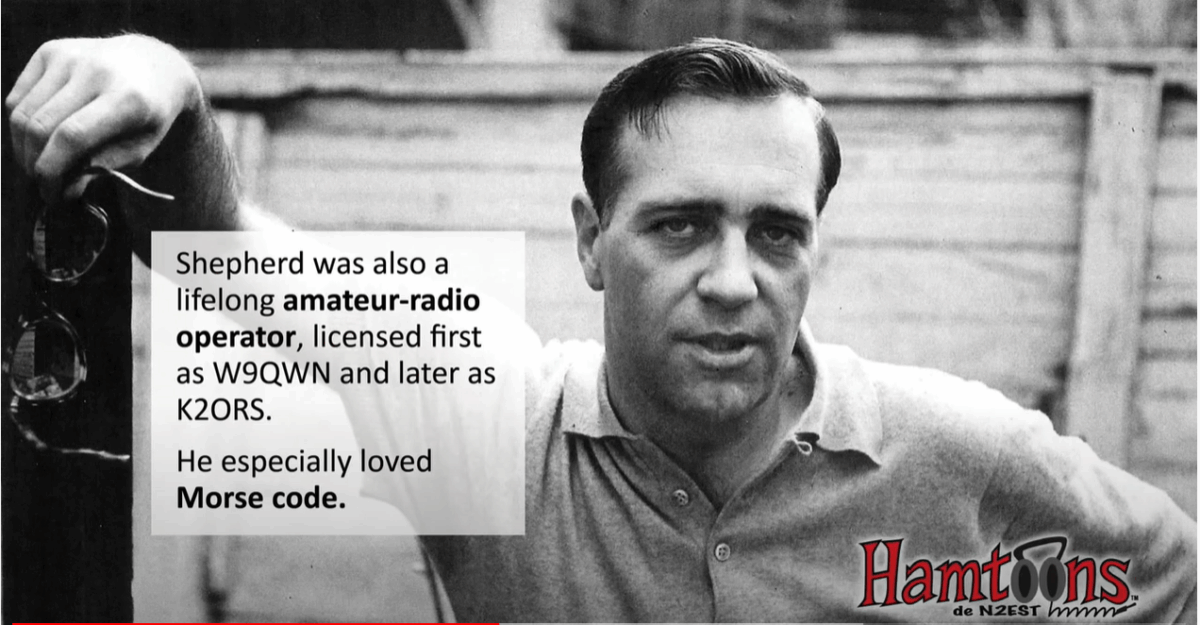
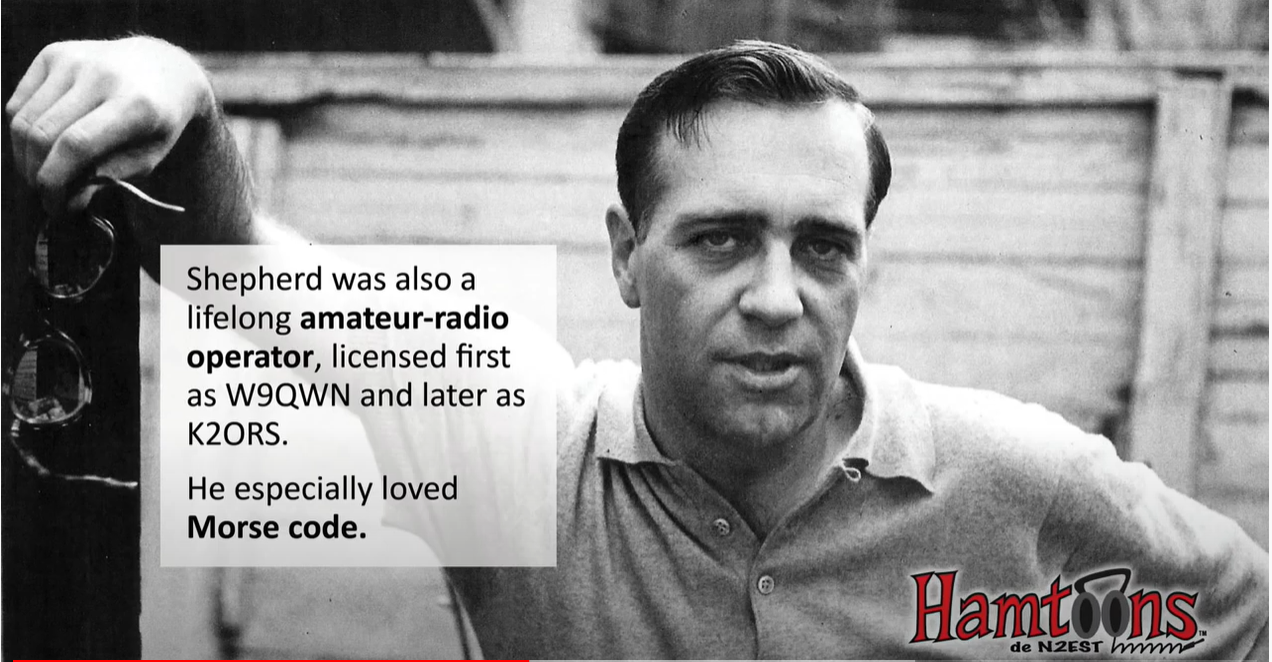
Young Jean Shepherd Gets Hung-Up On Ham Radio

Oh man, we’ve all been there: OBSESSION with ham radio. Shep went over the top and didn’t sleep all weekend when his homebrew transmitter was finally neutralized and started to put out a decent signal on 40 meter CW.

One of my favorite lines in this episode is about how, before the neutralization, the transmitter had had so many parasitics that it would continue to transmit for two hours AFTER Shep turned it off, “and all on the wrong frequencies.”

I found this while searching for other Shep references to Johnny Anderson, the guy who built the TV receiver. Please let me know if you know of any other Shep references to Johnny.

Here is the program. Skip ahead to 20:50

https://www.radioechoes.com/?page=play_download&mode=play&dl_mp3folder=T&dl_file=the_jean_shepherd_show_1963-03-07_hung_up-ham_radio.mp3&dl_series=The%20Jean%20Shepherd%20Show&dl_title=Hung%20Up-Ham%20Radio&dl_date=1963.03.07&dl_size=8.87%20MB

EXCELSIOR!

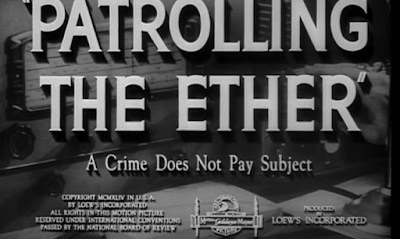
“Patrolling the Ether” WWII Video on Radio Direction Finding Efforts

I heard about this video while trying to track down information on John Stanley Anderson’s 1939 television receiver. “Patrolling the Ether” is kind of hard to find. It is not really on YouTube. But there is a good BARC Vimeo video about WWII RDF efforts that includes at the end the full “Patrolling the Ether” video.

Here it is:

https://vimeo.com/415926991

Thanks to BARC and to Brian Harrison for putting this together.

In the video, they discuss the invention of the Panadaptor by Dr. Marcel Wallace F3HM during World War II. I set up a very crude Panadaptor using Wallace’s principals:

https://soldersmoke.blogspot.com/2019/05/diy-waterfall-quick-and-easy-panadaptor.html


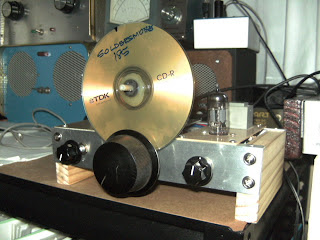
VK2BLQ’s Two-Tube Regen with a SolderSmoke Dial

Thanks to Peter Marks VK3TPM (“a bloke with too many hobbies”) for alerting us to this magnificent homebrew receiver with the especially magnificent tuning dial.

We have used old CDs as dials for many years. I have one on my Q-31 Quarantine SW receiver. But never have we seen one with SolderSmoke emblazoned on it. FB OM.

Stephen VK2BLQ should make sure that those 6U8s haven’t gone old on him. I recently replaced the 6U8s in my Mate for the Mighty Midget with 6EA8s. This seemed to rejuvenate the receiver.

Also, it is shame that Stephen doesn’t keep that rig at 12 volts. 250 V? Yikes. As I often say, you CAN hurt yourself with 12 volts, but you really have to work at it. Not so with 250 V. One hand behind your back Stephen!

Thanks to Peter and Stephen.