KB8M’s Mighty Mite — Beware the Treacherous P2N2222!

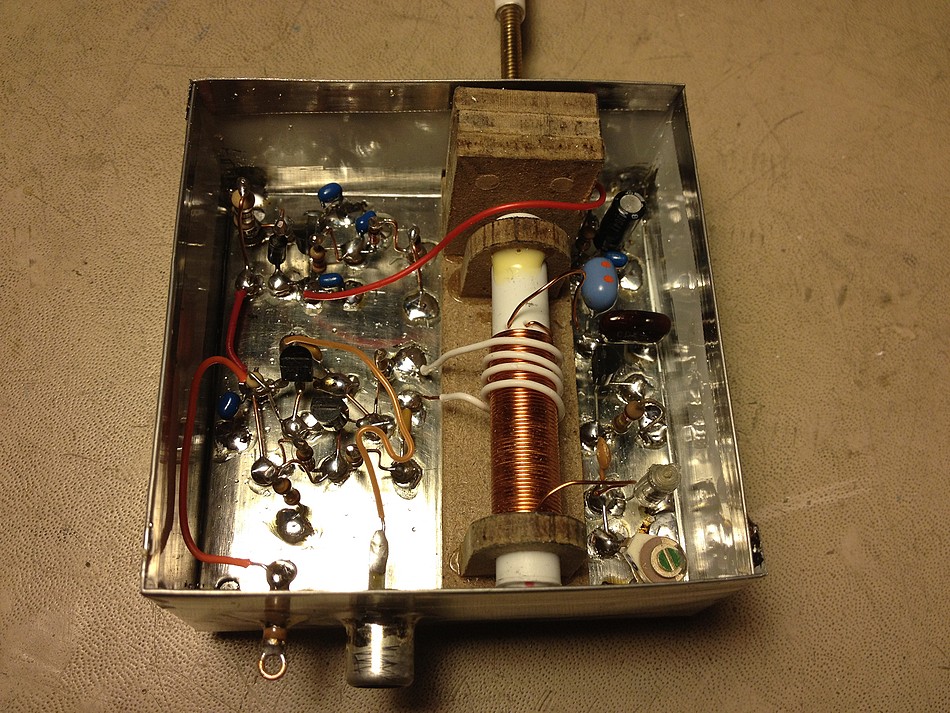
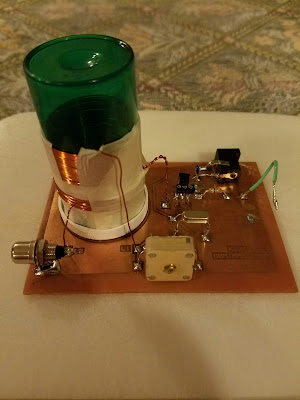
Doug KB8M did a beautiful job with his Michigan Mighty Mite. But, as often happens, it still didn’t work. He turned to us for advice. I gave him a long list of things to check, but Pete brought the power of superior tribal knowledge to the problem and spotted the defect immediately: The transistor was in backwards. It is a P2N2222. That means the pin out it C-B-E not the usual E-B-C. I had fallen into this trap with one of my BITX rigs and had to pull out and reverse many of those transistors. Fortunately for Doug he had used a socket for the transistor. TRGHS!!!!!!!!!!!!! JOO!!!!!!!!!!!

In Search of the Elusive Imperial Whitworth

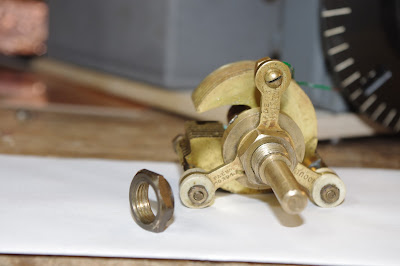
This beautiful old variable capacitor came out of a 1930’s British regen receiver that I picked up years ago at the Kempton Park rally near London. When I rebuilt that receiver, I found that the cap was thoroughly stuck. No amount of solvents could loosen it. I put it in the junk box and used a more modern cap in its place.

When planning for my current BIG VFO project (see yesterday’s post) I re-read Frank Harris’s chapter on VFOs. Frank recommended a non-linear cap — actually a cap that maintains a constant percentage change in capacitance as it goes through its tuning range. My old British cap seemed to fill the bill. Also, it appears to be brass or bronze which is said to have better temperature stability. So I pulled the Brit cap out of the junk box. It was still stuck, but as I tugged on it a bit, it suddenly loosened up. Wow! TRGHS.

When I tried to mount the capacitor in the QF-1 box, I discovered another problem: the nut for the main mounting screw was missing. And guess what: None of the nuts in my “big box of screws and nuts” (I know you guys all have one of these boxes) was the right size. Or, as Pete put it, all were of two sizes: a bit too big, or a bit too small.

Dex ZL2DEX informed me that the needed nut was likely an “Imperial Whitworth” (Don’t you love British names?). I started to think about how to get such an elusive part…. I thought about walking into Home Depot and asking them where they keep their Imperial Whitworths. This wouldn’t have been productive.
Then I started to wonder where the original nut went. It would have stood out in my junk box because it is brass-colored. I looked again in the junkbox. No luck. Then I realized that I might have used it to mount that replacement cap in my rebuild of the old British regen. I pulled that old beast (wooden chassis!) off the shelf. There it was, the needed brass nut. Cap and nut were reunited, problem solved.
It is kind of fun to include an old part like this in the new project.
Thanks Dex. And thanks again to Frank Harris for the great book.

Occam’s Bench: M0XPD on the Minimalist Measurement Mindset


Our ace correspondent in Dayton, Bob Crane W8SX, caught up with Paul Darlington M0XPD (above, the guy with the rifle) and interviewed him about his presentation at Four Days in May 2016. You can listen to the interview here by clicking on the link below. I especially liked the comments on the joys of fixing things and the advantages of SIMPLE analog circuitry. Listen to the end and you will learn about Paul Darlington’s connection to the famous Darlington Pair.

http://soldersmoke.com/M0XPDFDIM.mp3

Paul provided more info (including his slide show and presentation notes) on his BRILLIANT Dayton talk here:
https://sites.google.com/site/shacknasties/presentations/fdim-2016

You can buy Paul’s book here:
https://www.amazon.com/getting-there-Paul-Darlington/dp/1523452196

Thanks Paul! Thanks Bob! And thanks to George Dobbs and William of Occam!

NP0 Is the Way to Go!

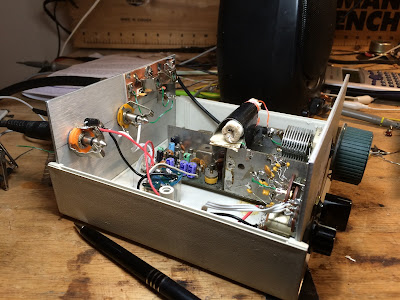
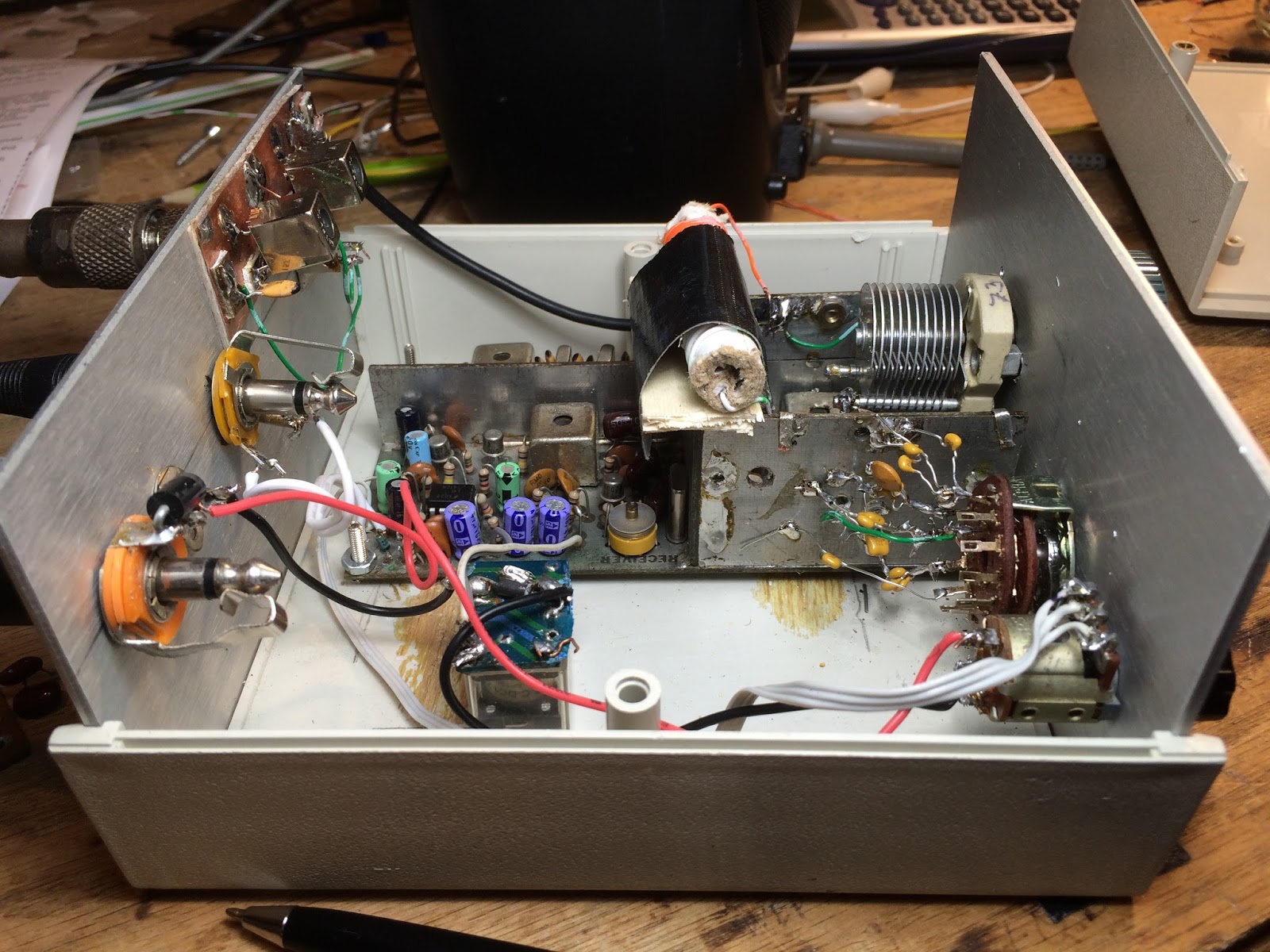
Much to the consternation of Pete “Digi” Juliano, I have been working on analog LC VFOs for simple superhet receivers. As described in earlier posts, I recently converted an old Barebones CW superhet to 40 meter SSB. At first, the VFO (2 -2.3 MHz) was not stable enough — it would slowly drift in frequency. (“We have a solution for that,” chuckled Pete.) My first effort at stabilization involved replacing the toroidal coil. The material in the core is sensitive to temperature changes and this can lead to instability. I found my traditional cardboard tube from a coat hanger, and made a coil of the needed inductance (you can see it in the pictures). This yielded some improvement in stability, but it was still drifting.

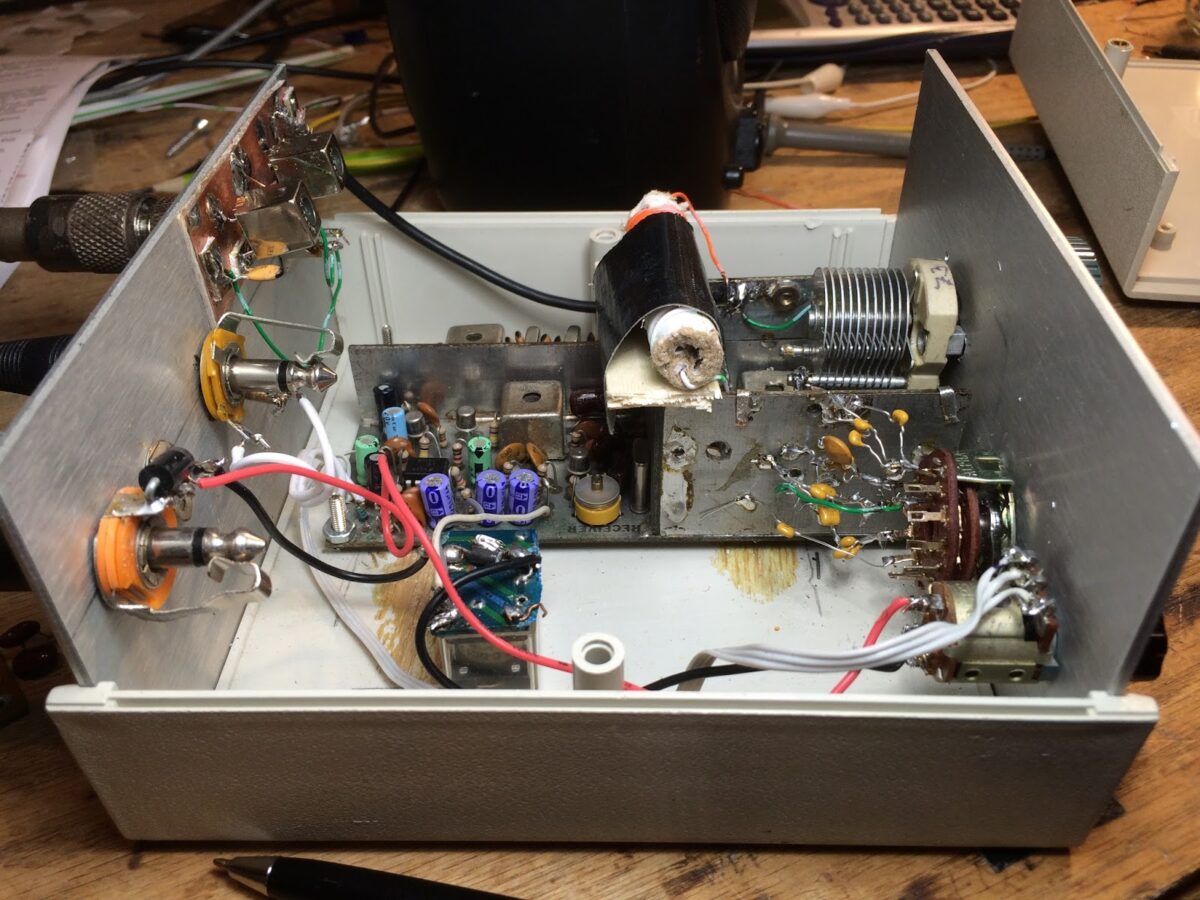
Next I tried taking out all the silver mica and disc ceramic caps in the LC circuit of the oscillator and replacing them with NP0 ceramic caps. The feedback caps are in the box below the tuning cap, but you can see some of the little NP0s on the outside of the box, connected to a rotary switch. This serves as the equivalent of variable “Bandset” variable cap, with the tuning cap serving as the “Bandspread.” I have seven switch positions, each covering about 40 KHz (with some overlap). This gives me all of the phone band and the bottom 30 kHz of the CW band.

Switching to NP0 caps really did the trick. The receiver is now very stable. When I told Farhan about my VFO woes, he mentioned that he’d had very good stability results with surface mount caps. I wonder if this success has more to do with those caps being NP0 than with their surface mount configuration.

Here is a good description of NP0:

NP0 Ceramic Capacitors are single-layer ceramic capacitors made from a mixture of titanates.

A NP0 ceramic capcitor is an ultrastable or temperature compensating capacitor. It is one of the most highly stable capacitors. It has very predictable temperature coefficients (TCs) and, in general, does not age with time.
NP0 stands for negative-positive 0 ppm/°C, meaning that for negative or positive shifts in temperature, the capacitance changes 0 part per million, meaning that it has a flat response across a wide range of temperatures; the capacitance of the NP0 capacitor stays constant (at the same value) despite variations in temperature.

From: http://www.learningaboutelectronics.com/Articles/What-is-a-NPO-ceramic-capacitor

But I think it is a stretch to claim that these marvelous caps do not “age with time!” That would be a really astounding property of the titanium dielectric. That would be a Negative-Positive Zero FLUX capacitor, right?

Humidity Data and the Zapping of my LCD Display

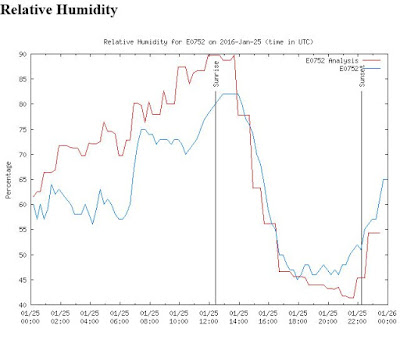
Sometimes the Radio Gods conspire against you. Check out the chart above. It shows relative humidity at my location. I zapped my LCD display right around 2000 UTC on January 25, 2016. That poor little LCD didn’t stand a chance 🙁

Right now relative humidity here is 79%. No sparks now!

I like the solution (!) proposed by Brendan, EI6IZ:

You can get an anti-static spray designed to treat carpet, upholstered furniture etc. This is a sensible thing to do if one tinkers with electronics and for the average hamshack a bottle will last for many years as it only needs to be applied lightly and infrequently.
For example
http://ie.rs-online.com/web/p/esd-safe-clean-room-treatments-lotions-dispensers/0182893/ For cheapskates however, diluted fabric softener sprayed on the carpet and chair will work well for at least a few months but will require much more frequent application than the ‘proper stuff’.

I give my car seat an occasional squirt in dry summers to stop the ‘zap’ when getting out on a dry day.


73
Brendan EI6IZ

0.946L Anti-Static Liquid

An Electro-Static Bandaid to Protect Sensitive LCD Displays

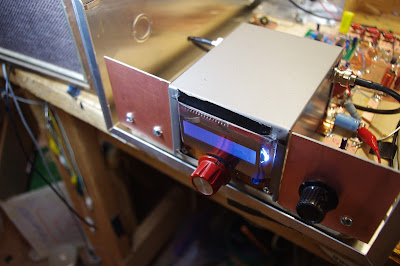
After the big East Coast blizzard, the atmosphere in my ham shack became very dry. I sit in one of those desk chairs with little plastic wheels. The shack is carpeted. So when I roll from operating bench to workbench, the chair, the carpet, the dry air and I all become a kind of Van de Graaff generator. Yesterday, my hand brushed against the 16X2 LCD display on my new R2 phasing receiver. The pretty glowing numerals in that display disappeared in a small spark, never to return.

I swapped out another display I had, so all is well. But the repair was a pain in the neck, involving the soldering of some 16 LCD pins, so I don’t want to do it again. I consulted with Pete Juliano N6QW who told me that this kind of LCD carnage is quite common in dry environments. He said he had cured the problem by placing a small piece of Plexiglas in front of his displays.

This got me thinking about those static protective bags that Digikey uses when shipping many of its components. Might the material from these bags prevent the loss of another display?

I retrieved a couple of these bags from the garbage and did a little test:

First, I rolled across the shack in the chair with a small screw-driver in hand. At the other end of the shack lies my well-grounded DX-100 transmitter. I moved the screwdriver close to the metal on-off switch. SPARK! It was visible, and quite audible in the AM broadcast receiver nearby.

Next I taped a small piece of this material over the switch and repeated the ride in the chair. No spark. Nada. I repeated this several times and always got the same result.

It appears that the material in the bag helps dissipated the static discharge over a wider area, preventing the spark. I quickly taped a piece of this material over the two LCD screens in my shack. It’s not pretty, but it is temporary, and cheaper than a humidifier.

I’m not going to try this on the actual screens, but I do think these small pieces of material will help prevent another accidental frying of an LCD display.

Here is the Wiki on anti-static bags: https://en.wikipedia.org/wiki/Antistatic_bag

And here is the data sheet on the bags that I am using:
http://documents.staticcontrol.com/PDF/Static_Shielding_Bag_1000_Series.pdf

Words of Wisdom for Homebrewers — From Dave Metz, WA0AUQ

When you are done, be proud of what you have accomplished! Use it on the air and show it off to your friends an amaze them. Then clean the bench and start dreaming about your next project.


Summary:

  • Decide if its important to do
  • Study the prior work of others
  • Make a preliminary simple design, document everything you do!
  • Round up your parts
  • Build in modules! Make one module at a time work.
  • Don’t get discourage, ask questions, finish what you start

http://www.fpqrp.org/homebrew.html

There is a lot of tribal knowledge and homebrew wisdom in this link. I tried to find a picture of OM Dave, but he has kept a low profile on the www. The best I could come up with is a symbol of the club that he has been associated with. Thanks Dave!

Here is the full document:
http://www.fpqrp.org/homebrew.html

Bryan KV4ZS’s “Let’s Build Something” Direct Conversion Receiver

Bryan:
I think it sounds great! There is nothing really wrong with it — that is what 40 meters sounds like! Sure there is static. And those whistles you hear near the top of the band are the carriers from shortwave broadcast stations. You might have a little hum, but that should disappear once you get it all packaged in a metal box. Congratulations Bryan! You have done something that very few hams have done: You have built a receiver. 73 Bill N2CQR
………………….
Hi Bryan,
First let me congratulate you. That is one fine build and you may actually have absolutely nothing wrong!!!!!! I really must applaud your “squares”. They look like they were made on a CNC machine. Bravo!!!
You are operating the LBS without an RF amplifier and as such you are trying to make up the gain in the audio amp. I would say that the results you are hearing are very consistent with the DCR without an RF amp. Get the RF amps stage working and then run your test –you will find with the RF amp that at the gain setting you have for the video will be room filling. It actually sounds pretty good. You might also try connecting a 1 NF across the audio trimmer pot as that will cut down on the “hiss’ sound.
Concentrate on the RF amp stage and then re-run your test –you will see the difference.
Great build – very nice job.
73’s
Pete N6QW
………………..
Very nice!
Sounds pretty good to me in terms of noise – that’s what a direct conversion receiver sounds like (they tend to be very wide in terms of reception – static is normal… Welcome the world without noise reduction and DSP!!). DCR’s – because they are not run through a narrow IF filter – allow a very broad range of signals to get to the audio stage. So, for example, if you tune that around during a CW contest, you’ll hear a LOT of signals at the same time – versus only one or two at a time, once you have this run through the 4.9152 crystal filter. That’s the nature of the beast.
The 1nf across the audio trimmer definitely will help with reducing the hiss, although I must say my Kenwood receivers all have a similar amount of hiss and I prefer my radios with more, not less, noise (it lets me know what the band conditions are like…). I have noticed on my builds, however, that if you have a very, very high pitch WHINE on the other hand, that tends to be a bad solder joint or bad capacitor somewhere – probably on a capacitor – introducing an offset into your RF someplace it shouldn’t. What that looks like on an oscilloscope is the audio signal will have a large DC offset versus ground – almost always a bad solder joint on a capacitor—or a bad/broken capacitor–somewhere in the audio amplifier. That’s the same problem you get when you try to record audio sometimes from an external source (TV, radio, CD player) on your computer – DC voltage offset on the audio line. Kind of like what you might have heard on a stereo if you ever tried to switch to a channel where the input was hanging open.
Ben
KK6FUT

SolderSmoke Podcast #179 SPECIAL TENTH ANNIVERSARY EDITION

SolderSmoke Podcast #179 is available:
22 August 2015
YESTERDAY MARKED 10 YEARS OF THE SOLDERSMOKE PODCAST
— A clip: The first minutes of SolderSmoke #1
— A trip down SolderSmoke memory lane.
— The SolderSmoke lexicon — words and phrases we use (a lot).
BENCH REPORT
— Pete’s antenna project.
— Pete’s new Blog: http://n6qw.blogspot.com
— Bill’s big amplifier problem fixed thanks to Allison KB1GMX.
— Six digit freq readout with an Altoids case.
THE Si5351 PHASE NOISE CONTROVERSY
— ALL oscillators make noise.
— Keeping things in perspective: It is 100 db down!
— Observations and tests from LA3PNA, NT7S, and K0WFS:
— Try it, you’ll like it! The benefits trying things on real rigs.
NEWS
Interviews on “QSO TODAY” with Eric 4Z1UG.
Horrible band conditions.
Looking at Saturn with telescope.
MAILBAG
Another recruit for the CBLA: Paul KA5WPL.
Ron G4GXO on Bell-Thorn and Eden9 SSB rigs.
Rupert G6HVY on Kon Tiki radio and Mr. Spock.
Mikele’s Croation BITX rigs.
Dean AC9JQ’s TIA.
Bryan KV4ZS will build an LBS receiver.
Dave Anderson give Pete good antenna advice.
Steve Smith moves in from the garage.
Pete has built 12 SSB transceivers. Intervention time?

Our book: “SolderSmoke — Global Adventures in Wireless Electronics” http://soldersmoke.com/book.htm Our coffee mugs, T-Shirts, bumper stickers: http://www.cafepress.com/SolderSmoke Our Book Store: http://astore.amazon.com/contracross-20
Amplifier Woes! Instability at Low Drive Levels! (Video)

I have to keep reminding myself: This is not “plug and play.” These are not appliances.

After I got my 40 meter problems squared away, I was doing some testing on my beloved 17 meter BITX. I noticed something weird: With the CCI EB63A amp feeding my 17 meter Moxon antenna, as I raised the output of the BITX17 driver, at one point (at about half the max input power) the SWR would suddenly spike. Then, as I raised the drive level above that point, the SWR would go back to normal.

I looked at it on the ‘scope. I can see the signal go very ugly at the mid-level drive point. In the FFT display, I can see that there is a strong signal at around 435 kHz. The 18 MHz signal seems to be riding along on top of it. Take a look at the video above.

Additional clues:

I see no signs of the 435 kHz signal at the output of the BITX 17. It seems quite clean.

This problem disappears if I replace the Moxon with a dummy load.

This problem does not show up if I feed the EB63A with my almost identical BITX20. And I use the same LP filter on both 20 and 17 in the CCI amp.

Any suggestions? Has anyone had this kind of problem?

Allison and Pete have been helping me with this. Thanks to both of them.

Our book: “SolderSmoke — Global Adventures in Wireless Electronics” http://soldersmoke.com/book.htm Our coffee mugs, T-Shirts, bumper stickers: http://www.cafepress.com/SolderSmoke Our Book Store: http://astore.amazon.com/contracross-20

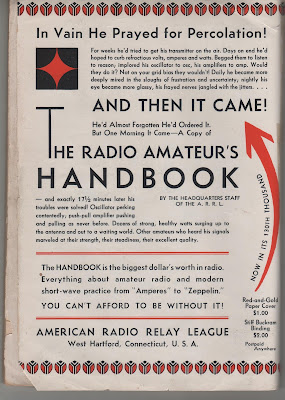
Been There, Done That: “…he begged his oscillator to osc and his amplifiers to amp.”

This ad is from the December 1931 issue of QST. This copy has a LOT of mileage on it. In 1993 or 1994, David Cowhig (now WA1LBP) was living in Okinawa Japan and was operating as 7J6CBQ. I was living in the Dominican Republic and operating as N2CQR/HI8. We were both contributing to a 73 magazine column (as “Hambassadors”!) and we were both in the Foreign Service. I wrote to David — he wrote back, sending me some old QSTs, including the one from which the above ad is taken.

This ad shows that many of the homebrew/troubleshooting woes that we face today are very old. And that having access to good technical books is very important when you are trying to overcome these difficulties.

Our book: “SolderSmoke — Global Adventures in Wireless Electronics” http://soldersmoke.com/book.htm Our coffee mugs, T-Shirts, bumper stickers: http://www.cafepress.com/SolderSmoke Our Book Store: http://astore.amazon.com/contracross-20
Sage Advice on Homebrewing from WA3EIB


Bill, Pete,

Thanks for the sage advice.

You are absolutely right, I should stick to the plan and finish the project before tromping off in a different direction.
Anytime I’ve ever changed designs before I have completed a task, usually results in something far less than expected.

The real joy is completing a project and looking back at what was accomplished.

My own personal goals for the Minima Transceiver Construction include…

1. Build it from SCRATCH – Manhattan Style.
2. Start with modular construction – so that each circuit can be tested, troubleshot and modified in the future.
3. SMA connectors and coax to every stage so, I can divide and conquer the function of all modules.
4. Document the entire journey so I can actually see where my learning’s took me.
5. Provide myself, a basic building block for future transceiver construction and designs.
6. Improve my skills, techniques and knowledge through my mistakes and understandings.
7. Learn to SLOW DOWN, study, plan and write, in my own words, what the circuit(s) do and how they function.
8. Be a mentor to others and share what I have learned.
9. Be more of an Amateur Radio Experimenter and less of a Ham Radio Operator.
10. Continue to dream and design.

Each day should be NEW and EXCITING. There should be a thrill in every step of the way, even in the midst of failures.

Thank you both for taking the time to respond.
Thanks for the encouragement and sharing what happens on your own bench.

73’s

Harv -=WA3EIB=-


———————

More inspiration from Harv here:
http://soldersmoke.blogspot.com/2012/09/an-ode-to-old-time-radio-by-wa3eib.html

And here:

http://soldersmoke.blogspot.com/search?q=WA3EIB

Our book: “SolderSmoke — Global Adventures in Wireless Electronics” http://soldersmoke.com/book.htm Our coffee mugs, T-Shirts, bumper stickers: http://www.cafepress.com/SolderSmoke Our Book Store: http://astore.amazon.com/contracross-20

SolderSmoke, ArduinWoes, and BrainwagonBastas!

It might not be apparent, but I have it on good authority the guy with the blue face pulling the Brainwagon was saying “BASTA!” when this drawing was made, probably after an evening spent with Arduinos and their fascinating I2C libraries.

Mark, K6HX, kindly offered to help us with our ArduinWoes (painful details are available in SolderSmoke Podcast #175). Mark went to the trouble of getting the display and I2C backpack that have been giving us trouble, and then went and did a lot of testing to find the origins of the problems. He has written this all up in two brilliant blog posts:

http://brainwagon.org/2015/04/21/a-not-entirely-simple-lcd-display-for-the-arduino/

http://brainwagon.org/2015/04/22/using-a-sainsmart-lcd-panel-with-the-arduino-1-6-3-ide/

You will notice that Mark has made quite liberal use of the word “basta.” As Pete has noted, in order to get the full effect of this very therapeutic Italian word, you have to make use of the correct hand gesture. Veronika nails it at about 1:28 in this video (WARNING: VERONIKA CAN BE QUITE EXPLICIT):

Thanks Mark for all your help on this. I’m not sure if we are entirely out of the woods yet, but it is reassuring that we are not the only ones screaming…

.

Our book: “SolderSmoke — Global Adventures in Wireless Electronics” http://soldersmoke.com/book.htm Our coffee mugs, T-Shirts, bumper stickers: http://www.cafepress.com/SolderSmoke Our Book Store: http://astore.amazon.com/contracross-20
SolderSmoke 175 Mellow Audio, Pete in China, JBOM&BITX, ArduinoWoe, BFOVFO Chip, Chuck Adams, Mailbag

SolderSmoke Podcast #175 is available:

http://soldersmoke.com/soldersmoke175.mp3

18 April 2015

— Some enhanced audio testing (Mellow, with Presence!)
— Pete’s trip to Fake-shu-out, China
— My visit to the National Academy of Sciences
–Bench Reports:
Pete’s JBOM Re-born
Bill’s plans for a new SSB Transceiver
— Arduino Woes BASTA!!!!!!!!!!!
— Si5351 VFO/BFO development
— Chuck Adams, Tribal Knowledge, and Muppet boards
— KX3 QRO?
— What antenna for Pete?
MAILBAG

Our book: “SolderSmoke — Global Adventures in Wireless Electronics” http://soldersmoke.com/book.htm Our coffee mugs, T-Shirts, bumper stickers: http://www.cafepress.com/SolderSmoke Our Book Store: http://astore.amazon.com/contracross-20
Software Advice From the Brainwagon (Mark, K6HX)

I was really happy to get this encouraging message from Mark, K6HX. Mark is a real wizard — he has been deeply involved in the production of many of Pixar’s wonderful animated films. And his blog — Brainwagon — is always a good read. Mark offers good advice for software and hardware troubleshooting. Thanks Mark!

Hey Bill and Pete:

Just finished listening to your latest SolderSmoke on my commute
yesterday, and thought I’d drop you a line to let you know that I’m
really enjoying the “dynamic duo” format that you’ve adopted. Having
different ideas and different perspectives on the show, but with both
of you showing such great enthusiasm really makes the show a pleasure
to listen to. (Incidently, your audio for this last podcast seemed
much better to me, a couple of episodes seemed to be plagued with much
different levels between Pete, who was booming, and Bill, who
frequently seemed to be quite low. Whatever you did, keep it up!)

As a guy who does mostly computer/software engineering, I’m especially
liking Pete’s continual, good natured prodding of Bill to get with the
program and use more gadgets like the Arduino, the AD9850 and the
Si5351. 🙂 But what’s most valuable to me is when you guys engage
in the back and forth of debugging problems like your recent amplifier
feedback issues. And what I realized (and might come as some comfort
to Bill) is that most of the skills which you guys have developed to
understand and debug radio projects apply equally well to software.

Stop me if this seems familiar:

If you want to learn to program, you do it by programming. Pick a
simple project and try to get it working, then build on your success.

Don’t try to learn it all at once. Making a computer blink an LED is
a good start.

Make use of the resources of the Internet community. Look at what
other people are doing, look at their designs, and enlist their help
when necessary.

Keep notes about what works and doesn’t. Make an archive of all the
code you write. Examples that work can be helpful to create new code
that works.

Don’t just poke the program with a stick, hoping it will work if you
prod it the right way. Develop a theory of why it works, and test
that theory. If the theory is not born out in practice, then don’t
leave that code lying around in your program.

Don’t get too wedded to your idea about why a program may not work.
Test your assumptions, even the ones that you are sure of. Often
those hide the worst bugs.

Think about modularity. Build simple routines/modules that you can
reuse to build bigger programs.

Build on the shoulders of giants: using tested modules of other people
isn’t cheating. But eventually you may need to understand what is
inside these black boxes, so keep working on developing your skills.

Share your enthusiasm with others, via the Internet, Youtube or social media.

——————————————————————————————-
See Bill, you’ve already learned a lot of the lessons you need to be a
programmer, you just learned them all with respect to radios. They
will serve you well if you decide to take the plunge into tinkering
with programming. 🙂

On some of the ham radio related Facebook pages, I’ve been a little
annoyed lately that so many hams seem to lament that “nobody builds
anything anymore”. Ironically, I suspect these are the same sort of
people who decided to pile onto Bill’s amplifier project and skewer
him for its audio quality. If we want more experimentation in ham
radio, we are going to have to tolerate a little more failed (or at
least, not totally successful) experiments. But even beyond that, I
supect that there is quite likely more people (in absolute numbers)
doing homebrew now than in any time in decades. It’s an incredible
golden age for homebrew. We have great books out like EMRFD, great
mailing lists, vendors to sell us amazing parts at incredibly low
prices, and the Internet to share and learn. People like you two are
part of this. What are all these complainers doing to get people to
build stuff?

I have to really thank you, Bill in particular. While I’ve still not
gotten all the way to building my own transceiver, you got me back
into amateur radio, fueled my interest in beacons, QRSS, WSPR and
homebrew in general. And Pete’s approach to radio seems to be the
wedding of electronics and software that I find in sync with my own
ideas. I look forward to doing more projects, and hearing about
yours in the weeks and months to come.

Well done, sirs.

Mark (K6HX)

Our book: “SolderSmoke — Global Adventures in Wireless Electronics” http://soldersmoke.com/book.htm Our coffee mugs, T-Shirts, bumper stickers: http://www.cafepress.com/SolderSmoke Our Book Store: http://astore.amazon.com/contracross-20
Shep on Parasitics and Troubleshooting: “That way madness lies”

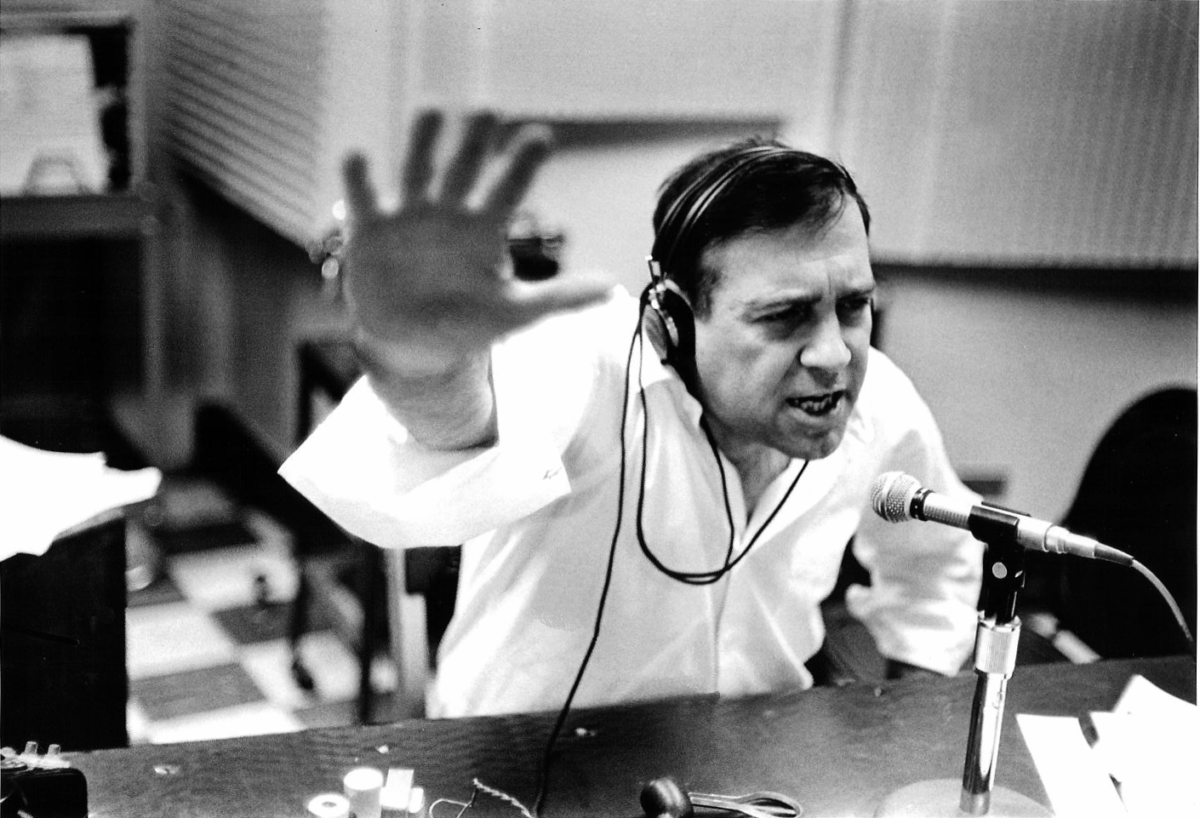
You guys really have to listen to this. This is culturally important. And it is a great follow-up to SolderSmoke 173.

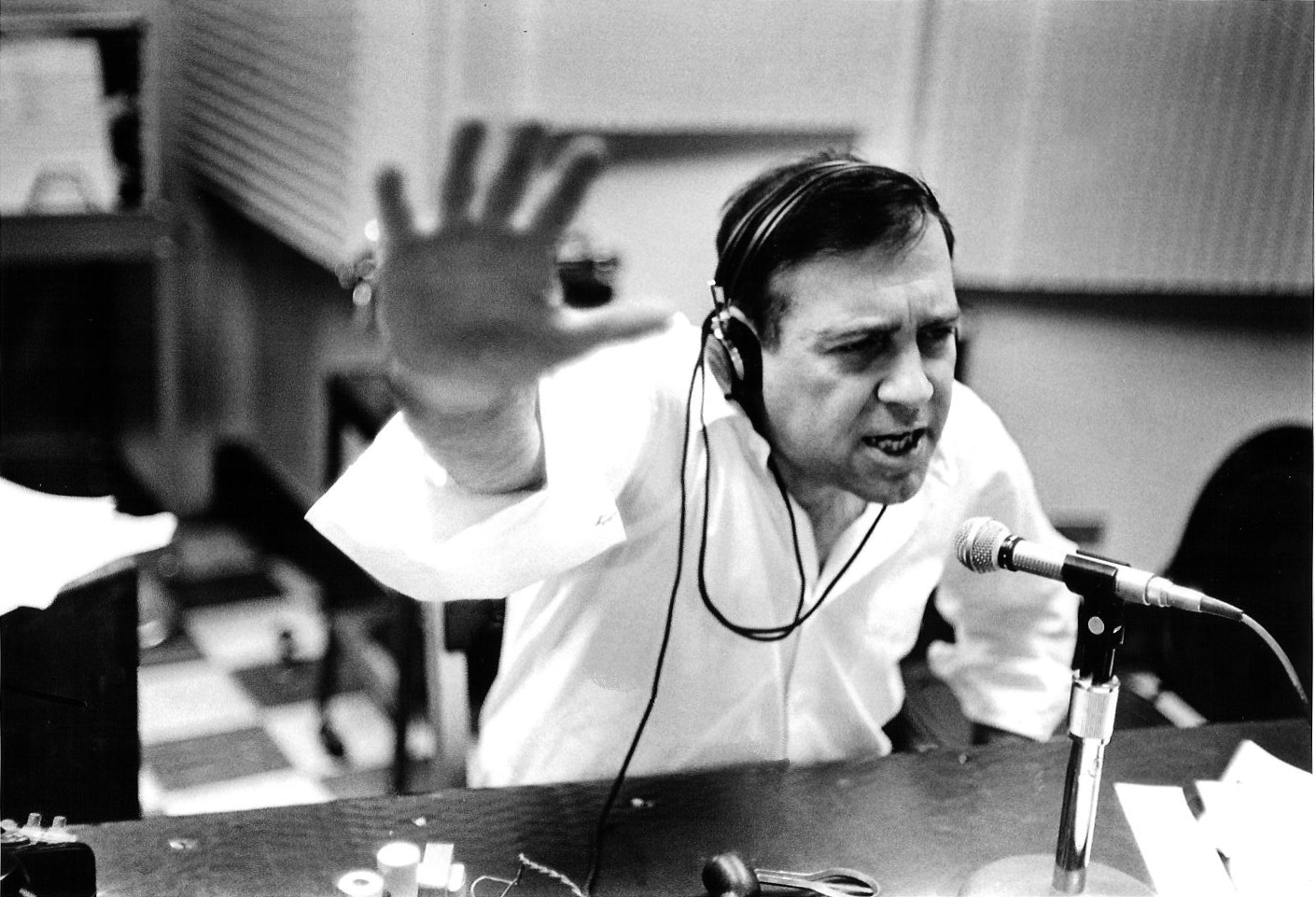
In this 1965 radio broadcast, Jean Shepherd describes his teenage struggles with parasitics and other technical problems in his homebrew 160 meter transmitter.

He describes the sound of parasitics on a signal, saying that they sound as if the signal is being attacked by “debauched erotic locusts.”

He really nails it in describing the scornful, dismissive tone that many hams use in telling their fellow radio amateur that there are problems with his signal. ( I have recently been on the receiving end of this kind of treatment.)

He observes that no one is more worried, “than a man who has built something and can’t get it to work.” Indeed.

During a date with a girl from his high school, he is so obviously pre-occupied with his transmitter trouble that she tells him that something is wrong with him and that his mother “should take him to a doctor.”

And he describes the joy that comes when you figure out the problem and get the thing to work.

The REALLY good stuff begins at about the 25 minute point.

http://ia310115.us.archive.org/2/items/JeanShepherd1965Pt1/1965_01_29_Ham_Radio.mp3

Shep was quoting from King Lear:O, that way madness lies; let me shun that; No more of that.” In other words: “BASTA!” That is what I have said about my 40 meter troubles. My BITX 20/40 is now a BITX 20.

EXCELSIOR!

Our book: “SolderSmoke — Global Adventures in Wireless Electronics” http://soldersmoke.com/book.htm Our coffee mugs, T-Shirts, bumper stickers: http://www.cafepress.com/SolderSmoke Our Book Store: http://astore.amazon.com/contracross-20
SolderSmoke Podcast 173: Pete’s LBS Triumph and Bill’s Tale of QRO Woe

SolderSmoke Podcast #173 is available:

http://soldersmoke.com/soldersmoke173.mp3

7 March 2015

Bench Report: Pete’s Progress on the Let’s Build Something Rig:
http://www.jessystems.com/LBS_Detail.html
Ben’s cool case for his LBS rig
Bill’s Tale of Woe: QRO troubles with the BITX 40
— QRO amplifier taking off on 40 (but not 17)
— Criticism and public humiliation on 40
— Troubleshooting
— Suggestions from Allison
— A sad realization about my VFO frequency selection
— Exorcism needed
— Pete suggests a digital solution
— Wow, my ‘scope has an FFT! Almost a spectrum analyzer!
— Some thoughts on trouble shooting
— On the meaning of “BASTA!”
The Spring 2015 Issue of Hot Iron http://www.walfords.net
More on Pete’s KX3
Encouraging other hams to build

Our book: “SolderSmoke — Global Adventures in Wireless Electronics” http://soldersmoke.com/book.htm Our coffee mugs, T-Shirts, bumper stickers: http://www.cafepress.com/SolderSmoke Our Book Store: http://astore.amazon.com/contracross-20

Parasitic Anguish on 40 then… Homebrew Transceiver Heard by Homebrew Receiver (with a PTO!)

Oh man, I was struggling yesterday. I guess I had been lulled into a false sense of security by the phenomenal ease with which I had put my BITX 17 on the air, then added a 120 watt amplifier, all without any sign of the dreaded feedback and parasitic oscillations that had plagued almost all of my previous projects. So when I decided to add the low pass filter and the switching/relay arrangements needed to use the amplifier with my BITX 20/40 rig, I kind of expected a similar trouble-free experience.

WRONG! And you know what? I think guys on 40 and 20 are a bit less forgiving and collegial than the folks on 17. As I struggled to exorcise the transceiver, I’d make some changes then hopefully go out onto the airwaves and call CQ, looking for a signal report. Well, I got them. Many were not accompanied by call signs. I’d be in contact with someone who was trying to help, and — as we were trying to figure out what it might be — we’d be bombarded with harsh, sometimes angry, anonymous commentary: “YOU’RE 20 kcs WIDE!” “Are you on AM?” “You have a CARRIER!” One fellow scornfully told me “That little QRP rig of yours is not ready for prime time.” Ouch. (I didn’t realize we were on prime time. Isn’t this AMATEUR radio?)

Others would answer my CQ by announcing that I was “on the wrong frequency.” Others would respond (off frequency) and tell me I was distorted — I’d ask them to tune me in, then they would say, “Oh yea, you are OK — you were just on the wrong frequency.” Some of these guys seemed to be under the impression that there are “channels” on 40 meters. It was a real disheartening mess.

Then came the saving grace. I got the e-mails that appear below. WOW! My faith in ham radio was renewed! In the 18 months that I’ve been running the BITX rigs, I’ve never once worked another station using a homebrew rig. But Rick and I were 3/4 of the way there yesterday. And he was using a direct conversion receiver of his own design, with a PTO in an enclosure made from “flattened out tin-plated food tins.” Fantastic! It was as if the radio gods had arranged all this to pull me out of the depths of parasitic despair! Thanks Rick! A video of his receiver picking up my BITX 20/40 appears above.

Pete and I will talk about the actual troubleshooting in the next podcast. I am HOPING to have it fixed by then. I may have to sacrifice some chickens to Papa Legba.”

…………….

Bill,

I’m a long-time SolderSmoke podcast listener, and today one of my ham radio dreams came true.

I was listening to 40 meters today on my homebrew direct conversion receiver, and I heard your call. At first I didn’t believe it was you, but there you were.

At first I just sat there dumbfounded, just listening, but soon realized that I should make a video of this “rare DX” (rare DX for me hi hi), and post it on YouTube for you to review.

My apologies for the low audio in the video. I was using my iPhone and its inboard mic leaves a lot to be desired, but the best audio of you is at 0:13, 0:50, and again at 2:12 into the video.

Heard you on 7.16 MHz, Sunday 2-22-2015 at 10:15 a.m. local east-coast time (15:15 UTC).

I’m located in Manchester Maryland (North – Central Maryland). My homebrew 40 meter rig is a PTO tuned direct conversion receiver with all discrete components. My antenna is a simple wire dipole about 6 feet above the ground just outside by workroom window.

Below are links to the YouTube video of your QSO , and the schematic the DSB transceiver that you were received on. The rig is one that I designed, based on the published works of many home-brewers from the web. I call it the Lakeside 40 (in homage to Peter Parker’s Beach 40 transceiver).

So far I only completed the receiver section, and hope to complete the transmitter sometime this summer so I can use the rig at Lake Marburg (at Codorus State Park in PA), thus the “Lakeside” in the rig’s name.

http://youtu.be/emsKg5n5-0c

http://www.remmepark.com/circuit6040/lakeside40.gif

73
Rick – N3FJZ


Bill,

Yes, what a coincidence with the PTO! That’s the same WA6OTP PTO design
I based my PTO on.

I created a webpage tonight(very much a work in progress) so you can see
the details of how I constructed my PTO in the Lakeside 40, as well as
my rendition of a BITX 20. Click the [Permeability Tuned Oscillator], or
[My rendition of a Bitx 20] links on the left of the page.

The webpage is here:
[http://www.remmepark.com/circuit6040/index.html]

The ground plane for the Manhattan construction (and RF tight enclosure
for the PTO) are made from flattened out tin plated food cans, and the
coil-form for the PTO is cut from Masonite wall panel material with my
scroll saw.

Don’t get discouraged from the less than enthusiastic response from the
others about your signal, pay them no mind; I’m sure they simply didn’t
realize the significance of what it represented. To me, your signal was
the most perfect signal I have ever heard. It was perfect because I
know (from your pod-casts, and my attempts at homebrew) what it took for
it to be produced. Its existence, and the fact that I successfully
received it on my little homebrew rig too, represents the fundamental
core foundation of Amateur radio; experimentation, building equipment
with your own hands from scratch, expanding ones knowledge in the radio
art, and most important, having fun and enjoying the excitement that
comes from using gear that *you* built.

I cannot put into words how significant hearing your signal was for me
today – thank you! My biggest regret is that I didn’t have a means of
transmitting yet on 40 meters, and my Bitx 20 is not ready yet,

perhaps in the future we can have homebrew to homebrew QSO’s
where we can fine-tune our designs and tweak things (however we’ll have
go above 7.175 MHz, or 14.225 MHz since I only hold a General ticket at
the moment).

Rick
N3FJZ.


PTO another view.

Rick’s PTO

Our book: “SolderSmoke — Global Adventures in Wireless Electronics” http://soldersmoke.com/book.htm Our coffee mugs, T-Shirts, bumper stickers: http://www.cafepress.com/SolderSmoke Our Book Store: http://astore.amazon.com/contracross-20
A De-Soldering Primer By Wayne Burdick

A De-Soldering Primer
By
Wayne Burdick, N6KR
Removing resistors and other parts from double-sided boards is easy and
fun. After years of careful analysis of my own technique I have documented
the process. I start with technique #1, below; if that doesn’t work, I try
#2, etc. Good luck!
1. Turn the board over. With one hand behind your back, a wry smile, and
the confidence of a pet surgeon, simply heat the lead in question and
listen for the pleasant sound of the component hitting the work bench.
2. Well, that *would* be too easy, wouldn’t it. Staying with the solder
side for now, locate a large solder sucker (the larger the better; it
should frighten smaller pets when brandished). Heat each joint and deftly
suck out the solder with a single satisfying Thwop! Listen for the part
hitting the bench.
3. Didn’t fall out, eh? No problem: rummage in that tool bin for a shiny
new roll of solder wick. Crack open a beer, too, and take a generous swig.
Wedge that wick in between the lead and pad, heat until you see the solder
flow nicely onto the wick, and pull it out of the way just in time to see a
beatiful, black annular ring around your component lead. Nudge each lead
with your iron and keep your fingers crossed.
4. OK, so you’ve got a tough customer: small lead, hole just barely
larger, and a bit of off-color solder that can’t be bothered with any of
the usual techniques. Have another sip of that brew. Vigorously flip the
board back to the component side. Now grip the lead professionally with
your most elegant long-nose pliers and hold on tight. Give it a playful
yank, then pray. Should pop right out.
5. Damn. Finish the beer and get out your brutal, 8″ electrician’s
long-nose. Grab the component with gusto this time, buster, then tip the
board up at a 45. Turn up your soldering station to max and heat that baby
up on the backside. Pull down hard with the pliers.
6. No go? Hmmmm — let’s get serious. Put the board up directly on its
edge and hold it in place vertically with your chin. Since your iron is
suspect by this time, test it for several seconds on the nearest exposed
skin. (Doing it by accident is just as effective.) Heat the joint with
*feeling* this time. Lunge and parry. Don’t worry about the pad, traces,
or other parts–this is war! With maximal chin pressure exerted to hold
the offending board in place, pull the lead out, out, Out!
7. OK, so you “…couldn’t get hold of it…,” blah blah blah. Fool!
You must risk everthing at this stage. Insert a small screwdriver under
the part, and white-knuckle that soldering iron on the obverse. Pry and
heat until it pops. (Note: It is important to keep in mind the concept of
“kick-back” should you succeed at this. PC boards are likely to
wobble, flop, slip, then fling out of your grasp once the offending little
monster finally lets go, taking test leads and soldering station with it.)
8. So, what kind of inept dweeb are you, anyway? Give up! Clip the part.
Leave some lead to grab onto and repeat #6 and 7. If your face has turned
red it is best to shield the work from veiw with your body, then steal a
quick look behind you to be sure noone is suppressing a giggle as they
watch this humiliating display.
9A. The lead came out but you STILL have some solder left in the hole?
Gads. Find another part that you can sacrifice. Press its helpless
lead into the depressingly small pit you made in the center of the pad.
Heat the base of the lead until you achieve Punch-Through. Yank and Heat,
Yank and Heat. Evetually the solder will give up in disgust and the
sacrificial component lead will slide smoothly, signalling victory.
9B. To your left is a hand drill; to your right is a #60 bit. You know
what you must do.
10. Now—you brute!— now that you’ve overheated the pad, broken the trace,
cracked the component, gouged the board, pitted the tip, blistered the
skin, wasted a beer, and irrefutably proven once and for all that you
should have taken up gardening instead, NOW maybe you’ll learn the color
code!
😉
N6KR


Thanks Wayne! Been there! Done ALL that! This brought to mind the time I soldered in a 16 pin logic chip on a double sided board… UPSIDE DOWN. TRIBAL KNOWLEDGE MY FRIENDS.

Our book: “SolderSmoke — Global Adventures in Wireless Electronics” http://soldersmoke.com/book.htm Our coffee mugs, T-Shirts, bumper stickers: http://www.cafepress.com/SolderSmoke Our Book Store: http://astore.amazon.com/contracross-20

Colin Gets His BITX Receiver Going

Pete and I congratulated Colin on the First Sigs heard by his BITX (sort of like First Light for a telescope.) He is clearly following the advice offered by Farhan in the original BITX20 article: Take a break when the receiver is done; sit back to enjoy the sounds of success. I told Colin that having a small error in the build, then finding it and fixing it, well, that’s icing on the cake OM. This also shows the benefit of having an oscilloscope. Here is Colin’s report:
Hi Pete and Bill,
I really enjoyed the latest SolderSmoke! I think you two have got a winning formula, humour interspersed with valuable technical knowledge. Some podcasts are just too serious, there’s nothing wrong with having fun in your hobby!
Progress is slow here, as always, but each week I have managed to move a little bit further forward. This week I aligned my BITX band pass filter and made a rough measurement of my crystal filter using the DDS signal generator that I built last week.
My oscilloscope is a Tektronix 465, older than me I believe! Of course there is no fancy signal level readout like the modern digital scopes, so I had to just peak the injected signal through the crystal filter and measure the frequency using a frequency counter connected to the IF amp. I followed the BITX ver 3 build instructions and my results seemed to match very closely to the Indian kit. I’m going to set my BFO at the -20dB from peak level as suggested in the ver3 instructions, I guess I can fine tune the setting later.
At first I had no signal making it out of the last RX IF amp, I traced the signal right through to the base of the first transistor but then the signal was lost. I had thought that band conditions were poor when I tried my BITX in RX last week when in fact it turns out that I’d made a small mistake building the IF amplifier that follows the crystal filter! I had wired the 4k7 resistor in the wrong place! I made the circuit good and hey presto, lots of signal coming out of the amp!
I was eager to give the receiver another try. On Fridays work finishes at 1pm, so a great chance to try out my rig during daylight hours. I hooked up the rig to a random piece of wire and I was amazed by the great noises coming from the speaker! I hadn’t even set the BFO but voices were just leaping out. Man that rig has a lot of AF gain! I obtained a switched 10k log pot which I intend to use for power on and AF gain so hopefully the volume control will be OK. As a side note, it was nice to hear HF0YOTA down in the CW portion, I’m guessing that it is youngsters on the air station, I must do a search on the call later.
73, Colin M1BUU
So the little signal generator has already earned it’s keep. I guess I can would have been scratching my head for a while without it!

Our book: “SolderSmoke — Global Adventures in Wireless Electronics” http://soldersmoke.com/book.htm Our coffee mugs, T-Shirts, bumper stickers: http://www.cafepress.com/SolderSmoke Our Book Store: http://astore.amazon.com/contracross-20