Category: TJ DC RX
Video by KK4DAS on Progress in High-School Direct Conversion Project
Progress Report: High-School Students Build Diode Ring Mixers (Board #2 of 4). Hyderabad Soul Added to the New Machines
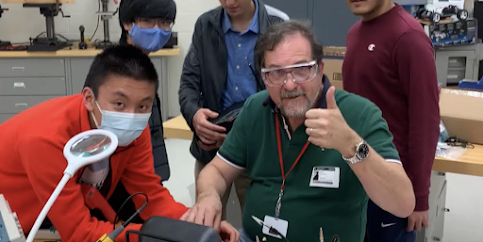
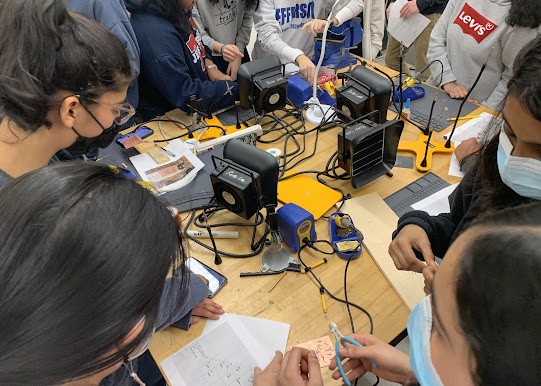
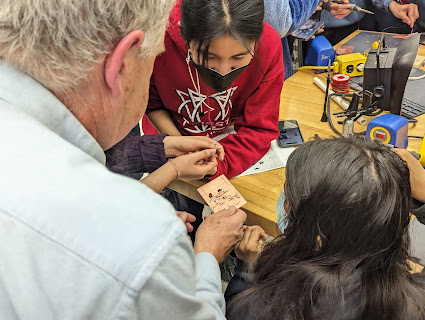
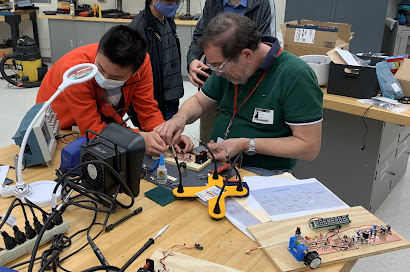
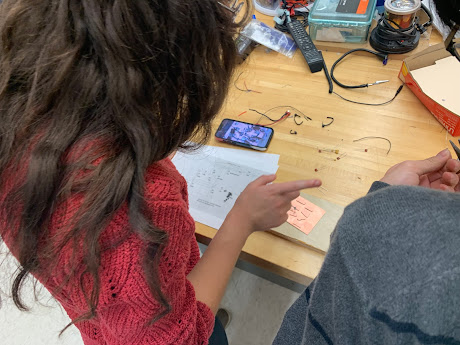
A team from the Vienna Wireless Society was back in the local high school Thursday and Friday of this week, helping the students finish their variable frequency oscillators and build their diode ring mixers. Club President Dean KK4DAS was in the lead, and did an amazing job working with the school and procuring all the needed parts. Mike KD4MM and Don KM4UDX provided patient and understanding help to the students.
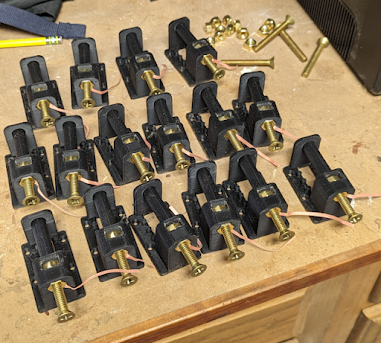
On the oscillators, the students had to add about six parts to install a buffer circuit built around a J310 FET. They also had to replace some of the 3D printed coil forms for the main-tuning variable inductor. (Dean KK4DAS made some really nice forms — see below.) Several teams of students experiences were very pleased to get their oscillators running.
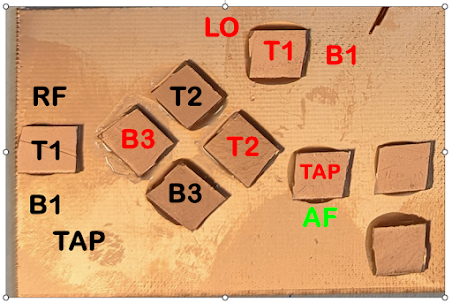
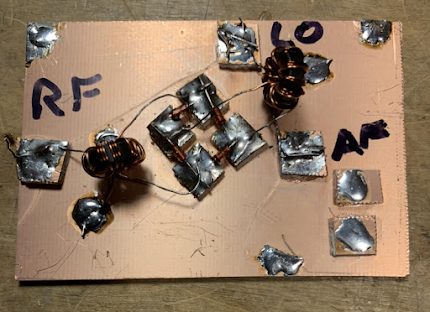
Then it was on to the diode ring mixer. We had planned on having the students wind their own trifilar toroids, but we realized that this might be too much — it would add a lot of time to the build, and would introduce a lot opportunity for error.
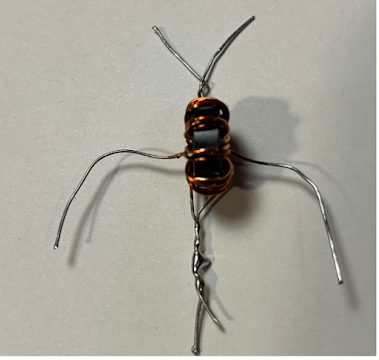
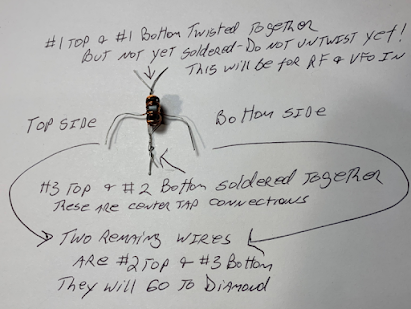
I remembered that Farhan had given me a big supply of FT-37-43 trifilar toroids that had been assembled in Hyderabad. We decided to use these transformers. We reasoned that this was not a big deviation from our DIY ethos — after all, we didn’t ask the student to wind their audio transformers, nor did they wind the RF choke in the VFO buffer. But we faced a problem: the Hyderabad transformers were all wound with the same color wire on all three turns. This would make it hard for the students to figure out which wire went where (there were 12 such wires on each mixer board!). I figured out how to do this: The night before, I soldered together the center tap wires, and I twisted together the input coil wires. We told the students to first solder the center taps in place, then solder the two free wires to the diode ring, and finally untwist the input coil wires, soldering in these connections. This worked.
Before we started, I gave the students a quick class on the essentials of mixers. And I pointed out that we were using transformers made in Hyderabad India and donated by our friend Farhan. I told the students that whenever we include parts given to us by a ham radio friend we are adding “soul to the new machine.” Indeed, Farhan’s toroids added a lot of soul.
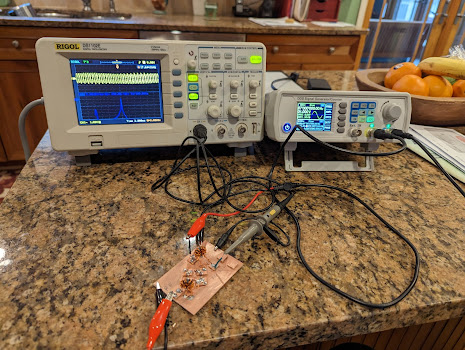
We have been insisting that the students have each stage tested before moving on to the next. This week we used signal generators to put RF and VFO energy into the mixers, and oscilloscopes to make sure that audio was coming out.
The students are making good progress. After today’s session we did an estimate of where each of the projects stand at this point:
Oscillation without the buffer: 11
Oscillation with the buffer: 5
Mixer built and tested (but no diplexer yet): 5
Mixer working, diplexer built 2
Farhan’s Direct Conversion Receiver
Thank God for the Wayback machine. For a moment I feared that this article about Farhan’s DC-40 receiver had been lost. (Phonestack is now some Vietnamese vendor. ) But the WayBack Machine archive came through for us.
https://web.archive.org/web/20171109081542/http://www.phonestack.com/farhan/dc40.html
Farhan’s receiver has been covered on this blog before, but it is especially relevant for us now that we are immersed in our own direct conversion receiver project. Farhan was working with his niece, who was a student. We are working with high school students.
I really like Farhan’s blow-by-blow description of the build. There are raw emotions here: He speaks of his hatred of LM-386s, and of how he thought of using the copper clad board as a projectile. His niece wonders about the possibility of evil spirits in the receiver. The battle against AM breakthrough is very familiar. (I like the RF choke idea.) You won’t find candor like this in QST or QEX.
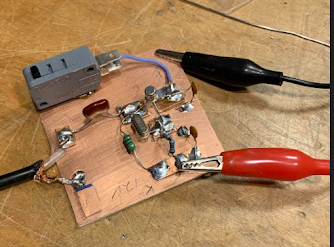
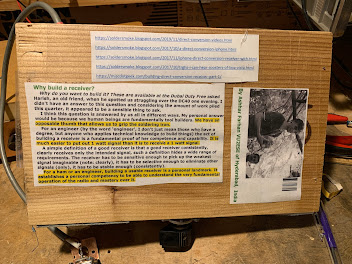
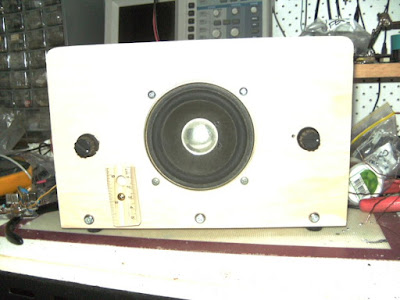
Farhan’s DC-40 project was one of the inspirations for our high school effort. In fact, when we first went to the school, I left behind a direct conversion receiver that I had built. Taped onto the bottom of the receiver was a quote from the DC-40 article and a picture of the Wizard of Hyderabad. (See above, and click on the picture for a better look).
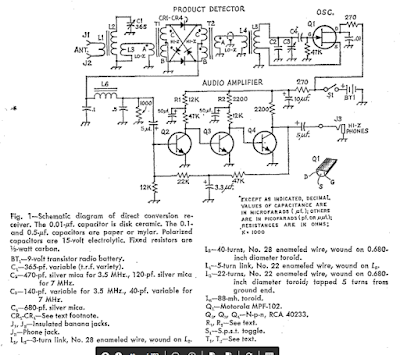
This week we will inject some more Farhan-ismo into our receiver. The time has come to build the mixer. Like Farhan, we will go with the diode ring. Winding the transformers would be very time consuming. I remembered that on his visit, Farhan had left me a box of trifilar toroids wound by the seamstresses of Hyderabad using FT37-43 cores. We will uses these in our build. They will add a lot of soul to the new machine.
Progress Report: High-School Students Melt Solder and Successfully Build Oscillators
Dean KK4DAS and I were at the high school on Thursday and Friday of this week for the construction (by the students) of the variable frequency oscillator stage of their analog, discrete, direct-conversion receivers for 40 meters. Most of the students have already obtained their Technician Class licenses, so they are already radio amateurs. Both the licensing classes and the receiver build are being done with the assistance of the Vienna Wireless Society.
A week earlier Dean and I had demonstrated how to build the oscillator stage using the Manhattan technique (isolation pads super-glued to copper clad boards), but this week was the first time these students were actually building anything like this themselves.
We deliberately did not “spoon feed” the students. We told them that while we would be on-hand to help, THEY would have to do the building. They would have to layout the pads on the PC board, select the parts (from a table set up by Dean), and do the gluing and soldering. We did not hand the students bags of parts, or prepared PC boards. This was not going to be a kit building session. We wanted this to be real homebrewing.
We had parts for 15 receivers. But on the first day there were more than 60 students. So four students per project. On the first day we actually ran out of soldering stations.
We cautioned the students against dawdling. We told them to get on with it, and to “make haste slowly.” We also injected an element of competition into the build by announcing that the first team to achieve oscillation would win. (Prize still TBD).
By the end of the Thursday session, many boards had been built but there were not yet any oscillations. We reconvened on Friday afternoon — Dean and I set up support/troubleshooting stations.
Right off the bat, one of the students came up with a board that he wanted to test. After one quick correction (enamel still on the oscillator coil leads), my frequency counter showed that it was oscillating. I fired up my DX-390 receiver and we heard the loud tone. We had a winner!
In the following hour or so, Dean and I did troubleshooting on about 10 more boards. We found some of the problems that we would all expect (because we have all made these mistakes ourselves!):
— There were cold soldering joints. We showed the students how to properly solder — usually they just had to re-heat some cold-looking connections.
— A few of the Zener diodes and transistors were wired in backwards (been there, done that).
— A few of the feedback capacitors were of the wrong values. Dean and I had brought some good caps, so the students were able to quickly swap out the parts. This was another good lesson.
— There were a few wiring errors — these were quickly corrected.
It was exciting. One-by-one we would hear the whoop-whoop as the DX-390 confirmed that another oscillator was OSCILLATING! The students really liked to HEAR the oscillations that they had created. We reminded them at the beginning that they would be taking DC from a little square 9 volt battery and turning it into RF that could (if connected to an antenna) be heard around the world, or in our case be used to receive signals from around the world.
We got eight of the oscillators going. We think the students will be able — without much help from us — to get the remaining seven oscillators going.
They learned a lot. They learned about the ease, flexibility, and usefulness of the Manhattan technique, and we think they could see how this represents a basic kind of PC board design. Their soldering skills improved a lot. And they learned how to troubleshoot: Is the layout correct? Are any parts wired in backwards. Is the soldering OK? Are any of the parts bad (or of incorrect values)? Most importantly, they learned that they CAN build circuits themselves, and actually get them working.
The real payoff came each time oscillation was achieved. The students were really amazed and pleased. I could tell that some of them weren’t really sure their little device was actually creating the signal they were hearing. So while we listened to the DX-390, I asked them to disconnect and reconnect the battery. Confirmed. Oscillation! Smiles. It was really great.
Soon, after finishing up some PTO odds and ends, we will move on to the other stages. We’ll probably do the bandpass filter or the mixer next. Then the AF amp. Then put it all together into a full receiver. We think each stage will get easier and easier to build as the students learn and improve their homebrewing skills and their self-confidence.
SolderSmoke Podcast #243 — HI7/N2CQR, uBITX mods for 10 meters, High-School Direct Conversion Receiver Project Launched (Success!) Mailbag
February 10, 2023
SolderSmoke Podcast #224 is available.
http://soldersmoke.com/soldersmoke243.mp3
Video here: (32) SolderSmoke Podcast 243 (video) Hi7/N2CQR, uBITX, Success with High School Receiver Project – YouTube
Pete N6QW had technical difficulties this morning. He insisted that the show must go on. Pete will be back for the next episode.
Travelogue:
Bill in the Dominican Republic for all of January.
HI7/N2CQR Eastern tip of the island. uBITX and dipoles.
20, 17, 10. CW and SSB. SSB was tough and I had reports of RF getting into the signal.
Went to CW.
Worked VWS Mike KA4CDN, and Walter KA4KXX on 20CW.
Finally moved up to 10 CW. Lots of contacts. Even though uBITX very QRP on ten.
I am modifying the uBITX now.
Copper tape shielding to keep RF out.
Low power out not the fault of the IRF-510s. The problem is the 2N3904s.
Will replace with 2N2222 in To-18 cans.
Dean KK4DAS putting KD8CEC software into Arduino. I gave up.
Who sent me this orphan uBITX?
SolderSmoke Shack South in final phase of construction.
SHAMELESS COMMERCE DIVISION:
Patreon!
Bezos Shopping!
DC Receiver Project
Local High School radio club.
Simple: Like Herring Aid 5 and Wes’s original.
Farhan’s four stages:
BP Filter, Diode Ring, PTO, AF amp.
Simple Colpitts PTO SURPRISINGLY STABLE.
Simple and easy. No chips. No complicated circuits.
Guys have helped test out the design: Rick N3FJZ, Walter KA4KXX,
Daniel VE5DLD, Stephen VK2BLQ and others.
First session last night: We demonstrated build of the PTOs.
They worked (thank God).
Open Circuits book.
Envelope Detection Controversy
Save the Antenna – Book “Losing the Nobel Prize” K1JT
MAILBAG
–Dean KK4DAS 10 meter DSB! Tiny SA ULTRA! FB
–John AC2RL on Elmer W3PHL DSB guy
–AC3K reports inventor of Fender Stratocaster guitar was a ham: W6DOE
–AF8E was doing POTA. I worked him. He said my rig had presence. FB
–Alain F4IET FB DSB rig with mic in Cigar can!
–Daryl N0DP worked him on SSB. He is homebrewing
–Steve N8NM was in for repairs but is on the mend.
–Rick G6AKG working with sub-harmonic mixers and logic chips
–Paul HS0ZLQ Built DC receiver but looking for something else to build. No DSB!
–Steve AB4I – Coherer, Jagadish Chandra Bose, and Marconi
–Eldon KC5U Worked VK5QD right after me and mentioned SolderSmoke FB
–Todd K7TFC is building the DC RX.
–Tony G4WIF and Ian G3ROO using automotive relays for antenna switching. FB.
–Dave WA1LBP Great to hear from my fellow Hambassador (Okinawa)
Older post comments:
–Scott VO1DR was also in CF Rockey’s class! (Blog comment)
–Aurora Aug 4, 1972: Twelve people shared memories. (Blog comment)
–Will WN1SLG Googled novice call and was led to my Novice log.(Blog comment)
VK2BLQ Builds the High-School Direct Conversion Receiver
Rick N3FJZ Completes Build of High-School Direct Conversion Receiver Project — LISTEN!
Direct Conversion Receiver Bandscan — 40 Meters early on a Thursday Morning — With W1AW/4
Rick N3FJZ Builds the Mixer for the High School Direct Conversion Receiver
N3FJZ Builds PTO for High School DC Receiver
Update on High School Direct Conversion Receiver Project + .asc File
So far, in response to my recent request for testing, no one has stepped up to build the DC receiver Dean KK4DAS and I are testing out. We did get a couple of comments explaining why guys are opting not to help, but so far no other builders are actually melting solder in response to our recent request.
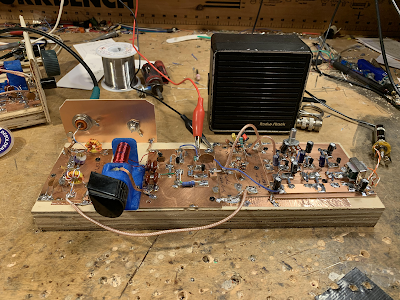
So Dean and I decided to each build second versions of the receiver. That will bring the total finished build population to 4. I finished my second version yesterday. Picture above. It works great.
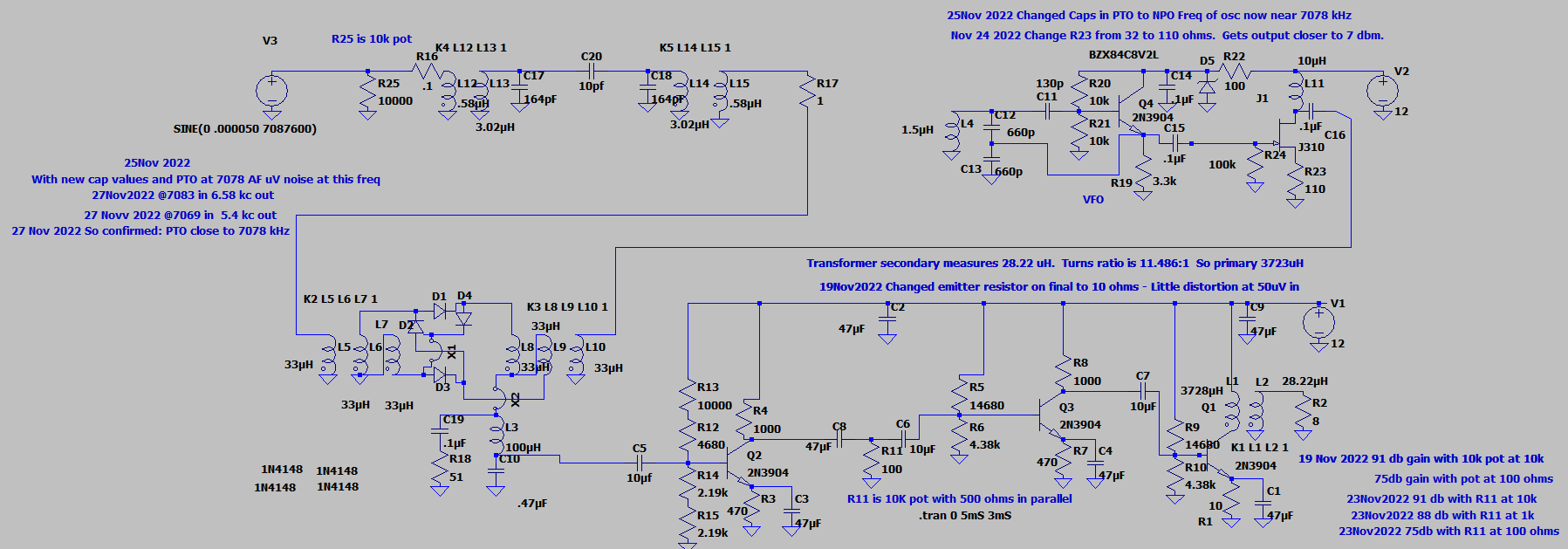
One change: The emitter resistor on the final AF amp was too low in value. The transistor and the transformer were getting hot. I switched from 10 ohms to 100 ohms and the problem disappeared. I have made the change on the LTSpice Schematic. Here is the .asc file (I hope!) :
http://soldersmoke.com/DCRX.asc
Dean posted the .asc file (and some other info) here:
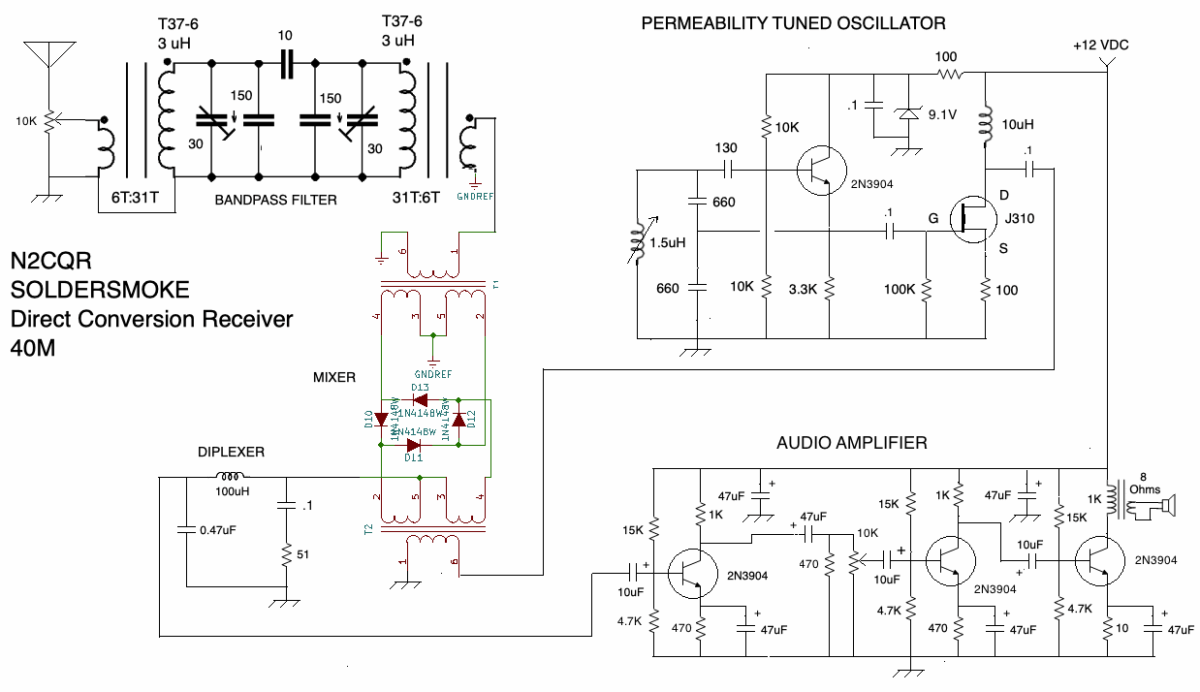
If you have trouble accessing that file, please let me know and I will try to e-mail it to you. In any case the schematic appears here:
https://soldersmoke.blogspot.com/2023/01/a-call-for-builders-please-help-us-test.html
You will notice that this Spice schematic actually works! The PTO turns on, and I put a simulated RF signal at the antenna port. Audio appears at the output.
Time is getting very tight. Dean and I will begin presenting this project to the high school students on February 2. So it is not too late to help. But helping is, of course, strictly voluntary — if you are reluctant to build this thing, DON’T!
A Call for Builders! Please help us Test this Receiver! Please Build this Receiver!
This is the Direct Conversion receiver that Dean and I have built. We plan to have students at a local high school build it, starting in early February. We would like to have some others build it, to make sure that the design is re-producible without problems.
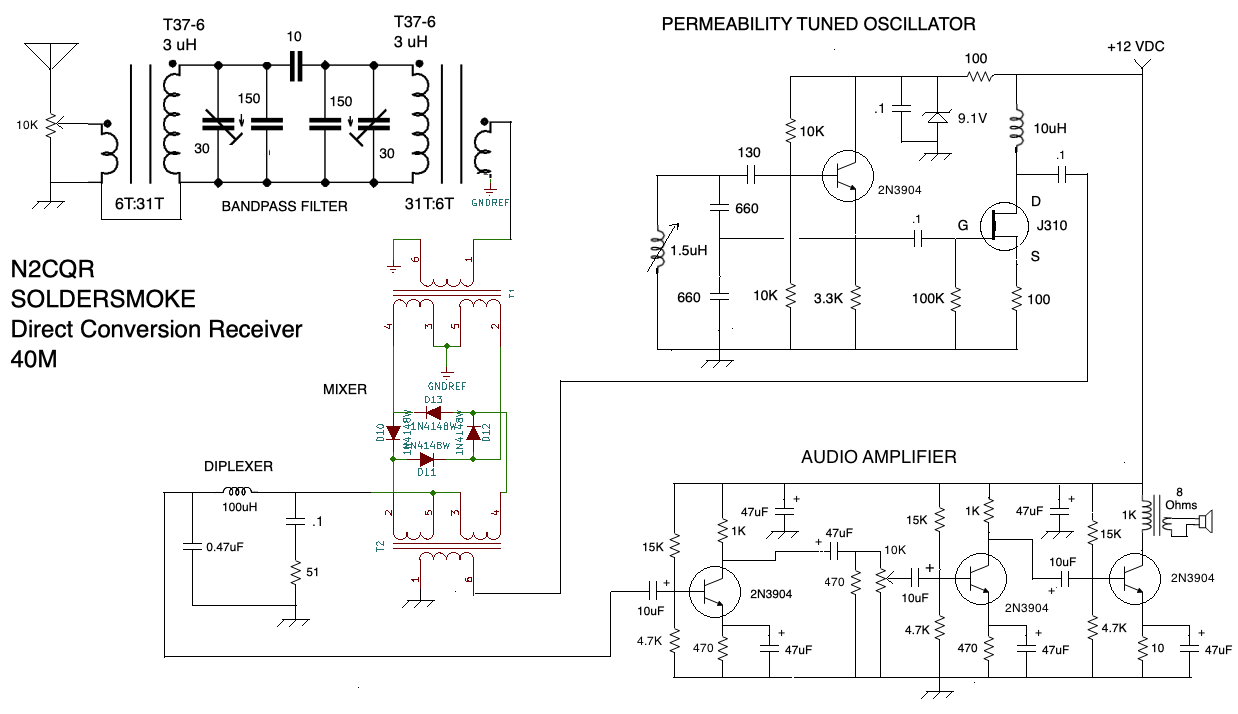
Please build this receiver! But we ask that you build it exactly as per the schematic above and below. Innovation can come later — for now we just want to make sure this thing works, that there are no errors in the schematic, and that it can be built by the students with minimum woe. Thanks in advance!
Dean or others with 3D printers may be able to supply the plastic form for the PTO inductor.
We know of one other builder, but he is having some trouble. We would like to confirm that this design is sound.
——————-
Here is a larger image of the schematic (click for a full view):
The 40 Meter Direct Conversion Receiver We Have Been Working On — Comments Welcome
Here is a larger image of the schematic (click for a full view):
Direct Conversion Receiver — Simple 2-Diode Mixer Defeats Radio Marti, but Diode Ring is the Best
Here is another update on Direct Conversion receiver construction. In Northern Virginia we get very strong signals from the Radio Marti transmitter in Greenville NC. During the morning hours it is just above the 40 meter band at 7335 kHz. In the evening it is a bit higher in frequency at 7435 KHz. (in the video above I mistakenly give the morning frequency, when in fact they were on the higher evening frequency). In either case, Radio Marti has been a big source of unwanted AM breakthrough in our simple DC receivers. It now serves as something of a test of our bandpass filters and mixers.
In this video I try out the simple mixer described in detail here: https://soldersmoke.blogspot.com/2022…
The following morning, I tested the mixer with Radio Marti (in fact) on 7335 kHz. By adjusting the VFO signal input to the minimum value needed to turn on the diodes, I was able to bring Radio Marti AM breakthrough to minimal levels. But I could still hear it (weakly) in the background. Putting a very simple diplexer at the audio output of the mixer (just a .1uF capacitor in series with a 47 ohm resistor to ground) helped a lot.
I could also hear break through from Spanish-language broadcasts from Vatican Radio on 7305 kHz (using the 250 kW transmitter in Greenville NC) from 11:30-11:45. Perhaps most surprisingly, I was also getting AM breakthrough from 40 meter FT8!
Here is a short video showing the simple two-diode mixer in action during the morning hours:
I also tried out the more common two diode mixer with trifilar toroid. (In this one, the VFO turns both diodes on, then turns both of them off). The results were similar to what I got with the other two diode mixer.
We are trying to develop four circuits — bandpass filter, mixer, variable frequency oscillator, and audio amplifier — that will be simple enough for construction by high school students, but not so simple as to compromise performance. We want the receiver to work well.
DC Receiver: 100db Gain? Diplexer? VFO in a box?
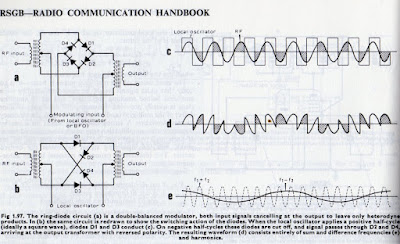
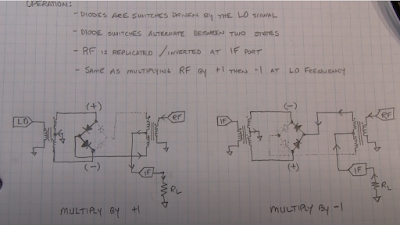
How the Diode Ring Multiplies by 1 and -1 — “The Secrets of the Diode Ring” — Plus another Bandsweep with the DC RX
Adding a Diode Ring to the Direct Conversion Receiver, And How the Diode Ring Works
Update on the Direct Conversion Receiver — Now only 4 transistors
Bandsweep with the New Homebrew 40 meter Direct Conversion Receiver
— The mixer is singly balanced using one trifilar toroid and two diodes. We have found out that even with these three simple devices, there is significant variation in how people connect them to VFO, RF in and audio out. I think we have found the best way to do this: Be sure to put the VFO on the primary of the transformer, and let this signal turn the diodes on and off.
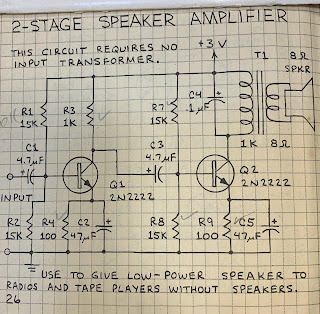
— For the AF amplification, I have one FET, followed by two BJTs. I have a small audio transformer between the speaker and the final AF amp. There is plenty of audio.
You may wonder why, after all the SSB superhet transceivers, I am building a simple Direct Conversion receiver. Well, we hope to help a bunch of high school kids build one, so we need to be really familiar with how it works. And I find that as simple as it is, there is still a lot to learn in a project like this.