This fellow is making good use of older test gear. Very nice.
https://www.youtube.com/watch?v=2LPcLAkhdFE
http://gokarters.com/smf/index.php?topic=2549.0
Category: test gear
Built-in Spectrum Analyzer in Hans Summers’ QSX Rig.
I agree completely with the e-mojis. Wow! Cool! I love it!
Hans Summers is a genius.
This is almost enough to make me get with the program and embrace SDR.
Hans has done what seemed to have been impossible: true homebrew with SDR.
SolderSmoke Podcast #207 — 15 mtrs, 60 mtrs, Giants of Radio, Cubesats, Pete’s rigs, SDR MAILBAG
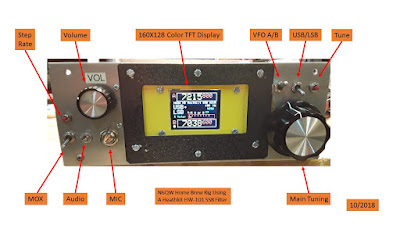
SolderSmoke Podcast #207 is available:
http://soldersmoke.com/soldersmoke207.mp3
— Giants of Radio
— Pete on 15 Meters
— Bill on 60 Meters with the uBITX
— Pete’s Sudden and Heath Filter Transceivers
— Cubesats to orbit! To the moon! And to Mars!
— Bill rebuilds his 2 meter “Ray-Gun” Quad (for Farhan’s Cubesat)
— Homebrewing Variable caps and stockpiling NP0
— My “by ear” Minimal Discernible Signal Technique
— Thoughts on Direct Sampling SDR and the Radio Art
MAILBAG
— A request for feedback from GQRP
— G4WIF reports G3ROO on UK TV with spysets
— VU3XVR builds FB rig from EMRFD
— M0KOV Charter member of the 3 Scratch-built BITX club
–KD4PBJ’s PTO Turtle DC Receiver
— AB1OP builds Pete’s LBS receiver and gives us a new acronym: SITB
— KD4EBM — Thanks for the scanner Bob!
— A possible sponsor from California…
— Pete’s dream neighborhood…
Back to Mr. Carlson’s Lab
I like the Vedolyzer in the wooden box.
Wow. Mr. Carlson’s New Old-Time Radio and Test Gear Lab. VE7ZWZ — Homebrew Hero
It has been a while since we last visited Mr. Carlson’s lab. As always, we found it amazing. The awesomeness just keeps increasing. Previous visits: https://soldersmoke.blogspot.com/search?q=Carlson
As was the case before, this is really almost too much. THREE DX-100s in the shelves. A massive collection of tubes, some sorted, some un-sorted. But don’t worry — Paul has a good memory and remembers where everything is. I believe him.
For his amazing shack and workshop(s) and for his willingness to repair old-time test gear, Paul VE7ZWZ clearly deserves homebrew hero status.
Thanks Paul.
SolderSmoke Podcast #203 Winter, Transceivers, Antennas, DC RX, uBITX, Mixers, ‘fests, MAILBAG
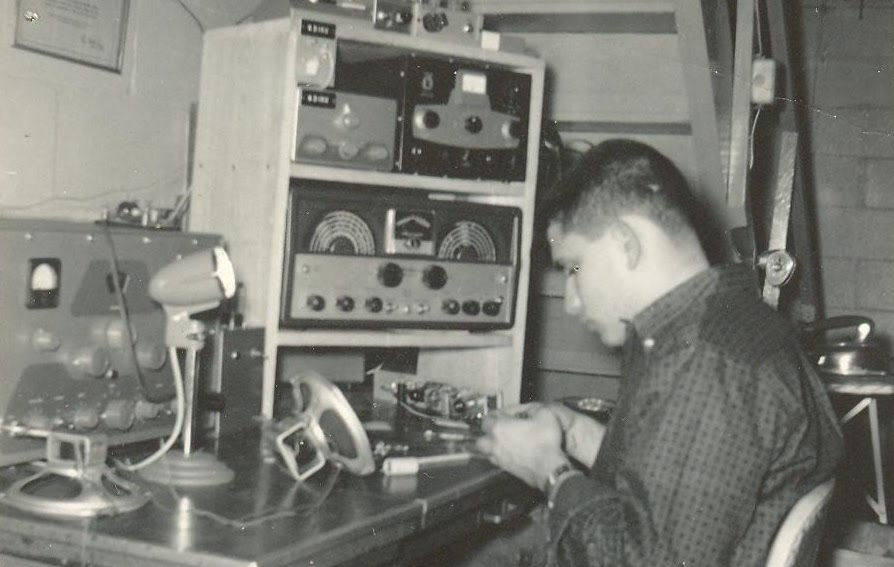 |
| N6QW in 1959. Building an SSB transceiver |
SolderSmoke Pocast #203 is (FINALLY!) available:
http://soldersmoke.com/soldersmoke203.mp3
24 March 2018
–The reasons for our delay.
Winter, Computers, College, Family Trees, Lawyers….
— Winterfest 2018
— Pete launches 2018 THE YEAR OF THE TRANSCEIVER
http://n6qw.blogspot.com/
— SDR – Satan’s Digital Radio?
— Direct Conversion Receiver Projects
— Mixer Musings
— A Thailand Troubleshoot
— Nor’Easter knocks out Bill’s Moxon — An appliance replacement?
— Homebrew Electret Mics. Seriously.
— uBITX Build with Rogier
— Civilized Crystal Testing
— Baofeng!
— DRAGNET
— MAILBAG
KD4PBJ’s REGEN
N6ORS’s SDR rig
Mike Rainey’s DX-100
Great Video on Crystal Motional Parameter Measurement
Who out there can save us from further Dishal distress? Who has one of these fantastic bits of old test gear and is willing to donate it to the cause of accurate filter building?
Thanks to Tore LB4RG for alerting us to this gem.
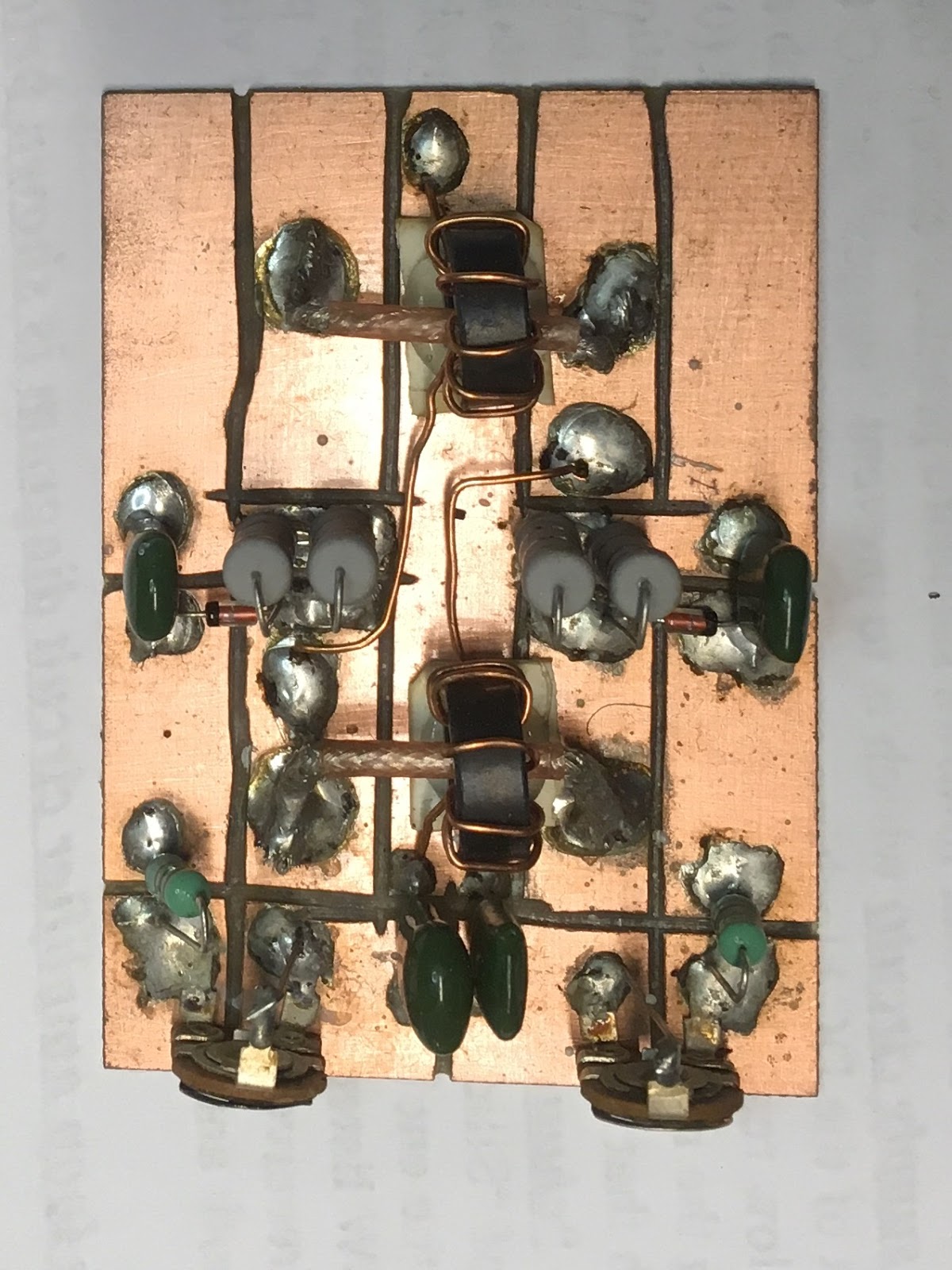
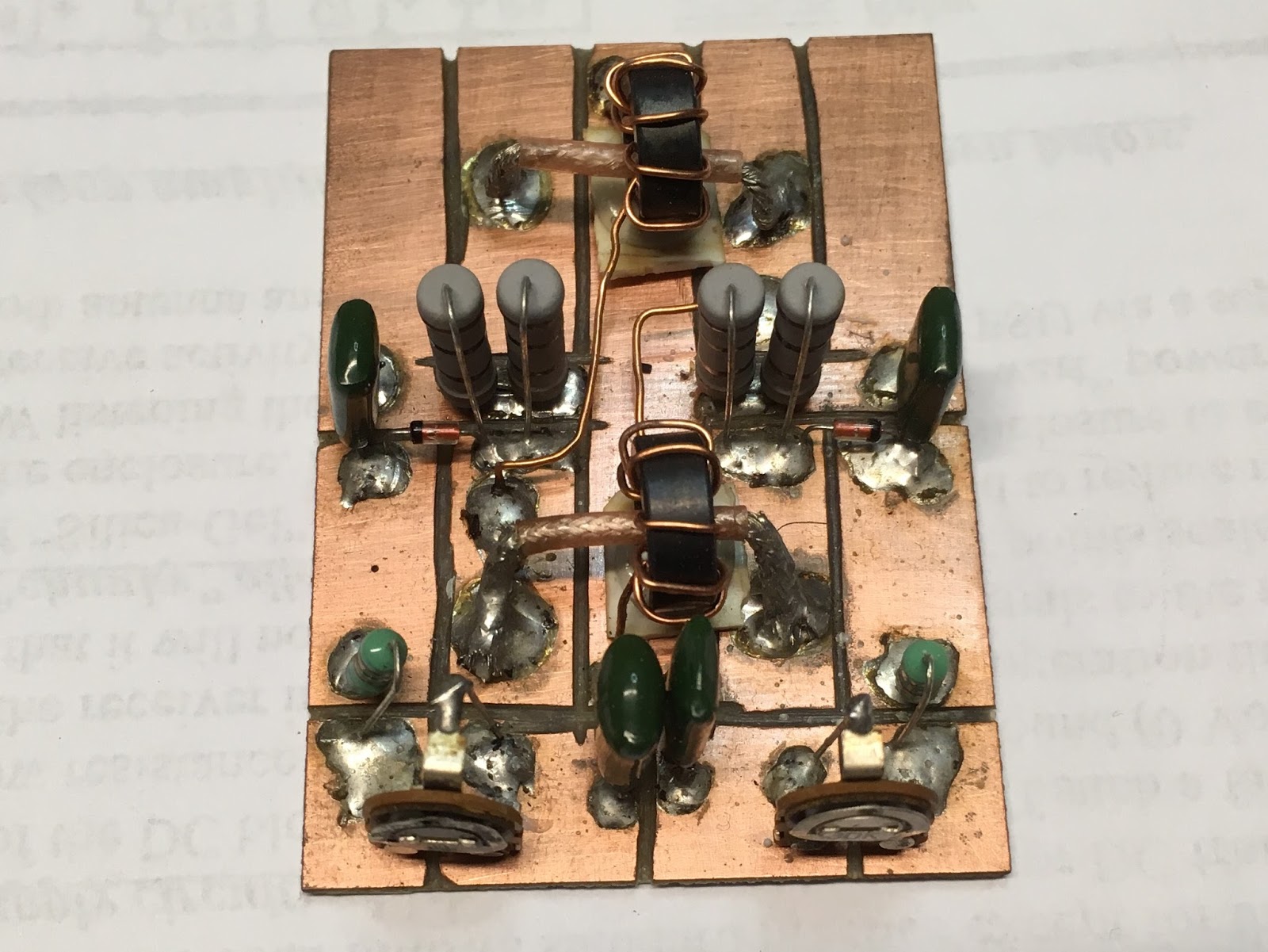
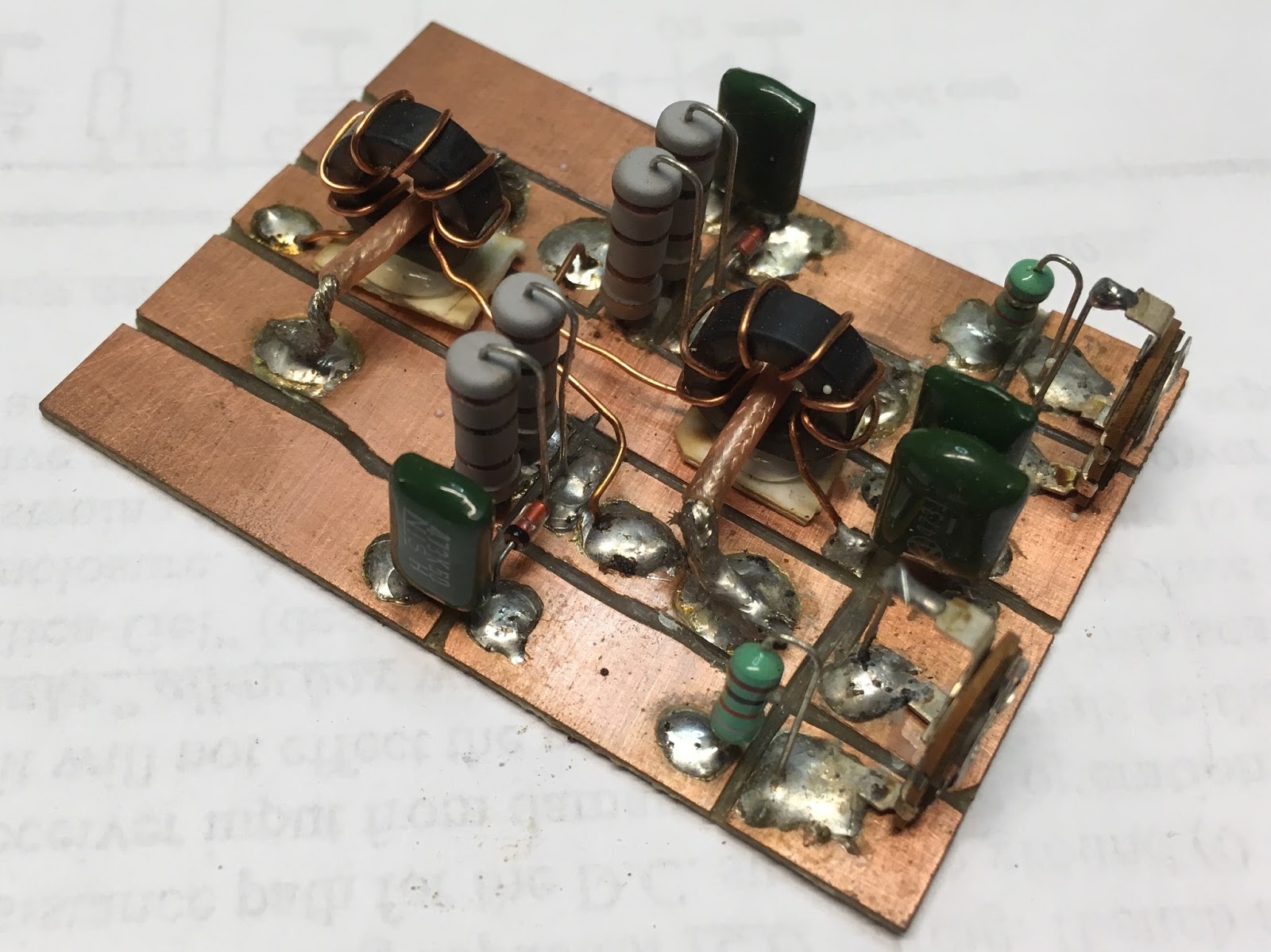
Soldering Fingers (and SWR Bridges) in Norway
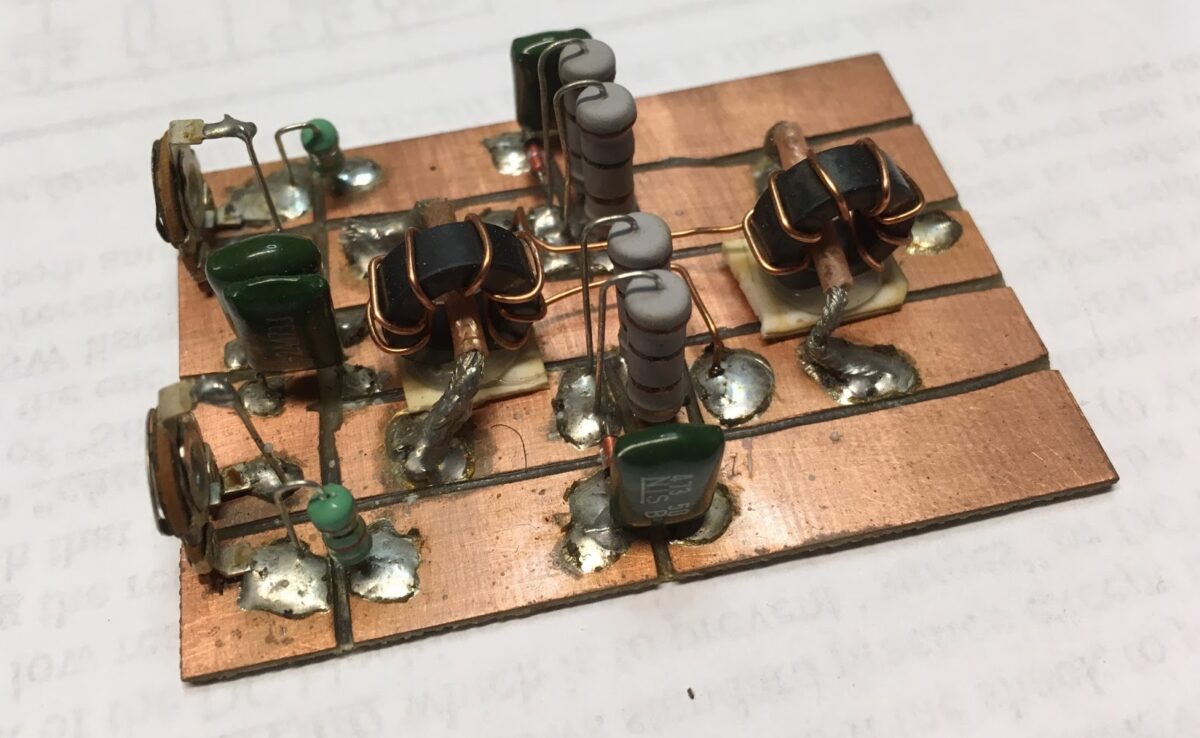
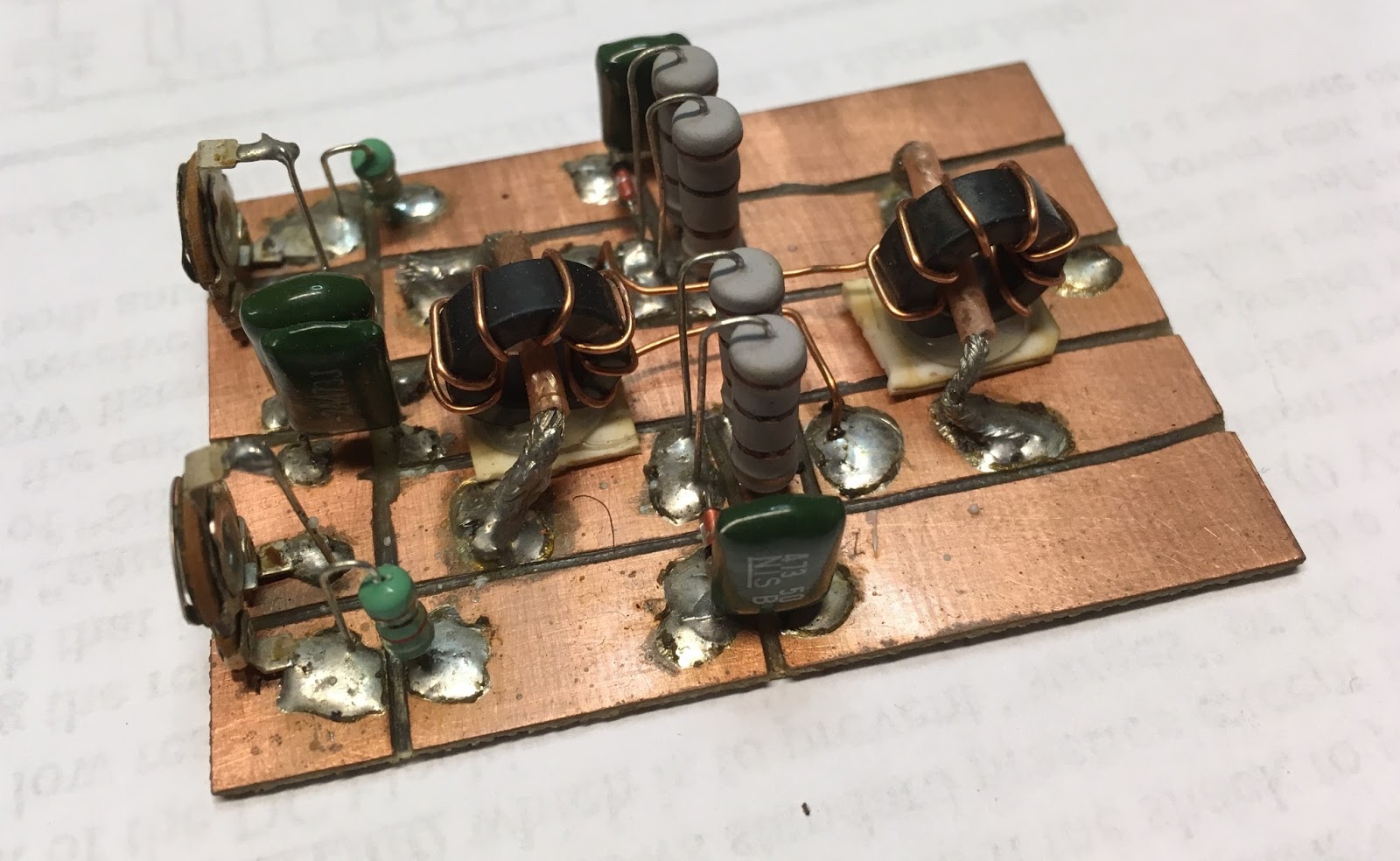
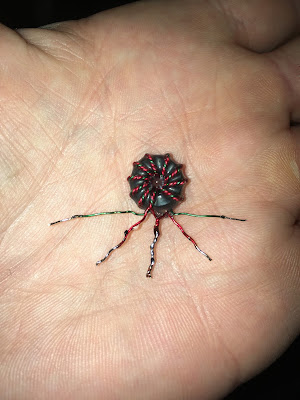
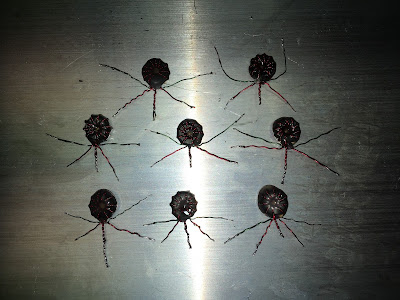
Tore Bonderudtåjet LB4RG tells us that he is a SolderSmoke listener, and that the old tradition of hams soldering their fingers together continues to be practiced in Norway. Here are some pictures of his latest efforts. This is an SWR bridge project. Thanks Tore! Careful with the fingers OM!
Jeff Damm WA7MLH on QSO Today
Happy New Year!
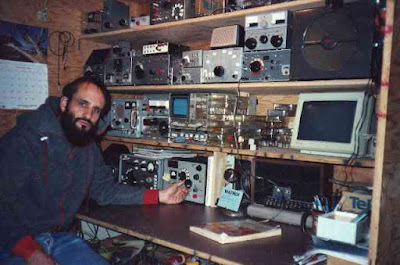
There was so much wisdom and tribal knowledge in Eric Guth’s interview with Jeff Damm WA7MLH. It was almost overwhelming.
You should all listen to it. Twice. At least twice:
https://www.qsotoday.com/podcasts/WA7MLH
My notes:
— I sympathize with Jeff’s decision to go solid state and give up on high voltage after an encounter with an undischarged 600 volt capacitor.
— I really like the 1700 kHz IF with a 5 MHz VFO for an 80 and 40 meter receiver.
— Interesting that EE degree didn’t help much in his efforts to understand ham gear. Better to read Wes’s books and Doug’s.
— Tek Spectrum Analyzers were specially made to fit down a submarine hatch.
— Building and measuring just as important as studying the theory. Inked-up text books.
— Learned ugly from Wes as a teenager.
–Searched for old commercial gear to gut and use as homes for homebrew solid state gear. The enclosures, panels and controls are very useful. Great way to avoid metal work. These rigs are no longer boatanchors! Again, I sympathize. I’ve sacrificed many Heath Lunchboxes and QF-1s.
— Jeff Builds the VFO first. My preference too. But he understands Pete’s AF-first approach.
— Finger on the input of the AF amp! Buzz! Yea! Step your way back to the front end.
— ALWAYS one stage at a time.
— Osh Park Boards for standard circuit modules. Like Legos.
— Cubic Feet of air variables. Jeff has a lifetime stash.
–Thinking about what was and should have been his section of EMRFD. Go for it Jeff. PLEASE!
— Hesistant about chips. Analog guy. Would have been a huge time sink. Analog guy.
— Buying parts on e-bay. Fewer and fewer RF parts at hamfests.
— People reading QST Tech Articles for entertainment. Editor apprach: “Nobody will build it anyway.” Handbooks giving priority to entertainment and less to information and education.

K.P.S. Kang’s Speech Processor and Antenna Tuner for the BITX (and other rigs)

Check out the blog of homebrew wizard K.P.S. Kang. OM has a nice speech processor based on the LM386. He also has a very simple antenna tuner and SWR bridge. FB OM.
http://smallwonderqrp.blogspot.com/2017/08/two-essential-add-ons-for-bitx-and.html
Dino’s FB W1FB Crystal Tester
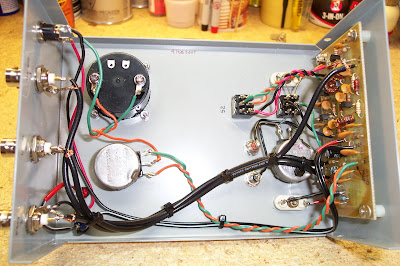

A couple of weeks ago I noted that the complexity of DeMaw’s circuit caused many of us to wimp out on this test gear project. I joked that those who had built the device might be able to set up small businesses to do the testing for the rest of us. Perhaps our friend Dino can cut a deal with G7WKE to divide up the world market for crystal testing: Dino could have the Western Hemisphere while Rob covers Europe and points East.
Bill –
Enjoyed seeing someone else who has built Doug’s crystal tester on the blog. Here’s mine, built this back in early 2007. Anyone who wants to duplicate the tester can find the article in the January 1990 issue of QST or the updated article in the W1FB Design Notebook (page 192). Note that the QST article has a missing component value and a missing component (both corrected in the Design Notebook):
(1) R24 is missing its value – it’s marked in the Notebook as 56 ohms.
(2) There should be a 220 ohm resistor connected between the output pin of U2 the LM317T regulator and the top of R1 the voltage adjust pot that is connected between U2’s adjust pin and ground [corrected in the March 1990 QST Feedback column].
I built a FT-243 adapter to let me work with larger crystals.
73 – Dino KL0S


G7WKE’s Crystal Tester
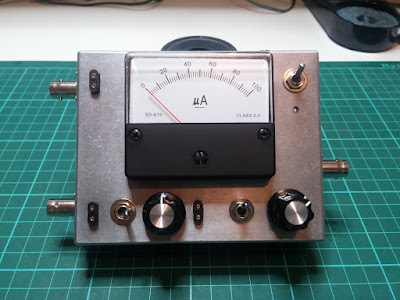

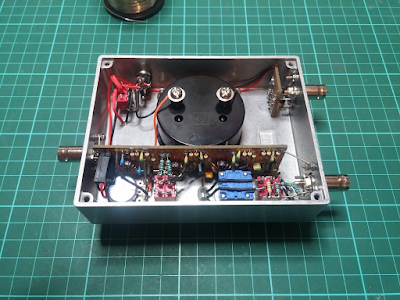
Wow, this is an example of dedication to the cause. I think many of us wimped out when confronted with the complex circuitry of the test device prescribed by DeMaw, but Rob G7WKE actually built the thing, and did a great job on it. I’m tempted to suggest that Rob might want to set up a small business leasing this rig out to less dedicated filter builders. Or perhaps he could have batches of crystals sent to him for DeMaw-ian analysis.
Hi Bill,
After listening to you and Pete discussing crystal filter design during SolderSmoke 197, I thought you might be interested in my latest project.
This is the Crystal Tester from January 1990 QST that is reprinted in W1FB’s Design Notebook, which I believe is the circuit you and Pete were referring to.
It all appears to function as it should, so the next step is to sit down quietly with a pile of crystals and hopefully start along the road to a working filter!
73s
Rob G7WKE.
SolderSmoke Podcast #197: Farhan, Fame, ‘Fest, Testgear, SSB History, Dishal Dystopia, QRP CW, MAILBAG
SolderSmoke Podcast #197 is available:
Up in NYC, met Dave W2DAB. got Steve Silverman’s HP 8640B Sig Gen.
Farhan’s visit to SolderSmoke HQ
Got me a TEK1401A Spectrum analyzer
Farhan at “Geekfest” @W7ZOI http://w7zoi.net/Farhan-visit.
BITX40 Modules. 5,000 already. 1,000 a month.
The BITX pronunciation problem.
QRP Hall of Fame. I suspected April 1 reprisal! “I am unworthy”
Like in Wayne’s World: https://www.youtube.com/watch?
Dusting off my Tuna Tin 2, Herring Aid 5 and Farhan’s key from India.
The Manassas Hamfest: OLD crystal gear. 20’s and 30’s stuff. Leon Lambert RX and Philmore Fixed Crystal Detector.
Reminder of how YOUNG the radio art is.
RELATED: Bell System 1953 Transistor Documentary. 11 year old Pete and his CK722.
Bought some good stuff from Charles AI4OT.
Armand WA1UQO gave me a big collection of Electric Radio. So much history and HB wisdom in there. Frank Jones and Lafayette Radio. Jim Lamb and 1930s SSB.
Is the CK-722 the source of Pete Juliano’s affinity for Juliano Blue?
Was Wes Hayward already using Juliano Blue?
“Your rig sounds real good for a homebrew rig!”
“Well, your rig sounds pretty good for a Yaesu!”
Related topic: Going over the Waterfall: The SDR Superiority Syndrome. Feathering.
ARRL Arduino Book by Popiel. Very nice. Right level. Lots of good info.
BENCH REPORT:
Pete’s Dishal Dystopia — Is the perfect TRULY the enemy of the good enough?
Bill’s NE602 RIG:
Replaced OLED. Blue one seems noisier. Shielded it with copper flashing.
Made me yearn for bigger boxes WITH A HOOD!
DOCUMENTING WITH LTSPICE
MAILBAG:
Special Thanks to our correspondent in the Dayton Xenia Metropolitan area — Bob Crane W8SX.
Jack Welch, AI4SV 5R8SV — Our Man in Antanarivo — Sent me a GREAT BOOK “I, Libertine” by Frederick R. Ewing. EXCELSIOR!
Bruce KC1FSZ https://www.qrz.com/db/
Greg, VK1VXG Suggestion for WA8WDQ on Arduino serial plotter
Ben KC9DLM Mercury PTO. In a syringe! No thanks! Maybe add some high voltage and selenium. And a radium dial! Yea!
KY3R’s metalized cigar boxes! FB On Blog.
Richard WB2PEF has revived his Doug DeMaw 8P6 rig. FB. But bothered by PTT thump.
Update on Dave AA7EE (from Mike KC6SAX)
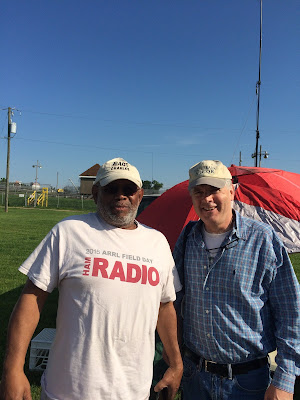 |
| AI4OT and N2CQR |
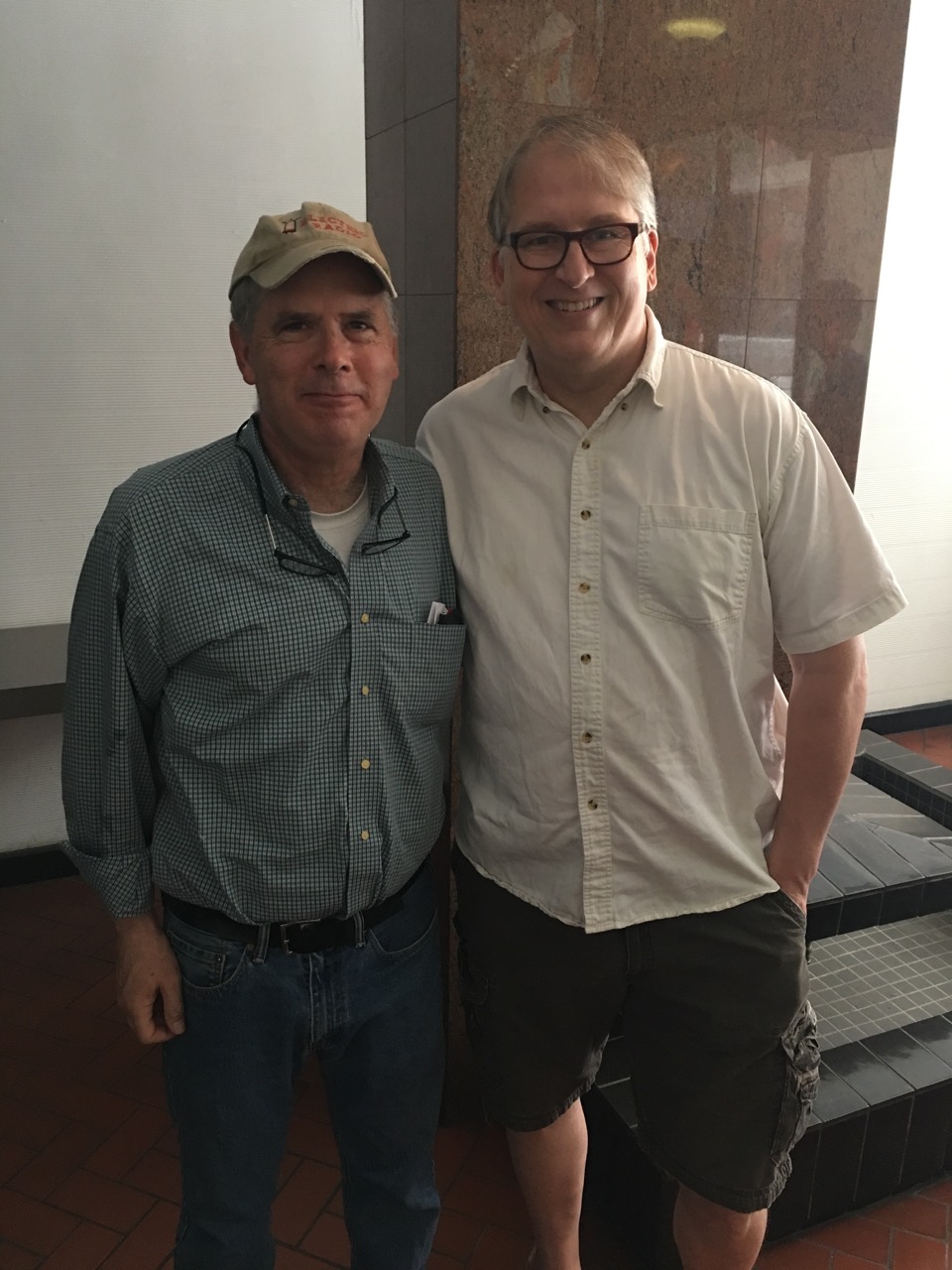 |
| N2CQR AND W2DAB |
Farhan gives me a Spectrum Analyzer and W2AEW Provides the Tutorial (Video)
At Dayton, Farhan very kindly bought me a Tektronix Spectrum Analyzer. (I joked during his visit that this device might help me stay in the good graces of the FCC.) This morning I decided to learn more about this device. I Googled “Tek 1401A” and was immediately directed to a YouTube tutorial. I was pleased to see that it was from our old friend Alan Wolke W2AEW. I knew that the Tek analyzer and I were in good hands. TRGHS. Alan expertly laid out the functions of the device. I am confident that I will soon be analyzing the spectrum of my homebrew rigs, and that they will all be found COMPLETELY FREE of spurious emissions.
Alan’s tutorial is instructive for all those getting started with spectrum analyzers.
I need to find a manual and schematic for the 1410A.
Thanks Farhan. Thanks Alan. And three cheers for Beaverton, Oregon!
Homebrew Peppermint BITX: KC1FSZ Goes Scratch-built and Sweeps a Filter
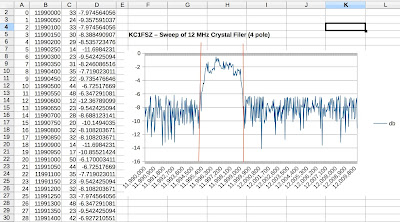

Hi Bill/Pete:
Congratulations to Bill on the award. Very well deserved!
I just watched the video that Bill made with Farhan and I really enjoyed it. As usual, lots of useful information there.
Farhan’s demo of the Sweeperino was particularly timely because this past weekend I was doing something very similar.
As I’ve mentioned to Bill before, I am working on a scratch-built BITX to accompany the Peppermint BITX-40 module rig that I’m running right now. I took Pete’s advice and started from the audio end. After building the audio amplifier, product detector, and first/last pair of IF amplifiers, I was able to connect the VFO where the BFO is supposed to go and enjoy a pretty reasonable direct conversion receiver. It works great!! My first working receiver.
So my next step was the crystal filter. I puzzled over all of the different articles, tried to follow the G3UUR method, sorted crystals, etc. and finally put the whole thing together. But all along I’ve had this doubt that I could have possibly followed all of the steps closely enough to achieve the precision needed for a 3.5 KC SSB filter – it just didn’t seem possible.
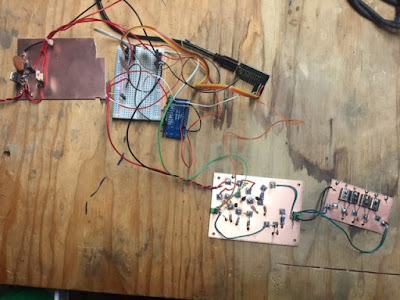
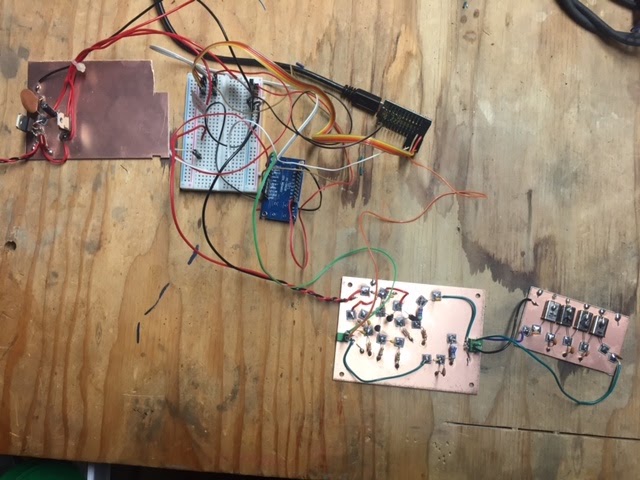
Last week I decided to try to “sweep” the filter. This was a multi-day undertaking in itself. I pieced together the microprocessor, an AD9850, a TIA amplifier, the RF power detector from the SSDRA book, and some software that generates the necessary frequency sweep and collects power readings. The picture of the test rig is included below. It’s not much to look at.
With low expectations (and wires that are too long), I ran a few seeps and then downloaded the data onto my computer for analysis. No fancy software here, I’m just using Excel. When I put the data into a line chart in Excel, what emerged from the jumble of seemingly random numbers was a thing of beauty: a 3.5 KC passband right below 12 MHz. It’s the next stage beyond the Joy of Oscillation: The Joy Of Selectivity!
It’s even showing about the right insertion loss. Note the setup is very primitive and noisy so the fact that I can’t measure anything below -8dB isn’t surprising, you can ignore that part.
But I’m starting to get the feeling that this might actually work. Onto the diode mixer …
73s,
Bruce KC1FSZ https://www.qrz.com/db/kc1fsz
Video: Farhan in the SolderSmoke Shack! BITX, JBOTS, McDonald Straw Sig Gen, uBITX, Sweperino and more!
Thanks again to Farhan for visiting us. It was great to see his reaction to my humble implementations of his great designs. I got him to sign my BITX17. This was really a fantastic day for me and for my family.
ND6T’s Very Cool Power Meter (and drawing)
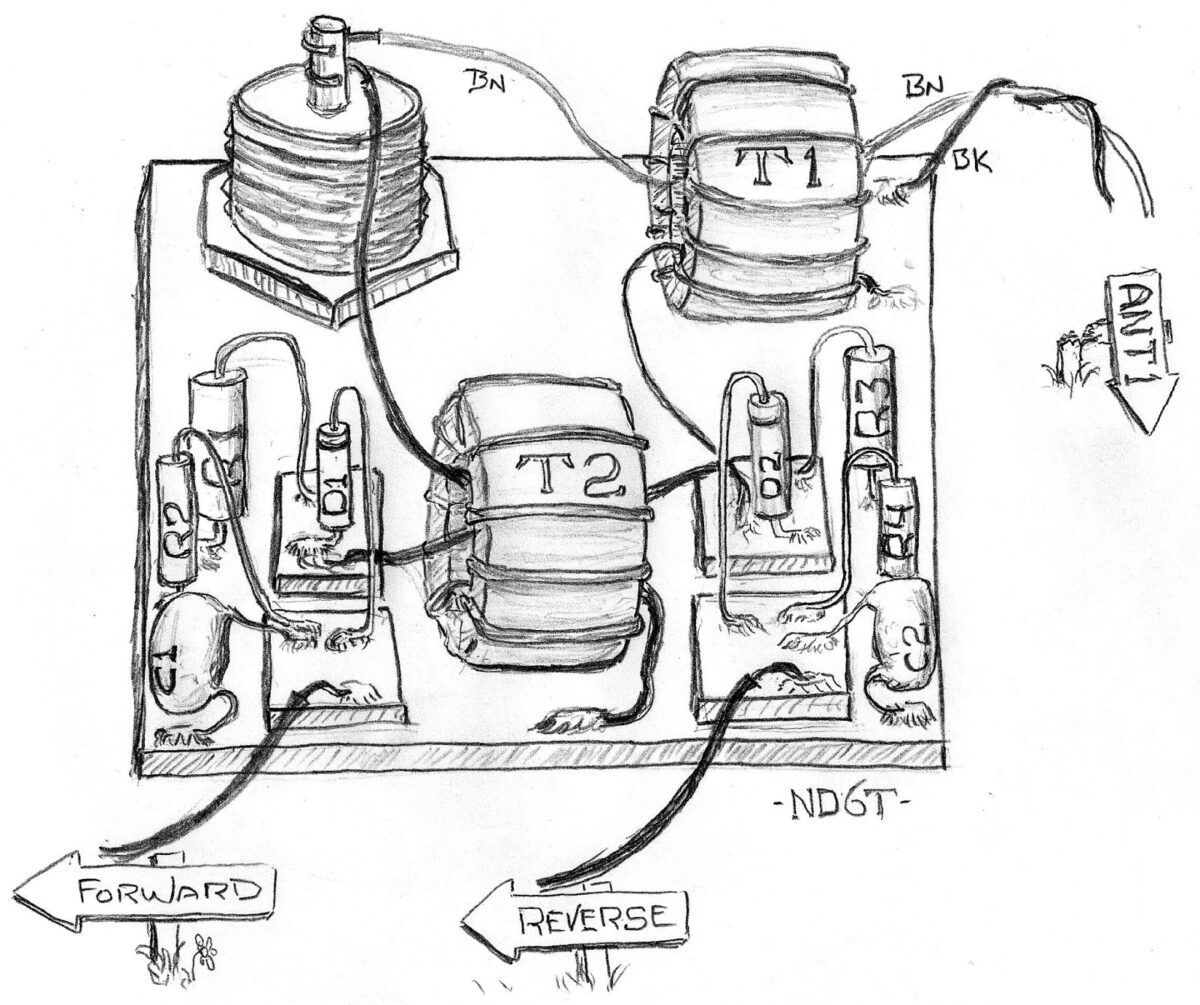
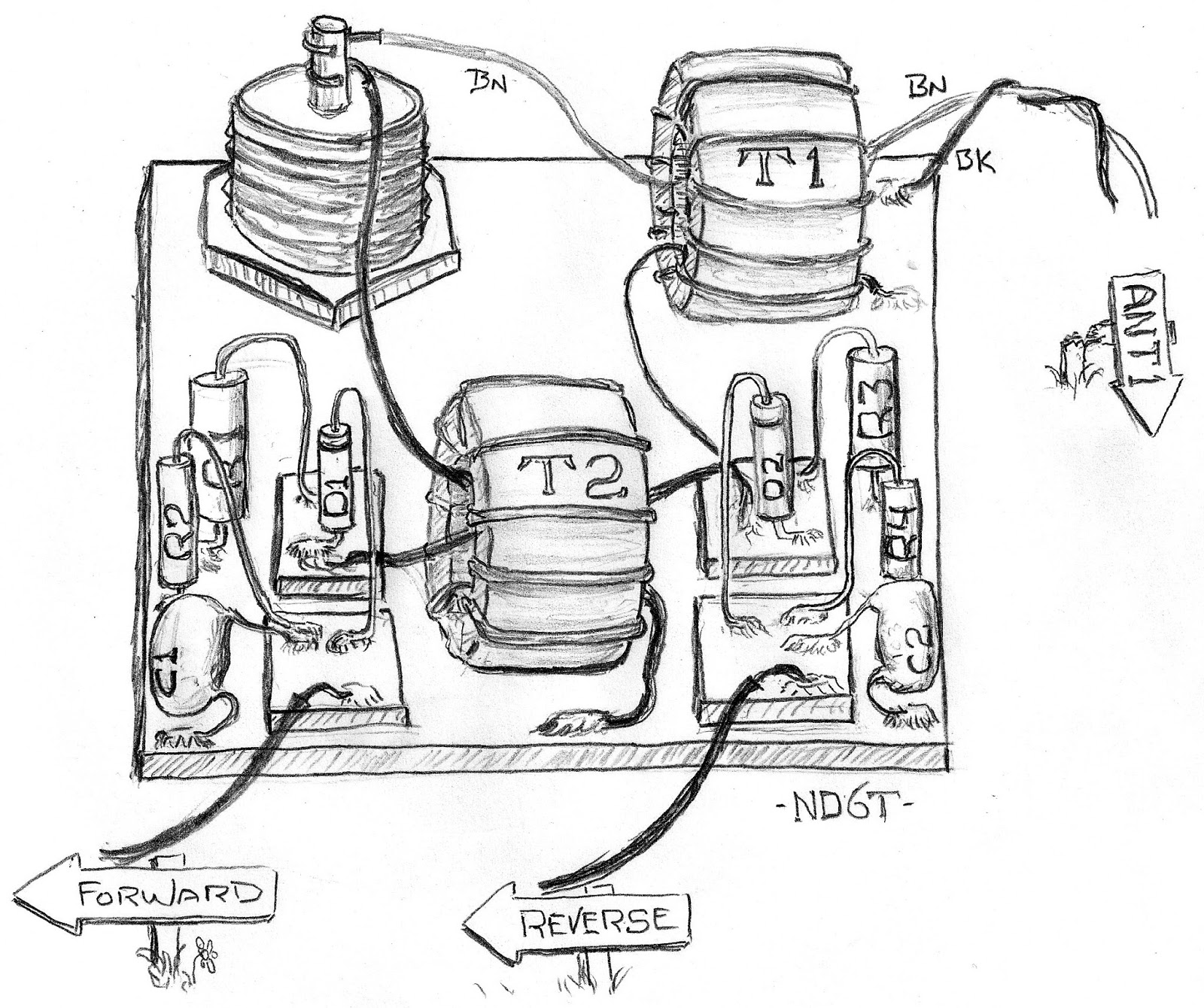
Don’s drawing is so good, I just couldn’t resist posting it here. It is part of an article he did for the BITXHACKS blog describing how to add a Stockton bridge forward/reverse power meter circuit to your rig. Check it out:
http://bitxhacks.blogspot.com/2017/03/nd6ts-forward-and-reverse-power-meter.html
Ken G4IIB’s BITX Journey
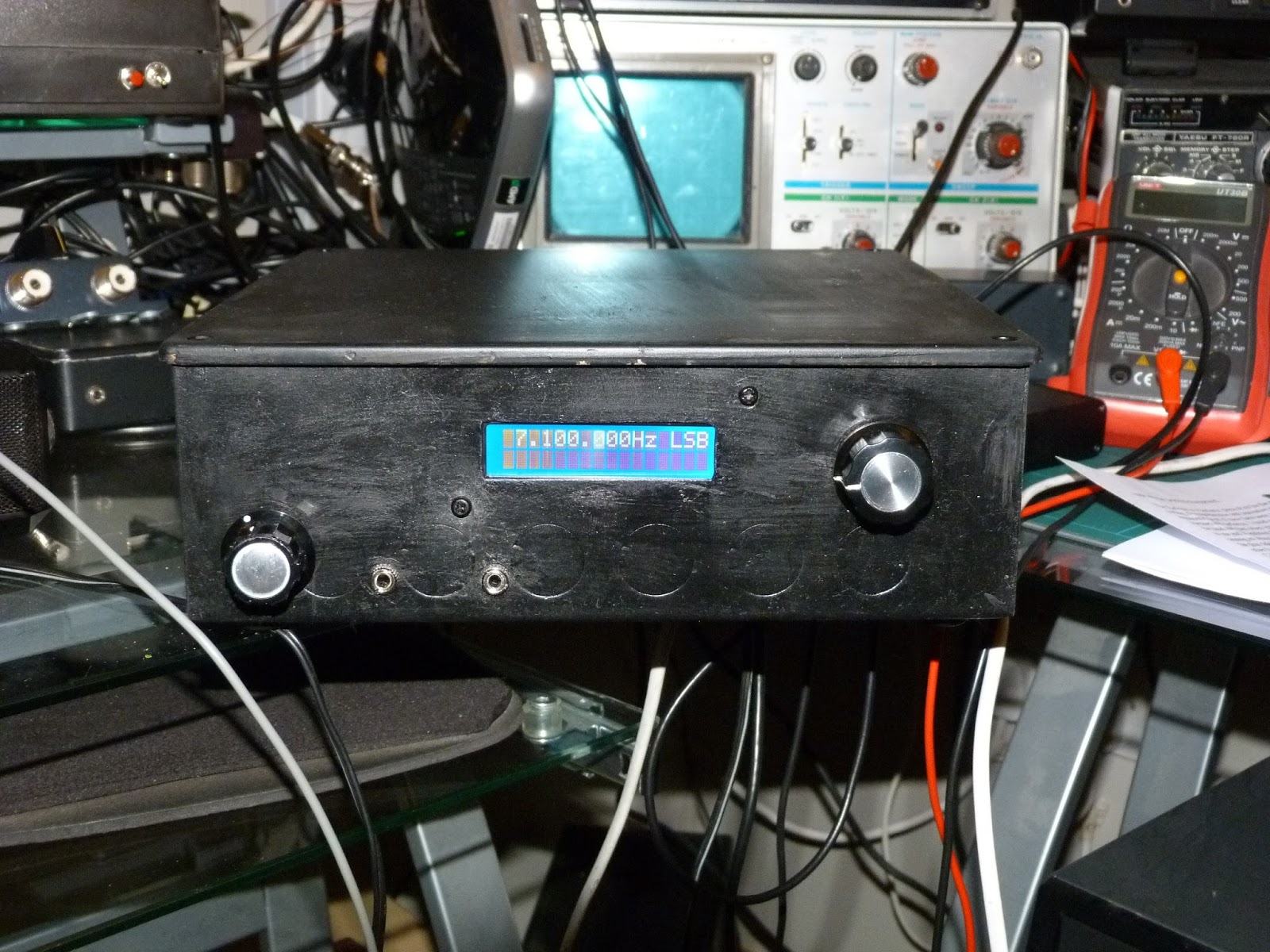
The work of Ken G4IIB has been on this blog before — he helped many of us make use of the amazing RTL-SDR Dongle SDR receivers. He has recently turned his attention to the BITX40 Module and offers some great ideas for testing and for modification. Ken’s description of the smoothness of his audio adds a very evocative term to the SolderSmoke Enhanced SSB lexicon.
Hi Bill, Pete
Many thanks for your respective responses to my plea for help in setting up SI5351 derived BFO to my BITX40 board. You were both on the money.
Pete suggested that I had too much gain in my HB amplifier from the SI5351 output to the modulator and indeed that proved to be true. Once sorted I also noted that I was getting extra hiss on switching to one of the sidebands as you pointed out Bill this proved to be due to incorrect placement of that particular BFO frequency.
These BITX40 boards that Ash Farhan has developed and released to the world wide community of Radio Amateurs are worth every penny. Because they are so hackable (not just the circuitry but now the Raduino code also) it means that you can tailor it to your specific specification and in the process you are likely to learn new stuff and make new friends. I describe my BITX40 incarnation and experiences below:
Upon first firing up the BITX I was getting quite a lot of mains hum from my PSU’s (I thought that at least one of these PSU’s was a quality item) but obviously not up to the job. I constructed a simple one transistor capacitor multiplier (this converted a humble 1000uF cap into a 1F cap) and the noise magically disappeared. By coincidence I note that Bill discussed this technique in a recent pod cast. Another advantage of this technique was that I got a 2V drop across the transistor so by running this on 13.8V I get 12V out so I run the PA section on un-smoothed 13.8V (this gives me 12 watts of RF out) and run the receiver section on the smoothed 12V output from the multiplier, happy days.
My thoughts were to turn my BITX into a multi band (several bands rather than all bands) rig and I figured that using high side mixing (running the VFO at 19Mhz (12Mhz + 7 Mhz) rather than the existing low side mixing (12Mhz – 7Mhz=5Mhz VFO)) would be a better option. For example running it on 17M would mean using high side VFO anyway. I also wanted the ability to be able to switch sidebands especially on the lower frequencies so that I could use the rig for Digital modes in my case this was to be achieved by coding the Arduino to run a BFO on one of the SI5351’s clk ports.
I bought my BITX prior to the release of the Raduino so I had already commenced (with the aid of a new found radio friend and RF mentor) coding an Arduino VFO/BFO using a UNO and SI5351. Like I said at the beginning once you let folk know that you are starting on a new and interesting project you start to engage the more practical members of the ham community and they just want to get involved and help. Yet another good reason to buy a BITX . We used code originally developed by Jason Mildrum NT7S and Przemek Sadowski SQ9NJE and tailored it to suit the BITX40 and our requirements. This include high side VFO with frequency step adjustment and a BFO with long push BFO changeover. This meant that my BITX front panel should stay very minimalistic 2 knobs.
Getting the VFO to work was simple as the DDS socket was used and to better accommodate the high side VFO I modified the board by tombstoning caps C91 & C92.
Getting the BFO to work proved to be more problematic I was troubled with hiss and other noise. Words of wisdom from Pete Juliano when asked if I was doing something wrong were: ” No –it is just that we tend to think our projects are like Lego type building blocks where everything mates and snaps together. Sometimes more is required”. True Pete and that gives us the opportunity to learn new stuff!
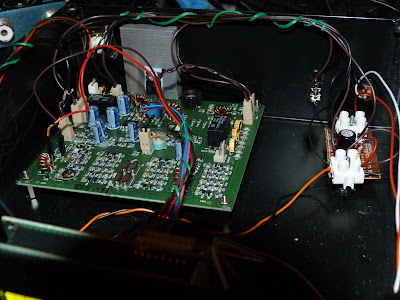
To cut a long story short I found that the best place to connect the BFO was on the modulation transformer T4 thus bypassing the BITX BFO stage altogether. I was also getting hash noise believed to be emanating from the Uno. At this stage my after market Raduino arrived from India. I fired this up and noticed that I was not getting any hash noise from it. This pointed us to a coding problem and the LCD refresh was altered on our code and the problem disappeared. Below a picture of the module showing the BFO connections to T4 and the large heat-sink with the IRF510 insulated from it. Also shown is the capacitor multiplier and a glimpse of the Raduino in the foreground. Not the most elegant box but this is likely to change pending further refinements. It’s still work in progress and this box gives me plenty of room.
The Raduino is a fantastic piece of kit for the money extremely neat and well thought out. The coding is comprehensive and innovative and works well. However, from an aesthetic and ergonomic point of view there were a few things that I personally did not like in terms of how it operates and performs. I could not get away with the potentiometer tuning, you can tune 50Khz of the band and then when you near the pot edge it increments/decrements and you can re-tune. I found this clunky to use and in addition the Raduino would hunt causing the last digit to increment then decrement causing an annoying warble on audio. In my opinion a Rotary Encoder would be better solution. On the plus side, although not mentioned on the Hfsigs web site the Raduino code does come with other functions such as changing sidebands by temporary high siding the mixer, a RIT, VFO B and CW tone. If you download and read the Raduino code from Github you will see this extra functionality which I believe you can make use of via extra switches (not supplied). The current Raduino code does not have any external BFO options as said it relies on the crystal BFO and temporally high siding the VFO to change from LSB to USB on 7Mhz.
The Raduino module itself is just too good and neat not to use. As I did not have the where for all to fully understand and amend Ash’s code I decided to use the Raduino but to load it with the code that we have developed for he Uno and Addafruit SI5351 board. This would give me near conventional tuning via a rotary encoder, adjustable step sizes via quick push of the encoder switch and USB/ LSB switching via long push of the encoder switch by virtue of the SI5351 generating the BFO frequency. I have retained a copy of Ash’s Raduino code just in case I wish to revert to it. I put a new header on the Raduino P3 connector so that I could connect a rotary encoder and use the 2nd clock output and then changed our code to run on a Nano. I had to add a correction factor in the code to cater for calibration differences in the SI5351’s (in my case 1.21Khz).
As previously indicated I had a little trouble arriving at the correct BFO frequencies I found that 119940 and 119970 gave me LSB and USB respectively for my high side VFO (19Mhz) if you use low side VFO (5Mhz) then these would be reversed. We further refined these frequencies by injecting white noise into the mic amp and looked at each transmitted sideband on my RTL-SDR dongle via HDSDR (a useful piece of test equipment). By adjusting the carrier trimmer to show the carrier in the extended HDSDR spectrum display we could see how much to move the BFO frequency to best occupy the crystal filter pass band, see image below. This frequency adjustment being achieved by a coding change. The frequencies I consolidated on to cater for my particular crystal filter are 119941 LSB and 119969 USB. We then nulled the carrier back out. My audio is now as smooth as a maiden’s inner thigh, trust me the image will follow!
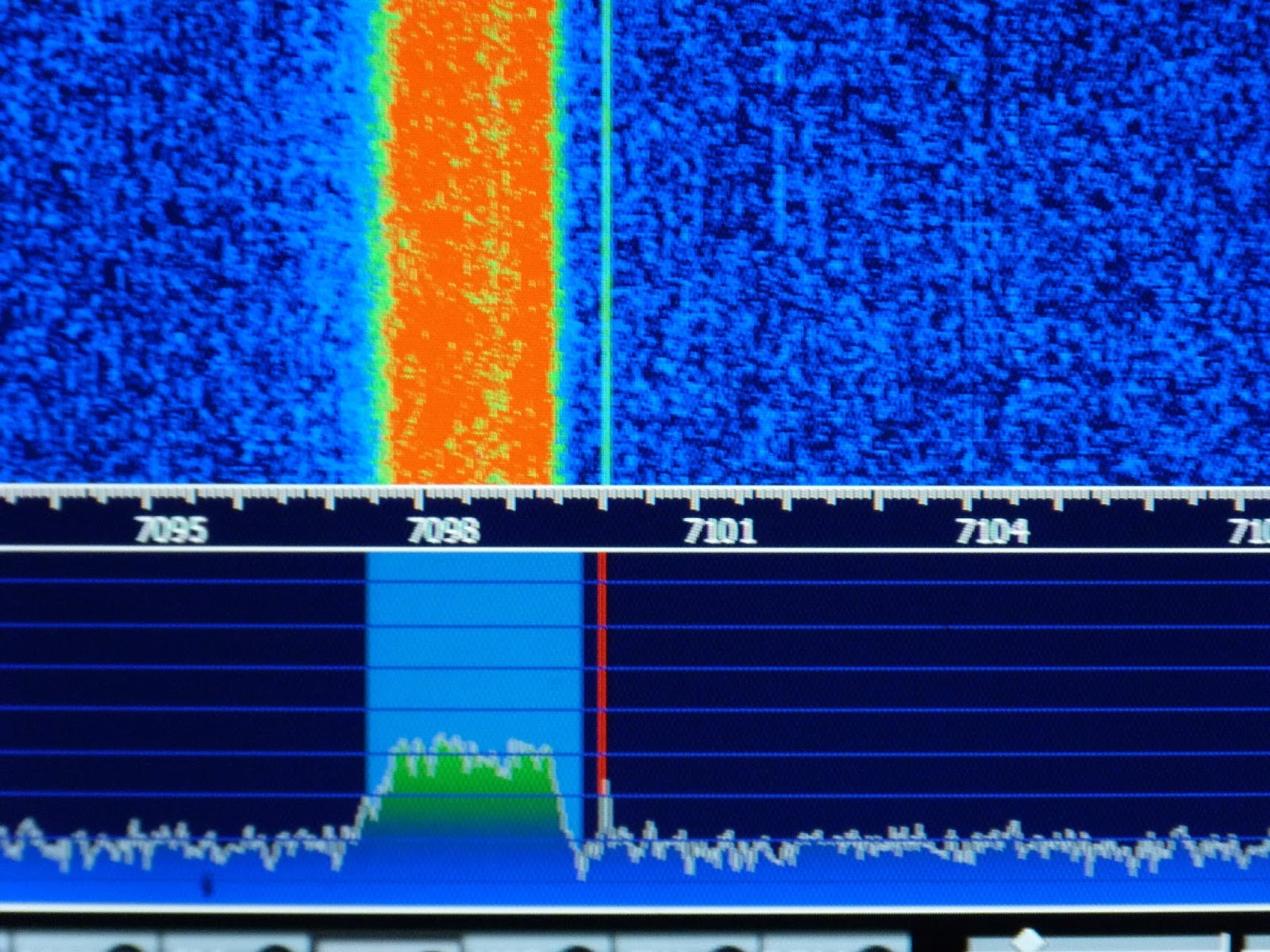
So now I can get on and build an AGC and think about some sort of S meter. As for putting the BITX on other bands, whilst I now have a VFO capable of going anywhere, I would need to address band pass and low pass filter and switching arrangements. I may still experiment with this but, as pointed out by Ash in a recent pod-cast, the BITX single superhet design is not best suited to multi band operation but can be quite easily changed to operate on another single band. He also indicated that he was developing a dual superhet with consideration for multi band operation. Once released this might be a better option for multi-band use.
In the mean time folk should just get a BITX40, hack it to bits and share with us their customised versions.
Ken G4IIB
Oz Tektronix ‘Scope Repair (in Juliano Blue)
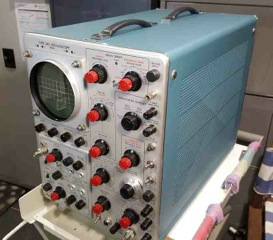
Rob is a braver ham than I. When my Tek 465 quit, I tried to fix it, but quickly chickened out.
Very nice that he painted his in Juliano Blue.
Dear Bill and Pete,
I do enjoy your podcast, and I must present an offering to the “Gods of Homebrew”,
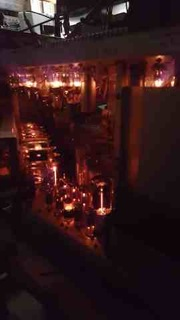
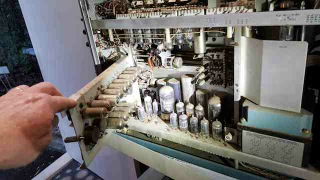
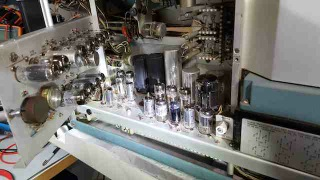
An on-line find of an old Tek 545 oscilloscope presented a chance to enjoy the warmth of 100+ tubes (once repaired)
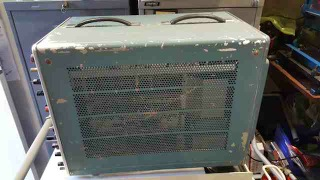
The outside was heavily scratched, the inside looked like a chicken coup, but no major bits missing or broken.
Lots of cleaning, testing all tubes,(using the excellent uTracer tube tracer), replacing the broken 3, remounting the cooling fan, lots of reading about tube oscilloscopes, adjusting the trigger circuit, rebuilding 3 electrolytic power supply capacitors, sandblasting the cabinet and a coat of BLUE paint.
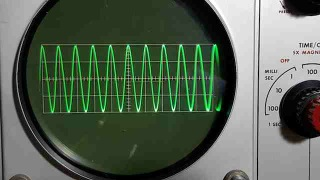
Voila, the joy of (visual) oscillation! (1MHz 2V p-p)
Rob VK5RC
The Invention of the Reflectometer: Naval Research Lab Report #3538
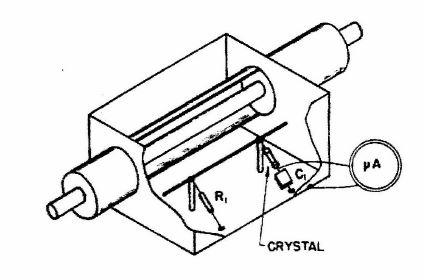
Dennis Klipa N8ERF has been doing great work exploring the technical intricacies of the humble SWR meter (and believe me, there are intricacies). He’s also been looking at the history of this invention.
This summer, Dennis and I came across the April 1964 issue of Popular Electronics. On pages 74 and 75 of that issue we found a clue that seemed to point to the origins of the device: the article referred to Naval Research Lab Report #3538 by O. Norgorden, published on September 15, 1949. This may be the paper that led to the widespread use of SWR meters by radio amateurs.
Surprisingly, this important paper was not to be found on the internet. Exhibiting an admirable dedication to the preservation of an important element of the radio art, Dennis wrote to Naval Research Lab and purchased from them a copy of the report. Unfortunately, the version Dennis got had been copied and recopied so many times that it was hard to read. So he went the extra mile and re-typed it.
With his permission, I am giving this article its internet debut by posting it here:
http://soldersmoke.com/SWR N8ERF.pdf
Three cheers for Dennis Klipa for unearthing this important piece of radio history.