Category: test gear
Alan Wolke W2AEW on IMD, NanoVNA and more (presentation to UK club)
This video is another reminder of how lucky we are to have Alan Wolke W2AEW as a fellow radio amateur, and as a teacher and mentor.
In this video, Alan is talking to the Denby Dale Amateur Radio Society in Yorkshire, UK.
The first part of his talk is about IMD products, the importance of 3rd order products, and the benefits of attenuation.
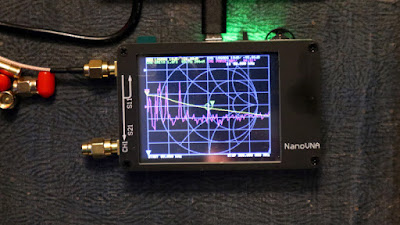
The second part of the talk (after a few questions) is a look at the NanoVNA, which Alan cites as the “Toy or Tool of the Year.”
I learned a lot from both portions of the presentation. I now find myself wanting an H4 model of the NanoVNA (bigger screen). Or maybe even an F model. Thanks to Alan, I now know what S21 and S11 means.
Thank you Alan, and thanks to the Denby Dale ARS.
73 Bill
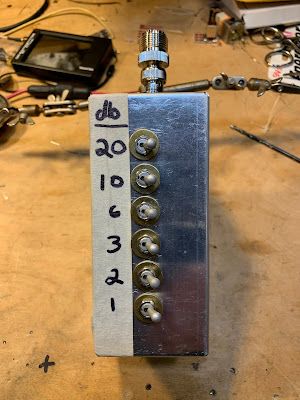
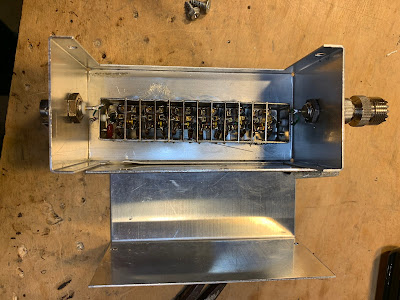
An Attenuator from Fred KC5RT
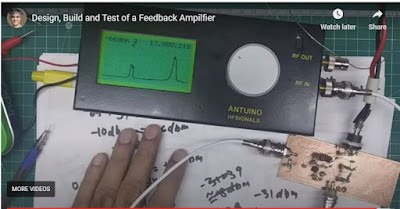
Feedback on Farhan’s FB Feedback Amp Video
As I said a couple of days ago, Farhan has put out a very informative video on amplifier design. During the video we can see him determine bias, feedback and load levels, then select component values. We then see him actually build the amplifier “ugly style” and use his Antuino to test it. Fantastic.
Watch Farhan’s video here: https://www.vu2ese.com/index.php/2020/06/18/feedback-amplifier/
I sent Farhan some of my reactions to the video. In the hope of stimulating some discussion, I repeat them here:
___________________
Wow Farhan, I really enjoyed your video and learned a lot. You definitely have the Knack for explaining this stuff.
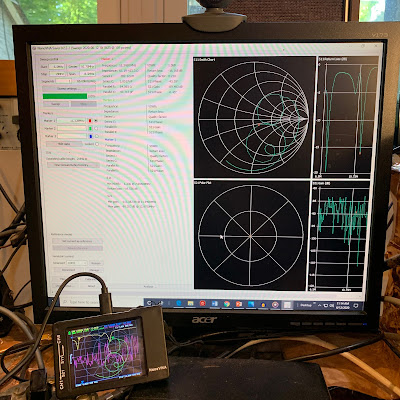
Software for Computer Interface with NanoVNA: NanoVNASaver
Alan Wolke W2AEW Explains the Vector Network Analyzer (VNA) (Video)
I told Alan that his video on VNAs was — for me — very timely. The video popped up on YouTube on the day than my NanoVNA was being delivered. TRGHS.
Alan does a great job in explaining what the VNA does. Particularly useful for me was his explanation of the VNA’s ability to measure phase differences (through the use of directional couplers).
I am having fun with my NanoVNA, happily measuring SWR and the bandpass characteristics of various filters. Mine came with what looks like a guitar pick — this is used as a stylus to hit the small boxes on the touch-screen. A nice touch…
I wish there was some good software for use with this VNA. Apparently the nice software described by Joe Smith (yesterday’s blog post) is quite expensive. Is there a free alternative out there?
NanoVNA, Millen Dip Meter, Kilo-Megacycles, and Measuring the Speed of Light (Video)
Yesterday my NanoVNA arrived. This morning I was looking for info on how to use it and I found this really wonderful video from Joe Smith.
Wow. Joe gives a really useful intro to the capabilities of this amazing little device. He even reaches back in time and compares NanoVNA results with those obtained by a Millen Grid Dip Meter. He pulls out of his junk box an attenuator that is so old that it is marked in “Kilo-Megacycles.” (Shouldn’t we revive terms like that?)
Joe also gives us a taste of what it is like to live and work in the GHz range. He warns us never to touch the SMA connectors on our NanoVNAs (too late Joe). And — get this — he uses a torque wrench to connect the little SMA coax connectors to the NanoVNA. I’m not kidding. A torque wrench. Joe connects surface mount capacitors and inductors that have their values specified not only in picofarads and microhenries, but also at the specific frequency at which they were measured.
My understanding of the Smith Chart was greatly improved by watching Joe’s video.
Icing on the cake: Joe wraps up the video by using the NanoVNA to MEASURE THE SPEED OF LIGHT. Great stuff. Thanks Joe.
Here is Joe Smith’s YouTube channel:
https://www.youtube.com/channel/UCsK99WXk9VhcghnAauTBsbg
Now I have to get the software to use the NanoVNA with my computer.
Video on the Galaxy V VFO Project
This is the second version of this video. I had some technical difficulties getting it to upload in High Definition, but I was able to work it out in this version.
In this video I describe the VFO project, talk about how I made use of the e-bay Galaxy V parts, talk about the circuit (series-tuned Colpitts), conduct some stability tests, and discuss many of the ways a VFO like this one can be useful to the radio amateur.
Thanks to Pete Juliano for inspiring this effort.
The NanoVNA
Blog — “Chinese Electronics Products Tested”
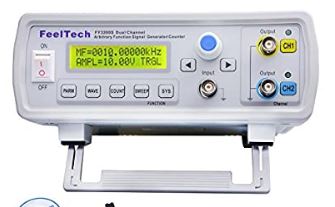
I was looking for information on my FeelTech FY3200s Signal Generator. I came across a very informative blog; it covers a variety of other Chinese gear and parts.
Here is the Feeltech FY3200S article:
https://chinese-electronics-products-tested.blogspot.com/p/fy3200s-function-generator-tested.html
Here is the home page of the blog:
https://chinese-electronics-products-tested.blogspot.com/
And here is backround information on the author:
How to Measure Output Impedance (video)
Thanks to Tony Fishpool G4WIF for alerting us to this very useful video by Alan Wolke W2AEW.
Alan’s video channel is a real treasure-trove for homebrewers.
It was very cool to see “AEW” inscribed on the function generator that Alan built 30 years ago.
Be sure to stay to the end of this video for some electronics humor from Alan. (Steve Silverman: Take note — we might want to add this to the lexicon.)
Now I’m going to search Alan’s YouTube channel for a video on how to measure input impedance.
Antuino Filter Analysis
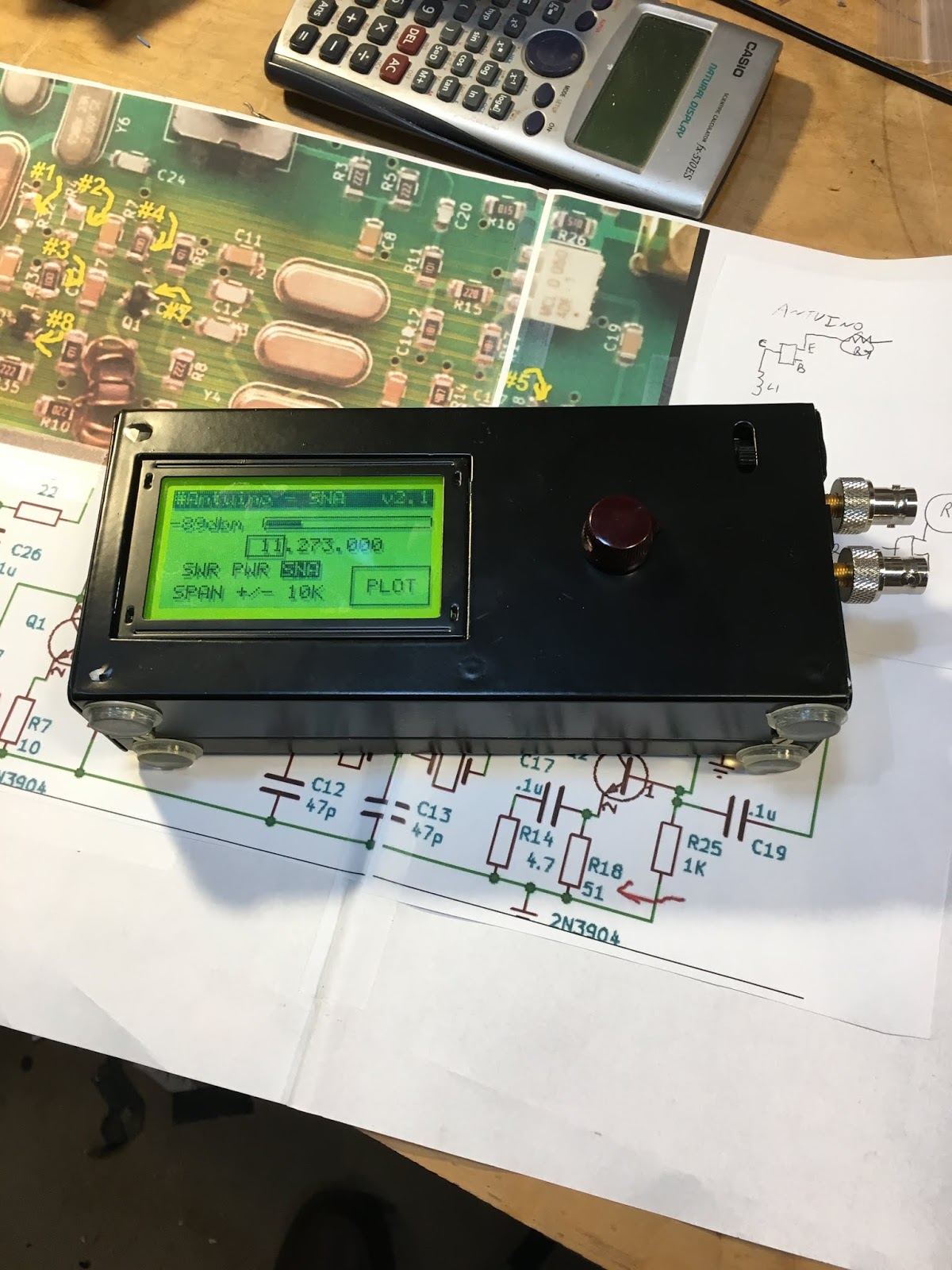
Farhan had given me one of the early Dayton Hamvention models of the Antuino SWR/PWR/SNA RF test lab. He later identified the need for a few mods to improve performance on that early model. So I brushed up on my surface mount soldering, got the needed (tiny!) parts and made the mods. I also put the battery pack inside the box and put some feet on the Antuino cabinet (it just seemed like the right thing to do).
Antuino has already proven to be very useful as an SWR analyzer. I know have a much better understanding of the SWR bandwidth of my wire antennas.
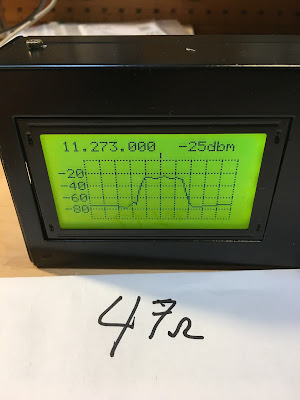
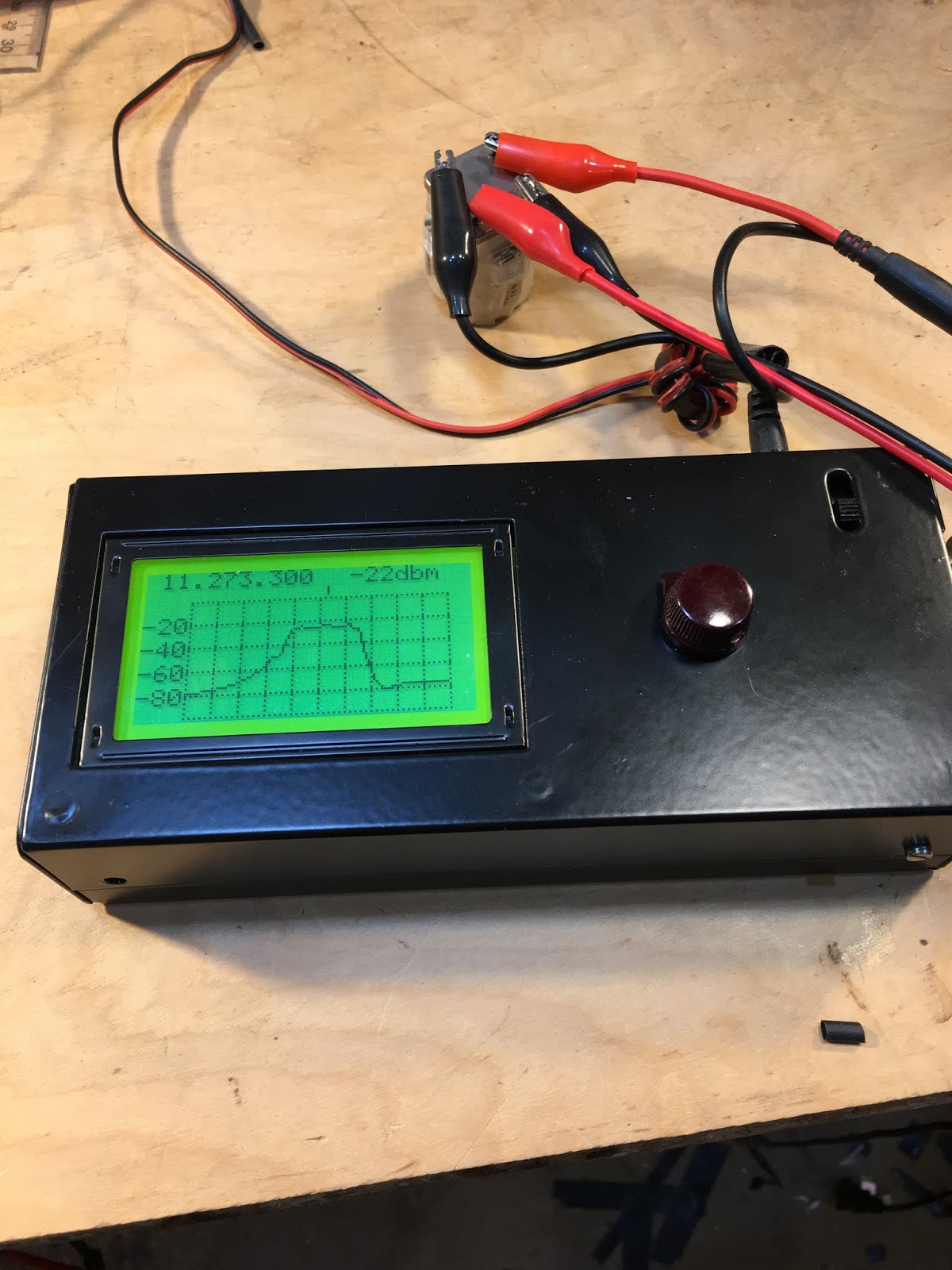
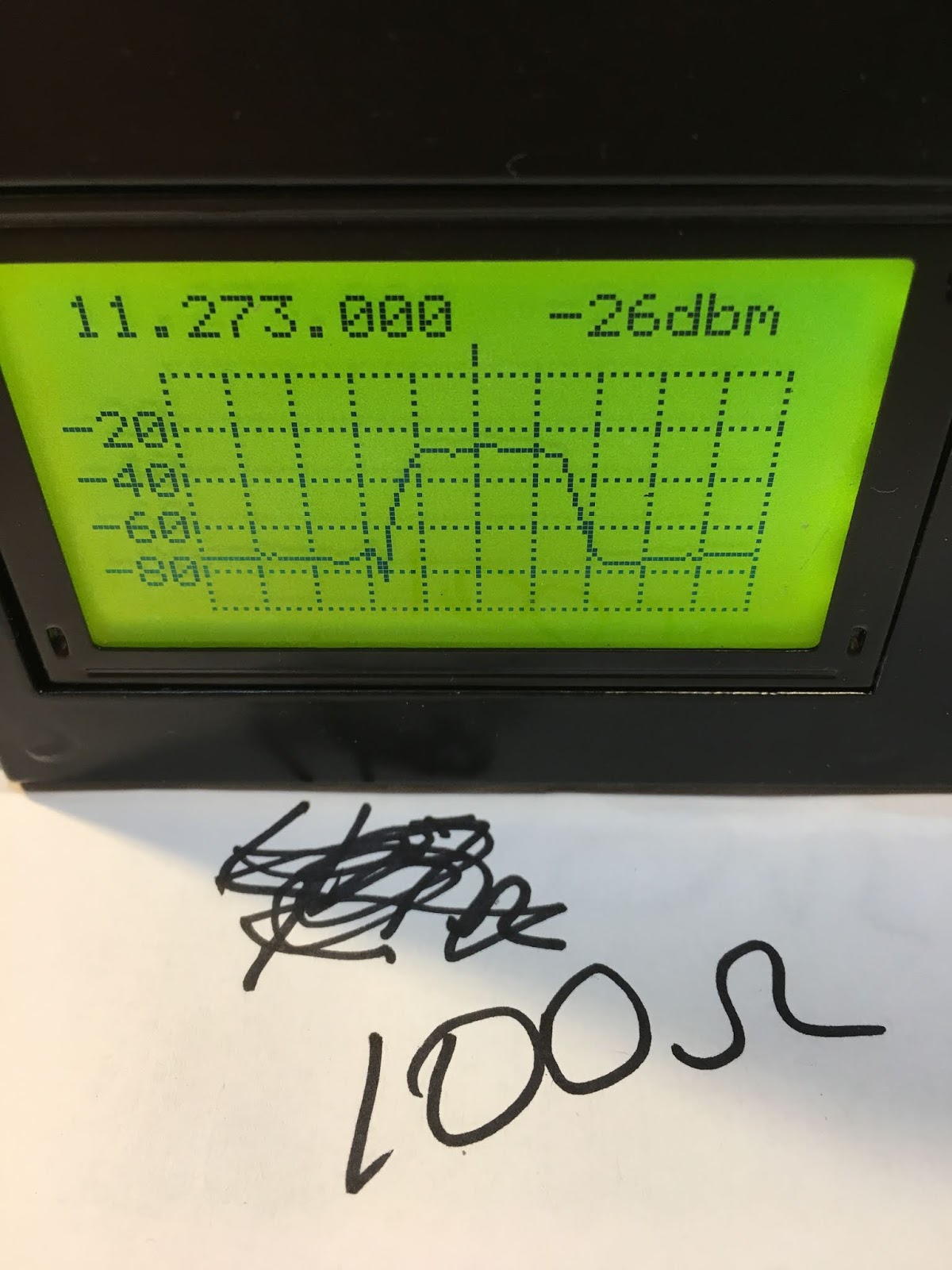
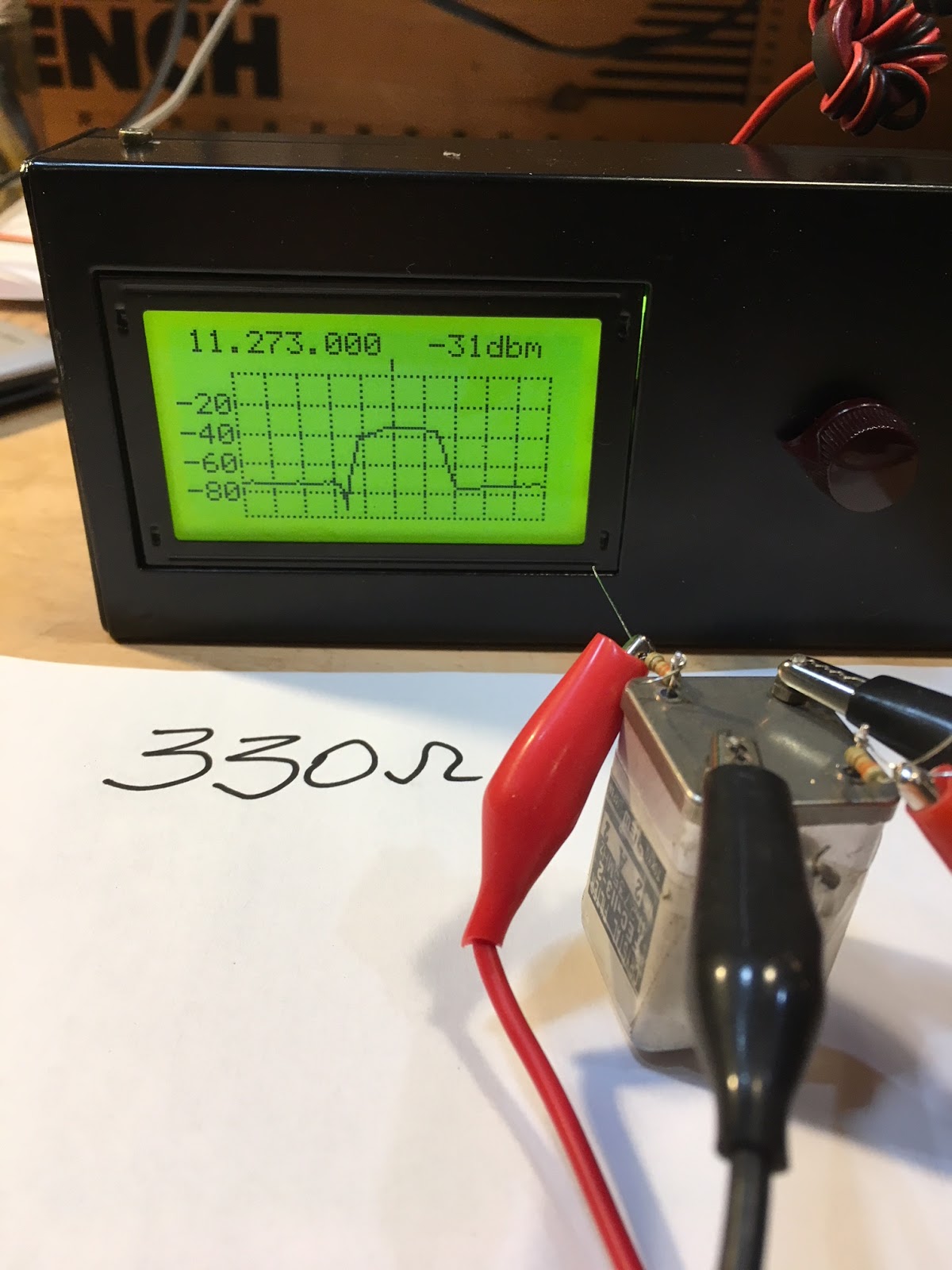
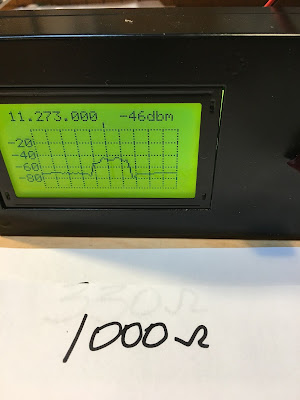
And it is very useful in evaluating the passbands of filters. I had an old 11.273 MHz filter from an old CB radio in my junk box. I have no specs on this device — I didn’t know what impedances it was designed for. So it was time for some Antuino technical detective work.
First, take a look at the filter with nothing between it and the Antuino. Input and output on the Antuino are 50 ohms, so here is what the passband looked like with 50 ohms:
Farhan Visits Northern Virginia and SolderSmoke HQ
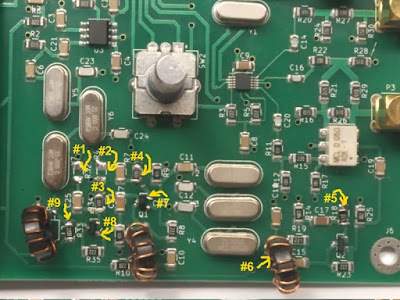
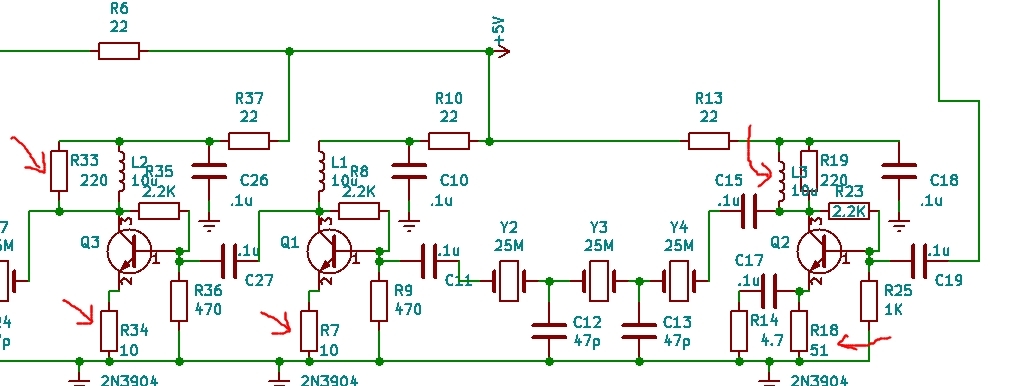
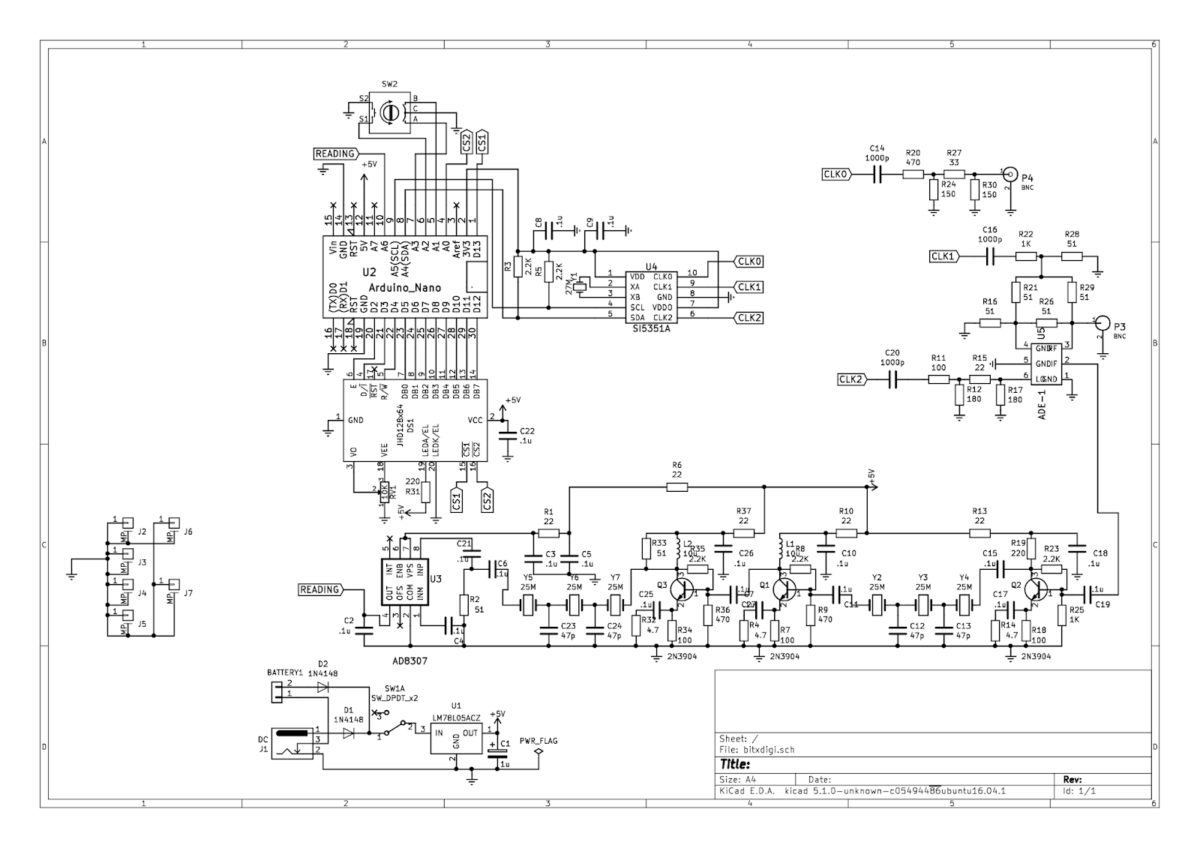
Antuino Mods and Updates from Farhan
August 3, 2019
Every instrument has limits on its accuracy. While making the Antuino, I was well aware of its deficiencies.
Antuino’s Cubesat Origins, and How it Works (with video)
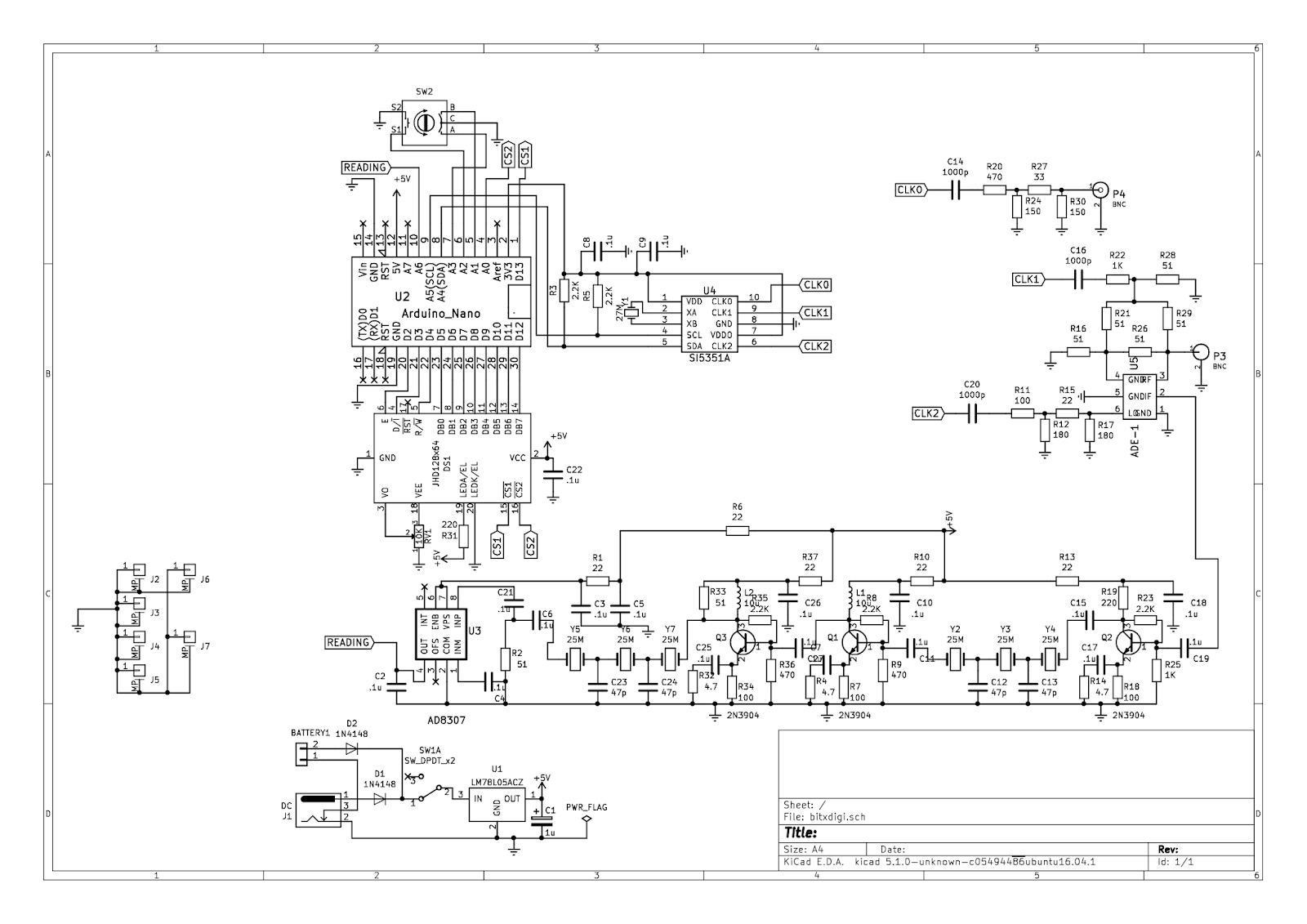
In a series of e-mails to the BITX20.io group, Ashhar Farhan VU2ESE provided background information on the origins of his new “RF Lab in a Box’ — the Antuino. He also explained how the device performs the SWR meter, Power Meter and Scalar Network Analyzer functions.
Farhan’s Antuino Page: http://www.hfsignals.com/index.php/antuino/
Dec 27, 2018 to BITX.io
peeps,
SolderSmoke Podcast #212 HDR, Boatanchors, SDR, Antuinos, Spurs, QSX, Mailbag
![]() |
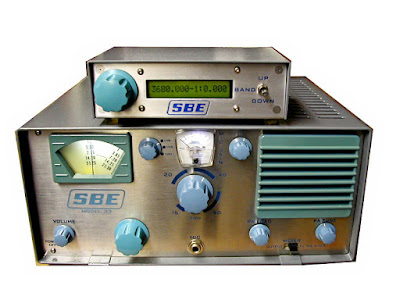
| Dale Parfitt W4OP’s SBE-33 with modern digi freq counter |
SolderSmoke Podcast #212 is available:
http://soldersmoke.com/soldersmoke212.mp3
22 June 2019
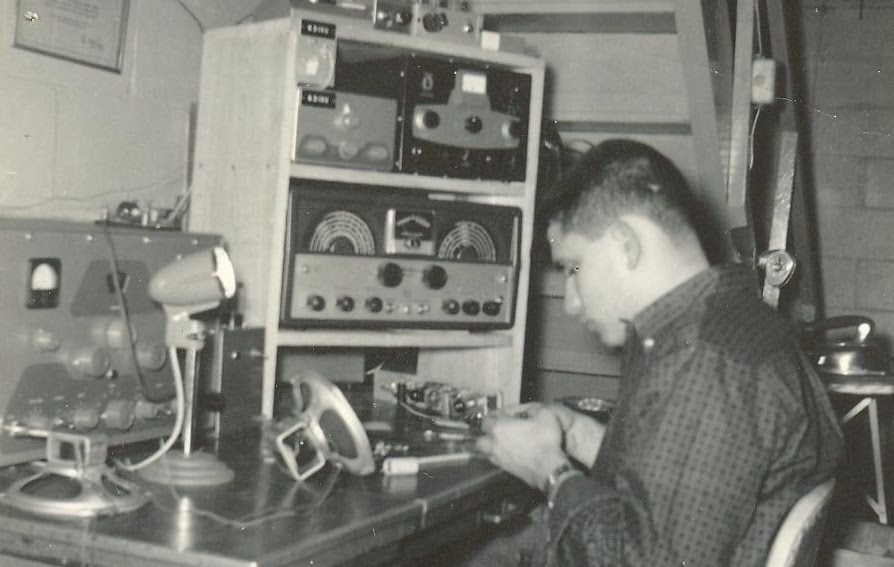
CONGRATULATIONS TO PETE: Licensed 60 years today
![]() |
| Pete Juliano during Field Day, 1959 |
Sideband Engineers Models 33 and 34 — Thanks Pete!
Hans’s QSX SDR Rig at Dayton-Xenia and FDIM
W8SX FDIM interviews
Pete’s SDR Projects — Update
The Peregrino SSB transceiver in the summer SPRAT
Why no rare earth cell phone speakers in ham projects?
My HDR “waterfall” project
Farhan’s Antuino
Cubesat origins
RF Lab in an box
SWR, PWR, SNA
Superhet receiver with ADE-1 at front, and log IC at the output
Adapters (SMA to BNC) help
DON’T BLOW UP THE INPUT RESISTORS (LIKE I DID!)
My dirty DIGITIA — Denial, then acceptance
FFT
Useful programs: SPURTUNE and ELSIE
A better bandpass filter for the DIGITIA
The importance of a good test set up with Antuino
Manassas Hamfest: WA1UQO, W4WIN, AI4OT
MAILBAG:
KG7SSB
WA3EIB
VK4PG
W3BBO
Jeff Tucker — Who owns Drake 2-B #4215?
KN4BXI
KC5RT
K3ASW
Face the TRUTH! LOOK at Your Signal with an Antuino!
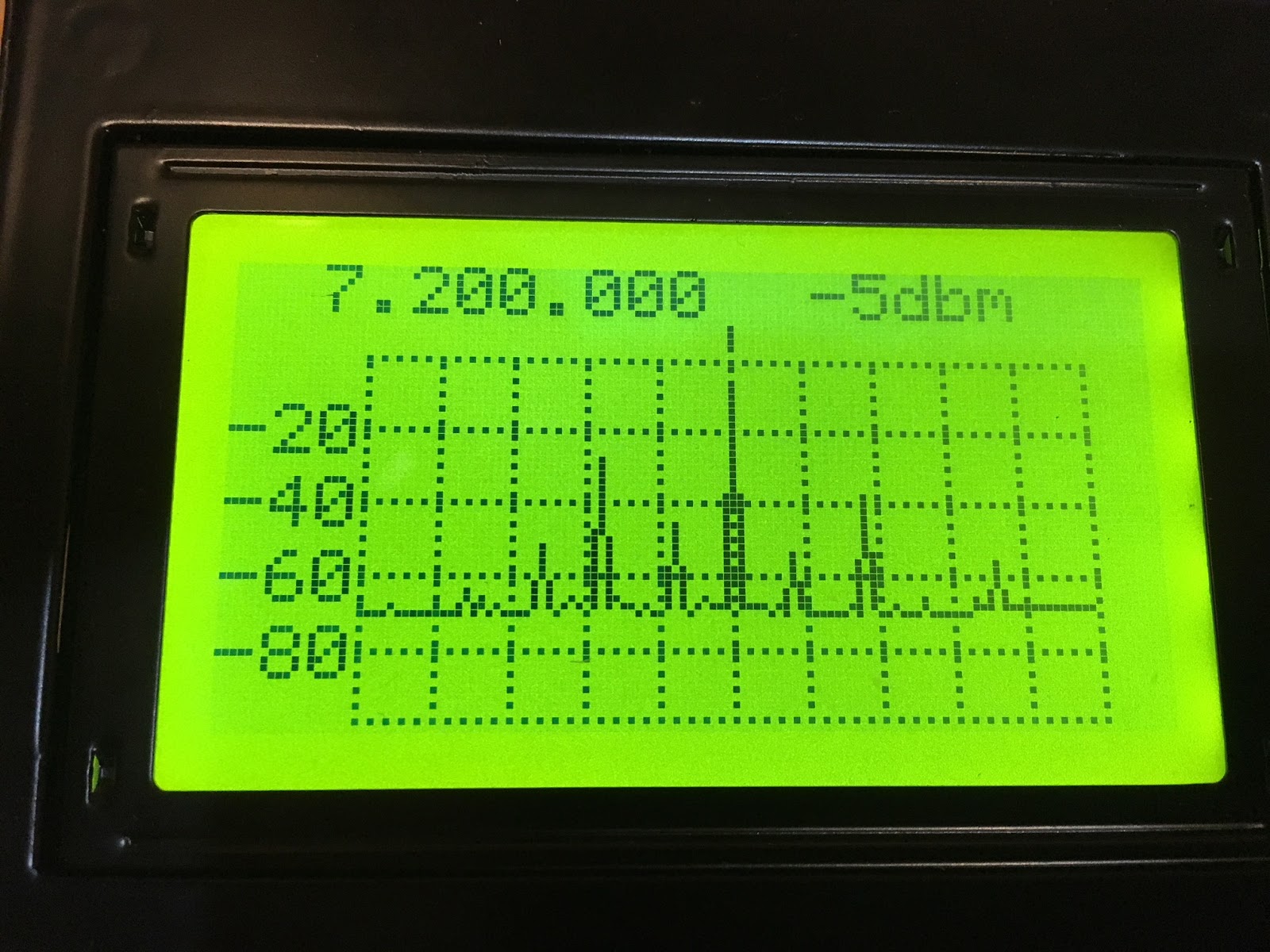
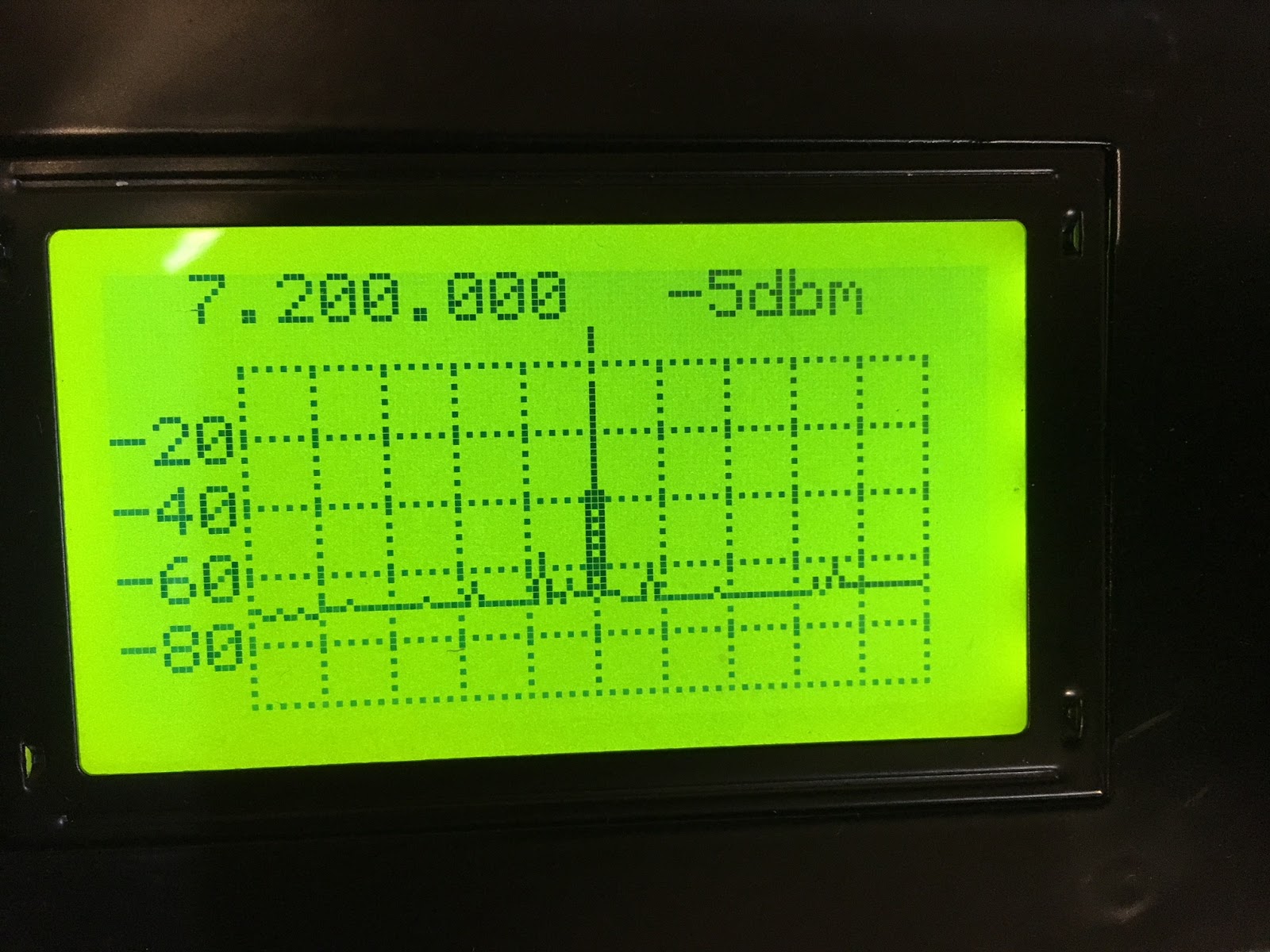
At first, I didn’t want to believe it. I was in denial. I wanted to shoot the messenger (in this case, the Antuino). How could my beloved HB 40 meter DIGITIA transciever have an output that was so…. so DIRTY! Everyone tells me it sounds great. But the little Antuino screen told a different story. Strong spurs up at 9 MHz and down at around 5.4. And lots of places in between. (In these display images, the center frequency is 7.2 MHz and each division to the left or right is 1 MHz.)
Farhan tried to get me to face the truth: “The frequency domain viewing of RF Signals is the opening of the third eye. Once you start seeing signals as a bunch of simultaneous sines, you will always be wary of the waveforms on the scope. In fact, time domain readings make little sense.”
At first I blamed strong VHF RFI and my somewhat hay-wire test set up. My homebrew Rube Goldberg 20 db attenuator was probably picking up some of the VHF RF. But as I looked more closely at the output of the transceiver in the frequency domain, I gradually accepted that it was true. There were a lot of spurs. I have a general coverage receiver in the shack, and with it I could hear the little devils. And after some adjustment I could see them in the FFT display on my Rigol o’scope. An exorcism was definitely needed.
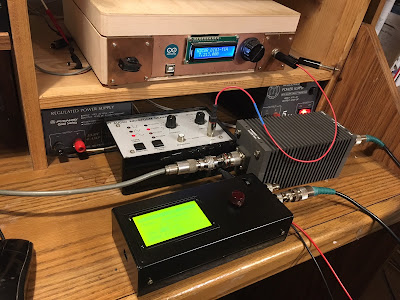
But first came a tightening up of the test setup. Pete advised me to do this. I had in the shack some really nice dummy load/attenuators from the HP8640B Signal Generator that Steve Silverman had given me (and that Dave Bamford had hauled across New York City for me). I ordered the necessary N connectors and adapters and soon my test setup improved a lot.
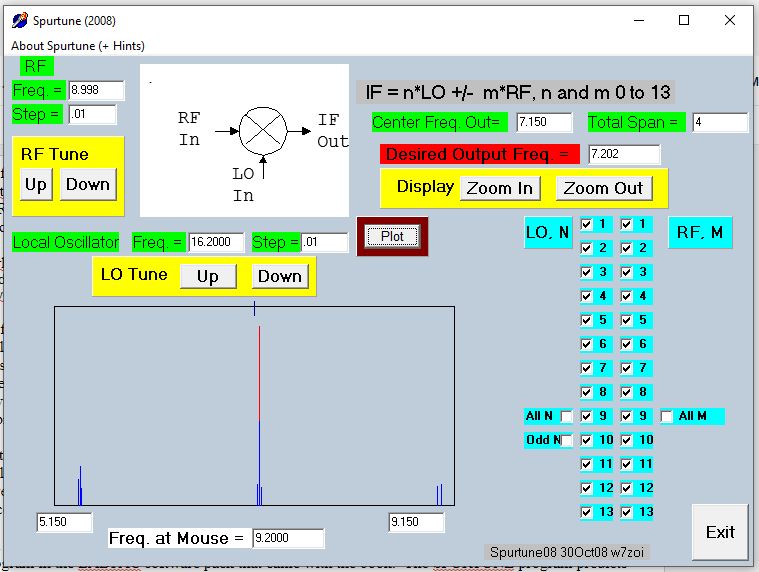
All this got me thinking about spurs. I consulted EMRFD and was reminded of a really great program in the LADPAC software pack that came with the book. The SPURTUNE program predicts spurs and tells you what to look out for. It is really illuminating. Try SPURTUNE.
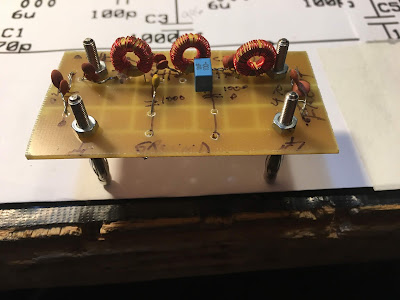
Through this, I gained a better appreciation of the importance of the bandpass filter in an SSB transceiver. I’d always thought of it as something that allowed the other mixing product to be eliminated while passing the one you want. But I came to realize that it does a lot more than that — it also helps get rid of spurs. If it is designed right. Mine was not. I had plucked it out of an old QST article and had not paid much attention to it. All it needed to do was knock down the unwanted mixing product, right? And in my transceiver (9 MHz IF, VFO running 16.0 – 16.3) MHz that unwanted product would be way up at 25 MHz. It wouldn’t take a lot of selectivity to knock that down. But I’d forgotten about the closer-in spurs. Antuino reminded me of them. And SPURTUNE explained where they came from.
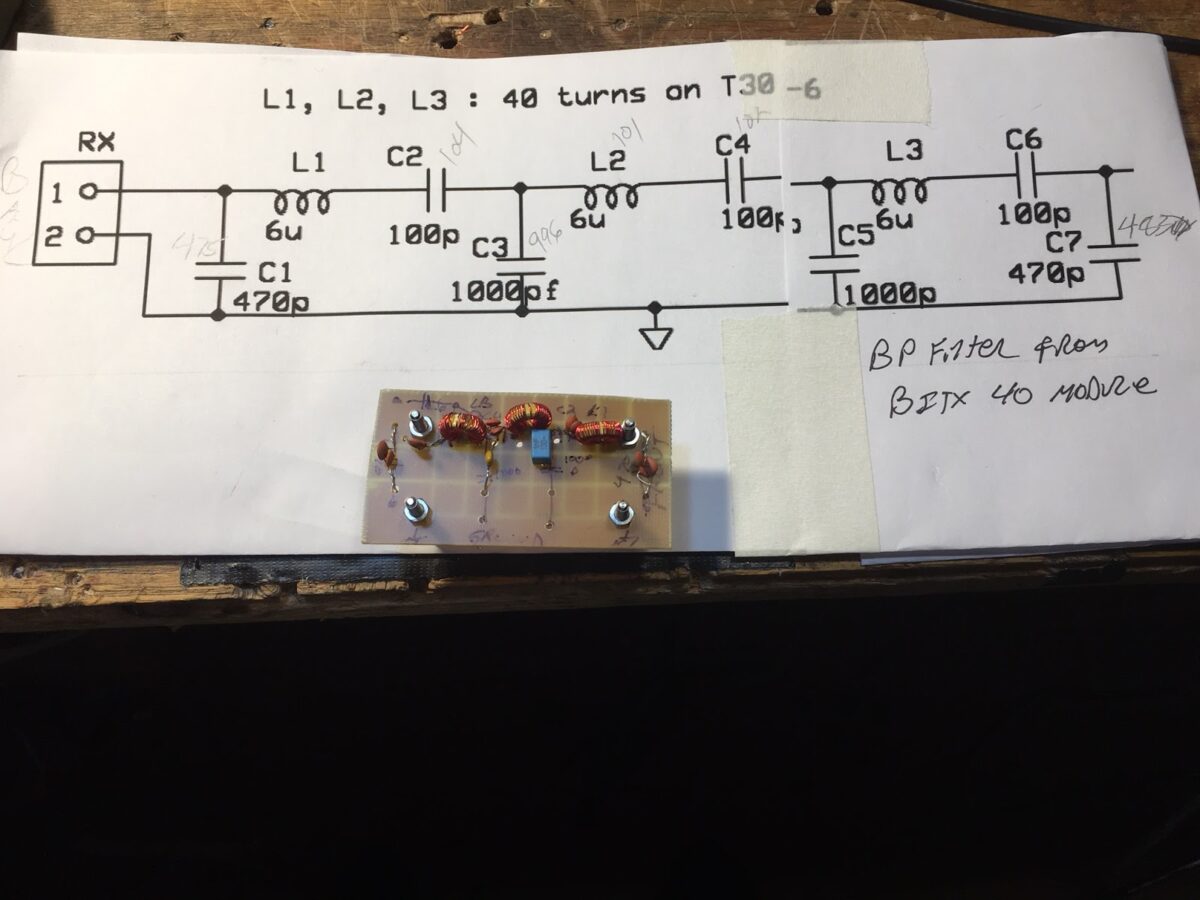
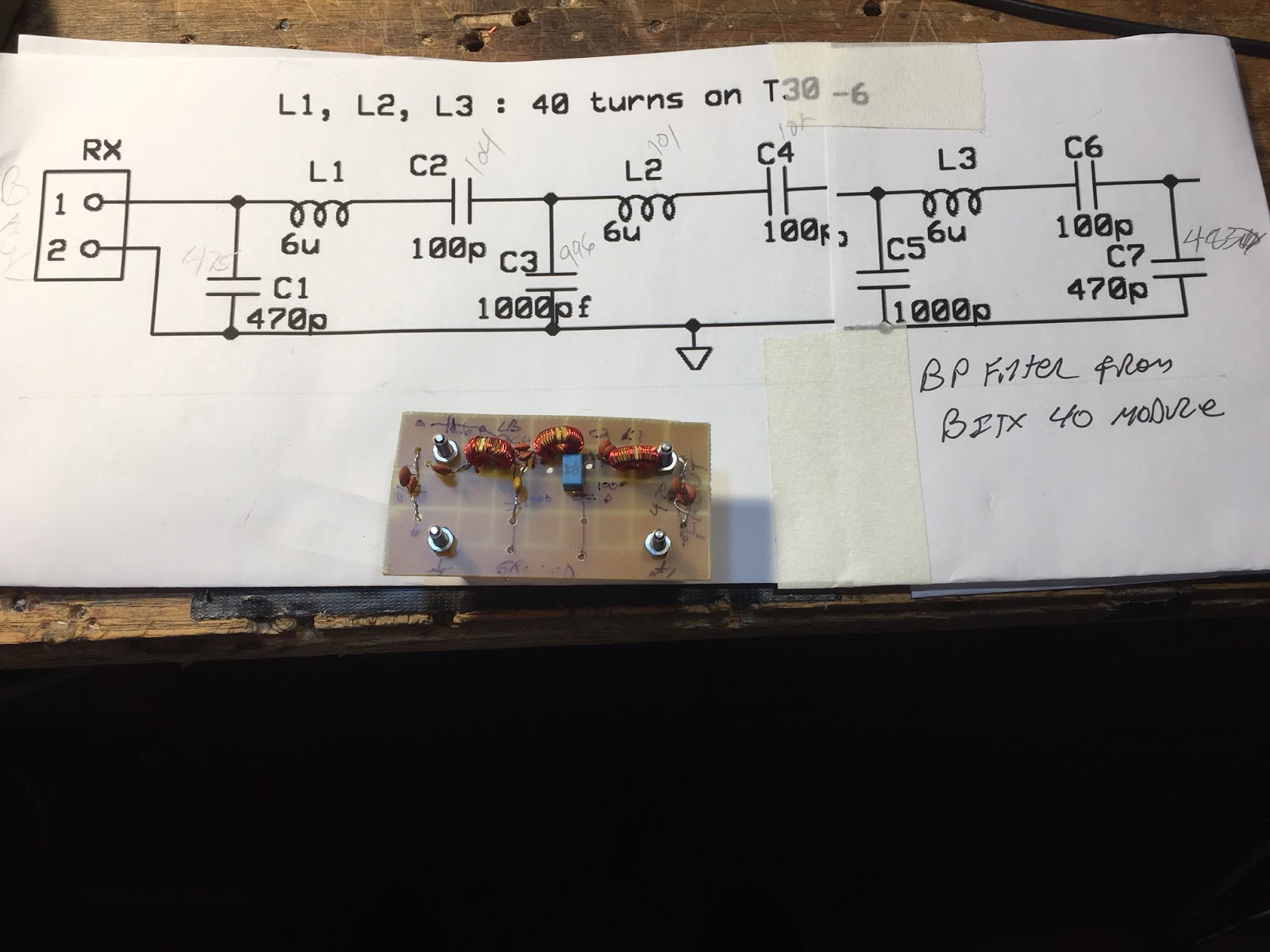
For the exorcism, I decided to use the bandpass filter design from Farhan’s BITX-40 Module. I had made the BP filter on this rig “plug-in” so it was easy to build a new filter.
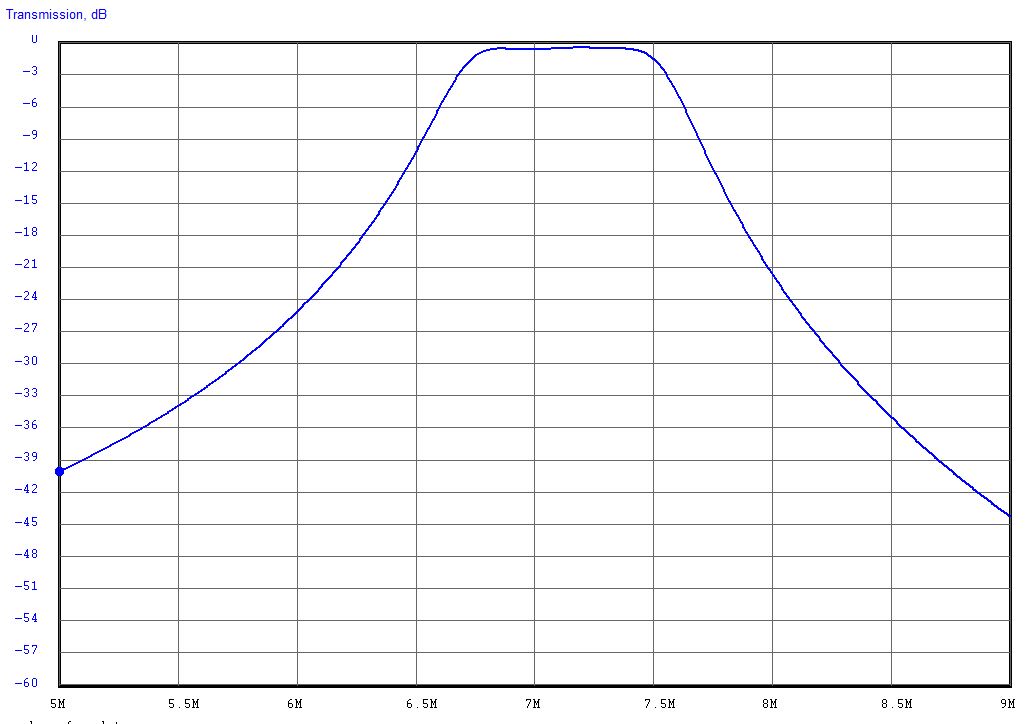
I even checked out the filter design in a simulator. For this I use ELSIE. Another very useful program. Here is what ELSIE predicted for Farhan’s BITX40 Module filter:
First Use of Farhan’s Antuino Scalar Network Analyzer
FDIM Interview with Farhan VU2ESE
I didn’t realize that our correspondent in Dayton/Xenia had interviewed Farhan. There was a typo in the audio file name and I was wondering who this UV2ESE guy was. A Ukrainian QRPer? I was really pleased to find out that it was Farhan.
In Bob’s interview you will hear Farhan discuss the capabilities of his new Antuino (pictured above). Pete’s Antuino is in the mail, going transcontinental. It should arrive in the Newbury Park Laboratory later this week.
As for the spectrum analyzer that Farhan got me last year, I am waiting for retirement (soon!) to get that one going. But there is a danger that the Antuino will leave little room for the older tech…
In the interview you will hear Farhan talk about the Antuino circuitry, and about the roots of the three main devices in the Antuino box. Very cool.
Thanks again Farhan. And thanks Bob.
Here is the interview:
http://soldersmoke.com/VU2ESE FDIM 2019.m4a
Farhan’s Antuino page:
http://www.hfsignals.com/index.php/antuino/
Antuino: Farhan’s Compact RF Lab In-a-Box
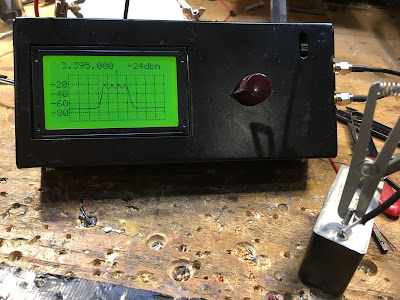
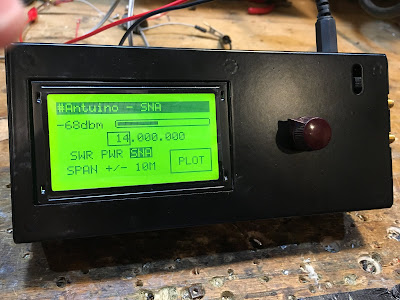
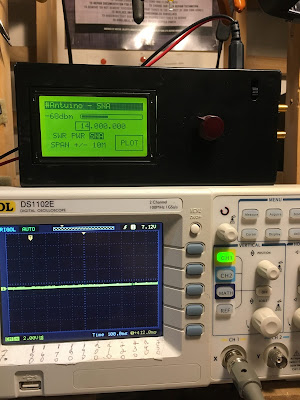
I now have Farhan’s latest invention, the Antuino. Pete will have his shortly. Very cool. SWR meter and antenna analyzer, power meter and scalar network analyzer all in one box. I put an old-school knob on the rotary encoder — it seemed like the right thing to do. Soon I will be able to find out if my rigs have spurs or are somehow non-compliant. I’m sure Farhan’s “RF Lab in a box” will be an important addition to my test gear arsenal. We will be talking about this in upcoming podcast episodes.
Mike N2HTT did a nice write up of the new device:
https://n2htt.radio/2019/05/26/hello-antuino/
And here is the info from the htsigs.com page:
http://www.hfsignals.com/index.php/antuino/
Thanks Farhan!