Category: SSB
ZL2CTM’s Inspirational Tramping Transceivers (videos)
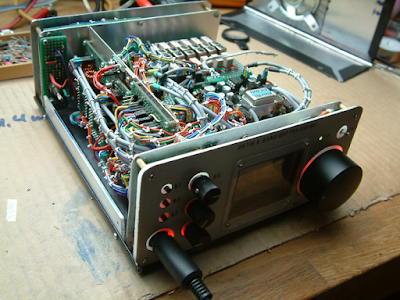
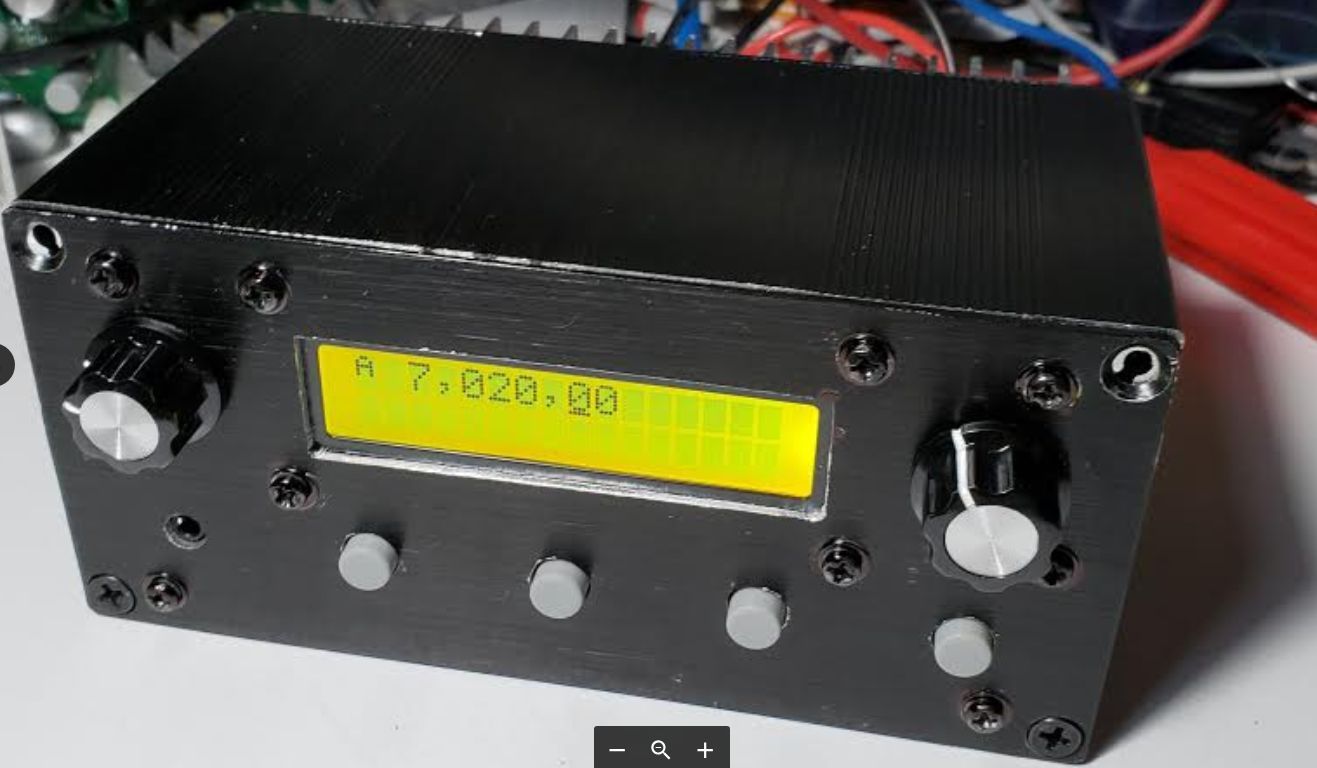
Charlie Morris ZL2CTM is working on portable (tramping) transceivers. Check out his amazing and innovative enclosures and circuit boards. Really nice. A great way to keep that beautiful circuitry visible.
More details on Charlie’s blog:
https://zl2ctm.blogspot.com/2019/12/40m-ssb-tramping-rig.html
Thanks Charlie. Happy trails! 73
Another Amazing Rig from VK3HN (Video) (EI9GQ Design)
Pete N6QW’s Three Dozen (AT LEAST THREE DOZEN!) Homebrew Rigs

KG7SSB — Homebrew SSB in Tuscon — Learning from the BITX40 Module
Dale:
I was talking to Jim W9UD on 20 SSB today. When I told him I was running a homebrew transceiver he mentioned that he talked to another guy who is on the air with homebrew SSB gear — you!
There are so few of us Dale. I felt compelled to send you an e-mail.What are you running?After several years on DSB, I started building separate SSB receivers and transmitters, mostly for 17. Lately I am running versions of the Indian BITX transceiver.Please send info on your homebrew SSB projects.Thanks,Bill N2CQR
Hi Bill,
I have two radios that are completed to date. I started out building the BITX 40 transceiver from scratch and also a companion 60 watt solid state linear rf amplifier. Then I decided to construct the second transceiver for 20 meter using some of the BITX design concepts and mixed with the UBITX design for additional rf amplification. It too is amplified to about 25 watts output. The 20 meter rig is my favorite radio at this time but I am going to go a different direction on my next build. It’s presently just in the design stage but I’m thinking about using the MC1350 integrated circuits for the IF amplification and for the front end I may try using a FET rf amplifier. The beauty of the bitx design is the use of wide band amplifiers that don’t have a tendency to oscillate. But, the new design I’m working on will have more shielding between critical circuits and I will use a small amount of negative feedback in the high gain circuits. The reason for changing the radio to a higher impedance design is to simplify the design build. I will basically build a receiver that I can reverse the signal direction over to transmit using the same amplifiers and filters. This will cut in half the amount of circuit building however it will increase the switching circuit complication associated with this new design.
FDIM Interview with Hans Summers G0UPL on QSX SDR Rig, Probable Price, Features
Wow, our ace correspondent in Dayton/Xenia Ohio, Bob Crane W8SX, did a great interview with homebrew hero Hans Summers G0UPL.
Hans discusses the success of the QCX CW phasing rig — more than 7,300 sold. That’s amazing. I didn’t think there were that many solder melters in the world.
Even more amazing is his description of his QSX SSB SDR rig, which is currently in development. Click on the link below to listen to Bob’s 6 minute interview. You will be blown away by the features and the price of the QSX. Go Hans!
http://soldersmoke.com/G0UPL FDIM 2019.m4a
Thanks Bob!
Pete sent me his SBE-34
Pete is such a great guy, and such a great ham. Earlier this week I came home to find a box in the living room. In it was the SBE-34 that you see in the video. Pete had been talking about this rig about 18 months ago.
So many cool features: The main tuning dial is dual-speed. There is the “Geneva” band switching method. Hybrid, with sweep tubes in the final. All analog. A power supply that will take 110V AC or 12V DC (internal inverter). Collins mechanical filter at 455 kc. Bilateral amplifier stages. PNP Germanium transistors.
Pete suggested that I might want to use this rig for parts. No way! There is real radio history and amazing innovation in this rig. Plus, it has been worked on by Pete Juliano, N6QW.
Here is the write up from Pete’s YouTube page. Note the part about how they get the BFO signal.
Here is an example of what an IC7300 might look like some 50 years ago. It is a hybrid rig using Germanium (mostly PNP) transistors in the low level stages. So OK a couple of NPN (2N706) in several key locations such as the VFO. The driver uses a tube similar to a 12BY7 and the finals are a pair of sweep tubes, the 6GB5’s. The rig operated on four bands (mostly the then phone portions) 80, 40, 20 and 15 Meters. The power out on 80-20 was 60 Watts PEP and dropped down to 50 Watts on 15 Meters. That was a real stretch. The AGC sucked as you will see in the movie and the receiver gain was a compromise –too much on the low bands and weak on the higher. This was a bilateral design — which predates the Bitx series by some 40 years–but not the 1st.The first bilateral design was the Cosmophone – Google that one. The major selling point –a Collins mechanical filter. Also an innovation was how LSB / USB was achieved using a single crystal. It was pure magic and innovation. The basic BFO frequency of 456.38 was doubled and then doubled and tripled again. The first 2X gave you 912.76 KHz and the 2nd 2X gave you1825.52 KHz and a tripling gave you 2738.28 KHz. Mixing that back with 456.38KHz gave you 2281.9 KHz USB or LSB. The VFO operated in the 5.5 MHz range and there were heterodyne crystals to put you on the proper bands. Now that was some clever math! You can download the maintenance manual at BAMA manuals. There were some smart guys leading our ham radio efforts back in the day.
Another Amazing SSB Rig: VK3HN’s “Summit Prowler 6”
Here is another truly amazing compact SSB rig. Paul Taylor VK3HN is a true homebrew wizard. So many great homebrew rigs come out of Australia.
More details:
https://vk3hn.wordpress.com/2019/05/01/summit-prowler-6-a-pocket-sized-ssb-cw-transceiver-for-80-40-30-and-20m/
Paul’s QRZ.com page:
https://www.qrz.com/db/vk3hn
Peter DK7IH’s Amazing Rigs and Blog
SolderSmoke Podcast #211 — Malicious Code! Spaace! Vintage Sideband! MAILBAG
27 April 2019
SolderSmoke Podcast #211 is available
http://soldersmoke.com/soldersmoke211.mp3
Pete NOT quitting podcast! Malicious code case RESOLVED!
Ambiguity and the Digi-Analog Divide
Edwin Howard Armstrong biography
SPAACE!
Apollo 11 50th Anniversary
Oscar 100 in Geostationary Orbit. Why can’t we have one too?
Farhan puts AISAT in orbit. FB!
Space is difficult
SSTV from the Space Station
Pete’s bench report.
Vintage Sidebanders
Recording of Midwest Vintage SSB “tune up session”
Vintage rigs that sound bad
Distorted views on “distortion”
Bill fixing old Bose Wave Radio
NOT GOING TO DAYTON. AGAIN! But SolderSmoke rep will be there
75 meter secrets of success (timing is everything!)
MAILBAG
Steve N8NM sends me FB National Dial
Steve N8NM aspires to complexity — enough of this simple stuff!
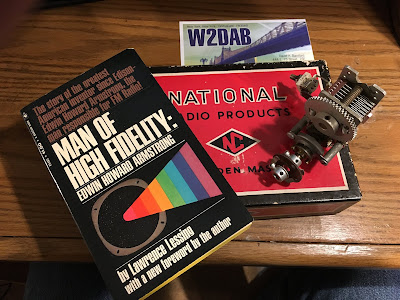
Dave W2DAB goes to Columbia U session on Armstrong, sends FB book.
Jim W4JED — reports of QCX sideband a bit exaggerated. Where is Allison?
Rob Powell wins beret challenge. VK2TPM and VK2BLQ also win. CONGRATS!
Colin G3VMU sends nice 1930s radio picture
Alan WA9IRS sends diagram of digi radio signal flow. CLEAR AS MUD!
Chris KD4PBJ Grandmother worked at Hammarlund.
Steve NU0P sends info on Art Collins and the Apollo moonshots.
An Update on Jac’s Homebrew Receiver
About four years ago we posted a report on the FB homebrew receiver of Jac KA1WI Here is the original report:
https://soldersmoke.blogspot.com/2015/09/jacs-homebrew-receiver-video.html
As most of us do, Jac has continued to work on his creation. He sent me an update:
Bill:
Basically I have finished it, from a tentatively working model to a more definitive set. For example there are three IF filters, LSB, USB and CW switched by relays grounding the un-used filters. The AGC was optimized for a good sound. So was the multistage audio circuit, avoiding unnecessary filtering which in my opinion masks the sound of some very good sounding transmissions, not to mention the terrible ones.
Note how well you can hear the band’s noise floor when the antenna is reconnected in the third video.
RE-RUNS OF VINTAGE SIDEBAND NET — To fill those lonely hours between SolderSmoke podcasts…
I have now listened to the mp3 recordings of three of your Saturday morning sessions. They are really great. I tried to listen via the airwaves, but I am too far east. To whoever is recording and posting these sessions: please keep up the good work! These recordings allow the FB ham spirit of the net to reach a GLOBAL audience. Please make the older sessions available — many of us only recently learned of the net and would like to listen to earlier episodes. If server space is a problem, maybe I could help. Let me know. I don’t know if you realize it, but you guys are producing a very cool podcast every Saturday morning.
Pete’s Latest SSB Transceiver — And Lots of Wisdom on Homebrew Phone
Don’t miss Pete’s latest blog post decribing his most recent SSB transceiver.
http://n6qw.blogspot.com/2019/02/2019-building-ssb-transceivers.html
A SolderSmoke Message to the Vintage SSB Net
The Vintage SSB Net
A Homebrew HRO Dial by DL6WD, Homebrew Hero
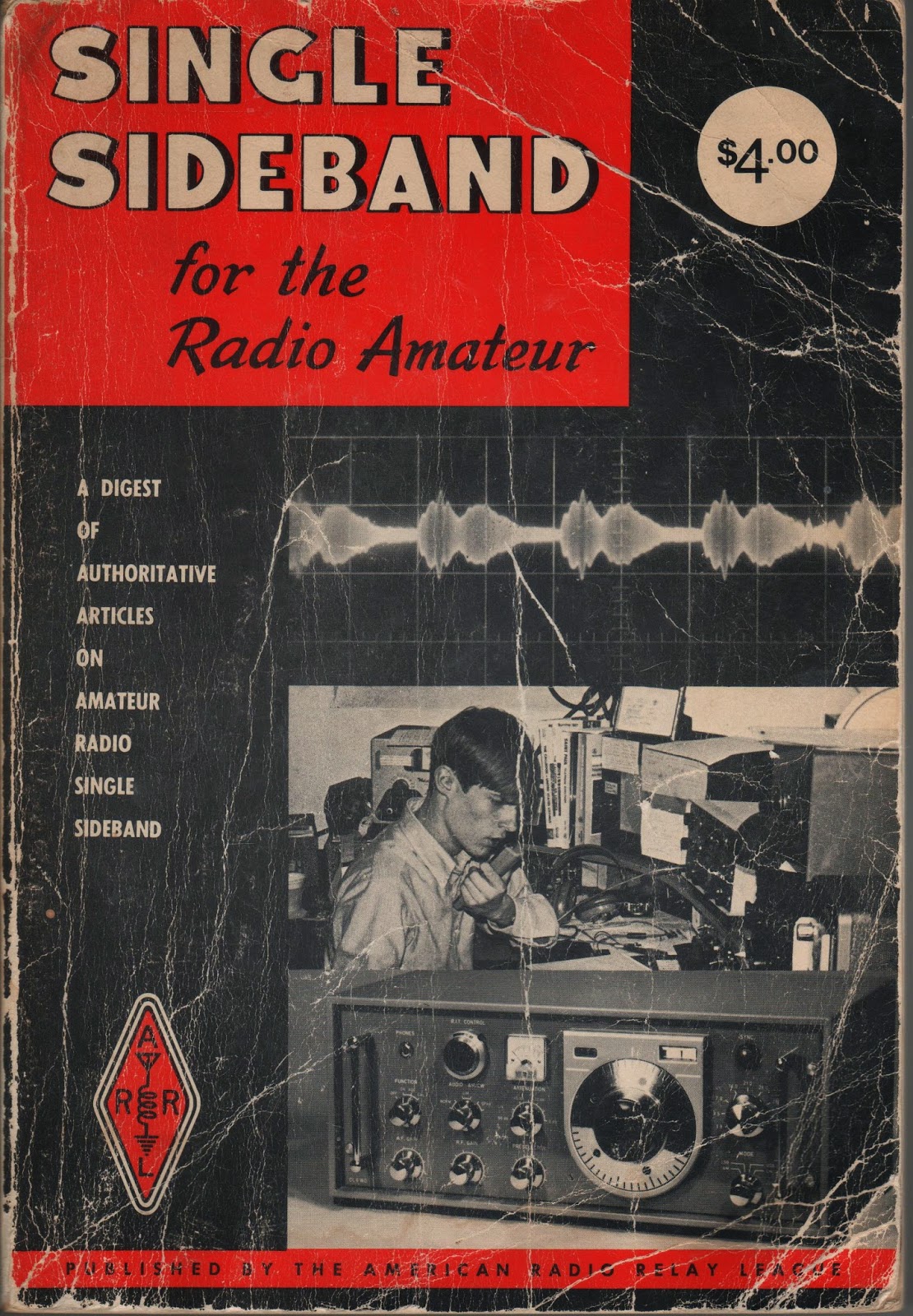
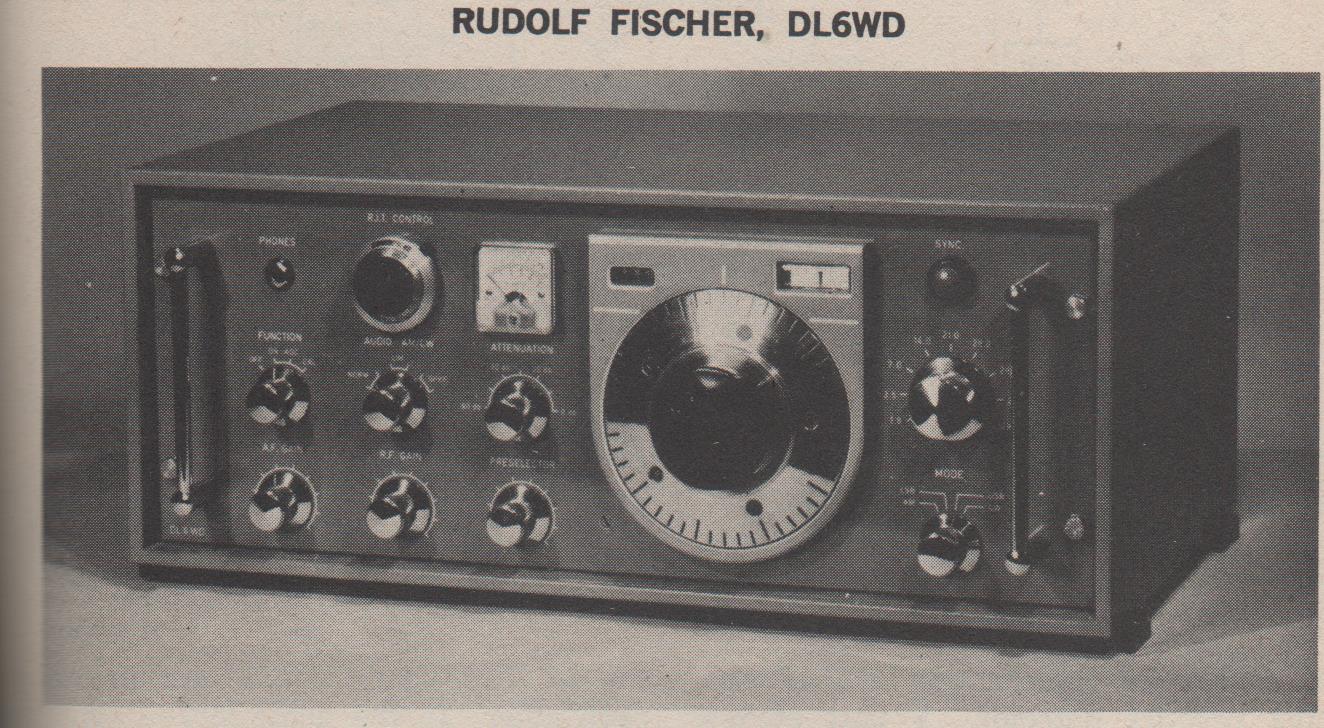
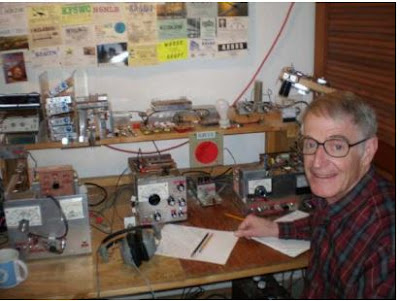
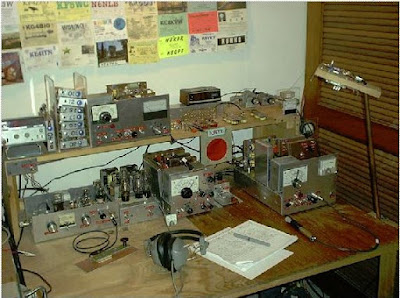
Take a look at that beautiful rig in the bottom of the cover pictures. (A closer shot appears below.) That is an HRO dial, right? Or is it?
No, it is not. In the picture we see the homebrew receiver designed and built during the 1960s by Rudolf Fishcer, DL6WD. It is magnificent in every respect. Because I have been working with the HRO dial and gearbox given to me by Armand WA1UQO, the tuning dial on this receiver caught my attention.
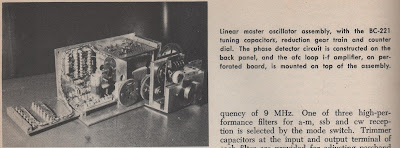
Here is what DL6WD says about this part of his project: “The main tuning gear was built around a BC-221 tuning capacitor and reduction gear. The counter dial and tuning knob are the result of four weeks of labor, The counter dial reads in tens of kHz, where the main tuning knob has a calibration of 200 Hz per division, from an HRO inspiration.” The counter is in the little window to the upper left of the tuning knob. The window to the upper right is a phase-lock indicator. (See below.)
By the way, by the time DL6WD got finished with this all solid state receiver it weighed in at 52 pounds. Rudolf noted that “excessive shielding pays in electrical performance, but not in weight!”
DL6WD earns the title “Homebrew Hero.”
Switching to a Mechanical Filter from 1967 for my HRO-ish Receiver (with video)
![]() |
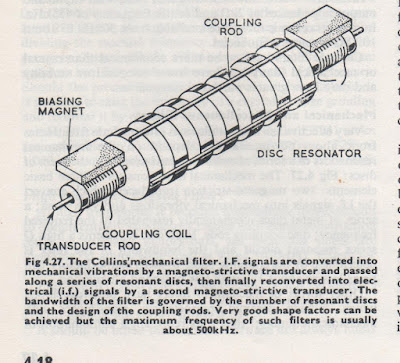
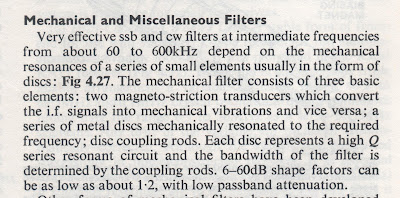
| From RSGB Handbook 1982 |
Having overcome the difficulties with the National NPW Dial and Gearbox, I turned my attention to the 455 kHz filter. I had been using this old Toyo CM – 455 kc filter (Date stamped August 1969). CM stands for “Crystal-Mechanical.” These filters are hybrid with some of the features of a crystal filter and some of the features of a mechanical filter. For more details go here:
https://soldersmoke.blogspot.com/2016/04/the-meaning-of-cm-in-toyo-cm-455-filter.html
I was disappointed by the CM filter. It seemed very lossey, and it just didn’t seem to be of sufficiently high Q — it seemed very broad. I could hear the other side of zero beat. It was barely a “single signal” receiver, and being “single signal” is the whole point of a superhet.
I remembered that Pete Juliano had sent me a Japanese-made 455 kc mechanical filter. Maybe this would do better. Last night I did a quick comparison test and — wow — Pete’s filter was much better. The Fifth Edition of the RSGB Handbook seems to agree with my assessment, noting that mechanical resonator filters were superior to the Crystal Mechanical hybrids (see pages 4.17 and 4.18)
Pete’s filter is from the Kokusai Electric Company. Part# MF 455 ZL. (Date stamped May 1967). “ZL”indicates lower sideband. I checked and indeed the passband goes from just above 452 kc up to about 454.5 kc. This is a 40 meter receiver and SSB on 40 is LSB, so this filter would work perfectly right? Not so fast! Sideband inversion had to be considered.
I was running my VFO from about 7455 to 7755 kHz. This means that the modulated incoming signal would be SUBTRACTED FROM the VFO signal to get to the 455 kHZ IF. And when that knd of subtraction happens, we have sideband inversion. The LSB signal will look like a USB signal when it reaches the filter.
My BFO was running right at 455 kHz, using a ceramic resonator at that frequency. I briefly considered just shifting it down to 452 kHz, but this proved to be difficult. Then I got a better idea.
I could just shift the VFO down to 6545 to 6845 kHz. This would mean that the VFO frequency would be subtracted from the incoming modulated frequency. There would be no sideband inversion. I had been thinking about doing this frequency shift anyway, thinking that VFO stability gets better as you go lower in frequency.
REMEMBER THE RULE: If you are subtracting the modulated (signal) frequency from the frequency of the local oscillator or VFO, only then will you have sideband inversion. See:
https://soldersmoke.blogspot.com/2015/05/sideband-inversion.html
Moving the VFO was easy. I am using a variable capacitor with several variable caps on the same rotor. I just moved from the smallest variable cap to the middle variable cap — this added capacitance to the system and lowered the frequency. I also added three additional turns on the coil. This put me very close to where I needed the frequency to be. I added one additional 9 pf cap and this put the VFO freq right where I wanted it.
I was really glad to include Pete’s filter in this receiver. The mechanical resonator technology fits very well with the very mechanical old-tech theme of this project (it already had a gearbox — a mechanical filter seemed to fit right in). It is a fascinating device — it is almost like having a set of tuning forks all tuned to 455 kc (see above for the RSGB description of how it works). And having it from from Pete adds a TREMENDOUS amount of mojo, juju, and soul to the new machine.
Icing on the cake: As I type this, I am listening to Fred K3ZO converse in Spanish with hams all through South America. Fred preceded me by three decades at the U.S. Embassy in Santo Domingo, but when I got there the local hams were still talking about him — he was much loved and admired by the Dominican hams. TRGHS. See Fred’s story here (scroll down a bit): http://www.gadgeteer.us/DRDISP.HTM
SolderSmoke Podcast #208

SolderSmoke Podcast #208 is available:
http://soldersmoke.com/soldersmoke208.mp3
15 December 2018
Pete and the California fires
Bill goes to Brooklyn
2 meter simplex
A return of the trivial electric motor
Audio from Mars
HF Conditions — a real mixed bag
Pete looks back at 2018 — The Year of the SSB Transceiver — Lessons Learned
Hans Summers, the QSX and the virtues of SDR
W7ZOI’s DC Receiver Retrospective
The 1972 Solar Flare and the Vietnam War
SHAMELESS COMMERCE: Buy your gifts through the Amazon link to the upper right.
Consider SolderSmoke the book as a gift. Visit Pasta Pete’s for cooking ideas.
Don’t Build It! Sage — but unexpected — advice from Pete.
Straight Key Night approaches.
Book Reviews:
–“What is Real?” (Quantum Physics)
— RHdb by K6LHA.
Movies
“Bohemian Rhapsody”
“First Man” (Not yet!)
MAILBAG:
Steve G0FUW
Ed KC8SBV
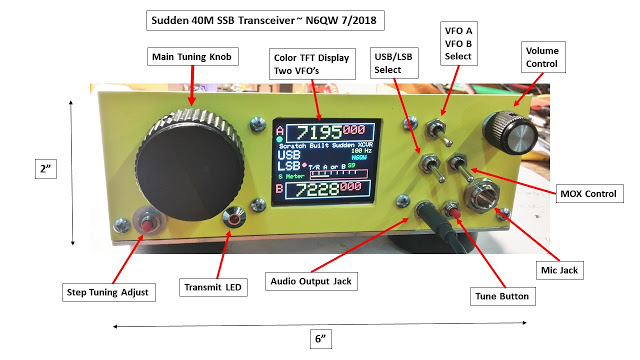
Pete’s New Sudden Transceiver
Check it out! Note the Juli-yellow front panel color. Featuring FT-8 and WSPR capability. Go Pete!
http://n6qw.blogspot.com/2018/09/2018-year-of-ssb-transceivers_14.html
“From Crystal Sets to Sideband” — Homebrew Wisdom from Frank, K0IYE (Free Book)
Get Frank’s book here (FREE!) http://www.qsl.net/k0iye/
I’ve had Frank’s book on the blog many times over the years, but it is a book that merits repeated mention. It is filled with great advice and homebrew wisdom. I found myself looking at it again recently, and at Frank’s QRZ.com page. I came across lots of wisdom that I may have missed in earlier visits. For example:
From the QRZ page:
Foreword:
We homebrewers are nearly extinct, but there are still hundreds of us scattered around the world, some are even in the USA. Yes, there ARE American homebuilders! We’re rare, but thanks to the QRP hobby, the number is growing. Even if we homebrewers don’t change the world, I guarantee you will enjoy learning radio technology and building your own equipment.
Get Frank’s book here (FREE!) http://www.qsl.net/k0iye/
THANKS FRANK! Send Frank a thank you note: Frwharris@live.com