HB-2-HB Contact! N4TD’s Amazing Homebrew 20 and 40 meter SSB Transceiver

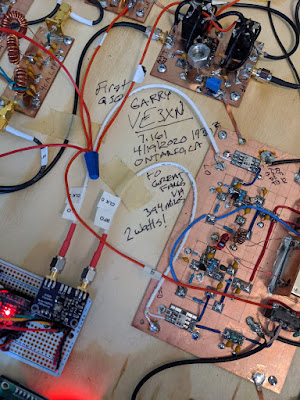
Oh man, this doesn’t happen every day. Using my homebrew BITX 40 DIGI-TIA, I had just finished a great QSO on 40 meters with Greg W8GP, talking about Heathkits and homebrew radio. Then I got a call from Taylor N4TD. He told me he is a SolderSmoke listener. Then he just casually mentioned the really big news: HE TOO WAS ON A HOMEBREW RIG!

I told Taylor that this a rare occurrence. He agreed.

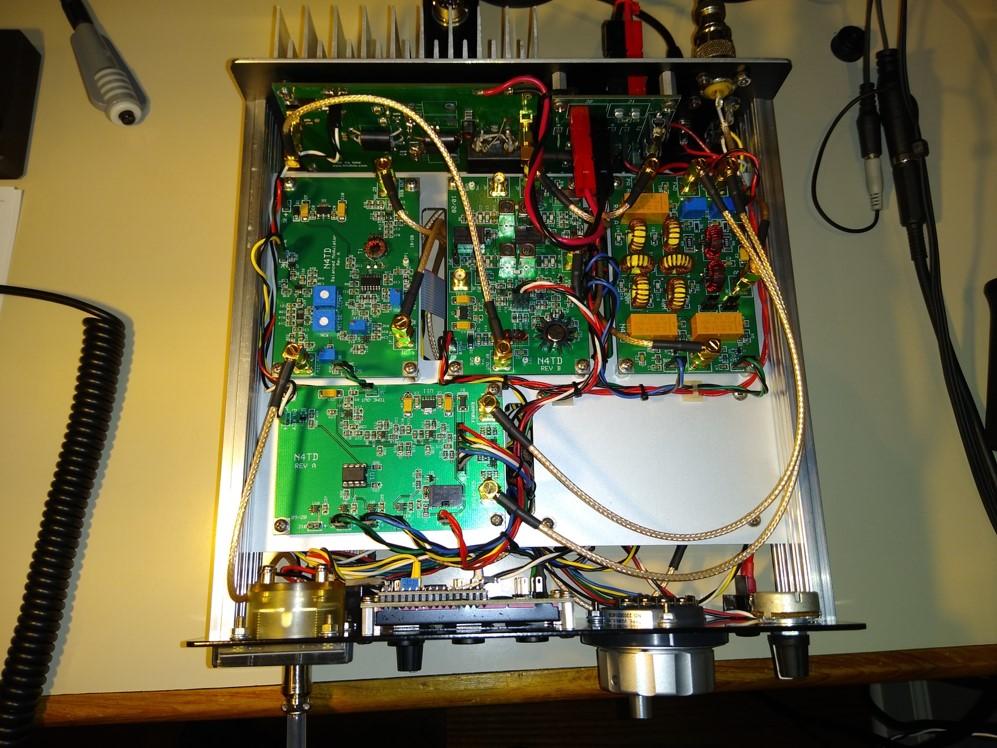
Taylor told me his rig is for 20 and 40. It is a single conversion design with a 9 MHz IF and a crystal filter. Using a Ukraine-made PA board, it puts out 50 watts.

Taylor sent me some pictures and wrote:

Hi Bill,

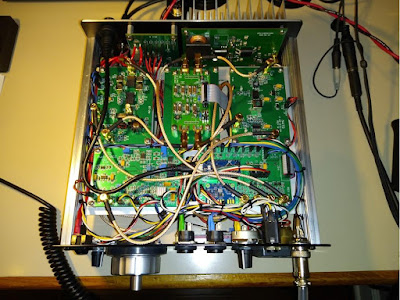
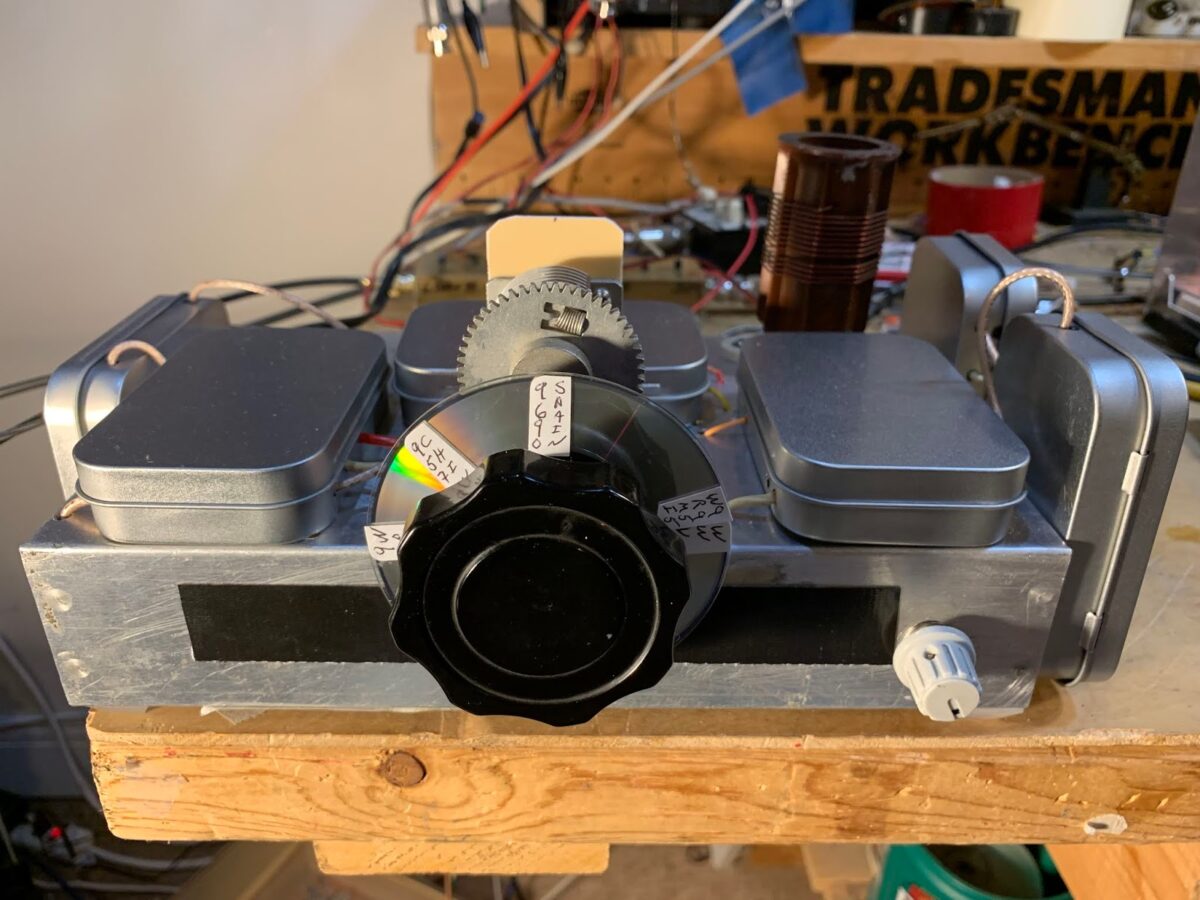
It was great to work you homebrew to homebrew. As you said, that doesn’t happen very often. I used a modular architecture for this radio. The module size is the ExpressPCB miniboard size, so they are less expensive and all the same size so they can be moved around. All the boards are homebrew except for the final amplifier module. The PA module I got from 60dbm in Ukraine through eBay. I had tested this module before and found it to be solid, and it was more economical than building the PA from scratch. It delivers 50W+ and has been reliable through all my sometimes abusive testing.

73 Taylor N4TD

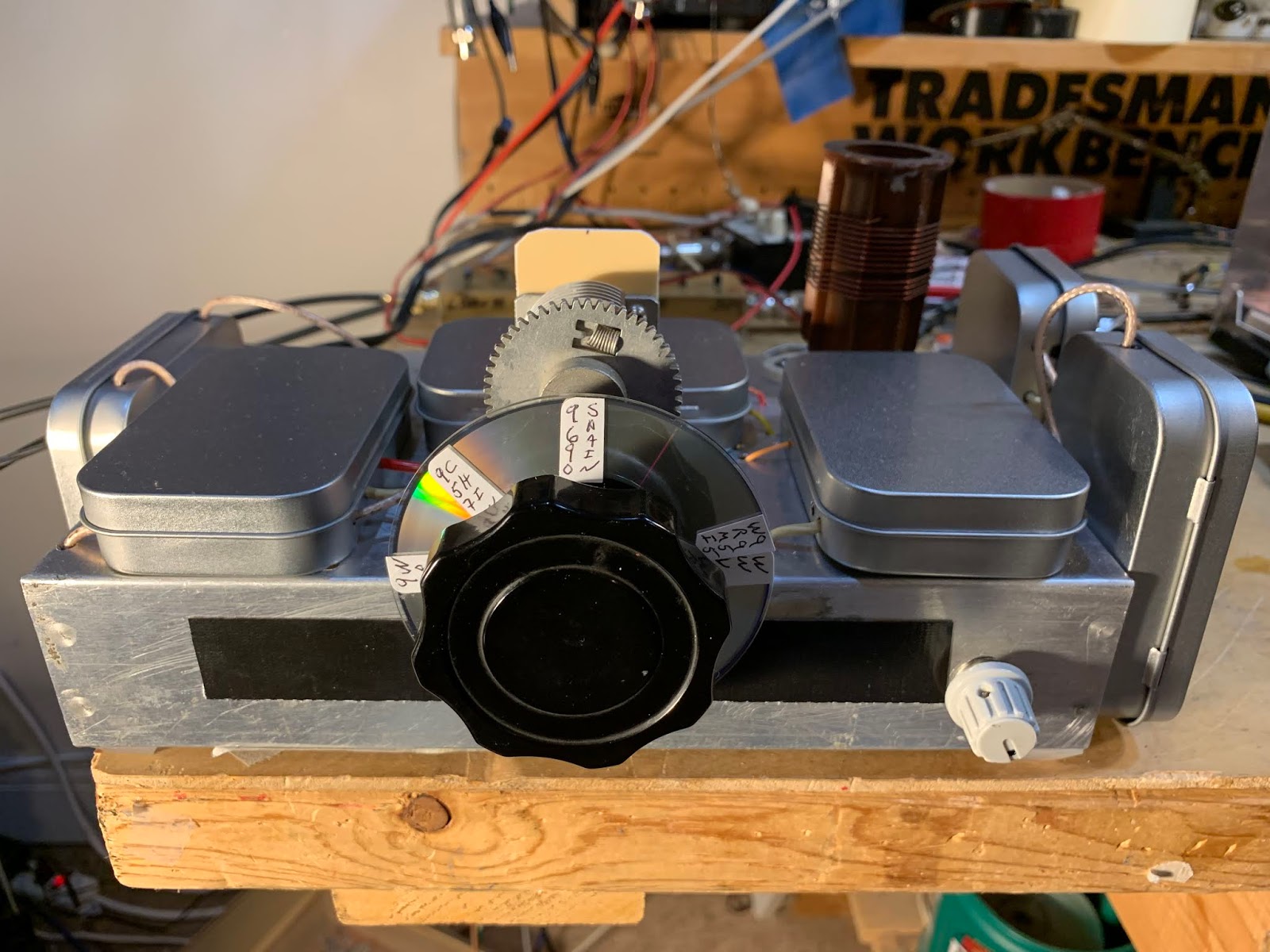
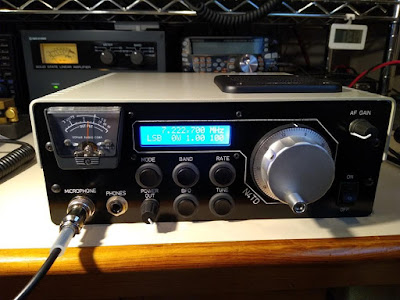
Taylors rig — Top view

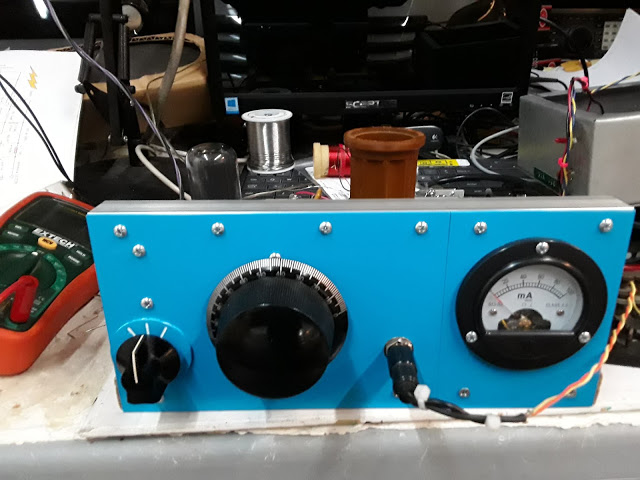
Taylor’s rig — Bottom view

Improving the Product Detector in the Lafayette HA-600A

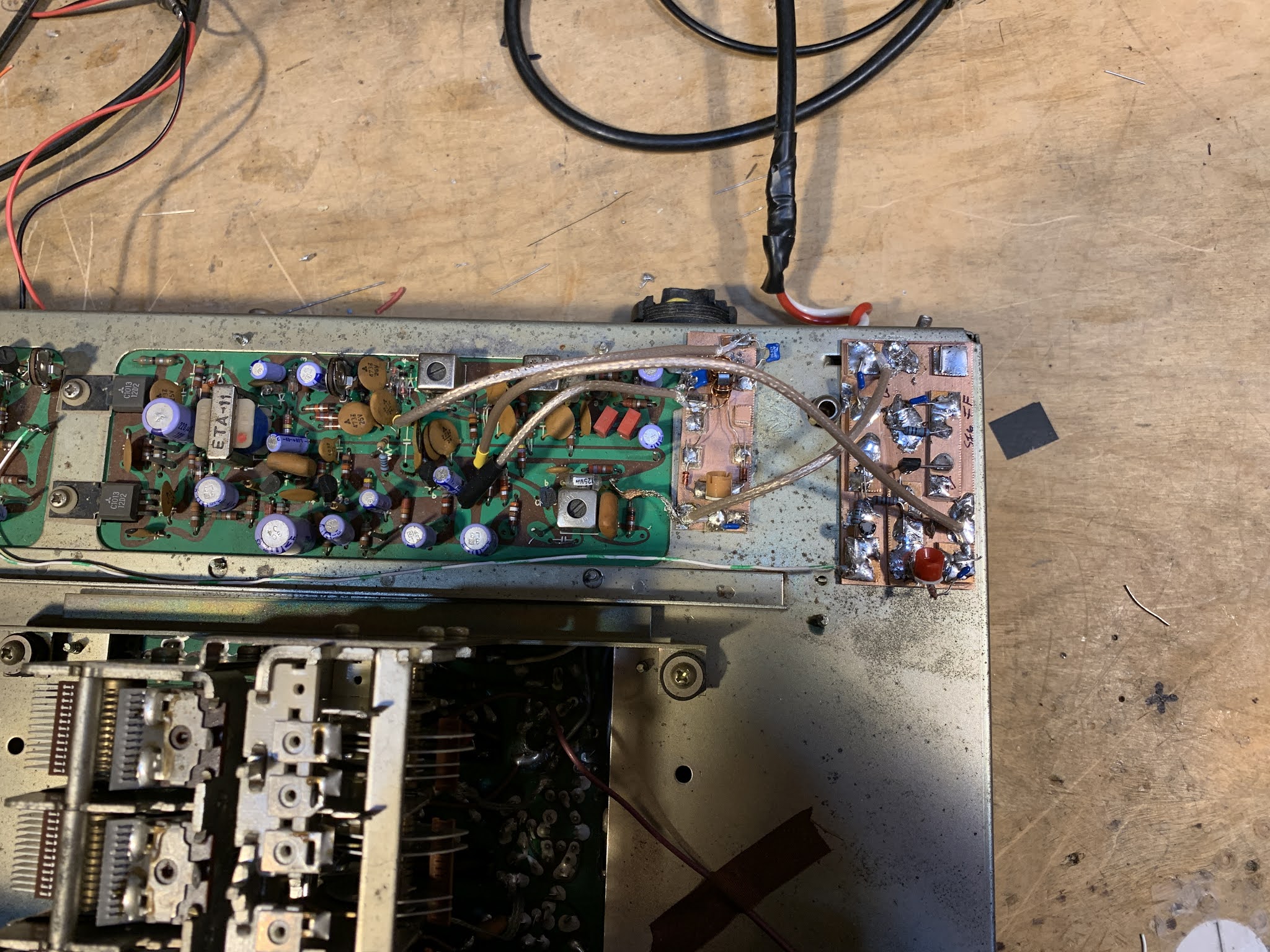
Diode product detector on the left, BFO amp in the right

As noted in an earlier blog post, I didn’t like the sound of SSB and CW when using the product detector in my Lafayette HA-600A. It just did not sound right. The receiver sounded fine on AM with the diode detector. But when I switched in the product detector, it sounded bad. The BFO was fine. The problem was there even when I used an external BFO. And SSB sounded great when I just coupled some BFO energy into the IF chain and used the diode detector to listen to SSB. My suspicions were focusing on the very simple BJT product detector.

Steve N8NM built the HA-600A product detector both in LTSpice and in the real world. It worked fine in both versions. Steve even put the product detector into his S-38 receiver — he reported it worked well there.

I too built the thing in LTSpice. Then I went and rebuilt the circuit on a piece of PC board. I connected the new circuit to the HA-600A, using my external FeelTech sig generator as the BFO. IT STILL SOUNDED BAD ON SSB.

At this point I started Googling through the literature. I found a promising article by Robert Sherwood in December 1977 issue of Ham Radio magazine entitled “Present Day Receivers — Problems and Cures.” Sherwood wrote:

“Another area that could use additional work is the product detector. As the name implies, its output should be the product of the two input signals. If BFO injection is removed, output should go to zero. If this is not the case, as in the Heath HW series, envelope detection is also occurring, which causes audio distortion.”

I checked my circuit. When I removed the BFO signal from the product detector, envelope detection continued. In fact, with the receiver in SSB mode, and with the BFO disconnected, I could listen to the music of WRMI shortwave. It seemed that Sherwood was explaining well the problem I was having: Simultaneous envelope and product detection was making SSB sound very bad in my receiver. What I was hearing just seemed to SOUND like what you’d get with a mixture of product and envelope detection: “scratchy” sounding SSB. This also seemed to explain why SSB would sound fine when using the diode detector with loosely coupled BFO energy — in that case it would be envelope detection only, with no ugly mixture of both kinds of detection.
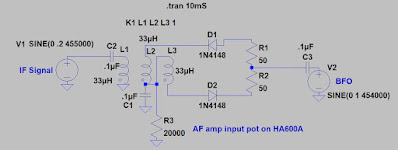
So I built a better detector. I had had great luck with the two diode one trifilar transformer singly balanced design used by both Doug DeMaw and Ashhar Farhan. I built the circuit using one of the trifilar toroids given to me by Farhan, and connected it in place of the original BJT product detector. With the FeelTech Sig Gen as BFO, I got good results — most of the signal disappeared with I disconnected the BFO. Looking at the circuit, I realized that I was balancing out not the IF signal but instead the BFO signal. To minimize envelope detection I needed to put the IF signal on the balanced input of the product detector (to L1 in the diagram above). When I did this, envelope detection seemed to disappear completely and the receiver went silent when I disconnected the BFO.
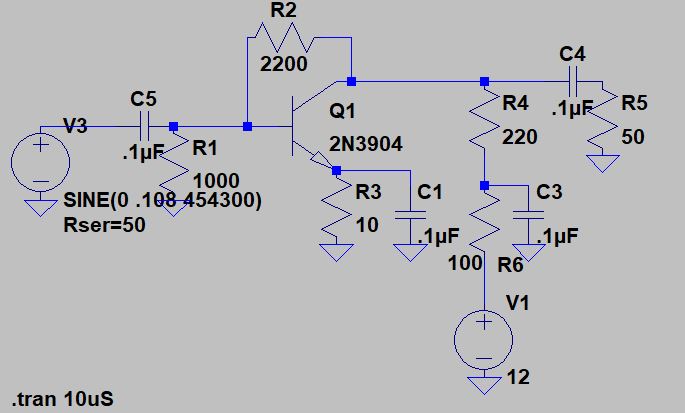

Finally, I needed to find a way to use the BFO in the HA-600A with the new product detector. Obviously I needed more BFO signal — I needed about 7 dbm, enough to turn on the diodes. I converted the outboard product detector board into a simple amplifier and put it between the HA-600A BFO and the BFO input port of the new product detector. This works fine.

A few issues remain:

1) The output from the HA-600A BFO through the above BFO amp (and across the 50 ohm resistor) is NOT a pretty 455 kc sine wave. But the peaks of the distorted wave appear to be enough to turn on the diodes, and when I look at the voltages across each diode (on my two channel ‘scope) I see mirror images — one is on when the other is off. Is this good enough?

2) Moving the BFO input from L1 to the junction of the two 50 ohm resistors (that is actually a 100 ohm pot) has big implications for how this mixer works. With the BFO energy going through the toroid, BOTH diodes are being alternately turned on and turned off. But both are on, and then BOTH are off. With the BFO energy going in through the other side, one diode turns on when the other is off. I think the mixing result is the same, with AF coming out of the output port, but the way the mixer works in this configuration is very different. Does this sound right?
Using SDR without SDR Hardware — N2CQR Adjusts Analog BITX20 using Web SDR

I know what you are thinking: Software Defined radio with the TOTAL elimination of hardware? WHERE IS BILL AND WHAT HAVE THEY DONE WITH HIM?

Relax my friends. All is well at SolderSmoke’s East Coast HQ. In fact, just yesterday I was making use of one of the systems described in this video. Here’s how:

I was on 20 meters with my BITX 20 Hardware Defined (HDR) homebrew transceiver. Everything was going smoothly. We have some sunspots now, so DX is once again possible. I heard a loud U.S. station (that will remain anonymous) calling CQ, so I gave him a call.

The trouble started right after he looked at my QRZ page. You see, I have pictures of my homebrew rigs there. These images sometimes trigger hostile reactions, especially from guys who have almost their entire stations INSIDE their computer boxes. I also admit to occasionally making things worse by pointing out that it is possible to build a BITX20 for about five dollars U.S. Some guys apparently don’t like hearing about this.

Anyway, the fellow I was talking to proceeded to give me a very blunt and harsh signal report: “Well, I suppose your signal is strong enough, but your audio is TERRIBLE!” Interpersonal relations pointer: This is NOT a good way to alert a fellow ham to possible technical problems in the rig that he has built by hand, from scratch, in his home workshop. Especially when the person delivering the harsh signal report is using a “rig” that was built by credit card in a robotic factory on the other side of the planet.

So that QSO ended rather quickly. But I did want to follow-up in the comment about the audio. And here is where I turned to Web SDR. Mehmet NA5B has a really nice WEB SDR receive system in Washington DC, just about 8 miles east of me. Before 20 meters opened, I called up Mehmet’s SDR on my computer, tuned it to the frequency of my transceiver and watched the screen as I asked if the frequency was in use. I then issued a couple of hopeless CQs, again watching the screen. I could see in NA5B’s waterfall that my signal was indeed seriously lacking in low frequency audio.

Now it was time to turn to hardware. Rig on the bench, ‘scope and sig generators fired up, I quickly determined that the problem most likely resulted from my placement of the carrier oscillator frequency in relation to the homebrew USB crystal filter. I had placed it about 300 Hz too low. This resulted in a low AF frequency roll off not at the desired 300 HZ, but instead at around 600 Hz. That would make the audio sound “tinny.” So I moved the carrier oscillator up 300 Hz and went back to Mehmet’s SDR receiver. I could see that the lows were now at the right level. Thanks Mehmet.

One note about the audio coming out of the many SDR radios on the air: When you look at the passbands in the Web SDR receivers you can see audio going almost all the way down to the frequency of the suppressed carrier. With non-SDR rigs you usually see a gap of around 300 Hz between the carrier freq and the start of the SSB signal. This is often the result of our filter rigs having IF filter skirts — you would place the carrier oscillator frequency a bit down the skirt — this would help with opposite sideband suppression and all you would be losing would be the lows below 300 cycles, which weren’t really necessary anyway. I had placed the carrier oscillator too far down on the skirt.

Of course, sometimes SDR rigs will also have a gap between the carrier freq an the start of the audio if the operator has set the passband this way, or if the microphone attenuates below 300 Hz. But you see a lot of signals with audio filling almost the entire passband –some of the “Enhanced SSB” guys are running audio passbands that go as low as 50 Hz.

Has anyone else noticed this “full passband” effect when looking at the waterfalls?
Any other tips for using Web SDR for troubleshooting?

Paul Taylor’s Quarantine “Summit Prowler 7” and some Radio Archaeology

Paul Taylor VK3HN has really outdone himself in this video (above) and blog post. He describes coming across a somewhat mysterious homebrew SSB exciter with some cryptic markings on it. Paul eventually figures them out. We still don’t know who the builder VK3WAC was — can anyone find him in their logbooks?

As Paul goes through the description of the transceiver he built around the mystery exciter, he mentions a number of hombew heroes including Farhan VU2ESE, Peter DK7IH, Eamon EI9GQ (I have to get his book!), and Don W6JL. Also, our beloved SSDRA book plays a prominent role in the story.

Paul’s video is really beautiful — at one point the camera pans the landscape and we see kangaroos in the field. It is also refreshing — as we suffer in the heat of the northern hemisphere summer — to see Paul and his friends out on the summits in their winter coats and hats.

It looks to me as if Paul built this rig during the current emergency, so I will list it as a Quarantine rig. Every dark cloud has a silver lining, and Paul’s rig has added a bit of silver to the dark COVID cloud. Thanks Paul.

https://vk3hn.wordpress.com/2020/07/26/something-old-something-new-a-four-band-5w-50w-ssb-cw-transceiver-summit-prowler-7/

Alan Wolke W2AEW on IMD, NanoVNA and more (presentation to UK club)

This video is another reminder of how lucky we are to have Alan Wolke W2AEW as a fellow radio amateur, and as a teacher and mentor.

In this video, Alan is talking to the Denby Dale Amateur Radio Society in Yorkshire, UK.

The first part of his talk is about IMD products, the importance of 3rd order products, and the benefits of attenuation.

The second part of the talk (after a few questions) is a look at the NanoVNA, which Alan cites as the “Toy or Tool of the Year.”

I learned a lot from both portions of the presentation. I now find myself wanting an H4 model of the NanoVNA (bigger screen). Or maybe even an F model. Thanks to Alan, I now know what S21 and S11 means.

Thank you Alan, and thanks to the Denby Dale ARS.

73 Bill

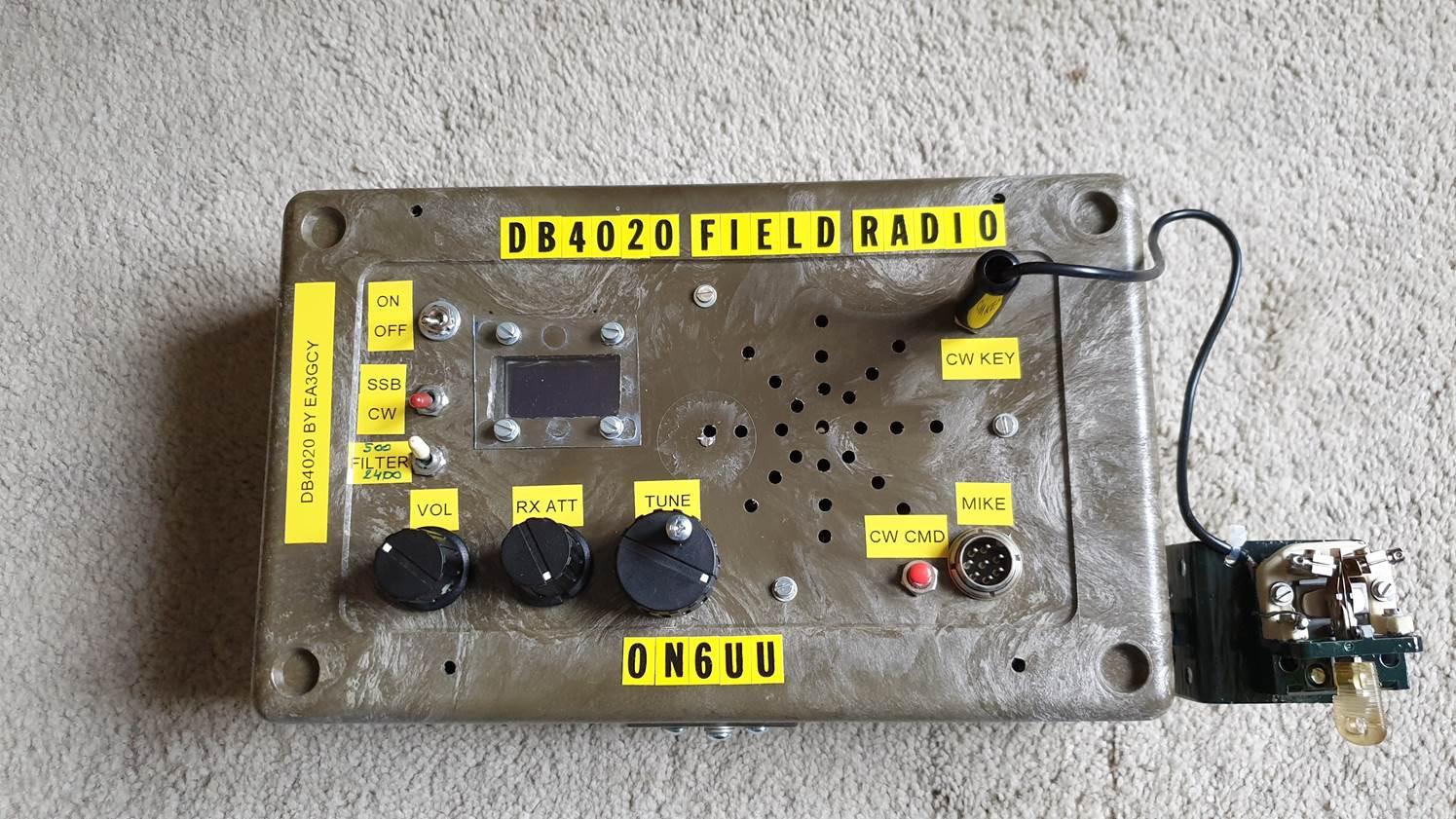
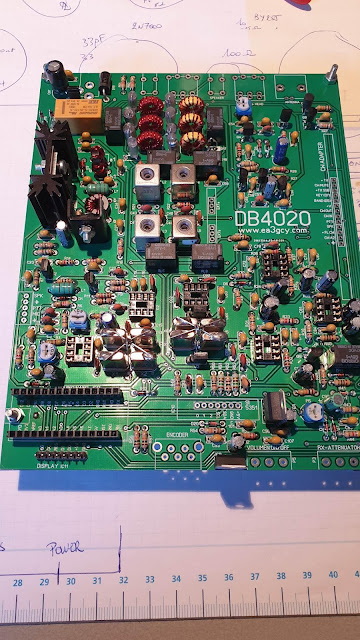
ON6UU’s DB4020 EA3GCY Rig

Hi,
Recently I got the EA3GCY newsletter, it announced a new kit DB4020, a 2 band transceiver kit covering 40 and 20 mtrs. I know Javier EA3GCY’s kit are good so I ordered one. A week later it arrived in a brown enveloppe in which I found all components and printboard wrapped in bubblewrap, it was all well packed and after checking all components all was accounted for, all components were indeed there.

8 toroids have to be wound, following the instructions it was piece of cake, no problem,

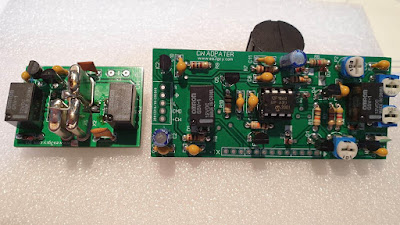
After several hours of work – relax max style – I got everything in place to test, hurray, no smoke !!!! So now the SSB part was ready, I have 7W on 40 and 3.5W on 20mtr. Good power for qrp sota, wff or just garden activity. A fortnight later I got notice that the CW part of the kit was ready and another week later it arrived here, I soldered the 2 boards as soon as possible to get a multimode 2 band transceiver. The 2 boards are the CW interface which also holds the KB-2 keyer, the second board is the 500-600HZ CW filter. The KB-2 give the user 4 memories, beacon function and some more functions. Good thinking to include the keyer, it makes life easy when you’re on an activation. 😊 I opted to make the filter switchable, I like to be able to listen broadband too, very simple, cut one leg of the 13 pin connector on the bottom of the CW interface and put a switch on both ends.
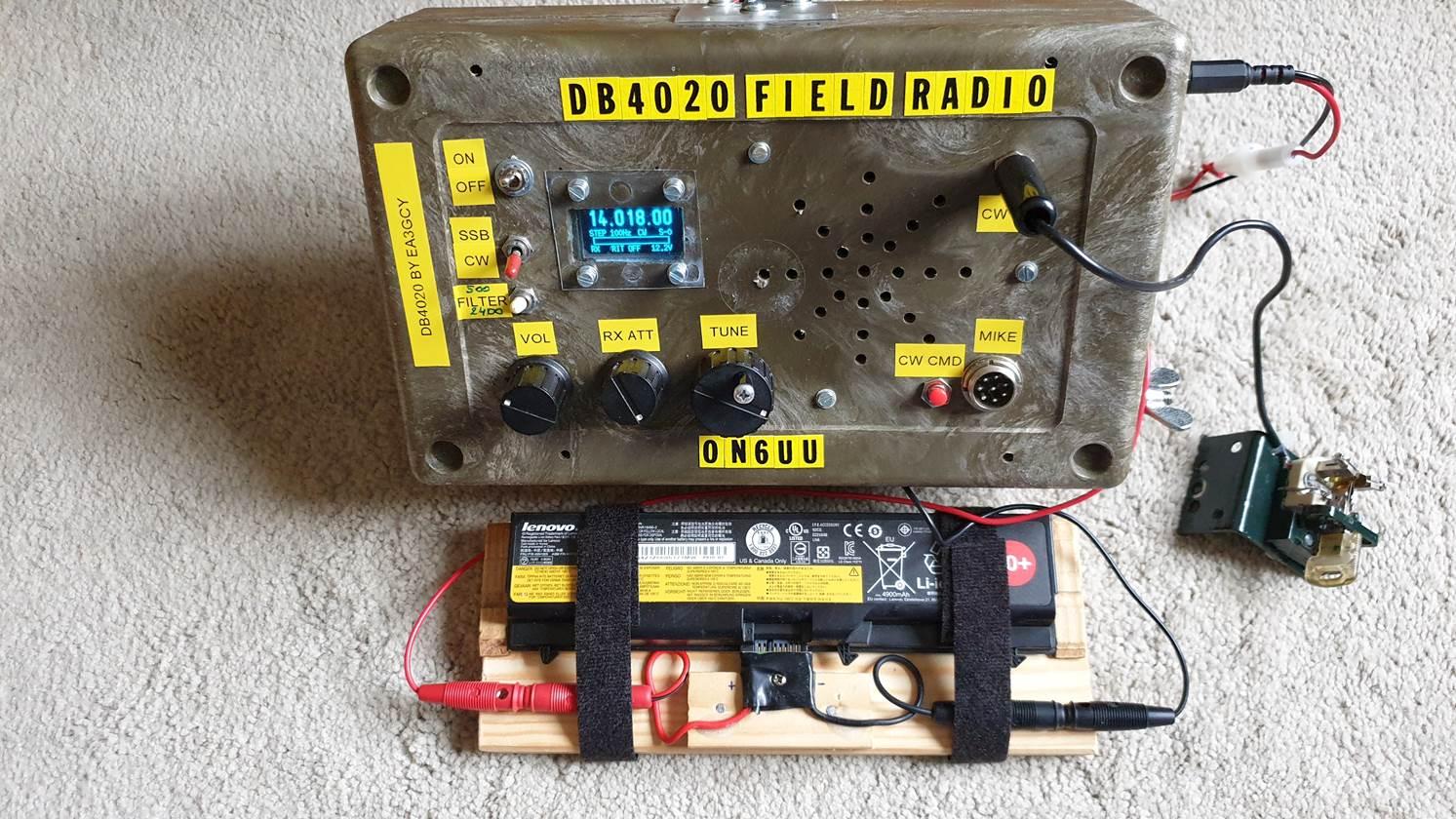
After some figgling around I also got the box ready, a military grade plastic box with wall thickness of 5 mm, this box should be able to withstand a lot of shocks and a drop to the ground. I also made a docking station for a laptop battery which holds some 5Ah and which should be able to give me a lot of hours of listening and some 2 to 3 hours of operation. I had an old laptop which the screen was broken and had some other malfunctions, I have taken the battery connector out of it, luckily I still have another laptop which still works and this is the charging station for the batteries …. .. 😊 The docking is only to test, I will box it up in maybe a some box where I can then maybe also fit a end fed solution or tuner for coax fed antennas.

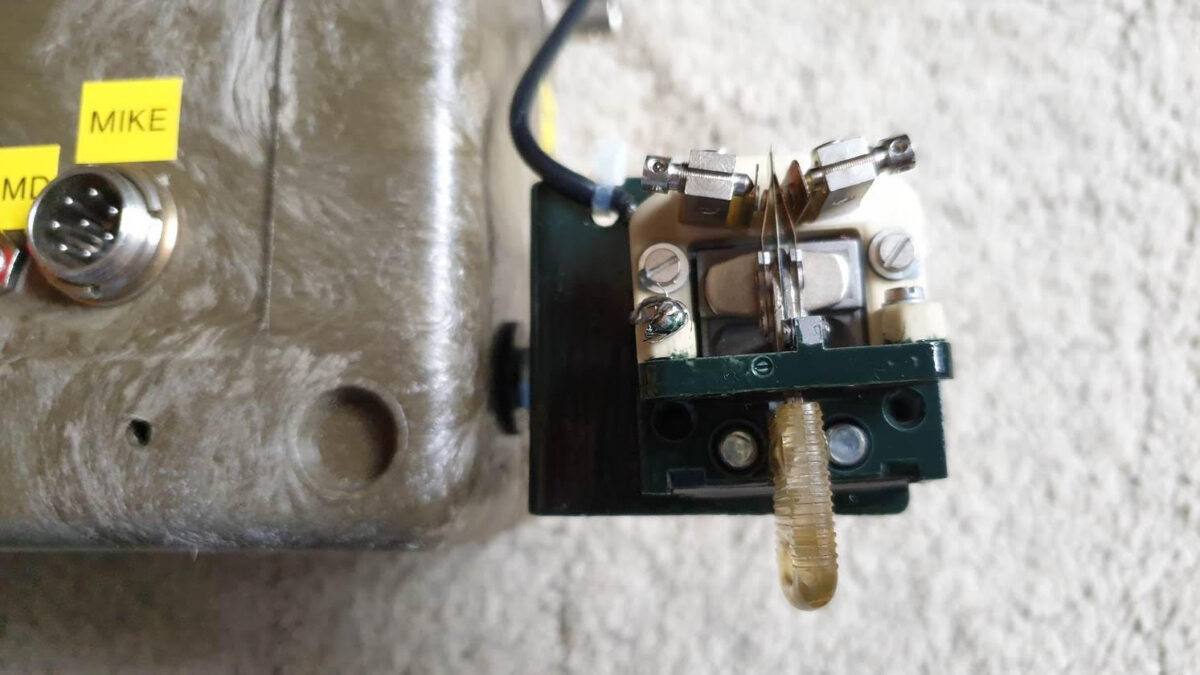
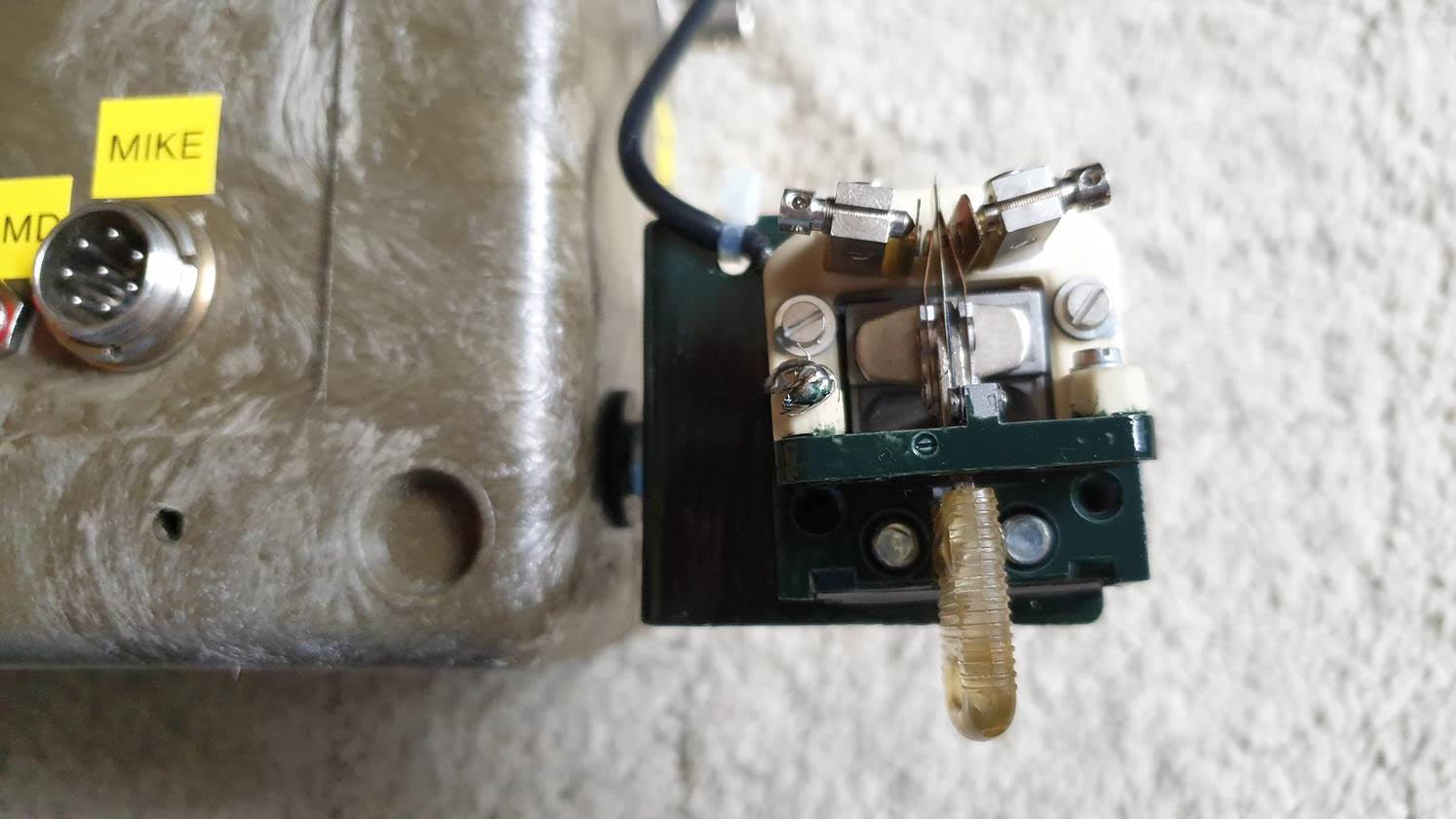
A new radio also needs a new CW key so I made one out of an old relay, painted the base green to fit somewhat the box et voila, here is the result of the complete portable station.
The key can be fitted to the box by means of a bolt and a wingnut. A short cable goes to the CW connector of the transceiver.

I had a lot of fun constructing this kit, the box, the docking and the key. For 180€ you get a arduino nano controlled CW/SSB transceiver with 2 bands on which most of the activity is and you also get a keyer with memories. Good deal I think. More info is available on EA3GCY’s website. Javier is also very quick in responding to questions, he ask for opinions and offers almost an Elecraft style of service.
I made some video’s which are on youtube :
The kitters website :
Best 73
Frank
ON6UU

DK7IH Improves his Shirt-Pocket Transceiver

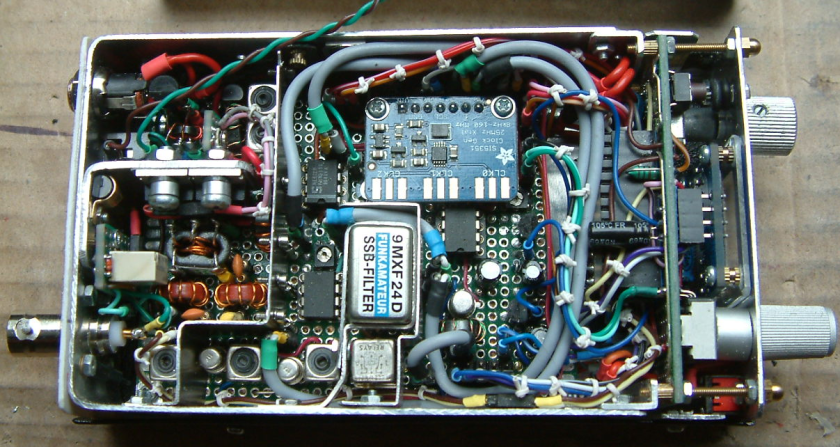
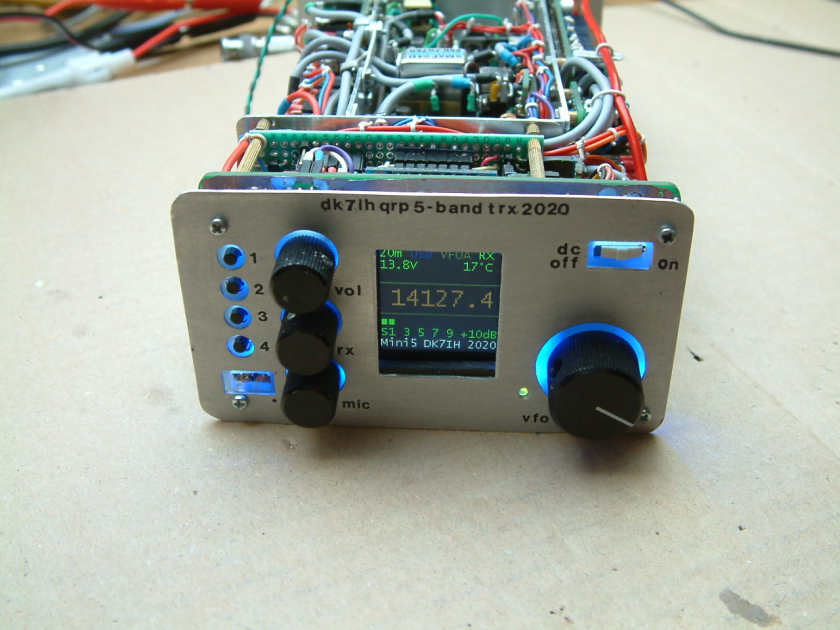
More great stuff from Peter DK7IH. He recently made some improvements to his “Shirt-Pocket SSB Transceiver. On his blog he explains why he made the changes. Note the Si5351 that is in there now. I liked the 1 cm square T/R unit that Peter wrapped in heat shrink tubing. He also provides a really nice description of how to do front panel labeling with a laser printer.


Thanks Peter!

Dilbert, Shep, Dex, Pete, Farhan, and Wes! N2CQR Presentation on Homebrewing to Local Radio Club

Dean KK4DAS asked me to speak to our local radio club, the Vienna Wireless Society. It was a lot of fun. I talked about my evolution as a homebrewer, some of the rigs I made, the moments of joy, and the tales of woe. You can watch the presentation in the video above.

I was really glad to be able to explain in the presentation the importance of people like Pete, Dex, Farhan, Wes, Shep and even Dilbert.

I was also pleased to get into the presentation the N2CQR sign that Peter VK2EMU made for me. Thanks Peter!

Here is the URL to the YouTube video (also above):
https://www.youtube.com/watch?time_continue=3414&v=VHSr-v4QO7Q&feature=emb_logo

And here are the PowerPoint slides I used:
https://viennawireless.net/wp/wp-content/uploads/2020/06/VWS-presentation-Rig-here-is-homebrew.pdf

Listen to Homebrew-to-Homebrew Quarantine Contact with Glenn KU4NO on his 37 year-old Homebrew SSB Transceiver

This was really amazing. I had been feeling guilty about not getting on the air much during quarantine. I mean, we have these airwaves and we have the gear, right? Shouldn’t we be more social, more friendly and get on the air more? I tried yesterday with marginal results (conditions were poor). I called CQ on 40 SSB this morning — nil, except for one grumpy guy who said I was splattering on his morning coffee clatch. Then I heard KU4NO calling CQ. I did not recognize the call. But when I told him I was on a homebrew transceiver, he matter-of-factly sad that he too was on a homebrew rig. When he started to describe it (see below), it all came back me. His is one of the most soulful of homebrew SSB rigs. And I realized that it may also be THE OLDEST HOMEBREW SSB RIG STILL IN USE IN THE WORLD. (If anyone knows of a homebrew SSB transceiver older than 37 years and still on the air, please let me know.) This was exactly the kind of contact that I needed. TRGHS.

Glenn put out a lot of homebrew wisdom. He said a lot of inspiring things. (He did also at one point talked about wanting to shoot his plasma TV, but that’s understandable.) So I recorded most of our contact. (I have his permission to put it on the web).

You can listen to our contact via the YouTube video above.

For my report on an earlier contact with Glenn click here:
https://soldersmoke.blogspot.com/2018/07/a-rig-with-maximum-soul-5-band.html

So, it is worth it to get on the air. They are rare, but people like Glenn are out there, running very interesting rigs. And when you find them, you feel like you’ve hit the jackpot.

Thanks Glenn!


SolderSmoke Podcast #221 is available — Quarantine Rigs, Phasing, SWL, Parts Suppliers, Mailbag

Q-31. “Roll-bar” on cap. Note RGS316 coax between stages. Country markings on tuning dial

SolderSmoke Podcast #221 is available:

25 April 2020

http://soldersmoke.com/soldersmoke221.mp3

Obviously no travelogue. QUARANTINE. SITS.

Good news: Lawyers at Dewey Cheatham and Howe report that SolderSmoke will NOT be taken off the net for brazen promotion of the S-38E receiver.
Also some good news on the FT8 vs. FT-FAKE issue. That report itself was fake.

PETE’S PROJECTS:

Phasing SSB
And what’s this about a tube CW rig?
Dean KK4DAS builds Pete’s Simple SSB rig. Quarantine Rig: The Furlough 40. See: https://kk4das.blogspot.com/
SHAMELESS COMMERCE DIVISION: NEW AMAZON LINK IN THE UPPER RIGHT SIDE OF SOLDERSMOKE BLOG. .
BILL’S BENCH:

QUARANTINE PROJECT: Q-31 AM SW Receiver. April 4 through April 19. 15 days of fun. Learned a lot.
Need to pay attention to total gain. Need to measure. Not always easy. My resistor-based technique.
AM detection can be more difficult than SSB/CW detection. Germanium diodes make a big difference.
But…I don’t have to build a BFO, because these signals bring their own beat frequency.
455 CAN BE PROBLEMATIC AS AN IF – image response, making impedance matching transformers tough at those low frequencies. But WIDE filters available.
LM386 AF chip make a LOT of audio. Hard to reproduce these great results.
Great stuff you can listen to on 31 meters (9.4 –10 MHz):
n DX WaveScan
n WRMI Rock and roll
n VORW music show
n Radio Nacional De Espana (Madrid)
n China Radio International soap operas and Confucius philosophy lessons.
n China Radio International Chinese Lessons.
n Radio Greece
n Radio Republica (France)
n Radio Havana Cuba
n Radio Saudi Arabia
n WBCQ – They advised listeners to fix up an S-38 during quarantine! !!!!!!!
n WWV
SHOPPING BAG — THINGS TO GET:

— Great source for hardware (screws, nuts, bolts and more): McMaster-Carr https://www.mcmaster.com/

— Thermax RGS316 coax. Great stuff. Thanks Jim In some ways better than Belden 1671A https://soldersmoke.blogspot.com/2012/03/murphys-whiskers-shaved-with-belden.html

— Copper Clad board: Pete’s boards use CEM 1. CEM 1 is low-cost, flame-retardant, cellulose-paper-based laminate with only one layer of woven glass fabric.


NEED/WANT:

— Thermaleze magnet wire. First encountered in QRP GUYS EFHW tuner kit. Very FB
Resistor kits
NP0 cap kit
Replacement Iron for XTRonic 4000 Iron.
RIGOL PROBES Why do we burn through so many of these?


MAILBAG:

— Eric 4Z1UG Episode 300 Special
— Farhan working on ventilators. Special thanks to Dr. Gordon Gibby KX4Z.
— Jonathan-San working out of new shed in Seattle
— Grayson reminds us of the Fran Lab: https://www.youtube.com/channel/UCMLgHbpJ8qYqj3CkdbvC0Ww
— WRMI likes SolderSmoke
— Peter VK2EMU continues to build his amplifier. But it is NOT for 50 MHz. It does have 6 different meters on the front panel. But it is not a 6 meter rig!
— Rich K7SZ – “now look what you’ve done” Fixing up an S-38
— Rich WD3C Provided some great SWL links:
https://www.short-wave.info/ if you move the green dot to your location it will predict what the signal strength would be at your location and will also allow you to search by station, language, frequency, etc.
Thomas Whitherspoon, https://swling.com/blog/ Another, https://shortwaveschedule.com/ and of coarse https://www.hfunderground.com/board/index.php all the pirate broadcasters show up here.
— Paul KL7FLR amazing S-38E diagnosis from afar. Paul’s toroid tool (more to follow on this).

Pete’s Quarantine 6V6 Rig

Dean KK4DAS Builds SSB rig, Makes First Contact.

You can almost see the excitement in the notes (al fresco!) of Dean KK4DAS. He made his first QSO with a homebrew transceiver this week. Not long ago Dean was taking his first tentative homebrew steps with a Michigan Mighty Mite. Wow, he has made great progress.

Congratulations Dean!

Brace Yourselves: DK7IH’s New Transceiver — The Gimme Five

Lock-down is bad enough, but now we will also have to cope with the feelings of homebrew inadequacy that Peter’s rigs always cause. But look on this as an opportunity for inspiration. Peter once again raises the bar.

This looks like it is the first in a series of blog posts. Just what we need in quarantine. Thanks Peter.

Quarantine Reading: Tribal Knowledge: Two Gems from Pete Juliano N6QW

WB9FLW recently reminded us of two very useful documents that have been kind of buried on one of Pete’s web sites. I think these documents are just the kind of thing we all need during these dark days of quarantine. So just sit back, StayInTheShack, and soak up tribal wisdom from the Wizard of Newbury Park.


Here is the message from WB9FLW that unearthed these gems:

Morning Pete,

Three cheers for posting the Simple SSB Transceiver as a possible project during the pandemic lockdown.

Suggestion, folks that are new to your Website may not have seen some of your earlier posts especially on jesssystems.com.

“Homebrewing For QRP SSB” is a gem and a great lead in to the simple SSB Transceiver project.


There is a lot of wisdom in those pages, perhaps you can add a link for those interested in building the rig.

“How To Stuff A Junk Box” is good as well.


Hope you and the family are doing well.

Pete WB9FLW


For Inspiration and Education: Dean’s Radio Blog (with video)

Be sure to check out the blog of Dean KK4DAS. He is a new homebrewer who is having great success with one of Pete Juliano’s ingenious SSB designs. Dean has a video of his receiver working — AL FRESCO — as construction on the full transceiver proceeds.

This is amazing. Just a short time ago Dean was taking his first steps as a homebrewer with his version of the Michigan Mighty Mite. He has followed the advice of the Tribal Wizards and has proceeded slowly, step by step, stage by stage, gaining the experience that has allowed him to actually build a superhet receiver and be on the verge of completing a full SSB transceiver.

Lots of inspiration to be found on Dean’s blog. Check it out:

https://kk4das.blogspot.com/2020/03/dean-kk4dass-furlough-40-ssb-rig.html

N3FJZ’s Al Fresco. BITX-inspired, TIA. 50 Watt, SSB Rig (Video)

The last blog postings on Rick N3FJZ were in 2015. Rick sent me a very uplifting reception report, then we had a pretty amazing Homebrew-to-Homebrew contact.

Paul Taylor VK3HN yesterday alerted me to a new YouTube video that shows the progress Rick has made with his homebrew SSB rig.

This is a great example of true amateur SSB construction. Rick is making use of a combination of digital and analog technology. He is adapting circuitry developed by others and using it to meet his needs. During the development stage he is keeping the circuit open (Al Fresco) so that he can easily work on it.

FB Rick.

KG7TR Describes his Homebrew SSB Rigs (Video)

We have posted before on the amazing homebrew creations of Mike Bohn KG7TR.

Today I watched this 54 minute video in which Mike describes his rigs. (Thanks to Pete Eaton, WB9FLW for pointing me to a site that has this video.)

Quote from KG7TR: “I have never destroyed a pristine Command Set.”

Wonderful tribal knowledge throughout, especially on the metal work, parts acquisition, front panel work and toroid placement.

Clear you schedules. This is really worth watching.

W6IQY’s Homebrew SSB Transceiver from the mid-1960s

Oh wow, it is definitely a thing of beauty. Bob W9RAN acquired this homebrew gem and put it back on the air. Bob also wrote a very nice article about the rig and how it was made. (Mike WU2D should brace himself — many surplus rigs were cannibalized in the process.) It is especially fitting that I post this today because February 9 is the day of the Classic Exchange on-the-air event. (My DX-100 is warming up.)

Here is the article: http://tinyurl.com/rjqq6eo

Bob’s site has some more really wonderful articles. You can read about Heathkit monobanders, DX-60s. ELMAC power supplies and — my favorite — Mike Hopkins and the Five Meter Liberation Army. The FMLA was, of course, the forerunner and inspiration for our current Color Burst Liberation Army.

See it all here:


Thanks Bob!