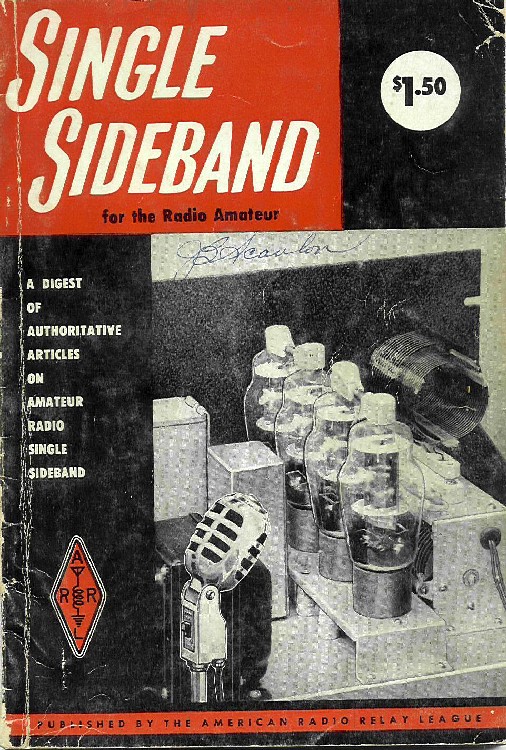
Category: SSB
QST Recognized Error on Sideband Inversion, But Continued to Make the Same Mistake
QST Repeatedly Got Sideband Inversion Wrong
It kind of pains me to do this. These articles are from a long time ago, and the author is an esteemed Silent Key, but the myth about the origins of the USB/LSB convention is still out there, and as a homebrewer of SSB gear I feel obligated to point out these examples of the error that that myth is based on.
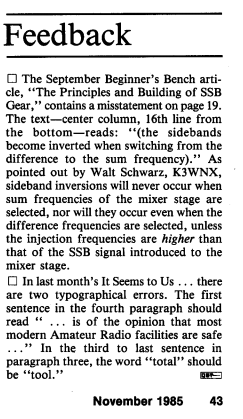
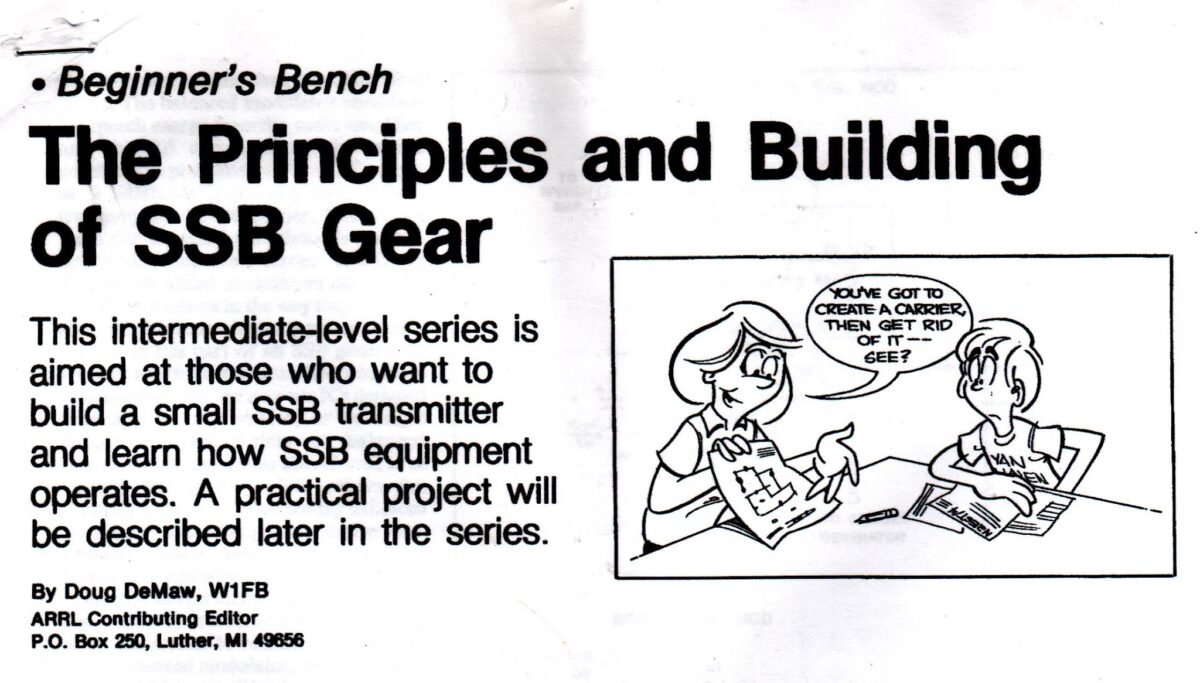
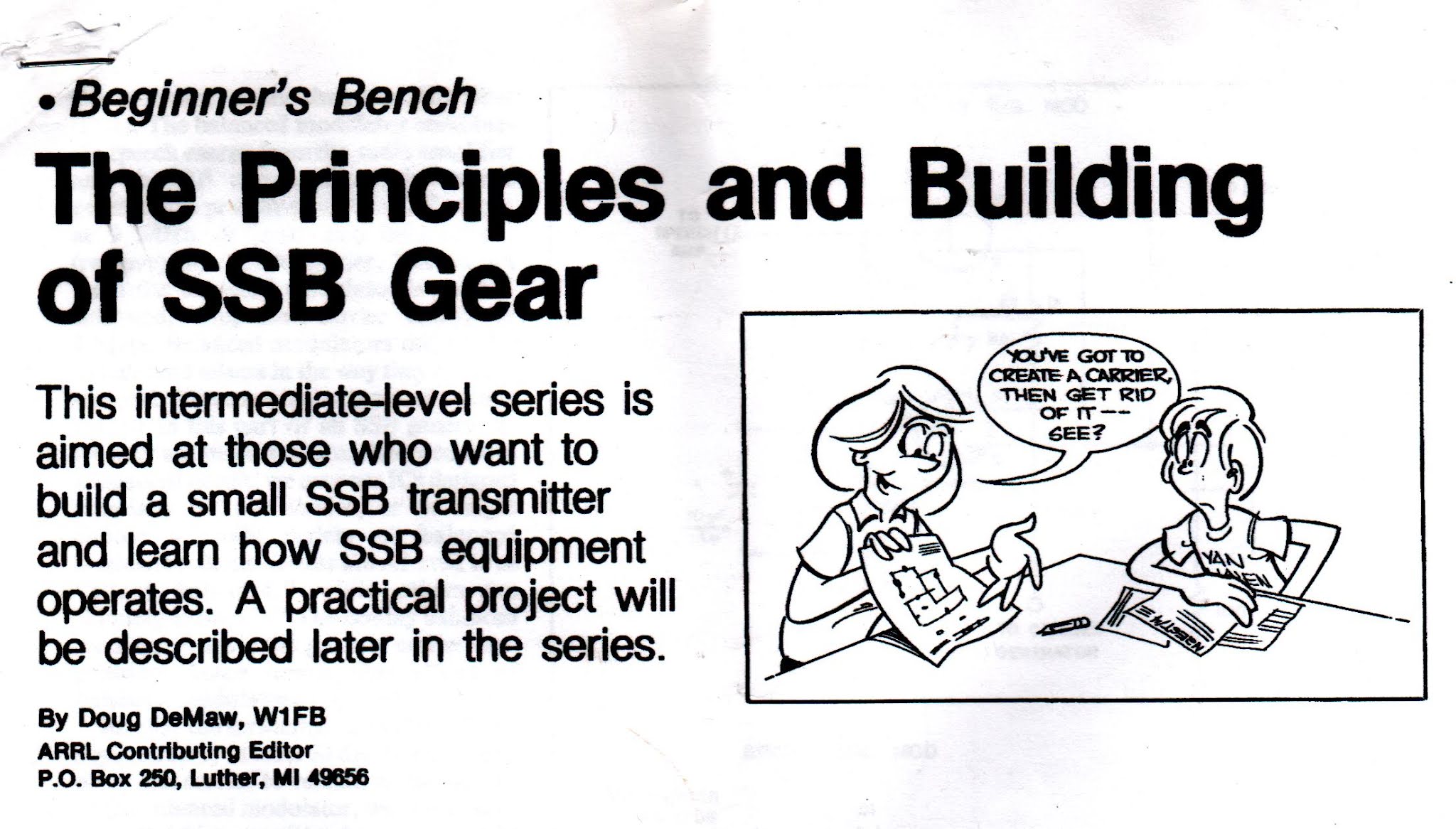
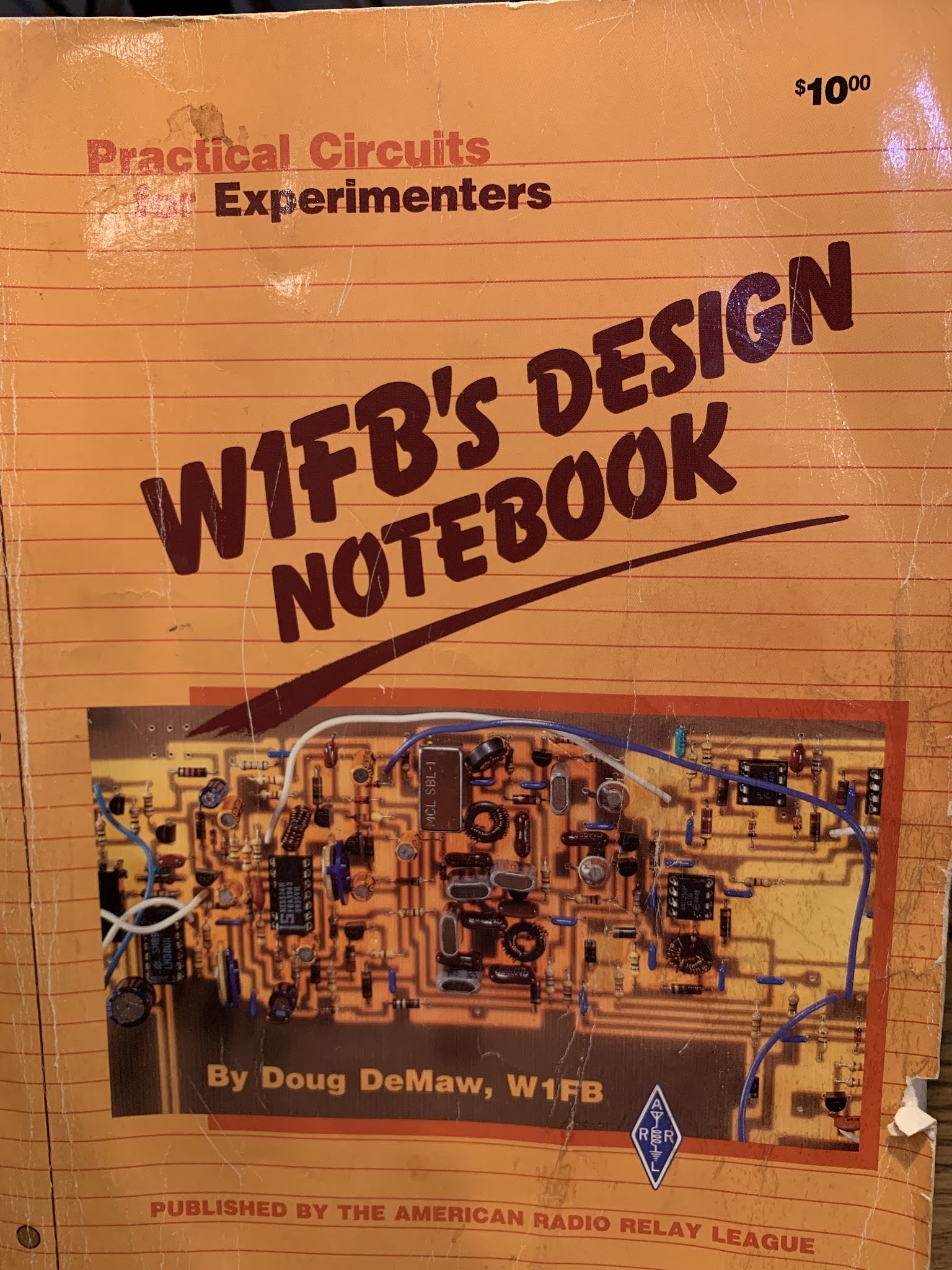
Last Friday, Pete WB9FLW and I were talking about homebrewing SSB rigs. I recommended a series of QST articles by Doug DeMaw. “Beginner’s Bench: The Principles and Building of SSB Gear” started in QST in September 1985. There were at least five parts — it continued until January 1986. (Links to the series appear below.) I hadn’t looked at these articles in years, but when I did, a big mistake jumped right out at me: In the first installment, on page 19, Doug makes the same mistake that he made in his Design Notebook:
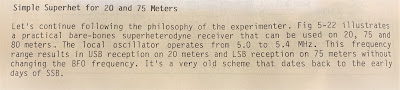
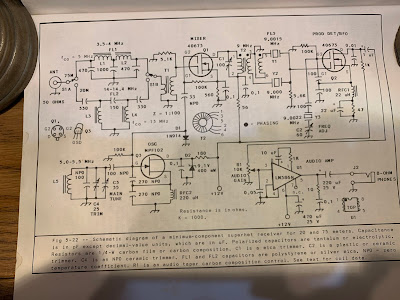
“Now comes the conversion section of our SSB generator. We must move (heterodyne) the 9-MHz SSB signal to 3.75-4.0 MHz. Our balanced mixer works just as it does in a receiver. That is, we inject the mixer with two frequencies (9 MHz and 5 MHz) to produce a sum or a difference output frequency (9 – 5 = 4 MHz, or 9 +5 = 14 MHz) If we are to generate 75 meter SSB energy, we must chose the difference frequency. We could build an 20-meter SSB transmitter by selecting the sum of the mixer frequencies. The RF amplifiers and filter (FL2) that follow would then have to be designed for 14-MHz operation. In fact, many early two-band homemade SSB transmitters were built for for 75 and 20 meters in order to use this convenient frequency arrangement. The use of upper sideband on 20 meters and lower sideband on 75 meters may be the result of this frequency arrangement (the sidebands become inverted when switching from the difference to the sum frequency.) ”
Those last two sentences are incorrect. They repeat the “Myth,” or the “Urban Legend” about the origins of the LSB/USB convention. Contrary to what many hams now believe, with 9 MHz filter and a 5.2 MHz BFO it takes more than just switching from sum frequency to difference frequency to invert one of the sidebands.
There are two conditions needed for sideband inversion to take place:
1) You have to be taking the difference product (DeMaw got that right)
2) The unmodulated (VFO or LO) signal must be larger than the modulated signal. (DeMaw and the ARRL obviously missed that part. Repeatedly.)
This is another way of stating the simple, accurate and useful Hallas Rule: Sideband inversion only occurs when you are subtracting the signal with modulation FROM the signal without modulation.
For DeMaw’s claim to be correct, one of the SSB signals going into the balanced mixer would have to invert, and the other would have to not invert. Let’s see if that happens: He has the sideband signal being generated at 9 MHz and the VFO running around 5 MHz.
9 – 5 = 4 But we are not subtracting the modulated signal FROM the unmodulated signal. SO NO INVERSION
9 + 5 = 14 We are not subtracting at all. SO NO INVERSION.
The Unicorn! A 75 LSB /20 USB Receiver (That Can’t Work)
Mythbuster Videos 8 and 9 — The Old Military Radio Net plus “Zero Beat and The Vertical Skirts”
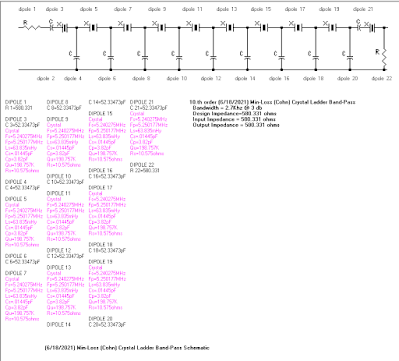
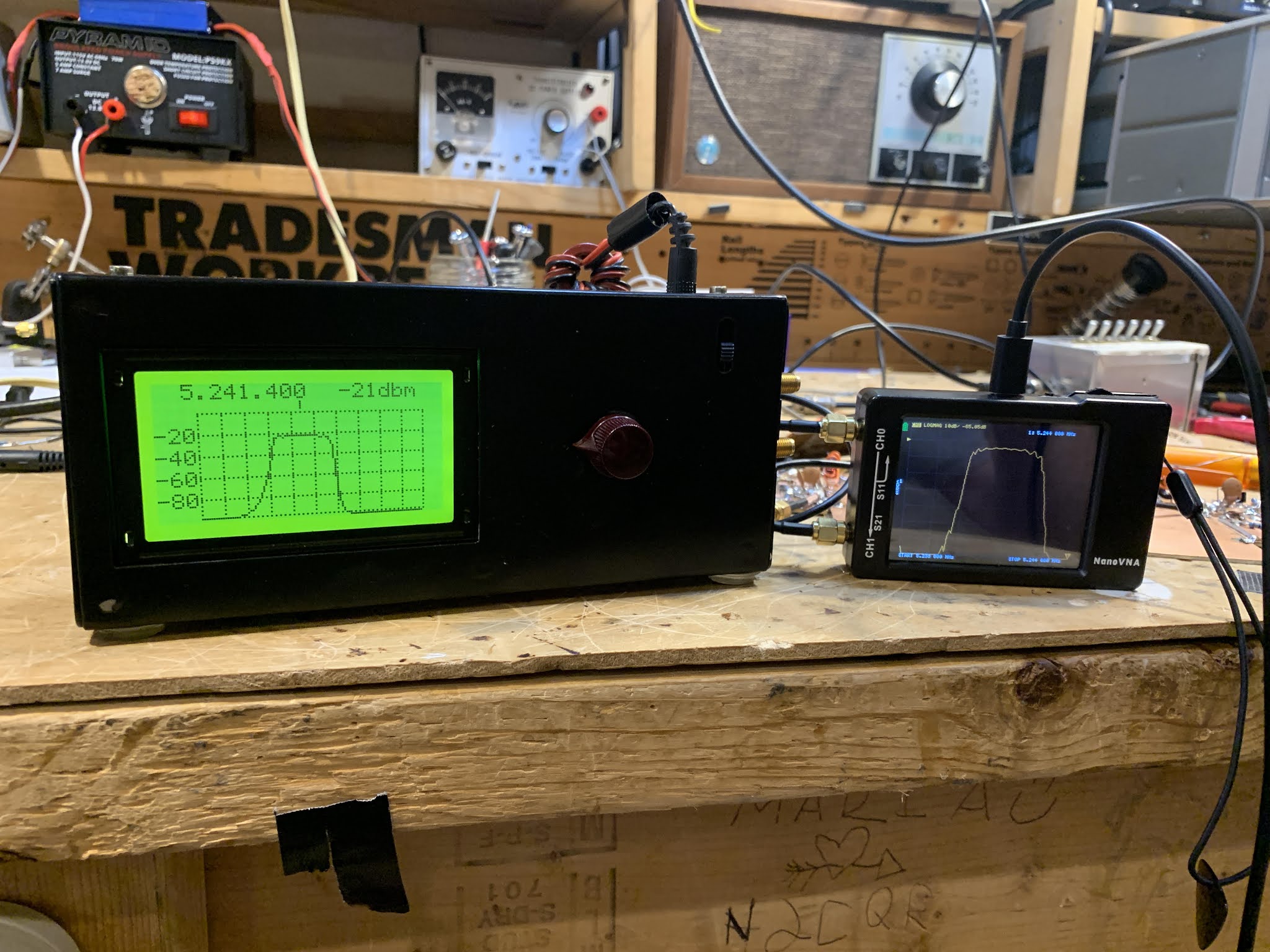
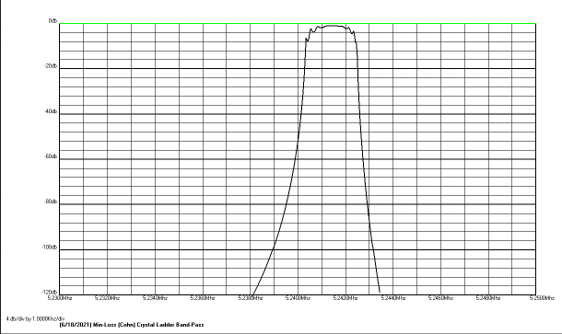
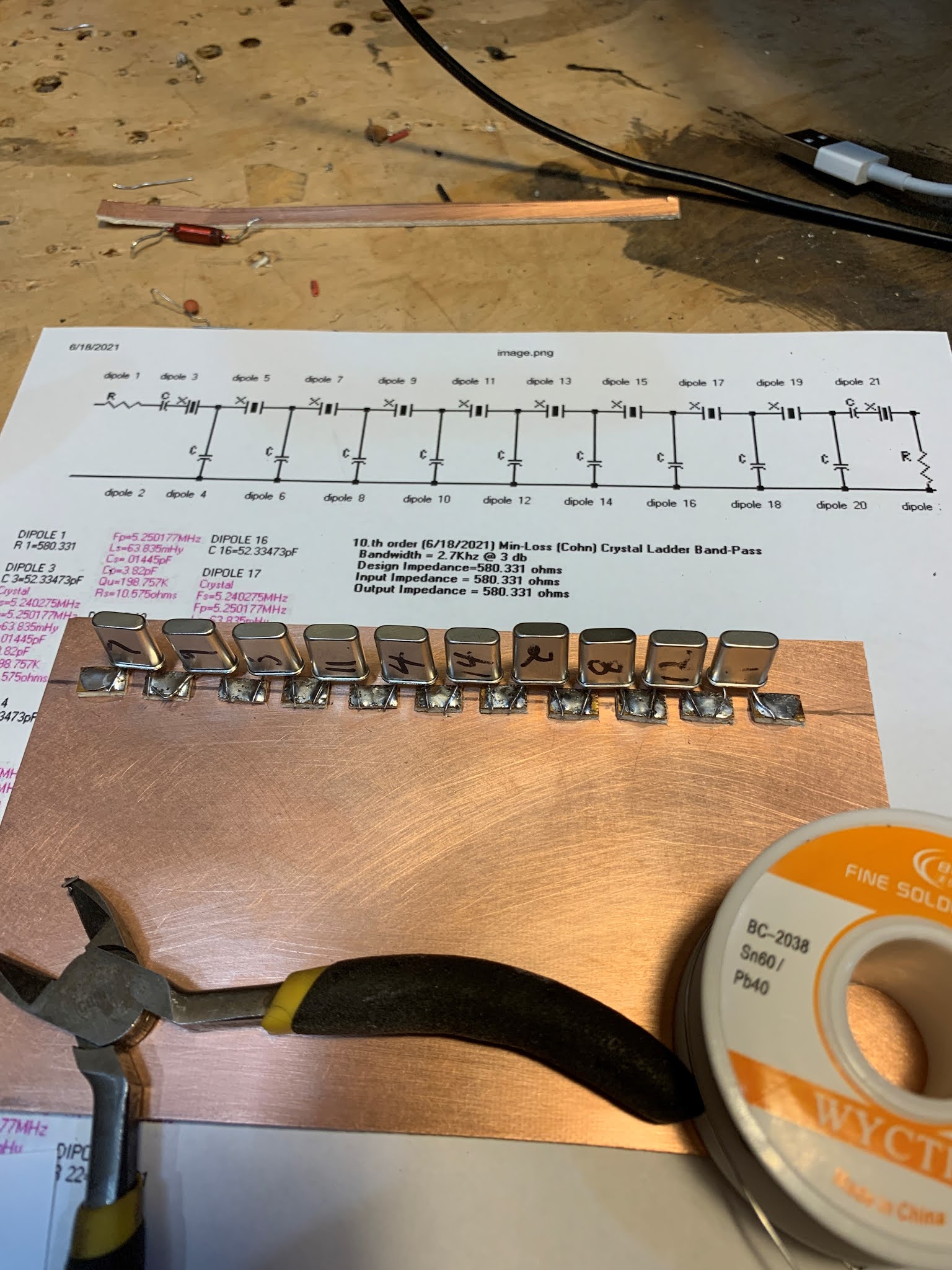
Mythbuster Video #2 — 10 Pole Crystal Filter
A Video Series on the Mythbuster 75/20 Rig — Video #1
The Stubborn Myth about USB and LSB
It has been repeated so often and for so long that many of us have come to believe it. I myself believed it for a while. Like many myths, it has a ring of truth to it. And it is a simple, convenient explanation for a complex question:
Why do ham single sideband operators use LSB below 10 MHz, but USB above 10 MHz?
Here is the standard (but WRONG) answer:
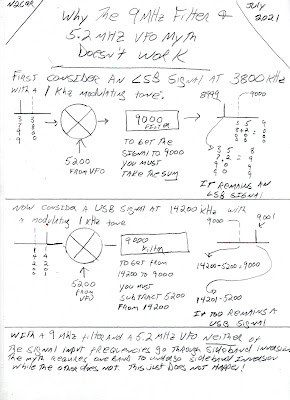
In the early days of SSB, hams discovered that with a 9 MHz SSB generator and a VFO running around 5.2 MHz, they could easily reach both 75 meters and 20 meters (True). And because of sideband inversion, a 9 MHz LSB signal would emerge from the mixer as an LSB signal (True), while the 20 meter signal would emerge — because of sideband inversion — as a USB signal (FALSE!) That sideband inversion for the 20 meter signal explains, they claim, the LSB/USB convention we use to this day.
Why this explanation is wrong:
There is a very simple rule to determine if sideband inversion is taking place: If you are subtracting the signal with the modulation FROM the signal without the modulation (the LO or VFO) you will have sideband inversion. If not, you will NOT have sideband inversion.
So, you just have to ask yourself: For either 20 or 75 are we SUBTRACTNG the Modulated signal (9 MHz) from the unmodulated signal (5.2 MHz)?
For 75 meters we have: 9 MHz – 5.2 MHz = 3.8 MHz NO. We are not subtracting the modulated signal from the unmodulated signal. There will NOT be sideband inversion.
For 20 meters we have 9 MHz + 5.2 MHz = 14.2 MHz. NO. No subtraction here. No sideband inversion.
So it is just arithmetically impossible for there to be the kind of happy, easy, and convenient USB/LSB situation described so persistently by the myth.
———————————
We discussed this several times on the podcast and in the blog:
https://soldersmoke.blogspot.com/2015/05/sideband-inversion.html
https://soldersmoke.blogspot.com/2012/05/usblsb-urban-legend-debunked.html
This myth shows up all over the place:
We see the myth here:
http://n4trb.com/AmateurRadio/Why%20The%20Sideband%20Convention%20-%20formatted.pdf
Here the web site owner warns that this is “highly controversial.” Really? Arithmetic?
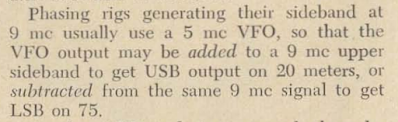
The myth is very old. Here is a clip from a 1966 issue of “73” magazine:
https://worldradiohistory.com/
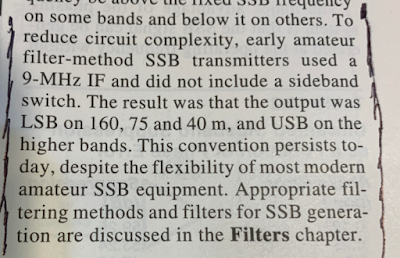
Finally, to my disappointment, I found the myth being circulated by the ARRL, in the 2002 ARRL Handbook page 12.3:
M0NTV’s Latest FB SSB Transceiver
Bill N2CQR Talks to Dean KK4DAS about the Simple SSB Group Build
https://kk4das.blogspot.com/
SolderSmoke Podcast #230 is available! Apr 1, Mars, Group Build, SDR, SSB, Mich Mighty Mites, Mailbag
SolderSmoke Podcast #230 is available for download
http://soldersmoke.com/soldersmoke230.mp3
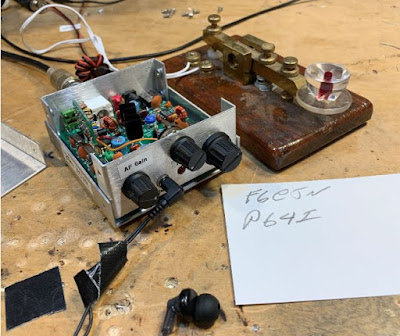
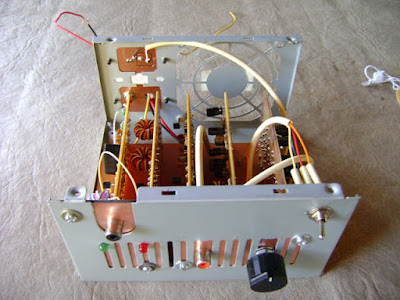
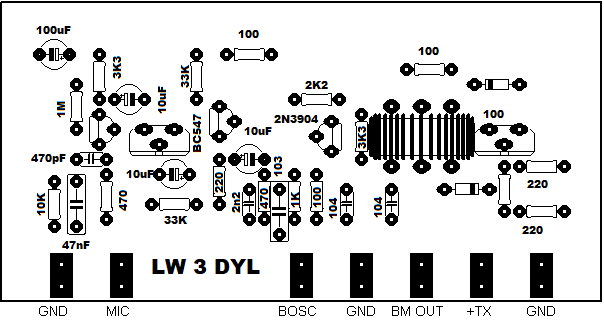
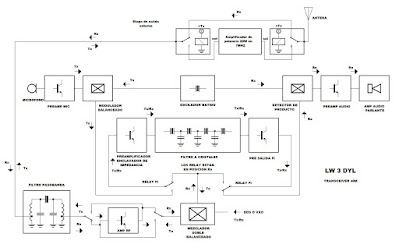
Argentine SSB (BLU) Homebrew from Guillermo LW3DYL
Really nice work. BLU is Spanish for SSB. (Juliano BLU?)
But I think Guillermo needs to build ONE MORE BOARD! A VFO or a VXO. Analog. To finish the job. Guillermo tells me this is in the works — he selected an IF of 11.0592 MHz specifically so that he can use a variable oscillator built around a 4 MHz ceramic resonator.
Complete schematic and PC board patterns on his site:
Homebrew Lives! TWENTY N6QW Simple SSB Transceivers Under Construction in Northern Virginia
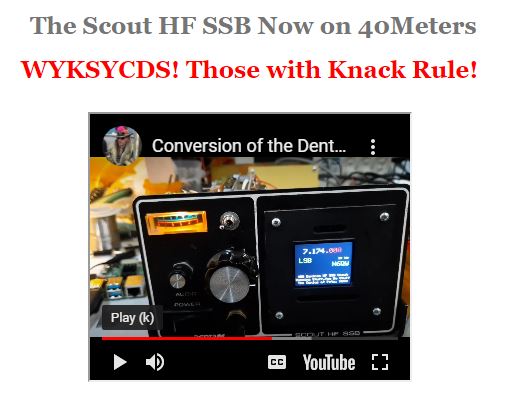
N6QW On 40 Meters with a Civil Air Patrol Dentron Scout — WYKSYCDS
Hodgepodge: Moving the Carrier Oscillator Frequency (and a Flashback to 2002) (Video)
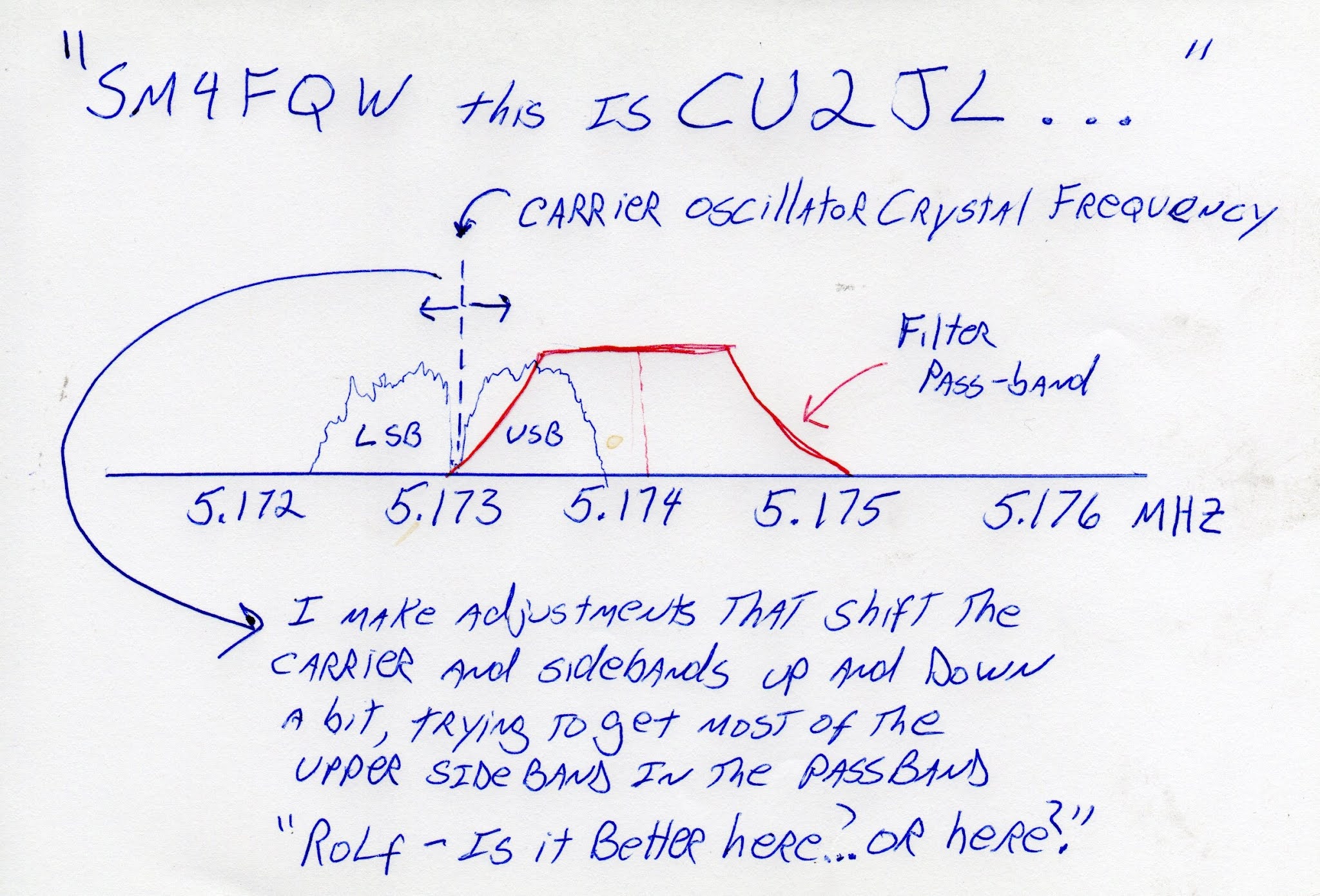
Now it was time for some debugging and fine tuning. I needed to make sure that the frequency of the carrier oscillator was in the right spot relative to the passband of the crystal filter. If it was set too high, the filter would be chopping off high notes in my voice that were needed for communications clarity, and it would allow too much of what remained of the carrier (residuals from the balance modulator) through. If it was set too low, the voice signal transmitted would be lacking needed base notes. I didn’t have the test gear needed to perform this adjustment properly, but my friend Rolf, SM4FQW, up in
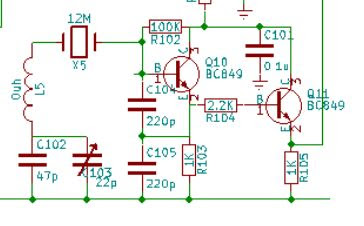
One night, during a conversation with Rolf, I explained my problem and he offered to help me make the adjustments… by ear. Performing an electronic version of open-heart surgery, with power on and Rolf on frequency, I opened the case of the new transmitter. The carrier oscillator has a small capacitor that allows the frequency of the crystal to be moved slightly. With Rolf listening carefully, I would take my screwdriver and give that little capacitor a quarter turn to the right. “Better or worse?” I would ask.
I think this little adjustment session captures much of the allure of ham radio. There I was, out in the
ZL2CTM’s Simple SSB Transceiver
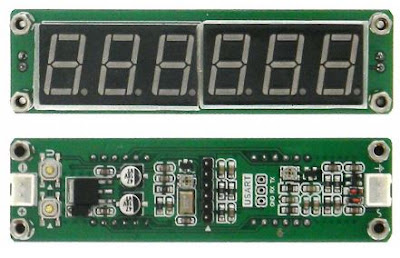
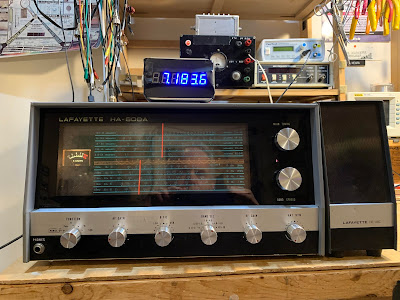
Glowing Numerals for the Lafayette HA-600A (With Jeweled Movements)
SolderSmoke Podcast #227: Solar System, SDR, Simple SSB, HA-600A, BITX17, Nesting Moxons? Mailbag
Mars is moving away. Jupiter and Saturn close in the sky. And the Sun is back in action – Cycle 25 is underway. Also, the earliest sunset is behind us. Brighter days are ahead.
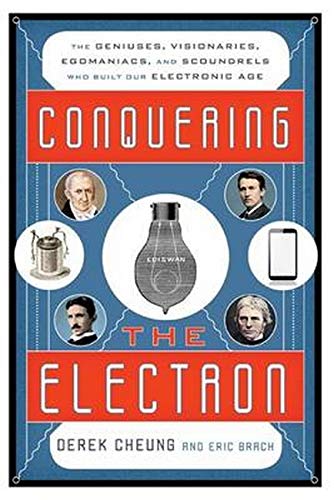
Book Review: “Conquering the Electron” With a quote from Nikola Tesla.
No real travel for us: Hunkered down. Lots of COVID cases around us. Friends, relatives, neighbors. Be careful. You don’t want to be make it through 10 months of pandemic only to get sick at the very end. SITS: Stay In The Shack.
Pete’s Bench and Tech Adventures:
Backpack SDR keithsdr@groups.io
Hermes Lite 2
Coaching SSB builders
G-QRP talk
A new source for 9 MHz crystal filters
Bill’s Bench:
Fixing the HA-600A Product Detector. Sherwood article advice. Diode Ring wins the day. Fixing a scratchy variable capacitor. Studying simple two diode singly balanced detectors. Polyakov. Getting San Jian frequency counter for it.
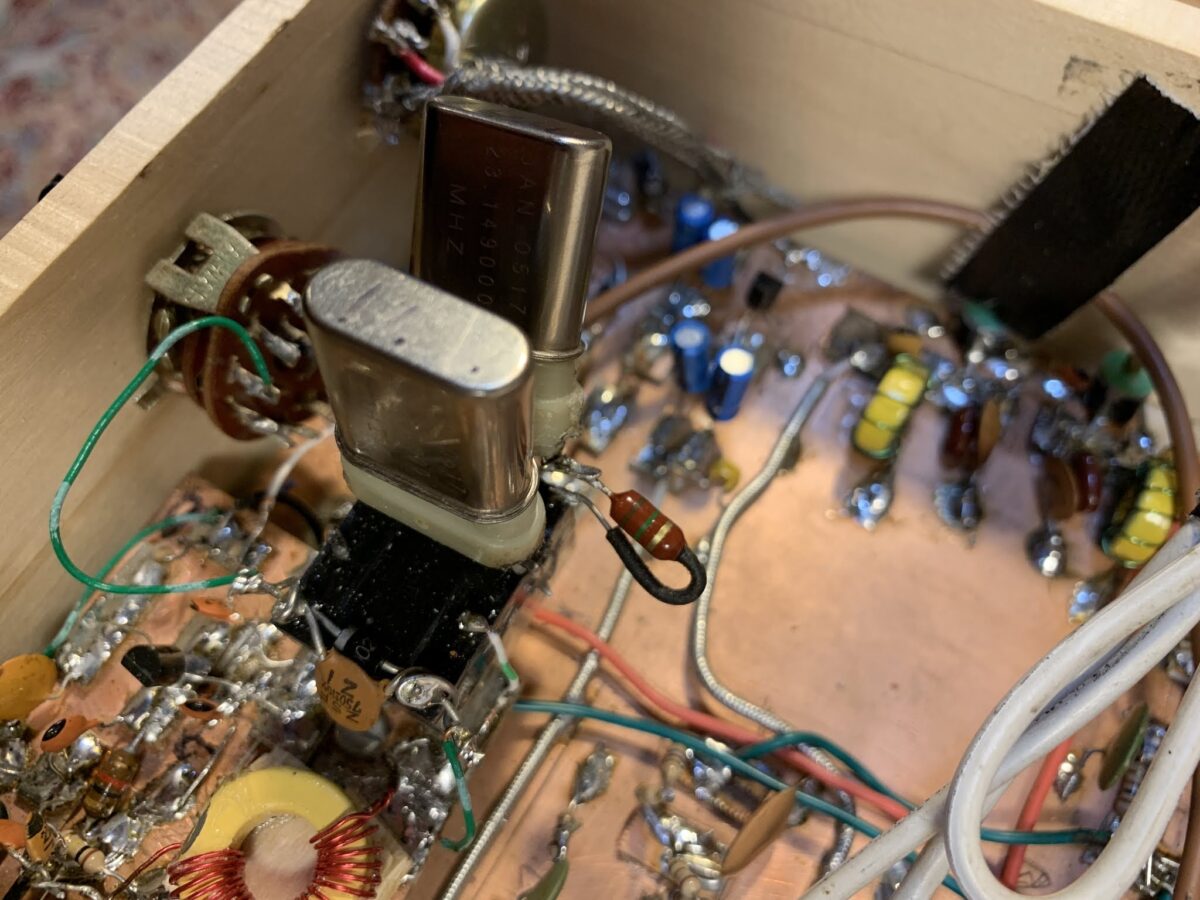
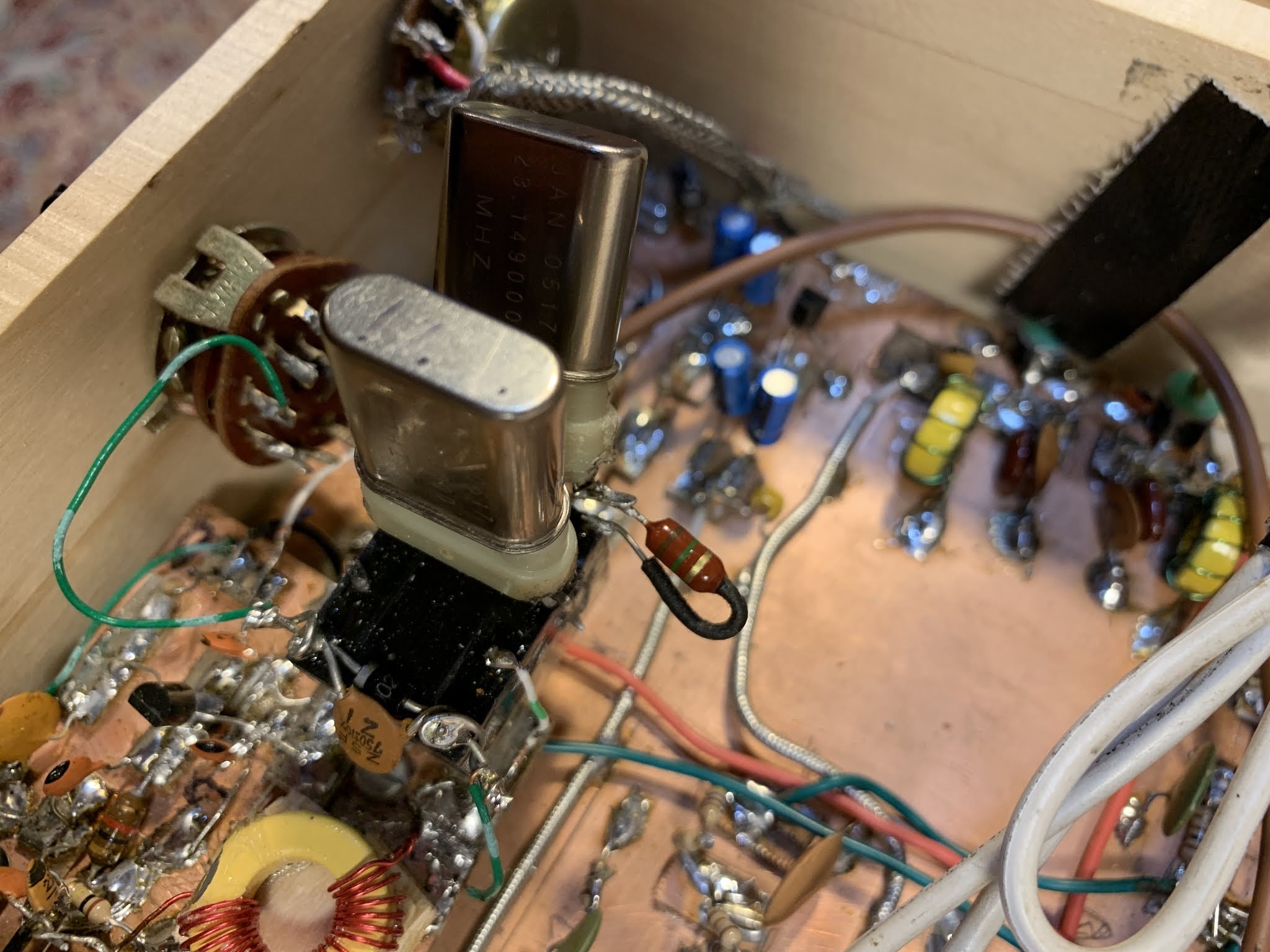
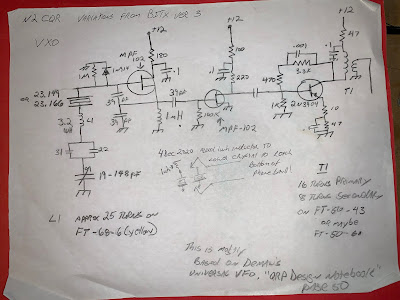
Fixing up the 17 meter BITX. Expanding the VXO coverage. Using it with NA5B’s KiwiSDR.
Resurrecting the 17 meter Moxon. But WHY can’t I nest the 17 meter Moxon inside a 20 meter Moxon? They do it with Hex beams. Why so hard with Moxons? DK7ZB has a design, but I’ve often heard that this combo is problematic. Any thoughts? I could just buy a 20/17 Hex-beam but this seems kind of heretical for a HB station.
Suddenly getting RFI on 40 meters. Every 50-60 Hz. Please tell me what you think this is (I played a recording).
MAILBAG:
Dean KK4DAS’s Furlough 40/20
Adam N0ZIB HB DC TCVR
Tony G4WIF G-QRP Vids. Video of George Dobbs.
Grayson KJ7UM Collecting Radioactive OA2s. Why?
Pete found W6BLZ Articles
Rogier KJ6ETL PA1ZZ lost his dog. And we lost ours.
Steve Silverman KB3SII — a nice old variable capacitor from Chelsea Radio Company.
Dave K8WPE thinks we already have a cult following.
Dan W4ERF paralleling amps to improve SNR.
Jim W8NSA — An old friend.
Pete Eaton WB9FLW The Arecibo collapse
John WB4GTW old friend… friend of:
Taylor N4TD HB2HB
And finally, we got lots of mail about our editorial. No surprise: Half supportive, half opposed. Obviously everyone is entitled to their opinion. And we are free to express ours. It’s a free country, and we want it to stay that way. That is why we spoke out.
Yesterday the Electoral College voted, finalizing the results. All Americans should be proud that the U.S. was able to carry out a free and fair national election with record turn out under difficult circumstances. And all loyal Americans should accept the results. That’s just the way it works in a democracy.
We are glad we said what we said. It would have been easier and more pleasant to just bury our heads in the sand and say nothing. But this was a critically important election and we felt obligated as Americans to speak out. We’d do it again. And in fact we reserve the right to speak out again if a similarly important issue arises.