A Great Morning on the Old Military Radio Net: AB9MQ’s Central Electronics 20A, W3EMD’s Dynamotor, WU2D

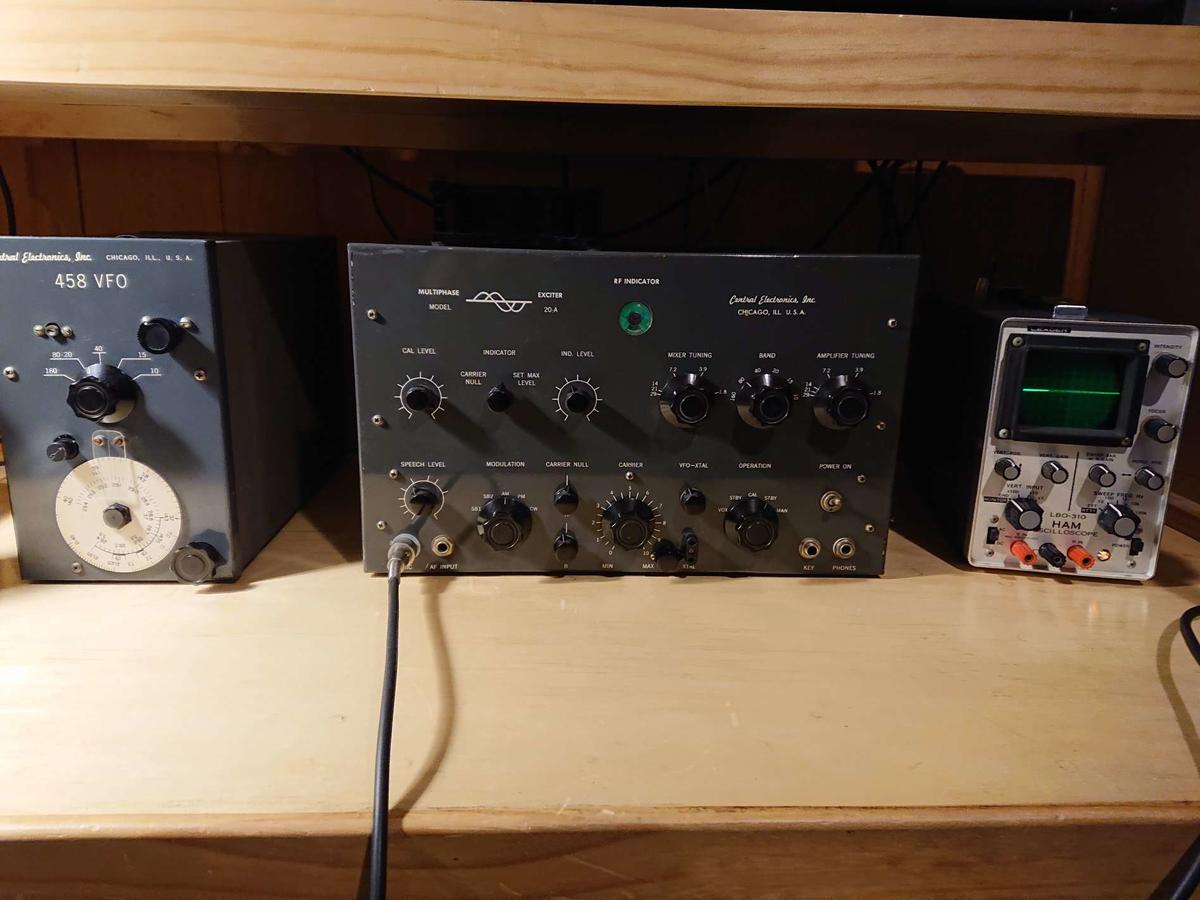
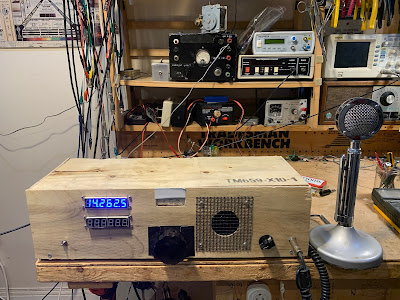
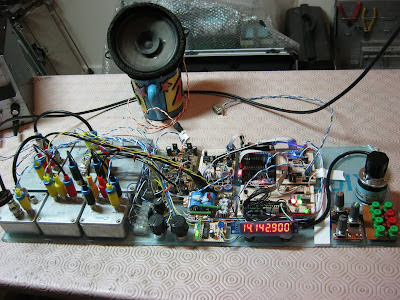
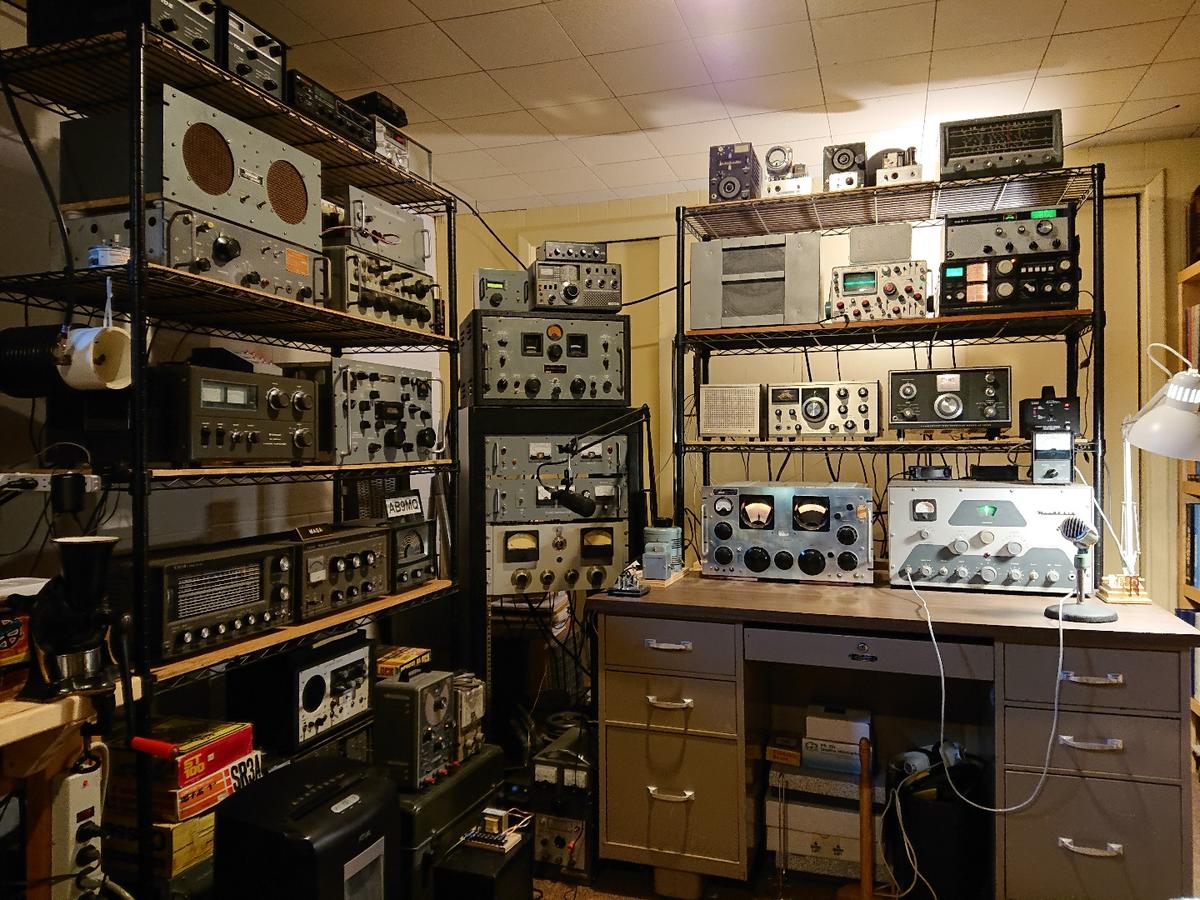
Just a portion of Masa’s shack

I usually try to listen in on the Old Military Radio Net on Saturday mornings (3885 kc). Lately I listen with my Mate for the Mighty Midget receiver.

This morning’s session was especially good. For me the highlight was when Masa AB9MQ called in from Normal, Illinois using his Central Electronics 20A (see below). That was one of the earliest SSB rigs. A phasing rig, it also ran AM (which was what Masa was using this morning). He had it paired up with a Central Electronics 458 VFO. You folks really need to check out Masa’s QRZ.com page:

https://www.qrz.com/db/AB9MQ

Buzz W3EMD called in from Rhinebeck, NY. I could hear his dynamotor in the background. Buzz said hello to Masa in Japanese. FB.

Always great to hear Mike WU2D.

SSB History: Selling SSB in 1954

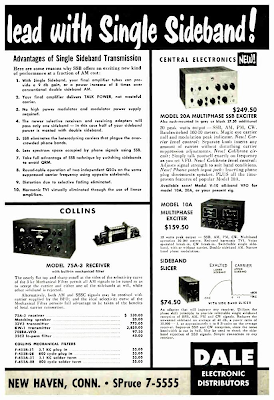
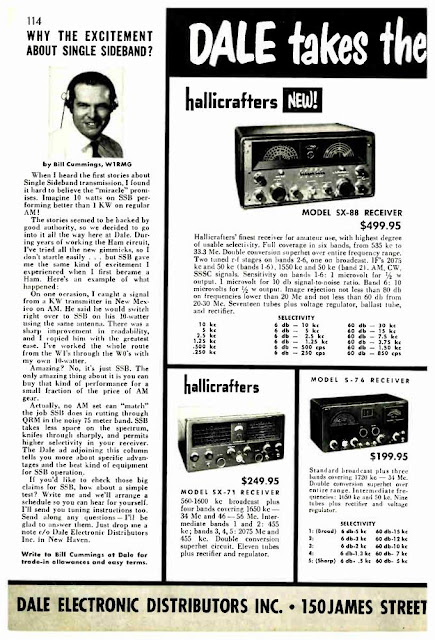
K9YA Telegraph ran (on Facebook) this ad from 1954. It provides an interesting view of where phone operations were in that year. Note that Dale was so intent on selling SSB gear that they were willing to make on-the-air schedules to demonstrate SSB superiority.

Dale claims that with SSB you could have TWO roundtable QSOs on the same frequency, with one group on USB and the other on LSB. I think this assumes really great opposite sideband rejection in the transmitters, and excellent selectivity in the receivers. That might have been a bit of a stretch. But the assumption here was that hams could use USB or LSB — no rigid adherence to the USB/LSB convention. And the ad seems to focus on the 75 meter band which was seen as the most important phone band at that time.

Dale was selling Collins mechanical filters for 55 dollars. That is the 1954 equivalent of $566 dollars today. No wonder the phasing method was so popular. Note that they were selling Central Electronics phasing rigs right next to the ad for the Collins filters.

I like the graph showing opposite sideband rejection with the Sideband Slicer. Note that the selected sideband was referred to as the “exalted” sideband. All Hail the Single Sideband!

M0NTV’s “Crystal Filters for the Fearful” (video)

I really liked Nick M0NTV’s approach to making a crystal filter (see video above). He really simplifies a process that desperately needs simplification. I remember when I was building my first superhet receiver, I came across Doug DeMaw’s schematic for a crystal tester that would allow me to properly build the filter. But the piece of test gear was far more complicated than the receiver I was building. I never built Doug’s device.

Nick’s technique is simpler even than the G3UUR method that many of us have been using for years. Nick dispenses — wisely I think — with the need to calculate motional parameters, Q, and equivalent series resistance. This also eliminates the need to fidget around with the design software such as Dishal or AADE.

Nick uses the Cohn topology (good choice) and uses kind of an “informed cut-and-try” technique to come up with the capacitor values.

Filter impedance is determined with series trimmer resistors and the NanoVNA to watch the resulting passband. Nick says this is a Charlie Morris ZL2CTM suggestion. It obviously works very well — the ripple that would result from impedance mismatch is eliminated.

Nick’s determination of the best turns ratio for the impedance matching transformers is brilliant.

Nick apologizes for what he says is a long video. But it is only 30 minutes or so long, and if you are going to build your own superhet or SSB filter rig, it is well worth watching.

Three cheers for Nick and for Charlie! Thanks guys!

Scott WA9WFA’s Mate for the Mighty Midget Receiver is WORKING! (Video)

Wow, Scott got his Mate for the Mighty Midget receiver to work and he is obviously overjoyed with the result. All of us who have struggled with a homebrew project know just what this feels like. And it is very cool that Scott got some useful guidance from Charlie Morris in far-off New Zealand. Congratulations Scott. I’m really glad you stuck with it.

Scott’s success comes at a good time: Pete N6QW is building W4IMP’s three tube “IMP” SSB transmitter (also from the 1960s). I accept responsibility for naming Pete’s project: It will be known as “Pete’s IMP” or, memorably, “The PIMP.” For a look at Pete’s rig go here:

Scott had problems getting Lew McCoy’s 455 kc crystal filter to work. So did I. It turns out that this is a very old problem, going back to World War II. In Don Stoner’s 1959 “New Sideband Handbook” on page 54 he writes of homebrew filters in the 400 to 500 kc range:

“Inexpensive crystal filters constructed from war surplus FT-241 type low frequency crystals are very popular with the ‘do it yourself’ hams. These CT cut crystals have been plentiful and relatively cheap for a number of years and are in the hands of many Amateurs. The general run of war surplus crystals may or may not be good. Experience has shown that one out of four of these crystals are usually defective in one way or another.”

Stoner was writing just 14 years after the war. Add another six decades to the age of these crystals — often decades spent in musty basements — and you can imagine the percentage of bad 455 kc FT-241 crystals increasing. So I think Scott is wise to seek an alternative to McCoy’s crystal filter.

Scott’s original build of the MMMRX receiver is just so nice. In the video he says he plans to go back to it after he gets the expanded version fully functional. He should definitely do that — his original version looks so good. I think it is probably very close to working properly.

Thanks Scott, and again, congratulations OM.

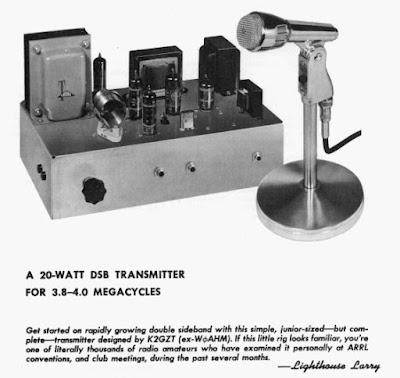
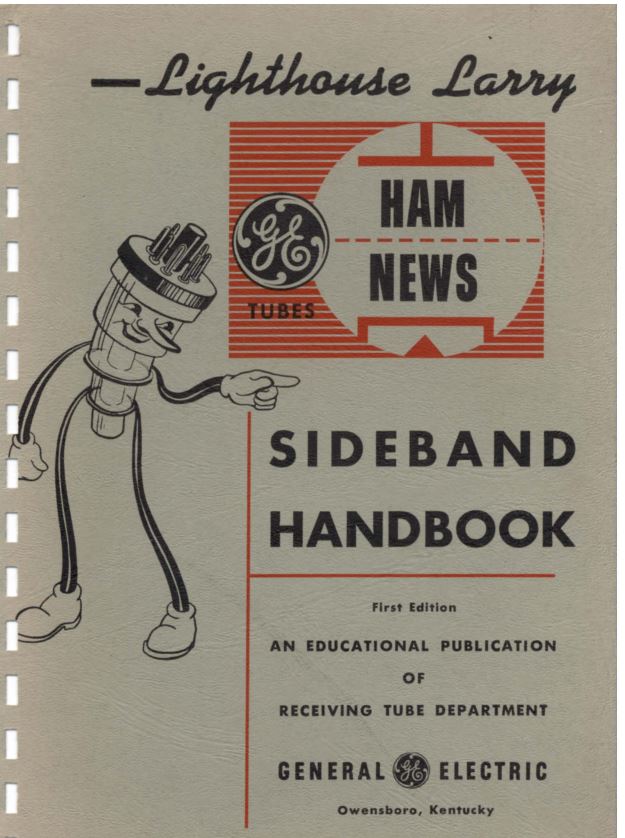
Lighthouse Larry’s GE Sideband Handbook

There is lot of information about early SSB and DSB operations in the GE Sideband Handbook (1961). Lighthouse Larry is very informative. Early in the book there is a guide to help homebrewers select intermediate frequencies that will work well in SSB and DSB rigs.

Here is the book. Remember, we are dealing with tubes and high voltage here: one hand behind your back. Volts jolt but mills kill!

Video: N2CQR Talks About Homebrew SSB with The Vienna Wireless Society’s Makers Group

It must have been great to have been a ham during the heyday of homebrew gear. Imagine walking into your local club and finding a dozen or so people who share your passion for melting solder and homebrewing your own equipment. Well, I got a taste of that thanks to the Vienna Wireless Society’s Makers Group. Led by Dean KK4DAS, this group of intrepid radio amateurs has built versions of Pete Juliano’s Simple SSB transceiver. They are finalizing the rigs; many are already finished. And I could tell from the questions and the discussion that I was talking to a bunch of guys who knew which end of the soldering iron to grab. It was really wonderful to talk to people who had gone through the experience of building an SSB transceiver, who knew from personal experience that it is not as easy as it seems. And I could tell from the questions that many of these guys are already thinking of their next projects, of how to put to use the experience they gained building Pete’s SSB rig.

Dean asked me to talk to the group about my recently completed “Mythbuster” rig. This was a good topic for the group because my rig is similar enough to the Simple SSB that they could relate to it, but different enough that it could give them ideas about how they might do things differently next time.

I really enjoyed this session. I’m glad that VWS captured it on video. I think SolderSmoke listeners and readers will like watching this video.

Thanks to Dean KK4DAS and the VWS Makers group for hosting me. And thanks to Jacek KW4EP for helping with the video.

Here is the Vienna Wireless Society’s YouTube Channel:

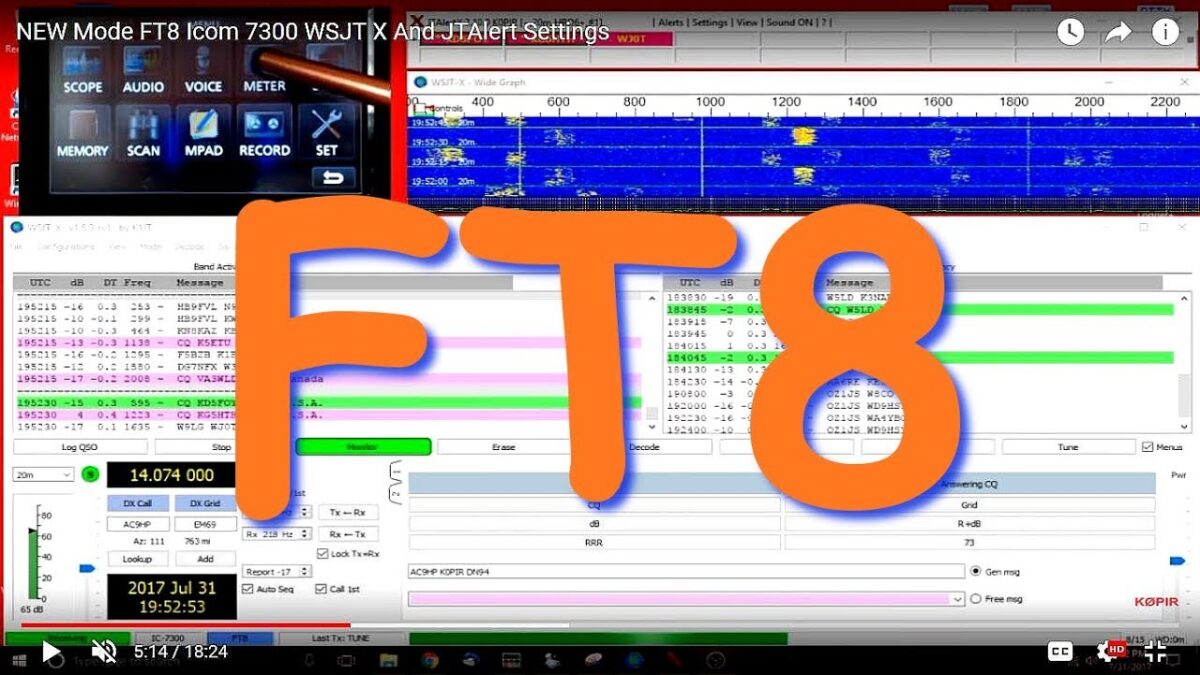
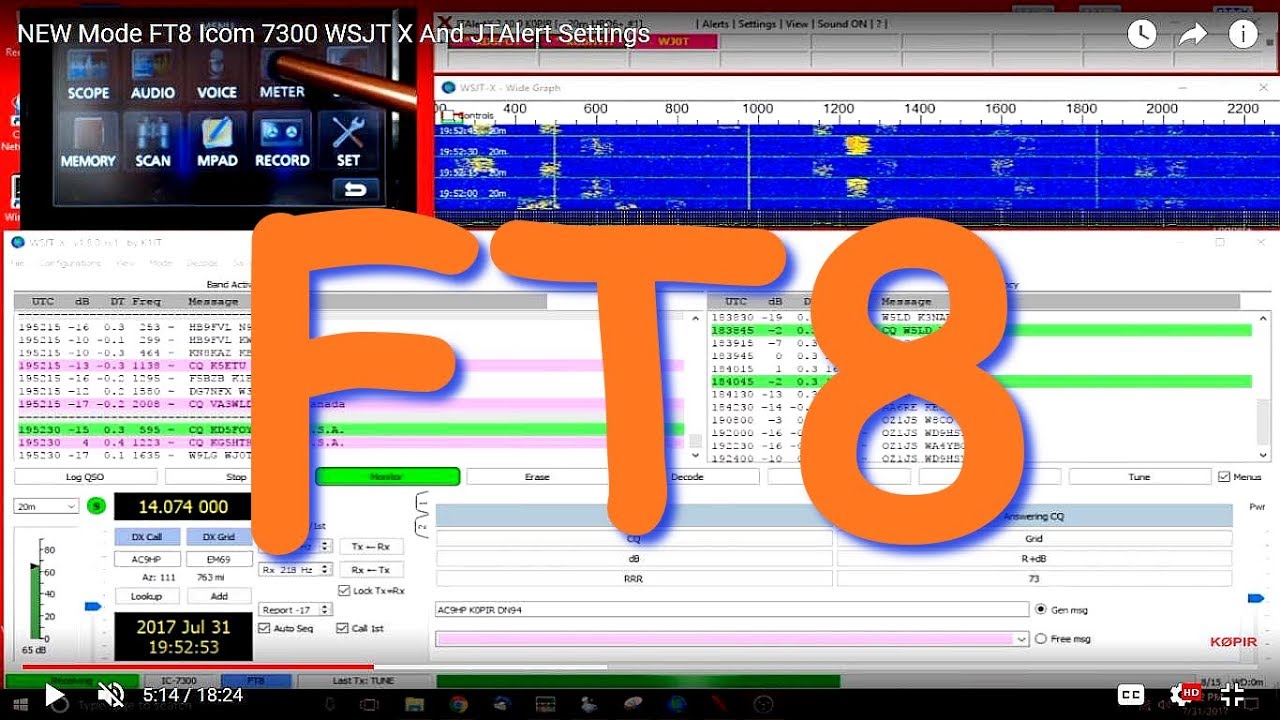
Some Initial Thoughts on FT-8

— This is really interesting technology. Three cheers for Joe Taylor and colleagues. This mode would obviously be very useful for fast, weak signal contacts as are needed on meteor scatter or EME.

— FT-8 does give you the chance to work DX that would have been difficult on other modes.

— Chinese hams showing up on FT-8 — more than other modes.

— I think FT-8 is good for hams who just want to have a lot of “contacts.” It is definitely not for the rag-chewer.

— I find it it kind of cold and antisocial. More like a computer game than ham radio. A bit like sending short text messages on a cell phone.

— I think FT-8 contacts are in some ways more meaningless than a “59!” contest exchange — unless you look, you don’t even know the report you got, nor do you know the report you sent.

— For me it is more impersonal than CW. But at least we let the technology decode the characters instead of having to memorize dot and dash sounds. In a phone contact you can hear the other person’s laugh. In a CW QSO, you hear him key “HI HI.” FT-8? No laughter at all.

— With PSK Reporter, FT-8 gives you a good feel for how propagation changes during the day. But it is kind of like 2-way WSPR. As with WSPR, it is — at first — fascinating, but then it loses its charm. Yes, everyday you are heard in Belgium.

— It seems to be getting kind of crowded. The passband for FT-8 contacts is often full, and it is hard to find an open space.

— There is little opportunity for the homebrewer. I hooked it up to my homebrew transceivers and had a small bit of fun using a 2N3904 as a switch triggered by the RTS signal for T/R. But that’s about it.

— I get the sense that the ham himself is not really needed in FT-8. This mode seems like it could easily be automated or run by an AI. Just tell it to go out there, make a lot of contacts and log them. Maybe prioritize the DX you “need.” Has this already been done?

— After a session with FT-8, I had a really nice 17 meter ragchew SSB QSO. That SSB contact left me happy. The FT-8 session was a bit like spending time on social media or a video game. It left me edgy. FT-8 made me appreciate phone even more.

But hey, to each his own. A lot of people really like FT-8. I hope they have fun.

Much SSB Tribal Knowledge in Bill Orr’s 1959 Handbook

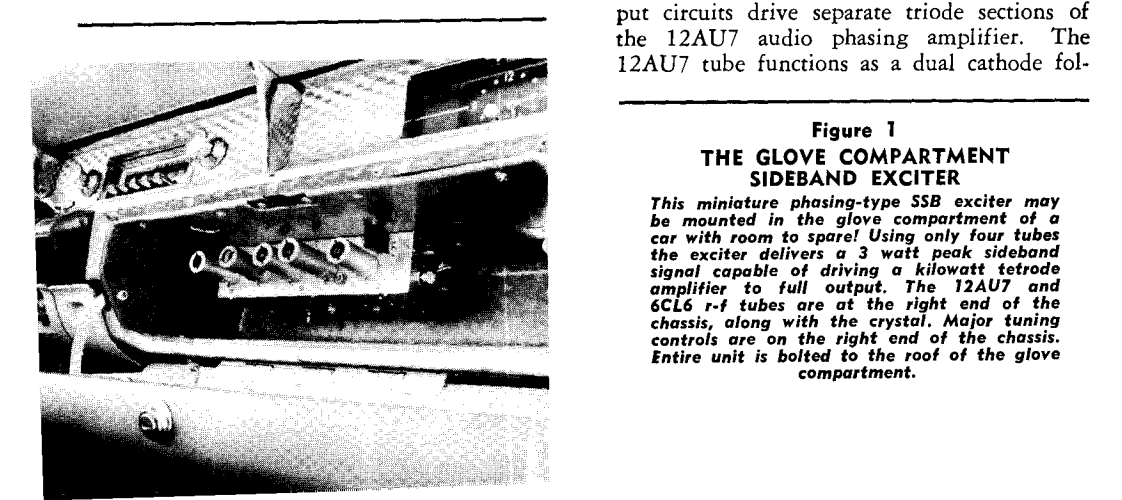
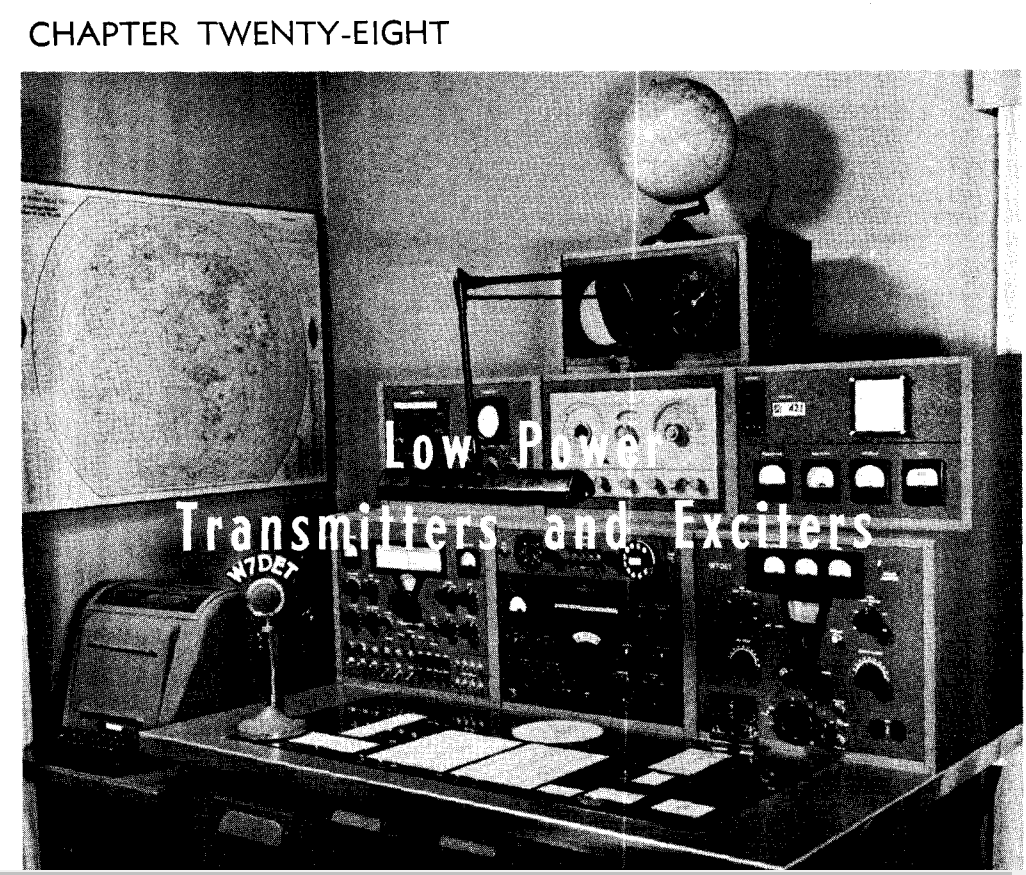
There is a lot of really excellent information and tribal knowledge in the 1959 issue of Bill Orr’s Radio Handbook. I was especially taken by Chapter 17 (SSB) and Chapter 28 (Low Power Transmitters and Exciters).

Looking at the 1959 SSB rigs, I don’t see any information that points to the origin of the LSB/USB convention. Most of these rigs — especially the phasing rigs — include provisions for switching to either sideband.

Check out the “Glove Compartment Sideband Exciter.”

Here is the link to the Orr book:

http://www.rsp-italy.it/Electronics/Books/_contents/radio/The%20radio%20handbook%2015th%20-%20William%20I%20Orr%20-%201959.pdf

Thanks to Tony K3DY for sending us the link that led us to this book. There are many other great books there: http://www.rsp-italy.it/Electronics/Books/indexhtm

So Where DID the LSB/USB Convention Come From?

— Bottom line: I still don’t know why ham radio adopted as a convention LSB below 10 MHz and USB above 10 MHz. There are several theories. but so far there is no convincing explanation in favor of any one of them. And almost all of the people involved are probably Silent Keys by now; this makes it more difficult to gather first-hand information.

— I’m not even sure when the convention began to be observed in ham radio. Many of the early SSB books and articles make no mention of it. We don’t see it in early ARRL Handbooks. The first mention of it that I found was in the 1965 issue of the ARRL’s “Single Sideband for the Radio Amateur” page 8. This article claims that adding a provision for selectable sidebands would “add appreciably to the cost of the equipment. ” It went on to say that, “For this and other reasons there has been a species of standardization on the particular sideband used in the various amateur bands. Nearly all operations in the 3.5 and 7 Mc. phone sub-allocation is on lower sideband, while the upper sideband is used on 14, 21, and 28 Mc.”

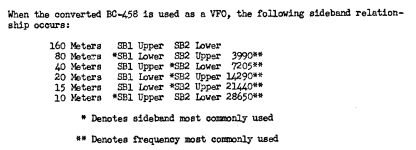
— We know that the informal convention was being followed as early as 1958. Jim N2EY reports that in 1958, the manual for the Central Electronics 20A shows that LSB was the “sideband most commonly used” on 75, with USB preferred on 20:

— Some cite a 1959 ITU recommendation on commercial multiplexed radiotelephony as the reason for the convention. But I don’t think this obscure and long-ago ruling explains the convention. If this were the case, we’d see follow-up FCC regulation, and at least some discussion of the ITU recommendation in the amateur radio literature. But we see none of this. And, as noted above, by 1958 hams were ALREADY — on their own — opting to use LSB on 75 and USB on 20. The 1965 ARRL SSB book refers not to some hard-and-fast rule, but rather to “a species of standardization” on LSB and SSB. That ARRL book said nothing of the 1959 ITU recommendation.

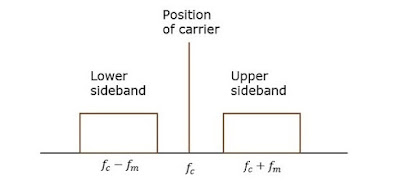
— There is a widely held belief that this practice originated in the design of a rig that had a 5.2 MHz VFO and a 9 MHz filter. According to this theory such a rig — due to sideband inversion — would produce LSB on 75 meters and USB on 20. But, as we have demonstrated, this doesn’t work, so this theory has to be discounted.

— Early SSB activity seems to have been concentrated on 75 meters, and there was a competition for space with AM stations. SSB operators appear to have used the very upper band edge as their gathering spot. Using LSB allowed them to operate very close to the upper band edge — a lot closer than AM stations could go. This may explain why LSB became the preferred SSB mode on 75. But how do we explain USB on 20 and above? That remains a mystery.

— It is important to remember that in the early days of SSB, for most hams there were only two important phone bands: 75 meters and 20 meters. 40 meters was CW only until 1952, and even after that was crowded with shortwave broadcast stations. So a design that allowed for both 75 and 20 was twice as good as a monoband design.

— Early on there were designs and parts for phasing rigs. You could take that ARC-5 VFO at 5 MHz, build a phasing generator around it, and then mix it with a 9 MHz to get on either band. But with just a simple switch, this kind of rig could operate on USB or LSB on either band. So the early popularity of this kid of rig does not explain the convention.

— There were a lot of surplus 5 MHz ARC-5 VFOs available. There were also FT-243 and FT-241 surplus crystals at both 5 MHz and 9 MHz that could be made into filters. Later in the 1950s, 9 MHz commercial crystal filters became available. If you used a 9 MHz filter with a 5 MHz VFO, there would be no sideband inversion in your rig. If the SSB generator was putting out LSB on 9 MHz, you’d be on LSB on both bands. So if there was a desire to have LSB on 75, why not just also have LSB on 20?

— But if you built a 5.2 MHz filter and a 9 MHz VFO, you could have LSB on 75 and USB on 20 without having to shift the carrier oscillator frequency. This would save you the trouble and expense of moving the carrier oscillator/BFO to the other side of the passband. This desire to economize and simplify may explain why we ended up with LSB on 75 and USB on 20. But this still begs the question: Why the desire for USB on 20?

— Both the manufacturers and the hams wanted there to be sideband standardization. With monoband rigs, the manufacturers would be able to cut costs by building for only one sideband. Hams also wanted to cut costs, and they did not want to have to figure out which sideband a station was on when trying to tune him in.

— By 1962-1963 Swan and Heathkit were selling mono-band SSB transceivers that used the “conventional” sidebands: The rigs for 75 and 40 meters were on LSB while the 20 meter rigs were on USB. There were no provisions for switching to the other sideband. This seems to have reinforced the practice of observing the convention. (Heath later added sideband switching to the HW monobanders — in view of the growing observation of the convention, they may have been better off sticking with their original design. Does anyone know why they did this?) But again, why USB on 20 and above?

— In 1963, Swan, by then in Oceanside California, came out with the Swan 240. Swan used a filter centered at 5174.5 kc. The VFO ran from 8953 kc to 9193 kc on 75 and 20. The VFO ran from 12222 to 12493 on 40. This gave the buyer 75 and 40 on LSB, and 20 USB with only one carrier oscillator frequency. (Swan offered a mod that allowed hams to install an additional, switchable carrier oscillator frequency. I luckily acquired one such modified rig.) But again, there is an explanation for LSB on 75, but why USB on 20 and above?

This is an important part of ham radio history. There should be a clear answer. We need to find it. If anyone has any good info on this, please let me know.
Simple SSB Success in Northern Virginia — “The Radio Does Not Build Itself….”

Dean KK4DAS and the Vienna Wireless Society (VWS) Builders Group have had some remarkable success with Pete Juliano’s Simple SSB design. Sixteen of the rigs have reached the point where the receivers are fully functional. Eight more have gone the final (!) stretch and have the full transceivers working. This week Dean and two other VWS builders met up on 40 meters for the world’s first multi-SSSB QSO (see Dean’s video in the link below).

https://kk4das.blogspot.com/2021/09/simplessb-three-way-qso.html

Here’s Dean’s presentation to the club describing the project and Pete’s rig:

https://docs.google.com/presentation/d/1eUFEO3mZNrwdwaZnyPzr5G6ooozxFoU7/edit?usp=sharing&ouid=100787991139259592659&rtpof=true&sd=true

As Pete says, “The radio does not build itself…” Indeed it doesn’t! The VWS builders made these rigs. FB!

SSB History — The Tucker Tin 2 (and 3) with a 1961 Recording. Hallicrafters FPM-200 Video by W9RAN

There is so much important SSB history in this video from Bob Nichols, W9RAN. I liked all of it, but the on-the-air recording of a 1961 transmission from a Tucker Tin 3 was really amazing. Check it out.

Here is the 2014 SolderSmoke blog post about the Tucker Tin 2. You can see the 1961 schematic here:
As you can see this is a very simple phasing-type SSB rig. The SSB generator is crystal controlled at the operating frequency.

Thanks to Bob W9RAN, and thanks to Peter Parker VK3YE for posting about this video on the SolderSmoke Facebook Page.

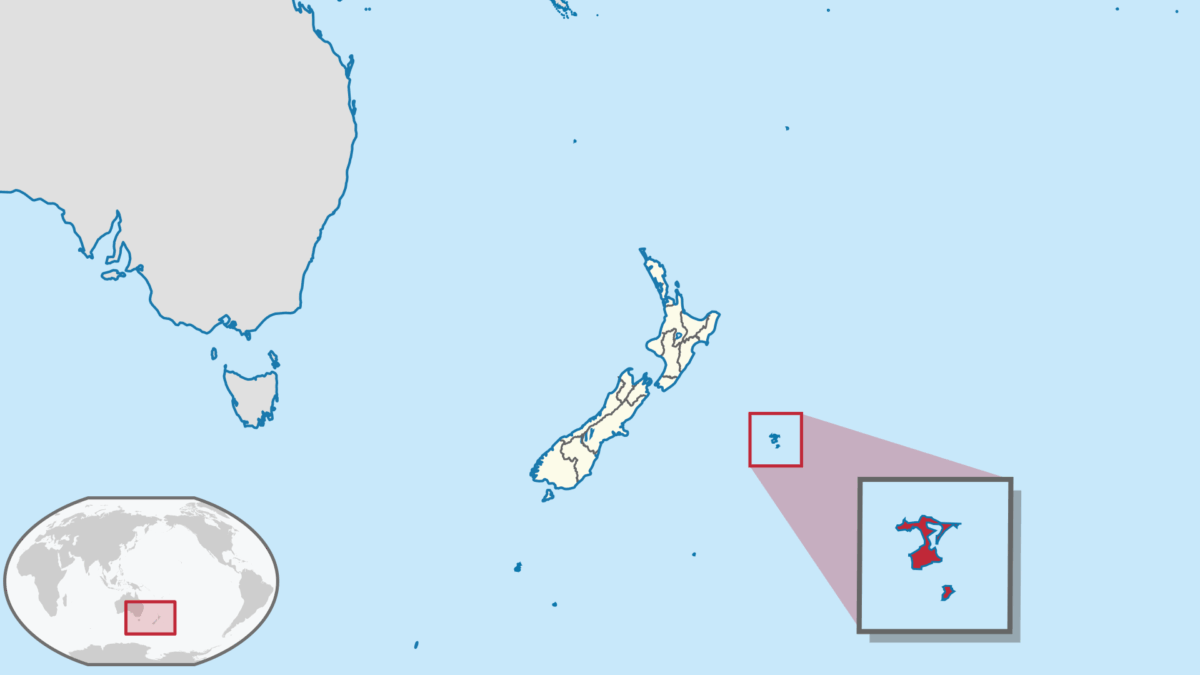
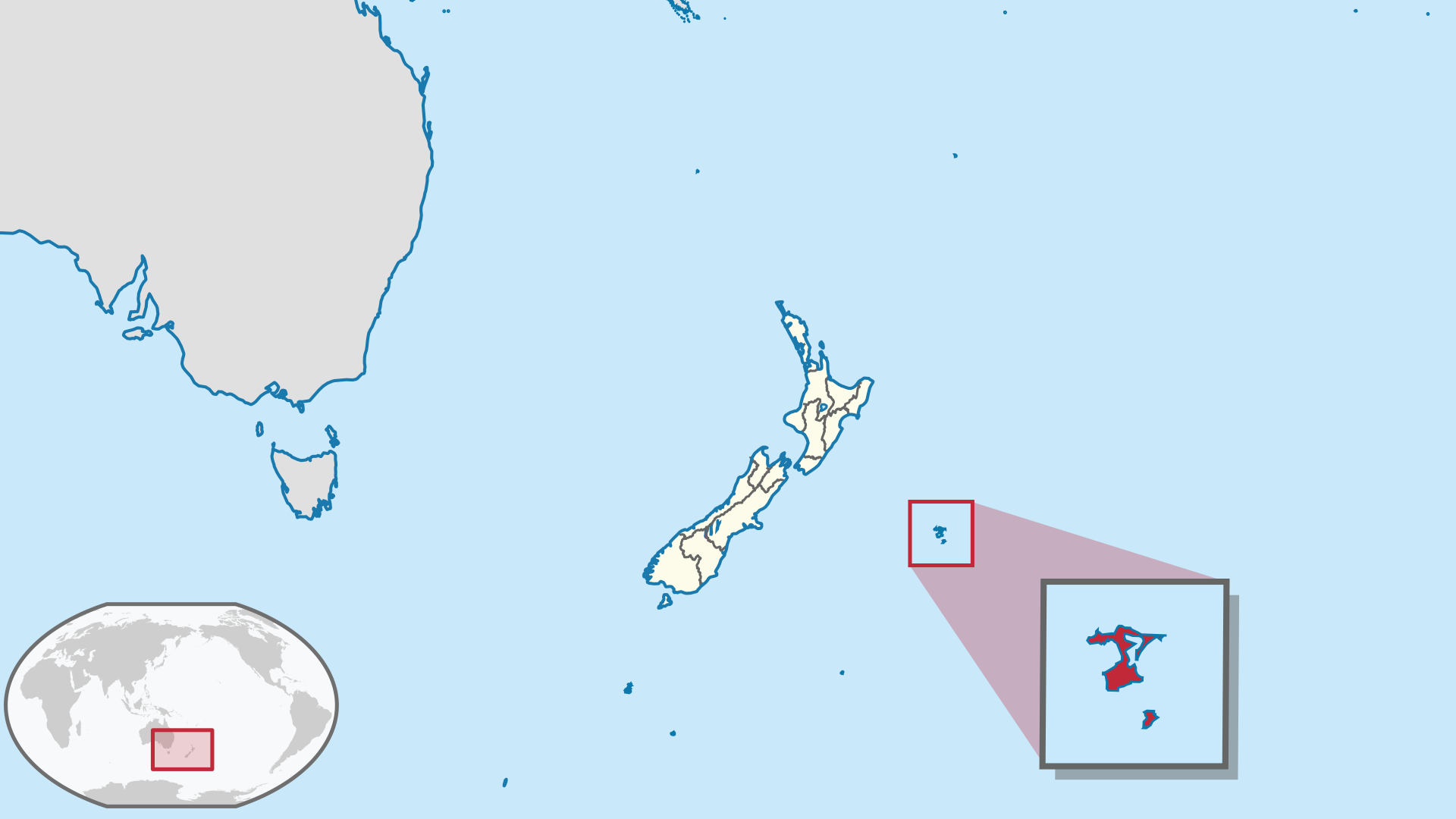
The Chatham Islands


SolderSmoke Podcast #232 — Mythbuster, Pete’s Tube CW Rig, Pete’s DC RX and Simple SSB Rig, NanoVNA and TinySA, Very FB Mailbag

SolderSmoke Podcast #232 is available — Crank it in Robert!

Featuring a guitar intro by Pete “Bluesman” Juliano, playing his own composition: “Juliano Blues.”

Upcoming GQRP convention and the N6QW rig
Frank Jones and the FMLA — Possible Victory?
IBEW Stickers: NASA, Johns Hopkins APL….
Cycle 25 Lookin Better Today: SFI 93 SN 47

Pete’s Bench:
Toobular! A Tube Transmitter
SR-160
Simple SSB rigs around the world!
KI7NSS’s Pacific 40

Bill’s Bench
The Mythbuster and the Struggle Against the Urban Legend
W2EWL’s Cheap and Easy SSB
W4IMP’s IMP. Articles in ER by Jim Musgrove K5BZH and Jim Hanlon W8KGI
The Spirit of Homebrew SSB. From Electric Radio K5BZH December 1991
Reduced Front End Gain on the DIGITIA
Back on 17! HP3SS sells HBR receiver to Joe Walsh
Maybe another Moxon?

SHAMELESS COMMERCE DIVISION

Test Gear
NanoVNA — Alan W2AEW helped solve mystery of why NanoVNA not providing accurate readout of circuit impedance. Over driving. Need attenuator.
TinySA — Limited Resolution Bandwidth. But you can listen with it! See video on blog.

MAILBAG
— Google Feedburner to end e-mails from the blog 🙁
— Paul VK3HN — TIA AGC? Farhan and Paul looking into options
— Ciprian’s Romanian Mighty Mite
— Dino KL0S SolderSmoke GIF and graphical presentation on sideband inversion
— Allison KB1GMX helped me on 24 volts to IRF 510 issue.
— Dave K8WPE Wabi Sabi and Martha Stewart. And thanks for parts! 40673s!
— Steve N8NM building a 17 meter rig with 22.1184 crystals in a SuperVXO and a 4 MHz filter.
— Dean KK4DAS restoring an old Zenith. One hand behind your back OM.
— Pete Eaton debating SSB or DSB for 17. Go DSB Pete!
— Richard KN7FSZ a FB HBer. Asked about my solid-stating of Galaxy V VFO.
— Walter KA4KXX on benefits of no-tune BP filters like Farhan’s FB.
— Jack 5B4APL on Time Crystals and Homebrewing in the 4th dimension. FB OM!
— Moses K8TIY listens to the podcast with his young son Robert. Crank it in Robert!
— Farhan and the SBitx on Hack-A-Day
— Also Tom’s receiver from junked satellite rig on Hack-A-Day
— Todd K7TFC sent in beautiful message about the spirit of homebrewing. On the blog.
— Grayson KJ7UM was on Ham Radio Workbench with George Zaf
— AAron K5ATG running a uBitx with a homebrew tuner and antenna. Hope I can work him
— Heard Mike WA3O last night on 40 DIGITIA. Water cooled amplifier

Joe Galeski’s 1960 “IMP” 3 -Tube Filter SSB Transmitter, and the Spirit of SSB Homebrew

Here is another important bit of SSB history. In May 1960, Joe Galeski W4IMP published an article in QST describing his super-simple SSB transmitter. While Tony Vitale’s “Cheap and Easy” rig was a phasing design, Joe came up with a filter rig. He built USB filter at 5775 kc. With it, he ran a VXO at around 8525 kc. This put him on 20 meter USB.

Here is the QST article: http://marc.retronik.fr/AmateurRadio/SSB/A_3_tubes_filter_rig_%28SSB%29_%5BQST_1960_5p%5D.pdf

In discussing how to put this rig on other bands, Joe got the sideband inversion question exactly right:

Thank you Joe!

Joe even provides an comment that seems to capture an important element of the homebrew SSB ethos. Joe homebrewed his filter, but he mentioned the possibility of using a store-bought filter:


That’s the spirit Joe!

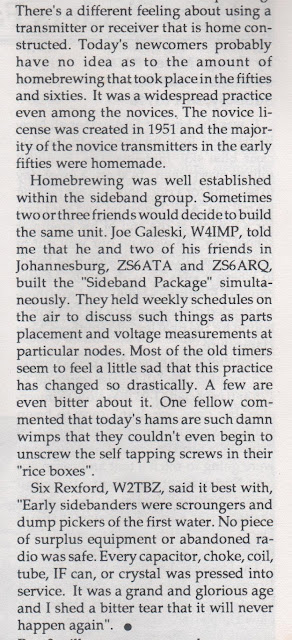
Along the same lines, Jim Musgrove wrote in Electric Radio:

Having built Lew McCoy’s Mate for the Mighty Midget receiver (which also used just three tubes), I can’t help thinking that an IMP-ish transmitter would be an excellent complement to the Mate for the Mighty Midget.

Jim Musgrove K5BZH knew Joe Galeski and wrote about him in the January 1992 issue of Electric Radio. Jim wrote that Joe was an optometrist by profession. When OE1FF wanted to know the cost of building an IMP, Joe Galeski boxed up the original and sent it to him. FB Joe.

In December 1961 Joe Galeski published a QST article describing a transistorized version of the IMP — this rig ran on 15 meters. K5BZH wrote that Joe later published an article about a small, solid-state transceiver, appropriately called “The Shrimp.”

W2EWL’s “Cheap and Easy SSB” Rig — And The LSB/USB Convention Myth

In March 1956 Tony Vitale published in QST an article about a “Cheap and Easy” SSB transmitter that he had built around the VFO in an ARC-5 Command Set transmitter. Vitale added a 9 MHz crystal-controlled oscillator, and around this built a simple phasing generator that produced SSB at 9 MHz. He then made excellent use of the ARC-5’s stable 5 – 5.5 MHz VFO. His rig covered both 75 meters and 20 meters. Here is the article:

http://nebula.wsimg.com/2b13ac174f7f2710ca2460f8cf7d6b8b?AccessKeyId=D18ED10DA019A4588B7B&disposition=0&alloworigin=1

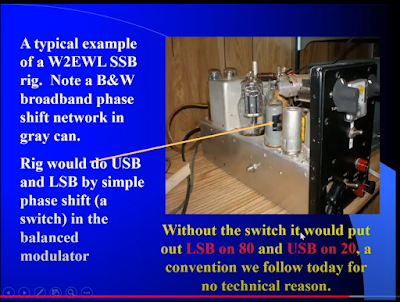
Because it used the 9 and 5 frequency scheme, over the years many, many hams have come to think that Vitale’s rig is the source of the current “LSB below 10 MHz, USB above 10 MHz.” This is wrong. An example of this error popped up on YouTube just this week (the video is otherwise excellent):

First, Vitale’s rig had a phasing SSB generator. All you would need to switch from USB to LSB was a simple switch. And indeed Vitale’s rig had such a switch. Pictures of other Cheap and Easy transmitters all show an SSB selection switch. So with a flip of the switch you could have been on either USB or LSB on both 75 and 20. With this rig, you didn’t even need sideband inversion to get you to 75 LSB and 20 USB.

Second, even if hams somehow became so frugal that they wanted to save the expense of the switch, leaving the switch out (as suggested above) would NOT yield the desired “75 LSB 20 USB” that the urban legend claims that W2EWL. As we have been pointing out, a 9 MHz SSB generator paired with a 5 MHz VFO (as in the Vitale rig) will NOT — through sideband inversion — yield LSB on one band but USB on the other.

W2EWL’s rig could not have been the source of the LSB/USB convention. I still don’t know where the convention came from. I am still looking for the source.

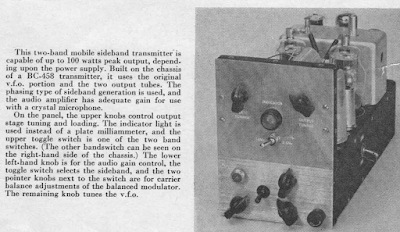
But leaving the LSB/USB convention issue aside, Tony Vitale’s rig is an excellent example of early SSB homebrewing, and of a very clever use of war surplus material. In the January 1992 issue of Electric Radio magazine, Jim Musgrove K5BZH writes of his conversations with Vitale about the Cheap and Easy SSB. Tony told Jim that this rig came about because the Central Electronics exciters required an external VFO — they recommended a modified BC458. B&W had recently come out with a phase shift network. Vitale went ahead and built the whole rig inside a BC458 box. FB Tony!

In the December 1991 Electric Radio, Jim K5BZH reports that Tony was recruited into the ranks of SSBers when he watched a demonstration of SSB by Bob Ehrlich W2NJR in November 1950. Tony very quickly started churning out SSB rigs. His daughter Trish Taglairino recounted that when her father had “done something great again” there would be a parade of hams to the basement shack. About 30 guys showed up when Tony put his first SSB rig on the air — they sent out for beer.

Thanks to Jim for preserving so much SSB history.

KI7NNS’s “Pacific 40” Simple SSB Transceiver

Here is the amazingly beautiful “Pacific 40” build of the Simple SSB transceiver. The builder is Kacy KI7NNS. This was part of the Vienna Wireless Society group build led by Dean KK4DAS. The design is from Pete N6QW.

Here is more info on Kacy’s rig, and on a recent SOTA activation.
https://drive.google.com/drive/folders/1azj3e7skUE5QFpa4kRCARoeivrawhIAZ

Congratulations to Kacy KI7NNS for a really nice rig.

More Info on Tom’s Amazing Junkbox 20 meter Receiver (using FPGAs)

Back in June we had a post about an amazing junkbox receiver project carried out by Tom in SW England:


This was a receiver built around SBL-1 mixers and 10.7 MHz filters salvaged from an old satellite receiver. It was also the first radio receiver project undertaken by Tom. His use of FPGA technology is especially interesting.

We asked Tom for more info and he kindly provided it:

Tom also sent me Firmware sourcecode that may be reusable for STM8 users, and the FPGA design file (for Quartus users). If anyone has a GitHub or similar site that can host these files, please let me know and we will send them to you.

Mythbuster Video #16 — GLOWING NUMERALS! In Juliano Blue!

I added two San Jian frequency counters to the front panel. In addition to making the rig a lot easier to operate, they add a classy touch of Juliano Blue to the project.

I got my counters here: https://www.ebay.com/itm/224223678132

There is a limitation of some of the the San Jian counters: https://soldersmoke.blogspot.com/2021/02/a-problem-with-san-jian-plj6-led-counter.html

But this limitation didn’t cause any problem with this rig: In this case I just plugged in the IF frequency of 5.2397 MHz. I connected the input to my VFO running around 9 MHz. For 20 meter signals, I select the “up” option; the San JIan counter just adds the IF frequency to the VFO Frequency. For example 9 + 5.2397 = 14.2397 MHz . For 75, I select the “down” option. Here the San Jian just subtracts the IF frequency from the VFO frequency — for example 9 – 5.2397 = 3.7603 MHz.

The band select switch operates relays that select the proper band-pass and low-pass filters. This switch also alternatively turns on either the 20 meter San Jian or the 75 meter San Jian.

Mythbuster Video #13 — RF Power Amplifier, and Relay Switching Plan

In this episode we enter into the most fraught part of the construction project: the production of RF power. This is where amplifiers stubbornly turn into oscillators, and where components release magic smoke, or at least burn the fingers of hopeful builders.

I kind of ran out of room when I built the low-pass filters. But, thinking ahead, I wanted to have them on a separate board. And it is good that they ended up in the far corner of the rig.

Just going from one band to two bands adds to the complexity of the rig. I had to add two relays, one to switch the low pass filters, the other to switch the bandpass filters. I ended up with 5 DPDT relays in this transceiver. It was very helpful to have a plan and a diagram for the relays and all the switching.

It looks like each of the three RF amplifier stages provides about 15 db of gain — about what I need to get to the 5 watt level.