Category: space program
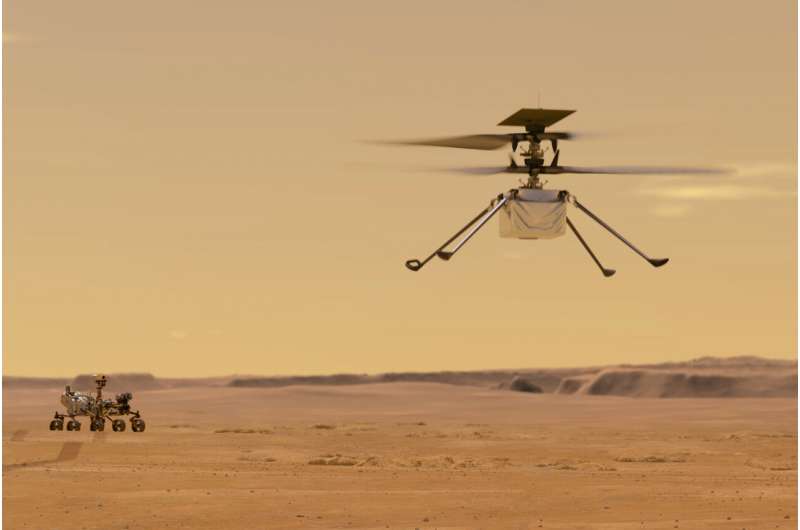
Part of Wright Brothers’ Airplane Now On Mars with Ingenuity Helicopter
Making Transistors in 1957
Thanks to Thomas K4SWL for alerting us to this video — he had it on his excellent SWLing Post blog.
Many things crossed my mind as I watched this video:
— Pocket protectors! Pete recently noted that this was a common fashion accessory among electronic techs and engineers back in the day.
— HP test gear.
— “Extreme cleanliness” that doesn’t seem quite so clean.
— 550 transistors per hour. Now we have upwards of 50 billion on a single chip.
— The Germanium salami that Pete mentioned in our last podcast.
— Hints of Silicon’s impending replacement of Germanium.
— A transistor factory in Spring City, Pa. that “hums with excitement” (seemed kind of sleepy).
— The 1957 assumption that Philco transistors would be in the first orbiting satellite. Then came Sputnik.
— The transistor that moves like a “Gulliver through Lilliputian lands.”
— Our voices or accents seem to have changed, at least the voice used in products like this. No one talks that way today.
— As I watched, I tried to remember if Pete’s CK722 was made by these folks. But no, that was a Raytheon product. Here is a nice short description of the early days of the CK722: https://en.wikipedia.org/wiki/CK722 We need to learn more about the hobbyist Carl Todd.
Awesome Video of Perseverance’s Landing on Mars
When we watched the landing on February 18, Elisa kind of complained that they were using simulations — like the rest of us, she has come to expect actual video of important events. Well, now we have it. Actual video of the parachute deployment, the decent, heat shield separation, dust from the Sky Crane rockets, the whole thing. Wonderful! See above.
The full press conference is worth watching:
Here we learn that the placement of these cameras was inspired by the sports camera that enabled one of the NASA/JPL guys to watch his daughter’s gymnastic back flip from her perspective. As they discussed the images from the spacecraft, I found myself thinking of my little Astrocam Estes rocket in the Dominican Republic, our kite-camera adventures in the Azores, and the key-chain video camera that Billy and I flew on a rocket in the Shenandoah Valley.
We also learn that the parachute color pattern contains a hidden message… (see below for the solution, worked out by a fellow in France.)
One of the JPL guys noted that we’ve all had a tough year, and he hopes that these images will bring some joy to people. Indeed.
And wow, there are microphones! They show the mic in the press conference video, and they play audio of the sound of Martian wind.
There was a nice shout out to Sojourner from 1997 (the year my son Billy was born).
——————————
Someone cracked the code in the parachute coloration:

“DARE MIGHTY THINGS”
and the JPL Coordinates
A Step Closer to the Elser-Mathes Cup? Ham Receives Signals from Mars
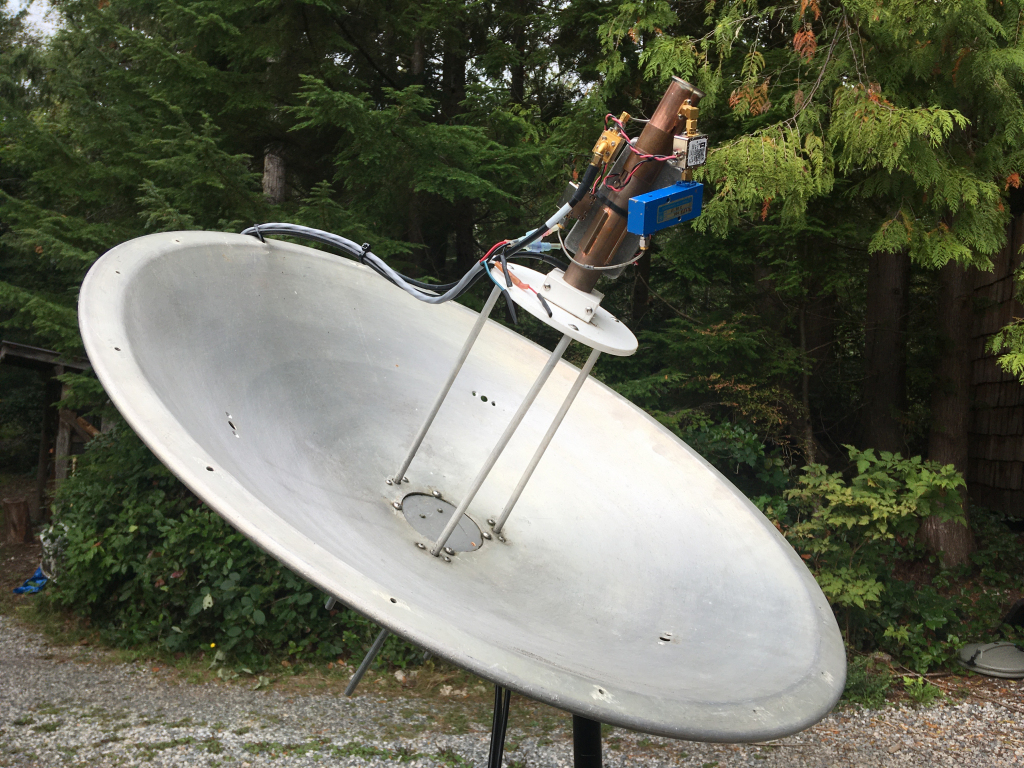
That is the antenna that Scott Tilley VE7TIL used to receive signals from the Chinese spacecraft Tianwen-1 in orbit of Mars. In a recent SpaceWeather article, Scott comments on the importance of SDR receivers in these deep space reception efforts.
I’ve been watching the Elser-Mathes cup for a long time. I dedicated my book “SolderSmoke — Global Adventures in Wireless Electronics” to my kids, Billy and Maria, noting that they were both possible future winners of this most prestigious award. Scott Tilley’s work has put us a step closer to an award ceremony for some intrepid radio amateur.
Here is a good article on the Elser-Mathes Cup:
Scott was in the news last year for finding a zombie satellite:

Receiving Signals from China’s Chang’e-5 Lunar Sample-Return Mission
Background info:
A great report from Daniel Estevez EA4GPZ on radio amateurs receiving telemetry from Chang’e-5:
Rocket Knack
Truly amazing and impressive work. Thanks to Hack-A-Day for the heads-up
Kludges in SPAAAAACE!
Listening in on the Deep Space Network
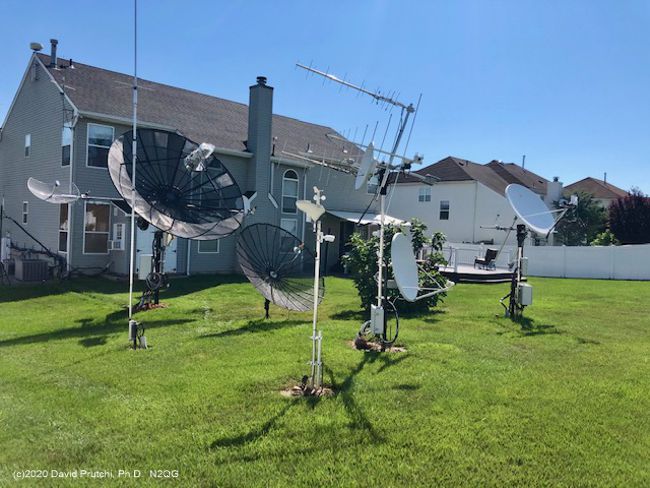
Not long ago we took the DISH satellite antenna off our roof. For a while I resisted pleas to put the big thing on the curb for pickup. I fantasized about using it for radio astronomy. In the end, I threw it away. I do have VHF/UHF aspirations, but being able to use that dish just seemed to be something in my distant future (if ever!).
But check out what David N2QG is doing with his dishes: He is listening to very distant spacecraft normally picked up only by NASA’s Deep space network. Very cool. Truly inspirational.
Here are the links:
http://www.prutchi.com/2020/10/15/recap-of-x-band-dsn-activities-and-plans-for-the-future/
http://www.prutchi.com/wp-content/uploads/2020/10/DSN_Lessons-_Learned_N2QG.pdf
Taming Glitches in a Soyuz Space Clock (Plus — Inside a Logic Chip and How Crystals Work)
Thanks to Bob KD4EBM for sending this.
There is so much good info in this video: They crack open a logic chip and look at the internal construction (it is entirely understandable by mortal minds). They use cool test gear to troubleshoot the clock from a Soyuz spacecraft. They explain very clearly the series and parallel resonances of quartz crystals, then display these resonances on a very nice spectrum analyzer.
The creator of the video is CuriousMarc. He has many other interesting projects:
https://www.youtube.com/c/CuriousMarc/featured
https://www.curiousmarc.com/
His bio is here:
One paragraph from his bio really resonated with me:
Working on this old stuff forces me to deal with the very fundamentals of electronics (and electro-mechanics). The principles are exactly the same as today, but nothing is hidden in mysterious circuits – you can understand and fix everything. Years of Moore’s law has sure given us gobs of transistors, oceans of memory and a glut of gigacycles, but many times, particularly in consumer hardware, these are simply used to cover up poor and inefficient designs – and resource devouring software. What Intel giveth, Microsoft taketh away, as they say. It often irritates me that my PC takes several seconds to react to a simple command, in which time it must have executed billions of unnecessary instructions and consumed a few gigabytes of memory, no one knowing exactly what for anymore. Nothing like this in old high-end hardware: designs are pure and efficient, and the lack of resources is compensated by engineering mastery and immense cleverness, which is a joy to reverse engineer. Not only does it teach us timeless electrical fundamentals and engineering tricks, but it also gives us a much better appreciation of today’s tech. How did all the technology we take for granted came to be? It will make you a far better engineer and inventor if you take the time to be a thorough student of the inventions of your illustrious predecessors.
King Hussein JY1 Speaks to Owen Garriott on Shuttle Columbia
I thought this was a very nice contact — the recording provides a nice bit of radio history. I wonder how the German station got the JY1 portion of the QSO.
LightSail 2 Rides to a Higher Orbit, Propelled by Photons from the Sun
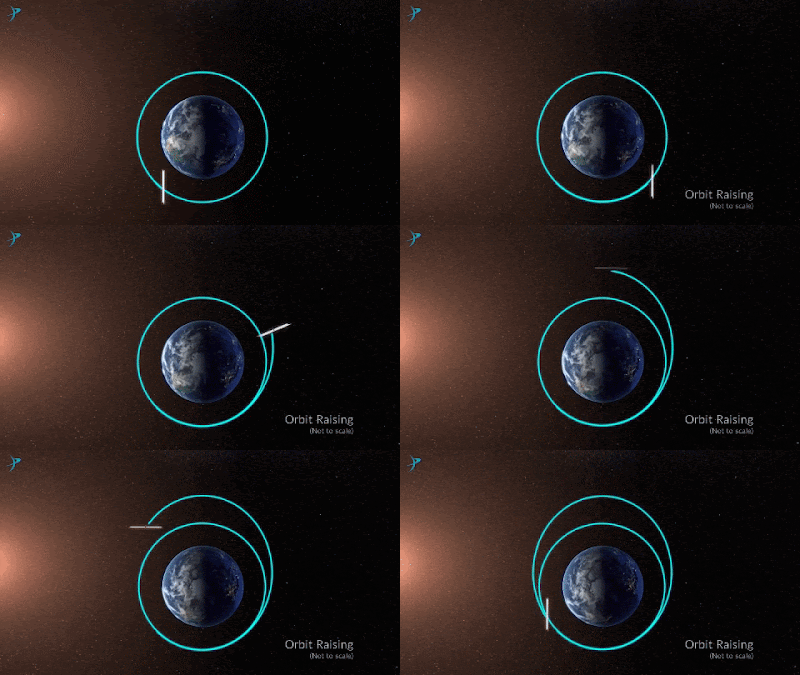
Success! Congratulations to the Planetary Society. Amazing achievement.
http://www.planetary.org/blogs/jason-davis/lightsail-2-successful-flight-by-light.html
Light Sail 2 Successfully Deploys Its Solar Sail
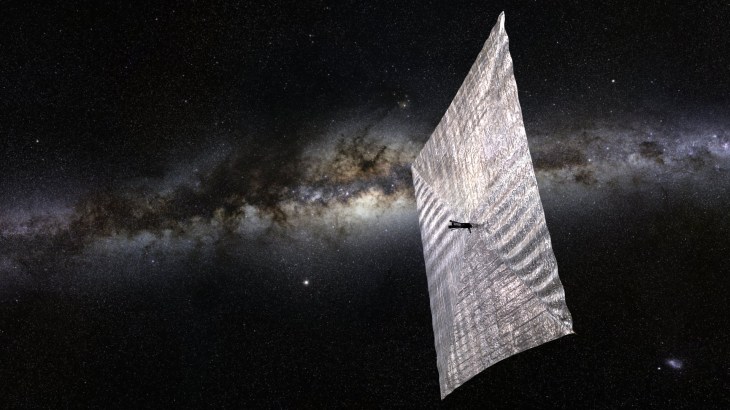
Congratulations to the Planetary Society.
From Bill’s Apollo 11 Scrapbook
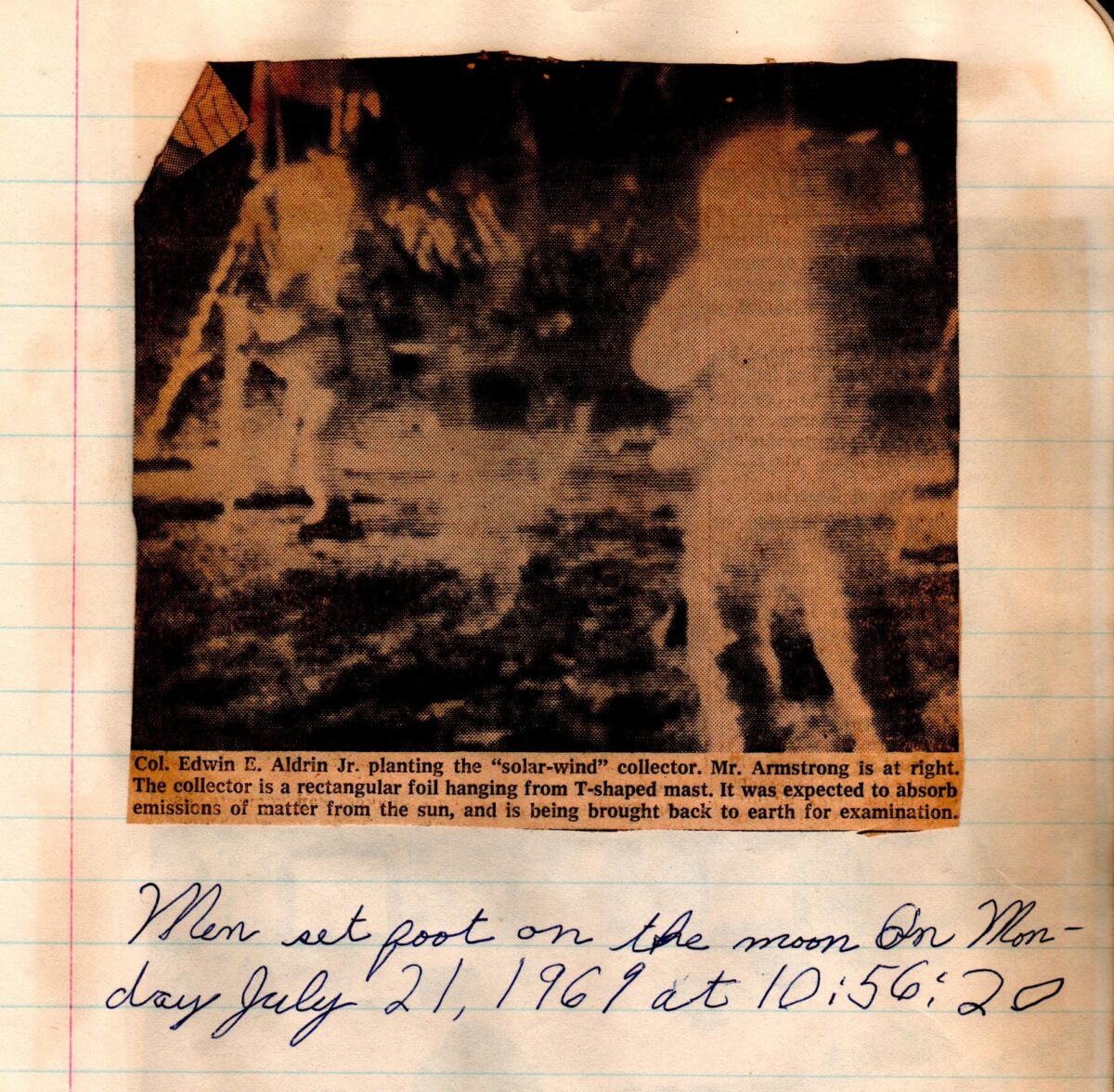
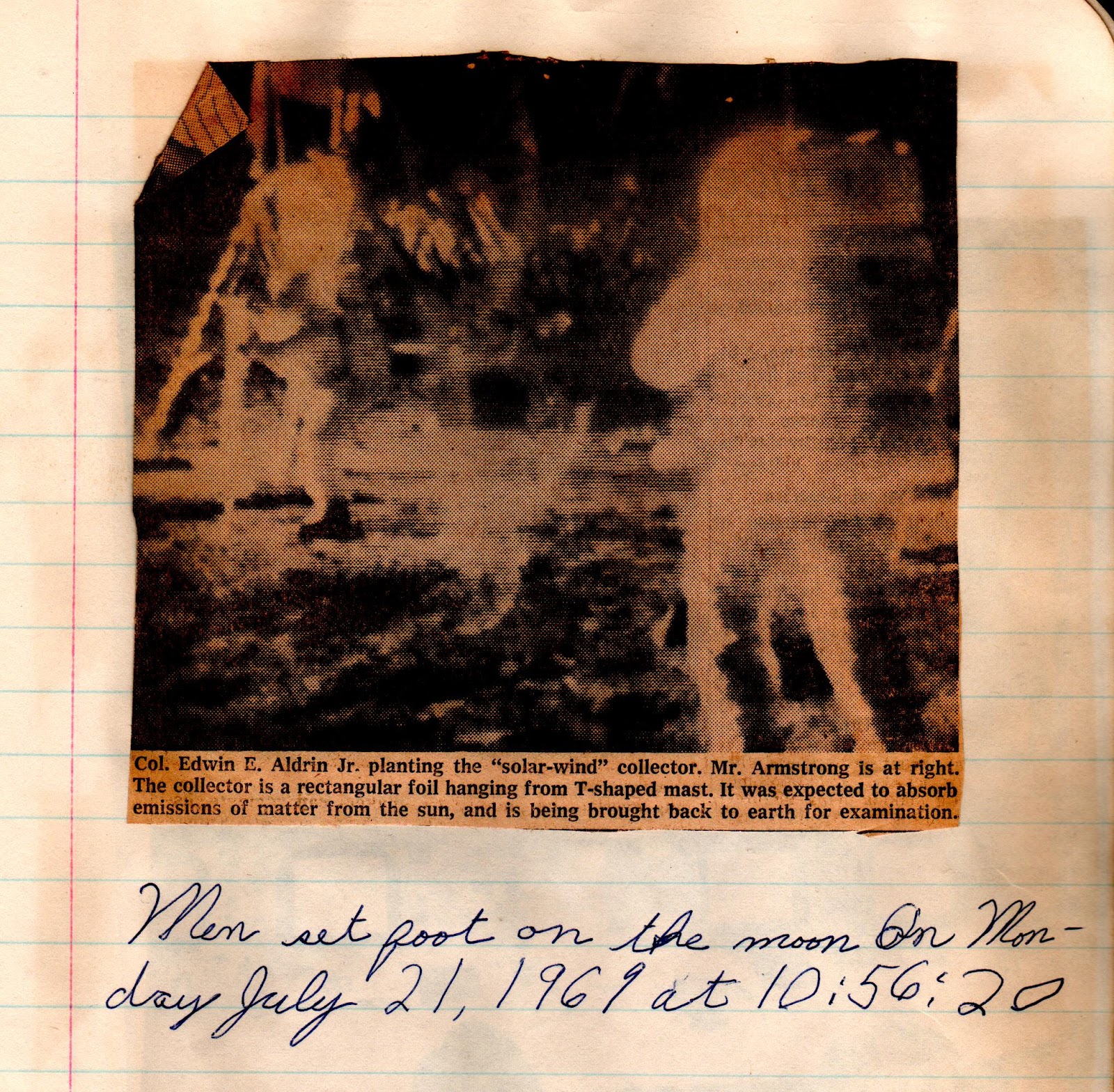
From the Apollo 11 scrapbook I made back in ’69. I got the date for the moonwalk wrong. But hey, I was only 10 years old.
SolderSmoke Podcast #211 — Malicious Code! Spaace! Vintage Sideband! MAILBAG
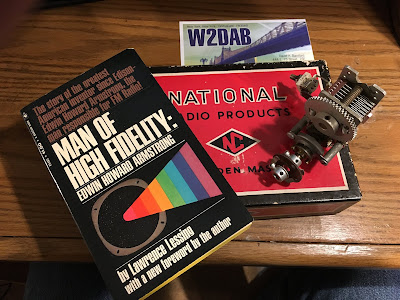
27 April 2019
SolderSmoke Podcast #211 is available
http://soldersmoke.com/soldersmoke211.mp3
Pete NOT quitting podcast! Malicious code case RESOLVED!
Ambiguity and the Digi-Analog Divide
Edwin Howard Armstrong biography
SPAACE!
Apollo 11 50th Anniversary
Oscar 100 in Geostationary Orbit. Why can’t we have one too?
Farhan puts AISAT in orbit. FB!
Space is difficult
SSTV from the Space Station
Pete’s bench report.
Vintage Sidebanders
Recording of Midwest Vintage SSB “tune up session”
Vintage rigs that sound bad
Distorted views on “distortion”
Bill fixing old Bose Wave Radio
NOT GOING TO DAYTON. AGAIN! But SolderSmoke rep will be there
75 meter secrets of success (timing is everything!)
MAILBAG
Steve N8NM sends me FB National Dial
Steve N8NM aspires to complexity — enough of this simple stuff!
Dave W2DAB goes to Columbia U session on Armstrong, sends FB book.
Jim W4JED — reports of QCX sideband a bit exaggerated. Where is Allison?
Rob Powell wins beret challenge. VK2TPM and VK2BLQ also win. CONGRATS!
Colin G3VMU sends nice 1930s radio picture
Alan WA9IRS sends diagram of digi radio signal flow. CLEAR AS MUD!
Chris KD4PBJ Grandmother worked at Hammarlund.
Steve NU0P sends info on Art Collins and the Apollo moonshots.
Apollo 11 — The Documentary
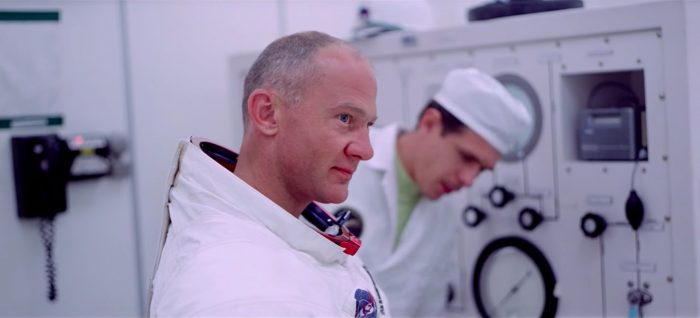
My wife is a kind and tolerant person. Proof of this is that she went with me to see the Apollo 11 documentary that we recently posted about.
I think you have to be a geek and/or have The Knack to really like a 90 minute documentary with no audio other than Walter Cronkite’s reporting and the recorded dialogue among the participants. But of course, I loved it. Amazing video, especially of the Saturn V.
Bob Scott KD4EBM found this great interview with the film maker:
Video:
Audio only (downloadable)
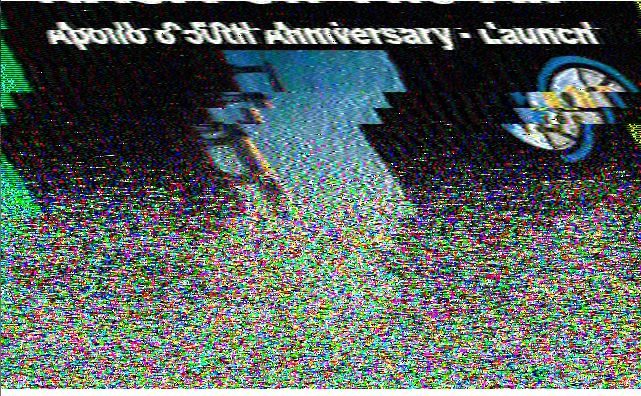
SSTV from SPAAAAACE! International Space Station Sends Images
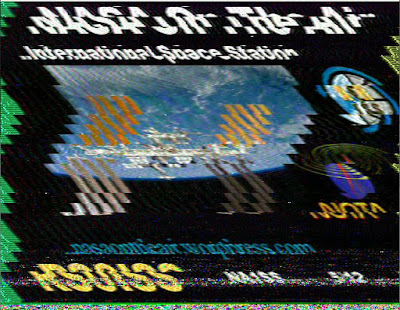
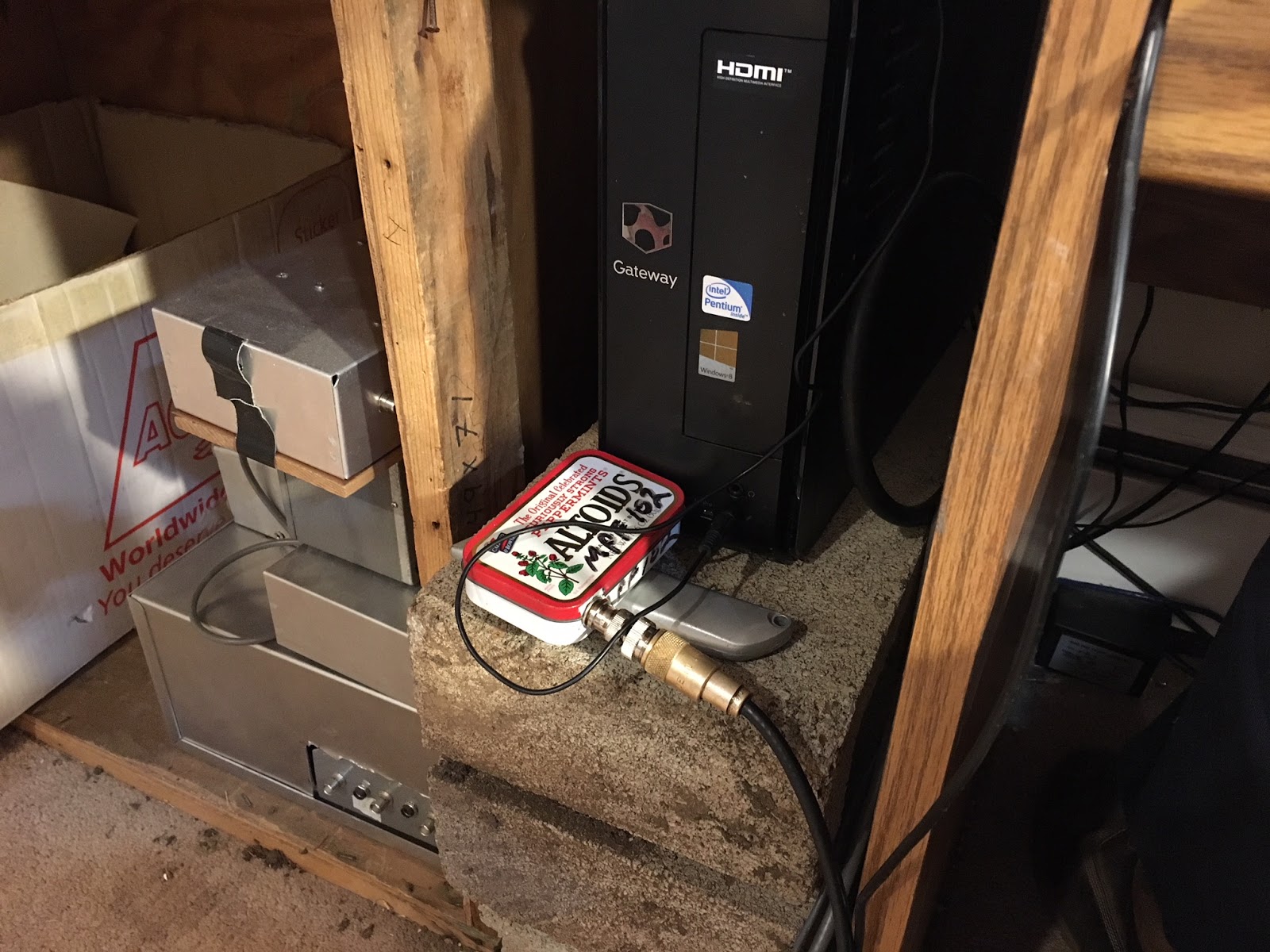
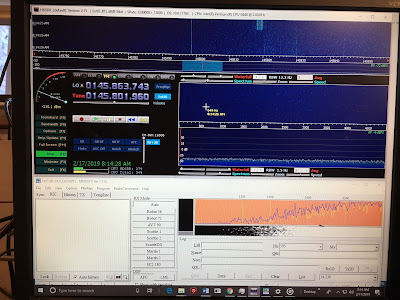
The crew on the space station have been transmitting SSTV images. This morning I threw together a receiving system: I used my four element refrigerator tubing quad feeding the an RTL-SDR Dongle with HD-SDR software in the computer. For the SSTV decoding I downloaded a program from Japan: MMSSTV (very nice). To get the signal from HD-SDRto MMSSTV I just plugged a cheap little electret computer mic into the computer and taped it to the speaker.
At 0838 local today ISS flew almost directly over me. I aimed the quad south-west, and almost as soon as it was above the horizon very strong signals started pouring in. They produced the first picture (above).
ISS went silent as it passed over head. I swung the quad to the north-east hoping to catch another image as the station moved away. That is the second image (below). You can see that I was losing the signal about halfway through.
The distortion in the video image may be the result of me manually adjusting the receiver for Doppler shift.
Here is a little video of the action in the shack during the first half of the pass.
Here is the RTL-SDR Dongle Receiver in an Altoids Box:
Here is that the programs looked like on the screen — HDSDR on top, MMSS on the bottom:
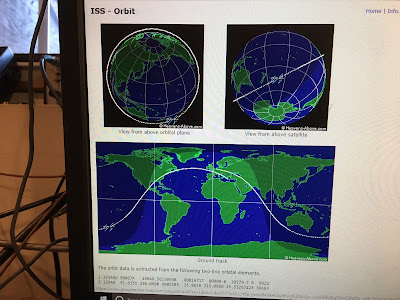
Here is what the orbital pass looked like. ISS was East of New Zealand when I took this picture. ISS came up over the Eastern Pacific and Mexico before passing over N2CQR. This display comes from the excellent Heavens Above web site:
Indie Documentary: Apollo 11
Thanks to Bob Scott for the alert on this. This new Indie film promises to be even better than the recent “First Man” movie (which was somewhat disappointing, with too much focus on family drama). Armstrong looks so young in this trailer.
New Rock Video By Astrophysicist and Queen lead-guitarist Dr. Brian May
We don’t carry many music videos on this blog, but this one definitely belongs here. We’ve mentioned Brian May several times: Lead guitarist in the rock group Queen. PhD Astrophysicist.
I didn’t know that he went to work as a full member of the New Horizons (Pluto and beyond) mission.
The video is definitely for us — it features a lot of antennas. And it includes the computer-generated voice of Stephen Hawkings.
Read more about Brian’s careers and about his latest adventure here:
https://www.space.com/42875-brian-may-new-horizons-song-ultima-thule-flyby.html
 |
|
New Horizons principal investigator Alan Stern poses with astrophysicist and Queen lead guitarist Brian May on Dec. 31, 2018 at Johns Hopkins’ Applied Physics Laboratory in Maryland just before New Horizons flew by Ultima Thule.
Credit: NASA/Bill Ingalls |