AI Podcast #2: Here is Another Short Podcast ABOUT SolderSmoke.

Click here for the second “About SolderSmoke” podcast.

http://www.soldersmoke.com/About SolderSmoke 2.mp3

This one looks not at the SolderSmoke Daily News blog, but instead at the SolderSmoke podcast itself.

I was delighted to see the inclusion of Pete, Dean, Farhan and Mike Rainey! This was really great.

Look, it is not perfect. There are errors. But probably about the same number of errors that you would get from real, human hosts, right? Voltaire told us not to let the perfect be the enemy of the good. And I find this to be amazingly good. Look, it is so good that it is kind of scary, right?

Before you get too critical realize how this has been done: I did nothing more than load the SolderSmoke Podcast Archive website into GPT-like model. Then I asked it to produce a deep dive podcast. That’s it. About 5 clicks. It developed the podcast in about 3 minutes. I did the same thing yesterday but with the SolderSmoke blog. And this is only the beginning.

SolderSmoke Podcast #252 — First Podcast from SolderSmoke Shack South

For the moment this podcast is video only. The video appears above. Here is the URL for the video:
https://www.youtube.com/watch?v=NeNTv3YjiHU We will try to get the usual audio podcast version out soon.

— This is the first podcast from SolderSmoke Shack South: Eastern tip of Island of Hispaniola. Cap Cana, DR, 70 feet up, 1 mile from Mona Channel. Seventh floor shack with view of the ocean. Antennas: Dipoles for now, maybe Moxons or Hex later. STARLINK

– The San Francisco case against me. One guy thinks we DESERVE prosecution! Get off of my lawn!


Like the library cop on Seinfeld: https://www.youtube.com/watch?v=D9tP9fI2zbE

But one fellow wrote letter to the mayor asking for leniency. Proposes “Bill Meara Day in SF.” FB! I fell victim myself this year: Mike WU2D got me with WA1HLR on SSB video. https://www.youtube.com/watch?v=NLvCNJ_OnEc

— Dean: Fighting a spur in the sBITX. Filters?

— Dean: Exploring Class A, Class AB and the RD06HHF1

— Dean: Extensive work on getting flat gain from FETs up through 10 meters.

-hh- Dean and Bill: OIP3 measurement and setting the bias on an RD06HHF1

— Pete: Discovers for all of us “RF Man” In spite of all the CB stuff, he is the THE MAN! On YouTube:https://www.youtube.com/@rfmanchannel6915

— Pete fixes Dean’s relay chattering problem: SUBTHRESHOLD CONDUCTION! Yikes!

— Pete’s refurb and rejuvenation of the Drake Twins,

— MXM news. New docs, and ads from WD5L. All on the blog. 7030 crystals. Why MXM? Chuck Adam’s mods, Joh DL6ID’s questions about VFO. Yes! VFO from RX. Was Bruce Williams an early Swan Designer?

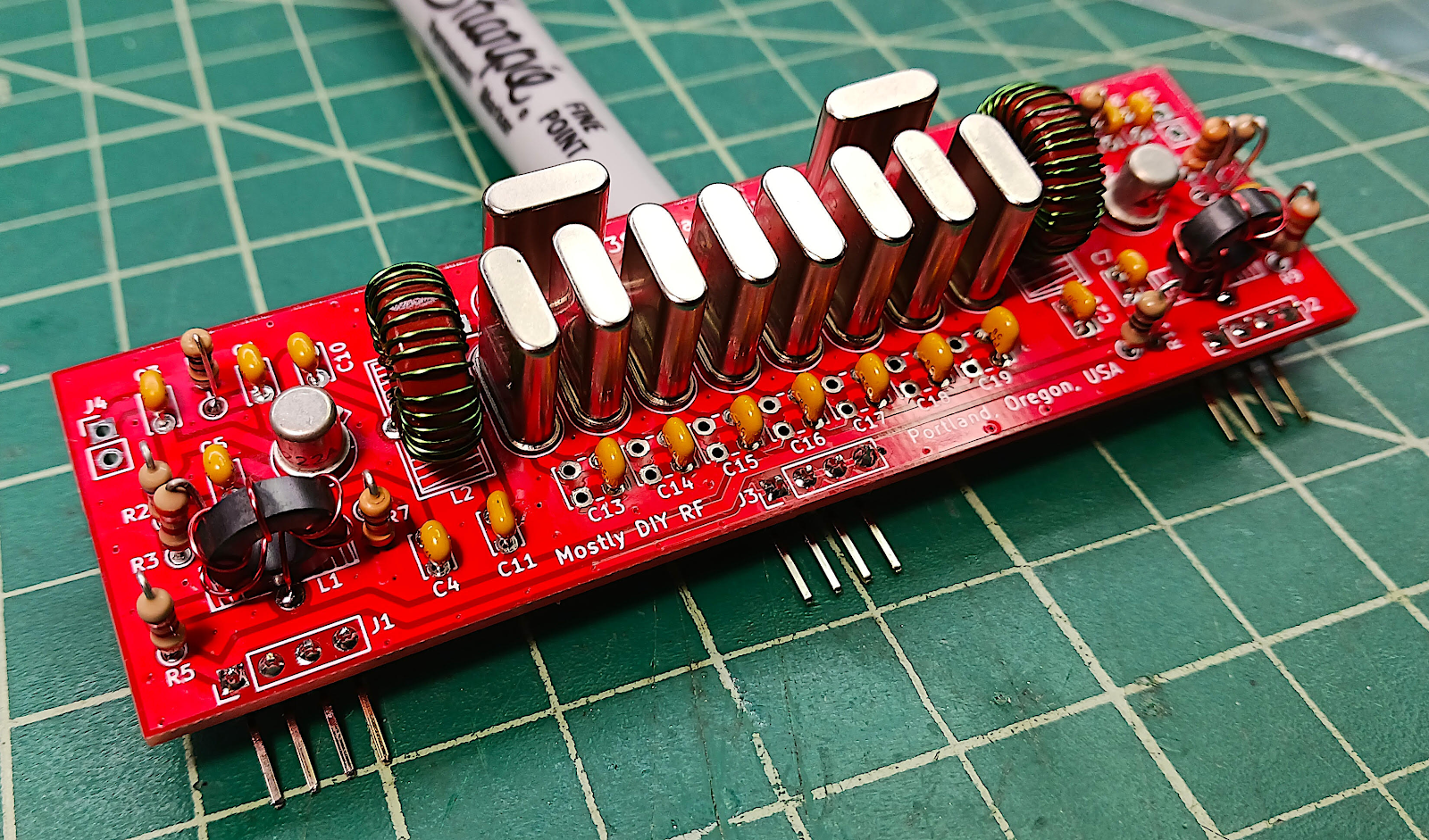
— Weird paradox with 25 MHz filter: Low profile xtals have higher Q, but produce more rounded passbands. Why? I note that Minima’s 20 MHz filter also had curved passband.

— Allison’s wisdom on filters at higher frequencies. The importance of physical layout. Diodes in the dark! It is indeed more difficult up there. But don’t let the perfct be the enemy of the good!

— Is Bill the only one to ever build a 10-15 Dual Bander using a 25 MHz crystal filter. Why? Farhan’s Minima has a 20 MHz 6 pole QER crystal filter. And it too had a rounded passband. But it tooc WORKED.

— Did my receiver sound tinny due to rising frequency response of uBITX Rev 4 amp? Yes! So I put in a TJ DC RX Af amp.

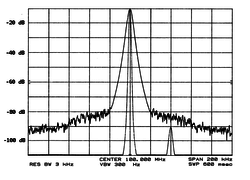
— Bill BLOWS UP a Tiny SA Ultra. Ooops. But quickly got a new one from R&L Electronics. Very, very useful. I knew 25 MHz IF rigs were inferior, but by how much? How much was the carrier suppressed? Which filters worked better? What was the opposite sideband rejection. TinySA permitted measurement and comparison.

— Bill quit 15 meter SSB (for a moment) and went to the 1.22 nanometer band with a Wilson Clound Chamber. Videos on the blog.

SHAMELESS COMMERCE: Thanks to new Patreon sponsors. I am sending some additional video content to the sponsors.

MAILBAGg

— Thanks to Bob Crane W8SX for FDIM interviews. I will get them out!

–Wes — W7ZOI has a new TIA amp with variable gain on his web site: https://w7zoi.net/

— Geoff N6GWB’s Rad Receiver https://soldersmoke.blogspot.com/2024/04/the-rad-receiver-from-n6gwb.html

— Dave K1KA sent Ensemble RTX SDR parts. Thanks Dave.

— Chuck Adams AA7FO provided good background on my MXM rig, including the meaning of MXM (1990) . Again, great to hear from Chuck, a true homebrew hero.

— Gerardo HI8P collecting info on the other HI8P, my friend Pericles (SK)

— Alvin N5VZH picked up a Silktronix CB VFO. What to do?

— Jorgen SM4WWG listening from Sweden, and making PCBs. FB!

— Mike WN2A Wondered about opposite sideband rejection of MXM. Not great.

— George WB5OYP loaned me a book from Elmer Bucher. THE Elmer? https://k9zw.wordpress.com/2020/01/24/on-the-origins-of-elmer-a-reasonable-theory/

— Wes W7ZOI, Farhan VU2ESE — Thanks for help on filter issue. Thanks too to Alan W2AEW and G3UUR

— Josh G3MOT — Nice message of support in our “struggle” with SF authorities. Going portable to Vancouver island in August. VE7/G3MOT

— Paul VK3HN — Antipodean solidarity. Thanks Paul.

— Rogier PA1ZZ — great input and help. Thanks

— Tony G4WIF reminded me of G3ROO’s parasets. See Blog

— Pavel CO7WT His experiences (building, freezing, heating) the VFO in the Jaguey DSB rig.

— Grayson KJ7UM Sent latest ER with his Collins 51S-1 story. Thanks Grayson.

— Allison KB1GMX Commiserating on higher freq crystal filters. Thanks Allison

— Wes W4JYK Notes that Dewey, Cheatam and Howe are based in SF. Can they help with sticky sticker problem?
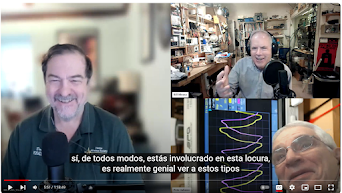
Farhan Talks Radio Tech at SolderSmoke HQ (EAST) (TWO VIDEOS!)

Great stuff! We were really fortunate to have Farhan and Humera visit the SolderSmoke East shack after Dayton and FDIM. Dean and I had a chance to talk BITX with the creator. Here is the two part video. Most of the tech talk is in Part II (below).

Farhan and his zBITX
Dean and Farhan with three sBITXs

Dean’s homebrew sBITX
Farhan Phone

Version II of 15-10 Rig — Updates on Bal Mod, AF amp, and RF Amp, DX

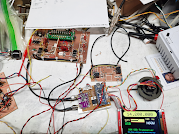
Version II of the 15-10 rig is mostly done. I did a lot of work on the AF amp, balanced modulator, Mic amp, carrier oscillator, and filter. Dean KK4DAS and I continue to test and measure the RF power amplifier. I describe the brutally simple, non-sequenced T/R switching arrangement, and the spread-out open air construction style.

Version I of this rig is on its way to the Dominican Republic. Version II will stay in Virginia. I have already worked a lot of SSB DX with this rig, including, Thailand, Taiwan, China, India, Kenya, Australia, American Samoa, and others.


This video was inspired by the recent work of Nick M0NTV and Charlie ZL2CTM. And of course, Pete Juliano N6QW.

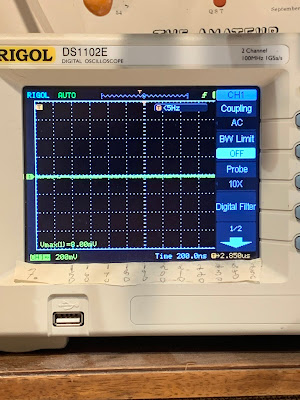
Why we have “BW Limit” Switches on our Oscilloscopes

Dean KK4DAS asked me why we have these switches on our ‘scopes. I didn’t know. Dean asked Alan Wolke W2AEW. Alan knew:

Alan Wolke wrote:

Interesting background on the 20MHz vertical BW selection. This feature has existed on the vast majority of all oscilloscopes since the 50s or 60s (both analog & digital). When I explored the history of this, I spoke to some of the folks at VintageTek.org, and wound up having a chat with THE engineer that did it first! Tt was John Addis, designer at Tektronix.

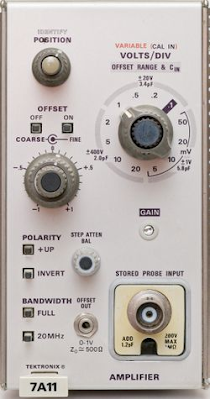
At the time, Tektronix was located in Portland Oregon. While working on a wideband vertical preamp for a new scope (the 7A11 vertical plugin for the 7000 series scope), John Addis was plagued with interference from the local television broadcast station in the 50MHz band. So, he popped in a 20MHz low pass filter that he could switch in/out so that he could complete the work on the preamp. Since it was deemed useful, it was left in the design.

And, since Tektronix added a switchable 20MHz low pass filter in their scope, and Tek was the leader in oscilloscope technology, other manufacturers followed suit, and this feature has “stuck” as a staple in vertical setting controls.

The main reasons you’d use this filter would be to improve the signal to noise ratio (SNR) for signals when their frequency content is below 20MHz. You’ve probably noticed that, even without any signal connected, the thickness of the trace is thinner when you engage the 20MHz filter.

———————


Alan sent a link to a Wiki page about the 7A11 that John Addis was designing. Alan says this places the initial inclusion of the 20 MHz BW Limit filter to the mid 1960s:


https://w140.com/tekwiki/wiki/7A11.


Thanks Dean, thanks Alan!

Why we have “BW Limit” Switches on our Oscilloscopes

Dean KK4DAS asked me why we have these switches on our ‘scopes. I didn’t know. Dean asked Alan Wolke W2AEW. Alan knew:

Alan Wolke wrote:

Interesting background on the 20MHz vertical BW selection. This feature has existed on the vast majority of all oscilloscopes since the 50s or 60s (both analog & digital). When I explored the history of this, I spoke to some of the folks at VintageTek.org, and wound up having a chat with THE engineer that did it first! Tt was John Addis, designer at Tektronix.

At the time, Tektronix was located in Portland Oregon. While working on a wideband vertical preamp for a new scope (the 7A11 vertical plugin for the 7000 series scope), John Addis was plagued with interference from the local television broadcast station in the 50MHz band. So, he popped in a 20MHz low pass filter that he could switch in/out so that he could complete the work on the preamp. Since it was deemed useful, it was left in the design.

And, since Tektronix added a switchable 20MHz low pass filter in their scope, and Tek was the leader in oscilloscope technology, other manufacturers followed suit, and this feature has “stuck” as a staple in vertical setting controls.

The main reasons you’d use this filter would be to improve the signal to noise ratio (SNR) for signals when their frequency content is below 20MHz. You’ve probably noticed that, even without any signal connected, the thickness of the trace is thinner when you engage the 20MHz filter.

———————


Alan sent a link to a Wiki page about the 7A11 that John Addis was designing. Alan says this places the initial inclusion of the 20 MHz BW Limit filter to the mid 1960s:


https://w140.com/tekwiki/wiki/7A11.


Thanks Dean, thanks Alan!

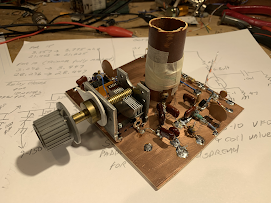
Nate KA1MUQ’s Amazing Thermatron Receiver


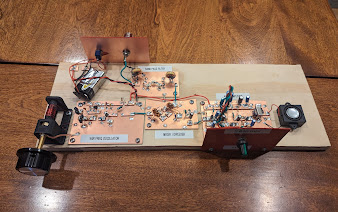
Wow, some really wonderful work is taking place in Nate KA1MUQ’s basement in California.

— I really like the pill bottle coil forms. I wonder if Nate faced suspicion (and possible arrest) in the pharmacy when he asked for the pill bottles. (I got some suspicious looks when I went I asked for empty pill bottles while building my thermatron Mate for the Mighty Midget receiver back in 1998.)

— The variable capacitors are also quite cool, as is the big rotary switch. Is that for band switching?

— Oh man, all on a plywood board. Frank Jones would approve!

— Indeed Nate, that beautiful receiver NEEDS an analog VFO. And we need to hear it inhaling phone sigs, not that FT8 stuff.

— Please keep us posted on your progress. And of course, one hand behind your back OM. Lots of high voltage on those thermatrons.

Thanks Nate!

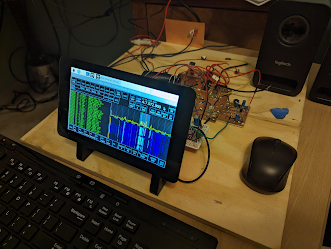
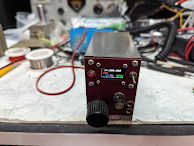
Dean’s Amazing Homebrew sBITX

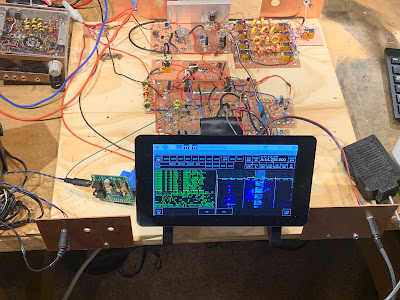
I was kind of making fun of it during SolderSmoke podcast #250, but later that same morning I had a chance to watch the KK4DAS homebrew sBITX in action, in person, and I must say, it was very impressive. This may be the only homebrew sBITX in the world (please correct me if I’m wrong).

In the picture above you can see the amalgamation of traditional superhet with modern DSP. Even for an HDR guy like me, the result is really cool. Once again, I experienced waterfall envy. And the sBITX receiver sounds great.

Dean has written up his experiences with this rig in a blog post. Check it out for more info:

Thanks Dean!

SolderSmoke Podcast #250 Dean KK4DAS joins Pete N6QW and Bill N2CQR


SolderSmoke Podcast # 250 is ready for download:

http://soldersmoke.com/soldersmoke250.mp3

VIDEO VERSION: (1707) SolderSmoke Podcast #250 — With Pete N6QW, Dean KK4DAS, and Bill N2CQR – YouTube

Intro: Welcome to Dean KK4DAS. For 2024 Pete and I hope to jazz things up a bit by bringing in fellow homebrewers to talk about their projects. Dean is our first victim. Welcome Dean.

Some good news: Several new homebrew receivers are inhaling: Armand WA1UQO in Richmond has an amazing looking regen. Scott KQ4AOP in Tennessee got his DC RX working. Mike AG5VG in Texas has been homebrewing BITX 20s and BITX 40s. All are on the blog.

Pete’s report:

— Recent blog entries on filters, SSB rig architecture, and of course digital VFOs.

— Phasing measurements, quadrature, and the Seeed Xiao RP2040

— Error in QST article on early SSB transceiver. ANOTHER ERROR!

–LC VFO on blog! FB Pete!

Dean’s report:

— Tales of woe on the homebrew sBITX

— Help from Farhan.

— Ground Bounce. FFT Hallucinations. Wisdom files.

SHAMELESS COMMERCE DIVISION:

— Whenever you are tempted to buy something from AMAZON, just start at the Amazon symbol on the right side of the page. We get a cut from Bezos, and it doesn’t cost you anything.

— You can try to do the same thing with E-bay. We are finding a lot of great parts there.

— If you see a SolderSmoke post on Facebook, please Like and forward.

— Become a patron! Go to the Patreon page. We put the money to good SolderSmoke use.

— Visit Mostly DIY RF and buy a PSSST kit!

Bill’s bench:

— Building yet another BITX dual bander. 15-10 again. Tried to use a 25 MHz filter left over from the earlier project, but I had to build another. Built a new VFO using the variable cap and anti-backlash gear recommended by Pete. Was a bit tough to get the receiver sounding good. Had a diode ring as the second mixer, but went back to a singly balanced mixer.

— 10 meter AM — Thanks to Jerry Coffman K5JC for mod.

Other topics:

–Counterfeit chips. Why?

MAILBAG:

Wes W7ZOI

Jim Cook W8NSA Transoceanic BFO

Grayson KJ7UM — Vintage Computer Museum

Chuck Adams –Glad to hear that Chuck is doing well.

Frank Harris K0IYE — NO CHIPS!!!!

ED DD5LP Antenna software

Eldon KC5U 10 AM We made a contact

Joh DL6ID 10 AM

Phil W1PJE of MIT 10AM Where is L5?

Bob WP4BQV now in UK

Dino Papas KL0S in Wilmington Reverse Polarity protection.

AA7EE Dave Richards Liked Armand’s receiver

Rogier PA1ZZ

Jonathan-san W0XO Listened to my ET-2 CW Whoop,whoop

Nick M0NTV Great videos from Nick the Vic

Will KI4POV Working on his own SSB rigs.

John West — Who is the South American ham who made his capacitors and heat sinks?

Ed KC8SBV Working on DC receiver, experimenting with FETs

Mike WN2A great contributions. Si5351 sole source danger!

Nick N3FJZ — watch out for dead bands when testing receivers!

Don KM4UDX encouragement from new Prez of VWS

Dave K8WPE Likes QF1 Cap backlash. Says I’m getting soft!

Dave WA1LBP My fellow Hambassador, from Okinawa USMC Sergeant with a workshop.

Scott KQ4AOP Successfully BUILDS a Receiver (Video) — This is the Homebrew Spirit at its Maximum

This is just so cool. Scott KQ4AOP has successfully homebrewed a ham radio receiver. He used the circuit Dean and I developed (with a lot of input from Farhan and others) for the High School receiver project. But Scott has had more success than any of our students. And I think he has had — in a certain sense — more success than any of us. After all, how many of us can say — as Scott can — that he used a homebrew receiver that he made to listen — for the very first time — to amateur radio signals? Scott writes: “Those first sounds were my first time ever hearing any Amateur Radio first hand!”

In the email below, you can see Scott’s deep commitment to homebrew: “I want to build my own gear for 40m. I want to learn morse code. I want my first contact to be on my own gear.” Wow Scott, the building of the receiver is the hard part, and you have already done that. I think you are well on your way.

In the video above you can watch Scott tune the entire 40 meter band and a bit beyond. You hear CW at the low end. Then FT-8. Then SSB. Up just above the top of the band I think you can hear our old nemesis Radio Marti. And this powerful broadcaster is NOT breaking through on the rest of the band. FB Scott. Congratulations.

———————————————-

Bill,


Thank you for the quick response, direction, and pointers. I won’t give up, and I am not in a rush.


I have wanted my amateur radio license since the early-to-mid-80s. I got my Technician and General in May of 2022 and completed my Extra in May 2023. I always wanted to understand how to design circuits, and I wanted to build them. I share that background to say that I have this impractical goal that I am stubborn enough to stick to (all due respect to you and Pete’s advice on the topic of getting on the air). I want to build my own gear for 40m. I want to learn morse code. I want my first contact to be on my own gear. So, your blog and podcast really resonates with me.

I am only teaching myself at this point. It was the perfect project for my goals. I thought that if all these high school kids in Virginia, Canada, and Germany can do it, it was the sweet spot I was looking for.

The only transceiver I have was recently gifted to me. It is a Sommerkamp TS-788DX CB radio that allegedly works on 10m in addition to CB. I haven’t connected it up because I wanted to stay focused on the HSR. I have a mentor who has gear that I can use to test the oscillator. I am not involved with the nearby ham club, but I know they would help if needed.

Thanks again and I will keep you posted,

73 Scott KQ4AOP


Bill and Dean – Thank you for sharing and documenting this receiver. I greatly appreciate you publishing the circuit, class notes, and build videos. That got me 75% to completion.
I feel blessed that both of you chipped in and encouraged me through the troubleshooting to finally getting the receiver to start “breathing RF”.
Those first sounds were my first time ever hearing any Amateur Radio first hand!

SolderSmoke Podcast #249 — Travel, Pete’s 6BA6 rig, Books!, VFOs, SDR, Computers, Spectrum Analysers, Transistor Man! MAILBAG

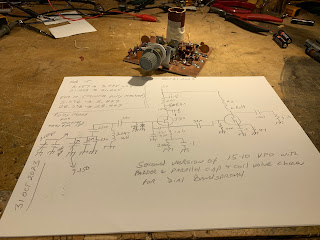
New VFO for 15-10 Transceiver
Schematic below

SolderSmoke Podcast #249 is available: http://soldersmoke.com/soldersmoke249.mp3

There is also a video version of this podcast: https://youtu.be/5xyaYivtOhw

Travelogue:

HAPPY VETERANS’ DAY TO PETE AND GRAYSON AND TO ALL THE OTHER VETERANS WHO ARE LISTENING.

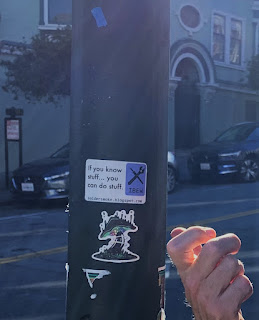
Trip out to San Francisco. Sticker placed on the corner of Haight and Ashbury: See picture below. Note other sticker. Really Groovy!

Bill’s DXCC-100. DONE.

Tribal Wisdom: W1REX on HRWB https://soldersmoke.blogspot.com/2023/11/listen-to-rex-w1rex-lots-of-tribal.html

Pete’s Bench:

Pete’s 6BA6 rig

Pete’s 6BA6 Rig


Pete Re-invents the Shirt-pocket SSB Rig

Pete’s remake of the ShirtSleeve Transceiver

Pete Builds Two Computers

Pete Adds a Second Band to his Homebrew SDR


SHAMELESS COMMERCE DIVISION:

BEZOS BUCKS ARE BACK! PLEASE BUY THERE! >>>>>>>>>>>>>>>>>>>>>>>

Mostly DIY RF: Work proceeds in the Oregon Silicon Forest on P3ST kit development. Todd is confident the P3ST will be released on December 18th.Many other kits available now: https://mostlydiyrf.com/

Sign up for the newsletter: https://mostlydiyrf.com/subscribe/


Bill’s Bench:

Rebuild of the 15-10 VFO (for improved Dial Spread) (with yet another QF-1 capacitor) https://soldersmoke.blogspot.com/2023/10/dial-scale-linearity-spreading-out.html

Why Building for 10 meters is harder: https://soldersmoke.blogspot.com/2023/09/why-building-for-10-meters-is-harder.html

Copper Tape shielding of 15-10 rig.

Crushing Spurs with Better Bandpass Filters (see blog post) https://soldersmoke.blogspot.com/2023/09/crushing-17-and-12-meter-spurs-with.html

Another 15-10 rig in the works… for SSSS. Boards are accumulating…

More problems discovered with the Herring Aid 5 Receiver . Lots of SS blog posts Comment from Rick WD5L. ) https://soldersmoke.blogspot.com/2023/10/a-big-error-discovered-in-1976-qst.html Did you try to build one? Did you succeed or did you fail? Please let us know.

The Basil Mahon books (blog posts) https://soldersmoke.blogspot.com/2023/11/basil-mahon-is-author-for-us-he.html

The Sunburst and Luminary book of Don Eyles (blog posts)

The Art of Electronics by Horowitz and Hill (blog posts)

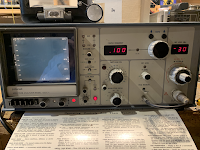
Spectrum Analysers: Tiny SA Ultra https://soldersmoke.blogspot.com/2023/09/the-tinysa-ultra-spectrum-analyser-video.html and Polarad 632C-1; George WB5OYP gave me one of these spectrum analysers (I NEED a manual! Does anyone have a manual or a schematic? ) :

Polarad 632C-1


Stabilizing the EB63A (with Pete recommended LP filters from e-Bay.


MAILBAG:

TRANSISTOR MAN T-SHIRTS! Thanks to Roy WN3F!

Todd VE7BPO on AF amplifiers. Thanks Todd.

Wes W7ZOI — Always a privilege to exchange e-mail with Wes.

E-mail from Jay Rusgrove W1VD. About the Herring Aid 5.

E-mail from Eamon Skelton EI9GQ! Amazing!

HB2HB with Denny VU2DGR https://soldersmoke.blogspot.com/2023/09/hb2hb-contact-with-denny-vu2dgr.html

Nick M0NTV on diode matching for ring mixers: https://soldersmoke.blogspot.com/2023/10/does-matching-matter-diode-matching-for.html

Paul Taylor VK3HN on the new Elecraft CW rig.

Dean KK4DAS fixed the noise in his Hallicrafters SW receiver. A long battle, finally won.

Dean also in contact with G3UUR.

Ramakrishnan VU2JXN helping me set up a backup of blog on WordPress.

Mark KA9OOI noticed that SS podcast archive appears gone. In fact just temporarily relocated to http://soldersmoke.com/podcastarchive.html

(SS PODCAST Archive temporarily relocated to http://soldersmoke.com/podcastarchive.html)

Andreas DL1AJG – Crystal radio video. https://soldersmoke.blogspot.com/2023/10/building-crystal-set-videos.html

George N2APB on the Herring Aid 5

Grayson KJ7UM experimenting with Varactors and Thermatrons!

Thomas K4SWL on Mattia’s DC receiver. https://soldersmoke.blogspot.com/2023/10/mattia-zamanas-amazing-direct.html

Bob Weaver of Dial Bandspread Linearity fame. Electron Bunker

Mike Bryce WB8VGE QRP Hall of famer — he too couldn’t get the Herring Aid 5 working.

Kirk NT0Z wrote about the Wayback machine. But this former ARRL staffer he also tried and failed to get the Herring Aid 5 going. Way back when… https://soldersmoke.blogspot.com/2015/03/kirks-herring-aid-tuna-tin-and-regen.html

New 15-10 VFO with schematic
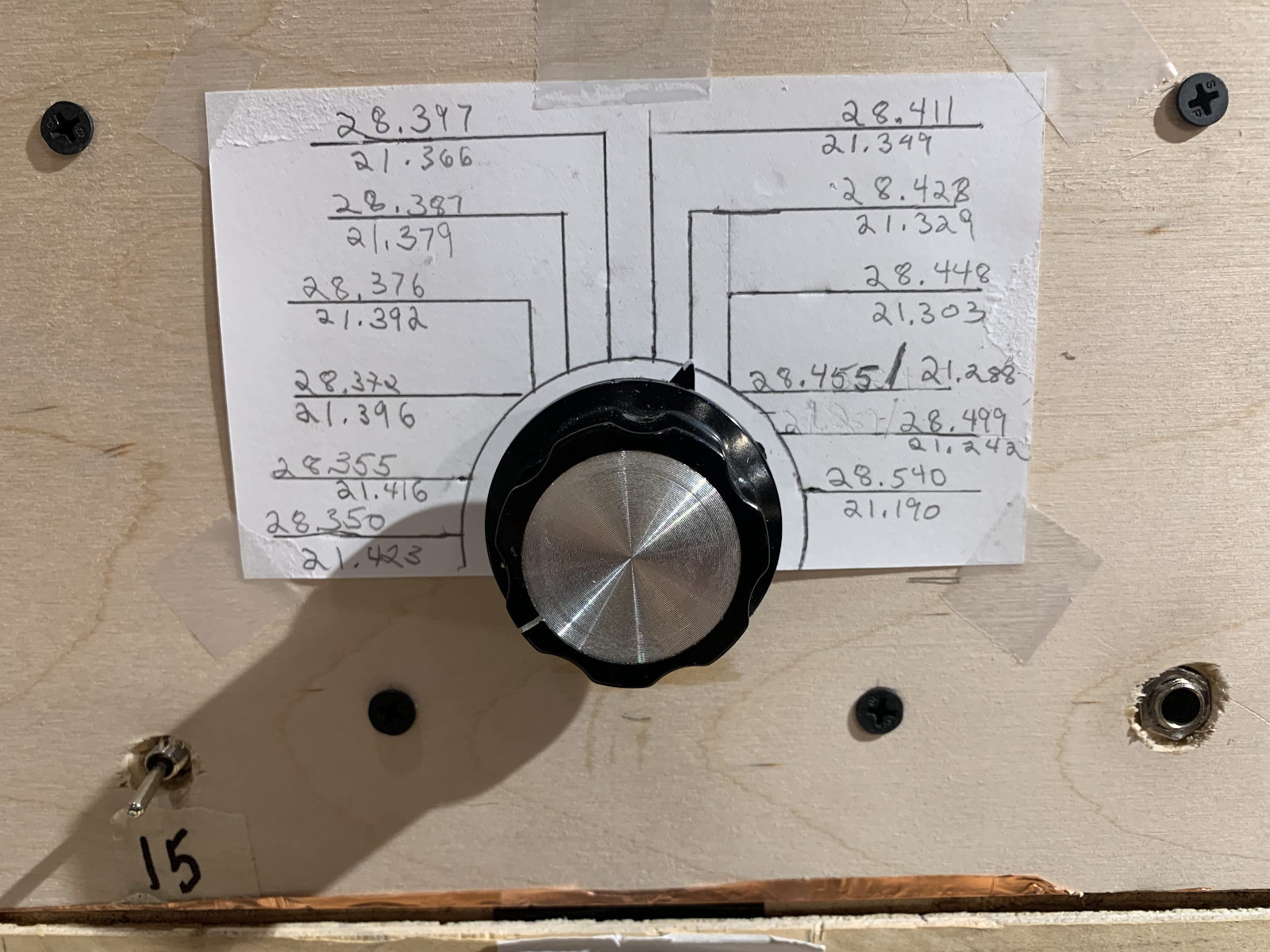
Dial Bandspread (Before)

At corner of Haight and Ashbury

Paul VK3HN’s Video on Scratch-Building and SOTA

It was great to get a comment from Paul VK3HN — this led to a re-establishment of contact. Apparently Google knows who I have been e-mailing, so this great video appeared on my YouTube screen. Thanks Google!

— Great to hear Paul’s shout out to Pete Juliano N6QW, and Pete’s concept of noodling.

— Paul’s emphasis on testing each stage independently is really important.

— Wow, ferric chloride! It is great to see someone doing this (instead of just sending Gerber files to China).

— Books. This reminds me that I have to get Drew Diamond’s books.

— Paul’s comment on the usefulness of a general coverage receiver. Right on target Paul.

— On the test gear, we can now add the TinySA Ultra. And you don’t have to win the Lotto!

— Finally, Paul is absolutely right on the need to constantly update and publish changes to schematics. I am guilty of not doing this. (I hang my head in shame.) This became a problem in our simple High-School receiver project — I would make changes to circuits and fail to communicate these changes to Dean KK4DAS. Paul’s method would have solved this problem.

— Thanks Paul!

The TinySA Ultra Spectrum Analyser (video)

I got mine this week, and I’ve been playing with it. When I spoke to Dean KK4DAS, I asked what he thought the first thing I did with it was. He guessed that I tried out the greatly improved Resolution Bandwidth. Good guess, but not quite: I tried out the “listening” feature on this SA. You will recall that the plain-vanilla, non-Ultra TinySA required a hardware mod to allow for listening. Dean had told me that the Ultra came with a headphone jack. Indeed. I fired it up and was able to listen to 1220 AM and also to the FM broadcast stations in the area. With the FM stations, I’m guessing I was using a form of slope detection (IMSAI guy says it detects AM). I tried to see if I could see/hear stations on the ham bands — so far, no luck. I’m not sure why, but I will work on this.

The IMSAI guy video (above) does a great job in comparing the TinySA Ultra to a “real” spectrum analyser. I think it compares very well.

One note on where I got mine: I ended up getting it from R&L Electronics, the recommended U.S. dealer for the device. I had tried getting it (cheap) through AliExpress. This didn’t really work out. The tracking info from AliExpress showed that the box had made it to my local post office, but I never got it. It may have been that they just didn’t take the complete mailing address from PayPal. In any event, I was able to get a refund from PayPal, so no loss here. R&L turned out to be a great source.

Ultra, of course.

“The Art of Electronics” Post #2 Interview with Lady Ada (Video)

I posted this video back in 2015, but it is so good that it is worth watching again. This is especially true now that I have the second edition of The Art of Electronics in hand, and in light of the fact that we recently had our own experiences trying to teach analog electronics to students.

Paul Horowitz is a real inspiration. He is still W1HFA, and QRZ.com has him living in Cambridge, Mass. So many great tech collaborations came out of that fair city: Car Talk and KLH, just to name two. And of course, Horowitz and Hill.

It was wonderful to hear Paul describe the origins and the evolution of The Art of Electronics. His description of the Electronics 123 course at Harvard was really inspiring. They were wise to limit the participation to 10 students (it seems that they eventually went to 2 sections of 10 students each). I think Dean KK4DAS and I came to the conclusion that it is better to have a small group of truly interested students than to have a large group of marginally interested students. (At the high school, we started with 70. That was far too many.) And it may be better to teach this stuff at the college level (high schoolers may be a bit too young). I want to get the third edition, and the book Learning the Art of Electronics.

Paul showed pictures of the class (near the end of the video). Classroom seating was seminar-like, with no pompous professor at a podium. The labs showed Rigol digital ‘scopes in use.

And wow, the watch that Paul gave to Lady Ada is very cool.
It is all quite inspirational. Three cheers for Horowitz and Hill, and for Lady Ada.

More on “The Art of Electronics” to come.

Phase Noise and the Radio Amateur

A weak signal disappears in the phase noise of the stronger signal.
The March 1988 QST provides a relatively clear explanation of what phase noise really is:

Highlights:

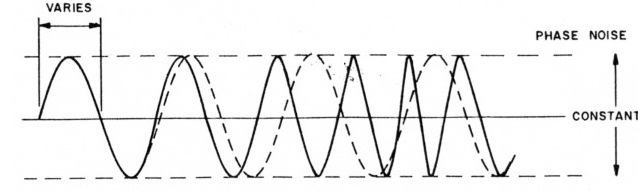
Phase noise is an undesired variation in the phase of the signal. In this case, an oscilloscope shows that the time between zero crossings of the signal varies over time when compared to the zero crossings of an ideal sine wave. An exaggerated example of phase noise is shown above.

Phase noise on an oscillator signal has exactly the same effect as frequency modulating the oscillator with noise.

Whenever a carrier is passed through a mixer, the phase noise of the oscillator driving that mixer is added to the carrier.

Phase noise on a transmitted signal causes effects identical to phase noise generated in a receiver.

Any signal that reaches a mixer in the receiver is modulated by the phase noise in the local oscillator driving that mixer. As such, the signal appears to have at least as much phase noise as the local oscillator. Thus, sufficiently strong signals off the receiving frequency can degrade receiver sensitivity by raising the noise floor at the receiving frequency. Receiver dynamic range is reduced as the noise floor rises.

With a frequency-shift-keyed or- a phase-shift-keyed signal, the close-in phase noise limits the maximum bit error rate that the system can achieve. Both of these effects can be quantified once the communications system is defined. With an SSB voice signal, the effects are much harder to predict, but excessive phase noise does degrade SSB signal intelligibility to some extent.

——————————–

Receiver guru Rob Sherwood provides some very useful historical background on his web site:

http://www.sherweng.com/documents/TermsExplainedSherwoodTableofReceiverPerformance-RevF.pdf

Phase Noise: Old radios (Collins, Drake, Hammarlund, National) used a VFO or PTO and crystal oscillators to tune the bands. Any noise in the local oscillator (LO) chain was minimal. When synthesized radios came along in the 70s, the LO had noise on it. It is caused by phase jitter in the circuit, and puts significant noise sidebands on the LO. This can mix with a strong signal outside the passband of the radio and put noise on top of the weak signal you are trying to copy. This is a significant problem in some cases: You have a neighboring ham close by, during Field Day when there are multiple transmitters at the same site, and certainly in a multi-multi contest station. You would like the number to be better that 130 dBc / Hz at 10 kHz. A non-synthesized radio, such as a Drake or Collins, has so little local oscillator noise the measurements were made closer-in between 2 and 5 kHz.


————————————-
Experimental Methods in RF Design (EMRFD) has this to say about phase noise:

“The local oscillator is a critical part of any communications system. Modern transceiver performance is often compromised by LO systems that suffer from excess phase noise, effectively limiting the receiver dynamic range. While quiet oscillators, those with low phase noise, can be built using traditional methods, these circuits often lack the thermal stability of a synthesizer…. Frequency synthesis is not, however, the answer to all the LO problems presented to the experimenter. Some PLL synthesizers are burdened by excessive phase noise. Those using DDS, while quieter, emit spurious outputs, often in profusion. Both use an excess of digital circuitry that can often corrupt a receiver environment.” page 4.1
“At first glance, phase noise sounds like an esoteric detail that probably has little impact on practical communications. This is generally true.” page 4.12

————————————–

Hans Summers G0UPL analyzed and measured the phase noise of the Si5351a chip:

http://qrp-labs.com/qcxp/phasenoise.html

————————————

DC4KU appears to be using the crystal filter method used by Hans:

https://dc4ku.darc.de/Transmitter-Sideband-Noise_DC4KU.pdf

————————————

Martien PA3AKE has done a lot of great work on this topic. See:

https://martein.home.xs4all.nl/pa3ake/hmode/dds_pmnoise_intro.html

———————————–

Dean KK4DAS commented on the phase noise video of the IMSAI guy:

Watching the video I was reminded of Segal’s law roughly paraphrased as follows.:


A man with one spectrum analyzer knows his phase noise. A man with two is unsure.

Farhan Visits Northern Virginia En Route to FDIM (Videos to Follow)

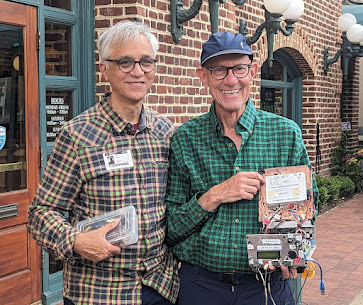
Mike KD4MM, Farhan VU2ESE and Dean KK4DAS

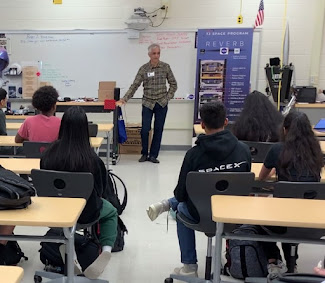
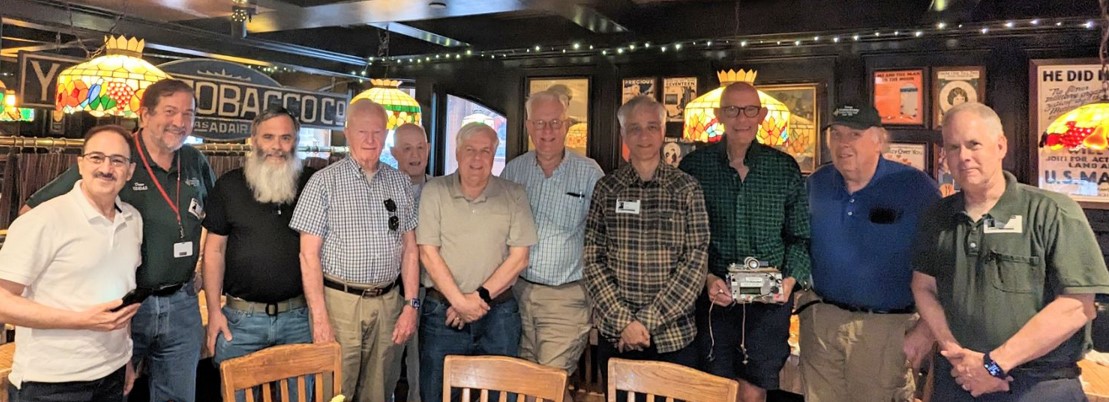
Farhan VU2ESE was in Northern Virginia this week, on his way to the Four Days in May Event at the Dayton Hamvention. We had a great visit with Farhan. We took him out to the Thomas Jefferson High School for Science and Technology where he shared with the students tribal wisdom about building CubeSats and about building simple direct conversion receivers. Farhan’s use of direct conversion receivers to teach homebrewing to students in Hyderabad inspired our efforts in Northern Virginia. We often referred to Farhan when speaking to the students here, so it was really great to give them a chance to talk to him directly.

From the high school we went to the local restaurant at which Vienna Wireless has its weekly lunch. Many of the people at this lunch are also members of the VWS makers group. This was a lot of fun.
Don KM4UDX even brought in his somewhat eccentric build of the uBITX transceiver designed by Farhan. Don’s rig is labeled “The uBITX of Life.” It has also been called “The Franken-uBITX.” Whatever the name, Farhan was clearly pleased to see Don’s handiwork.

I shot a lot of video during Farhan’s visit (last time I failed to do this and regretted it). I will put these videos up on the SolderSmoke YouTube channel during the days ahead.

Thanks Farhan!

W2UO’s Michigan Mighty Mite — Made a Contact!

Hi Bill,

I found SolderSmoke about six months ago, and it’s quickly become one of my favorite podcasts.

I’ve been a ham since I was 11, but never tried my hand at homebrewing anything. I’ve always heard how hard it would be, and how a project like a SSB transmitter is just too far out of reach.

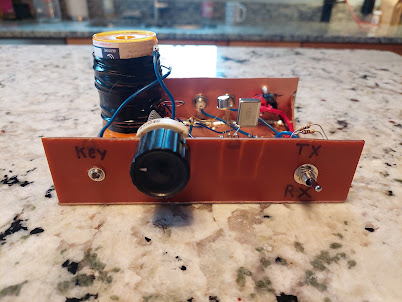
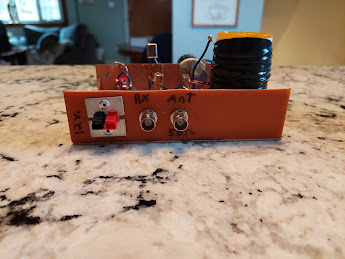
You and Pete are inspirational, so I set out to build a simple starter project, the venerable Michigan Mighty Mite. However not just any mighty mite, a usable one, not just a proof of concept. One intended to sit on a desk and look good doing it. Complete with built in low pass filter, tx/rx switching, and an internal dummy load.

I don’t know if I accomplished all that, but I did make a contact on it this afternoon. Next logical step I suppose will be to build a DC receiver to sit next to it.

Please find pictures attached, I’ve learned a lot about what not to do with project, so criticism is welcome.

73!
-Jim W2UO


My response:

Wow Jim, that is really wonderful. Congratulations on the build. I’ve built many of them, but I don’t think I ever made a contact with a MMM. FB.

It looks great to me! Indeed, you should do a Direct Conversion receiver next. Maybe do a receiver for 40, then do a version of the MMM for that same band. Then you could
make a completely homebrew QSO. I did this recently on 40: https://soldersmoke.blogspot.com/2023/02/first-qso-with-high-school-receiver-100.html It was a real hoot!


Please keep us posted on your progress.

Again, congratulations! 73 Bill N2CQR

SolderSmoke Podcast #245: Cuban DSB, DC Receiver?, Can you spot the AI? (Prize), Winterfest Loot, Gina’s Podcast, 6BA6 buy, MAILBAG

DC RX Example by KK4DAS

SolderSmoke Podcast #245 is available for download:


Video: (68) SolderSmoke #245: Cuban DSB, DC Receiver?, AI, Winterfest Loot, Gina’s Podcast, 6BA6 buy, MAILBAG – YouTube

Travelogue: Cuba DSB and AM. Jose CO6EC and the Islander. We need more info, especially on the solid state Jaguey rig.

Bill’s bench:

Will the High School DC receivers get finished? Future uncertain. But the project was technically interesting. Great working with Dean KK4DAS. Battling AM breakthrough from Radio Marti. We joked that Dean has been listening to Radio Marti so much that even though he doesn’t speak Spanish, he has noticed an increased urge to liberate Havana.

Audio amps: Harder than we thought. Lots of variation in Hfe of 2n3904s. Oscillations.
Not using feedback amps nor LM386s, nor push-pull. Simplicity is a design goal.

Fixing the tuning (bandspread) problem on the VFO was fun.

Antennas? A quarter wave with ground or counterpoise works well. We tried it. (59) An Antenna for the TJ 40 Direct Conversion Receiver – YouTube
—-
Back to work on the uBITX. I chickened out on replacing the predriver with a BFR-106, but then – Just in time Todd K7TFC and his Mostly DIYRF came out with BFR106 boards! TRGHS. I will do the mods on two uBITX transceivers. I even bought a solder-sucking iron for the second job.

Winterfest Hamfest. Big success. Thanks VWS. HERRING AID FIVE! Simpson 260! QF-1, Another Radio Shack DMM, Eamon Skelton’s Homebrew Cookbook, Knobs, SWR meter.
—-

SHAMELESS COMMERCE:
— Todd’s Mostly DIY RF and the BFR106 boards, and much more: https://mostlydiyrf.com/
— Become a Patreon sponsor of SolderSmoke: https://www.patreon.com/join/4785634/checkout?ru=undefined

—-
Pete’s Bench:

Technical Note: Skype problems. Pete’s Skype kept dropping out. Bad in the last podcast (#244). Three minute gap. I was ready to scrap the whole podcast when Dean KK4DAS offered to help. And he is obviously well qualified: https://potomacofficersclub.com/speakers/dean-souleles/ Dean went to work with AI. And he was able to fill the audio and the video gaps. Can you spot the three minutes of AI? Send me an e-mail with the time segment of the AI/Deep Fake portion of SolderSmoke 244. The first one with the correct answer will win a prize.
SolderSmoke #244:
Thanks Dean!
—-Interview on his Pete’s daughter’s podcast. https://soldersmoke.blogspot.com/2023/03/listen-to-pete-juliano-on-his-daughter.html

— 6BA6 e-bay buy. Will we see an all 6BA6 rig from Pete?

— The NCX-5 on e-bay

PETE’S NEW BLOG: https://hamradiogenius.blogspot.com/

Mailbag:

— A New SPRAT arrived in the mail. PH2LB’s Gluestick on the cover.
— Will KI4POV – Awesome homebrew – on the blog.
— Sands, VK9WX listening to SolderSmoke on Willis Island! Wow.
— Andreas DL1AJG in Germany continues with the Electronics for Biologists DC RX build.
— Dean KK4DAS and his homebrew 10 meter DSB rig.
— Jim W2UO built a Michigan Mighty Mite and made a contact.
— Dave K8WPE and the E in IBEW. We need new stickers.
— Bob KC4LB – Surface Mount is SMALL.
— Bruce KK0S on the Herring Aid 5 Board.
— Chuck WB9KZY on Nuclear Monopole Resonance very cool video – on the blog.
— Alan WA9IRS wants a CW editor for his phone. Really.
— Vic WA4THR also working on uBITX power out improvement.
— Tobias weighs in on Kludge. As in Fudge.
— Tony G4WIF notes that when he changes his oil he often removes sludge, not slooge.
— Consultations with Lexicographer Steve KB3SII.
— Walt AJ6T says CW operating declined after FCC ruling in 1970s about callsigns.
— Ramakrishnan VU3RDD now VU2JXN has joined the VWS. An old friend of SolderSmoke. Urged us to launch a blog back in 2008. We announced his daughter’s birth – – now Ram is getting ready to build a DC receiver with her.

First QSO with the High-School Receiver — 100 mW to Dipole. (with videos) — Homebrew to Homebrew!

Alan W4AMV in Raleigh NC

Dean KK4DAS and I have been working with a local high school. The students are building a direct conversion receiver for 40 meters.

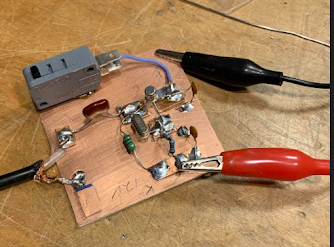
We’ve been giving out prizes for the first team to complete each stage. I wanted to give one of the teams a little oscillator that could b heard with their receiver. So this morning, using a 7040 crystal from the AF4K (SK) company, I threw together a one transistor oscillator. It has just 8 parts, including the key:
I had a low pass filter in the antenna tuner. The antenna was a low-to-the-ground 40 meter dipole. The transmitter was putting out around 100 milliwatts.
N2CQR’s Ten Minute Transmitter
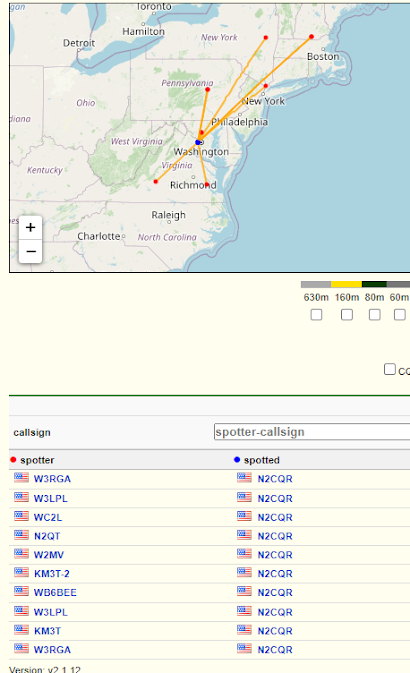
The Reverse Beacon Network showed that I was getting out quite well:

Then I thought, wait a second, let’s make a contact with the prototype high-school direct conversion receiver.

With the receiver hooked up, I again called CQ on 40 CW. BOOM! Very quickly Alan W4AMV in Raleigh NC came back to my call. Wow! That’s 222 miles. And a quick check of QRZ.com revealed that Alan is a homebrewer. Then Google reminded me that his work has been featured on the SolderSmoke blog. TRGHS.

I was so excited during this contact that I almost forgot to film it. But I did manage to get some short clips of the QSO in progress. You have to listen carefully, but you can hear our calls in there while Alan is transmitting (listen for the lower tone):

And in this clip you can watch me transmit using the 10 Minute Transmitter:

UPDATE (Feb 27 2023): I asked Alan about the rig he was using: “A PLL EXCITER DRIVING A PAIR OF FETS PUSH PULL ABT 50 w to an inverted L at 55 feet. The Rx a single conversion 9 MHz IF and it is connected to an active antenna in the trees out in the woods abt 25 feet up. Uses an automotive whip antenna about 3 feet long. “

Alan’s Rig

This little contact is a reminder of the fun that can come from using simple, homebrew, QRP gear. It is really amazing that the very first contact with this receiver was with another homebrew station. This all reminds Dean and me of something we have been telling the students: the little DC receiver they are building is not a toy — it is capable of being used in real, long-distance contacts.


Thanks Alan!