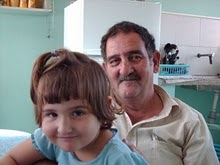
 I was getting ready to write a quick blog entry on Arnie Coro’s latest contribution to ham radio (his idea to revive the old 40 meter novice band) when it occurred to me that Arnie’s long track record of providing good ideas, technical advice, and inspiration definitely puts him in the HOMEBREW HERO category. Thanks Arnie!
Below you can find the transcript of Arnie’s latest edition of Radio Habana Cuba’s “DXers Unlimited.” There is a good discussion of current solar conditions (improving!) and of Arnie’s 40 meter CW initiative.
Arnie’s work at RHC is archived and available on the net. It is a real Caribbean treasure trove for us: http://www.dxers-unlimited.dxer.info/
Here is Arnie’s blog: http://dxersunlimited.blogspot.com/
 From “DXers Unlimited” 16-17 Feb 2010:
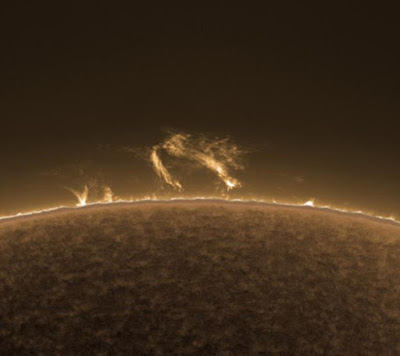
Hi amigos radioaficionados around the world now enjoying the ongoing
upsurge in solar activity that has brought to us DX signals as
strong as we had not heard them since 2005 !!! Yes my friends,
finally, after waiting, and waiting, and waiting, we are seeing a
nice comeback of the sunspots… As a matter of fact, only two days
of 2010 had gone by with a totally blank Sun. The all important R
number from the very much respected Catania, Sicily reference solar
observatory was 39 yesterday… and two other sunspot groups are
just about to turn into view…
As a result of the sustained increase in sunspot count, we are
seeing the 15 meters or 21 megaHertz amateur band opening up every
day… I will tell you more about amateur radio Dxing later , here
at th emid week edition of Dxers Unlimited… The daily solar flux
is very near 90, and forecasters were looking at a lower flux during
the next three days, but this may change dramatically and in just a
few hours, if the new solar sunspots regions that are rotating into
Earth’s view show high activity.
Item two: The amateur radio hobby is alive and in good health… ham
radio operators are enjoying the hobby and finding new ways of
improving their communications skills… Here is a recent example,
by carefully studying the behavior of activity on the 40 meters
band, I was able to find out that the band
segment from 7105 to 7125 kiloHertz was seeing very little use here
in ITU Region II, that is the Americas. So I launched the idea to
start using that segment by low power stations, on several of the
popular ham radio Internet mailing lists. In just a couple days , CW
activity , mostly by low power or qRP stations on that segment
roughly 20 kiloHertz segment has increased dramatically… For many
operators, finding such a nice and clear , interference free
segment, has meant having the opportunity of making many more two
way contacts…. and not only exchanging reports, but also , thanks
to less interference, we have carried out some really nice ragchews,
and just notice that I have just said WE, because I am , of course,
one of the happy radio amateurs operating on CW between 7105 and
7125 kiloHertz.
There are no digital stations using that segment… as they are now
present between 7030 and 7040 kiloHertz, the two frequencies were
QRP , or low power operators, are used to gather, and where for the
past year or so, it has become extremely difficult at times to make
even a single two way CW contact.
I am not saying that QRP operators should abandon the two favorite
watering holes, 7030 and 7040, what I have told the QRP , GLOWBUGS
and Regenerative receivers Internet list members, is that the
segment between 7105 and 7125 is in a much better shape regarding
QRM… yes there is a let less interference from other
communications modes…so chances to make nice contacts increase in
a very significant way.
Si amigos , Yes my friends , Oui mes amis…amateur radio operators
around the world are now enjoying the upsurge in solar activity, and
with it, we all must look around the bands and find ways to make
better use of them… After all, many other users of the radio
spectrum are always monitoring the ham bands, just to have data
available to substantiate their requests for more spectrum space….
In other words, if we, amateur radio operators are able to be more
time on the air, and the bands sound like a beehive of activity,
chances that those spectrum hungry users will just go elsewhere !!!
The complete script of the program , devoted to the promotion and
development of our radio hobby in general and amateur radio in
particular, can be read at:
http://dxersunlimited.blogspot.com
later this Tuesday, after the program goes on the air
Comments , suggestions and ideas on how to help promote
amateur radio are welcome at my e-mail address
inforhc at enet dot cu
72 and DX
Arnie Coro
CO2KK