It’s been a while since I checked in with this site. They have made a lot of improvements. It is very impressive. I had trouble with it using Internet Explorer, but it worked right away using the Google Chrome browser. Play with it a bit. Zoom in on 40 meters. Listen to the LSB contacts. Very nice. http://websdr.ewi.utwente.nl:8901/
I’ve amassed the parts for my 12v Regen Rx inspired by a projects from VK3YE and an audio amp, using a pair of 12AU7’s. I’ll publish more about that soon on my blog.
In the mean time, I’d like to thank you guys for inspiration on the si5351 VFO in use with various projects. After we found the first articles by NT7S, we discussed that there are a lot of possibilities.
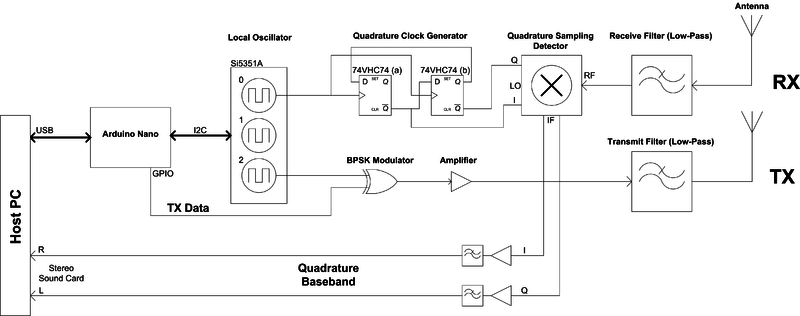
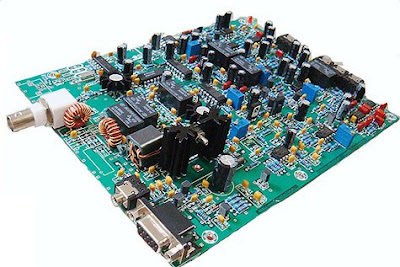
I’ve just finished my build of an Arduino controlled SDR transceiver prototype using the Si5351A.
This week I’m tinkering with the LPF for 20meters. Puts out a whopping 20mW.
Everything is on schedule for the presentation using this SDR at Linux.Conf.Au next year. Got some coding to do to add I&Q for the SDR side over the summer break.
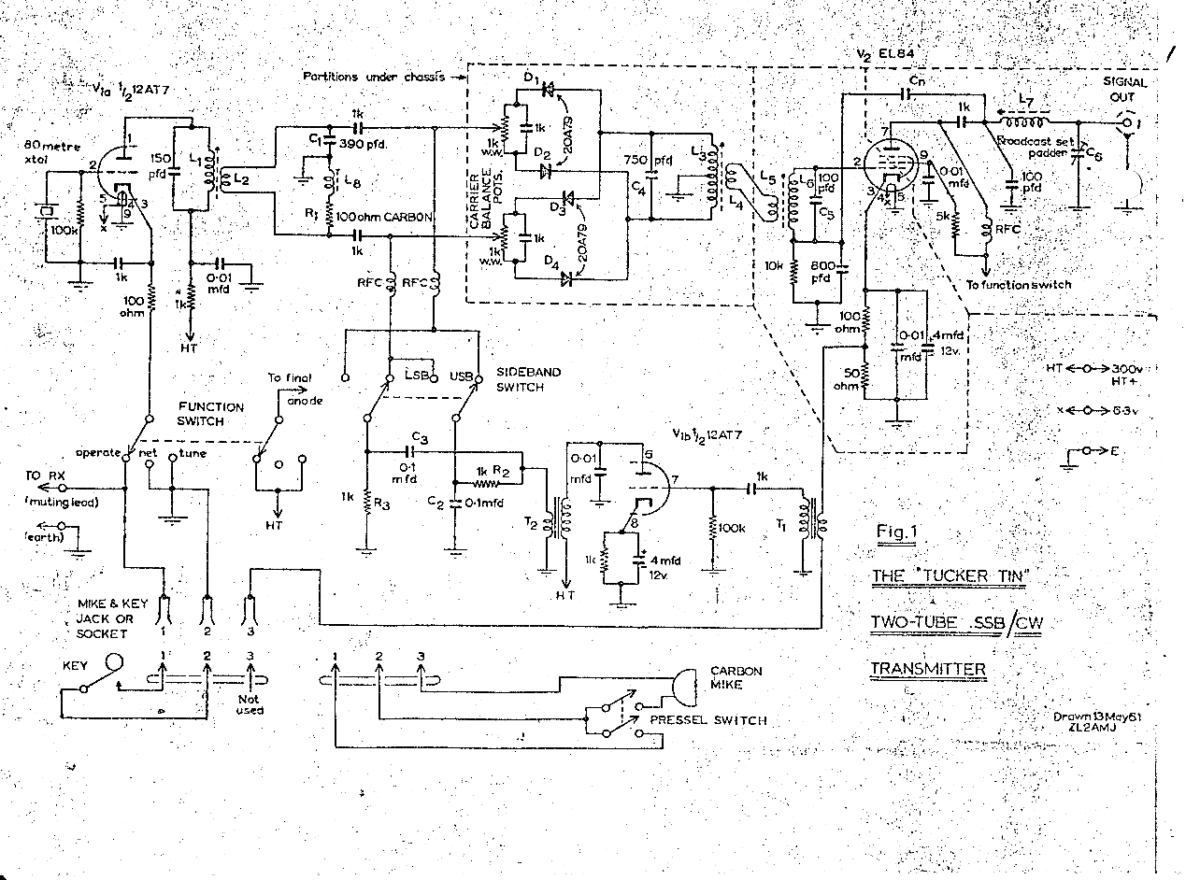
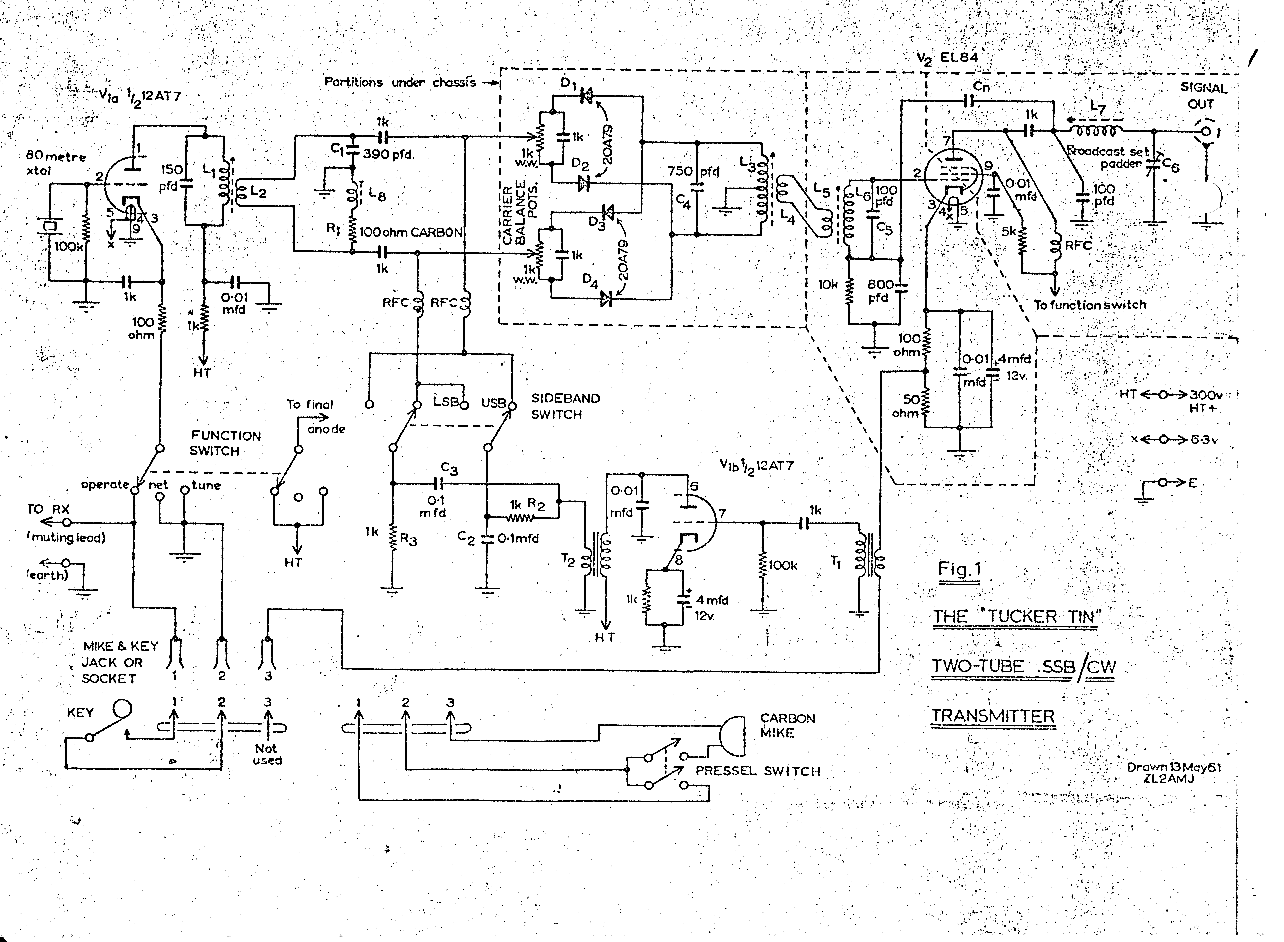
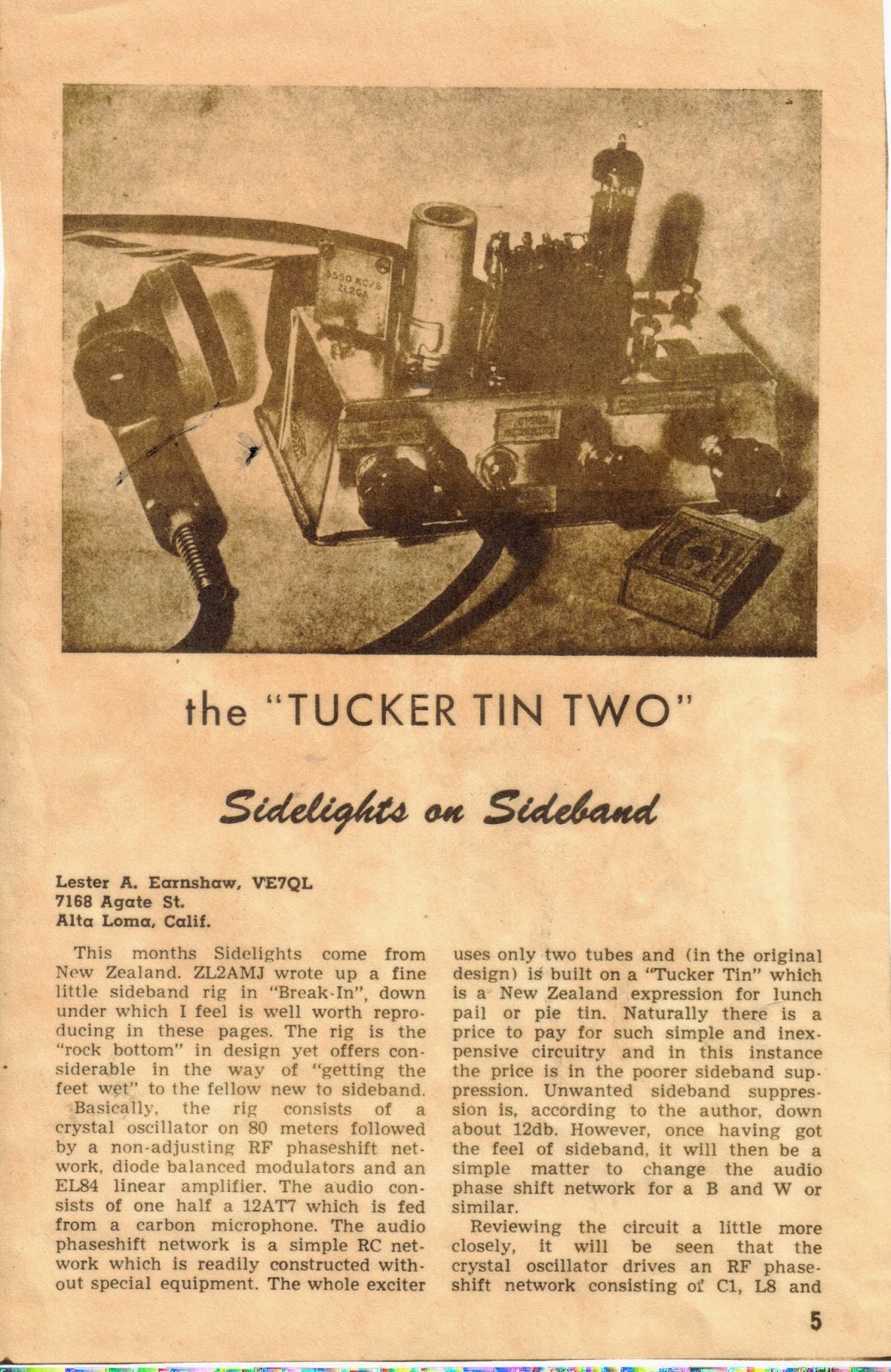
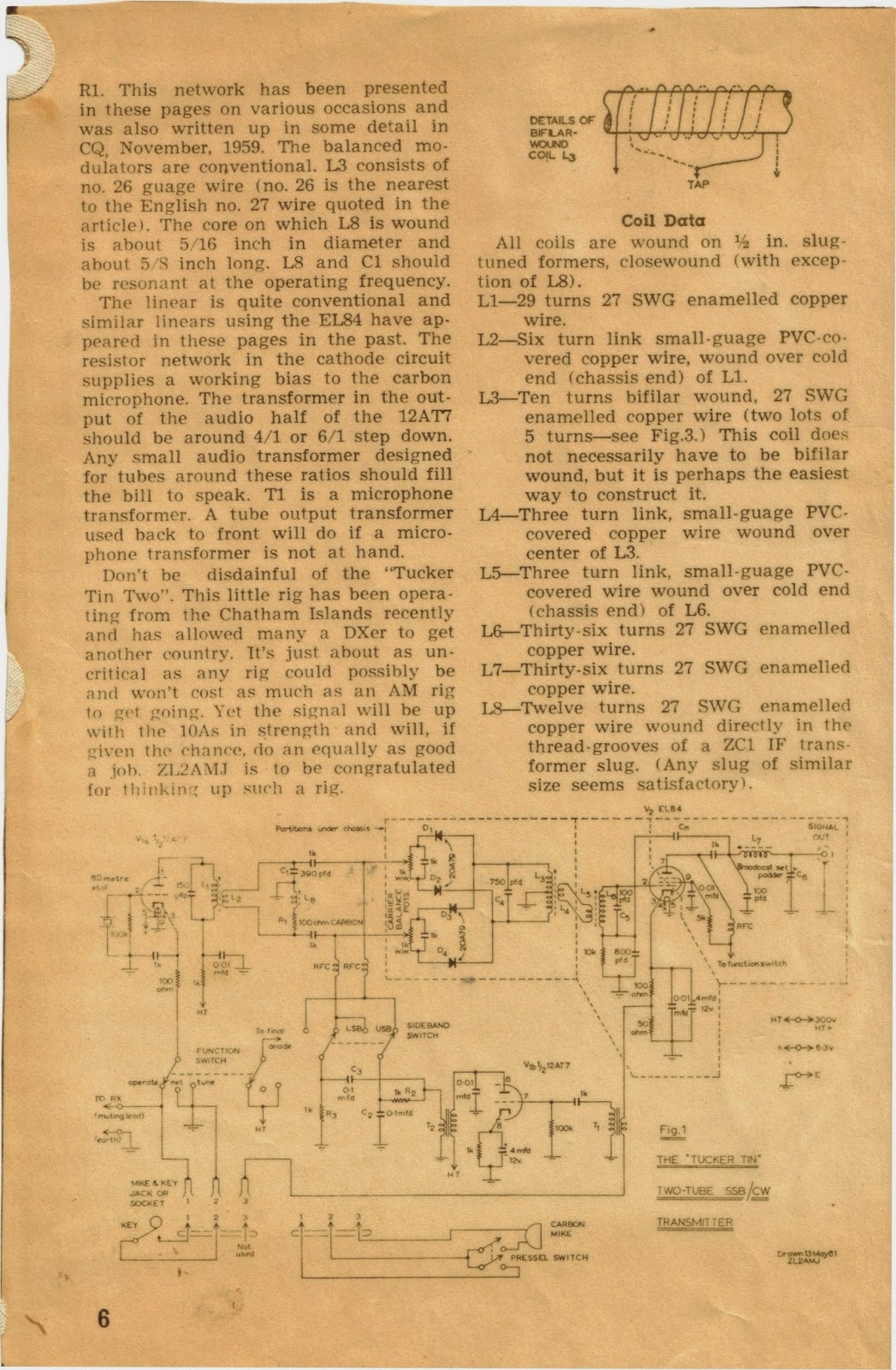
Pete Eaton sent us links to an old article from the New Zealand magazine “Break-In.” So many good, simple rigs come to us from New Zealand! Who can forget ZL2BMI’s DSB rig? This one is the work of Fred Johnson ZL2AMJ. It is especially interesting and is in some ways similar to Peter Parker’s “Knobless Wonder.” It uses the phasing method of sideband generation. No crystal filters in this one. You need TWO balanced modulators. You have a 90 degree phase shift network for the RF (from the carrier oscillator) and a second 90 degree phase shift network for the AF from the mic amplifier. When you combine the signals from the two balanced modulators — viola! — one of the sidebands disappears. The balanced modulators take care of the carrier, and an SSB signal is launched. That is how my old HT-37 works, and similar ideas seem to be at work in modern SDR rigs. G3TXQ has the complete set of Break-In articles (it includes a VFO): http://www.karinya.net/g3txq/temp/tucker_tin/ Here is a Canadian article on the rig. A “Tucker Tin” is apparently what the Kiwis call a lunch boxes (shades of Benton Harbor…).
Wow, I played with this on-line SDR receiver a few years ago and thought it was fantastic. It is now even better. I’m sitting here listening to 40 meters in the Netherlands. Great stuff. Check it out. It is really amazing:
I know that “simple” and “homebrew” aren’t the words that come to mind when we think of Software Defined Radios, but minimalist guru Peter Parker, VK3YE, reminds us that with little more than an antenna, a diode, a crystal oscillator and a connection to the computer soundcard, you can dive into the world of SDR.
I’ve been doing this for some time now, but my receiver uses a 40673 dual gate MOSFET and a universal VXO from George Dobbs, G3RJV. I’ve been running mine with the FLDIGI and JT-65 HF programs. Peter’s video alerted me to the charms of SDRadio from Alberto, I2PHD. This is a very nice program. Of course, I’m always happy to add a dash of Italy to my operations. Thanks Peter! Thanks Alberto! Thanks George!
This project has me digging through the boxes, looking for my 2 meter gear. This looks like fun! From AMSAT:
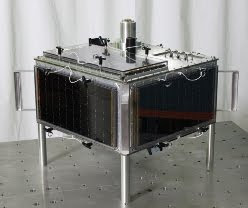
ARISSat-1 is a microsat developed as a follow-on to the SuitSat-1 project. The satellite was launched to the ISS on January 28th, 2011, with deployment during an EVA (spacewalk) on February 16, 2011.
The satellite will downlink live SSTV images from four onboard cameras, live telemetry and messages on the CW, FM voice, and BPSK downlinks, as well as provide a 16kHz wide transponder for two-way contacts. All the uplinks and downlinks are based on software defined radio systems.
Telemetry will include spacecraft subsystem information, as well as data from the Kursk State University experiment. This experiment will sample the change in vacuum as the satellite slowly re-enters the atmosphere.
Frequency Information
Mode V Digitalker (Voices Messages and Telemetry):
Downlink
145.9500 MHz FM
Mode V Imaging (Robot 36 SSTV from onboard cameras):
Downlink
145.9500 MHz FM
Mode V Telemetry (1000 baud (400 baud backup)):
Downlink
145.9200 MHz BPSK
Mode V TLM Beacon (CW-2, active with BPSK-1000):
Downlink
145.9190 MHz CW
Mode V TLM Beacon (CW-1, active with BPSK-400):
Downlink
145.9390 MHz CW
Mode U/V (B) Linear Transponder (Inverting):
Uplink:
435.7580 – 435.7420 MHz SSB/CW
Downlink
145.9220 – 145.9380 MHz SSB/CW
And for those of you looking for a bit of competition, there is a tech challenge:
AMSAT-UK has announced a ARISSat-1 reception challenge with a FUN reward. The different categories cover those with or without a FUNcube SDR dongle.
ARISSat-1 is scheduled for deployment from the ISS next Wednesday Feb 16 – it has a composite VHF downlink that will easily fit into the FUNcube Dongle receive spectrum. The telemetry is 1 kbit BPSK and can, of course, also be received with a normal SSB 2-metre receiver.
The expected signal levels from ARISSat should be similar to those we expect from FUNcube itself (and also eventually from UKube) and the team are keen to discover what will be the minimum and best type of antennas for schools to use with a FCD. Therefore user experience with the ARISSat signals will be very valuable in making this determination.
To encourage everyone to receive ARISSat signals we are offering a FUN reward for listeners!
There are a number of categories for this challenge – they include:
1+ The first FCD user, from each continent, who can post a spectrum recording of the received signal together with evidence of decoding the data using the ARISSat software and of sending it to the ARISSat data warehouse .
2+ The first non-FCD user, from each continent, who can provide evidence of having decoded the signals and of sending it to the ARISSat data warehouse.
3+ The listener, using a FCD or not, who can demonstrate satisfactory reception of the telemetry in the same ways as described above, using the “smallest” possible receive antenna. The actual closing date for this part of the challenge will be announced later.
4+ All other entrants who can demonstrate that they have been having FUN!
Please submit your “entries”, including your location, station details (including FCD serial number where applicable), postal address and reports to g0auk@amsat.org
Good luck,
ARISSAT-1 http://www.arissat1.org/
You can join the FUNcube Yahoo Group at http://groups.yahoo.com/group/FUNcube/
Twitter: http://www.twitter.com/FUNcubeUK Facebook: http://www.facebook.com/ just lookup FUNcube
Lots of great stuff in the latest edition of QQ from QRP ARCI:
Mike Czuhajewski’s “Idea Exchange” column has been sending out great ideas for many years now. In this edition he opens with a piece from Wes, W7ZOI, that originally appeared on the EMRFD mailing list. It deals with diode ring mixers, specifically the power requirements for the local oscillator. What do they really mean when they specify 7 dBm? Wes explains: “If we say that the LO power is +7 dBm, what this really means is that a signal generator is attached to a power meter or spectrum analyzer and adjusted to deliver +7 dBm at the desired frequency to the 50 ohm instrument. Once the power is set, the cable is disconnected and reattached to the mixer.” I’d always wondered about how to measure that. Thanks Mike! Thanks Wes!
Preston Douglas, WJ2V, has a nice article on our latest craze: WSPR. Preston also discusses SDR radios — his encouraging comments may help me get out of my current luddite curmudgeon rut. Preston mentions recent efforts to use a BITX-20 for WSPR and concludes that this would be “a tall order for any analog rig.” This comment lessened my feelings of inadequacy about my SDR SMT problems, because I recently used my ancient Drake 2-B to receive WSPR sigs (see earlier blog entry). Luddites Rule! But Preston is right — it’s not easy! But — at least for a little while, before drift takes you out of the band — it can be done.
Ward Harriman, AE6TY, writes of a “homebrew” SDR project. In his opening paragraph, he tells us what the term “homebrew” means to him: “homebrew design, homebrew assembly, homebrew programming, homebrew in a wide range of disciplines both familiar and untried.” That’s pretty hardcore! FB Ward!
Jim Osburn, WD9EYB, has a nice article on “circuit stickers” and how they can be used to simplify project construction using a variety of circuit boards and breadboards. I really liked Jim’s description of old Electronics Illustrated projects in which they pasted a diagram to a wood base and then put finishing nails at specified points. Components were then soldered to the finishing nails. When the thing works, you can say you “really nailed it!” (Sorry!) Cool technique.
Thanks to the folks at QRP ARCI for another inspiring edition of their wonderful magazine. If you are not a member, you are missing a lot. Sign up for the club and the magazine here: http://www.qrparci.org/
From London I used to talk to Phil, VK6ADF, on Echolink. We have a lot of interests in common. This may be due to the fact that we were both born in the International Geophysical Year. Phil is now reading “SolderSmoke — The Book,” so we will probably discover other areas in which we have crossed paths. This week, I decided to get back onto Echolink, and in my first session I was looking for OM Phil. He wasn’t on, but, IN A VERY MYSTERIOUS TWIST, that morning he sent me an e-mail. Spooky, eh? Anyway, yesterday we got on Echolink and covered our usual wide-range of tech topics. Phil alerted me to a web site called Real Flight that provides an on-line simulator for Radio Controlled airplane pilots. Obviously Billy and I could use some time in the simulator! Phil is also into WSPR and as we spoke I fired up my 20 mW DSB WSPR rig. I was immediately heard by an Irish station, and Phil almost instantly saw the report on the WSPR database. I noticed that the EI station was reporting that I was on 40 meters, when in fact I was rock-bound on 30. Again, as Phil and I talked, I went to the WSPR chat section and asked about the freq discrepancy. Another VK6 (a friend of Phil’s!) answered my question (a simple set-up problem). Small world. Phil and I have similar curmudgeon-like thoughts on Surface Mount Soldering, and he seemed sympathetic when I said that I think I am more of a “Hardware Defined Radio” guy. Again, this may be an IGY thing. Oh yea, almost forgot: We’re not crazy about LINUX either. We are only a few short steps away from the “SPARK FOREVER” mentality and full-fledged Luddite status. One interest that Phil and I DO NOT share is Six Meters. Phil is now addicted to the Magic Band (which I still consider to be a white noise generator). Check out his video on his six meter yagi.
For some reason I like the packaging for this Italian soldering flux. Sort of takes you back to the days when soldering was soldering, if you know what I mean. Now (somewhat ironically) we are using this flux for SMT soldering. On the left you can see the PA stage of my slowly-coming-together SMT SDR LINUX Compu-radio. As you can probably tell, I am struggling to keep a positive attitude towards SMT and SDR. Lately, even Linux has been giving me trouble. The problem here is clearly with the operator, not the equipment. The Softrock SDR kit is really excellent. I’m sure I will eventually get it working, but I think there will be a lot of geezer-like complaining about all this new-fangled surface mount, software stuff. Please, bear with me.
Africa “field QRP station” Thanks for another great episode of your experiences – I’m tuning in from Africa while on my vacation Each December I make the trek from San Diego to Cape Town. Then, my Dad (zs1xd) and I take the family out to a remote location – and setup a field station. Around the camp-fire, under the Milky Way and no rf-pollution is a great way to hunt some dx and spend vacation time. This year we selected a cabin located in a beautiful mountainous region about 100 miles north of Cape Town. 2 wheel vehicle will get you there and “just in case” , we also took a capable 4×4 with. I posted some pics and QRP HF operating notes here: http://k6wh.blogspot.com/
“SMT” I’m following your Softrock SMT construction comments with keen interest and am glad you’re finding the challenge – well – “not so much of a challenge” I think it’s so great that you’re encouraging hams to jump into SMT. I chuckled at your comment about “desoldering smt’s” – Try de-soldering the Si570 SMT chip. I had the good fortune of measuring messing up the “measure 10 x then cut once” when soldering this IC on the rxtx kit. Well – we know a mistake will happen, and when it happens, murphy’s law will ensure that it involves the most sensitive and tricky smt component on the board – hi.
It’s a real trick, due to the contacts being under the chip (no pins like the other smts) Well – try de-soldering that piece. And of course one realizes the mistake, only once the last solder joint has dried. Determined to correct the mistake there and then, at 9pm while busy with the kit, I rushed off to the nearest radio shack to get some de-solder wick. Took me about 1 hr of patience, and careful “wicking” to suck up all the solder underneath the chip – one contact at a time, (each desolder attempt, hoping the chip pops loose) – no easy task. I don’t know of another easy way than lots of patience, and a good magnifying glass.
I agree there is no greater reward than “homebrew” and with the advances in SDR tech, we’re surely living in a wonderful age.
Once you get the SDR on-air, I’m sure you’ll be blown away by the reception quality – sensitivity and especially the almost non-existent noise-floor. (I’m not sure which model you’re building, but I think all of Tony’s designs are utilize the same Tayloe detector design which is very quiet)
I still can’t believe the performance I get with the Softrock’s kit – It’s now become an antenna measuring instrument – While having fun with PSK QSO’s and WSPR. Of course, with the SDR one can adjust the output (via soundcard drive) to basically uW levels.
As we know, at these levels, each little bit of antenna optimization helps, and SDR+WSPR/PSK has become my “far field antenna measurement tool” of choice.
WSPR from Africa Not too many stations active on WSPR on the African continent – Now that I’ve setup my Dad on DSL, I assisted him in activating his WSPR station in Cape Town (ZS1XD). His antenna is a 20m homebrew 2 el yagi. I’m pointing it north during the evenings to see if n2cqr pops up in the log. Nothing yet, but I’m sure one of these days, you may just be surprised. Keep watching for the Africa report 🙂
thank you again for such a great entertaining and educational program … 73 – best wishes to you and the family from the tip of Africa. de deon (k6wh)/zs
Deon, K6WH ZS1ACP has been having a great time with Software Defined Radios and stealth vertical antennas in San Diego. His blog site has this great shot of what the band (was it 40?) looked like at the moment that Field Day ended. Check out Deon’s blog: http://capesafari.com/hamradio/SDR/SoftRockLite.html
Joan and Eduardo — the guys who brought us the Flea — have come up with another very interesting insect: The MOSquito. A single IRF510 does all the RF work. There is a computer involved, but it looks to me like it just does some audio DSP. The video is in Spanish, but all true Knack victims will be able to follow it. More info their web site: http://ea3ghs.googlepages.com/mosquito Enhorabuena Joan y Eduardo!
Those intrepid digital hams at the University of Twente have temporarily put their WebSDR receiver on six bands (we should lobby to make the expanded freq coverage permanent). It is really great. I love the waterfall display. Audio quality here is excellent. (I’m listening to 75 meter SSB now.) Check it out: http://websdr.ewi.utwente.nl:8901/
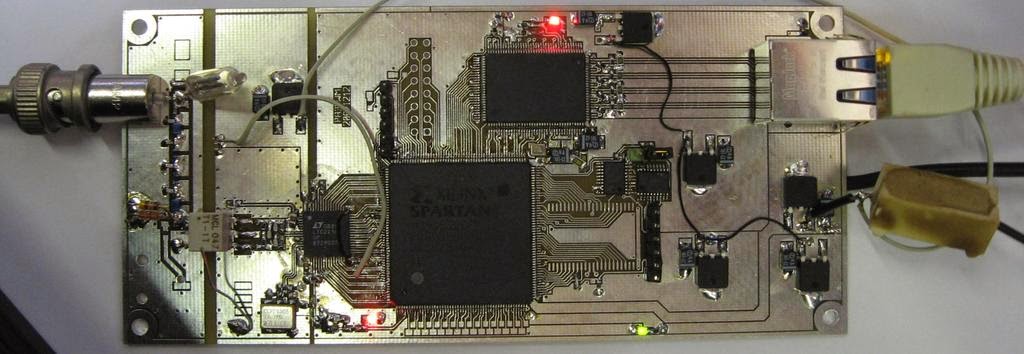
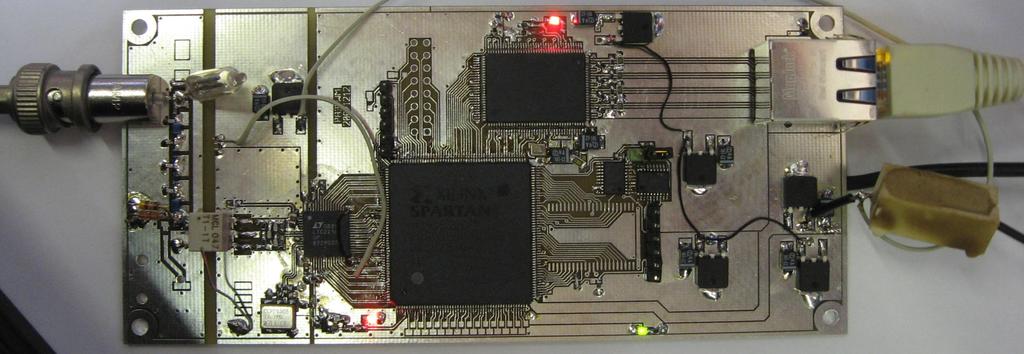
You should also check out PA3FWM’s SDR page: http://websdr.ewi.utwente.nl:8901/ Very interesting. I thought picture above should be entitled “The Ultimate Dead Bug.”
I have successfully completed troubleshooting my old (1983) frequency counter (found some bad CMOS gates), and I just finished assembling Doug N3ZI’s very FB freq counter semi-kit (thanks Jerry!)… Now I’m listening to the Web SDR receiver… The SoftRock40 kit seems to be calling me…. I feel myself being pulled into the digital vortex! Quick, someone throw me an analog life saver!
Graham, G3ZOD, was looking at the 80 meter band using the on-line SDR receiver in the Netherlands (http://websdr.ewi.utwente.nl) This is what appeared on the screen. Looks like you can work some real DX on 80 these days. The big issue will, of course, be DXCC credit. And I imagine getting a QSL card might be a bit tricky.