SolderSmoke Podcast #201 Santa, Storms, BUILDING A DC RX, SDR, uBITX

SolderSmoke Podcast #201 is available: http://soldersmoke.com/soldersmoke201.mp3

9 December 2017

Santa Juliano

Forest fires, snow storms, and an earthquake.

Santa arrives from Hyderabad — uBITX in the house.

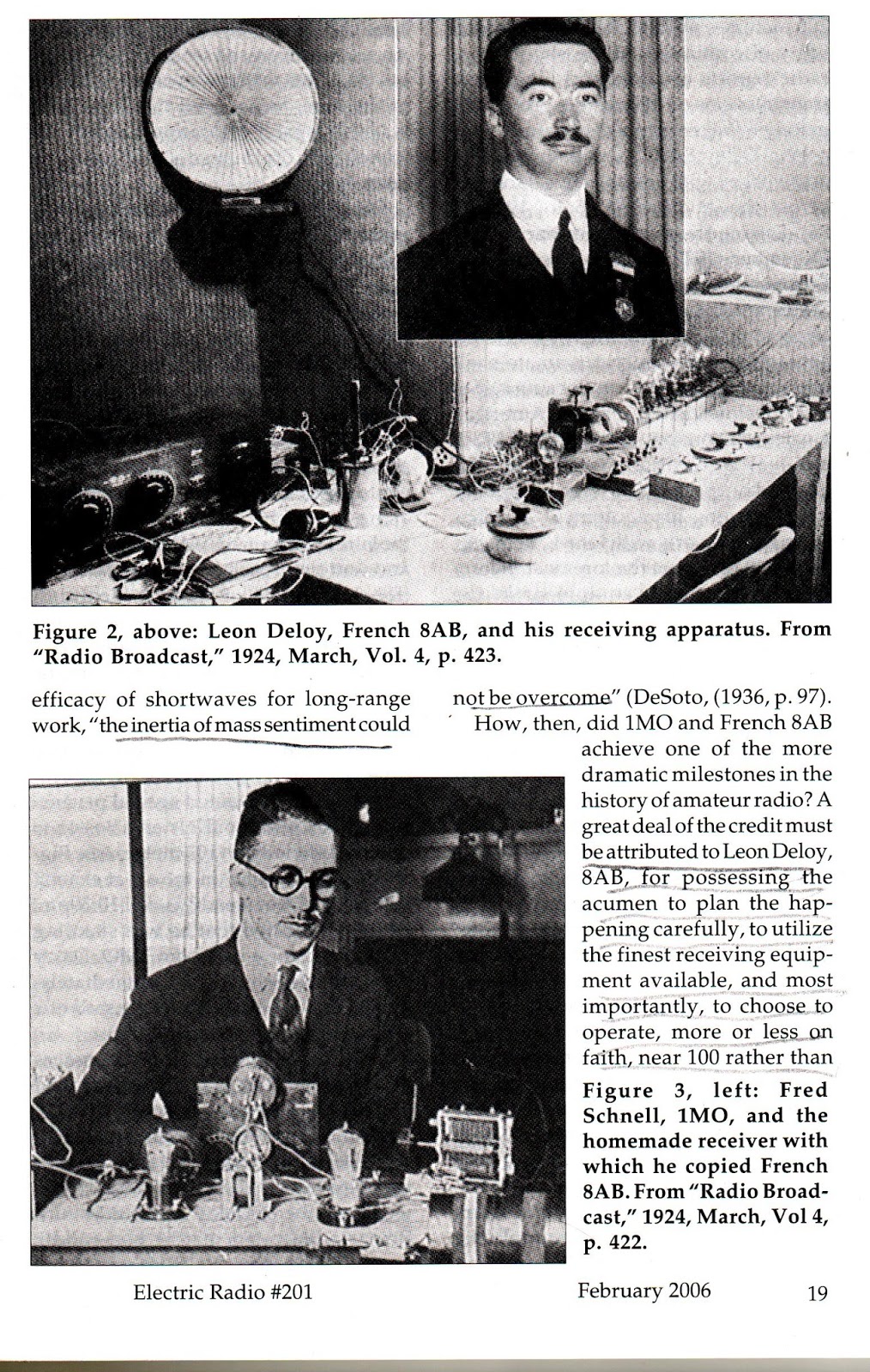
Radio history. First transtalantic amateur contacts.

Bill’s International Brotherhood Ceramic Discrete Direct Conversion Receiver Project.
— Goals — Build your own receiver. Really. From scratch. No cheating.
— How to get started. Get parts and tools.
— Stage by stage.
— VFO first — maybe build two.
Bill built two already
— Nephew is testing the first one.
— Polyvaricon limitations.
— Varactor limitations
— Variable cap limitation.
MEETING THE JULIANO STABILITY CRITERIA

Understanding the F5LVG mixer

Pete goes to the dark side with an SDR receiver.
Pete’s 800 Watt Amplifier gives him trouble. TRGHS.

People in the News
Cliff Stoll — Still Passionate about Electronics
Peter Parker — VHF/UHF By the Bay
Yardley Beers — Early SSB with “The Black Rose”
John Kraus — Moonbounce without the Moon.

MAILBAG


Cliff Stoll on Software, Snake Oil, and the Creation of Real Things

“I guess today’s experimenters build things in software, without ever touching a soldering iron. The hocus pocus is inside the program. It’s cleaner this way — nothing to burn or zap, and you don’t need a voltmeter… What happened to home-brewed and breadboarded circuitry? Where’s the joy of mechanics and electricity, the creation of real things? Who are the tinkerers with a lust for electronics?”

From “Silicon Snake Oil” 1995 by Cliff Stoll

Something else “Completely Different”: Meteor Pings

Very cool. I want to try this. I have the RTL-SDR and the software, so all I need is the antenna. I may try to resurrect the 5 element 2 Meter Quad from my 90’s adventures in the Dominican Republic (I still have the copper tube elements!). I know the Graves radar is out of range, but there must be a suitable North American signal for this kind of thing. Any ideas?

For more info:
http://hackaday.com/2017/08/27/sorry-us-europeans-listen-to-space-with-graves/#more-270298

https://dk8ok.org/2017/08/23/graves-reflections-out-of-the-blue/

ZL2CTM’s Homebrew Transceiver Project

Wow, Charlie has a lot of very cool ideas in this initial video. Some suggestions:

— With the IRF-510 in the final, beef up the heatsink, and follow Farhan’s lead by including an option for 24 volts on the drain. That would take you up to 20 watts or so (for those who are so inclined).

— Could that Teensy SDR board work at the IF frequency? If so, consider putting it ahead of the crystal filter. This would enable us all to join the Waterfall Signal Purity Police Force.

— I love the OLEDs too, but I found them to be noisy. I minimized the noise with shielding around the OLED and active decoupling on the power line to the AF amplifiers.

More of Charlie’s work here:

https://plus.google.com/107506245856154702088

SolderSmoke Podcast #196 Rockets, Pete’s EXPULSION, SDR, DiFX, ‘602 rigs, T.O.M.

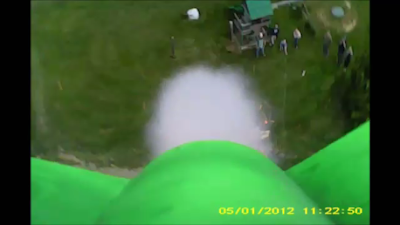
View from rocket. I’m in front of the swing-set, with hat on. Billy to my left.

SolderSmoke Podcast #196 is available.
5 May 2017
http://soldersmoke.com/soldersmoke196.mp3

Shenandoah Rocket Launch — With video!


Pete and the QRPARCI HOF: We thank you for your support!
Note the strange seasonality of these kinds of events… Always in the Springtime…
April is the cruelest month. Especially the FIRST DAY!
Feel Tech Follow-up — the DC blocking cap issue.

HBTV? Roku Challenge?

A tube of Desitin? Why?


SDR Misadventures.

SDR on a tablet Just like WA7HRG
Pi Day More RaspPi Linux observations TOO HARD
The problem of Si5351 and updated libraries — old sketches don’t work!
My SDR question: If we go with direct sampling, no need for I and Q at front end No image problem, right? But why is there often a digital I and Q in the direct sampling receivers?
BITX MODULE
Getting RF in through the DDS jack.
Electric Radio: Reading from the history of SSB. And from the T.O.M. article
Joe Carr K4IPV : Homebrew Hero from Falls Church Va. Any more info on him?
Pete’s newest DifX
Pete’s new digital scope.
Bill’s NE602 RIG, Epiphyte History.
He put AADE crystal filter impedance match circuits in backward That’s why he needed RF amp. Duh.
The perils of a crowded box
Building RF amp board (BITX Module design) for the NE602 rig.
NE602s do not put out a lot of power. uW
BITX Module Amp circuits very stable.
Chassis as the heat sink.
Mic amp? We don’t need no stinkin’ mic amp! But yes, we do. 741 on the way.
Parts on e-bay very expensive! Back to the hamfests. On to Manassas!

Congrats to Tony Fishpool G4WIF, who received the Don Cameron, G4STT, Award for an outstanding contribution to low power amateur radio at the RSGB AGM meeting in Cardiff.


MAILBAG

DARK SIDE TO THE MAX: WA7HRG’s Android Tablet SDR (with a question)

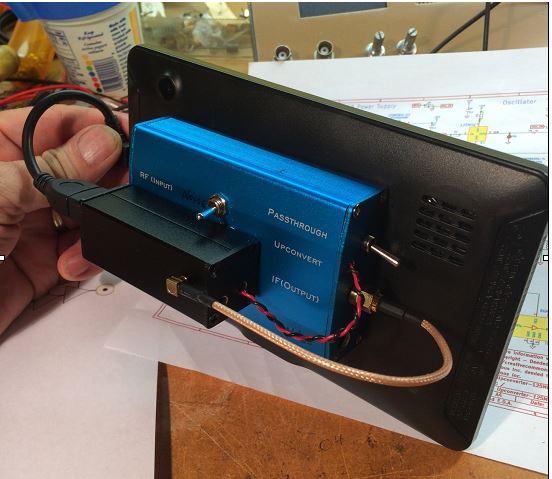
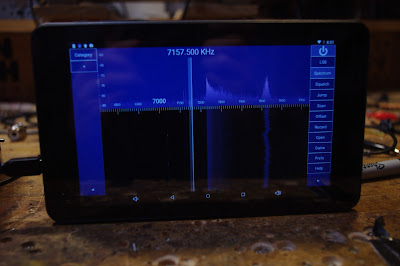
Jim’s experience with the Android tablet SDR was very similar to mine. But he used a “Ham It Up” up converter ahead of the RTL-SDR while I used an RTL-SDR modified for direct sampling of HF. I built a pre-amp/pre-selector stage for mine. On my Android Tablet (50 bucks via Amazon) I found the touch screen to be kind of clunky — it was hard to get the receive passband lined up with the incoming signal. The touch screen was not nearly as smooth as the one on my IPhone. A Bluetooth mouse solved that problem.

Like Jim, I am using SDRtouch from the GooglePlay. I’ll have to follow his lead and try Droid RTTY and PSK.

My reaction to the completed project was also similar to Jim’s: He writes that this is, “The first and last of my SDR adventures. This is just not the same as scratch building!” Indeed, it is not. But still, for very little money you end up with a pretty impressive receive capability, and you get some valuable insight into an intriguing method of receiving radio signals. And you don’t have to mess with Linux!

I have a question for the SDR gurus: With direct sampling, we are just running an ADC at RF. So we no longer need an I-Q front end to take care of the image problem we had when we were running soundcard-based SDRs, right? But I sometimes I hear that even with direct sampling systems, there is a digital generation of I and Q signals. Why would you need I and Q if you are just digitizing the incoming passband, multiplexing it, and sending it to the software?

Hi Guys

OK, so I am a little (A LOT) behind you guys in my bench work. Several unfinished projects are waiting in the wings. But I thought I would also dabble in Software Defines Radios. Thought I would go the Raspberry Pi route as Pete did. Then I woke up and sided with Bill. I don’t want to learn Linux!!

For about the same price as a Pi-3 and a 7” screen I bought one of Bills Android tablets and I found on eBay an estate sale that had a bag of NuElec parts. The RTL dongle, a Ham it Up vs. 3, and several cables, all unused. Last but not least I bought an Android ‘On the Go’ USB cable adapter.
I removed the LED and UV diode for the remote to drop the current some. Then tapped some power off the USB connector and ran it out to the Ham it Up. A few holes and some double sided carpet tape and ‘Bobs Your Uncle”. I added an enable switch to the up converter for the noise source but still waiting for the SMA connector to come in. Then I’ll see what that can do as a poor man’s spectrum analyzer for filter design.


I found several interesting apps on GooglePlay. Besides the SDRTouch program I downloaded Droid PSK and RTTY. Also the RFCorb client that allows you to connect to hundreds of remote stations around the world. That I may have to spend some time exploring but not really part of this build.
The Up Converter fired right up and after tuning around some I jumped to 14.070, the PSK hot spot. The tablet truly does multitask. I left SDRTouch running and opened Droid PSK. A waterfall full of signals jumped up and I was easily copying stations on the East coast and Canada.


All this running on the USB power from the tablet! How cool is that. After about 45 minutes or so the battery was about half. The only problem that I may have to address is that the tablet and/or the Ham it Up gets pretty warm and my carpet tape lets go and things fall apart. HA. Haven’t ran it long enough yet to see what else the heat might effect.


So that was fun and I will be playing with it some more. I have coffee on Mondays with some ham buddy’s. When I showed them the PopCorn radio they jibbed about it not being battery powered.


Well Monday is coming!! HA

Jim WA7HRG

SolderSmoke Podcast 194 – Approaching the Digital-Analog Singularity

SolderSmoke 194 is available (scroll down for link)
March 4, 2017

BIG NEWS: uBITX from Farhan
BENCH REPORTS
Pete: Recycling Old Boards
Working on Arduinos and advanced displays
Bill: SDR Adventures and Misadventures.
RTL-SDR is fun. Built HB front end.
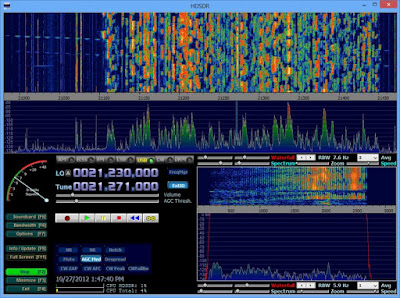
HDSDR under Windows is fun and easy.
Thought about Raspi3, 7 inch touch screen, Linux, software YUCK.
Followed advice of Ken G4IIB and got a 50 buck tablet with Google Play.
Who needs tiny OLEDs? Use a 7 inch tablet as your display!
Building a Ceramic Resonator for the HRO 455 kc filter
The value of doing something different.
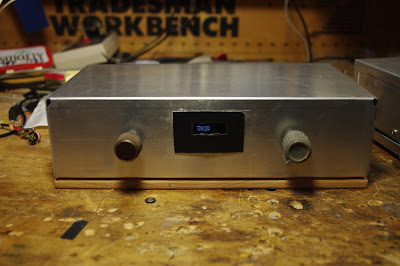
Boxed up my NE602 OLED rig.
OLED noise and ACTIVE decoupling.
NE602 and MOSFET tips
LEXICON:
OTD Obsessive Tinkering Disorder G6LBQ
“A Thing of Beauty”
Source of Tombstoning term: Don ND6T.
Ken G4IIB’s extremely smooth audio.
ON THE AIR:
On AM on 75 and 40. Fun. Old Military Radio Net and “The Lonely Guy Net” on 75 Saturday morning.
Good old 17 meters. Open at mid-day
HB2HB on 40 with W0PWE.
Listening on 60
Hambrew magazines disappeared, but are back now.
EMRFD Classic Edition available
New Posts to BITX HACKS
MAILBAG:
Gloves follow-up. Not a good idea.
VK3YE’s QRP by the Bay event and a new book!
Colin M1BUU achieves Mountaingoat status
Martin A65DC JoO MMM in the UAE
Tom NY2RF Editorial with mention of JoO!
Lots of Al Fresco rigs: W8LM BITX on a board, Brad WA8WDQ DC RX, KA4KXX Al Fresco OZ DSB
ON6UU DSB from Spain via Belguim
Hugh ZL1UEM SMALL Si5351 OLED
Cookie Tin rigs VK2EMU’s Biscuit Tin DC RX, WA7HRG’s Popcorn rig
VK4FFAB FB LTSPICE intro
Ken G4IIB’s BITX adventure (with VERY smooth audio. How smooth? We can’t say.)
VU2XE’s BITX with a CAD box
G0ETP’s shockingly beautiful SDR receiver
Alan W2AEW on the mend with broken ankle. His videos are a treasure trove of tribal knowledge.

Back from the Raspberry Pi SDR Brink

Earlier this week I shocked Pete Juliano by telling him that I was taking a break from my normal analog, discrete component, no-chips mode of construction so that I could put together a Raspberry Pi-based SDR receiver. Even from 3000 miles away, his astonishment was clearly perceptible. He seemed briefly disoriented by it. I’m sure some of you may have a similar reaction.

I’d been lured in by that video of the Raspberry Pi RTL-SDR receiver with the very cool touch screen display. It has a waterfall! And a touch screen! How could I resist?

I went to Amazon, but there I discovered that that attractive display is not exactly cheap. And maybe I’d need a new Raspberry Pi. At this point, in search of economy and convenience, I began rummaging through my digital junk box. There I found a Rasp Pi Model B. And an old computer monitor. This will be easy, I thought. Just get some SDR code into that Pi, hook up the RTL-SDR dongle and Bob’s my uncle, right?

Not so fast. I quickly began to run into daunting digital obstacles. Sure, the Raspberry Pi fired right up and filled the computer display with lines of code. But it was all Linux. Yuck. Sorry Linux fans, but for some of us mere mortals, Linux is a weird opaque world in which every little thing is somehow a lot harder.

I also began to suspect that my 2013 Model B might be sort of a Model T in the Rasp Pi world. It might not be up to the computing task.

And finally, as I poked around the internet, I began to conclude that the Raspberry Pi software for SDR is not quite done yet. All the sites seemed to have the word “experimental” in there. And lots of “I’m pulling my hair out” comments Maybe I’m wrong, but maybe we just need to give this more time.

Let me ask the distinguished group some questions:

Is my Model B really useless for SDR purposes, even if I don’t need all the bells and whistles?

Is there an SDR program that can be easily placed in a Raspberry Pi by someone who has NOT mastered the mysteries of Linux?

For now, I have cleared the raspberries from the bench and am back to working on HDR stuff.

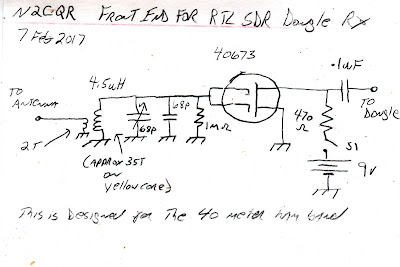
Schematic for the RTL SDR Dongle Front End

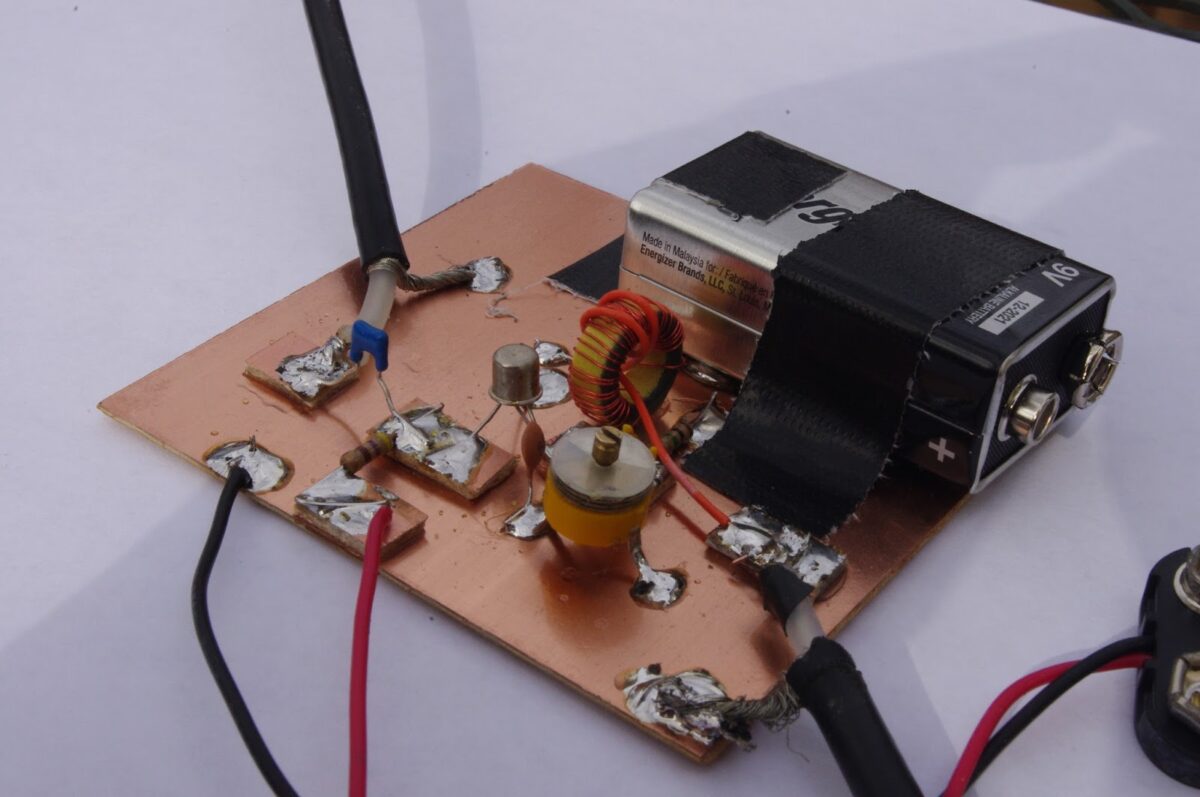
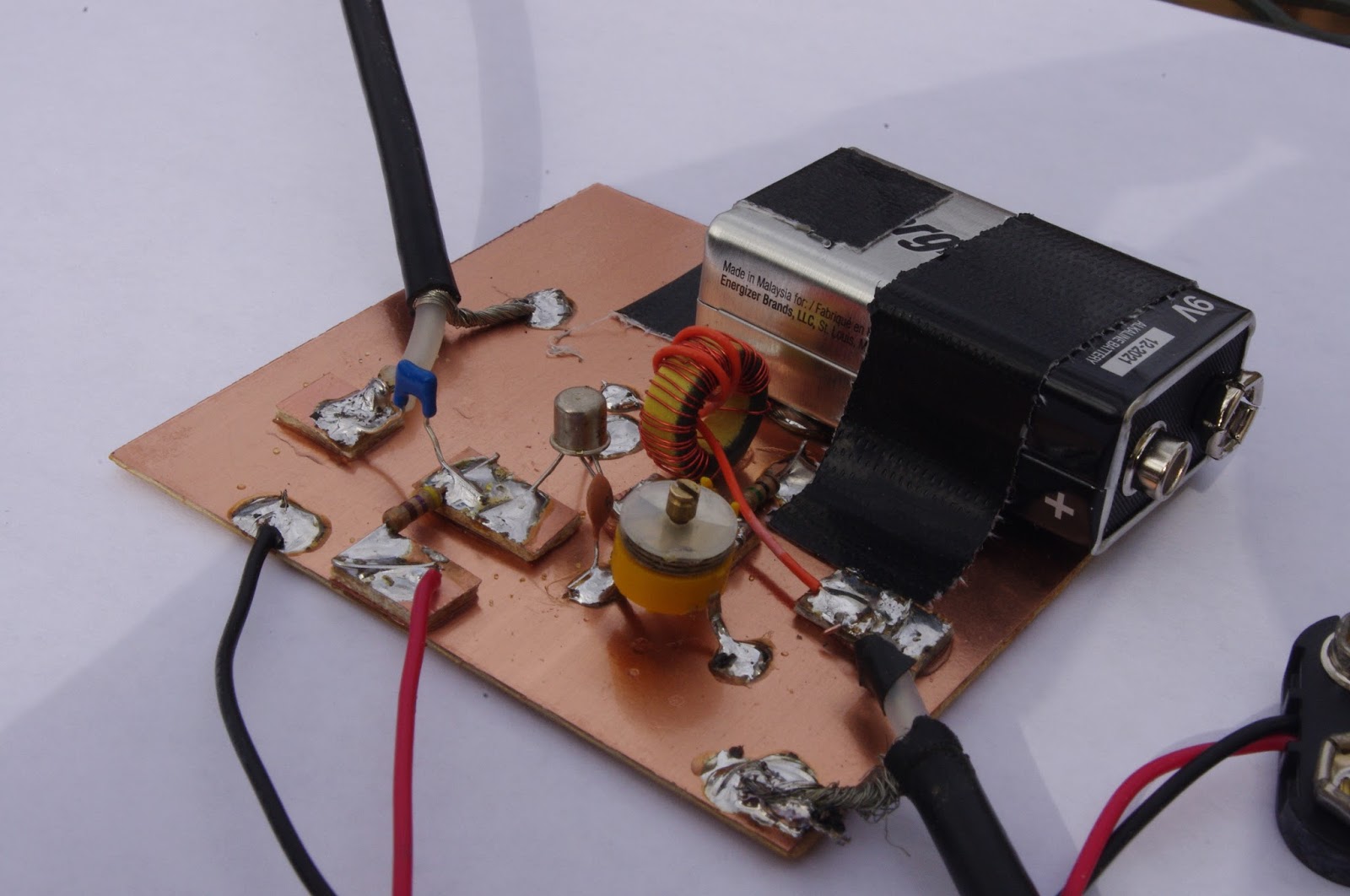
Here it is. Very simple. I used an obsolete 40673 dual gate MOSFET. I didn’t need both gates so I just soldered them together. You could probably substitute an easily obtained MPF-102 JFET. The capacitors and the coil in in the gate circuit form a parallel LC filter circuit that resonates in the 40 meter ham band. The 1 Megohm resistor maintains a very high impedance for the LC circuit, helping to maintain circuit Q (sharp response). It also drains off any charge that builds up on the gates. For the antenna input I just put 2 turns on the 4.5uH coil — this too helps maintain LC filter response. The 470 ohm resistor serves as the load and limits quiescent current through the MOSFET. It should pull about 19 milliamps — with a 9V battery that should give you around 26 hours of listening time between battery changes. That’s fine with me — I don’t use this thing that much.

Realize that I’m using this with an RTL-SDR dongle that has been given the familiar modification that allows it to use direct sampling in the HF bands. Some ideas here:
and here
and here

Adding a Homebrew Front End to an RTL-SDR HDSDR Receiver

I started playing with the RTL SDR dongles again. I wanted to use them to confirm that my BITX signal is NOT 9 kc wide (it is not). I also wanted to try to confirm the aircraft band frequencies in use in this area.

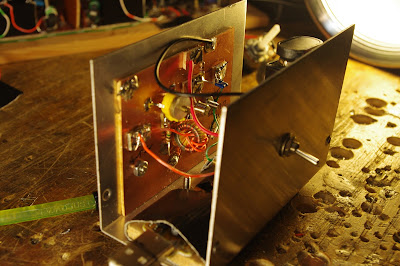
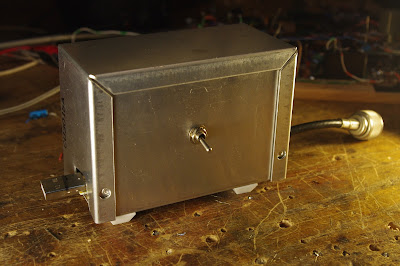
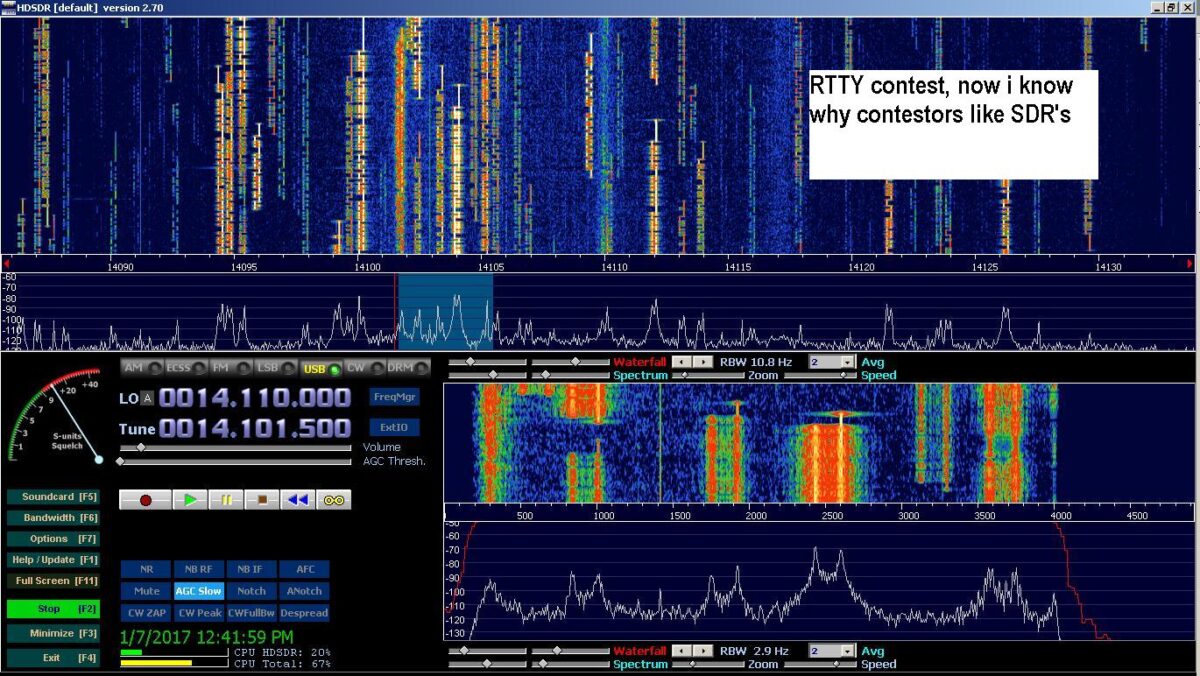
So I got the HDSDR software running and plugged in the dongle that I had modified for HF use. It worked great, but I could see (literally SEE) that it needed some bandpass filtering and perhaps a bit of RF gain. So today I threw together this device. Dual gate MOSFET (gates tied together) with an LC filter on the gate. Power from Malaysia via the 9V battery.

It works great. It was fun to add a bit of homebrew to an otherwise soul-less commercial receiver. But beware: that waterfall is addictive, even for a hardcore Hardware Defined Radio guy like me.

Of Waterfalls, SDRs, and Homebrew Analog Rigs: Words of Wisdom from W8JI

W8JI


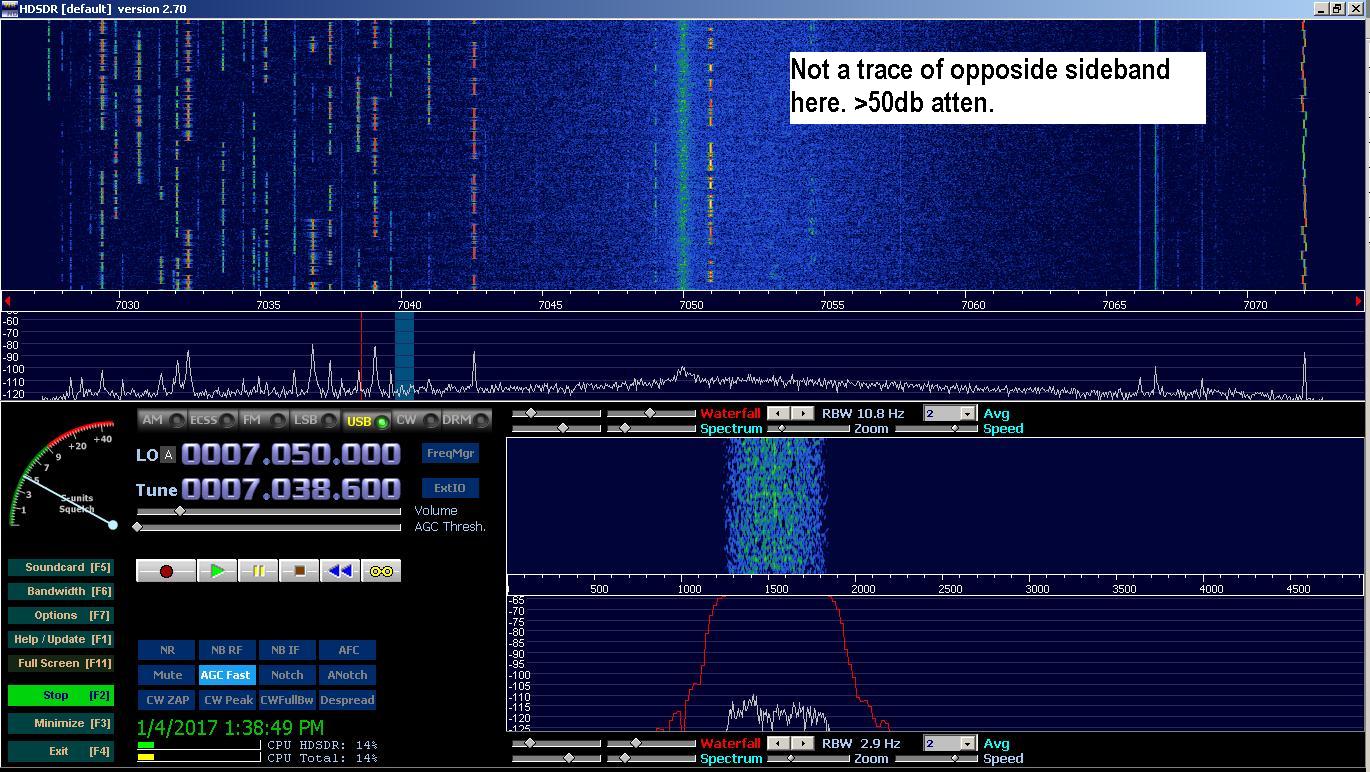
It happened again today. Conditions were good and I was BOOMING into the NYC area on 40 meters. 40 over. Everyone liked the signal and said it sounded great. Except for one anonymous grump who chimed in to say that I was “9 kc wide.” I imagine he was basing this on a quick look at his super-dooper SDR waterfall, without any consideration of signal strength or the characteristics of his own receiver. Sigh. The Waterfall Police had struck again.

OM W8JI gives a great description of the pitfalls of this kind of “you’re-too-wide-because-my waterfall-says-so” reasoning. Check it out. And keep it handy in preparation for your next encounter with the 40 meter Waterfall Police.

https://www.w8ji.com/checking_bandwidth_with_receiver.htm

N6ORS’s Franken-SDR Superhet

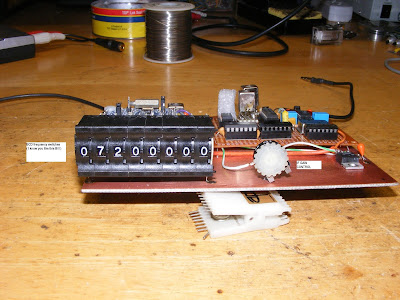
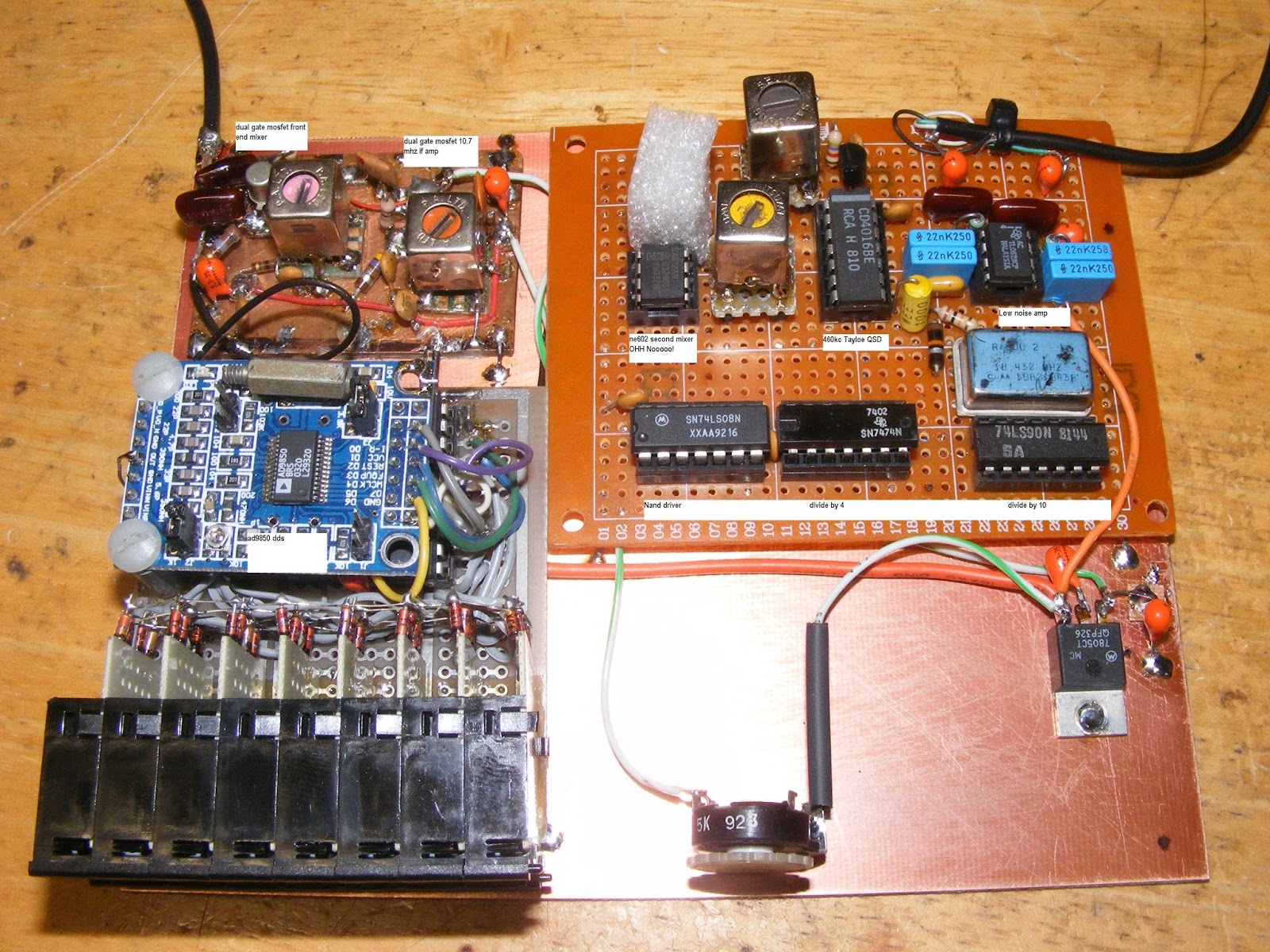
Of course, I love it. MOSFETS! NE602’s! 10.7 Mc IF cans! Cycles, not hertz! And a Tayloe Quadrature Sampling Detector made from junkbox parts from the Reagan administration. FB Keith. And the frequency display is icing on the cake.

Bill:

I thought the group might find my new Franken-SDR interesting.
It is an SDR with a superhet front end.


I wanted to play with an SDR but I didn’t want to get a kit or buy
parts, so I scrounged through he drawers and found a mux chip
cd-4016 circa-1980 some old 7400 logic that is probably per-1980.
This could make a QSD but only very low frequencies. Well I thought
how about at IF frequencies?


The frontend is a MOSFET mixer (1975) , the 10.7 IF is a dual gate MOSFET
(1975), the second mixer is a NE602, the IF cans are all stagger tuned to
give a bandwidth of 50kcs.
The only thing modern is the DDS but I old-time-ifyed it with BCD switches.


Keith N6ORS


VK6FTH did something similar: http://www.vk6fh.com/vk6fh/SDRradio.htm

Great Homebrew Interview on “QSO Today”

This week Eric 4Z1UG has a really nice interview with Jim Veatch WA2EUJ. Jim is the three time winner of the ARRL Homebrew Challenge. There is a very interesting discussion of Arduinos, SDR, the technology behind automatic antenna tuners, and even some Raspberry Pi. Jim’s first receiver was a Halli S38 and his first rig was a Heath HW-7.

Listen here:

http://www.qsotoday.com/podcasts/WA2EUJ

Thanks Jim. Thanks Eric.

DD4WH’s Fantastic Teensy SDR Receiver (Videos)

This is almost enough to make me abandon my analog, discrete component, HDR fundamentalism. Check out that display. And that StereoAM mode in which the upper and lower sidebands go to the left and right headphones “useful for CW”… Wow, that’s seems like a step beyond binaural.

Don’t miss Parts 2-4 –They are all on YouTube and will appear in the right hand column when you are watching Frank’s videos. But I couldn’t resist embedding the video that shows the hardware. Note: the oscillator is an Si5351! Yea! And the LP filter board comes from Hans Summers.

Beautiful work Franz! Thanks for making the videos. 73 Bill

SolderSmoke Podcast 185 — SPECIAL FEBRUARY ANTENNA SHOW

SolderSmoke Podcast #185 is available

22 Feb 2016

http://soldersmoke.com/soldersmoke185.mp3

Travelogue: 550 feet above Washington DC

Bench reports
Pete: Simpleceiver update. Adventures in Raspberry Pi SDR.
Bill: A daring but failed attempt at divide by 2 I&Q.
Audio Mods on the Hammarlund HQ-100.
Dual Digital Readout for the AM station.

SPECIAL FEBRUARY ANTENNA DISCUSSION
Why we build antennas in February.
Why hams should concentrate on antennas.
The importance of noodling.
Pete’s beam project.
Pete’s Lazy H.
The pernicious influence of automatic antenna tuners.
Bill’s Ray Gun Antenna.
Bill’s Moxon and his 160 inverted L.

MAILBAG
Tom Gallagher NY2RF (new ARRL Exec VP).
Mike Rainey AA1TJ on the air with a unijunction transistor.
Dale W9DKB sends me 160 meter book.
Alan Wolke W2AEW builds a Mighty Mite.
Daniel HK4DEI builds a DSB rig in Medellin.
Chris KD4PBJ modulates an AD9850.
Charlie ZL2CTM Builds a Teensy Superhet.
Jim W8NSA — a Tek 465 goes toes up.
Thomas KK6AHT has roof, needs antenna!
Grayson TA2ZGE homebrewing crystal filters in Ankara.
Ian G3ROO and I had QRP QSO in 2001!
Steven G7VFy sent me a box of VALVES.
Frank KM4AXA repairs a rig and thus adds SOUL to the machine.

ZL2CTM’s Teensy SDR SSB Superhet — Very Cool

Hi Bill

I thought I would drop you a quick line to show you something I have been playing around with for the past couple of weeks. It’s a SSB superhet using a PJRC Teensy 3.1 microcontroller (YouTube link below), and a great audio library by Paul Stroffregen. Suffice to say I’m really happy with it.

There is a direct conversion front end, albeit using a VFO 15kHz down from the incoming RF. The 15kHz IF is then fed into the Teensy audio line in which can handle up to 22kHz. From there everything is in software. First is a 2.4kHz BPF tuned to the LSB, followed by mixer with a 15kHz BFO. Finally, there is a 2.4kHz LPF. Next step is to add both CW-wide and CW-narrow filters which can be selected during run time.
As you can tell from the video, my antenna is not the best and I have quite a bit of QRM in the shack. I really need to think about a better antenna, but that’s another story.
I have been following your R2 endeavors with interest, and as I said to Pete I will attempt to replicate the R2 on a Teensy. I will try and use the divide by 2 arrangement you tried as the logic looks right.


I will also be adding in a transmitter. For that I’ll use the microphone input and then take the audio from the line out straight to the RF pre/power amp.


I must admit that I really enjoy homebrewing hardware/software hybrids as you get the best of both worlds. As i say that, I wonder how much ADCs cost these days to directly digitize RF… Now that would be interesting.

I’ll say again that I really enjoy following the podcast. I have loved electronics since I was a small boy when my parents bought me a battery, switch and light bulb. This age of cheap DDSs, microcontrollers and the like is amazing, and I get so much enjoyment putting them all together to make functioning ham radios. I hope more get into the homebrew field as the entry barrier is dropping fast.

Keep up the good work.

73s
Charlie
ZL2CTM