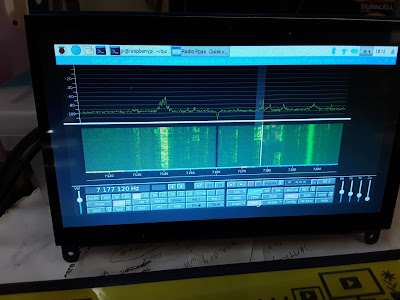
N6QW goes Coast-to-Coast with HB SDR RADIG

From: Frank
Sent: Saturday, July 13, 2019 6:55 AM
To: Pete Juliano
Subject: Re: 40M QSO with N6QW

GM Pete

Yes fun QSO last night. You did have a great signal and excellent audio from your HB SDR .

Lots of great info on your website.

I am enjoying my wire beams. I have two five element wire beams mounted end to end beaming Europe that I get on that direction a lot. I’m planning to get an Array Solutions StackMatch soon that will help my signal even more.

Keep up the good work with the SDR rigs Pete.

I look forward to our next QSO.

73

Frank WA3RSL

On Jul 13, 2019 9:42 AM, “Pete Juliano” wrote:
Hi Frank,
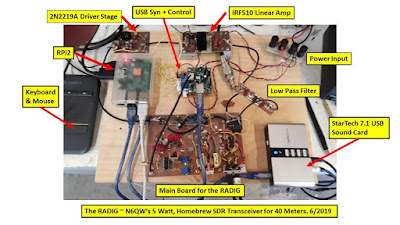
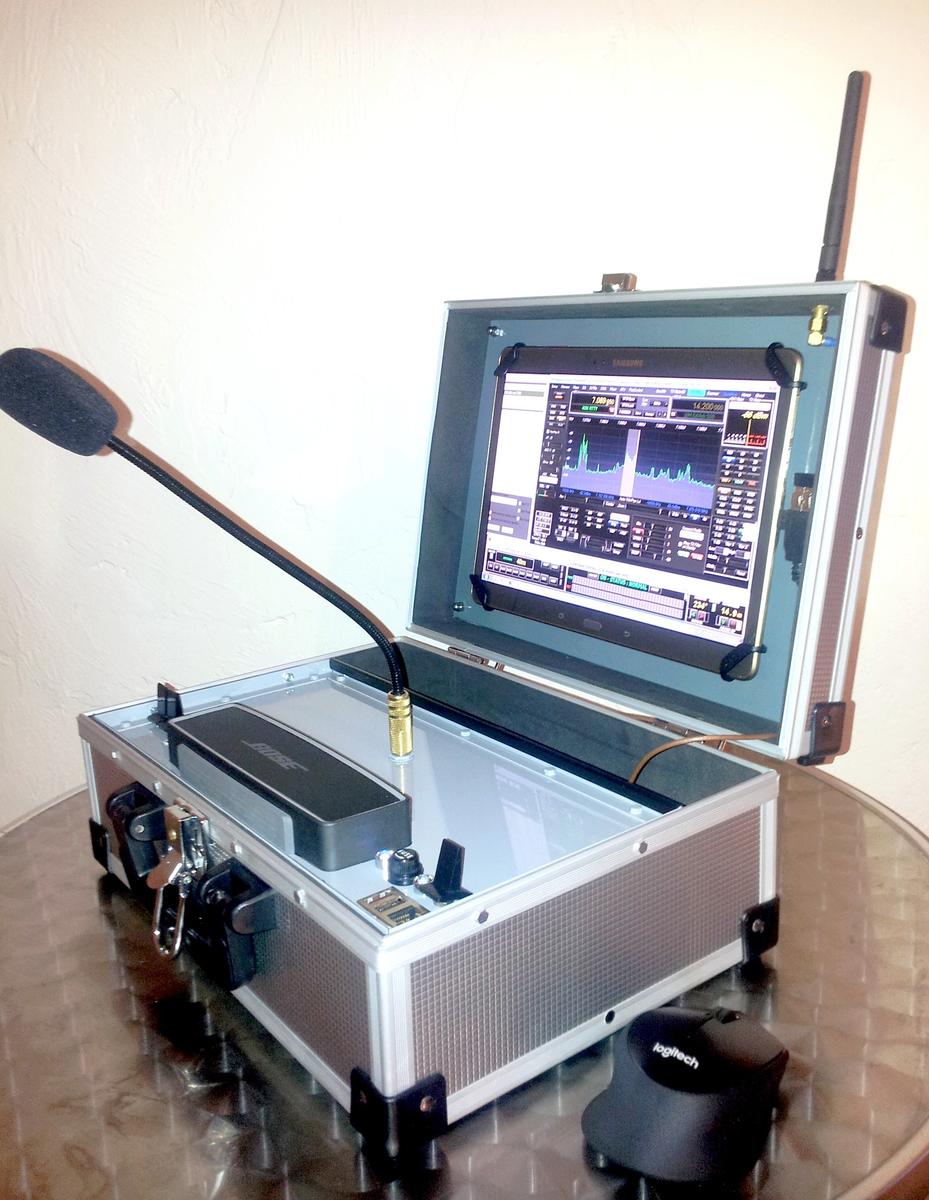
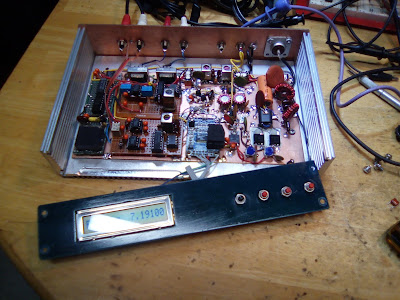
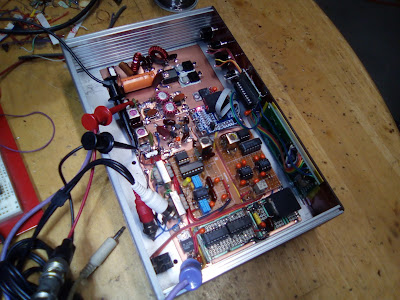
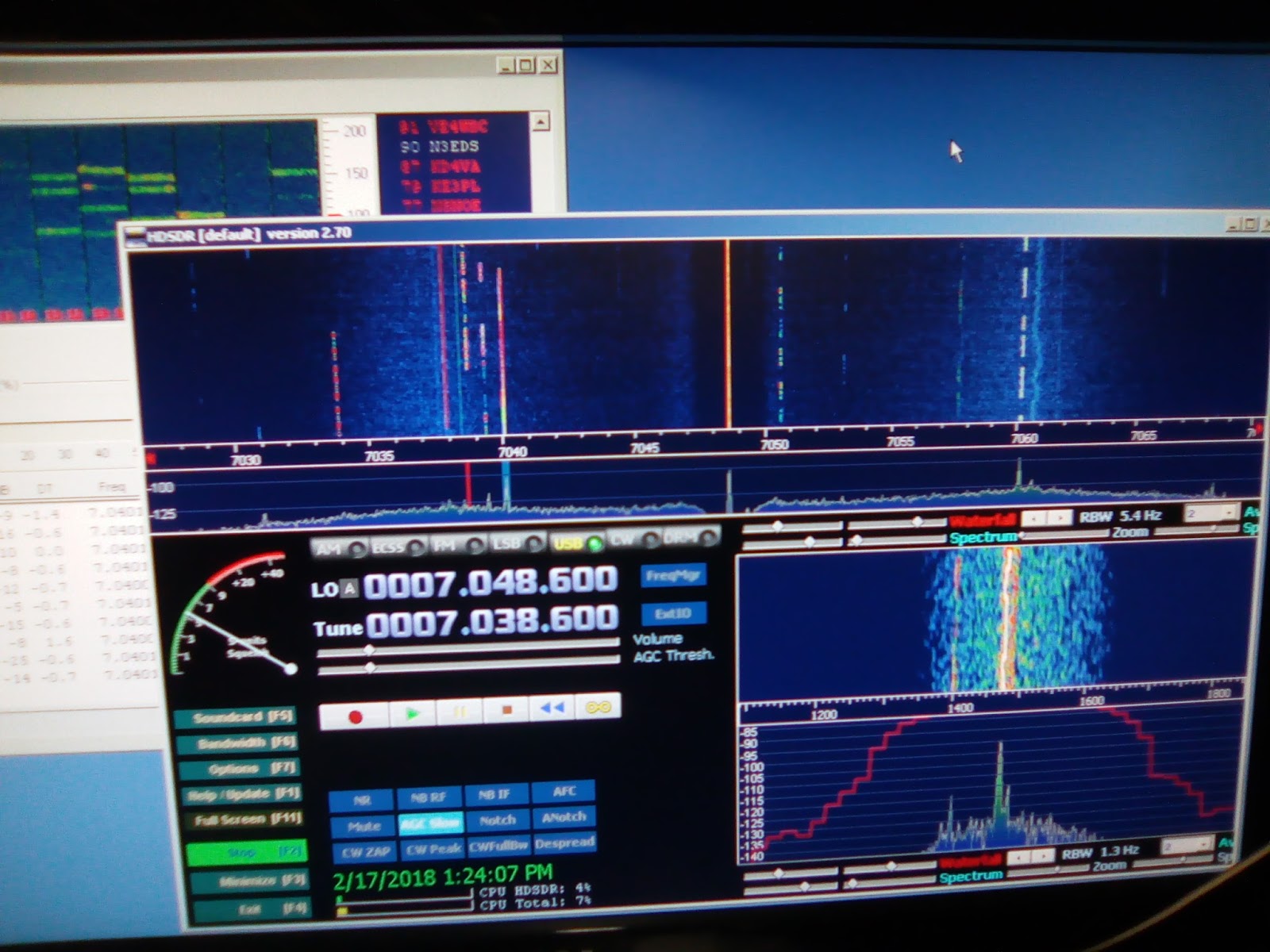
Last night was the first coast to coast QSO with my homebrew SDR Transceiver. Thanks for the signal report and the comments on the signal.
This has been a fun project and my main band of operation these days is 40M. I have the capability to put the SDR on 75 as well as 20M. The second prototype (now in work) will use plug in coils for those two bands. It is simply amazing what can be done with a $35 computer.
I have several websites but one has been dedicated to SDR and there is more documentation about the SDR project.
Thanks again and at times you hit 15/9. Nice radio and nice antennas.
73’s
Pete N6QW

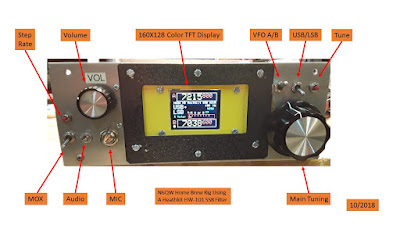
Pete N6QW’s RADIG SDR On The Air!

Hi Bill:

So far I have made about two dozen contacts with the new RADIG. Just finished one with a ham I know in New Mexico and he is an RF Engineer –he was a designer at Alpha. I asked that he do a critical review of how I sounded and looked on his SDR – a good report and his comment was that if I hadn’t told him he would have guessed it was a $4 or $5K box.

So another goal achieved –on my 60th year anniversary and this makes #37.


SolderSmoke Podcast #212 HDR, Boatanchors, SDR, Antuinos, Spurs, QSX, Mailbag

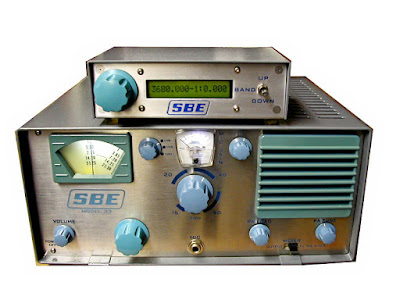
Dale Parfitt W4OP’s SBE-33 with modern digi freq counter

SolderSmoke Podcast #212 is available:

http://soldersmoke.com/soldersmoke212.mp3

22 June 2019

CONGRATULATIONS TO PETE: Licensed 60 years today

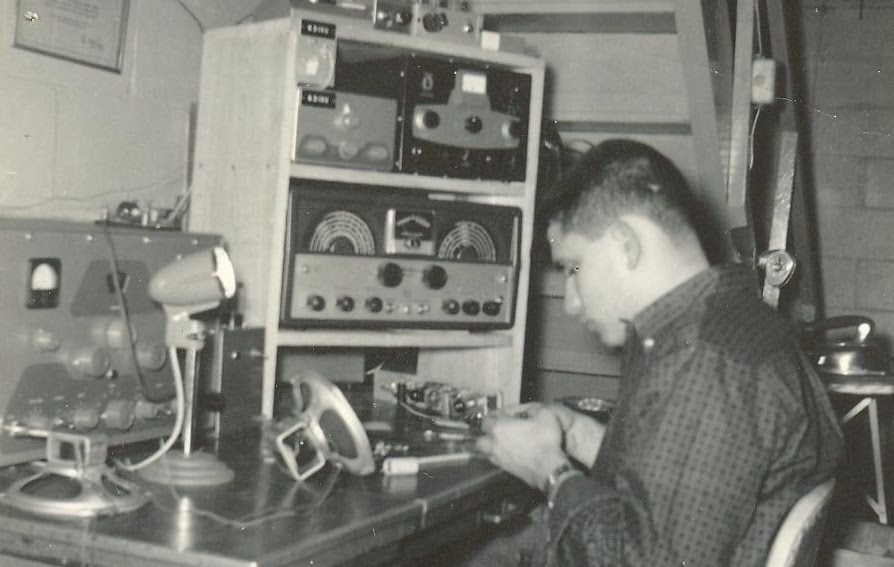
Pete Juliano during Field Day, 1959

Sideband Engineers Models 33 and 34 — Thanks Pete!
Hans’s QSX SDR Rig at Dayton-Xenia and FDIM
W8SX FDIM interviews

Pete’s SDR Projects — Update

The Peregrino SSB transceiver in the summer SPRAT

Why no rare earth cell phone speakers in ham projects?

My HDR “waterfall” project

Farhan’s Antuino
Cubesat origins
RF Lab in an box
SWR, PWR, SNA
Superhet receiver with ADE-1 at front, and log IC at the output
Adapters (SMA to BNC) help
DON’T BLOW UP THE INPUT RESISTORS (LIKE I DID!)
My dirty DIGITIA — Denial, then acceptance
FFT
Useful programs: SPURTUNE and ELSIE
A better bandpass filter for the DIGITIA
The importance of a good test set up with Antuino

Manassas Hamfest: WA1UQO, W4WIN, AI4OT

MAILBAG:
KG7SSB
WA3EIB
VK4PG
W3BBO
Jeff Tucker — Who owns Drake 2-B #4215?
KN4BXI
KC5RT
K3ASW

DIY Waterfall — A Quick and Easy Panadaptor Using a Sig Gen and O’scope (video)

I’ve been getting waterfall envy. The panoramic frequency display is the one thing that could lure me to the dark side (SDR). Heck, they now have 3D waterfalls! What next? Holographic waterfalls? Virtual reality waterfalls? This is almost too much.

Anyway, in an effort to counteract all of this waterfall seduction and to show that us analog HDR guys can go panoramic too, I decided to try to create my own panoramic display without resort to SDR.

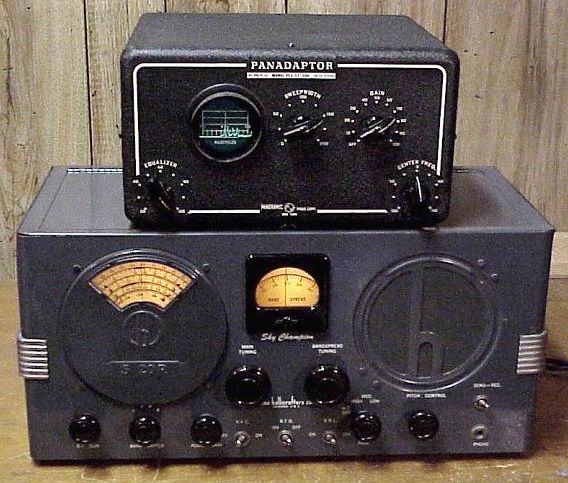
Of course, this is a very old technique. It was invented in the 1930s by Marcel Wallace, F3HM. He was the inventor of the Panadaptor which was the forerunner of today’s waterfall. Panoramic reception was used by the armed forces during WWII. In 1946 Hallicrafters marketed a Panadaptor for its ham radio receivers (see below).

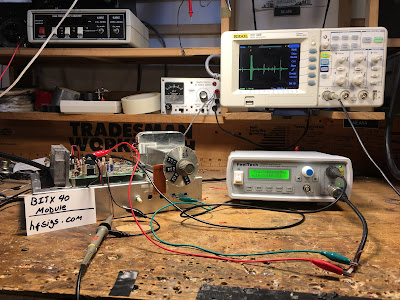
In figuring out how to do this, I thought back to my use of my Feeltech signal generator to scan the response of a crystal filter. The Feeltech has a very handy sweep feature.

In this case I set up the Feeltech to sweep from 4.85 MHz to 4.75 MHz in one second. With the 12 MHz IF of the BITX40 module, this would result in a sweep from 7.150 to 7.250 MHz.

The sweeping Feeltech just replaced the VFO on my BITX. I hooked up the Rigol oscilloscope to the audio output of the BITX. I set the horizontal scan rate at 100 ms per cm. This would have the trace go across the whole screen in 1.2 seconds.

After a bit of fiddling, I could see signals on the 40 meter phone band. But my display would kind of drift along the screen making it hard to know the frequency of the signals I was seeing.

Alan Wolke W2AEW provided the solution. He advised me to put a big stable signal at 7.150 MHz near the input of the BITX, then use this strong signal to trigger the ‘scope scan. The HP8640B signal generator that Steve Silverman gave me (and that Dave W2DAB picked up for me in NYC) provided the triggering signal.

I put a piece of tape across the bottom of the scope display to calibrate the display. See video above.

It works! It is not as cool as the SDR waterfalls, and it does not convey nearly as much information, but it was a fun project.


FDIM Interview with Hans Summers G0UPL on QSX SDR Rig, Probable Price, Features

Wow, our ace correspondent in Dayton/Xenia Ohio, Bob Crane W8SX, did a great interview with homebrew hero Hans Summers G0UPL.

Hans discusses the success of the QCX CW phasing rig — more than 7,300 sold. That’s amazing. I didn’t think there were that many solder melters in the world.

Even more amazing is his description of his QSX SSB SDR rig, which is currently in development. Click on the link below to listen to Bob’s 6 minute interview. You will be blown away by the features and the price of the QSX. Go Hans!

http://soldersmoke.com/G0UPL FDIM 2019.m4a

Thanks Bob!


SDR vs. HDR – Is the Superhet Dead?


Pete N6QW had this very interesting video about Software Defined Radio on his blog. Thanks to G3WGV for putting this presentation together.

It is very interesting, but — for me — it is also troubling. I think something important is being missed in this discussion. You have to listen carefully, but if you do the thing being missed becomes apparent.

Like many others, G3WGV asserts that very soon, 100 percent of commercial radios will be SDR. Traditional superhet radios will be a thing of the past.

OK, but I will make a parallel assertion: Looking ahead, I think 100 percent of TRULY homebrewed rigs will be HDR.

Of course, this really just comes down to how you define “homebrew.” I’m a traditionalist here. I think of homebrewing as actually building — from discrete components — all the stages that send or receive radio signals. By my definition, I don’t think you can really “homebrew” an SDR radio. Taking an ADC chip and connecting it to a computer running SDR software is not — by my definition — homebrew. Even if you wrote the software yourself, writing code is not the same as wiring up all the stages that go into a superhet-style transceiver.

There were a few lines in G3WGV’s talk that seemed to confirm this difference: The SDR radio is defined as a “server.” Commercial manufacturers like SDR because they can use the same components that go into cell phones (exactly — and people will soon have the same relationship with these “radios” that we have with their cell phones).

I kind of grimaced when G3WGV described the two sets of users of SDR technology: the “early adopters” who are “technology enthusiasts”, and the “pragmatists” who don’t care what’s in the box — they just want to talk on it. I think “pragmatist” is a nice way of saying “appliance operator.” Even the “early adopters” are pretty far from the world of traditional homebrew. And for me that gets to the point that is being missed in all this — this shift away from hardware is also a shift away from homebrew.

But hey, this is a hobby. To each is own! Have it your way. For myself, I plan to continue with the hardcore, radical fundamentalist, hardware-defined, discrete component, fully analog homebrew radio. This morning I am attempting to stabilize a cap and coil VFO. And I’m liking it. As the world shifts to SDR, I look forward to the appearance on e-Bay of massive quantities of old forsaken HDR rigs. We will buy them for pennies on the dollar and use the parts for new HDR Superhet rigs.

Viva E. Howard Armstrong! Viva!


Homebrew Your Own Remote Head (with a 3D Printer) (Video)

After I issued a luddite complaint lamenting the arrival in ham radio of appliance-like “remote heads”, Ed KC8BSV pointed out that at least one guy — Joe VE1BWV — is HOMEBREWING his own remote head. (You must admit, this sounds really weird.) I still haven’t completely got my head around this, but Joe’s video (above) is really impressive.

We’re living in the future my friends!

Remote your heads! With 3D printers!

Our Dismal Digital Future?

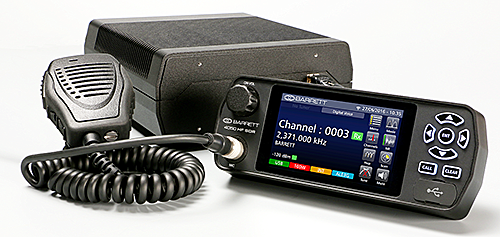
I’m sure some would find this device appealing — to each his own. But I don’t like it. It seems to mark another step down the path toward the complete appliance-ization of ham radio. Note how the control head is looking more an more like something for your car audio system, or your cell phone.
YUCK.
Count me out.
Just say NO!
Menus are for RESTAURANTS!
RIGS NOT RADIOS!
HDR FOREVER!

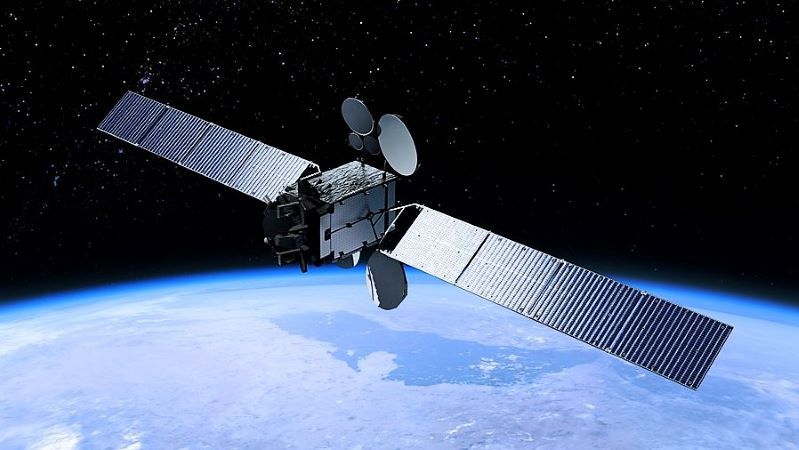
Amazing New Geostationary Amateur Satellite — LISTEN ONLINE!

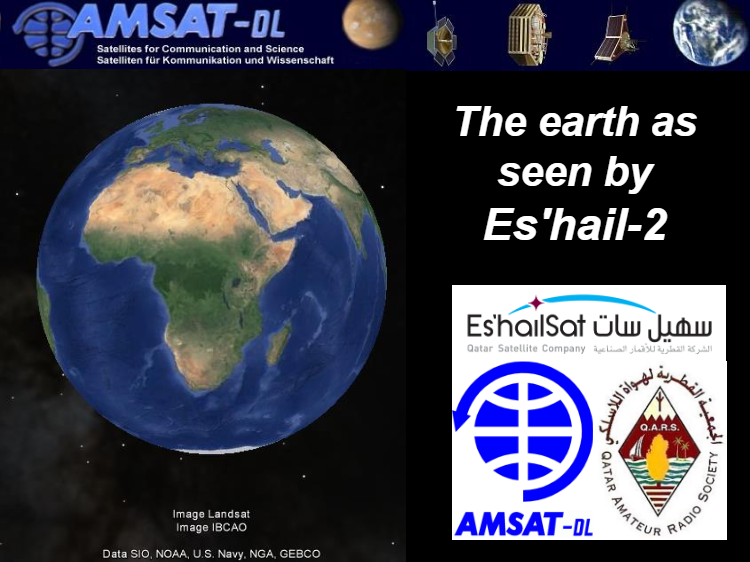
Wow, quite a step forward in the amateur satellite world. Qatar and AMSAT-Germany have collaborated to put an amateur radio repeater in geostationary orbit. That’s pretty amazing. Read more here:

https://hackaday.com/2019/03/18/eshail-2-hams-get-their-first-geosynchronous-repeater/

Read about a group of Norwegian students working on a satellite station for this bird:

https://www.la1k.no/2019/02/20/getting-ready-for-e%CC%B6s%CC%B6%CC%B6h%CC%B6a%CC%B6i%CC%B6l%CC%B62%CC%B6-qo-100-part-2-how-we-did-it/

And this is really fun: LISTEN TO THE DOWNLINK LIVE VIA WEBSDR!

We can’t hear this thing from North America — it is flying over the Congo. But stations in its footprint are putting their receivers online — you can listen to the 10 GHz downlink via WebSDR:

UK WebSDR: https://eshail.batc.org.uk/nb/

Brazil WebSDR: http://appr.org.br:8902/

Ghost Ship: Oscar 11 Tumbles Through Space

First — Happy Boxing Day to all our UK and Commonwealth friends.

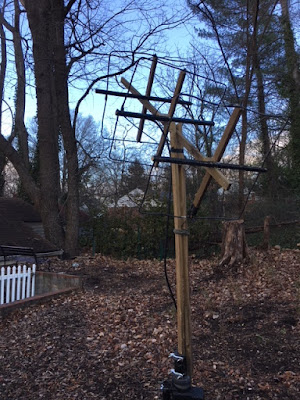
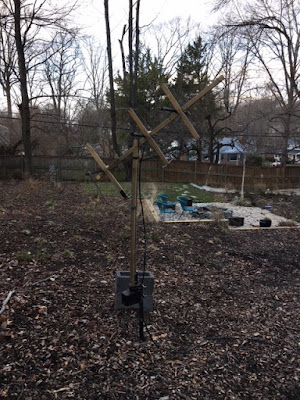
Oscar 11 is a UK-built amateur satellite launched in 1984. It has been dead (well, almost dead) for many years. But when the sun shines on the solar panels, it wakes up and transmits. I’ve been able to hear it and — more usefully — see it on my RTL-SDR HD-SDR receive system. My antenna is my re-born (from the Dominican Republic) three element homebrew 2 meter cubical quad (see pictures below).

I’m sorry the video is a bit out of focus, but you can clearly see the trace of the signal from the satellite. Realize that my HD-SDR software is about 10 kHz off calibration. You can see the Doppler shift, and you can see the signal fading in and out as the old satellite tumbles through space. Any ideas on what the other signals seen off to the side are? Is anyone else listening for Oscar 11?

https://amsat-uk.org/satellites/telemetry/uosat-2-oscar-11/

https://en.wikipedia.org/wiki/UoSAT-2

http://www.dk3wn.info/p/?cat=47


UOSAT_OSCAR-11

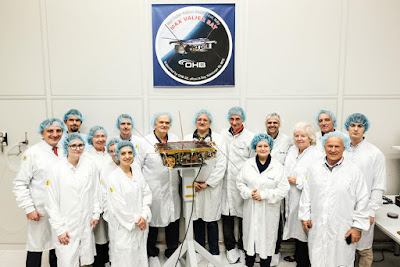
The Max Valier Satellite Flies Over, Sending CW

I understand the launch of Farhan’s CubeSat has been delayed a few days. That’s the way it works in the rocket launch biz –patience is required. In the meantime, I’ve been practicing with my receive system. Today at 1000 local the Max Valier satellite flew to my west. It rose 78 degrees above my horizon to the W NW. I left my three element quad pointed in that direction and waited for the satellite (which had been launched from India) to fly through its pattern.

The CW beacon was quite strong, very visible and audible through my RTL-SDR dongle and HD-SDR software. You can see it and hear it in the video above. There is something quite charming about this very personal Morse message coming down from orbit and then passing through all that digital technology.

More info on the satellite:


“Max Valier Sat” is an amateur satellite built in cooperation by:

  • “Max Valier” High School in Bolzano/Bozen (Italy)
  • OHB System AG from Bremen (Germany)
  • Max Planck Institute for Extraterrestrial Physics from Garching (Germany)
Its main payload is an X-Ray telescope devised and made by MPE. Data generated by this detector will be transmitted, together with housekeeping data, over an amateur radio link with frequency 145.860 MHz.
A second payload is an amateur radio beacon transmitting a message in Continuous Wave. The beacon’s frequency is 145.960 MHz
“Max Valier Satellite” was launched by the Indian Rocket PSLV-C38 on June 23, 2017 at 9:29 am IST (05:59 am CET) from Satish Dhawan Space Centre.
More tech details:
Regarding the CW beacon:

Beacon by Holger Eckardt DF2FQ:

  • Transmit frequency is 145,960 MHz (IARU and ITU coordinated).
  • Modulation is CW:
    • Duration of one dot is 114 ms.
    • Duration of one dash is 342 ms.
    • Interval between words is 1881 ms.
    • Interval between repetitions of the message is 6000 ms.
  • The beacon transmits Max Valier Sat’s call sign and a greeting message.
  • Transmitting power is 500 mW.


And who was Max Valier? Quite an interesting fellow:

Max Valier in his Rocket Car in 1930

Getting Ready for Farhan’s Satellite (videos)

I’ve been getting ready for the November 24 launch of the CubeSat that Farhan and his friends in India built. I started out with my trusty Drake 2-B and a Hamtronics 2-to-10 downconverter, but I quickly switched to an RTL-SDR dongle and HD-SDR software. My 3 element quad antenna is visible in the first video. So far, I am using the Armstrong method to turn the antenna.

In that first video I keep saying that I am waiting for AO-71. In fact is was AO-73, the “FunCube” from the UK. I think it is similar in power and antenna configuration to Farhan’s satellite, so I think we are almost ready for launch.

(Any ideas on what that mysterious pulsating sig in the satellite passband signal is in the first video?)

SolderSmoke Podcast #207 — 15 mtrs, 60 mtrs, Giants of Radio, Cubesats, Pete’s rigs, SDR MAILBAG

SolderSmoke Podcast #207 is available:

http://soldersmoke.com/soldersmoke207.mp3

— Giants of Radio
— Pete on 15 Meters
— Bill on 60 Meters with the uBITX
— Pete’s Sudden and Heath Filter Transceivers
— Cubesats to orbit! To the moon! And to Mars!
— Bill rebuilds his 2 meter “Ray-Gun” Quad (for Farhan’s Cubesat)
— Homebrewing Variable caps and stockpiling NP0
— My “by ear” Minimal Discernible Signal Technique
— Thoughts on Direct Sampling SDR and the Radio Art
MAILBAG
— A request for feedback from GQRP
— G4WIF reports G3ROO on UK TV with spysets
— VU3XVR builds FB rig from EMRFD
— M0KOV Charter member of the 3 Scratch-built BITX club
–KD4PBJ’s PTO Turtle DC Receiver
— AB1OP builds Pete’s LBS receiver and gives us a new acronym: SITB
— KD4EBM — Thanks for the scanner Bob!
— A possible sponsor from California…

— Pete’s dream neighborhood…

SolderSmoke Podcast #206 — GQRP CONVENTION SPECIAL EDITION

SolderSmoke Podcast #206 is now available:

http://soldersmoke.com/soldersmoke206.mp3

— SolderSmoke resumes after a busy summer.

— We did a portion of #206 via Skype at the GQRP Convention. Thanks to Steve G0FUW for setting this up. A portion of our participation appears at the end of the podcast.

— Pete’s SDR Rig and his new involvement with WSPR and FT-8

— The allure of SDR and the pitfalls of complexity.

— Bill’s 135 foot Doublet, 75 AM, 60 USB and 30 Meter CW.

— Plans to change the IF of Bill’s HRO dial receiver.

— Thinking (again) about sold stateing the HW-101.

— Hans Summers, QCX and QSX rigs.

MAILBAG:

Ralph builds Pete’s LBS receiver. FB!

QSX! Hans Summer’s New SSB Rig Revealed in South Africa

I liked this video. I liked Hans’ description of his mechanical skills, and the way he has at times become a “human CNC machine.”

This seems like a much more sophisticated rig than the QCX. I may be wrong, but QCX seemed to be essentially an analog phasing rig with a narrow CW audio filter. I kind of expected the SSB version to be a QCX with broader filter, but QSX is a different, more sophisticated, SDR rig.

Once again, three cheers for Hans Summers. We should all pay him to go to those summer conventions — every time he does, something new and important for ham radio comes out of the trip.


Hans Summers and his QCX — G0UPL Cracks the Code on Si5351A Quadrature


Pete, Brad WA8WDQ and I were recently e-mailing about our admiration for what Hans G0UPL has achieved with his QCX rig. I cc’d Hans — we got this nice and very informative e-mail. Be sure to click on the link provided by Hans, and from there go to the link to his FDIM proceedings article. I think that article is a real masterpiece — there is a lot of very valuable information in there. For a long time, getting quadrature output from the Si5351 seemed like an impossible dream. But Hans has obviously figured out how to do this, opening the door to much better and simpler single-signal phasing receivers. Thanks Hans!


Hi all


Thanks for the nice feedback on the QCX and the FDIM conference proceedings a article, which I have published on QRP Labs web page along with other Dayton trip miscellany. See


My seminar presentation audio was recorded by Ham Radio Workbench podcast and they will be publishing it on 5th June.

The QCX kit has indeed been unbelievably popular, almost 5,000 kits have been sold since the launch on 21st August. It seems to have itched an itch that needed itching, in the QRP world. Sales continue to be strong and I’m currently preparing another batch of 1000 more.

I’m very proud of my 90-degree quadrature Si5351A and it helped me towards my low cost, high performance target for QCX. Abandoning the 74AC74 saves a part, reduces cost, reduces complexity, reduces board area (and hence more cost) and even seems to provide better performance (higher unwanted sideband rejection when using the Si5351A in quadrature mode). Getting the Si5351A to do this is one of those things which look easy afterwards. But at the time, and faced with SiLabs un-useful documentation, it took an awful lot of headscratching, trial and error!

I’m not sure of the answer to the question about noise figure. Certainly radios such as QCX and the NC2030 which use the QSD architecture seem to have very high sensitivity without an RF amplifier ahead of them. This must indicate a low noise figure.


73 Hans G0UPL

SolderSmoke Podcast #203 Winter, Transceivers, Antennas, DC RX, uBITX, Mixers, ‘fests, MAILBAG

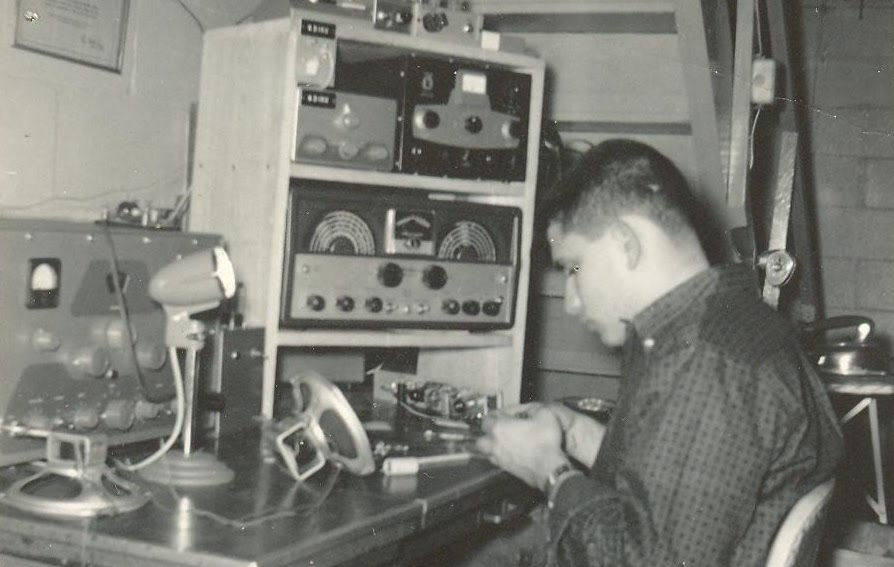
N6QW in 1959. Building an SSB transceiver

SolderSmoke Pocast #203 is (FINALLY!) available:

http://soldersmoke.com/soldersmoke203.mp3


24 March 2018

–The reasons for our delay.
Winter, Computers, College, Family Trees, Lawyers….

— Winterfest 2018
— Pete launches 2018 THE YEAR OF THE TRANSCEIVER
http://n6qw.blogspot.com/
— SDR – Satan’s Digital Radio?
— Direct Conversion Receiver Projects
— Mixer Musings
— A Thailand Troubleshoot
— Nor’Easter knocks out Bill’s Moxon — An appliance replacement?
— Homebrew Electret Mics. Seriously.
— uBITX Build with Rogier
— Civilized Crystal Testing
— Baofeng!
— DRAGNET

— MAILBAG
KD4PBJ’s REGEN
N6ORS’s SDR rig
Mike Rainey’s DX-100

N6ORS and “Satan’s Digital Radio”

Hey Bill,

I just finished testing the new rig. Better sit down for this……
Its an SDR (Satan’s Digital Radio). Actually its an estension of an
earlier experiment You might remember the ‘Franken SDR”. The Franken sdr

worked so well I thought I would make a companion for it and built a QSE
(quadrature sampling exciter) and an amplifier chain to go with it. The rig
used G3PLX’s fantastic SDRTX software for the transmit and DB0JBJ’s
wonderful HDSDR software for receiving. The original idea was to make
a small rig for Digital comms, but I decided to add a Mic for voice, also
there is a ‘Hardware” audio Phaser already in the building stages
(you can calm down now).
A few specs. The RX is fantastic , -135 noise floor and the audio is
so clean that it copies wspr signals to -33db. The transmit is
12 watts and the phasing audio sounds so nice that my wife says
“thats your terrible voice exactly.”So if you catch me on Sunday night
and i dont sound ‘yellowee’ enough and you justdont like that
no-crystal-filter sound just say “Hey , Dont phase me bro”

See Ya on the bands,
73
Keith N6ORS