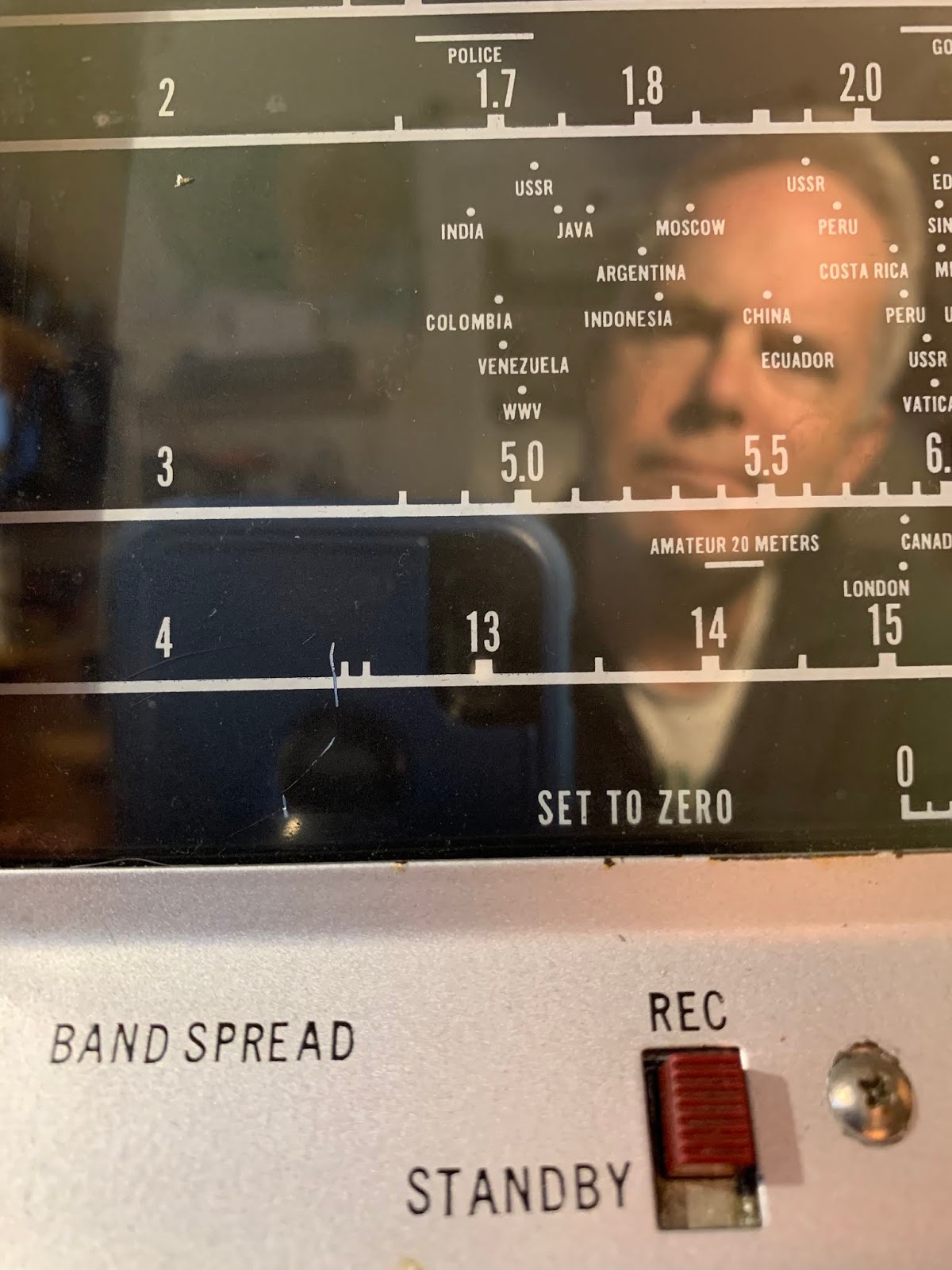
SolderSmoke Podcast #225: Mars, uSDX, G-QRP, HP8640B, DX-390, Rotary Tools, Walla Walla SDR, MAILBAG

SolderSmoke Podcast #225 is available

http://soldersmoke.com/soldersmoke225.mp3

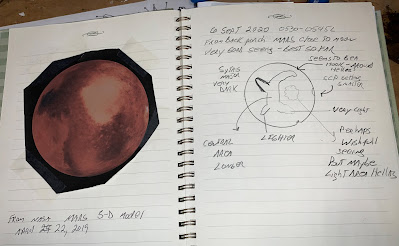
Mars, West Coast smoke.

Pete’s Activities:
— DC receivers.
— CW offset
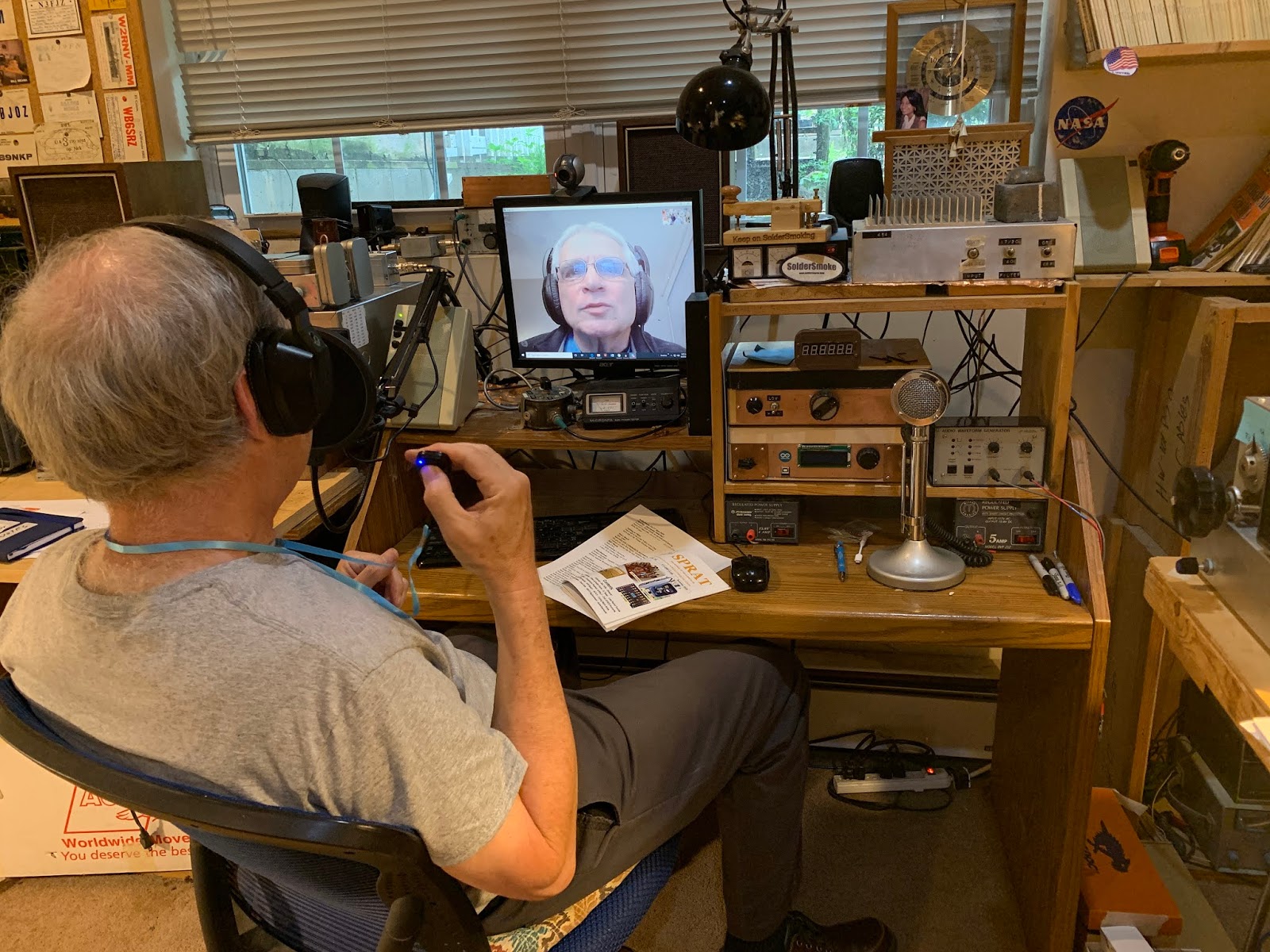
— GQRP talk
— The uSDX project

Bill’s Bench
— Sliding into the Vintage Test Gear Cult: HP8640B .
— Fixing up and figuring out Radio Shack DX-390 receivers.
— 220 to 110 on a few remaining devices.
— Got myself a Dremel-like rotary device.

Tech News:
— ARRL/TAPR Convention: SDR project from Walla Walla University students. Intuitive explanation for why desired and image freqs in a mixer come out with very useful phase differences.

— Chuck Adams’ Amazing Lab Notebook. Includes a simple circuit to measure resistance and Q in crystals. FB.

MAILBAG:

— Dino KL0S SITSing in his shack, homebrewing 9 MHz filters FB Dino. Airborne!
— Dave NT1U sent us the famous 1968 QST Article by W7ZOI re DC RX.
— Ron K0EIA listening to SWBC staions with uBITX.
— Ted AJ8T Korguntubes making a 12AX7 equivalent.
— Joel N6ALT sent me a nice DX-390 manual. Thanks Joel
— Bob KD8CGH alerted us to the uSDX project — story on the blog.
— Craig AA0ZZ Sent a great message with insights on computer code — I will put up on the blog.
–Tracy KN4FHX reports on optimistic prognosis for SolarCycle 25. Some chickens may have to be sacrificed.
— Stephen M0OMO Thanks SolderSmoke for rekindling interest in this hobby.
— Paul VK3HN has a cool new rig — The Prowler — check it out
— Steve N8NM working on his Sunbeam car — Pete already knew about the carburetor synch problem. N6QW knows everything.


Mixer Insights using Propellers and Cameras — From Walla Walla University. And SDR Design Info.

Pete Eaton sent us this video from the 2020 ARRL/TAPR Communications Conference. I have the portion of interest cued up (above). (The portion of interest begins at 6:59:46.)

There is a lot of really cool SDR design info in this video and in the associated paper (the TAPR site says you have to pay the ARRL $9 for the paper, but in the comments someone says the papers will be available free after the conference).

What caught my attention was the students’ discussion of mixer action. They use an analogy with a spinning propeller (the incoming RF) and a camera (triggered by the local oscillator) that samples the incoming signal at a specific rate. This is analogous to a Quadrature Sampling Detector.

The really interesting part for me was how this analogy allows us to see how phase differences between the desired signal and the image signal arise. These phase differences permit an SDR receiver (or indeed an old fashioned phasing Direct Conversion receiver) to reject the image while allowing the desired signal to pass.

This is a key point in understanding mixers, and is really quite amazing. Before I saw this video, I had just come to accept (without understanding WHY) that the desired signal and the image signal would have phase differences, EVEN IF THEY WERE COMING OUT OF THE MIXER AT THE SAME FREQUENCY. It is this phase difference that allows us to knock one down while allowing the other to pass. The propellers and cameras of Walla Walla University gave me insight as to how and why these phase differences exist.

In their paper, the Walla Wall group mention uSDX, the project that is currently generating so much excitement around the world:

Low-cost is not the only reason SDRs have become more popular among the amateur radio
community. More recently, Guido Ten Dolle’s μSDX open source transceiver has generated
increasing interest in quadrature sampling down-conversion SDRs in the homebrew QRP
community. Guido, PE1NNZ, was able to modify the QCX, QRP transceiver for SSB operation
with an efficient class-E amplifier, using only an ATMEGA328 and Arduino code to run the QSD
SDR. This groundbreaking work in this type of SDR has inspired various renditions of Guido’s
radio, fostering a lively groups.io group that can be followed at https://groups.io/g/ucx.

Kudos to Caleb Froelich, Dr. Rob Frohne KL7NA, Konrad McClure, Joshua Silver, and
Jordyn Watkins KN6FFS, all of Walla Walla University, for some really impressive work. (BTW: Rob tells me that back in the mid-90s he too built one of Rick Campbell’s phasing receivers and wrote a QST article about it (probably the first SDR article published by QST). Details on the project are here: http://fweb.wallawalla.edu/~frohro/R2_DSP/R2-DSP.html

Global Collaboration: The uSDX — A Multi-Mode QCX

Bill:
There is a new open source, home brew, multi band, multi mode QRP transceiver that grew out of the QRP Labs QCX. Through some serious magic it retains an efficient class E RF amplifier for sideband and digital modes. It crams impressive SDR capabilities into an Arduino. More info at https://groups.io/g/ucx/topics

The basic work appears to have been accomplished by Guido Ten Dolle PE1NNZ. It uses pulse width modulation of the PA supply voltage to transmit modes other than CW while retaining class E efficiency and uses a direct conversion SDR receiver.
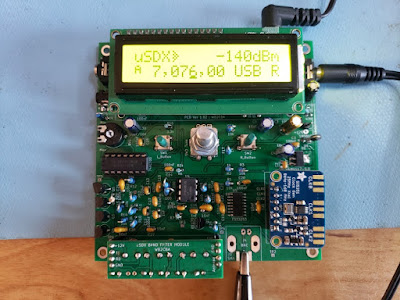
There are several variants by different developers. I built a variant designed by Barbaros Asuroglu WB2CBA
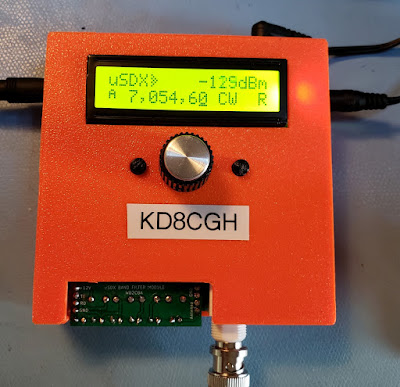
https://antrak.org.tr/blog/projeler/usdx-an-arduino-based-sdr-all-mode-hf-transceiver-pcb-iteration-v1-02/ that uses through hole components (mostly) and I’m pleased with it’s performance. I also designed and 3D printed a case.

This has an interesting development process with contributions by many, including the usual gang of suspects: Hans Summers, Ashhar Farhan, Manuel DL2MAN, Kees K2BCQ, Allison KB1GMX and Miguel Angelo Bartie PY2OHH. I apologize to the many others whose names I didn’t list.

The band switch multiband version by DL2MAN is even smaller, but with SMD components which I wasn’t ready to tackle yet.

BTW – your podcast encouraged me to go in this direction. I built a BITX 40, a uBITX (sent you a pix of it in an old Heathkit Twoer case), U3S, QCX and now my first step from kits to built from plans.

73

Bob KD8CGH

https://antrak.org.tr/blog/projeler/usdx-an-arduino-based-sdr-all-mode-hf-transceiver-pcb-iteration-v1-02/

Using SDR without SDR Hardware — N2CQR Adjusts Analog BITX20 using Web SDR

I know what you are thinking: Software Defined radio with the TOTAL elimination of hardware? WHERE IS BILL AND WHAT HAVE THEY DONE WITH HIM?

Relax my friends. All is well at SolderSmoke’s East Coast HQ. In fact, just yesterday I was making use of one of the systems described in this video. Here’s how:

I was on 20 meters with my BITX 20 Hardware Defined (HDR) homebrew transceiver. Everything was going smoothly. We have some sunspots now, so DX is once again possible. I heard a loud U.S. station (that will remain anonymous) calling CQ, so I gave him a call.

The trouble started right after he looked at my QRZ page. You see, I have pictures of my homebrew rigs there. These images sometimes trigger hostile reactions, especially from guys who have almost their entire stations INSIDE their computer boxes. I also admit to occasionally making things worse by pointing out that it is possible to build a BITX20 for about five dollars U.S. Some guys apparently don’t like hearing about this.

Anyway, the fellow I was talking to proceeded to give me a very blunt and harsh signal report: “Well, I suppose your signal is strong enough, but your audio is TERRIBLE!” Interpersonal relations pointer: This is NOT a good way to alert a fellow ham to possible technical problems in the rig that he has built by hand, from scratch, in his home workshop. Especially when the person delivering the harsh signal report is using a “rig” that was built by credit card in a robotic factory on the other side of the planet.

So that QSO ended rather quickly. But I did want to follow-up in the comment about the audio. And here is where I turned to Web SDR. Mehmet NA5B has a really nice WEB SDR receive system in Washington DC, just about 8 miles east of me. Before 20 meters opened, I called up Mehmet’s SDR on my computer, tuned it to the frequency of my transceiver and watched the screen as I asked if the frequency was in use. I then issued a couple of hopeless CQs, again watching the screen. I could see in NA5B’s waterfall that my signal was indeed seriously lacking in low frequency audio.

Now it was time to turn to hardware. Rig on the bench, ‘scope and sig generators fired up, I quickly determined that the problem most likely resulted from my placement of the carrier oscillator frequency in relation to the homebrew USB crystal filter. I had placed it about 300 Hz too low. This resulted in a low AF frequency roll off not at the desired 300 HZ, but instead at around 600 Hz. That would make the audio sound “tinny.” So I moved the carrier oscillator up 300 Hz and went back to Mehmet’s SDR receiver. I could see that the lows were now at the right level. Thanks Mehmet.

One note about the audio coming out of the many SDR radios on the air: When you look at the passbands in the Web SDR receivers you can see audio going almost all the way down to the frequency of the suppressed carrier. With non-SDR rigs you usually see a gap of around 300 Hz between the carrier freq and the start of the SSB signal. This is often the result of our filter rigs having IF filter skirts — you would place the carrier oscillator frequency a bit down the skirt — this would help with opposite sideband suppression and all you would be losing would be the lows below 300 cycles, which weren’t really necessary anyway. I had placed the carrier oscillator too far down on the skirt.

Of course, sometimes SDR rigs will also have a gap between the carrier freq an the start of the audio if the operator has set the passband this way, or if the microphone attenuates below 300 Hz. But you see a lot of signals with audio filling almost the entire passband –some of the “Enhanced SSB” guys are running audio passbands that go as low as 50 Hz.

Has anyone else noticed this “full passband” effect when looking at the waterfalls?
Any other tips for using Web SDR for troubleshooting?

SolderSmoke Podcast #223 Field Day, Club Talks, Patreon, NanoVNA, Farhan Video, SPRAT, BIG MAILBAG

SolderSmoke Podcast 223 is available:


27 June 2020

Quarantine Field Day!
Ironically, THIS YEAR we are both participating
Pete’s FD Plan, Bill’s FD plan
Talking to Clubs:
Pete’s talk to the Cedar Valley Iowa Club
Bill’s talk to the Vienna Wireless Society
Pete’s Bench
DDC SDR
Ideas from the Summer SPRAT
Mean Well Voltage Regulator
SHAMELESS COMMERCE DIVISION: PATREON. SS is an SV DELOS WANA-BE!
We got our very first Patreon Patron! Jonathan Magee from the UK! Upper Left on the blog.
Continue to use our site for your Amazon purchases.

Bill’s Bench
NanoVNA
Understanding L Networks
+/- 6kHz Ceramic filter for Q-31
Lobes, Nulls and WSPR
Miscellaneous:
Farhan’s feedback Amplifier Video
British Antarctic Broadcast heard (sort of)
MAILBAG:
Mauro VA6BRO liked the SolderSmoke book. Thanks Mauro
Tryg in Galway Ireland is listening. Hope to get you the signed books Tryg.
Michael N4MJR suggested that I use N2 Corona Quarantine Radio as my phonetics. I dunno…
Ed DD5LP has been helping us get SS rebroadcast on a German SW broadcast station. Stay tuned!
Rogier PA1ZZ in California sent an e-mail about the Don Lee Broadcast System. Thanks Rogier!
Rick KE3IJ Silver Skirt on his 2B also. W3GOO did it. Rick traded his Commodore 64 for the 2B. Yea!
Walter KA4KXX has a simplified circuit for the MMM! From UK
Peter VE1BZI thank us for the tribal knowledge. Dipolo Crilolo
Peter VK2EMU Wee need someone to make the Constructor Crusader badge.
Scott KA9P sent us the Amateur Wireless cover from 1934 with the Constructor Crusader thing.
John GM4OOU Built lockdown rig. we want pictures!
Jerry KI4IO His version of the Sproutie by AA7EE FB
Adam N0ZIB built a MMM
Wouter ZS1KE in South Africa — comparing notes on Drake 2-Bs
Randall KD5RC wants to get started in HB.

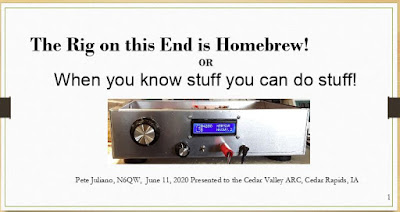
Pete Juliano’s Presentation to the Cedar Valley, Iowa Amateur Radio Club (Slides)

Earlier this month Pete N6QW spoke via Zoom to the Cedar Valley, Iowa Amateur Radio Club. This was an especially appropriate venue for Pete, the creator of the KWM-4; Cedar Rapids was the long-time home of Collins Radio. Many of those in the club used to work for Collins.

Here is Pete’s PowerPoint presentation: http://soldersmoke.com/N6QWslides.pptx

Some notes on the event:


For the Zoom connection, Peter used his Linux Mint computer.
Pete mentioned that Gene Senti, while tinkering in his basement, developed the KWM-1. One of the guys in the audience confirmed Pete’s account, but added something: Collins employees could buy ham gear at a discount. Senti bought a brand new 75A4 receiver (commercial price in late 50s was about $900) and he modified it from being just a receiver into a transceiver. Imagine taking a new radio and doing that! But when he got it working, Art Collins came over to his home to see the invention. The rest is history.
Pete got grilled a bit on why he was still using “analog’ front ends on his several SDR builds — why not Direct Digital Conversion? Pete says he may now try to build a DDC rig.

There was also a lot of very nice feedback on the SS Podcasts – there were many regular listener’s in that group.

You can see Pete’s slides here:

http://soldersmoke.com/N6QWslides.pptx

Lightning Strike on the Washington Monument

Here in the DC area, the monument is very frequently in view. I have been up to the observation deck. We were here for the earthquake that damaged the structure. On Thursday night someone made a good video of lightning hitting the monument.

This particular storm was flashing through my window, and was visible during a Zoom class through the windows of persons elsewhere in the area.

This lightning storm took out one of NA5B’s amazing Web SDR receivers. I think it was only the LF receiver. I am sure Mehmet will have it back on-line soon.

Here is an article on the topic:

https://www.popularmechanics.com/science/a32781804/watch-lightning-strike-washington-monument/

QCX SSB — But How Much QCX Remains?

Hack-A-Day carried a very nice video describing recent efforts to turn Hans Summers’ amazing QCX CW monoband transceiver into a multi-mode, multi-mode (including SSB) rig (see above). This is project will greatly interest QCX and SDR fans.

But I wondered how much of the old QCX is still there after the modification. Not much, it turns out.

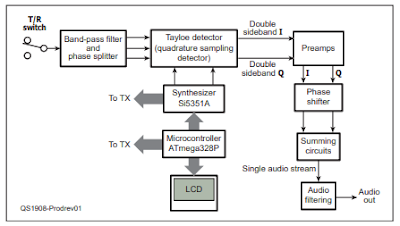
Here is the bloc diagram of the QCX. It is essentially a phasing rig, using the same principles as my venerable HT-37 transmitter and my version of KK7B’s R2 receiver:

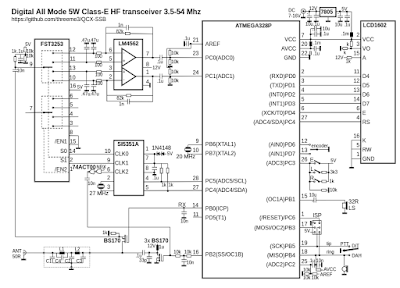
Yesterday Paul VK3HN sent me the schematic of the new multi-mode, multi-band version:

Notice how different it is. I thought that perhaps the new rig would keep something of the I-Q circuitry of the QCX, but it does not. This is not a criticism, just an observation.

But here is something that harks back to a topic we’ve been debating on the blog and podcast. Notice that the top diagram is a bloc diagram. There is a lot of circuitry in most of those boxes — lots of resistors, capacitors, inductors, and transistors. There is a schematic diagram under that bloc diagram. But look at the second diagram. While it looks like one, that one is NOT a bloc diagram. That IS the schematic diagram. Most of the circuity has been sucked into the chips.

While many will prefer the rig described by the second diagram, I remain an HDR guy, and don’t really like seeing the circuitry disappear into the ICs. But, to each his own. This is all for fun. Congratulations to the guys working on the new rig.

ZL2CTM Charlie Morris on “QSO Today” with Eric Guth 4Z1UG

Eric Guth 4Z1UG had a really nice interview with our friend Charlie Morris ZL2CTM. Charlie shared with Eric a lot of wisdom about how to homebrew radio gear. I especially liked Charlie’s comments on keeping most of his rigs on the wooden prototype boards. He said something important when he talked about the benefits of taking a break from a difficult problem, then coming back to it with a rested and refreshed mind. I noted, however, that he said most of these frustrating problems have to do with software.

I got got several chuckles out of Charlie’s comments on the difficulty of building stable analog LC VFOs (here he seemed to be channeling our good friend Pete Juliano). I chuckled because as I listened I was happily building the analog LC VFO for my Q-31 Quarantine receiver. The centerpiece of this project is a variable capacitor that Pete gave me; Pete took it out of an old Galaxy V transceiver. Believe me guys, no rotary encoder could possibly look as nice or have as much soul as that capacitor from Pete, with all its gears, reduction drives, and anti-backlash mechanisms. It even smells of machine oil. Call me a Luddite, but I will stick with the coils and capacitors.

Listen to the interview here:

https://www.qsotoday.com/podcasts/zl2ctm

Thanks to Charlie and Eric.

SolderSmoke Podcast #220 — S-38Es, AD9833s, Pete’s Phasing Rig, FT-8

Java on the S-38E Tuning Dial

SolderSmoke Podcast #220 is available


Hunkered Down. StayInTheShack: SITS! Flatten the Curve! It is working.
Teaching English again – via Zoom. Kids completing the school year remotely.
BILL’S BENCH

— Finishing up on the S-38Es.
— I wrote up my alignment, isolation and dial string experiences.

— SWL WRMI Radio Miami International on 39 meters 9.4-9.9 MHz. Rock and Roll.
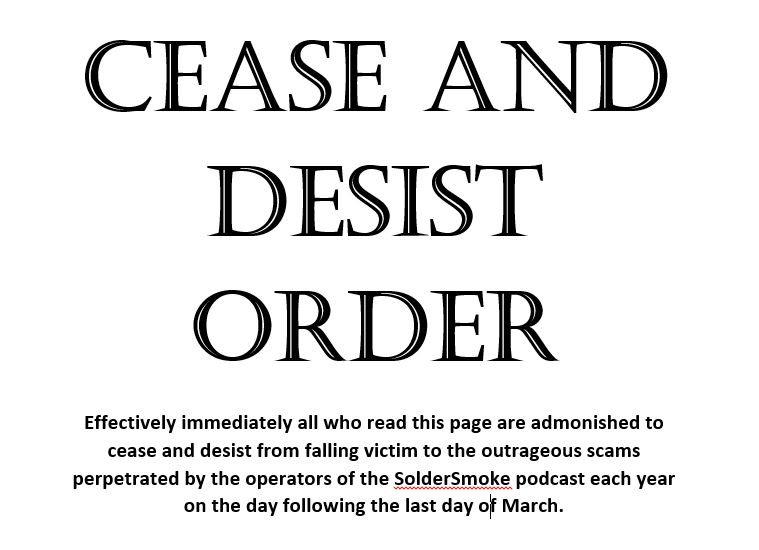
— S-38E work is causing me some serious legal problems. They are threatening to take down our sites and our podcast. Google has put a CEASE AND DESIST ORDER on my blog: Check it out https://www.homebrewradio.us/blog/wp-content/uploads/2020/04/CEASEANDDESIST.jpg
–S-38E caused me to want to get my HRO dial receiver on the SW broadcast bands with a good AM detector.
— Next up: Hayseed Hamfest cap for my Drake 2-B. And I have an idea on how to easily broaden it for AM: Tap the 455 kc output on the Q multiplier jack. 455 AM detector to audio amp.

SHAMELESS COMMERCE DIVISION

PETE’S BENCH

AD9833

Phasing Rig Project
.
DEAN’S PROJECT – Step by step. Trouble shooting. Understanding. Receiver triumph. FB.
MAILBAG

Jack 5B/AI4SV doing well in Cyprus
Daniel SA7DER listens during commute in Sweeden.
Peter VK2EMU building a 6 meter amp. With Tubes
Jim WA8ZHN says there are still 7751 Novices on the books. FB.

Mike WB2BLJ modding his BITX – having a lot of fun.
Fred KC5RT – Great idea on isolation transformer in my S-38E.
Jerry Palsson: S-38C’s curves vs. S-38E’s exotic places. Java.
Anonymous mail: FT-8 DX — Are these contacts legitimate? See below.

Dear Bill and Pete:
I’ve been meaning to share with you something that has come to my attention by a rather circuitous route.
As you guys know, I’ve been involved in the software/IT side of ham radio for many years. I’ve watched many digital modes come and go. I’ve always enjoyed my work, but lately I’ve seen something that makes me uneasy.
I’m sure you guys have heard of the fantastic DX that is being worked by many guys using FT-8. It seems like all they need to work Jakarta is a couple of watts to a wet noodle. Shazam! Contact!
Well, I learned something that calls into some question the legitimacy of many of these contacts….
As i understand it, certain manufacturers, in cahoots with a major American ham radio organization (that happens to be very dependent on ad revenue from that manufacturer), have secretly set up a system that combines the internet and ham radio.
Here is how it works: Suppose Joe Ham gets on FT-8 on 40 meters. He puts out a call using his QRP transmitter and the aforementioned wet noodle. No way that signal is going to Jakarta, right? Well, it will with a bit of help.
The system has SDR transceivers and great antennas set up at strategic points around the world — these are really great locations — think mountain tops near the coastlines, always with high speed internet T5 connections. I think this is part of the whole “contest superstation for on-line lease” business model.
One of these stations picks up Joe Ham’s FT-8 call. Sometimes it will just re-transmit it, sometimes is will send it to a counterpart station on the other side of the globe. Bingo, Joe Ham’s signal is suddenly in Jakarta. A station there enthusiastically responds, and that signal goes back with the same kind of repeater/ internet assist. This is all done out of the reach of the FCC. They are usig overseas locations, some of them in Mexico.
Of course they have to be careful not to “facilitate” these kinds of contacts during times in which the bands are obviously dead, That’s why 40 is so useful for this system. Obviously they can’t keep this kind of thing secret forever — they just want to get guys hooked on FT-8, then they can reveal the system, selling it as nothing unusual, you know, sort of akin to Echolink.
Of course, this hasn’t been made public (for obvious reasons!) but I can tell you the name of the system: They tried to make it sound like something familiar (in this case like APRS): They call it “Automatic Private Radio Internet Link 1.” My understanding is that when they do their “roll out” they will offer the new service to those willing to pay a subscription.
Obviously as an old-school, traditional ham, I’m troubled by all this. What do you guys think? I wonder what your listeners would think.
Please don’t mention my name.. But here is a site that describes the new system:
Thanks and 73…
Please let us know if you have any information on this, or have observed any unusual and suspicious success with FT-8.
SolderSmoke Podcast #219 SPECIAL CORONA VIRUS CRISIS PODCAST

SolderSmoke Podcast #219 is available for download:
14 March 2020
SPECIAL CORONA VIRUS EMERGENCY EDITION

We thought it would be nice to put out a special edition of the podcast to help listeners keep up their morale during this difficult time. So we’ll do our regular kind of show, but we’ll try to emphasize things you can do to stay busy and keep up morale while stuck at home.

BILL’S BENCH (and operating position)

–NOVICE RIG ROUNDUP. NRR. Continues through this weekend. Lots of fun. Cool rigs worked: Jon WS1K’s “Scrounger.” Greg AA8V’s 6X2 superhet. And WN4NRR.
— S-38 MANIA. My S-38E story. Bought parts. Bought a junker. Fixed the first one then used the parts to fix the junker. Now I have 2 S-38Es.
— Got capacitor kit from Hayseed Hamfest. FB.

PETE’S BENCH

Hilbert Transforms
AD9833 glued onto a Nano
Teesny and Radig and ZL2CTM
PWKSCDS
More Mint

SOME THINGS TO DO DURING COVID 19 CRISIS

Sampson Boat Company Tally-Ho videos. https://www.youtube.com/channel/UCg-_lYeV8hBnDSay7nmphUA
Revive an old boatanchor
Get back into shortwave listening.
Get on the air—make some contacts!
Take a walk. Get some exercise. Listen to SolderSmoke and other podcasts when you walk.
Cook something from the famous Pasta Pete web site. http://www.pastapete.com/
Help someone who needs help.
MAILBAG

QSP – What a cool magazine! Pete and I both have articles in there.
Hot Iron – great new issue also. Lots in there.
Tony Fishpool G4WIF Words of Wisdom on the NanoVNA.

SolderSmoke Podcast #217 — Beach trip, ’30s station, uBITX mods, HRO RX AM, ELMAC, Teensy, MAILBAG

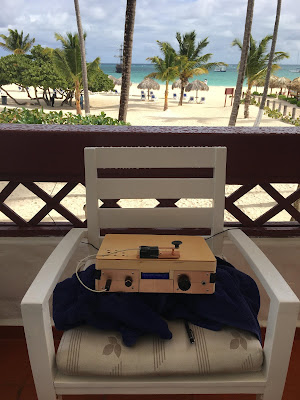
Bill’s Bavaro DR Beach Station
uBITX in the box, HB key
SolderSmoke Podcast #217 is available:


1 February 2020

Travelogue! Dominican Republic trip. uBITX on the Beach. EFHW. LiPo Battery. First contact of the new year.

Bill’s Bench Report

Following up on proposed uBITX mods:
— Put pot on sidetone line from Raduino to keep the sidetone a bit quieter.
— Fixed the key — pounding brass
— Will install 4 States QRP Active AF filter.
— Need to reduce power on CW to 5W
— Stereo to mono headphone adapters.
— Turning off display and mic amp circuit not really worth it — they don’t pull much current.


Pete’s Bench Report:
ELMAC Power Supply project
1930s era transmitter?
Teensy and SDR
PETE’S IDEA ABOUT GETTING LSB AND USB FROM BITX40
KWM-2 suggestions

Back to Bill’s Bench:

Working on HRO-ish Receiver.
Bad SBL-1
Got idea for wider ceramic filter from Paul VK3HN
Ordered parts from Mini-kits in Australia. They sent 6kc filters.
Bruce KK0S sent me some 10 kc filters too.
Installed 6 kc filter with L network matching networks. Works great.
Also installed Infinite Impedance Detector that Paul used.
Needed some additional amplification ahead of the IID, so I used one stage of BITX amp.
Works great. I can tune full 40 meter band AND 49 meter SW band. Radio Romania, China, Radio Marti, Brazil, South Carolina.
Beefed up the shielding to cut down on AM detection.

MISCELLANY
— AM and DSB in LTSpice
— Duly Noted: Paul VK3HN’s RIG: “THIS MACHINE KILLS KILOWATTS”
Kanji YC3KNJ’s QRPesso Expresso Coffee in the field
— The DANGERS of powerful magnets.

MAILBAG:
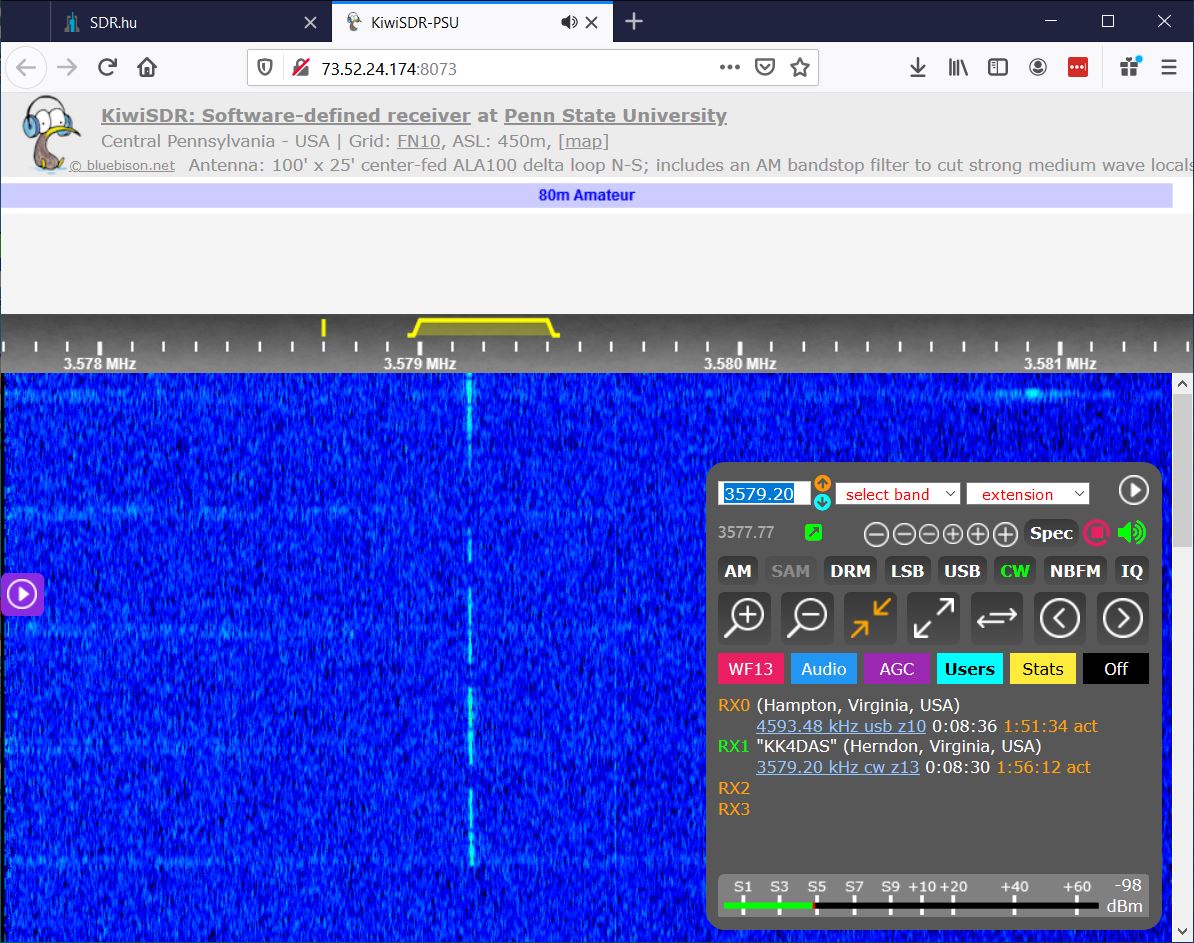
–KK4DAS Dean doing great things. MMM heard at Penn State. Where is the rest of the CBLA?
— Thanks to Don for kind donation to the SolderSmoke cause
— Dale BA4TB — First SolderSmoke feedback from China. Thanks Dale!
–Steve Silverman: Sideswipers and bugs were made to handle “carpal tunnel of the day” So do I need a keyer for casual CW work?
— Peter VK8VWA on the limited knowledge gained from kit building. Listens to podcast while walking on the beach in Australia.
— Allan Hale — Clothes Pins as Toroid holders. Yes! More Clothes Pins Wild Woody Keys from Dave Ingram
— Pete WB9FLW 100 Watt Amp from WA2EUJ
— Dave Wilcox K8WPE A medical question: Does the Michigan Mighty Mite work differently depending on what kind of medicine was in the pill bottles used for the coil form? Good question Doc! Dave suggest that putting CBD on the coil or the crystals. Anything to mellow out the ham bands…

Pete’s Plank SDR
When you know stuff, you can do stuff!


KK4DAS Michigan Mighty Mite Heard by WEB SDRs — CBLA Mobilized!

Dean KK4DAS continues to do great things with his Michigan Mighty Mite. He has been calling CQ on the Color Burst Liberation Army (CBLA) frequency of 3579 kHz. I think I was the first one to hear him, but since that memorable moment he has been picked up by multiple Web SDR receivers, including the one at Penn State (PETE JULIANO’S ALMA MATER!) (screen shot above, listen by clicking URL below). He has also been heard by Web SDRs in Concord Mass, Newport News Va, and Cleveland, Ohio. FB Dean.

So come on folks — this is a mobilization call for the CBLA! Get those MMMs on the air. Send us reports and recordings from Web SDRs or the RBN.
Listen to Dean’s MMM as received at the Penn State Web SDR:

It sounds great! And nice CW Dean!


Mr. Carlson’s Analog Panadaptor — “Like a digital waterfall, but fun!”

We’ve been talking about Panadaptors — especially about NON-DIGITAL Panadaptors. Kind of like waterfalls without the digital water. A while back I rigged up a very crude non-SDR panadaptor using my Feeltech sign generator, my Rigol ‘scope and a DITX40. Here it is:
https://soldersmoke.blogspot.com/2019/05/diy-waterfall-quick-and-easy-panadaptor.html

In the above video Mr. Carlson looks at the old PCA-2T-200 Panadaptor. The first five minutes give a really good overview of how the device operates. At around the 5 minute mark Mr. Carlson notes that modern digital receivers have SDR based waterfall displays, but noted (correctly!) that “that’s no fun!” Thank you Mr. Carlson.

SolderSmoke Podcast #214 is FINALLY out!


WE ARE WORKING TO IMPROVE THE AUDIO QUALITY. IN THE FIRST RELEASE OF THIS PODCAST SOME OF THE AUDIO WAS KIND OF MUFFLED. I TRIED TO FIX IT THIS MORNING AND I THINK I MADE SOME IMPROVEMENTS. THE IMPROVED AUDIO IS NOW AT THE LINK BELOW.


4 November 2019 (shockingly late!)

http://soldersmoke.com/soldersmoke214.mp3

The visit of Farhan to Northern Virginia
“I heard this guy from Southern California on 20…”
Fire Report from Pete

Pete’s Bench Report
“When you know stuff, you can do stuff!”
The CRAP rigs
Old Boatanchors — the Swan 120 with SUPER STABLE ANALOG VFO!
Ten Tec rigs dial cord replaced with Chinese digi sig counter
Pete’s 500 mW encounter with a QRO curmudgeon
The ZL2BMI Challenge has Pete building crystal filters
The Left Coast Loafer CW rig

Bill’s Bench Report

ET-2 Refinements
N0WVA’s Regen Receiver
Going from ET-1 to ET-2
J-310s vice MPF-102
100 mW from a single J-310
Receiver kind of deaf -103 dbm MDS
10 contacts so far in 9 states
THREE contacts yesterday.
Worked Wisconsin – 633 miles on 92 mW
We are at sunspot minimum.
“Rage, rage against the dying of the light.”
Simplicity is the real reason for CW

IDEA: Get those Michigan Might Mites on the air!
Use Reverse Beacon Network to see if you are getting out
Use SDR receivers to make contacts

MAILBAG
DL1AJG
KC6SAX
W9VNE
KA4KXX
N0WVA
Zl2BMI
AJ6BD


SolderSmoke Podcast 213 WE’RE BACK!

N6QW’s Analog CW QRP Transceiver

SolderSmoke Podcast #213 is available.

http://soldersmoke.com/soldersmoke213.mp3

7 September 2019

The dire consequences of our summer absence.

50th PODCAST WITH OUR FRIEND PETE!
THREE CHEERS FOR PETE!

Pete’s Bench Report

— Transceiver Count: FORTY!
— SDR RADIGS
— Colorful OLED screens
— Pilgrims and Paisanos — “Left Coast Homebrew SSB”
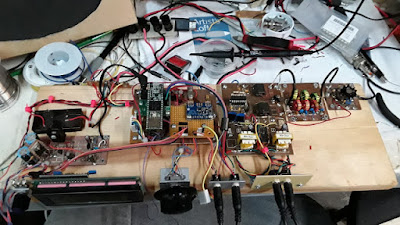
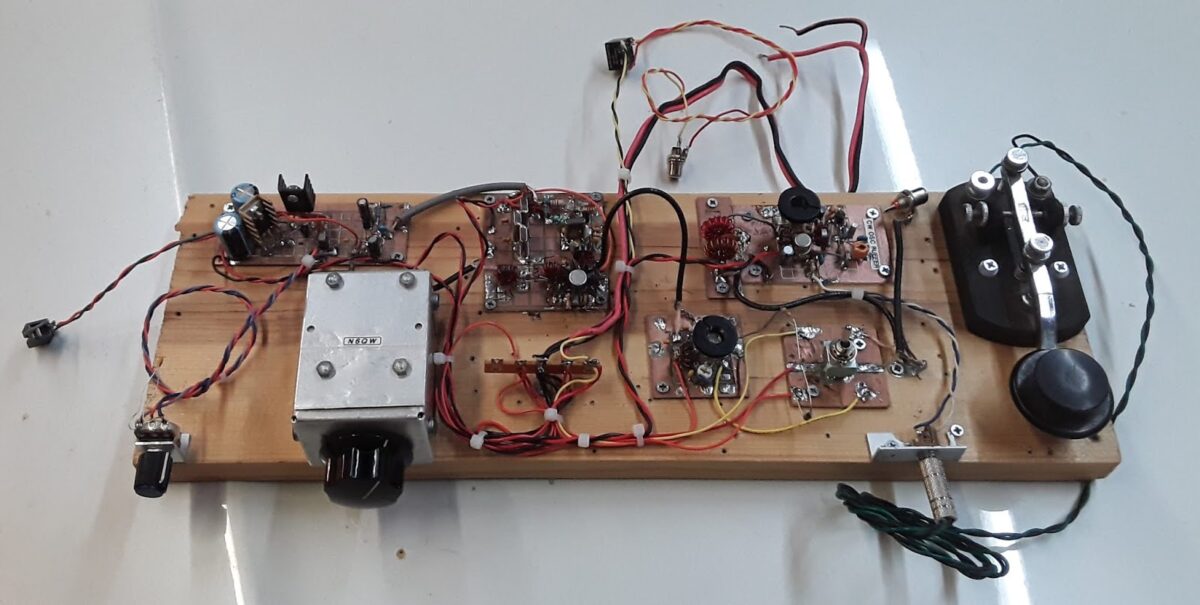
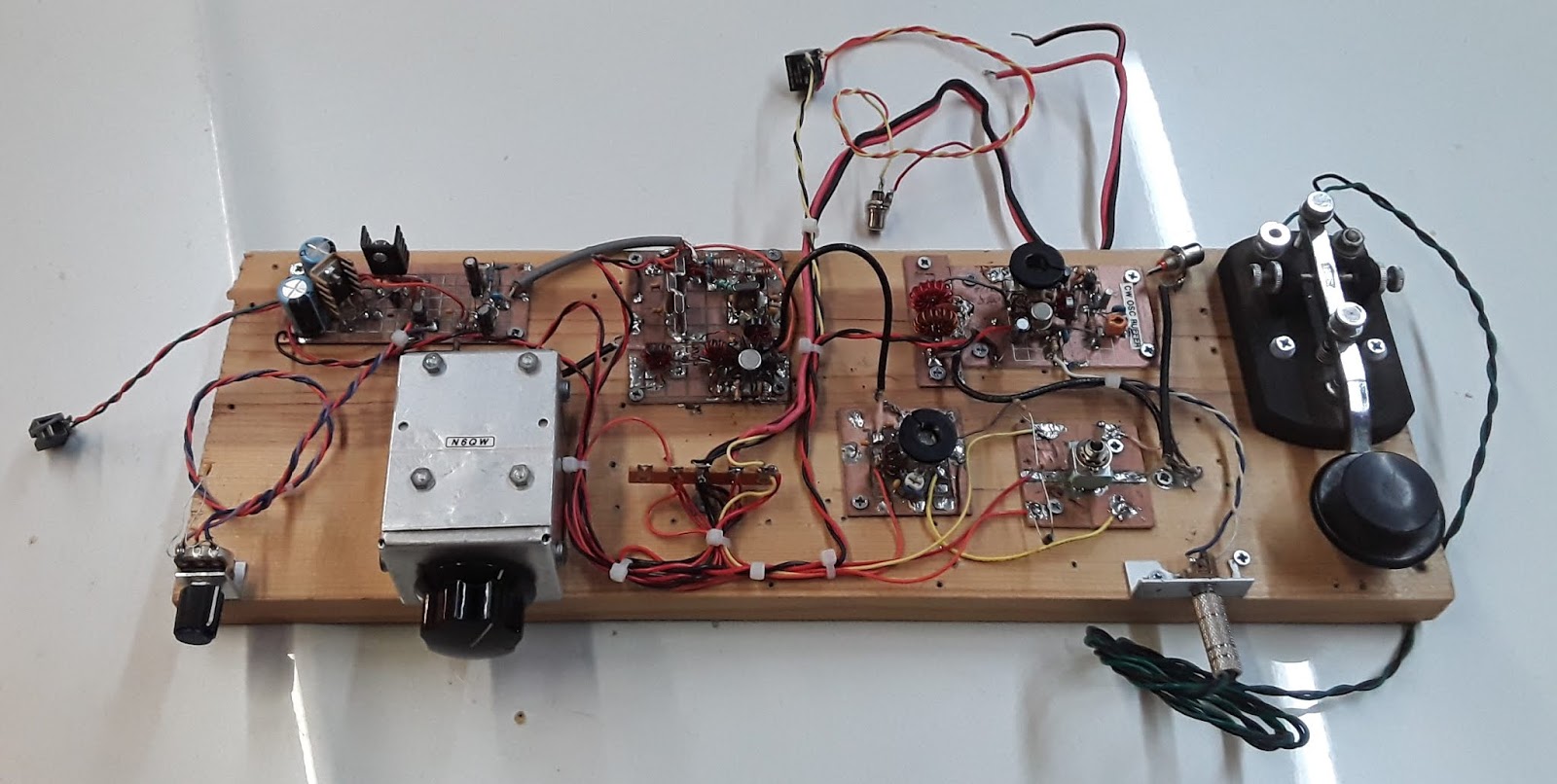
— Pete builds a CW transceiver (see picture above)


Bill’s Bench Report:

— Going minimalist
— Tuna Tin 2 + Herring Aid 5 = Fish Soup 7 (and later 10)
— My QRPp QSO with K1PUB overheard in Canada
— Glen Yingling’s ET-1
— Bill attempting a single transistor transceiver

SPACE NEWS

— Antuino’s Cubesat Origins. Farhan’s Antuino Mods
— Apollo 11 Anniversary
— Possibly the best space book ever: “Carrying the Fire” by Michael Collins
— Chinese microsat sending eclipse pictures from the moon
— LightSail 2 success
— India has spacecraft in lunar orbit.

Eric Sears ZL2BMI and Dino Papas KL0S on “QSO Today” Podcast

MAILBAG:

ZL2PD’s Sugar Cube VFO
N8WQ gets free samples
N5RWF Getting started, wisely wearing beret
VK2EMU Australian Ad for Collins Filters
W1PJE on new LDMOS PA transistors
KA4KXX Al Fresco 75 meter SSB rig with model plane engine mufflers!

Forgot to mention: W9TH still has manuals for whover owns Drake 2-B #4215. Check your serial number!

Feedback on QSOs — Listeners are Listening

On opposite coasts and with rigs at opposite ends of the technology spectrum, Pete and I have been putting new homebrew rigs on the air. I’m working on a QRPp transceiver using 10 transistors. Pete is working on an SDR rig that must use, what?, thousands or millions of transistors.

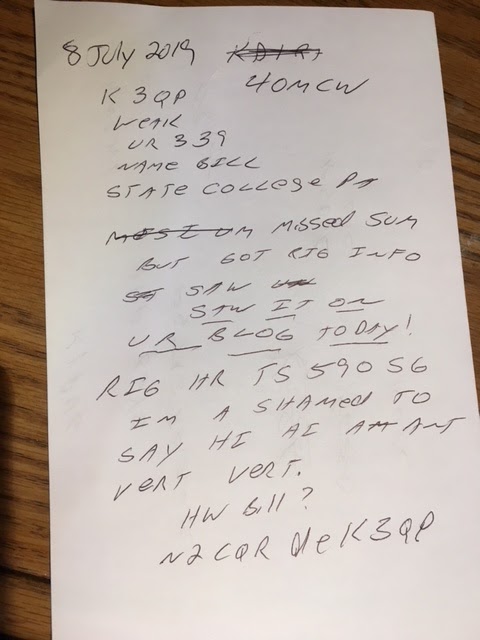
We’ve both been getting nice feedback, often from SolderSmoke podcast listeners. Above you can see my 8 July notes on a contact with K3QP. I was running about 1/2 watt, crystal control, from the Fish Soup 7 combo rig.

———————————
In an earlier post I mentioned Pete’s success in working coast-to-coast on 40 SSB with his homebrew SDR RADIG. Turns out that someone in St. Louis heard the contact:

From: Steve
Sent: Saturday, July 13, 2019 6:16 PM
To: Pete
Subject: Friday QSO

Hi Pete
Heard your QSO to Virginia last evening. Conditions were rough but could hear good enough. I’m located west of St Louis and was outside portable with KX2 and wires tossed in a couple trees. Tried to tail end but of course my signal was not good for you in California.
I really am amazed at the work you put into your projects, websites, and podcast. Can’t thank you enough. Please keep it up.
I worked at McAir in St Louis and spent many hours in the MDEC building St Charles. That was in the late 80s.
Steve
K0SAM
———————————-

Finally, earlier in July I had a contact with K1PUG. Someone north of the border heard us:

On Sunday, July 7, 2019, 01:17:47 PM EDT, Dave wrote:

I heard your QSO with Hank K1PUG at my cottage in Canada (FN15ac) this morning. I wondered why you were so faint (since I had been getting good reports with 5W into your area) but when I read this morning’s entry in SolderSmoke, and saw you were 750mW, all became clear.

73,
Dave KM6CPF / VA3NIA