My Hodgepodged Morse: Audio Tone into the Mic Jack Creates J2A not A1A. BASTA!


In SolderSmoke podcast #229 Pete and I were discussing my rather flaky effort to turn the Hodgepodge BITX40 Module into a CW rig by injecting keyed 700 Hz audio into the mic jack (see video below). We got some very helpful responses from ND6T and VK2EMU:


Hi Bill,

You mentioned generating CW by modulating SSB: Collins did that in their
first SSB transceivers, I believe, as did SGC, but the results were less
than optimal. The problem is that you are involving the audio chain and
modulator. You know from experience how difficult it is to maintain low
intermod there and the tone is no exception. So we end up with lots of
spurs within the filter passband and then also have the opposite
sideband suppression less than perfect. If you check your transmitted
signal with a spectrum analyzer or SDR you can easily see the nasties.
Listening to a CW signal thus generated makes it obvious unless it is
buried way down in the noise. It IS a valid CW signal (not MCW) since it
is (almost) a single signal. However, in actual operation it doesn’t
work very well.

I know because I have done that. I bought one of Farhan’s original
BITX40 boards and wanted to put it on CW. I ended up injecting a keyed
signal from one of the spare clocks on the Si5351 into the RF amplifier
chain (thus avoiding the above stated problems) but still had garbage
from the audio and IF stages. I fixed that by shorting out that signal
during transmit by a transistor to ground. That was documented on your
BITXhacks website: http://bitxhacks.blogspot.com/2017/02/ and on my
website: http://www.nd6t.com/bitx/CW.htm . It has been a while, eh?

Don, ND6T

————————————————–

Hi Bill and Pete,


With putting an audio oscillator into you hodgepodge radio, your transmission is not the same as a standard CW rig.


If we have a transmitter as described in the ARRL handbooks from the 1940’s or 1950’s, (or even the Michigan Mighty Mite) it is a crystal oscillator and maybe a PA tube. By keying either the oscillator and/or the final PA on and off, then we can send Morse code as ICW Interrupted Continues Wave. If we check the list of emission designators, we have A1A.


However, if we feed a tone into a SSB transmitter, then we have J2A.


At the other end it may sound the same, but because it is created in a different way, it has a different designation.


A quick look at Part 97 shows that J2A and J2B are classed as CW, so you are in the clear. However, if you put a tone oscillator into an AM signal to send CW, then that would be classed as A2A and not classed as CW, but as MCW. MCW can be used on 6 meters and above, but not HF.


SITS.


73 de Peter VK2EMU

———————————————————–


So I say BASTA with the J2A! If I want to go CW, it’s all A1A for me. I dusted off my Fish Soup 10 and am now back on 40 CW with 200 mW…. A1A all the way!
SolderSmoke Podcast #229 — G2NJ Trophy, SDR, HDR, CW! Mailbag

Soldersmoke Podcast #229 is available:

http://soldersmoke.com/soldersmoke229.mp3


— G2NJ Trophy is awarded to Pete Juliano, N6QW.

Get your vaccine shot as soon as you can!

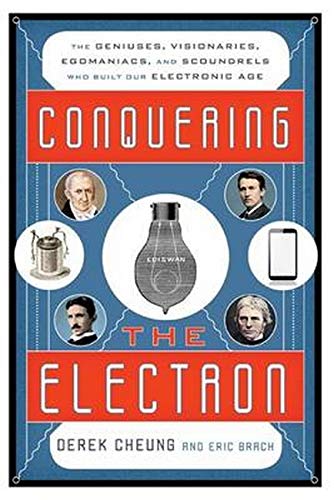
— More from “Conquering the Electron” by Derek Cheung.

— Bad fire in the chip factory. Such a shame. Sad! I had NOTHING to do with it. I was home that day. I can prove it.

— Bezos is not such a bad guy. Turns out he is a space-geek.

Perseverance was the big space news. Very cool.

Pete’s bench:

Raspberry Pi vs. Microcontrollers

Treedix display

Conversion of the Dentron Scout

CW rigs?

6L6 on a wooden chassis


SHAMELESS COMMERCE DIVISION-

I NEED TO BUILD UP TIME VIEWERS VIEW MY VIDEOS: So please watch!

https://www.youtube.com/channel/UC20TcdWSSFliMhg3k2A1a5w

Our Patreon sponsors get an early look at our YouTube content. So please, consider

becoming a Patreon sponsor.

Please continue to use the Amazon search engine on the blog page (upper right).


Bill’s bench:

Hodgepodge:

— BITX40 Module.

— Ramseykit Amp.

— San Jian counter,

— CW using 750 Hz oscillator.

— RF-actuated piezo buzzer.

— SDR! SDR using PC and tablet.

— Checking the output with SDR.

— Moving the carrier osc frequency.

Also, I put the Fish Soup 10 back on the air. Nice contacts under 200 mw.

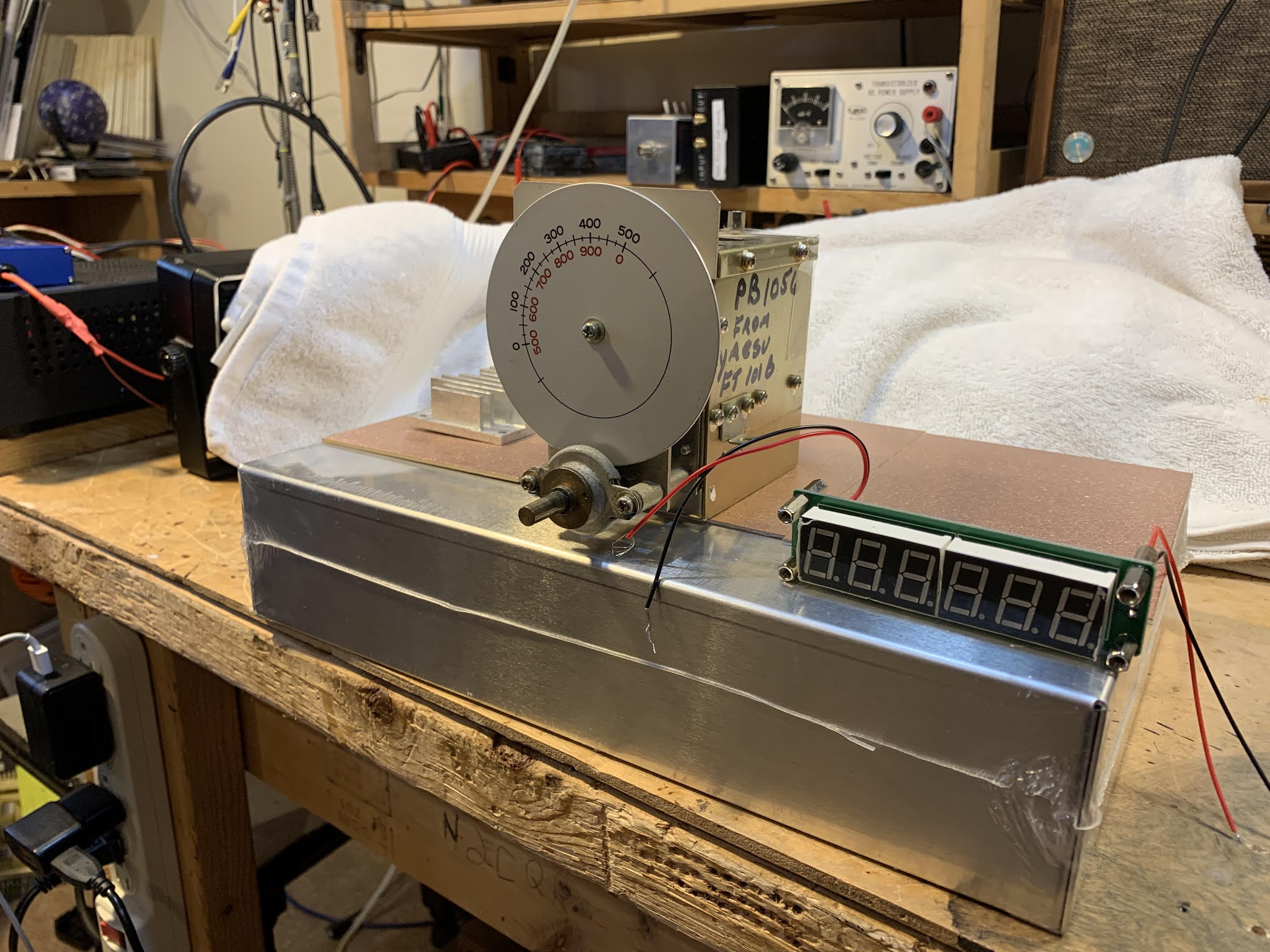
Up next: A rig for 80/75 and 20 meters. Single Conversion. Using VFO from a Yaesu FT101 that runs 8.7 – 9.2 Mhz. Quiz question: What IF should I use?

MAILBAG

Mark Zelesky sent me wood tokens with power and Ohm’s law formulae. Thanks!

Scott WA9WFA Built a really nice Mate for Mighty Midget RX – getting it going!

Tryg EI7CLB found board of his George Dobbs Ladybird RX. Rebuild it OM!

Tom WX2J – We talked about “No lids, no kids, no space cadets” nastiness.

Nick M0NTV about sideband inversion. I like the simple rule about subtraction.

Jonathan M0JGH – Always listen to Pete. Got married, has mixing product. Leo?

Mike AE0IH. Dad used a BC-348 in the service. Looking for one. FB.

Adam N0ZIB – “Silent Shep” site — with some ham radio shows I had not seen.

Walter KA4KXX in Orlando has a similar subtraction problem with San Jian counter.

Bill N5ALO sent me a really nice KLH speaker. I’m using it now.

Jason N2NLY – interested in building SSB transceiver. One step at a time OM…

Trevor in Annapolis sent xcsd cartoon that really hit home.

Farhan is doing OK in India, diligently protecting his family from the virus.

Peter VK2EMU also doing well.

Dave AA7EE Casually killed a DC receiver in Hollywood, and disposed of the remains.

Charlie ZL2CTM doing great things with simple SSB. Blogpost.

Phil VK8MC in Darwin sends article on “Mend not End” battle against planned obsolescence.

Bob KY3R re my SDR adventures, asked if I’ve had a recent medical/psychiatric evaluation.


Hodgepodge: Tablet SDR with a Bluetooth Mouse (video)

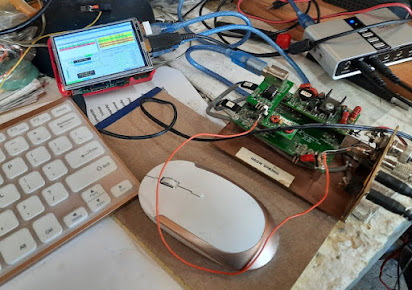
I continue to find things in the shack that I can connect to the Hodgepodge. Here it’s an old Android tablet with a Bluetooth mouse.

The waterfall is pretty, but this addition just shows why SDR is really TOO easy. The modified RTL-SDR dongle is doing direct sampling, so there is not even any phasing circuitry to tinker with. All the filtering and sideband selection is happening in software inside the 40 buck Android tablet. The results look nice, but I don’t find it very satisfying — all I did was connect some cables. So it’s back to HDR for me.

Hodgepodge: Moving the Carrier Oscillator Frequency (and a Flashback to 2002) (Video)

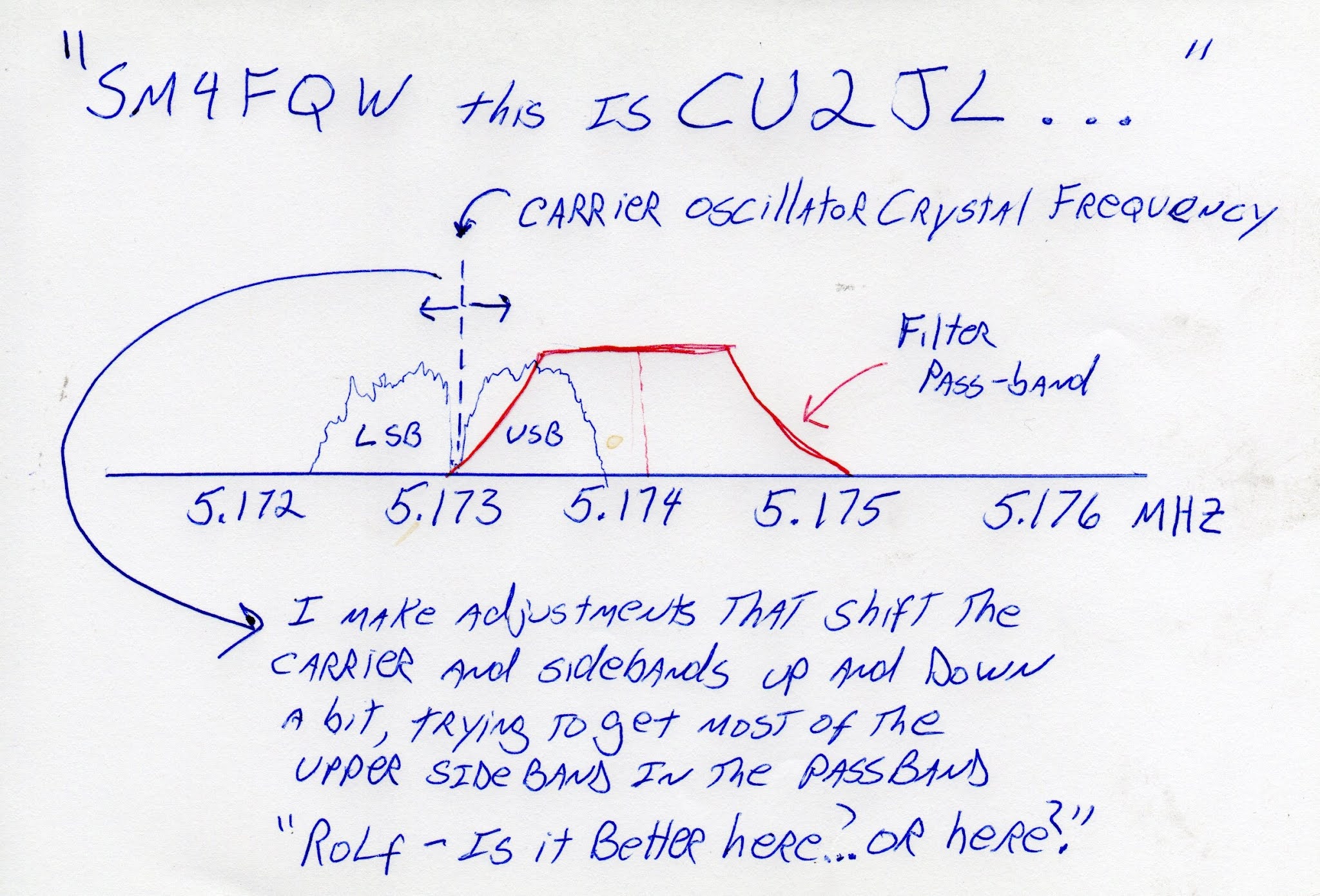
As explained in the video, in the course of using my RTL-SDR dongle I noticed that the signal being put out by my Hodgepodge rig had some problems. There was poor opposite sideband rejection, and in terms of audio quality I has putting out too many lows and too few highs. I figured the problem was the result of the carrier oscillator frequency being a bit too low, a bit too close to the flat portion of the crystal filter passband. I needed to move that carrier oscillator frequency up a bit.
BITX40 Module BFO
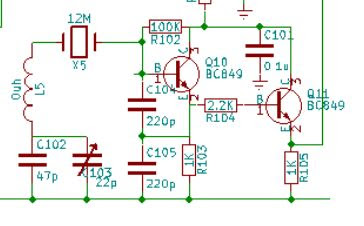
In the actual BITX40 Modules, L5 was replaced by just a jumper wire, and the C103 trimmer was not on the board. Farhan and his team instead selected X5 crystals to match the passband of the 12 MHz crystal filter. Mine was originally at 11.998653 MHz. But I wanted to tweak mine a bit — I wanted to move it up about 500 Hz. Reducing the capacitance would move the frequency up. Putting capacitance in series with C102 would have the effect of reducing the capacitance in the circuit. I just removed the jumper wire and used the holes for L5. First I put in a single 30pf capacitor. This dropped the capacitance between X5 and ground to 18 pf. That resulted in too large a shift. So I added another 30 pf cap in parallel with the first one. This resulted in a total capacitance from X5 to ground of 26 pf. This was about right — the carrier oscillator/BFO frequency was now 11.9991 Mhz. I had moved the carrier oscillator frequency up by 447 Hz — just about what I was hoping for.

This was a very satisfying fix. it was a chance to put to use experience with other SSB rigs, to make use of the RTL-SDR dongle as a diagnostic tool, and to tinker with the BITX40 Module in the way that Farhan had intended for it to be tinkered with.

I’d done this kind of adjustment before, but without the benefit of an SDR display. Below is the story of one such adjustment.

———————————

A Flashback to 2001-2002
(From my book “SolderSmoke — Global Adventures in Wireless Electronics”)

Now it was time for some debugging and fine tuning. I needed to make sure that the frequency of the carrier oscillator was in the right spot relative to the passband of the crystal filter. If it was set too high, the filter would be chopping off high notes in my voice that were needed for communications clarity, and it would allow too much of what remained of the carrier (residuals from the balance modulator) through. If it was set too low, the voice signal transmitted would be lacking needed base notes. I didn’t have the test gear needed to perform this adjustment properly, but my friend Rolf, SM4FQW, up in Sweden came to my aid.

One night, during a conversation with Rolf, I explained my problem and he offered to help me make the adjustments… by ear. Performing an electronic version of open-heart surgery, with power on and Rolf on frequency, I opened the case of the new transmitter. The carrier oscillator has a small capacitor that allows the frequency of the crystal to be moved slightly. With Rolf listening carefully, I would take my screwdriver and give that little capacitor a quarter turn to the right. “Better or worse?” I would ask.

I think this little adjustment session captures much of the allure of ham radio. There I was, out in the North Atlantic, late at night hunched over a transmitter that had been forged from old Swans and Heathkits, from cell phone chips, and from bits of design from distant members of the fraternity of solder smoke. Pericles, the source of many of the key parts, was gone. So was Frank Lee, the amateur whose SPRAT article had inspired the project. But Rolf and I carried on with the core tradition of the radio fraternity: hams help their fellow hams overcome technical difficulties.

EXORCISM! 40 Meter RFI Problem Resolved

BEFORE

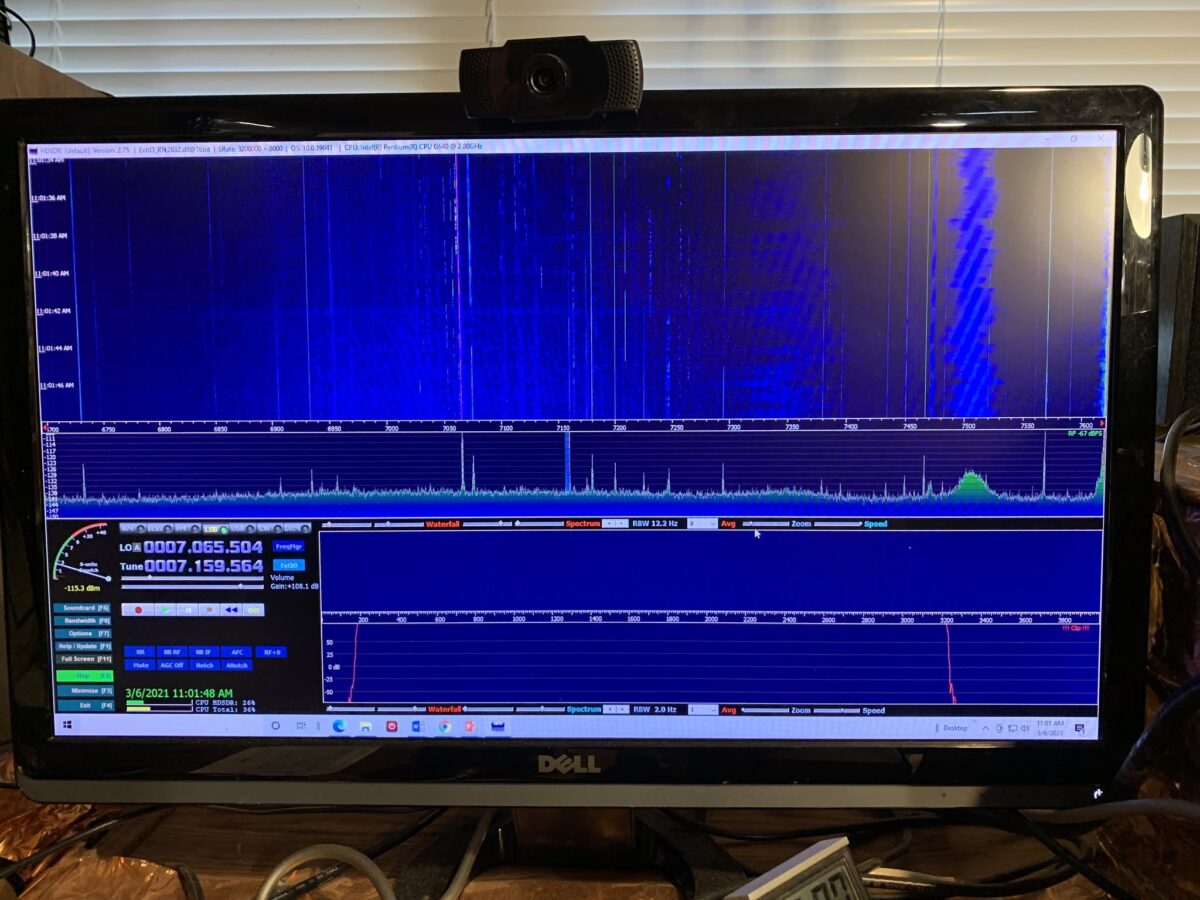
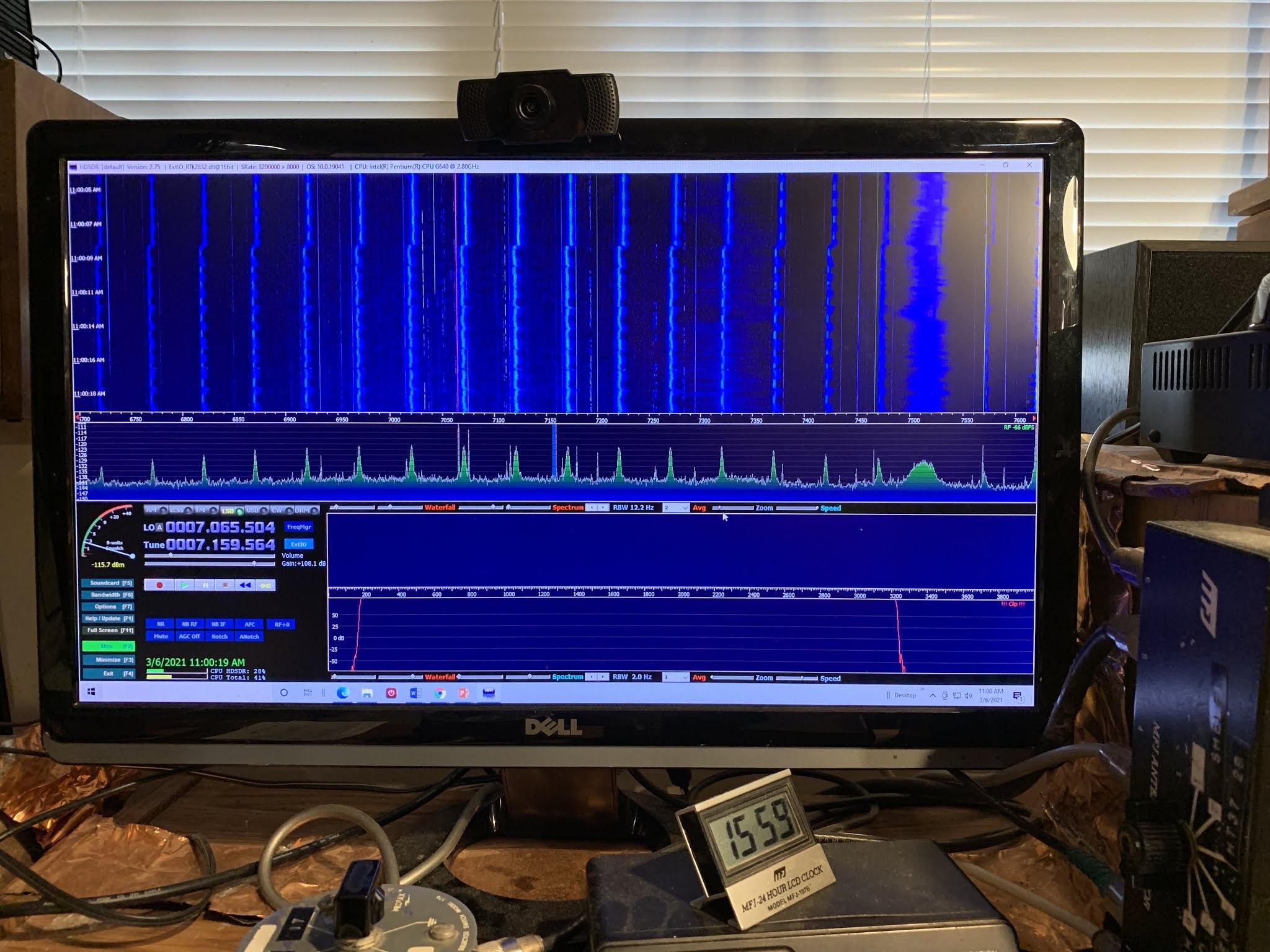
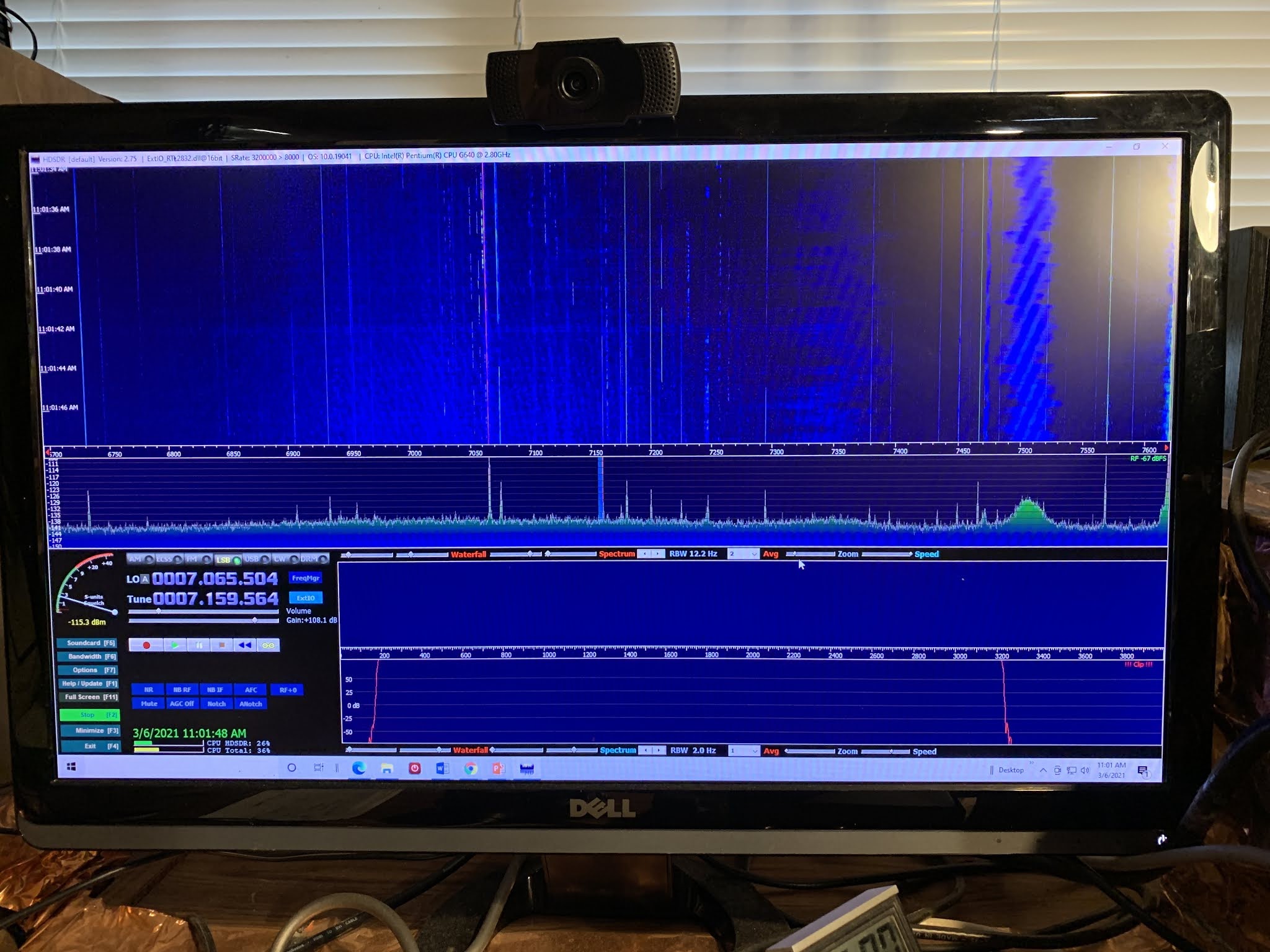
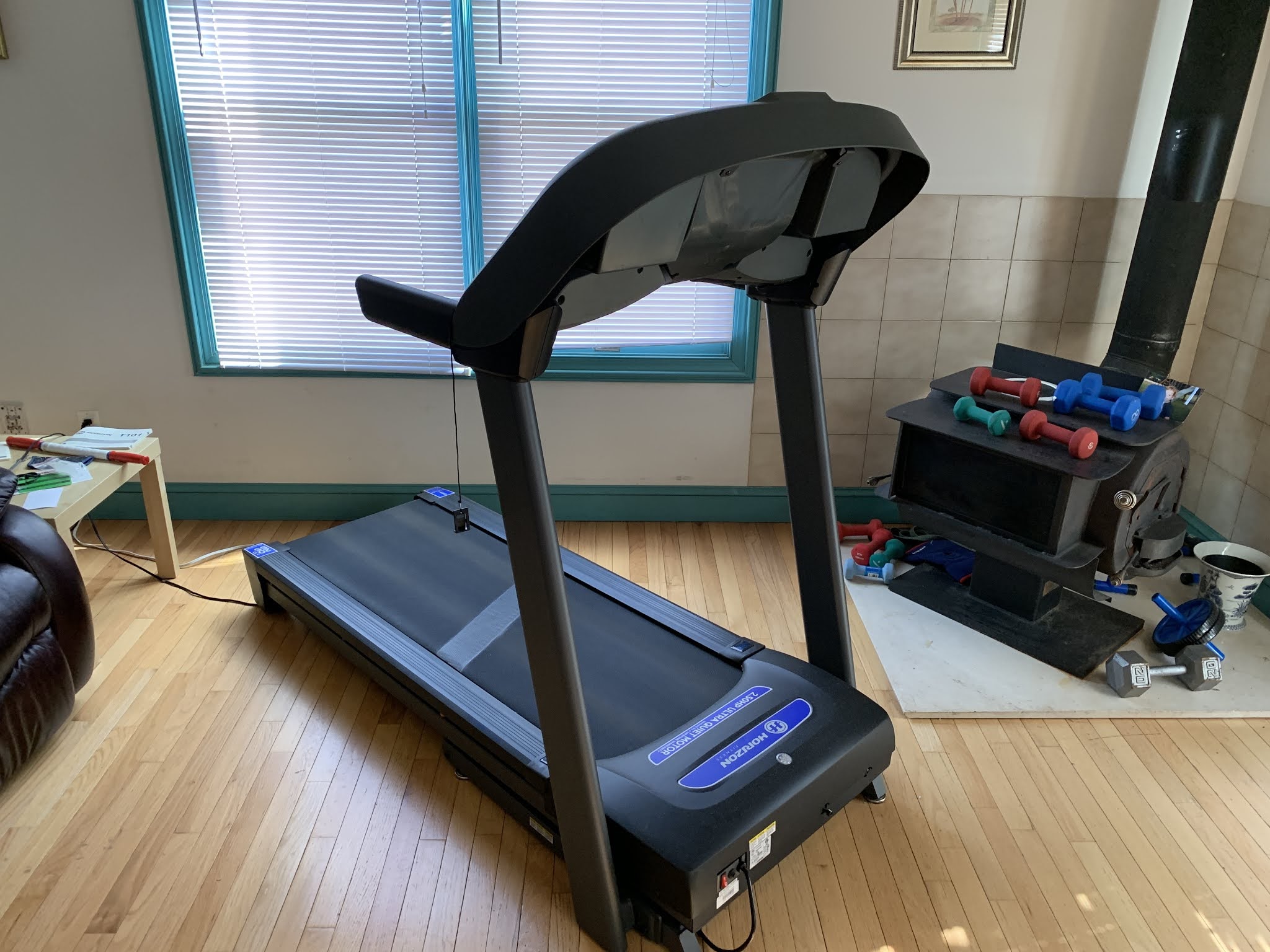
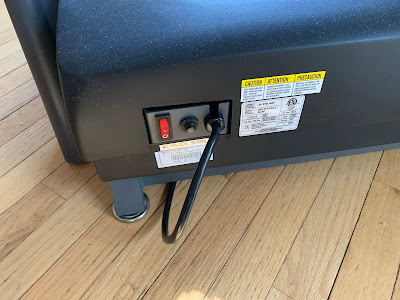
David W. suggested I use my RTL-SDR dongle to look for the source of the 40 meter RFI that I have been mentioning. (It appears as an ugly stipe in the waterfall of my Hodgepodge transceiver.) So I fired up the RTL-SDR — there were the tell-tale spikes, spaced neatly every 50 kHz. The ARRL Handbook says this is typical of a switched power supply. Before I started patrolling the neighborhood with a tin-foil hat and a portable receiver, I decided to check my own house for any recently installed electronic devices. It didn’t take long — when I unplugged the new (mid-pandemic) treadmill the spikes disappeared. This treadmill was located about ten feet above my rigs, and between the rigs and the antenna. Duh. I should have thought of this earlier. Mystery solved. Thanks David.

AFTER

Over the Waterfall into the Dark Side: Hodgepodge SDR

This one’s for Pete. My effort to add features and modes to my Hodgepodge transceiver took a dramatic turn when I connected the rig to my computer via an RTL-SDR dongle. Woohoo! A Hodgepodge waterfall! Check it out.
The dongle was modified for direct sampling at HF. In the box with the dongle I have one amplifier stage, consisting of a 40673 dual gate MOSFET and one parallel tuned circuit, now tuned to the Hodgepodge IF of 11.998 MHz. I tap the the Hodgepodge’s BITX40Module at the output of the first mixer, just before the crystal filter. This was a lot of fun. I can even check my own signal on transmit! This is like having the best of both worlds.

A Step Closer to the Elser-Mathes Cup? Ham Receives Signals from Mars

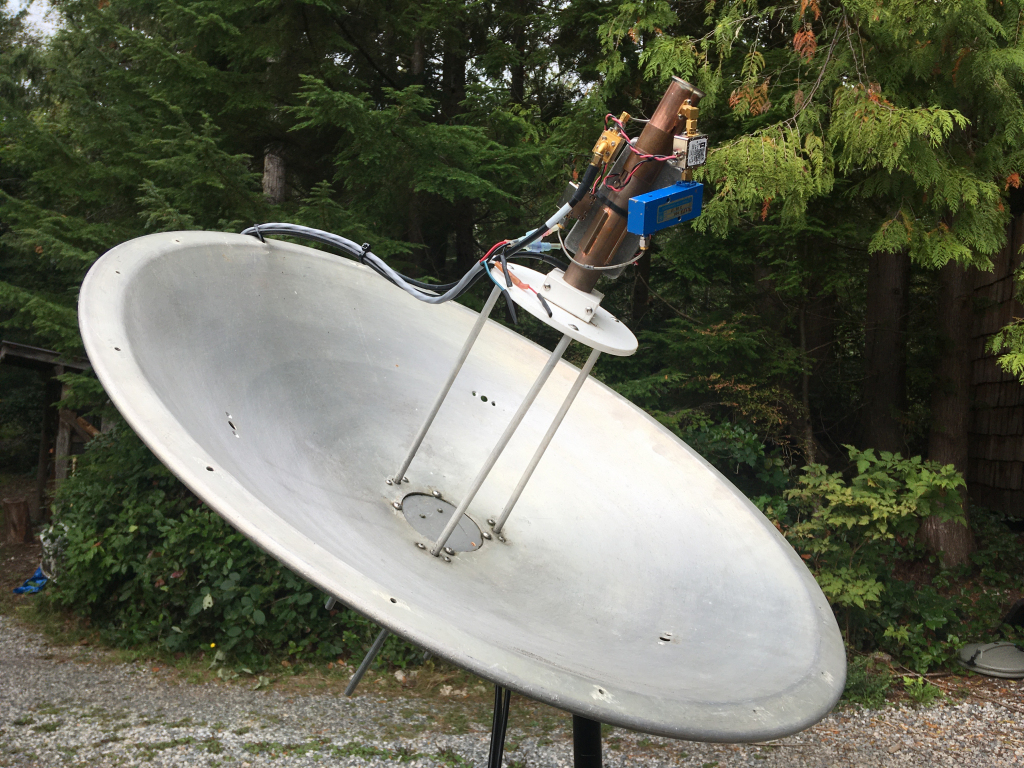
That is the antenna that Scott Tilley VE7TIL used to receive signals from the Chinese spacecraft Tianwen-1 in orbit of Mars. In a recent SpaceWeather article, Scott comments on the importance of SDR receivers in these deep space reception efforts.


I’ve been watching the Elser-Mathes cup for a long time. I dedicated my book “SolderSmoke — Global Adventures in Wireless Electronics” to my kids, Billy and Maria, noting that they were both possible future winners of this most prestigious award. Scott Tilley’s work has put us a step closer to an award ceremony for some intrepid radio amateur.

Here is a good article on the Elser-Mathes Cup:

Scott was in the news last year for finding a zombie satellite:

SolderSmoke Podcast #228

Soldersmoke Podcast #228 is available:

Of course, no travel. But vaccines are here so maybe soon we can leave our shacks.

In the meantime:

I’ve been playing chess against AI bots on chess.com.

Netflix recommendation: The Bureau. From France. A review from NPR:

https://www.npr.org/2020/06/22/881642358/addictively-suspenseful-thriller-series-the-bureau-will-keep-you-on-edge

A reading from “Conquering the Electron.” Germanium vs. Silicon.

Bill’s Bench:

The KLH Model Twenty-one II. Acoustical Suspension. First receiver WITH A PILLOW! Bad speaker? Blown AF amp finals. Hot heat sink. VBE Multiplier. Desitin.

Tony Fishpool’s recommended LM386 boards. 10 for 11 bucks. Nice. They work. Pictured in the Amazon ad at the upper right of the SolderSmoke blog page.

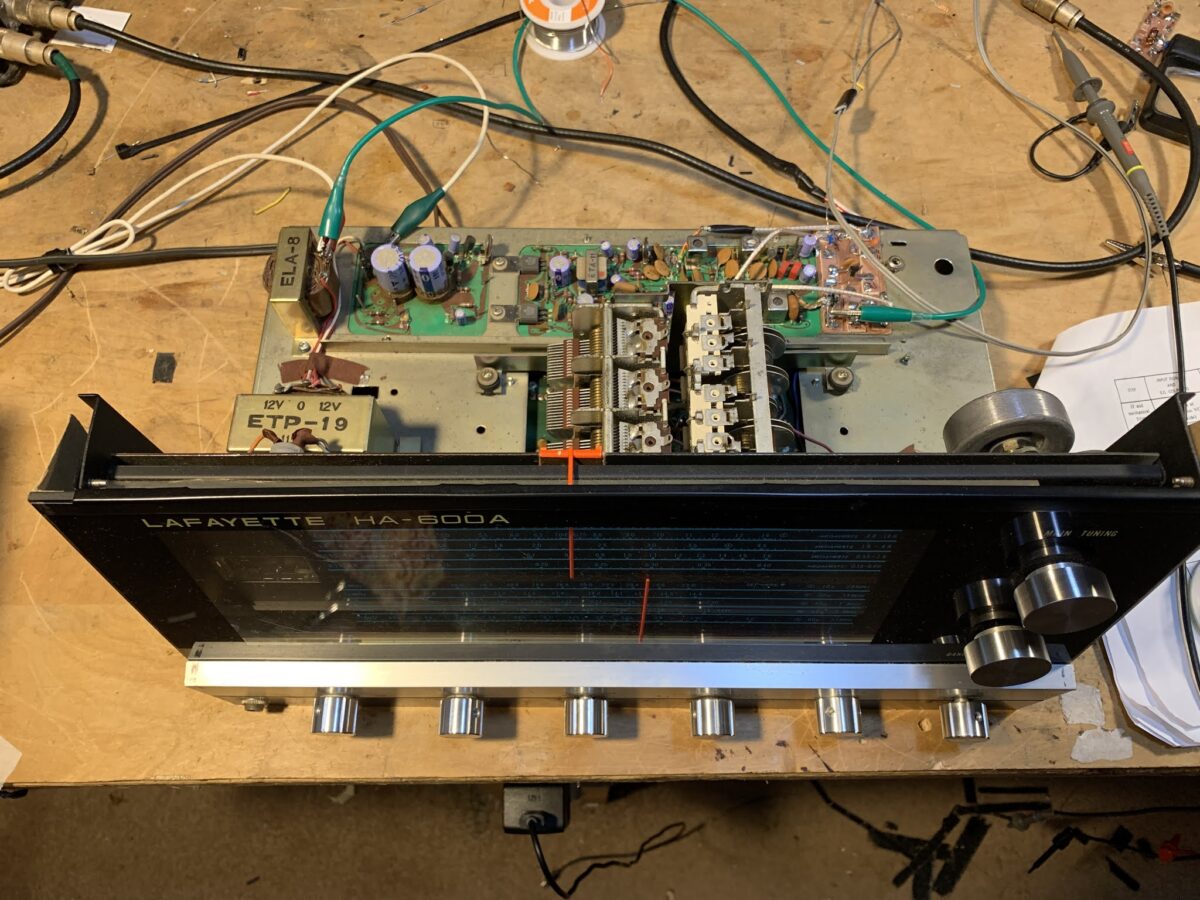
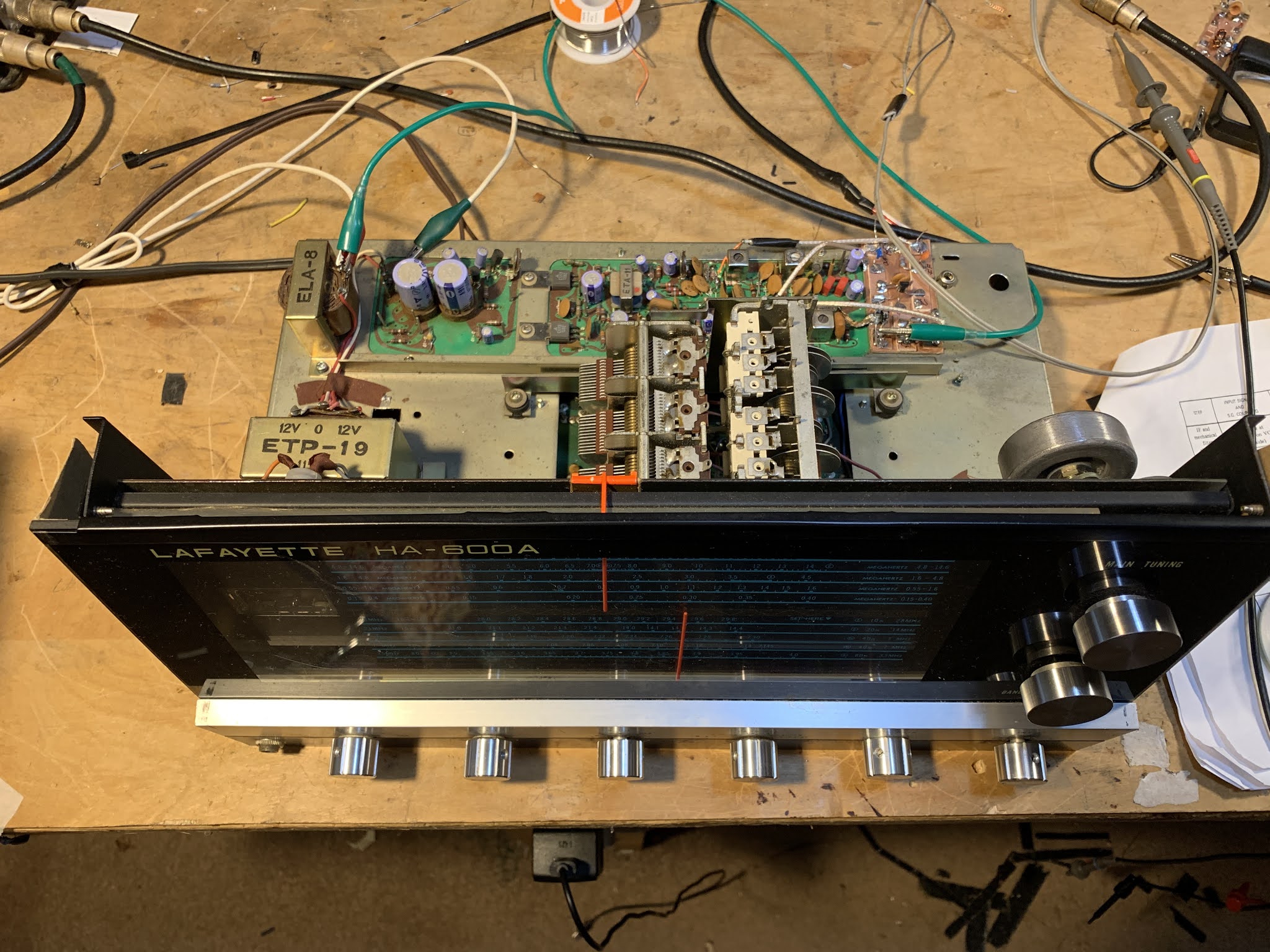
Putting a digital display on the Lafayette HA-600A

Test gear trouble. My Radio Shack multimeter getting flaky. I many need something better. Auto ranging? My beloved Maplin AF generator died – will have to fix. I need that thing. Probably a bad chip. Good thing they are socketed.

I almost forgot about SKN! But I remembered and I made one contact with the HT-37 and Drake 2-B.

Pete’s Bench:

Presentation to RSGB on Homebrew.

TenTek Troubleshoot.

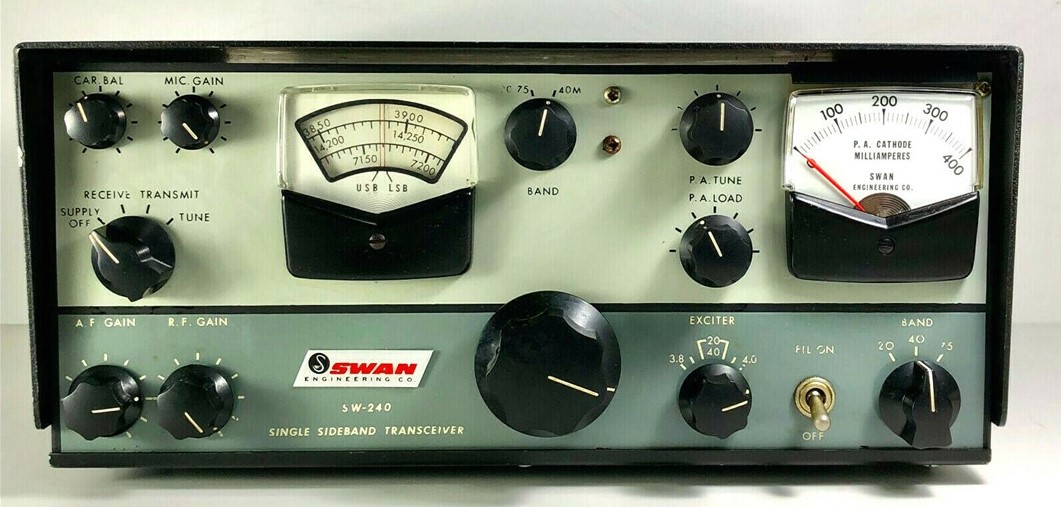
Swan 240? Looking nice.

SDR adventures.

MAILBAG

Bill N8ET sent me some really nice Showa 9 MHz 8 pole crystal filters.

Kevin AA7YQ Smoke jumper! Building a hybrid SDR.HDR rig. Launched blog. FB

Nick M0NTV working on similar HDR/SDR project. Great video.

Grayson KJ7UM Hollow State Design – Launched a new blog. Very FB!

Thomas K4SWL of SWL Post blog. Kearsarge Mountain Transmission system. And recent events.

Peter VK2EMU Poetry. CW poetry.

Pete WB9FLW looking at DSB rigs…

Drew N7DA Feels not like a real ham because he hasn’t built a quad from bamboo. Which type of landscape bamboo is best for antennas?

Ryan Flowers of MiscDotGeek.Com blog is also watching the Tally Ho YouTube videos of Leo Sampson. Wants to put a WSPR beacon on the Tally Ho.

Joe KF5OWY Working with diode ring mixers, trying to see the mixer action on his ‘scope. 1 and -1!

Jim AB9CN sent a cool idea about how to do a 20/17 Moxon.

Roy GM4VKI – I thanked him for his article in SPRAT about putting a 2n3904 on the output of an NE602 10P mod. Brilliant.

Roger Hayward Told him that I really liked his Dad’s recent web site updates.

Farhan – Jokingly cursed me for showing him the Oscillodyne regen of Hugo Gernsback and Jean Shepherd. “Now I will have to build this!”

SolderSmoke Podcast #228

Soldersmoke Podcast #228 is available:

Of course, no travel. But vaccines are here so maybe soon we can leave our shacks.

In the meantime:

I’ve been playing chess against AI bots on chess.com.

Netflix recommendation: The Bureau. From France. A review from NPR:

https://www.npr.org/2020/06/22/881642358/addictively-suspenseful-thriller-series-the-bureau-will-keep-you-on-edge

A reading from “Conquering the Electron.” Germanium vs. Silicon.

Bill’s Bench:

The KLH Model Twenty-one II. Acoustical Suspension. First receiver WITH A PILLOW! Bad speaker? Blown AF amp finals. Hot heat sink. VBE Multiplier. Desitin.

Tony Fishpool’s recommended LM386 boards. 10 for 11 bucks. Nice. They work. Pictured in the Amazon ad at the upper right of the SolderSmoke blog page.

Putting a digital display on the Lafayette HA-600A

Test gear trouble. My Radio Shack multimeter getting flaky. I many need something better. Auto ranging? My beloved Maplin AF generator died – will have to fix. I need that thing. Probably a bad chip. Good thing they are socketed.

I almost forgot about SKN! But I remembered and I made one contact with the HT-37 and Drake 2-B.

Pete’s Bench:

Presentation to RSGB on Homebrew.

TenTek Troubleshoot.

Swan 240? Looking nice.

SDR adventures.

MAILBAG

Bill N8ET sent me some really nice Showa 9 MHz 8 pole crystal filters.

Kevin AA7YQ Smoke jumper! Building a hybrid SDR.HDR rig. Launched blog. FB

Nick M0NTV working on similar HDR/SDR project. Great video.

Grayson KJ7UM Hollow State Design – Launched a new blog. Very FB!

Thomas K4SWL of SWL Post blog. Kearsarge Mountain Transmission system. And recent events.

Peter VK2EMU Poetry. CW poetry.

Pete WB9FLW looking at DSB rigs…

Drew N7DA Feels not like a real ham because he hasn’t built a quad from bamboo. Which type of landscape bamboo is best for antennas?

Ryan Flowers of MiscDotGeek.Com blog is also watching the Tally Ho YouTube videos of Leo Sampson. Wants to put a WSPR beacon on the Tally Ho.

Joe KF5OWY Working with diode ring mixers, trying to see the mixer action on his ‘scope. 1 and -1!

Jim AB9CN sent a cool idea about how to do a 20/17 Moxon.

Roy GM4VKI – I thanked him for his article in SPRAT about putting a 2n3904 on the output of an NE602 10P mod. Brilliant.

Roger Hayward Told him that I really liked his Dad’s recent web site updates.

Farhan – Jokingly cursed me for showing him the Oscillodyne regen of Hugo Gernsback and Jean Shepherd. “Now I will have to build this!”

Jenny List’s Favo(u)rite Things

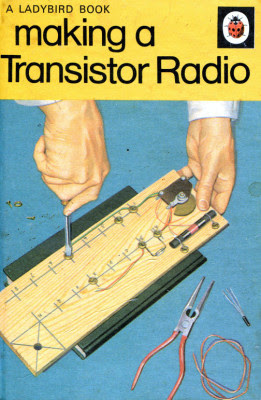
Over on Hack-A-Day Jenny List (G7CKF) has a really nice article about ham radio and homebrewing. She truly has The Knack: She got her start in radio electronics at age 9 when her parents gave her George Dobbs’s Ladybird book.

https://hackaday.com/2021/01/21/a-few-of-my-favorite-things-amateur-radio/

One of her paragraphs really seemed to capture the SDR-HDR conflict that we so often joke about:

The age of the homebrew RF tinkerer may be at a close, at least in the manner in which I started it. Nobody at the cutting edge of radio is likely to be messing around with discrete transistor circuits in the 2020s, unless perhaps they are working with extremely exotic devices up in the millimetre wavelengths. It’s all software-defined radios, opaque black plastic boxes that deliver a useful radio experience on a computer but that’s it. No more homebrew, no more tinkering.

Whew, good thing I’m not on the cutting edge. It sounds kind of sad. Oh well, that leaves more discrete transistors for us to tinker with.

Jenny’s Profile on Hack-A-Day:

[Jenny List]: Contributing Editor and European Correspondent

Jenny List trained as an electronic engineer but spent twenty years in the publishing industry working on everything from computer games to
dictionaries before breaking out and returning to her roots.

She grew up around her parents’ small farm and blacksmith business in rural England, so making (and breaking) things is in her blood. Countless projects have crossed her bench over the years, though these days you’ll find her working with electronics and in particular radio, textiles for clothing and costume, decrepit classic cars, and real cider from first principles.

When she’s not writing for Hackaday she works on language corpus analysis software, designs and sells amateur radio kits, sits on the board of Oxford Hackspace, and is a freelance electronic design engineer and programmer.

Thanks Jenny!

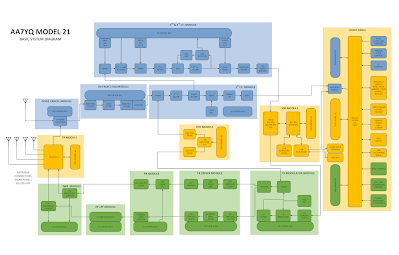
Kevin AA7YQ (Montana Smoke Jumper) Launches his SDR/HDR Build Blog

Earlier this month I posted a note from Kevin AA7YQ describing his effort to design and build a nice transceiver that mixes the best of SDR and HDR. Kevin has launched a blog in which he will describe the project in more detail. He is looking for constructive feedback and suggestions. Check it out:

http://aa7yq.blogspot.com/.

Thanks Kevin.

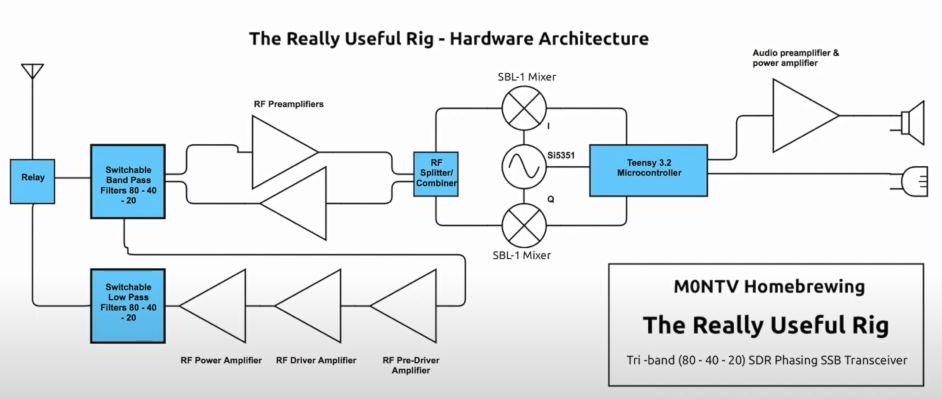
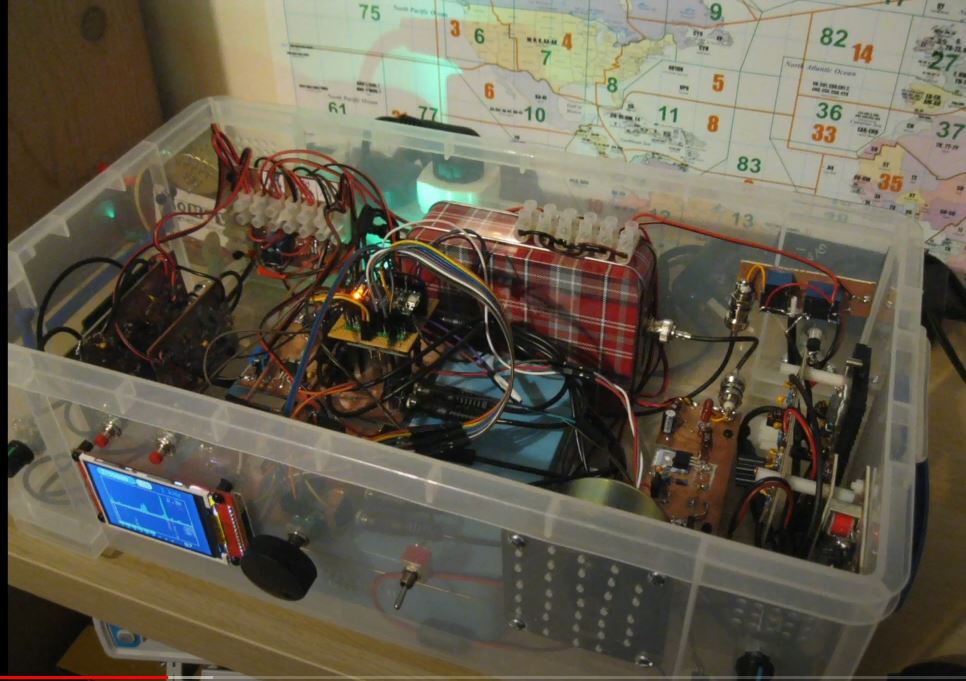
Nick M0NTV’s Really Useful SDR Transceiver (video)

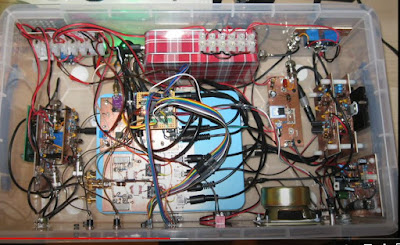
Even though I am more of an HDR guy, I really liked Nick’s SDR rig. I like the modular approach, with all the modules inside a transparent plastic box (see below). Don’t worry about the shielding Nick — I had the same concern about my BITXs in wooden boxes, but they worked fine.

Nick really did a great job on the video. The bloc diagram was especially useful, both on the hardware and on the software. Very cool. It is nice to use this phasing approach, with the digital magic happening at audio frequencies. I fear that soon FPGAs and direct digital sampling will take the hardware fun out of these rigs. We already have a bit of that with the RTL-SDR dongles.

Very cool how the Teensy takes care of the 90 degree audio shift. I had to do that with chips in my phasing receiver. When I first saw Nick’s bloc diagram, I was looking for the audio phase shift network — then he explained that that was in software, in the Teensy.

Nicks arrangement for switching the filters is very nice.

Thanks Nick!

Pete N6QW and Steve G0FUW Talk to RSGB About Homebrew (Video)

Wow, what an unexpected treat! Here we can watch Pete N6QW and Steve G0FUW talk to the Radio Society of Great Britain about homebrew radio. Steve talks about kits and scratch-built rigs. I really liked seeing his early rigs and his description of how building these rigs helped him become a more advanced homebrewer. I also liked his mention of George Dobbs as a guiding light in the QRP and homebrew world.

Pete focuses on SDR and provides a really great description of this approach to homebrew. I was struck with how great it is that, after a lifetime of HDR building, Pete is willing to embrace this new technology. He talks about it as part of “a learning journey.” As always, he sets the example for us all.

Thanks to Pete, Steve, and RSGB.

An End to the HDR – SDR Conflict? Kevin AA7YQ Combines the Best of Both Worlds

We’ve had some pretty amazing contact with Kevin AA7YQ over the years. Kevin and I originally bonded due to our common experience with parachutes (he was smoke-jumper, I jumped while in the army). Kevin once used a parachute to insulate a QRSS beacon. And one day, while thinking about SolderSmoke during a drive through Montana, Kevin turned on his rig only to hear… ME! He caught one of my infrequent CW contacts. TRGHS.

Now we hear that OM Kevin may be poised to end the HDR-SDR civil war that has for so long been dividing our great podcast. Can Kevin’s new rig heal our wounds and allow us to enjoy the beauty of SDR waterfalls while not forsaking the joy of hardware defined rigs? Kevin will soon launch a blog describing his effort at rig-building. See below for a preview. Stay tuned.

Kevin wrote:

I am currently working on a new rig design. It is a hybrid HDR(Hardware defined)/SDR radio that incorporates some classic superhet design along with some of the more useful features of SDR. I have found that pure SDR is really not that enjoyable for me. I love using GNU radio to mock up and test design concepts, but SDR basically dilutes the “magic” of radio to nothing more than software and touchscreens, stuff we use every day all day. Its not the Ham Radio I grew up with as a kid and was fascinated by. On the other hand, I have always fought temperature drift, large variable capacitors minimal tuning range, and associated with classic VFO and VXO designs. In fact, in 1997, for my senior capstone design in EE at Montana State University, I designed a 20m superhet that used a DDS LO. At the time DDS was cutting edge technology I used an AD7008JP50. I had to beg and plead with ADI to get a couple samples for my design, since they exceeded my self-funded college student project budget. 😊 But that’s another story. SDR has made me grow extremely fond of the waterfall display. I love having the visual “situational awareness” of what is going on in a moderate bandwidth outside of the spot I am tuned to. I also am a big fan of digital filtering and modification-ability that comes with boot-loadable microcontroller designs. So this design includes most of the real highlights of SDR but does not take the fun out of designing, building, and operating a HDR.

Anyhow, this design is a big goal of mine to complete and build in 2021. I am not retired yet so I still have to balance, work, family, and tinkering time, but I am very excited about this project. I have “noodled” this design to the point of what I have achieved full-on “analysis paralysis”. That is, I keep designing and redesigning, optimizing, and figuring to the point where after months of thought, I have nothing to show for it 😊. So my New Years goal for 2021 is to make “good enough” rather than “perfect” design decisions and move forward. I will keep you posted on the design and possibly start a blog so I can get some peer review input from the greater RF Design/Homebrew community on my project. I’ll keep you informed on my progress.

SolderSmoke Podcast #227: Solar System, SDR, Simple SSB, HA-600A, BITX17, Nesting Moxons? Mailbag

SolderSmoke Podcast #227 is available:


Travelogue

Mars is moving away. Jupiter and Saturn close in the sky. And the Sun is back in action – Cycle 25 is underway. Also, the earliest sunset is behind us. Brighter days are ahead.


Book Review: “Conquering the Electron” With a quote from Nikola Tesla.


No real travel for us: Hunkered down. Lots of COVID cases around us. Friends, relatives, neighbors. Be careful. You don’t want to be make it through 10 months of pandemic only to get sick at the very end. SITS: Stay In The Shack.


Pete’s Bench and Tech Adventures:

Backpack SDR keithsdr@groups.io

Hermes Lite 2

Coaching SSB builders

G-QRP talk

A new source for 9 MHz crystal filters


Bill’s Bench:

Fixing the HA-600A Product Detector. Sherwood article advice. Diode Ring wins the day. Fixing a scratchy variable capacitor. Studying simple two diode singly balanced detectors. Polyakov. Getting San Jian frequency counter for it.

Fixing up the 17 meter BITX. Expanding the VXO coverage. Using it with NA5B’s KiwiSDR.


Resurrecting the 17 meter Moxon. But WHY can’t I nest the 17 meter Moxon inside a 20 meter Moxon? They do it with Hex beams. Why so hard with Moxons? DK7ZB has a design, but I’ve often heard that this combo is problematic. Any thoughts? I could just buy a 20/17 Hex-beam but this seems kind of heretical for a HB station.


Suddenly getting RFI on 40 meters. Every 50-60 Hz. Please tell me what you think this is (I played a recording).


MAILBAG:

Dean KK4DAS’s Furlough 40/20

Adam N0ZIB HB DC TCVR

Tony G4WIF G-QRP Vids. Video of George Dobbs.

Grayson KJ7UM Collecting Radioactive OA2s. Why?

Pete found W6BLZ Articles

Rogier KJ6ETL PA1ZZ lost his dog. And we lost ours.

Steve Silverman KB3SII — a nice old variable capacitor from Chelsea Radio Company.

Dave K8WPE thinks we already have a cult following.

Dan W4ERF paralleling amps to improve SNR.

Jim W8NSA — An old friend.

Pete Eaton WB9FLW The Arecibo collapse

John WB4GTW old friend… friend of:

Taylor N4TD HB2HB


And finally, we got lots of mail about our editorial. No surprise: Half supportive, half opposed. Obviously everyone is entitled to their opinion. And we are free to express ours. It’s a free country, and we want it to stay that way. That is why we spoke out.


Yesterday the Electoral College voted, finalizing the results. All Americans should be proud that the U.S. was able to carry out a free and fair national election with record turn out under difficult circumstances. And all loyal Americans should accept the results. That’s just the way it works in a democracy.


We are glad we said what we said. It would have been easier and more pleasant to just bury our heads in the sand and say nothing. But this was a critically important election and we felt obligated as Americans to speak out. We’d do it again. And in fact we reserve the right to speak out again if a similarly important issue arises.

Adding 10 kHz of Coverage to My BITX 17

Solar Cycle 25 is underway. The Solar Flux Index and Sunspot numbers are up considerably. I have dusted off my old BITX17 transceiver. This time around I am using it in conjunction with a waterfall display provided online by NA5B’s KiwiSDR receiver, which is located about 9 miles east of me. This SDR receiver allows me to see the entire 17 meter band. It was this panoramic display that made me pay more attention to the fact that the Variable Crystal Oscillator (VXO) that I am using in this rig prevented me from tuning the lower 10 kHz of the 17 meter phone band (18.110 — 18.120 MHz).

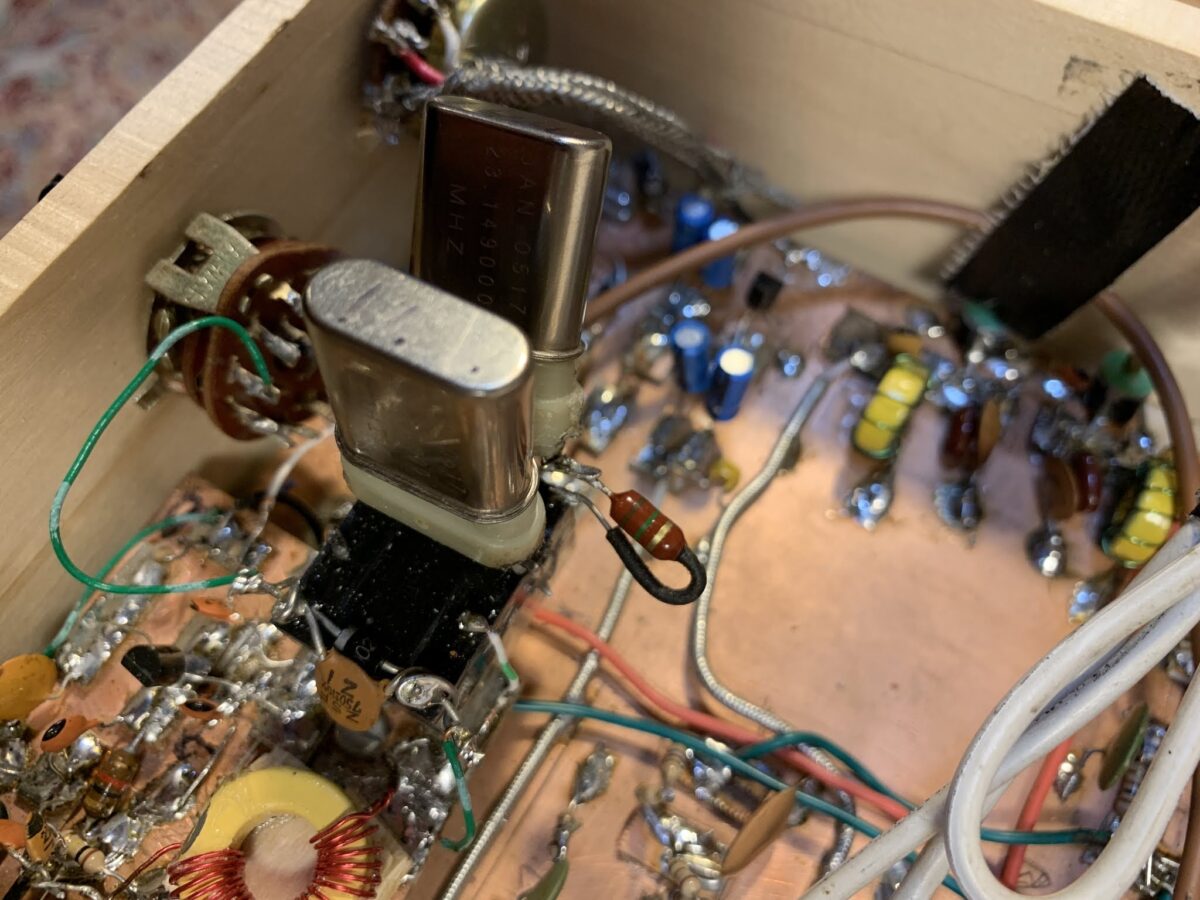
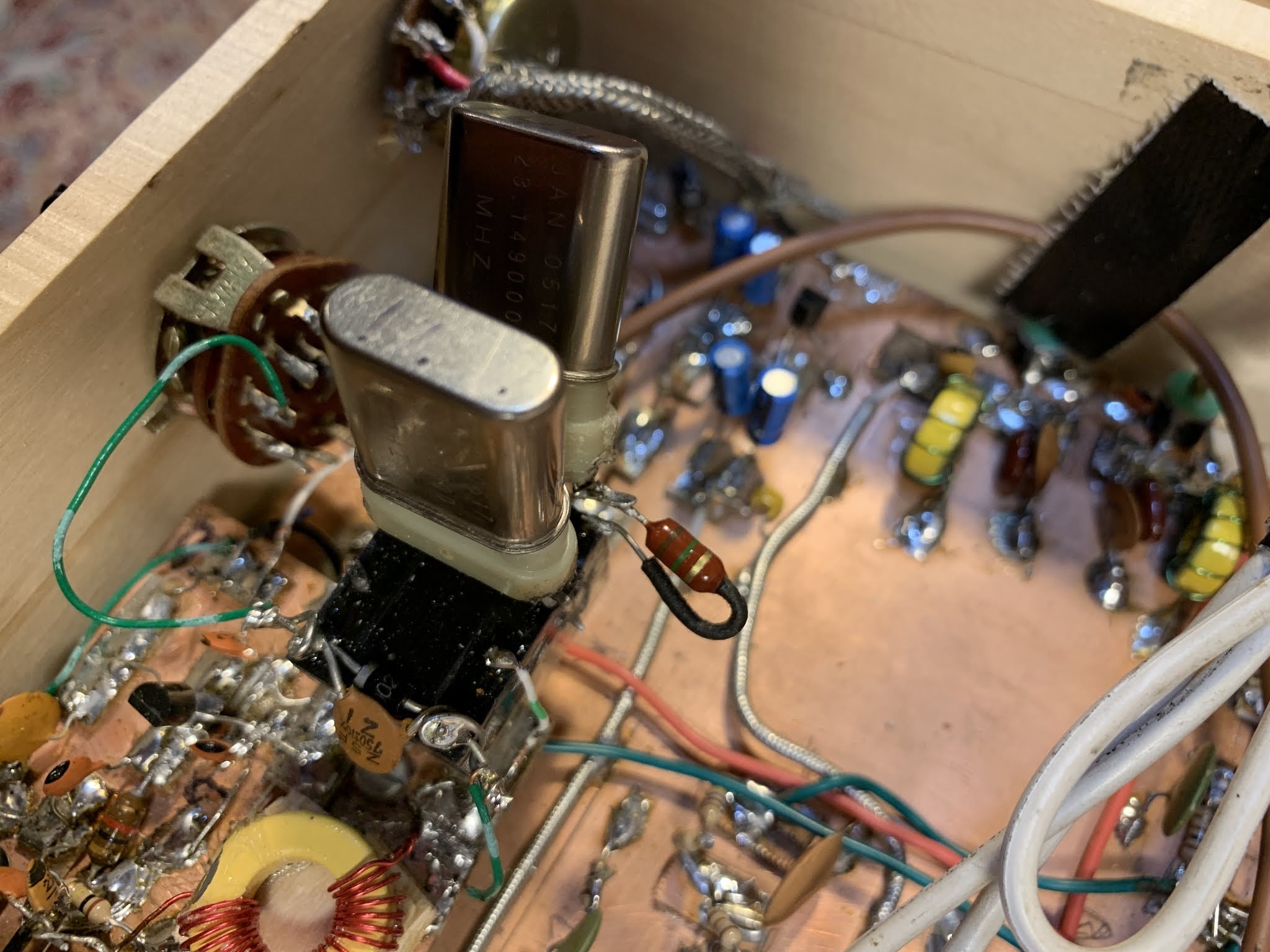
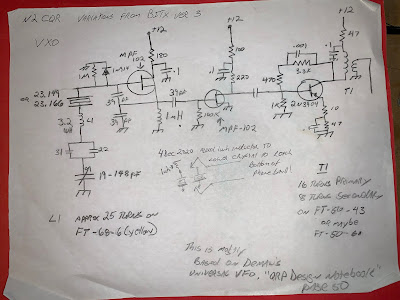
I use two crystals switched by a relay to cover the band. One is at 23.149 MHz, the other at 23.166 MHz. The crystal filter is at 5MHz. With a coil and some caps I could move the frequencies of the oscillator enough to cover 18.120 to 18.168 MHz (top of the band).

When I first built this thing, I kind of wrote off the lower 10 kHz of the phone band. I couldn’t get the oscillator to work that low, and I was already satisfied with the top 48 kHz. But the NA5B waterfall often showed SSB stations in that lower part of the band. I wanted to talk to them. So I started thinking about how to do this.
Looking at my schematic (above) I remembered that most of the frequency lowering was done by L1, a 3.2uH toroid. I figured that to go a bit lower, I would just have to add inductance. But I didn’t want to lower the frequency provided by BOTH crystals — I just wanted to bring the frequency with the lower crystal down a bit.

In my junkbox I found a 1 uH coil. I disconnected the lower lead of the 23.149 MHz crystal from its connection to the relay. I soldered the 1 uH coil between the crystal and the relay (see picture above). This moved the lower limit down to 18.087 MHz.

Now crystal one provides 18.087 – 18.144 MHz
crystal two provides 18.137 – 18.167 MHz

So now I have the whole phone band. Bob is my uncle. TRGHS.

This was a very quick and satisfying little fix. As Pete says WYKSYCDS: when you know stuff you can do stuff. Indeed. And as I re-build and repair gear that I built years ago, I am often reminded that as time goes by, we learn more. We end up knowing more and being able to do more.

I am also planning on rebuilding my 17 meter Moxon; this time I will make it better and stronger.

SolderSmoke Podcast #226 The U.S. Election, Solar Cycle, uSDX, Hermes, HP8640B, SGC 600 Sig Gen, HA-600A, Mailbag

SolderSmoke Podcast # 226

http://soldersmoke.com/soldersmoke226.mp3

———————————-

About the U.S. election

————————————

Mars: Setting early, will have to shift to evening observation. Weather has been poor.

Sunspot Cycle 25 is underway — SFI 78, SN 32

The Gliessberg cycle


Pete’s Bench: #49, #50, uSDX, Hermes Lite


Bill’s Bench: HP8640B, Global Specialties Corp 6000 counter, Lafayette HA600A.


MAILBAG:

Peter VK2EMU Sent me copy of 1947 Handbook. Thanks Peter

Brad W1BCC Spotted 10 S-38s for 80 bucks on Craig’s list. What’s going on here?

Dale K9NN sent both Pete and I care packages with very cool part, including DG Mosfets

Stuart ZL2TW sent me Les Moxon’s Antenna Book. TRGHS. Moxon will be back!

Alvin N5VZH got his receive converter with a little Tribal Knowledge from SS.

GM4OOU The Bitsy DSB rig from Scotland

Peter VK3YE DSBto DC incompatibility SOLVED

Paul VK3HN’s Digital SWR and Power Meter and Low band AM TX VFO/Controller FB Videos.

VK2BLQ alerts us to article about Jac Holzman of Elektra Records.

AA0ZZ great message on assembler language and writing software the hard way.