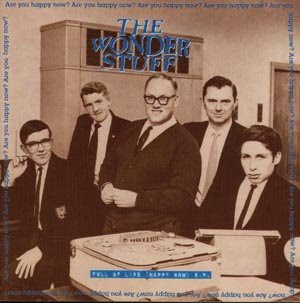
 A while back we were talking about the Italian brothers whose satellite observation work got them caught up in some international intrigue early in the space age. This morning I came across some web pages about The Kettering Group, a group if intrepid British lads who were in the same game. Heartwarming stuff. I wish my school had been like theirs! Read about them here: http://www.svengrahn.pp.se/trackind/getstart/oldcyts.htm
More info here: http://www.svengrahn.pp.se/trackind/trackin1.htm#KEttrack
Category: satellites
Humber College Homebrew Space Station Contact? Not really
I wasn’t going to mention this, but since we were talking about Grote Reber, I sort of feel obliged to raise this subject. The techno-blogosphere is filled this morning with the story of four Humber College (Toronto) seniors who supposedly contacted the International Space Station with homebrew gear. See: http://www.humber.ca/stories/first_contact.htm Wow, pretty good, eh? Well, not so fast SolderSmoke fans. Turns out you have to read the fine print. They did it with a radio system that they “designed and built themselves.” I looked at the slide show and their operating table was covered with expensive commercial gear. Sure enough, when I checked their blog, I found this:
Today, Mr. Rector, Paul, and I went out to Radioworld and purchased a transceiver. After much research, we decided to go with the ICOM Ic-V8000. For the cost, it has exactly what we need. On Friday, we’re going to be integrating it into our setup, and doing all the necessary testing.
This contact was no big deal really. When I was talking to Norm Thagard on MIR station back in the 20th century, there was one 13 year-old kid in South Africa who pulled off the same feat.
See: http://www.gadgeteer.us/MIR18.HTM If they had actually built the radios themselves it would have been a bit more noteworthy. Looks like this one had more PR smoke than solder smoke.
The Beacon on the Echo Satellite
W8KHK gave a very nice Christmas present to the AMfone group. Check out the pictures (and descriptions) of the beacon transmitters that went into space on the ECHO satellite in 1960. Echo was the big inflated silver ball — it was nicknamed “the satelloon.” I was struck by how much the exterior of this rig looks like the solar-powered QRSS rig of Paolo, IZ1KXQ.
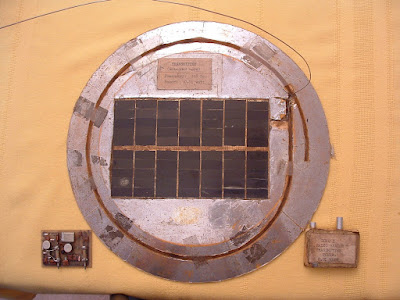 FROM W8KHK’s POST: Here are a few more pictures of the ECHO beacon transmitter. These are identical to the actual flight hardware, used for testing and measurements. They now reside at the W2DU Florida QTH, and while the batteries have long since expired, if the solar cells are illuminated by a 100 watt bulb, or the actual sun, you can receive the transmitted beacon signal at 108 MHz. Low Tech by today’s standards, but in those days it was hard to find transistors that would work above audio frequencies. Photo 21 shows a complete beacon system. To the bottom left is another transmitter, before potting. To the bottom right is another transmitter, potted and ready to be incorporated in the styrofoam “dish” assembly. Photo 22 is a close-up of the two transmitters from photo 21. Photo 23 shows an entire dish assembly, prior to potting in styrofoam. This space project, and many other early space projects from the Astro Electronics Products division of RCA will be chronicled in the soon-to-be-published Reflections III by W2DU.


MERRY CHRISTMAS FROM ROME!
“Space Hackers” removed from YouTube
They say the videos were taken down because of some Intellectual Property issue. That’s their story, but I’ve seen the X-Files, and know that something more sinister is probably at work here. Kay, WD0BDK, suspects the Russians — the thinks they are mad at us for making fun of the Woodpecker!
(Note to lawyers: I did not post the videos on YouTube.)
Skepticism about “Space Hackers”
Many of us really enjoyed those videos about the two Italian brothers from Turin and their homebrew space monitoring program. But there is some controversy about some of their claims:
http://www.svengrahn.pp.se/trackind/Torre/TorreB.html
Controversy or no controversy, I still liked the videos and admire the efforts of the two intrepid brothers from Torino.
A Homebrew Italian Space Program
Peter, VK3PB, alerted me to the six YouTube videos about the Judica Cordiglia brothers of Turin, Italy. These guys were young and enthusiastic amateurs when the space race began in the late 1950s. They quickly developed some very impressive monitoring facilities that allowed them to listen to both US and Soviet space missions.
Watch these videos and you will not only get a look at the technical work of these intrepid and skilled amateurs, but you will also get a sense of the many intangible things that make Italy such a special place. You’ll get a sense of the human warmth, the friendship, the enthusiasm and fun that characterize life here.
They had the foresight to film a lot of their youthful technical adventures. The videos take us back to the Italy of the late ’50s and early 60’s. (That roof that they built their antenna on looks EXACTLY like mine!)
Don’t miss these videos. They are really wonderful. Here are the links (if you have trouble, just search YouTube for “Space Hackers 1/6” “Space Hackers 2/6” etc.
http://www.youtube.com/watch?v=1F_67UAaG70
http://www.youtube.com/watch?v=N-y2DuYNxm4
http://www.youtube.com/watch?v=s8sElZpvzRU
http://www.youtube.com/watch?v=wcGPXZPYHNs
http://www.youtube.com/watch?v=A9kiSMcrqRg
http://www.youtube.com/watch?v=WUT-eZH0860