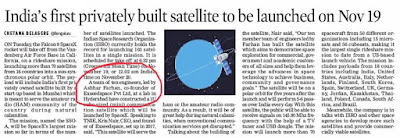
It looks like the launch date might have been moved up from 24 November to 19 November.
SolderSmoke Daily News — Ham Radio Blog
Serving the worldwide community of radio-electronic homebrewers. Providing blog support to the SolderSmoke podcast: http://soldersmoke.com
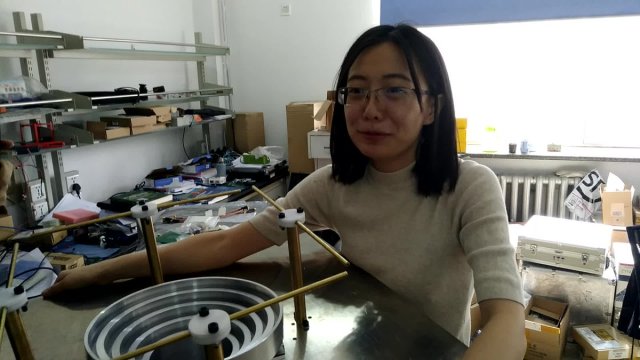
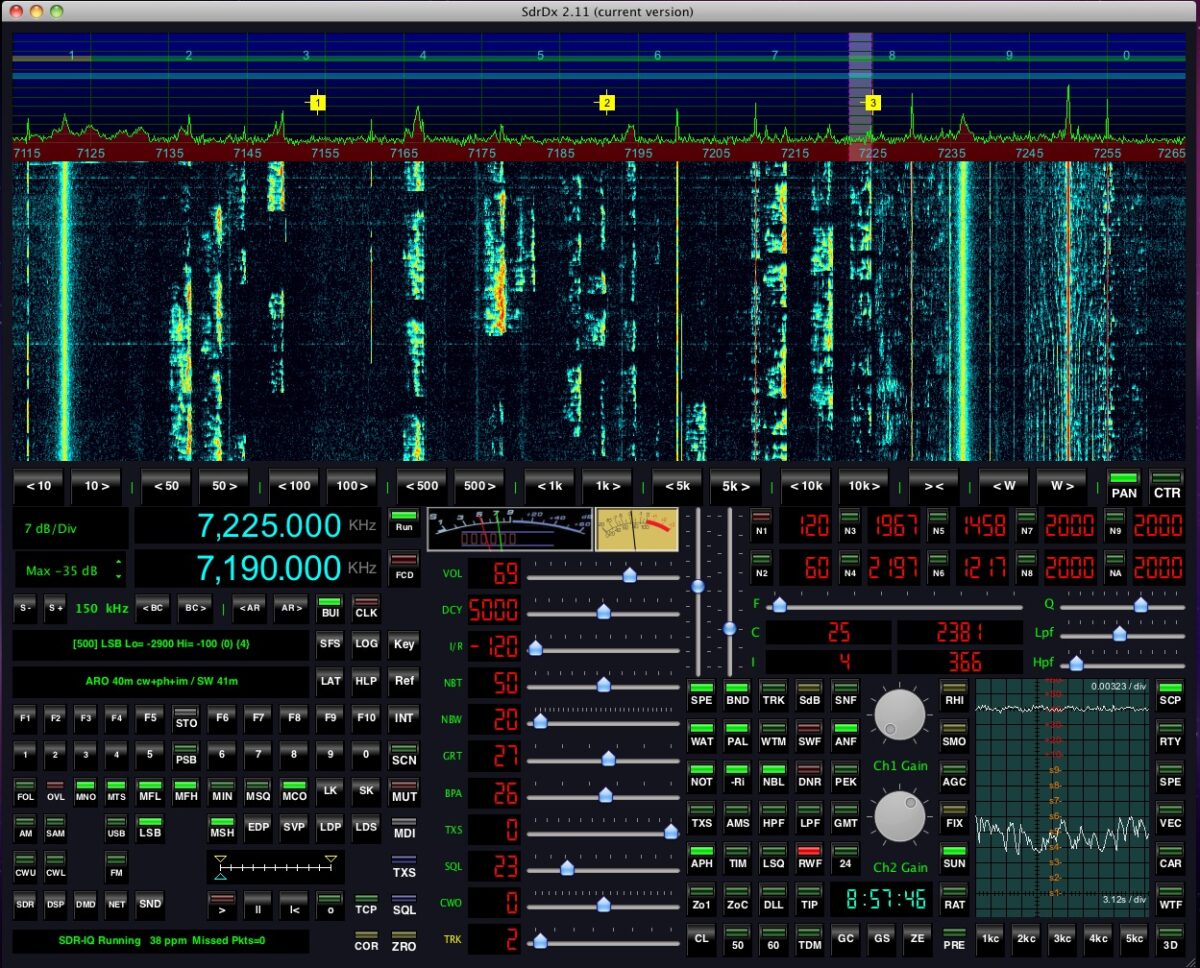
I’ve been getting ready for the November 24 launch of the CubeSat that Farhan and his friends in India built. I started out with my trusty Drake 2-B and a Hamtronics 2-to-10 downconverter, but I quickly switched to an RTL-SDR dongle and HD-SDR software. My 3 element quad antenna is visible in the first video. So far, I am using the Armstrong method to turn the antenna.
In that first video I keep saying that I am waiting for AO-71. In fact is was AO-73, the “FunCube” from the UK. I think it is similar in power and antenna configuration to Farhan’s satellite, so I think we are almost ready for launch.
(Any ideas on what that mysterious pulsating sig in the satellite passband signal is in the first video?)
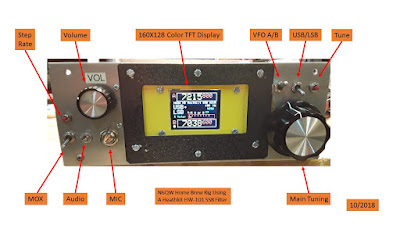
SolderSmoke Podcast #207 is available:
http://soldersmoke.com/soldersmoke207.mp3
— Giants of Radio
— Pete on 15 Meters
— Bill on 60 Meters with the uBITX
— Pete’s Sudden and Heath Filter Transceivers
— Cubesats to orbit! To the moon! And to Mars!
— Bill rebuilds his 2 meter “Ray-Gun” Quad (for Farhan’s Cubesat)
— Homebrewing Variable caps and stockpiling NP0
— My “by ear” Minimal Discernible Signal Technique
— Thoughts on Direct Sampling SDR and the Radio Art
MAILBAG
— A request for feedback from GQRP
— G4WIF reports G3ROO on UK TV with spysets
— VU3XVR builds FB rig from EMRFD
— M0KOV Charter member of the 3 Scratch-built BITX club
–KD4PBJ’s PTO Turtle DC Receiver
— AB1OP builds Pete’s LBS receiver and gives us a new acronym: SITB
— KD4EBM — Thanks for the scanner Bob!
— A possible sponsor from California…
— Pete’s dream neighborhood…

This is really amazing and deserves more attention than it has been getting.
Very cool video from Space X. I like how they have the time-line along the bottom and the telemetry in the upper right. This is the first time they brought a first stage back to Vandenberg AFB. I hope we get to watch the launch of the Indian Cube-Sat in November.
This video has so much of the kind of stuff that interests us: roadkill antennas. 3D printers. Arduinos. Raspberry Pi, And of course, RADIO ASTRONOMY.
And the Thought Emporium guys have a lot of other great project videos on their YouTube site:
https://www.youtube.com/channel/UCV5vCi3jPJdURZwAOO_FNfQ
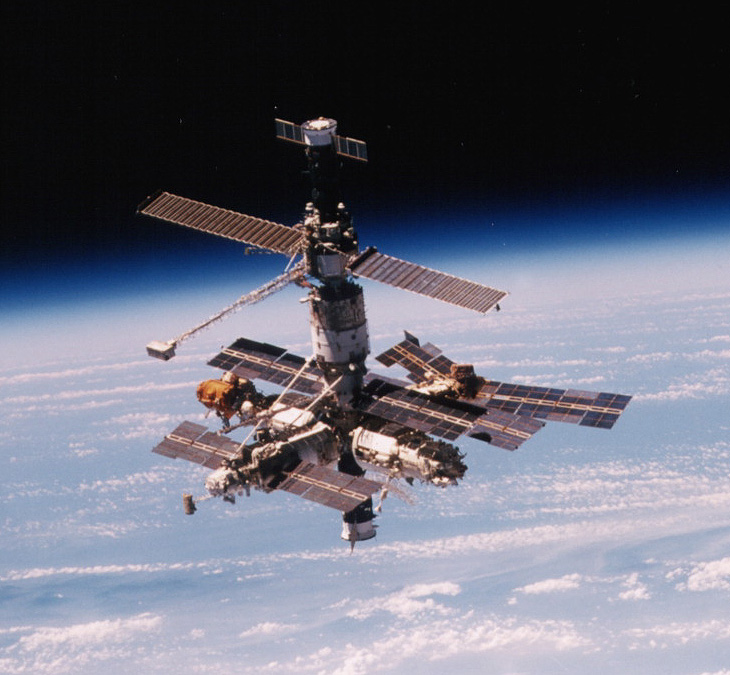
I feel myself being pulled back into SPACE. First there was Farhan’s new satellite, now this. Last weekend I finished a 3 element quad for 146 MHz. In a fit of nostalgia I used the same copper tube elements that I used to communicate with the MIR space station from the Dominican Republic in 1995. They have good JuJu. And Mojo. TRGHS. More on this later. Tune UP!

Latest news:
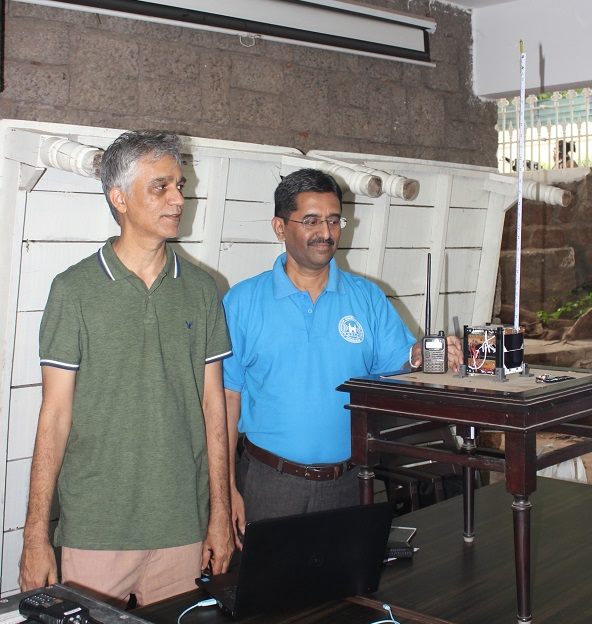
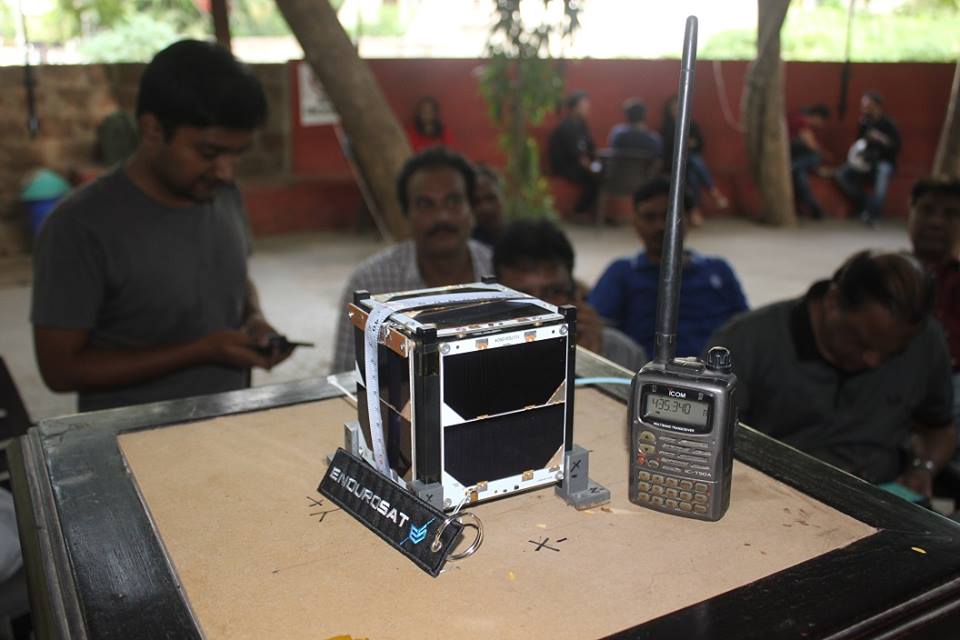
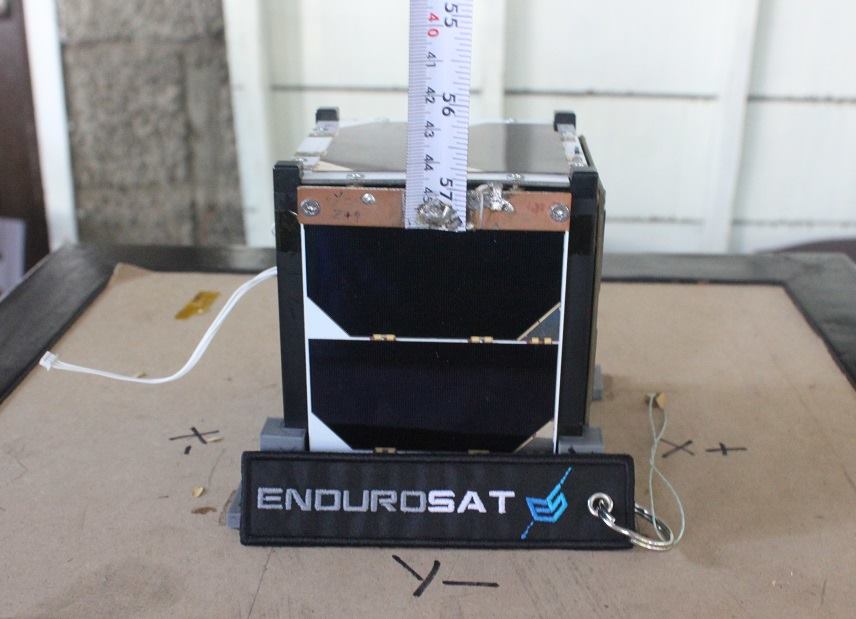
The launch is set for November 24, 2018 from California. It will be in a polar orbit. The beacon will be on 145.90 MHz. Farhan says an RTL-SDR Dongle should do the trick. I plan on building several receive systems and an appropriate antenna.
https://telanganatoday.com/a-blessing-for-the-small-guys
https://www.thehindu.com/news/national/other-states/odisha-man-team-builds-private-satellite/article24963338.ece
https://www.timesnownews.com/technology-science/article/instagram-now-lets-you-shop-directly-from-stories-explore-tab-heres-how/286276
I don’t think Farhan’s group is connected to this group, but this short video does a nice job of explaining the potential of CubeSats.
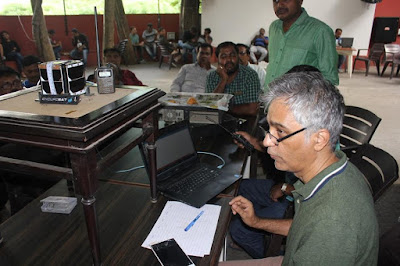
Peter Parker again hosted the VK3 radio amateurs. This time the event fell on VHF/UHF Field Day weekend. So Peter and his friends went up in frequency and up into SPACE!
VK3HN has a nice blog post here:
https://vk3hn.wordpress.com/2017/11/25/qrp-by-the-bay-chelsea-beach-melbourne-25-11-2017/
Be sure to read about Peter’s ankle manacles — he apparently uses them to get a good ground (sea) plane while running pedestrian mobile on the sea shore. Peter is DEDICATED!

Here’s a reminder of the amazing art work of Jeff Murray K1NSS.
You can have him draw a QSL for you: Go here:
https://www.jeffk1nss.com/
Jeff writes:
What might I draw with you?https://www.jeffk1nss.com/

Wow, Eric Guth’s interview with Ron Gang 4X1MK really resonated with me:
— Asked about how he got is start in radio, Ron went back further than many of us do in response to this question. He cited his early experiments with “two tin cans and a string.” Yes, of course! I’d forgotten all about it, but in retrospect this might have been a very early indication of THE KNACK. (I’ll bet many of our readers were also active on the String and Can band.)
— Ron used a DX-100. FB.
— Ron was active on the satellites. In his voice you can hear the joy and the burst of enthusiasm that resulted from those early satellite contacts. He also mentions the untimely demise of Oscar 13. Bummer.
— Ron was the Israel correspondent for 73 Magazine. I held a similar position in Dominican Republic. My friend David Cowhig was at the same time correspondent from Okinawa, Japan. We should have a reunion of “73 Magazine Hambassadors.”
— Ron mentions John Tait EI7BA. John was a regular contact of mine when I was in the Azores. He appears in the SolderSmoke book. He was the one who introduced me to an important Irish accolade: John told me that WD-40 is “the Pope’s pee.”
— Toward the end, Ron discusses the wonder of ham radio conversations, and provides a good suggestion on how to get beyond the all-to-common “hello-59-goodbye” contacts.
Ron’s comments on the spiritual or philosophical aspects of the hobby were just the thing for a quiet Sunday morning.
Thanks to Eric and to Ron for a great interview.
Listen here:
http://www.qsotoday.com/podcasts/4X1MK
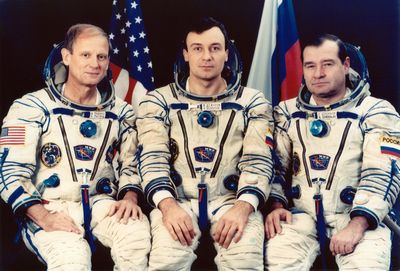
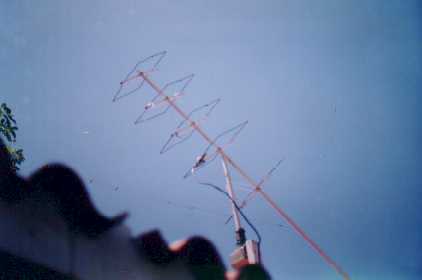
Back in 1995 I was in the Dominican Republic. I used an old 2 meter rig and a homebrew 5 element quad (see below) to talk to U.S. Astronaut Norm Thagard on the MIR space station. (You may have heard me bragging about this before.) I made a bunch of audio clips from the contacts. They’d been in the now defunct RealAudio format, but I have been able to convert them to mp3. You can listen here:
http://www.gadgeteer.us/CLIPS.HTM
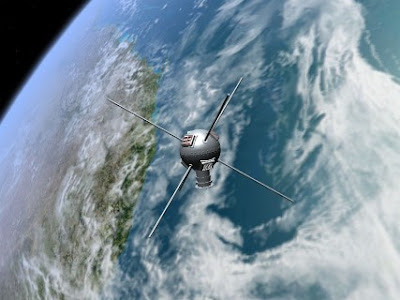
Ira Flatow of “Science Friday” was recently talking about how best to preserve important bits of the history of mankind’s exploration of space. Our old friend Vanguard 1 was mentioned several times. It is now the oldest satellite still in space.
You can listen to the Science Friday show here:
http://www.sciencefriday.com/segments/protecting-the-historic-human-record-in-space/
They also have a transcript of the show on the same page.
SolderSmoke fans will remember the Vanguard adventures of Mike Rainey AA1TJ:
http://soldersmoke.blogspot.com/search?q=Vanguard
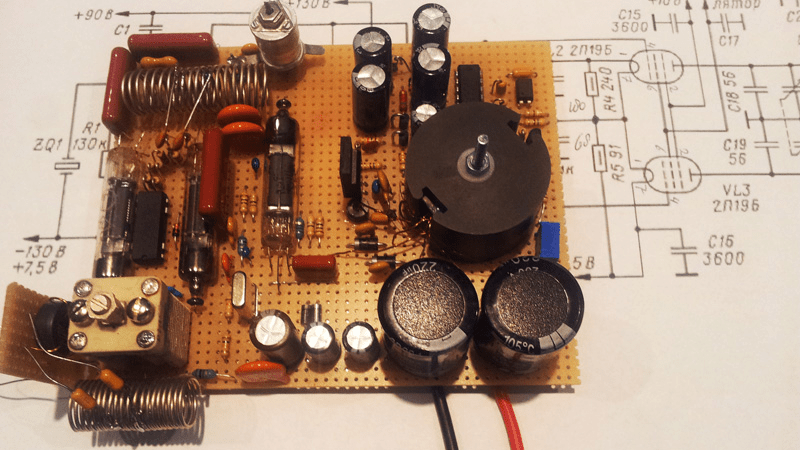
This seems to be the month for Vanguard: just a couple of weeks ago, on 40 meters I spoke to Dale Parfitt W4OP. Dale was one of the first people to pick up Mike Rainey’s Vanguard replica signals (see link above).
AND…
The Vanguard reproduction project came up during Eric Guth 4Z1UG’s “QSO Today” interview with Graham Firth G3MFJ of the G-QRP Club:
http://www.qsotoday.com/podcasts/g3mfj
(Graham has such a great voice. He definitely SHOULD build a phone rig!)
VIVA VANGUARD!
 Carissimo Bill (I don’t speak Italian. I’m just showing that I have read the book).
Wow, this project is very appealing. Finally, a 3D printer project that seems truly useful. They are using one of the Dongle receivers we’ve been playing with, and, of course, Arduinos. You could really geek-out with this stuff. Check out the hardware side of this effort here:
https://satnogs.org/documentation/hardware/

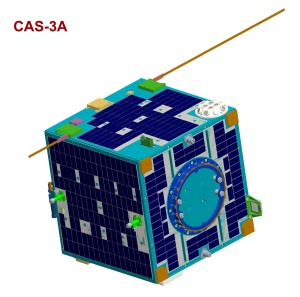
On September 22, 2015 at around 1120 UTC I was able to hear the CW beacons from the fleet of new amateur radio satellites put into orbit by China. Here is a recording:
http://soldersmoke.com/Chinese Satellite XW2.mp3
Very cool. This reminded me a lot my early experiences with the Russian RS satellites in the 1990s.
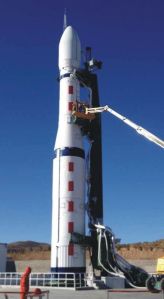
Big news!
http://www.arrl.org/news/china-successfully-launches-nine-amateur-radio-satellites
and
http://amsat-uk.org/tag/xw-2/
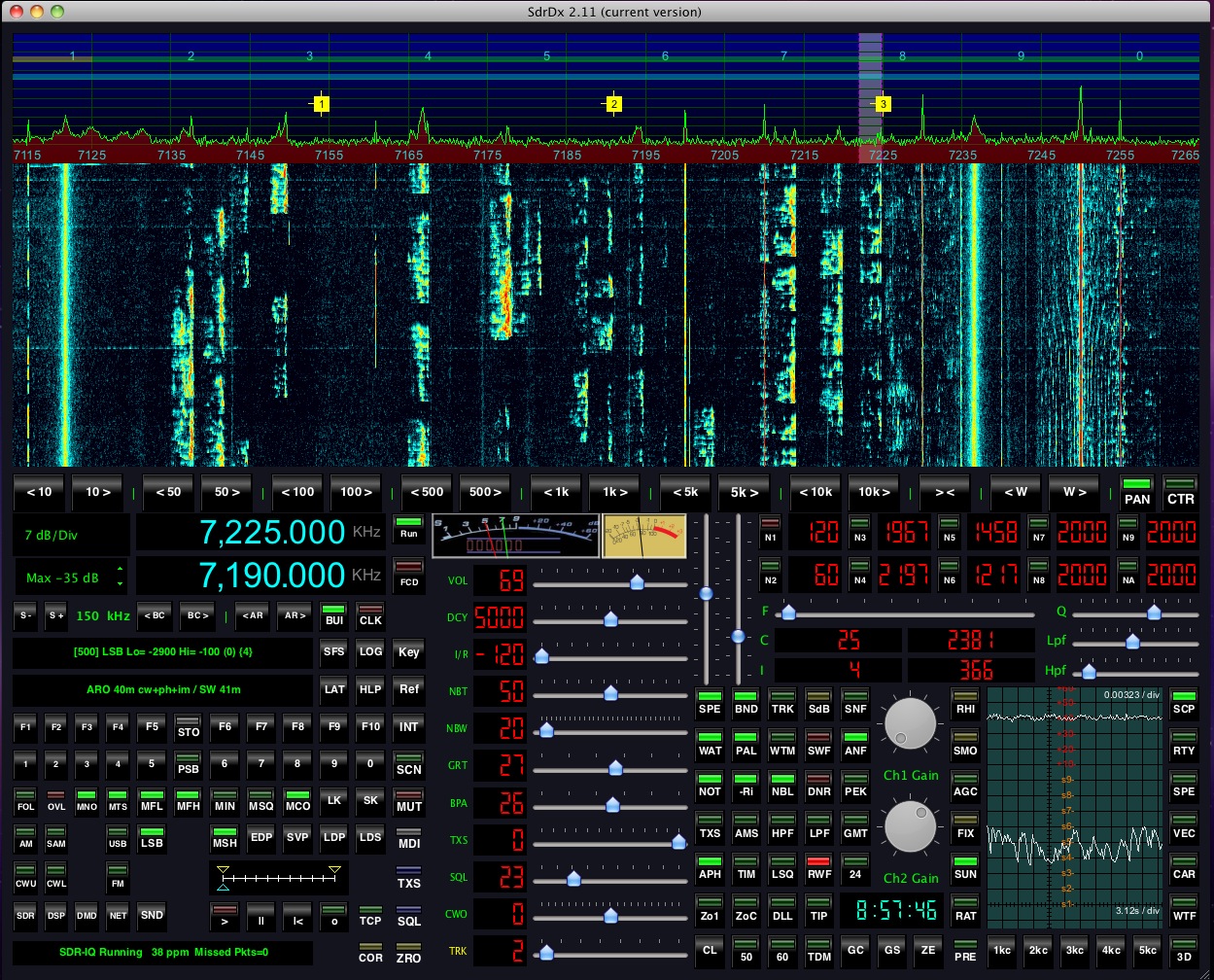
I have pulled my 2 meter down converter out of storage and have connected it to the Drake 2B. These satellites are due to be over my location at 0720 local tomorrow. I will be listening.

Ken Marshall G4IIB here the guy that wrote the SDR Primer in Sprat 162. I have been listening to your excellent podcasts. You guys cover a lot of ground in the May issue and touched on to the SDR dongle, its potential for future developments etc. I noted that you where going to buy another to cover VHF. Well if it ain’t too late consider this New version by Newsky they are already getting difficult to get a hold of and are only available in the USA. It uses an R820T2 tuner (better LNA) an upgraded and stable crystal oscillator, a reinforced antenna coax and socket. The one I managed to get hold of also had a modified PCB with solder pads for the the Q channel (pins 4&5) to connect the toroid. Incredable at 22 of your Bucks. See the pictures and read all about it on amazon.com.
http://www.amazon.com/gp/product/B00QFCNNV0/ref=as_li_tl?ie=UTF8&camp=1789&creative=390957&creativeASIN=B00QFCNNV0&linkCode=as2&tag=rsv0f-20&linkId=VNHED72IVHA5O2KT
All we need is for them to slot a 12 or 16 bit ADC in and we could have a truly great SDR receiver.
I noticed in your podcast you mentioned radio astronomy and satellite reception. Ironicaly back in 2013 this is how I started with SDR dongles. I read an aticle on the web on meteor scatter and started experementing with a dongle. Meteor scatter hunting is a bit like watching paint dry unless there is a known storm. So this led me on to the Funcube satellites. The signals from which although QRP 200mW are very stong and you can receive them on almost any antenna. The funcube dashboard software is available for free from AMSAT and alows you to download telemetry. You can also listen to amateur SSB an CW transmissions. There are lots of satellite tracking software available too. This then led onto weather satelite picture reception I built a 4 ele turnstile antenna for this but I found that I needed an LNA for reception at my location. I then started to listen to the amateur bands. Like you Bill I became interested in radio at the age of 11 and got licensed in the early 70’s but work commitments meant I had a 30 year absence from Ham Radio until I stumbled on these SDR Dongles. They got me back into the hobby and I joined the GQRP Club. I noticed that almost no one in the QRP fraternity was talking about RTL SDR hence I started writing the Primer and submitted it to George in late 2014 for publication in Sprat. As you know it appeared in the Spring Sprat and seems to have generated lots and lots of interest in the QRP community. I am delighted by this response and look forward to lots more interesting articles and podcasts. Have fun with your dongle.
Ken G4IIB
Our book: “SolderSmoke — Global Adventures in Wireless Electronics” http://soldersmoke.com/book.htm Our coffee mugs, T-Shirts, bumper stickers: http://www.cafepress.com/SolderSmoke Our Book Store: http://astore.amazon.com/contracross-20
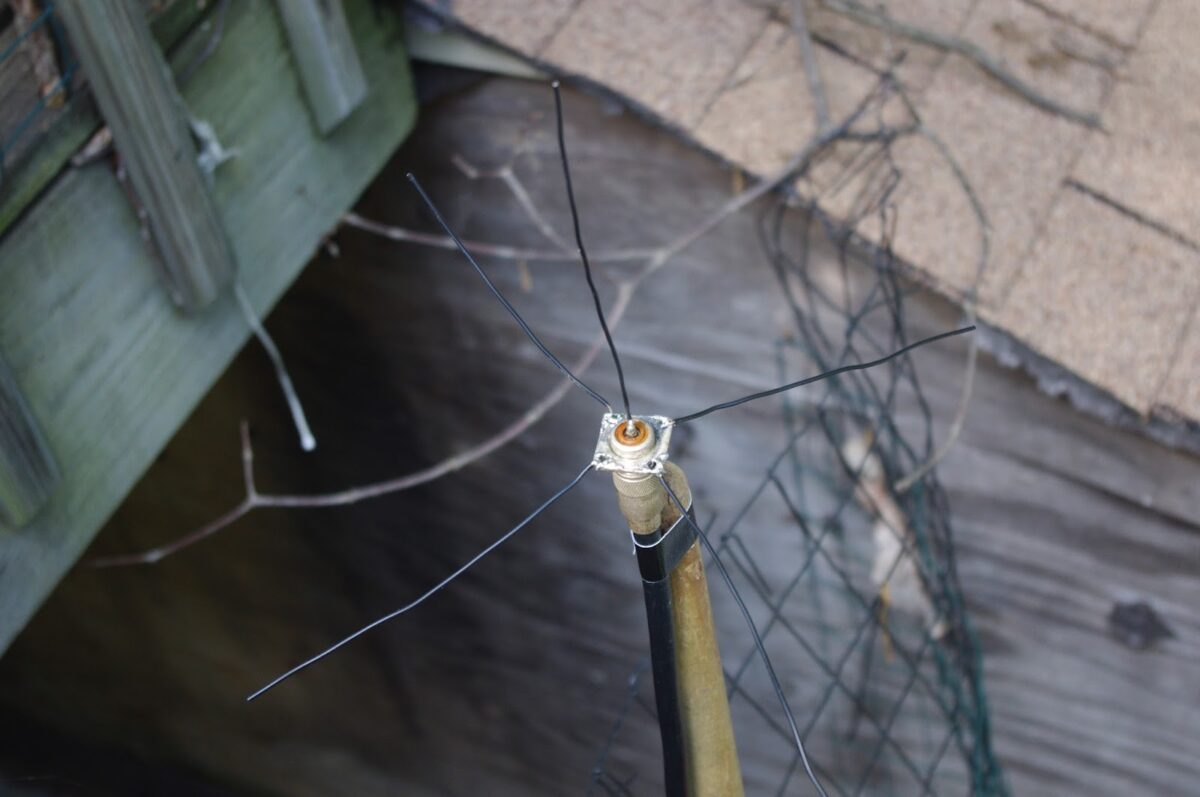
I’ve been playing around with a little $13 DVB-T SDR Dongle receiver. These devices normally tune 24 MHz to 1.7 GHz, but I modified the first one I had so that it would tune the HF bands. Pete then sent me another one, which I vowed to keep unmodified, thinking that it would be fun to use it to listen to the many small Cube-Sats that are up there. Most have downlinks (and Morse Code beacons) in the 470 MHz range. I whipped together a simple ground-plane antenna for this band (One 6 inch copper wire as the receive element with 4 five inch groundplane elements).
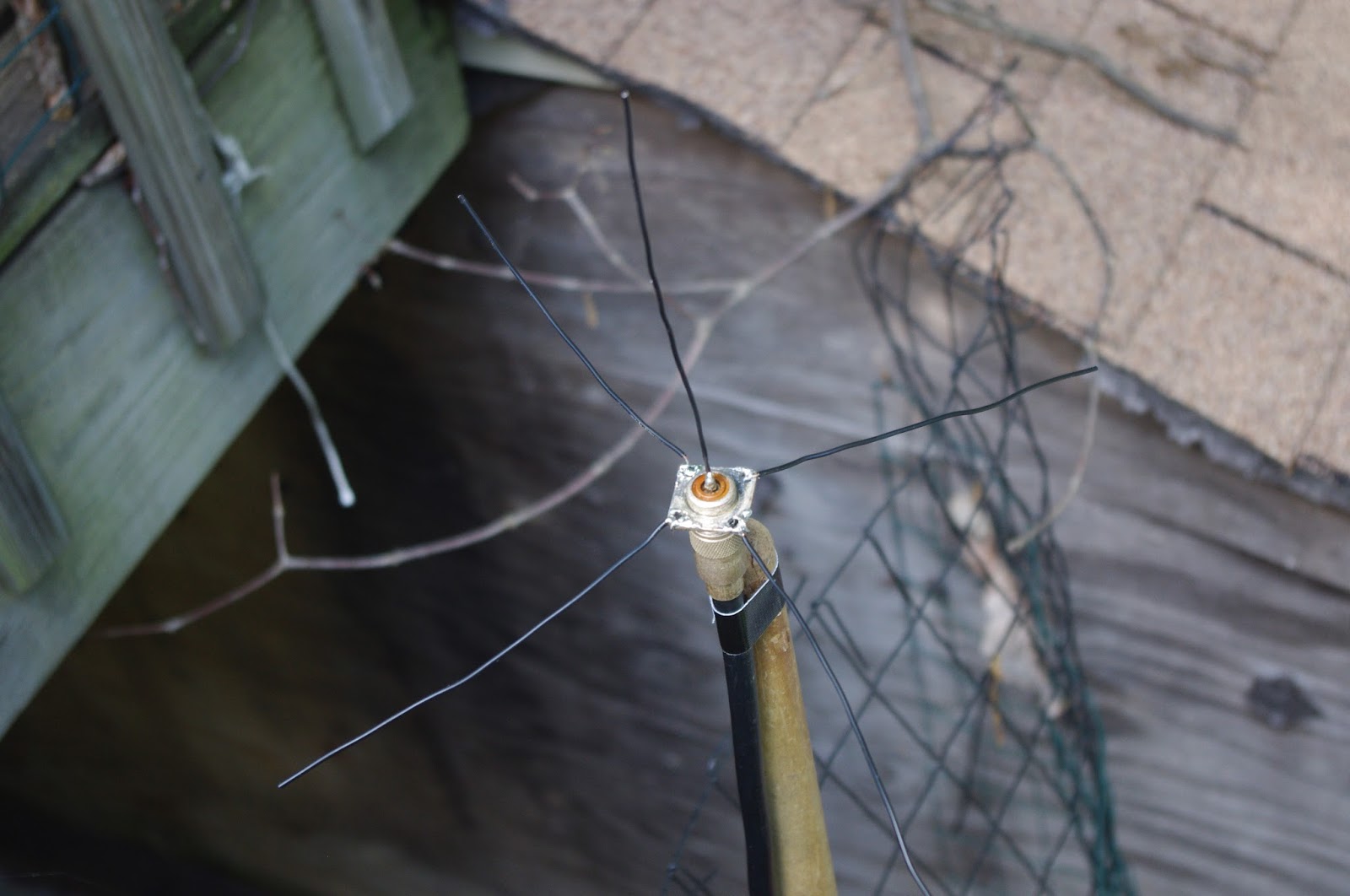
I then went to the “Heavens Above” website, plugged in my location, and clicked on “Amateur satellites.” This gave me a very accurate schedule of satellite passes. I started listening.
First I heard (and saw in the HDSDR waterfall) the CW beacon of the Prism satellite at 7:05 am EDT today. Prism is from the University of Tokyo and was launched from Japan.
Then Cubesat XI-V at 0711 EDT.
Cubesat XI-IV was heard at 0813 EDT. The Cubesats are from Japan and were launched from Russia.
ITUsPAT was heard at 1422 EDT. The I is for “Istanbul”
Finally, I monitored a pass of the Japanese FO-29 satellite aka JAS-2 at 1611. Wow, this was like old times on the RS-10 and RS-12 satellites. Lots of CW and SSB stations in the downlink passband. Lots of fun.
At 470 MHz the Doppler shift of a low-earth orbit satellite is quite noticeable, and helps confirm that you are in fact receiving sigs from an orbiting device.
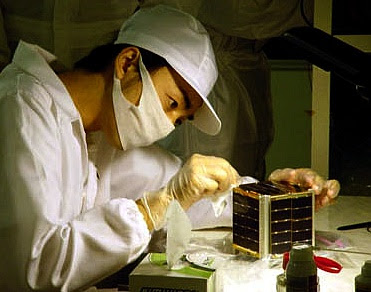
I thought it was pretty cool to take a $13 DVB-T Dongle, connect it to a small, copper-wire antenna, and use it all to receive signals from some 4″x4″x4″ cubes in orbit of the Earth.
Our book: “SolderSmoke — Global Adventures in Wireless Electronics” http://soldersmoke.com/book.htm Our coffee mugs, T-Shirts, bumper stickers: http://www.cafepress.com/SolderSmoke Our Book Store: http://astore.amazon.com/contracross-20