Category: Russia
One more on Gagarin
Bill, Pete,
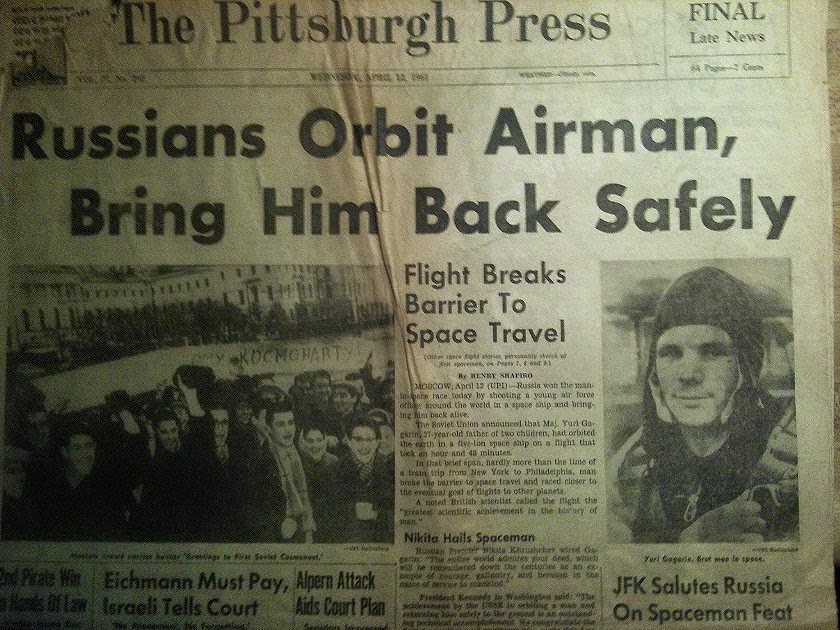
In keeping with historical events, I have enclosed a few snap-shots from the 1961 Pittsburgh Press dated Wednesday, April 12, 1961.
Yes, a few of us recall that very day. I had filed this newspaper in my Scrap Book back then. It was a bitter sweet thing, to read for most, as we hoped the U.S. to be first but none-the-less, we smiled anyway because, it proved a person could go into space and return. (Flight Breaks Barrier to Space Travel). I was very enthusiastic about Rockets, Travel and current events. I built my own capsule in the rafters of my parents home and spent all day up there in the tiny confines as I launched my own secret adventures into Outer-Space.
Hope you enjoy the photos. I can provide a better set of copies if you are interested.
73’s
Harv – WA3EIB
Idaho Falls, ID
Harv: I converted a small closet into what I saw as an excellent simulator of the Apollo 11 Command Module. Bill
Our book: “SolderSmoke — Global Adventures in Wireless Electronics” http://soldersmoke.com/book.htm Our coffee mugs, T-Shirts, bumper stickers: http://www.cafepress.com/SolderSmoke Our Book Store: http://astore.amazon.com/contracross-20
Cosmonautics Day Follow-up
Mark, K6HX, took a break from Hummingbird photography and captured some of the images streaming down from the International Space Station on Cosmonautics Day (April 11): http://brainwagon.org/2015/04/11/sstv-from-the-iss/
Very cool Mark (and I think the bird pictures are just as cool!)
Our book: “SolderSmoke — Global Adventures in Wireless Electronics” http://soldersmoke.com/book.htm Our coffee mugs, T-Shirts, bumper stickers: http://www.cafepress.com/SolderSmoke Our Book Store: http://astore.amazon.com/contracross-20

Happy Cosmonautics Day! Yuri Gagarin Images (SSTV) from Space This Weekend

http://m0dcm.co.uk/?tag=sstv
From the ARISS Web Site:
http://www.ariss.org/news.html
Latest NewsApril 6, 2015
ISS Slow Scan TV Expected Weekend of April 11
In celebration of Cosmonautics Day, Russian ARISS SSTV activity is planned for the second week of April.
Cosmonautics Day celebrates Yuri Gagarin’s famous flight on April 12, 1961 becoming the first human to reach space.
The SSTV event is planned for Saturday, April 11, beginning at 10:00 UTC and continuing until 21:00 UTC. All transmissions will use the high resolution SSTV mode PD180. Transmissions will be at 145.800 MHz. If similar to past events, 12 different photos will be sent through the weekend with 3 minute off periods between transmissions.
To receive the images in real time, all that’s required is a 2 meter radio receiver and a computer to convert the receiver’s audio to image form. The software to do this is available as freeware on the internet at sites such as http://hamsoft.ca/pages/mmsstv.php. Received images can be uploaded and viewed at the ARISS Image gallery found at http://www.spaceflightsoftware.com/ARISS_SSTV/index.php .
Those capturing images are encouraged to upload them to http://www.spaceflightsoftware.com/ARISS_SSTV/submit.php
Uploaded images may be viewed at http://www.spaceflightsoftware.com/ARISS_SSTV/
Please be advised that situational demands on crew time could result in postponement or cancellation of any ARISS activity. Please pay attention to the possibility of any change in scheduling.
Our book: “SolderSmoke — Global Adventures in Wireless Electronics” http://soldersmoke.com/book.htm Our coffee mugs, T-Shirts, bumper stickers: http://www.cafepress.com/SolderSmoke Our Book Store: http://astore.amazon.com/contracross-20
Sputnik 40 Launched from MIR in 1997
Our book: “SolderSmoke — Global Adventures in Wireless Electronics” http://soldersmoke.com/book.htm Our coffee mugs, T-Shirts, bumper stickers: http://www.cafepress.com/SolderSmoke Our Book Store: http://astore.amazon.com/contracross-20
First Pictures of the Far Side of the Moon (1959!)
On October 7, 1959, the Soviets sent an “automatic interplanetary station” to the moon. This, in itself, was an amazing achievement. Even more amazing is how they managed — using 1950s technology — to photograph the far side of the moon and get the images back to the earth.
The Soviet document on the Harvard site (below) says that the transmitter put out “a few watts” and used semiconductors. There appears, however, to have been at least one vacuum tube aboard (the cathode ray tube used to scan the chemically developed photo negatives). Frequency modulated analog video similar to FAX) was used to send the data.
http://articles.adsabs.harvard.edu//full/1962IAUS…14….7L/0000007.000.html
From Wikipedia:
Luna-3 was the first successful three-axis stabilized spacecraft. During most of the mission, the spacecraft was spin stabilized, but for photography of the Moon, the spacecraft oriented one axis toward the Sun and then a photocell was used to detect the Moon and orient the cameras towards it. Detection of the Moon signaled the camera cover to open and the photography sequence to start automatically. The images alternated between both cameras during the sequence. After photography was complete, the film was moved to an on-board processor where it was developed, fixed, and dried. Commands from the Earth were then given to move the film into a scanner where a spot produced by a cathode ray tube was projected through the film onto a photoelectric multiplier. The spot was scanned across the film and the photomultiplier converted the intensity of the light passing through the film into an electric signal which was transmitted to the Earth (via frequency-modulated analog video, similar to a facsimile). A frame could be scanned with a resolution of 1000 (horizontal) lines and the transmission could be done at a slow-scan television rate at large distances from the Earth and a faster rate at closer ranges.
The camera took 29 pictures over 40 minutes on 7 October 1959, from 03:30 UT to 04:10 UT at distances ranging from 63,500 km to 66,700 km above the surface, covering 70% of the lunar far side. Seventeen (some say twelve) of these frames were successfully transmitted back to the Earth, and six were published (frames numbered 26, 28, 29, 31, 32, and 35). They were mankind’s first views of the far hemisphere of the Moon.
More info: http://www.svengrahn.pp.se/trackind/luna3/Luna3story.html#Film
Our book: “SolderSmoke — Global Adventures in Wireless Electronics” http://soldersmoke.com/book.htm Our coffee mugs, T-Shirts, bumper stickers: http://www.cafepress.com/SolderSmoke Our Book Store: http://astore.amazon.com/contracross-20
Happy World Cosmonautics Day!
Our book: “SolderSmoke — Global Adventures in Wireless Electronics” http://soldersmoke.com/book.htm Our coffee mugs, T-Shirts, bumper stickers: http://www.cafepress.com/SolderSmoke Our Book Store: http://astore.amazon.com/contracross-20
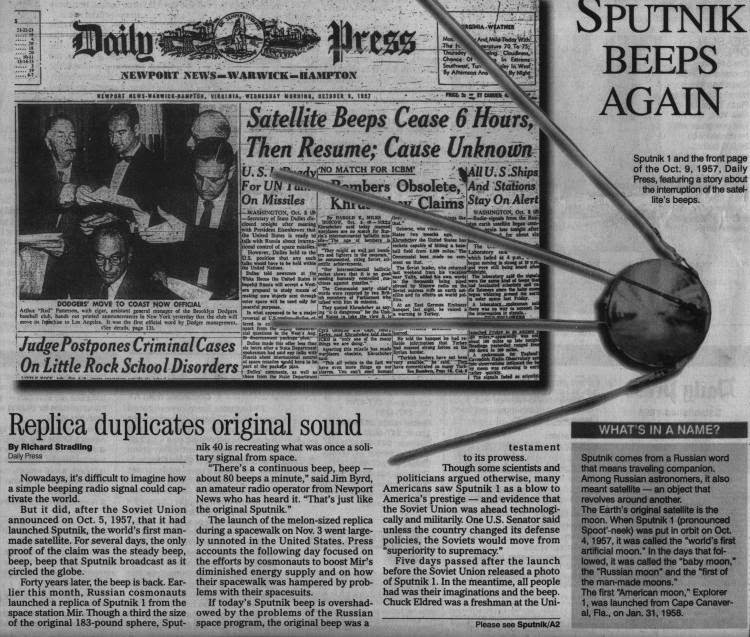
Sputnik Schematic Found!
We were searching for this last year. Oleg, RV3GM, finally found the schematic for the transmitter in the Sputnik satellite.
ftp://ftp.radio.ru/pub/2013/04/55.pdf
Our book: “SolderSmoke — Global Adventures in Wireless Electronics” http://soldersmoke.com/book.htm Our coffee mugs, T-Shirts, bumper stickers: http://www.cafepress.com/SolderSmoke Our Book Store: http://astore.amazon.com/contracross-20
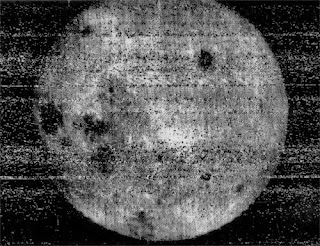
Sputnik Party 2012 Soapbox
3 October from AA1TJ:
Here’s an admittedly late reminder that the Sputnik Party begins
tomorrow (4 October). I’ve been preoccupied with non-hobby concerns in
recent months but I did manage to throw something together for the
event.
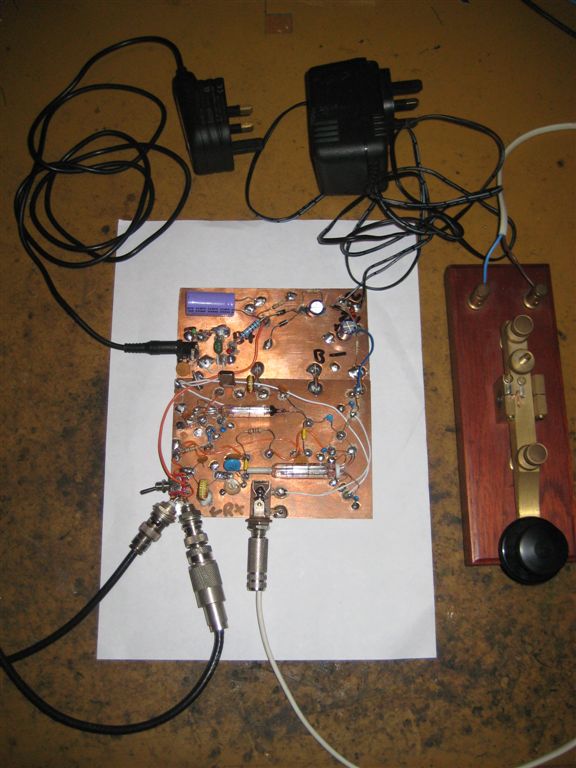
My transmitter follows the lines of the 10mW, battery-powered, RF
beacon that was carried into orbit in 1958 by “Vanguard 1.” You may
recall this is the one Premier Nikita Khrushchev characterized as “the
grapefruit satellite.”
My present build uses essentially the same circuitry and componentry
as did an earlier, 20m version; details of which can be found at
http://aa1tj.blogspot.com/2012/06/vanguard-1-satellite-transmitter.html
The 15m version drives a 44m end-fed wire with 30milliWatts.
The receiver that I built for the event is essentially a “Q-multiplier
-> detector” type regenerative job. However, the Q-multiplication is
accomplished by a parametric amplification using a quartz-crystal
controlled pump. I thought it would be historically appropriate given
that parametric amplifiers were all the rage in the late 1950’s.
I put together the keying and R/T changeover circuitry this morning.
When it appeared that “all systems were go” I began sending CQs on
21.060MHz. The band, or at least that portion of the band (the
receiver only tunes from 21.060 to 21.064MHz), seemed rather quiet,
but my 6th call netted a “dit dit dah dah dit dit.” Resending my call,
I was very pleased to hear HB9DCL come back to me from just outside of
Zurich. The reports were 579/339. Frank was running 5W to a log
periodic antenna. I sure hope this is a sign of things to come!
I hope to be at the key by 1300Z tomorrow. Although my little
“grapefruit” only puts out 30mW, folks running “Sputniks” made from
ex-Soviet subminiature “rod tubes” should be at least two S-units
stronger. A number of European stations will be operating this year
and at least one station that I know of will be QRV from Japan. Just
listen for the beeps and give them a call!
Thank you,
Mike, AA1TJ
…………………..
letter to some of the guys
Dear Friends
I won’t forget this morning’s QSO with ON6WJ anytime soon! As he
beeped/called CQ I could hear him riding on waves of QSB. I kept
hoping he would end on the top of the wave. It happened one time and
Jos sent “AA1TJ?” but by the time I re-sent my call we were back in
the trough of the wave. He started calling again and once again I
crossed my fingers. Finally it happened, he ended on top of a
particularly strong peak…and sure enough, he copied my callsign. It
took more effort to exchange the reports but we eventually did it! He
confirmed my 559 and I did the same for my 339 report. It must be true
that anything worthwhile doesn’t come easy, because the more difficult
the QSO the more I seem to enjoy it! I copied Jos’ info: “SPUTNIK PWR
700mW = ANT 3EL YAGI” perfectly on my tiny receiver. Just as amazing,
he copied my 30mW transmitter made from one PNP Germanium transistor
dating from September of 1959. Needless to say, I’m a happy camper
today. Merci Beaucoup, Jos.
Just above my operating frequency I heard PA0PJE sending “CQ Sputnik.”
You had a beautiful signal here, PJ! It was easily S6 on the peaks. My
transmitter frequency trimmer adjustment is buried in a rat’s nest of
wires which I didn’t dare stick my hand in so early in the day.
However, if I hear you again I will definitely risk it.
Thanks Carlo/IZ4KBS and congratulations on your Russian QSO. Any
contact all with this simple stuff is reason for a celebration!
…and now back to the Hobbit Hole for another dose of QRPp.
73/72,
Mike, AA1TJ
Our book: “SolderSmoke — Global Adventures in Wireless Electronics” http://soldersmoke.com/book.htm Our coffee mugs, T-Shirts, bumper stickers: http://www.cafepress.com/SolderSmoke Our Book Store: http://astore.amazon.com/contracross-20
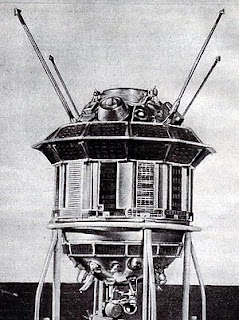
W1GQL, Cyrillic Morse, and HEX Beams
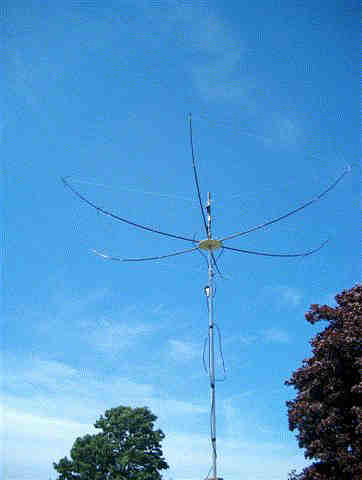
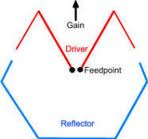
I’ve been hearing a lot about hex beams, and I think I’d like to build one. Maybe for 17 and 20 meters.
W1GQL has a lot of good info on these antennas on his site. I also found his discussion of Russian CW to be very interesting:
What I really like to do with my CW, however is to operate CW in the Russian language. Years ago I taught myself the cyrillic morse code and can use it. Not as fast as the International Morse code but at a usable speed of maybe 15-20 wpm. I have had many contacts with Russian stations and really surprised them coming back to them in fluent Russian. It turns out that Russian hams nowadays don’t use the cyrillic morse code often and are no longer even required to learn it to get their licenses. Newer Russian hams don’t even understand their own language well in CW. But if you can hitch up with an older ham that does, it is great. I had a QSO a few years ago with a ham licensed right after WW2. He told me that our QSO in Russian was the very first one he had ever had with someone outside Russian using cyrillic morse code. That gives you and idea of how unusual it is. Russian hams use the International morse code when communicating with each other even.
Our book: “SolderSmoke — Global Adventures in Wireless Electronics” http://soldersmoke.com/book.htm Our coffee mugs, T-Shirts, bumper stickers: http://www.cafepress.com/SolderSmoke Our Book Store: http://astore.amazon.com/contracross-20
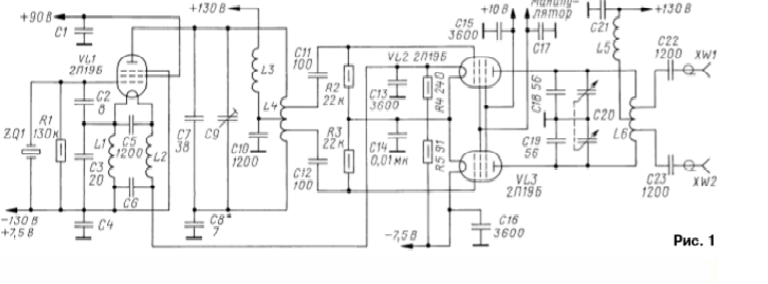
Party Like its 1957! (with the Sputniks on 21.060 MHz)
Steve “Snort Rosin” Smith sent me this very creative reminder that the Sputnik Replica On-The-Air event is scheduled to continue for the same length of time that the original transmitter was on the air. That means we have until October 26 to work or to listen to these magnificent replica rigs. (Hey, maybe I’ll get my HW-7 into the action!) See you on 21.060 MHz Comrades! 73 and DSW!
Our book: “SolderSmoke — Global Adventures in Wireless Electronics”http://soldersmoke.com/book.htmOur coffee mugs, T-Shirts, bumper stickers: http://www.cafepress.com/SolderSmokeOur Book Store: http://astore.amazon.com/contracross-20
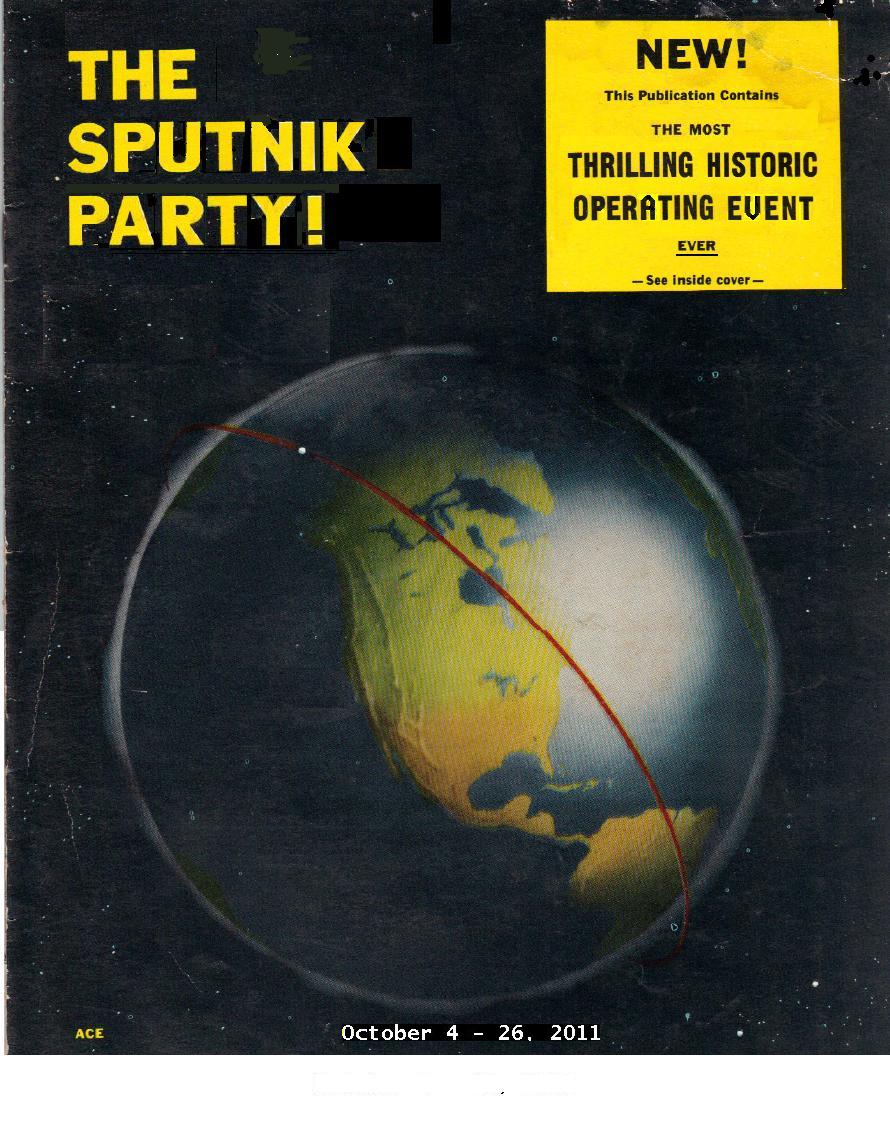
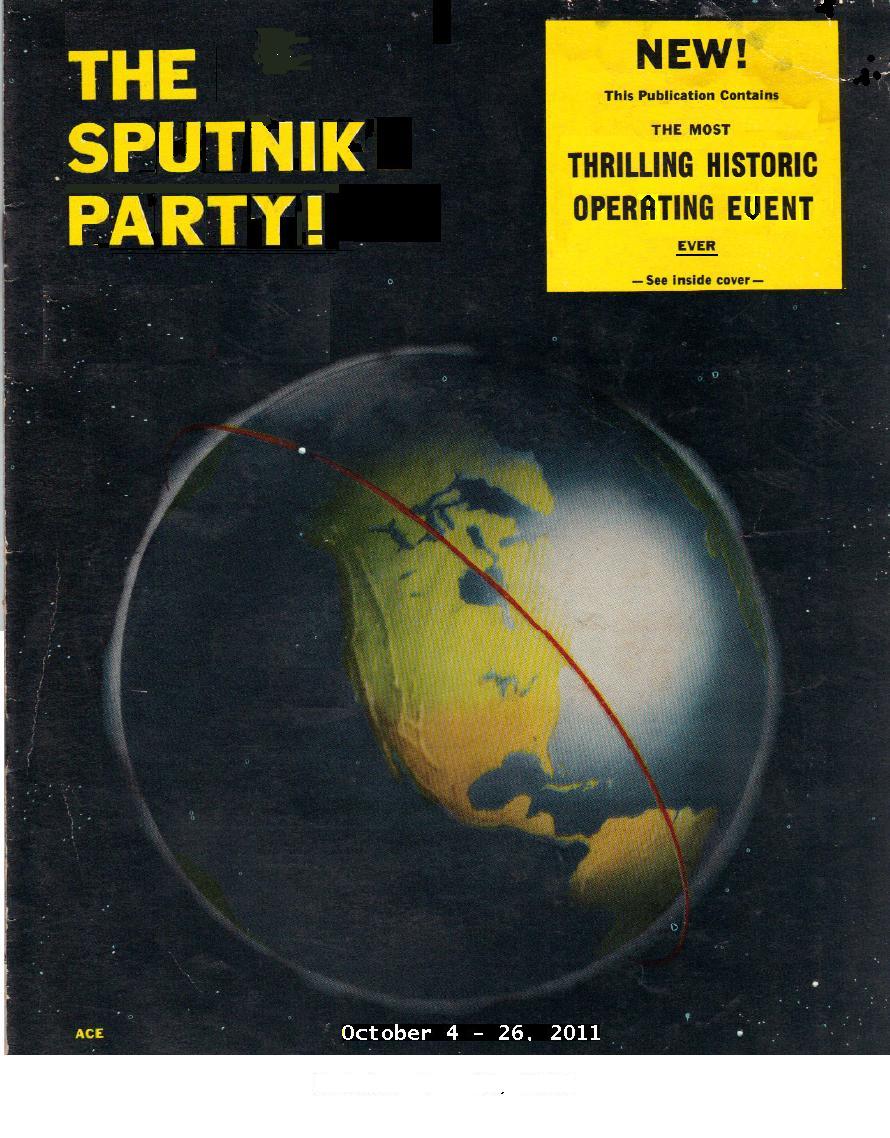
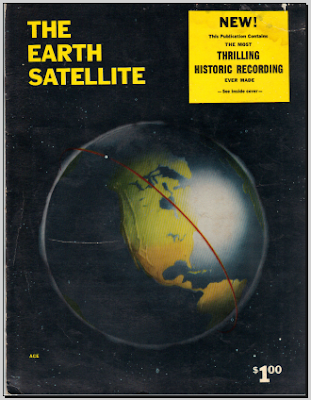
“Spine Tingling” Sputnik Recordings From 1957
Doug, W8NFT, sent me this booklet and copies of the recordings that came with it. Below you will find links to the booklet itself and the two mp3 files. Note that the signals were captured using an HRO receiver. Side A is a “re-creation” of the launch (“spine tingling in its realism!!!!”) Side B is an actual recording of the sat’s iconic beeping.
http://soldersmoke.com/Sputnik Booklet.PDF
http://soldersmoke.com/Sputnik Side A.mp3
http://soldersmoke.com/Sputnik Side B.mp3
Our book: “SolderSmoke — Global Adventures in Wireless Electronics”http://soldersmoke.com/book.htmOur coffee mugs, T-Shirts, bumper stickers: http://www.cafepress.com/SolderSmokeOur Book Store: http://astore.amazon.com/contracross-20
Listening for Sputniks, Watching a Satellite

I felt like a junior high school kid yesterday, rushing into the shack, firing up the old rigs, anxious to tune in some special stations. It was Sputnik Anniversary Day! 15 meters was still in pretty good shape at 2315 UTC. On the trusty Drake 2-B I could hear W1AW’s code practice session a bit above the Sputnik frequency of 21.060 MHz. All of a sudden WA5TCZ was booming in, calling CQ Sputnik! OM Darron later e-mailed and let me know that he wasn’t running a replica rig — like me, he was looking for them.
This morning, inspired by all this space activity, I pulled out my newly cleaned and collimated telescope and took a tour of the skies of Northern Virginia. Jupiter is very bright in the East (I could see the Galilean moons in my finder scope!) Mars is in the West, but is too far away for any detail to be seen in my ‘scope — it is just a little red disk. I had to go out into the street to position the ‘scope for the great nebula in Orion. At 1023UTC the International Space Station flew over — I watched it disappear into the sunrise. A good morning indeed.
I have a suggestion: Can the Sputnik event be extended through the weekend to give more people the chance to tune in these magnificent rigs?
Our book: “SolderSmoke — Global Adventures in Wireless Electronics”http://soldersmoke.com/book.htmOur coffee mugs, T-Shirts, bumper stickers: http://www.cafepress.com/SolderSmokeOur Book Store: http://astore.amazon.com/contracross-20
Listening for Sputniks, Watching a Satellite

I felt like a junior high school kid yesterday, rushing into the shack, firing up the old rigs, anxious to tune in some special stations. It was Sputnik Anniversary Day! 15 meters was still in pretty good shape at 2315 UTC. On the trusty Drake 2-B I could hear W1AW’s code practice session a bit above the Sputnik frequency of 21.060 MHz. All of a sudden WA5TCZ was booming in, calling CQ Sputnik! OM Darron later e-mailed and let me know that he wasn’t running a replica rig — like me, he was looking for them.
This morning, inspired by all this space activity, I pulled out my newly cleaned and collimated telescope and took a tour of the skies of Northern Virginia. Jupiter is very bright in the East (I could see the Galilean moons in my finder scope!) Mars is in the West, but is too far away for any detail to be seen in my ‘scope — it is just a little red disk. I had to go out into the street to position the ‘scope for the great nebula in Orion. At 1023UTC the International Space Station flew over — I watched it disappear into the sunrise. A good morning indeed.
I have a suggestion: Can the Sputnik event be extended through the weekend to give more people the chance to tune in these magnificent rigs?
Our book: “SolderSmoke — Global Adventures in Wireless Electronics”http://soldersmoke.com/book.htmOur coffee mugs, T-Shirts, bumper stickers: http://www.cafepress.com/SolderSmokeOur Book Store: http://astore.amazon.com/contracross-20
Sputnik!!! SolderSmoke 138!!!
Today is Sputnik Anniversary Day! Michael, AA1TJ, and his intrepid international band of solder melters will be putting their homebrew Soviet-parts rigs on 15 meters! I will be listening with my HQ-100. This is all discussed on SolderSmoke 138, which I have just uploaded:
http://soldersmoke.com/soldersmoke138.mp3
October 4, 2011
A Meteor and Jupiter: Cosmic Birthday Present!
Sagan’s Pale Blue Dot — Lots of interesting radio info
On the cover of “Hot Iron”!!!!
The HW-7 Philosophy and Way of Life
Sputnik Anniversary
Getting my 2B back on 17
Preparing for a return of sunspots and 17 meters
Raiding Radio Shack (for 2N2222s!)
The Autumn SPRAT
MAILBAG
Our book: “SolderSmoke — Global Adventures in Wireless Electronics”http://soldersmoke.com/book.htmOur coffee mugs, T-Shirts, bumper stickers: http://www.cafepress.com/SolderSmokeOur Book Store: http://astore.amazon.com/contracross-20
Sputnik Rigs Cross the Pond, Cambridge to Cambridge
The Chief Designer, Michael, AA1TJ, alerted us to this wonderful post on Roger, G3XBM’s blog:
http://g3xbm-qrp.blogspot.com/2011/09/sputnik-across-atlantic-today.html
We clearly see the spirit of the International Brotherhood of Electronic Wizards in Roger’s comment: “Nice to think that valves used in missiles aimed at each other in the Cold War end in bringing friendship and joy. CW is a wonderful mode if you want simple equipment capable of DX.” Indeed. Well done!
Our book: “SolderSmoke — Global Adventures in Wireless Electronics”http://soldersmoke.com/book.htmOur coffee mugs, T-Shirts, bumper stickers: http://www.cafepress.com/SolderSmokeOur Book Store: http://astore.amazon.com/contracross-20

Getting Ready to Listen for Sputniks
October 4 is approaching and I DO NOT have a homebrew Sputnik transmitter in the works. I hang my head in shame. AA1TJ sent me the parts, but they went to one of my many APO or FPO addresses, so I suspect they are orbiting around the Azores, or London, or Lisbon, or Rome. I’m sure they will reach me eventually.
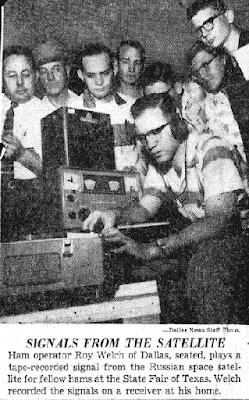
But I have come up with a way to participate in this historic event even without a homebrew replica transmitter: I will be listening for the Sputnik transmitters, and I will be doing so with a receiver of that era, a receiver that could have been used by some earnest teenager eagerly tuning for the beeps of the overhead RED MENACE. Like the intrepid young man in the picture. What a great shot! Wow, that’s Roy Welch W0SL, then W5SLL! When I got into satellites in the Dominican Republic in 1994, the first tracking program that we used was Orbits II… by Roy Welch. We loved that software. From the AMSAT page: “Roy and his two-year-old daughter would put the radio speaker in a window and then go outside and listen to the strong signals while they watched the third stage booster tumbling end over end like a bright pulsating star as it passed over in the evening sky.“
I will be using a Hammarlund. Moore’s “Communication Receivers” says my HQ-100 was made between 1956 and 1960. PERFECT! (Mine was probably in the Dominican Republic on October 4, 1957.)
By the way, I got into the old Electric Radio magazines again, reading some more of Lew McCoy’s wonderful reminiscences. He reports that during the Sputnik period he — and apparently others — were asked by their Uncle Sam to use their skills to monitor Soviet space activities.
Let the beeping begin! (Sputnik signals recorded by Roy Welch:
http://www.amsat.org/amsat/features/sounds/Sputnk1b-144.ra)
Our book: “SolderSmoke — Global Adventures in Wireless Electronics”http://soldersmoke.com/book.htmOur coffee mugs, T-Shirts, bumper stickers: http://www.cafepress.com/SolderSmokeOur Book Store: http://astore.amazon.com/contracross-20

9 Volt Superhet with Russian Sputnik Tubes
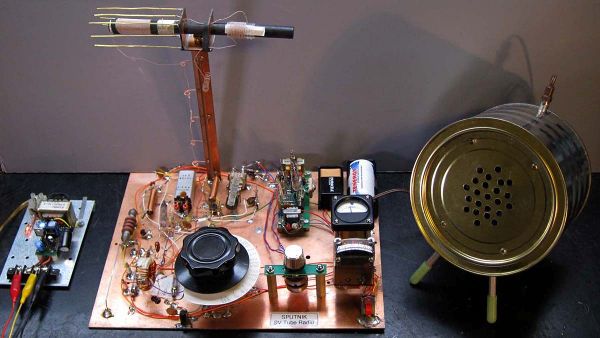
Wow! Now that’s what I call a Manhattan breadboard! Joe Sousa has an excellent article on a broadcast band superhet that he built with Russian rod-type tubes, the same kind of tubes that flew in Sputnik.
http://www.radiomuseum.org/forum/sputnik_9v_superheterodyne_tube_radio.html
Lots of other great homebrew projects on this site also. Thanks to Bob, WA1EDJ, for alerting us to this.
Joe’s research may be of use to those radio fiends among us who are feverishly building their Sputnik transmitters. October 4 is almost upon us! Onward Fellow Travelers!
Our book: “SolderSmoke — Global Adventures in Wireless Electronics”http://soldersmoke.com/book.htmOur coffee mugs, T-Shirts, bumper stickers: http://www.cafepress.com/SolderSmokeOur Book Store: http://astore.amazon.com/contracross-20

Russia, Vermont, Sputnik, Old Parts
When I heard of the terrible floods in Vermont, I thought immediately of OM Michael, AA1TJ (aka Comrade Mikhail, the Chief Designer) and his underground hamshack. I heard this morning that Michael is high and dry, up at his mountain top lair (the TV transmitter). Here is an update on the Sputnik project:
Fellas,
Our book: “SolderSmoke — Global Adventures in Wireless Electronics”http://soldersmoke.com/book.htmOur coffee mugs, T-Shirts, bumper stickers: http://www.cafepress.com/SolderSmokeOur Book Store: http://astore.amazon.com/contracross-20

ARISSat Deployed
I just got back from a vacation trip to New York City (amazing place!) and found out that yesterday Russian cosmonauts launched the ARISSat amateur radio satellite. This one looks like lot of fun. It has a two meter downlink. I’ll be doing some listening, and my try to get some of the SSTV signals.
Uh oh…. Just read a post from Mark over on Brainwagon reporting on some problems with the deployment:
http://brainwagon.org/2011/08/03/arissat-1-is-off-to-a-bumpy-start/
Details on how to use the satellite can be found here:
http://www.amsat.org/amsat-new/ARISSat/ARISSatHowTo.php
Our book: “SolderSmoke — Global Adventures in Wireless Electronics”http://soldersmoke.com/book.htmOur coffee mugs, T-Shirts, bumper stickers: http://www.cafepress.com/SolderSmokeOur Book Store: http://astore.amazon.com/contracross-20