SolderSmoke Podcast #216 Is Available: BITXs, Paesano, Paraset, ET2, Antuino, Mailbag

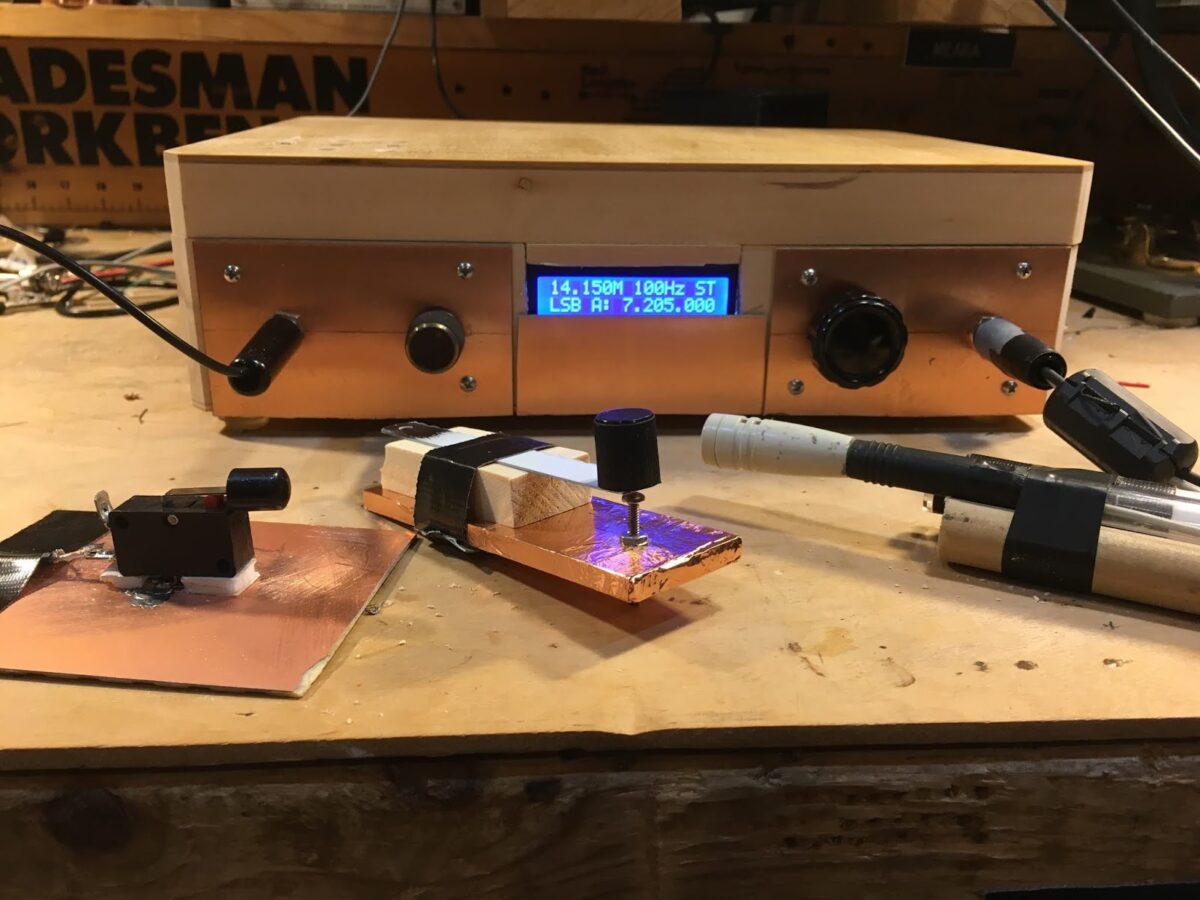
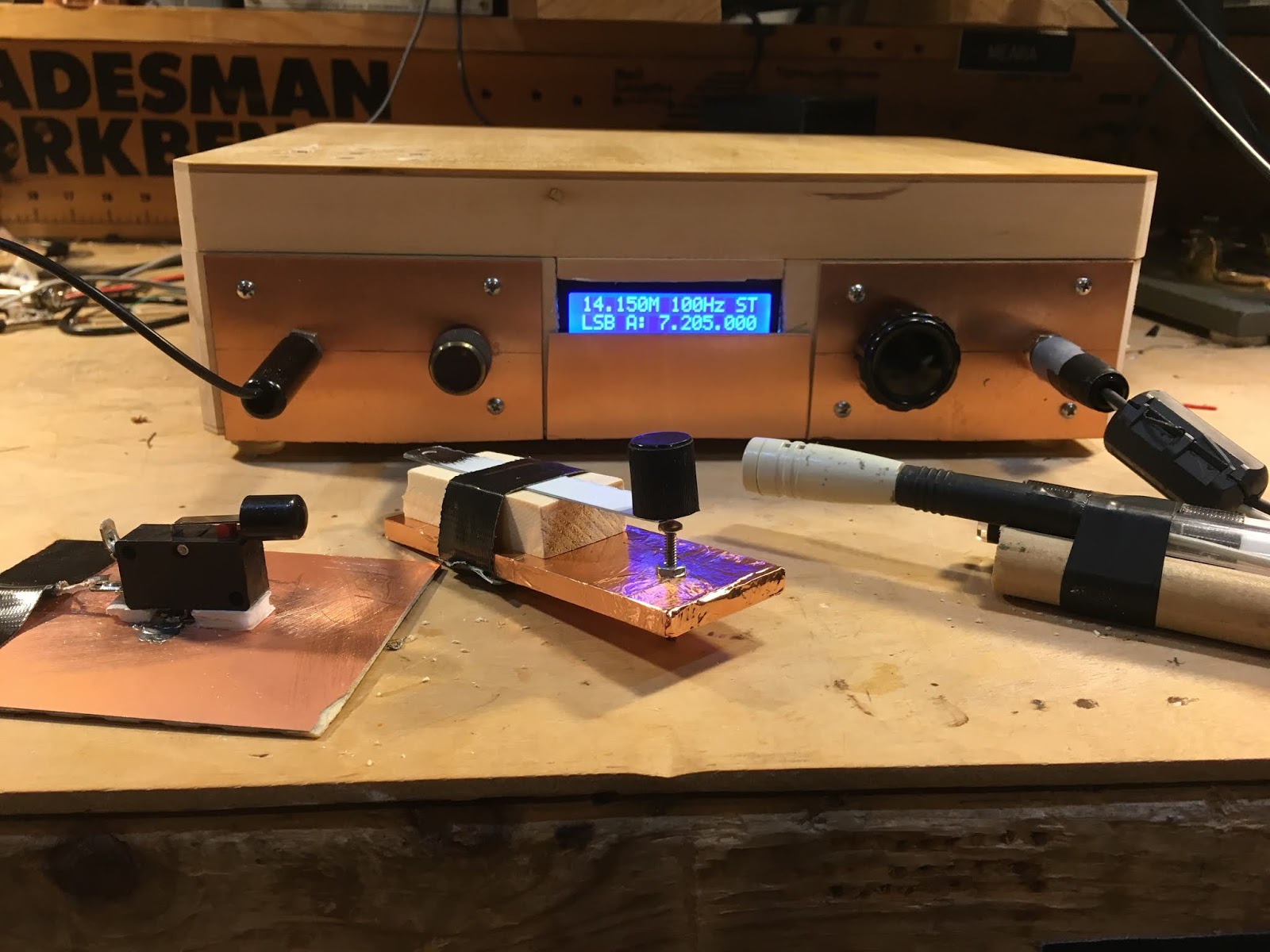
Bill’s uBITX with HB keys and the mic that used to be the podcast mic!

SolderSmoke Podcast #216 is available

21 December 2019

HAPPY HOLIDAYS TO ALL!

http://soldersmoke.com/soldersmoke216.mp3

Pete’s Bench
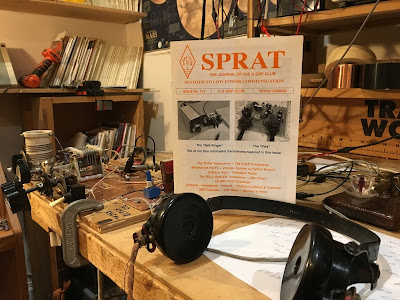
Sprat Article
BITX 40 Fun
ZL2BMI Rig
Paraset. Three tubes! Almost an ET-3!

Bill’s Bench
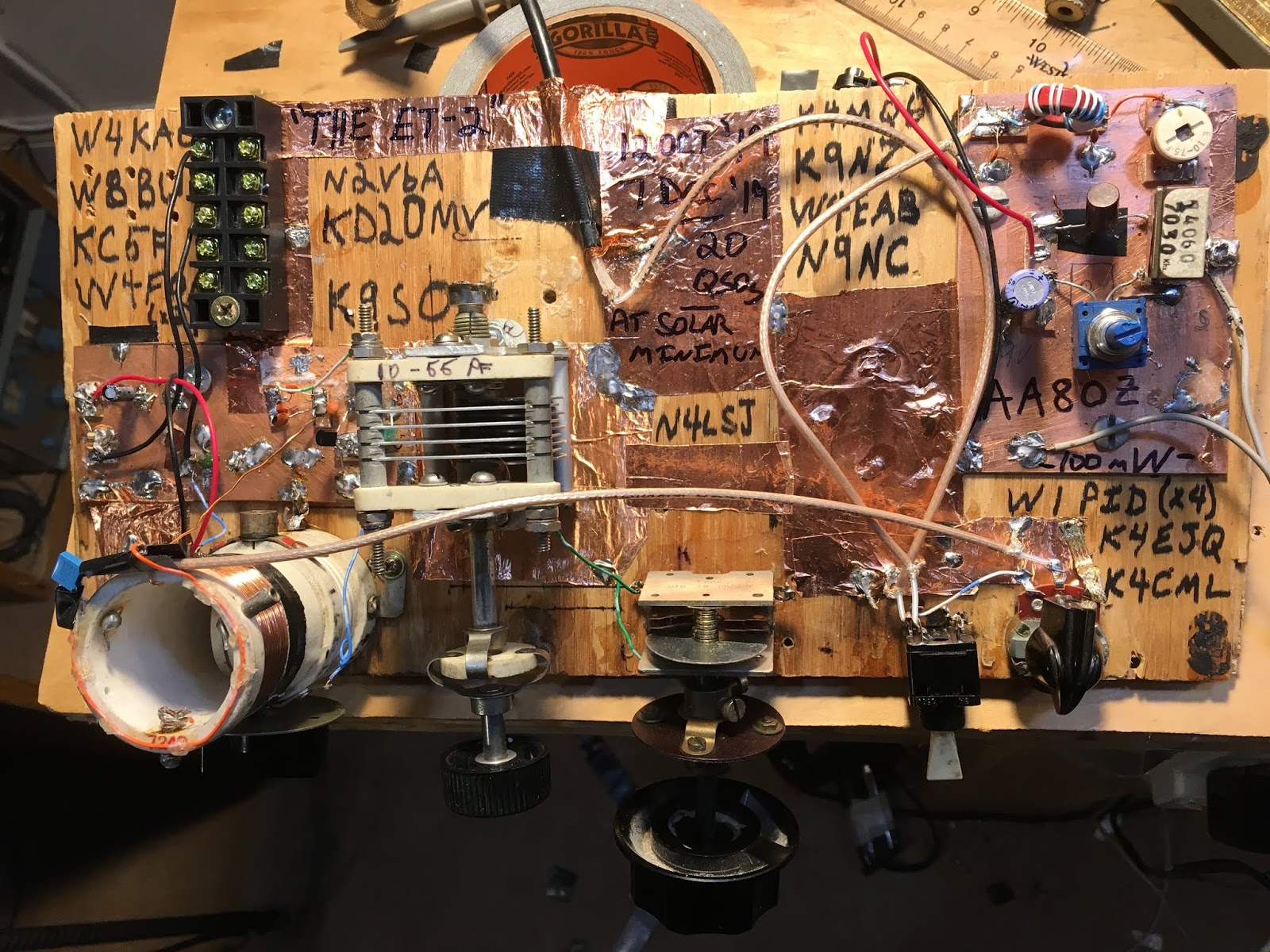
ET-2 Adventure over, Rig on the wall
Final QSO count. 20 3 “random”
Last QSO with AA8OZ
Lessons learned: 100 mW not the problem. Crystal Control cramps your style.
N0WVA regen amazingly effective.
Tried for the Sunrise Net. Walter sent me some crystals.

On to the uBITX.
Accidentally wiped out calibration and BFO settings.
Had to do recalibration and reset BFO.
Learned a lot about the rig.
How they did CW and how they do it now. Shift TX? Or shift RX? Or just shift BFO on RX?
How all the signals end up as upper sideband. Only one BFO freq. Very cool.
TalentCell 12 V Lithium Ion 3 AmpHour battery. Size of a deck of cards.
Inspired by Peregrino — I ordered EFHW Tuner from QRP Guys.
Homebrew Straight Keys

Antuino upgrade
SMT soldering.
Back to Arduino Nano and the IDE.
A very cool tool.
Antuino filter analysis.
Version 6 of uBITX out.

The “Watt Meter” DC power meter. Very useful. 8 bucks. LINK:

https://www.ebay.com/itm/Digital-DC-combo-Meter-LCD-Watt-Power-Volt-Amp-RC-Battery-charging-Analyzer-M/152339793114?fbclid=IwAR0u9SlZi2Dm6zOJyZt4fDTu7w_pjBIEYD_FiNfLymxtQUbMjcNHjfB17P0

SPRAT, balloons and hardcore homebrew hydrogen.

MAILBAG
VK3HN’s AM receiver. I ordered 6kHz 455 kHz filters from Australia.
Dean’s MMM
Peter VK2EMU Hertz not hertz.
Ben KC9DLM LTSpice YouTube Videos
Steve Silverman Electroluminescent Receiver Kit
Lyndon N0LFX back to listening. FB OM
Steve M0KOV built a pill bottle variometer. Did you get the regen going?
Anthony VU3JVX FB HB uBitx.
Allison KB1GMX Great to hear from her

Leif WB9IWT — helped me trouble shoot my uBITX (BFO was low)

Mike EI0CL old buddy from Azores days. Recognized his voice on 20. Great QSO.

Hangin’ it up (the ET-2)

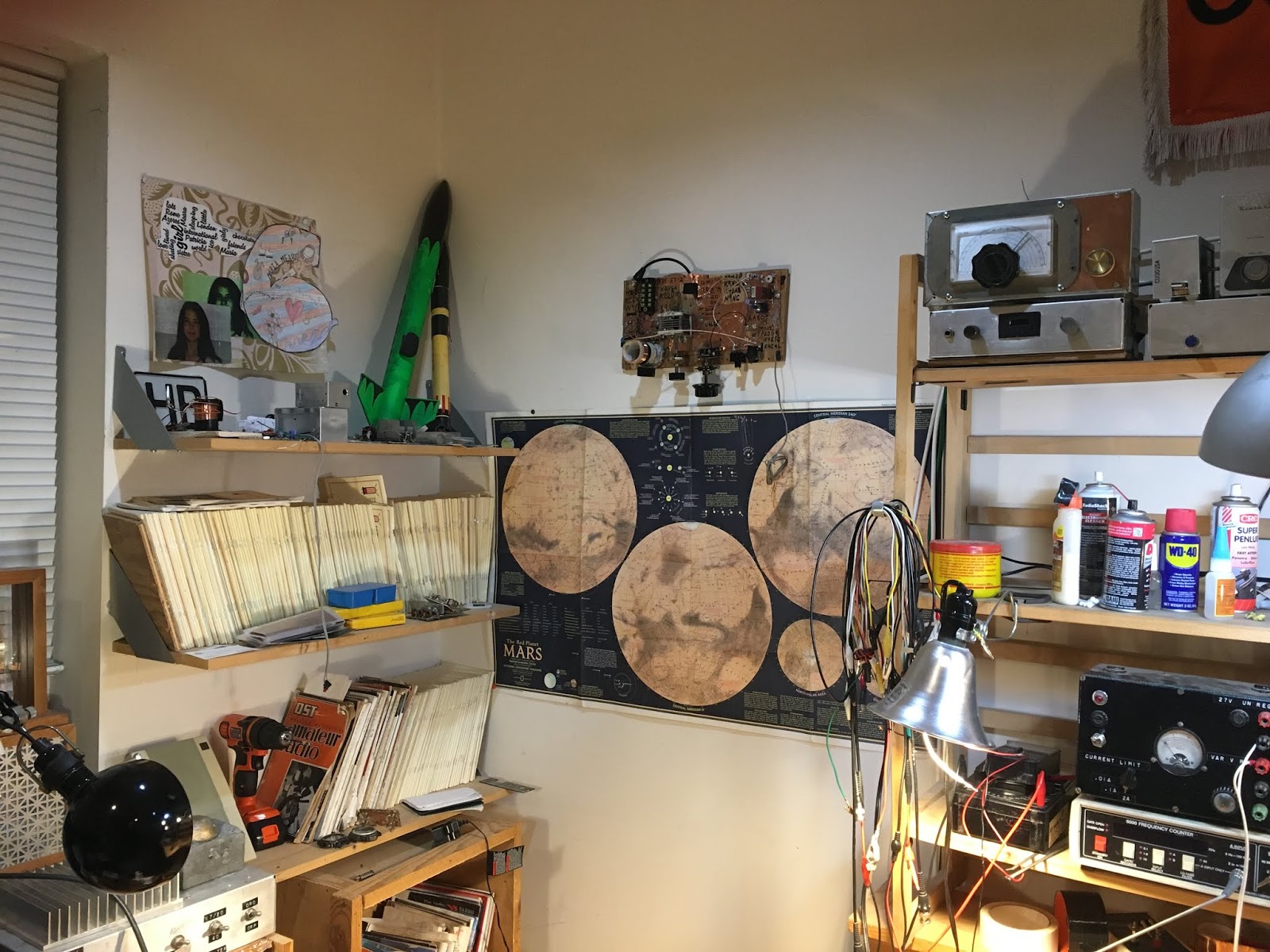
My ET-2 minimalist QRP CW adventure is (for now) officially over. I have taken the rig – festooned with the callsigns of all the stations I contacted — and have put it up on the wall. This may be a new form of art. I think I am the first radio amateur to do this. I think it is pretty cool.


Here are the stats: I made 20 contacts with the rig. I had it on the air from 12 October 2019 to 7 December 2019. Seventeen of the contacts were the result of my posting pleas for help on the SKCC Sked page and/or the Summit DX page. Three of the contacts were completely random. One station — W1PID — provided four of the contacts. Thanks Jim.

My power out was usually around 100 milliwatts. I used either a 40 meter coax fed dipole or a 135 foot doublet fed with window line.

My best distances were Wisconsin and Georgia.

Crystal control was the real limiting factor. 100 milliwatts didn’t seem to be much of an impediment. The most amazing thing about this rig is the N0WVA regen receiver. It took a lot of peaking and tweaking, and it took some skill to operate. but once I got it going it was an amazingly good receiver. Really Amazing for just ONE J-310 FET.

The last contact was really nice. I was calling CQ and AA8OZ came back. He was in a cabin on a trip with some scouts. He too was on a wire antenna. He was one of those guys who said WOW! when I told him about the rig. We had a nice long conversation on 40. It was a great way to wrap up the ET-2 adventure.

Thanks to all who helped me make contacts and for all those who tried to work me. Thanks to N0WVA for the regen inspiration. And thanks to Glen Yingling W2UW (SK) for the ET-1 idea.

The rig is standing by. On the wall. Perhaps it will return to service, maybe during solar max.


Replicating N0WVA’s Regen Results

When I watched Doug N0WVA’s in action I was struck by how much more sensitive his was than mine.

I think this is do to the LC ratio in the main tank circuit. In my original version I used the variometer that I had in my junk box. It was about 4.5 uH. Doug used a hand-wound coil of about 35 uH.
For construction details on Doug’s receiver and variometer go here:
https://aa7ee.wordpress.com/2015/02/07/n0wvas-one-fet-regen-optimized-for-ssbcw-sounds-great/

So mine was heavy on the C, and light on the L. I think the larger coil makes it easier to couple the antenna to the receiver. I notice a lot of discussion in the online regen community about suitable LC ratios.

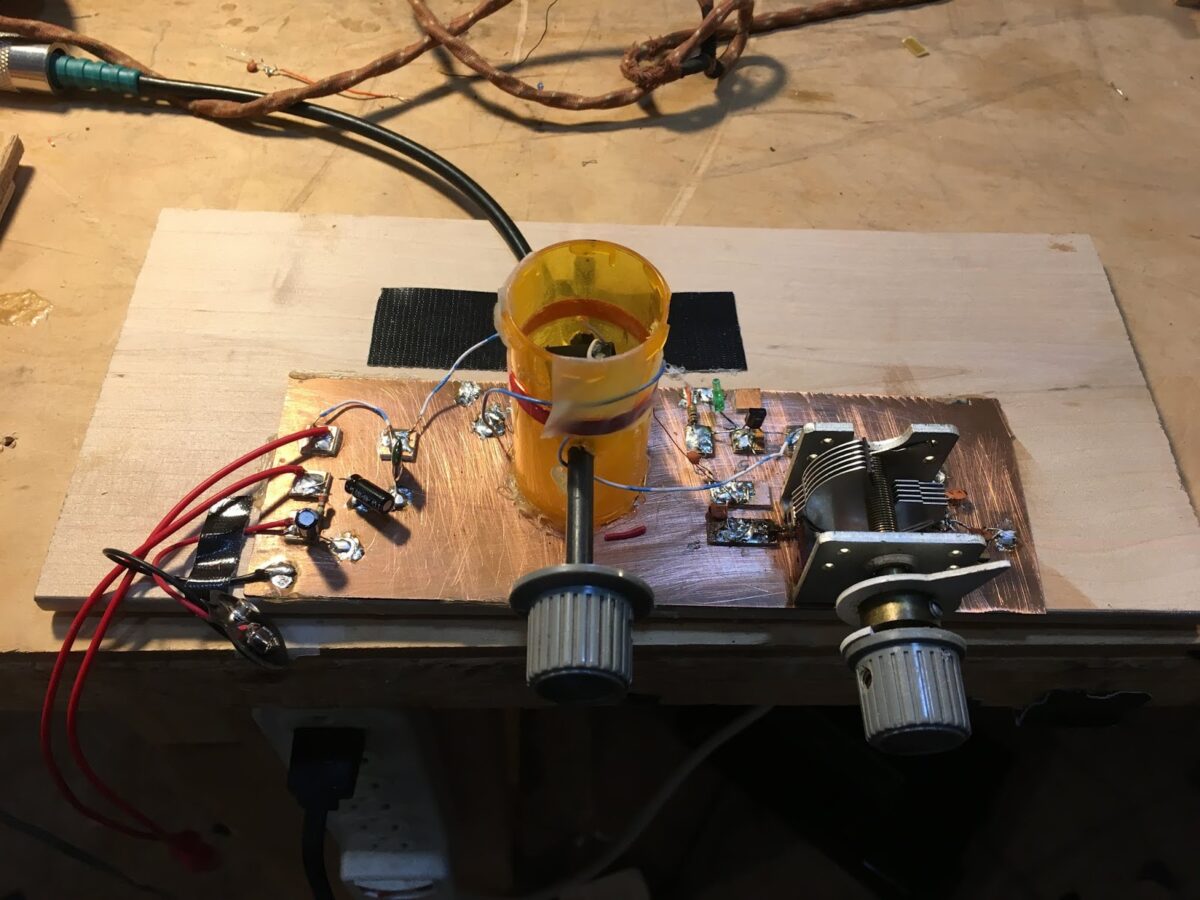
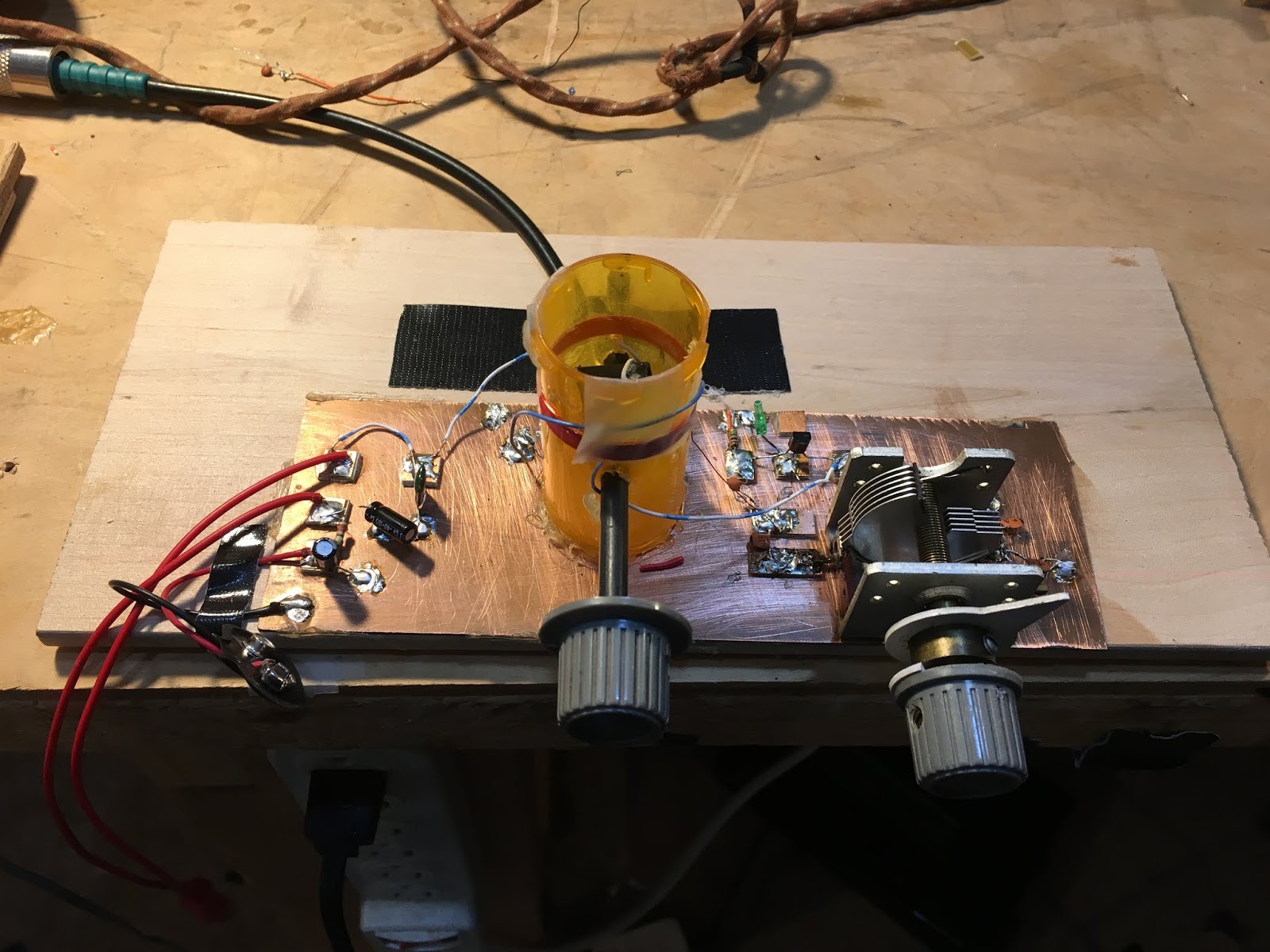
So I built a version more like Doug’s. I built my own variometer — that was a lot of fun. It is easier than it appears — Do not be deterred! And indeed the new receiver is much more sensitive.
On this second receiver I measured an Minimum Discernible Signal of -115 dbm. On my ET-2 receiver it was only -93 dbm. The improvement was very noticeable. I could even copy 40 meter AM signals at the top of the band. And on SSB I was actually having trouble with overload — the signals were too strong for the oscillations of the regen.

SolderSmoke Podcast #215 Regen Madness, KWM-4, Paesano, Mailbag

Latest N2CQR version of N0WVA’s Regen

SolderSmoke Podcast #215 is available.

25 November 2019

http://soldersmoke.com/soldersmoke215.mp3

Happy Thanksgiving!
Transit of Mercury
Book Reviews

Bill’s Minimalist Adventures:
— 15 Contacts with the ET-2
— Ethical issues: Is spotting yourself OK? OK to use TWO FETs?
— Using Reverse Beacon Network
— How to keep receiver on the right frequency
— N0WVA’s receiver sounded better, so I built a second N0WVA receiver
— Regens reach back to Edwin Howard Armstrong’s 1912-1923 breakthrough
— Regens are fun, but they are not good projects for new builders.

— Pull out those Michigan Mighty Mites and listen for yourself via on-line SDR receivers.

Pete’s Projects:
“WHEN YOU KNOW STUFF YOU CAN DO STUFF!”
— Left Coast SSB — “The Paesano” — To be featured in December 2019 SPRAT.
— Pete’s KWM-4 on The Collins Collectors Net
— Pete builds an N0WVA regen — just in time for Sweepstakes CW Saturday!
— Arduino IDE Library trouble
— uBITX 6.0? Fake News?

No more BITX40 Modules. Long Live BITX40 HOMEBREW!

BITX-101. Intriguing but on second thought, no.

MAILBAG

Steve Silverman: Lexicon: “Audible Modes.”
Felipe CU2BD Old buddy from the Azores
Michael Rainey AA1TJ: Come back Mike! The ionosphere needs you!
Jack Welch AI4SV is in 5G land (Cyprus, not the cell phone thing).
Walter AC4IM is at the San Vito Solar Observatory in Italy. DO SOMETHING WALTER!
Kostas SV3ORA has an amazing homebrew web site. Thanks Kostas!
Mike KC6SAX — How to deal with the frustration of HB projects that don’t work.
Paul KL7FLR — Pete is 7 Hz high.
Keith W3ISZ sent his photo of the Transit of Mercury.

PLEASE USE THE AMAZON SEARCH BOX ON THE SOLDERSMOKE BLOG PAGE WHEN DOING YOUR CHRISTMAS SHOPPING.

PLEASE SUBSCRIBE TO THE SOLDERSMOKE CHANNEL ON YOUTUBE.

N2CQR’s ET-2 with callsign Tattoos

SolderSmoke Podcast #215 Regen Madness, KWM-4, Paesano, Mailbag

Latest N2CQR version of N0WVA’s Regen

SolderSmoke Podcast #215 is available.

25 November 2019

http://soldersmoke.com/soldersmoke215.mp3

Happy Thanksgiving!
Transit of Mercury
Book Reviews

Bill’s Minimalist Adventures:
— 15 Contacts with the ET-2
— Ethical issues: Is spotting yourself OK? OK to use TWO FETs?
— Using Reverse Beacon Network
— How to keep receiver on the right frequency
— N0WVA’s receiver sounded better, so I built a second N0WVA receiver
— Regens reach back to Edwin Howard Armstrong’s 1912-1923 breakthrough
— Regens are fun, but they are not good projects for new builders.

— Pull out those Michigan Mighty Mites and listen for yourself via on-line SDR receivers.

Pete’s Projects:
“WHEN YOU KNOW STUFF YOU CAN DO STUFF!”
— Left Coast SSB — “The Paesano” — To be featured in December 2019 SPRAT.
— Pete’s KWM-4 on The Collins Collectors Net
— Pete builds an N0WVA regen — just in time for Sweepstakes CW Saturday!
— Arduino IDE Library trouble
— uBITX 6.0? Fake News?

No more BITX40 Modules. Long Live BITX40 HOMEBREW!

BITX-101. Intriguing but on second thought, no.

MAILBAG

Steve Silverman: Lexicon: “Audible Modes.”
Felipe CU2BD Old buddy from the Azores
Michael Rainey AA1TJ: Come back Mike! The ionosphere needs you!
Jack Welch AI4SV is in 5G land (Cyprus, not the cell phone thing).
Walter AC4IM is at the San Vito Solar Observatory in Italy. DO SOMETHING WALTER!
Kostas SV3ORA has an amazing homebrew web site. Thanks Kostas!
Mike KC6SAX — How to deal with the frustration of HB projects that don’t work.
Paul KL7FLR — Pete is 7 Hz high.
Keith W3ISZ sent his photo of the Transit of Mercury.

PLEASE USE THE AMAZON SEARCH BOX ON THE SOLDERSMOKE BLOG PAGE WHEN DOING YOUR CHRISTMAS SHOPPING.

PLEASE SUBSCRIBE TO THE SOLDERSMOKE CHANNEL ON YOUTUBE.

N2CQR’s ET-2 with callsign Tattoos

Notes and Video on Doug N0WVA’s Amazing Single Transistor Regenerative Receiver

When I had trouble getting the regen receiver in W2UW’s ET-1 circuit to work, I turned to the internet and — through AA7EE’s site — found the circuit of Doug N0WVA. This circuit has completely changed my attitude toward regen receivers. I have been exchanging e-mails with Doug — below is a compilation of the info and regen-wisdom that he has shared. More to follow… Thanks Doug.

From Doug N0WVA:


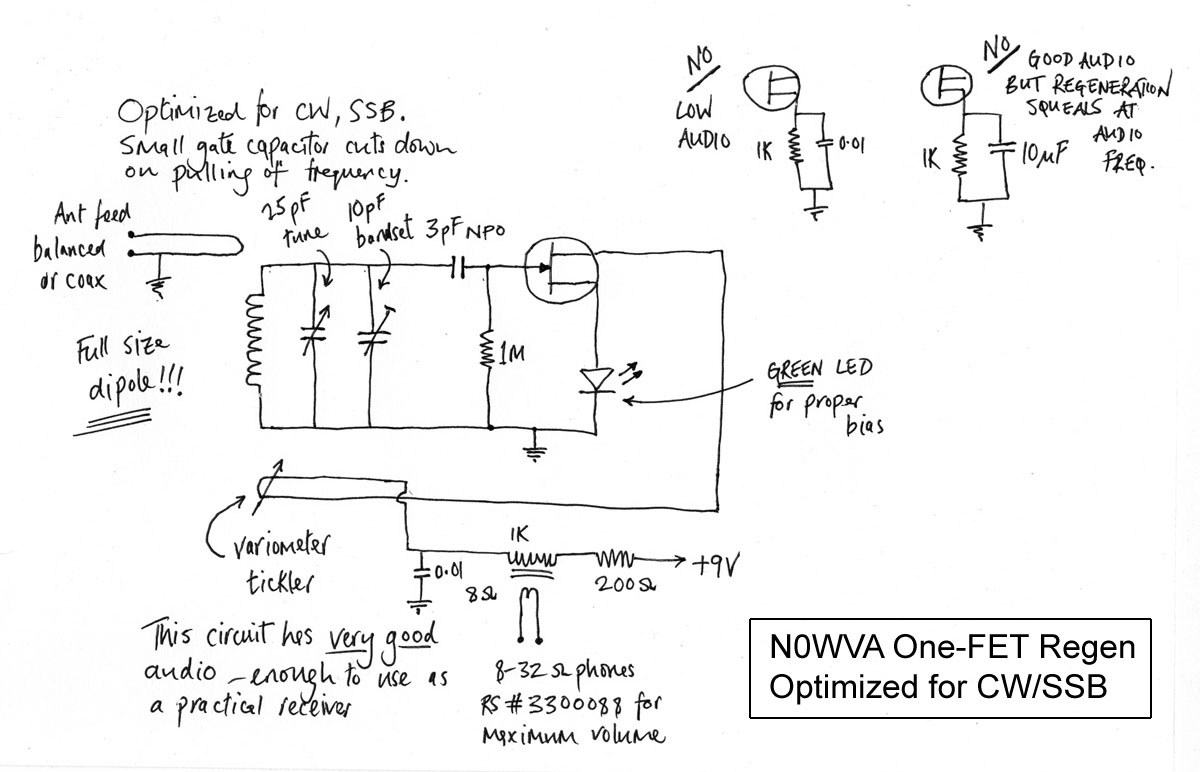
I came up with the diode after exploring ways to ditch the source r/c combo. The thinking was the closer I could get the source to ground the less voltage/capacitance fluctuations the gate would see. Also I hated seeing everyone using .01 bypass to avoid audio oscillations and also losing audio gain.

The green LED works good but even better is directly grounding the source. Then feed a small negative bias through the gate leak resistor , adjustable via a potentiometer.

On video, the audio is taken straight from the radio shack headphones that are connected to the audio transformer. The headphones are held directly to the phones case ( no hole for the microphone seen on the phone)

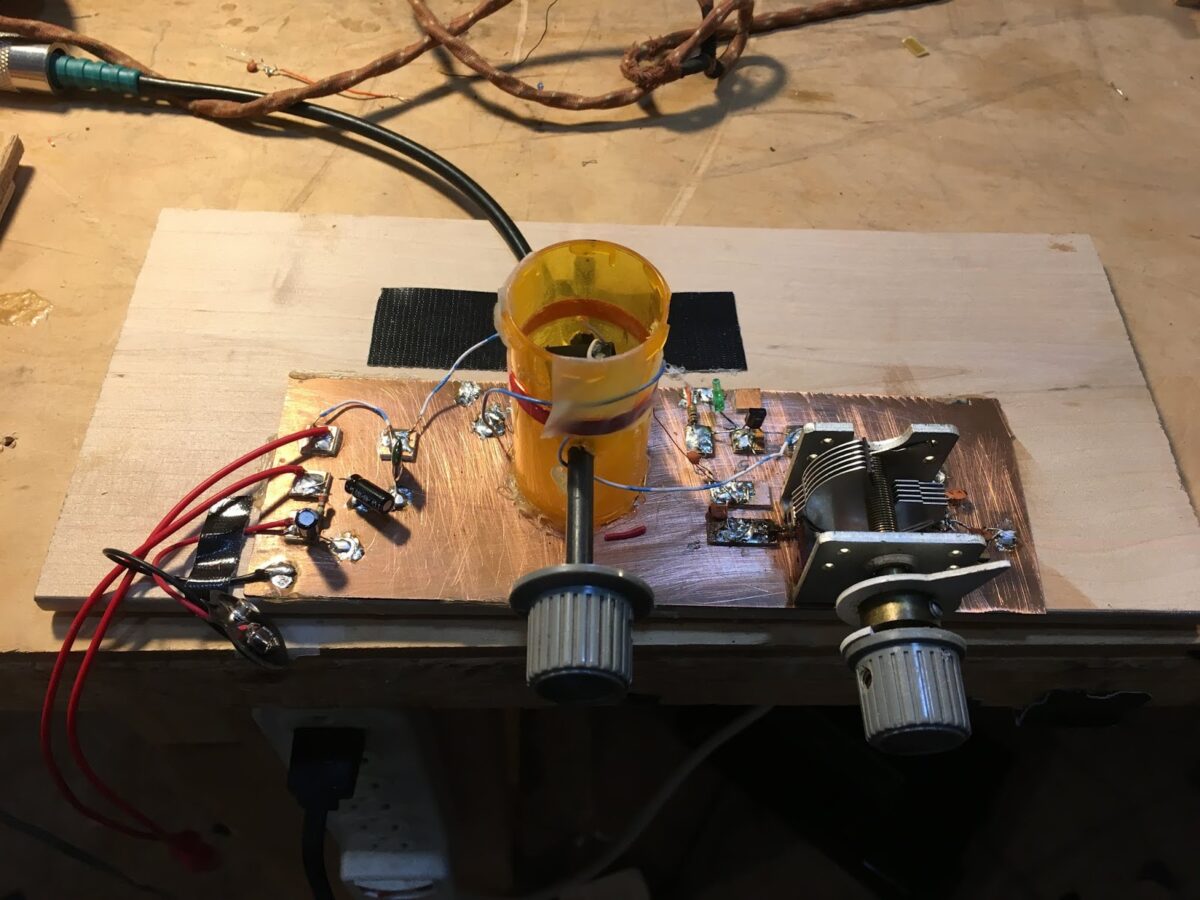
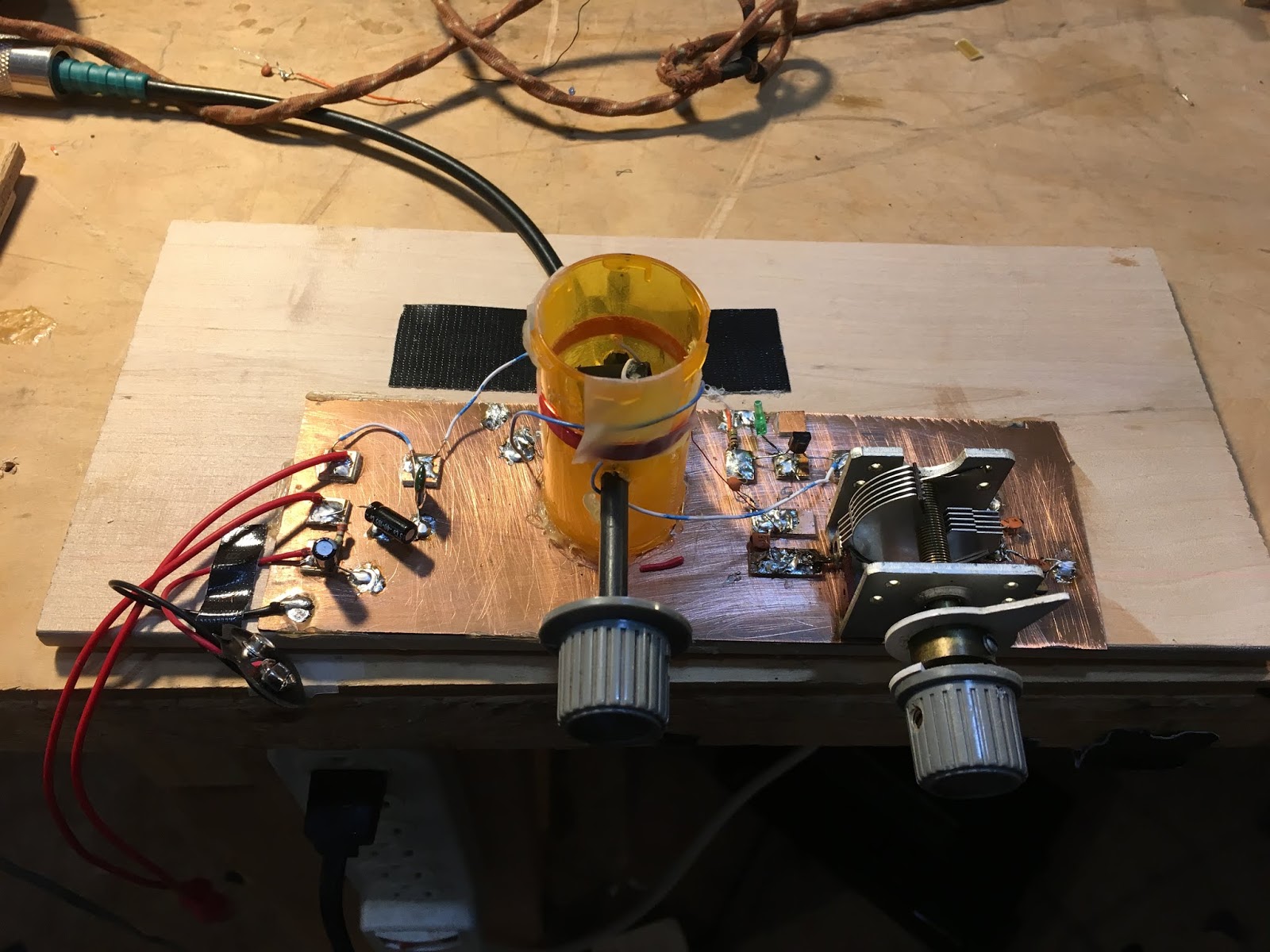
The variometer is made with I think a 1.25 inch pill bottle and the tickler inside is around an inch in diameter pill bottle. I used a pharmaceutical syringe’s outside tube for a shaft. The tickler form has a couple holes cut for the shaft to pass through, it is a friction fit, more like slits cut and the rod pushed through. I used the soldering iron to melt round holes on the actual outside coil form for the shaft to turn on. On the back of the shaft is a small screw that goes through the outside coil form and screws into the syringe center hole that holds it in place. The tickler is one turn, I think, and routed through the inside of the shaft via small holes melted with the soldering iron.

A couple tweeks to mention is instead of a resistor in the gate, use a choke for less noise, makes a big difference, especially if you listen to AM. Also I have been using a gimmick for the gate cap. Just maybe a #36 enamel wire wrapped around the hot tank lead 5 or 6 times and then I remove turns till the thing stops oscillating, then add a turn. This helps cut down even more on strong signal pulling.


I have always been on a quest for more performance out of the least parts. This design was about as far as it could go, I think….

I have never done any real sensitivity tests on the regen, so you have gone farther than me already. One thing was noticed though is the gate resistor does add a lot of noise, especially noticeable just under oscillation in AM detection mode. So I took a one meg 1/4 watt resistor and wound as many turns of #38 wire on as I could, probably around 80 turns, then subbed it out for the gate leak. This dramatically improved the noise level just under oscillation. This was with a simple antenna band noise test. I think it also improved the noise under oscillating conditions.

Adding extra antenna coupling will probably help a lot, but, there is a point where we start getting too much strong signal pulling. The strong external bias battery trick will also improve this, although at the cost of extra parts.

Listen to the ET-2’s Minimalist Regen Receiver

I’m guessing that most of you have never listened to a regen receiver that uses only one transistor. So in these videos I’ve tried to capture the experience. The audio that you hear from the receiver is from a small I-phone microphone taped to the one of the headphones on my DLR WWII headphones. So you are hearing it just as I hear it — with no additional amplification.

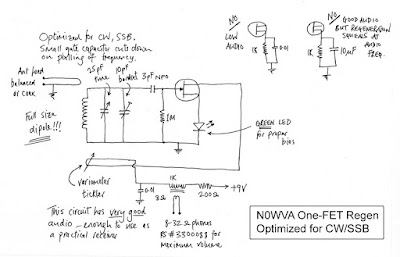
Here is N0WVA’s schematic. When I tune the “regeneration” control I am turning the knob on the variometer. The broad or “bandset” tuning control is essentially N0WVA’s 25 pf cap. My fine tuning control (the one that I use the most in the video) is the equivalent of the smaller cap in parallel with the larger tuning cap.

I had trouble shooting the video for this post — taping the mic to the headphone turned out to be a bit difficult. So I ended up with a few extra (and imperfect) videos. I include them here for anyone who might want to listen some more to a single transistor regen. (I have a few more — let me know if you’d like to see them!)

In the next one, at the end I throw the switch to transmit allowing you to hear what “sidetone” sounds like on the ET-2

SPRAT, the FETer, DLR headphones, and recent QSOs on the ET-2

Yesterday we had QSO #13 on the ET-2. This was with Jim W1PID. In an earlier contact Jim told me I had some chirp. I fiddled with the coupling cap and the bias pot and am now T9! These days, chirp is an endearing, nostalgic problem to have. Thanks for the report and QSOs Jim!

Contact #9 was with Fred K9SO. He is in Wisconsin and QRZ.com put our distance at 633 miles. That is our DX record so far. Not bad for 92 milliwatts to a dipole on 40 meters.

Most of my contacts come as a result of pleas for assistance on DX Summit or the SKCC Sked page. But I did make one “random” contact: Contact #6 with N2VGA. He just heard my CQ and gave me a call. FB.

I checked to see if OM Glen Yingling W2UW — the guy who started all this with his ET-1 — is still around. He became a silent key in 2012. But his ideas live on…

SPRAT 137 (Winter 2008/09) has a great article by QRP hero G3XBM. Roger built a version of the ET-1. His was for 80 meters and he called it the FETer. FB. I was struck by his estimate of the sensitivity of the ET-1 receiver: -100 dbm. I measured the N0WVA receiver (the one that I am using) has having a minimum discernible signal of -93 dbm. Pretty close. We may be at the limit of what you can expect from a single transistor receiver.

SPRAT 137 had something else that really resonated with me. G3YVF had an article on a minimalist rig using only one 6V6 tube. Geoff opened the article with this warning “Don’t try this unless you have a set of balanced armature type DLR ‘phones as they are really sensitive.” I have a collection of old headphones that I picked up at hamfests in London years ago. When building the ET-2, I checked all the old phones for sensitivity. A set marked DLR was the most sensitive. So Geoff’s observation had been independently confirmed. QRP Quarterly had an article comparing the sensitivities of old headphones — we should dig that article up.

SPRAT #137 is a reminder of what a great resource SPRAT — The Journal of the GQRP Club — really is. As we say on SolderSmoke, if you are not a SPRAT subscriber you are just wrong! Here is how to join GQRP and subscribe to SPRAT: http://www.gqrp.com/join.htm

Farhan Visits Northern Virginia and SolderSmoke HQ

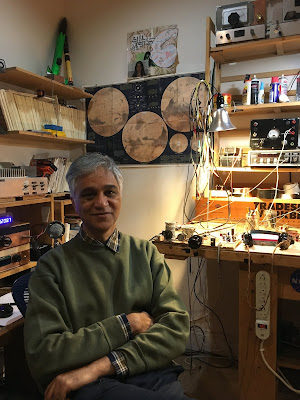
Our good friend Farhan came to Northern Virginia last week for the 50th Anniversary Symposium of AMSAT. We were really delighted that he also came to SolderSmoke HQ. Elisa and I gave him a lightning tour of Washington DC (including a quick visit to The Air and Space museum) and then we headed back to the shack from some radio work.
In the picture above you can see my BITX-20 (that Farhan designed) off his right shoulder. Off his left shoulder you sits my ET-2 rig. I really wanted to show Farhan how well the N0WVA regen performs — he was impressed, especially when we started listening to SSB contacts. It was really amazing that we were doing this with just one J-310 FET. This was great fun. Farhan tells me that he will soon take up the “two transistor challenge.”
When he was here in 2017, I tried to demonstrate my version of Rick Campbell’s R2 Direct Conversion receiver. Unfortunately, when I tried to show off the “single signal” capability that is the whole purpose for this receiver, it was NOT producing a single signal output — you could hear the signal on both sides of zero beat. One of the small AF chokes I had used had gone open, knocking our one of the two DC receivers. This time I had the problem fixed and single signal reception was successfully demonstrated.
Farhan brought me two pieces of test gear that I have needed for a long time: A step attenuator and a two tone generator. Paired with his Antuino, these devices will bring about a big increase in capability on my bench.
It was really great to have Farhan in the shack. We had a great time talking about ham radio and homebrewing. Elisa and I both really enjoyed hearing from Farhan about his travels and about his life in India. We are all really lucky to be in the same hobby as Ashhar Farhan. Thanks for the visit Farhan.
Here is a quick video of Farhan tuning the BITX 20.

More on the ET-2 : Better Pictures and More Circuit Description. Some Thoughts on Simplicity

So yesterday I made my first contact using my ET-2 rig. Last night I got an e-mail from Gary, the fellow at the other end of that contact:
Evening Bill, N2CQR….Yes I did learn about you from the spot on the DX Summit cluster. I tuned to the freq to see if I could even hear your 80 mW and you were a good real 569 when calling CQ. You built up to a real 589 on the later transmissions. I did not have either of the two pre-amp positions on in the ICOM 756 Pro II. There was not any QRM on the freq either. Your spot indicating the 80 mW is what really got my attention.
My antenna is a 2 element yagi at about 115 ft and it really works great for me.
Thanks for the picture of the great little transmitter. Glad to be your first DX QSO with it. Hi Hi Maybe again soon. My pleasure to work you.
73, Gary, K4MQG

Fort Mill, SC

Farhan commented on yesterday’s post, saying that it was hard to tell (from my pictures) where he rig started and ended. He was right. So this morning I have tried to clean up my bench a bit — I hope these pictures are better.
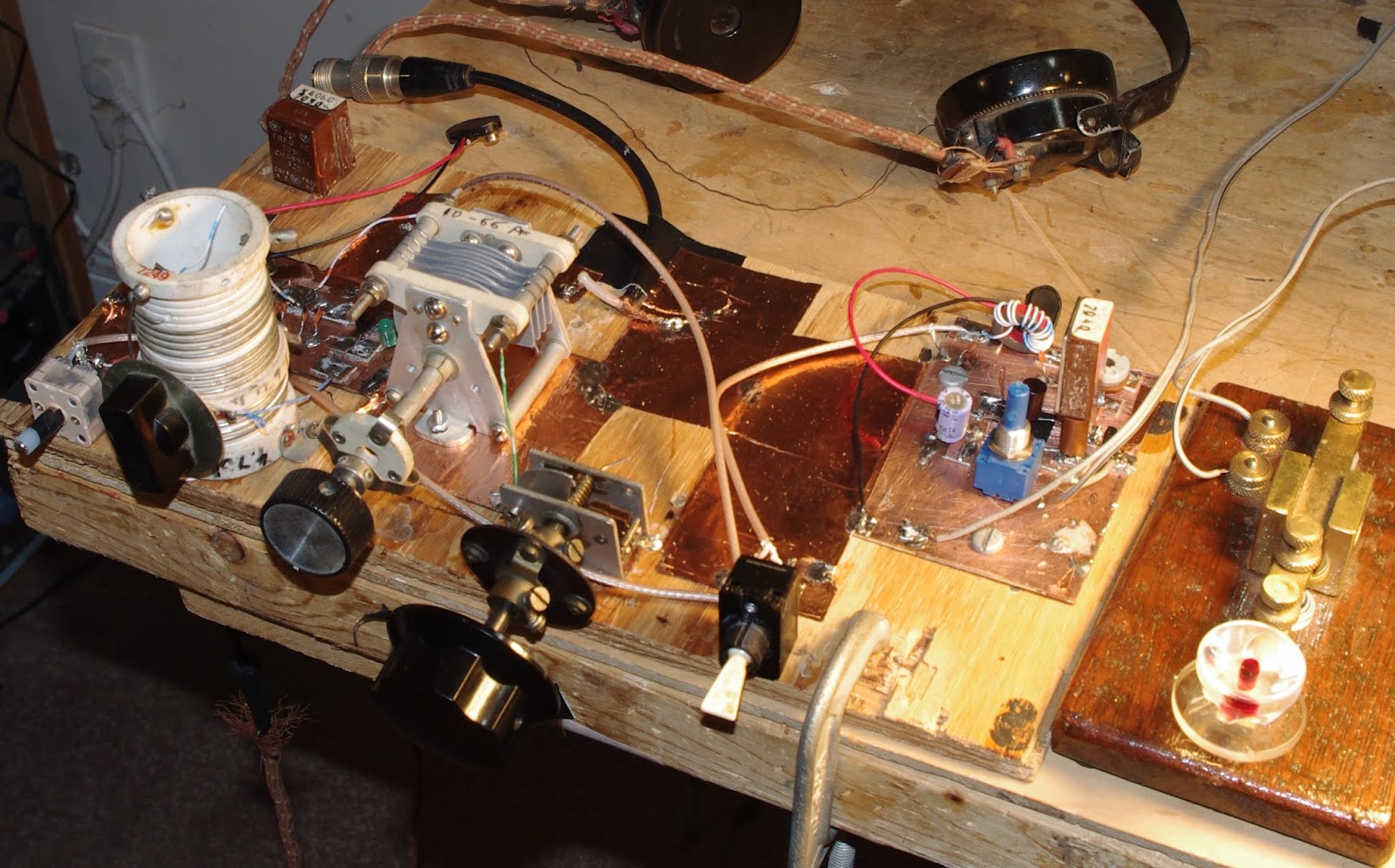
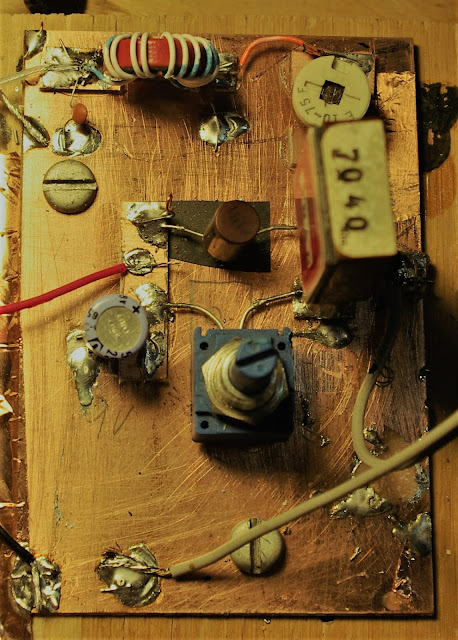
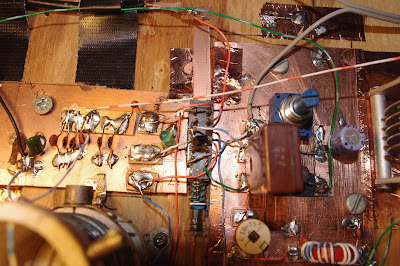
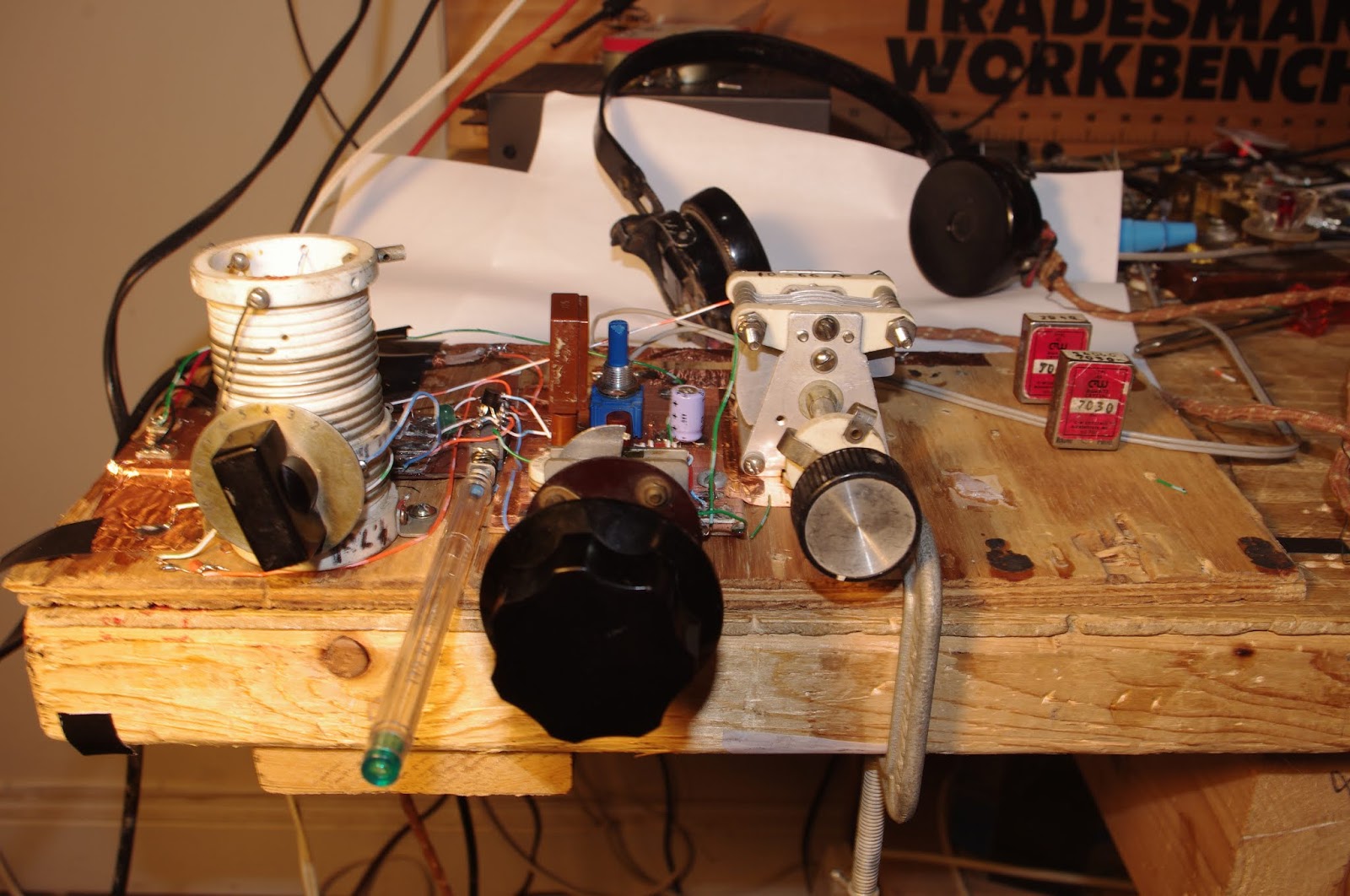
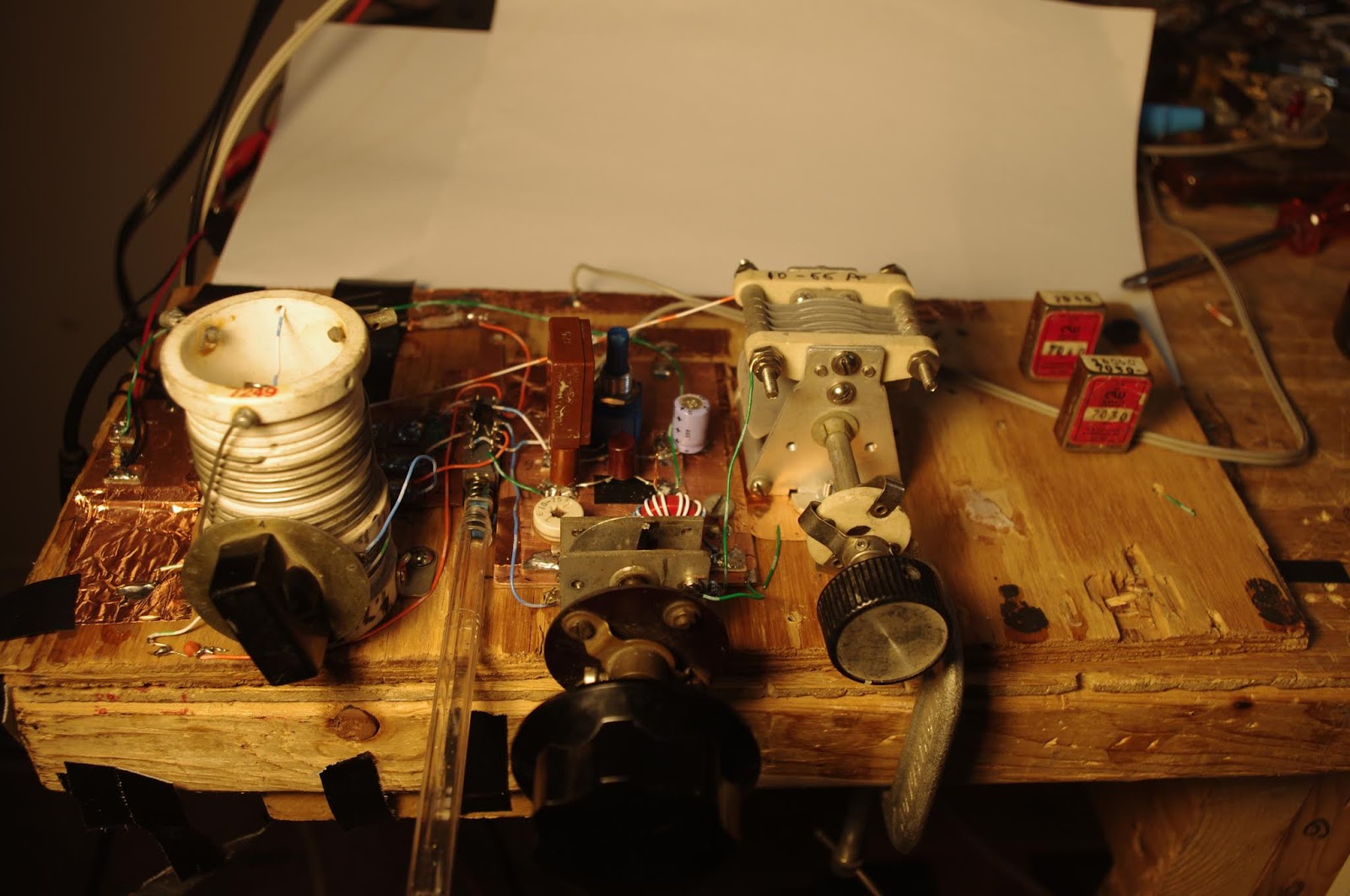
Above you see the whole rig. The transmitter board is right next to the key that Farhan gave me. You can see the 7040 crystal. A C-Clamp holds to the bench the piece of scrap plywood that serves as the base for this rig. Next to the C-Clamp you see the TR switch — the just switches the antenna — both transmitter and receiver are powered at all times. I can hear the transmit signal in the headphones and this serves as my sidetone.
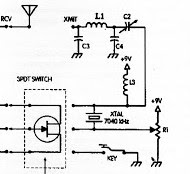
Here is a close-up of the transmitter with the schematic below:

The transmitter is VERY simple. Nine parts, including the low-pass filter. You can barely see the J310 FET to the right of the crystal.

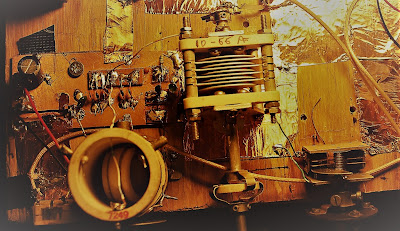
Here is the receiver:

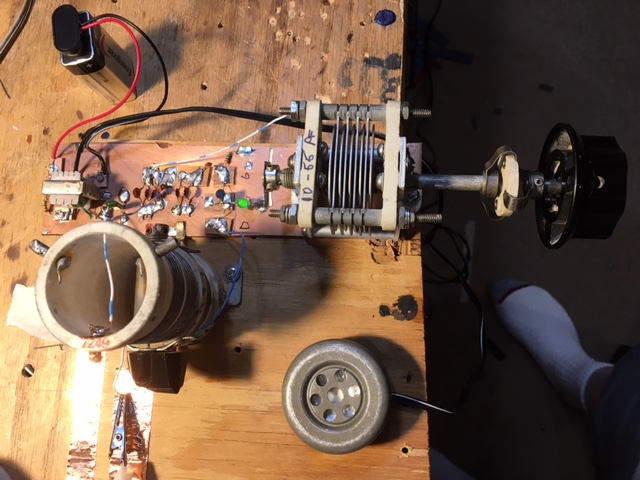
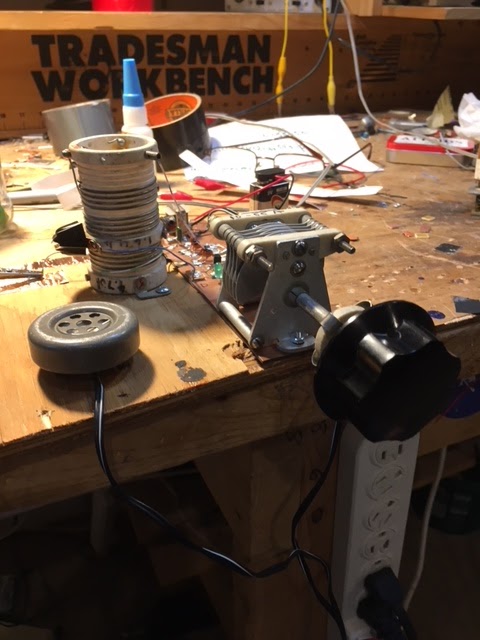
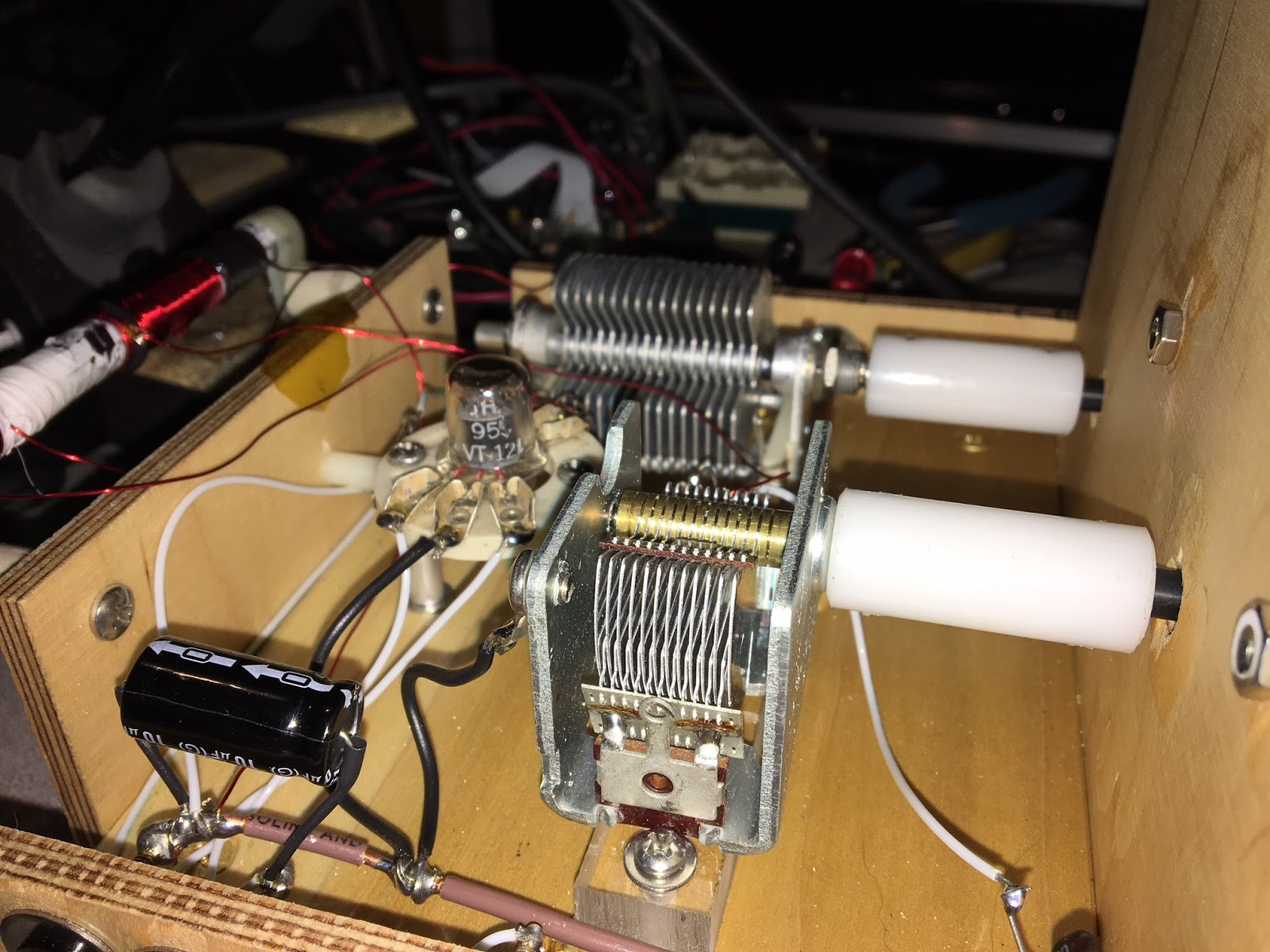
I really like N0WVA’s regen. The green diode in the source circuit is the key. This one does not squeal when you go into excessive regeneration (when you think about it, regens should NOT squeal at audio frequencies — but most do). Also, the green diode dims a bit when you are at the right amount of regeneration. In the picture you can look down the tube of the variometer that Pericles HI8P gave me many years ago. The big variable cap is from the junk box — I think it may be from a Johnson Viking transmitter. Note the long shaft with the insulating connector — this is to reduce the hand capacity effect. On the right you see a smaller cap with just one vane — this is my fine tuning control — with the smaller cap at mid range, I would just set the big capacitor to put the receiver at 7040 — with the smaller cap I could tune +/- 12 kc. I also used an insulating shaft on the smaller cap — the connector for this one is from an old 1930s era regen that I picked up at the Kempton Part rally in London.

Instead of the audio transformer and Radio Shack headphones, I just used some old DLR-1 WWII Headphones. They are very sensitive and work well.

Lots of soul in this new machine: The variometer from Pericles. The WWII headphones. The 1930s era shaft connector. The circuit idea from the Autumn 2001 SPRAT. Farhan’s key.

I recently read on Hack-a-Day of a new FPGA chip that has on it 35 BILLION transistors. I’m sure that thing can produce some fascinating results, but can anyone really understand it, or feel that they really BUILT something that has that kind of chip at its center? On the other hand, I did rely on a lot of modern digi technology in this project: The Reverse Beacon Network reported back that my unanswered CQs were in fact getting out (one as far as Kansas to K9PA). And in the end I had to ask — via the DX Summit Spotting cluster — for someone to listen for me. So I can’t go full Luddite here. And I wouldn’t want to have to use a rig this simple every day. No way. It is just too hard to use. But there is a beauty and a challenge in simplicity. There is some virtue in using just two transistors instead of 35 billion.

Thanks to N0WVA, W2UW, VU2ESE, HI8P, K4MQG, The G-QRP club and their inspirational journal SPRAT, the RBN and the DX Summit.

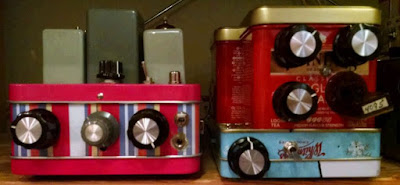
The BGCD: A Regenerodyne Receiver built on Pencil, Candy, and Tea Tins. Circuit from 1937 QST

David Newkirk recently put up a nice website on ham radio. The page below provides details on the amazing creation pictured above: The BGCD: “The Byron Goodman — Clinton DeSoto Regenerodyne.” It is a beautiful piece of work, made more beautiful by the metal containers used in construction: pencil, candy and tea tins. The circuit is based on a 1937 QST article.

David’s site reminded me of the wonderful writing of his father, Rod Newkirk of “How’s DX” fame. More on him in due course.

More on the BGCD here:

http://dpnwritings.nfshost.com/ej/pictures/pictures1.htm?fbclid=IwAR2-lmJ8E1kEBT_jsB3Q8UnPaN0vc472dP783ifABK7eSxgpe5M1Pl0N77g

Single Transistor Transceiver On the Air

I got my version of the ET-1 transceiver working. As I described in previous posts, I first got the transmitter and the receiver working separately, each with their own J310 FET (oh the extravagence!) Then I built a switching arrangement that allowed for just one shared FET and very short leads. I used a 4PDT “push button” switch from an old Ramsey Electronic LC meter. See the last picture for details. I use the tube from a pen to operate the switch (that’s the green thing in the picture).
It is inhaling and exhaling. My 20 mW signal is being picked up on the Reverse Beacon Network, mostly in New England, but today in North Carolina.

No contacts yet. I may have to resort to scheduled contacts. OM Yingling W2UW was operating during much better propagation conditions (2001), so I don’t think I will ever get close to his impressive (23 states!) operating record.

But it has been fun getting this thing going. The N0WVA regen design is one of the best and simplest regens I’ve ever built. It is really nice –hardly demonic at all.

I can run the whole thing off one 9V battery. I think it is a cool looking machine.

SolderSmoke Podcast 213 WE’RE BACK!

N6QW’s Analog CW QRP Transceiver

SolderSmoke Podcast #213 is available.

http://soldersmoke.com/soldersmoke213.mp3

7 September 2019

The dire consequences of our summer absence.

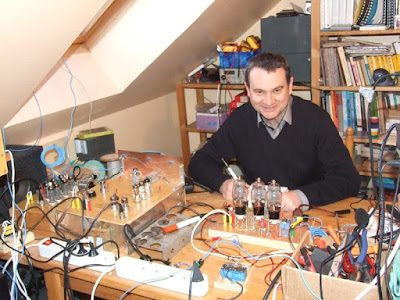
50th PODCAST WITH OUR FRIEND PETE!
THREE CHEERS FOR PETE!

Pete’s Bench Report

— Transceiver Count: FORTY!
— SDR RADIGS
— Colorful OLED screens
— Pilgrims and Paisanos — “Left Coast Homebrew SSB”
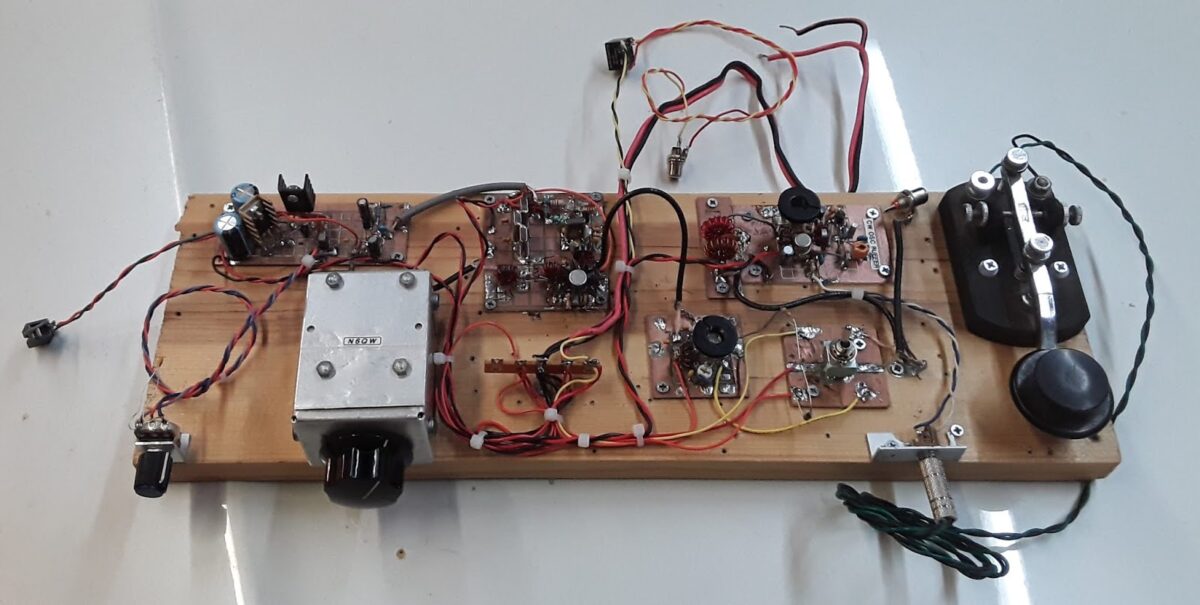
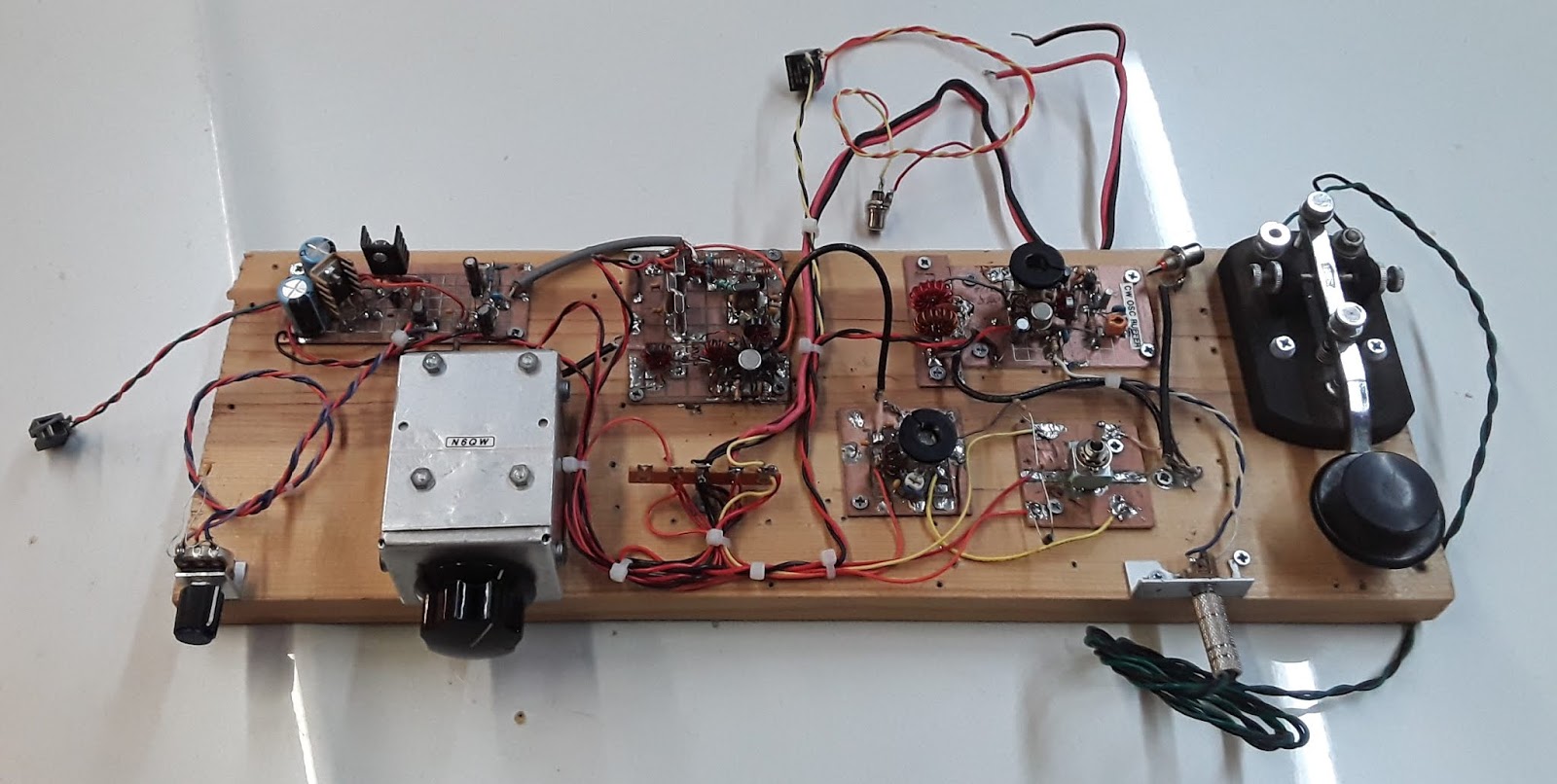
— Pete builds a CW transceiver (see picture above)


Bill’s Bench Report:

— Going minimalist
— Tuna Tin 2 + Herring Aid 5 = Fish Soup 7 (and later 10)
— My QRPp QSO with K1PUB overheard in Canada
— Glen Yingling’s ET-1
— Bill attempting a single transistor transceiver

SPACE NEWS

— Antuino’s Cubesat Origins. Farhan’s Antuino Mods
— Apollo 11 Anniversary
— Possibly the best space book ever: “Carrying the Fire” by Michael Collins
— Chinese microsat sending eclipse pictures from the moon
— LightSail 2 success
— India has spacecraft in lunar orbit.

Eric Sears ZL2BMI and Dino Papas KL0S on “QSO Today” Podcast

MAILBAG:

ZL2PD’s Sugar Cube VFO
N8WQ gets free samples
N5RWF Getting started, wisely wearing beret
VK2EMU Australian Ad for Collins Filters
W1PJE on new LDMOS PA transistors
KA4KXX Al Fresco 75 meter SSB rig with model plane engine mufflers!

Forgot to mention: W9TH still has manuals for whover owns Drake 2-B #4215. Check your serial number!

Single Transistor Regen Has QSO Potential (Video)

In my previous blog post I’d expressed skepticism about using a single transistor regen on the air. But over the years I’ve learned to give new receivers a chance. They usually don’t work perfectly on the first try. You have to work with them. It is almost as if you have to peak and tweak a lot in order to get them to properly inhale signals from the ether.

That has been the case with this little receiver. I found some silly mistakes in my construction. And I decided to try some more sensitive headphones. I ditched the 1000 to 8 ohm AF transformer. And I added a very small variable cap for fine tuning.

The results are amazing. See video above. It performs as well as most of the direct conversion receivers I’ve built. It is remarkably stable.

I do think I could make contacts with this receiver. I might eventually go the full ET-1 route and try to do it with a single switched FET, but I think my next step will be to built a single transistor crystal controlled transmitter on the same piece of wood, and try to make some contacts with a two-transistor rig.

Another Bout of Minimalist Regen Madness

My success with the Fish Soup 10 QRPp transceiver got me interested in further minimalization. About ten years ago I built a rig presented in SPRAT 108 as the ET-1 by Glen Yingling W2UW. It re-appeared in modified form as the FETer by G3XBM in SPRAT 137.

This rig uses just ONE active device, an MPF-102 FET that is switched via a 3 pole double throw switch from transmit to receive. The transistor is switched. The receiver is a regen and the transmitter is a very simple crystal controlled one stage oscillator. See:
https://soldersmoke.blogspot.com/search?q=ET-1 for info on my ET-1 effort.
The transmitter was the easy part. I don’t think I made any contacts with this thing. That has been kind of bugging me.

So I tried it again. Again, I had trouble with the receiver. So I looked around for another single FET regen receiver design. I found one on AA7EE’s page. It was designed by N0WVA:
https://aa7ee.wordpress.com/2015/02/07/n0wvas-one-fet-regen-optimized-for-ssbcw-sounds-great/


I’ve had a variometer in my junk box since about 1994. (Given to me by Pericles HI8P. QEPD.) It was time to use it as the coil and ticker for this rig. I liked the green LED in the source, and the promise that this thing would not oscillate at audio frequencies.

I built in on one morning. See pictures. It works. I can hear CW stations. But I think I would have a tough time making contacts with this thing. OM Yingling worked 24 states with his ET-1. Respect.

The AL7RV (W8NSA) Paraset, Regens, Test Gear, and Schematics Varnished into Enclosures

Jim W8NSA ex AL7RV is an old friend and a really talented radio builder. Over the years he has sent me many boxes of very FB radio parts. I’m sure that almost all of my homebrew rigs have parts from Jim somewhere in the circuitry. Jim recently sent in an update on his radio building efforts.

Bill,


I managed to cobble up some regen’s over the summer. Most fun was my version of Dave Richards, AA7EE Sproutie, it turned out so nice I have it on my bedside table. Yes, the Sproutie has displaced the trusty old Transoceanic, brings back memories of late night SWL’ing with my Space Spanner as a teen.
The Sproutie worked well enough I’m considering a build of the Dave’s Sproutie MK II, maybe not in such a grand cabinet or with such fine metal work as Dave’s but a functional copy.

I also built the regen receiver from the SOE Paraset design, other then a coil winding mistake the receiver worked well at power up.

I built the Paraset receiver to test a number of mods others have suggested to improve the receiver’s performance. Using the mods involves modern solid-state components and additional band-spread functionally. Many consider the mods be in poor taste but they go well making a much better receiver.
I am ready to build my copy/version of the Paraset, now that I’ve missed SKN I have almost a year to get it built.
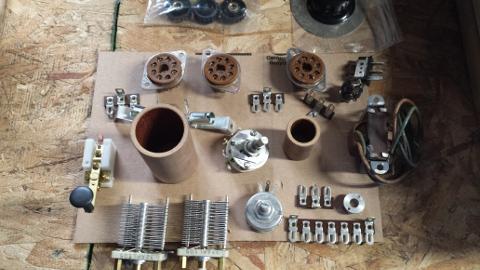
I’ve been gathering Paraset parts for years, was lucky to get in on the group purchase for a set of 3 Paraset knobs made from the same molds by the same company SOE used when building the transceivers in the 1940’s, having a real part of that history is exciting, to me at least.
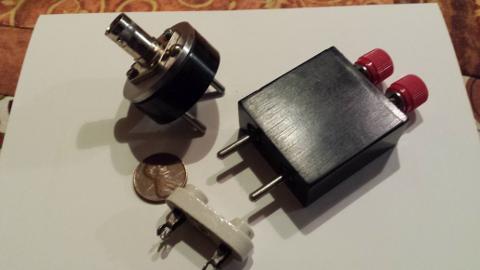
Paraset Parts (see picture above) (some parts shown may not be in the proper location)

At last I have all the major components. I am at the point of gathering up the various resistors and small fixed capacitors needed. Some builders have gone to the efforts of embedding newer, smaller, parts in the carcass of vintage 1930s & 40s parts hollowed out and repainted. Too much effort for me, I want a functional radio, not a museum grade replica, but I really do want to keep the look of the SOE issued set.

Case and front panel…

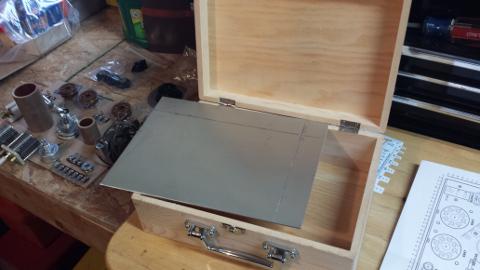
Many of the U.S. Paraset builders are using a wooden craft box from Hobby Lobby, It is just about the correct size and shape. You can see at the right side of the photo a detailed panel layout. Building the Paraset is not quite Heath Kit but with so many talented builders having made so much information available I feel so lucky to follow the effort.

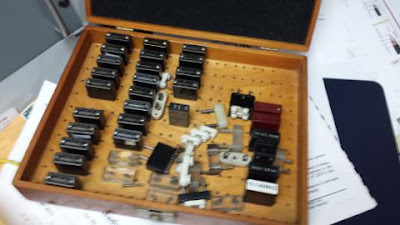
Years ago, during our RV travel days, I picked up a box of Bliley AX2 40 meter crystals. Good price and just about every one of the crystals were found to be working. Have a total of eighteen 40m crystals from 7.0024Mhz to 7.0986Mhz, have two 80m crystals in the CW portion but none of the AX2 crystals are for the traditional QRP frequencies, close but… AF4K and others are selling HC49 crystals for the QRP frequencies, problem is the 6L6/6V6’s used in the Paraset are known to be real crystal crackers.. (as was my 1964 novice rig!).

I’m considering the use of a transistor oscillator and driver stage to feed the 6L6 as a PA in effort to save the crystals and maybe allow the use of an outboard DDS VFO, yes I can hear the moans of dismay from other Paraset replica builders

The box included a number of sockets and crystal adapters too. Was great find. Having so may 40m crystals I’m starting to have thoughts of optimizing the Paraset build for just 40 meters. I can improve the sets performance but of course lose 80m and possibly 60m.

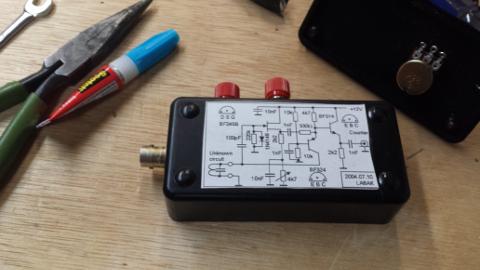
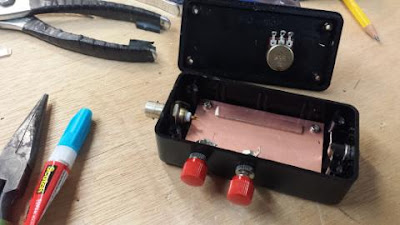
Today’s project while catching up on SolderSmoke Podcasts is a test device to aid in checking the resonant frequency of L/C networks. It’s always nice to prove your math is correct!
Building it Manhattan style into an old rat shack plastic box.


I have always loved the way WW II equipment had the schematics varnished into the covers or cases. I try to do the same with most of the things I build.

Schematic reduced to fit, ink-jet printed. Using an old credit card I spread a very thin layer of E6000 clear adhesive on the case, apply the paper image, then using a clean credit card or the edge of piece of circuit board feather the schematic into the adhesive.

Let dry for about 10 mins, wipe off the excess glue around the edges. Let dry for 24 to 48 hours and cover with a few thin coats of Testors Clear Lacquer Overcoat.. several thin coats, follow the recommendations for re-coat time on the spay your using.

Please read the cautions for using E6000. Pete may not be able to purchase it in his state!
The Paraset antenna output connections use a porcelain crystal socket, the AX2 crystal purchase included a few dead or empty crystal cases, I modified two of them to use as adapters.


OH! and yes, I’ll be using outboard low pass filters with the Paraset!


Thanks again to you and Pete for the blog and smoke efforts!

73, Jim W8NSA aka AL7RV
KD4PBJ’s Acorn AM Broadcast Band Regen

From Chris, KD4PBJ:

This is my AM band regen I built during December and early January.

It uses a 955 acorn tube and is a really hot performer! I can pick up dozens of stations with only a 20 ft piece of wire thrown out my shop window and tied to a nearby tree limb 5 ft off the ground. This is from rural Tennessee where we have no local AM’s.

It uses a velvet vernier I bought off eBay back around 1999 or 2000 and had saved for a special project like this.

I’m running filaments off a 6V lantern battery and plates off a type 415 45V battery.
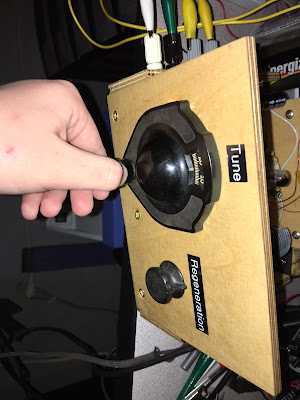
A nice ham/machinist I met on the Time Nuts list who lives in San Francisco made my insulated shaft couplings. I got the Delrin rod cheap off eBay. He cut them to length, center drilled for 1/4 inch and drilled each end for 2 setscrews.


The Homebrew Receivers of F5LVG

I came across OM F5LVG’s work in SPRAT. He has a wonderful website — it is in French, but Google Chrome translates is quite nicely.

http://oernst.f5lvg.free.fr/index.html

From the site’s introduction:

This site is dedicated to the construction and understanding of radio receivers. If you have dreamed of hearing a radio station with a receiver that you have built yourself, this site is for you. These are essentially direct conversion receivers and modern feedback detectors using only semiconductors, except for retrofitting. The described stations will accommodate amplitude modulation, single sideband (SSB) and telegraphy.

Besides these receivers several articles are devoted to LC oscillators. In particular, an extremely simple original stabilizing device is described.
Similarly, a simple frequency meter is described.
The joy of reception using a homebrew receiver is intense. May this site help you find this joy. Do not hesitate to join the amateur community.


SolderSmoke Podcast 199 Eclipse, Regen, BITX, DC RX, 3D OLEDS, Iphone Boxes, Mailbag

SolderSmoke Podcast #199 is available.

http://soldersmoke.com/soldersmoke199.mp3

2 September 2017

The Eclipse. The Floods.

Sawdust Regen gets John Henry off to a good start.
Voltage regulators as audio amplifiers

The return of the Simple-ceiver (Direct Conversion)

Ceramic Resonators

3D OLEDS

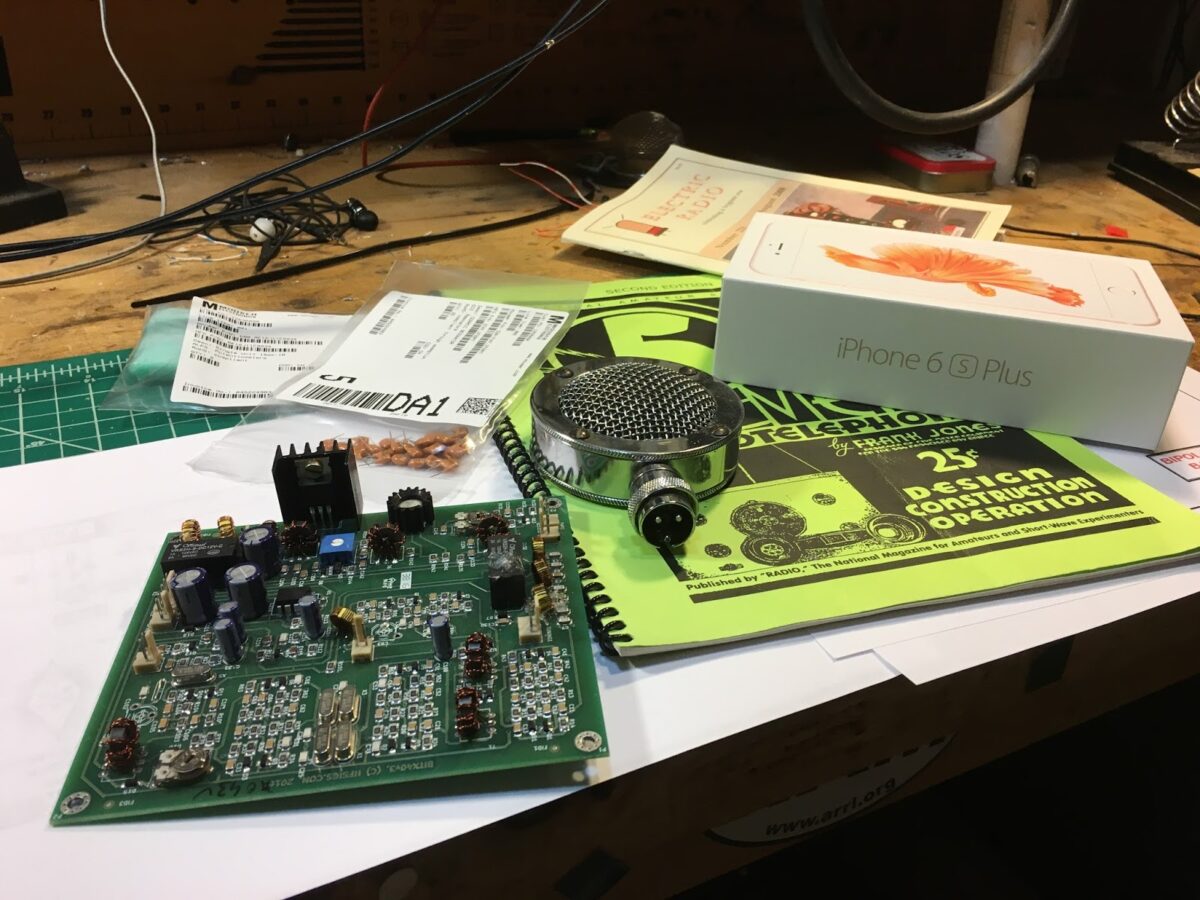
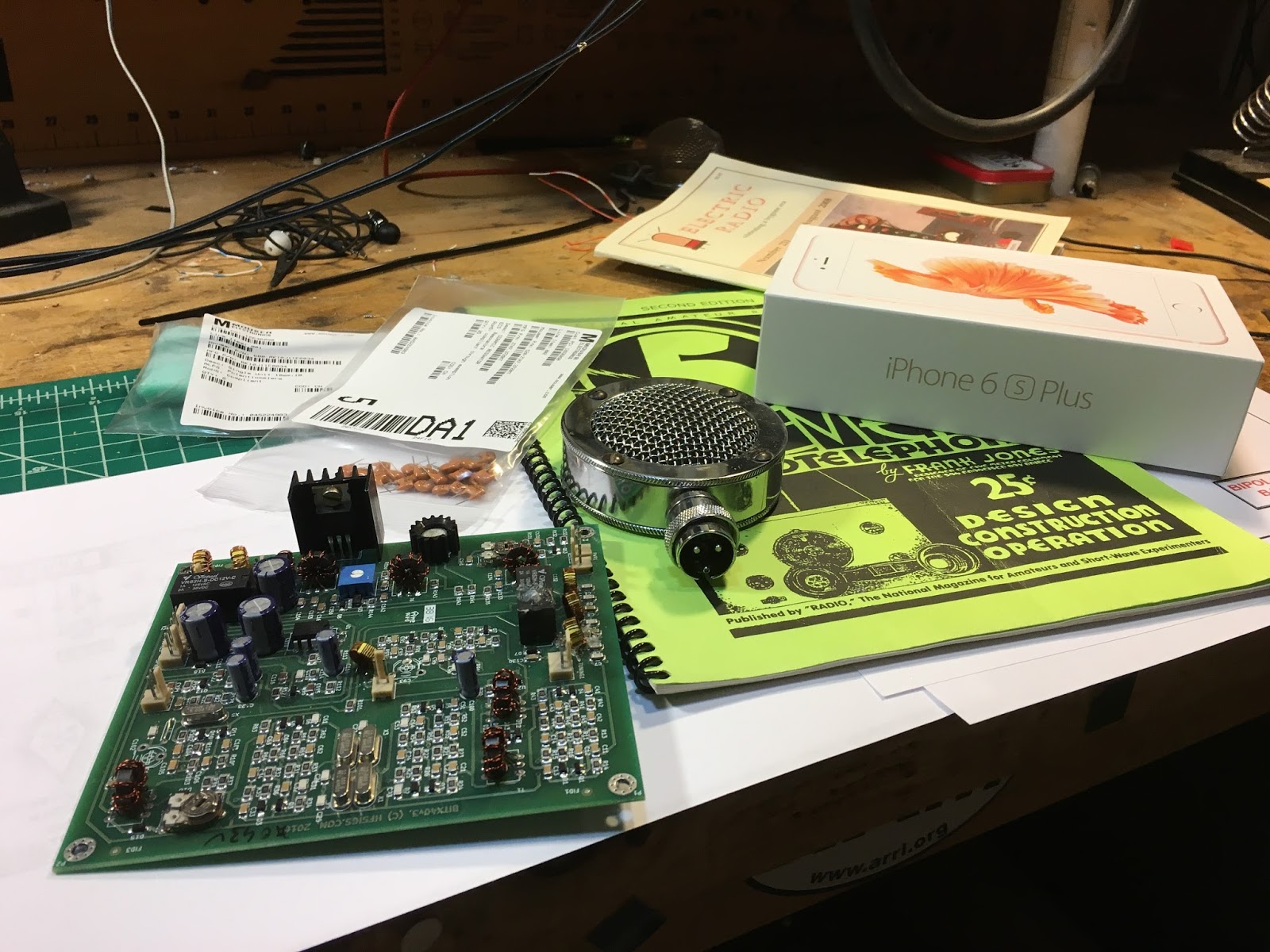
iPhone Boxes as rig enclosures

Electric Radio on Frank Jones

17 Meter Contacts

MAILBAG

A Regen that is NOT Evil

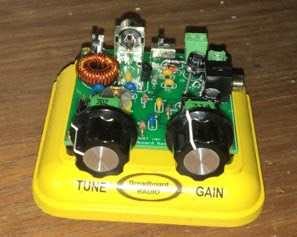
Look at that thing. It is already painted Juliello — this is a very good sign. Steve Silverman sent me one of these Sawdust Regen kits a few years ago. I put it together this week for my nephew John Henry who is very interested in Morse and ham radio.

This is a regen that even I can love. It is simple, small and stable. 40 meters comes booming in.
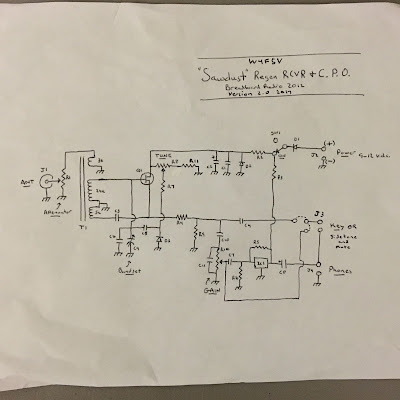
Look at the schematic. Why haven’t we used that simple three-terminal AF amp IC before?