Ham Radio Workbench: Stuffing Digital Stuff Into Poor Old Boatanchors

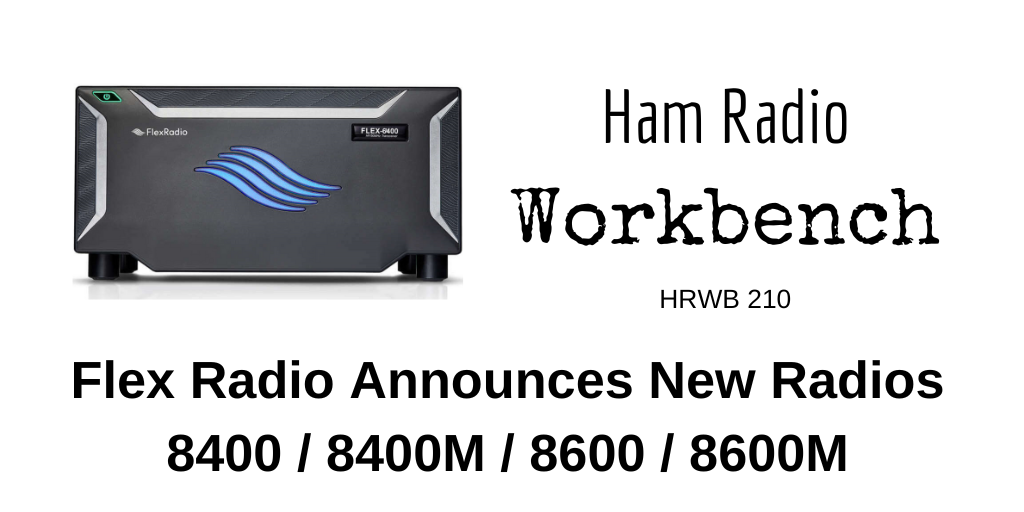
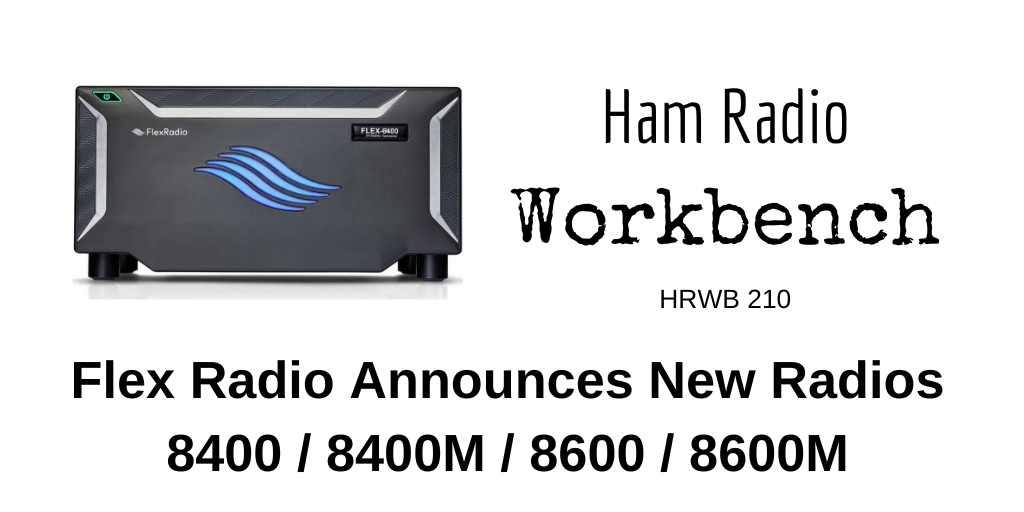
Let me start by saying that I LIKE Ham Radio Workbench. But I found a lot in the current edition that I disagreed with. The whole panel seems to be chuckling at the older gear. And the guest is from… Flex radio. So what do you expect? The title was “Radio Rejuvenation” — I expected something different. I thought we’d hear more about how to get old tube radios going. Instead, the focus seems to have been on how to take an old radio and stuff an RTL dongle, or a Raspberry Pi, or a Flex radio in there. Yuck.

At one point they are laughing at old magic eye tubes! They wonder if there is a digital way of recreating this tube in digital form. Sorry fellows, that has already been done:

https://hackaday.com/2023/04/12/the-eyes-have-it-with-this-solid-state-magic-eye/

Even an analog guy like me spotted that one.

Here is the show:

https://workbench.libsyn.com/hrwb-213-radio-rejuvenation-with-dan-quigley-n7hq

But hey, like I always say: To each his own. I’m sure many people like this approach. It is just not for me.

Ham Radio Workbench: Stuffing Digital Stuff Into Poor Old Boatanchors

Let me start by saying that I LIKE Ham Radio Workbench. But I found a lot in the current edition that I disagreed with. The whole panel seems to be chuckling at the older gear. And the guest is from… Flex radio. So what do you expect? The title was “Radio Rejuvenation” — I expected something different. I thought we’d hear more about how to get old tube radios going. Instead, the focus seems to have been on how to take an old radio and stuff an RTL dongle, or a Raspberry Pi, or a Flex radio in there. Yuck.

At one point they are laughing at old magic eye tubes! They wonder if there is a digital way of recreating this tube in digital form. Sorry fellows, that has already been done:

https://hackaday.com/2023/04/12/the-eyes-have-it-with-this-solid-state-magic-eye/

Even an analog guy like me spotted that one.

Here is the show:

https://workbench.libsyn.com/hrwb-213-radio-rejuvenation-with-dan-quigley-n7hq

But hey, like I always say: To each his own. I’m sure many people like this approach. It is just not for me.

SolderSmoke Podcast #251 Aurora! CBLA, Winterfest, Legal Action Against SolderSmoke, HB sBITX, SDR, Raspberry Pi, Rounded Passbands, MAILBAG

Aurora Picture by Dean KK4DAS


SolderSmoke Podcast #251 4-1-2024


Audio: http://soldersmoke.com/soldersmoke251.mp3

Videos: Podcast 251 Aurora! CBLA, Winterfest, Legal Threat, sBITX, SDR, RaspPi, Rounded Passbands, MAILBAG (youtube.com)

Travelouge: Dean goes to the North Pole to see Aurora.

A CBLA Call to Arms!

Winterfest. Lots of goodies. MXM Industries 40 meter transceiver. 1 dollar.

Jean Shepherd. Recording of Bill talking to Shep in 1976.

https://soldersmoke.blogspot.com/2024/03/listen-to-me-talking-to-jean-shepherd.html

Legal Trouble: Could put us out of operation for a while. We need listener input.

November 2023

December 2023


———————-

Pete’s Bench

Homebrew SDR (based on Zl2CTM’s original design) and how good it sounds.

Raspberry Pi Zero W is now working on FT-8 with digital adapter.

Ferrite Cores at Digi-Key (a replacement for the FT-37-43 where you buy 100 and the price is 21 cents/each)

ADE-6 –great specs in HF but more expensive than the ADE-1

For Pete’s recent blog posts, go to this site and click on “Archive” in the right column:

https://n6qw.blogspot.com/2024/03/march-31-2924-happy-easter-to-those-who.html

—————-

Dean’s Bench

sBITX progress, McGyver-ing a lifted pad, replacing crystal on the CODEC board, sBITX success! See:

https://kk4das.blogspot.com/2024/03/homebrew-sbitx-tx-modules-pa-lpf-and-mic.html

——————–

Shameless Commerce Division: Please use the Amazon link on the blog to start your Amazon purchases. And please consider using Patreon to support the podcast and blog. We try to send extra content to our Patreon supporters. Mostly DIY RF — Boards, Kits and Pete’s PSSST

———————

Bill’s Bench

More trouble with the 15-10 rig. Rounded passbands in 25 MHz filter. See figure 4 in both links:

https://www.arrl.org/files/file/QEX_Next_Issue/Nov-Dec_2009/QEX_Nov-Dec_09_Feature.pdf

https://www.networksciences.com/pdfs/tutorial.pdf

Experimenting with Balanced Mixers and Product Detectors. Paul VK3HN Suggests the MC1496 chip; Walter KA4KXX points to SSDRA circuits

But it is on the air! Using the PA from a BITX40 module and an RD06.

Put an OLD dial from Pericles HI8P on 15-10 version 1. Soul in the new machine.

Pericles’ Dial on the 15-10 Rig

Mailbag:

Grayson KJ7UM’s Hollowstate video.

Mike WU2D’s amazing 10 meter DSB transceiver.

Jack AI4SV (Dhaka Jack) liked video of recent QSO with AzoresDSB rig

Mike AA1TJ and Dave AA7EE on backwaves and 100 uW QRPpppp

Dave G3UUR on my curved passband problem

Alan W2AEW heard my only QSO with the MXM indsutries SupeRX/TX40

Wes W7ZOI, Mike WN2A, Walter KA4KXX. Farhan VU2ESE on passband,

Ramakrishnan sent article about Charles Proteus Steinmetz. Beautiful.

Justin AC8LV built a receiver! FB.

San Francisco QRP: KDOFNR TouCans Rig, and N6ASD Zinc-Oxide TX

Frank KC8JJL — Another guy who heard first ham sigs from a homebrew rig.

Nate KA1MUQ’s homebrew thermatron superhet

Dino KL0S sent info on the PAL CB VFO I picked up at Winterfest. Airborne!

Bob W8SX will be once again doing SolderSmoke interviews at Dayton. Thanks Bob

Peter VK2EMU Always good to hear from him.

Tobias Feltus — Wisdom teeth removed, wondering if he will get sBITX hallucinations…

Rick WD5L continues to work on his Herring Aid 5

Ciprian YO6DXE wants to learn CW. No alerts from his FB Blog!

Todd K7TFC — Likes CW, says it eliminates the Blah-Blah-Blah

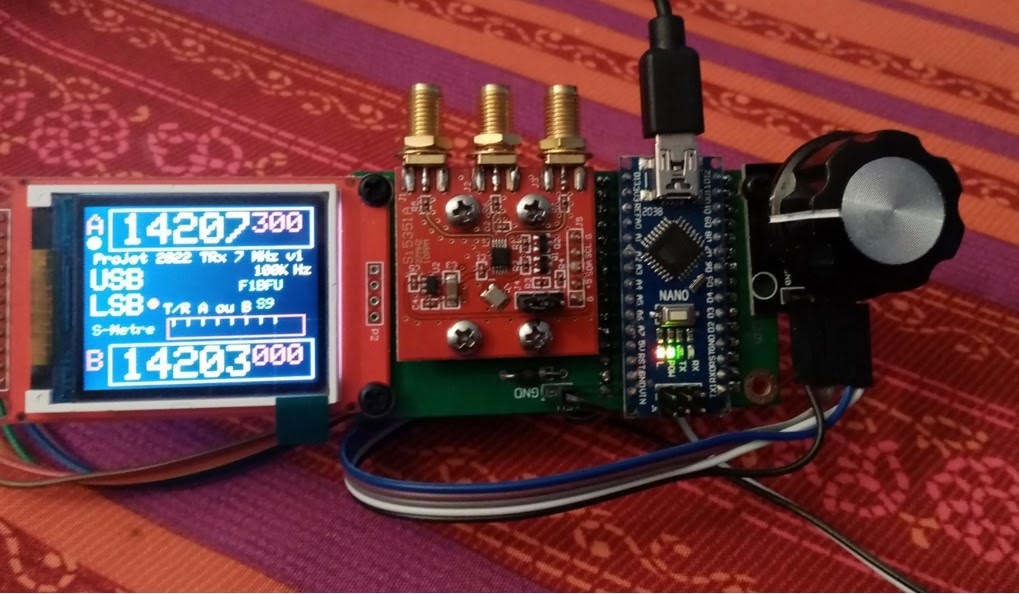
F1BFU’s Amazing PSSST VFO

Andreas HB9BLA’s Ideas on Building a Lab or Workshop

Lots of great ideas on workshop or lab design from Andreas, the guy with the Swiss accent. Andreas is HB9BLA. I liked all of this, especially his idea on books.

A while back Andreas was interviewed by Eric Guth on QSO today: https://www.qsotoday.com/podcasts/hb9bla

Thank you Andreas!

HB2HB — A Contact with Denny VU2DGR (video)

At first I didn’t realize it was Denny. On September 11, 2023 at about 2330Z I had walked back into the shack after dinner. I think DX spots showed an Indian station on 20 meter SSB. Without realizing who it was, I tuned him in on my Mythbuster rig, heard the other station sign off, and quickly threw in my call. Denny came back to me right away, and I think both of us then realized that we recognized the call of the other station. Wow, it was Denny, VU2DGR, the Wizard of Kerala! At the time of the QSO, I didn’t have my phone with me; after we spoke, I went to get it, so the video above captures part of Denny’s subsequent contact. (You can also at one point hear Guapo barking.)

Denny has been running a wonderful station that combines SDR gear with and HDR tube type amplifier and a homebrew Moxon.

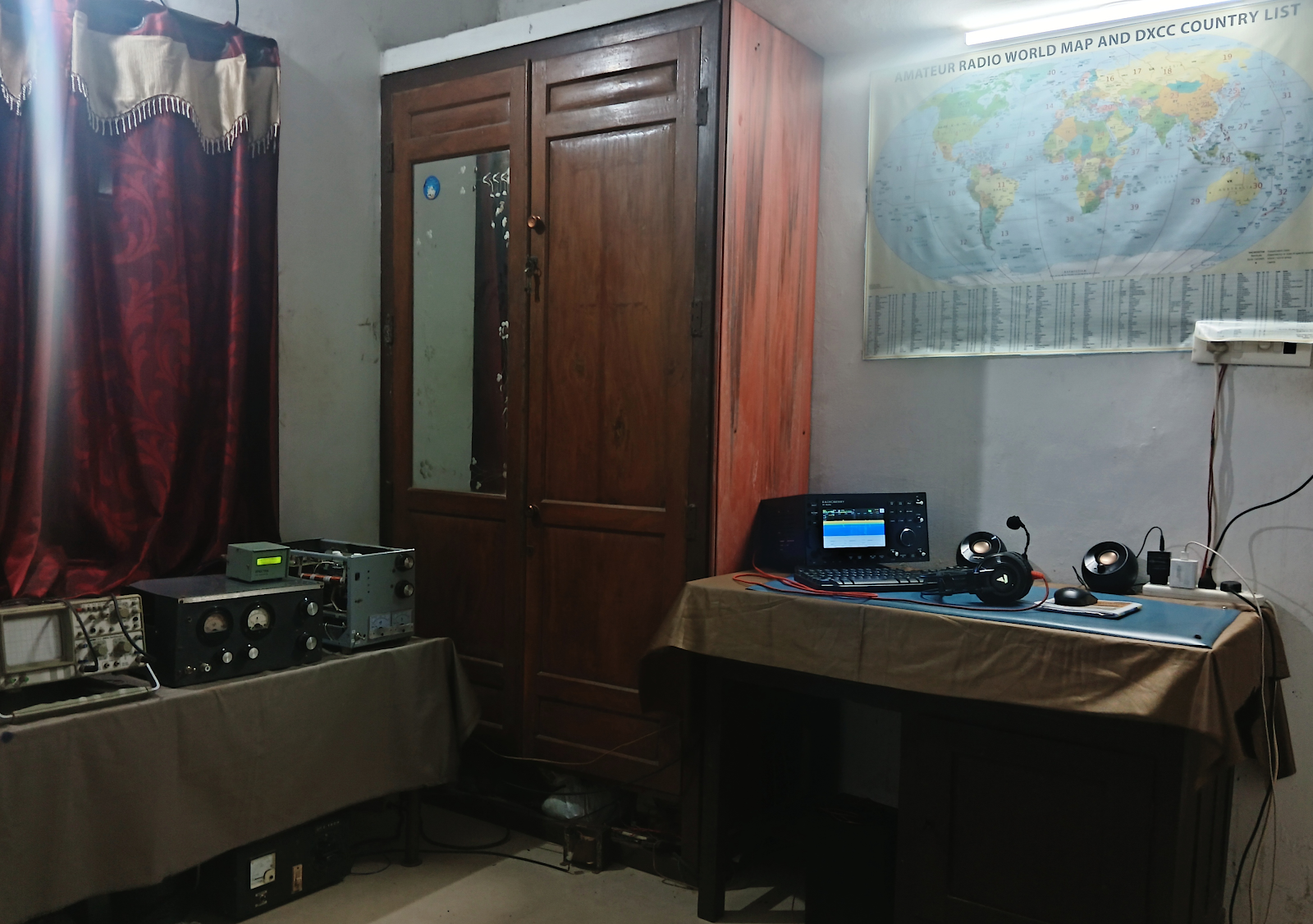
Here is Denny’s station. The transceiver is a RadioBerry. the amplifier and power supply are on the other table.

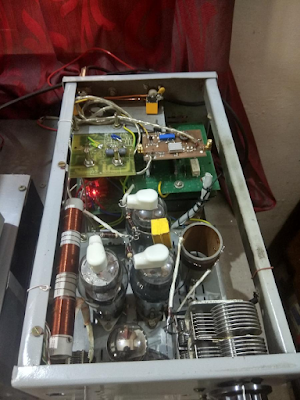
Here is the homebrew tube-type amplifier. This is the part of the station that really puts the HB in HB2HB! That’s the power supply on the left and the amplifier itself on the right:
That amplifier has three 807s in it, with a 6L6GC:
Here’s a video on the RadioBerry transceiver.

Finally, here is Denny’s magnificent homebrew 20 meter Moxon:
Thanks Denny!

Farhan VU2ESE FDIM Interview (#6) by Bob Crane W8SX: VHF Rig, sBITX, and Good News on Raspberry Pi 4

It was great that Bob was able to catch up with Farhan and talk to him about his VHF rig and about the sBITX.
Farhan said that the VHF rig (the BITX23) was presented at the homebrew show-and-tell as a project. The idea was to encourage others to get into VHF homebrewing. Farhan points out that many of us are reluctant to go into VHF building, thinking that we need special or exotic test gear. No true says Farhan. He is trying, with this rig, to bust this myth. FB.
On the sBITX, Farhan points out that he too — coming as he does from the homebrew tradition — finds some of the modern rigs quite intimidating. So he designed the sBITX to be less intimidating. It is, he says, a tinkerable rig that could be homebrewed. It is all open source.
Farhan points out that the rig is built around the Raspberry Pi 4, a device that has recently been hard to obtain. This has driven up the price of the sBITX a bit. But good news: Farhan says that the word on the street is that the Raspberry Pi 4 will be available in quantity starting at the end of June.

Here us Bob’s interview with Farhan:

http://soldersmoke.com/VU2ESE23.mp3

BITX23 VHF Rig
And here is a video of Farhan describing the BITX23:

Thanks Fathan! Thanks Bob!

Farhan VU2ESE FDIM Interview (#6) by Bob Crane W8SX: VHF Rig, sBITX, and Good News on Raspberry Pi 4

It was great that Bob was able to catch up with Farhan and talk to him about his VHF rig and about the sBITX.
Farhan said that the VHF rig (the BITX23) was presented at the homebrew show-and-tell as a project. The idea was to encourage others to get into VHF homebrewing. Farhan points out that many of us are reluctant to go into VHF building, thinking that we need special or exotic test gear. No true says Farhan. He is trying, with this rig, to bust this myth. FB.
On the sBITX, Farhan points out that he too — coming as he does from the homebrew tradition — finds some of the modern rigs quite intimidating. So he designed the sBITX to be less intimidating. It is, he says, a tinkerable rig that could be homebrewed. It is all open source.
Farhan points out that the rig is built around the Raspberry Pi 4, a device that has recently been hard to obtain. This has driven up the price of the sBITX a bit. But good news: Farhan says that the word on the street is that the Raspberry Pi 4 will be available in quantity starting at the end of June.

Here us Bob’s interview with Farhan:

http://soldersmoke.com/VU2ESE23.mp3

BITX23 VHF Rig
And here is a video of Farhan describing the BITX23:

Thanks Fathan! Thanks Bob!

Farhan Describes his New 2 Meter SSB Transceiver (Video)

On May 16, 2023 Farhan gave us a look at his new BITX23 2 Meter Transceiver. Two days later he made a presentation on this rig at the Four Days in May event. Highlights: — Use (and non-use) of the Cascade tool — Cascade and the original BITXs — ADE-1 — SI570 — Raspberry Pico — Diplexer — Different Grounds to get rid of digital noise — Gimmick Capacitors (and gimmicks made from coax) — Ugly SMD Capacitor Soldering — Tombstoning! — Melting RG-174 Coax — No need to learn Arduino programming — Dilbert! — Bill and Pete — Techie Tatts! Thanks Farhan!

Two days later, Farhan presenting the rig at FDIM


Farhan Takes us Back into the Daylight — An Analog Rig with a Homebrew Crystal Filter and an LC VFO

There is so much radio goodness in this rig and in the blog post that describes it. Farhan’s blog post will keep us busy for a long time. There is much to learn there. But perhaps even more important is his larger view of the role of analog circuitry in ham radio. Here are a couple of excerpts from his introduction:

Here is the memo : The analog never died. The world is analog all the way, until you descend into Quantum madness. The antennas are analog, Maxwell died a content, analog man. Our radios, ultimately, are analog machines and we are all analog beasts too. Amateur Radio technology has evolved into the digital domain. However, it has only made it easier for us to do analog with computers to simulate and print our circuits. So, it’s time to bid good bye to our Arduinos and Raspberry Pis and build an Analog Radio for ourselves. So let’s see what we can achieve in hindsight, a return to our native land and a rethink of our approaches. The radio is called Daylight Again, a nod to being back at the FDIM in 2022 after a gap of two years. It is named after the Crosby, Stills, Nash and Young’s song that had been humming all the time while put this radio together, emerging after 2 years of lockdown. This radio that took two days to come together, no actually two years! That’s: parts of it got built and stowed away, thoughts were struck in the shower, questions popped up during early morning cycle rides and notes and circuits were scribbled in the notebook. I must take the first of many diversion here: I hope you all maintain a notebook. Write down the date and whatever you thought or did on the bench and the result. Nothing is trivial enough to leave out. Wisdom comes to those who write notes. I started to build this on Saturday the 14th May and I checked into the local SSB net on Monday morning, the 16th May 2022.

AND

Having clean VFO is the most important way of increasing the dynamic range of your radio. A free running JEFT VFO that has sufficient power and a good Q components, will be unmatched by any synthesized or direct sampling radios. The math is all on the side of the free running VFO. We are talking -150 db/Hz at 10 KHz spacing, by comparison the Si5351 is -125 db/Hz, it is 300 times worse.

That is just part of the intro. We should all study the rest of Farhan’s blog post very carefully and incorporate the wisdom into our new rigs:

Here is the blog site:


Enough of the darkness. Step into the daylight my friends.

Looking at the Galaxy’s Spiral Arms with a Dongle, a Raspberry Pi,and a Homebrew Antenna

I told Farhan that the world NEEDS a homebrew Raspberry Pi observatory at Lamakaan in Hyderabad. They are on it.

This looks very do-able. And fun. And UHF. And SDR. And Raspberry Pi.
I’d like to build one too. I was encouraged by the video demo — it was done in Alexandria, Virginia, very close to where I live.
A while back I was lamenting to Dean that I reluctantly threw away a DISH or DIRECT TV satellite TV antenna. I worried that I had discarded something that would have been useful for radio astronomy. Turns out I didn’t need it. This video and the associated .pdf shows how to look at the galaxy with a simple homebrew (Home Depot!) horn.
Thanks to Thomas K4SWL of the SWLing Post for alerting us to this.

Farhan’s sBITX — Combining SDR with the Traditional Superhet

Here is Farhan’s amazing presentation to the virtual 2021 FDIM event. There is a lot of tribal knowledge in this video. Lots of old and new technology. I was especially intrigued by Chris Trask’s Kiss mixer. Farhan’s discussion of simple Arduino-based speech equalization and compression made me think that I have work to do in this area. And of course, Farhan’s whole discussion of how to bring SDR into — literally into — the circuitry of a uBITX is really cool and very educational.

A Satellite Ground Station (Receiver) Made from Junk

Very cool. This guy (who brew up on an island in Alaska) really knows how to use aluminum tape and the junk that fills most workshops. I like his use of the security camera mount as an az-el antenna rotator.

I foolishly discarded a Direct TV dish. I could have been receiving GOES images by now!

Just last week I got the same RTL-SDR.com V3 dongle that he is using. Very FB. It does HF direct sampling with no hardware mods and no upconverter.

More from the builder, Gabe Emerson (KL1FI):


SolderSmoke Podcast #229 — G2NJ Trophy, SDR, HDR, CW! Mailbag

Soldersmoke Podcast #229 is available:

http://soldersmoke.com/soldersmoke229.mp3


— G2NJ Trophy is awarded to Pete Juliano, N6QW.

Get your vaccine shot as soon as you can!

— More from “Conquering the Electron” by Derek Cheung.

— Bad fire in the chip factory. Such a shame. Sad! I had NOTHING to do with it. I was home that day. I can prove it.

— Bezos is not such a bad guy. Turns out he is a space-geek.

Perseverance was the big space news. Very cool.

Pete’s bench:

Raspberry Pi vs. Microcontrollers

Treedix display

Conversion of the Dentron Scout

CW rigs?

6L6 on a wooden chassis


SHAMELESS COMMERCE DIVISION-

I NEED TO BUILD UP TIME VIEWERS VIEW MY VIDEOS: So please watch!

https://www.youtube.com/channel/UC20TcdWSSFliMhg3k2A1a5w

Our Patreon sponsors get an early look at our YouTube content. So please, consider

becoming a Patreon sponsor.

Please continue to use the Amazon search engine on the blog page (upper right).


Bill’s bench:

Hodgepodge:

— BITX40 Module.

— Ramseykit Amp.

— San Jian counter,

— CW using 750 Hz oscillator.

— RF-actuated piezo buzzer.

— SDR! SDR using PC and tablet.

— Checking the output with SDR.

— Moving the carrier osc frequency.

Also, I put the Fish Soup 10 back on the air. Nice contacts under 200 mw.

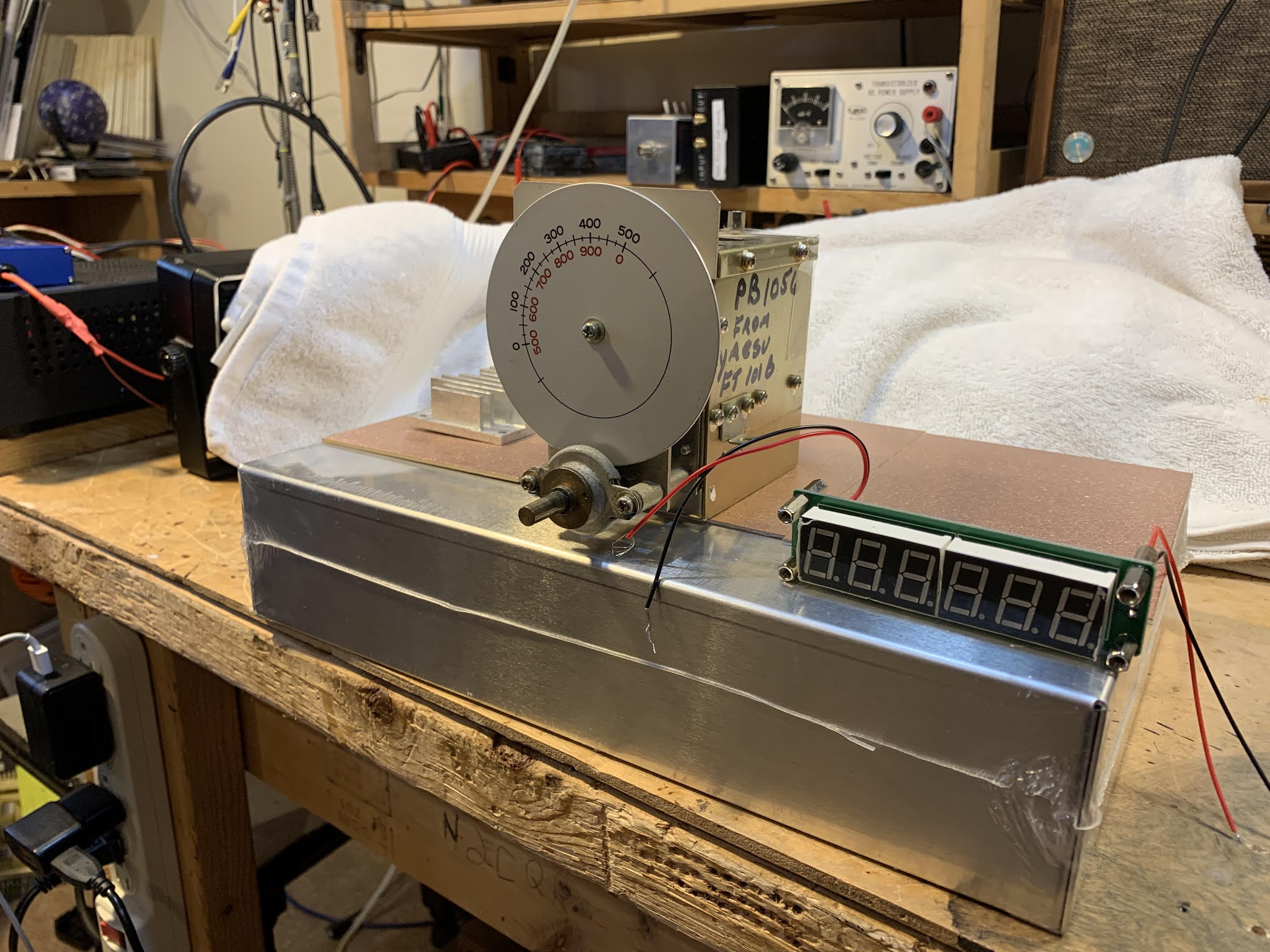
Up next: A rig for 80/75 and 20 meters. Single Conversion. Using VFO from a Yaesu FT101 that runs 8.7 – 9.2 Mhz. Quiz question: What IF should I use?

MAILBAG

Mark Zelesky sent me wood tokens with power and Ohm’s law formulae. Thanks!

Scott WA9WFA Built a really nice Mate for Mighty Midget RX – getting it going!

Tryg EI7CLB found board of his George Dobbs Ladybird RX. Rebuild it OM!

Tom WX2J – We talked about “No lids, no kids, no space cadets” nastiness.

Nick M0NTV about sideband inversion. I like the simple rule about subtraction.

Jonathan M0JGH – Always listen to Pete. Got married, has mixing product. Leo?

Mike AE0IH. Dad used a BC-348 in the service. Looking for one. FB.

Adam N0ZIB – “Silent Shep” site — with some ham radio shows I had not seen.

Walter KA4KXX in Orlando has a similar subtraction problem with San Jian counter.

Bill N5ALO sent me a really nice KLH speaker. I’m using it now.

Jason N2NLY – interested in building SSB transceiver. One step at a time OM…

Trevor in Annapolis sent xcsd cartoon that really hit home.

Farhan is doing OK in India, diligently protecting his family from the virus.

Peter VK2EMU also doing well.

Dave AA7EE Casually killed a DC receiver in Hollywood, and disposed of the remains.

Charlie ZL2CTM doing great things with simple SSB. Blogpost.

Phil VK8MC in Darwin sends article on “Mend not End” battle against planned obsolescence.

Bob KY3R re my SDR adventures, asked if I’ve had a recent medical/psychiatric evaluation.

Pete N6QW and Steve G0FUW Talk to RSGB About Homebrew (Video)

Wow, what an unexpected treat! Here we can watch Pete N6QW and Steve G0FUW talk to the Radio Society of Great Britain about homebrew radio. Steve talks about kits and scratch-built rigs. I really liked seeing his early rigs and his description of how building these rigs helped him become a more advanced homebrewer. I also liked his mention of George Dobbs as a guiding light in the QRP and homebrew world.

Pete focuses on SDR and provides a really great description of this approach to homebrew. I was struck with how great it is that, after a lifetime of HDR building, Pete is willing to embrace this new technology. He talks about it as part of “a learning journey.” As always, he sets the example for us all.

Thanks to Pete, Steve, and RSGB.

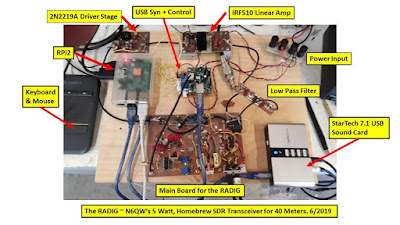
Pete N6QW’s RADIG SDR On The Air!

Hi Bill:

So far I have made about two dozen contacts with the new RADIG. Just finished one with a ham I know in New Mexico and he is an RF Engineer –he was a designer at Alpha. I asked that he do a critical review of how I sounded and looked on his SDR – a good report and his comment was that if I hadn’t told him he would have guessed it was a $4 or $5K box.

So another goal achieved –on my 60th year anniversary and this makes #37.


DARK SIDE TO THE MAX: WA7HRG’s Android Tablet SDR (with a question)

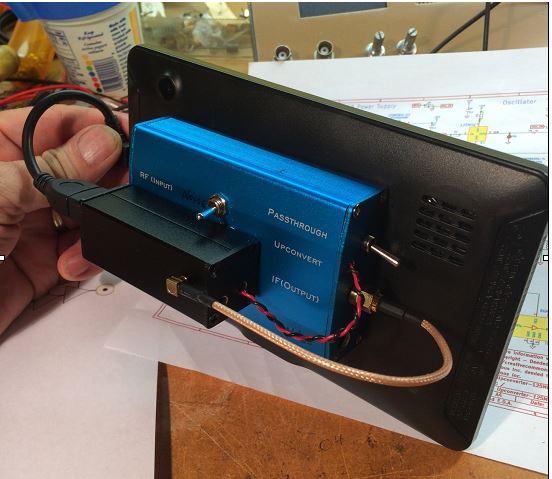
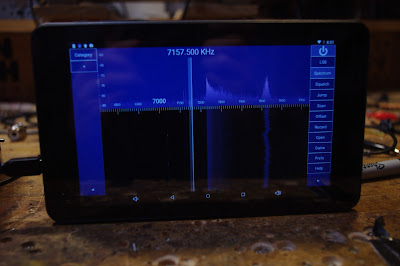
Jim’s experience with the Android tablet SDR was very similar to mine. But he used a “Ham It Up” up converter ahead of the RTL-SDR while I used an RTL-SDR modified for direct sampling of HF. I built a pre-amp/pre-selector stage for mine. On my Android Tablet (50 bucks via Amazon) I found the touch screen to be kind of clunky — it was hard to get the receive passband lined up with the incoming signal. The touch screen was not nearly as smooth as the one on my IPhone. A Bluetooth mouse solved that problem.

Like Jim, I am using SDRtouch from the GooglePlay. I’ll have to follow his lead and try Droid RTTY and PSK.

My reaction to the completed project was also similar to Jim’s: He writes that this is, “The first and last of my SDR adventures. This is just not the same as scratch building!” Indeed, it is not. But still, for very little money you end up with a pretty impressive receive capability, and you get some valuable insight into an intriguing method of receiving radio signals. And you don’t have to mess with Linux!

I have a question for the SDR gurus: With direct sampling, we are just running an ADC at RF. So we no longer need an I-Q front end to take care of the image problem we had when we were running soundcard-based SDRs, right? But I sometimes I hear that even with direct sampling systems, there is a digital generation of I and Q signals. Why would you need I and Q if you are just digitizing the incoming passband, multiplexing it, and sending it to the software?

Hi Guys

OK, so I am a little (A LOT) behind you guys in my bench work. Several unfinished projects are waiting in the wings. But I thought I would also dabble in Software Defines Radios. Thought I would go the Raspberry Pi route as Pete did. Then I woke up and sided with Bill. I don’t want to learn Linux!!

For about the same price as a Pi-3 and a 7” screen I bought one of Bills Android tablets and I found on eBay an estate sale that had a bag of NuElec parts. The RTL dongle, a Ham it Up vs. 3, and several cables, all unused. Last but not least I bought an Android ‘On the Go’ USB cable adapter.
I removed the LED and UV diode for the remote to drop the current some. Then tapped some power off the USB connector and ran it out to the Ham it Up. A few holes and some double sided carpet tape and ‘Bobs Your Uncle”. I added an enable switch to the up converter for the noise source but still waiting for the SMA connector to come in. Then I’ll see what that can do as a poor man’s spectrum analyzer for filter design.


I found several interesting apps on GooglePlay. Besides the SDRTouch program I downloaded Droid PSK and RTTY. Also the RFCorb client that allows you to connect to hundreds of remote stations around the world. That I may have to spend some time exploring but not really part of this build.
The Up Converter fired right up and after tuning around some I jumped to 14.070, the PSK hot spot. The tablet truly does multitask. I left SDRTouch running and opened Droid PSK. A waterfall full of signals jumped up and I was easily copying stations on the East coast and Canada.


All this running on the USB power from the tablet! How cool is that. After about 45 minutes or so the battery was about half. The only problem that I may have to address is that the tablet and/or the Ham it Up gets pretty warm and my carpet tape lets go and things fall apart. HA. Haven’t ran it long enough yet to see what else the heat might effect.


So that was fun and I will be playing with it some more. I have coffee on Mondays with some ham buddy’s. When I showed them the PopCorn radio they jibbed about it not being battery powered.


Well Monday is coming!! HA

Jim WA7HRG

For Pi Day (3.14) – Looking Back on 5 years of Raspberry Pi Tinkering


Not by me, thank God! No, the five years of Rasp Pi maso-tinkering were done by Thorin Klowsowski. His report appears here:

http://lifehacker.com/what-i-ve-learned-from-tinkering-with-the-raspberry-pi-1793236686

In the second and third paragraph, he confirmed all my suspicions:

The Raspberry Pi is far, far away from being as user friendly as a PC or Mac. That’s a feature, not a bug… Before hobbyists latched onto the Raspberry Pi, it was a computer for learning how to code targeted mainly at kids. Since then, the appeal has broadened, but it’s still impossible for a project to “just work” out of the box. You will have to tweak something, dig into the command line, or spend a few hours buried in an obscure internet forum to find solutions to problems that only you seem to be having. You will slam your head against the wall, yell a little, and throw your Raspberry Pi at least once for every project you attempt to make.

I told you so.


SolderSmoke Podcast 194 – Approaching the Digital-Analog Singularity

SolderSmoke 194 is available (scroll down for link)
March 4, 2017

BIG NEWS: uBITX from Farhan
BENCH REPORTS
Pete: Recycling Old Boards
Working on Arduinos and advanced displays
Bill: SDR Adventures and Misadventures.
RTL-SDR is fun. Built HB front end.
HDSDR under Windows is fun and easy.
Thought about Raspi3, 7 inch touch screen, Linux, software YUCK.
Followed advice of Ken G4IIB and got a 50 buck tablet with Google Play.
Who needs tiny OLEDs? Use a 7 inch tablet as your display!
Building a Ceramic Resonator for the HRO 455 kc filter
The value of doing something different.
Boxed up my NE602 OLED rig.
OLED noise and ACTIVE decoupling.
NE602 and MOSFET tips
LEXICON:
OTD Obsessive Tinkering Disorder G6LBQ
“A Thing of Beauty”
Source of Tombstoning term: Don ND6T.
Ken G4IIB’s extremely smooth audio.
ON THE AIR:
On AM on 75 and 40. Fun. Old Military Radio Net and “The Lonely Guy Net” on 75 Saturday morning.
Good old 17 meters. Open at mid-day
HB2HB on 40 with W0PWE.
Listening on 60
Hambrew magazines disappeared, but are back now.
EMRFD Classic Edition available
New Posts to BITX HACKS
MAILBAG:
Gloves follow-up. Not a good idea.
VK3YE’s QRP by the Bay event and a new book!
Colin M1BUU achieves Mountaingoat status
Martin A65DC JoO MMM in the UAE
Tom NY2RF Editorial with mention of JoO!
Lots of Al Fresco rigs: W8LM BITX on a board, Brad WA8WDQ DC RX, KA4KXX Al Fresco OZ DSB
ON6UU DSB from Spain via Belguim
Hugh ZL1UEM SMALL Si5351 OLED
Cookie Tin rigs VK2EMU’s Biscuit Tin DC RX, WA7HRG’s Popcorn rig
VK4FFAB FB LTSPICE intro
Ken G4IIB’s BITX adventure (with VERY smooth audio. How smooth? We can’t say.)
VU2XE’s BITX with a CAD box
G0ETP’s shockingly beautiful SDR receiver
Alan W2AEW on the mend with broken ankle. His videos are a treasure trove of tribal knowledge.