Why “Q” for Transistors?

Steve Silverman provides a possible answer:

“There are claims that, after initial chaos, eventually the letter Q was chosen because of the popular TO18/TO39 case styles.”

Our book: “SolderSmoke — Global Adventures in Wireless Electronics” http://soldersmoke.com/book.htm Our coffee mugs, T-Shirts, bumper stickers: http://www.cafepress.com/SolderSmoke Our Book Store: http://astore.amazon.com/contracross-20

Why are relays marked “K” on schematics?


Our official SolderSmoke etymologist and lexicographer Steve Silverman explains:
Bill

Here is some ham radio/electronics trivia
In the days when amateur radio used short range spark transmitters, multi-station relays were used to move a message across longer distances. At the end of each transmission, a “K” was sent, which told the receiving operator to commence his relay to the next station. Hence the use of ‘K” to designate a relay in a schematic diagram, and “end-of-transmission” for CW operators. And hence the American Radio RELAY League

73Steve Silverman

KB3SII … .. ..

Our book: “SolderSmoke — Global Adventures in Wireless Electronics” http://soldersmoke.com/book.htm Our coffee mugs, T-Shirts, bumper stickers: http://www.cafepress.com/SolderSmoke Our Book Store: http://astore.amazon.com/contracross-20

American Radio History Site — Lots of Radio Magazines

Hi Bill,

I wanted to leave you feedback on your podcast.

I love it! Keep it up. I travel quite often in my work and listen to
all your podcasts.

Since my early teens in the late 70’s I started subscribing to
electronic magazines (which I have still keep all every issue). I just
found a site that has all the old electronic magazines scanned and
posted for all to read. What a resource!
http://www.americanradiohistory.com
It has all the old Popular
Electronic Magazines, Radio Electronic Magazines, Modern Electronics,
Electronics Illustrated, etc, in pdf format. Information from the turn
of the century … Wow. Back when radio hobbyists made their own
chassis for their valve radios. Just google American Radio History and
it will be a top link. You might want to share this link with your
friends, and listeners.

I have purchased your Soldersmoke book from Lulu — Thumbs up!! Great Book.

Thanks again for sharing your experience with radio and the knack.

Greg Self
N8YCB
ps:
I have always called kluge – KLOO-guh .. and I don’t know why. 😉


Our book: “SolderSmoke — Global Adventures in Wireless Electronics” http://soldersmoke.com/book.htm Our coffee mugs, T-Shirts, bumper stickers: http://www.cafepress.com/SolderSmoke Our Book Store: http://astore.amazon.com/contracross-20

Pete Juliano: Homebrewing With Transistors SINCE 1953!

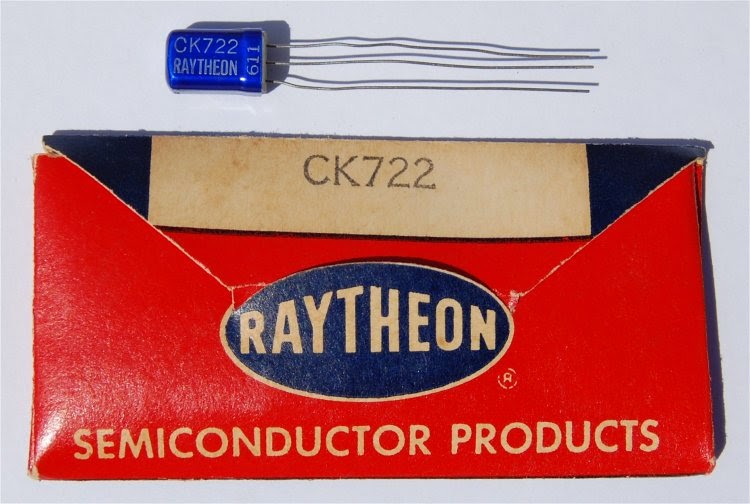
I knew Pete had a lot of experience with transistors, but I didn’t realize just how far back this experience reaches. Pete writes, “The March 2015 issue of QST had an article about a 1953 transistor transmitter project which was really advanced technology since the transistor was only invented about 5 years before that time… About 1953 at the age of 11, I built my first solid state audio amplifier using the venerable CK722 from Raytheon. The transistor did look a bit strange in that cool blue cube shape with a red dot on the side to identify the collector. What a joy and surprise to me that it worked the first time power was applied… It was the CK722 that in large measure started me on a life’s work and engagement in a wonderful hobby. That CK722 path also led me to designing and building a QRP solid state version of the Collins KWM2 which I call the KWM-4.” I asked Pete why an 11 year-old kid in 1953 felt compelled to build a solid state audio amp. The answer is very cool: Pete’s father had introduced him to crystal radios at age 8. Pete wanted an amplifier for his crystal set, but his dad was worried about him building high voltage tube gear. So that’s how Pete got his VERY early start with transistors.

We are really lucky to have Pete Juliano sharing his vast tribal knowledge with us.

Our book: “SolderSmoke — Global Adventures in Wireless Electronics” http://soldersmoke.com/book.htm Our coffee mugs, T-Shirts, bumper stickers: http://www.cafepress.com/SolderSmoke Our Book Store: http://astore.amazon.com/contracross-20

TR on Homebrewing

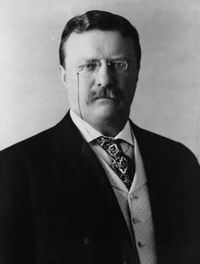
Theodore Roosevelt
“It is not the critic who counts; not the ham who points out how the homebrewer stumbles, or where the builder of rigs could have built them better. The credit belongs to the ham who is actually at the workbench, whose hands are scarred by solder and metal and glue; who strives valiantly; who errs, whose amp oscillates again and again, because there is no effort without error and shortcoming; but who does actually strive to build his rigs; who knows great enthusiasms, the great devotions; who spends himself in a worthy cause; who at the best knows in the end the triumph of high achievement, and who at the worst, if he fails, at least fails while daring greatly, so that his place shall never be with those cold and timid operators who neither know victory nor defeat.”

Our book: “SolderSmoke — Global Adventures in Wireless Electronics” http://soldersmoke.com/book.htm Our coffee mugs, T-Shirts, bumper stickers: http://www.cafepress.com/SolderSmoke Our Book Store: http://astore.amazon.com/contracross-20

World Radio Day! Article with Farhan

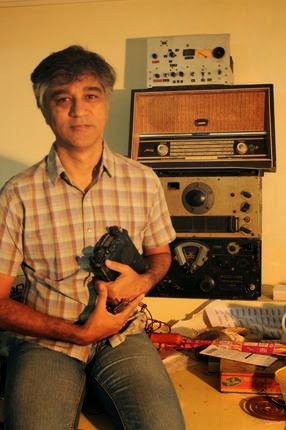
The Hindu did a nice article on World Radio Day. They wisely featured someone with a true case of The Knack, someone with a strong emotional connection to radio and radios: our friend Farhan.

http://www.thehindu.com/features/metroplus/thank-you-for-the-radio/article6886601.ece

Our book: “SolderSmoke — Global Adventures in Wireless Electronics” http://soldersmoke.com/book.htm Our coffee mugs, T-Shirts, bumper stickers: http://www.cafepress.com/SolderSmoke Our Book Store: http://astore.amazon.com/contracross-20

SPARK FOREVER! George and Tommy Build a Spark Rig

It has been a while since I visited the Amateur Logic TV site. When I looked in last week I found George and Tommy building a spark transmitter. Pretty cool! The sparks begin to fly at about about the 23 minute point in this video. Very interesting. Way to go guys!

SPARK FOREVER! (You will see that emblazoned on the QSL cards of REAL old timers. They were railing against those newfangled Continuous Waves. There is a lesson in there for me… )

More AmateurLogic here: http://www.amateurlogic.com/downloads.htm

Our book: “SolderSmoke — Global Adventures in Wireless Electronics” http://soldersmoke.com/book.htm Our coffee mugs, T-Shirts, bumper stickers: http://www.cafepress.com/SolderSmoke Our Book Store: http://astore.amazon.com/contracross-20

The Battery That’s Been Working for 175 Years


In case you missed this. Makes you think, doesn’t it? I’m thinking of a QRPp QRSS transmitter that would just keep on going. Battery designed by Giuseppe Zamboni.

http://motherboard.vice.com/read/this-battery-has-lasted-175-years-and-no-one-knows-how

Our book: “SolderSmoke — Global Adventures in Wireless Electronics” http://soldersmoke.com/book.htm Our coffee mugs, T-Shirts, bumper stickers: http://www.cafepress.com/SolderSmoke Our Book Store: http://astore.amazon.com/contracross-20

Jailed for The Knack: Gerry Wells, Homebrew Hero

Thanks to Thomas of the “SWLing Post” for alerting us to the story of UK radio legend Gerry Wells. As Thomas said in his post, you really need to drop what you are doing and listen to this great BBC program about Gerry:

http://swling.com/blog/2011/02/radio-documentary-the-wireless-world-of-gerry-wells/

The poor fellow was actually JAILED for his “radio obsession.” Wow. That was kind of harsh. But Gerry overcame adversity and had a very happy life in radio.

Thomas has more on Gerry here:

http://swling.com/blog/2014/12/jonathans-interviews-with-gerry-wells/

Thanks Thomas! And thanks to the BBC.

Our book: “SolderSmoke — Global Adventures in Wireless Electronics” http://soldersmoke.com/book.htm Our coffee mugs, T-Shirts, bumper stickers: http://www.cafepress.com/SolderSmoke Our Book Store: http://astore.amazon.com/contracross-20

When Your Local Oscillator Could Sink Your Ship!

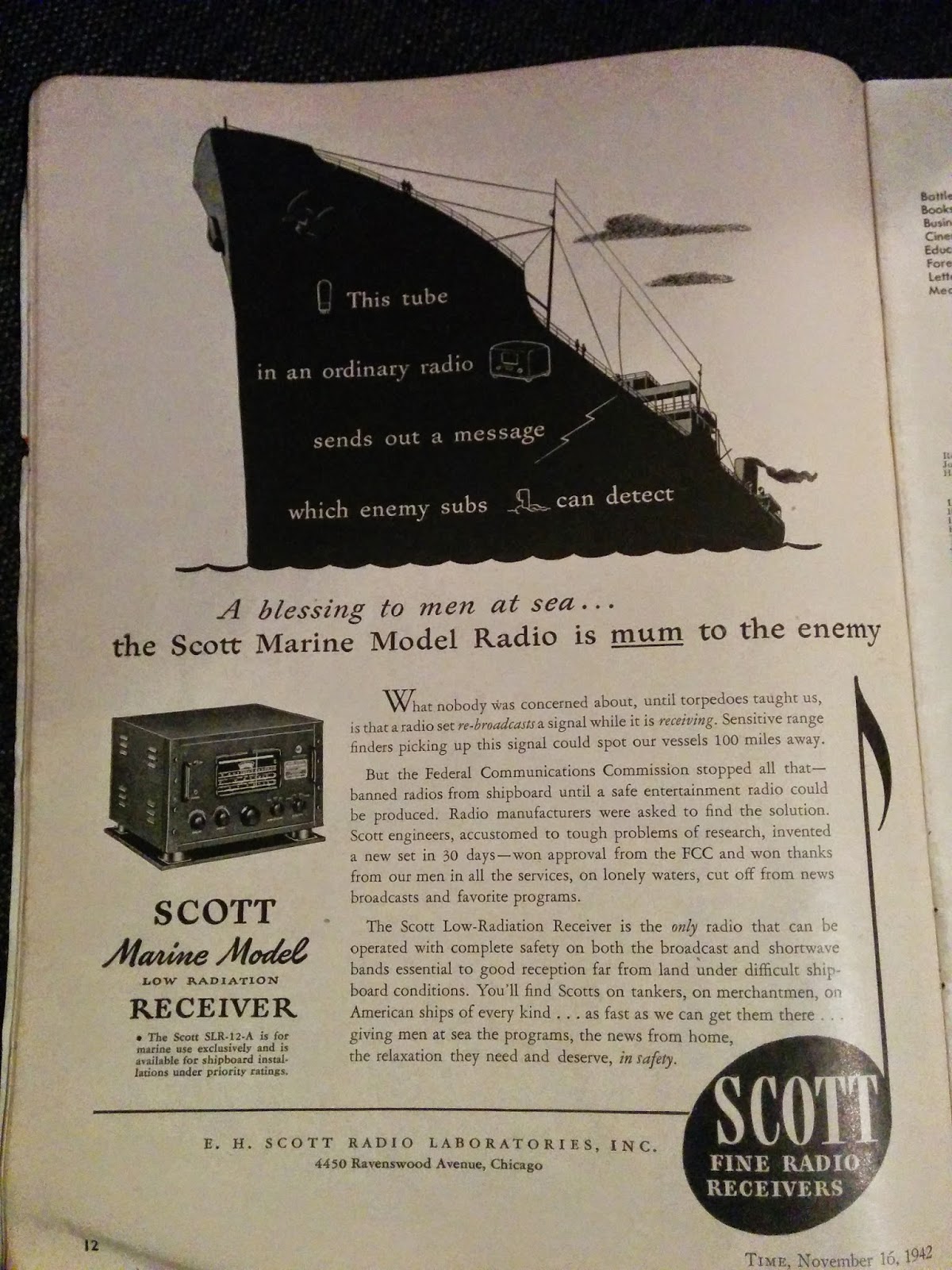
Thomas KK6AHT is the intrepid radio amateur from France who moved to California and successfully built a Minima as his first homebrew project. Yesterday we got additional evidence that Thomas definitely has THE KNACK. It seems that he has been looking through really old radio magazines (clearly a symptom). He sent us this add from 1942. Yikes! Imagine getting your ship sunk because your Local Oscillator is not quite local enough!

…………………


Hey!
I thought you would get a kick out of this 1942 ad. Sounds like those guys had a some good reasons to fight QRM … Who knew the important role played by the FCC during the war?
Now tell me: why were the receivers so noisy at the beginning of the war? What did they change? Happy new year to you both! May the gods of radio (and digital) bring you much fun on the air.
73, Thomas

…………………………


Hi Thomas,
Well Thomas, I will dip my toe into some very deep water and attempt an answer for you which also is an important clue about QRP operations.
  1. Today we have many many signals co-existing in the radio spectrum. During the war there was much less radio garbage and the military lit up the ether with transmissions very sparingly. But that is on the transmit side. That said the local oscillators (much like you have with the Si-570 on your Minima) used in receivers also produce RF that unless is minimized in some fashion is passed right through to the antenna and can be detected. Regenerative receivers are especially prone to this. Yes some military equipment used regenerative receivers. In fact the famous Paraset had to be constantly moved so it would not be detected.
  2. This receiver generated RF into the antenna was addressed by companies like Scott by shielding everything. That receiver in the photo probably weighed about a 100 pounds or more. Much attention was paid to RF bypassing and grounding. The cheap table top radios were RF generators par excellence.
  3. There was another approach developed in WWII to solve that problem and forms the basis of what makes work that little device sitting in your pocket. The odd part it was invented by a famous movie star. Look up Heddy Lamar in wikipedia. She and a co-inventor came up with the concept of frequency hopping and spread spectrum technology. By jumping frequencies it would be hard to pinpoint a transmitting station. That concept forms the backbone of our cellphone system
  4. Now the QRP part – if the RF output from a receiver local oscillator (milliwatts) can be detected from afar – then it follows QRP works!
Have fun.

Pete


Our book: “SolderSmoke — Global Adventures in Wireless Electronics” http://soldersmoke.com/book.htm Our coffee mugs, T-Shirts, bumper stickers: http://www.cafepress.com/SolderSmoke Our Book Store: http://astore.amazon.com/contracross-20

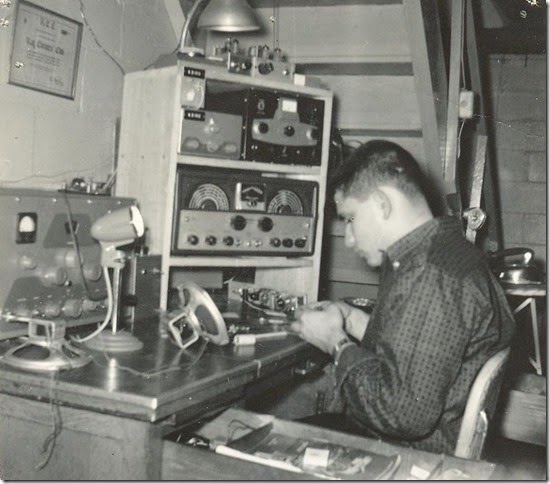
Who is this earnest young radio amateur?

Name that ham! Here are his comments:

This is vintage early 1960’s and my call sign at that time was K3???. One of my favorite rigs was the Johnson Adventurer which I built and had a 6AG7 driving an 807 –50 watts input. On the top shelf near the lamp is the screen grid modulator for the Adventurer. I was in tall clover.

On the bottom opening is a 40M CW transceiver I built it had a 6CX8 MOPA—about 5 watts. The RX was a two tube regen.

Our book: “SolderSmoke — Global Adventures in Wireless Electronics” http://soldersmoke.com/book.htm Our coffee mugs, T-Shirts, bumper stickers: http://www.cafepress.com/SolderSmoke Our Book Store: http://astore.amazon.com/contracross-20

Electro-mechanical Heaven…. with Hell (Hellschreiber)

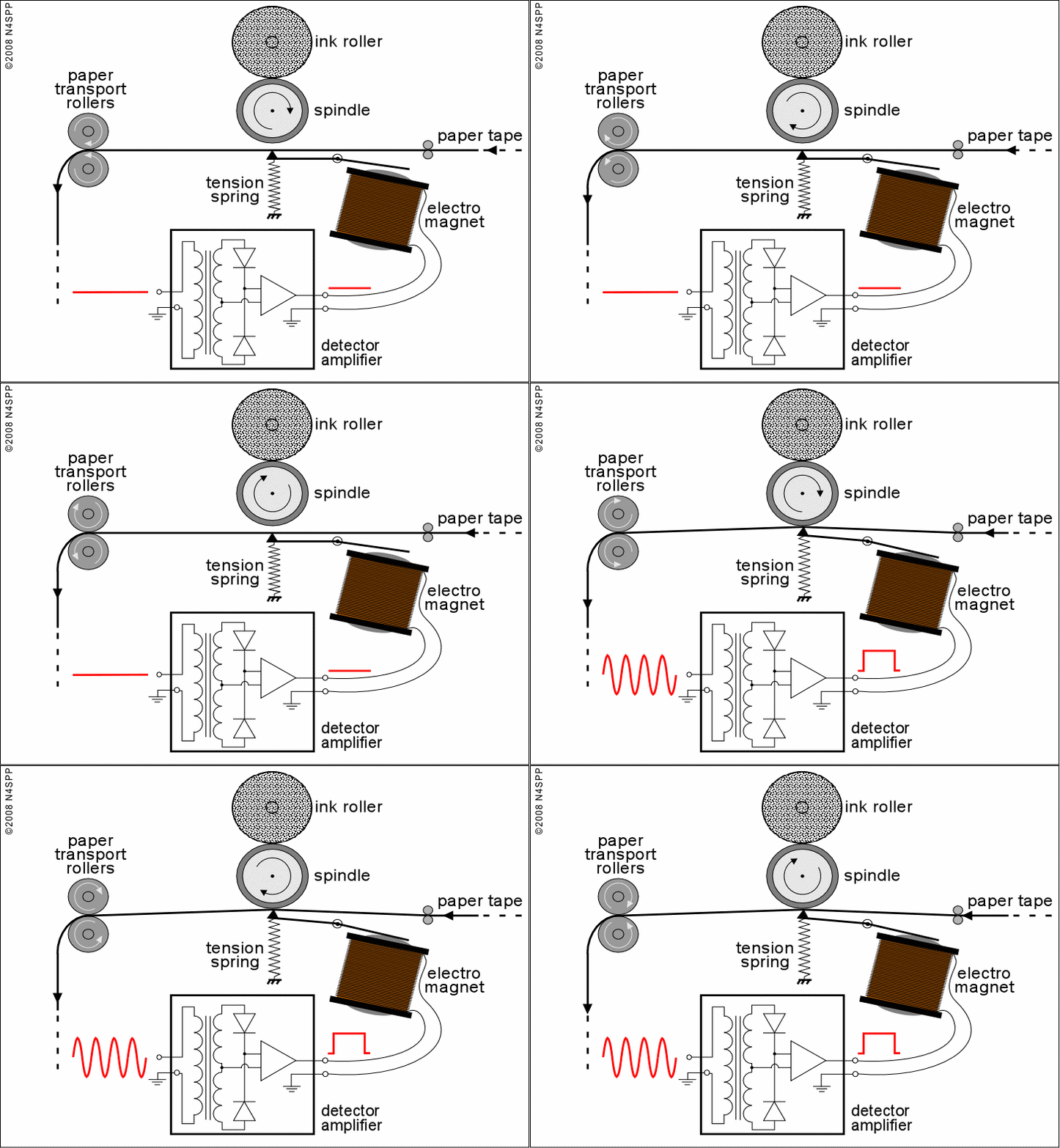
Bob LeDoux sent us a link to a really amazing site about the Hellschreiber system. The site is filled with great videos, pictures, and animations like the one above. Lots of radio history too. Check it out:

http://www.nonstopsystems.com/radio/hellschreiber-function-operation.htm
This is all the work of F. Dorenberg, N4SPP. Thanks OM!

Bob writes: I’m working on a microcontroller based reader for
this mode. For old fossils, like us, this mode looks perfect. It can
be sent using simple CW equipment and it appears to be a great
replacement for those who are tiring of Morse code.
Its perfect for Knack victims. We can even build mechanical printers. Thanks Bob!

Our book: “SolderSmoke — Global Adventures in Wireless Electronics” http://soldersmoke.com/book.htm Our coffee mugs, T-Shirts, bumper stickers: http://www.cafepress.com/SolderSmoke Our Book Store: http://astore.amazon.com/contracross-20

The Guy who Invented the LED

I’m a big fan of Ira Flatow’s “Science Friday” radio program (recommended!)
This week, while digging through the archives, I found this gem:

http://www.sciencefriday.com/segment/10/12/2012/fifty-years-ago-a-bright-idea.html

Our book: “SolderSmoke — Global Adventures in Wireless Electronics” http://soldersmoke.com/book.htm Our coffee mugs, T-Shirts, bumper stickers: http://www.cafepress.com/SolderSmoke Our Book Store: http://astore.amazon.com/contracross-20

Tuna Tin Mojo Transferred to BITX17!!!!!!

It happened at the Vienna Wireless Society’s Winterfest Hamfest today in Northern Virginia.
That is Doug DeMaw’s original Tuna Tin.
This may be the first time TT Mojo has been given to a phone rig.
Doug DeMaw would, I’m sure, approve.

Thanks Rex!

Our book: “SolderSmoke — Global Adventures in Wireless Electronics” http://soldersmoke.com/book.htm Our coffee mugs, T-Shirts, bumper stickers: http://www.cafepress.com/SolderSmoke Our Book Store: http://astore.amazon.com/contracross-20

Brilliant! New “TX Factor” Ham Radio TV Show from the UK

I really enjoyed this. It is the first episode of what I hope will be a long-running series.
These guys did a great job. Excellent quality video production and very interesting subject matter. A LOT of work went into this. I liked the PSK from a smart phone on a foggy hillside (with Moroccan soup!). The Marconi stuff was wonderful. Beer barrels as 2 meter cavity resonators! Excellent Knackish-ness! And a two meter repeater in an astronomical observatory. Well done!

Thanks to Nigel and Dino for alerting me to the TX Factor.

Our book: “SolderSmoke — Global Adventures in Wireless Electronics” http://soldersmoke.com/book.htm Our coffee mugs, T-Shirts, bumper stickers: http://www.cafepress.com/SolderSmoke Our Book Store: http://astore.amazon.com/contracross-20

Christmas Eve Fessenden Memorial Broadcast on 486 KHz

Imagine it is Christmas Eve, 1906 and you are on the air, listening to the harsh buzz of Ol’ Spark Morse Code. Suddenly, in the headphones you hear a human voice and music.

Brian Justin has set up an experimental station that recaptures that magical “birth of radio telephony” moment. He will be on the air this Christmas Eve, Christmas Day and New Year’s day. Here is what W4DEX heard during last year’s event:

http://www.w4dex.com/500khz/wf9xih/wf9xih_24dec11.mp3

Experimenter to Honor Early Wireless Pioneers with Longwave Transmissions
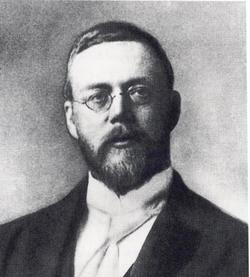
Fessenden

As he has over the past several years, Brian Justin, WA1ZMS/4 — as experimental station WG2XFQ — will transmit voice and music on 486 kHz on Christmas Eve and Christmas Day and again on New Year’s Eve and New Year’s Day. Transmissions will begin at 0001 UTC and end at 2359 UTC. Justin, who may be better known for his microwave exploits on ham radio, will use an AM audio loop modulating his vintage-style, homebrew transmitter to honor Reginald Fessenden’s Christmas Eve 1906 AM voice transmission.
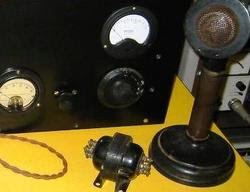
WA1ZMS constructed his MOPA transmitter from 1920s-vintage components. [Brian Justin, WA1ZMS, photo]

“While his original transmissions used a set of carbon microphones in the antenna lead to modulate the signal,” Justin explained, “WG2XFQ will be utilizing true Heising modulation in honor of Raymond Heising, who developed this early form of amplitude modulation during World War I.Justin constructed his 5 W master oscillator power amplifier (MOPA) transmitter using 1920s-vintage components. He said a modern 500 W FET linear amplifier allows him to meet his WG2XFQ ERP limit of 20 W. An RF engineer, Justin collects pre-1920 wireless gear and has a World War I Heising-modulated aircraft transmitter he’s planning to restore. Justin was an active participant in the ARRL’s WD2XSH 600 meter experimental project.

(From the ARRL Newsletter)

Our book: “SolderSmoke — Global Adventures in Wireless Electronics” http://soldersmoke.com/book.htm Our coffee mugs, T-Shirts, bumper stickers: http://www.cafepress.com/SolderSmoke Our Book Store: http://astore.amazon.com/contracross-20
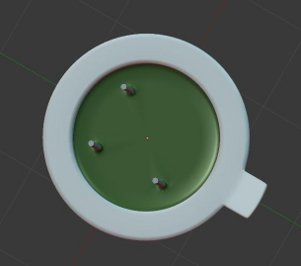
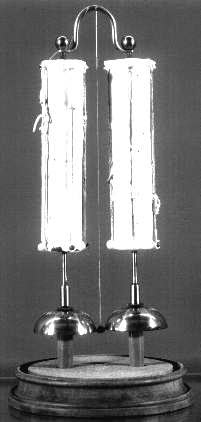
Thermitron (Tube, Valve) Op-Amps

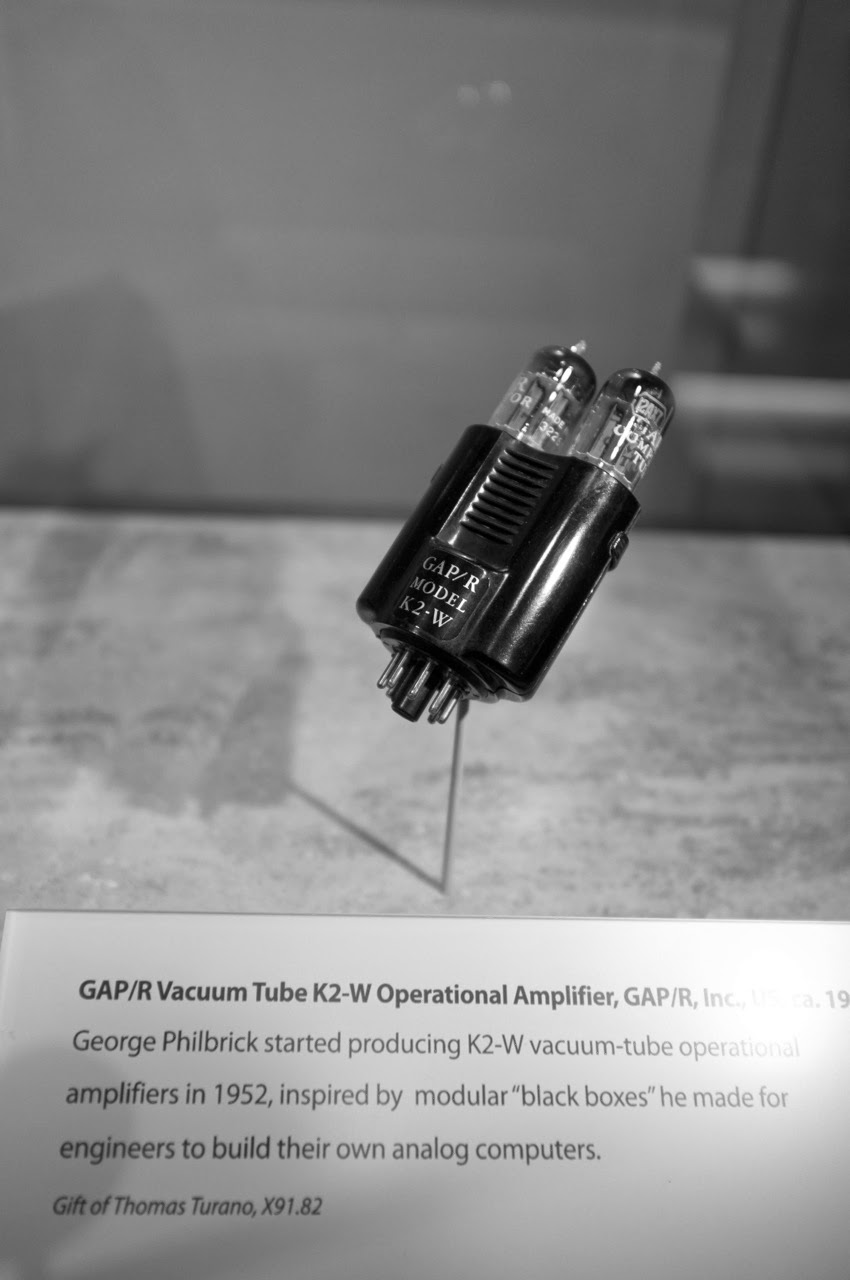
It is kind of appealing. I like it better than the 741. This one you can take apart and see how it works. Thanks Rogier!

Our book: “SolderSmoke — Global Adventures in Wireless Electronics” http://soldersmoke.com/book.htm Our coffee mugs, T-Shirts, bumper stickers: http://www.cafepress.com/SolderSmoke Our Book Store: http://astore.amazon.com/contracross-20

Thermitron (Tube, Valve) Op-Amps

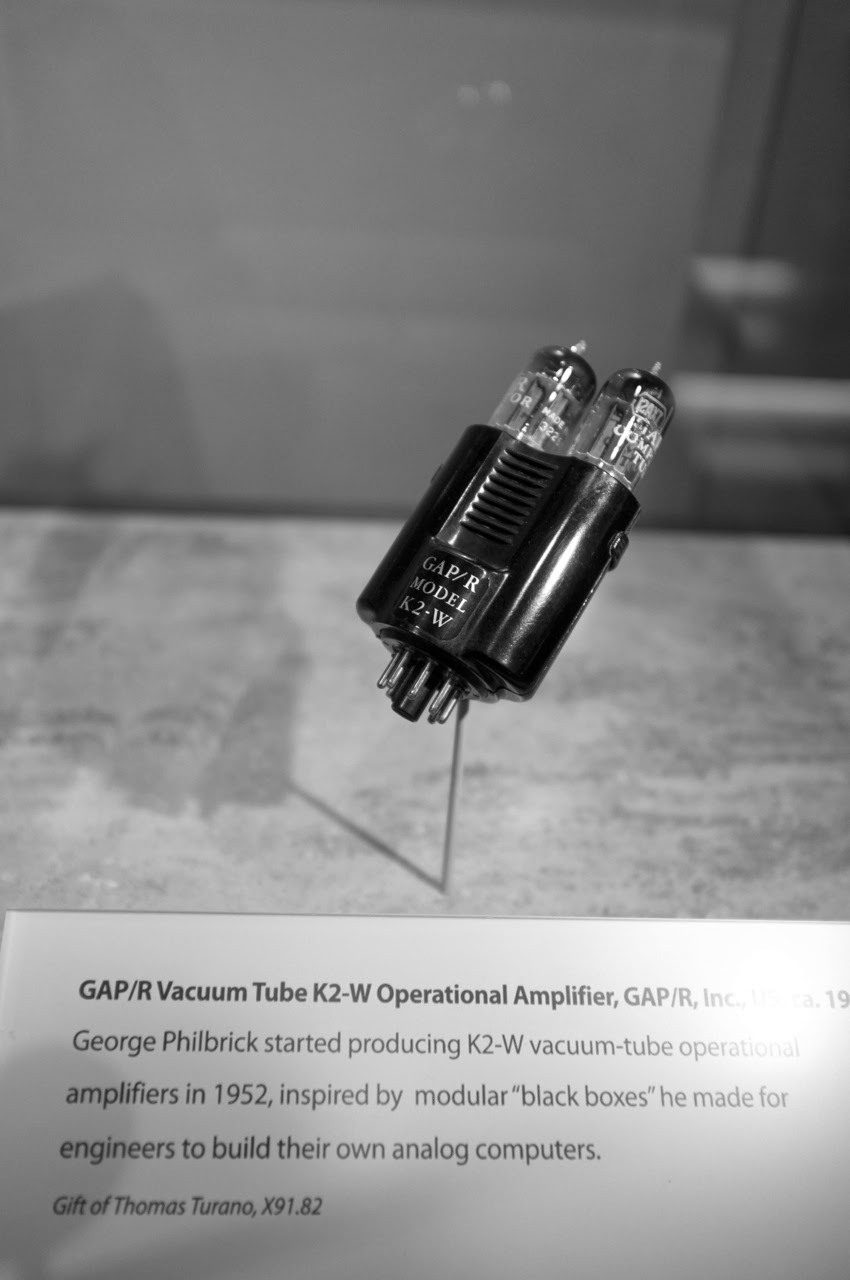
It is kind of appealing. I like it better than the 741. This one you can take apart and see how it works. Thanks Rogier!

Our book: “SolderSmoke — Global Adventures in Wireless Electronics” http://soldersmoke.com/book.htm Our coffee mugs, T-Shirts, bumper stickers: http://www.cafepress.com/SolderSmoke Our Book Store: http://astore.amazon.com/contracross-20
Knack-to-the-Max! Early Moonbounce

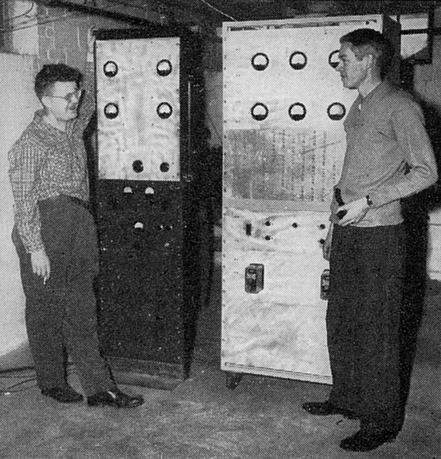
The link below will take you to an amazing collection of QST articles describing the early days of EME or “moonbounce.” Very interesting. I was really blown away when I found out that Ross Bateman, W4AO, (pictured above, on the left) did the very first amateur moonbounce work from the small suburban Washington town that I live in now — Falls Church, Virginia!

I am trying to find OM Ross’s old address or more info about him. If anyone has an old callbook, could you please look up Ross Bateman, W4AO, aka W4XNB? He worked at the National Bureau of Standards.

The moonbounce story is filled with interesting technology and characters and clubs. Sam Harris and his Rhododendron Swamp VHF Society sounds like our kind of group! Scroll through the OK2KKW web site and you will come across our esteemed Doug DeMaw and Bill Orr.

http://www.ok2kkw.com/eme1960/eme1960eng.htm

Our book: “SolderSmoke — Global Adventures in Wireless Electronics” http://soldersmoke.com/book.htm Our coffee mugs, T-Shirts, bumper stickers: http://www.cafepress.com/SolderSmoke Our Book Store: http://astore.amazon.com/contracross-20