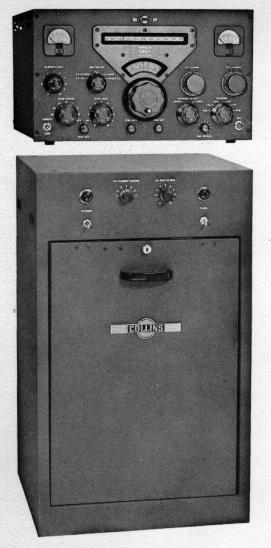
Single Sideband + Carrier — The Collins KWS-1


Back on 2 February I was on 160 AM with the DX-100, talking to WA4PGI. At the end of our QSO we got a call from a station. I was at first confused — was this station calling on SSB? Or was he calling on AM? Turns out that he was — in a way — on BOTH. K4DBK was — I think — running an old Collins KWS-1, the transmit side of the famous Gold Dust Twins. Aptly named: It was built in 1955. 1000 watts output. $2095.00 in 1955. Gold dust indeed.


The really interesting thing about this rig was that it put out CW, SSB and SSB plus the carrier. I think that was what we were hearing from K4DBK. FB.

Does anyone have an e-mail address for K4DBK? I’d like to drop him a line.

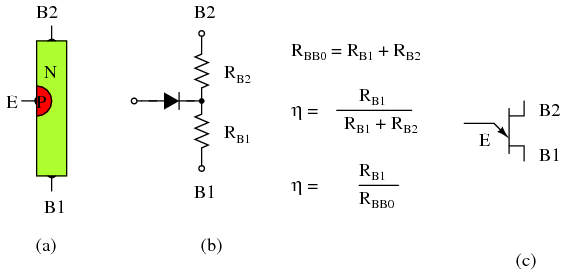
A Probable First: First Ever Radio Contact Using Unijunction Transistor as the Transmitter

AA1TJ writes:

I spent most of a week working to raise the RF output power from my unijunction transmitter to nearly 1mW. I was rewarded this evening with two contacts.

Jim/W1PID exchanged (599/449) signal reports with me from Sanbornton, NH (112km) at 2210z!

Dave/K1SWL did the same (589/229) from Newport, NH (95km) some four minutes later!

I should think these were the first-ever radio contacts made using a unijunction transistor as the transmitter.

FYI: my receiver was comprised of a single 1N34a germanium diode mixer followed by a single 2N35 germanium transistor audio amplifier. Great signals on this end.

Wikipedia on Unijunction Transistors: https://en.wikipedia.org/wiki/Unijunction_transistor

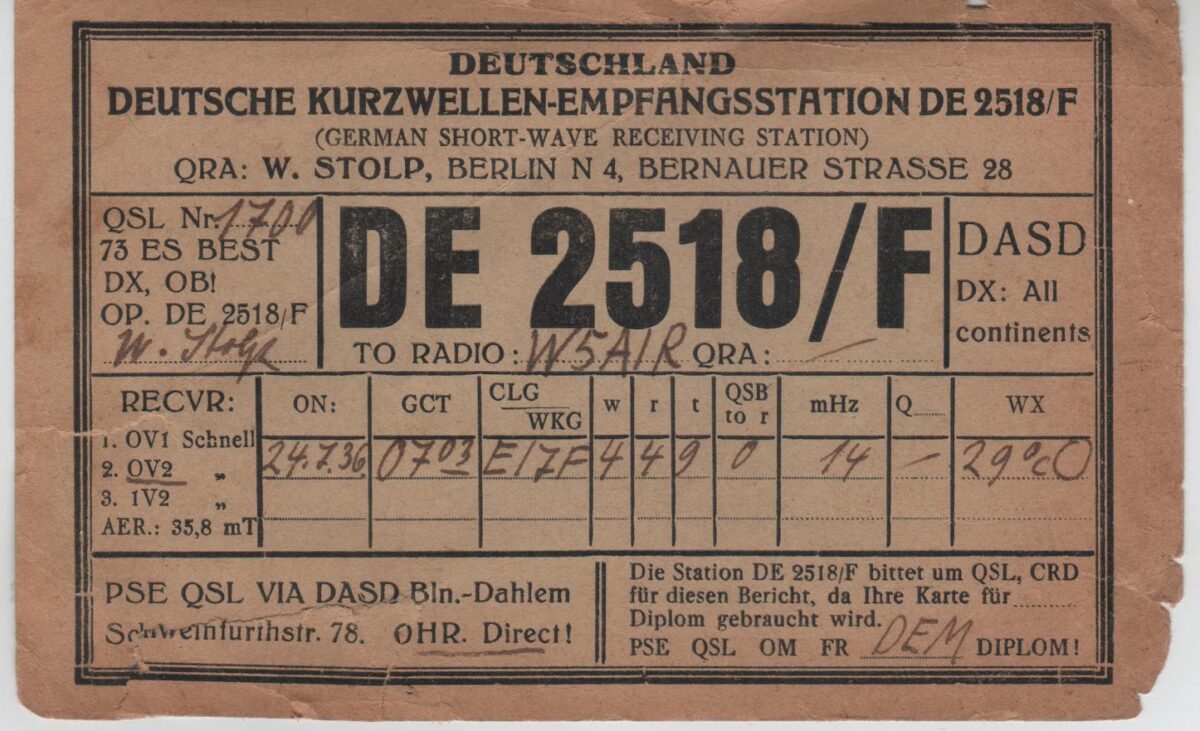
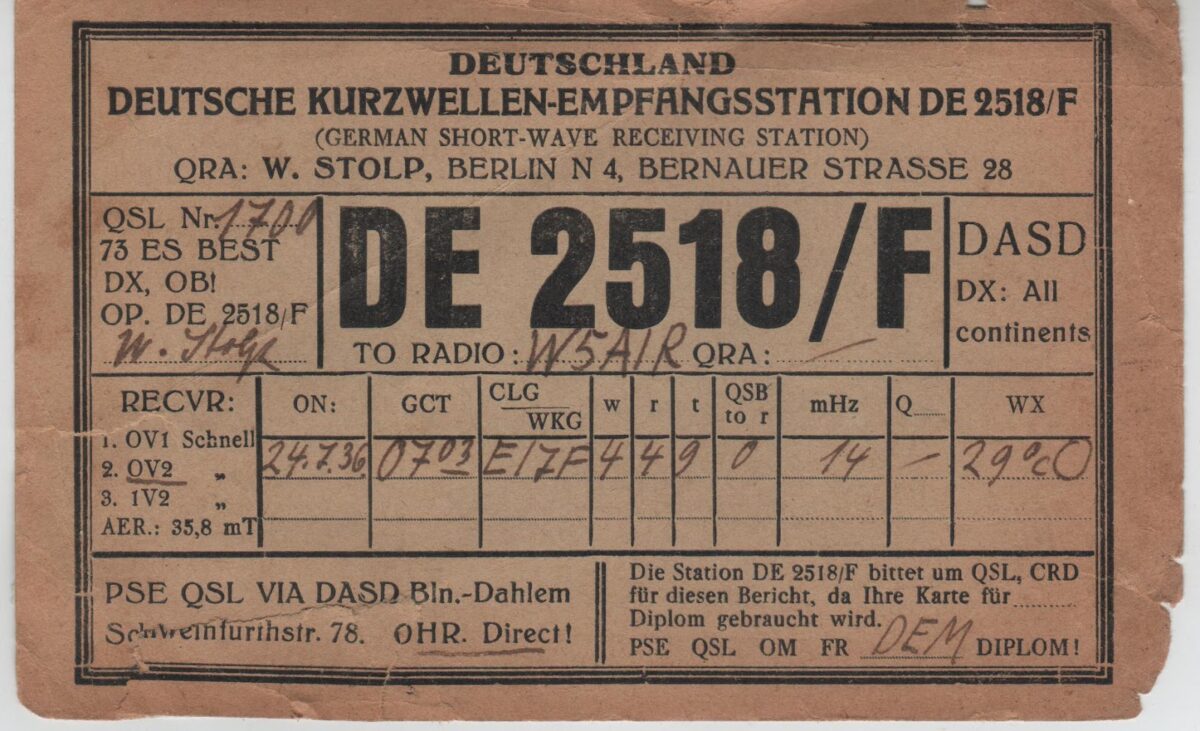
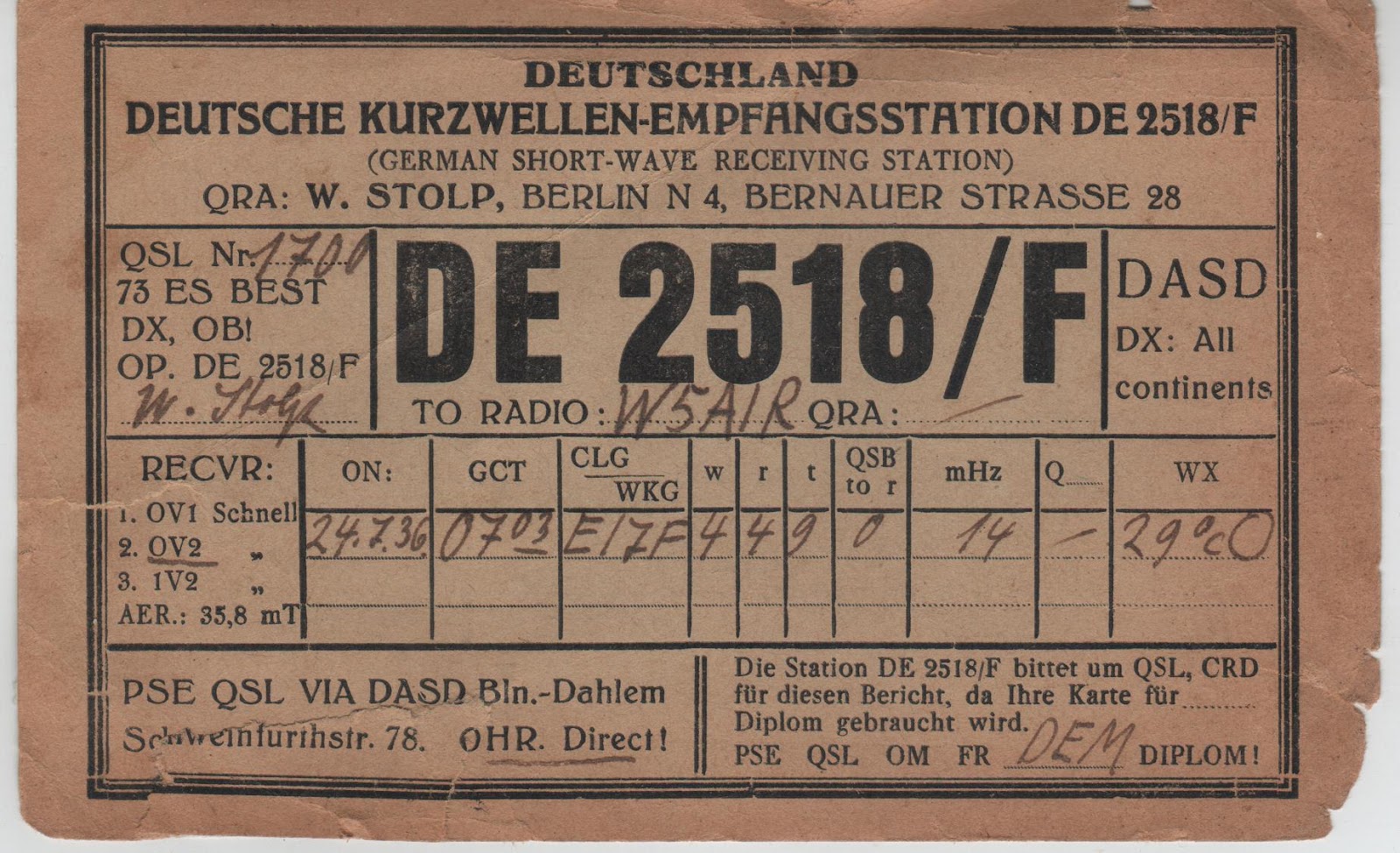
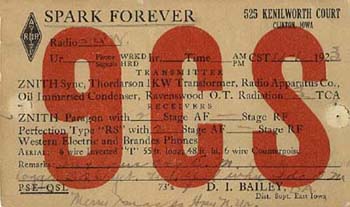
1936 Shortwave Listener QSL card

I found this today while rummaging around in the shack. It is starting to fall apart so I figured I better digitize it before it turns into dust.

July 24, 1936. 7 am in Central Germany. 29.0 degrees Centigrade. Clear skies? German Shortwave Receiving Station DE 2518/F monitored W5AIR’s contact with Irish station EI7F on 20 meter CW. The receiver was an OV2 Schnell tube (almost certainly a regen) fed by a 38.5 meter long antenna.

Conditions must have been pretty good — they were approaching the peak of sunspot cycle 17.

In 1954 W5AIR was assigned to Garold D. Sears. He was probably the operator.

1936 Shortwave Listener QSL card

I found this today while rummaging around in the shack. It is starting to fall apart so I figured I better digitize it before it turns into dust.

July 24, 1936. 7 am in Central Germany. 29.0 degrees Centigrade. Clear skies? German Shortwave Receiving Station DE 2518/F monitored W5AIR’s contact with Irish station EI7F on 20 meter CW. The receiver was an OV2 Schnell tube (almost certainly a regen) fed by a 38.5 meter long antenna.

Conditions must have been pretty good — they were approaching the peak of sunspot cycle 17.

In 1954 W5AIR was assigned to Garold D. Sears. He was probably the operator.

The Secret Life of Machines — The Radio (Video)

Thanks to Rick N3FJZ for sending this to us. In 25 minutes these fellows manage to capture and explain much of the “magic” of radio. Great shots of Marconi, and of Hertz’s first rig. Amazing how they built their own spark transmitter and coherer receiver, launched a kite antenna and sent a signal across the harbor. Great stuff. Lots of history. We’ve met Mr. Wells before — he was “jailed for having the Knack!”

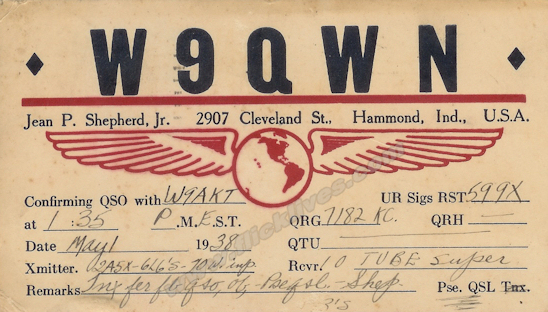
Jean Shepherd’s call signs, a QSL card, and much more

I was listening to 160 meter AM yesterday afternoon when I heard a familiar call: K2ORS. I knew that someone else had picked up Jean Shepherd’s last callsign, so I knew that I was not listening to a CQ from the great beyond. Turns out that K2ORS is now OM Warren Ziegler up in Massachussets. Warren is active on HF and 160 and also works with experimental low frequency transmitters. He is a big fan of Shep. I think Shep would be pleased that someone who melts solder has his old call.

Searching for Warren on QRZ.com led me to a site with an amazing amount of info about Shep, his callsigns, and his early days in ham radio:


We talk about Shep quite a bit on this blog. Here are all the Shep blog posts:


Shep said that when, as a teenager, he got his ham radio license, he was so proud that he went around thinking of himseld as “W9QWN, a man of substance.” Indeed he was.

EXCELSIOR!

Photophone! Modulating the Sun by G3ZPF (and Alexander Graham Bell, and Mr. A.C. Brown of London)

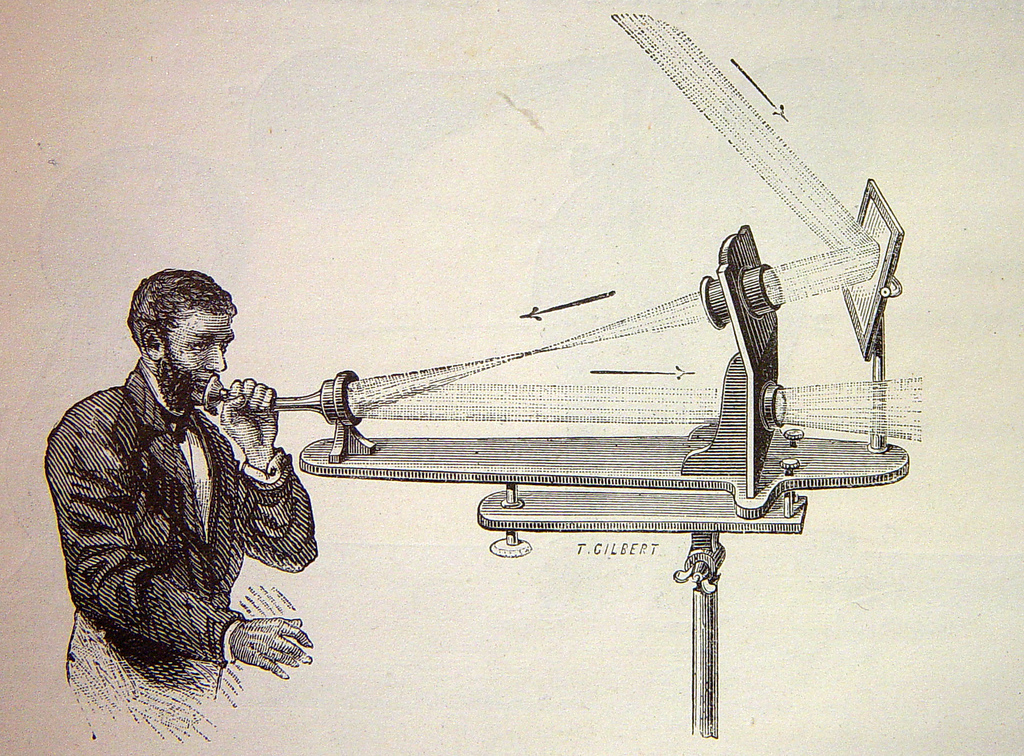
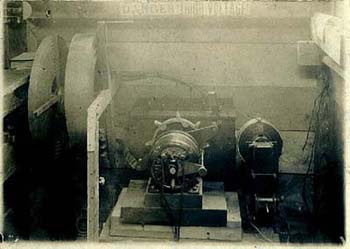
Yesterday David G3ZPF sent us another very interesting e-mail, this one about some very creative sunlight communication experimenting that he and his brother did many years ago. It appears to me that David — on his own — came up with a version of Alexander Graham Bell’s Photophone (pictured above).

Wikipedia says that Bell’s invention was the first ever wireless telephony device. Bell credited Mr. A.C. Brown of London for the first demonstration of speech transmission by light (in 1878).

Here is the Wikipedia article: https://en.wikipedia.org/wiki/Photophone

I think young David’s placement of the small mirror on the cone of the AF amplifier’s loudspeaker was brilliant!


Hello again Bill,

Just (literally) finished the book and a couple of surprises awaited me in the final chapters

SSDRA = $200 on Ebay
My flabber has never been so ghasted….and I have a lot of flabber. I will treat my copy with even more reverence now. Srtangely I hadn’t heard about EMRFD so I’ll need to look into that

Modulating light
Your story about using a laser pen in a receiver reminded me of my method of modulating light which I’ve never seen anyone else mention.

In the mid 60’s my brother had an electronics constructor set for his birthday. After the initial fascination I probably played with it more than him. I remember reading about modulated light transmitters and (because this was before I was anywhere near getting a licence) I decided to build one. My brother was sufficiently curious to help.

We started with the receiver. I purchased an OCP71 and managed to find an old 12″ headlight reflector from somewhere. The cork from a wine bottle fitted nicely into the hole at the centre, and the cork was easily drilled out to accommodate the photo-transistor.

My brother constructed the “high gain audio amplifier” project from his constructor kit and we put two legs of the photo transistor across the mic input. We were rewarded by a buzzing sound so loud our parents yelled at us from the other room. It took us a few seconds to realise we were ‘receiving’ the 50Hz signal off the ceiling light (the house lights were on). Waving the headlight reflector around confirmed this. I still recall the excitement we felt at our ‘discovery’.

So far, so ordinary, but the TX side is where I wandered off into the outfield. Normally people modulated an incandescent bulb but this required a many watts of audio power & the ‘inertia’ of the filament could be a problem.

I cannot remember what prompted me to do this, but next day I pulled the speaker grill off my tiny little medium wave transistor radio and glued a small mirror (from my mothers old ‘compact’) to the cone of the loudspeaker.

Then we went outside into a field near our house. My brother went to the far end and I set up the lil radio on a camping stool. Moving it around until the sunlight reflected off the mirror hit the headlight reflector about 200 yards away.

Then I turned on the radio. Instantly my brother started jumping up and down excitedly. It worked. My 200mW AF amp was modulating the *SUN* !

All those guys on 160m with their 10w of AM…pah. I had GIGAwatts of power under my control 🙂

Looking from the receive end it was possible to see the light from the mirror flickering & I guess the movement of the speaker cone did not move the mirror exactly in the plane of the reflected beam. The ‘wobble’ fooled the phototransistor into seeing an amplitude modulated beam.

The beauty of this was that only a tiny audio amp was needed. This made me wonder about such a system being used in undeveloped countries (ones with more sunshine) as a comms system, with batteries recharged by the sun.

For the UK I thought about using a slide projector to provide the illumination, instead of the sun. Again a very low power audio amp was all that was needed, and there were no ‘inertia’ issues to worry about it.

But I was soon to suffer a setback. A few days later the headlamp reflector, sitting on a desk in my bedroom, managed to find itself in a position to focus the suns rays onto the cork holding the photo-transistor. Cooking the transistor & setting fire to the cork. Luckily my mother smelt the burning cork before any collateral damage was caused but I had a face-chewing when I came home from school.

I’d long since forgotten about all this until reading the later chapters of your book.

regards
David G3ZPF


Ed Walker of “The Big Broadcast” at WAMU-FM

Ed Walker, the long-time host of “The Big Broadcast” on WAMU-FM in Washington DC passed away on Sunday night, a few hours after his final broadcast. I was a regular listener.
He obviously had an abiding love for radio. His obituary in the Washington Post notes:
Born blind, Mr. Walker grew up with radio as his constant companion from an early age. By age 8, he was operating a low-power radio transmitter in his family’s basement, beaming music to his neighbors’ houses down the block. He would go on to spend almost all of his adult life involved in the medium in some way, all of it on stations in Washington.
Wow, sounds like he had the Knack. I wonder if he ever had a ham radio license?

November 2015 QST — Wrist Radios, Phase Noise, and a 1958 BITX!

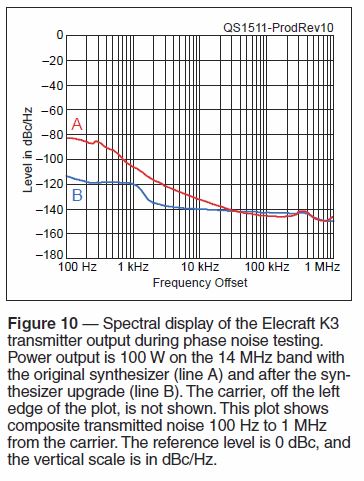
A Early BITX

I liked this issue. Highlights:
Page 30. Glen Popiel’s article on the Arduino.
Page 33. I know this may come as a surprise, but in spite of my admitted Ludite tendencies, I found the article on High-Speed Wireless Networking to be very intriguing.
Page 38. Hey! Mike Aiello N2HTT has an article about an Arduino-based CW recorder. FB Mike!
Page 54. Review of LNR LD-5 QRP Transceiver. “The LD-5 is actually an SDR in a box with switches and knobs…” They give a phase noise graph.
Page 58. Review of Synthesizer upgrade for the Elecraft K3. Uh-oh. Phase noise again. The review says the upgrade results in a reduction of phase noise, but the graphs seem to show an increase in transmitted phase noise on 20 meters as soon as you go 10 kHz from the transmit frequency. I guess this is a tradeoff for a larger decrease in close-in (less than 1 kHz spacing) phase noise? But if the objective on the transmit side is to deal with “a major problem with multiple operators in the same band segment in close proximity” resulting from transmitted phase noise, is this a good trade-off? Also, it would have been interesting to know if the reviewer could detect — by ear — any improvement in the received signal.

Wayne Burdick, N6KR, of Elecraft e-mailed us to let us know that there was an error in this QST article. The original graph in the article showed an improvement in phase noise at close-in frequencies, but it also showed a significant worsening of the phase noise beyond 10 kHz. THIS CHART WAS INCORRECT. The Upgrade does, in fact, improve the phase noise performance. A corrected version of the article appears here:

Here is the corrected graph:

Page 71. My nightmare. The WristRig. The Apple Watch on 40 meters. Sorry Steve, Dick Tracey did not have The Knack, and tackling the “Apple Watch challenge” is not an indication of “homebrew chops.” Software coding chops yes, but homebrewing is, for me, a different thing. (But, as we always say, too each his own… And thanks to Steve for the interesting article. )
Page 82. Ross Hull. Very interesting article, especially the part about OM Ross’s untimely death by electrocution.
Page 100. “The Cosmophones” by Joe Veras. Cool pictures (as always) from Joe. And I loved the first lines: “What in the world is a bilateral transceiver? Byron Goodman, W1DX, posed that question in his June 1958 QST review of the Cosmophone 35.” Wow, four months before my birth By Goodman was writing about BITXs in QST!

The Amazing History of the Gibson Girl Rescue Radio

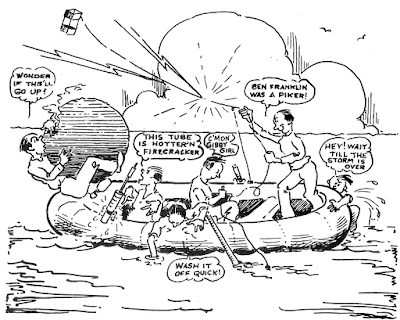
A video about the Kon-Tiki expedition got us wondering about how you could generate hydrogen gas for an antenna balloon while on a raft at sea. (That’s the kind of question that keeps Knack victims up at night.) This led us to the Gibson Girl rescue radio. This morning I found a fascinating web site that gives the long, multi-country history of the curvaceous rescue rig:

The Amazing History of the Gibson Girl Rescue Radio

A video about the Kon-Tiki expedition got us wondering about how you could generate hydrogen gas for an antenna balloon while on a raft at sea. (That’s the kind of question that keeps Knack victims up at night.) This led us to the Gibson Girl rescue radio. This morning I found a fascinating web site that gives the long, multi-country history of the curvaceous rescue rig:

The Advancement Of The Radio Art and The Enhancement of International Goodwill

U.S. Code of Federal Regulations
PART 97—AMATEUR RADIO SERVICE
Subpart A—General Provisions
§97.1 Basis and purpose.

The rules and regulations in this part are designed to provide an amateur radio service having a fundamental purpose as expressed in the following principles:
(a) Recognition and enhancement of the value of the amateur service to the public as a voluntary noncommercial communication service, particularly with respect to providing emergency communications.
(b) Continuation and extension of the amateur’s proven ability to contribute to the advancement of the radio art.
(c) Encouragement and improvement of the amateur service through rules which provide for advancing skills in both the communication and technical phases of the art.
(d) Expansion of the existing reservoir within the amateur radio service of trained operators, technicians, and electronics experts.
(e) Continuation and extension of the amateur’s unique ability to enhance international goodwill.

———————-


On a recent podcast I mentioned that I like the phrase “the radio art.” I also mentioned that I heard some objections to this term. A couple of guys wrote in on this –see below.
I found out that the phrase features prominently in Part 97 of the U.S. Code of Federal Regulations. This is the document that establishes ham radio in the U.S. (see above)
I really like the last line of the first section of Part 97: e) Continuation and extension of the amateur’s unique ability to enhance international goodwill. Yea! That’s us! The International Brotherhood of Electronic Wizards!

————————

Bill:
Was listening to episode 180 and heard you mention that some people had taken exception to using the label “Art” for radio electronics. You should refer them to the Webster’s definition of art,
art. noun \ˈärt\ : something that is created with imagination and skill and that is beautiful or that expresses important ideas or feelings.
Often the patent office, much older than radio, will invalidate a patent application based on “prior art”.
Keep up the great podcast! As soon as I finish a couple of other projects, I’m going to try to build Pete’s LBS design. First, I have got to get a mobile rig installed in my new truck, commuting without it is just too boring.
72,
Don
WD4ON
———————–
Bill:
I was listening to episode #180 on the on the way into my office this morning and wanted to send you a quick note on the phrase “radio arts.” Another example of why “art” is indeed the proper term is that the United States Patent Office (USPTO) classifies patents into, you guessed it “Art Units”: http://www.uspto.gov/patents-application-process/patent-search/understanding-patent-classifications/patent-classification .
For example, Art Unit 2621, Class 178 – Telegraphy (http://www.uspto.gov/web/patents/classification/uspc178/defs178.htm) which is related to Class 455 Telecommunications (http://www.uspto.gov/web/patents/classification/uspc455/defs455.htm)
and many many more as you can well imagine.
Going even further, the basis for our patent system is in Article One, Section 8, Clause 8 of the US Constitution:
“To promote the progress of science and useful arts, by securing for limited times to authors and inventors the exclusive right to their respective writings and discoveries;”
Which in turn was the basis for the first patent statute, The Patent Act of 1790: http://docs.law.gwu.edu/facweb/claw/patact1790.htm
Keep up the good work in furthering the radio arts!
73,
Tim
KA9EAK
———————————

Old Spark (But Thankfully Not Forever)


For the last couple of weeks I have been plagued by noise on the HF bands. In spite of being in a very built-up area of Northern Virginia, I usually have low noise levels. But for the last couple of weeks I’ve had intermittent but frequent arcing noise. It sounded like classic power line arcing.

My 17 meter Moxon antenna provided a clue as to where it was coming from: As I spun the antenna around, the noise was always a lot stronger to the North-North West.

On Wednesday morning on the way to work I noticed that the fire department and the power utility were working frantically on a pole about a mile from our house. It had obviously been on fire — it was still smoking when we went past.

When I got home I was pleasantly surprised to find the arcing noise gone. It took me a few minutes to make the connection — yes, the smoking power pole was to my North-North West.

OBVIOUSLY THE RADIO GODS CAME TO MY ASSISTANCE!

This was a good demonstration of the fine front-to-back characteristic of the Moxon antenna. And a reminder of what radio signals sounded like in the days of spark.

Kids Homebrewing in Japan in the 1920s

Michael Rainey's photo.
Michael Rainey, AA1TJ, Poet Laureate of QRP and Wizard of the Vermont Hobbit Hole found this drawing and put it on his face book page. It is clearly supportive of the “International Brotherhood of Electronic Wizards” theme of this blog, so I have shamelessly expropriated it. All for the cause Michael! I hope this indicates that OM AA1TJ is emerging from a too-long spate of radio-inactivity.
Michael says the drawing is from the 1920’s children’s magazine, “Kodomo No Kuni” by Kiichi Okamoto. David Cowhig, WA1LBP, provides this translation:
Title “Ni-chan, I can hear it!”
The radio kid is saying something like:
— Wait, no I lost it.
— uhhhh
— I can hear it, I can hear it, I’ve got it!
David notes: Sometimes Japanese use the katakana syllabary to add emphasis like we might with italics or exclamation points.

Our book: “SolderSmoke — Global Adventures in Wireless Electronics” http://soldersmoke.com/book.htm Our coffee mugs, T-Shirts, bumper stickers: http://www.cafepress.com/SolderSmoke Our Book Store: http://astore.amazon.com/contracross-20

Kon-Tiki and the Gibson Girl

Back in July we shared a very nice video sent to us by Rupert G6HVY on the radios used by the Kon-Tiki expedition. Many of us had questions about the device used by the intrepid radio operator to generate hydrogen gas (for the antenna balloon) while on the high seas. Mike Herr WA6ARA supplied the answer: 1200 grams of Calcium Hydride crystals. This was part of the WWII rescue radio set CRT-3 (aka the Gibson Girl).

Fair Radio Sales occasionally sells this intriguing device:
https://www.fairradio.com/catalog.php?mode=search&keywords=hydrogen&submit.x=21&submit.y=8

And here is great site with more details on the other antenna supports in the Gibson Girl set, including a ROCKET LAUNCHED KITE!

https://billboyheritagesurvey.wordpress.com/2012/01/17/war-kite-the-gibson-girl-kites/

Our book: “SolderSmoke — Global Adventures in Wireless Electronics” http://soldersmoke.com/book.htm Our coffee mugs, T-Shirts, bumper stickers: http://www.cafepress.com/SolderSmoke Our Book Store: http://astore.amazon.com/contracross-20

Ham Radio on the Kon-Tiki

Hi Bill

Just found a short Youtube QRP video which is quite fun. It’s of the radio side of Thor Heyerdahl’s cross-Pacific Kon-Tiki raft expedition in 1947, operating /MM with 7 watts. I found a longer description of what they had and what they did – including a thrilling tale of drying components on coral reefs while they desperately tried to make contact having washed up on an island – but not of the unusual parrot incident with a hydrogen balloon-lofted antenna during the voyage. That’s only in the video.
It’s all gripping adventure radio stuff, and shows what HF and a bunch of tubes could do before the digital satcom age.
“The expedition used call sign LI2B and carried three watertight radio transmitters. The first operated on the 40 and 20 meters, the second on 10 meters and the third on 6 meters. Each unit was made up entirely of 2E30 vacuum tubes providing 10 W of RF input. As an emergency backup, they also carried a German Mark V transceiver originally re-created by Britain’s Special Operations Executive in 1942. Other equipment included a hand-cranked emergency set of the Gibson Girl type for use on the maritime bands, a special VHF set for contacting aircraft and two British Mark II transmitters. The Kon-Tiki also carried a National Radio Company NC-173 receiver. Dry batteries and a hand-cranked generator supplied the power.”
73s
Rupert, G6HVY

Our book: “SolderSmoke — Global Adventures in Wireless Electronics” http://soldersmoke.com/book.htm Our coffee mugs, T-Shirts, bumper stickers: http://www.cafepress.com/SolderSmoke Our Book Store: http://astore.amazon.com/contracross-20

Some HB SSB History -The Belthorn Story

The Eden Valley, Cumbria, England

Hello Bill,
As per your discussion with Pete in #177 I can indeed confirm that the correct pronunciation of Belthorn is “Bell-Thorn,” like Bell and Thorn concatenated. I named the design the “Belthorn SSB IF Module” in honour of the village I was living in at the time I developed it. I wanted to put the village on the map and in doing so leave my mark.
The design was published as a two part article in RadCom May/June 2000 intended to offer an alternative to the Plessey SL600/1600 IF strips of the late 70s early 80s. These integrated designs opened up simple SSB construction to many but by the mid 80’s sources of SL600/1600 ICs had all but dried up. I thought that a new design using readily available parts would be worth developing to offer a simple and repeatable basis for building an SSB transceiver.
From the emails I’ve received over the years it was and still is a popular project with many hundreds if not thousands having been built around the world. When the MC1350 IF amplifier became an endangered species I returned to the drawing board to produce a new version using a home brew diode DBM front end, a simple cascode IF stage and NE/SA612 product detector/modulator. An interesting feature of this was an AGC system based around an 8 pin 12F683 PIC. This new design offered considerable simplification and retained excellent performance. It was christened the “Eden SSB IF Module” after the Eden Valley where I now live in the north of England. It formed part of a transceiver project published on Yahoo Groups (Search for Eden 9). The gentleman who created the Yahoo Groups site mistook my schematic revision number (9) to be part of the name, and so it unwittingly became Eden9!!! Fortunately the NE/SA612 remains in production although should it become obsolete I would probably make things right by bringing out a yet another version of the IF strip, perhaps with a switching mixer. Here are a couple of links from the “old world” to give you a flavour of Belthorn the village and Belthorn the design;
The village website –http://www.belthornvillage.co.uk/ (Note that they’ve just bought a pub!)
The origin of the name “Belthorn” is quite interesting – although of little relevance to radio! Before the industrial revolution the village used to be on a pack horse route. to this day there is a house at the top of the village called “Bell in the Thorn” many years ago this used to be an inn. It’s thought that it takes its name from when a Bell hung in a thorn bush or tree nearby was used to signal when a horse change over was required to carry loads up and down the hill, probably from the mines or quarries on the nearby moors.
The link for the “Eden9” which you may find interesting is; https://groups.yahoo.com/neo/groups/eden9/info There is a power point presentation in the files section which describes the project and which features a section on receiver design. It may be a useful primer for those interested in the design process.
You can still find my original website on the internet archive complete with an introduction to Belthorn the village and a few of my earlier projects here; http://web.archive.org/web/20090316093248/http://g4gxo.cwc.net/
73 Ron G4GXO

Our book: “SolderSmoke — Global Adventures in Wireless Electronics” http://soldersmoke.com/book.htm Our coffee mugs, T-Shirts, bumper stickers: http://www.cafepress.com/SolderSmoke Our Book Store: http://astore.amazon.com/contracross-20

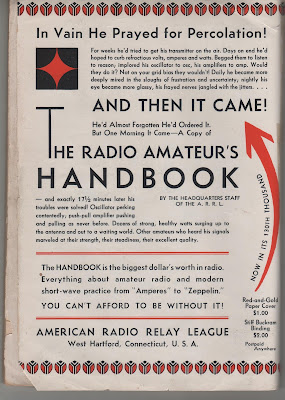
Been There, Done That: “…he begged his oscillator to osc and his amplifiers to amp.”

This ad is from the December 1931 issue of QST. This copy has a LOT of mileage on it. In 1993 or 1994, David Cowhig (now WA1LBP) was living in Okinawa Japan and was operating as 7J6CBQ. I was living in the Dominican Republic and operating as N2CQR/HI8. We were both contributing to a 73 magazine column (as “Hambassadors”!) and we were both in the Foreign Service. I wrote to David — he wrote back, sending me some old QSTs, including the one from which the above ad is taken.

This ad shows that many of the homebrew/troubleshooting woes that we face today are very old. And that having access to good technical books is very important when you are trying to overcome these difficulties.

Our book: “SolderSmoke — Global Adventures in Wireless Electronics” http://soldersmoke.com/book.htm Our coffee mugs, T-Shirts, bumper stickers: http://www.cafepress.com/SolderSmoke Our Book Store: http://astore.amazon.com/contracross-20

Doug DeMaw’s Rigs Found, Donated to ARRL for Exhibit

http://www.arrl.org/news/museum-donates-doug-demaw-w1fb-homebrew-equipment

This is really good news (Thanks to Pete Eaton for the alert.)

I wonder if the Barebones “Barbados” Superhet was in this batch.

We KNOW where that Tuna Tin 2 is….

Our book: “SolderSmoke — Global Adventures in Wireless Electronics” http://soldersmoke.com/book.htm Our coffee mugs, T-Shirts, bumper stickers: http://www.cafepress.com/SolderSmoke Our Book Store: http://astore.amazon.com/contracross-20