SolderSmoke Podcast #195: (We need some help!) BITX, 60, SSB History, Tribal Socketry

SENDING IT BACK


SolderSmoke Podcast #195 is available. Link appears below (scroll down)

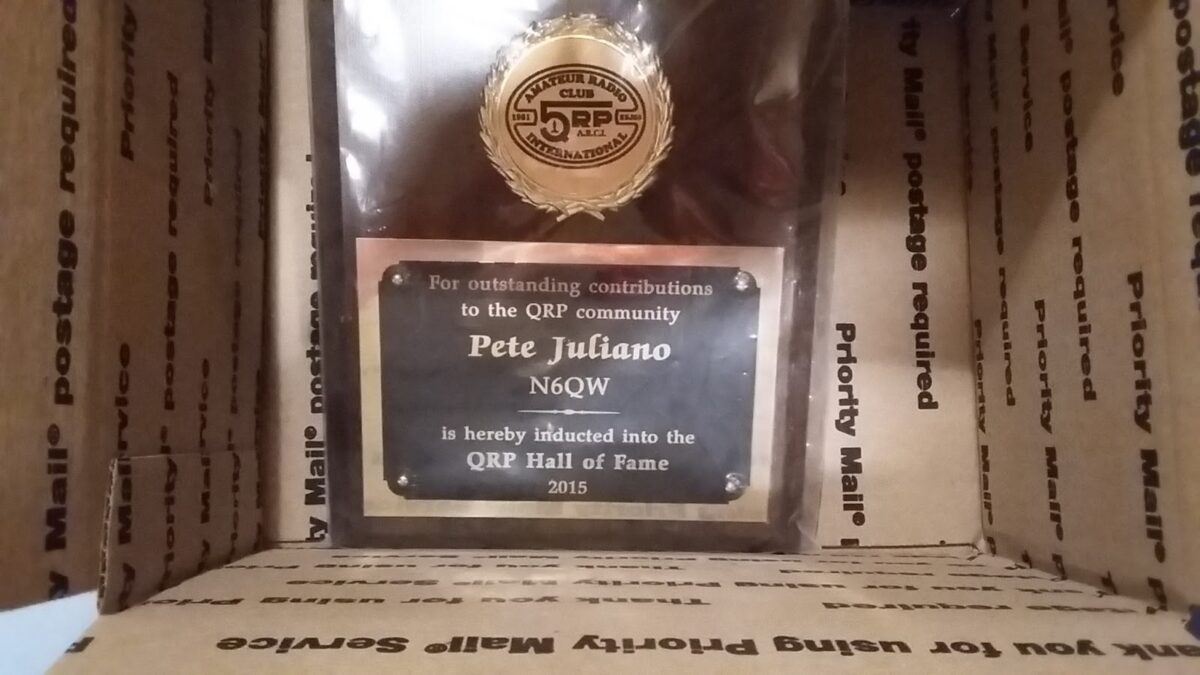
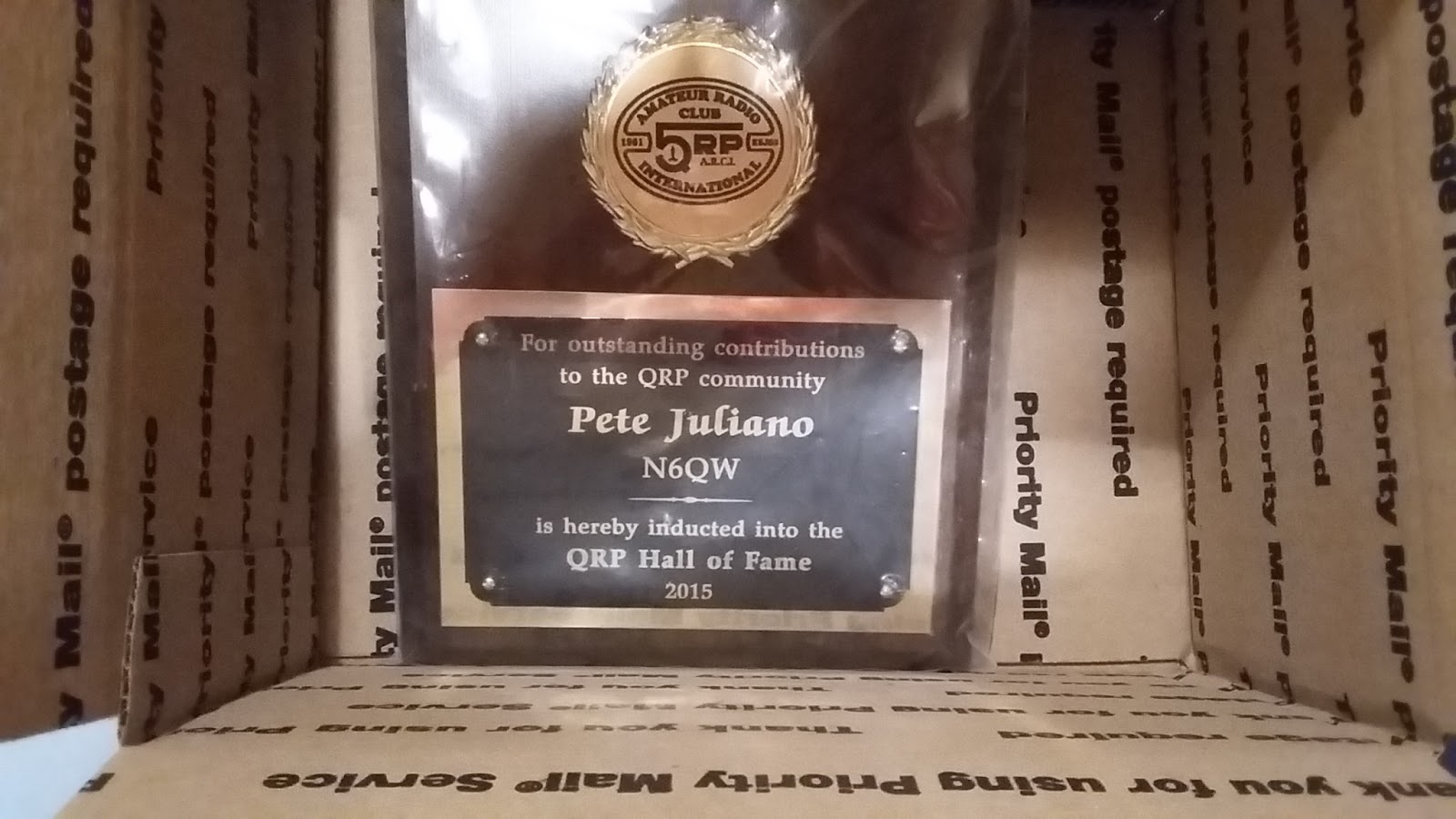
We’ve got a problem: Pete Juliano and the QRP Hall of Fame 🙁 PLEASE HELP!


BENCH REPORTS
Pete Releases Smoke (wiring harness)
Pete’s DifX on 60
Architecture and Dual Conversion (uBITX: uses ALL THREE clocks on the Si5351)
The Big Kahuna
ON HACKADAY with Philco SB100 SEE! QRP!!!!!
BITX60
Cap Stack Hack mod (with leads)
Let the smoke out of an Si5351 (shorted output) Several actually.
(Same day delivery zone for Amazon — but no drones or parachutes yet.)
Installed scanning switch
Observations on 60. All the weird bands have a 6 in them: 160, 60, 6
The good: 100 watt limit, wire antennas
The bad: Kind of cliquish– like 75, not much of a CQ band. Channels. Not much activity.
Met Josh KE8CPD on 40. BITX 40!
TRIBAL KNOWLEDGE:
Socketry: How to keep BNC jacks from spinning loose?
Do you heat shrink?
Feel Tech Sig Gen might not have blocking cap at the output.
Speaking of which, when I spoke of the Ne602, I mostly meant blocking caps, not bypass caps.
How come they don’t have a cable TV channel devoted to radios? They have HGTV? Why not HBTV?
REPORT FROM WINTERFEST
Bad weather. Tailgaters wimped out!
Combined forces with Armand WA1UQO.
Met up with Charles AI4OT.
Acquisitions: 1/4 phono jacks, carbon mic, vero board, disc caps, weather radio,
LARGE collection of Electric Radios from Armand. Wow.
Electric Radio notes: 1st Fifty Years of Sideband 1991 articles by Jim Musgrove K5BZH
Why LSB on 75? — so AMers couldn’t follow to top of band
W2, W6, W8s liked phasing, W3, W4, W0 more into filter rigs.
Early SSB guys turning on carrier and talking AM hams into SSB RX.
Kelvinator Refrigerator rigs.
A reading on the homebrewing of SSB rigs.
Tony Fishpool on QSO Today! Pete mentioned prominently.
Good Hacks from ND6T on BITXHacks, Stockton Bridge
MAILBAG
LINK: http://soldersmoke.com/soldersmoke195.mp3

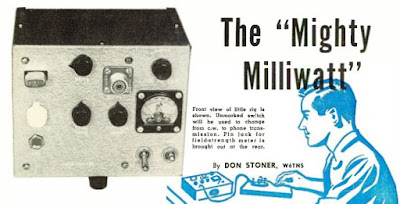
“CQ Transistor” — The 1958 Mighty Milliwatt

I think it is time that we get back to our QRP roots. Perhaps under the influence of the wizard of Newbury Park (N6QW), we’ve all been drifting into the world of high power. It starts innocently: you hook up a second gel cell to the IRF-510 and suddenly you are at 20 watts out from the BITX. Before you know it, you have an uncontrollable urge for 3-500Z’s. Here is a story that will get us back on the QRP track:

It was September 1958. On the 14th of that month I began my first orbit of the Sun. Band conditions were VERY good. OM Don Stoner was on 10 meters with a homebrew solid-state milliwatt rig calling CQ TR, CQ TR (CQ Transistor). Jarno PA3DMI in Amsterdam sent me the link to a Radio News article by Don Stoner. The article (and the entire magazine) is a lot of fun. Check it out. The QRP fun begins on page 51. Thanks Jarno!
http://www.americanradiohistory.com/Archive-Radio-News/50s/Radio-News-1958-09-R.pdf

Wonderful “QSO Today” Interview with Ian Keyser G3ROO

N2CQR and G3ROO
I knew it was going to be a good Sunday morning in the shack when I saw that Eric 4Z1UG had posted an interview with Ian Keyser G3ROO. This wonderful interview brought back memories of my visit to G3ROO’s amazing facility in Dover. (Thanks to Tony Fishpool who brought me out there.)

In this interview, you will hear Ian state — in a very nonchalant English way — that he built his first receiver at age 8. And I really loved the story of how Ian got his call sign. FB Ian.

Ian is a very prominent member of the G-QRP club. I was oddly relieved to learn that he is working on a LEGAL LIMIT LINEAR AMPLIFIER. I hope he has special dispensation from Rev. George Dobbs. I intend to cite this project if we ever have to defend Pete Juliano from charges of QROism.

Listen to the interview here:


That is a key designed for use aboard a hydrogen balloon. This is the kind of thing that Ian has in his shack.

This is Ian’s variometer — mentioned in the interview.

That’s me using one of Ian’s spy sets.
Ian’s antenna book:
Here are the SolderSmoke Daily News posts about Ian and the Dover Construction Club:


SolderSmoke Podcast #192 FPM Rig, BITX Module Madness, HRO Al Fresco, Boatanchor Day, Mailbag


SolderSmoke Podcast #192 is available:

http://soldersmoke.com/soldersmoke192.mp3

N6QW COMPLETING AN ORBIT TOMORROW!!!! Happy Birthday Pete!
Shortwave Woes: Deception and Disappointment!
Voice of Vietnam! But it is from Cyprus Creek S.C.
Radio Athmeeya Yatra in Punjabi! but it is in Nauen Germany. Yuck!
Sort of like these 9 cents per minute on-line relay ham stations. Yuck I say!
You know you are a hardcore homebrewer when a near empty can of Deoxit makes you nervous, so you order more, just in case.
Bench Reports:
Pete:
FPM FPM FPM!!! Tell us about it!
BITX 40 Module in Juliano Blue
Explaining the BITX 40 to the local club.
CULTURE SHOCK! Plug and play vs. Hardcore Homebrew.
Bill:
An EXTROVERTED BITX 40 Module
QRO with 24 volts on the Drain: 20 watts out. Heatsink upgrade, Chris KB4PBJ Thanks.
Analog Readout — Dymo tape and a Sharpie arrow
REVERSE POLARITY PROTECTION Where the perfect is the enemy of the good enough.
HRO no longer AL FRESCO Boxed up. Thanks Armand. Thanks Tim Sutton. Still working on AM receiver. Not inhaling very well.
Boatanchor Day: Fixed HT37 and hurt my back. Really. Got 160 meter station going. Changed ball bearings on CW key.
Next project. Another BITX 40, but perhaps for 160, 75 and 60 with Si5351 and plug-in filters.
Sideband History: THE SIDEBAND SUZY AWARD. Pete deserves this. I say we revive it.
LEX: Al Fresco. And Tim Walford calls them “Blackbox rigs” not “rice boxes”
HB2HB contacts. Often with guys who built their linear. I say that counts Too!
MAILBAG


The Nauen Transmitter Station (Germany)

There is a lot of radio history in this shortwave transmitting station. I came across it tonight with my BITX DIGI-TIA rig. It was on 7.215 MHz transmitting in Indian (South Asian) languages. But alas, the signals were not from distant India (home of the BITX!). Instead — as often happens these days — the signals were from a relay station. In this case they came from relatively nearby Germany, from the Nauen transmitter site.

Check out the Wikipedia page:

https://en.wikipedia.org/wiki/Nauen_Transmitter_Station

“Sideband Suzy” and the History of SSB

Farhan alerted us to a very interesting presentation on the history of single sideband: It was in episode 81 of Bob Heil’s “Ham Nation” show. It starts at minute 22:

https://www.youtube.com/watch?v=xSF0WBdK1IQ&feature=youtu.be

Two things really caught my attention:

— Note how OM Carson, way back in 1915, had figured out how to get rid of the carrier, but needed some way of eliminating the unnecessary sideband. He did it by using his antenna tuner as a filter. FB OM!

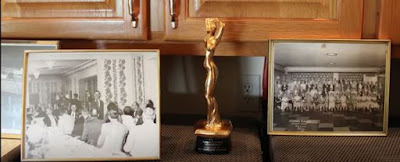
— In the early days of SSB, when it was an exciting new technology, hams had regular “sideband dinners.” At these events an award was presented. Kind of like an Oscar or an Emmy I guess. The award was the “Sideband Suzy” (see above). Kind of a classic figure… but half of Suzy was missing!

The Last Hallicrafters Transceiver…REBORN! TWICE!

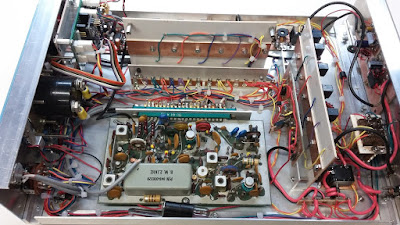
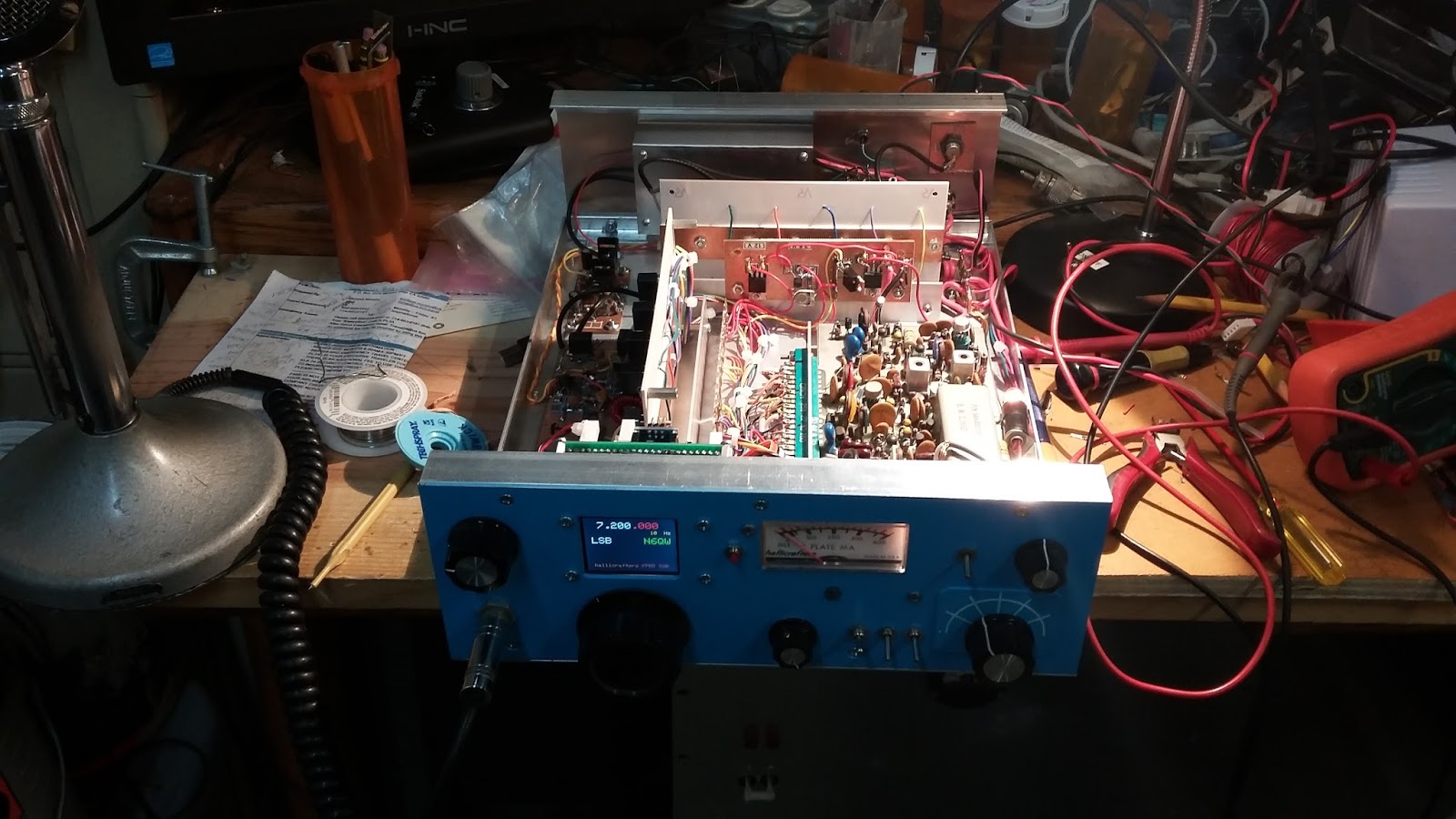
Pete Juliano and his colleague Giovanni Manzoni led me this morning to the happy land of Hallicrafters hybrid nostalgia.

It all started with Pete’s latest blog post:
http://n6qw.blogspot.com/2016/10/more-junk-box-rigs.html

I admit that I had never even heard of the Hallicrafters FPM rigs. Pete’s (uh, I mean Giovanni’s) video show’s Pete’s junk-box rebuild of the old rig. Very nice. Note the presence of the Si5351…

I needed more background info, so I turned to YouTube. This led me to more old friends: Dale Parfitt W4OP has a really nice video of his rebuild of the Halli FPM rig (see above). From his video we learn why Dr. Juliano prescribed a dose of Si5351 for the patient: Dale tells us that VFO instability was a major problem with this rig. Dale fixed his with the addition of an X-Lock board from yet another friend of SolderSmoke: Ron G4GXO of Cumbria Designs.

Dale really out-did himself by building an add-on accessory box for the FPM. Very nice. I especially liked the addition of the W3NQN passive audio filter for CW. I always have misgivings about adding audio filters to Direct Conversion receivers — this will reduce QRM, but you are still listening to both sides of zero beat. But when you add a sharp CW audio filter to an SSB superhet you will end up with true “single signal reception.” FB Dale.


Please send Pete Juliano and Giovanni Manzoni some positive feedback and words of encouragement. Please urge them to keep up the good work on the blog and the videos. Theirs is sometimes a lonely task — without feedback it can sometimes seem like putting messages in a bottle and throwing them into the digital sea. Please let them know that their work is being seen! Leave some positive comments on Pete’s blog. (No snark please — The Radio Gods will retaliate if you harsh N6QW’s mellow.)

The Invention of the Reflectometer: Naval Research Lab Report #3538

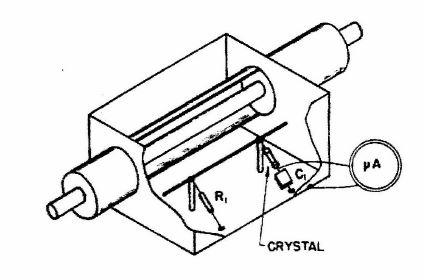
Dennis Klipa N8ERF has been doing great work exploring the technical intricacies of the humble SWR meter (and believe me, there are intricacies). He’s also been looking at the history of this invention.

This summer, Dennis and I came across the April 1964 issue of Popular Electronics. On pages 74 and 75 of that issue we found a clue that seemed to point to the origins of the device: the article referred to Naval Research Lab Report #3538 by O. Norgorden, published on September 15, 1949. This may be the paper that led to the widespread use of SWR meters by radio amateurs.

Surprisingly, this important paper was not to be found on the internet. Exhibiting an admirable dedication to the preservation of an important element of the radio art, Dennis wrote to Naval Research Lab and purchased from them a copy of the report. Unfortunately, the version Dennis got had been copied and recopied so many times that it was hard to read. So he went the extra mile and re-typed it.

With his permission, I am giving this article its internet debut by posting it here:

http://soldersmoke.com/SWR N8ERF.pdf

Three cheers for Dennis Klipa for unearthing this important piece of radio history.

The NAA VLF Station (NOT QRP!) and Brad’s Receiver

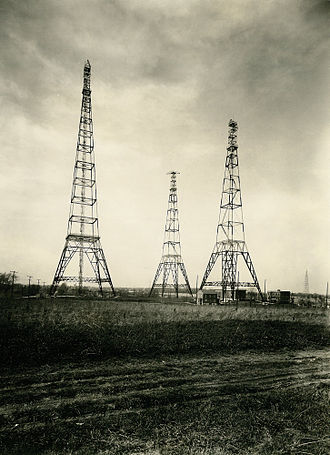
NAA Towers — Arlington Va. 1913
Brad WA8WDQ wrote to us about a VLF (24 kHz) his receiver project (see below). This led to some Googling about the VLF station NAA. Wow, there is some important radio history associated with that call sign. The station’s original location was just a few miles from I where I live now. From Wikipedia (https://en.wikipedia.org/wiki/VLF_Transmitter_Cutler):

The station began operations in 1913 as a radio telegraphy station call sign NAA in Arlington, Virginia, at a facility next to Fort Myer. Although its broadcasts occasionally included band concerts and speeches, it was most famous for its nightly time signals. The three towers known then as “The Three Sisters” stood 600 feet, 450 feet and 200 feet (183, 137, and 61 m) above the ground. The site was referred to as “Radio”, Virginia. The towers were the second largest man-made structure in the world behind only the Eiffel Tower. The word “Radio” was first used instead of “Wireless,” in the name of this Naval Communications facility. The First Trans-Atlantic voice communication was made between this station and the Eiffel Tower in 1915. The Nation set its clocks by the signal and listened for its broadcast weather reports. The Towers were dismantled in 1941 as a menace to aircraft approaching the new Washington National Airport. The towers stand today at United States Naval Academy in Maryland, on the edge of the Chesapeake Bay.

Be sure to read about the de-icing system for the antenna. It uses more power than the actual transmitter!

From Brad:

Bill, Pete,
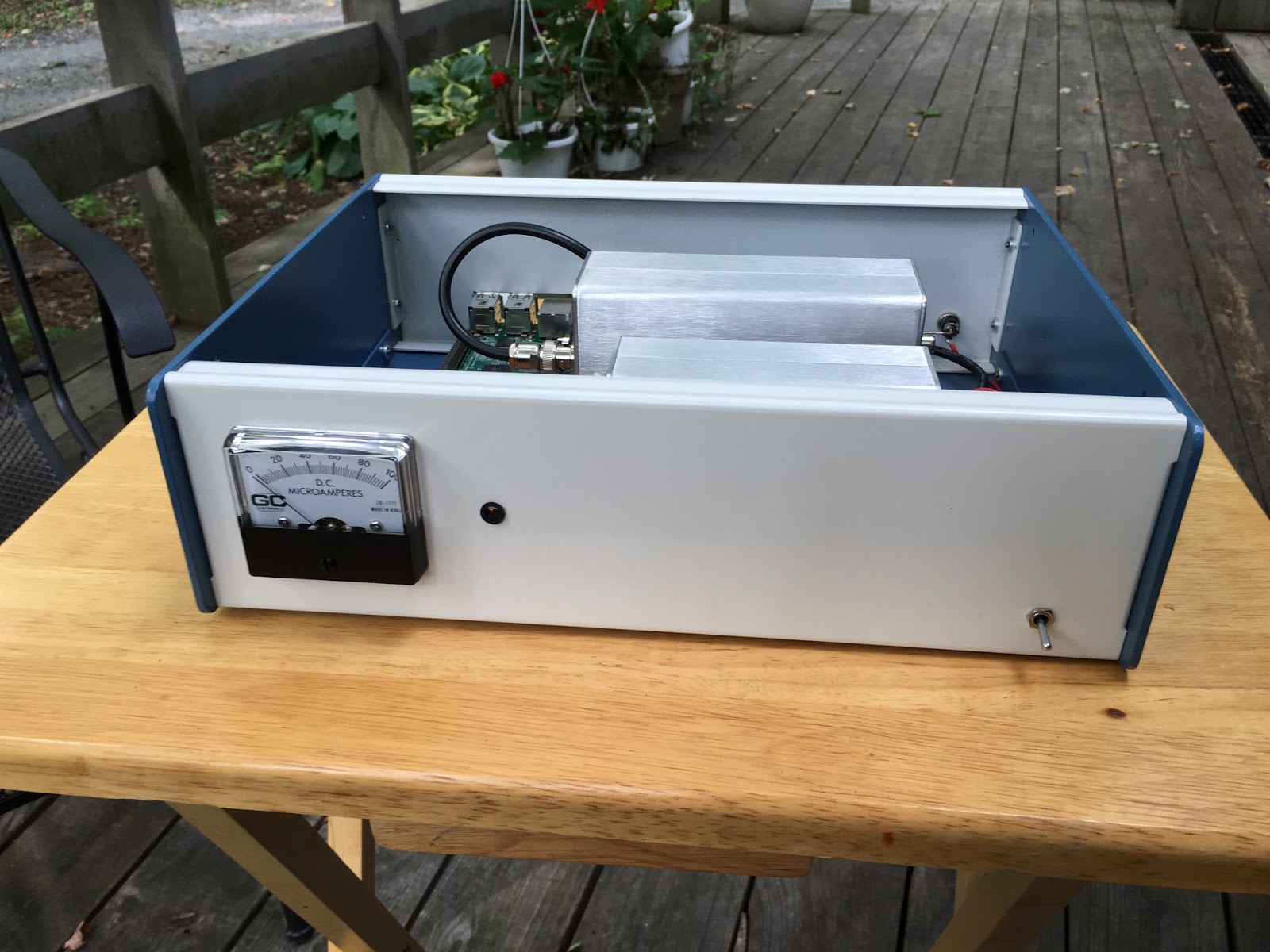
Here’s the current status of the 24 KHz NAA SID receiver. All the major sub-assemblies are mounted in the chassis and power is hooked up. For convenience, I’ve been using the PowerWerx USBbuddy switching DC-DC converter to supply +5V power to the Raspberry Pi from the +12V input. I’ve found them extremely RF quiet, clean and stable; capable of supplying 3A though this project will only need about 1.5A @ +5V. At this point, I’m just waiting for Adafruit to send the A/D chip I’ll wire up to the Pi on that empty protoboard just under the meter. Speaking of the meter, it’s not really needed as the Pi records and broadcasts over Wi-Fi the received signal level. However, I like my projects to have some sort of physical human interface so I added the signal level meter and an LED for SID event alarms :).
As previously mentioned, my bench test of the receiver using my signal generator was successful. Once everything is wired, I’ll do an actual on-air signal test receiving NAA.
Brad WA8WDQ

Radio New Zealand Booming in on 7245 AM

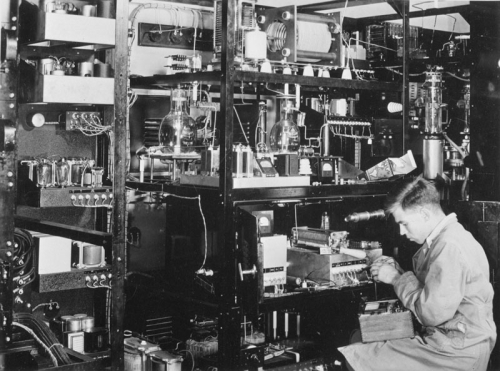
The day is off to a good start here at SolderSmoke HQ, with Radio New Zealand booming in on my homebrew Mate for the Mighty Midget receiver. I was listening from around 0900 to 1030 UTC on 7245 kHz. Once again we see that The Radio Gods favor homebrew receivers. Gray line propagation also played a role.

Above we see a technician at work at RNZ in 1945. More historic photos here:
http://www.pcc.govt.nz/About-Porirua/Porirua-s-heritage/Porirua-s-suburbs/Titahi-Bay/Historic-site–Radio-New-Zealand-Transmission-Station

W9ZN’s CW Warm-up: “Ben’s Best Bent Feet”

I happened to come across this fellow’s signal on 40 a week or so ago. His warm up routine really had me scratching my head. I’ve been on the air for a long time, much of it on CW, and I never heard anything like this. Listen to the video (!) and you will see what I mean. Harmless fun I guess, and there does seem to be a connection to radio history.

HRO (not HOR!) — The King of Reduction Drives

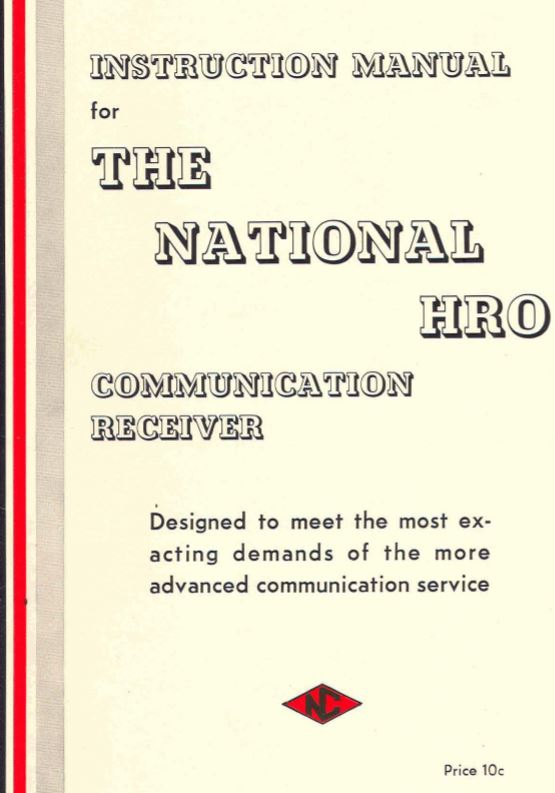
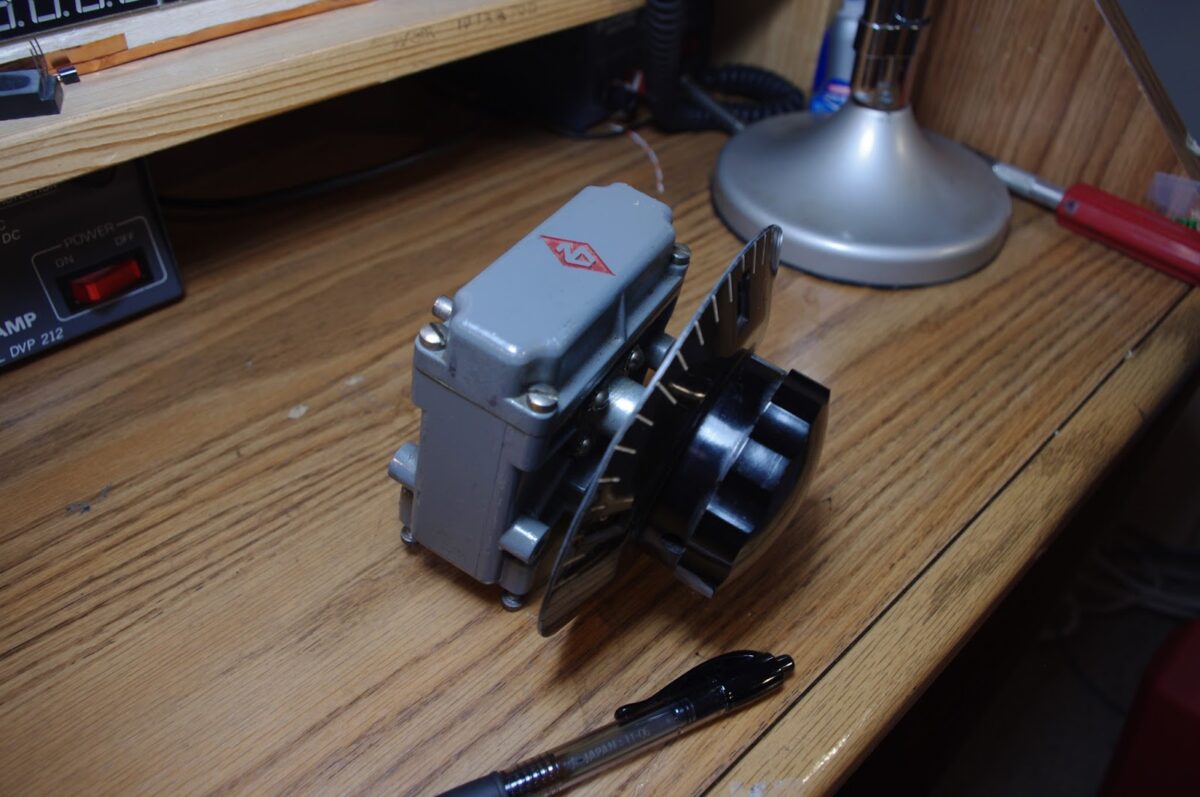
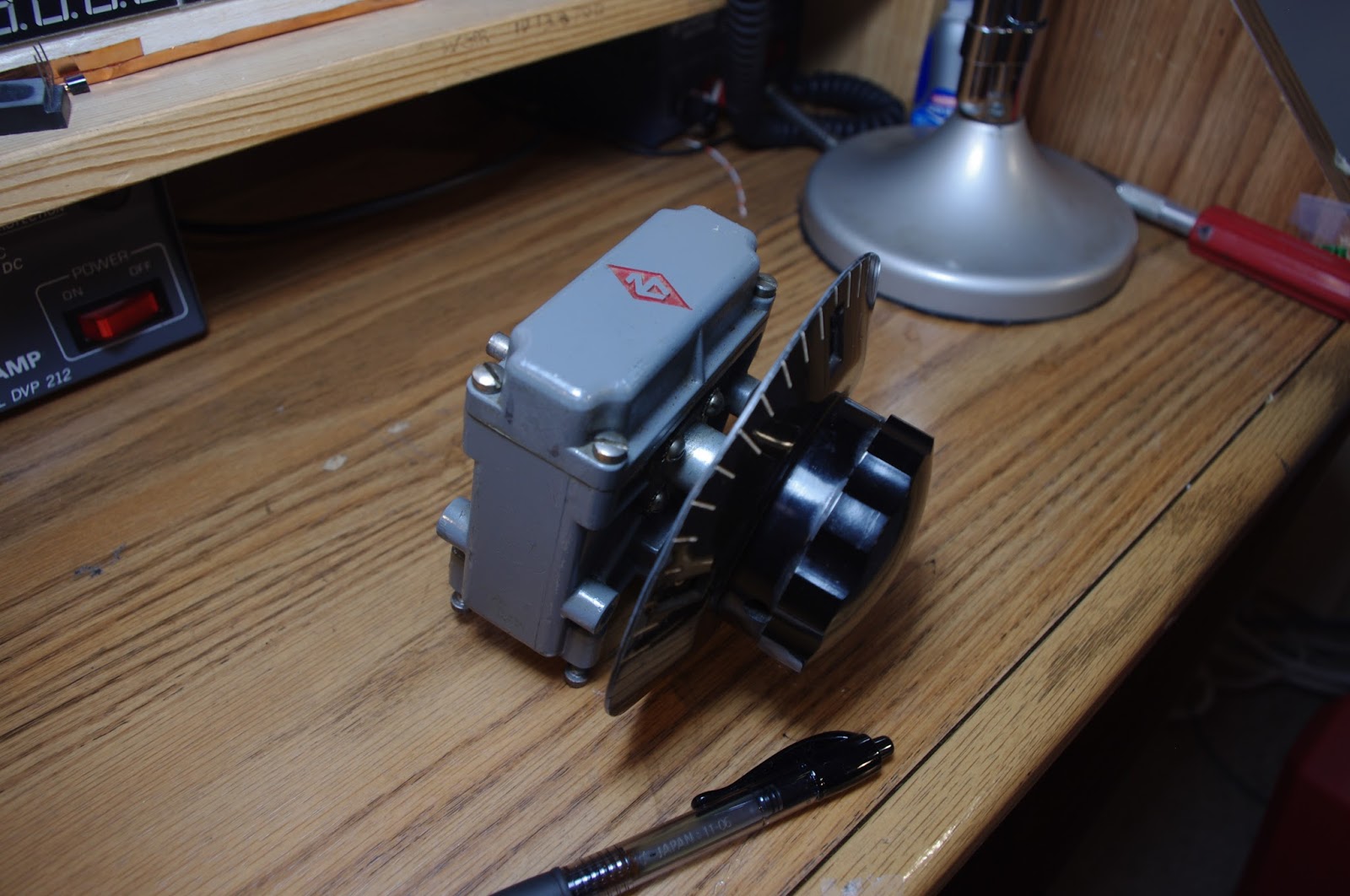
At the recent Manassas Virginia hamfest Armand WA1UQO and I came across an old HRO receiver. Armand mentioned in passing that he had an HRO dial and drive for me if I wanted one. When Pete heard this he said I definitely NEEDED one. Armand heard Pete’s comment and very kindly put an HRO dial and reduction drive in the mail for me.

Wow, it is a magnificent thing! After years of struggling with small Jackson Brother reduction drives and with reduction drives brutally cannibalized out of innocent Heathkit Q multipliers, I now realize that I have been playing in the minor leagues. This, my friends, is the reduction drive that helped win WWII! I will have to build something worthy of its inclusion.

The designation HRO has a wonderful story behind it:

This is from: http://www.cryptomuseum.com/df/hro/

The new radio was also designed by James Millen at the National Radio Company, but this time with two RF amplifiers and two IF amplifiers at 455 kHz with a 20Hz crystal filter. He kept the pluggable coil packs as part of the design and added the now famous epicyclic dial, which allows the operator to tune the frequency scale in 1/500th units (with the aid of a calibration chart).

The design was finished in 1934 and National pushed hard to get the receiver out by the end of that year. When creating the tools for the first production run, the tool makers had to work overtime and used HOR (Hell Of a Rush) as a job number on their overtime slips. As National’s marketing department didn’t want their radios to become known as HORs (whores), the name was changed to HRO (Hell of a Rush Order). Despite the best engneering efforts, technical problems delayed the release of the the radio until March 1935. The price at the introduction was US$ 233.

Another site provides tech details and history on the drive itself:
https://www.prismnet.com/~nielw/PW_NPW_Dial/hro_dial.htm

The HRO dial introduced by the National Radio Company in late 1934 was the hallmark of top-of-the-line National receivers from the mid 30s through the 60s. By late 1936 the “HRO dial” was appearing on the NC-100 series of receivers and even the 1-10, National’s VHF receiver. Throughout WWII many of the NC-100 variants that National provided to the military used this same dial. By 1950 National had added built-in direct frequency readout to the HRO-50 but still kept the same 0-500 reading dial. Through the mid-50s and into the 60s National mimiced the HRO dial look on their mid-priced receivers such as the NC300, 303 and 270. Even the solid state HRO-500 introduced in the early 60s used a version of this dial. When combined with the required 20 to 1 venier gear drive, the HRO dial provided an effective scale length of 12 feet and was direct reading to 1 part in 500. Ten turns of the dial drives the tuning capacitor stop to stop. Published HRO calibration curves showed each ham band spread over eight turns (or 400 divisions). In addition, dial divisions were about 1/4 inch apart. On all bands below 10 meters the HRO dial is easily resettable to within a KC (or KHz).

AA1TJ — On the Air with a Tuning Fork Transmitter using the 2,212th Harmonic and Olive Oil Cooling

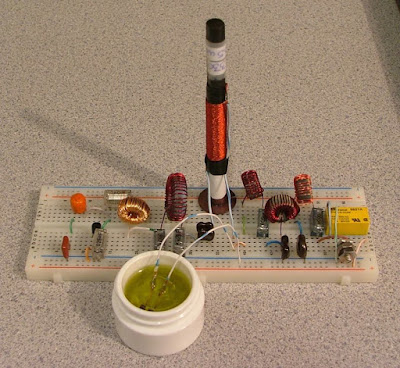
The saturable magnetic frequency septupler. The tiny computer memory core is submerged in olive oil (Italian…naturalmente).

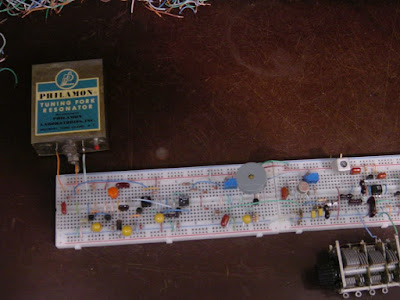
Not a very good picture, but here’s the 1600Hz tuning-fork, fork oscillator, SRD pulse generator, PLL S/H phase-detector (diode gate), differential amplifier D.C. amplifier, and part of the 500kHz VCO.


The Wizard (AA1TJ) reports from the Hobbit Hole:

I was pleased to have made the first contact with my tuning-fork transmitter this evening. My contact, N1QLL, runs a pretty B&B on the Maine seacoast, midway between Bar Harbor and Cutler. Jerry was operating a solar-powered QRP station. I found a follow-up email from him when I came up to the house for dinner. He’s asking for a better explanation of my set-up. I can’t wait to tell him about the passive frequency septupler made from an East German computer memory core, heat-sinked in a thimble of olive oil.

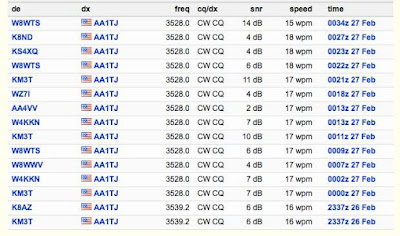
My signal was also logged by a number of automated “Reverse Beacon Network” receivers (image attached) located in Ohio, North and South Carolina, Virginia and Pennsylvania…not bad for 90mW on 80m. Please note that my operating frequencies, 3,528.0 and 3,539.2kHz, are the 2,205 and 2,212th harmonics, respectively, of my 1,600Hz tuning-fork frequency reference.
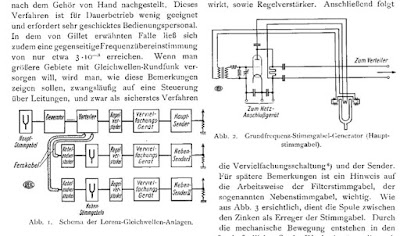
FYI: the third attached image illustrates the block-diagram and tuning-fork reference oscillator circuitry for three common-wavelength AM broadcast transmitters operating in Berlin, Stettin and Magdeburg, Germany from 1928 through the mid 30’s. A central 2,000Hz tuning-fork generated reference carrier was transmitted by landline to transmitters in the aforementioned cities whereupon the 529th harmonic was generated, amplified and broadcast at 1,058kHz. The equipment was designed by the Berlin-based firm, C. Lorenz A.G.. The fourth image details Lorenz’ technique of frequency multiplication via saturable magnetic iron-core inductors. My septupler operates in an identical fashion.
A very pleasant day…

Mike points out that this is a work in progress. He hopes to cross the pond (the Atlantic!) soon. Here is a update from Mike:

A nasty cold has delayed work on the 20 meter implementation, although some of the time I’ve spent crashed on the sofa was put to use redesigning the loop filter network. I think yesterday might have been my “hump” day so I’m looking forward to getting in some quality bench-time over the weekend.

By the way, my PLL-based transmitter frequency stabilizing circuit has much in common with a garden-variety frequency-synthesizer. Obviously, the tuning-fork frequency reference is the main point of departure. My sampling phase detector, for example, was old hat by the mid-1960’s. Nevertheless, this has been a fun project.

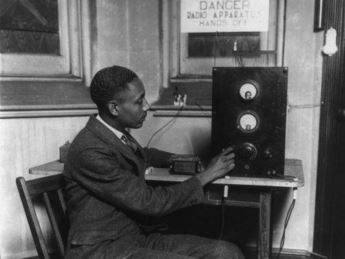
Dr. Rufus Turner, W3LF. Homebrew Hero and Radio Pioneer

Thanks to Farhan for alerting me to this great Hackaday article about a homebrew hero who was — sadly — unknown to most of us. He lived in Washington D.C., right down the road from where I live now. The Hackaday article leaves no doubt about it — Rufus Turner was one of us. He had THE KNACK. He was a true radio pioneer and homebrew hero. It is really a shame that we’ve known so little about him.