1BCG — The 100th Anniversary of the Trans-Atlantic Test

Thanks to the Antique Wireless Association for this really wonderful video, and for their involvement in the 100th anniversary event. Special thanks to Ed K2MP.

On December 11, 2021, the 1BCG team in Connecticut had some technical difficulties. As we all know, that is part of being a radio amateur. Details of the problems are presented here:

http://1bcg.org/1BCG/the-special-event-transmitter/

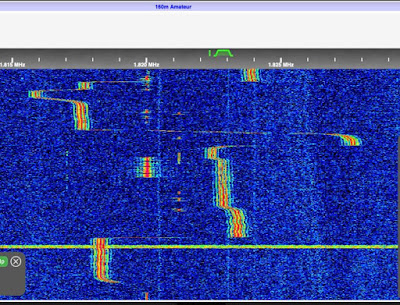
Phil W1PJE managed to hear and record some of the 2021 transmission (Thanks Phil). Listen here:

https://drive.google.com/file/d/1uPvD9Qh-VJTnyDzOPPSrYfbksks8sQsx/view?usp=sharing

Phil also sent this spectrogram of the signal.


Good thing Paul Godley ran into Harold Beverage on the ship going over.

And imagine me complaining about having to step out into the carport to adjust my antenna — Godley had to trek one mile THROUGH SEA-WEED to adjust his. Respect.

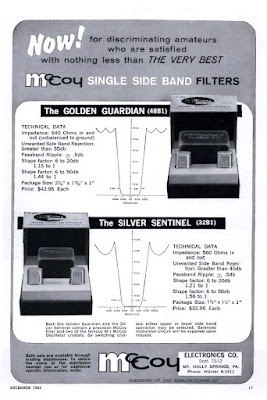
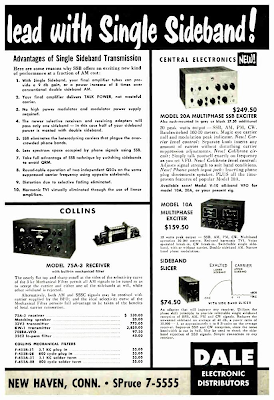
McCoy SSB Crystal Filters (1963) — But Apparently NOT the Real (Lew) McCoy

Last month we were talking about this company. Someone thought it was run by Lew McCoy of ARRL Homebrew fame, but it now appears that our Lew McCoy was not involved in the company.

Note how they provide TWO carrier oscillator/BFO crystals for each 9 MHz filter, one for USB, the other for LSB.

They were pricey too: In 2021 dollars, that Golden Guardian would cost $390.

Thanks to the K9YA Telegraph for posting the ad.

A Christmas Story: Mike AA1TJ Builds Receiver for 486 kHz, Listens to Fessenden Commemoration (Audio)

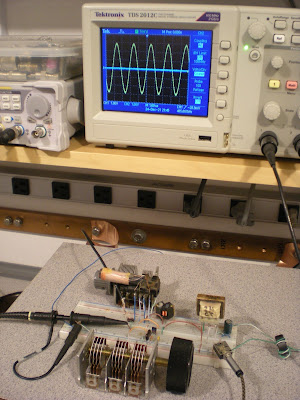
Mike’s 486 kHz receiver

As if being able to get home on Christmas Eve 2021 and then catching the Webb Telescope launch was not enough, Santa had another gift for us: Michael Rainey, AA1TJ, the Homebrew Hero of the Hobbit Hole, was back at it, melting solder. Mike threw together a regen receiver that allowed him to receive a transmission commemorating Reginald Fessenden’s historic first transmission of phone signals. I was really pleased to once again be able to read about an AA1TJ radio adventure. Thanks Mike! Here is what Mike heard: http://soldersmoke.com/AA1TJ 920km.mp3
Mike wrote:

My chum, Peter/DL3PB, recently told me that Brian/WA1ZMS would broadcast a commemoration of Reginald Fessenden’s mythical (operative word) 1906 Christmas Eve AM transmission. Doesn’t that sound like fun?


True to form, I began scratch-assembling my receiver yesterday afternoon just as Brian went on the air. Then again, a two-transistor regenerative radio for 486kHz isn’t exactly rocket science. In any case, I was up and listening inside of a half hour.

What did I hear? Static. Just static. As a sanity test I quickly tuned down to 371KHz to find my favorite non-directional beacon, “GW,” beaming in loud and clear from Kuujjuarakip.

Kuujjuarakip?

Kuujjuarakip is a tiny settlement of mostly Inuit and Cree inhabitants located up on Hudson Bay. The villages are primarily accessible by air and water so a robust radio beacon is an obvious necessity.

Satisfied that my receiver was working properly, I re-tuned to 486kHz. Back to static. On the bright side, at least there were no commercials. I continued listening intently until Vic called me to dinner. After the dishes were done I slipped back down to my underground radio shack for one last try.

I heard it right away. Beneath the static I heard a weak, out-of-tune, solo violin playing, “Oh, Holy Night.” The signal strength varied wildly with ionospheric propagation. When the signal finally climbed high enough above the noise I ripped out the bipolar transistor audio amplifier stage, connecting my headphones directly to the junction field effect transistor detector output terminals. Of course the audio was far weaker now, yet I could easily follow the tune until it eventually faded away. Not bad for an estimated 15 watt ERP AM signal from a distance of 920km. And on 486kHz, no less, just a hop-skip-and a jump from the old 500kHz Maritime CW band; where countless ship radio operators went to send their last SOS.

Returning to the house, I emailed my reception report and included a short recording that I had made of it. Brian replied just after midnight; apparently, equally as stoked

“Yours’ is the best DX ever given your regen RX! Way to go! I just love it.”

He went on to tell me that he was born and raised in Vermont, but he’d been working as a radio scientist down in Virginia since 1990. Told me his heart was still here in the Green Mountains and he was touched to learn his meager signal had found its way back there on Christmas Eve. All in all, a night to remember.

If you’re still with me I hope you’ll listen to the short NPR story in the provided link. It originally aired on the supposed 100th anniversary of this event. It’s not just about radio history. It’s about belief, memory and the myths we lug around in our heads. I thought it was well done.

Cheers,
Mike

Listen to what Mike heard. He says he “merely connected the mic input line of my computer across the headphone terminals. Some of the noise in the recording, – certainly the higher frequency stuff – is a byproduct of the computer. The headphone audio with the computer switched off was much more pleasant.” Here it is: http://soldersmoke.com/AA1TJ 920km.mp3

NPR story (audio and text)

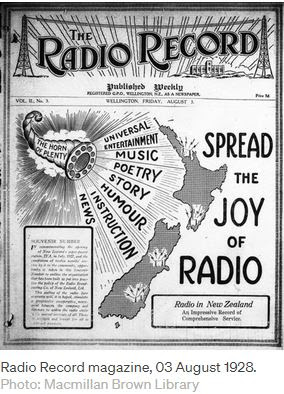
Early Radio in New Zealand, and “The Knack”

Thanks to Thomas K4SWL of the SWLing Post for alerting us to this gem. Listen to Sarah Johnston’s program describing the origins and early years of broadcast radio in New Zealand.

This wonderful recording and article reminded me of a bit of ham radio history involving New Zealand, and someone who was involved who had a surname similar to mine. The ARRL book “200 Meters and Down” by Clinton DeSoto reports on page 91 that on May 22, 1924, radio amateurs for the first time made a contact between New Zealand and South America. Carlos Braggio operated rCB8 in Buenos Aires. In New Zealand, J.H. O’Meara was at the key in Gisborne.

Writing of the early amateurs, DeSoto wrote (on page 92):

“Why did they do it? None but one of them can know, and only he would know the feeling of driving ambition, the relentless call of work to be done, the gnawing discontent that hungers for accomplishment; it would be hard to put into words. The strange thing is that there were folk, everywhere on earth it seemed, who had that urge.”

“The gnawing discontent…” That is what Jean Shepherd had when he couldn’t get his Heising Modulator to work properly. We’ve all been there.

The last line in the quote from DeSoto’s book speaks to one of the major themes of this blog and of the SolderSmoke podcast: the way in which people all around the world got interested in radio in much the same way. So many of us, all around the world, often at age 13 or 14, suddenly got interested in radio. We all had (and have!) “The Knack.” This is really very nice — it is something that we have in common, something that pulls us together.

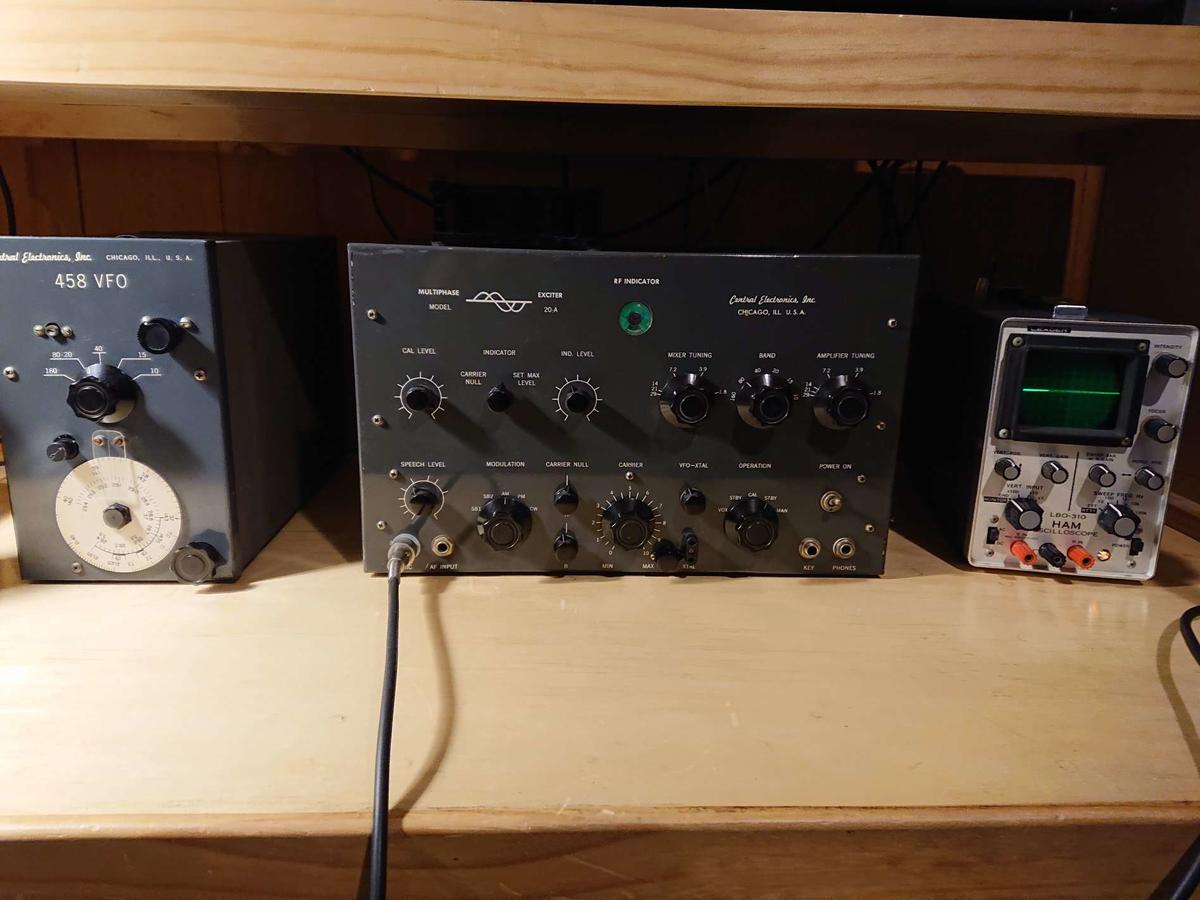
A Great Morning on the Old Military Radio Net: AB9MQ’s Central Electronics 20A, W3EMD’s Dynamotor, WU2D

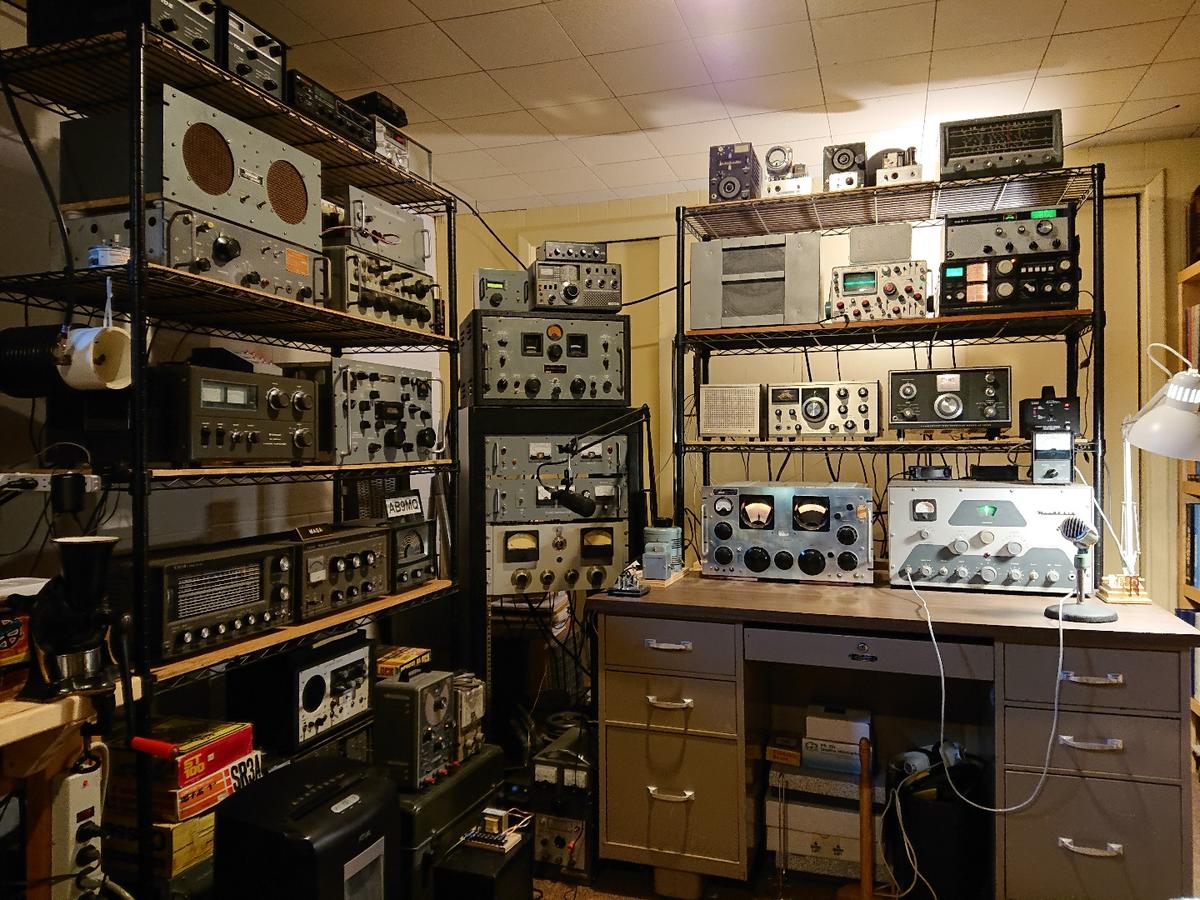
Just a portion of Masa’s shack

I usually try to listen in on the Old Military Radio Net on Saturday mornings (3885 kc). Lately I listen with my Mate for the Mighty Midget receiver.

This morning’s session was especially good. For me the highlight was when Masa AB9MQ called in from Normal, Illinois using his Central Electronics 20A (see below). That was one of the earliest SSB rigs. A phasing rig, it also ran AM (which was what Masa was using this morning). He had it paired up with a Central Electronics 458 VFO. You folks really need to check out Masa’s QRZ.com page:

https://www.qrz.com/db/AB9MQ

Buzz W3EMD called in from Rhinebeck, NY. I could hear his dynamotor in the background. Buzz said hello to Masa in Japanese. FB.

Always great to hear Mike WU2D.

SSB History: Selling SSB in 1954

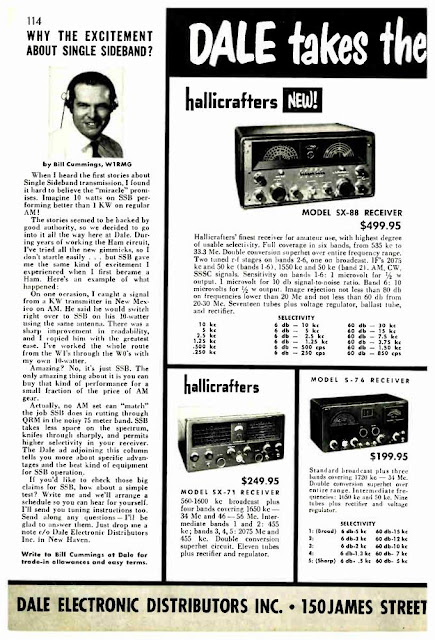
K9YA Telegraph ran (on Facebook) this ad from 1954. It provides an interesting view of where phone operations were in that year. Note that Dale was so intent on selling SSB gear that they were willing to make on-the-air schedules to demonstrate SSB superiority.

Dale claims that with SSB you could have TWO roundtable QSOs on the same frequency, with one group on USB and the other on LSB. I think this assumes really great opposite sideband rejection in the transmitters, and excellent selectivity in the receivers. That might have been a bit of a stretch. But the assumption here was that hams could use USB or LSB — no rigid adherence to the USB/LSB convention. And the ad seems to focus on the 75 meter band which was seen as the most important phone band at that time.

Dale was selling Collins mechanical filters for 55 dollars. That is the 1954 equivalent of $566 dollars today. No wonder the phasing method was so popular. Note that they were selling Central Electronics phasing rigs right next to the ad for the Collins filters.

I like the graph showing opposite sideband rejection with the Sideband Slicer. Note that the selected sideband was referred to as the “exalted” sideband. All Hail the Single Sideband!

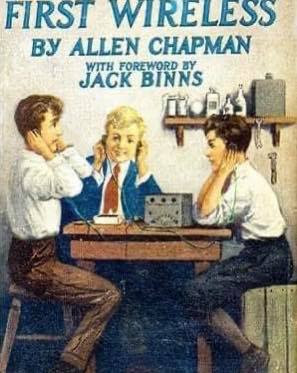
“First Wireless” 1922 book by Allen Chapman with Foreword by Jack Binns (free download)

The cover caught my eye. Thanks to the K9YA Telegraph for posting it. I think it captures the allure of radio that most of us felt when we were kids of this age.

Fortunately this 1922 book is available for free download:

It is all about radiotelephone. They are phone guys. Just like us.

And they were homebrewers. They had The Knack. From Chapter II:

Another thing that drew the boys together was their keen interest in anything pertaining to science. Each had marked mechanical ability, and would at any time rather put a contrivance together by their own efforts than to have it bought for them ready made. It was this quality that had made them enthusiastic regarding the wonders of the wireless telephone.

And they correctly viewed wireless telephony as being similar to Aladin’s lamp. I remember writing that my homebrew DSB transceiver was like Aladin’s magic carpet, carrying my voice from the Azores to friends around the world. From Chapter III:

They had already heard and read enough of the wireless telephone to realize that it was one of the greatest marvels of modern times. It seemed almost like something magical, something which, like the lamp of Aladdin, could summon genii who would be obedient to the call.

This is a reminder of how young the radio art is. This book came out just three years before my father was born. Many of us have in our shacks working rigs that are half as old as radio itself.

Selenium RECTIFIED

Selenium rectifiers. The name kind of sounds like Dilithium crystals, possibly related to flux capacitors.

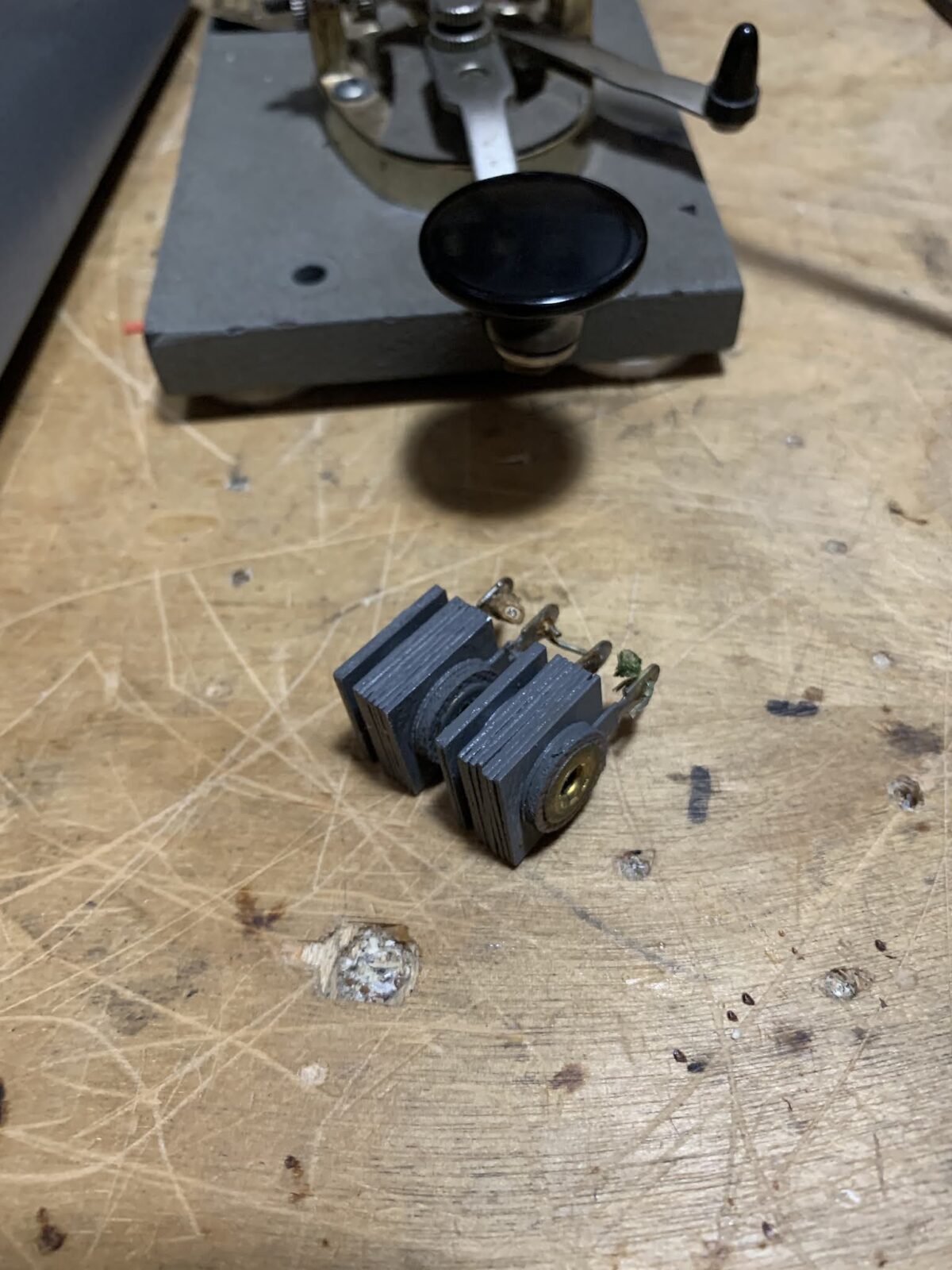
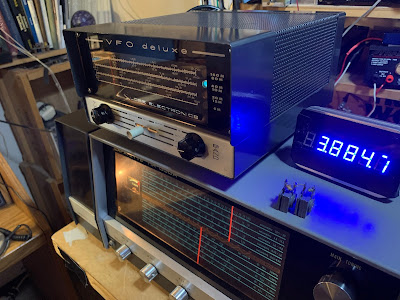
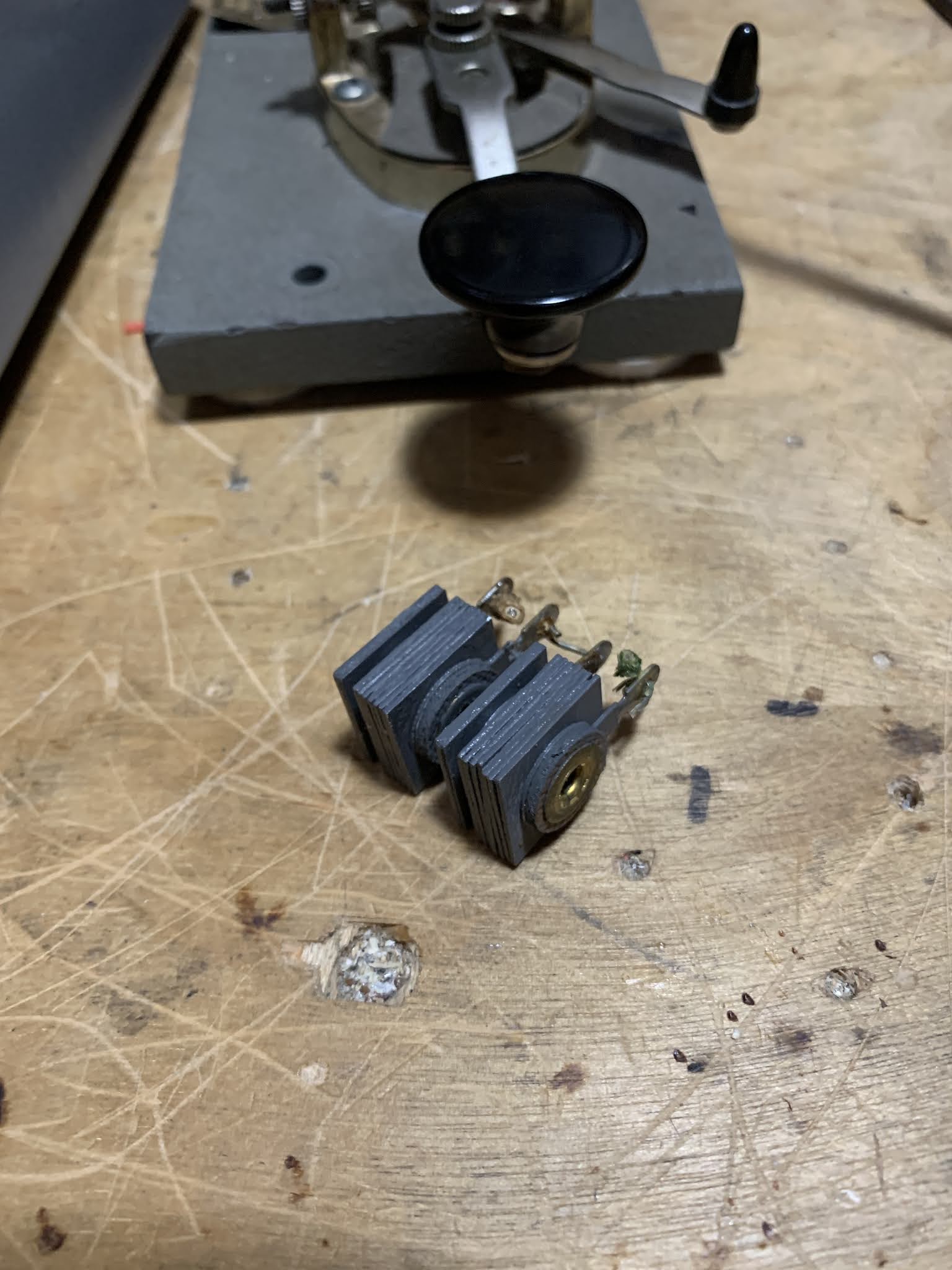
Anyway, there were two of them in the Globe Electronics V-10 VFO Deluxe that I recently bought. Obviously they had to go, so I took them out yesterday, replacing them with a 1N5408 silicon rectifier.

The new diode had a significantly lower voltage drop than the selenium rectifiers — this pushed the output voltage from the power supply up to around 200V. It is supposed to be around 185 V. So I put a 470 ohm, 5 watt resistor (found in the junkbox) in series. This brought the output voltage to 167 V. Close enough. VFO seems to be working fine.

I’m glad I did the extraction before these aging components released their nasty toxic smoke.

W3HWJ has a good article on replacing these nasty old parts, with some interesting info on their history: http://www.w3hwj.com/index_files/RBSelenium2.pdf

Backgound on the element Selenium: https://en.wikipedia.org/wiki/Selenium


The World Friendship Society of Radio Amateurs

Rod Newkirk, W9BRD wrote the “How’s DX?” column of QST magazine from 1947 to 1978. He had a wonderful writing style. His column was an inspiration for many of us — I write about the impact it had on me in my book SolderSmoke — Global Adventures in Wireless Electronics and here on the SolderSmoke blog.

Rod’s son David Newkirk is radio wizard himself and has produced many great articles for QST and other publications. His dad is a Silent Key and David has taken his call.

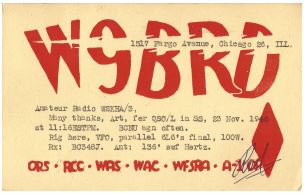
This morning I was looking at an article on David’s web site in which he looks at some of his dad’s old QSL cards. Most of the affiliations on the cards (ARRL etc.) are easily recognizable, but there was one that was unclear: WFSRA.

David figured out what it was:

————————————–

A W9BRD Affiliation Mystery Solved

My father’s pre-World-War-Two QSL cards include the usual list of affiliations: ORS (Official Relay Station), RCC (Rag Chewer’s Club), WAC (Worked All Continents), A-1 Op (A-1 Operator’s Club). One affiliation, WFSRA, remained mysterious. A clue in the correspondence column in March 1938 QST pointed me to an “I. A. R. U. News” item on page 74 of July 1935 QST, and I had my answer:

W.F.S.R.A.:
The World Friendship Society of Radio Amateurs has requested publication of the following pledge, which is the sole obligation for membership in the Society:
“I hereby promise that I will, to the best of my ability, make such use of my amateur radio station as will be conducive to international friendships; that I will never voluntarily permit by station to be used as the tool of selfish nationalistic interests; and that I will do what I can, as a radio amateur and as an individual, to promote world peace and understanding. (To be followed by the signature, address and station call.)”
Membership in the Society is open to all amateurs in all countries. All that is necessary to become a member is to copy and sign the pledge, and send it to the secretary, Duane Magill, W9DQD, 730 N. 6th St, Grand Junction, Colorado, U.S.A. Copies are preferably to be made in English or French, but may be made in the language of the member.”

———————————–

The WFSRA was apparently one of the many, many peace organizations that were born in the interwar period in response to the carnage of WWI. In addition to the QST correspondence mentioned by David, Google shows WFSRA in many articles in UK ham and SWL publications, and there is one mention of it in the May 1954 edition of Boy’s Life magazine.

Much as the CBLA seems to have been presaged by the FMLA, the IBEW seems to have much in common with the WFSRA.

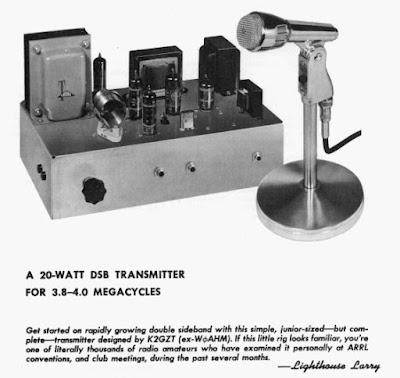
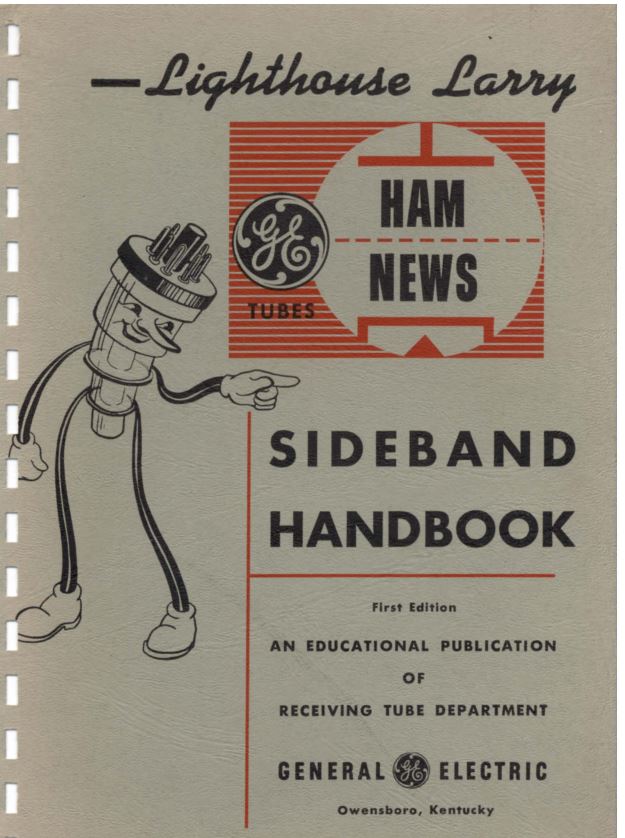
Lighthouse Larry’s GE Sideband Handbook

There is lot of information about early SSB and DSB operations in the GE Sideband Handbook (1961). Lighthouse Larry is very informative. Early in the book there is a guide to help homebrewers select intermediate frequencies that will work well in SSB and DSB rigs.

Here is the book. Remember, we are dealing with tubes and high voltage here: one hand behind your back. Volts jolt but mills kill!

So Where DID the LSB/USB Convention Come From?

— Bottom line: I still don’t know why ham radio adopted as a convention LSB below 10 MHz and USB above 10 MHz. There are several theories. but so far there is no convincing explanation in favor of any one of them. And almost all of the people involved are probably Silent Keys by now; this makes it more difficult to gather first-hand information.

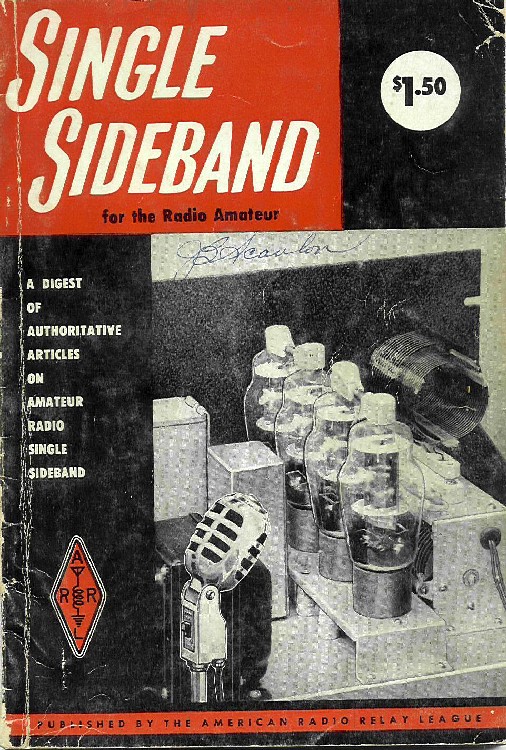
— I’m not even sure when the convention began to be observed in ham radio. Many of the early SSB books and articles make no mention of it. We don’t see it in early ARRL Handbooks. The first mention of it that I found was in the 1965 issue of the ARRL’s “Single Sideband for the Radio Amateur” page 8. This article claims that adding a provision for selectable sidebands would “add appreciably to the cost of the equipment. ” It went on to say that, “For this and other reasons there has been a species of standardization on the particular sideband used in the various amateur bands. Nearly all operations in the 3.5 and 7 Mc. phone sub-allocation is on lower sideband, while the upper sideband is used on 14, 21, and 28 Mc.”

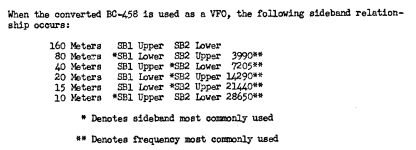
— We know that the informal convention was being followed as early as 1958. Jim N2EY reports that in 1958, the manual for the Central Electronics 20A shows that LSB was the “sideband most commonly used” on 75, with USB preferred on 20:

— Some cite a 1959 ITU recommendation on commercial multiplexed radiotelephony as the reason for the convention. But I don’t think this obscure and long-ago ruling explains the convention. If this were the case, we’d see follow-up FCC regulation, and at least some discussion of the ITU recommendation in the amateur radio literature. But we see none of this. And, as noted above, by 1958 hams were ALREADY — on their own — opting to use LSB on 75 and USB on 20. The 1965 ARRL SSB book refers not to some hard-and-fast rule, but rather to “a species of standardization” on LSB and SSB. That ARRL book said nothing of the 1959 ITU recommendation.

— There is a widely held belief that this practice originated in the design of a rig that had a 5.2 MHz VFO and a 9 MHz filter. According to this theory such a rig — due to sideband inversion — would produce LSB on 75 meters and USB on 20. But, as we have demonstrated, this doesn’t work, so this theory has to be discounted.

— Early SSB activity seems to have been concentrated on 75 meters, and there was a competition for space with AM stations. SSB operators appear to have used the very upper band edge as their gathering spot. Using LSB allowed them to operate very close to the upper band edge — a lot closer than AM stations could go. This may explain why LSB became the preferred SSB mode on 75. But how do we explain USB on 20 and above? That remains a mystery.

— It is important to remember that in the early days of SSB, for most hams there were only two important phone bands: 75 meters and 20 meters. 40 meters was CW only until 1952, and even after that was crowded with shortwave broadcast stations. So a design that allowed for both 75 and 20 was twice as good as a monoband design.

— Early on there were designs and parts for phasing rigs. You could take that ARC-5 VFO at 5 MHz, build a phasing generator around it, and then mix it with a 9 MHz to get on either band. But with just a simple switch, this kind of rig could operate on USB or LSB on either band. So the early popularity of this kid of rig does not explain the convention.

— There were a lot of surplus 5 MHz ARC-5 VFOs available. There were also FT-243 and FT-241 surplus crystals at both 5 MHz and 9 MHz that could be made into filters. Later in the 1950s, 9 MHz commercial crystal filters became available. If you used a 9 MHz filter with a 5 MHz VFO, there would be no sideband inversion in your rig. If the SSB generator was putting out LSB on 9 MHz, you’d be on LSB on both bands. So if there was a desire to have LSB on 75, why not just also have LSB on 20?

— But if you built a 5.2 MHz filter and a 9 MHz VFO, you could have LSB on 75 and USB on 20 without having to shift the carrier oscillator frequency. This would save you the trouble and expense of moving the carrier oscillator/BFO to the other side of the passband. This desire to economize and simplify may explain why we ended up with LSB on 75 and USB on 20. But this still begs the question: Why the desire for USB on 20?

— Both the manufacturers and the hams wanted there to be sideband standardization. With monoband rigs, the manufacturers would be able to cut costs by building for only one sideband. Hams also wanted to cut costs, and they did not want to have to figure out which sideband a station was on when trying to tune him in.

— By 1962-1963 Swan and Heathkit were selling mono-band SSB transceivers that used the “conventional” sidebands: The rigs for 75 and 40 meters were on LSB while the 20 meter rigs were on USB. There were no provisions for switching to the other sideband. This seems to have reinforced the practice of observing the convention. (Heath later added sideband switching to the HW monobanders — in view of the growing observation of the convention, they may have been better off sticking with their original design. Does anyone know why they did this?) But again, why USB on 20 and above?

— In 1963, Swan, by then in Oceanside California, came out with the Swan 240. Swan used a filter centered at 5174.5 kc. The VFO ran from 8953 kc to 9193 kc on 75 and 20. The VFO ran from 12222 to 12493 on 40. This gave the buyer 75 and 40 on LSB, and 20 USB with only one carrier oscillator frequency. (Swan offered a mod that allowed hams to install an additional, switchable carrier oscillator frequency. I luckily acquired one such modified rig.) But again, there is an explanation for LSB on 75, but why USB on 20 and above?

This is an important part of ham radio history. There should be a clear answer. We need to find it. If anyone has any good info on this, please let me know.
Visiting the Site of Marconi’s Wireless Station at Wellfleet, Massachusetts

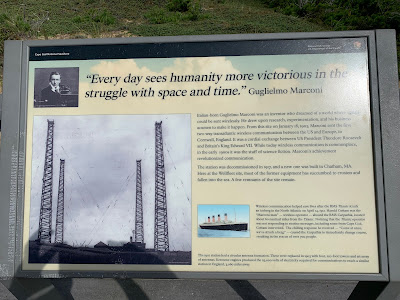
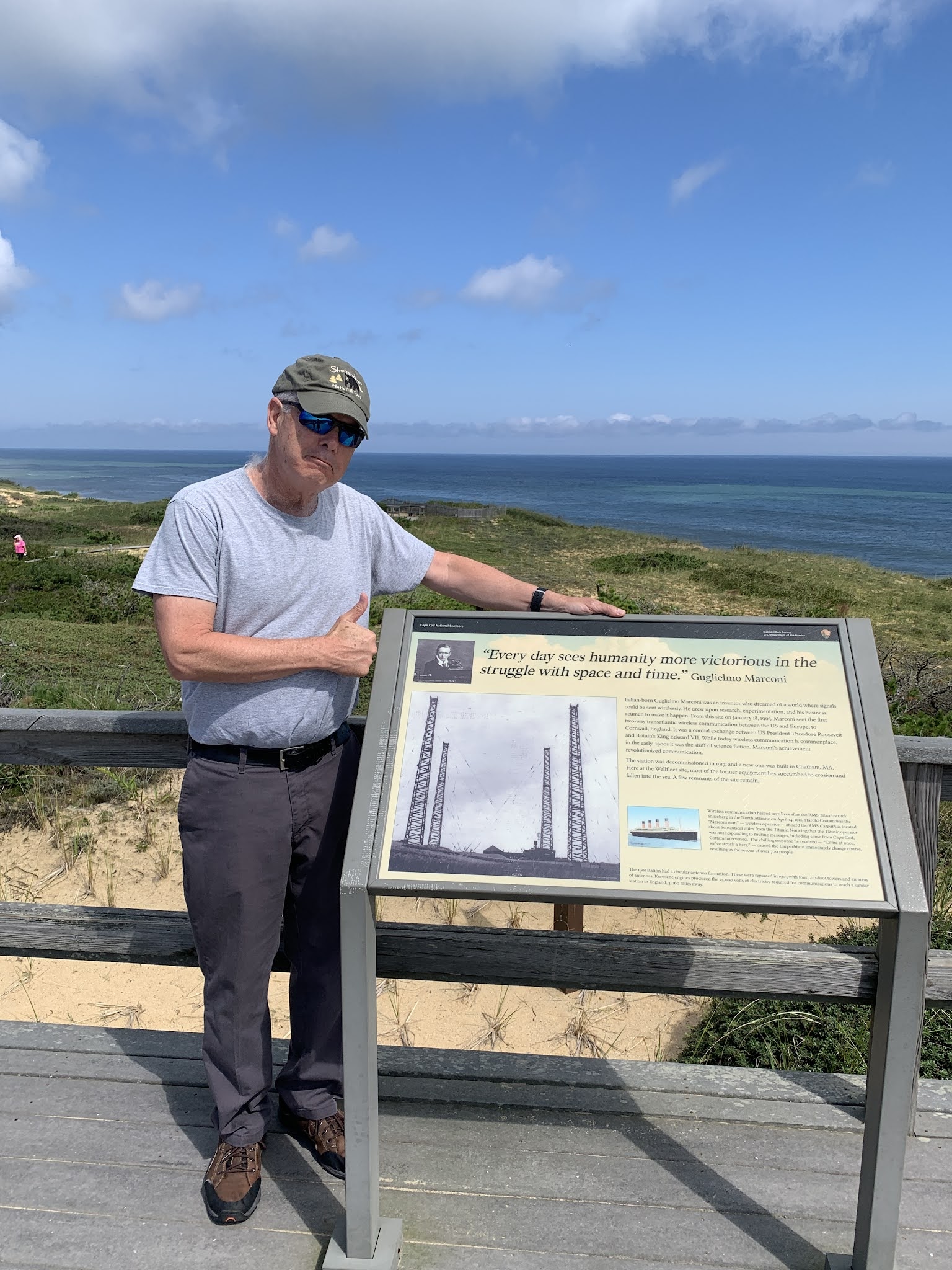
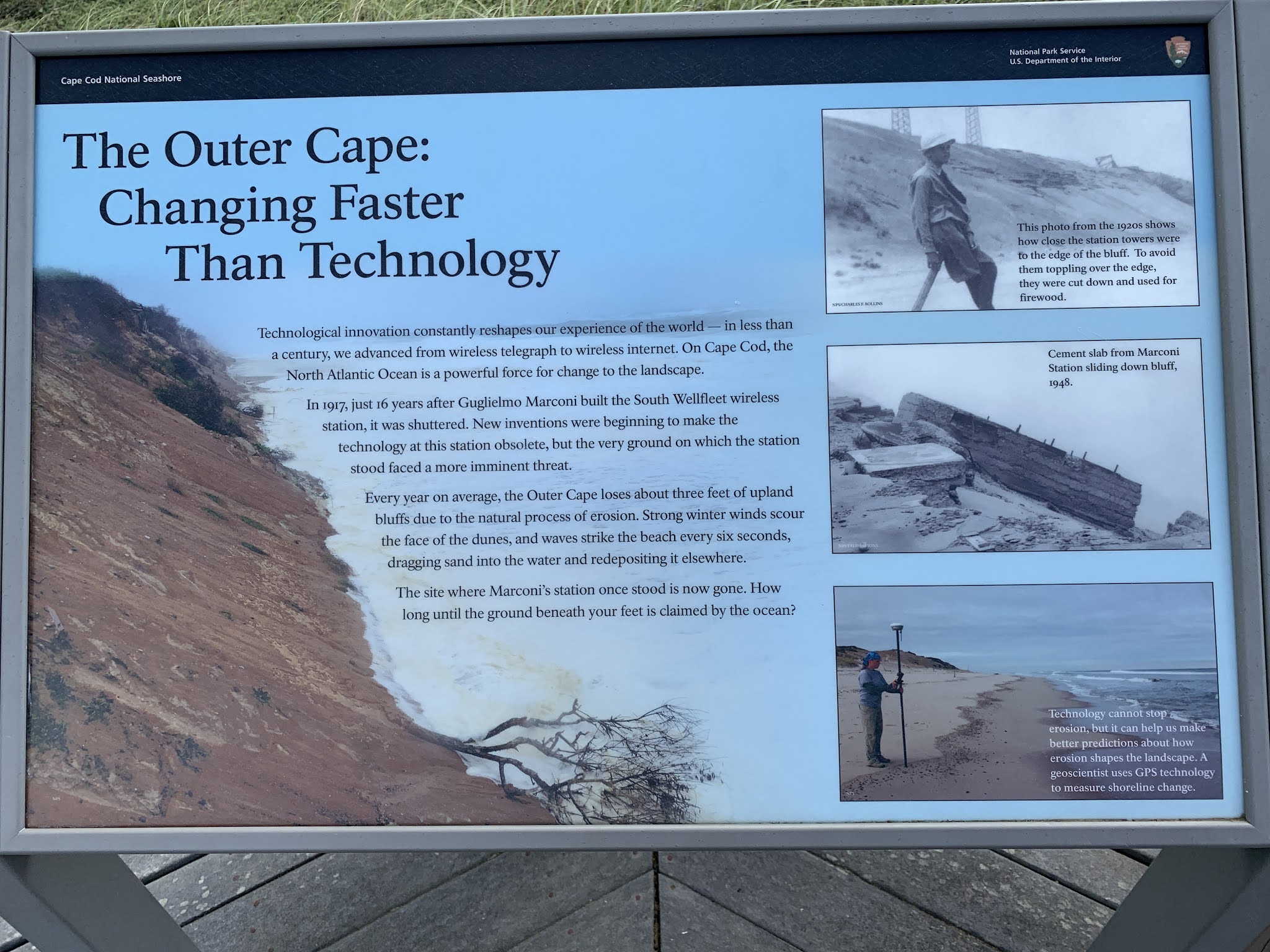
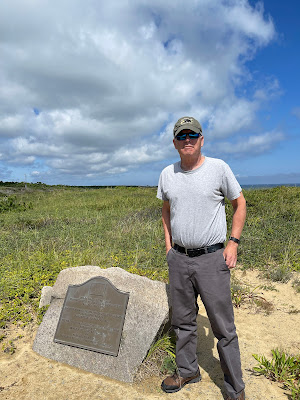
We were in Boston and the Cape Cod area this week. We stopped off at the Marconi Wireless site at Wellfleet, Mass.

This is from the National Park Service web site:

Spanning the Ocean

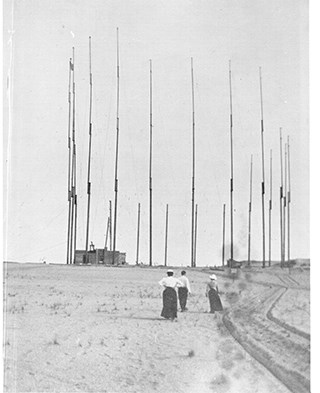
For Marconi the ‘great thing’ was to transmit wireless signals across the Atlantic. He built stations at Poldhu, England, Glace Bay, Nova Scotia, and South Wellfleet, Massachusetts. At this stage of wireless technology relatively long electromagnetic waves were used as signals. Transmitting great distances, therefore, required great sensitivity of receivers and tremendous power. Originally, huge rings of masts were installed to support the needed antennas. When storms destroyed them, they were replaced by sets of four wooden towers, 210 feet in height. Power requirements were tremendous. Keroseneburning engines produced 2,200 volts. When fed to a Tesla transformer, the voltage was stepped up to 25,000 volts – the energy needed to transmit longwave signals so far. It was from the Glace Bay station that the first successful two-way transatlantic wireless test message was sent on December 17, 1902.
A black and white photo of a man and two women standing in an open area facing a building next to a tall circular array of thin antennas.
The original wireless array.

Impacting Lives

January 18, 1903 the first public two-way wireless communication between Europe and America occurred. With elation, communiques from President Theodore Roosevelt and King Edward VII were translated into international Morse code at the South Wellfleet and English stations, respectively, and were broadcast.

Ocean-going vessels quickly adopted Marconi apparatus to receive news broadcasts, and soon ship-to-shore transmittals were a major operation. Business and social messages could be sent for fifty cents a word. The South Wellfleet station became the lead North American facility for this function. The station’s effectiveness was limited however, so broadcasts were made between 10 pm and 2 am when atmospheric conditions were best.

This brought little enthusiasm from local residents, who endured the sounds of the crashing spark from the great three-foot rotor supplied with 30,000 watts. The sound of the spark could be heard four miles downwind from the station. Eventually, the novelty of wireless telegraphy waned. However, the need for communication at sea remained high. Effective communication resulted in numerous sea rescues, culminating in the Carpathia’s wireless-aided rescue of over 700 people from the Titanic in 1912.

For fifteen years the South Wellfleet sparkgap transmitter continued in commercial use. Skilled telegraphers sent out messages at the rate of 17 words a minute, and station CC (Cape Cod) served in effect as the first “Voice of America.”

https://www.nps.gov/caco/learn/historyculture/marconi.htm

1BCG — 1921 Transatlantic Test and the Upcoming 100th Anniversary

In December 2021 we will reach the 100th Anniversary of the famous Transatlantic Test that marked the first crossing of the Atlantic by radio amateurs. The video above provides a really excellent description of the momentous event. A few things struck me:

— Even then they struggled with amplifiers that wanted to oscillate.

— Armstrong should have gotten more credit for the transmitter design. After all, it was his regenerative system that gave rise to the kind of oscillators that allowed for CW (vice spark) and that formed the basis of the MOPA transmitter that these fellows used.

— The info on the Superhet receiver used by Paul Godley in Scotland was really interesting: It used “resistance-coupled amplifiers without transformers,” similar to what we have today in Farhan’s BITX transceivers.

— Wow, Harold Beverage himself! And his antenna was used at the Scotland receiving station.

— “It was a miracle that no one got mixed up with the high voltage.” Indeed.

The Antique Wireless Association has built a replica of the 1921 transmitter. The video below shows it being tested.

The 1BCG website announces that:

On December 11, 2021 the American Radio Relay League, The Radio Club of America and the Antique Wireless Association will recreate these historic transmissions on 160 meters near the same location that was used in 1921, using a replica transmitter constructed by volunteers at the Antique Wireless Association. This special event is your opportunity to relive a historic moment in amateur radio history.

The operating schedule and frequency for the 1BCG Transatlantic Tests Special Event has not been established.

Additional details will be posted here when they are available.


http://1bcg.org/1BCG/

SSB History — The Tucker Tin 2 (and 3) with a 1961 Recording. Hallicrafters FPM-200 Video by W9RAN

There is so much important SSB history in this video from Bob Nichols, W9RAN. I liked all of it, but the on-the-air recording of a 1961 transmission from a Tucker Tin 3 was really amazing. Check it out.

Here is the 2014 SolderSmoke blog post about the Tucker Tin 2. You can see the 1961 schematic here:
As you can see this is a very simple phasing-type SSB rig. The SSB generator is crystal controlled at the operating frequency.

Thanks to Bob W9RAN, and thanks to Peter Parker VK3YE for posting about this video on the SolderSmoke Facebook Page.

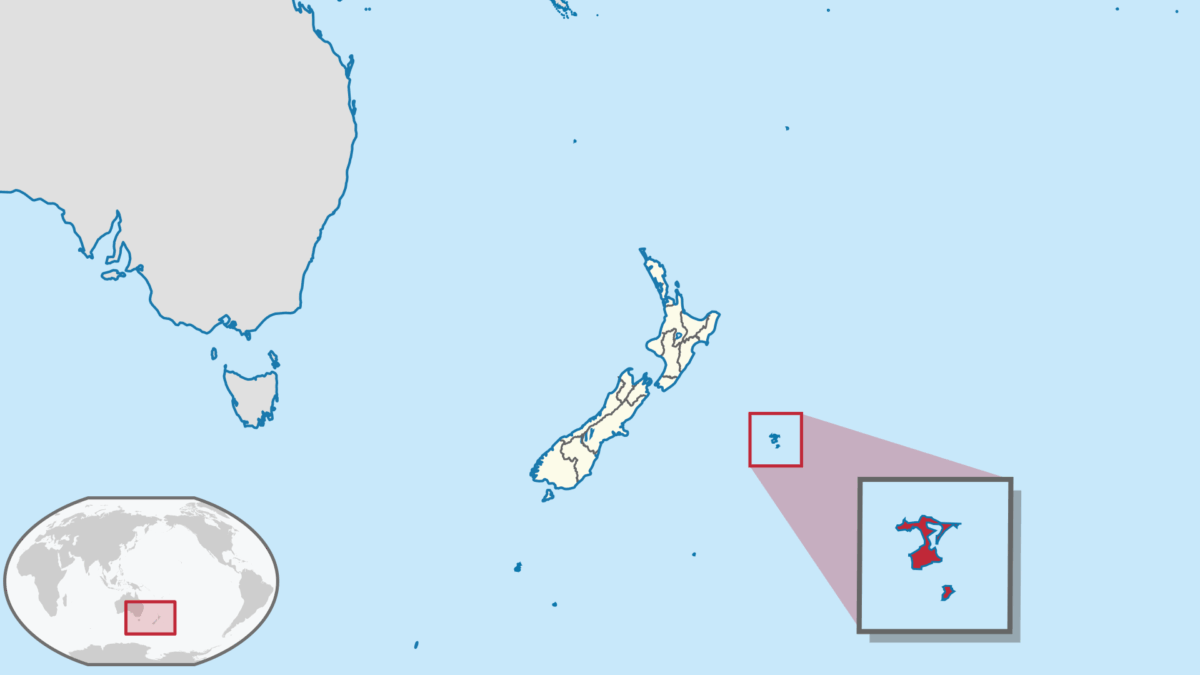
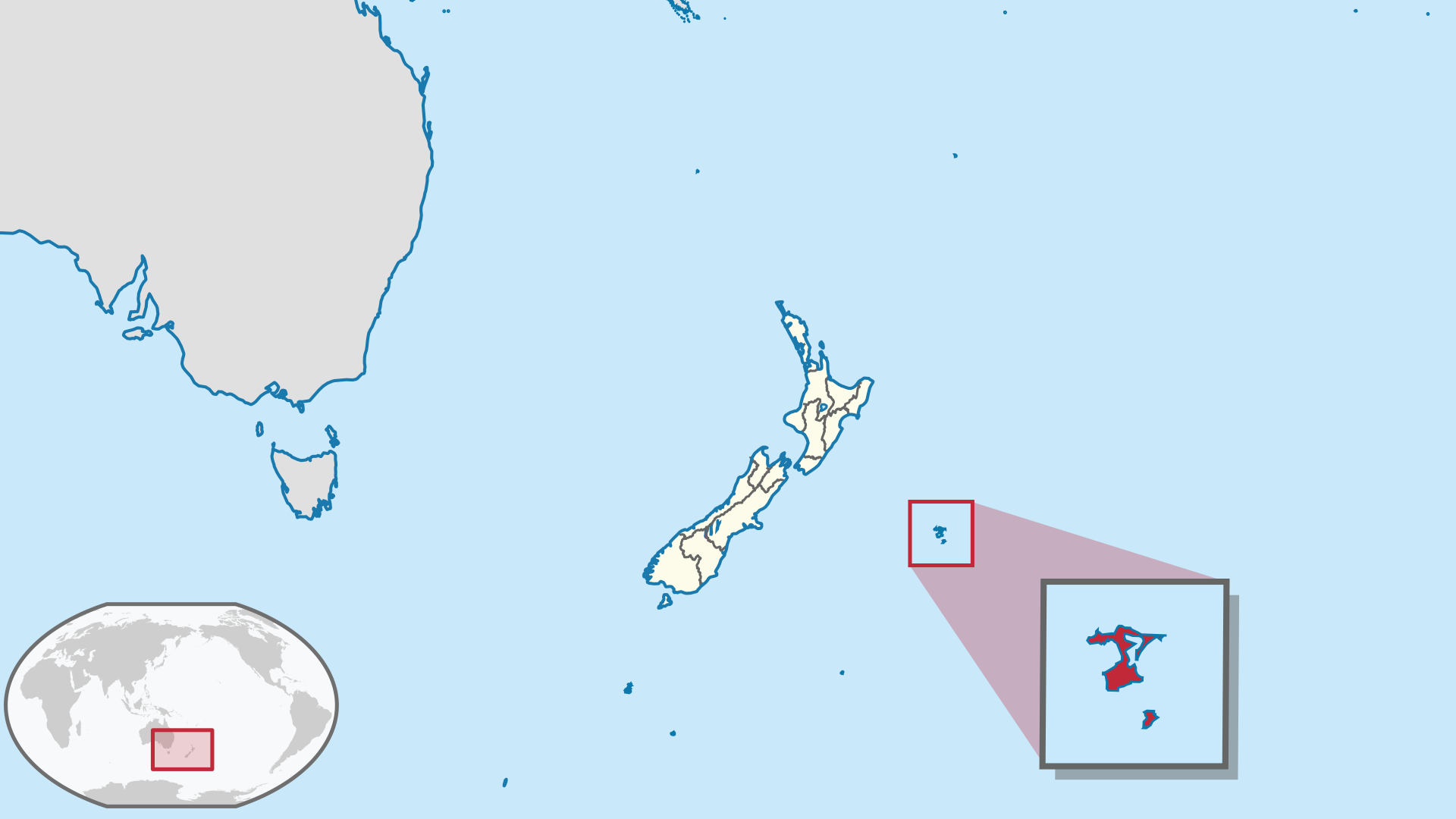
The Chatham Islands


Video: E. Howard Armstrong and Early Radio

This is a really wonderful video. It might seem slow to those accustomed to faster-paced YouTube videos, but the information content is very high — it contains a lot of pictures I hadn’t seen before and audio of Howard Armstrong.

I never knew that the name of the radio company Zenith was derived from the early callsign “9ZN.”

As a Northern Virginian, I like the reference to NAA Arlington.

I used to live near Yonkers, N.Y. I remember Warburton Ave. What a fine shack young Howard had up in that cupola attic.

The photo of Armstrong’s breadboard was very nice. My Mythbuster is in good company.

QRPers will get a kick out of the newspaper headline “New Radio Marvel Revealed!” (They cut the power out from 20kW to 5 watts!)

Thanks again to Dave Bamford W2DAB for sending me the book about Armstrong, “Man of High Fidelity” by Lawrence Lessing.

Finally, I remember talking to Bruce Kelley W2ICE at hamfests. He was a great radio amateur:

Be sure to check out the Antique Wireless Museum’s YouTube Channel. Lots of good stuff there:
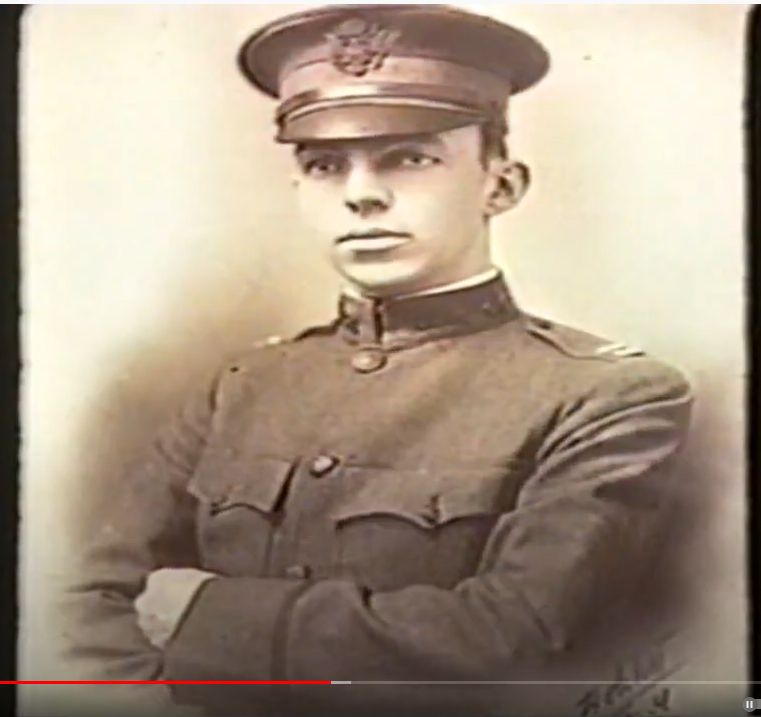
We have the famous photo of Major Armstrong,
but this is the first one I’ve seen of a slightly younger Captain E. Howard Armstrong.


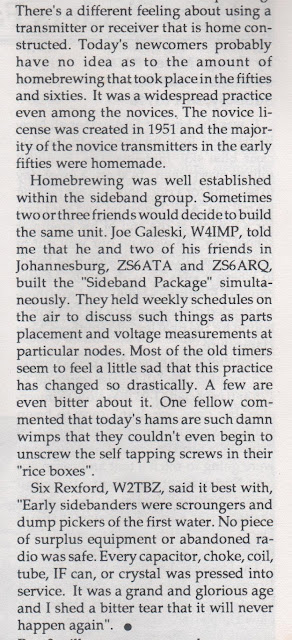
Joe Galeski’s 1960 “IMP” 3 -Tube Filter SSB Transmitter, and the Spirit of SSB Homebrew

Here is another important bit of SSB history. In May 1960, Joe Galeski W4IMP published an article in QST describing his super-simple SSB transmitter. While Tony Vitale’s “Cheap and Easy” rig was a phasing design, Joe came up with a filter rig. He built USB filter at 5775 kc. With it, he ran a VXO at around 8525 kc. This put him on 20 meter USB.

Here is the QST article: http://marc.retronik.fr/AmateurRadio/SSB/A_3_tubes_filter_rig_%28SSB%29_%5BQST_1960_5p%5D.pdf

In discussing how to put this rig on other bands, Joe got the sideband inversion question exactly right:

Thank you Joe!

Joe even provides an comment that seems to capture an important element of the homebrew SSB ethos. Joe homebrewed his filter, but he mentioned the possibility of using a store-bought filter:


That’s the spirit Joe!

Along the same lines, Jim Musgrove wrote in Electric Radio:

Having built Lew McCoy’s Mate for the Mighty Midget receiver (which also used just three tubes), I can’t help thinking that an IMP-ish transmitter would be an excellent complement to the Mate for the Mighty Midget.

Jim Musgrove K5BZH knew Joe Galeski and wrote about him in the January 1992 issue of Electric Radio. Jim wrote that Joe was an optometrist by profession. When OE1FF wanted to know the cost of building an IMP, Joe Galeski boxed up the original and sent it to him. FB Joe.

In December 1961 Joe Galeski published a QST article describing a transistorized version of the IMP — this rig ran on 15 meters. K5BZH wrote that Joe later published an article about a small, solid-state transceiver, appropriately called “The Shrimp.”

QST Repeatedly Got Sideband Inversion Wrong

It kind of pains me to do this. These articles are from a long time ago, and the author is an esteemed Silent Key, but the myth about the origins of the USB/LSB convention is still out there, and as a homebrewer of SSB gear I feel obligated to point out these examples of the error that that myth is based on.

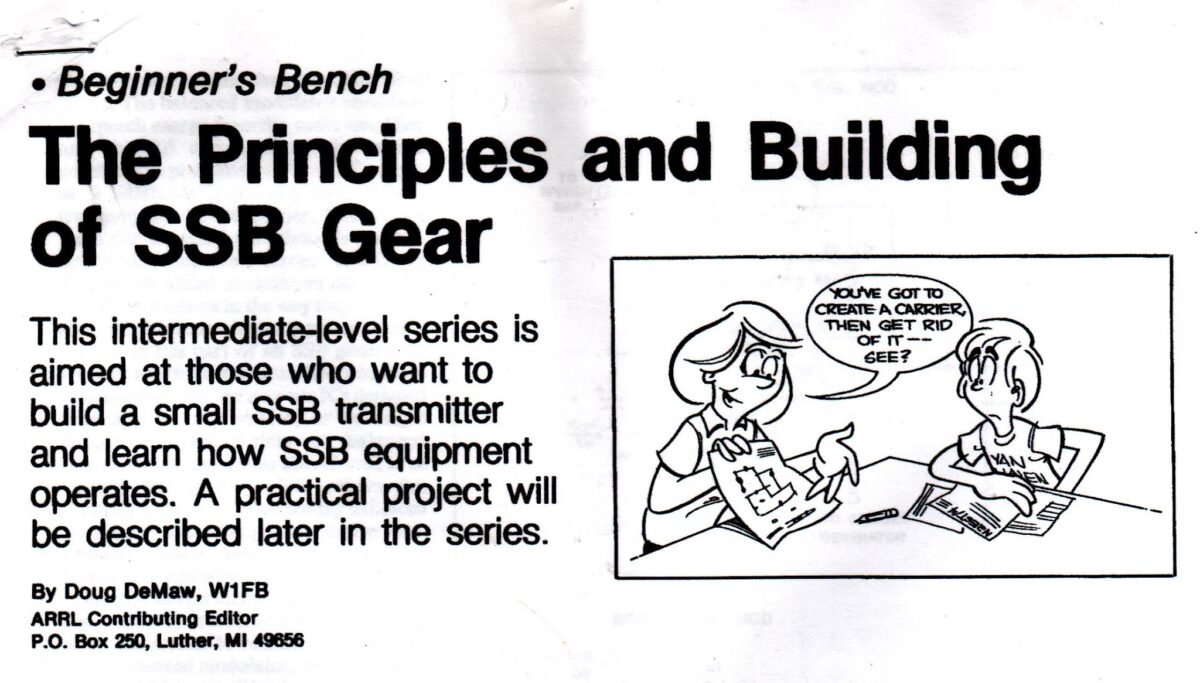
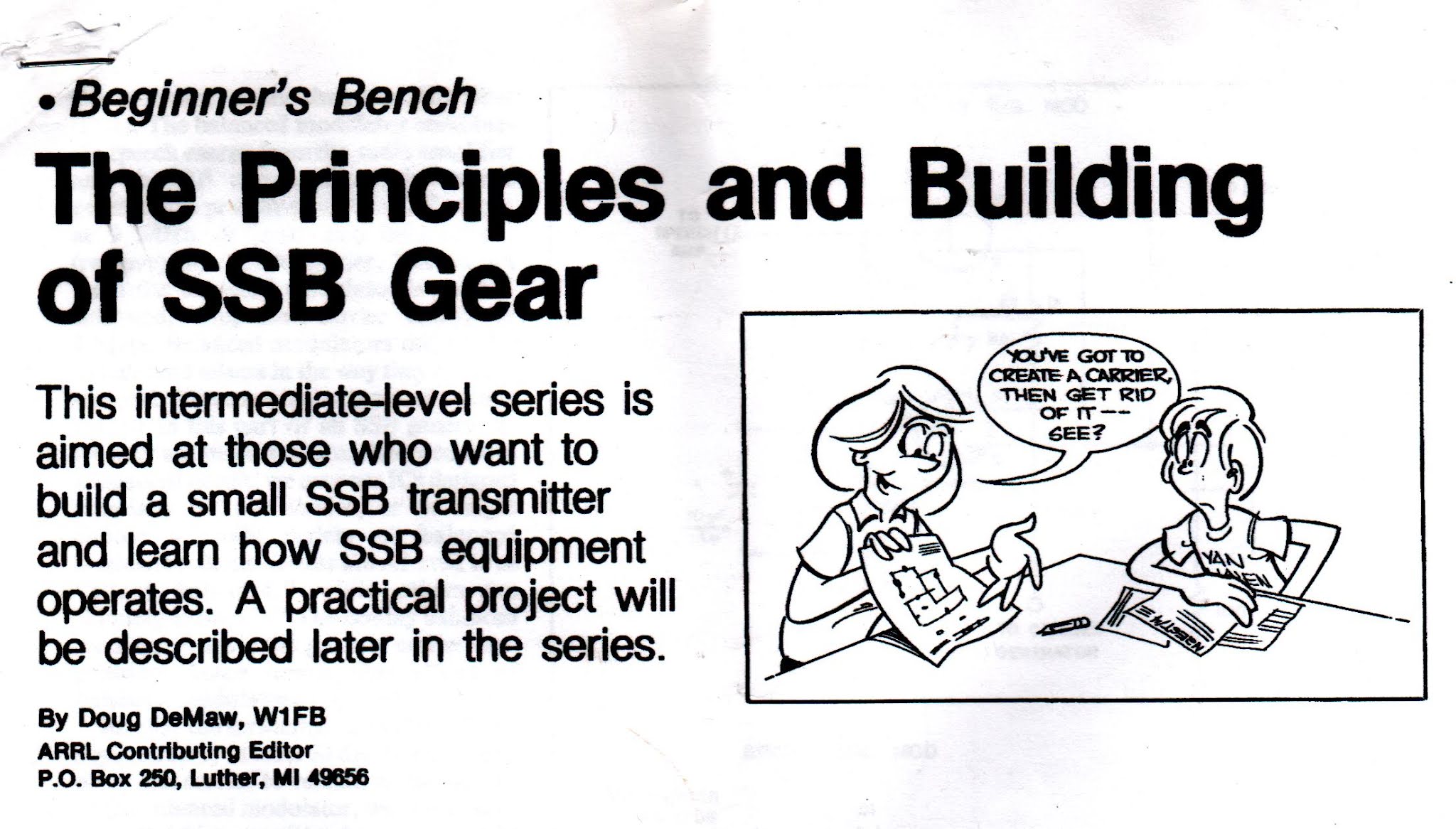
Last Friday, Pete WB9FLW and I were talking about homebrewing SSB rigs. I recommended a series of QST articles by Doug DeMaw. “Beginner’s Bench: The Principles and Building of SSB Gear” started in QST in September 1985. There were at least five parts — it continued until January 1986. (Links to the series appear below.) I hadn’t looked at these articles in years, but when I did, a big mistake jumped right out at me: In the first installment, on page 19, Doug makes the same mistake that he made in his Design Notebook:

“Now comes the conversion section of our SSB generator. We must move (heterodyne) the 9-MHz SSB signal to 3.75-4.0 MHz. Our balanced mixer works just as it does in a receiver. That is, we inject the mixer with two frequencies (9 MHz and 5 MHz) to produce a sum or a difference output frequency (9 – 5 = 4 MHz, or 9 +5 = 14 MHz) If we are to generate 75 meter SSB energy, we must chose the difference frequency. We could build an 20-meter SSB transmitter by selecting the sum of the mixer frequencies. The RF amplifiers and filter (FL2) that follow would then have to be designed for 14-MHz operation. In fact, many early two-band homemade SSB transmitters were built for for 75 and 20 meters in order to use this convenient frequency arrangement. The use of upper sideband on 20 meters and lower sideband on 75 meters may be the result of this frequency arrangement (the sidebands become inverted when switching from the difference to the sum frequency.) ”

Those last two sentences are incorrect. They repeat the “Myth,” or the “Urban Legend” about the origins of the LSB/USB convention. Contrary to what many hams now believe, with 9 MHz filter and a 5.2 MHz BFO it takes more than just switching from sum frequency to difference frequency to invert one of the sidebands.

There are two conditions needed for sideband inversion to take place:

1) You have to be taking the difference product (DeMaw got that right)

2) The unmodulated (VFO or LO) signal must be larger than the modulated signal. (DeMaw and the ARRL obviously missed that part. Repeatedly.)

This is another way of stating the simple, accurate and useful Hallas Rule: Sideband inversion only occurs when you are subtracting the signal with modulation FROM the signal without modulation.

For DeMaw’s claim to be correct, one of the SSB signals going into the balanced mixer would have to invert, and the other would have to not invert. Let’s see if that happens: He has the sideband signal being generated at 9 MHz and the VFO running around 5 MHz.

9 – 5 = 4 But we are not subtracting the modulated signal FROM the unmodulated signal. SO NO INVERSION

9 + 5 = 14 We are not subtracting at all. SO NO INVERSION.

Doug’s convenient frequency scheme WOULD work if he’d just switch the frequencies of the filter and the VFO. With a sideband generator on 5.2 MHz and a VFO around 9 MHz you do get the happy 75 LSB, 20 USB arrangement without the need to switch the carrier oscillator/BFO frequency. That is what happened in the Swan 240, and that is what I have in my Mythbuster rig. I am listening to both 75 LSB and 20 USB without changing the carrier oscillator/BFO frequency. My filter/BFO/product detector is set up for USB. With this arrangement the 75 meter LSB signals DO invert, and the 20 meter USB meter signals do not, so both are able to make use of my USB BFO/product detector without shifting the BFO frequency.

This error shows up again in DeMaw’s the May 1989 QST article “A Four Stage 75-meter SSB Superhet” (reprinted in the ARRL’s QRP Classics book). Here he writes:

“Should you want to cover both the 75- and 20-meter bands you can build a 20-meter version of FL-1 and band switch the two filters. As with the 75 meter only version, an IF of 9.0 MHz (Y1) is required. With this arrangement the 20 meter band will tune backwards from the 75 meter band, but upper- and lower-sideband reception will occur, as required, without changing the BFO frequency (Y2). This two band scheme with a 5-MHz VFO is an old one!” NOTE: FL1 is the bandpass filter, not the IF filter.

Doug’s mistakes in this area may simply be due to the fact that he was more of a CW guy. And this is something that is quite easy to confuse: 9 and 5 will get you to 75 and 20, but you have to make sure the VFO is at 9 if you want to make use of sideband inversion and avoid having to shift the BFO/ carrier oscillator. I’ve made this mistake myself:

In October 1993 I wrote to DeMaw about his Four Stage 75 meter SSB Superhet. I think I was looking for details on how to put it on 20 meters. As I recall, Doug wrote back telling me to just pick 20 meter values for the input bandpass filter. Had I done so, I would have discovered that — for the reasons cited above — this just wouldn’t have worked on 20. His BFO and filter were set up to receive LSB signals. That’s fine for the incoming 75 meter LSB signals. But on 20 — contrary to DeMaw’s thinking — there would be NO sideband inversion. I’d be trying to listen to 20 meter USB signals with a receiver set up for 20 meter LSB.

Did anyone else notice these errors. Were there ever errata notices in QST on this?

This is a reminder that you should take all technical articles and schematics with a grain of salt. Many contain errors. We are all human, and this is a complicated subject with lots of details.


Summer Reading for Homebrewers: Frank Jones and the FMLA by Michael Hopkins AB5L (SK)

Frank Jones W6AJF (SK)

I read these stories when they were first coming out and I really liked them. Here are all the FMLA episodes. Don’t try to read them all in one sitting. Spread them out. Savor them. Think about the message that Frank was sending us.

All of the FMLA episodes: https://tomfhome.files.wordpress.com/2019/12/frank_and_the_fmla.pdf

————————————–

Related articles, books and links:

Frank’s obit: https://www.pressdemocrat.com/article/news/frank-jones/

Frank’s book “5 Meter Telephony”: https://w5jgv.com/downloads/5-Meter%20Radiotelephony%20by%20Frank%20Jones.pdf

Frank’s 1937 Antenna Handbook: http://rfcec.com/RFCEC/Section-3%20-%20Fundamentals%20of%20RF%20Communication-Electronics/23%20-%20RADIO%20ENGINEERING%20DATA/1937%20-%20Jones%20Antenna%20Handbook%20(By%20Frank%20C.%20Jones).pdf

About the author, Michael Hopkins AB5L: https://www.rantechnology.com/index.cfm?key=view_resource&TransKey=615604E8-9DAA-40A3-9E48-4160806D893D&CategoryID=8E884CE4-9CED-4957-872B-5EBDB058D540&Small=1

Michael Hopkins AB5L (SK)

Thanks to Dave Wilcox K8WPE for reminding us of all this, and for sending us the link to the FMLA archive.


Viva el FMLA! Viva el CBLA! Vivan!

The Stubborn Myth about USB and LSB

It has been repeated so often and for so long that many of us have come to believe it. I myself believed it for a while. Like many myths, it has a ring of truth to it. And it is a simple, convenient explanation for a complex question:

Why do ham single sideband operators use LSB below 10 MHz, but USB above 10 MHz?

Here is the standard (but WRONG) answer:

In the early days of SSB, hams discovered that with a 9 MHz SSB generator and a VFO running around 5.2 MHz, they could easily reach both 75 meters and 20 meters (True). And because of sideband inversion, a 9 MHz LSB signal would emerge from the mixer as an LSB signal (True), while the 20 meter signal would emerge — because of sideband inversion — as a USB signal (FALSE!) That sideband inversion for the 20 meter signal explains, they claim, the LSB/USB convention we use to this day.

Why this explanation is wrong:

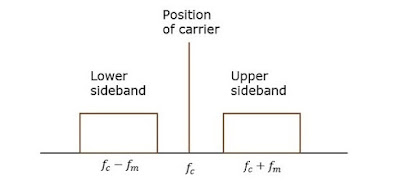
There is a very simple rule to determine if sideband inversion is taking place: If you are subtracting the signal with the modulation FROM the signal without the modulation (the LO or VFO) you will have sideband inversion. If not, you will NOT have sideband inversion.

So, you just have to ask yourself: For either 20 or 75 are we SUBTRACTNG the Modulated signal (9 MHz) from the unmodulated signal (5.2 MHz)?

For 75 meters we have: 9 MHz – 5.2 MHz = 3.8 MHz NO. We are not subtracting the modulated signal from the unmodulated signal. There will NOT be sideband inversion.

For 20 meters we have 9 MHz + 5.2 MHz = 14.2 MHz. NO. No subtraction here. No sideband inversion.

So it is just arithmetically impossible for there to be the kind of happy, easy, and convenient USB/LSB situation described so persistently by the myth.

———————————

We discussed this several times on the podcast and in the blog:

https://soldersmoke.blogspot.com/2015/05/sideband-inversion.html

https://soldersmoke.blogspot.com/2012/05/usblsb-urban-legend-debunked.html

This myth shows up all over the place:

We see the myth here:

http://n4trb.com/AmateurRadio/Why%20The%20Sideband%20Convention%20-%20formatted.pdf

Here the web site owner warns that this is “highly controversial.” Really? Arithmetic?

http://9m2ar.com/lsb7.htm

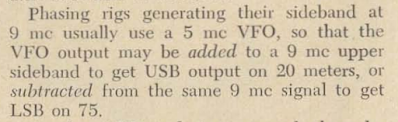
The myth is very old. Here is a clip from a 1966 issue of “73” magazine:

https://worldradiohistory.com/Archive-DX/73-magazine/73-magazine-1966/73-magazine-01-january-1966.pdf

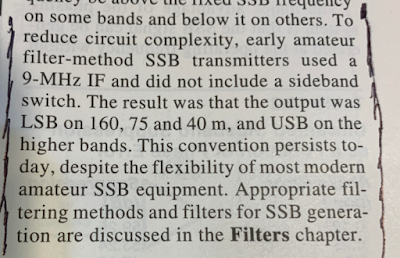
Finally, to my disappointment, I found the myth being circulated by the ARRL, in the 2002 ARRL Handbook page 12.3:

The fact that the Handbook attributed this to a desire to “reduce circuit complexity” by not including a sideband switch should have set off alarms. We are talking about hams who built their own SSB rigs, usually phasing rigs. A sideband switch would not have added significant circuit complexity. I think they could have handled it.

It is interesting that earlier ARRL Handbooks do not repeat this myth. I found no sign of it in Handbooks from 1947, 1959, 1963, 1973, and 1980. And I found no sign of it in several editions of that great ARRL book “Single Sideband for the Radio Amateur.”

For my next homebrew rig, I will build a rig that DOES do what the myth promises. I will have the SSB generator running on 5.2 MHz USB. The VFO (out of an old FT-101) will be running around 9 MHz. So for 75 meters we WILL be subtracting the signal with the modulation from the signal without the modulation: 9 MHz – 5.2 MHz = 3.8 MHz. There will be inversion. This 75 meter signal will be LSB. For 20 we will just add the 5.2 MHz USB signal to the 9 MHz VFO. There will be no inversion. We will have a USB signal on 20. I’m thinking of calling this new rig “The Legend.” Or perhaps, “The Mythbuster.”