Homebrew Transistors? Careful with the Chloroform!

I suppose it was inevitable. After years of pushing the envelope with the tunnel diode, it seems like Michael, AA1TJ, is moving toward homebrewing his own transistors. Michael writes:

Hey, I found a Yahoo Group of kindred spirits late last night, 2N1150_Down; where the interest is centered on early Germanium semiconductor devices. I downloaded a book from their files that, until now, I’d only heard about. Practical Transistors and Transistor Circuits, by J.S. Kendall, first appeared in the U.K. in 1954. Believe it or not, the subject of the book is how to make the “practical” transistors referred to in his title! Of course, these are point-contact devices built from a pair of cat’s whiskers on a slab of “P-type” Germanium salvaged from diodes. I especially like where he writes, “Great care should be exercised owning to the anesthetic properties of the chloroform vapour…the constructor may not be aware of the danger until he is almost on the point of collapse.” Oh brother!

Better yet, I found an article in the group’s files taken from the March and April, 1954 issues of The Short Wave Magazine, by G3HMO. This fellow not only made his own transistor, he used it to build a one-transistor, 160m, transmitter and then went on to make contacts with it up to a distance of 30miles! He writes, “There is nothing impractical about making a point-contact transistor at home.” Oh baby, crack me open a bottle of chloroform and let’s get to it!

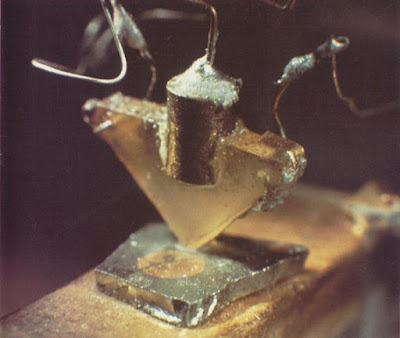
The photo above is, of course, the original point contact transistor from 1947. It looks do-able.
In searching for the picture I came across this interesting article from the author of the wonderful book on this subject “Crystal Fire” : “How Europe missed the Transistor”
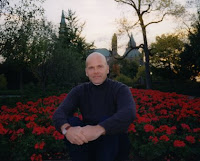
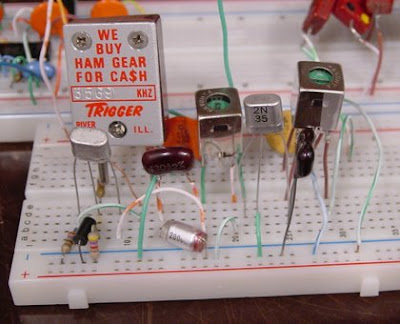
2N35s, 1955… and some inspiration from AA1TJ


From Michael, AA1TJ:

Bill, I was re-reading Ade, W0RSP’s “History of QRP” last night; especially that last chapter on transistor rigs. It dawned on me that the two 2N35 transistors that I’m presently using in my 40m transmitter were built two months before Bob, W7UUZ’s famous, maiden transistor QRP contacts in August of 1955. While we can’t go back and beat Lindbergh’s first solo crossing of the Atlantic, for example, a fellow could re-live some of the excitement by building a replica of The Spirit of St. Louis and taking it up for a spin. If anything, it gives one a better appreciation of the hurdles those early trailblazers had to leap.

That’s Michael’s 2N35 rig pictured above. For more details see:
http://mjrainey.googlepages.com/80mqrptransmitter;circa1955

Michael also put a really great message on QRP-L earlier this week. I hope he reprints that on his blog.

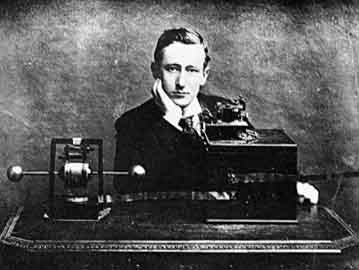
Marconi’s Big Ears

Thunderstruck by Erik Larson has countless gems about Marconi. I thought I would share one with you this morning.

When Marconi was born on April 25 1874, an elderly gardener saw the new baby and exclaimed, “Che orecchi grandi ha!” (“What big ears he has!”) Marconi’s ever protective Irish Mom, Annie, took offense and replied:

“He will be able to hear the still, small voice of the air.”

Indeed.

A. Frederick Collins – Radio Pioneer from my Hometown

I’ve been reading “Empire of the Air” by Tom Lewis, and I’ve been struck by how much radio history took place in the Hudson Valley. I have a special interest in this, because I grew up there. As I was reading about Lee de Forest (BOOO! HISS!) I started wondering if the lake near my parents’ house was named for him. I grew up near Lake de Forest. Surprisingly, Google and Wiki did not provide the answer (anybody know?), but in the course of my Googling, I discovered something that really surprised me: my little town was the summer home of radio pioneer Archie Frederick Collins (what a great name!). Collins was one of the pioneers of radio telephone, using arc transmitters to send his voice out over the airwaves. Some of the experiments took place right in dear old Congers, N.Y. Collins seems to have been a great guy — in addition to his pioneering work in radio, he was prolific author, writing for the Knack victims of the day.

Here’s a 1908 Scientific American article about his radio work:
http://earlyradiohistory.us/1908col.htm
Here’s a good Wiki article on him:
http://en.wikipedia.org/wiki/Archie_Frederick_Collins

One quote from the Wiki: He wrote scientific adventure series novels such as “Jack Heaton, Wireless Operator(1919)” which told of the training and adventures of a 15 year old wireless amateur. Many of his books, such as “The Boy Scientist,” (1925) had lots of illustrations and few equations, with an emphasis on “hands-on” experimentation, at a level intended for high school students. After discussing the “Einstein Theory,” Collins tells his readers how to build a spectroscope, a radio, and a x-ray machine for home experimentation. Collins encouraged his readers to use their home-built x-ray machine to examine their own bone structure with a fluoroscope.

CLASSIC GERMANIUM

Ted, AJ8T, alerted me to this very interesting page.

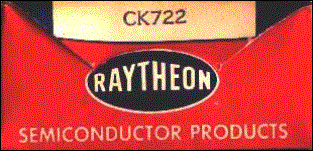
“The CK722 holds a unique place in the history of the transistor. Introduced by Raytheon in early 1953, the CK722 was the first low cost junction transistor available to the general public. It was an instant success. Countless “build it yourself” articles were published in the popular electronics press and electronics/hobbyist magazines describing how to use the CK722 to build all types of devices such as radios, oscillators, electronic voltmeters, photoelectric alarms and hearing aids. Eager to learn about the exciting new transistor technology, the public responded enthusiastically to the CK722 – hundreds of thousands of these transistors were bought by experimenters, radio hams, engineers and others interested in this technology over the next few years. In addition, there is a sentimental aspect to this device. Many of the talented and dedicated professionals and amateurs who have been responsible for the tremendous rise of the electronics industry over the past four decades can still remember the time when, as a young hobbyist, they were able to scrape together enough money (maybe through saving allowance or cutting the neighbor’s grass) to buy that first CK722 – can you still recall the smell of solder and the absolute delight of hearing a local radio station coming through “loud and clear” on the newly constructed one transistor radio powered by, of course, a gleaming, bright blue CK722? This webpage and book have been constructed to help preserve the special legacy of the Raytheon CK722.”

Check it out:

http://www.ck722museum.com/

Philo T. Farnsworth — Radio Hero

I briefly thought about a title for this blog entry that would declare Philo T. Farnsworth to be a Knack victim, but in his case that just seemed a bit flip. Read Chapter One of Paul Schatzkin’s excellent book and I think you’ll see what I mean. What an impressive guy.

Chapter One Of “The Boy Who Invented Television”:

http://www.farnovision.com/tbwit/chapter1.html

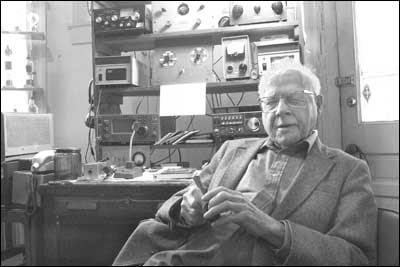
Conrad’s Garage — Birth of KDKA — K4HU, SK

Harry Mills, K4HU, passed away recently. Harry was 100 years old and was active on the ham bands right up until the end. National Public Radio featured Harry and his ham station in an “All Things Considered” segment about early radio. It came out in 2001. I don’t know how I missed this one — it is really great. Have a listen: NPR program on KDKA, K4HU